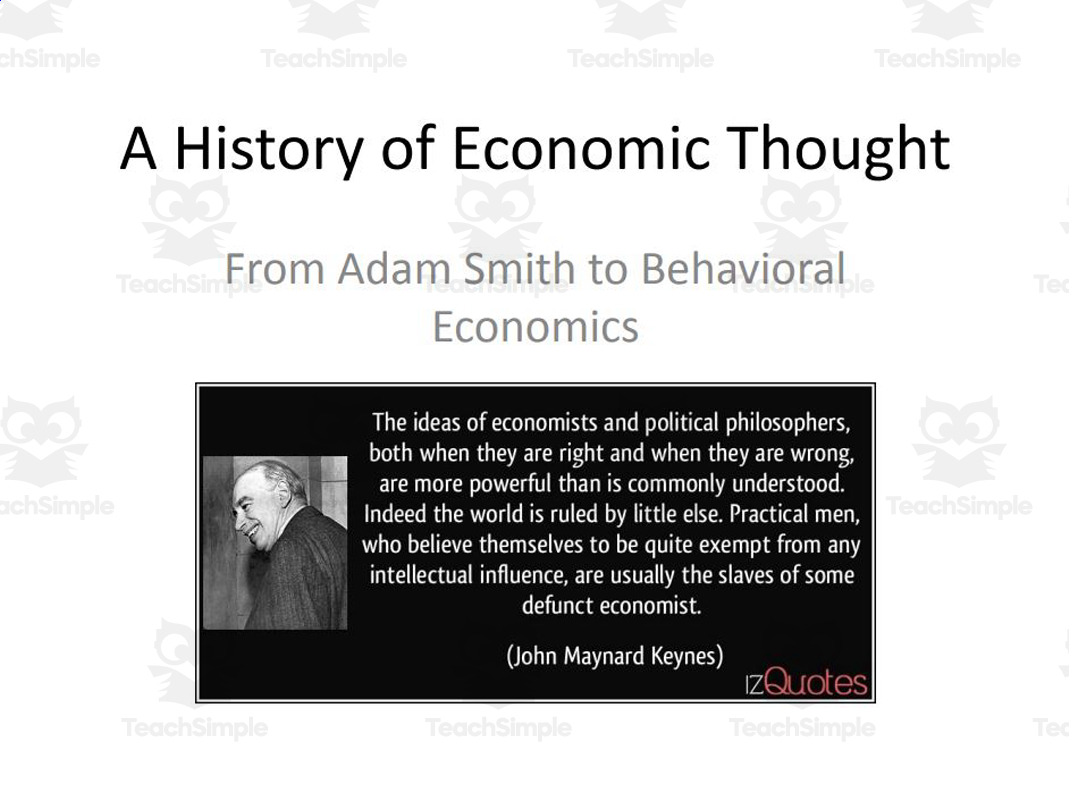
Economic Theories and History
Introduces major economic theorists and schools of thought (classical, Marxist, Keynesian, monetarist, behavioral) for an IB-style high school economics course.
Editable


3,560 resources
Explore sub-categories
16 sub-categories · 3,560 resources
Introduces major economic theorists and schools of thought (classical, Marxist, Keynesian, monetarist, behavioral) for an IB-style high school economics course.

A roulette-style game ("la ruleta") for practicing conjugation of common Spanish irregular verbs in the present indicative tense.

Teach the five phases of informative/expository writing (research and brainstorming, main ideas and support, introduction and conclusion, draft/edit/revise, final draft) using a Skeletal System-themed set of activities.
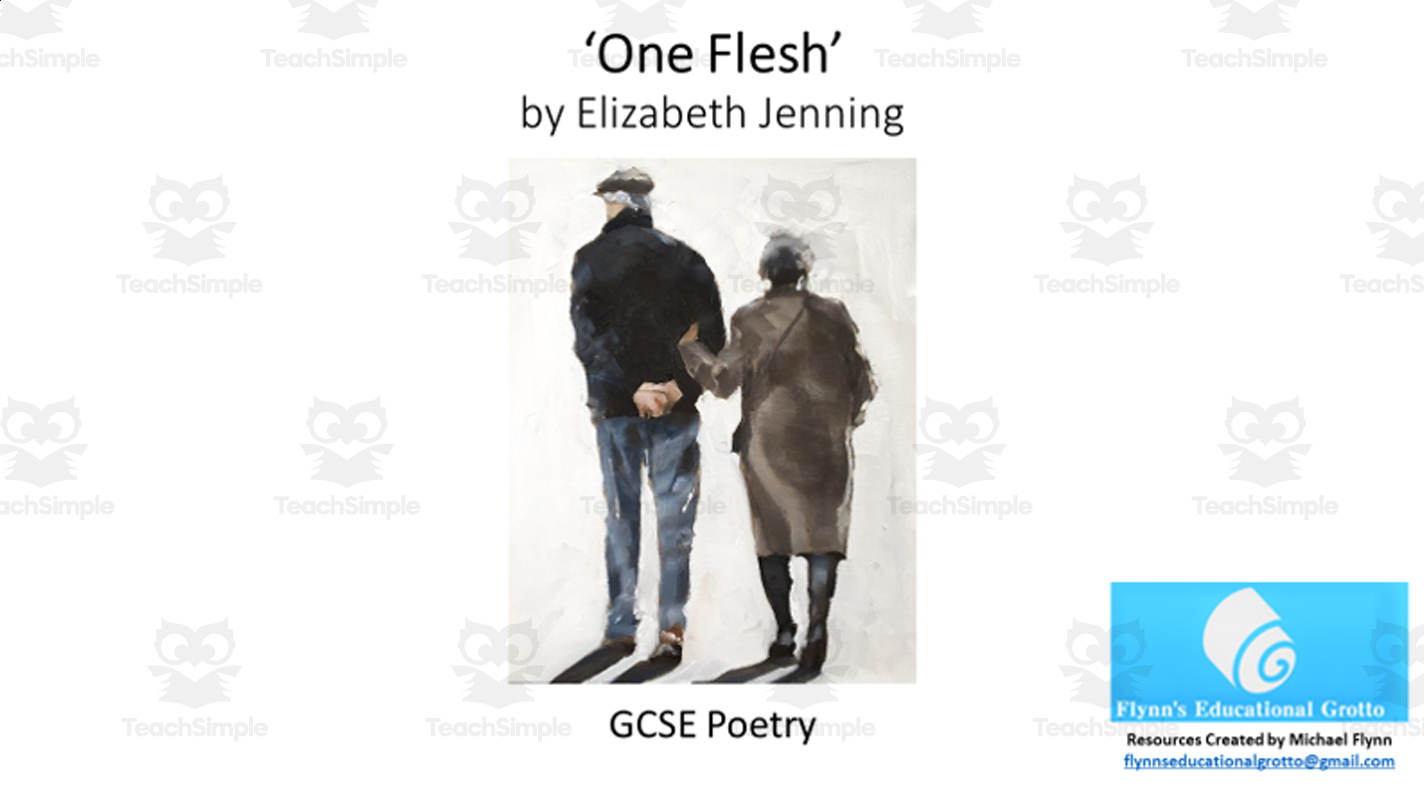
A GCSE English Literature poetry-analysis PowerPoint lesson guiding students through close reading of 'One Flesh' by Elizabeth Jennings, covering author/poet context, first reading and annotation, tone and language analysis, structure questions, and an academic PETAL-paragraph writing task. The lesson frames the poem around an aging married couple's…
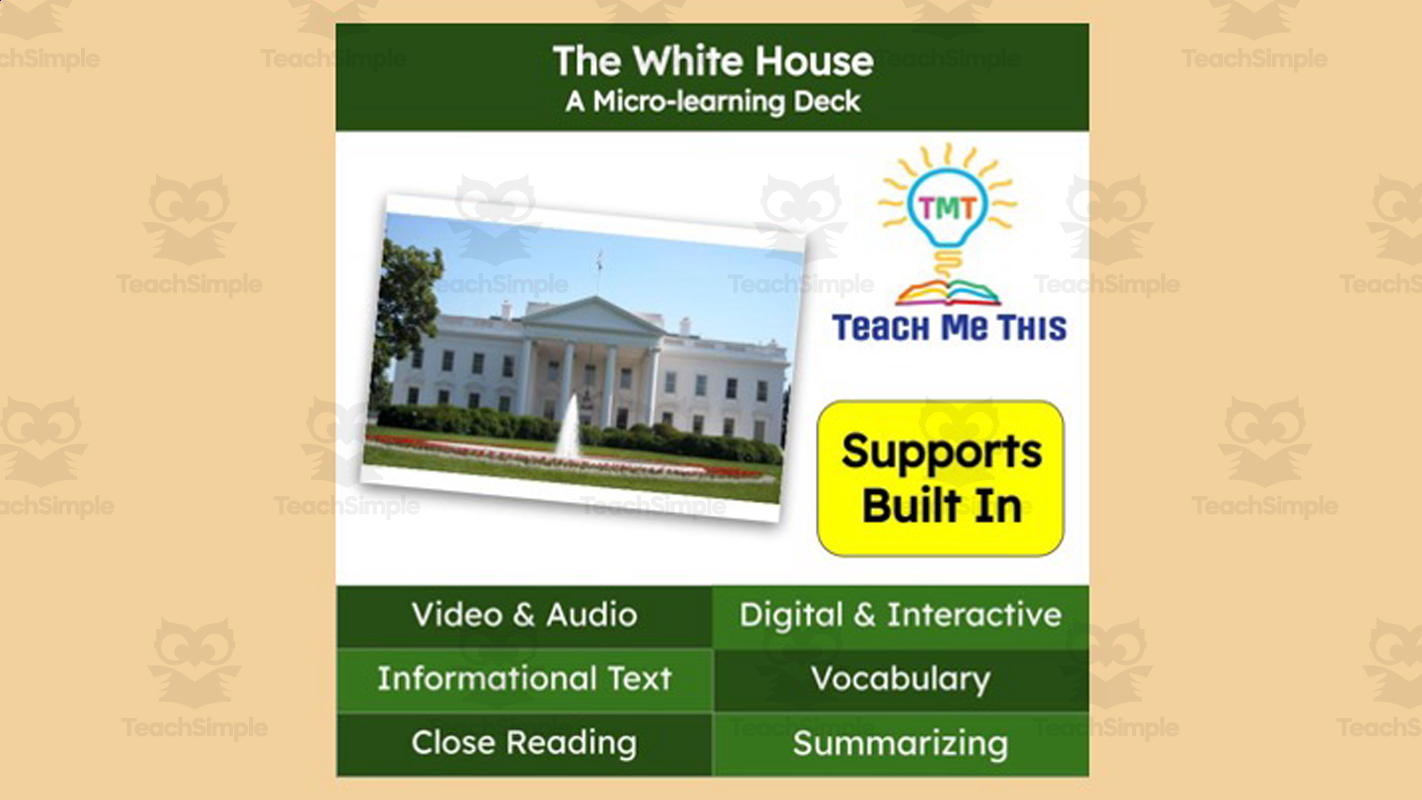
Deliver a micro-learning interactive lesson teaching the history and key rooms/facts of the White House through a reading passage, vocabulary, and comprehension activities.
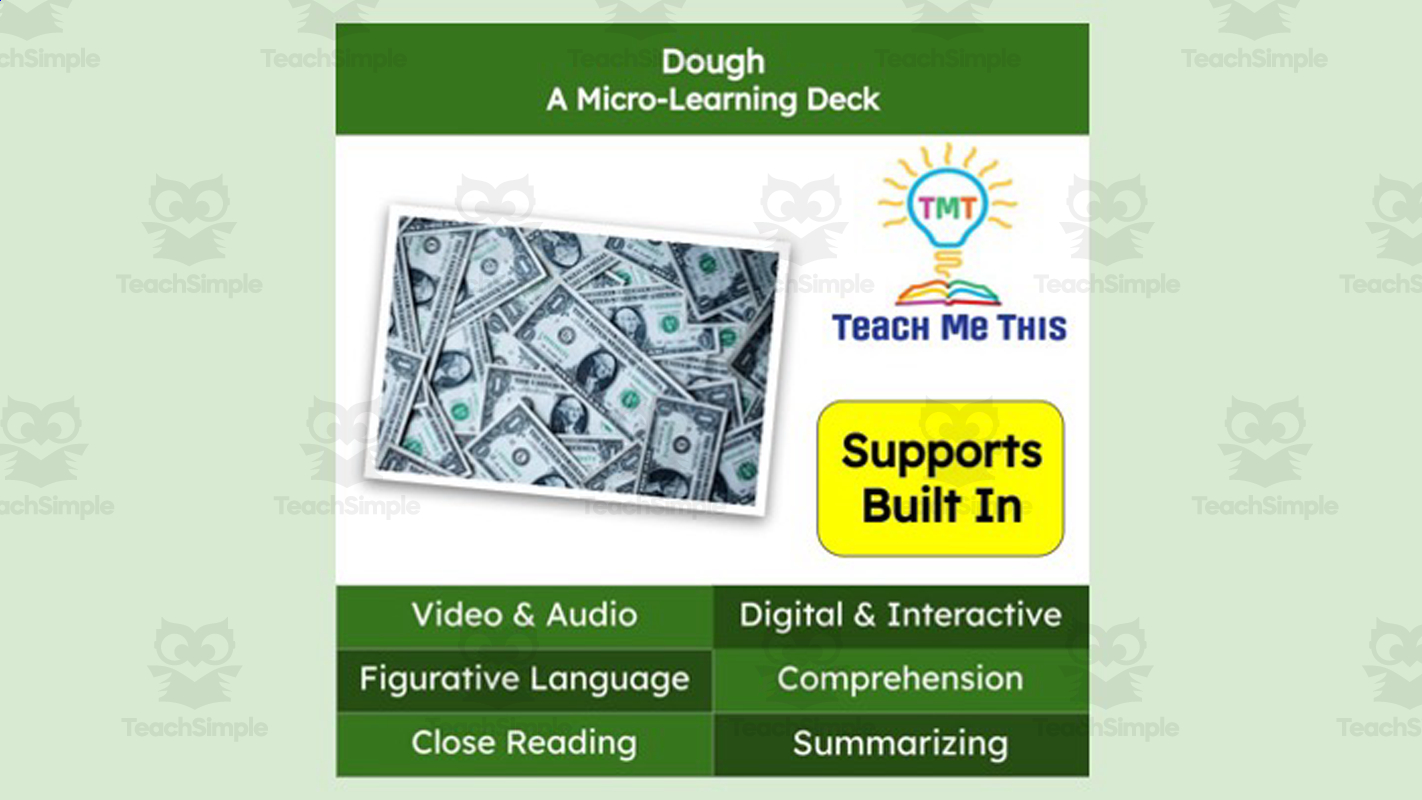
Micro-learning slide deck teaching the figurative/slang meaning of 'dough' (money) through a reading passage and comprehension checks.

A sociology/social-studies activity in which students design a fictional 'perfect' society, applying concepts of political science (population, territory, government, sovereignty) and cultural theory (individualism vs. collectivism, religion) to a collaborative worldbuilding project.
 Free download
An interactive Spanish-language PowerPoint reading-comprehension activity: students read a two-slide passage about climate change ('El cambio climático'), then answer 10 multiple-choice questions with click-through correct/wrong answer feedback.

Teach the five phases of informative/expository writing (research and brainstorming, main ideas and support, introduction and conclusion, draft/edit/revise, final draft) using a Natural Disaster-themed set of activities.
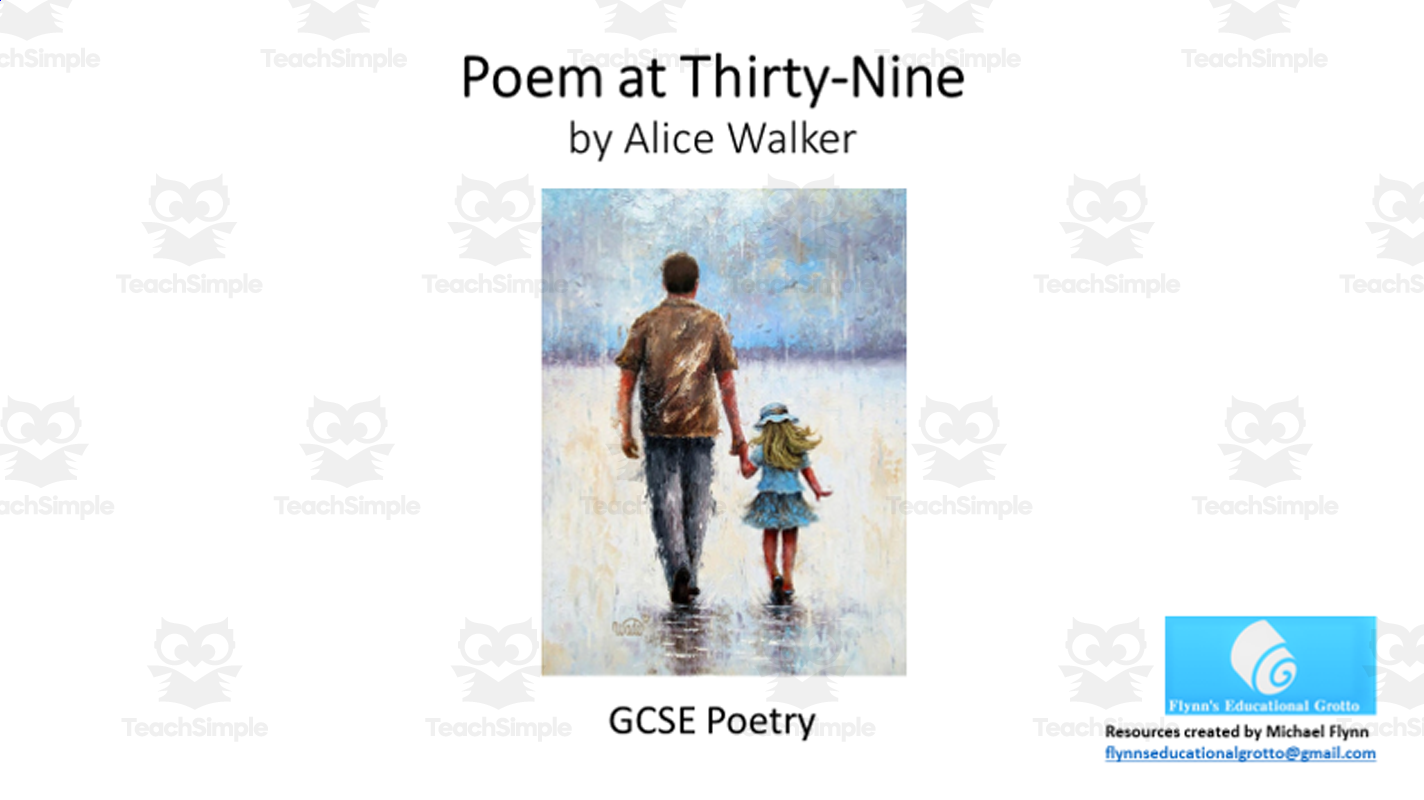
A GCSE English Literature poetry-analysis PowerPoint lesson guiding students through close reading of 'Poem at Thirty-Nine' by Alice Walker, covering author/poet context, first reading and annotation, tone and language analysis, structure questions, and an academic PETAL-paragraph writing task. The lesson frames the poem around a daughter reflecting on…

Provide a 12-slide PowerPoint presentation introducing the ancient Silk Road trade route, Marco Polo's travels, traded commodities, and the route's challenges.

Practice dividing Spanish words into syllables with this engaging, self-checking resource. Perfect for beginning Spanish learners, this no-prep activity focuses on 15 winter-themed vocabulary words.

Teach the five phases of informative/expository writing (research and brainstorming, main ideas and support, introduction and conclusion, draft/edit/revise, final draft) using a Arctic-themed set of activities.
 Free download
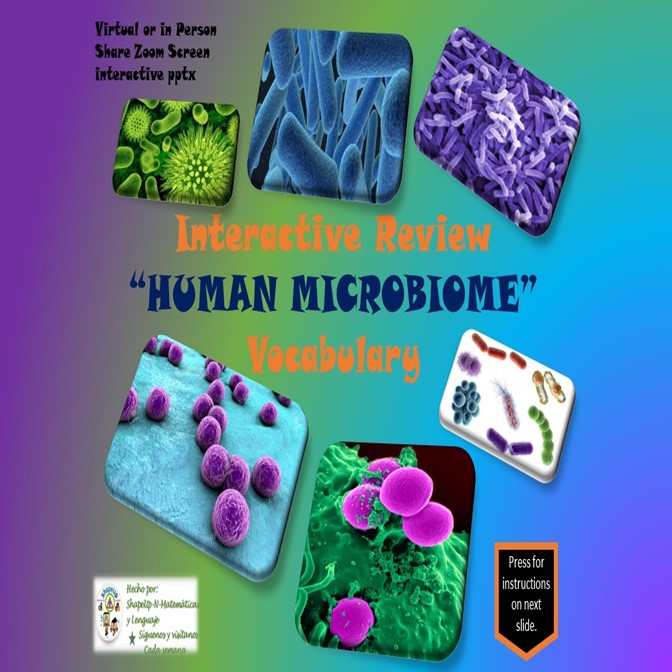
Human Microbiome Vocabulary Words to Review and Reinforce Definitions of the 7TH Grade Science curriculum . Students will learn and practice terms through definitions and characteristics.
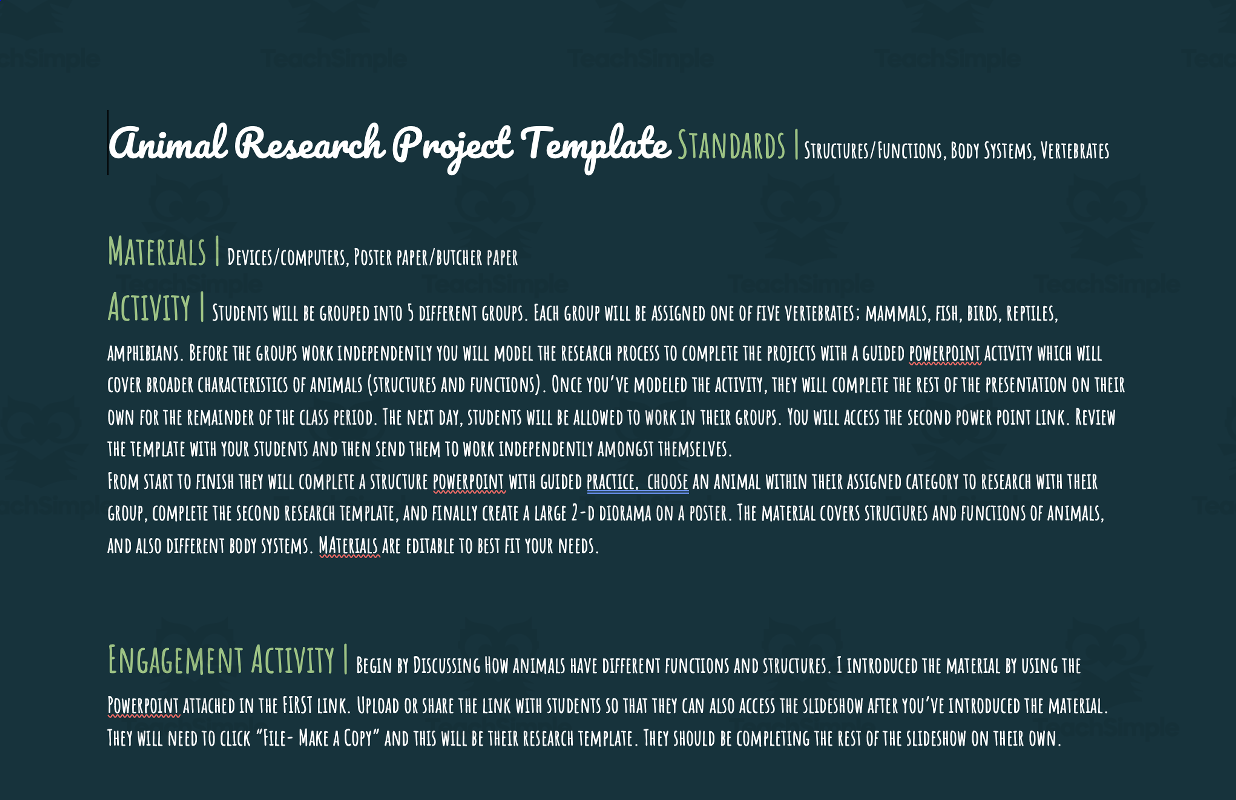
Guide small groups through a structured research process on one vertebrate group (mammals, fish, birds, reptiles, or amphibians), focusing on body structures/functions and body systems, culminating in a poster/diorama presentation.
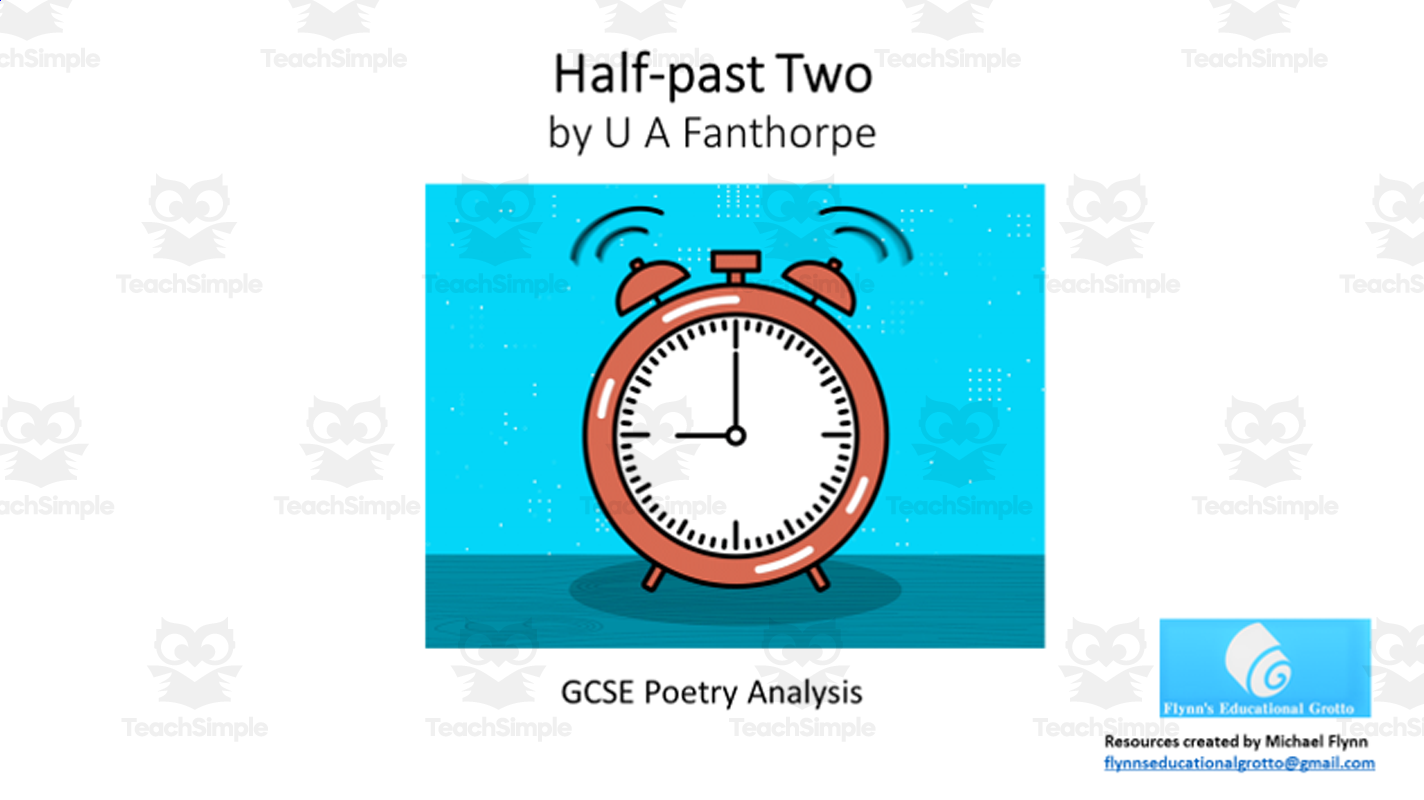
U.A. Fanthorpe's poem "Half-Past Two," about a child kept after school who does not yet understand clock time, is unpacked slide by slide in a GCSE-level English literature lesson built around close reading and analytical writing. The slideshow opens with learning intentions and a glossary of critical terms (narrator, third person, repetition, portmanteau, emotive language, personification, contraction, oxymoron), then supplies biographical context on Fanthorpe before presenting the full poem text twice for annotation. Stanza-by-stanza question sets walk students through content, language, and structure analysis, including the poem's invented compound words like "Gettinguptime" and "timeyouwereofftime," before a PETAL (Point, Evidence, Technique, Analysis, Link) paragraph frame and an extended-response homework task close out the lesson. A model "possible answer" in three bullet points on the poem's tone is included so students can compare their own analysis against a worked example. For another GCSE poem taught with the same PETAL paragraph framework, Vernon Scannell’s ‘Nettles’ offers stanza-by-stanza analysis practice on a different poem.

A digital micro-learning reading comprehension lesson built around the original story 'Stick's Masterpiece,' teaching vocabulary, close reading, and summarizing.

Present the causes of World War II — the Treaty of Versailles' effects on Germany, the Great Depression's global impact, and the rise of fascist dictators — through a slide presentation paired with video content.
 Free download
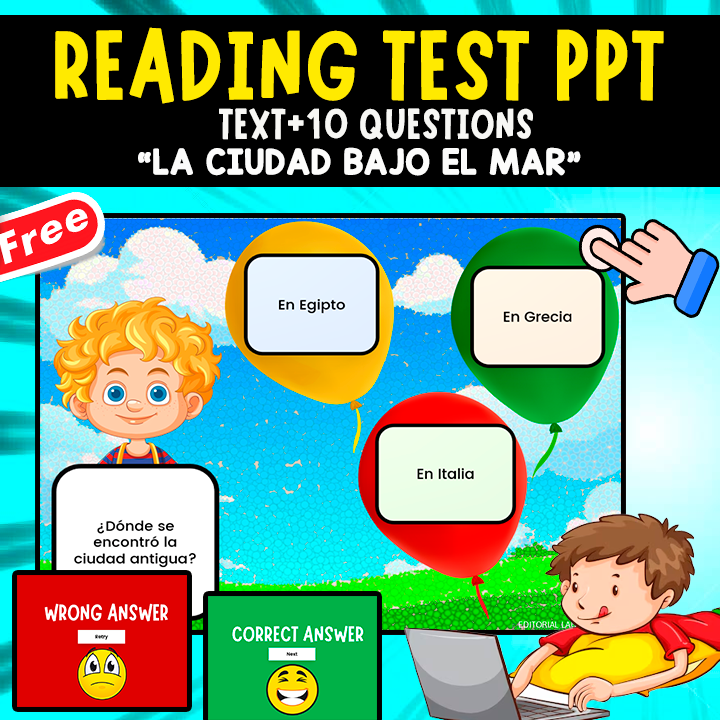
A Spanish-language reading comprehension quiz presentation about the submerged ancient city of Heracleion, used to check understanding of a short informational passage.

Teach the five phases of informative/expository writing (research and brainstorming, main ideas and support, introduction and conclusion, draft/edit/revise, final draft) using a Pirate-themed set of activities.
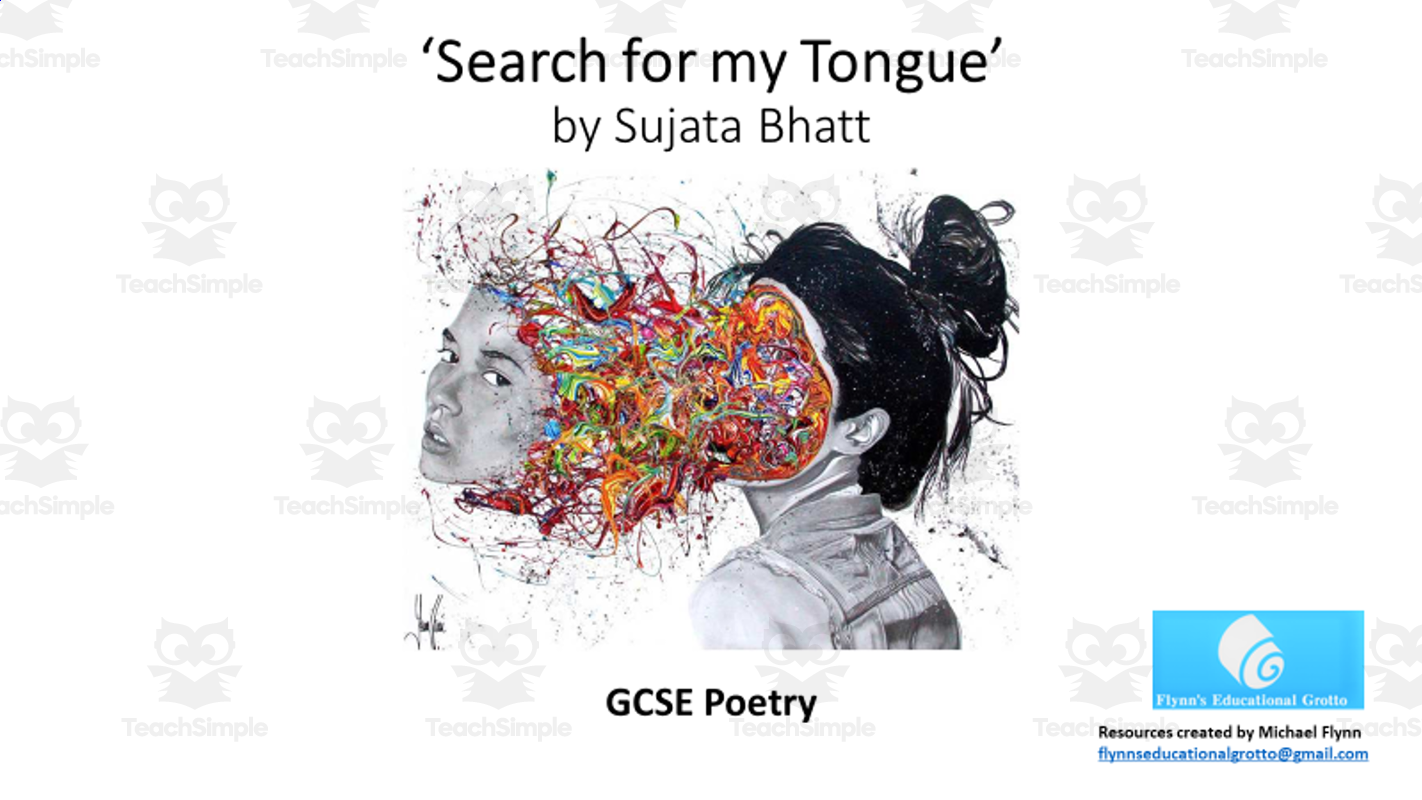
A GCSE English Literature poetry-analysis lesson presentation that guides students through close reading and critical analysis of 'Search for my Tongue' by Sujata Bhatt.

Deliver a 14-slide digital mini-lesson teaching students geography and civics facts about the U.S. state of Texas via multimedia slides.

Digital Spanish spelling activity practicing written accents (la tilde), presented as 9 sequential slide-based questions each offering two spelling options to choose between.
 Free download
Review and reinforce Sun, Moon and Earth vocabulary terms for Middle School / Grade 8 students through an interactive multiple-choice PowerPoint.