resources by type
resources by grade
resources by subject
other resources

3,949 products added recently

Page 17 - Quizzes

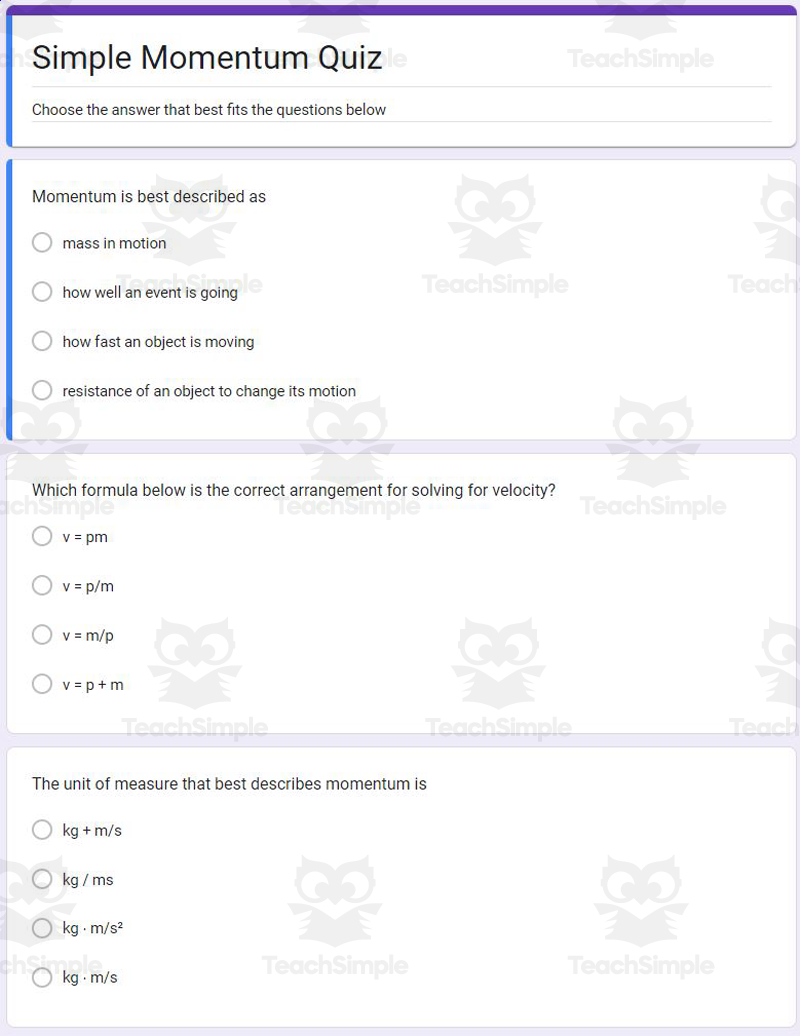
Quizzes are essential tools for measuring student understanding and retention of material. Our extensive collection offers assessments across multiple subjects, including math, science, language arts, and social studies. These quizzes range from multiple-choice and true/false questions to short answer and essay prompts. They can be used for formative assessments to guide instruction or summative evaluations at the end of a unit. Incorporating quizzes into your teaching strategy provides insights into student progress and helps identify areas that may need reinforcement.

Relevant
alt down
Any Time
alt down
filter by
alt down
All File Types
alt down
filter nav Show filters
Sort by: Relevant
CLEAR
resources by type
Activities
down arrow
Classroom Decor
down arrow
Teacher Tools
up arrow
Anchor Charts
Assessments
Charts
DBQ's
Diagrams
Graphic Organizers
Lesson Plans
Literacy Readers
Outlines
Presentations
Quizzes and Tests
up arrow
Quizzes
Tests
Rubrics
Templates
Worksheets & Printables
down arrow
resources by grade
Early Learning
down arrow
Pre-K
down arrow
Elementary
down arrow
Middle School
down arrow
High School
down arrow
Adult Education
Not Grade Specific
resources by subject
Creative Arts
down arrow
ELA
down arrow
Holiday & Seasonal
down arrow
Life Studies
down arrow
Math
down arrow
P.E. & Health
down arrow
Social Studies
down arrow
Special Resources
down arrow
Science
down arrow
Foreign Languages
down arrow
Resources for Teachers
down arrow
other resources
Common Core
Homeschool Resources
down arrow
Montessori
Research
STEM
Insects, Animals, & Ecosystems: SAMPLE Reading passage (FILLABLE PDF)
Free Download

Insects, Animals, & Ecosystems: SAMPLE Reading passage (FILLABLE PDF)
Science, ELA, Reading, Reading Comprehension, Strategies, Resources for Teachers, Life Sciences, Animals, Insects, Nature & Plants, Grade 6, 7, 8, 9, Writing Prompts, Worksheets & Printables, Centers, Activities, Teacher Tools, Assessments, Quizzes and Tests, Quizzes, Tests

This is a ONE PASSAGE SAMPLE. The following is the description of the FULL resource and the downloading links: Insects, Animals, & Ecosystems: Reading Comprehension Passages (FILLABLE PDF) This very engaging and fillable collection of life science reading passages about Insects, Animals, & Ecosystems is designed to bridge the gap between science and literacy through strengthening reading comprehension and sparking scientific curiosity in middle school students. Each passage blends English Language Arts skills with accurate science content that supports NGSS classroom practice. Ideal for interdisciplinary learning in ELA and Science. Suitable for Grade 9 review, too! These worksheets are designed as fillable PDFs , which means students can type their answers directly into the document on any computer or tablet . Each page includes highlighted text fields that show them exactly where to type! What Is Included? There are (3) informational passages: Ecosystems: Webs of Life and Change Insects: Small Creatures, Giant Impact Unique Animals of the Rainforest Student Tasks for Each Passage: 5 multiple-choice questions targeting main idea, key details, inference, vocabulary in context, and use of evidence 5 vocabulary matching items with clear, student-friendly definitions 5 text-based questions that require citing specific lines or facts 1 summary prompt that asks students to condense central ideas accurately Full answer key for every section Available Formats for this Resource Word Docs Google Docs FULL CATALOG OF DOWNLOADING LINKS HERE Reading Passage Links: Astronomy & Space Science PDF Fillable PDF Word Docs Google Docs Volcanoes, Rocks, & Mountains PDF Fillable PDF Word Docs Google Docs Rock Cycle, Soil, & Sinkholes PDF Fillable PDF Word Docs Google Docs Mars, Glaciers, & Antarctica PDF Fillable PDF Word Docs Google Docs Water Cycle, Acid Rain, & Wastewater PDF Fillable PDF Word Docs Google Docs Insects, Animals, & Ecosystems PDF Fillable PDF Word Docs Google Docs Bioluminescence & Insects PDF Fillable PDF Word Docs Google Docs Animal Skin, Cats, & T. Rex PDF Fillable PDF Word Docs Google Docs Human Body and Senses PDF Fillable PDF Word Docs Google Docs Health & Applied Bioscience PDF Fillable PDF Word Docs Google Docs Waves, Light, & Imaging PDF Fillable PDF Word Docs Google Docs Electricity & Energy PDF Word Docs Google Docs Motion & Materials PDF Word Docs Google Docs Chemistry and Materials Science PDF Fillable PDF Word Docs Google Docs How to Use These PDFs Click on the highlighted area to start typing your answer. Move to the next question by clicking in the next highlighted box. When you are finished, close the document and select SAVE so your answers stay recorded. If you want to keep a blank copy for later, choose Save As and give your completed version a new name. Product Details Length: 14 pages total Grades: 6–8, also suitable for Grade 9 review Use cases: close reading, stations, homework, intervention, test prep, and sub plans Standards support: reinforces informational-text skills and supports NGSS-style sense making through observation, modeling, and clear use of claim, evidence, and reasoning Why Teachers Choose This Set Authentic science content paired with rigorous literacy practice Consistent task structure across all passages for easier planning and smoother student routines Clear, age-appropriate writing that builds confidence without oversimplifying Use this set to reinforce ELA skills in science, to add literacy to your lessons, or to support independent work. The passages strengthen main idea, evidence use, vocabulary in context, inference, cause and effect, and summary writing. With ready-to-use assessments and complete answer keys, you can provide focused practice that is simple to run and fast to review.

Author Middle & High School - CORED Education

Rating

Tags Middle School, Reading Comprehension, Reading Strategies, ELA, Centers, Reading Passage, Assessments, Vocabulary, Life Science, Insects

Subject-Verb Agreement Supplementary Materials - Grades 1-2 (PDF)
Free Download

Subject-Verb Agreement Supplementary Materials - Grades 1-2 (PDF)
ELA, Language Development, ESL, Grammar, Common Core, Grade 1, 2, Teacher Tools, Lesson Plans, Outlines, Quizzes, Quizzes and Tests, Tests, Assessments, Worksheets, Worksheets & Printables

Subject-Verb Agreement Supplementary Materials Note: This download DOES NOT include the tests themselves. You can still make use of these materials without them but they are recommended. Download in a format of your choice in the "Links" section below. In the Supplementary Pack Interactive Ice Breakers: Fun, hands-on activities that get students thinking about adjectives right from the start. Guided Practice: Teacher-led exercises that reinforce the day’s lesson, ensuring students can confidently identify and use adjectives. Group and Partner Tasks: Collaborative activities that allow students to work together to solve problems, categorize adjectives, and create descriptive sentences. Independent Worksheets: Structured worksheets that provide individual practice and help solidify understanding of key concepts. Exit Tasks: Quick, reflective activities at the end of each lesson that assess understanding and encourage students to apply what they’ve learned. Subject-Verb Agreement Overview: Includes: Intro to Subject-Verb Agreement Match Subject to Verb Match Verb to Subject Additional Practice Google Docs Google Forms Google Slides PDF PPT Word Free Supplementary Materials Pack FULL CATALOG OF DOWNLOAD LINKS HERE Grade 1/2 Links: Capitalization and Punctuation Google Docs Google Forms Google Slides PDF PPT Word Free Supplementary Materials Pack Adjectives Google Docs Google Forms Google Slides PDF PPT Word Free Supplementary Materials Pack Nouns Google Docs Google Forms Google Slides PDF PPT Word Free Supplementary Materials Pack Pronouns Google Docs Google Forms Google Slides PDF PPT Word Free Supplementary Materials Pack Verbs Google Docs Google Forms Google Slides PDF PPT Word Free Supplementary Materials Pack Prefixes & Suffixes Google Docs Google Forms Google Slides PDF PPT Word Free Supplementary Materials Pack Sentence Structure Google Docs Google Forms Google Slides PDF PPT Word Free Supplementary Materials Pack Subject-Verb Agreement Google Docs Google Forms Google Slides PDF PPT Word Free Supplementary Materials Pack ELA Review Questions Overview Questions have three answer choices. There are a handful of pictures on each test for aesthetic purposes, as well as a review sheet covering most of the topics covered in the product. Introduction or Example Sheet Each topic will include an introduction or example sheet to go through first with your students. Full Answer Keys Full answer keys and sample responses are provided so no matter how busy you are, you know you're covered! For similar downloads and other frees, do check out Cored Group on TeachSimple.

Author Cored Education

Tags Elementary, Reading, Comprehension, Vocabulary, Answers, Ccss, Common Core, Spelling, Writing, Passages

Flutes Reading Comprehension Passage - Cored Ed Encyclopedia

Flutes Reading Comprehension Passage - Cored Ed Encyclopedia
ELA, Reading Comprehension, Reading, Science, Technology, Social Studies, History, Music, Creative Arts, Physics, Grade 2, 3, 4, 5, Worksheets & Printables, Worksheets, Teacher Tools, Centers, Activities, Writing Prompts, Assessments, Quizzes and Tests, Quizzes, Lesson Plans

This flutes reading comprehension with lesson plan includes: Visualization (on the front cover) Start your lesson by taking a minute to think and share something about the topic. Read the script aloud (slowly), perhaps prepare some music or sound effects. Student close their eyes and let their imaginations wander. Students open their eyes, read the question aloud and give them a few minutes to complete. Ask a few students to share or keep answers until the end to compare with what they learn in the passage. Quick pause—thousands of Cored Education products are included with your TeachSimple membership. Download links and encyclopedia index available here. Pre-Reading Trivia Students will write down one thing they already know about the subject and then read five more facts and discuss. These facts are fun, and the students will enjoy learning about the subject before reading more. Give 1 minute for students to write what they already know (no pressure—best guess is fine). Read the five facts together. After each fact, do ask a student for their opinion, was it surprising? Set a purpose by asking students to highlight/underline one fact they want to learn more about during the reading. Reading Passage The text is a high-interest reading passage with set paragraphs, roughly three to four paragraphs long. It contains a variety of themes about the topic, anywhere from history to technology. The passage is between 250 and 350 words in length. First, ask students to look at the headings and see what they’ll learn about today. What do they know about the topic/heading? First read options: Teacher read-aloud (best for support). Partner reading (paragraph by paragraph). While reading, students underline important details, and vocabulary words they think may come up in the questions section. Mixed Questions The first question page contains four multiple-choice questions, each with a choice of four answers, and three written response questions that require a sentence or two from the student. Students complete the mcqs first independently, then review quickly as a class. For the 3 written responses, try to get students giving the answer with some form of evidence: “I think ___ because the text says ___.” If students get stuck, send them back to check the passage. Vocabulary Questions Practice seven key words from the text in this section across two activities. First section is scrambled words where students will unscramble three words given a clue for each. The second section is a word to meaning matching activity. Before starting, have some students read out words they underlined in the passage. Ask students to say the word and read aloud the sentence(s) around each word. Ask students to do scrambled words and the matching exercise in pairs then go through answers as a class. For the scrambled spelling task, get four pairs to come up to the board and write the words for extra practice with the other student reading out the clue. For the matching task, prompt students to give full sentences: “I matched ___ with ___ because ___.” Creative Writing In this question, the student will be required to write a five to eight sentence paragraph on a question related to the topic. Before starting, ask students write down 3 key ideas they are going to include in their piece. Ask students for ideas to share around the class to help those struggling. Pro writing expectations: 5–8 sentences At least 2 facts or details from the passage At least 2 vocabulary words from the previous page Students read their paragraphs while classmates listen for facts and vocabulary words. Extension Activities This page is optional for fast finishers or to take home. There are several activities, each one requiring a different skill. Do some, do none, do all, completely optional - but you will feel reassured knowing every possibility is planned for. Includes summary writting question and additional facts. Answer Key There are answers for the multiple-choice questions, written response questions have sample answers, vocabulary answers and if there is a summary question then a sample summary will be provided as well. Lesson Plan Included Customized lesson plan for this lesson is included. Lesson Snapshot Title: Flutes Genre: Nonfiction (Informational Text) Subject: Music / Science (Sound) / Reading (Informational Text) Primary Topic: How flutes make sound and changed over time Estimated Guided Reading Level (A–Z): Q What This Lesson Teaches Best How very early flutes were made (carved from bird bone and mammoth ivory ) and why these finds matter as early musical instruments. How flutes make a clear note: a thin jet of air across an opening creates a wobbling column of air inside the tube. Cause and effect in instruments: covering or uncovering holes changes the tube’s length, so the pitch goes up or down. How design evolved in Europe, including added holes and keys and Theobald Boehm’s 1800s redesign with tone holes and ring keys . Key features of a modern concert flute (often metal, about 26 inches long, three sections, padded keys, range of a little more than three octaves ). Learning Goals Students will describe what materials some ancient flutes were carved from and how old they were said to be. Students will explain how a flute makes a clear note using the idea of a “column of air” in a tube. Students will explain how covering or uncovering holes changes pitch by changing the tube’s length. Students will summarize how the sideways flute changed over time in Europe, including added holes and keys. Students will identify changes Theobald Boehm made to flute design and how ring keys helped players. Students will describe at least two details of today’s concert flute mentioned in the passage. Key Vocabulary From the Text mammoth — an ancient animal related to today’s elephants. ivory — hard material used for carving. column — a long “tube” shape of air inside. pitch — how high or low a note sounds. octaves — sets of notes higher or lower. FULL CATALOG OF DOWNLOAD LINKS AND ENCYCLOPEDIA INDEX HERE

Author Cored Education

Rating

Tags Vocabulary, Reading Comprehension, Reading Passages, Lesson Plans, Ela Lesson Plans, Reading Comprehension Lesson Plans, Pre-reading, History, Music, Music Lesson Plans

Islands Free Reading Comprehension Passage
Free Download

Islands Free Reading Comprehension Passage
ELA, Reading Comprehension, Reading, Language Development, ESL, Library, Science, Earth Sciences, Earth and Environmental Sciences, Strategies, Grade 2, 3, 4, 5, Worksheets & Printables, Worksheets, Teacher Tools, Centers, Activities, Writing Prompts, Assessments, Quizzes and Tests, Quizzes, Tests

Islands reading comprehension: Snapshot Title: How Islands Are Formed Genre: Nonfiction Subject: Earth Science Primary Topic: How different types of islands form Estimated Guided Reading Level (A–Z): S What This Lesson Teaches Best Explains that islands can form in several different ways. Compares volcanic islands, continental islands, and coral islands. Teaches sequence and process through volcano eruptions, lava layers, and island growth. Connects landforms to Earth processes such as magma, sea-level rise, and tectonic plates. Explains why low coral islands are vulnerable to rising oceans. Learning Goals Students will define islands using details from the passage. Students will explain how volcanic islands form over time. Students will describe how continental islands can separate from a mainland. Students will identify coral islands as atolls built by tiny sea creatures. Students will compare volcanic islands and continental islands using text evidence. Key Vocabulary From the Text Magma — hot melted rock beneath Earth. Crust — Earth’s outer rocky layer. Tectonic — related to moving plates of Earth. Atolls — ring-shaped coral islands. Polyps — tiny sea creatures that build coral. Did you know there are thousands of Cored Education products included with a TeachSimple membership? Click here for the free catalog. This product includes: Reading Passage The text is a high-interest reading passage with set paragraphs, roughly three to four paragraphs long. It contains a variety of themes about the topic, anywhere from history to technology. The passage is between 250 and 350 words in length. First, ask students to look at the headings and see what they’ll learn about today. What do they know about the topic/heading? First read options: Teacher read-aloud (best for support). Partner reading (paragraph by paragraph). While reading, students underline important details, and vocabulary words they think may come up in the questions section. Mixed Questions The first question page contains four multiple-choice questions, each with a choice of four answers, and three written response questions that require a sentence or two from the student. Students complete the mcqs first independently, then review quickly as a class. For the 3 written responses, try to get students giving the answer with some form of evidence: “I think ___ because the text says ___.” If students get stuck, send them back to check the passage. Creative Writing In this question, the student will be required to write a five to eight sentence paragraph on a question related to the topic. Before starting, ask students write down 3 key ideas they are going to include in their piece. Ask students for ideas to share around the class to help those struggling. Pro writing expectations: 5–8 sentences At least 2 facts or details from the passage At least 2 vocabulary words from the previous page Students read their paragraphs while classmates listen for facts and vocabulary words. Answer Key There are answers for the multiple-choice questions, written response questions have sample answers, vocabulary answers and if there is a summary question then a sample summary will be provided as well.

Author Cored Education

Rating

Tags Reading Comprehension, Reading Passages, Reading, Ela Mcqs, Creative Writing, Comprehension, Free, Free Reading, Science, Earth Science

The Giant’s Causeway in Ireland: Social Studies Passage (Fillable PDF)

The Giant’s Causeway in Ireland: Social Studies Passage (Fillable PDF)
ELA, Reading, Reading Comprehension, Strategies, Resources for Teachers, Social Studies, Geography, Grade 6, 7, 8, 9, Writing Prompts, Worksheets & Printables, Centers, Activities, Teacher Tools, Assessments, Quizzes and Tests, Quizzes, Tests

The Giant’s Causeway in Ireland: Social Studies Reading Comprehension Passage (Fillable PDF) This resource introduces a unique Social Studies reading comprehension passage with questions about The Giant’s Causeway in Ireland. The passage is carefully designed to bridge the gap between social studies and literacy through strengthening reading comprehension and sparking knowledge curiosity in middle school students. Each passage blends English Language Arts skills with accurate social studies content . Ideal for interdisciplinary learning in ELA and Social Studies. Suitable for Grade 9 review, too! These worksheets are designed as fillable PDFs , which means students can type their answers directly into the document on any computer or tablet . Each page includes highlighted text fields that show them exactly where to type! Student Tasks throughout the passage: 5 multiple-choice questions targeting the following skills: main idea, key details, inference, vocabulary in context, and use of evidence 5 vocabulary matching items with clear, student-friendly definitions 5 text-based questions that require citing specific lines or facts 1 summary prompt that asks students to condense central ideas accurately Full answer key for every section Available Formats for this Resource: PDF Word Docs Google Docs FULL CATALOG OF DOWNLOADING LINKS HERE Social Studies Reading Comprehension Collection Links: 1. Ancient Civilizations PDF Fillable PDF Word Docs Google Docs 2. Early Empires and Trade Networks PDF Fillable PDF Word Docs Google Docs 3. The Founding of the United States PDF Fillable PDF Word Docs Google Docs 4. Language, Culture, and Meaning PDF Fillable PDF Word Docs Google Docs 5. Psychology and Society PDF Fillable PDF Word Docs Google Docs 6. Global Festivals and Traditions PDF Fillable PDF Word Docs Google Docs 7. Extreme Environments and People PDF Fillable PDF Word Docs Google Docs 8. Food, Culture, and Preservation PDF Fillable PDF Word Docs Google Docs 9. Global Food Customs PDF Fillable PDF Word Docs Google Docs 10. Media, Communication, and Popular Culture PDF Fillable PDF Word Docs Google Docs 11. Human Impact on the Environment PDF Fillable PDF Word Docs Google Docs 12. Civic Action and Social Change PDF Fillable PDF Word Docs Google Docs 13. Fashion, Society, and Power PDF Fillable PDF Word Docs Google Docs 14. People, Places, and Unusual Histories PDF Fillable PDF Word Docs Google Docs Product Details: Length: 5 pages Grades: 6–8, also suitable for Grade 9 review Use cases: close reading, stations, homework, intervention, test prep, and sub plans Why Teachers Choose This Passage: Authentic social studies content paired with rigorous literacy practice Consistent task structure for easier planning and smoother student routines Clear, age-appropriate writing that builds confidence without oversimplifying Use this passage to reinforce ELA skills in social studies, to add literacy to your lessons, and to support independent work. The passage strengthens main idea, evidence use, vocabulary in context, inference, cause and effect, and summary writing. With ready-to-use assessments and complete answer keys, you can provide focused practice that is simple to run and fast to review.

Author Middle & High School - CORED Education

Rating

Tags Middle School, Reading Comprehension, Reading Strategies, ELA, Centers, Reading Passage, Assessments, Vocabulary, Social Studies, Geography

Cold Exposure & Sauna Recovery Logs

Cold Exposure & Sauna Recovery Logs
P.E. & Health, Health, Mental Health, Physical Education, Sports, Yoga, Mindfulness, Science, Life Sciences, Human Body, Grade 6, 7, 8, 9, 10, 11, 12, Worksheets & Printables, Workbooks, Worksheets, Word Searches, Teacher Tools, Lesson Plans, Quizzes and Tests, Quizzes, Tests, Assessments

Unlock Peak Performance with the Ultimate Athlete Recovery Workbook: A Sports Science Deep Dive into HRV & Contrast Therapy Are your student-athletes training hard but struggling with burnout, nagging injuries, or performance plateaus? The secret to unlocking their true potential isn't just more practice—it's smarter recovery. Introducing the Cold Exposure & Sauna Recovery Logs: HRV Tracking for Athletes , a comprehensive, data-driven curriculum designed to transform young athletes from passive participants into active scientists of their own physiology. This isn't just another workout log; it's a complete educational resource that bridges the gap between high school athletics, biology, and cutting-edge sports science. This 39-page digital PDF workbook empowers students to objectively measure their recovery using Heart Rate Variability (HRV) and understand the powerful effects of contrast therapy (sauna and cold plunge). They will learn to listen to their bodies, prevent overtraining, and strategically peak for competition. What's Inside This Complete, No-Prep Resource? Part 1: The Science of Recovery (Theory Section): A detailed yet accessible introduction to the core concepts, including: The Physiology of Contrast Therapy (Vasomotor Gymnastics, Endocrine Response) Decoding Heart Rate Variability (HRV) and the Autonomic Nervous System The Principle of Hormesis and the "Rebound Effect" Protocols for Accurate Data Collection with real-world case studies. Part 2: The Student Workbook (10 In-Depth Worksheets): Actionable, printable logs and analysis sheets that guide students through every step of the process. Worksheets include: Baseline Physiological Metrics & Autonomic Regulation The Contrast Therapy Protocol Log Acute HRV Response & Somatic Feedback Environmental Variables & Thermal Dynamics Longitudinal Tracking: The Weekly Micro-Cycle Subjective Perception vs. Objective Biometrics Sleep Architecture & Thermal Recovery Synergies Game-Day Readiness & CNS Priming Analyzing a "Red Day" (Maladaptation & Overtraining) Capstone Synthesis: Designing a Periodized Recovery Plan Part 3: Visuals & Teacher Resources: High-Quality Visual Aids: Clear, conceptual flowcharts and graphs illustrating the physiological mechanisms and tracking protocols. Complete Teacher & Coach Answer Key: Comprehensive model responses and grading notes for every single question, saving you valuable time and ensuring you can confidently guide your students. Who is this resource for? This is a perfect tool for High School Coaches, PE Teachers, Athletic Directors, and Science Teachers (Biology, Anatomy & Physiology, Health). It’s also an invaluable resource for parents of dedicated student-athletes who want to give their child a competitive edge in a safe, science-backed way. Stop guessing and start measuring. Empower your athletes with the knowledge to train smarter, recover faster, and perform better. Download this game-changing resource today! Keywords: Sports Science, Athlete Recovery, Heart Rate Variability, HRV, Contrast Therapy, Ice Bath, Sauna, PE Curriculum, Health, Biology, Anatomy, Physiology, Student Athlete, High School, Data Tracking, STEM for Athletes, Overtraining, Peak Performance, Wearable Technology, Digital Worksheet, Printable PDF, Sports Medicine. Why Parents/Schools Love It : Bridges Academics and Athletics: This resource masterfully integrates STEM concepts (biology, data analysis) with physical education, making science tangible and exciting for student-athletes. Prevents Injury & Burnout: By teaching athletes to use objective data (HRV), it moves them beyond "no pain, no gain" and empowers them to recognize signs of overtraining before injury or burnout occurs. Fosters Autonomy & Critical Thinking: It transforms students into proactive managers of their own health. They learn to analyze data, hypothesize, and create personalized plans, skills that last a lifetime. Provides a Competitive Edge: This is the same science used by professional athletes. Giving high schoolers access to these advanced recovery protocols offers them a significant, science-backed advantage over their competition. Comprehensive & Turnkey Solution: With detailed theory, 10 worksheets, visuals, and a full answer key, it is a complete, no-prep curriculum that saves teachers and coaches hours of research and preparation time. Target Student Audience : Based on the language, concepts (hormesis, RMSSD), and direct references ("tenth-grade student," "high school athletes"), target: Primary Target: High School Students (Grades 10-12) . Specific Courses: This is ideal for: Advanced Physical Education / Athletic Training Programs: For schools with elite sports teams. Sports Science or Kinesiology Electives. Advanced Biology or Human Anatomy & Physiology Classes: As a practical application unit connecting classroom concepts to real-world performance. Health Science Classes. Secondary Target: College Freshmen in introductory Kinesiology or Exercise Science courses. The material is robust enough for this level. Copyright/Terms of Use: This Book was copyrighted by Syed Hammad Rizvi. This resource is for personal and single classroom use only. You may not alter, redistribute, or sell any part of this resource. In other words, you may not put it on the Internet where it could be publicly found and downloaded. If you want to share this resource with colleagues, please purchase additional licenses from Teachsimple. Thank you for respecting these terms of use. This product is happily brought to you by Syed Hammad Rizvi

Author Creative Book Store

Rating

Tags SportsScience, AthleteRecovery, HRV, Recovery, Biohacking, Performance, Athletics, Training, Fitness, Health

Shanghai Sample Mini Unit - Includes Reading, Vocabulary, Facts
Free Download

Shanghai Sample Mini Unit - Includes Reading, Vocabulary, Facts
ELA, Language Development, ESL, Resources for Teachers, Vocabulary, Reading Comprehension, Reading, Geography, Social Studies, Grade 2, 3, 4, 5, Worksheets & Printables, Worksheets, Teacher Tools, Quizzes and Tests, Quizzes, Activities

Shanghai Mini Unit 1 Day Sample About the Full Download This Shanghai Mini Unit is a 5-day literacy resource created for students in grades 2–5. Each day follows a clear, consistent structure with seven engaging activities designed to build vocabulary, boost reading confidence, and explore the sights, sounds, and traditions of Shanghai. Students complete the same core activities each day, helping to build routine while keeping learning meaningful and fun: Vocabulary words Sentence writing Reading comprehension Act It Out (partner conversation) Shanghai facts Discussion questions Describing words At the end of the week, students complete a 6-question written quiz to reflect on what they’ve learned and apply their vocabulary in complete sentences. The unit blends structure with cultural discovery, making it ideal for literacy blocks, geography-themed lessons, cultural studies, or enrichment. Vocabulary words included in the unit: skyline, harbor, temple, lantern, market, bamboo, ferry, skywalk, pagoda, vendor, calligraphy, silk, acrobat, dragon, palace, terrace, opera, Lantern Festival, rickshaw, spice, temple fair, scroll, porcelain, dim sum, kite Describing words (adjectives) used in Shanghai context: bright, busy, peaceful, colorful, tall, glowing, high, steady, tasty, smooth, flowing, bold, careful, graceful, grand, glowing, spicy, lively, delicate, playful, artful, festive How to Use This Shanghai Mini Unit This Shanghai Mini Unit is designed to be flexible and easy to implement in any classroom or learning setting. Each day features seven repeatable activities that build literacy skills through Shanghai-themed content. Teachers can guide students through each task as a whole class, in small groups, or independently. Start the day with vocabulary and sentence building, then move into reading comprehension and the Act It Out partner script to encourage fluency and expression. Fun facts and discussion questions spark critical thinking, while the describing words support writing and oral language. At the end of the week, use the included written quiz to review key vocabulary and concepts. The consistent structure allows students to build confidence while exploring the culture, language, and energy of one of the world’s most fascinating cities. Includes color and black and white versions. More Shanghai Products FULL CATALOG OF DOWNLOAD LINKS HERE Mini Unit Links Shanghai Spring St. Patrick's Day Starters St. Patrick's Day Sprinters Mini Units in Depth The mini unit series is a collection of structured language-learning resources that support students in building vocabulary, improving reading skills, and practicing language in context. Each unit focuses on a carefully selected set of words, ensuring students are introduced to meaningful vocabulary that connects to cultural traditions, historical events, or well-known symbols. The format includes vocabulary exercises, example sentences, reading passages, conversation prompts, fun facts, discussion questions, and quizzes to reinforce learning in an interactive and engaging way. Through these activities, students gain a deeper understanding of language beyond definitions. The reading passages provide contextual exposure, while the conversation and discussion sections encourage spoken fluency and critical thinking. Fun facts introduce cultural insights, helping students connect language to real-world traditions. The structured quiz and written response sections assess comprehension and encourage complete sentence answers, reinforcing proper grammar and sentence structure. This series supports ESL learners and elementary students in grades 2-5, offering a balanced approach to language acquisition, cultural learning, and interactive engagement. For similar downloads and other frees, do check out Cored Group on TeachSimple.

Author Cored Education

Tags Elementary, Reading, Comprehension, Vocabulary, Passages, Esl, Mini Unit, Discussions, Geography, Shanghai

Science Reading Comprehension Physical & Chemical Properties Fillable

Science Reading Comprehension Physical & Chemical Properties Fillable
Science, Physics, Common Core, Reading Comprehension, Reading, ELA, Resources for Teachers, ESL, Language Development, Vocabulary, Grade 5, 6, 7, Worksheets & Printables, Worksheets, Centers, Activities, Tests, Quizzes and Tests, Teacher Tools, Quizzes, Assessments

Reading Comprehension Passages on Physical and Chemical Properties for Physical Science Physical & Chemical Properties Reading Passage1: Measuring Matter: Mass, Volume, and Density Reading Passage2: Physical and Chemical Properties of Matter Reading Passage 3: Physical and Chemical Changes in Matter Reading Passage4: Atoms, Elements, and Compounds Reading Passage5: Chemicals: Helpful and Harmful FILLABLE PDF VERSION Worksheet-style pages, but with type-in answer boxes so students can complete and save their work digitally. Other versions are available in the links list below or in the full catalog. Snapshot Genre: Nonfiction Subject: Physical Science Primary Topic: properties, changes, and structure of matter Estimated Guided Reading Level (A–Z): W What This Teaches Best Shows how to measure matter using mass, volume, and density, including formulas, cubic centimeters, milliliters, and a graduated cylinder. Teaches students to distinguish physical properties from chemical properties using examples such as buoyancy, conductivity, solubility, and flammability. Explains physical and chemical changes in matter, including melting, boiling, evaporation, condensation, mixtures, solutions, suspensions, and combustion. Builds foundational chemistry knowledge about atoms, elements, compounds, subatomic particles, and how the periodic table is organized. Connects chemistry to everyday safety by explaining acids, bases, neutral substances, pH testing, and safe handling of chemicals. Learning Goals Students will describe matter as anything that has weight and takes up space. Students will measure or calculate mass, volume, and density using the units and formulas given in the text. Students will identify and compare physical properties and chemical properties of matter using examples from the text. Students will explain the difference between physical changes and chemical changes using evidence from the lesson examples. Students will identify the parts of an atom and explain how elements and compounds are related. Students will classify substances as acidic, basic, or neutral and describe why some chemicals must be handled carefully. FULL CATALOG OF DOWNLOAD LINKS HERE Grade 5/6 Links: Physical Science Part 1 - Physical and Chemical Properties Google Docs/Slides/Forms PDF PPT Word Free Supplementary Pack Accompanying Videos Physical Science Part 2 - Motion and Energy Google Docs/Slides/Forms PDF PPT Word Free Supplementary Pack Accompanying Videos Physical Science Part 3 - Electricity and Magnets Google Docs/Slides/Forms PDF PPT Word Free Supplementary Pack Accompanying Videos Life Science Part 1 - Cells, Reproduction and Genetics Google Docs/Slides/Forms PDF PPT Word Free Supplementary Pack Accompanying Videos Life Science Part 2 - Human Body Systems Google Docs/Slides/Forms PDF PPT Word Free Supplementary Pack Accompanying Videos Life Science Part 3 - Plant Parts and Ecosystems Google Docs/Slides/Forms PDF PPT Word Free Supplementary Pack Accompanying Videos Earth Science Part 1 - Plate Tectonics and Rock Cycle Google Docs/Slides/Forms PDF PPT Word Free Supplementary Pack Accompanying Videos Earth Science Part 2 - Ocean Exploration and Natural Resources Google Docs/Slides/Forms PDF PPT Word Free Supplementary Pack Accompanying Videos Earth Science Part 3 - Weather and Solar System Google Docs/Slides/Forms PDF PPT Word Free Supplementary Pack Accompanying Videos For similar products and other frees, do check out Cored Group on TeachSimple .

Author Cored Education

Rating

Tags Science, Elementary, Reading, Comprehension, Vocabulary, Physics, Physical Science, Printables, Worksheets, Reading Passages

Earth Science Reading Comprehension Passage: The Rock Cycle (Word)

Earth Science Reading Comprehension Passage: The Rock Cycle (Word)
Science, ELA, Reading, Reading Comprehension, Strategies, Resources for Teachers, Earth and Environmental Sciences, Earth Sciences, Grade 6, 7, 8, 9, Writing Prompts, Worksheets & Printables, Centers, Activities, Teacher Tools, Assessments, Quizzes and Tests, Quizzes, Tests

Science Reading Comprehension Passages and Questions: The Rock Cycle (Word) This very engaging earth science reading passage about The Rock Cycle is designed to bridge the gap between science and literacy through strengthening reading comprehension and sparking scientific curiosity in middle school students. The passage blends English Language Arts skills with accurate science content that supports NGSS classroom practice. Ideal for interdisciplinary learning in ELA and Science. Suitable for Grade 9 review, too! Student Tasks for The Passage: 5 multiple-choice questions targeting main idea, key details, inference, vocabulary in context, and use of evidence 5 vocabulary matching items with clear, student-friendly definitions 5 text-based questions that require citing specific lines or facts 1 summary prompt that asks students to condense central ideas accurately Full answer key for every section Available Formats for this Resource PDF Fillable PDF Google Docs FULL CATALOG OF DOWNLOADING LINKS HERE Product Details Length: 5 pages total Grades: 6–8, also suitable for Grade 9 review Use cases: close reading, stations, homework, intervention, test prep, and sub plans Standards support: reinforces informational-text skills and supports NGSS-style sense making through observation, modeling, and clear use of claim, evidence, and reasoning Why Teachers Choose This Set Authentic science content paired with rigorous literacy practice Consistent task structure across all passages for easier planning and smoother student routines Clear, age-appropriate writing that builds confidence without oversimplifying Other Science Reading Collections you May find in the store: 1. Astronomy & Space Science 2. Volcanoes, Rocks, & Mountains 3. Rock Cycle, Soil, & Sinkholes 4. Mars, Glaciers, & Antarctica 5. Water Cycle, Acid Rain, & Wastewater 6. Insects, Animals, & Ecosystems 7. Bioluminescence & Insects 8. Animal Skin, Cats, & T. Rex 9. Human Body and Senses 10. Health & Applied Bioscience 11. Waves, Light, & Imaging 12. Electricity & Energy 13. Motion & Materials 14. Chemistry and Materials Science Use this set to reinforce ELA skills in science, to add literacy to your lessons, and to support independent work. The passages strengthen main idea, evidence use, vocabulary in context, inference, cause and effect, and summary writing. With ready-to-use assessments and complete answer keys, you can provide focused practice that is simple to run and fast to review.

Author Middle & High School - CORED Education

Rating

Tags Middle School, Reading Comprehension, Reading Strategies, ELA, Centers, Reading Passage, Assessments, Vocabulary, Environmental Science, Earth Science

Cells Reading Comprehension Passage - Cored Ed Encyclopedia

Cells Reading Comprehension Passage - Cored Ed Encyclopedia
ELA, Language Development, Reading Comprehension, Reading, Pre-Reading, Life Sciences, Science, Technology, History, Social Studies, Grade 2, 3, 4, 5, Worksheets & Printables, Worksheets, Teacher Tools, Centers, Activities, Writing Prompts, Assessments, Quizzes and Tests, Quizzes, Lesson Plans

This cells reading comprehension with lesson plan includes: Visualization (on the front cover) Start your lesson by taking a minute to think and share something about the topic. Read the script aloud (slowly), perhaps prepare some music or sound effects. Student close their eyes and let their imaginations wander. Students open their eyes, read the question aloud and give them a few minutes to complete. Ask a few students to share or keep answers until the end to compare with what they learn in the passage. Quick pause—thousands of Cored Education products are included with your TeachSimple membership. Download links and encyclopedia index available here. Pre-Reading Trivia Students will write down one thing they already know about the subject and then read five more facts and discuss. These facts are fun, and the students will enjoy learning about the subject before reading more. Give 1 minute for students to write what they already know (no pressure—best guess is fine). Read the five facts together. After each fact, do ask a student for their opinion, was it surprising? Set a purpose by asking students to highlight/underline one fact they want to learn more about during the reading. Reading Passage The text is a high-interest reading passage with set paragraphs, roughly three to four paragraphs long. It contains a variety of themes about the topic, anywhere from history to technology. The passage is between 250 and 350 words in length. First, ask students to look at the headings and see what they’ll learn about today. What do they know about the topic/heading? First read options: Teacher read-aloud (best for support). Partner reading (paragraph by paragraph). While reading, students underline important details, and vocabulary words they think may come up in the questions section. Mixed Questions The first question page contains four multiple-choice questions, each with a choice of four answers, and three written response questions that require a sentence or two from the student. Students complete the mcqs first independently, then review quickly as a class. For the 3 written responses, try to get students giving the answer with some form of evidence: “I think ___ because the text says ___.” If students get stuck, send them back to check the passage. Vocabulary Questions Practice seven key words from the text in this section across two activities. First section is scrambled words where students will unscramble three words given a clue for each. The second section is a word to meaning matching activity. Before starting, have some students read out words they underlined in the passage. Ask students to say the word and read aloud the sentence(s) around each word. Ask students to do scrambled words and the matching exercise in pairs then go through answers as a class. For the scrambled spelling task, get four pairs to come up to the board and write the words for extra practice with the other student reading out the clue. For the matching task, prompt students to give full sentences: “I matched ___ with ___ because ___.” Creative Writing In this question, the student will be required to write a five to eight sentence paragraph on a question related to the topic. Before starting, ask students write down 3 key ideas they are going to include in their piece. Ask students for ideas to share around the class to help those struggling. Pro writing expectations: 5–8 sentences At least 2 facts or details from the passage At least 2 vocabulary words from the previous page Students read their paragraphs while classmates listen for facts and vocabulary words. Extension Activities This page is optional for fast finishers or to take home. There are several activities, each one requiring a different skill. Do some, do none, do all, completely optional - but you will feel reassured knowing every possibility is planned for. Includes summary writting question and additional facts. Answer Key There are answers for the multiple-choice questions, written response questions have sample answers, vocabulary answers and if there is a summary question then a sample summary will be provided as well. Lesson Plan Included Customized lesson plan for this lesson is included. Lesson Snapshot Title: Cells Genre: Nonfiction (informational science text with headings) Subject: Life Science / Reading (Informational Text) Primary Topic: Cell discovery, parts, and how cells work Estimated Guided Reading Level (A–Z): Q What This Lesson Teaches Best Explains how scientists first described “cells” by observing cork under a microscope (Robert Hooke, 1665). Shows how improved lenses led to new discoveries, including seeing living tiny organisms and developing the idea that living things are built from cells. Teaches core cell-part functions using a clear analogy (a cell as a “busy little city”), including membrane, nucleus/DNA, and organelles. Highlights differences and similarities across living things (one-celled organisms vs. animals with trillions of cells working in teams). Introduces the idea of cell division and specialization as a way living things grow and heal. Learning Goals Students will explain why Robert Hooke used the word “cells” for what he saw in cork. Students will describe how better microscopes changed what scientists could observe. Students will identify key cell parts named in the text and describe what each does. Students will compare one-celled organisms with animals made of many cells, using details from the passage. Students will describe what the passage says about how new cells form. Key Vocabulary From the Text membrane — thin “skin” that separates inside from outside. nucleus — cell center part that holds DNA. organelles — tiny cell parts with special jobs. mitochondria — parts that help release energy from food. chloroplasts — green parts that capture sunlight. FULL CATALOG OF DOWNLOAD LINKS AND ENCYCLOPEDIA INDEX HERE

Author Cored Education

Rating

Tags Vocabulary, Reading Comprehension, Reading Passages, Lesson Plans, Ela Lesson Plans, Reading Comprehension Lesson Plans, Pre-reading, Science Lesson Plans, Life Science, History

Social Studies Reading Passages: People, Places, and History (PDF)

Social Studies Reading Passages: People, Places, and History (PDF)
ELA, Reading, Reading Comprehension, Strategies, Resources for Teachers, Social Studies, Geography, History: USA, History, Grade 6, 7, 8, 9, Writing Prompts, Worksheets & Printables, Centers, Activities, Teacher Tools, Assessments, Quizzes and Tests, Quizzes, Tests

Social Studies Reading Comprehension Passages and Questions: People, Places, and History (PDF) This resource introduces a collection of Social Studies reading comprehension passages with questions about People, Places, and History. The passages are carefully designed to bridge the gap between social studies and literacy through strengthening reading comprehension and sparking knowledge curiosity in middle school students. Each passage blends English Language Arts skills with accurate social studies content . Ideal for interdisciplinary learning in ELA and Social Studies. Suitable for Grade 9 review, too! What Is Included in this Collection? There are three informational passages (with full answer keys): Jackie Robinson: More Than a Rookie Haewoojae: Korea’s Toilet Culture Museum The Giant’s Causeway: Nature’s Puzzle of Stone For Each Passage, students will have multiple tasks to complete as follow: 5 multiple-choice questions targeting main idea, key details, inference, vocabulary in context, and use of evidence 5 vocabulary matching items with clear, student-friendly definitions 5 text-based questions that require citing specific lines or facts 1 summary prompt that asks students to condense central ideas accurately Available Formats for this Resource Fillable PDF Word Docs Google Docs FULL CATALOG OF DOWNLOADING LINKS HERE For more Social Studies Reading Passages, check the following Links: Ancient Civilizations PDF Fillable PDF Word Docs Google Docs Early Empires and Trade Networks PDF Fillable PDF Word Docs Google Docs The Founding of the United States PDF Fillable PDF Word Docs Google Docs Language, Culture, and Meaning PDF Fillable PDF Word Docs Google Docs Psychology and Society PDF Fillable PDF Word Docs Google Docs Global Festivals and Traditions PDF Fillable PDF Word Docs Google Docs Extreme Environments and People PDF Fillable PDF Word Docs Google Docs Food, Culture, and Preservation PDF Fillable PDF Word Docs Google Docs Global Food Customs PDF Fillable PDF Word Docs Google Docs Media, Communication, and Popular Culture PDF Fillable PDF Word Docs Google Docs Human Impact on the Environment PDF Fillable PDF Word Docs Google Docs Civic Action and Social Change PDF Fillable PDF Word Docs Google Docs Fashion, Society, and Power PDF Fillable PDF Word Docs Google Docs People, Places, and Unusual Histories PDF Fillable PDF Word Docs Google Docs Product Details Length: 14 pages total Grades: 6–8, also suitable for Grade 9 review Use cases: close reading, stations, homework, intervention, test prep, and sub plans Why Teachers Choose This Set Authentic social studies content paired with rigorous literacy practice Consistent task structure across all passages for easier planning and smoother student routines Clear, age-appropriate writing that builds confidence without oversimplifying Use this set to reinforce ELA skills in social studies, to add literacy to your lessons, and to support independent work. The passages strengthen main idea, evidence use, vocabulary in context, inference, cause and effect, and summary writing. With ready-to-use assessments and complete answer keys, you can provide focused practice that is simple to run and fast to review.

Author Middle & High School - CORED Education

Rating

Tags Middle School, Reading Comprehension, Reading Strategies, ELA, Centers, Reading Passage, Assessments, Vocabulary, Social Studies, People Place And History

Digital Math for 5.NF.6 - Apply Understandings of Multiplication and Division (Slides + Self-Grading Quiz)

Digital Math for 5.NF.6 - Apply Understandings of Multiplication and Division (Slides + Self-Grading Quiz)
Math, Fractions, Grade 5, Quizzes, Quizzes and Tests, Teacher Tools

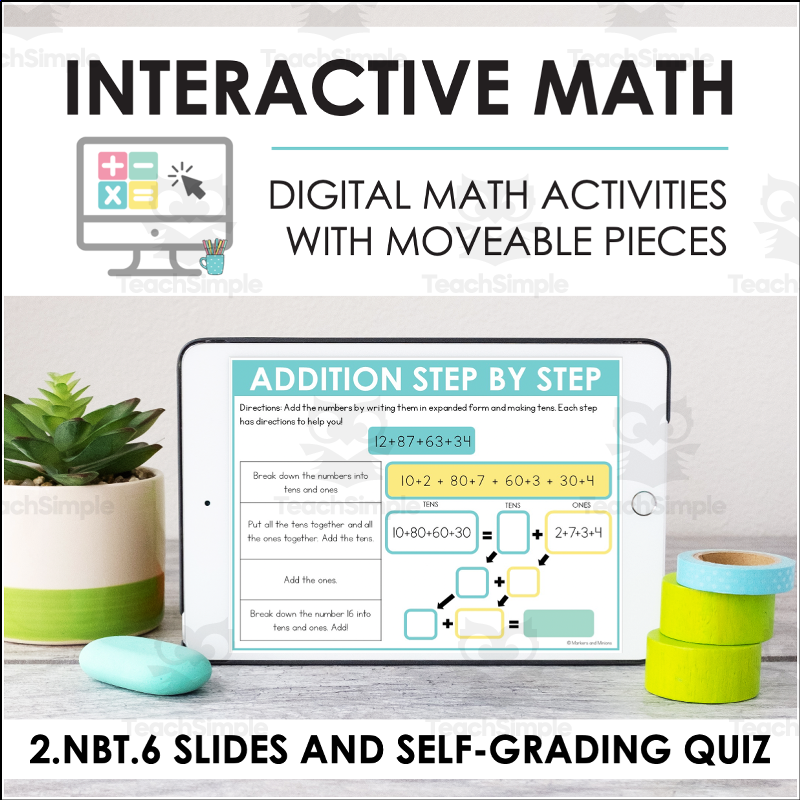
Digital Math for 5.NF.6 Apply Understandings of Multiplication and Division (Slides + Self-Grading Quiz) is a comprehensive teaching resource designed to match the learning needs of fifth-grade students. This package provides interactive learning experiences, effectively simplifying complex concepts pertaining to multiplication and division in accordance with the 5.NF.6 standard. The effectiveness of this resource springs from its suitability for today's digital classrooms - it comes in both PowerPoint and Google Slides formats and requires no paperwork. This ensures convenience for modern educators, facilitating efficient preparation time. Interactive Slides The heart of this set are the 20 interactive slides designed with student-friendly aesthetics that make learning both easy and exciting! These slides allow students to learn by dragging, dropping and sorting elements on-screen, hence promoting visual engagement. Educators can assign either certain slides or the entire file depending on their lesson plan objectives'. This flexibility allows use in different settings like whole class discussions or small group activities. Included Assessment : Self-Grading Quiz via Google Forms! This package comes complete with a self-grading quiz created in Google Forms that renders immediate results as students complete it. This real-time feedback allows teachers to observe individual progress while identifying areas needing reiteration quickly ensuring smooth learner progression. To Sum Up... Digital Math for 5.NF.6 Package beings together technology's convenience with proven educational methodologies! Ideal as a distance learning assignments tool owing to its digital format; yet works equally well within traditional classroom structures where it could be utilized efficiently during center time blocks or within smaller learning groups. Don't miss out on this comprehensive, learner-friendly package that aptly covers the fractions subject matter for your Grade 5 students!

Author Markers and Minions

Tags Multiplication, Division, Digital Math, Interactive Learning, Self-grading

The ALPS: Social Studies SAMPLE Reading Passage (Fillable PDF)
Free Download

The ALPS: Social Studies SAMPLE Reading Passage (Fillable PDF)
ELA, Reading, Reading Comprehension, Strategies, Resources for Teachers, Social Studies, Geography, Grade 6, 7, 8, 9, Writing Prompts, Worksheets & Printables, Centers, Activities, Teacher Tools, Assessments, Quizzes and Tests, Quizzes, Tests

This is a ONE PASSAGE SAMPLE. The following is the description of the FULL resource and the downloading links: Social Studies Reading Comprehension Passages and Questions: Extreme Environment and People (Fillable PDF) This resource introduces a collection of Social Studies reading comprehension passages with questions about Extreme Environment and People. The passages are carefully designed to bridge the gap between social studies and literacy through strengthening reading comprehension and sparking knowledge curiosity in middle school students. Each passage blends English Language Arts skills with accurate social studies content . Ideal for interdisciplinary learning in ELA and Social Studies. Suitable for Grade 9 review, too! These worksheets are designed as fillable PDFs , which means students can type their answers directly into the document on any computer or tablet . Each page includes highlighted text fields that show them exactly where to type! What Is Included in this Collection? There are three informational passages (with full answer keys): Salar de Uyuni: Bolivia’s Shining Salt Flat Above the Alps: The Story of the Eiger’s North Face Sherpas: Guardians of the High Mountains For Each Passage, students will have multiple tasks to complete as follow: 5 multiple-choice questions targeting main idea, key details, inference, vocabulary in context, and use of evidence 5 vocabulary matching items with clear, student-friendly definitions 5 text-based questions that require citing specific lines or facts 1 summary prompt that asks students to condense central ideas accurately Available Formats for this Resource PDF Word Docs Google Docs FULL CATALOG OF DOWNLOADING LINKS HERE For more Social Studies Reading Passages, check the following Links: Ancient Civilizations PDF Fillable PDF Word Docs Google Docs Early Empires and Trade Networks PDF Fillable PDF Word Docs Google Docs The Founding of the United States PDF Fillable PDF Word Docs Google Docs Language, Culture, and Meaning PDF Fillable PDF Word Docs Google Docs Psychology and Society PDF Fillable PDF Word Docs Google Docs Global Festivals and Traditions PDF Fillable PDF Word Docs Google Docs Extreme Environments and People PDF Fillable PDF Word Docs Google Docs Food, Culture, and Preservation PDF Fillable PDF Word Docs Google Docs Global Food Customs PDF Fillable PDF Word Docs Google Docs Media, Communication, and Popular Culture PDF Fillable PDF Word Docs Google Docs Human Impact on the Environment PDF Fillable PDF Word Docs Google Docs Civic Action and Social Change PDF Fillable PDF Word Docs Google Docs Fashion, Society, and Power PDF Fillable PDF Word Docs Google Docs People, Places, and Unusual Histories PDF Fillable PDF Word Docs Google Docs How to Use These PDFs Click on the highlighted area to start typing your answer. Move to the next question by clicking in the next highlighted box. When you are finished, close the document and select SAVE so your answers stay recorded. If you want to keep a blank copy for later, choose Save As and give your completed version a new name. Product Details Length: 14 pages total Grades: 6–8, also suitable for Grade 9 review Use cases: close reading, stations, homework, intervention, test prep, and sub plans Why Teachers Choose This Set Authentic social studies content paired with rigorous literacy practice Consistent task structure across all passages for easier planning and smoother student routines Clear, age-appropriate writing that builds confidence without oversimplifying Use this set to reinforce ELA skills in social studies, to add literacy to your lessons, and to support independent work. The passages strengthen main idea, evidence use, vocabulary in context, inference, cause and effect, and summary writing. With ready-to-use assessments and complete answer keys, you can provide focused practice that is simple to run and fast to review.

Author Middle & High School - CORED Education

Rating

Tags Middle School, Reading Comprehension, Reading Strategies, ELA, Centers, Reading Passage, Assessments, Vocabulary, Social Studies, Geography

Basic Genetics - Digital Quiz

Basic Genetics - Digital Quiz
Science, Life Sciences, Biology, Grade 6, 7, 8, Quizzes, Quizzes and Tests, Teacher Tools

The Basic Genetics - Digital Quiz is a simple yet effective resource tool ideally suitable for middle school science educators conducting distance learning classes. Employing a Google Form interface, this comprehensive quiz aids in creating a digital, paperless classroom environment. In the role of an educator, comprehending the importance of providing students with quick feedback on their academic performance is paramount. This self-grading resource not only streamlines your teaching process but also offers instant results to students, promoting enhanced understanding of scientific concepts. This user-friendly teaching aid can be leveraged within varied pedagogical contexts including practice sessions, homework assignments or during science study groups. It has proven efficacious particularly during online education periods as well as in traditional face-to-face classrooms. The provided resource is fully adjustable and includes one quiz variant encompassing 10 questions that cover the basics of Genetics: Punnet squares Genotypes and phenotypes Alleles along with homozygous and heterozygous genotypes Dominant and recessive traits This fundamental level approach to these scientific concepts serves as excellent support for English learners or those with Individualized Education Programs (IEPs), ensuring all learners' accessibility. Note:This resource maintains its digital-native format meaning it cannot be converted into hard copy activities. The content herein targets grades six through eight Biology curricula but could also add value to related fields by enrichening understanding across various subject areas. Facing challenges unique to distance learning such as student access restrictions or learner diversity? Leverage tools like The Basic Genetics - Digital Quiz which boasts adaptable technologies to uphold inclusivity whilst ensuring quality educational experiences.

Author Sheltered Language Resources

Tags Genetics, Distance Learning, Middle School, Science Education, Digital Quiz

Benjamin Franklin: Social Studies Reading Comprehension Passage (Docs)

Benjamin Franklin: Social Studies Reading Comprehension Passage (Docs)
ELA, Reading, Reading Comprehension, Strategies, Resources for Teachers, Social Studies, History, History: USA, Grade 6, 7, 8, 9, Writing Prompts, Worksheets & Printables, Centers, Activities, Teacher Tools, Assessments, Quizzes and Tests, Quizzes, Tests

Benjamin Franklin: Social Studies Reading Comprehension Passage (Docs) This resource introduces a unique Social Studies reading comprehension passage with questions about Benjamin Franklin and his Ideas. The passage is carefully designed to bridge the gap between social studies and literacy through strengthening reading comprehension and sparking knowledge curiosity in middle school students. Each passage blends English Language Arts skills with accurate social studies content . Ideal for interdisciplinary learning in ELA and Social Studies. Suitable for Grade 9 review, too! Student Tasks throughout the passage: 5 multiple-choice questions targeting the following skills: main idea, key details, inference, vocabulary in context, and use of evidence 5 vocabulary matching items with clear, student-friendly definitions 5 text-based questions that require citing specific lines or facts 1 summary prompt that asks students to condense central ideas accurately Full answer key for every section Available Formats for this Resource: PDF Fillable PDF Word Docs FULL CATALOG OF DOWNLOADING LINKS HERE Social Studies Reading Comprehension Collection Links: 1. Ancient Civilizations PDF Fillable PDF Word Docs Google Docs 2. Early Empires and Trade Networks PDF Fillable PDF Word Docs Google Docs 3. The Founding of the United States PDF Fillable PDF Word Docs Google Docs 4. Language, Culture, and Meaning PDF Fillable PDF Word Docs Google Docs 5. Psychology and Society PDF Fillable PDF Word Docs Google Docs 6. Global Festivals and Traditions PDF Fillable PDF Word Docs Google Docs 7. Extreme Environments and People PDF Fillable PDF Word Docs Google Docs 8. Food, Culture, and Preservation PDF Fillable PDF Word Docs Google Docs 9. Global Food Customs PDF Fillable PDF Word Docs Google Docs 10. Media, Communication, and Popular Culture PDF Fillable PDF Word Docs Google Docs 11. Human Impact on the Environment PDF Fillable PDF Word Docs Google Docs 12. Civic Action and Social Change PDF Fillable PDF Word Docs Google Docs 13. Fashion, Society, and Power PDF Fillable PDF Word Docs Google Docs 14. People, Places, and Unusual Histories PDF Fillable PDF Word Docs Google Docs Product Details: Length: 4 pages Grades: 6–8, also suitable for Grade 9 review Use cases: close reading, stations, homework, intervention, test prep, and sub plans Why Teachers Choose This Passage: Authentic social studies content paired with rigorous literacy practice Consistent task structure for easier planning and smoother student routines Clear, age-appropriate writing that builds confidence without oversimplifying Use this passage to reinforce ELA skills in social studies, to add literacy to your lessons, and to support independent work. The passage strengthens main idea, evidence use, vocabulary in context, inference, cause and effect, and summary writing. With ready-to-use assessments and complete answer keys, you can provide focused practice that is simple to run and fast to review.

Author Middle & High School - CORED Education

Rating

Tags Middle School, Reading Comprehension, Reading Strategies, ELA, Centers, Reading Passage, Assessments, Vocabulary, Social Studies, US HISTORY

Skateboarding Reading Comprehension Passage - Cored Ed Encyclopedia

Skateboarding Reading Comprehension Passage - Cored Ed Encyclopedia
ELA, Language Development, Reading Comprehension, Reading, Pre-Reading, Writing, Sports, P.E. & Health, Technology, Science, Grade 2, 3, 4, 5, Worksheets & Printables, Worksheets, Teacher Tools, Centers, Activities, Writing Prompts, Assessments, Quizzes and Tests, Quizzes, Lesson Plans

This skateboarding reading comprehension includes: Visualization (on the front cover) Start your lesson by taking a minute to think and share something about the topic. Read the script aloud (slowly), perhaps prepare some music or sound effects. Student close their eyes and let their imaginations wander. Students open their eyes, read the question aloud and give them a few minutes to complete. Ask a few students to share or keep answers until the end to compare with what they learn in the passage. Quick pause—thousands of Cored Education products are included with your TeachSimple membership. Download links and encyclopedia index available here. Pre-Reading Trivia Students will write down one thing they already know about the subject and then read five more facts and discuss. These facts are fun, and the students will enjoy learning about the subject before reading more. Give 1 minute for students to write what they already know (no pressure—best guess is fine). Read the five facts together. After each fact, do ask a student for their opinion, was it surprising? Set a purpose by asking students to highlight/underline one fact they want to learn more about during the reading. Reading Passage The text is a high-interest reading passage with set paragraphs, roughly three to four paragraphs long. It contains a variety of themes about the topic, anywhere from history to technology. The passage is between 250 and 350 words in length. First, ask students to look at the headings and see what they’ll learn about today. What do they know about the topic/heading? First read options: Teacher read-aloud (best for support). Partner reading (paragraph by paragraph). While reading, students underline important details, and vocabulary words they think may come up in the questions section. Mixed Questions The first question page contains four multiple-choice questions, each with a choice of four answers, and three written response questions that require a sentence or two from the student. Students complete the mcqs first independently, then review quickly as a class. For the 3 written responses, try to get students giving the answer with some form of evidence: “I think ___ because the text says ___.” If students get stuck, send them back to check the passage. Vocabulary Questions Practice seven key words from the text in this section across two activities. First section is scrambled words where students will unscramble three words given a clue for each. The second section is a word to meaning matching activity. Before starting, have some students read out words they underlined in the passage. Ask students to say the word and read aloud the sentence(s) around each word. Ask students to do scrambled words and the matching exercise in pairs then go through answers as a class. For the scrambled spelling task, get four pairs to come up to the board and write the words for extra practice with the other student reading out the clue. For the matching task, prompt students to give full sentences: “I matched ___ with ___ because ___.” Creative Writing In this question, the student will be required to write a five to eight sentence paragraph on a question related to the topic. Before starting, ask students write down 3 key ideas they are going to include in their piece. Ask students for ideas to share around the class to help those struggling. Pro writing expectations: 5–8 sentences At least 2 facts or details from the passage At least 2 vocabulary words from the previous page Students read their paragraphs while classmates listen for facts and vocabulary words. Extension Activities This page is optional for fast finishers or to take home. There are several activities, each one requiring a different skill. Do some, do none, do all, completely optional - but you will feel reassured knowing every possibility is planned for. Includes summary writting question. Answer Key There are answers for the multiple-choice questions, written response questions have sample answers, vocabulary answers and if there is a summary question then a sample summary will be provided as well. Lesson Plan Included Customized lesson plan for this lesson is included. Lesson Snapshot Title: Skateboarding Genre: Nonfiction (informational text) Subject: Social Studies (history/culture) / Physical Education (sports) Primary Topic: How skateboarding began and evolved Estimated Guided Reading Level (A–Z): R What This Lesson Teaches Best How skateboarding started in California when surfers tried “sidewalk surfing” using boards and roller-skate wheels. How a problem (hard wheels and injury worries) led to a decline around 1966, and how a new solution helped the sport return. How new technology (polyurethane wheels that gripped and rolled smoothly) changed what riders could do and how safe it felt. How places to ride shaped new styles, from parks with banks/curves to pools, then street spots like curbs, stairs, and rails. How a timeline of key decades/years (1940s–50s, 1960s, 1970s, 1980s, 1995, Tokyo 2020/2021) shows the sport’s growth into major events. Learning Goals Describe why skateboarding began and what early riders used to make boards roll. Explain why skateboarding “nearly disappeared” around 1966 using details from the text. Identify how polyurethane wheels changed riding and why turns felt more controllable. Describe how skate parks and empty swimming pools helped create vertical skating and half-pipes. Explain how street-style skateboarding grew and name major events mentioned in the passage. Key Vocabulary From the Text polyurethane — a wheel material that grips and rolls smoothly. contests — competitions where people try to win. controllable — easy to control and not scary. vertical — going up steeply, like riding up walls. debut — first time something appears in an event. FULL CATALOG OF DOWNLOAD LINKS AND ENCYCLOPEDIA INDEX HERE

Author Cored Education

Rating

Tags Vocabulary, Reading Comprehension, Reading Passages, Reading, Creative Writing, Reading Strategies, Writing Prompts, Lesson Plans, Sports, Skateboarding

Espresso Reading Comprehension Passage - Cored Ed Encyclopedia

Espresso Reading Comprehension Passage - Cored Ed Encyclopedia
ELA, Language Development, Resources for Teachers, Reading Comprehension, Reading, Pre-Reading, Writing, Strategies, Physics, Science, Grade 2, 3, 4, 5, Worksheets & Printables, Worksheets, Teacher Tools, Centers, Activities, Writing Prompts, Assessments, Tests, Quizzes and Tests, Quizzes

This espresso reading comprehension contains the following: Pre-Reading Trivia Students will write down one thing they already know about the subject and then read five more facts and discuss. These facts are fun, and the students will enjoy learning about the subject before reading more. Reading Passage The text is a high-interest reading passage with set paragraphs, roughly three to four paragraphs long. It contains a variety of themes about the topic, anywhere from history to technology. The passage is between 250 and 350 words in length. Mixed Questions The first question page contains four multiple-choice questions, each with a choice of four answers, and three written response questions that require a sentence or two from the student. Creative Writing In this question, the student will be required to write a five to eight sentence paragraph on a question related to the topic. Extension Activities This page is optional for fast finishers. If there are five to ten minutes left at the end of the lesson, the student can choose one of three activities, each one requiring a different skill. Answer Key There are answers for the multiple-choice questions and three written response questions have sample answers. FULL CATALOG OF DOWNLOAD LINKS AND ENCYCLOPEDIA INDEX HERE Cored Ed Encyclopedia Overview The Cored Ed Encyclopedia is a weekly series of lessons that you can pick up and use right away. These short readings fit into whatever time you have available. Each one includes a warm-up, a reading, and a set of questions, but it’s flexible — you can do just the reading, the full lesson, or skip the writing section if you need to. Each lesson focuses on a single topic so students don’t get lost. The writing is clear but never childish, making it perfect for grades two through five. Topics range from animals and science to history, inventions, and everyday things. No matter the level of the student, everyone should take away at least one new idea or fact from each lesson. The materials are easy to print, easy to explain, and require no setup. They work well for whole-class teaching, partner work, or independent study.

Author Cored Education

Rating

Tags Vocabulary, Spelling, Reading Comprehension, Reading Passages, Cored Encyclopedia, Facts, Reading, Creative Writing, Espresso, Physics

Engineering Design Process for Household Upcycling

Engineering Design Process for Household Upcycling
Science, Basic Science, Inventors, Theories, Earth and Environmental Sciences, Earth Sciences, Environmental Science, Geology, Space, STEM, Homeschool Curriculum, Grade 3, 4, 5, 6, 7, 8, Worksheets & Printables, Workbooks, Worksheets, Word Searches, Teacher Tools, Assessments, Lesson Plans, Quizzes and Tests, Quizzes, Tests

Transform your students from consumers into creators with this complete, no-prep STEM curriculum! Are you looking for an engaging, hands-on project that teaches real-world engineering skills without breaking the budget? Dive into the "Engineering Design Process for Household Upcycling," a comprehensive, project-based learning (PBL) unit designed to turn everyday trash like cardboard boxes and plastic bottles into functional, load-bearing items. This isn't just another recycling craft. This rigorous curriculum guides 4th, 5th, and 6th-grade students through the authentic Engineering Design Process (EDP) . They will learn the material science of polymers and cardboard, draft orthographic blueprints, and apply principles of physics to build amazing items like a passive phone amplifier, a modular storage unit, a self-watering planter, and even a kinetic wind turbine! What's Included in This 35-Page All-in-One PDF? Part 1: In-Depth Instructional Text (Teacher's Guide): A detailed guide explaining the core concepts of material science, structural engineering, and each step of the EDP (Ask, Imagine, Plan, Create, Test, Improve) in the context of upcycling. Part 2: Printable Student Workbook (10 Worksheets): Ten carefully scaffolded worksheets that reinforce learning. Activities cover everything from blueprint basics and advanced joinery to data collection, troubleshooting, and a final capstone design challenge. Part 3: Teacher Resources & Visuals: Classroom Anchor Charts: Professional diagrams of the Engineering Design Process, a Material Science Matrix, and the Anatomy of a Blueprint. Comprehensive Answer Key: Complete answers for every knowledge check and worksheet question, saving you valuable prep time. Project Reflection Rubrics: Guidance for assessing student understanding and encouraging a growth mindset during the testing and iteration phases. This unit is perfect for STEM/STEAM labs, Earth Day activities, sustainability lessons, gifted and talented programs, or any teacher looking to integrate meaningful, hands-on engineering challenges into their classroom. Keywords: STEM, STEAM, Engineering Design Process, Project-Based Learning (PBL), Upcycling, Recycling Project, Earth Day, Sustainability, 4th Grade Science, 5th Grade Science, 6th Grade STEM, Middle School Engineering, Hands-On Learning, Critical Thinking, Cardboard Engineering, Plastic Bottle Projects, Printable Workbook, No-Prep, Homeschool Curriculum, After-School Club. Why Parents/Schools Love It: Turns Trash into Treasure (Zero-Cost Materials): This curriculum brilliantly uses common household waste like cardboard and plastic bottles, making it an incredibly affordable and accessible hands-on experience for any school or family. Teaches Authentic 21st-Century Skills: It goes far beyond simple crafts, teaching the real, iterative Engineering Design Process. Students learn critical thinking, problem-solving, spatial reasoning, and resilience in the face of failure. Comprehensive & "Print-and-Go": This is a complete, all-in-one unit. With an instructional guide, student worksheets, visual aids, and a full answer key, teachers can implement a high-quality engineering project with minimal prep time. Fosters Environmental Consciousness: The curriculum is built on a foundation of sustainability. It empowers students to see waste as a resource, teaching them practical ways to have a positive impact on their environment. Highly Engaging for All Learners: The hands-on building process and the creation of genuinely functional items (like a phone stand or a self-watering planter) capture students' imagination and provide a tangible sense of accomplishment. Target Audience : Based on the content's complexity, language, and stated goals, target: Grade Levels: 4th, 5th, and 6th Grade . The content is perfectly scaffolded for this upper-elementary to early-middle school range. Educator Types: Classroom Teachers (Grades 4-6) STEM/STEAM Lab Teachers Science Teachers Homeschooling Parents After-School Program Coordinators Gifted and Talented (GATE) Program Instructors Copyright/Terms of Use: This Book was copyrighted by Syed Hammad Rizvi. This resource is for personal and single classroom use only. You may not alter, redistribute, or sell any part of this resource. In other words, you may not put it on the Internet where it could be publicly found and downloaded. If you want to share this resource with colleagues, please purchase additional licenses from Teachsimple. Thank you for respecting these terms of use. This product is happily brought to you by Syed Hammad Rizvi

Author Creative Book Store

Rating

Tags STEM, STEAM, Engineering, EngineeringForKids, Upcycling, RecyclingProject, ProjectBasedLearning, HandsOnLearning, MaterialScience, EnvironmentalEducation

Digital Math for 4th Grade MATH Standards - (BUNDLE of Slides + Self-Grading Quiz)

Digital Math for 4th Grade MATH Standards - (BUNDLE of Slides + Self-Grading Quiz)
, Grade 4, Quizzes, Quizzes and Tests, Teacher Tools

Digital Math for 4th Grade MATH Standards - (BUNDLE of Slides + Self-Grading Quiz) The Digital Math for 4th Grade MATH Standards - (BUNDLE of Slides + Self-Grading Quiz) is an all-encompassing, interactive tool which excellently combines technology with key educational outcomes for the enhanced learning experience. Interactive Math Slides Clean and concise reviews. Provides practice and enrichment opportunities. Promotes active student participation through visually engaging content and interactive drag-and-drop features. No paper, no prep: Paperless nature removes necessity for physical preparation on part of the teacher. In addition: Self-grading Google Forms quiz:Inclusive after each standard. Provides instant evaluation data as well as saves marking time for teachers. A comprehensive resource to cover All fourth-grade math standards . Versatile compatibility:Total compatibility with both PowerPoint formats and Google slides ensuring ease in sharing assignments across different virtual platforms used for teaching practices. The resource suits various teaching scenarios including distance learning instructions or tasks associated with group instruction or center activities. Students are sure to find engagement in this blended approach to math standards that merges educationally sound designs with tech-savvy applicability. Lastly, any teacher tool-box shall find an asset In the form of Digital Math for 4th Grade MATH Standards - (BUNDLE of Slides + Self-Grading Quiz).

Author Markers and Minions

Tags Interactive Slides, Self-grading Quiz, Digital Math, Hands-on Exploration, Comprehensive Resource

READING-COMPREHENSION MINIBOOK | The Science of Bioluminescence
Free Download

READING-COMPREHENSION MINIBOOK | The Science of Bioluminescence
Reading Comprehension, Reading, ELA, Strategies, Early Learning, Elementary, High School, Homeschool Resources, Middle School, Not Grade Specific, Adult Education, Quizzes and Tests, Teacher Tools, Quizzes, Tests, Workbooks, Worksheets & Printables, Worksheets

READING-COMPREHENSION MINIBOOK | The Science of Bioluminescence ABOUT THE AUTHOR: At EDITORIAL LAURA EDUCA, we work every day to create educational materials that turn learning into a fun game. Our mission is for every child to enjoy the process of learning. Visit my educational store and discover all the resources we have ready for you. PLEASE READ CAREFULLY THE FOLLOWING INFORMATION OF THIS RESOURCE: What is the name of your product and what makes it special? This beautiful product is called “ READING-COMPREHENSION MINIBOOK | The Science of Bioluminescence ”, and it is very special because it was carefully designed or compiled. With this educational resource, we want students to learn with enthusiasm and fun, because we believe learning is fun. How many pages are included in this resource? This fabulous document contains the following number of pages: 9 What size is it designed in (A4, letter, etc.)? This resource is designed in A4 format and compiled as a PDF. This makes downloading and printing simple and convenient, and PDFs are also easy to store and carry anywhere. PDF Is the material in color or black and white? This pedagogical document comes in both black and white and color. This makes it more attractive for your learning sessions, but you have the freedom to choose how to print it. OTHER RESOURCES FOR YOU: SPANISH TEXTS: https://teachsimple.com/product/5-free-texts-for-reading-in-spanish-free-resource SPANISH PUZZLES: https://teachsimple.com/product/10-spanish-puzzles-for-learning-spanish-vocabulary-of-animals SPANISH TEST OF THE VERB: https://teachsimple.com/product/free-spanish-test-of-the-verb-el-verbo SPANISH TEST OF VOCABULARY: https://teachsimple.com/product/free-spanish-test-of-basic-vocabulary-measure-your-spanish-level SECONDARY AND COMPLEMENTARY DESCRIPTION: Who can use it (teachers, parents, therapists, students)? This document can be adapted according to the person using it. If you’re a teacher, you can use it; if you do homeschooling, you can also use it. Therapists can use it for students with learning difficulties, and even self-learners will find it very useful. What materials are needed to make the most of it (pencils, scissors, printer, etc.)? To make the most of this fabulous document, you can start with pencils. But, since it’s adaptable by the teacher, you may also encourage your students to use markers, scissors, and other creative materials. What are its main benefits? With this fabulous educational resource, students can develop cognitive processes such as concentration, attention, and creativity. They will also understand that learning is fun, not just boring explanations, but enjoyable activities and games. THANK YOU SO MUCH FOR PREFERRING MY PRODUCTS!

Author EDITORIAL LAURA EDUCA

Rating

Tags FREE, FREE RESOURCES, READING, READING AND COMPREHENSION, COMPREHENSION

Resilience Building & Growth Mindset Journal Prompts Pack

Resilience Building & Growth Mindset Journal Prompts Pack
Special Resources, Social Emotional Learning (SEL), Life Skills, Social Skills, Special Education Needs (SEN), Speech Therapy, STEM, ELA, Literature, Reading, Grade 3, 4, 5, Worksheets & Printables, Workbooks, Worksheets, Word Searches, Teacher Tools, Assessments, Lesson Plans, Quizzes and Tests, Quizzes, Tests

The complete Resilience Building & Growth Mindset Journals Bundle provides teachers and parents of Grades 3-5 with journal prompts to promote resilience and a growth mindset. It is designed for children aged 8 to 11 as an SEL (Social-Emotional Learning) curriculum that connects Carol Dweck’s theory of growth mindset, neuroplasticity, Albert Bandura’s self-efficacy, and Lev Vygotsky’s Zone of Proximal Development into one easy-to-use journaling system. Contents: Phase 1 (Theory Guide for Educators / Parents) – 10+ pages of professional development materials that explain the C.O.R.E. Journaling Framework, productive struggle, locus of control change, affect labeling (“Name It to Tame It”), metacognition, specific real-life examples related to perfectionism and math anxiety in classrooms. Phase 2 (Student Workbook) – 10 creative and engaging worksheet prompts (The Elastic Brain, Power of “Yet,” Failure Autopsy, Inner Critic vs. Inner Coach, Frustration Station, Effort Equation, Feedback Loop, Courage Catalog, Obstacle Course, My Resilience Recipe) that provide over 80 prompts to provide daily, effective application of abstract concepts Phase 3 (Visuals and Teacher Materials) – ready-to-project visuals, expected response rubrics, implementation procedures, and reflective facilitator exercises. The Resilience Building & Growth Mindset Journals Bundle is a great tool for morning meetings, SEL blocks, counseling sessions, home schooling, or independent journaling. Easy to implement – print or post digitally today! Parents and Schools Appreciate This Programme Because of The Following:​ 1) Evidence Base and Classroom Validity​ - Supported by the research of Dweck, Bandura, Vygotsky, Siegel, and neuroplasticity; contains original data indicating that task avoidance behaviour has decreased by 41%; educators will find real life case studies that are immediately applicable for use in their designs​. 2) Ready-To-Use And High Benefit As SEL: 10 to 15 minutes, 3 times per week increases resilient, emotionally regulation, and metacognition skills​; suitable for use in MTSS, PBIS or as part of a Counselors's assigned caseload​. 3) Differentiated and Inclusive: Is designed for gifted/perfectionist students as well as those with anxiety, and/or being neurodivergent by developing strategic perseverance​. 4) Dual Use By Parents And Educators: The theoretical section provides educators with materials that could be added to their professional development program​; parents would enjoy using the home version to help their children with school anxiety and sports challenges​. 5) Attractive To Kids: The design of this curriculum is visually appealing, motivational and provides scaffolding for independent work​; children from 8 years of age to 11 years are able to relate to the material without feeling childish. Intended Student Population from Full PDF Analysis: The Intended Student Population Will be Grades 3-5, ages 8-11 years old in upper elementary/middle childhood. The Curriculum has been Explicitly Designed and Developed for the Developmental Window of Grades 3-5 (Prefrontal Cortex Synaptogenesis, Increasing Academic Pressures, Peers Putting Pressure on One Another and Executive Function Development). It Is Not Developed for Either Grades K-2 (Too Advanced for K-2 Students) or Grades 6+ (Too Simple in Language and Scaffolding for 6+ Year Olds). Terms of Use: Copyrighted material belongs Syed Hammad Rizvi. Materials contained within are for personal and single classroom use only. You may not alter, distribute, or sell any part of the materials. In other words, you may not upload the documents in such a way that they would be available to others online, nor can you print copies of them for others. If you would like to share the documents with other staff at your school, please purchase additional licenses through Teachsimple. Thank you for following the terms of use. Syed Hammad Rizvi is pleased to provide you with this product.

Author Creative Book Store

Rating

Tags GrowthMindset, GrowthMindsetForKids, ResilienceBuilding, SELActivities, SocialEmotionalLearning, GrowthMindsetJournal, ResilienceForKids, CarolDweck, MindsetMatters, TeacherResources

UK/Aus English Subject-Verb Agreement Practice Year 6-7 (PPT)

UK/Aus English Subject-Verb Agreement Practice Year 6-7 (PPT)
ELA, Language Development, ESL, Grammar, Common Core, Resources for Teachers, Grade 5, 6, 7, Quizzes and Tests, Teacher Tools, Tests, Assessments, Activities, Quizzes, Presentations

THIS IS THE UK/AUS ENGLISH SPELLING VERSION. CHECK THE CATALOG FOR THE ORIGINAL AMERICAN ENGLISH VERSION. Subject-Verb Agreement Grammar Practice MCQS ELA MCQS Overview: In this series of lessons, students will embark on an engaging journey to explore the grammar skills that make our language vibrant and expressive. These lessons are crafted to help students identify, comprehend, and effectively apply language arts skills in both writing and speech. This UK/Aus English version is especially useful for schools, teachers, and families working with British-based spelling and language conventions. It is a helpful option for classrooms using UK curriculum expectations, international programmes influenced by British English, or any setting where learners need to practise the correct capitalisation and punctuation forms for that version of English. Subject-Verb Agreement Overview: Major Subject-Verb Practice Wish Sentences Request Sentences Contrary to Fact Sentences PPT Version This is the PPT editable and interactive version. There is a fillable answer sheet at the end. This download is available in GOOGLE Docs, GOOGLE Forms, GOOGLE Slides. PDF, PPT, WORD, check the links below for more details. FULL CATALOG OF DOWNLOAD LINKS HERE ELA Review Questions Overview Each review test includes three answer choices for every question, which helps keep things simple and manageable for students. The layout is clear and easy to follow, so students can focus on the questions instead of figuring out what to do. A few pictures are included on each test to make the pages feel a little more inviting and less overwhelming. A review sheet is also included, giving students a chance to go back over many of the main skills covered in the resource. Introduction or Example Sheet Each topic comes with an introduction or example sheet to look at before students begin. This gives students a clear starting point and helps them feel more prepared. It also lets them see what to expect before moving into the main work. For many students, it is a helpful way to quickly refresh the key ideas before they start practicing on their own. Full Answer Keys Full answer keys are included to make marking and checking work faster and easier. Sample responses are also provided where needed, especially for open-ended tasks. This can be a real time-saver on busy days and makes the resource more practical to use. Everything is there to help make planning, teaching, and checking student work feel a little more straightforward. For More Like This For similar downloads and other frees, do check out Cored Group on TeachSimple.

Author Cored Education

Rating

Tags Elementary, Answers, Ccss, Common Core, Grammar, Tests, Test Prep, Assessment, Grade 5, Grade 6

Jeans Reading Comprehension Passage - Cored Ed Encyclopedia

Jeans Reading Comprehension Passage - Cored Ed Encyclopedia
ELA, Reading Comprehension, Reading, Language Development, Vocabulary, History, Social Studies, Technology, Science, Pre-Reading, Grade 2, 3, 4, 5, Worksheets & Printables, Worksheets, Teacher Tools, Centers, Activities, Writing Prompts, Assessments, Quizzes and Tests, Quizzes, Lesson Plans

This Jeans reading comprehension with lesson plan includes: Visualization (on the front cover) Start your lesson by taking a minute to think and share something about the topic. Read the script aloud (slowly), perhaps prepare some music or sound effects. Student close their eyes and let their imaginations wander. Students open their eyes, read the question aloud and give them a few minutes to complete. Ask a few students to share or keep answers until the end to compare with what they learn in the passage. Quick pause—thousands of Cored Education products are included with your TeachSimple membership. Download links and encyclopedia index available here. Pre-Reading Trivia Students will write down one thing they already know about the subject and then read five more facts and discuss. These facts are fun, and the students will enjoy learning about the subject before reading more. Give 1 minute for students to write what they already know (no pressure—best guess is fine). Read the five facts together. After each fact, do ask a student for their opinion, was it surprising? Set a purpose by asking students to highlight/underline one fact they want to learn more about during the reading. Reading Passage The text is a high-interest reading passage with set paragraphs, roughly three to four paragraphs long. It contains a variety of themes about the topic, anywhere from history to technology. The passage is between 250 and 350 words in length. First, ask students to look at the headings and see what they’ll learn about today. What do they know about the topic/heading? First read options: Teacher read-aloud (best for support). Partner reading (paragraph by paragraph). While reading, students underline important details, and vocabulary words they think may come up in the questions section. Mixed Questions The first question page contains four multiple-choice questions, each with a choice of four answers, and three written response questions that require a sentence or two from the student. Students complete the mcqs first independently, then review quickly as a class. For the 3 written responses, try to get students giving the answer with some form of evidence: “I think ___ because the text says ___.” If students get stuck, send them back to check the passage. Vocabulary Questions Practice seven key words from the text in this section across two activities. First section is scrambled words where students will unscramble three words given a clue for each. The second section is a word to meaning matching activity. Before starting, have some students read out words they underlined in the passage. Ask students to say the word and read aloud the sentence(s) around each word. Ask students to do scrambled words and the matching exercise in pairs then go through answers as a class. For the scrambled spelling task, get four pairs to come up to the board and write the words for extra practice with the other student reading out the clue. For the matching task, prompt students to give full sentences: “I matched ___ with ___ because ___.” Creative Writing In this question, the student will be required to write a five to eight sentence paragraph on a question related to the topic. Before starting, ask students write down 3 key ideas they are going to include in their piece. Ask students for ideas to share around the class to help those struggling. Pro writing expectations: 5–8 sentences At least 2 facts or details from the passage At least 2 vocabulary words from the previous page Students read their paragraphs while classmates listen for facts and vocabulary words. Extension Activities This page is optional for fast finishers or to take home. There are several activities, each one requiring a different skill. Do some, do none, do all, completely optional - but you will feel reassured knowing every possibility is planned for. Includes summary writting question and additional facts. Answer Key There are answers for the multiple-choice questions, written response questions have sample answers, vocabulary answers and if there is a summary question then a sample summary will be provided as well. Lesson Plan Included Customized lesson plan for this lesson is included. Lesson Snapshot Title: Jeans Genre: Nonfiction (informational text) Subject: Reading (Informational Text) / Social Studies Primary Topic: Denim, rivets, and how jeans changed over time Estimated Guided Reading Level (A–Z): R What This Lesson Teaches Best Explains what makes denim strong (slanted, diagonal woven lines) and connects denim’s blue color to indigo dye. Builds word/history knowledge by linking “denim” to Nîmes and “jeans” to the port city of Genoa. Shows an invention problem-and-solution story: pockets ripped, so copper rivets were added, leading to a patented idea. Traces how jeans spread from work clothes to popular culture (mines/farms → World War II → 1950s movie stars). Introduces environmental impact through a concrete detail: making and caring for jeans can use thousands of liters of water, so mending/sharing/reusing matters. Learning Goals Identify the main idea and key details about how jeans were made to be tough. Explain why denim is strong and how indigo connects to the story of jeans. Describe the problem Jacob W. Davis noticed and how rivets solved it. Describe at least two ways jeans changed over time, using details and dates from the passage. Explain why mending, sharing, and reusing jeans can matter, based on the passage. Key Vocabulary From the Text denim — strong cloth with slanted, diagonal woven lines. indigo — a deep blue dye used to color denim. rivets — tiny metal pieces that strengthen places that rip. patent — legal protection for a new invention idea. synthetic — made by people, not from nature. FULL CATALOG OF DOWNLOAD LINKS AND ENCYCLOPEDIA INDEX HERE

Author Cored Education

Rating

Tags Vocabulary, Reading Comprehension, Reading Passages, Lesson Plans, Ela Lesson Plans, Reading Comprehension Lesson Plans, Pre-reading, Social Studies Lesson Plans, History, Technology

Insects, Animals, & Ecosystems: Reading passages (FILLABLE PDF)

Insects, Animals, & Ecosystems: Reading passages (FILLABLE PDF)
Science, ELA, Reading, Reading Comprehension, Strategies, Resources for Teachers, Life Sciences, Animals, Insects, Nature & Plants, Grade 6, 7, 8, 9, Writing Prompts, Worksheets & Printables, Centers, Activities, Teacher Tools, Assessments, Quizzes and Tests, Quizzes, Tests

Insects, Animals, & Ecosystems: Reading Comprehension Passages (FILLABLE PDF) This engaging and fillable collection of life science reading passages about Insects, Animals, & Ecosystems is designed to bridge the gap between science and literacy through strengthening reading comprehension and sparking scientific curiosity in middle school students. Each passage blends English Language Arts skills with accurate science content that supports NGSS classroom practice. Ideal for interdisciplinary learning in ELA and Science. Suitable for Grade 9 review, too! These worksheets are designed as fillable PDFs , which means students can type their answers directly into the document on any computer or tablet . Each page includes highlighted text fields that show them exactly where to type! What Is Included? There are (3) informational passages: Ecosystems: Webs of Life and Change Insects: Small Creatures, Giant Impact Unique Animals of the Rainforest Student Tasks for Each Passage: 5 multiple-choice questions targeting main idea, key details, inference, vocabulary in context, and use of evidence 5 vocabulary matching items with clear, student-friendly definitions 5 text-based questions that require citing specific lines or facts 1 summary prompt that asks students to condense central ideas accurately Full answer key for every section Available Formats for this Resource Word Docs Google Docs FULL CATALOG OF DOWNLOADING LINKS HERE Other Science Reading Collections and Topics You May Find in the Store: 1. Astronomy & Space Science 2. Volcanoes, Rocks, & Mountains 3. Rock Cycle, Soil, & Sinkholes 4. Mars, Glaciers, & Antarctica 5. Water Cycle, Acid Rain, & Wastewater 6. Insects, Animals, & Ecosystems 7. Bioluminescence & Insects 8. Animal Skin, Cats, & T. Rex 9. Human Body and Senses 10. Health & Applied Bioscience 11. Waves, Light, & Imaging 12. Electricity & Energy 13. Motion & Materials 14. Chemistry and Materials Science 15. Electromagnetism 16. Acids and Bases 17. Gas Laws 18. Biotechnology 19. Periodic Trends 20. Protists and Fungi 21. Microevolution 22. Blood 23. Chemical Bonding 24. Magnets 25. Muscles 26. Nuclear Chemistry 27. Electromagnetic Devices 28. Epigenetics 29. The Law of Conservation of Mass 30. Atomic Models 31. Isotopes and Ions 32. Light 33. Human-Environment Interaction 34. Theory of Evolution 35. Photosynthesis 36. Origins of Life and Early Earth 37. Gene Expression and Regulation 38. Thermochemistry 39. Allergies 40. Coevolution 41. Birth to Adulthood 42. Cells 43. Entropy and Free Energy 44. The Human Brain 45. Mixtures and Solutions 46. Invertebrates 47. Zoo Animals 48. Biochemistry 49. Animal Behavior 50. Population Ecology ...and many more engaging science reading passages that cover intriguing and important topics designed to spark curiosity and support student learning. How to Use These PDFs Click on the highlighted area to start typing your answer. Move to the next question by clicking in the next highlighted box. When you are finished, close the document and select SAVE so your answers stay recorded. If you want to keep a blank copy for later, choose Save As and give your completed version a new name. Product Details Length: 14 pages total Grades: 6–8, also suitable for Grade 9 review Use cases: close reading, stations, homework, intervention, test prep, and sub plans Standards support: reinforces informational-text skills and supports NGSS-style sense making through observation, modeling, and clear use of claim, evidence, and reasoning Why Teachers Choose This Set Authentic science content paired with rigorous literacy practice Consistent task structure across all passages for easier planning and smoother student routines Clear, age-appropriate writing that builds confidence without oversimplifying Use this set to reinforce ELA skills in science, to add literacy to your lessons, or to support independent work. The passages strengthen main idea, evidence use, vocabulary in context, inference, cause and effect, and summary writing. With ready-to-use assessments and complete answer keys, you can provide focused practice that is simple to run and fast to review.

Author Middle & High School - CORED Education

Rating

Tags Middle School, Reading Comprehension, Reading Strategies, ELA, Centers, Reading Passage, Assessments, Vocabulary, Life Science, Insects