



3,984 products added recently
Page 3 - Social Emotional Learning Worksheets
Use SEL worksheets to help students navigate emotions, build resilience, and improve social interactions. Activities include scenarios, reflection prompts, and cooperative tasks. Incorporate them to strengthen community and foster a respectful learning environment.

 Show filters


Essential Safety Skills: Omar Learns How to Administer Basic First Aid
Special Resources, Social Emotional Learning (SEL), Special Education Needs (SEN), Speech Therapy, Life Skills, Grade 11, 12, Activities, Worksheets & Printables, Worksheets
In Omar Learns How to Administer Basic First Aid a Medicine Safety Life Skills Story, Olivia teaches Omar the importance of basic first aid. The use of this Essential Safety Life Skills resource will allow students to engage in the following: • How to identify minor injuries and know how to handle them • Introduction to the first-aid kit and its contents • How to clean and dress a minor scrape or cut • Understanding how to help someone with a nosebleed • How to remove a splinter from someone's skin • The interactive dialog and questions engage learners and reinforce their understanding of the story and the concepts. • The real-world examples, and age-appropriate visual aids, such as illustrations and diagrams , make this conversational story an excellent resource for teaching social narratives. • This social narrative's simple and direct language sets clear expectations, making it ideal for high school students and adults with intellectual disabilities. The story includes seven (7) reading comprehension questions and answers to reinforce and measure the student's understanding of the Essential Safety Life Skills contained in the story! This life skills story will assist high school students and young adults in developing the necessary independent living skills to become more independent at school, at home, and in their communities. This story is designed to be used by special education teachers, occupational therapists, speech therapists, ABA therapists, registered behavior technicians (RBT), parents, supported living coaches, and life skills teachers to teach their students valuable life skills. In addition to interactive instruction, this resource is ideal for hands-on and community-based learning, defining, setting, and measuring IEP goals. Related Products for Developing Independent Living Skills How to Create an Emergency Exit Plan How to Create a Medication List How to Create a Supplement List Understanding and Tracking Allergies How to Read a Prescription Label How to Create a Strong Password What to do When the Doorbell Rings Engage your special education class with this highly interactive High School Essential Safety Life Skills Story! It's printable , easy to use, and ready to hand out! A PDF file with five(5) pages.
Author Adulting Life Skills Resources
Tags Adulting On The Spectrum, Autism Resource For Parent, Autism Reading Comprehension, Life Skills For Visual Learners, Life Skills For Autistic Teens And Adults, Summer Life Skills Activities, Resource For Speech Therapists, Resource For ABA Therapists, Interactive Safety Lessons, Autism Visual Aid Life Skills
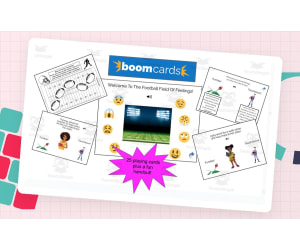
Football Field Of Feelings-An SEL Boom Cards with SEL Coloring Page
Special Resources, Life Studies, Life Skills, Social Emotional Learning (SEL), Social Skills, Special Education Needs (SEN), Preschool, Grade 1, 2, 3, 4, Activities, Worksheets & Printables, Worksheets, Coloring Pages, Writing Prompts
Football Field Of Feelings-An SEL Self-Regulation Boom Deck Plus SEL Coloring Pages An engaging learning tool your early learners will love! Tailored specifically for Kindergarten to Grade 4 children, this versatile resource focuses on the vital skill of self-regulating emotions. 25-card deck with a football theme: Presenting situations and allowing students to respond positively or negatively towards an emotive scenario. 'Fumble' and 'Touchdown': Each card presents these two options, enabling students to differentiate between positive and negative emotional responses. No reading required!The voice-over on each card adds auditory stimulation and further enhances comprehension levels in children. The first three instruction cards even include exciting football stadium sounds that are sure to enthrall them. Bonus handout: A bonus handout is added in the package where students get the opportunity to write down five techniques they can employ when dealing with strong emotions which solidifies their understanding further. An excellent complementing resource viable for whole class discussions, small group activities or as individual homework assignments. Inclusive Access For All Learners: We have ensured easy access via instant download – just click on the product image provided in the downloadable PDF! This package's benefits extend beyond education sessions into real-life emotional management practices increasing resilience among children while building emotionally intelligent future adults. You may also find our other sports-themed decks useful which are tailor-made for developing life skills in young learners such as; Frendship Homerun (Baseball-Themed). Best Behavior Basketball (BasketBall-Themend). An internet connection is needed for usage as it plays on browsers such as Chrome, Safari, Firefox & Edge along with popular apps such as Android iPad iPhone & Kindle Fire devices.For privacy reasons we recommend adults involved should have a Boom Learning account.The Fast Pins option allows immediate feedback making it popular among self grading students. The Football Field Of Feelings -An SEL Self-Regulation Boom Deck: A resource that brings vitality to learning emotions and levity in classrooms through crisp graphics, dynamic sounds and invigorating activities !
Author Jennifer Moyer Taylor
Tags SEL, Self-regulation, Emotional Intelligence, Football Theme, Interactive Deck, Sel Coloring Pages, Boom Cards, Social Emotional Learning, School Counseling
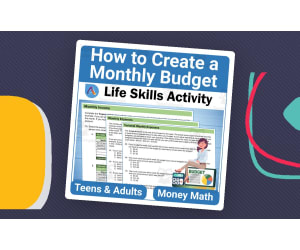
Money Management Life Skills: How to Create a Monthly Budget
Special Resources, Creative Arts, Art, Life Studies, Social Emotional Learning (SEL), Special Education Needs (SEN), Life Skills, Finance, Grade 10, 11, 12, Activities, Worksheets & Printables, Worksheets
High school students can acquire essential money management skills through this step-by-step special education life skills activity, which teaches them to create a monthly budget. This involves identifying income sources, setting savings goals, and categorizing monthly expenses such as housing, utilities, food, transportation, and entertainment. When using this Money Management Life Skills resource, students can engage in the following: • Learning to forecast monthly expenses, including categories like food, housing, and utilities, using a budget. • Understanding the distinction between actual and projected expenses in a monthly budget. • Managing variable expenses like dining out within the budget. • Defining various sources of income, such as wages, allowances, and occasional gifts. • Recognizing the significance of establishing and managing personal and emergency savings goals. There are a total of 87 reading comprehension questions in this Money Management Life Skills resource! This activity will assist high school students in developing the necessary life skills to become more independent at school, at home, and in their communities. A great place to use this handout is in special education classes or in one-to-one settings, such as ABA therapy, speech therapy, occupational therapy, and Registered Behavior Technician (RBT) sessions. High school students who are working on independent living would benefit significantly from this activity for defining, setting, and measuring IEP goals. In addition to interactive instruction, this resource is ideal for hands-on and community-based learning. Engage your special education class with this highly interactive High School Money Management Life Skills Activity! This activity contains step-by-step instructions, questions, and answers that reinforce learning, age-appropriate graphics, real-world examples, and ideas for implementation. This is the perfect special education activity for grade 10, grade 11, grade 12, and autism life skill centers . This special education life skills handout was designed to assist teens and adults with difficulties developing independent living skills. It's a printable, easy-to-use activity ready to hand out! Related Products for Managing Personal Finances How to Create a Shopping List The Value of a Bank Account How Credit Cards Work How to Read a Basic Pay Stub A PDF with 48 unique pages. Color and black-and-white versions of each page are available for this pdf resource.
Author Adulting Life Skills Resources
Tags Independent Living Skills, IEP Goal-Oriented Skills, Life Skills For Autistic Teens And Adults, Life Skills Money Math , Adulting On The Spectrum, Social And Emotional Learning, Life Skills For Teens, Life Skills For Adults, Autism And Money Skills, Activities Of Daily Living Autism, Money Management Activity Occupational Therapy, Life Skills Budgeting, Money Management Occupational Therapy

The Executive Mastery Framework A Developmentally Scaffolding
STEM, Special Resources, Life Skills, Social Emotional Learning (SEL), Social Skills, Special Education Needs (SEN), Science, Technology, Computer Science, Engineering, Grade 1, 2, 3, 4, 5, 9, 10, 11, Worksheets & Printables, Flashcards, Workbooks, Worksheets, Word Problems, Teacher Tools, Lesson Plans, Quizzes and Tests, Quizzes, Tests
The Executive Mastery Framework: A Developmentally Scaffolding Curriculum for Neurodiverse Learners "In The Executive Mastery Framework: A Developmentally Scaffolding Curriculum for Neurodiverse Learners," you will find a digital workbook, guide for educators, and other resources that support executive function development in neurodiverse individuals. The 30-page workbook and teacher resource guide provide a new perspective by shifting away from deficit-based models to a neuro-affirming outlook; it equips teachers, parents, and professionals with usable tools and strategies to build external cognitive supports that develop into the internalized capability of neurodiverse individuals. You will discover in this curriculum: Phase 1: Core concepts of neurobiology, executive function challenges, and developmental scaffolding; Phase 2: Ten worksheets (age progression/ability) that assist neurodiverse individuals in developing somatic awareness, impulse control, task initiation, working memory, cognitive flexibility, organizational skills, metacognitive awareness, persistence, vocational skills, and self-advocacy; and Phase 3: Visual frameworks, flowcharts, answer keys with evaluator rubrics. The curriculum contains case studies, reflections and practitioner insights, as well as action-based methodologies such as backward chaining, cognitive offloading, and environmental prosthetics to help neurodivergent children succeed in all aspects of education, work, and life from Pre-K through adulthood. This resource is perfect for special education resources, homeschool ADHD curriculum, autism teaching tools, executive function activities, neurodiversity-affirming education, and for IEP/504 plan support. Why Schools/Parents Appreciate It: Neuroscience-Informed and Research-Based: Uses positive, scaffolded support (shifting from a traditional punitive, deficit-based model) that relies on neuroscience principles to support neurodivergent learners in developing authentic skills in an environment free of shame and frustration. Complete and Versatile: Includes comprehensive [theory and research], interactive [worksheets/visuals/case studies], and teacher resources for easy adaptation for specific learner needs such as ADHD task initiation or autism transition plans. Demonstrated Effectiveness through Case Studies: Real-life examples proving quick and/or dramatic change in many areas and reduced challenging behaviors (i.e. decreasing aggressiveness, reducing instances of "lazy," creating self-advocacy skills) — resulting in higher levels of self-esteem and improved academic performance. Progression through Developmentally Appropriate Stages for Future Success: Provides information supporting learners in developing co-regulation to full independence (from an early age) and preparing them for success post-school (e.g. self-advocacy portfolio). Support for Educators and Parents/Guardians through Time-Saving Ready-to-Use Resources: Provide educators with reflective/reflection-based/rubric-based resources that enable educators to create student autonomy, while minimizing planning time, hence creating fewer behavioural concerns and more engagement. Target Audience of This Curriculum: This Curriculum was designed for use with students who present Neurodiverse profiles. The key characteristics of these profiles include ADHD, autism, dyslexia, executive dysfunction, or NVLD. The curricula analyzed within this PDF have been organized according to developmental progression from Pre-K to 2nd Grade, 3rd to 5th Grade, Middle School/6th to 8th grade, and High School/9th to 12th grade and beyond. Pre-K to 2nd Grade: The focus on early childhood developmentally appropriate foundational learning skills which includes the topics of use of environmental prosthetics, somatic awareness (awareness of the body), impulse inhibition, and developing an ability to co-regulate (worksheets 1 - 2). This would be appropriate for a 4 to 8-year-old child who is either autistic or has ADHD and experiences difficulty with sensory predictability or emotional regulation. 3rd to 5th Grade: Students at this grade level should be practicing the skills of upper elementary school co-regulated navigation, working memory expansion, and task initiation (worksheets 3 - 4). This would be appropriate for any student who displays signs of experiencing transitional anxiety or experiencing a working memory bottleneck. Middle School/ 6th to 8th Grades: The students in this age group should be able to internalize their tooling, develop cognitive flexibility, and work on their organizational systems (worksheets 5 - 6). This would apply to an adolescent who would display signs of experiencing difficulties with social hierarchies or temporal discounting due to their ADHD or AuDHD profile. High School/ 9th to 12th and Transition to Adulthood: Students should be developing their metacognitive self-advocacy skills, time management skills, goal persistence, vocational navigation skills, and independence (worksheets 7 - 10). This would apply to any teen or young adult who is preparing to enter college, work, or request the need for accommodations under the Americans with Disabilities Act due to severe executive dysfunction. This curriculum can be used in a variety of settings including: special education classes, home schooling, therapy sessions, implementation of an IEP, or within an inclusive classroom setting, ages 4-20+. Copyright/Terms of Use : This resource is the property of Syed Hammad Rizvi and is only to be purchased and used for personal or one single classroom activity. You cannot change/distribute/sell (however you choose) any part of this resource and cannot publish this resource to the Internet so other may have the opportunity to download or view it. If you would like to provide a colleague with a copy of this resource, you may do so by purchasing another license through Teachsimple. Thank You for following the terms provided above This product is happy to be provided by Syed Hammad Rizvi
Author Creative Book Store
Rating
Tags ADHD, Autism, Neurodivergent, SpecialEducation, IEP, 504Plan, TeacherResources, SpecialEdTeacher, HomeschoolCurriculum, Dyslexia

Misinformation Literacy & News Verification Worksheets
Science, Technology, Computer Science, Engineering, Resources for Teachers, Classroom Management, STEM, Special Resources, Social Emotional Learning (SEL), Social Skills, Grade 6, 7, 8, 9, 10, 11, 12, Worksheets & Printables, Writing Prompts, Worksheets, Word Searches, Workbooks, Teacher Tools, Lesson Plans, Assessments, Presentations, Diagrams
This curriculum provides a complete and easy-to-use, 38-page Information Literacy and News Validation Curriculum written specifically for the students in Middle School. It includes both Theory Chapters with real-world Case Studies (ex. “The Giant Blue Scorpion”, “Riverton Water Crisis”) to support development of the proprietary C.L.E.A.R. Protocol (Cross-check, Locate, Evaluate, Analyze, Read beyond the Headline), 10 interactive Student Worksheets, Answer Keys with Answer Key Samples and all pedagogical tools needed to utilize each resource (i.e. Information Disorder Spectrum, Cognitive Bias Feedback Loop, Lateral Reading Protocol). It is the best curriculum to teach how to identify Fake News,how to differentiate between Disinformation, Misinformation and Malinformation; how to identify ways to manipulate Emotionally; Visual Forensics; Statistical Literacy; building Echo Chambers; the creation of Synthetic media (Deepfakes); and Digital Citizenship. It contains Teacher Implementation Notes, Assessment Protocols and Printable Resources making it ideal for use with students in Grade levels 6-8 within Language Arts, Social Studies or Digital Citizenship classes, for use at home, or in After School Programs. Why Do Parents & Schools Like It? Develops 21st-century skills for protecting students from online scams, viral hoaxes, and manipulation through social media; however, these critical thinking skills are often missing from many of today's school curriculums. Lowers teacher's prep time by providing worksheets/answer keys / visual aids / assessment tools to meet digital citizenship/media literacy standards already established. Provides students with practical examples of how to understand and use abstract concepts (confirmation bias, lateral reading, false context) through relatable case studies & hands-on activities that middle schoolers often find enjoyable. Encourages responsible use of the Internet by teaching students proper online behavior, developing civic responsibility, and facilitating better dialogue about the news as well as social media between parents and children. Cost-effective, high-quality digital resource that can be used in a traditional classroom, cooperative homeschooling, or a remote-learning setting with one print that can be reused over and over again! The target audience for this PDF will be students in the sixth through eighth-grade range (Grades 6-8 / Middle School). The introduction, case studies, and worksheets all have content that references "middle school peer groups," "Sixth through Eighth Grades," and age-appropriate examples (such as school rumors, playground fears, TikTok fears) throughout the PDFs. This PDF is not appropriate for elementary school students (too advanced) or for high school students (too basic). Copyright/Use Guidelines : Copyrighted by Syed Hammad Rizvi. This resource is for a single classroom or personal use only. No modifications or redistribution, for resale, to be made to the resource. For example, uploading to the internet where it will be publicly available for downloading is not allowed. If you wish to share with colleagues, please obtain additional licenses from Teachsimple. Thank you for honoring these guidelines. Syed Hammad Rizvi was happy to provide this product.
Author Creative Book Store
Rating
Tags MediaLiteracy, MisinformationLiteracy, FakeNewsDetection, NewsVerification, DigitalCitizenship, CriticalThinkingSkills, MiddleSchoolCurriculum, Grades68, 6thGradeResources, 7thGradeResources
Gratitude and Empathy Visual Journaling
Sociology, Social Studies, Life Skills, Special Resources, Social Emotional Learning (SEL), Social Skills, Special Education Needs (SEN), Speech Therapy, STEM, Psychology, Kindergarten, Preschool, Grade 1, 2, 3, 4, Worksheets & Printables, Workbooks, Worksheets, Word Searches, Teacher Tools, Assessments, Lesson Plans, Quizzes and Tests, Quizzes, Tests
Have you been looking for a SEL resource that events something new with your young students? Have you noticed that old worksheets do nothing to measure a child's emotional intelligence and only offer a chance to measure his literacy skills? Help your students discover their emotional world with the help of the Gratitude and Empathy Visual Journal, which is based in research and created especially for preschoolers and children in the first two grades. This unique program helps children get around the first difficulties that they experience during their literacy acquisition by focusing on what they do best - making sense of their surroundings through drawings. Following the principles of the Visual-Affective Mapping technology, the low-text high-art worksheets that this program offers allow children to safely explore complicated emotional states such as empathy, gratitude, perspectives, and compassion. Instead of trying to put their feeling into words, the students are guided to express their emotions through drawings. This is not simply an art project; this is a good pedagogical device suitable for teachers, social workers, and parents. The contents of the package include: Educator's guide (10 pages): This is a full introduction into psychological basis and methodology that includes "Visual Epistemology of Emotion", examples in case studies, and some educator's insights on what was done. 7 Student Workbooks (15 pages): These print-ready student workbooks are designed for making work more engaging while presenting simple prompts: Emotion Detective (Identifying Emotions) My Gratitude Backpack (Intangible Gratitude) Looking Through Another's Window (Perspective-Taking) "Ouch to Ahh" First Aid Kit (Compassion) Friendship Recipe (Prosocial Skills) Weather Report of My Heart (Emotional Granularity) Magic Magnifying Glass (Mindful Gratitude) Visuals & Teacher Resources (8 pages): CASEL Framework Map: For learners to see how this resource corresponds with the main competencies of SEL. Comprehensive Interpretative Answer Key: Outstanding material that allows to interpret student figures easily. Detailed Instruction Manual: Guide for using E.A.S.E. protocol. Trauma-Informed Exercise Guide: Advice on making environment emotionally comfortable and reacting to delicate cases. Motor Deficit Strategies: Useful advice on making sure every child can work on this task. Help your kids have the basic empathy and true gratitude. Download this impactful SEL resource now! KEYWORDS: Social Emotional Learning, SEL, Empathy, Gratitude, Visual Journaling, Drawing Prompts, K-2, Kindergarten, First Grade, Second Grade, CASEL, Character Education, Mindfulness, School Counseling, Trauma-Informed, No-Prep, Printable Worksheets, Homeschool, Emotional Intelligence. Several Reasons Why It Is Popular Among Parents/Schools: All Learners Welcome: The program makes it easy for everyone including pre-readers, struggling readers and even people with dyslexia or dysgraphia to take part in the learning process and share their understanding of emotions. Supported by Research and Designed to Work: The program is more than just a group of prompts based on drawing, it has been designed according to the principles of child psychology, CASEL, and other educational programs that follow a clear teaching methodology. Allows to Understand Children Better: Since it is based on drawing, it is able to give teachers and parents unique insights into the feelings and emotions of children which cannot be seized through their academic written answers. Complete and immediately available: It is a full program that already covers the areas of target audiences and has available teachers’ guides, answer keys, ideas about dealing with trauma and differentiation. Encourages More Intensive Understanding: The program contains not only self-awareness but many useful tools that allow improving kindness and collaboration in the class. Classes for the Target Learners: Based on a thorough examination of the language, messages, and clear information presented in the PDF, the identified target groups are as follows: Primary Target Group: Students in Kindergarten, 1st, and 2nd Grades (ages 5-8 years). The PDF continuously emphasizes K-2 levels of learners, as well as uses "low-text" format, which perfectly suits beginner readers. Secondary Target Group: This is also a great resource for Special Education pupils, as well as students in the elementary school setting in connection with diagnosis of emotional problems. Copyright and Terms of Use: Syed Hammad Rizvi holds the copyright for this book. This book can be used only for personal use in a single classroom. You are not allowed to modify, distribute or sell this material. Thus, you cannot upload it to the Internet where it can be available for everyone. Should you want to share this material with your colleagues, you should purchase additional licenses from Teachsimple.
Author Creative Book Store
Rating
Tags SocialEmotionalLearning, SEL, Empathy, Gratitude, EmotionalIntelligence, CharacterEducation, Mindfulness, MindfulnessForKids, EmotionalRegulation, SocialSkills
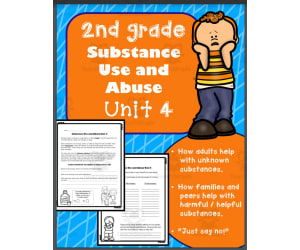
Health 2nd Grade Unit 4: Substance Use and Abuse
P.E. & Health, Health, Physical Education, Special Resources, Life Skills, Social Emotional Learning (SEL), Social Skills, Grade 2, Lesson Plans, Teacher Tools, Worksheets & Printables, Worksheets
For 2nd Grade Health there are seven standards that need to be taught. Unit 1 Personal Health Unit 2 Growth and Development Unit 3 Nutrition and Physical Activity Unit 4 Substance Use and Abuse Unit 5 Injury/ Violence Prevention Control and Safety Unit 6 Prevention/Control of Disease Unit 7 Environmental Consumer Health These units can be taught out of order. They are only numbered for your convenience. At the end of each unit, there is an assessment to test students’ understanding. Through using this Health 2nd Grade Unit 4: Substance Use and Abuse students will learn to identify how adults can help with unknown substances and understand what is a safe and what is not safe or otherwise what is known as an unsafe substance. Students will also learn the following concepts: * How adults help students to understand what is an unknown substance. * Students will learn to “Just say no” to many harmful substances that are not healthy and habit forming. * How families and peers help with harmful / helpful substances. At the end of the unit, there is an assessment to check for understanding. A total of 10 pages for this 2nd Grade Health Unit 4 on Substance Use and Abuse. There are seven units that cover all the health requirements for second grade. Here are the links to other health units: Health 2nd Grade Unit 1: Personal Health Health 2nd Grade Unit 2: Growth and Development Health 1st Grade Unit 3: Nutrition and Physical Activity Health 2nd Grade Unit 4: Substance Use and Abuse Health 2nd Grade Unit 5: Injury / Violence Prevention and Safety Health 2nd Grade Unit 6: Prevention / Control of Disease Health 2nd Grade Unit 7: Environmental / Consumer Health 2nd grade Coronavirus / Covid-19 Facts This unit meets Common Core Standards.
Author K-5 Treasures
Tags Health Unit, Substance Use, Substance Abuse, Safe And Unsafe Substances, 2nd Grade Health, Second Grade Health, Health, Elementary Health, Health Resources, Health For 2nd Grade

Kindergarten Health: Unit 4
P.E. & Health, Life Studies, Health, Physical Education, Special Resources, Life Skills, Social Emotional Learning (SEL), Social Skills, Kindergarten, Teacher Tools, Lesson Plans, Worksheets & Printables, Worksheets
For Kindergarten Health there are seven standards that need to be taught to achieve healthy habits! Unit 1 Personal Health Unit 2 Growth and Development Unit 3 Nutrition and Physical Activity Unit 4 Substance Use and Abuse Unit 5 Injury/ Violence Prevention Control and Safety Unit 6 Prevention/Control of Disease Unit 7 Environmental Consumer Health These units can be taught out of order. They are only numbered for your convenience. Through using this Kindergarten Health: Unit 4, students will explore and learn to identify daily healthy habits. Included in this unit : * Students will identify what is safe or unsafe in a household, which includes medications, cleaning supplies, and household appliances. * Students will cut, sort, and paste these harmful or safe substances into categories. * Understanding who can and who cannot give you medications is another thing that students will learn. * Teachers will help students to role play situations that may be unsafe and how to handle these situations and learn how to say no. Students will identify safe and unsafe substances in a household and learn who can give them medication. Furthermore, there are activities to help kids learn how to just say no in difficult situations. There are a total of 9 pages included in this unit for Kindergarten Health. There are seven units that cover all the health requirements for Kindergarten. Here are the links to other health units: Kindergarten Health: Unit 1 Personal Health Kindergarten Health: Unit 2 Growth and Development Kindergarten Health: Unit 3 Nutrition and Physical Activity Kindergarten Health: Unit 4 Substance Use and Abuse Kindergarten Health: Unit 5 Injury / Violence Prevention Control and Safety Kindergarten Health: Unit 6 Prevention / Control of Disease Kindergarten Health: Unit 7 Enviromental Consumer Health You can also teach your students about keeping yourself safe by studying about the Coronavirus, where and when it started and facts that plagued our world with this virus. Kindergarten Health: Covid 19 / Coronavirus Facts This unit meets Common Core Standards.
Author K-5 Treasures
Tags Health, Health Worksheets, Kindergarten Health, Kids Health, Health Units, Healthy Habits, Healthy Eating, Elementary Health, Healthy Food, Kinder Health
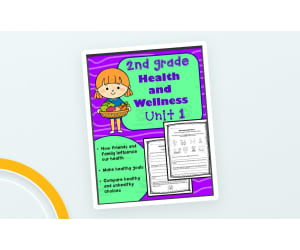
2nd Grade Health – Unit 1 Personal Health
P.E. & Health, Health, Physical Education, Common Core, Special Resources, Life Skills, Social Emotional Learning (SEL), Social Skills, Grade 2, Lesson Plans, Teacher Tools, Worksheets & Printables, Worksheets
For 2nd Grade Health there are seven standards that need to be taught. Unit 1 Personal Health Unit 2 Growth and Development Unit 3 Nutrition and Physical Activity Unit 4 Substance Use and Abuse Unit 5 Injury/ Violence Prevention Control and Safety Unit 6 Prevention/Control of Disease Unit 7 Environmental Consumer Health These units can be taught out of order. They are only numbered for your convenience. At the end of each unit, there is an assessment to test students’ understanding. Through using this Health 2nd Grade Unit 1: Personal Health students will explore and learn to identify daily healthy habits by knowing what foods are best to eat and how to set goals for physical activity. Habits included are: * Students will learn about healthy and unhealthy activities. These activities will include what is the difference between physical activities and sedimentary activities. * Students will learn how to make healthy choices that will benefit their nutritional goals. * They will learn about goals. Along with knowing the difference between long-term and short-term goals. And how to set both. * Students will come to understand their emotions and how to they can express those emotions as they learn to deal with their feelings. * Lastly, students will learn when and who they can rely on and who to talk to an adult about how they are feeling and how to get help when needed. At the end of the unit, there is an assessment to check for understanding. A total of 11 pages for this 2nd Grade Health Unit 1 on Personal Health There are seven units that cover all the health requirements for second grade. Here are the links to other health units: Health 2nd Grade Unit 1: Personal Health Health 2nd Grade Unit 2: Growth and Development Health 1st Grade Unit 3: Nutrition and Physical Activity Health 2nd Grade Unit 4: Substance Use and Abuse Health 2nd Grade Unit 5: Injury / Violence Prevention and Safety Health 2nd Grade Unit 6: Prevention / Control of Disease Health 2nd Grade Unit 7: Environmental / Consumer Health 2nd grade Coronavirus / Covid-19 Facts This unit meets Common Core Standards.
Author K-5 Treasures
Rating
Tags Health Unit, Personal Health, Healthy Goals, Unhealthy Choices, Health Activities, Physical Goals, Health Goals, Health And Wellness, 2nd Grade Health, Second Grade Health

Fun Capybara Activity Mats & Brain Break Activities
Special Resources, Social Emotional Learning (SEL), Elementary, Worksheets & Printables, Worksheets, Coloring Pages, Mazes, Word Searches, Games, Activities
Do your students love capybaras as much as my students do? In this resource, there are 10 different activities with the theme of capybaras. There are 2 resources that are both in color and black and white for options. There are two Find The Differences, 3 different activity mats, three coloring pages, a weekly planner and an "I spy" activity mat. These are great for brain breaks, calm down centers, centers, parties, etc. This resource is good for kindergarten, first, second, third, and fourth. For more SEL resources and fun stuff for students, please check out my store here: https://teachsimple.com/contributor/jennifer-moyer-taylor You may enjoy checking out my other fun resources here: https://teachsimple.com/product/20-hidden-objects-and-find-the-differences-puzzles-and-games (20 different puzzles and games for brain breaks and calm down activities. There are puzzles and games for different seasons.) https://teachsimple.com/product/unwind-your-mind-sel-activity-mats (Unwind Your Mind activity mats for brain breaks and calming activities. These are a great "lunch bunch and group resource.) https://teachsimple.com/product/fall-and-winter-holiday-and-seasonal-word-searches (Fall and winter word searches. There is a word search for Halloween, Christmas, Labor Day, Thanksgiving (fall), Valentine's day and Back To School. These are great for early finishers, back to school, Winter and fall classroom parties, group centers, etc.) https://teachsimple.com/product/2-sel-cute-coloring-pages-and-sel-posters (2 cute coloring pages-a sloth and a camera image. Great for mindfulness coloring, calm down corners, etc.) https://teachsimple.com/product/back-to-school-personalized-sel-bookmarks (Back to school bookmarks. You can personalize these with each student's name on it-they could be greeted on the first day of school with these personalized bookmarks and then color them.) https://teachsimple.com/product/a-to-z-coping-skills-and-calming-techniques-sel-posters (2 SEL, social emotional learning posters. One is an A to Z coping skills poster. The other one is Calming Down techniques for kids. There are 12 different calming down strategies.) https://teachsimple.com/product/all-about-me-tee-back-to-school-sel-coloring-pages (All About Me Tee for the first days of school. These are also great for getting to know you activities. There is one for younger students and one for older students. This would be great for bulletin boards.)
Author Jennifer Moyer Taylor
Rating
Tags Capybara, Activity Mats, Coloring Pages, Brain Breaks, Calm Down Corners, Mindfulness, Puzzles, Word Search, Fun Stuff, Sel

Describing My Feelings Worksheet Set
Special Resources, Social Emotional Learning (SEL), Social Skills, Special Education Needs (SEN), Not Grade Specific, Worksheets, Worksheets & Printables
Identifying and verbalizing emotions is essential yet challenging for young children’s healthy development. This set of 20 illustrated printable worksheets helps students advance self-awareness by examining common feelings in depth one by one. With 2 different versions of the worksheet featuring both boys and girls, children investigate their own experiences feeling various emotions. The wide-ranging worksheet set covers feelings like happiness, sadness, worry, anger, frustration, annoyance, fear, embarrassment, excitement and disappointment. Each page displays a child’s blank face ready to be drawn by students showing that feeling visually. They then respond to prompts describing a time they felt that way, associated thoughts they remember, and any physical reactions in their body. Analyzing the internal and external aspects of varied emotions builds children’s “feelings vocabulary” exponentially. Writing personal examples cements comprehension further, allowing kids to relate back to their own illustrations later as reminders. Sorting pages by intensity levels (high/medium/low energy emotions) teaches activation regulation skills too. With 10 diverse feelings covered, these interactive worksheets expansively grow children’s emotional intelligence. Kids become experts decoding their own ever-changing inner world while building empathy for what classmates experience too. This resource includes 20 worksheets showing 10 different emotions - 10 worksheets with boy faces on and 10 with girl faces.
Author SEN Resource Source
Tags Emotions, Feelings, SEL, Self-awareness
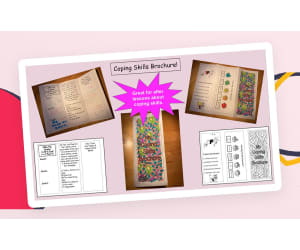
Coping Skills Brochure and SEL coloring pages
Special Resources, Social Emotional Learning (SEL), Social Skills, Special Education Needs (SEN), Grade 3, 4, 5, 6, Activities, Worksheets & Printables, Coloring Pages, Worksheets
In this resource, your students will have a take home brochure to help them think of and remember ways to calm down and cope with big feelings. There are 6 sections of this resource. There are SEL coloring pages in this resource. The first section is the cover page with has a mindfulness coloring activity that students can customize to their liking. This in and of itself is a coping skill! Next you have a place where students can use their name and use the acronym of their name to help them come up and customize how they would like to calm down when they have a big feeling. For example, if the name is Jenny, they can write; J is for make a joke or listen to a joke, E is for Exercise, N is for Try something New, the other N is for Notice objects in the room (such as all the things that are green, blue, etc.) and the Y is for do yoga poses. On of the pages is the directions and the other page (flap) is for them to write their own name and customize their strategies. One of the flaps give them the acronym of CALMS which stands for C-Calming Exercises, A-Activities that distract (reading, playing a game or sport, puzzle, word search, etc) L-Look around the room (Look for all the blue objects, Look for things you see that begin with the letter A, etc.) and then M-Mindfulness practices. These are things that really bring students into the present moment. Look for 5 things you see, 4 things you hear, 3 things you feel, 2 things you smell, 1 thing you taste, etc. The S is for Sensations. Do things that make you feel different sensations that are pleasant such as place an ice pack on your forehead, go into a hot shower or hot tub, etc. Taste something sweet or spicy. These are all the things that can help someone cope with a strong feeling.
Author Jennifer Moyer Taylor
Tags Sel, Social Emotional Learning, Coping Skills, Stress Management, School Counseling, Social Skills, Self-regulation, Calming Down, Sel Coloring Pages
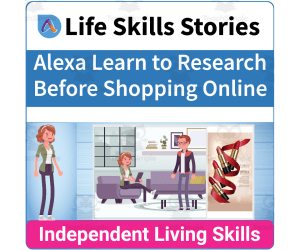
Online Safety Skills: Alexa Learns to Research Before Shopping Online
Special Resources, Life Studies, Social Emotional Learning (SEL), Special Education Needs (SEN), Social Skills, Speech Therapy, Life Skills, Grade 10, 11, 12, Activities, Worksheets & Printables, Worksheets
<h3>Online Safety Skills: Alexa Learns to Research Before Shopping Online</h3> <p>This is a teaching resource designed to empower students with the capability of informed decision-making while shopping online. The guide features our character, Austin, educating Alexa on vetting products online before purchasing them.</p> <b><i>"Key Areas Covered"</i></b> - Evaluating trustworthiness - Understanding customer reviews - Real-world product research <p style='text-align:justify'>We employ a simple and clear language that makes it engaging and the learning process important. The concepts taught are augmented by visual aids like diagrams and illustrations.</p> "Engagement Component" <p style='text-align:justify'>There are seven interactive reading comprehension tasks linked to this story, meant to further deepen the learner's grasp of key online safety skills.</p/> "Versatility and Practicality" <p style='text-align:justify'>;This package can be handy for a wide range of professionals, from special education teachers to supported living coaches or parents wanting to instill vital life lessons in their learners. It can be used both within classrooms as well as in community settings for hands-on practical learning experiences that align with each learner's Individualized Education Program (IEP) goals.<br /> Additionally,it serves excellently supplementary material alongside regular classroom teachings. Other related products on Independent Living Skills reinforcement could include resources focusing on: Creating monthly budgets or shopping lists Understanding banking benefits Managing credit cards Applying money math at the grocery store Reading menus critically plus other subjects. <p>This resource is extended as a print-friendly PDF file spread across six pages. Thus, making it both easy-to-use and highly interactive for special education settings.</p>
Author Adulting Life Skills Resources
Tags Online Safety, Research Skills, Informed Decision-making, Critical Thinking, Reading Comprehension

My Emotions This Week Worksheet
Special Resources, Social Emotional Learning (SEL), Not Grade Specific, Worksheets, Worksheets & Printables
Understanding emotions is an essential social-emotional skill for children to build. This worksheet helps students identify and process their feelings in a structured, visual way with opportunities for self-expression, it’s an engaging tool for emotional learning. The resource features four sections titled “I felt happy when...”, “I felt sad when...”, “I felt angry when...” and “I felt worried when...” With plenty of space to write or draw, children capture their emotional experiences over the week. They may depict playing with friends, arguing with siblings, struggling with schoolwork, worrying about an upcoming test, feeling proud of an accomplishment, and more. The worksheet facilitates children in labeling complex emotions, reflecting on responses, and finding healthy outlets. Teachers can incorporate it into morning work to gauge students’ states of mind or at the end of the day as a way to reflect. Counselors may utilize it for identifying mood patterns or behavioral triggers. Parents can try it at home to spark conversations around difficult feelings. No matter the environment, the flexible format makes emotional check-ins approachable for kids. Instead of being scolded for age-appropriate outbursts, they can feel heard. Children gain skills in situational awareness, causal relationships, and self-regulation. Plus, the sheet becomes a personalized journal of emotional growth to look back on. This simple yet powerful tool turns reflection into a routine exercise for mental wellbeing. Suitable for young students through teens, it provides a constructive framework for navigating life’s ups and downs. Included is 1 PDF worksheet
Author SEN Resource Source
Tags Emotions, Social Emotional Learning, Feelings, Emotional Intelligence, Self Awareness, Self Regulation, Counseling, Mindfulness

SEL Coloring Pages with Positive Affirmations
Special Resources, Social Emotional Learning (SEL), Social Skills, Special Education Needs (SEN), Kindergarten, Grade 1, 2, 3, 4, 5, 6, 7, 8, Worksheets & Printables, Worksheets, Coloring Pages
In this SEL product you will get 5 SEL coloring pages. These pages have a positive affirmation on each one. There is a sloth that says "I can relax.", a sports page that says "I am strong.", a collection of shells that says "I can breathe.", rainbows that state "I am calm", a car full of animals that states "I am a good friend". These sel coloring pages are great for early finishers, having students color these during quiet time, in a calm down corner, in a school counseling session, as a follow up to an SEL guidance lesson on making friends, strategies to use to get calm when having big feelings, a lesson about slow breathing or mindfulness breathing, after a Physical education class to emphasize "I am strong". The uses are limitless. Even middle schoolers love to color these and it is a way for them to do something while they talk to the school counselor or participate in a small group meeting. For more SEL presentations, coloring pages, SEL Boom Cards, please feel free to visit my sel store at: https://teachsimple.com/contributor/jennifer-moyer-taylor I work full-time as a school counselor for grades kindergarten, first, second, third, fourth, fifth, sixth, seventh, and eighth. You may also enjoy these SEL products: https://teachsimple.com/product/5-sel-fall-themed-coping-sel-coloring-pages-3-halloween-images (coping by coloring, fall themed sel coloring pages) https://teachsimple.com/product/20-personalized-mindfulness-sel-coloring-sheets-fully-editable (these are editable mindfulness coloring pages) https://teachsimple.com/product/teddy-bear-sel-coloring-based-on-likes-and-dislikes (coloring teddy bear based on student's own preferences and likes-each one will come out differently based on your students' preferences!) https://teachsimple.com/product/coping-skills-sel-coloring-pages (coping skills coloring with 4 different images, there is a teddy bear, beach ball, umbrella, butterfly as well as a handout with 16 different coping skills so students can take this home, decide which ones to try, decide which ones work the best for them, etc. These are wonderful to do in one on one counseling sessions, after an SEL lesson on coping skills, etc.
Author Jennifer Moyer Taylor
Tags SEL Coloring Pages, Sel, Social Emotional Learning, School Counseling, Affirmations, Mindfulness Coloring, Social Skills, Coloring, Coloring Pages

Guided Reading Level H - Clean Hands, Healthy Bodies
ELA, Resources for Teachers, Reading Comprehension, Reading, Health, P.E. & Health, Social Emotional Learning (SEL), Special Resources, Life Skills, Science, Kindergarten, Grade 1, 2, Worksheets & Printables, Worksheets, Teacher Tools, Centers, Activities, Literacy Readers, Quizzes, Quizzes and Tests, Assessments
This Guided Reading Book - Clean Hands, Healthy Bodies (Level H) includes: Guided Reading Color Label (front cover x1) This is a quick way to match the book’s demands to what students can generally handle.. The overall goal is to use the level/color to pick books for several smaller groups. To qualify for a certain level, a student is expected to read a book from that level with about 90–94% accuracy. If a student is consistently accurate and understands, move up a level. If the student is struggling at that level, drop down and add more support. Each student will improve at completely different rates, but it is generally one of the best ways to check progress across the class. DOWNLOAD THE CATALOG TO VIEW ALL GUIDED READING BOOKS AVAILABLE (SORTED LEVELS A-Z) Pre-Reading Question (x1) Teacher asks the prompt aloud, can be while showing the cover or first page. Students share what they already know, or make educated guesses from the cover. Prompt them to use the target vocabulary. Write some of their responses on the board to look back at during the reading. Vocabulary Words (x5) Introduce the five words, best doing it one at a time. Start by saying it, while students repeat and then see if anyone knows what it means before reading further. Read through the meaning and try to briefly connect each word to a picture or gesture so it’s meaningful. Ask students to flip through the book pages and point to where they see each of the vocabulary words. While reading the book pause upon coming across one of the vocab words or read the sentence twice to make sure students understand the word has appeared. Optional: Ask students to raise hands whenever they see/hear one of the new words. Guided Reading Pages (x10) Check the book snapshot (below) for: primary topic - do you need to prep extra reading or intro materials on this? what is taught best - decide on 1-2 bullets to focus on, use the prompt or words provided here for best results. learning goals - what you are checking for students to be able to do after the session, elicit answers using prompts or words provided. key vocabulary (see section above). questions overview - so you know what is coming up and if you need to prep extra materials to assist understanding. Run the lesson You may have already looked at a few of the pages together, but you can show them some of the pictures again first to set meaning. Depending on how much time you have and how familiar your students are with guided reading class, you may want to read the book aloud first with the group first. Students whisper or partner read, while you listen in. If time, do it as a group, one student reading a page each. Use the guided page’s prompts to coach: “Check the picture / does it make sense?” “Point under the words / try the first sound” “Reread the sentence smoothly”. Try to focus more on one student per session (rotating every time), so you can work out if they are ready to move up or need to move down a level. Comprehension Questions (back cover x3) This is your way to check that students didn’t just say the words, but actually understood the text. First, let students answer by pointing to the page/picture and saying a short sentence. After any answer, follow with: “Show me where you found that in the text.” In bigger groups, have partners answer first (10–20 seconds), then call on 2–3 students to share. Differentiation tips: Emerging speakers/struggling readers: oral + pointing On-level: oral in a full sentence Higher: one written sentence or draw + label Book Snapshot Title: Clean Hands, Healthy Bodies Genre: Nonfiction (informational) Subject: Health & Safety / Science Primary Topic: When and how to wash hands to stop germs Estimated Guided Reading Level (A–Z): H What This Book Teaches Best Why washing hands matters: it “keeps germs away” and helps prevent germs from spreading to other people. When to wash hands (before eating, after outdoor play, after using the toilet, after playing with a pet). How to wash hands step-by-step (wet with clean running water, use soap, scrub all areas, rinse, dry). A key procedure detail: scrubbing should last “twenty seconds” to remove germs. The idea of healthy habits: making handwashing a regular habit “protects everyone.” Learning Goals Students will explain one reason the book gives for washing hands, using a detail from the text. Students will identify at least two times the book says hands should be washed. Students will describe the steps for washing hands in order, based on the text. Students will state how long scrubbing should last, according to the book. Students will describe how handwashing helps other people, using the book’s words about spreading germs/protecting everyone. Key Vocabulary From the Text germs — tiny living things that can make you sick. contact — touching something. invisible — cannot be seen. scrub — rub hard to get something clean. protects — keeps safe from harm. Discussion Prompts Pre-reading question: When do you think it is most important to wash your hands? Comprehension questions: Name one time the book says you should wash your hands. How long should scrubbing last when you wash your hands? Why does washing your hands help other people? Printing Tips 1. Best Printing Method (Recommended) “Booklet” Printing (Best if Available) If your printer or PDF viewer supports Booklet Printing , use this. Settings to use: Print mode: Booklet Paper size: Letter or A4 (either works) Orientation: Landscape Print on both sides: Yes Flip on: Short edge Scaling: Fit to printable area Booklet subset: First test: Front sides only Then: Back sides only This will automatically: Pair pages correctly Put the cover on the outside Align everything for folding After printing, fold in half and staple along the spine . 2. If “Booklet” Printing Is NOT Available You can still print this correctly with manual duplex printing . Step-by-step: Open the PDF. Choose Print . Set: Orientation: Landscape Pages per sheet: 1 Print on both sides: Yes Flip on: Short edge Print all pages . Because each PDF page already contains two facing book pages, the result will still fold cleanly into a book. Thousands of Cored Education products are included with your TeachSimple membership. Download links and encyclopedia index available here.
Author Cored Education
Rating
Tags Vocabulary, Reading Comprehension, Reading Passages, Leveled Reading, Nonfiction, Reading, Guided Reading, Health, SEL, Life Skills

Finance Life Skills: Omar Learns to Protect His Financial Information
Special Resources, Social Emotional Learning (SEL), Special Education Needs (SEN), Speech Therapy, Life Skills, Grade 10, 11, 12, Activities, Worksheets & Printables, Worksheets
Finance Life Skills: Omar Learns to Protect His Financial Information A valuable educational tool aimed at high school and adult learners, especially those with special needs, is this story-based guide. It focuses on pivotal life skills related to phone and online safety, with an emphasis on securing personal and financial data. The tale of a character named Omar learning wise habits under Olivia's mentorship effectively introduces learners to important cautionary measures in a captivating way. The advice covered includes vital pointers such as: Not sharing sensitive personal information with unknown individuals or insecure websites Action steps to take following probable data breaches which include alerting responsible adults and contacting bank or credit card companies. The clear-cut language used is perfect for high school students' cognitive abilities while also being effective for adults living with intellectual disabilities. This resource can be implemented in group settings, small study groups or used independently as homework assignments. Multifaceted Utility Beyond the Classroom This inclusive teaching aid extends its use beyond special education teachers; it could also be beneficial to speech therapists, occupational therapists, ABA (Applied Behavior Analysis) professionals or support-living coaches who aim at instilling essential life skills. Practical Resources for Comprehensive Learning Fostering Connection & Unity within Communities This lesson also encourages social skill development by emphasizing on community unity and connection. Rich dialogues embedded in the storyline make learning fun while reinforcing crucial concepts covered in the narrative. Real-world examples coupled with age-appropriate visual aids (such as illustrations) further enhance comprehension. Your package will also include seven reading comprehension questions with detailed answers provided at every lesson's end for reinforcement purposes. An Aid for Special Education Teachers & Therapeutic Experts This resource has proven helpful not only among special education teachers but also among therapeutic experts like occupational therapists or speech therapists who work with intellectually disabled high school students or adults. The package comes as a downloadable printable PDF file consisting of six comprehensive pages full of educational encounters dedicated to nurturing future-ready independent living skills among young adults - making it perfect for class discussions or home-based learning sessions. A PDF file with (7)seven pages. Color and black-and-white versions of each page are available for this pdf resource.
Author Adulting Life Skills Resources
Tags Finance Skills, Personal Information, Online Safety, Data Protection, Life Skills

Health | 3rd Grade Unit 2: Growth and Development
P.E. & Health, Life Studies, Physical Education, Health, Special Resources, Life Skills, Social Emotional Learning (SEL), Social Skills, Grade 3, Teacher Tools, Lesson Plans, Worksheets & Printables, Worksheets
This 3rd Grade Health Unit focuses on Growth and Development and is essential to help students with their health and wellness. There are seven units in all taught in 3rd grade that focus on health. These units include: Unit 1 that focuses on Personal Health and Wellness Unit 2 that focuses on Growth and Development Unit 3 teaches students about Nutrition and Physical Activity and how to eat right and stay active Unit 4 that helps students with Substance Use and Abuse and how to avoid bad substances Unit 5 that will teach students about Injury/ Violence Prevention Control and Safety Unit 6 that covers what happened during Covid and how to protect themselves while learning about Prevention/Control of Disease Unit 7 discusses our environment and how to help save our planet with Environmental Consumer Health These units all about health can be taught out of order. They are only numbered for your convenience. At the end of each unit, there is an assessment to test students’ understanding. Through using this Health 3rd Grade Unit 2: Growth and Development, students will be able to study and learn about body organs, our body systems, and their emotional and physical features. Included in this 3rd Grade Health Unit are the following: In this unit, students will learn about several different organs in the body including: brain, lungs, heart, liver, kidneys, and the small and large intestines. They will find a worksheet with a blank body and label all these parts after reading about these vital organs. Students will also learn about the many different body systems we have which include: skeletal and nervous systems, circulatory system, digestive system, respiratory system, muscular system, and learn about our skin and hair. They will assemble in order how these systems look in a body as they compile a book. They will also label each system after looking a drawings. They will explore the emotional and physical features of people when they are sad, surprised, happy, etc. Lastly, they will compare their physical features to other classmates and come to understand how our genes are all different. This unit meets Common Core Standards. It is 13 pages of fun engaging activities! At the end of the unit, there is an assessment to check for understanding. There are seven units that cover all the health requirements for 3rd grade. Here are the links to other health units:
Author K-5 Treasures
Rating
Tags Health Unit, Personal Health, Healthy Goals, Unhealthy Choices, Health Activities, Physical Goals, Health Goals, Health And Wellness, 3rd Grade Health, Third Grade Health

My Happy Place Worksheet
Special Resources, Social Emotional Learning (SEL), Special Education Needs (SEN), Not Grade Specific, Worksheets, Worksheets & Printables
Finding inner calm amid anxiety is a pivotal emotional skill. This creative worksheet guides children to illustrate places that make them feel happy and calm that can soothe a worried mind. The resource teaches visualization techniques for centering yourself when tensions escalate. The printable page features a blank photo along with the prompt: “Draw your happy place here.” Children can then depict rich scenes like cozy reading nooks, spaces with beloved pets, favorite nature spots, or engaging in a peaceful hobby. When emotions later feel out-of-control, students can reference these places that make them feel calm prompting feelings of safety and reassurance. Teachers may incorporate the worksheet alongside social-emotional learning lessons on relaxation strategies. Therapists might employ guided imagery exercises having clients explore illustrated landscapes for insight. Parents can practice together with children before anxiety-inducing events. The versatile format makes examining anxiety feel constructive. Instead of suppressed strife, kids gain skills to shift distressed states of mind. Over time, visualizing these inner sanctuaries strengthens abilities to self-soothe when external situations resist change. Simple yet profoundly grounding, this worksheet leverages the imagination’s power to cultivate resilience. Children emerge better able to tap into inner resources offering solace inside even life’s biggest storms. This resource includes 1 PDF worksheet
Author SEN Resource Source
Tags Emotions, Feelings, Social-emotional Learning, SEL, Emotional Intelligence, Emotional Management, Calming Strategies, Coping Skills, Self-regulation, Behavior Management

Emotional Regulation & "Size of the Problem" Mapping
Special Resources, Life Skills, Social Emotional Learning (SEL), Social Skills, Special Education Needs (SEN), Speech Therapy, STEM, Resources for Teachers, Classroom Management, Community Building, Grade 1, 2, 3, 4, 5, 6, 7, 8, Teacher Tools, Assessments, Lesson Plans, Quizzes and Tests, Quizzes, Tests, Worksheets & Printables, Workbooks, Worksheets, Word Searches
Have you had enough of students throwing tantrums over minor issues? This COMPLETE set of materials will help you to promote emotional regulation in your classroom and/or counselling office. This complete print-and-go curriculum will teach students in grades 1 – 3 the important difference between a “glitch” and an “emergency.” Based upon the popular “Size of The Problem” concept, this toolkit goes far beyond simple worksheets by providing a comprehensive, neuroscience-based approach to building self-regulation skills. This is not just a bunch of activities; it is a comprehensive multi-week program that allows students to learn how their brain works, understand the size of their problems, and respond to those problems with appropriate emotional responses. This program can be used by any teacher, school counselor, special education teacher, or occupational therapist. WHAT IS IN THE PACKAGE - 43 Pages of High Value Content Part 1 – Theory and Clinical Guide (11 Pages) – A detailed educator guide to why the approach is used. This section will include an explanation of the neurobiology of an "amygdala hijack," a review of the principles of Cognitive Behavioural Therapy (CBT), and an explanation of the research supporting visual scales as an assessment tool for young learners. Part 2 – Engaging Student Workbook (20 Pages) – 10 Scaffolded Worksheets: Fun, relatable activities that allow the learners to develop their ability to identify problem sizes and their reaction to those problems. Topics Include: Problem Thermometer, Reaction Rulers, The Match Game, Shrink the Mismatch, What If? Lab, Body Signals, Perspective Taking, and a Personal Problem Map. Part 3 – Teacher Resources and Visuals (12 Pages) – 3 Visual Models for teachers: Classroom poster ("The Proportional Magnitude Scale"), an assessment matrix, and a cognitive mapping flowchart – all are perfect for use as anchor charts and for daily reference. Answer Keys for the student worksheets make it easy to assess your students. Detailed Implementation Guide for teachers: This guide contains a detailed week by week implementation plan for introducing conceptual information and providing reinforcement for long-lasting effects, including scripts and suggestions for implementation activities. Support your students as they develop a base of emotional awareness and skills to be able to deal with emotions throughout their life. Provide your students with the opportunity to not only deal with their emotional responses but to also develop the ability to know, evaluate and manage their emotional responses. CATEGORIES OF LEARNERS: Elementary Education, Social Emotional Learning; Copywriter; Emotion Regulator; Teacher; Student; Self-Regulator; Reference; Help With; Size Of The Problem; Coping Skills; Student Management; Meltdowns; Workbook; Worksheets; Visuals; Posters; Anchor Charts-School; Elementary Grades: 1st, 2nd, 3rd; School Counseling; Special Education; CBT. Reasons for Parents/Schools to Appreciate: Science Based Approach: Proven theories of neurobiology and cognitive behavioral therapy (CBT) provide a scientific basis for the works that are performed based on their use. Develops Lifelong Skills for Children: Children acquire a language and visual representations of their feelings, enabling them to have the tools they need to cope and manage their feelings as well develop independence and resiliency. Reduces Disruption in Classrooms: Students become more self-regulated and are less likely to act out over little things such as breaking a crayon or losing a game. Therefore, there is increased time for typical learning. A Complete Program: The online program is complete and provides all of the materials needed to teach the program to students. Teachers and counselors do not need to create or gather materials themselves; the time savings are significant! Target audience: According to the content, language, and examples of your product (for example, "first through third grades", 7-9 year-old case studies) the target is: Main Student Audience: 1st Grade to 3rd Grade students (6-9 years). Main Buyer Audience: Elementary school teachers, special education teachers, school counsellors, school psychologists, occupational therapists (OT's), child therapists, and the concerned parents of children who have difficulties regulating their emotions. Terms of Use and Copyright : Syed Hammad Rizvi is the owner of this copyrighted book; it is for individual and personal (one classroom) use only. You cannot modify, redistribute, or sell this item or any part of it anywhere else. You are not permitted to post it to the internet so that anyone can find it and download it. If you wish to share it with others, please purchase additional licenses from Teachsimple. Thanks for respecting these terms. Syed Hammad Rizvi (h) is honored to provide you with this resource!
Author Creative Book Store
Rating
Tags SocialEmotionalLearning, SEL, EmotionalRegulation, SelfRegulation, CopingSkills, MindfulnessForKids, EmotionalIntelligence, SocialSkills, Feelings, SizeOfTheProblem
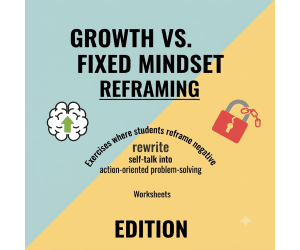
Growth Vs. Fixed Mindset Reframing
Life Skills, Special Resources, Social Emotional Learning (SEL), Social Skills, Special Education Needs (SEN), Speech Therapy, Resources for Teachers, Classroom Management, Community Building, STEM, Grade 2, 3, 4, 5, 6, 7, 8, Worksheets, Worksheets & Printables, Workbooks, Word Searches, Teacher Tools, Lesson Plans, Quizzes and Tests, Quizzes, Tests, Assessments
Instead of offering vague advice about “positive thinking,” give your students real tools to solve their issues with frustration, decision paralysis, and negative self-talk! The 36-page, neuro-developmental curriculum, “Growth Vs. Fixed Mindset Reframing: Action-Oriented Problem-Solving,” is specifically designed for 2nd through 5th graders, at a time when many kids experience the hurdles outlined above. This resource doesn't simply tell children to "keep trying"; it gives them the skills to understand how their cognitive reframing systems work so they can start to use them. Students will be exposed to real-life situations they encounter in school today. As a result, they will learn how to identify and change their "Stuck Voices" and create or develop a plan of action to tackle their individual problem. What is included in this resource: - Educator's Methodology Guide: A comprehensive understanding of the neuroscience behind self-talk and how to teach cognitive restructuring. - 8 Additional Student Worksheets: 8 highly relatable worksheets that target common youth problems like "Homework Heroes," "Recess Resolutions," "Creative Catastrophes," "Friendship Fixes," and "Chore Challenges." - Classroom Visuals and Anchor Charts: 3 classroom visuals, “The Metacognitive Reframing Cycle,” “The Cognitive Fork in the Road,” and “The Action-Strategy Matrix,” to visually reinforce the lessons taught in this curriculum. - Step-by-Step Implementation Guide: A three-phase implementation plan for parents and teachers. - Detailed Answer Keys: Subjective answer keys with examples of strategies for assessing student understanding and for generating discussion. Suitable for educators in classrooms, guidance counselors, home schooling parents all interested in developing their child’s ability to use resilience/foster self-advocacy/foster emotional self-regulation over the course of his/her life! The following are the keywords associated with this product: growth mindset, social emotional learning (SEL), cognitive behavior therapy for children, self-talk, elementary worksheets, classroom management tips, school counseling resources, character education supplies. Why Parents / Schools Love It : This program focuses on Giving Kids Specific Examples of How to Solve Problems instead of vague and meaningless quotes like "believe in yourself." In addition, the program is Based on Mechanism of the Brain; It teaches kids through simple examples how to deal with psychological issues (such as changing how you feel about something or making yourself not care about something). The worksheets used in this program are identical to those used in the children's daily life such as when you mess up your drawing, get into an argument on the playground, have no chores left to do, do not understand how to solve a math problem, etc... The ultimate goal of this program is to create self-sufficient children by Teaching Them to Become Adults. The program also has the Highest Degree of Ease-of-Use: Everything needed to start right away (theory, worksheets, visuals, etc.) is included in the package when received. Intended Audience (Classes/Students to Target): Looking at the direct text from the PDF file (i.e., Pages 1, 2, 5, 7, 8, &12) and applying the developmental psychology presented in the document the following classes/students will be targeted. Class/Grade: 2nd Grade, 3rd Grade, 4th Grade, 5th Grade Age: 7 to 11 years old Will also appeal to homeschooling families, Special Education teachers and School Counselors that work with students in the elementary school age. Copyright/Terms of Use: This Book belongs to Syed Hammad Rizvi. You are only allowed to use this material for your personal use and to utilize it in only one classroom. You are not allowed to edit, distribute or sell this book, meaning you may not upload this book anywhere on the internet for public access or download. If you wish to share this book with others, you must buy more licenses through Teachsimple. Thank you for understanding the terms of use for this item. This product was created by Syed Hammad Rizvi
Author Creative Book Store
Rating
Tags GrowthMindset, FixedMindset, SocialEmotionalLearning, SEL, SELactivities, MindsetMatters , EmotionalRegulation, GrowthMindsetForKids, ResilienceBuilding, Metacognition
Dyslexia-Friendly Visual Phonics Decoding
Classroom Management, Resources for Teachers, Community Building, Life Skills, Special Resources, Social Emotional Learning (SEL), Social Skills, Special Education Needs (SEN), Speech Therapy, Science, Kindergarten, Preschool, Grade 1, 2, 3, 4, 5, Worksheets & Printables, Workbooks, Worksheets, Word Searches, Teacher Tools, Lesson Plans, Quizzes and Tests, Quizzes, Tests, Assessments
If your students have difficulty with b/d reversals, visual crowding, or reading anxiety, phonics worksheets often do not work for kids who are neurodivergent because they create a cognitive overload situation. The Visual Phonics Decoding Program is a complete no-frills paradigm shift in reading interventions. Using the proprietary Visuo-Phonological Anchor Model (VPAM), this program creates a connection between auditory processing and the visual-spatial pathways, enabling students (first, second and third graders) to develop automaticity when decoding. The Visual Phonics Decoding packet also follows the principles of the Science of Reading and the cognitive principle of Orthographic Mapping and removes unnecessary visual distractions and replaces them with structured visual anchors. What’s Being Offered In Our 25 Page Complete PDF? Educator Theory and Implementation Manual: A deep dive into the Neurological Structure of Dyslexic Reading, Double-Deficit Hypothesis, and Orthographic Mapping with practical application chapters. Actual Case Studies with Practical Application: Profiles to show how to use these methods with Early Elementary School-Aged Children. Intervention Worksheet Series: Intervention worksheets have been developed utilizing Typographic Grounding, Chromatic Categorization and Spatial Bounding principles. Medial Short Vowels (CVC orthography), Consonant Digraphs (sh, ch, th, wh, ck), Initial Consonant Blends. Teacher Reference Materials/Visual Aids: Contains Visual Aids for Cognitive Orthographic Mapping Protocol and the anatomy of a Dyslexic Friendly Worksheet. Complete Answer Keys and Formative Assessment Protocols. Great For Special Education (SPED) Tier II and Tier III Reading Intervention, Home Schooling & Orton Gillingham Compatible Teaching Methods. Help struggling readers to stop guessing and to have the confidence to code words correctly using decoding! Reasons that Parents/Schools Appreciate It: Elimination of Visual Clutter: Heavy bottom, sans serif fonts, and greater spacing are used strategically to help identify and prevent visual representation of b, d, p, q from being represented as flipping or floating through space. Working Memory Limitations are Bypassed: Students are able to visually lock into a vowel team or digraph without being overwhelmed by using the use of Chromatic Anchor System and bounding boxes. No Fluff & No Distractions: All worksheets were specifically created to conserve as much of a dyslexic child's cognitive energy as possible. Therefore, no clip art, decorative art, or unnecessary instructions are contained to help conserve any cognitive energy from teaching a child to read. Creates Teacher and Parent Power: Also, all worksheets have a clear and complete "Educator Rationales" so parents and teachers can better understand the rationale and methodology for teaching their children. Gives Children the opportunity to Create True Orthographic Mapping: Children are prevented from memorizing and guessing from the visual image or picture, therefore, they are developing the skills to accurately map sounds to letters, which is the basis for long-term efficiency when it comes to reading. Target Audiences: Identify your target audience based on the curriculum's own Tiered Decoding Progression Model (pg. 22) and Introduction (pg. 1). Target Specifically: Grade Levels: 1st, 2nd, and 3rd. Audience: Students with a diagnosis of Dyslexia, students exhibiting signs of reading anxiety, children who are guessing at reading, children struggling with traditional written Phonics, as well as neurodivergent children from all backgrounds. Skills: Students needing support with CVC (consonant-vowel-consonant) words, students needing support with consonant digraphs (sh, ch, th) and students needing support with initial consonant blends. Buyers: Special Education Teachers, Reading Interventionists, Parents Home Schooling, General Education/Primary School Teachers. Terms of Use/Copyright: This Book is the copyright property of Syed Hammad Rizvi. You may only use this resource personally and within a single classroom. You are prohibited from altering, selling, or otherwise distributing any part of this resource. You may not post the entire resource or any part of it on the Internet for access or for download by the general public. If you would like to share this resource with your fellow teachers, you must purchase additional licenses through Teachsimple. Thank you for your support of these terms of use. Syed Hammad Rizvi would like to thank you for using this product.
Author Creative Book Store
Rating
Tags ScienceOfReading, SoR, StructuredLiteracy, OrthographicMapping, Phonics, PhonicsInstruction, PhonemicAwareness, Decoding, ReadingFluency, LiteracyMatters

Who Has It? – Chemical Elements Game (1–118) – 3 Levels of Differentia
STEM, Science, Chemistry, Physics, Life Sciences, Earth and Environmental Sciences, Basic Science, Special Resources, Social Emotional Learning (SEL), Special Education Needs (SEN), Homeschool Templates, Grade 6, 7, 8, 9, 10, 11, Activities, Games, Worksheets & Printables, Task Cards, Quizzes and Tests, Teacher Tools, Quizzes, Worksheets, Projects, Flashcards
Who Has It? – Chemical Elements Game (1–118) – 3 Levels of Differentiation A cooperative chemistry card game for grades 7–10 to review atomic numbers, element names, and symbols 🧪🎯 This resource is a classroom game that helps students become more confident with the chemical elements – from hydrogen to oganesson. The game follows the well-known “I have… who has?” format and is designed to reinforce students’ understanding of element names, symbols, and atomic numbers in a playful and interactive way. To support different learning levels, the material includes three differentiated versions of the full game, each with 118 element cards: With element names for both question and answer (beginner level) Only the “I have…” part includes the name , the question uses the symbol/number (intermediate level) Without element names – players must match based on symbol and atomic number alone (advanced level) Each version builds on the last and can be used flexibly depending on students' prior knowledge. The game works best with medium to large groups and encourages students to listen carefully, stay engaged, and support one another. What’s included: 3 full card sets (118 cards per set = 354 total) Differentiated by content and level of language support Clear instructions for printing, laminating, and use Ideal for individual, pair, or group work How I use it in class: I’ve played this game both at the end of a chemistry unit and as a fun opener when starting the periodic table. It’s also perfect for substitute lessons or for classes with mixed ability levels. Since each student needs to be ready when their card comes up, it fosters attention and collaboration. This is one of those games where learning happens almost by accident – students are so focused on playing that they internalize atomic numbers and symbols without even noticing. A simple, engaging way to bring structure, repetition, and movement into chemistry class – no extra prep needed. If you're looking for an easy way to help students become more confident with the periodic table, this might be worth trying in your classroom. Best, Heike from Lernfitness Did You Know? I teach with a certified therapy dog, and together we create a positive and welcoming learning environment. 🐶
Author Lernfitness
Rating
Tags Game, Educational Card Games, Chemistry, Physics, STEM Science Matching Game, Chemical Elements, Periodic Table Matching Game, Who Has It, STEM, Who Has It?

AI Tools for Research – Fact-Checking & Bias Detection Worksheets
Science, Technology, Computer Science, Engineering, Special Resources, Social Emotional Learning (SEL), Social Skills, Life Skills, STEM, Research, Grade 6, 7, 8, 9, 10, 11, 12, Worksheets & Printables, Workbooks, Worksheets, Word Searches, Writing Prompts, Teacher Tools, Lesson Plans, Assessments, Diagrams, Presentations
This 41-page PDF is a fully prepared to print middle school Digital Literacy Curriculum called "Advanced Digital Tools for Research: Fact-Checking and Detecting Bias Worksheets" designed for students in grades 6-8 to be able to use the V.E.R.I.F.Y. Framework (Validate, Extract, Read Lateral, Interrogate Bias, Find Primary Evidence, Yield Conclusion) to critically evaluate content generated by AI, identify hallucinatory or fabricated information, detect algorithmic bias, and utilize lateral reading skills. This resource is ideal for the AI era and includes: - Four theoretical chapters with practical real-world examples (e.g., Titanic, Great Wall of China, Space Race, Paleo-Diet). - Ten hands-on student worksheets (e.g., Anatomy of a Digital Claim, Spotting Plausible Falsities, Lateral Reading Protocol, Unmasking Structural Bias, The Phantom Citation Mystery, Chronological Confusion, etc.). - Three full-color visual frameworks/diagrams (Fact-Checking Workflow, Algorithmic Bias Triad, Source Credibility Spectrum). - A complete answer key with rubrics and high proficiency examples. - A complete Teacher Implementation Guide including pacing (4-6 class periods), differentiation for ELLs/developing readers and gifted students, formative assessment examples, and examples of exit tickets. - A ready-to-teach PDF requiring no preparation that increases research skills, media literacy, and critical thinking through an alignment to both the CCSS, ISTE, and Digital Citizenship Standards, making it appropriate for use in English Language Arts, Social Studies, Science, and Technology classes. Why Schools/Parents Find It To Be Effective: Develops Real World Skills that Kids Need to Survive in an AI World. Kids will learn how to identify when they are being deceived by hallucinations, bias, and fake citations before they copy and paste into their papers or projects. No Preparation or Planning Time Required - Teachers get full theory, worksheets, visuals, answers and pacing guide when using this product. Parents appreciate the independent critical thinking experience provided to their children. Fun Way to Increase Student Engagement - Kids enjoy using the detective-style worksheets (Tree Octopus Hoax, Phantom Biologist, Brooklyn Bridge Hoax, etc.) to develop critical thinking skills through the use of skepticism as a game. Differentiated, Inclusive, and Fully Accessible - Students are able to access the materials because of the built in supports provided for ELL/Developing Readers, and extension challenges for Gifted Students. Ensures Academic Integrity Now and in the Future - Aligns well with the local school districts expanding policies regarding the appropriate use of AI, as well as standards for digital citizenship. Intended Audience of Book (As per complete PDF analysis): This resource is specifically created for students in Grades 6 to 8 (Middle School). There are examples throughout the resource, as can be seen in the seven (7) and eight (8) examples referenced. Answer keys and teacher guides both have "Grade 6 to 8 Student Workbook" clearly labeled on them. Best Fit: ELA, Social Studies/History, Research projects in Science, Digital Literacy/Media Literacy, or Technology courses Excellent for Homeschoolers, Gifted Programs, or Educators Teaching AI Ethics and Responsible Research. Copyright & Terms of Use This Book is copyrighted by Syed Hammad Rizvi. This resource is solely for personal and individual classroom use. You may not modify, redistribute or sell any part of this resource (including putting it online for others to back or download). In order to share this resource with your coworkers please buy more licenses from Teachsimple. Thank you for following these terms of use. -------------------------------------------------------------------* This product was created by Syed Hammad Rizvi to be enjoyed!
Author Creative Book Store
Rating
Tags AIFactChecking, BiasDetection, DigitalLiteracy, MiddleSchoolWorksheets, AIFactCheck, VERIFyFramework, CriticalThinking, MediaLiteracy, AIforTeachers, DigitalLiteracyWorksheets