



3,984 products added recently
Page 4 - Social Emotional Learning Worksheets
Use SEL worksheets to help students navigate emotions, build resilience, and improve social interactions. Activities include scenarios, reflection prompts, and cooperative tasks. Incorporate them to strengthen community and foster a respectful learning environment.

 Show filters


Beginner AI Chatbot Safety & Prompt Practice Worksheets
Resources for Teachers, Classroom Management, Community Building, Technology, Science, Computer Science, Engineering, Research, Special Resources, Social Emotional Learning (SEL), Preschool, Grade 1, 2, 3, 4, 5, 6, Teacher Tools, Lesson Plans, Presentations, Assessments, Worksheets & Printables, Flashcards, Worksheets, Word Searches, Writing Prompts, Workbooks
This professionally designed 36-page AI Chatbot Safety and Prompt Practice Workbook provides educators and parents with the comprehensive guidance needed to help their 6–9 year-old students develop literacy skills while learning how to safely work with AI chatbots as powerful tools rather than friends, maintain safe digital boundaries, protect their personal identifiable information (PII), create clear and effective prompts using the “Three-Part Recipe”, practice digital kindness, verify the accuracy of AI-generated content, and develop strong literacy skills through the use of iterative questioning. This resource can be used in any learning environment including traditional classrooms, homeschooling, after-school programs, or family time on electronics. Key features include: - Aligned with the Piaget and Vygotsky constructivist theory and early literacy standards - Ten printable worksheets (e.g. fill-in-the-blank, matching, true/false, scenario) - Teacher/parent guide with theory, case studies, and strategies for implementation - Visual aids (e.g. mind maps, flowcharts), and the "Digital Safety Ecosystem" infographic - Complete answer key for easy assessment - No-prep, print-and-go format (PDF) - Ideal for introducing safe use of ChatGPT/AI tools, prompt engineering, and digital citizenship prior to students' access to full AI tools. Why Parents and Schools Are Interested To Use It : -Creates a lifetime of Real World safety habits around Digital use by teaching children to never share names, addresses, schools or emotions with AI preventing privacy issues before they happen. -Allows for Literacy development through AI use. Making writing Prompts fun iterative writing exercises will enhance vocabulary, specificity, sentence structure and critical thinking. -Cost effective for busy parents and teachers who can print everything out with a simple to follow directions, pictures and answer key - great for morning work, tech centers S.E.L. lessons or home school tech units. -Removes worries about AI in the classroom by providing a structured researched based blueprint for educators and families to use to introduce chat-bots without the fear of misuse or becoming overly reliant upon. -Fun and easy for children to learn about safety through stories, fun Prompts and activities, "Digital Detective" activity, so they will actually look forward to learning and following safe and responsible use of digital technology. Target Audience / Students Grades : Kindergarten & 4th/5th Grades are not targeted (English). The curriculum is developed with 1st through 3rd grade (ages 6-9) only - early elementary children who are in the concrete operational cognitive development stage; therefore, the curriculum utilizes concrete metaphors (e.g.; recipe, blueprint, vault, shield), large print for worksheets, and has scenarios appropriate for a given age, such as bats/frogs/knights/dinosaurs. This is not appropriate for kindergarten or 4th grade and beyond as the language and activity levels are too elementary for 4th and older students, and also too advanced for pre-k. Copyright/Terms and Use : The content of these pages is under copyright by Syed Hammad Rizvi, and it is for your personal use or classroom use only (meaning only one person will use it) You may not change or share any portion of these pages with anyone else or post them online for others to find and download. If you would like to share this resource with someone else or would like to share it with your colleagues, please purchase an additional license from Teachsimple. Your compliance with this Copyright/Terms of Use will greatly help us in continuing to provide content/resources. Syed Hammad Rizvi would like to express his thanks for purchasing these products.
Author Creative Book Store
Rating
Tags Ages6to9, Grades1to3, AISafetyForKids, ChatGPTForKids, AIForElementary, PromptEngineeringForKids, KidsAged6to9, AIForAges6to9, EarlyElementaryAI, DigitalLiteracyWorksheets

Safety Life Skills: Brian Learns to Lock his Windows and Doors
Special Resources, Social Emotional Learning (SEL), Special Education Needs (SEN), Speech Therapy, Life Skills, Grade 10, 11, 12, Activities, Worksheets & Printables, Worksheets
The Safety Life Skills: Brian Learns to Lock his Windows and Doors A highly beneficial teaching resource, this tool is designed to instill practical home safety precautions among students. This narrative-based instructional guide suits individuals in grades 10 through 12 and beyond. The storyline sees Brianna educating her brother Brian about essential everyday safety measures. Features of the Toolkit: Simplifies understanding of home security through interactive dialogues, questions relating to the story's content, real-world examples and engaging visual aids. Incorporates seven reading comprehension questions that bolster interpretation of precautionary life skills shared in the story. Enables learners to emerge as more self-sufficient members contributing positively at school, home or wider community spaces. Recommended for: This resource serves educators specializing in Special Education Needs (SEN), speech therapy professionals, occupational therapists as well as proactive parents aiming that their children imbibe pertinent messages related to daily living effectively. Potential Applications :. This resource supports hands-on community-based learning while concurrently prescribing specific learning goals through Individualized Education Plans (IEPs). Presents a series of related resources directed towards fostering independent living skills. Some themes include emergency exit strategies; establishing medication lists; tracking allergies; interpreting prescription labels ; devising strong password formats; countering situations when someone rings your doorbell etc. The Safety Life Skills: Brian Learns to Lock his Windows and Doors A versatile addition targetting SEN classrooms within educational institutions or homeschool setups alike. With a printable format and an easily understandable five-page PDF file – implementing this is straightforward! Use-cases: As a full group instructional tool For small group activities Homework assignments Dedicated to meeting a range of educational requirements, observe the transformation this unique life skills story imparts when teaching about essential life skills today! A PDF file with seven (7) pages. Color and black-and-white versions of each page are available for this pdf resource.
Author Adulting Life Skills Resources
Tags Home Safety, Personal Security, Independent Living, Special Education, Life Skills
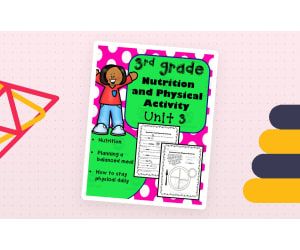
Health | 3rd Grade Unit 3: Nutrition and Physical Activity
P.E. & Health, Life Studies, Physical Education, Health, Special Resources, Life Skills, Social Emotional Learning (SEL), Social Skills, Grade 3, Teacher Tools, Lesson Plans, Worksheets & Printables, Worksheets
This 3rd Grade Health Unit focuses on Nutrition and Physical Activity and is essential to help students with their health and wellness. There are seven units in all taught in 3rd grade that focus on health. These units include: Unit 1 that focuses on Personal Health and Wellness Unit 2 that focuses on Growth and Development Unit 3 teaches students about Nutrition and Physical Activity and how to eat right and stay active Unit 4 that helps students with Substance Use and Abuse and how to avoid bad substances Unit 5 that will teach students about Injury/ Violence Prevention Control and Safety Unit 6 that covers what happened during Covid and how to protect themselves while learning about Prevention/Control of Disease Unit 7 discusses our environment and how to help save our planet with Environmental Consumer Health In this unit, students will learn about the six basic nutrients that the body needs to be healthy. These nutrients include: water, protein, carbohydrates, fat, vitamins, and minerals. Students will learn the function of each of these nutrients and how they help our bodies as well. There is a matching activity to test their knowledge on each of these six basic nutrients. Students will also learn about how much of these nutrients we need to eat daily. Examples of what to eat and how much is provided in this unit that is similar to the food pyramid. Based on what they should eat, students will draw a healthy meal. There is also a lesson on physical activity and different physical activities they can do to stay healthy. This unit meets Common Core Standards. It is 11 pages of fun engaging activities! At the end of the unit, there is an assessment to check for understanding. There are seven units that cover all the health requirements for 3rd grade. Go to K-5 Treasures to check out the other 3rd Grade Health Units to help students complete the entire Health Standards for the year!
Author K-5 Treasures
Rating
Tags Health Unit, Personal Health, Healthy Goals, Unhealthy Choices, Health Activities, Physical Goals, Health Goals, Health And Wellness, 3rd Grade Health, Third Grade Health
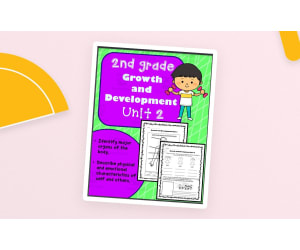
Health 2nd Grade Unit 2: Growth and Development
P.E. & Health, Health, Social Emotional Learning (SEL), Grade 2, Worksheets & Printables, Worksheets
For 2nd Grade Health there are seven standards that need to be taught. Unit 1 Personal Health Unit 2 Growth and Development Unit 3 Nutrition and Physical Activity Unit 4 Substance Use and Abuse Unit 5 Injury/ Violence Prevention Control and Safety Unit 6 Prevention/Control of Disease Unit 7 Environmental Consumer Health These units can be taught out of order. They are only numbered for your convenience. At the end of each unit, there is an assessment to test students’ understanding. Through using this Health 2nd Grade Unit 2: Growth and Development students will explore and learn to identify major organs of the body as well as physical and emotional characteristics of themselves and others. They will explore their feelings and describe what makes them happy, angry, etc. Students will also learn about the following body systems as they cut and paste a body together: * Understand the Skeletal and Nervous body system * Learn about the Circulatory body system * Learn about the Digestive body system * Learn about the Respiratory body system * Learn about the Muscular body system * Learn about the Skin and Hair body system At the end of the unit, there is an assessment to check for understanding. A total of 13 pages for this 2nd Grade Health Unit 2 on Growth and Development. There are seven units that cover all the health requirements for second grade. Here are the links to other health units: Health 2nd Grade Unit 1: Personal Health Health 2nd Grade Unit 2: Growth and Development Health 1st Grade Unit 3: Nutrition and Physical Activity Health 2nd Grade Unit 4: Substance Use and Abuse Health 2nd Grade Unit 5: Injury / Violence Prevention and Safety Health 2nd Grade Unit 6: Prevention / Control of Disease Health 2nd Grade Unit 7: Environmental / Consumer Health 2nd grade Coronavirus / Covid-19 Facts This unit meets Common Core Standards.
Author K-5 Treasures
Tags Health Unit, Human Body, Emotions

Flexible Thinking & Adapting to Unexpected Changes
Life Skills, Special Resources, Social Emotional Learning (SEL), Social Skills, Special Education Needs (SEN), Speech Therapy, STEM, Resources for Teachers, Classroom Management, Community Building, Homeschool Curriculum, Grade 3, 4, 5, 6, 7, 8, Worksheets & Printables, Workbooks, Worksheets, Word Searches, Coloring Pages, Teacher Tools, Quizzes and Tests, Quizzes, Tests
Are you sick of experiencing meltdowns because of minor schedule changes, cancelling recess, or having a substitute teacher? Do your students experience rigidity in their thinking and have issues handling unexpected events? This is the resource that you have been looking for. Help your students develop the essential life skill of cognitive flexibility with this 42-page evidence-based workbook and Teacher's Guide that will provide support for rigid thinkers in grades 3-6 to successfully deal with unexpected changes and disappointments within their schedules without experiencing a meltdown. This resource is based on the principles of Cognitive Behavioral Therapy (CBT) and provides help for helping students manage their behaviors; however, it is more than providing behaviour management as it is designed to provide support to help students understand their "prediction brain," change their "sticky thoughts," and develop a "Plan B" mindset helping students turn crisis situations into opportunities to demonstrate growth and resilience. What is inside (42 providing all pages): Part I: The Theory (for Parents & Educators): Simple, clear and easy to understand concepts of “why” an individual has a rigid way of thinking. Includes information about the neurobiology of an amygdala hijack, anatomy of disappointment, and the principles behind “Predictive Scenario Mapping.” Also, two examples with actual case studies. Part II: Student Workbook (10 Actionable Worksheets): Fun, appropriate-to-age level worksheets that have examples kids deal with on a daily basis. These worksheets cover: Identifying “Glitches” vs. Feelings; Measuring Problem Size vs. Reaction Size; Transforming “Sticky” Thought to “Stretchy” Thought; Creating “Plan B” Blueprints for canceled events; Being Patient; (i.e. waiting for something); The Substitute Teacher Protocol; Compromise and Problem Solving in Social Situations; Understanding what it means for the body to be in an “alarmless” state (interoception); Recovering after a meltdown (rebooting your computer). Part III: Visuals & Educator Resources: 3 Very Powerful Visual Anchors: “The Plan B Transition Flow Chart”, “The Disappointment Thermometer”, and “Rigid vs. Flexible Self TalK Mind Map” (i.e. can be put on the wall in the classroom as a poster or desk reference). Comprehensive Answer Key & Rubric: Contains detailed instructions for educators on how-to look-for, target answers, and prompts that guide students into providing better-than-expected responses. Educator Guide to Implementation: Step-by-Step process for educators on how to use this resource in a proactive way; how to providescaffolding for severe rigidness, and create co-regulating classroom environments. Teachers, counselors, psychologists, social workers and parents wanting to provide their children with real life solutions to assist them with ADHD, Autism (ASD), anxiety issues and difficulties with Executive Functioning will find this tool helpful in building the necessary mental elasticity that children need in these uncertain times. Keywords: Flexible Thought, Cognitive Flexibility, Emotional Regulation, Executive Functioning, Social-Emotional Learning (SEL), Coping Skills, Rigid Thought, Meltdowns, Cognitive Behavioural Therapy for Children, ADHD Support, Autism Support, Special Education Support, School Counsellor Support. Scenario Worksheets, Problem Solving Worksheets will be included for children in the grades 3, 4, 5, 6. Why Schools and Parents Love It: Evidence Based & Effective: Instead of just relying on behavior sheets, the program uses Cognitive Behavioral Therapy techniques to change how the brain responds to stress and disappointment. Complete & Turn-Key: Not just a worksheet set! Included are implementation guides, answer sheets and visual aids to provide parents and educators all they need to begin using the program. Life Skill Development: Covers common, highly stressful situations (substitute teacher, canceled plans, losing a game) to give children real life solutions to use in the real world. Empowerment: Teaches children about their own brains and feelings (interoception) so they can control their emotions and have a means to communicate their needs or requests instead of just demanding obedience. Less Meltdowns & Disruptive Behavior: Teaching coping skills in a calm environment helps to prevent meltdowns and disruptive behavior, leading to calmer households and classrooms. Student Target Group: Based on the content and complexity of the activities/activities in the document, students aged 3rd to 6th grade (approximately 8-12 years) are the priority audience for these resource/ar, as the ages are quoted many times throughout the document). Individuals with special needs: This resources was created specifically for the following populations: A. Autism Spectrum Disorder B. ADHD C. Anxiety Disorders D. Executive Functioning Deficits E. For all children with "rigid thoughts" who have difficulty managing their feelings. These materials are to be used as a Tier 2 or 3 intervention tool for school personnel who work with the students, as counselors and special education teachers, as well as an initial resource to parents supporting their child(ren). Copyright of this book : The copyright of this book is the property of Syed Hammad Rizvi. This book may only be used personally and in a single classroom. The user of this booklet may not make any changes to this book, sell it to others, or share it on the internet. There are no exceptions to these restrictions. If you would like to share this book with your coworkers, you must purchase separate licenses from Teachsimple. Thank you for your consideration of these terms of use.
Author Creative Book Store
Rating
Tags FlexibleThinking, EmotionalRegulation, SocialEmotionalLearning, SEL, CopingSkills, ExecutiveFunctioning, Resilience, MindfulnessForKids, RigidThinking, Meltdown
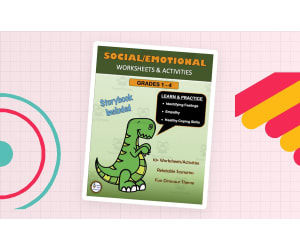
Social/Emotional Activities and Worksheets - Dinosaur Theme
Special Resources, Social Emotional Learning (SEL), Social Skills, Life Skills, Creative Arts, Art, Grade 1, 2, 3, 4, Worksheets, Worksheets & Printables
Search no further for an engaging product that helps your learners with social/emotional skills. Within the pages of this product, you will find many worksheets and activities for your elementary school age learners. Whether you’re a classroom teacher, resource teacher, school counselor, or therapist, this product will help you work with learners who are needing guidance in social/emotional situations. The 3 main topics focused on are identifying and naming feelings, empathy, and healthy coping skills. The activities and worksheets are differentiated to meet the needs of most learners. Many of the worksheets include real-life scenarios that kids face every day. Included is a story about Dino, the first grade T-Rex, who navigates his way through the school day with big emotions. His classmates help him identify and practice healthy coping skills when he feels angry. This product contains a color version and a black & white version. PLEASE NOTE: Color and B&W versions are IDENTICAL. When you purchase this product, you will receive: PAGES 1-11: Dino’s Big Feelings Story PAGES 12-13:Cards showing the facial expressions associated with 7 main emotions PAGE 14:Learners match the dinosaurs’ facial expressions to emotion words. PAGE 15:Learners cut and paste the dinosaur’s facial expressions to emotion words. PAGE 16:Learners match the dinosaurs’ facial expression to a real-life scenario. PAGE 17:Learners cut and paste the dinosaurs’ facial expression to a real-life scenario. PAGE 18-21:Learners respond to a prompt by writing about a time they felt the given emotion. PAGE 22:Learners match the dinosaurs’ facial expressions to a healthy coping skill. PAGE 23:Learners cut and paste a picture of a coping skill to a real-life scenario. PAGE 24:Learners write the emotion the dinosaur is feeling and write a healthy coping skill the dinosaur can use when feeling that way. PAGE 25:Learners write a socially appropriate response to a dinosaur who has explained a feeling he/she is having and why. PAGE 26:Learners write socially appropriate responses based on real-life scenarios and the facial expressions of dinosaurs. PAGE 27:Learners cut and paste real-life scenarios under volcanos labeled with “big emotions.” PAGE 28:Learners match Dino’s behaviors to his classmates and the ways his actions made them feel. PAGE 29:Learners use this informational handout to learn the “Layers of Feelings.” This identifies underlying emotions that are usually labeled with basic feelings. PAGE 30:Learners cut and paste underlying emotions under the volcanos labeled with basic feelings. This can be used in conjunction with the “Layers of Feelings” handout. PAGE 31: Learners write 2-6 big feelings they experience on the volcano. PAGE 32: Learners write about a situation in which they felt big feelings and how they acted because of it. PAGE 33: Learners write better/healthier ways Dino could have behaved when he had big emotions. PAGE 34: Badges learners can use to remind them to “go with the flow” instead of acting out from big behaviors. These can fit discretely in a learner’s desk or backpack, or pocket. PAGE 35: Certificates that can be given to learners when an adult notices they “go with the flow” and use healthy coping skills.
Author Quail Trail Products
Tags Social, Emotional, Dinosaur, Coping Skills, Feelings, Emapthy, Worksheets, Activities, Story, Dinosaur Activities For Middle School
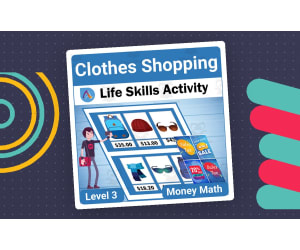
Money Math Life Skills Worksheet: Clothes Shopping Level 3
Special Resources, Life Studies, Creative Arts, Art, Social Emotional Learning (SEL), Special Education Needs (SEN), Life Skills, Finance, Math, Money, Grade 7, 8, 9, Activities, Worksheets & Printables, Worksheets
Clothes Shopping Money Math Level 3 is a 60-question special education worksheet that builds essential life skills for middle school students. This activity aids in teaching calculations for discounts, sales tax, and determining prices when shopping for various items of clothing. The questions are formatted as real-life word problems followed by multiple choice answers. There are 6 sets of 10 questions for calculating costs of pants, shirts, skirts, accessories, dresses, and shoes. This printable worksheet can be used one-on-one or in small groups to help students become more independent. It's an excellent resource for IEP goals related to money math and practical life skills. Interactive and hands-on, this worksheet is ready to use for grade 7-9 special education, autism life skills, or therapy sessions. With step-by-step instructions, age-appropriate graphics, and real-world examples, this is the perfect money math activity to engage middle school students.
Author Adulting Life Skills Resources
Tags Life Skills Money Math , Independent Living Skills, IEP Goal-Oriented Skills, Life Skills For Autistic Teens And Adults, Life Skills For Visual Learners, Adulting On The Spectrum, Social And Emotional Learning, Life Skills For Teens, Life Skills For Adults, Autism And Money Skills, Math Dresses

Functional Life Skills: Nelson Communicate His Medical Symptoms
Special Resources, Social Emotional Learning (SEL), Special Education Needs (SEN), Speech Therapy, Life Skills, Grade 11, 12, Activities, Worksheets & Printables, Worksheets
Functional Life Skills: Nelson Communicate His Medical Symptoms An easy-to-use and engaging resource for teaching students to report their health conditions effectively. This comprehensive tool offers language comprehension and expressive exercises surrounding common medical symptoms such as: Fever Coughing Chills Pain Rashes, and more. Learning Methods Provided Nelson Communicate His Medical Symptoms offers a variety of ways for students to interact with the content, giving them a rich learning experience. These include: Role-playing Exercises: Mimic real-life scenarios where individuals must accurately explain their symptoms using proper medical terminology. Interactive Dialogues: Pique the learners' interest while enhancing their understanding of the material. Focused Learning Concerns Symptom intensity, duration, and location descriptive language. The significance of clear communication about one's health. Educational Settings Suitable For Use Versatile teaching aid suitable for whole classroom instruction or small group discussions. It can also be assigned as homework reviewing key concepts learned at school or used independently by learners requiring additional reinforcement outside usual school hours. Note: The simple yet direct language in this social narrative makes it especially effective for high schoolers and adults with intellectual disabilities. It provides seven reading comprehension questions that further build understanding while serving as checkpoints, allowing educators to gauge student progress accurately. This can function excellently inside traditional classrooms helmed by special education teachers and therapists or can also stand out well when used by supported living coaches or parents. This six-page PDF file comes ready to print, ensuring educators can easily integrate this valuable teaching resource into their curriculum. Whether you're building lesson plans around life skills, special education needs, social-emotional learning, or speech therapy. This resource has proven helpful not only among special education teachers but also among therapeutic experts like occupational therapists or speech therapists who work with intellectually disabled high school students or adults. A PDF file with seven (7) pages. Color and black-and-white versions of each page are available for this pdf resource.
Author Adulting Life Skills Resources
Tags Medical Symptoms, Communication Skills, Vocabulary Building, Social Narratives, Special Education Resources

My Biggest Worry Worksheet
Special Resources, Social Emotional Learning (SEL), Social Skills, Special Education Needs (SEN), Not Grade Specific, Worksheets, Worksheets & Printables
Anxiety can easily overwhelm children if fears and “what-ifs” grow too big in their heads. This creative visualization worksheet provides a launchpad for students to address their biggest worry in a manageable, step-by-step way. By externally analyzing concerns, rather than letting them snowball internally, kids reclaim control and perspective. The worksheet guides stressed children to first identify one standout worry plaguing their thoughts. They illustrate what this concern “looks like” in their mind – maybe a monster under the bed or dark swirling cloud. Describing it visually externalizes the worry from emotion into a concept now on paper. Students then examine two paths this worry could take at its worst and most likely outcomes. They draw their catastrophic envisioning of events if the worst were to happen. Contrastingly, they explain the realistic resolution based on past experiences and probability. This exercise illuminates how worries often play out better than the disastrous scenarios we imagine. Finally, children list constructive actions they can take to address roots of the worry, preventing both best and worst case outcomes. Coping strategies like talking to trusted adults, contingency planning or controlling reactions empowers kids. Allowing children to visually dump out, inspect and problem solve their biggest worry is immensely relieving, putting things into healthier perspective. This worksheet builds essential emotional management tools that alleviate anxiety now and better equip students to assess concerns rationally moving forward. Clipart images courtesy of Kari Bolt Clipart
Author SEN Resource Source
Tags Worry, Anxiety, CBT, SEN, SEL, Emotions, Feelings, Self-aware, Calming Strategies
Emotional Regulation & Self-Care Planners for Teens
Special Resources, Social Emotional Learning (SEL), Life Skills, Social Skills, Special Education Needs (SEN), Speech Therapy, Life Studies, Coaching, Career, Leadership, Grade 9, 10, 11, 12, Teacher Tools, Assessments, Lesson Plans, Quizzes and Tests, Quizzes, Tests, Worksheets & Printables, Worksheets, Word Searches, Workbooks
The Emotional Regulation & Self-Care Planner for Teens (39 pages), which is available digitally as a curriculum and a planner, is laid out in three phases. The first phase (core content & theory) consists of four chapters dealing with the neurobiology of adolescent emotions, the cognitive restructuring process as well as working with the inner critic; somatic regulation (resilience of the nervous system); strategic self-care (boundary architecture). Also included are real-life case studies of teenagers (amygdala hijack, perfectionism spiral, freeze response/burnout cycle); The second phase consists of a student workbook that includes ten interactive worksheets (re: affective granularity/metacognition cognitive distortion; interoceptive/somatic map; navigating the Window of Tolerance boundary architecture; digital ecosystem audit; executive function/anticipatory anxiety; and interpersonal rupture & repair); The third phase consists of visuals & teacher resources (classroom visuals, answer keys, assessment rubrics, teacher implementation guide). The three visuals contain high-fidelity representations of the Window of Tolerance diagram; cognitive-behavioral triad; multidimensional self-care matrix). The teacher resources contain answer keys for each module and rubrics for use in assessing student work. The resource addresses self-care from three frameworks, cognitive-behavioral therapy (CBT), dialectical behavior therapy (DBT), and polyvagal theory and defines self-care as "radical stewardship of oneself". It provides teenagers with practical tools for emotional regulation, managing stress, setting digital boundaries, and developing resilience. The resource was designed to be print-ready and tested in classrooms, and includes fillable blank forms and reflection items. What Parents/Schools Appreciate: Based on research and ready to use in class – Integrating CBT, DBT and Polyvagal Theory, the program includes worksheets for students as well as the teacher's key that connects with social emotional learning (SEL) standards, thereby saving weeks of lesson planning. Directly targeted to teens and highly engaging – The material is presented via case studies from students, real-world issues they face with the digital age and through visual diagrams that connect to these emotional learning experiences for grades 9-12. Trauma-informed and provides safety – The material provides the students with options, breaks the stigma on emotional learning and clearly explains the reporting protocols for educators, making it a resource they can use for success in diverse classrooms. Comprehensive and multi-functional – It can be used for whole class lesson plans, small group counseling, advisory periods or as a self-help resource for individual students, one product meets several needs. Immediate learning and long term benefit – Students develop ongoing skills in emotional granularity, boundary setting, and regulating their nervous system while parents and schools experience decreased levels of anxiety and increased levels of focus. Intended Students: Students in Grades 9-12 only. All the examples, case studies, language, and content are created specifically for high school students (ages 14-18) who are dealing with academic pressures, social media, peer group dynamics, forming their identity, and normal neurodevelopmental changes in the developing teenage brain. This material is inappropriate for middle school students (too mature) or college students (too teen-focused). Copyright Notice and Terms of Use: This Book is the exclusive property of Syed Hammad Rizvi and may not be used for anything other than personal or one-on-one classroom usage. You cannot make any changes, distribute, or sell all or any portion of this Book in any form without written permission from Syed Hammad Rizvi. This means that you cannot publish this Book on the Internet for public access. If you would like to give this Book to your colleagues, please contact Teachsimple for more licenses. Thank you for understanding our terms of use. We hope you enjoy this product from Syed Hammad Rizvi.
Author Creative Book Store
Rating
Tags EmotionalRegulationForTeens, SelfCarePlannerForTeens, TeenEmotionalRegulation, SELcurriculum, TeenMentalHealth, HighSchoolSEL, CBTForTeens, DBTForTeens, TeenSelfCare, EmotionalRegulationWorkbook

Money Management Life Skills: The Value of a Bank Account
Special Resources, Creative Arts, Art, Life Studies, Social Emotional Learning (SEL), Life Skills, Finance, Grade 9, 10, 11, 12, Activities, Worksheets & Printables, Worksheets
The Value of Having a Bank Account is a step-by-step special education life skills activity designed to instruct high school students on utilizing savings accounts, checking accounts, and debit cards. When using this Money Management Life Skills resource, students can actively participate in the following: • Understanding the importance of storing money in a bank account. • Recognizing the diverse functions of checking accounts. • Receiving guidance on how to maintain a balanced checking account. • Learning how to use a checking account to cover daily living expenses. • Discovering the benefits of using a savings account for future purchases. • Appreciating the convenience offered by debit cards for accessing funds. There are a total of 26 reading comprehension questions in this resource! This activity will assist high school students in developing the necessary life skills to become more independent at school, at home, and in their communities. A great place to use this handout is in special education classes or one-to-one settings, such as ABA therapy, speech therapy, occupational therapy, and Registered Behavior Technician (RBT) sessions. High school students working on independent living would benefit significantly from this activity for defining, setting, and measuring IEP goals. In addition to interactive instruction, this resource is ideal for hands-on and community-based learning. Engage your special education class with this highly interactive High School Money Management Life Skills Activity! This activity contains step-by-step instructions, questions, and answers that reinforce learning, age-appropriate graphics, real-world examples, and ideas for implementation. This is the perfect special education activity for grade 10, grade 11, grade 12, and autism life skill centers . This special education life skills handout was designed to assist teens and adults with difficulties developing independent living skills. It's a printable, easy-to-use activity ready to hand out! Related Products for Managing Personal Finances How to Create a Monthly Budget How to Create a Shopping List How Credit Cards Work How to Read a Basic Pay Stub A PDF with 9 unique pages. Color and black-and-white versions of each page are available for this pdf resource.
Author Adulting Life Skills Resources
Tags Life Skills, Special Education, Independent Living Skills, Autism Resource For Parent , IEP Goal Oriented Skills, Life Skills For Autistic Teens And Adults, Adulting On The Spectrum, Social And Emotional Learning, Life Skills For Teens, Life Skills For Adults, Occupational Therapy Money Management Activities, Life Skills Money Management
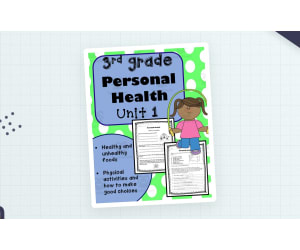
3rd Grade Health – Unit 1 Personal Health
P.E. & Health, Life Studies, Physical Education, Health, Special Resources, Life Skills, Social Emotional Learning (SEL), Social Skills, Grade 3, Teacher Tools, Lesson Plans, Worksheets & Printables, Worksheets
For 3rd Grade Health there are seven standards that need to be taught. Unit 1 Personal Health Unit 2 Growth and Development Unit 3 Nutrition and Physical Activity Unit 4 Substance Use and Abuse Unit 5 Injury/ Violence Prevention Control and Safety Unit 6 Prevention/Control of Disease Unit 7 Environmental Consumer Health These units can be taught out of order. They are only numbered for your convenience. At the end of each unit, there is an assessment to test students’ understanding. In this unit, students will discuss and learn about healthy and unhealthy physical activities. They will discuss with the group what they think happens to their body when they are running, what causes our bodies to sweat and make our heartbeat faster and how long it takes for our bodies to recover. They will even perform some physical activities as a group and monitor what is happening to their bodies. Students will also read about healthy and unhealthy habits they do during the day. Such unhealthy habits they will read about include watching TV, playing video games, or laying around instead of doing physical activities such as skateboarding, swimming, and other activities that are good for our heart. There is a goal sheet included that will help students monitor how they can get more physical activity into their daily routines. After completing the goal sheet, they will compare it to other classmates and even improve on their physical goals that they want to accomplish. In the unit, there is a worksheet about making healthy eating habits. What foods kids should avoid like sugary sweets, greasy foods, chips and sodas. Student will discuss the consequences of eating unhealthy foods verses eating healthy options. Lastly, there is a worksheet on the importance of sleep. How much sleep kids need at their age and why it's important to go to bed on time each night. There are 13 pages included in all. In the end, there is an assignment to test for understanding. There are seven units that cover all the health requirements for 3rd grade. Here are the links to other health units: Health | 3rd Grade Unit 1: Personal Health Health | 3rd Grade Unit 2: Growth and Development Health | 3rd Grade Unit 3: Nutrition and Physical Activity Health | 3rd Grade Unit 4: Substance Use and Abuse Health | 3rd Grade Unit 5: Injury Prevention and Safety Health | 3rd Grade Unit 6: Prevention Control of Disease Health | 3rd Grade Unit 7: Environmental Consumer Health
Author K-5 Treasures
Rating
Tags Health Unit, Personal Health, Healthy Goals, Unhealthy Choices, Health Activities, Physical Goals, Health Goals, Health And Wellness, 3rd Grade Health, Third Grade Health
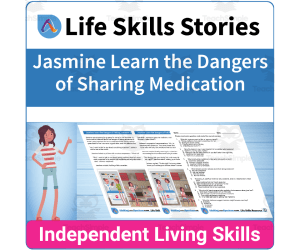
Functional Life Skills: Jasmine Learns the Dangers of Sharing Medicine
Special Resources, Life Studies, Social Emotional Learning (SEL), Special Education Needs (SEN), Speech Therapy, Life Skills, Grade 10, 11, 12, Activities, Worksheets & Printables, Worksheets
Functional Life Skills: Jasmine Learns the Dangers of Sharing Medicine This is a highly effective interactive resource which crucially imparts important life skills to students. It focuses on vital themes such as the importance of consulting with a healthcare professional before using medication and following their instructions, making it essential for imparting real-world knowledge in both classroom or homeschool settings. Multifunctional Teaching Resource This tool can function as a conversation enhancer, storybook or comprehension exercise. It is rich with interactive dialogues and strategically formulated questions that stimulate learners while strengthening their understanding over crucial health concepts discussed. Simplicity and Extensive Use Adorned by age-appropriate visual aids such as illustrations and diagrams along with real-world examples, this conversational story becomes an excellent teaching aid for social narratives. Its simple language sets clear expectations for high school students or adults dealing with intellectual disabilities. Seven reading Comprehension segments: Each offering questions and answers further strengthens understanding life skills depicted in the narrative. Invaluable teaching aid: From special education teachers to homeschooling parents to occupational therapists working towards fortifying independent living skills; this serves perfectly for all. A Simulating Learning Experience This hands-on educational tool that assists well in defining IEP goals also supports community-based learning experiences. You can supplement your classroom curriculum by engaging young minds through our Adult Education graded PDF resource specially designed for grades 10-12 students involved in Activities & Worksheets under Sub-subjects like Social Emotional Learning, Special Education Needs (SEN), Speech Therapy & Life Skills. Just pair it up with similar resources like 'How to Create an Emergency Exit Plan' or 'Understanding and Tracking Allergies' An Essential Tool for Life Skills This six-page printable PDF file is designed to guarantee your students a valuable understanding of life skills. It is easy to use and absolutely ready-to-go resource. Conclusion Prepare your students for real-world scenarios in the most engaging way with Functional Life Skills: Jasmine Learns the Dangers of Sharing Medicine!
Author Adulting Life Skills Resources
Tags Life Skills, Medication Safety, Healthcare Consultation, Interactive Resource, Functional Living Skills
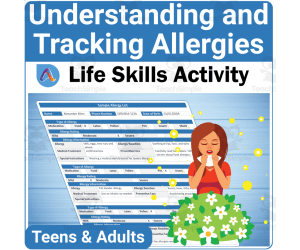
Functional Life Skills: Understanding and Tracking Allergies
Special Resources, Creative Arts, Art, Social Emotional Learning (SEL), Special Education Needs (SEN), Speech Therapy, Life Skills, Grade 10, 11, 12, Activities, Worksheets & Printables, Worksheets
Functional Life Skills: Understanding and Tracking Allergies An educational resource aimed at enhancing formative learning for high school students by providing comprehensive understanding of allergies. The underlying aim is to equip the younger generation with essential life skills that will bear them in good stead both within the school environment and as they venture into the wider world. Allergy Resource Key Focus: Creating a detailed allergy list Monitoring preventive care for allergies Tracking symptoms over time Developing an easy-to-understand allergy rating scale Maintaining a record of various allergic reactions The resource offers value by presenting "51 reading comprehension questions", targeted towards cementing newfound concepts in student's memory while simultaneously reinforcing existing knowledge. This activity will assist high school students in developing the necessary life skills to become more independent at school, at home, and in their communities. A great place to use this handout is in special education classes or one-to-one settings, such as ABA therapy, speech therapy, occupational therapy, and Registered Behavior Technician (RBT) sessions. High school students working on independent living would benefit significantly from this activity for defining, setting, and measuring IEP goals. In addition to interactive instruction, this resource is ideal for hands-on and community-based learning. Engage your special education class with this highly interactive High School Independent Living Skills Activity ! This activity contains step-by-step instructions, questions, and answers that reinforce learning, age-appropriate graphics, real-world examples, and ideas for implementation. This is the perfect special education activity for grade 10, grade 11, grade 12, and autism life skill centers. This special education life skills handout was designed to assist teens and adults with difficulties developing independent living skills. It's a printable, easy-to-use activity ready to hand out! Related Products for Developing Independent Living Skills How to Read a Basic Pay Stub How to Schedule an Appointment How to Fill Out a Job Application How to Create a Strong Password This activity comprises 22 unique pages packed full of step-by-step instructions complemented by appropriate graphic design features. It comes with a flexible option of either color-themed pages or black-and-white printable pages promoting convenience. To sum it up - The Functional Life Skills: Understanding and Tracking Allergies resource promotes beneficial life skills subtly woven into day-to-day activities fostering independence among high school students.
Author Adulting Life Skills Resources
Tags Allergies, Life Skills, Monitoring, Symptoms, Education
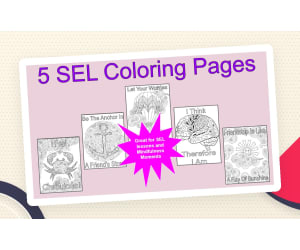
SEL Coloring Pages – 5 Mindfulness Quote Sheets
Resources for Teachers, Special Resources, Social Emotional Learning (SEL), Social Skills, Special Education Needs (SEN), Life Skills, Kindergarten, Grade 1, 2, 3, 4, 5, Activities, Worksheets & Printables, Worksheets, Coloring Pages
In This SEL coloring page resource and mindfulness coloring resources, students will have 5 different coloring pages with inspirational quotes to ponder as they color these wonderful coloring pages. The quotes are; "I Feel Crabulous", "Be The Anchor In A Friend's Storm", "Friendship Is Like A Ray Of Sunshine", "Let Your Worries Drift Away", "I Think Therefore I Am". All of these quotes are geared toward helping students realize their true potential and also consider how they are talking to themselves. These are great as a brain break, quiet time activity, early finisher activity or after an SEL lesson. You may also enjoy these SEL products from my store at: https://teachsimple.com/contributor/jennifer-moyer-taylor You may also enjoy these products from my store: https://teachsimple.com/product/christmas-themed-coping-skills-sel-coloring-pages (These are 5 color by coping Christmas fun activities. Students will learn about different coping skills strategies as they color some very fun and engaging Christmas themed activities. There is a picture of a Christmas tree, reindeer, snowman, gingerbread man, santa and snowman. These activities teach students about the various coping skills available to them.) https://teachsimple.com/product/changing-negative-self-talk-into-positive-self-talk-sel-presentation (An SEL presentation about self-talk. Students will learn about the fact that we talk to ourselves every day without even knowing it! This is a very engaging lesson to talk to students about how much we self-talk and should talk to ourselves so we feel better, not worse.) https://teachsimple.com/product/put-down-sel-presentation (In this very important lesson, students learn about nonverbal and verbal put-downs. They will analyze part of a story and also part of a video to see how many put-downs are happening. Then there is a homework assignment for students to analyze the put-downs they see and hear on TV or on a Video clip.. The they will bring their findings to school to analyze their findings and how this may impact other younger students when they watch these shows.)
Author Jennifer Moyer Taylor
Rating
Tags Sel Coloring Pages, Sel Worksheets, Sel, Social Emotional Learning, Mindfulness, Mindfulness Coloring, School Counseling, Social Skills, Special Education

Claude Monet | Artist Biography + Activities | Elementary Art Lesson
ESL, Language Development, ELA, Biographies, Social Studies, Social Emotional Learning (SEL), Special Resources, Art, Creative Arts, Art History, Elementary, Lesson Plans, Teacher Tools, Presentations, Coloring Pages, Worksheets, Worksheets & Printables
This resource offers your students the opportunity to independently explore and summarize the life of the famous French Impressionist artist Claude Monet, thanks to this engaging discovery and learning tool. This resource is designed to guide students through the artist's biography: from his early childhood passions to his first experiments, from his encounters with other Impressionist artists (Pissarro, Renoire, Degas) to his artistic maturity. Teaching with this resource is simple! Start by showing the biography slides: through illustrations created in Monet's unmistakable style and the first-person narrative, students will approach him empathetically, seeing him first as a friend and playmate. Once the story is complete, you will find the proposed activities. "Monet's Artist" section: - Color recognition activity based on the series of paintings "The Rouen Cathedral"; - Coloring: Theory of color and color contrasts; - Redrawing and coloring a still life by Monet "The Artist's Qualities" section. In this section, students will describe the "human" qualities that made Monet famous: passion, love of nature, perseverance, and determination. "Chat with the Artist" section. In this final phase, students will have the opportunity to chat with Monet through a specially designed AI experience to stimulate interest and engagement. The resource is structured to answer questions and provide new conversation starters. The resource is available in four languages: English, French, German, and Italian.
Author TeachFizz
Rating
Tags Claude Monet, Impressionism, Artist Biography, Art History Lesson, Famous Artist, No-prep Art Lesson, Elementary Art, Artist Study, Homeschool Art
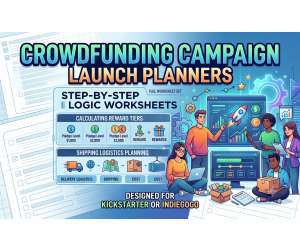
Crowdfunding Campaign Launch Planners
Special Resources, Life Skills, Social Emotional Learning (SEL), Social Skills, Special Education Needs (SEN), Resources for Teachers, Classroom Management, Community Building, STEM, Research, Grade 6, 7, 8, 9, 10, 11, 12, Workbooks, Worksheets & Printables, Worksheets, Word Searches, Teacher Tools, Assessments, Lesson Plans, Quizzes and Tests, Quizzes, Tests
Transform your students from passive learners into active entrepreneurs! Are you looking for a project-based learning (PBL) unit that brings real-world business, economics, and mathematics to life? This comprehensive curriculum guides students through the high-stakes, logical puzzle of launching a product on crowdfunding platforms like Kickstarter or Indiegogo. This isn't just another business plan template. This 44-page, in-depth unit moves beyond marketing fluff and dives deep into the gritty, unforgiving mathematics of product fulfillment and supply chain logistics. Students will act as logistical architects, learning that a successful business isn't just about a great idea—it's about flawless execution. ▶ WHAT'S INSIDE THIS COMPLETE UNIT? Part 1: In-Depth Theory Guide (Chapters 1-4): A professional-grade guide covering the core concepts: The Economics of Crowdfunding: Uncover the hidden fees and calculate the "True Cost" of a funding goal. Behavioral Economics & Pricing: Learn the psychology of reward tiers using concepts like anchoring and the decoy effect. Global Shipping Logistics: Master the devastating impact of Dimensional Weight (DIM), Harmonized System (HS) codes, and international fulfillment hubs. Risk Mitigation & Margin Preservation: Build a contingency matrix and use algebraic modeling to create financial buffers that ensure profitability. Part 2: Student Workbook (10 Worksheets): Rigorous, scaffolded worksheets that put theory into practice. Students will calculate COGS, platform fees, shipping costs, break-even points, and contingency buffers through real-world scenarios. Critical thinking prompts ensure deep understanding. Part 3: Teacher & Visual Resources: Everything you need to teach with confidence! Pedagogical Visuals: Three ready-to-print or projectable anchor charts visually explaining Reward Tier Pricing, Dimensional Weight, and Global Logistics. Comprehensive Answer Key: A full, step-by-step answer key for all 10 student worksheets. Teacher Implementation Guide: Includes a 5-day pacing guide, discussion prompts, classroom demonstration ideas, and enrichment opportunities for advanced students. ▶ PERFECT FOR: High School Business or Entrepreneurship Classes Career and Technical Education (CTE) Programs AP Macroeconomics or Microeconomics (as a real-world application project) Financial Literacy and Math Electives Homeschool curriculum for high schoolers interested in business. Equip your students with the practical math, critical thinking, and financial literacy skills they need to survive in the modern economy. Download now and bring the ultimate business challenge into your classroom! Keywords: Crowdfunding, Kickstarter, Business Plan, Entrepreneurship Project, Project-Based Learning, PBL, High School Business, Economics, Supply Chain, Logistics, Cost of Goods Sold, COGS, Profit Margin, Financial Literacy, CTE, Student Workbook, Answer Key Why Parents/Schools Love It: Real-World Application: It moves economics and math from abstract theory into a tangible, modern context (Kickstarter!) that students find engaging, teaching skills directly applicable to today's economy. Develops Critical 21st-Century Skills: This unit forces students to synthesize data, perform multi-step calculations, think critically about risk, and solve complex logistical problems—skills that are essential for any future career. Comprehensive & Turnkey Solution: This isn't just a worksheet; it's a complete, ready-to-use instructional unit. The included theory, visuals, answer key, and teacher guide save educators dozens of hours of prep time. Rigorous & High-Level: The curriculum respects students' intelligence by presenting them with authentic, high-stakes challenges. It avoids "fluff" and focuses on the rigorous logic and math required to actually run a business, preparing them for post-secondary education and beyond. Target Audience : Based on the content, language ("Grade 11 business and economics students"), and structure, target: Primary Target: High School Teachers of grades 10-12 for subjects like Business, Entrepreneurship, Economics (including AP), and Marketing. The CTE (Career and Technical Education) market is perfect for this. Secondary Target: Homeschool Parents of high school students who are looking for advanced, project-based curriculum that teaches practical life skills. Tertiary Target: College Instructors for introductory business or entrepreneurship courses, who could use this as a practical, foundational module. Copyright/Terms of Use: This Book was copyrighted by Syed Hammad Rizvi. This resource is for personal and single classroom use only. You may not alter, redistribute, or sell any part of this resource. In other words, you may not put it on the Internet where it could be publicly found and downloaded. If you want to share this resource with colleagues, please purchase additional licenses from Teachsimple. Thank you for respecting these terms of use. This product is happily brought to you by Syed Hammad Rizvi
Author Creative Book Store
Rating
Tags Crowdfunding, Entrepreneurship, Kickstarter, SupplyChain, BusinessLogistics, ProfitMargin, CostOfGoodsSold , COGS, ProductLaunch, StartupLife
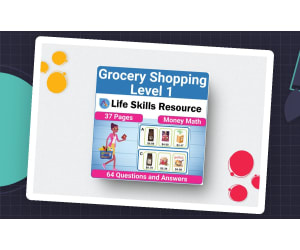
Grocery Shopping Money Math – Level 1 Worksheet
Special Resources, Life Studies, Creative Arts, Art, Social Emotional Learning (SEL), Special Education Needs (SEN), Life Skills, Finance, Math, Money, Grade 7, 8, 9, Worksheets & Printables, Worksheets
Level 1 Grocery Shopping Money Math Level 1 Grocery Shopping Money Math is a helpful tool in Special Education that assists middle school students in learning how to figure out the prices of groceries, like fruits, vegetables, meat, dairy, dry goods, canned foods, sweets, personal care items, and household products. This Money Math Life Skills Worksheet helps students practice the following: - Figuring out the total cost when buying multiples of the same product (Improves multiplication skills). - Finding the total cost for various items with different prices (Strengthens addition skills). - Calculating the cost of fruits and vegetables based on their weight (Enhances both multiplication and addition skills). This Money Math Life Skills Worksheet includes a total of 64 questions to work on! Middle school students can use this worksheet to develop the necessary life skills to become more independent at school, at home and community. You can use this activity in special education classes or one-on-one settings like speech therapy, occupational therapy, ABA therapy, or Registered Behavior Technician (RBT) sessions. This is an excellent resource for defining, setting, and measuring IEP goals for middle school students working on independent living. Interactive, hands-on, and community instruction are excellent uses for this life skills activity. All correct answers are provided at the end of each section. This activity contains step-by-step instructions, questions, and answers that reinforce learning, age-appropriate graphics, real-world examples, and ideas for implementation. This is the perfect special education activity for grade 7, grade 8, grade 9, and autism life skill centers . It's a printable, easy-to-use activity ready to hand out! Engage your special education class with this highly interactive Middle School Money Math Life Skills Worksheet! Related Products for Developing Practical Money Math Skills Level 1 Reading Menus Level 2 Reading Menus Level 3 Reading Menus Level 4 Reading Menus Level 1 Clothes Shopping Level 2 Clothes Shopping Level 3 Clothes Shopping Level 4 Clothes Shopping A PDF with 38 unique pages. Color and black-and-white versions of each page are available for this pdf resource.
Author Adulting Life Skills Resources
Rating
Tags Life Skills Money Math , Money Management, Independent Living Skills, IEP Goal-Oriented Skills, Autism Resource For Parent , Life Skills For Autistic Teens And Adults, Adulting On The Spectrum, Social And Emotional Learning, Life Skills For Adults, Life Skills For Teens
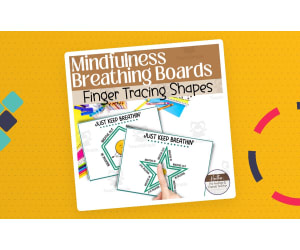
Mindfulness Shape Breathing Boards | Breathing Exercises For Kids
Special Resources, Social Emotional Learning (SEL), Life Skills, Not Grade Specific, Activities, Worksheets & Printables, Worksheets
Are you looking for an engaging way to teach kids different breathing exercises and calming strategies? These low-prep Mindfulness Breathe Boards are the perfect tool to help introduce your students to different self regulation activities! They can easily be put in a calming corner or a calm down kit for quick reference to different coping skills. Simply print & laminate (optional) and they are ready to use! I have often given these out students when we are focusing on our deep breathing coping skills or mindfulness skills and they love to keep them in their art box and use them when they start to feel upset! How It Works: These boards help to provide visual cues to students during their breathing exercises! Students will trace the figure on the breathing board and follow the prompts that tell them when to breathe in and out. What's Included? ❤️ 27 Different Finger Tracing Shapes ❤️ 56 Different Breathing Boards and Exercises ❤️ 2 Breathing Boards Per Page ❤️ Full Color and Black and White Versions Some Ideas for Use Are: ⭐Individual Lessons To Practice Deep Breathing ⭐Put On Student's Desks ⭐ Calm Down Kits ⭐ Calming Corner Posters ⭐ Posters For Your Counseling Office
Author The Feelings and Friends Teacher
Tags Breathing Boards, Coping Skills Activities, Deep Breathing Activities, Calm Down Kit, Calm Down Corner, Breathing Posters, Mindfulness Breathing Boards, Mindfulness Skills

The Hare And The Tortoise Self-Control- An SEL Boom Cards With Audio & Printables!
Special Resources, Social Emotional Learning (SEL), Life Skills, Kindergarten, Preschool, Grade 1, 2, 3, Worksheets, Worksheets & Printables
The Hare and The Tortoise Self-Control This compact yet powerful teaching resource introduces students, ranging from preschool to grade 3, to the concept of self-control. It emphasizes decision-making skills and engages in teaching social emotional learning (SEL) as well as life skills in an interactive way. Boom Card Playing Deck With a set of 25 Boom cards, learners get treated with an audio story based on the famed Aesop's fable - 'The Hare & The Tortoise.' This accessible tool requires no reading due to its voice-over narration— making it ideal for children across all learning levels. Core Message The resource focuses on teaching the idea of pausing before action, inception of decisions concerning everyday activities through practical learning sessions. Educational Games An intriguing maze game underlining delayed gratification by showing how a turtle chooses studying geography over instant play for scoring well in tests. An art-based task where students create a vibrant representation of another self-regulating turtle using cut-outs from a puzzle and glueing them onto a turtle's outline! Technological Compatibility: The resource is versatile — compatible with modern browsers like Chrome, Safari, Firefox & Edge. It also has applications for Android devices, iPads, iPhones & Kindle Fires. Purchase Options: Safety comes first! Purchase options ensure privacy and security. Free trials are available for first-time users! Do note that Internet connectivity remains crucial throughout usage. In its conception process, The Hare and The Tortoise Self-Control resource targets creating an easy-to-use package suitable for classrooms regardless of their size or number. Be it for a group setting, small cohort-based engagements or homework assignments, this resource is effective! It delivers comprehensive lessons about self-control and sound decision-making making it an enriching addition to every educational toolbox concerned with holistic child development.
Author Jennifer Moyer Taylor
Tags Self-control, Decision-making Skills, Social Emotional Learning (SEL), Educational Games, Aesop's Fable

Injury and Violence Prevention Health: 4th and 5th Grade Unit 5
P.E. & Health, Life Studies, Physical Education, Health, Special Resources, Life Skills, Social Emotional Learning (SEL), Social Skills, Grade 4, 5, Teacher Tools, Lesson Plans, Worksheets & Printables, Worksheets
Injury and Violence Prevention Health: 4th and 5th Grade Unit 5 For 4th and 5th Grade Health, there are seven standards that students will practice and learn. Through using this Injury and Violence Prevention Health: 4th and 5th Grade Unit 5 students will explore and learn to identify daily healthy habits. This is a wonderful unit to help students to stay safe and healthy. With this 4th and 5th Grade Health Unit 5: Injury / Violence Prevention, kids will learn to identify daily healthy habits along with how to treat minor cuts with basic first aid. Students will also learn how and when to call 911 and identify when there is an emergency to call. Furthermore, students will learn how to use the Heimlich maneuver. Other worksheets in this unit will teach students how to prevent common injuries at home, school, and in the community. In addition, there is an important paper on stranger danger and the tricks that strangers use on kids. Lastly, students will learn about bullying and how they can handle bullying situations along with how to deal with conflicts. This unit meets Common Core Standards. There are 16 pages included. Included in this Injury and Violence Prevention Health: 4th and 5th Grade Unit 5 Basic first aid will be taught for minor cuts. When and how to call 911 and know when it's an emergency. How to use the Heimlich maneuver. Understand the common injuries that happen at home, school, and in their community. Students will gain an understanding about stranger danger. Strategies to stop bullying and how to handle conflicts. There is also an activity about how words can break someone or build them up. There is an assessment included. An answer key is included. There are seven units that cover all the health requirements for 4th and 5th grade. Here are the links to other health units: Health | 4th and 5th Grade Unit 1: Personal Health Health | 4th and 5th Grade Unit 2: Growth and Development Health | 4th and 5th Grade Unit 3: Nutrition and Physical Activity Health | 4th and 5th Grade Unit 4: Substance Use and Abuse Health |4th and 5th Grade Unit 5: Injury and Violence Prevention Health | 4th and 5th Grade Unit 6: Prevention and Control of Disease Health |4th and 5th Grade Unit 7: Environmental Consumer Health
Author K-5 Treasures
Tags Health Unit, Personal Health, Healthy Goals, Health Activities, Physical Goals, Health Goals, Health And Wellness, 4th Grade Health, 5th Grade Heath, Heath Units

Anxiety Management & Stress-Relief Breathing Exercise Worksheets
STEM, Special Resources, Life Skills, Social Emotional Learning (SEL), Social Skills, Special Education Needs (SEN), Speech Therapy, Science, Life Sciences, Human Body, Homeschool Curriculum, Homeschool Templates, Grade 6, 7, 8, 9, Worksheets & Printables, Word Problems, Worksheets, Workbooks, Word Searches, Teacher Tools, Lesson Plans, Quizzes and Tests, Quizzes, Tests
This complete resource for anxiety management & stress relief using breathing exercise worksheets includes everything needed for middle school students. It is designed to be both printable (digital/electronic) and neuroscience-based and consists of 41 pages of student worksheets, real-world case studies, fill in the blank knowledge checks and numerous practical breathing protocols (Box Breathing, 4-7-8 Breath, Resonant Breathing, Physiological Sigh, Extended Exhale, Alternate Nostril Breathing and 5-4-3-2-1 Sensory Grounding) along with teacher answer keys, conceptual visuals and a full trauma informed implementation guide. This curriculum teaches students in 6th, 7th and 8th grades to interrupt amygdala hijacks, switch from the sympathetic "fight, flight or freeze" to the parasympathetic "rest and digest" and develop lifelong emotional resilience through the science of somatic agency, vagus nerve stimulation, neuroplasticity and autonomic nervous system regulation. This PDF product is perfect for school counseling, advisory periods, special education and homeschool implementation. There is no prep work necessary for immediate implementation in the classroom or at home. Keywords: anxiety worksheets for middle school students, breathing exercises for relieving stress for teens, anxiety management neuroscience based printable, somatic breathing toolkit, middle school social emotional learning curriculum, tools for testing anxiety, breathing activities for social anxiety. Parents & Teachers Love This Program Because: Science Supported but Student Friendly: This program teaches students the real science (amygdala, vagus nerve, heartbeat, myelination) behind their feelings in a way that helps them stop blaming themselves for the way they feel and begins to help them take charge of who they are by understanding how their body works. No Prep, Ready to Use: The program comes with student worksheets/answer keys, teacher projectables/visuals, and teacher implementation guides (these guides include trauma informed scripts) for busy community counselors, social-emotional teachers, and parents to use to implement this program with ease. The Efficacy of the Program has been Proven over and over Again Through the Use of the Program Addresses Multiple Anxiety Triggers (such as academic tests, social/cafeterias, digital overstimulation, athletic performance, and sleep difficulties) in multiple ways along with the use of protocols which work in real-world education settings. Creates Resilience Long-term: This program teaches daily habits and neuroplasticity, enabling the student to not only survive through anxiety attacks but also rewire their brain to have a calmer baseline state. An Inclusive and Trauma Informed Program: The program includes opt-out options, soft gazing instead of closing your eyes (making it safe for all students), and addresses the awkwardness associated with these activities, therefore making it safe and respectful for all students! Designation of Eligible Student Group (Overall Analysis of Document): The full curriculum covers the department for the 6th-8th grades (a.k.a. middle school or early adolescent age ~ 11-14). All research studies used in the curriculum have both 7th and 8th graders; the neurobiology part discusses the “development mismatch” between an adolescent’s limbic system and their prefrontal cortex; and every worksheet is designed for the life of a middle school student (i.e. school-themed exams, cafeteria social anxiety, hallway anxiety, sports pressure, digital anxiety). Therefore, the program is inappropriate for elementary students (too advanced) or high school students (language and examples are appropriate for the maturity level of students in grades 6-8). Copyright and Terms of Use This Book is copyrighted by Syed Hammad Rizvi for individual and classroom use only; you may not alter, resell or share the content. You may not place this Book on the web so that others may download it free of charge or for any other purpose (e.g., providing an online file, etc.). If you wish to share the Book with your colleagues, please purchase an additional license from Teachsimple. Thank you for your consideration of these Terms of Use. This Book is presented to you by Syed Hammad Rizvi in a very happy manner!
Author Creative Book Store
Rating
Tags AnxietyManagement, MiddleSchoolAnxiety, BreathingExercisesForTeens, StressReliefForKids, SELWorksheets, NeuroscienceForKids, AnxietyManagementForMiddleSchool, BreathingExercisesForMiddleSchool, StressReliefWorksheets, MiddleSchoolSEL

Substance Use and Abuse Health: 4th and 5th Grade Unit 4
P.E. & Health, Life Studies, Physical Education, Health, Special Resources, Life Skills, Social Emotional Learning (SEL), Social Skills, Grade 4, 5, Teacher Tools, Lesson Plans, Worksheets & Printables, Worksheets
Substance Use and Abuse Health: 4th and 5th Grade Unit 4 For 4th and 5th Grade Health, there are seven standards that students will practice and learn. Through using this Substance Use and Abuse: Health: 4th and 5th Grade Unit 4 students will explore and learn to identify daily healthy habits. With this 4th and 5th Grade Unit 4: Substance Use and Abuse lesson plan, your students will learn how to avoid these harmful substances. It has 16 pages of engaging activities with the opportunity for your students to identify and practice healthy habits as they learn to understand the long-term and short-term effects of drugs and other harmful substances. Along with that, they will learn and develop refusal skills to avoid drugs in unhealthy situations. Part of the activities include writing a letter to a friend that will warn them about the effects of drugs. Students will also learn how the media often influences the use of helpful and harmful drugs. Through these lessons, your students will gain a comprehension of the importance of making good healthy choices. Along with all this, there's a worksheet on coping skills that is helpful for students who are dealing with family or friends who are using drugs. In the end, there is an assessment to check for understanding. An answer key is also included. All these activities meet the Common Core Standards for health. Included in this Substance Use and Abuse: Health: 4th and 5th Grade Unit 4 are the following: A worksheet where students will be able to understand the long term and short-term effects of drugs along with other harmful substances. Students will write a note to a friend in order to warn them about the harmful effects of drugs. Students will be able to learn about the harmful and helpful effects media has on our health. They will practice 10 different refusal skills to avoid drugs with classmates or as a class when in unhealthy situations with harmful substances. Coping skills on how to deal with family or friends who are using drugs is included. Lastly, there is an assessment to check for understanding. Answer keys are also included. There are 16 pages included! There are seven units that cover all the health requirements for 4th and 5th grade. Here are the links to other health units: Health | 4th and 5th Grade Unit 1: Personal Health Health | 4th and 5th Grade Unit 2: Growth and Development Health | 4th and 5th Grade Unit 3: Nutrition and Physical Activity Health | 4th and 5th Grade Unit 4: Substance Use and Abuse Health |4th and 5th Grade Unit 5: Injury and Violence Prevention Health | 4th and 5th Grade Unit 6: Prevention and Control of Disease Health |4th and 5th Grade Unit 7: Environmental Consumer Health
Author K-5 Treasures
Tags Health Unit, Personal Health, Healthy Goals, Health Activities, Physical Goals, Health Goals, Health And Wellness, 4th Grade Health, 5th Grade Heath, Heath Units
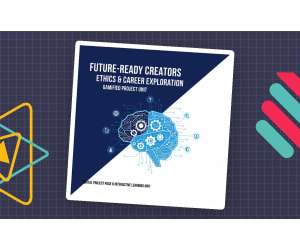
Future-Ready Creators: AI Ethics & Career Exploration Gamified Project
Life Skills, Special Resources, Social Emotional Learning (SEL), Social Skills, Special Education Needs (SEN), STEM, Research, Classroom Management, Resources for Teachers, Community Building, Grade 3, 4, 5, 9, 10, 11, 12, Worksheets & Printables, Workbooks, Worksheets, Teacher Tools, Assessments, Lesson Plans, Presentations, Rubrics
Future-Ready Creators: AI Ethics & Career Exploration Gamified Project Unit (Edition) Unleash the future of education by digging into this all-inclusive, gamified AI ethics curriculum for high schoolers, Grades 9-12. Join the AI revolution with theory, real-life case studies, and interactive worksheets that explore algorithmic bias, data privacy, surveillance, transparency, and how AI will shift careers. This 24-page digital PDF unit mingles rigorous academics with activities like a student workbook, ethical audits, SVG visuals of mind maps and flowcharts, and teacher resources filled with answer keys. Suitable for classes dealing with STEM, computer science, ethics, and career guidance, this ready-to-use project nurtures critical thinking, ethical decision-making, and career exploration in an AI-filled world. AI Ethics Lesson Plans, High School AI Curriculum, Gamified AI Projects, AI Bias Activities, Future Careers in AI, Digital Workbook on Ethics, Teacher Resources for AI Education. For homeschooling, classroom use, or in after-school programs, give teens the power to create their vision as responsible AI innovators today! Why Parents/Schools Love It: Prepares Students for the Future with AI: It teaches necessary skills for ethical AI practices, detection of bias in AI, and exploring a job market with a high degree of automation with technology-related jobs. Engaging Gamified Format: Converts difficult-to-understand information into challenges, simulations, and projects, which serve as motivation and learning aids and add fun to learning. Teaching Tools: Teaches educators with comprehensive ready-to-use teaching tools, including illustrations, work sheets, and answered keys, making it easy to integrate into any high school curriculum. Cultivates Ethical Thinking and Responsibility: Helps students deal with pressing issues such as the loss of privacy rights and the need for algorithmic justice, encouraging ethical thinkers capable of living with the consequences of artificial intelligence. Versatile and Inclusive: "The book is very versatile and inclusive, being suitable for learning environments such as classrooms, home-schooling, or online learning with equity, diversity, and increasing AI jobs as the appeal." Target Student Classes : From an exhaustive analysis of the PDF, wherein it is clearly mentioned that it is "designed specifically for high school students (Grades 9-12)" and is targeted at advanced concepts involving AI, you need to target high school students belonging to Grades 9-12. This is in line with the level of material, which is of an advanced level of understanding, assuming that these individuals possess critical and digital literacy skills characteristic of individuals on the threshold of higher education or professional life, in particular: Main target audience: Classes involving Computer Science, STEM, Technology, Ethics/Philosophy, Career Guidance, or Social Secondary Audience: Home-school programs, after-school activities, or classes on digital citizenship, innovation, or future studies. Refrain from targeting younger groups, such as the middle school level or younger, because the contents involve intricate subject matters such as deep learning, data sovereignty, or predictive policing. Copyright/Terms of Use : This Book was copyrighted under the name of Syed Hammad Rizvi. This document or repository is for personal use only. You cannot modify, distribute, or give away a single piece of this document. In other words, you cannot place it on the World Wide Web so that people can download it for free. If you would like to share these resources with your colleagues, you can purchase additional licenses from Teachsimple. Thank you for respecting these use terms. This product is happily brought to you by Syed Hammad Rizvi
Author Creative Book Store
Rating
Tags AIEthics, AICurriculum, ArtificialIntelligence, HighSchoolAI, GamifiedLearning, FutureCareers, EthicalAI, MachineLearning, AIBias, DataPrivacy