



3,932 products added recently
Page 14 - 2nd Grade Activities
Boost your second graders' enthusiasm with activities that combine fun and education. These resources cover various subjects and promote critical thinking and collaboration. Use them to enrich your lessons and keep students actively involved in their learning journey.

 Show filters


Pumpkin Patch Project with Social Studies and Math for Elementary
Social Studies, Economics, Math, Addition and Subtraction, Addition, Subtraction, Multiplication and Division, Division, Multiplication, Grade 1, 2, 3, 4, 5, Activities, Projects, Worksheets & Printables, Worksheets
Embark on an exciting autumn adventure as you step into the shoes of a pumpkin patch owner this fall season! Construct your very own immersive 3D pumpkin patch, delve into the intricacies of growing seasons, meticulously document your findings on an informative chart, and even engage in the rewarding experience of selling your bountiful pumpkins at a bustling market. This comprehensive project comprises six engaging steps that seamlessly blend various academic disciplines. As students partake in this hands-on endeavor, they'll explore the realms of economics, delve into the rich tapestry of social studies, hone practical life skills, and sharpen their basic math proficiency—all while having a blast. Upon project completion, students will proudly possess a portfolio filled with valuable information. This includes thoughtfully crafted charts, region-specific research findings about pumpkin growth, and a stunning 3D pumpkin patch they can showcase with pride. So what’s included? 1 hands-on project 3 corresponding worksheets 2 reading/learning pages How to Use and Supplies List Student Guide for independent use Answer Keys Bonus Pumpkin Freebie How to use in your classroom For Pumpkin Week - Easily set up your elementary classroom around this project. With 6 unique steps that lead the student to "growing" their own pumpkin patch, you'll have plenty to do! As a Cumulative Assessment - This is the easiest way to teach basic economics to elementary students. Use all 6 steps to assess what they've learned and give a grade. Independent Project - Because of the included Student Guide, older elementary students can complete this project with minimal adult supervision. Group Project - With separate steps and activities, students could easily split this up into different parts and create their own group pumpkin patch. Science Fair Project - Looking for an economics-focused fair project? Try this one this fall! Tags pumpkin math, pumpkin math worksheets, pumpkin math activities, elementary math, elementary math worksheets, easy math worksheets, printable math worksheets, print and go math worksheets, pumpkin-themed worksheets, pumpkin project, project-based learning, elementary economics, pumpkin economics, pumpkin economics project Grab the full Pumpkin Life Cycle Art & Crafts Bundle here! Please enjoy! -Abbey Allen ARTventurous Animals
Author ARTventurousanimals
Rating
Tags Pumpkin Math, Pumpkin Math Worksheets, Pumpkin Project, Project Based Learning, Pumpkin Project Based Learning, Steam, Stem, Pumpkin Social Studies, Pumpkin Economics

Types of Pronouns Google Slides & Practice Worksheets ESL EFL Grammar
ELA, ESL, Language Development, Grammar, Grade 1, 2, 3, 4, Worksheets, Worksheets & Printables, Centers, Activities, Lesson Plans, Teacher Tools
Types of Pronouns Google Slides & Practice Worksheets for 1st, 2nd, 3rd, and 4th Grades (ESL EFL Grammar Activities) Make grammar lessons more engaging and easier to understand with this interactive Types of Pronouns resource. I created this lesson to help students learn the seven types of pronouns through clear explanations, visual learning, example sentences, practice activities, and fun grammar exercises. The combination of teaching slides, worksheets, and comic-style learning helps students build confidence while improving grammar and sentence-writing skills. This resource is ideal for elementary classrooms , homeschool learning, ESL/EFL instruction, grammar review, and intervention support. It can be used across K-5 grades depending on student ability levels and learning needs . What’s inside? This grammar resource includes: * Teaching slides for the 7 types of pronouns * Simple and student-friendly definitions for all the pronoun types * Example sentences for each pronoun type are also included * A fun comic strip to make grammar more memorable and engaging * Pronouns practice worksheets are also in this presentation * Answer key is also included for easy grading Interactive and easy to follow slide presentation format The 7 types of pronouns covered in this set are: * Personal Pronouns * Possessive Pronouns * Reflexive Pronouns * Demonstrative Pronouns * Interrogative Pronouns * Relative Pronouns * Indefinite Pronouns Grade Levels This resource is best suited for: * Grades K-5 * 1st Grade, 2nd Grade, 3rd Grade, 4th Grade, and 5th Grade students * Homeschool learners * ESL and EFL students * Grammar intervention groups * English language support lessons ESL / EFL Levels This resource works well for: * A1 Beginner ESL/EFL learners * A2 Elementary English learners * Early B1 students needing grammar review and extra practice Resource features: * No prep resource - simply open the slides and teach * Paperless grammar activity * Kid-friendly and visually engaging format * Clear and easy to understand explanations * Helps students learn pronouns in a fun and interactive way * Great for both classroom teaching and online learning * Environment-friendly digital resource Ways to use this resource: This pronouns lesson can be used for: * Whole-class grammar instruction * Online teaching and virtual learning * Grammar centers * Independent practice * Small group ESL/EFL instruction * Homeschool language arts lessons * Morning work and grammar review * Intervention and reteaching support How will this resource help your students? Students will learn how to identify and use different types of pronouns correctly while strengthening grammar and sentence-writing skills. The practice activities encourage active participation and help students apply what they learn in meaningful ways. This resource also helps teachers and homeschool educators save planning time with a ready to use grammar lesson that includes instruction, examples, student practice, and answer keys all in one place. Common Core Standards * CCSS.ELA-LITERACY.L.1.1.D - Use personal, possessive, and indefinite pronouns * CCSS.ELA-LITERACY.L.3.1.F - Ensure subject-verb and pronoun-antecedent agreement * CCSS.ELA-LITERACY.L.4.1.A - Use relative pronouns (who, whose, whom, which, that) * CCSS.ELA-LITERACY.L.4.1.B - Form and use progressive verb tenses and correct sentence structures * CCSS.ELA-LITERACY.L.5.1 - Demonstrate command of standard English grammar and usage when writing or speaking types of pronouns, pronouns practice, pronouns worksheets, grammar slides, ESL grammar activities, EFL grammar practice, pronouns lesson, elementary grammar, grammar activities for kids, Google Slides grammar lesson, pronouns unit, language arts resource, homeschool grammar, pronouns activities, parts of speech practice
Author FlashKart
Rating
Tags Pronouns, Grammar, Presentation Slides, ESL, EFL, ELA, No Prep, Language Arts, Paperless Resource, Grammar Presentation

Geography Mazes - Set 2: 1 Page Sample (PDF)
ELA, Language Development, Vocabulary, Spelling, ESL, Resources for Teachers, Geography, Social Studies, Grade 2, 3, 4, 5, Worksheets & Printables, Worksheets, Teacher Tools, Centers, Activities, Mazes
THIS IS A ONE PAGE SAMPLE OF A SIX PAGE MAZE DOWNLOAD FULL SIX MAZE DOWNLOAD INFORMATION: Maze Series This maze series is designed for students in grades 2–5. Each set features a clear, kid-friendly theme with scene-based mazes that students first navigate, then complete by drawing a few target words from a simple word list. Pages come in varied styles and graduated difficulty, with an optional “color it in” step—and some themes invite quick calculations to match the task. These mazes are student-friendly, classroom-ready, and perfect for literacy warmups, seasonal units, fast-finisher bins, centers, sub plans, or home learning extensions. The playful, structured format builds problem-solving, attention to detail, and fine-motor control while reinforcing themed content in a motivating way. Note: Unlike many themed products, not all word-list words appear on the maze pages. To support full vocabulary coverage, we’ve released a companion word list you can find in the links section. Geography Set 2 Word List 1. More Countries of the World Germany, Italy, Russia, South Africa, Argentina, Saudi Arabia, Thailand, Canada 2. More Famous Cities Los Angeles, Beijing, Moscow, Berlin, Dubai, Madrid, Buenos Aires, Seoul 3. More Famous Landmarks Machu Picchu, Big Ben, Leaning Tower, Christ the Redeemer, Stonehenge, Mount Rushmore, Petra, The Louvre 4. Bodies of Water Amazon River, Nile River, Mississippi River, Lake Superior, Mediterranean Sea, Arctic Ocean, Gulf of Mexico, Dead Sea 5. Climate and Weather Tropical, Desert, Polar, Humidity, Hurricane, Tornado, Drought, Monsoon 6. Geography Tools and Maps Globe, Map, Compass, Latitude, Longitude, Equator, Hemisphere, Legend PDF Version Other versions will appear here when available. Follow the store for the lastest on new products. How to Use These Mazes Perfect for: Morning work or early-finisher bins Literacy or STEM centers Holiday/seasonal review lessons Independent stations, sub plans, or take-home enrichment More Geography Themed Products Geography Crosswords (Set 1) PDF Geography Crosswords (Set 2) PDF Geography Crosswords (Set 3) PDF Geography Word Searches (Set 1) PDF Geography Word Searches (Set 2) PDF Geography Word Searches (Set 3) PDF Geography Mazes (Set 1) PDF Geography Mazes (Set 3) PDF FULL CATALOG OF DOWNLOAD LINKS HERE Themed Mazes Links Addition PDF Animals PDF Around the Home PDF Birthday PDF Candy PDF Christmas PDF Cinco de Mayo PDF Clothes PDF Colors PDF Days and Months PDF Division PDF Earth Day PDF Easter PDF Easy Mazes PDF Fall PDF Father's Day PDF Food PDF Geography (Set 1) PDF Geography (Set 2) PDF Geography (Set 3) PDF Graduation PDF Health PDF History (Set 1) PDF History (Set 2) PDF History (Set 3) PDF Human Body PDF Kindness PDF Life Skills PDF Mother's Day PDF Multiplication PDF Science (Set 1) PDF Science (Set 2) PDF Science (Set 3) PDF Shapes PDF Social Skills PDF Spring PDF Sports PDF St. Patrick's Day PDF Subtraction PDF Summer PDF Thanksgiving PDF Transport PDF Valentine's Day PDF Winter PDF Mazes in Depth Structure Each maze is crafted around a focused sub-theme. Students navigate the maze, encountering branches and cul-de-sacs that build attention and planning. Most pages include a tiny follow-up box—students draw or label 2–3 target words from a small word box, add a quick count, or color in the scene—so the activity reinforces both content and skills in a highly engaging format. Each completed set includes: A themed maze page. A simple student instruction strip. An answer key showing the solved path for teacher support or self-checking Themes Included These mazes cover a wide range of fun, age-appropriate themes, including: Seasons & Holidays (e.g., Halloween, Easter, Valentine’s Day) Math-Lite Connections (e.g., quick counts, number words) Everyday Topics (e.g., Animals, Weather, School) Special Units (e.g., Health, Earth Day, Sports, Kindness) Each topic reflects students’ real-life experiences and interests while strengthening problem-solving, visual scanning, and fine-motor control in a playful, highly visual way. Easy extensions (optional): Time it: solve once in pencil, then try to beat the time in pen Retell the route using sequence words (first, next, then, finally) Count intersections or turns and graph the results Write a 1–2 sentence mini-story about the scene using the target words Design a tiny maze in the corner for a partner to solve Differentiation tips: Offer a finger-trace pass before pencils for emerging learners Highlight the borders of the correct region on first attempts Use thicker-line versions or simpler pages to build confidence Pair roles: “navigator” gives directions; “driver” traces the path For similar downloads and other frees, do check out Cored Group on TeachSimple.
Author Cored Education
Rating
Tags Vocabulary, Spelling, Geography, Countries Of The World, Famous Cities, Famous Landmarks, Bodies Of Water, Climate And Weather, Mazes, Geography Mazes

Reading Comprehension Passages Fiction Set 1 - Nature Presentable PDF
ELA, Reading, Reading Comprehension, Common Core, ESL, Language Development, Spelling, Vocabulary, Writing, Resources for Teachers, Grade 2, 3, Worksheets & Printables, Worksheets, Writing Prompts, Assessments, Teacher Tools, Quizzes, Quizzes and Tests, Centers, Activities
Reading Comprehension Passages Fiction Set 1 Snapshot Genre: Fiction (collection of short nature-themed stories) Subject: Reading (Comprehension) Primary Topic: Nature-themed fiction passages and comprehension practice Estimated Guided Reading Level (A–Z): O What This Teaches Best Character feelings and motivations: Characters want or value something strongly (e.g., Kellie wants snow to use her new sled; Rusty wants to finish his color task; Ross would rather play but ends up enjoying his work). Observation and using the environment for answers: Rusty finds blue and purple by looking more carefully at what’s around him (sky, stream, leaf backs). Cause and effect in everyday situations: Weather and choices affect what happens next (snow finally comes; a thunderstorm ends cherry picking; a volcano eruption changes the climbers’ plans). Nature vocabulary in meaningful contexts: Words connected to seasons, plants, animals, and outdoor features appear across the stories (snow “accumulation,” “canopy,” “eruption,” “perennials,” “marmalade”). Built-in practice pages that match the passages: Each story is followed by questions and skill pages (mixed questions, spelling/vocabulary, short writing prompts) that directly reference details from the story text. Learning Goals Students will recount key events from a selected story in a logical order using details from the text. Students will describe characters’ wants, feelings, and choices and connect them to what happens in the story. Students will identify the setting/season and name text evidence that supports it. Students will explain cause-and-effect relationships shown in the stories (problem → response → outcome). Students will use context clues to determine the meaning of unfamiliar words from the passages. Students will compare information presented in the story (for example, annuals vs. perennials) by stating how they are different using the text’s wording. Passages Include 1.Bring on the Snow: Kellie wants to make it snow. How does she try? 2.Walk through the Woods: A walk in the woods turns into a huge adventure. 3.Nature Photographer: Donna get some amazing snaps in this story. 4.Nature's Beautiful Colors: Rusty enjoys finding out about the colors in nature. 5.Flower Fun: Learn about flower names and colors in this fun lesson. 6.Picking Cherries: Ross spends his day picking cherries but is it worth it? Additional File: Nature Photographer: Drawing Nature Printable PRESENTABLE PDF VERSION Run it like a slide show straight from a PDF, with no PowerPoint or extra software needed, just open, project, and teach. Other versions are available in the links list below or in the full catalog. FULL CATALOG OF DOWNLOAD LINKS HERE For similar downloads and other frees, do check out Cored Group on TeachSimple.
Author Cored Education
Rating
Tags Elementary, Reading, Comprehension, Vocabulary, Common Core, Speling, Writing, Passages, Reading Centers, Reading Comprehension Assessments

Fill in the Blanks Practice Questions - Vocabulary Grade 3-4 (Docs)
ELA, Language Development, ESL, Common Core, Resources for Teachers, Vocabulary, Grade 3, 4, Worksheets & Printables, Worksheets, Quizzes and Tests, Teacher Tools, Tests, Assessments, Centers, Activities
Fill in the Blanks Vocabulary Practice MCQS ELA MCQS Overview: In this series of lessons, students will embark on an engaging journey to explore the grammar skills that make our language vibrant and expressive. These lessons are crafted to help students identify, comprehend, and effectively apply language arts skills in both writing and speech. Accompanied by free supplementary materials available for all topics, each lesson builds on the previous one, offering a balanced mix of direct instruction, interactive group activities, and independent practice. Through fun and creative tasks, students will learn to recognize grammar within sentences, understand their function, and use them to enrich their own writing and speech. Fill in the Blanks Overview: Includes: Adjectives in Sentences Nouns in Sentences Verbs in Sentences Frequently Mistaken Words Docs Version This is the Docs editable and fillable version. This download is available in GOOGLE Docs, GOOGLE Forms, GOOGLE Slides. PDF, PPT, WORD, check the links below for more details. FULL CATALOG OF DOWNLOAD LINKS HERE Grade 3/4 Links: Adjectives Google Docs Google Forms Google Slides PDF PPT Word Free Supplementary Materials Pack Adverbs Google Docs Google Forms Google Slides PDF PPT Word Free Supplementary Materials Pack Conjunctions Google Docs Google Forms Google Slides PDF PPT Word Free Supplementary Materials Pack Nouns Google Docs Google Forms Google Slides PDF PPT Word Free Supplementary Materials Pack Pronouns Google Docs Google Forms Google Slides PDF PPT Word Free Supplementary Materials Pack Verbs Google Docs Google Forms Google Slides PDF PPT Word Free Supplementary Materials Pack Sentence Structure Google Docs Google Forms Google Slides PDF PPT Word Free Supplementary Materials Pack Present Tense Google Docs Google Forms Google Slides PDF PPT Word Free Supplementary Materials Pack Past Tense Google Docs Google Forms Google Slides PDF PPT Word Free Supplementary Materials Pack Future Tense Google Docs Google Forms Google Slides PDF PPT Word Free Supplementary Materials Pack Context Clues Google Docs Google Forms Google Slides PDF PPT Word Free Supplementary Materials Pack Defining Words Google Docs Google Forms Google Slides PDF PPT Word Free Supplementary Materials Pack Fill the Blanks Google Docs Google Forms Google Slides PDF PPT Word Free Supplementary Materials Pack Homophones Google Docs Google Forms Google Slides PDF PPT Word Free Supplementary Materials Pack Synonyms Google Docs Google Forms Google Slides PDF PPT Word Free Supplementary Materials Pack ELA Review Questions Overview Questions have three answer choices. There are a handful of pictures on each test for aesthetic purposes, as well as a review sheet covering most of the topics covered in the product. Introduction or Example Sheet Each topic will include an introduction or example sheet to go through first with your students. Full Answer Keys Full answer keys and sample responses are provided so no matter how busy you are, you know you're covered! In the Supplementary Pack Interactive Ice Breakers: Fun, hands-on activities that get students thinking about adjectives right from the start. Guided Practice: Teacher-led exercises that reinforce the day’s lesson, ensuring students can confidently identify and use adjectives. Group and Partner Tasks: Collaborative activities that allow students to work together to solve problems, categorize adjectives, and create descriptive sentences. Independent Worksheets: Structured worksheets that provide individual practice and help solidify understanding of key concepts. Exit Tasks: Quick, reflective activities at the end of each lesson that assess understanding and encourage students to apply what they’ve learned. For similar downloads and other frees, do check out Cored Group on TeachSimple.
Author Cored Education
Tags Elementary, Answers, Ccss, Common Core, Tests, Test Prep, Grade 3, Grade 4, Vocabulary, Digital Centers

Stone Fox Literature Unit and STEM Challenge
ELA, Literature, STEM, Grade 3, 4, 5, Activities
This resource combines reading comprehension, vocabulary building, and a STEM challenge to create a meaningful and engaging experience for your students. Perfect for both in-person and distance learning, these activities will help your students connect deeply with the novel while practicing critical thinking skills. What's Included: Reading Journal Activities Guided journal prompts that encourage students to make predictions, analyze characters, and draw connections to the text. Vocabulary work: students choose five words from the novel to explore, reinforcing word meaning and usage. Includes rubrics to make assessing journal entries and vocabulary tasks quick and consistent. Graphic Organizers Easy-to-use organizers for analyzing characters and story elements, helping students visualize and organize their thoughts. Virtual Learning Adaptations Suggestions for completing all activities online, making this unit a flexible choice for distance learning or hybrid classrooms. STEM Challenge: Build a Sled Bring the story to life with a hands-on engineering activity. Students design and construct a sled capable of carrying weight across a simulated ice surface without sinking or breaking through. Includes guidance for introducing the engineering design process and encouraging problem-solving and teamwork. This Stone Fox literature unit gives you everything you need to integrate reading, writing, and STEM into one cohesive experience. Whether you’re teaching this classic story for the first time or looking to refresh your approach, this resource will engage your students and make learning memorable. Keywords: Stone Fox literature unit, Stone Fox STEM project, reading journal prompts, vocabulary activities, character analysis organizer, story elements graphic organizer, distance learning novel study, STEM sled design challenge, upper elementary literature activities, cross-curricular reading unit.
Author Kel's Klass
Tags Novel Study, Stone Fox, Story Elements, Reading Journal, STEM Challenge, Stone Fox Genre, Stone Fox Vocabulary
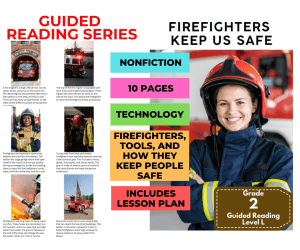
Guided Reading Level L - Firefighters Keep Us Safe (with Lesson Plan)
ELA, Resources for Teachers, Reading Comprehension, Reading, Pre-Reading, Language Development, Science, Engineering, Technology, Vocabulary, Grade 1, 2, 3, Worksheets & Printables, Worksheets, Teacher Tools, Centers, Activities, Literacy Readers, Quizzes, Quizzes and Tests, Assessments
This Guided Reading Book - Firefighters Keep Us Safe (Level L) with lesson plan includes: Guided Reading Color Label (front cover x1) This is a quick way to match the book’s demands to what students can generally handle.. The overall goal is to use the level/color to pick books for several smaller groups. To qualify for a certain level, a student is expected to read a book from that level with about 90–94% accuracy. If a student is consistently accurate and understands, move up a level. If the student is struggling at that level, drop down and add more support. Each student will improve at completely different rates, but it is generally one of the best ways to check progress across the class. DOWNLOAD THE CATALOG TO VIEW ALL GUIDED READING BOOKS AVAILABLE (SORTED LEVELS A-Z) Pre-Reading Question (x1) Teacher asks the prompt aloud, can be while showing the cover or first page. Students share what they already know, or make educated guesses from the cover. Prompt them to use the target vocabulary. Write some of their responses on the board to look back at during the reading. Vocabulary Words (x5) Introduce the five words, best doing it one at a time. Start by saying it, while students repeat and then see if anyone knows what it means before reading further. Read through the meaning and try to briefly connect each word to a picture or gesture so it’s meaningful. Ask students to flip through the book pages and point to where they see each of the vocabulary words. While reading the book pause upon coming across one of the vocab words or read the sentence twice to make sure students understand the word has appeared. Optional: Ask students to raise hands whenever they see/hear one of the new words. Guided Reading Pages (x10) Check the book snapshot (below) for: primary topic - do you need to prep extra reading or intro materials on this? what is taught best - decide on 1-2 bullets to focus on, use the prompt or words provided here for best results. learning goals - what you are checking for students to be able to do after the session, elicit answers using prompts or words provided. key vocabulary (see section above). questions overview - so you know what is coming up and if you need to prep extra materials to assist understanding. Run the lesson You may have already looked at a few of the pages together, but you can show them some of the pictures again first to set meaning. Depending on how much time you have and how familiar your students are with guided reading class, you may want to read the book aloud first with the group first. Students whisper or partner read, while you listen in. If time, do it as a group, one student reading a page each. Use the guided page’s prompts to coach: “Check the picture / does it make sense?” “Point under the words / try the first sound” “Reread the sentence smoothly”. Try to focus more on one student per session (rotating every time), so you can work out if they are ready to move up or need to move down a level. Comprehension Questions (back cover x3) This is your way to check that students didn’t just say the words, but actually understood the text. First, let students answer by pointing to the page/picture and saying a short sentence. After any answer, follow with: “Show me where you found that in the text.” In bigger groups, have partners answer first (10–20 seconds), then call on 2–3 students to share. Differentiation tips: Emerging speakers/struggling readers: oral + pointing On-level: oral in a full sentence Higher: one written sentence or draw + label Book Snapshot Title: Firefighters Keep Us Safe Genre: Nonfiction (informational) Subject: Social Studies (Community Helpers) / Health & Safety / Reading Primary Topic: Firefighters, tools, and how they keep people safe Estimated Guided Reading Level (A–Z): L What This Book Teaches Best How firefighters are community helpers who work at a fire station and respond to an emergency call. Why firefighters wear turnout gear and how it protects them from heat and smoke (layers resist flames and keep them cool). What a fire engine carries and how sirens and flashing lights help firefighters reach emergencies quickly (drivers move to the side). How key equipment works: hoses connect to a hydrant , nozzles change the water spray, and long ladders help with rescue and spraying from above. Firefighters’ jobs go beyond fires: they help in car accidents and medical emergencies , and training and dedication help keep the community safe. Learning Goals Students will explain how firefighters help keep a community safe using details from the text. Students will describe what turnout gear is and why firefighters wear it. Students will identify what a fire engine carries and how sirens and flashing lights help on the road. Students will describe how hoses, hydrants, and nozzles help firefighters spray water on a fire. Students will explain why firefighters use masks and air tanks in smoky buildings. Students will describe why firefighters train daily and how dedication connects to safety. Key Vocabulary From the Text community — people who live and work in the same place. emergency — a sudden problem that needs help right away. protective — made to help keep someone safe from harm. hydrant — a street pipe where firefighters can get water. dedication — working hard and not giving up. Discussion Prompts Pre-reading question: What do you think firefighters need to do their jobs safely? Comprehension questions: What is turnout gear, and how does it help firefighters around heat and smoke? What do the sirens and flashing lights on a fire engine tell other drivers to do? Why do firefighters wear a special mask and an air tank in a smoky building? Printing Tips 1. Best Printing Method (Recommended) “Booklet” Printing (Best if Available) If your printer or PDF viewer supports Booklet Printing , use this. Settings to use: Print mode: Booklet Paper size: Letter or A4 (either works) Orientation: Landscape Print on both sides: Yes Flip on: Short edge Scaling: Fit to printable area Booklet subset: First test: Front sides only Then: Back sides only This will automatically: Pair pages correctly Put the cover on the outside Align everything for folding After printing, fold in half and staple along the spine . 2. If “Booklet” Printing Is NOT Available You can still print this correctly with manual duplex printing . Step-by-step: Open the PDF. Choose Print . Set: Orientation: Landscape Pages per sheet: 1 Print on both sides: Yes Flip on: Short edge Print all pages . Because each PDF page already contains two facing book pages, the result will still fold cleanly into a book. Thousands of Cored Education products are included with your TeachSimple membership. Download links and encyclopedia index available here.
Author Cored Education
Rating
Tags Reading Comprehension, Reading Passages, Reading, Guided Reading, Guided Reading Lesson Plan, Guided Reading Activity, Pre-reading, Vocabulary, Technology, Engineering

Kids Yoga Stories: Strengthening Yoga Cards for Kids
P.E. & Health, Yoga, Grade 1, 2, 3, 4, 5, Activities
Use yoga poses to strengthen muscles in our bodies! This set of Strengthening Yoga Cards for Kids will help your students learn through movement either at home, in the classroom, or in a studio. Included in this deck of Strengthening Yoga Cards for Kids - A card with an index - Tips to teach yoga -20 cards illustrating the yoga poses -20 matching description cards - Instructions for all the poses The index indicates the order in which the yoga poses are to be used to flow from one pose to the next. There is multicultural representation featured in yoga kids! Recommended for ages 5+ Ways in which you can use these cards as homeschoolers or in the classroom include: -For transition times -Morning routines or circle times -Brain breaks to calm their minds and bodies -Physical education -Occupational and/or physical therapy -With one child, small, or large groups Benefits of Yoga for kids include: -Increased strength -Increased flexibility -Improves sleep -Promotes positive interactions amongst adults and children -Develops self-confidence -Improves self-expression -Improves body awareness -Promotes a lifestyle that is active and healthy.
Author Kids Yoga Stories
Tags Kids Yoga Stories, Strengthening Yoga, Kids Yoga, Yoga Poses, Yoga Cards
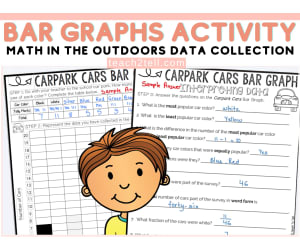
Bar Graphs Worksheets Data and Graphing Column Graphs Tally Marks
Math, Graphing, Measurements, Grade 2, 3, 4, 5, Worksheets & Printables, Worksheets, Activities
Looking for a data and graphing activity that gets your students moving and learning at the same time? These Bar Graphs Worksheets are the perfect mix of hands-on fun and curriculum-aligned skills practice! With a hands-on, real-world approach, your students will head outside to collect data using tally marks—yes, real data from your staff car park ! From Observation to Representation Your students will observe car colors and record their findings using tally marks . Then, they’ll transfer that data into a clear and colorful column (bar) graph . It’s a simple yet powerful way to connect real-life observation with structured math skills. Deepen Thinking with Data Interpretation Once the graphs are complete, students answer a series of questions to analyze and interpret the data. This step encourages them to think critically, make comparisons, and draw conclusions based on evidence—hello, higher-order thinking! What’s Included ✔️ Tally mark data collection sheet ✔️ Column/Bar graph template ✔️ Comprehension questions for data interpretation ✔️ US and British English versions for flexible classroom use Perfect For: Math centers or rotations Early finishers Outdoor learning experiences Grades 2–4 (or adaptable for other levels) Real-life, cross-curricular connections Why Teachers Love It This resource is more than just a worksheet—it's an experience. Students are actively engaged , moving , thinking , and connecting math to the world around them . Real data. Real math. Real fun. Bring graphing to life and turn your next math lesson into a mini adventure!
Author Teach2Tell
Rating
Tags Bar Graphs Worksheets, Data And Graphing Activities, Bar Graph Math Center, Graphing Data For 2nd Grade, Graphing Data For 3rd Grade, Math Worksheets Bar Graphs, Real-world Math Project, Picture And Bar Graph Worksheets, Common Core Graphing Lesson, Math Graphing Printables
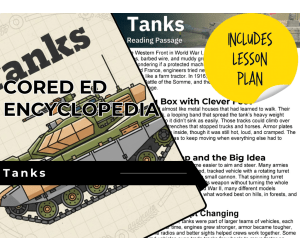
Tanks Reading Comprehension Passage - Cored Ed Encyclopedia
ELA, Language Development, Reading Comprehension, Reading, Pre-Reading, Science, Technology, Engineering, History, Social Studies, Grade 2, 3, 4, 5, Worksheets & Printables, Worksheets, Teacher Tools, Centers, Activities, Writing Prompts, Assessments, Quizzes and Tests, Quizzes, Lesson Plans
This tanks reading comprehension includes: Visualization (on the front cover) Start your lesson by taking a minute to think and share something about the topic. Read the script aloud (slowly), perhaps prepare some music or sound effects. Student close their eyes and let their imaginations wander. Students open their eyes, read the question aloud and give them a few minutes to complete. Ask a few students to share or keep answers until the end to compare with what they learn in the passage. Quick pause—thousands of Cored Education products are included with your TeachSimple membership. Download links and encyclopedia index available here. Pre-Reading Trivia Students will write down one thing they already know about the subject and then read five more facts and discuss. These facts are fun, and the students will enjoy learning about the subject before reading more. Give 1 minute for students to write what they already know (no pressure—best guess is fine). Read the five facts together. After each fact, do ask a student for their opinion, was it surprising? Set a purpose by asking students to highlight/underline one fact they want to learn more about during the reading. Reading Passage The text is a high-interest reading passage with set paragraphs, roughly three to four paragraphs long. It contains a variety of themes about the topic, anywhere from history to technology. The passage is between 250 and 350 words in length. First, ask students to look at the headings and see what they’ll learn about today. What do they know about the topic/heading? First read options: Teacher read-aloud (best for support). Partner reading (paragraph by paragraph). While reading, students underline important details, and vocabulary words they think may come up in the questions section. Mixed Questions The first question page contains four multiple-choice questions, each with a choice of four answers, and three written response questions that require a sentence or two from the student. Students complete the mcqs first independently, then review quickly as a class. For the 3 written responses, try to get students giving the answer with some form of evidence: “I think ___ because the text says ___.” If students get stuck, send them back to check the passage. Vocabulary Questions Practice seven key words from the text in this section across two activities. First section is scrambled words where students will unscramble three words given a clue for each. The second section is a word to meaning matching activity. Before starting, have some students read out words they underlined in the passage. Ask students to say the word and read aloud the sentence(s) around each word. Ask students to do scrambled words and the matching exercise in pairs then go through answers as a class. For the scrambled spelling task, get four pairs to come up to the board and write the words for extra practice with the other student reading out the clue. For the matching task, prompt students to give full sentences: “I matched ___ with ___ because ___.” Creative Writing In this question, the student will be required to write a five to eight sentence paragraph on a question related to the topic. Before starting, ask students write down 3 key ideas they are going to include in their piece. Ask students for ideas to share around the class to help those struggling. Pro writing expectations: 5–8 sentences At least 2 facts or details from the passage At least 2 vocabulary words from the previous page Students read their paragraphs while classmates listen for facts and vocabulary words. Extension Activities This page is optional for fast finishers or to take home. There are several activities, each one requiring a different skill. Do some, do none, do all, completely optional - but you will feel reassured knowing every possibility is planned for. Includes summary writting question. Answer Key There are answers for the multiple-choice questions, written response questions have sample answers, vocabulary answers and if there is a summary question then a sample summary will be provided as well. Lesson Plan Included Customized lesson plan for this lesson is included. Lesson Snapshot Title: Tanks Genre: Nonfiction (informational text) Subject: Social Studies (History & Technology) Primary Topic: Why tanks were created and how they changed Estimated Guided Reading Level (A–Z): R What This Lesson Teaches Best Explains a real-world problem from World War I (trenches, barbed wire, muddy ground) and why a new machine was needed. Describes how tracks work by spreading a tank’s heavy weight so it doesn’t sink as easily and can cross rough land and trenches. Introduces key tank parts and purposes, including armor plates for protection and a rotating turret that helps the tank aim. Shows how designs changed over time (stronger engines, tougher armor, radios, better sights) and how tanks became part of teams with special jobs. Reinforces the idea that inventions are problem-solving —how to protect people inside a moving machine and travel over hard-to-cross land. Learning Goals Students will identify the main problems soldiers faced on the Western Front that led to tanks being developed. Students will explain how tracks helped early tanks move over muddy ground and cross trenches. Students will describe what a rotating turret does and why it was an important design change. Students will summarize how tanks changed from World War I to the end of World War II using key details from the text. Students will use text evidence to explain how new tools (like radios) helped crews work together. Key Vocabulary From the Text trenches — long ditches where soldiers sheltered during war. barbed — having sharp points that make crossing dangerous. tracks — looped bands that help vehicles grip the ground. turret — a rotating top part that carries the main weapon. armored — protected with strong metal on the outside. FULL CATALOG OF DOWNLOAD LINKS AND ENCYCLOPEDIA INDEX HERE
Author Cored Education
Rating
Tags Vocabulary, Reading Comprehension, Reading Passages, Lesson Plans, Ela Lesson Plans, Reading Comprehension Lesson Plans, Pre-reading, History, Social Studies, Social Studies Lesson Plans
Scratch: Stick Figures (Game Mechanics #3)
Science, Technology, Computer Science, Grade 3, 4, 5, 6, 7, 8, 9, 10, Games, Activities
Scratch: Stick Figures (Game Mechanics #3) An invaluable teaching aid designed to enhance the computer science knowledge and skills of students from grades 3 to 10. It focuses primarily on developing character within a gaming context with stick figures serving as learnable starter characters. What Will You Learn Creating an animated stick figure Utilizing the figures within game mechanics Fundamental principles of computer science translated into practical application Suitable For This package is versatile enough for both public school teachers and homeschoolers teaching whole group instruction or smaller breakout sessions. Additionally, it works as an effective homework tool because of its step-by-step tutorial style layout. Prerequisites To fully benefit from Scratch: Stick Figures (Game Mechanics #3), a basic understanding of Scratch is necessary. Cross-Curricular Appeal This product, although classified under 'Computer Science', seamlessly integrates into interdisciplinary curricula focusing on technological literacy or even creative arts due to its suitability across different grade levels and learning stages. Delivery Format You'll receive the guide as a PDF file, containing detailed, easy-to-follow lesson plans accompanied by visual diagrams for extra support. It ensures that your students can smoothly begin their journey in game scripting regardless of your teaching experience level. In Summary: Lead your students towards mastery in creating simple characters crucial not only for games but other digital animations too with Scratch: Stick Figures (Game Mechanics #3)!
Author Roombop
Tags Game Development, Computer Science, Animation, Character Creation, Teaching Resource

Nouns Practice Questions - Grade 3-4 Grammar (PPT)
ELA, Language Development, ESL, Grammar, Common Core, Resources for Teachers, Grade 3, 4, Quizzes and Tests, Teacher Tools, Tests, Assessments, Presentations, Activities
Nouns Grammar Practice MCQS ELA MCQS Overview: In this series of lessons, students will embark on an engaging journey to explore the grammar skills that make our language vibrant and expressive. These lessons are crafted to help students identify, comprehend, and effectively apply language arts skills in both writing and speech. Accompanied by free supplementary materials available for all topics, each lesson builds on the previous one, offering a balanced mix of direct instruction, interactive group activities, and independent practice. Through fun and creative tasks, students will learn to recognize grammar within sentences, understand their function, and use them to enrich their own writing and speech. Nouns Overview: Includes: Abstract Nouns Concrete Nouns Compound Nouns Collective Nouns Irregular Plural Nouns PPT Version This is the PPT editable and interactive version. There is a fillable answer sheet at the end. This download is available in GOOGLE Docs, GOOGLE Forms, GOOGLE Slides. PDF, PPT, WORD, check the links below for more details. FULL CATALOG OF DOWNLOAD LINKS HERE Grade 3/4 Links: Adjectives Google Docs Google Forms Google Slides PDF PPT Word Free Supplementary Materials Pack Adverbs Google Docs Google Forms Google Slides PDF PPT Word Free Supplementary Materials Pack Conjunctions Google Docs Google Forms Google Slides PDF PPT Word Free Supplementary Materials Pack Nouns Google Docs Google Forms Google Slides PDF PPT Word Free Supplementary Materials Pack Pronouns Google Docs Google Forms Google Slides PDF PPT Word Free Supplementary Materials Pack Verbs Google Docs Google Forms Google Slides PDF PPT Word Free Supplementary Materials Pack Sentence Structure Google Docs Google Forms Google Slides PDF PPT Word Free Supplementary Materials Pack Present Tense Google Docs Google Forms Google Slides PDF PPT Word Free Supplementary Materials Pack Past Tense Google Docs Google Forms Google Slides PDF PPT Word Free Supplementary Materials Pack Future Tense Google Docs Google Forms Google Slides PDF PPT Word Free Supplementary Materials Pack Context Clues Google Docs Google Forms Google Slides PDF PPT Word Free Supplementary Materials Pack Defining Words Google Docs Google Forms Google Slides PDF PPT Word Free Supplementary Materials Pack Fill the Blanks Google Docs Google Forms Google Slides PDF PPT Word Free Supplementary Materials Pack Homophones Google Docs Google Forms Google Slides PDF PPT Word Free Supplementary Materials Pack Synonyms Google Docs Google Forms Google Slides PDF PPT Word Free Supplementary Materials Pack ELA Review Questions Overview Questions have three answer choices. There are a handful of pictures on each test for aesthetic purposes, as well as a review sheet covering most of the topics covered in the product. Introduction or Example Sheet Each topic will include an introduction or example sheet to go through first with your students. Full Answer Keys Full answer keys and sample responses are provided so no matter how busy you are, you know you're covered! In the Supplementary Pack Interactive Ice Breakers: Fun, hands-on activities that get students thinking about adjectives right from the start. Guided Practice: Teacher-led exercises that reinforce the day’s lesson, ensuring students can confidently identify and use adjectives. Group and Partner Tasks: Collaborative activities that allow students to work together to solve problems, categorize adjectives, and create descriptive sentences. Independent Worksheets: Structured worksheets that provide individual practice and help solidify understanding of key concepts. Exit Tasks: Quick, reflective activities at the end of each lesson that assess understanding and encourage students to apply what they’ve learned. For similar downloads and other frees, do check out Cored Group on TeachSimple.
Author Cored Education
Tags Elementary, Answers, Ccss, Common Core, Grammar, Tests, Test Prep, Assessment, Grade 3, Grade 4
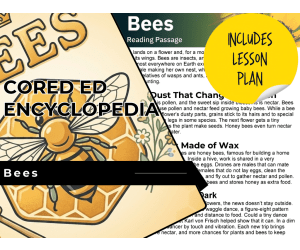
Bees Reading Comprehension Passage - Cored Ed Encyclopedia
ELA, Language Development, Reading Comprehension, Reading, Writing, Pre-Reading, Science, Insects, Life Sciences, Vocabulary, Grade 2, 3, 4, 5, Worksheets & Printables, Worksheets, Teacher Tools, Centers, Activities, Writing Prompts, Assessments, Quizzes and Tests, Quizzes, Lesson Plans
This bees reading comprehension with lesson plan includes: Visualization (on the front cover) Start your lesson by taking a minute to think and share something about the topic. Read the script aloud (slowly), perhaps prepare some music or sound effects. Student close their eyes and let their imaginations wander. Students open their eyes, read the question aloud and give them a few minutes to complete. Ask a few students to share or keep answers until the end to compare with what they learn in the passage. Quick pause—thousands of Cored Education products are included with your TeachSimple membership. Download links and encyclopedia index available here. Pre-Reading Trivia Students will write down one thing they already know about the subject and then read five more facts and discuss. These facts are fun, and the students will enjoy learning about the subject before reading more. Give 1 minute for students to write what they already know (no pressure—best guess is fine). Read the five facts together. After each fact, do ask a student for their opinion, was it surprising? Set a purpose by asking students to highlight/underline one fact they want to learn more about during the reading. Reading Passage The text is a high-interest reading passage with set paragraphs, roughly three to four paragraphs long. It contains a variety of themes about the topic, anywhere from history to technology. The passage is between 250 and 350 words in length. First, ask students to look at the headings and see what they’ll learn about today. What do they know about the topic/heading? First read options: Teacher read-aloud (best for support). Partner reading (paragraph by paragraph). While reading, students underline important details, and vocabulary words they think may come up in the questions section. Mixed Questions The first question page contains four multiple-choice questions, each with a choice of four answers, and three written response questions that require a sentence or two from the student. Students complete the mcqs first independently, then review quickly as a class. For the 3 written responses, try to get students giving the answer with some form of evidence: “I think ___ because the text says ___.” If students get stuck, send them back to check the passage. Vocabulary Questions Practice seven key words from the text in this section across two activities. First section is scrambled words where students will unscramble three words given a clue for each. The second section is a word to meaning matching activity. Before starting, have some students read out words they underlined in the passage. Ask students to say the word and read aloud the sentence(s) around each word. Ask students to do scrambled words and the matching exercise in pairs then go through answers as a class. For the scrambled spelling task, get four pairs to come up to the board and write the words for extra practice with the other student reading out the clue. For the matching task, prompt students to give full sentences: “I matched ___ with ___ because ___.” Creative Writing In this question, the student will be required to write a five to eight sentence paragraph on a question related to the topic. Before starting, ask students write down 3 key ideas they are going to include in their piece. Ask students for ideas to share around the class to help those struggling. Pro writing expectations: 5–8 sentences At least 2 facts or details from the passage At least 2 vocabulary words from the previous page Students read their paragraphs while classmates listen for facts and vocabulary words. Extension Activities This page is optional for fast finishers or to take home. There are several activities, each one requiring a different skill. Do some, do none, do all, completely optional - but you will feel reassured knowing every possibility is planned for. Includes summary writting question and additional facts. Answer Key There are answers for the multiple-choice questions, written response questions have sample answers, vocabulary answers and if there is a summary question then a sample summary will be provided as well. Lesson Plan Included Customized lesson plan for this lesson is included. Lesson Snapshot Title: Bees Genre: Nonfiction (informational passage) Subject: Life Science Primary Topic: Pollination, hive roles, and waggle-dance communication Estimated Guided Reading Level (A–Z): S What This Lesson Teaches Best Bees as insects with many kinds (more than 20,000) living almost everywhere on Earth except **Antarctica. How bees help plants make seeds by moving pollen from flower to flower while gathering nectar and pollen for baby bees. How honey bees live in organized hives with shared jobs (queen, drones, and worker bees doing specific tasks). How honey bees turn nectar into honey and store it for later as extra food. How the waggle dance can share direction and distance to food, supported by the work of Karl von Frisch. Learning Goals Describe where bees live and how many kinds the passage says there are. Explain how pollen gets from one flower to another in the passage. Identify what pollen and nectar do for growing baby bees. Describe how jobs are shared in a honey bee hive, including the queen, drones, and workers. Explain what the waggle dance communicates and how other bees follow it in a dim hive. Describe how honey is made and stored, using details from the passage. Key Vocabulary From the Text pollen — yellow dust that helps plants make seeds. nectar — sweet liquid inside blossoms. colony — a group of bees living together. larvae — baby insects before they become adults. vibration — shaking that can be felt as movement. FULL CATALOG OF DOWNLOAD LINKS AND ENCYCLOPEDIA INDEX HERE
Author Cored Education
Rating
Tags Vocabulary, Reading Comprehension, Reading Passages, Lesson Plans, Ela Lesson Plans, Reading Comprehension Lesson Plans, Pre-reading, Science Lesson Plans, Life Science, Insects

Hands-On Solar Eclipse Crafts – Engaging Activities for Pre-K to 5th G
Space, Earth and Environmental Sciences, Science, Kindergarten, Preschool, Grade 1, 2, 3, 4, 5, Crafts, Activities, Bulletin Boards, Classroom Decor
Hands-On Solar Eclipse Crafts – Engaging Activities for Pre-K to 5th Grade... Looking for a fun way to bring the wonder of a solar eclipse into your classroom??? This set of three crafts gives students the chance to explore the eclipse in an interactive & creative way... With options ranging from simple cut-and-paste to sequencing activities,,, you can easily choose the craft that best matches your students’ grade level and skill needs... What’s Inside::) Foldable Sequencing Craft: Students arrange and assemble the five stages of a solar eclipse (First Contact, Second Contact, Totality, Third Contact, Fourth Contact). A ready-to-use version is included, along with a cut-and-paste option for sequencing practice. Simple One-Page Craft: Includes a sun and moon cutout. Students attach the moon to the sun with a brad and rotate it to show the eclipse in action. Two-Page Craft: Features Earth, the sun, and the moon on movable strips. When assembled,,, students can slide the moon over the sun to see how an eclipse occurs from Earth’s perspective... Why Teachers Love It::) Perfect for a science unit, space theme, or as an enrichment activity during an eclipse event. Encourages fine motor skills,,, sequencing,,, and hands-on learning... Works for a wide range of grade levels ((Pre-K through 5th))... Doubles as a creative bulletin board display... Important Details::) Designed for US Letter paper ((8.5 x 11)).. Printing can be adjusted for other sizes... Digital download --– ready to print and use immediately... Bring the excitement of the solaaar eclipse to life with these ready-to-go crafts... Your students will enjoy making them while gaining a better understanding of this fascinating natural event!!!
Author 1 Teaches 2 Learn
Rating
Tags Solar Eclipse Craft, Space Activities For Kids, Science Crafts PreK–5, Eclipse Sequencing Activity, Sun And Moon Craft, Hands-On Science Project, Space Bulletin Board Idea, Earth Sun Moon Activity
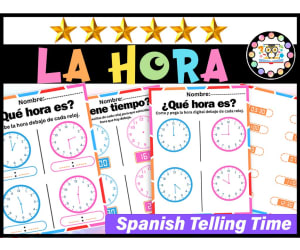
Telling Time in Spanish Worksheets Activities| El Reloj La Hora
Time, Math, Kindergarten, Preschool, Grade 1, 2, 3, Activities, Classroom Decor, Teacher Tools, Worksheets & Printables
This interactive and attractive set La Hora Telling Time in Spanish Worksheets learners develop their original La Hora Telling Time in Spanish Worksheets , this set contains 20pages in this set, each in each, each in a different La Hora Telling Time in Spanish Worksheets of dedicated La Hora Telling Time in Spanish Worksheets to ensure a fun and structured approach to using a fun and structured approach can work to use a type of work that can work in i hope you find it useful; Each card is fun this edited set of the time worksheet is built in an elegant style that attracts attention this interactive and attractive set of La Hora Telling Time in Spanish Worksheets is designed to help young learners develop their original La Hora Telling Time in Spanish Worksheets skills through La Hora Telling Time in Spanish Worksheets exercises This set contains 25 pages. these printable Worksheets offer useful courses, this provides a useful course-rich practice, it is designed to help using resource grade 2 easily to learn about activities La Hora Telling Time in Spanish Worksheets a fun and interactive manner. A collaborative learning activity added students. PDF format-wasted and digital-friendly!
Author LAMO
Rating
Tags Activities, Homeschool, Spanish, Arithmetic, Math, Worksheets, World Languages, El Reloj , La Hora, Time
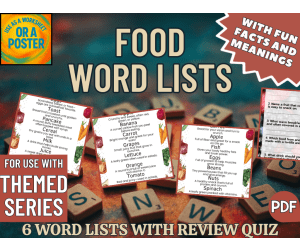
Food Word List Posters (PDF)
ELA, Language Development, Resources for Teachers, Vocabulary, Spelling, ESL, Grade 2, 3, 4, 5, Worksheets & Printables, Worksheets, Teacher Tools, Centers, Activities, Posters, Classroom Decor
Word List Poster Series This word list poster series is designed for students in grades 2–5. Each printable focuses on a clear, kid-friendly theme and features 8 target vocabulary words with short, student-friendly meanings or fun facts. The clean layout works as both an anchor chart and a write-in sheet, giving students a quick, visual reference they can revisit during centers and independent work. These posters are student-friendly, classroom-ready, and perfect for warmups, vocabulary walls, sub plans, or take-home reference. Display a single poster to support the day’s lesson, or group several to build a themed wall across your unit. Note: Each poster is a companion piece to its matching themed product in the series—pair it with the corresponding maze, wordsearch, or activity pack for a consistent set of 8 focus words. Food Word List 1. Fruits and Vegetables Apple, Banana, Carrot, Grapes, Lettuce, Orange, Tomato, Berry 2. Breakfast Foods Eggs, Toast, Pancake, Cereal, Milk, Juice, Butter, Honey 3. Sweet Treats Cake, Cookie, Chocolate, Candy, Ice cream, Cupcake, Sprinkles, Lollipop 4. Drinks and Snacks Water, Juice, Milk, Tea, Popcorn, Crackers, Yogurt, Nuts 5. Foods from Around the World Pizza, Taco, Rice, Noodles, Cheese, Bread, Soup, Sushi 6. Healthy Foods Carrot, Apple, Fish, Eggs, Beans, Nuts, Spinach, Water PDF Version Other versions will appear here when available. Follow the store for the lastest on new products. How to Use These Word List Posters Perfect for: Morning work or early-finisher bins Vocabulary centers or anchor walls Holiday/seasonal review lessons Independent stations, sub plans, or take-home reference More Food Themed Products CROSSWORDS WORD SEARCHES MAZES FULL CATALOG OF DOWNLOAD LINKS HERE Themed Word List Posters Links Addition PDF Animals PDF Around the Home PDF Birthday PDF Candy PDF Christmas PDF Cinco de Mayo PDF Clothes PDF Colors PDF Days and Months PDF Division PDF Earth Day PDF Easter PDF Easy Word List Posters PDF Fall PDF Father's Day PDF Food PDF Geography (Set 1) PDF Geography (Set 2) PDF Geography (Set 3) PDF Graduation PDF Health PDF History (Set 1) PDF History (Set 2) PDF History (Set 3) PDF Human Body PDF Kindness PDF Life Skills PDF Mother's Day PDF Multiplication PDF Science (Set 1) PDF Science (Set 2) PDF Science (Set 3) PDF Shapes PDF Social Skills PDF Spring PDF Sports PDF St. Patrick's Day PDF Subtraction PDF Summer PDF Thanksgiving PDF Transport PDF Valentine's Day PDF Winter PDF Word List Posters in Depth Structure Each poster is built around a focused sub-theme and presents 8 target words with short, student-friendly meanings or fun facts. The clean A4 portrait layout works as an anchor chart on your board or as a student reference at desks. These posters are designed as companion pieces to the matching themed products (mazes, wordsearches, activity packs), so the same vocabulary stays visible across your unit. Each poster set includes: A themed word list poster with 8 words + brief meanings/facts A clean, high-contrast layout for easy printing and display Space that can double as write-in/draw-to-show-meaning during centers Themes Included Seasons & Holidays (e.g., Halloween, Easter, Valentine’s Day) Everyday Topics (e.g., Animals, Weather, School) Math & Science Connections (e.g., Number Words, Simple Machines) Special Units (e.g., Health, Earth Day, Sports, Kindness) Each topic reflects real-life experiences and interests while strengthening vocabulary recognition and content understanding in a clear, visual way. Easy extensions (optional) Sketch it: students draw a quick icon for each word Sort it: group words by category (e.g., actions, objects) Star it: highlight “I already know” vs. “I’m learning” words Match it: point to examples in a reading, video, or picture set Say it: brief oral definition or example sentence during share-out Differentiation tips Pre-teach 2–3 anchor words; add the rest later in the week Offer picture cues or gestures for emerging readers/ELLs Let students choose 4 of 8 to focus on first, then build up Color-code by part of speech or concept family for quick scanning For similar downloads and other frees, do check out Cored Group on TeachSimple.
Author Cored Education
Rating
Tags Vocabulary, Spelling, Food, Fruits And Vegetables, Breakfast Foods, Foods From Around The World, Healthy Foods, Food Activities, Mazes, Food Mazes

Alphabet Bat Letter Match Uppercase & Lowercase Matching Game
Creative Arts, Art, Fine Arts, Grade 1, 2, 3, 4, 5, Activities, Games, Centers
Alphabet Bat Letter Match Uppercase and Lowercase Matching Game Letter Recognition This Bat-Themed ABC Matching Game is an engaging and hands-on way for young students to practice uppercase and lowercase letter recognition. Use it as a matching game, center activity, or early finisher task! Included are blank cards for differentiated learning or for students to create their very own cards, while practicing handwriting. Use the black and white version as a coloring activity as well. This letter match game is perfect for letter of the week activities, alphabet practice and review, literacy centers, letter recognition practice, and animal-themed activities. Just print, cut, and play! As a suggestion, print on cardstock (thicker paper) and laminate for durability. Great for individual, small group, or center use. Benefits of playing letter matching games: Boosts letter recognition Enhances phonemic awareness Improves focus and attention Builds fine motor skills Strengthens memory Develops problem-solving skills Encourages independent learning Promotes social skills Supports early literacy Makes learning fun. Included in this download: 9 Pages of Large Matching Cards (Uppercase & Lowercase Letters) 3 Pages of Blank Large Matching Cards (Uppercase & Lowercase Letters) 5 Pages of Small Matching Cards 3 Pages of Blank Small Matching Cards Printer-Friendly Black/White Versions Thank you for supporting Doodle Thinks and have fun learning!
Author Doodle Thinks
Rating
Tags Alphabet, Letter Match, Matching Games, Early Literacy, Letter Recognition, Learning Centers, Letter Of The Week, Independent Learning, Fine Motor Skills, Bat
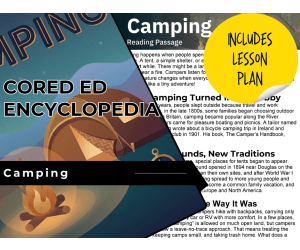
Camping Reading Comprehension Passage - Cored Ed Encyclopedia
ELA, Language Development, Reading Comprehension, Reading, Writing, Pre-Reading, Vocabulary, Geography, Social Studies, History, Grade 2, 3, 4, 5, Worksheets & Printables, Worksheets, Teacher Tools, Centers, Activities, Writing Prompts, Assessments, Quizzes and Tests, Quizzes, Lesson Plans
This camping reading comprehension with lesson plan includes: Visualization (on the front cover) Start your lesson by taking a minute to think and share something about the topic. Read the script aloud (slowly), perhaps prepare some music or sound effects. Student close their eyes and let their imaginations wander. Students open their eyes, read the question aloud and give them a few minutes to complete. Ask a few students to share or keep answers until the end to compare with what they learn in the passage. COMPANION VIDEO NOW AVAILABLE (EMBEDDED AFTER PREVIEW PICTURES IN PRODUCT DESCRIPTION) Quick pause—thousands of Cored Education products are included with your TeachSimple membership. Download links and encyclopedia index available here. Pre-Reading Trivia Students will write down one thing they already know about the subject and then read five more facts and discuss. These facts are fun, and the students will enjoy learning about the subject before reading more. Give 1 minute for students to write what they already know (no pressure—best guess is fine). Read the five facts together. After each fact, do ask a student for their opinion, was it surprising? Set a purpose by asking students to highlight/underline one fact they want to learn more about during the reading. Reading Passage The text is a high-interest reading passage with set paragraphs, roughly three to four paragraphs long. It contains a variety of themes about the topic, anywhere from history to technology. The passage is between 250 and 350 words in length. First, ask students to look at the headings and see what they’ll learn about today. What do they know about the topic/heading? First read options: Teacher read-aloud (best for support). Partner reading (paragraph by paragraph). While reading, students underline important details, and vocabulary words they think may come up in the questions section. Mixed Questions The first question page contains four multiple-choice questions, each with a choice of four answers, and three written response questions that require a sentence or two from the student. Students complete the mcqs first independently, then review quickly as a class. For the 3 written responses, try to get students giving the answer with some form of evidence: “I think ___ because the text says ___.” If students get stuck, send them back to check the passage. Vocabulary Questions Practice seven key words from the text in this section across two activities. First section is scrambled words where students will unscramble three words given a clue for each. The second section is a word to meaning matching activity. Before starting, have some students read out words they underlined in the passage. Ask students to say the word and read aloud the sentence(s) around each word. Ask students to do scrambled words and the matching exercise in pairs then go through answers as a class. For the scrambled spelling task, get four pairs to come up to the board and write the words for extra practice with the other student reading out the clue. For the matching task, prompt students to give full sentences: “I matched ___ with ___ because ___.” Creative Writing In this question, the student will be required to write a five to eight sentence paragraph on a question related to the topic. Before starting, ask students write down 3 key ideas they are going to include in their piece. Ask students for ideas to share around the class to help those struggling. Pro writing expectations: 5–8 sentences At least 2 facts or details from the passage At least 2 vocabulary words from the previous page Students read their paragraphs while classmates listen for facts and vocabulary words. Extension Activities This page is optional for fast finishers or to take home. There are several activities, each one requiring a different skill. Do some, do none, do all, completely optional - but you will feel reassured knowing every possibility is planned for. Includes summary writting question and additional facts. Answer Key There are answers for the multiple-choice questions, written response questions have sample answers, vocabulary answers and if there is a summary question then a sample summary will be provided as well. Lesson Plan Included Customized lesson plan for this lesson is included. Lesson Snapshot Title: Camping Genre: Nonfiction (informational text with headings) Subject: Reading (Informational Text) / Social Studies Primary Topic: How camping began, changed, and stays respectful Estimated Guided Reading Level (A–Z): N What This Lesson Teaches Best Explains what camping is and what campers might notice at night (lantern glow, smell of pine, owls, cooler air). Builds background knowledge about how camping shifted from travel/work to a fun hobby in the late 1800s. Uses a chronological structure with time markers (late 1800s, 1894, 1901, 1908, after World War I, 1960s) to show change over time. Introduces environmental responsibility through a “leave-no-trace approach,” including keeping camps small and taking trash home. Gives practice with text features (section headings) to locate information efficiently. Learning Goals Students will describe what camping is using details from the passage. Students will explain why people slept outside long ago and how camping later became a hobby. Students will identify key events and dates from the passage (1894, 1901, 1908, after World War I, 1960s). Students will use headings to find information about camping’s history, campgrounds, and “leave-no-trace.” Students will compare different ways people camp (backpacks vs. car/RV) based on the passage. Students will explain what the passage says a leave-no-trace approach means. Key Vocabulary From the Text shelter — a place that protects you. lantern — a light you can carry. demanded — needed or required. commercial — run as a business. approach — a way of doing something. FULL CATALOG OF DOWNLOAD LINKS AND ENCYCLOPEDIA INDEX HERE
Author Cored Education
Rating
Tags Vocabulary, Reading Comprehension, Reading Passages, Lesson Plans, Ela Lesson Plans, Reading Comprehension Lesson Plans, Pre-reading, Social Studies Lesson Plans, Geography, History

Health Mazes (PDF)
ELA, Language Development, Resources for Teachers, Vocabulary, Spelling, ESL, Health, P.E. & Health, Grade 2, 3, 4, 5, Worksheets & Printables, Worksheets, Teacher Tools, Centers, Activities, Mazes
Maze Series This maze series is designed for students in grades 2–5. Each set features a clear, kid-friendly theme with scene-based mazes that students first navigate, then complete by drawing a few target words from a simple word list. Pages come in varied styles and graduated difficulty, with an optional “color it in” step—and some themes invite quick calculations to match the task. These mazes are student-friendly, classroom-ready, and perfect for literacy warmups, seasonal units, fast-finisher bins, centers, sub plans, or home learning extensions. The playful, structured format builds problem-solving, attention to detail, and fine-motor control while reinforcing themed content in a motivating way. Note: Unlike many themed products, not all word-list words appear on the maze pages. To support full vocabulary coverage, we’ve released a companion word list you can find in the links section. Health Word List 1. Healthy Eating Fruit, Vegetable, Water, Milk, Grain, Protein, Snack, Meal 2. Exercising Run, Jump, Stretch, Dance, Bike, Swim, Strong, Play 3. Taking Care of Your Body Wash, Brush, Sleep, Bath, Lotion, Towel, Comb, Healthy 4. Staying Safe Helmet, Seatbelt, Cross, Stop, Look, Listen, Light, Careful 5. Visiting the Doctor Doctor, Nurse, Checkup, Shot, Stethoscope, Thermometer, Medicine, Bandage 6. Feeling Good Happy, Calm, Laugh, Energy, Breathe, Rest, Hug, Kind PDF Version Other versions will appear here when available. Follow the store for the lastest on new products. How to Use These Mazes Perfect for: Morning work or early-finisher bins Literacy or STEM centers Holiday/seasonal review lessons Independent stations, sub plans, or take-home enrichment More Health Themed Products CROSSWORDS WORD SEARCHES FULL CATALOG OF DOWNLOAD LINKS HERE Themed Mazes Links Addition PDF Animals PDF Around the Home PDF Birthday PDF Candy PDF Christmas PDF Cinco de Mayo PDF Clothes PDF Colors PDF Days and Months PDF Division PDF Earth Day PDF Easter PDF Easy Mazes PDF Fall PDF Father's Day PDF Food PDF Geography (Set 1) PDF Geography (Set 2) PDF Geography (Set 3) PDF Graduation PDF Health PDF History (Set 1) PDF History (Set 2) PDF History (Set 3) PDF Human Body PDF Kindness PDF Life Skills PDF Mother's Day PDF Multiplication PDF Science (Set 1) PDF Science (Set 2) PDF Science (Set 3) PDF Shapes PDF Social Skills PDF Spring PDF Sports PDF St. Patrick's Day PDF Subtraction PDF Summer PDF Thanksgiving PDF Transport PDF Valentine's Day PDF Winter PDF Mazes in Depth Structure Each maze is crafted around a focused sub-theme. Students navigate the maze, encountering branches and cul-de-sacs that build attention and planning. Most pages include a tiny follow-up box—students draw or label 2–3 target words from a small word box, add a quick count, or color in the scene—so the activity reinforces both content and skills in a highly engaging format. Each completed set includes: A themed maze page. A simple student instruction strip. An answer key showing the solved path for teacher support or self-checking Themes Included These mazes cover a wide range of fun, age-appropriate themes, including: Seasons & Holidays (e.g., Halloween, Easter, Valentine’s Day) Math-Lite Connections (e.g., quick counts, number words) Everyday Topics (e.g., Animals, Weather, School) Special Units (e.g., Health, Earth Day, Sports, Kindness) Each topic reflects students’ real-life experiences and interests while strengthening problem-solving, visual scanning, and fine-motor control in a playful, highly visual way. Easy extensions (optional): Time it: solve once in pencil, then try to beat the time in pen Retell the route using sequence words (first, next, then, finally) Count intersections or turns and graph the results Write a 1–2 sentence mini-story about the scene using the target words Design a tiny maze in the corner for a partner to solve Differentiation tips: Offer a finger-trace pass before pencils for emerging learners Highlight the borders of the correct region on first attempts Use thicker-line versions or simpler pages to build confidence Pair roles: “navigator” gives directions; “driver” traces the path For similar downloads and other frees, do check out Cored Group on TeachSimple.
Author Cored Education
Rating
Tags Vocabulary, Spelling, Health, Healthy Eating, Exercising, Health Activities, Mazes, Maze, Ela Mazes, Health Mazes

Brine Shrimp Flipbook craft Animal Science Study writing prompt
Animals, Life Sciences, Science, Biology, Grade 1, 2, 3, 4, Crafts, Activities, Parts of and Anatomy of, Worksheets & Printables, Writing Prompts
Make learning about Brine Shrimp (Artemia) fun and interactive with this printable flipbook craft! Students will explore the fascinating life, habitat, body features, diet, and adaptations of these tiny aquatic animals while strengthening reading comprehension and writing skills through engaging science activities. I like using this resource during animal science units, ocean life studies, invertebrate lessons, classroom centers, independent work, and homeschool learning. It's a low-prep activity that combines science, reading, writing, and creativity into one meaningful project. What You Will Get This resource includes a printable Brine Shrimp (Artemia) flipbook that helps students organize and record what they learn about this unique aquatic animal through reading, writing, and hands-on learning. What's Included in this Flipbook? • Brine Shrimp (Artemia) flipbook craft templates • Reading and writing activities • Animal facts and science research pages • Habitat, diet, and life cycle sections • Physical characteristics and adaptations pages • Writing prompts and reflection activities • Easy-to-follow assembly instructions This resource is perfect for: • Animal science lessons • Ocean and aquatic animal units • Invertebrate studies • Classroom science centers • Homeschool learning • Independent work and early finishers Why you will love this? • Easy to print and assemble • Encourages reading, writing, and scientific thinking • Builds nonfiction reading comprehension skills • Supports research and observation skills • Makes science learning hands-on and engaging • Creates a meaningful keepsake students can share This Brine Shrimp (Artemia) Flipbook Craft is a fun and interactive way for students to discover the amazing world of these tiny aquatic animals while developing reading, writing, and science skills through creative, hands-on learning.
Author Perfect_Printables
Rating
Tags Brine Shrimp, Artemia Flipbook, Animal Science, Ocean Animals, Writing Prompt, Science Craft, Aquatic Animals, Life Cycle, Nonfiction Activities, Science Centers
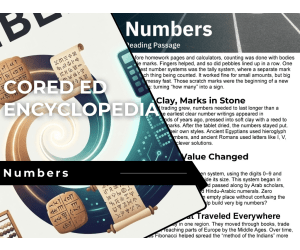
Numbers Reading Comprehension Passage - Cored Ed Encyclopedia
ELA, Language Development, Resources for Teachers, Reading Comprehension, Reading, Pre-Reading, Writing, History, Social Studies, Strategies, Grade 2, 3, 4, 5, Worksheets & Printables, Worksheets, Teacher Tools, Centers, Activities, Writing Prompts, Assessments, Tests, Quizzes and Tests, Quizzes
This numbers reading comprehension contains the following: Visualize on the Cover (Teacher Read Aloud Script) Start your lesson by taking a few moments to visualize the topic and share thoughts or feelings about it. Pre-Reading Trivia Students will write down one thing they already know about the subject and then read five more facts and discuss. These facts are fun, and the students will enjoy learning about the subject before reading more. Reading Passage The text is a high-interest reading passage with set paragraphs, roughly three to four paragraphs long. It contains a variety of themes about the topic, anywhere from history to technology. The passage is between 250 and 350 words in length. Mixed Questions The first question page contains four multiple-choice questions, each with a choice of four answers, and three written response questions that require a sentence or two from the student. Vocabulary Questions Practice seven key words from the text in this section across two activities. First section is scrambled words where students will unscramble three words given a clue for each. The second section is a word to meaning matching activity. Creative Writing In this question, the student will be required to write a five to eight sentence paragraph on a question related to the topic. Extension Activities This page is optional for fast finishers or to take home. There are several activities, each one requiring a different skill. Do some, do none, do all, completely optional - but you will feel reassured knowing every possibility is planned for. Includes summary writting question. Answer Key There are answers for the multiple-choice questions, written response questions have sample answers, vocabulary answers and if there is a summary question then a sample summary will be provided as well. FULL CATALOG OF DOWNLOAD LINKS AND ENCYCLOPEDIA INDEX HERE Lesson Snapshot Title: Numbers Genre: Nonfiction Subject: Math (Number Systems) Primary Topic: Counting systems, place value, and zero Estimated Guided Reading Level (A–Z): N What This Lesson Teaches Best Explains early counting methods (bodies, fingers, pebbles) and introduces the tally system as one mark per item. Shows why communities needed lasting number records as towns and trading grew, including wedge-shaped marks pressed into clay in Mesopotamia . Introduces different ways cultures wrote numbers (Egyptian hieroglyph symbols; Roman numerals using I, V, and X). Teaches how the base-ten system and place value use digits 0–9, and why zero matters for holding an empty place. Traces how Hindu-Arabic numerals spread through books, trade routes, and schools (including mention of Fibonacci) and appear today on receipts, maps, and screens. Learning Goals Describe two ways people counted before modern number symbols were common. Explain what a tally system is and why it can get “messy fast” for big amounts. Describe how people in Mesopotamia recorded numbers in soft clay and why those marks lasted. Explain how base-ten place value works (a digit’s spot helps decide its size). Explain why zero is important in the base-ten system, using the text’s explanation. Describe how the “method of the Indians” spread to new places over time. Key Vocabulary From the Text Tally — counting with one mark for each thing. Mesopotamia — an ancient place where early number writing appeared. Wedge-shaped — shaped like a wedge pressed into clay. Place value — a digit’s value depends on its position. Fibonacci — a thinker who helped spread the new number method. Cored Ed Encyclopedia Overview The Cored Ed Encyclopedia is a weekly series of lessons that you can pick up and use right away. These short readings fit into whatever time you have available. Each one includes a warm-up, a reading, and a set of questions, but it’s flexible — you can do just the reading, the full lesson, or skip the writing section if you need to. Each lesson focuses on a single topic so students don’t get lost. The writing is clear but never childish, making it perfect for grades two through five. Topics range from animals and science to history, inventions, and everyday things. No matter the level of the student, everyone should take away at least one new idea or fact from each lesson. The materials are easy to print, easy to explain, and require no setup. They work well for whole-class teaching, partner work, or independent study.
Author Cored Education
Rating
Tags Vocabulary, Spelling, Reading Comprehension, Reading Passages, Reading, Creative Writing, Reading Strategies, Writing Prompts, History, Numbers
Kids Yoga Stories: Arctic Animals Yoga Cards for Kids
P.E. & Health, Yoga, Preschool, Kindergarten, Grade 1, 2, 3, Activities
Use yoga poses to teach about Arctic Animals! This set of Arctic Animals Yoga Cards for Kids will help your students learn through movement either at home, in the classroom, or in a studio. Included in this deck of Antarctic Animals Yoga Cards for Kids - A card with an index listing each animal and the corresponding pose - Tips to teach yoga -20 cards illustrating the yoga poses -20 cards with Animals of the Arctic - Instructions for all the poses The index indicates the order in which the yoga poses are to be used to flow from one pose to the next. There is multicultural representation featured in yoga kids! Recommended for ages 3 to 8 years old. Ways in which you can use these cards as homeschoolers or in the classroom include: -For transition times -Morning routines or circle times -Brain breaks to calm their minds and bodies -Physical education -Occupational and/or physical therapy -With one child, small, or large groups Benefits of Yoga for kids include: -Increased strength -Increased flexibility -Improves sleep -Promotes positive interactions amongst adults and children -Develops self-confidence -Improves self-expression -Improves body awareness -Promotes a lifestyle that is active and healthy.
Author Kids Yoga Stories
Tags Kids Yoga Stories, Arctic Animals, Yoga Cards For Kids, Yoga Poses, Kids Yoga
Algebra: Spinner Game for 3rd-5th - MAC Software
Math, Algebra, Common Core, Grade 3, 4, 5, Activities, Games
Algebra: Spinner Game for 3rd-5th - MAC Software This is an interactive teaching tool ideal for teachers instructing students between grades 3 to 5. The unique marriage of technology with essential algebra concepts cultivates a dynamic learning environment which maintains the learner's engagement and anticipation of new knowledge acquisition. Game Overview The software provides an entertaining spinner game featuring ten distinct algebra questions. The excitement of each spin landing on a different question keeps students intrigued. The game offers challenges inviting learners to solve problems while being introduced to the basics of Algebra. The tool is not only useful in traditional classroom settings but also in homeschooling scenarios and remote learning situations. Educational Applications Educators can employ this Spinner Game using multiple approaches: A whole group activity where students take turns answering questions at the board, promoting cooperation and team-building skills; A fun reinforcement tool during small group sessions or individual studies. Educational Standards Alignment The educational resource aligns seamlessly with established educational standards: Fully compliant with Common Core State Standards (CCSS); Cohesively integrates STEM instruction methodologies; - Number Sense & Operations Strand,; > - Algebra Strand, ; > - Geometry & Measurement strand, > Data Analysis & Probability Strand, Problem-solving skill strand Product Specifications The Algebra: Spinner Game is downloadable software for MAC contained within a zip file, easily installed on any Macintosh computer device. In Conclusion Whether you are looking to enhance your homework assignments or integrate interactive elements into your lessons - implementing the Algebra: Spinner Game stands to augment your teaching methods and positively impact student engagement towards mastering algebra concepts. </
Author Classroom Complete Press
Tags Algebra Game, Spinner Game, Algebra Spinner Game, Digital Math, Digital Activity

Present Tense Sample: Grammar Grades 3-4 (Forms)
ELA, Language Development, ESL, Grammar, Common Core, Resources for Teachers, Grade 3, 4, Quizzes and Tests, Teacher Tools, Tests, Assessments, Activities, Centers
Present Tense Sample Lesson ELA MCQS Overview: In this series of lessons, students will embark on an engaging journey to explore the grammar skills that make our language vibrant and expressive. These lessons are crafted to help students identify, comprehend, and effectively apply language arts skills in both writing and speech. Accompanied by free supplementary materials available for all topics, each lesson builds on the previous one, offering a balanced mix of direct instruction, interactive group activities, and independent practice. Through fun and creative tasks, students will learn to recognize grammar within sentences, understand their function, and use them to enrich their own writing and speech. Present Tense Overview: Includes: Present Simple Present Continuous Present Perfect Mistake Finding Forms Version This is the Forms editable and self grading version. This download is available in GOOGLE Docs, GOOGLE Forms, GOOGLE Slides. PDF, PPT, WORD, check the links below for more details. FULL CATALOG OF DOWNLOAD LINKS HERE Grade 3/4 Links: Adjectives Google Docs Google Forms Google Slides PDF PPT Word Free Supplementary Materials Pack Adverbs Google Docs Google Forms Google Slides PDF PPT Word Free Supplementary Materials Pack Conjunctions Google Docs Google Forms Google Slides PDF PPT Word Free Supplementary Materials Pack Nouns Google Docs Google Forms Google Slides PDF PPT Word Free Supplementary Materials Pack Pronouns Google Docs Google Forms Google Slides PDF PPT Word Free Supplementary Materials Pack Verbs Google Docs Google Forms Google Slides PDF PPT Word Free Supplementary Materials Pack Sentence Structure Google Docs Google Forms Google Slides PDF PPT Word Free Supplementary Materials Pack Present Tense Google Docs Google Forms Google Slides PDF PPT Word Free Supplementary Materials Pack Past Tense Google Docs Google Forms Google Slides PDF PPT Word Free Supplementary Materials Pack Future Tense Google Docs Google Forms Google Slides PDF PPT Word Free Supplementary Materials Pack Context Clues Google Docs Google Forms Google Slides PDF PPT Word Free Supplementary Materials Pack Defining Words Google Docs Google Forms Google Slides PDF PPT Word Free Supplementary Materials Pack Fill the Blanks Google Docs Google Forms Google Slides PDF PPT Word Free Supplementary Materials Pack Homophones Google Docs Google Forms Google Slides PDF PPT Word Free Supplementary Materials Pack Synonyms Google Docs Google Forms Google Slides PDF PPT Word Free Supplementary Materials Pack ELA Review Questions Overview Questions have three answer choices. There are a handful of pictures on each test for aesthetic purposes, as well as a review sheet covering most of the topics covered in the product. Introduction or Example Sheet Each topic will include an introduction or example sheet to go through first with your students. Full Answer Keys Full answer keys and sample responses are provided so no matter how busy you are, you know you're covered! In the Supplementary Pack Interactive Ice Breakers: Fun, hands-on activities that get students thinking about adjectives right from the start. Guided Practice: Teacher-led exercises that reinforce the day’s lesson, ensuring students can confidently identify and use adjectives. Group and Partner Tasks: Collaborative activities that allow students to work together to solve problems, categorize adjectives, and create descriptive sentences. Independent Worksheets: Structured worksheets that provide individual practice and help solidify understanding of key concepts. Exit Tasks: Quick, reflective activities at the end of each lesson that assess understanding and encourage students to apply what they’ve learned. For similar downloads and other frees, do check out Cored Group on TeachSimple.
Author Cored Education
Tags Elementary, Answers, Ccss, Common Core, Grammar, Tests, Test Prep, Grade 3, Grade 4, Digital Centers