



3,934 products added recently
Page 15 - 2nd Grade Activities
Boost your second graders' enthusiasm with activities that combine fun and education. These resources cover various subjects and promote critical thinking and collaboration. Use them to enrich your lessons and keep students actively involved in their learning journey.

 Show filters


Alphabet Pumpkin Letter Match Uppercase/Lowercase Matching Game
Creative Arts, Art, Fine Arts, Grade 1, 2, 3, 4, 5, Activities, Games, Centers
Alphabet Pumpkin Letter Match Uppercase and Lowercase Matching Game Letter Recognition This Pumpkin-Themed ABC Matching Game is an engaging and hands-on way for young students to practice uppercase and lowercase letter recognition. Use it as a matching game, center activity, or early finisher task! Included are blank cards for differentiated learning or for students to create their very own cards, while practicing handwriting. Use the black and white version as a coloring activity as well. This letter match game is perfect for letter of the week activities, alphabet practice and review, literacy centers, letter recognition practice, and plant-themed activities. Just print, cut, and play! As a suggestion, print on cardstock (thicker paper) and laminate for durability. Great for individual, small group, or center use. Benefits of playing letter matching games: Boosts letter recognition Enhances phonemic awareness Improves focus and attention Builds fine motor skills Strengthens memory Develops problem-solving skills Encourages independent learning Promotes social skills Supports early literacy Makes learning fun. Included in this download: 9 Pages of Large Matching Cards (Uppercase & Lowercase Letters) 3 Pages of Blank Large Matching Cards (Uppercase & Lowercase Letters) 5 Pages of Small Matching Cards 3 Pages of Blank Small Matching Cards Printer-Friendly Black/White Versions Thank you for supporting Doodle Thinks and have fun learning!
Author Doodle Thinks
Rating
Tags Alphabet, Letter Match, Matching Games, Early Literacy, Letter Recognition, Learning Centers, Letter Of The Week, Independent Learning, Fine Motor Skills, Pumpkin
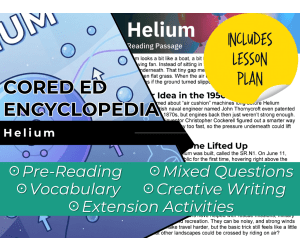
Helium Reading Comprehension Passage - Cored Ed Encyclopedia
ELA, Reading Comprehension, Reading, Science, Technology, Pre-Reading, Language Development, Physics, Earth and Environmental Sciences, Chemistry, Grade 2, 3, 4, 5, Worksheets & Printables, Worksheets, Teacher Tools, Centers, Activities, Writing Prompts, Assessments, Quizzes and Tests, Quizzes, Lesson Plans
This helium reading comprehension with lesson plan includes: Visualization (on the front cover) Start your lesson by taking a minute to think and share something about the topic. Read the script aloud (slowly), perhaps prepare some music or sound effects. Student close their eyes and let their imaginations wander. Students open their eyes, read the question aloud and give them a few minutes to complete. Ask a few students to share or keep answers until the end to compare with what they learn in the passage. Quick pause—thousands of Cored Education products are included with your TeachSimple membership. Download links and encyclopedia index available here. Pre-Reading Trivia Students will write down one thing they already know about the subject and then read five more facts and discuss. These facts are fun, and the students will enjoy learning about the subject before reading more. Give 1 minute for students to write what they already know (no pressure—best guess is fine). Read the five facts together. After each fact, do ask a student for their opinion, was it surprising? Set a purpose by asking students to highlight/underline one fact they want to learn more about during the reading. Reading Passage The text is a high-interest reading passage with set paragraphs, roughly three to four paragraphs long. It contains a variety of themes about the topic, anywhere from history to technology. The passage is between 250 and 350 words in length. First, ask students to look at the headings and see what they’ll learn about today. What do they know about the topic/heading? First read options: Teacher read-aloud (best for support). Partner reading (paragraph by paragraph). While reading, students underline important details, and vocabulary words they think may come up in the questions section. Mixed Questions The first question page contains four multiple-choice questions, each with a choice of four answers, and three written response questions that require a sentence or two from the student. Students complete the mcqs first independently, then review quickly as a class. For the 3 written responses, try to get students giving the answer with some form of evidence: “I think ___ because the text says ___.” If students get stuck, send them back to check the passage. Vocabulary Questions Practice seven key words from the text in this section across two activities. First section is scrambled words where students will unscramble three words given a clue for each. The second section is a word to meaning matching activity. Before starting, have some students read out words they underlined in the passage. Ask students to say the word and read aloud the sentence(s) around each word. Ask students to do scrambled words and the matching exercise in pairs then go through answers as a class. For the scrambled spelling task, get four pairs to come up to the board and write the words for extra practice with the other student reading out the clue. For the matching task, prompt students to give full sentences: “I matched ___ with ___ because ___.” Creative Writing In this question, the student will be required to write a five to eight sentence paragraph on a question related to the topic. Before starting, ask students write down 3 key ideas they are going to include in their piece. Ask students for ideas to share around the class to help those struggling. Pro writing expectations: 5–8 sentences At least 2 facts or details from the passage At least 2 vocabulary words from the previous page Students read their paragraphs while classmates listen for facts and vocabulary words. Extension Activities This page is optional for fast finishers or to take home. There are several activities, each one requiring a different skill. Do some, do none, do all, completely optional - but you will feel reassured knowing every possibility is planned for. Includes summary writting question and additional facts. Answer Key There are answers for the multiple-choice questions, written response questions have sample answers, vocabulary answers and if there is a summary question then a sample summary will be provided as well. Lesson Plan Included Customized lesson plan for this lesson is included. Lesson Snapshot Title: Helium Genre: Nonfiction (informational text) Subject: Science / Engineering (transportation technology) Primary Topic: How an air-cushion craft hovers and is used Estimated Guided Reading Level (A–Z): Q What This Lesson Teaches Best Explains how a “Helium” craft rides on a cushion of air trapped underneath instead of sitting in water. Describes why an air cushion reduces rubbing so the craft can “slide along” over surfaces like water, sand, or flat grass. Connects invention history to technology improvements (early ideas, a patented concept, then a smarter way to prevent air leaking). Shows how design changes solved problems (the flexible “skirt” helped hold the air cushion and climb over obstacles). Shares real-world uses and limitations (ferries, rescue missions, military landings, racing/recreation; noise and wind/waves). Learning Goals Students will describe how the craft moves differently from a regular boat, using details from the passage. Students will explain what an “air cushion” does and why it helps the craft slide over different surfaces. Students will identify one inventor or engineer named in the text and describe what problem they helped solve. Students will explain how the flexible “skirt” improved the craft’s ability to hover and travel. Students will list at least two jobs the craft can do (such as ferries or rescue missions) using evidence from the text. Students will describe one challenge mentioned in the passage that can make travel harder (winds or rough waves). Key Vocabulary From the Text cushion — a pocket of air that holds something up. patented — officially claimed an invention idea by law. pressure — pushing force under the craft that can lift it. hovering — staying just above a surface, not touching it. skirt — flexible part that helps hold air underneath. FULL CATALOG OF DOWNLOAD LINKS AND ENCYCLOPEDIA INDEX HERE
Author Cored Education
Rating
Tags Vocabulary, Reading Comprehension, Reading Passages, Lesson Plans, Ela Lesson Plans, Reading Comprehension Lesson Plans, Pre-reading, Science Lesson Plans, Physics, Chemistry

The Lion King Movie Guide (Animal Adaptations and Ecosystems)
Science, Life Sciences, Biology, Earth and Environmental Sciences, Environmental Science, Grade 3, 4, 5, Activities, Teacher Tools
Using The Lion King movie guide, students will engage with science concepts including ecosystems, animal adaptations, environmental changes, food webs (and food chains), and what a disruption to the environment can do to populations. Using movie guides in the classroom can make content interactive and relatable for your class. Movies provide a visual for the content covered in class, so students can see real world (or animated world) applications.. Movie guides help students focus on important details throughout at the movie and think critically about what they watch. Movie Synopsis: The Lion King follows the journey of Simba, a young lion cub, as he struggles to figure out what he wants to do later in life. After his father, the king, is killed by his uncle, Simba runs away from home, because feels responsible for his father's death. As he grows up, Simba meets new animal species and makes new friends, who help him rediscover his strength and purpose. Eventually, Simba returns to face his uncle and take his rightful place as king of the Pride Lands, restoring balance to the ecosystem and to the kingdom. Speaking and listening standards are also covered, depending on how many of the above topics you discuss in your classroom. The movie guide provides an opportunity for teachers to "get back" some of that class time at the end of a unit, whether needed for grading projects, working one on one with students, or finishing up assessments. Other students are engaged and still actively searching for the topics covered in the unit discussed. The activities provided allow for: Class discussion Small group discussion Informal assessment Movie Rating: G Grades: 3rd - 5th Tags: The Lion King, Disney, movie guide, natural resources, environment, ecosystems, animal adaptations, animals, species, populations, savannah, rainforest, desert File type: PDF Pages: 4 - including answer key
Author Kel's Klass
Tags Movie Guide, Natural Resources, Environment, Disney, The Lion King, Ecosystems, Animal Adaptations, Animals, Species, Populations

Carnivals Reading Comprehension Passage - Cored Ed Encyclopedia
ELA, Language Development, Reading Comprehension, Reading, Writing, Pre-Reading, Vocabulary, Geography, Social Studies, History, Grade 2, 3, 4, 5, Worksheets & Printables, Worksheets, Teacher Tools, Centers, Activities, Writing Prompts, Assessments, Quizzes and Tests, Quizzes, Lesson Plans
This carnivals reading comprehension with lesson plan includes: Visualization (on the front cover) Start your lesson by taking a minute to think and share something about the topic. Read the script aloud (slowly), perhaps prepare some music or sound effects. Student close their eyes and let their imaginations wander. Students open their eyes, read the question aloud and give them a few minutes to complete. Ask a few students to share or keep answers until the end to compare with what they learn in the passage. Quick pause—thousands of Cored Education products are included with your TeachSimple membership. Download links and encyclopedia index available here. Pre-Reading Trivia Students will write down one thing they already know about the subject and then read five more facts and discuss. These facts are fun, and the students will enjoy learning about the subject before reading more. Give 1 minute for students to write what they already know (no pressure—best guess is fine). Read the five facts together. After each fact, do ask a student for their opinion, was it surprising? Set a purpose by asking students to highlight/underline one fact they want to learn more about during the reading. Reading Passage The text is a high-interest reading passage with set paragraphs, roughly three to four paragraphs long. It contains a variety of themes about the topic, anywhere from history to technology. The passage is between 250 and 350 words in length. First, ask students to look at the headings and see what they’ll learn about today. What do they know about the topic/heading? First read options: Teacher read-aloud (best for support). Partner reading (paragraph by paragraph). While reading, students underline important details, and vocabulary words they think may come up in the questions section. Mixed Questions The first question page contains four multiple-choice questions, each with a choice of four answers, and three written response questions that require a sentence or two from the student. Students complete the mcqs first independently, then review quickly as a class. For the 3 written responses, try to get students giving the answer with some form of evidence: “I think ___ because the text says ___.” If students get stuck, send them back to check the passage. Vocabulary Questions Practice seven key words from the text in this section across two activities. First section is scrambled words where students will unscramble three words given a clue for each. The second section is a word to meaning matching activity. Before starting, have some students read out words they underlined in the passage. Ask students to say the word and read aloud the sentence(s) around each word. Ask students to do scrambled words and the matching exercise in pairs then go through answers as a class. For the scrambled spelling task, get four pairs to come up to the board and write the words for extra practice with the other student reading out the clue. For the matching task, prompt students to give full sentences: “I matched ___ with ___ because ___.” Creative Writing In this question, the student will be required to write a five to eight sentence paragraph on a question related to the topic. Before starting, ask students write down 3 key ideas they are going to include in their piece. Ask students for ideas to share around the class to help those struggling. Pro writing expectations: 5–8 sentences At least 2 facts or details from the passage At least 2 vocabulary words from the previous page Students read their paragraphs while classmates listen for facts and vocabulary words. Extension Activities This page is optional for fast finishers or to take home. There are several activities, each one requiring a different skill. Do some, do none, do all, completely optional - but you will feel reassured knowing every possibility is planned for. Includes summary writting question and additional facts. Answer Key There are answers for the multiple-choice questions, written response questions have sample answers, vocabulary answers and if there is a summary question then a sample summary will be provided as well. Lesson Plan Included Customized lesson plan for this lesson is included. Lesson Snapshot Title: Carnivals Genre: Nonfiction (informational passage with headings) Subject: Reading (Informational Text) / Social Studies Primary Topic: What Carnival is and why it matters Estimated Guided Reading Level (A–Z): P What This Lesson Teaches Best Builds cultural background knowledge by explaining Carnival as a time right before Lent in many Christian communities. Shows how celebrations can look different in different places (Venice, France/Mardi Gras, Rio de Janeiro). Teaches multiple-meaning vocabulary by explaining that “carnival” can also mean a traveling fair with rides and games (especially in the United States). Supports comprehension of informational text structure by using headings to organize ideas (history/background, examples, traveling fairs, reasons people celebrate). Highlights theme/central message: carnivals help people “step out of ordinary life” and remember shared joy. Learning Goals Students will explain what Carnival is and when it happens, using details from the passage. Students will describe how Venice, France (Mardi Gras), and Rio de Janeiro shaped Carnival in different ways. Students will identify two meanings of the word carnival as used in the passage. Students will summarize why people “keep making carnivals,” based on the author’s explanation. Students will use headings to locate information and confirm key details in the text. Key Vocabulary From the Text fasting — not eating for a period of time. reflection — careful thinking about life. mingle — mix with other people in a group. floats — decorated platforms used in parades. routines — the usual things you do regularly. FULL CATALOG OF DOWNLOAD LINKS AND ENCYCLOPEDIA INDEX HERE
Author Cored Education
Rating
Tags Vocabulary, Reading Comprehension, Reading Passages, Lesson Plans, Ela Lesson Plans, Reading Comprehension Lesson Plans, Pre-reading, Social Studies Lesson Plans, Geography, History
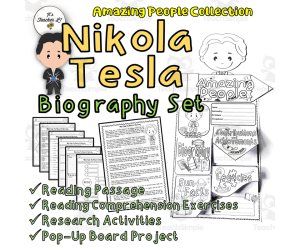
Nikola Tesla Biography Set | Integrated Study | Sub Plan
Social Studies, ELA, Biographies, Reading, Reading Comprehension, Grade 3, 4, 5, Activities, Projects
Presenting this Nikola Tesla Biography Set that is designed for 3rd to 5th grade primary level learners, ESL/EFL students, and, homeschoolers to provide better and more purposeful activities. This resource is made to be useful for classes in English Language Arts, Science, and Social Studies. Through in-depth examination of Nikola Tesla’s life, contributions, achievements, legacy, and some fun-facts, the activities are geared to be engaging, inspiring, and fun for the learners to delve into. The breakdown of the activities are listed as follows: What’s Included: •Nikola Tesla Reading Passage (The Wizard of Electricity) •3 The The Wizard of Electricity Reading Comprehension Exercises •The Wizard of Electricity Research Activities •Nikola Tesla Pop-Up Board Project This resource set is a helpful supplemental tool on any curriculum or class topics related to Nikola Tesla. The reading text presents the information that the students need to learn, and, with the reading comprehension and research activities, they can check their own learning and understanding of the lesson. The pop-up project is a perfect assessment tools to support their knowledge and skills acquisitions. Also, it promotes a hands-on and creative approach to the lesson that the students will definitely get positive response from. This collection is also a great subplan and emergency tool that can easily be a reliable pack in your classroom toolkit!
Author It's Teacher L
Tags Nikola Tesla, Tesla Biography, Reading Comprehension, Tesla Project

The Ten Commandments Bible Story Lapbook Project Grade 3 4 5 ELA ELL
ELA, Literature, Reading, Grade 3, 4, 5, Centers, Activities, Worksheets & Printables, Worksheets, Writing Prompts, Projects, Coloring Pages
Give your young learners a purposeful learning experience with this The Ten Commandments Lapbook Project! Designed for Grade 4, 5 and 6 students, homeschoolers, and EFL / ESL learners, this special project will definitely be part of your reading classes and or Bible school lessons for many years to come! What’s Included in This Lapbook: 3 Differentiated/Leveled Reading Texts (Beginning, Developing, Advanced) 5 Reading Comprehension Exercises (recall, sequencing, matching, application, reflection) 3 Cover Page Options Inner Lapbook Overlap Personal Reflection Page Personal Prayer Page 10 Commandments Foldables (one for each commandment) This pack encourages development of reading comprehension and literary analysis through fun hands-on learning activities that help learners stay actively engaged in the lesson. It builds important skills such as sequencing, retelling, and critical thinking while reinforcing Christian values like kindness, mercy, and compassion. The differentiated activities make it perfect for mixed-ability classrooms as well as EFL/ESL learners, making sure that all students can participate meaningfully. It is also a perfect addition to Bible study units, Christian school classrooms, homeschool learning, and integrated ELA lessons.
Author It's Teacher L
Rating
Tags Reading, Mini Book, Sequencing, Writing, Reading Comprehension, ELA, ELL, Bible Stories, Sunday School
Reading Comprehension Passages Fiction Set 4 - School (PPT)
ELA, Reading, Writing, Common Core, Children’s Literature, Literature, Spelling, Language Development, Vocabulary, Grade 2, 3, Teacher Tools, Presentations, Tests, Quizzes and Tests, Assessments, Activities
Reading Comprehension Passages Fiction Set 4 Overview Fascinating reading comprehension passages, each with an array of activities included. Stories are written for the modern classroom and topics are designed to promote enthusiasm from each student. Each lesson contains a mixed questions section to check understanding, a vocabulary or spelling activity to help remember key language introduced, and a writing exercise. Full answer keys are provided. For a more detailed overview, check the section under the links at the bottom of this description. Passages Include 1.Don't Tell Anyone: Cherie likes to keep secrets, but her friends don't. 2.Roger's Luck: Roger never wins at anything. Will that change today? 3.Starting Third Grade: Mike feels uneasy at starting a new school year. 4.Bridget's New School: Bridget tries (and fails) to fit in at her new school. 5.Changing the Rules: Jenna changes the rules on her first day. 6.My Love of Art: Read about the author's love of art class in this lesson. PPT Version This is the PPT editable and fillable (when not in presentation mode) version. This download is available in GOOGLE Docs, GOOGLE Forms, GOOGLE Slides. PDF, PPT, WORD. FULL CATALOG OF DOWNLOAD LINKS HERE Grade 2/3 Links Fiction Set 1 - Nature Google Docs Google Forms Google Slides PDF PPT Word Guided Reading Materials Fiction Set 2 - Animals Google Docs Google Forms Google Slides PDF PPT Word Guided Reading Materials Fiction Set 3 - Food Google Docs Google Forms Google Slides PDF PPT Word Guided Reading Materials Fiction Set 4 - School Google Docs Google Forms Google Slides PDF PPT Word Guided Reading Materials Fiction Set 5 - Friends Google Docs Google Forms Google Slides PDF PPT Word Guided Reading Materials Fiction Set 6 - Family Google Docs Google Forms Google Slides PDF PPT Word Guided Reading Materials Fiction Set 7 - Sports Google Docs Google Forms Google Slides PDF PPT Word Guided Reading Materials Nonfiction Set 1 - Technology Google Docs Google Forms Google Slides PDF PPT Word Guided Reading Materials Nonfiction Set 2 - Nutrition Google Docs Google Forms Google Slides PDF PPT Word Guided Reading Materials Nonfiction Set 3 - Animals Google Docs Google Forms Google Slides PDF PPT Word Guided Reading Materials Reading Passages Overview Each passage is especially written for Grade 2-3 students, including key vocabulary required for this age group. Topics are varied and are accompanied by colorful graphics. Topics are meant to educate, yet entertain the modern student. These passages are perfect for the modern classroom. Whereas textbooks can become outdated in no time, any changes to technology or the world will result in updates to this product. Mixed Questions The mixed questions section of each lesson includes a variation of fivecomprehension, vocabulary and math questions. In addition, key reading strategies are frequently covered including cause & effect, summarizing, compare & contrast and making conclusions. Three of the questions will be MCQs and two will require a written response of some kind. Full answers and example responses appear at the end of the lesson. Spelling & Vocab Each reading passage contains a variety of words and phrases designed for Grade 2-3 students. Spelling and vocab activities provide the opportunity to build fluency with these words. As it can become quite mundane doing the same activities over and over, each lesson in a set will contain a different spelling and vocab activity . Writing Prompts Writing prompts are designed to continue the theme or lessons learned in the story. Students are persuaded to write in a variety of ways and each prompt includes several cues to help. As with the spelling/vocab section, writing prompts will vary. This includes research pieces, reading responses, poetry and creative writing prompts. Full Answer Keys Full answer keys and sample responses are provided so no matter how busy you are, you know you're covered! Mixed question answers provide evidence from the text, math questions contain the relevant workings. Answers are designed for use by the teacher, but also suitable as a handout to the student. Additional File One lesson will have an additional file. This is something fun to extend the lesson with. For similar downloads and other frees, do check out Cored Group on TeachSimple.
Author Cored Education
Rating
Tags Elementary, Reading, Comprehension, Vocabulary, Answers, Common Core, Spelling, Writing, Passages, Reading Comprehension Presentations

Owls Reading Comprehension Passage - Cored Ed Encyclopedia
ELA, Language Development, Resources for Teachers, Reading Comprehension, Reading, Pre-Reading, Writing, Science, Animals, Life Sciences, Grade 2, 3, 4, 5, Worksheets & Printables, Worksheets, Teacher Tools, Centers, Activities, Writing Prompts, Assessments, Tests, Quizzes and Tests, Quizzes
This owls reading comprehension contains the following: Visualize on the Cover (Teacher Read Aloud Script) Start your lesson by taking a few moments to visualize the topic and share thoughts or feelings about it. COMPANION VIDEO NOW AVAILABLE (EMBEDDED AFTER PREVIEW PICTURES IN PRODUCT DESCRIPTION) Pre-Reading Trivia Students will write down one thing they already know about the subject and then read five more facts and discuss. These facts are fun, and the students will enjoy learning about the subject before reading more. Reading Passage The text is a high-interest reading passage with set paragraphs, roughly three to four paragraphs long. It contains a variety of themes about the topic, anywhere from history to technology. The passage is between 250 and 350 words in length. Mixed Questions The first question page contains four multiple-choice questions, each with a choice of four answers, and three written response questions that require a sentence or two from the student. Vocabulary Questions Practice seven key words from the text in this section across two activities. First section is scrambled words where students will unscramble three words given a clue for each. The second section is a word to meaning matching activity. Creative Writing In this question, the student will be required to write a five to eight sentence paragraph on a question related to the topic. Extension Activities This page is optional for fast finishers or to take home. There are several activities, each one requiring a different skill. Do some, do none, do all, completely optional - but you will feel reassured knowing every possibility is planned for. Includes summary writting question. Answer Key There are answers for the multiple-choice questions, written response questions have sample answers, vocabulary answers and if there is a summary question then a sample summary will be provided as well. FULL CATALOG OF DOWNLOAD LINKS AND ENCYCLOPEDIA INDEX HERE Lesson Snapshot Title: Owls Genre: Nonfiction (informational text) Subject: Life Science (animals) / Reading Informational Text Primary Topic: How owls hunt, live, and help ecosystems Estimated Guided Reading Level (A–Z): S What This Lesson Teaches Best How owls are birds of prey in a group called Strigiformes , with more than 200 kinds , and most hunt alone and mostly at night. How an owl’s facial disc works “like a satellite dish” to gather tiny sounds and guide them toward its ears. How owl bodies help hunting: wing feathers let air pass quietly, and owls turn their heads (nearly 270 degrees ) because their eyes stay fixed. How scientists sort owls into two main families— Tytonidae and Strigidae —and how owls live in many habitats worldwide (with a few exceptions). How pellets and nest boxes connect owls to people today (learning what was eaten, helping keep mouse numbers down, and supporting safe nesting). Learning Goals Students will describe what the text says about how many kinds of owls there are and when most owls hunt. Students will explain how a facial disc helps an owl find prey using details from the passage. Students will describe two body features that help owls hunt quietly and accurately. Students will identify the two main owl families named in the text and one detail about each. Students will explain what an owl pellet is and how it helps students and scientists learn. Students will name habitats where owls can live and describe one way people can help owls near fields and barns. Key Vocabulary From the Text Strigiformes — a group name for owls. facial — related to the face. parliament — a name for a group of owls. Tytonidae — the barn owl family. pellets — dry bundles of fur and bones owls cough up. Cored Ed Encyclopedia Overview The Cored Ed Encyclopedia is a weekly series of lessons that you can pick up and use right away. These short readings fit into whatever time you have available. Each one includes a warm-up, a reading, and a set of questions, but it’s flexible — you can do just the reading, the full lesson, or skip the writing section if you need to. Each lesson focuses on a single topic so students don’t get lost. The writing is clear but never childish, making it perfect for grades two through five. Topics range from animals and science to history, inventions, and everyday things. No matter the level of the student, everyone should take away at least one new idea or fact from each lesson. The materials are easy to print, easy to explain, and require no setup. They work well for whole-class teaching, partner work, or independent study.
Author Cored Education
Rating
Tags Vocabulary, Spelling, Reading Comprehension, Reading Passages, Reading, Creative Writing, Reading Strategies, Writing Prompts, Owls, Life Science

NO PRINT Digital Desk Pets Receptive Expressive Language Activities Pack
Special Resources, Speech Therapy, Kindergarten, Preschool, Grade 1, 2, 3, 4, 5, Activities
NO PRINT Digital Desk Pets Receptive Expressive Language Activities Pack This pedagogical tool is a perfect blend of education and entertainment designed for digital environments. Here's a glance at what it offers: An engaging pet theme. Embedded language acquisition exercises covering syntax, semantics, morphology, etc. Specially designed for elementary grade levels (Preschool to Grade 5). Pet Care Game Bonus Feature The pack includes an interactive Pet Care Game to facilitate learning through play. Students choose from either a hamster, dog or cat pet which they can nurture as part of the game. User Interface and Navigation Maintaining the flow of lessons with accessible main pages via home buttons and simple next/back features ensures disruption-free learning objective focus. Diverse Content Coverage The multiple exciting pages cover distinct areas such as: Analogies (15 pages) Pronouns (30 pages) Prepositions (15 pages) Descriptions- compare & contrast (15 pages) Inferences (15 pages), Verb agreement along with Subject References and even Irregular Plurals ensures extensive content coverage while maintaining high engagement through topic variation. Educator's Consideration Points All activities come in an easy-to-use PDF format ensuring compatibility and smooth sharing capabilities. Note:To gain optimal benefit from this No Print Digital Desk Pets Receptive Expressive Language Activities Pack, clear any pending inquiries prior to use. This allows seamless integration with your current teaching approach, whether used in small group online co-learning sessions or single-student interactive home studies. In summary, this digital activity pack effortlessly combines practicality with fun, making language learning more enjoyable. An invaluable addition to syntax and morphology instruction for virtual classrooms or traditional settings.
Author Intrepid Speech Therapy Materials
Tags No Print, Digital Activities, Receptive Language, Expressive Language, Pet Theme
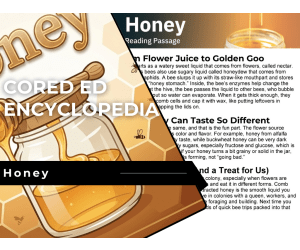
Honey Reading Comprehension Passage - Cored Ed Encyclopedia
ELA, Language Development, Resources for Teachers, Reading Comprehension, Reading, Pre-Reading, Writing, Insects, Life Sciences, Science, Grade 2, 3, 4, 5, Worksheets & Printables, Worksheets, Teacher Tools, Centers, Activities, Writing Prompts, Assessments, Tests, Quizzes and Tests, Quizzes
This honey reading comprehension contains the following: Pre-Reading Trivia Students will write down one thing they already know about the subject and then read five more facts and discuss. These facts are fun, and the students will enjoy learning about the subject before reading more. COMPANION VIDEO NOW AVAILABLE (EMBEDDED AFTER PREVIEW PICTURES IN PRODUCT DESCRIPTION) Reading Passage The text is a high-interest reading passage with set paragraphs, roughly three to four paragraphs long. It contains a variety of themes about the topic, anywhere from history to technology. The passage is between 250 and 350 words in length. Mixed Questions The first question page contains four multiple-choice questions, each with a choice of four answers, and three written response questions that require a sentence or two from the student. Creative Writing In this question, the student will be required to write a five to eight sentence paragraph on a question related to the topic. Extension Activities This page is optional for fast finishers. If there are five to ten minutes left at the end of the lesson, the student can choose one of three activities, each one requiring a different skill. Answer Key There are answers for the multiple-choice questions and three written response questions have sample answers. FULL CATALOG OF DOWNLOAD LINKS AND ENCYCLOPEDIA INDEX HERE Lesson Snapshot Title: Honey Genre: Nonfiction (informational text with headings) Subject: Reading (Informational Text) / Life Science Primary Topic: How bees make honey and why it varies Estimated Guided Reading Level (A–Z): P What This Lesson Teaches Best Explains the step-by-step process of how bees turn nectar (and sometimes honeydew) into thick honey stored in honeycomb cells. Teaches key science ideas using clear cause/effect language (enzymes change sugars; bees spread liquid so water can evaporate; honey thickens). Shows how a honey’s flower source affects its color and flavor, with examples (alfalfa vs. buckwheat). Clarifies that honey can become grainy/solid because sugar crystals form, not because it is “going bad.” Describes bee colony roles (queen, workers, drones) and explains that honey is made mainly to feed the colony. Learning Goals Explain, using details from the passage, how nectar becomes honey in a hive. Identify at least two changes that happen to the liquid as bees process it (enzymes change sugars; water evaporates; honey thickens). Describe why honey can taste and look different based on its flower source, including one example from the text. Explain why honey may turn grainy or solid in a jar, according to the passage. Describe why bees make honey and name the colony members mentioned (queen, workers, drones). Key Vocabulary From the Text nectar — sweet liquid that comes from flowers. honeydew — sugary liquid that comes from insects like aphids. enzymes — substances in bees that help change sugars. evaporate — when water changes and leaves as vapor. foraging — searching for food. Cored Ed Encyclopedia Overview The Cored Ed Encyclopedia is a weekly series of lessons that you can pick up and use right away. These short readings fit into whatever time you have available. Each one includes a warm-up, a reading, and a set of questions, but it’s flexible — you can do just the reading, the full lesson, or skip the writing section if you need to. Each lesson focuses on a single topic so students don’t get lost. The writing is clear but never childish, making it perfect for grades two through five. Topics range from animals and science to history, inventions, and everyday things. No matter the level of the student, everyone should take away at least one new idea or fact from each lesson. The materials are easy to print, easy to explain, and require no setup. They work well for whole-class teaching, partner work, or independent study.
Author Cored Education
Rating
Tags Vocabulary, Spelling, Reading Comprehension, Reading Passages, Reading, Creative Writing, Reading Strategies, Writing Prompts, Life Science, Honey
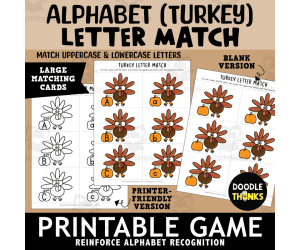
Alphabet Turkey Letter Match Uppercase & Lowercase Matching Game
Creative Arts, Art, Fine Arts, Grade 1, 2, 3, 4, 5, Activities, Games, Centers
Alphabet Turkey Letter Match Uppercase and Lowercase Matching Game Letter Recognition This Turkey-Themed ABC Matching Game is an engaging and hands-on way for young students to practice uppercase and lowercase letter recognition. Use it as a matching game, center activity, or early finisher task! Included are blank cards for differentiated learning or for students to create their very own cards, while practicing handwriting. Use the black and white version as a coloring activity as well. This letter match game is perfect for letter of the week activities, alphabet practice and review, literacy centers, letter recognition practice, and farm animal-themed activities. Just print, cut, and play! As a suggestion, print on cardstock (thicker paper) and laminate for durability. Great for individual, small group, or center use. Benefits of playing letter matching games: Boosts letter recognition Enhances phonemic awareness Improves focus and attention Builds fine motor skills Strengthens memory Develops problem-solving skills Encourages independent learning Promotes social skills Supports early literacy Makes learning fun. Included in this download: 9 Pages of Large Matching Cards (Uppercase & Lowercase Letters) 3 Pages of Blank Large Matching Cards (Uppercase & Lowercase Letters) 5 Pages of Small Matching Cards 3 Pages of Blank Small Matching Cards Printer-Friendly Black/White Versions Thank you for supporting Doodle Thinks and have fun learning!
Author Doodle Thinks
Rating
Tags Alphabet, Letter Match, Matching Games, Early Literacy, Letter Recognition, Learning Centers, Letter Of The Week, Independent Learning, Fine Motor Skills, Turkey
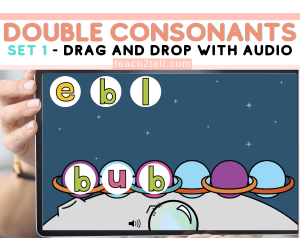
Interactive Phonics Practice: Double Consonant Boom Deck Set 1
ELA, Language Development, Phonics, Preschool, Kindergarten, Grade 1, 2, 3, Activities, Games
Need a quick, engaging way to help your students lock in those tricky double consonant spellings? This interactive phonics deck is just the ticket! Designed with the Science of Reading in mind, this 17-card Boom Deck gives students hands-on practice with double consonant words—while keeping things fun and focused. Perfect for independent practice, literacy centers, or early finishers! What’s Inside: ✔️ 17 self-checking Boom Cards ✔️ Audio support on every card ✔️ Clear visuals to support word recognition ✔️ Drag-and-drop letter tiles to complete each word ✔️ Kid-friendly instructions right from the first slide Students will listen to a word (it's sounded out automatically), look at the matching picture, and drag the missing letters to complete the word. They can even replay the sound if they need to hear it again—perfect for reinforcing phoneme-grapheme connections! Why Teachers Love It: Aligned with Science of Reading best practices Builds fluency in spelling double consonant words Great for differentiated instruction Easy to assign in Google Classroom, Seesaw, or any LMS using Boom’s Fast Pin or Hyperplay link Whether you're working with early readers or need targeted intervention activities, this phonics deck offers meaningful practice without the prep. 📌 How to Use: When you download the PDF, you'll receive a clickable link that takes you directly to the Boom Learning platform. From there: Add the deck to your Boom library Assign to students via classroom setup or a shareable link Get your students excited about phonics—and confident with spelling double consonant words—with this interactive Boom Deck. Learning has never sounded so good!
Author Teach2Tell
Rating
Tags Phonics, Double Consonants, Spelling Words, Double Consonant, Boom Decks, Boom Cards, Science Of Reading, SOR, Phonics Activities, Phonics Practice
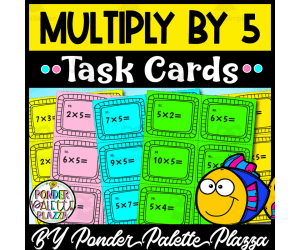
Multiply by "Five" Task Cards - Multiplication Task Cards
Math, Early Math, Basic Operations, Numbers, Counting, Multiplication and Division, Multiplication, Grade 1, 2, 3, 4, 5, Worksheets & Printables, Task Cards, Assessments, Teacher Tools, Lesson Plans, Quizzes and Tests, Centers, Activities
Teaching the 5-times tables just got easier—and way more fun! This set of 60 task cards and 10 worksheets is perfect for helping your students master multiplication by 5 while keeping them engaged and entertained. Whether you’re tackling math in class or sending practice home, this resource is a game-changer. Ways to Use: Lesson Warm-Up: Use task cards to kickstart your math lessons with energy. Partner Practice: Students can work in pairs, quizzing each other to sharpen their skills. Independent Work: Quiet time? Let them focus on worksheets while you sip your coffee. Group Games: Turn the task cards into scavenger hunts or relay races to get the class moving. Homework Hero: Assign the worksheets for extra practice at home without the groans. Advantages: Targeted Mastery: Focuses on multiplying by 5 to help students gain confidence. Prep-Free: Print and go—no extra work for you! Fun & Interactive: Engages students while reinforcing critical math skills. Flexible Use: Perfect for individuals, pairs, or group activities. Progress Tracking: Worksheets make it easy to spot strengths and areas needing more practice. Make multiplying by 5 a breeze—your students (and sanity) will thank you!
Author Ponder Palette Plazza
Tags Multiplication, Multiplication Task Cards, Multiplication Worksheets, Multiply By 5, Multiply By Five, Math Task Cards, Task Cards, Mental Math

AI-Curated Executive Functioning Skill Builders Gamified Micro-Modules
Coaching, Life Studies, Career, Leadership, Mental Health, P.E. & Health, Mindfulness, Community Building, Resources for Teachers, STEM, Infant, Grade 3, 4, 5, 6, 7, 8, Games, Activities, Projects, Assessments, Teacher Tools, Lesson Plans, Literacy Readers, Presentations, Workbooks, Worksheets & Printables
Unleash academic achievement and develop life-long skills with "AI-Curated Executive Functioning Skill Builders: Gamified Micro-Modules for Focus & Organization" – the most advanced online tool available for grades 4-8 students! This in-depth 46-page downloadable PDF helps struggling students conquer tough executive function topics such as working memory, inhibitory control, cognitive flexibility, planning, organization, task initiation, and self-monitoring. Through an in-depth examination of executive function theory and practical application of interactive worksheets in the form of real-world scenarios, theoretical diagrams, and teacher-friendly implementation instructions, it brings your classroom or homeschooling environment into a new decade of advanced tools and methodologies. Tailor student focus improvement, help reduce student procrastination, and promote self-regulated cognition with our customizable student worksheets and AI prompt guides that include non-judgmental feedback and metacognitive thinking. This is a must-have tool for teachers and homeschooling parents looking to utilize scientifically proven executive function activities targeting organization, self-regulation, and emotional control in their students. Download now and discover print-friendly activities and tools to achieve a growth mindset – great for special ed, SEL, and homeschooling classrooms! Keywords: executive function activities for kids, gamified educational content, educational tools, student tools, middle school focus exercises, organization skills activities, task initiation strategies, self-regulation Why Parents/Schools Love It: Personalized AI coaching offers adaptive support 24/7 through AI prompts and tailors strategies to meet the needs of each child, thereby reducing frustration while extending teacher/parent reach without replacing human interaction. Engaging Gamification: Transforms skill-building into enjoyable quests with points, badges, and narratives, motivation is highly encouraged, thereby making repetitive practice an experience worth having for growth in mindset. Comprehensive and Flexible Resources: Includes theory, worksheets, visuals, answer keys, and implementation guides for easy integration into classrooms, homeschooling, or individual use, supporting diverse learning environments. Proven to Touch Daily Life: Offers real-life solutions to real-life challenges, such as starting tasks and modulating emotions. These positive changes are seen in improved academic functioning, organization, and building self-confidence, as revealed through case studies and examples. Evidence-based and Inclusive: It is informed by neuroscience and educational psychology, with consideration of ethical AI; inclusive for all students, including those with developing EF skills or in special education. Target Students : The contents are specifically meant for grades 4-8 students as inferable from the thorough assessment of the PDF and the theoretical framework it has been based upon. These students belong to the age group of 9-14 years and are the target beneficiaries for the reason that this period and stage mark the most critical moment for the cognitive and mental skills of EF to be honed and then shift gear into abstract thought processes and become self-sufficient in studies and social contexts. Thus, the contents are prepared using language and examples normalized for the age group, and the examples and content are not too childish for them nor too advanced for the high school-going students. Copyright/Terms of Use : This Book is copyrighted by Syed Hammad Rizvi. This work is intended for personal, single-classroom use only. You cannot change, redistribute, or sell any part of this work. This means that you cannot make it available on the Internet where it can be readily accessed for downloading. If you would like to share this resource with other colleagues, you have the ability to purchase additional licensing through Teachsimple. Thank you for respecting the usage terms. This product has proudly come into existence because of Syed Hammad Rizvi
Author Creative Book Store
Rating
Tags ExecutiveFunctioningSkills, AICuratedLearning, GamifiedEducation, MicroModulesForKids, FocusAndOrganization, MiddleSchoolResources, Grades4to8, CognitiveFlexibilityTraining, WorkingMemoryExercises, InhibitoryControl
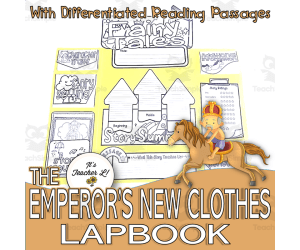
The Emperor’s New Clothes Lapbook Project ELA Grades 3 4 5
ELA, Language Development, ESL, Reading Comprehension, Reading, Strategies, Literature, Literary Devices, Children’s Literature, Grade 3, 4, 5, Centers, Activities, Crafts, Projects, Assessments, Teacher Tools, Graphic Organizers, Templates
Start the parade through the classic tale of The Emperor’s New Clotheswith this The Emperor’s New ClothesLapbook Project! Perfect for reading classes, ELA activities, reading centers, reading comprehension supplemental tool, reading project, subplan and so much more! What’s Inside: 3 The Emperor’s New ClothesLapbook Leveled Reading Passages (Easy, Average, Hard) 6 The Emperor’s New ClothesLapbook Customizable Lapbook Covers 2 The Emperor’s New ClothesLapbook Name Page Formats (for solo or group project) 1 The Emperor’s New ClothesLapbook Inner Overlap Template 3 The Emperor’s New ClothesLapbook Story Summary Pages 2 The Emperor’s New ClothesLapbook Moral Message Pages 2 The Emperor’s New ClothesLapbook Event Pockets 6 The Emperor’s New ClothesLapbook Story Sequence Cards 3 The Emperor’s New ClothesLapbook Sets of Sequence Cards (graded by difficulty – 6 per set) 6 The Emperor’s New ClothesLapbook Retelling Cards 1 The Emperor’s New ClothesLapbook Character Traits Fold 1 The Emperor’s New ClothesLapbook Setting Fold to 1 The Emperor’s New ClothesLapbook Extra Info Fold 1 The Emperor’s New ClothesLapbook Story Review Page 1 The Emperor’s New ClothesLapbook Personal Reflection Fold
Author It's Teacher L
Rating
Tags The Emperor's New Clothes, Reading Comprehension, Fairy Tale, ELA Project, Reading Centers

Hiking Reading Comprehension Passage - Cored Ed Encyclopedia
ELA, Reading Comprehension, Reading, Pre-Reading, Language Development, History, Social Studies, Geography, P.E. & Health, Physical Education, Grade 2, 3, 4, 5, Worksheets & Printables, Worksheets, Teacher Tools, Centers, Activities, Writing Prompts, Assessments, Quizzes and Tests, Quizzes, Lesson Plans
This hiking reading comprehension with lesson plan includes: Visualization (on the front cover) Start your lesson by taking a minute to think and share something about the topic. Read the script aloud (slowly), perhaps prepare some music or sound effects. Student close their eyes and let their imaginations wander. Students open their eyes, read the question aloud and give them a few minutes to complete. Ask a few students to share or keep answers until the end to compare with what they learn in the passage. Quick pause—thousands of Cored Education products are included with your TeachSimple membership. Download links and encyclopedia index available here. Pre-Reading Trivia Students will write down one thing they already know about the subject and then read five more facts and discuss. These facts are fun, and the students will enjoy learning about the subject before reading more. Give 1 minute for students to write what they already know (no pressure—best guess is fine). Read the five facts together. After each fact, do ask a student for their opinion, was it surprising? Set a purpose by asking students to highlight/underline one fact they want to learn more about during the reading. Reading Passage The text is a high-interest reading passage with set paragraphs, roughly three to four paragraphs long. It contains a variety of themes about the topic, anywhere from history to technology. The passage is between 250 and 350 words in length. First, ask students to look at the headings and see what they’ll learn about today. What do they know about the topic/heading? First read options: Teacher read-aloud (best for support). Partner reading (paragraph by paragraph). While reading, students underline important details, and vocabulary words they think may come up in the questions section. Mixed Questions The first question page contains four multiple-choice questions, each with a choice of four answers, and three written response questions that require a sentence or two from the student. Students complete the mcqs first independently, then review quickly as a class. For the 3 written responses, try to get students giving the answer with some form of evidence: “I think ___ because the text says ___.” If students get stuck, send them back to check the passage. Vocabulary Questions Practice seven key words from the text in this section across two activities. First section is scrambled words where students will unscramble three words given a clue for each. The second section is a word to meaning matching activity. Before starting, have some students read out words they underlined in the passage. Ask students to say the word and read aloud the sentence(s) around each word. Ask students to do scrambled words and the matching exercise in pairs then go through answers as a class. For the scrambled spelling task, get four pairs to come up to the board and write the words for extra practice with the other student reading out the clue. For the matching task, prompt students to give full sentences: “I matched ___ with ___ because ___.” Creative Writing In this question, the student will be required to write a five to eight sentence paragraph on a question related to the topic. Before starting, ask students write down 3 key ideas they are going to include in their piece. Ask students for ideas to share around the class to help those struggling. Pro writing expectations: 5–8 sentences At least 2 facts or details from the passage At least 2 vocabulary words from the previous page Students read their paragraphs while classmates listen for facts and vocabulary words. Extension Activities This page is optional for fast finishers or to take home. There are several activities, each one requiring a different skill. Do some, do none, do all, completely optional - but you will feel reassured knowing every possibility is planned for. Includes summary writting question and additional facts. Answer Key There are answers for the multiple-choice questions, written response questions have sample answers, vocabulary answers and if there is a summary question then a sample summary will be provided as well. Lesson Plan Included Customized lesson plan for this lesson is included. Lesson Snapshot Title: Hiking Genre: Nonfiction (informational text) Subject: Health / Physical Education Primary Topic: What hiking is, its history, and staying safe Estimated Guided Reading Level (A–Z): Q What This Lesson Teaches Best Defines hiking as “more than a stroll” and describes what hiking feels like on a trail or footpath. Explains how walking shifted from serious reasons (like religious pilgrimages) to walking for pleasure and adventure. Describes how trails needed signs, maps, and protection as hiking grew, including work to build and maintain the Appalachian Trail. Teaches basic hiking safety and preparedness (boots/shoes, backpack supplies, and the “Ten Essentials” such as a compass and first-aid kit). Names risks hikers can face when weather shifts or routes disappear, including dehydration and hypothermia. Learning Goals Students will describe what hiking is using details from the passage. Students will explain why people walked long ago and how walking for pleasure grew later. Students will identify why trails needed signs, maps, and protection as more people hiked. Students will describe what the passage says about the Appalachian Trail (where it stretches and how long it is). Students will list items hikers pack to “stay alert” and connect them to safety. Students will name risks mentioned in the text that can affect hikers’ bodies. Key Vocabulary From the Text pilgrimages — long journeys taken for religious reasons. destinations — places people want to go or visit. organizations — groups that work together for a purpose. dehydration — not enough water in the body. hypothermia — when the body gets too cold. FULL CATALOG OF DOWNLOAD LINKS AND ENCYCLOPEDIA INDEX HERE
Author Cored Education
Rating
Tags Vocabulary, Reading Comprehension, Reading Passages, Lesson Plans, Ela Lesson Plans, Reading Comprehension Lesson Plans, Pre-reading, Health Lesson Plans, Social Studies Lesson Plans, P.e.
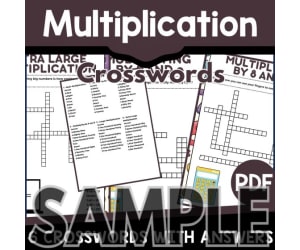
Multiplication Crossword: 1 Page Sample (PDF)
ELA, Language Development, Resources for Teachers, Vocabulary, Spelling, ESL, Multiplication, Multiplication and Division, Math, Grade 2, 3, 4, 5, Worksheets & Printables, Worksheets, Teacher Tools, Crosswords Puzzles, Centers, Activities
THIS IS A ONE PAGE SAMPLE OF A SIX CROSSWORD DOWNLOAD FULL SIX CROSSWORD DOWNLOAD INFORMATION: Crossword Series (Themed) This crossword series is designed for students in grades 2–5. Each set of crosswords is built around a clear vocabulary theme, allowing students to strengthen their word recognition, build subject-based knowledge, and reinforce early literacy and thinking skills. Each topic includes six crossword sets , and each set features the following consistent structure: 1. 8 vocabulary clues 2. Crossword puzzle 3. Answer key 4. 1 Did You Know fact related to the set These crosswords are designed to be student-friendly, classroom-ready, and easily integrated into thematic units, seasonal learning, morning work, or independent literacy stations. Multiplication Crosswords Word List 1. Basic Multiplication Two, Three, Four, Five, Six, Seven, Eight, Nine 2. Multiplying by 4 and 5 Ten, Twelve, Fifteen, Sixteen, Twenty, Twenty-Four, Twenty-Five, Thirty 3. Multiplying by 6 and 7 Thirty-Six, Forty-Two, Forty-Nine, Fifty-Six, Sixty-Three, Seventy, Seventy-Seven, Eighty-Four 4. Multiplying by 8 and 9 Sixty-Four, Seventy-Two, Eighty-One, Ninety, Ninety-Nine, One Hundred Eight, One Hundred Twenty, One Hundred Forty-Four 5. Larger Multiplication Numbers One Hundred Sixty, One Hundred Eighty, Two Hundred Ten, Two Hundred Forty, Two Hundred Seventy, Three Hundred, Three Hundred Thirty, Three Hundred Sixty 6. Extra Large Multiplication Four Hundred, Four Hundred Fifty, Five Hundred, Six Hundred, Seven Hundred Fifty, Eight Hundred, Nine Hundred, One Thousand PDF Version Other versions will appear here when available. Follow the store for the lastest on new products. How to Use This Crossword These crosswords are ideal for whole-class work, small groups, literacy centers, or take-home activities. Use one set per day, or spread them across a week or month depending on your curriculum needs. Each clue has been crafted to align with the reading level of grades 2–5, with support for both decoding and meaning. The Did You Know? facts offer additional extension opportunities for writing, drawing, or display work. Whether you're reinforcing vocabulary, exploring a seasonal topic, or adding variety to your literacy block, these crosswords provide a fun, flexible, and focused way to boost early literacy in an engaging format. More Multiplication Themed Products Nothing yet but follow the store for the lastest on new products. FULL CATALOG OF DOWNLOAD LINKS HERE Themed Crossword Links Addition PDF Animals PDF Around the Home PDF Birthday PDF Candy PDF Christmas PDF Cinco de Mayo PDF Clothes PDF Colors PDF Days and Months PDF Division PDF Earth Day PDF Easter PDF Easy Crosswords PDF Fall PDF Father's Day PDF Food PDF Geography (Set 1) PDF Geography (Set 2) PDF Geography (Set 3) PDF Graduation PDF Health PDF History (Set 1) PDF History (Set 2) PDF History (Set 3) PDF Human Body PDF Kindness PDF Life Skills PDF Mother's Day PDF Multiplication PDF Science Crosswords (Set 1) PDF Science Crosswords (Set 2) PDF Science Crosswords (Set 3) PDF Shapes PDF Social Skills PDF Spring PDF Sports PDF St. Patrick's Day PDF Subtraction PDF Summer PDF Thanksgiving PDF Transport PDF Valentine's Day PDF Winter PDF Crosswords in Depth Structure Each crossword clue is written in simplified language to suit early readers, and follows a strict number-and-clue format (e.g., 1.A shape with four sides ). Students complete each puzzle using the themed vocabulary provided, helping to build both content knowledge and spelling confidence. Each completed set includes: A questions section with clearly formatted clues An answers section to support teacher checking or independent correction A Did You Know? fact tied to the topic (one per set) to add curiosity and cross-curricular value Themes Included The crosswords cover a wide variety of engaging, age-appropriate themes such as: Seasons & Holidays (e.g., Winter, Easter, Valentine’s Day) Math Concepts (e.g., Addition, Subtraction, Multiplication, Division) Everyday Topics (e.g., School, Colors, Animals, Weather) Special Units (e.g., Health, Earth Day, Sports, Graduation, Kindness) Each theme is carefully selected to reflect the experiences and interests of young learners, while reinforcing vocabulary and comprehension. For similar downloads and other frees, do check out Cored Group on TeachSimple.
Author Cored Education
Rating
Tags Vocabulary, Spelling, Crosswords, Multiplication, Multiplication Crosswords, Math Crosswords, Math, Crossword, Crossword Puzzles

Can We Live In Space Audio Book
Science, Earth and Environmental Sciences, Space, Preschool, Kindergarten, Grade 1, 2, 3, Read Alouds, Activities
Do you think it’s possible for people to live in space someday? Kids will learn about Skylab, a 118-foot long laboratory that was launched into space on May 14, 1973.
Author Twin Sisters Digital Media
Tags Science, Space, Pilot, Astronaut, Skylab
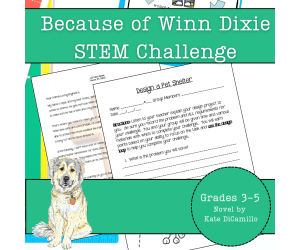
Because of Winn Dixie STEM Experiment + STEM Project for Grades 3-5
Science, Technology, Engineering, STEM, Grade 3, 4, 5, Experiments, Activities, Projects, Diagrams, Teacher Tools, Graphic Organizers, Rubrics
Engage your students in a hands-on STEM challenge inspired by Because of Winn-Dixie! This exciting activity combines engineering, creativity, and problem-solving as students design and build a pet-friendly shelter for Winn-Dixie, the lovable dog who’s afraid of storms. Perfect for blending literature with science, this challenge encourages young minds to apply engineering principles using simple materials, all while developing teamwork, critical thinking, and innovation. What’s Included in This Resource: Student Letter: An engaging letter from Opal invites students to participate in the challenge, drawing a direct connection between the story’s problem and the real-world task. The Design Loop Visual: This visual aid is a great tool for students to glue into their science journals for easy reference. It can easily be enlarged as a classroom poster. Step-by-Step Directions: Detailed instructions that can be printed or written into science journals for a hands-on approach. These directions ensure that students stay on track while working through each part of the challenge. Teacher Notes: Helpful guidance to assist you in creating a clear problem statement, establishing success criteria, and setting time limits and materials. Tailor these instructions to fit your classroom’s needs. Key Skills Developed: ✔ Problem-Solving: Encourage students to identify challenges and develop creative, effective solutions. ✔ Engineering Design: Teach the design process by having students follow the design loop to plan, construct, test, and refine their pet shelters. (Discussing area and perimeter will enhance this design specifically.) ✔ Critical Thinking: Help students evaluate their designs, analyze their prototypes, and identify ways to improve them. ✔ Collaboration: Foster teamwork as students collaborate to achieve a common goal. Flexible Classroom Use: This STEM challenge is perfect for guided instruction or as part of a broader literature and science unit. It provides an opportunity for students to connect their love of reading with real-world applications, improving both their scientific knowledge and creative abilities. Why Teachers Love It: ⭐ “My students were so engaged! It brought their love for reading into STEM learning.” ⭐ “This activity is simple to set up and promotes creativity and teamwork.” ⭐ “The combination of literature and science created an ideal cross-curricular experience for my class.” Inspire your students to help Winn-Dixie solve his stormy dilemma and ignite their passion for engineering with this fun, standards-aligned STEM challenge!
Author Kel's Klass
Tags 4th Grade Science Project, 4th Grade Science Experiment, 5th Grade Science Project, 5th Grade Science Experiment, Engineering Diagram, Science Graphic Organizer, Science Rubric, Because Of Winn Dixie, 3rd Grade Science Project, 3rd Grade Science Experiment
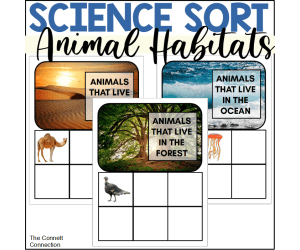
Animal Habitats Sort
Science, Life Sciences, Biology, Grade 1, 2, 3, Activities, Centers, Assessments, Teacher Tools
Allow students to sort animals by which habitat they live in. What is Included: There are sorting card headers for each habitat. There are sorting mats for each habitat. There are three to six picture cards for each of the sets of sorting activities. The animal habitats included in this set include: Antarctic, Arctic, Beach, Desert, Forest, Grassland, Ocean, Pond, Rain Forest, and Swamp Each sorting mat includes a real life example of an animal that belongs in that particular habitat. All of the picture cards also include real photographs of each habitat. What Questions are Asked: To use these, students will lay out either the header cards or the sorting mats. They will then sort the animal images beneath or on top of the correct sorting mat. When to Use: Science Center - The sorting mats can be placed in a science center for students to learn about living things and where they live. Morning Work - These animal sorts can allow teachers to create quick and easy morning activities for students while they wait on their classmates to arrive to class. Independent Practice - These animal sorts are great for students to independently work on living things. Emergency Sub Plans - The low prep nature and easy to set up activity , makes these worksheets a great activity to leave with subs to assign to students. Small Group Activity - These animal sorts can be used in small groups so teachers can target the students who need extra practice with living things. Writing Review Activity - These animal sorts work well as a review to reinforce student's learning of living things. These sorting activities are easy to create. The mats just need to be printed out. The picture cards need to be printed and cut apart. Once made, the sort can be used over and over.
Author The Connett Connection
Rating
Tags Science Sort, Hands On Assessment, Animal Habitats, Habitats

Health Crossword Puzzles – Grades 2–5 Vocabulary
ELA, Language Development, Resources for Teachers, Vocabulary, Spelling, ESL, Health, P.E. & Health, Grade 2, 3, 4, 5, Worksheets & Printables, Worksheets, Teacher Tools, Crosswords Puzzles, Centers, Activities
Crossword Series This crossword series is designed for students in grades 2–5. Each set of crosswords is built around a clear vocabulary theme, allowing students to strengthen their word recognition, build subject-based knowledge, and reinforce early literacy and thinking skills. Each topic includes six crossword sets , and each set features the following consistent structure: 1. 8 vocabulary clues 2. Crossword puzzle 3. Answer key 4. 1 Did You Know fact related to the set These crosswords are designed to be student-friendly, classroom-ready, and easily integrated into thematic units, seasonal learning, morning work, or independent literacy stations. Health Crosswords Word List 1. Healthy Eating Fruit, Vegetable, Water, Milk, Grain, Protein, Snack, Meal 2. Exercising Run, Jump, Stretch, Dance, Bike, Swim, Strong, Play 3. Taking Care of Your Body Wash, Brush, Sleep, Bath, Lotion, Towel, Comb, Healthy 4. Staying Safe Helmet, Seatbelt, Cross, Stop, Look, Listen, Light, Careful 5. Visiting the Doctor Doctor, Nurse, Checkup, Shot, Stethoscope, Thermometer, Medicine, Bandage 6. Feeling Good Happy, Calm, Laugh, Energy, Breathe, Rest, Hug, Kind PDF Version Other versions will appear here when available. Follow the store for the lastest on new products. How to Use This Crossword These crosswords are ideal for whole-class work, small groups, literacy centers, or take-home activities. Use one set per day, or spread them across a week or month depending on your curriculum needs. Each clue has been crafted to align with the reading level of grades 2–5, with support for both decoding and meaning. The Did You Know? facts offer additional extension opportunities for writing, drawing, or display work. Whether you're reinforcing vocabulary, exploring a seasonal topic, or adding variety to your literacy block, these crosswords provide a fun, flexible, and focused way to boost early literacy in an engaging format. More Health Themed Products Nothing yet but follow the store for the lastest on new products. FULL CATALOG OF DOWNLOAD LINKS HERE Addition PDF Animals PDF Around the Home PDF Birthday PDF Candy PDF Christmas PDF Cinco de Mayo PDF Clothes PDF Colors PDF Days and Months PDF Division PDF Earth Day PDF Easter PDF Easy Crosswords PDF Fall PDF Father's Day PDF Food PDF Geography (Set 1) PDF Geography (Set 2) PDF Geography (Set 3) PDF Graduation PDF Health PDF History (Set 1) PDF History (Set 2) PDF History (Set 3) PDF Human Body PDF Kindness PDF Life Skills PDF Mother's Day PDF Multiplication PDF Science Crosswords (Set 1) PDF Science Crosswords (Set 2) PDF Science Crosswords (Set 3) PDF Shapes PDF Social Skills PDF Spring PDF Sports PDF St. Patrick's Day PDF Subtraction PDF Summer PDF Thanksgiving PDF Transport PDF Valentine's Day PDF Winter PDF Crosswords in Depth Structure Each crossword clue is written in simplified language to suit early readers, and follows a strict number-and-clue format (e.g., 1.A shape with four sides ). Students complete each puzzle using the themed vocabulary provided, helping to build both content knowledge and spelling confidence. Each completed set includes: A questions section with clearly formatted clues An answers section to support teacher checking or independent correction A Did You Know? fact tied to the topic (one per set) to add curiosity and cross-curricular value Themes Included The crosswords cover a wide variety of engaging, age-appropriate themes such as: Seasons & Holidays (e.g., Winter, Easter, Valentine’s Day) Math Concepts (e.g., Addition, Subtraction, Multiplication, Division) Everyday Topics (e.g., School, Colors, Animals, Weather) Special Units (e.g., Health, Earth Day, Sports, Graduation, Kindness) Each theme is carefully selected to reflect the experiences and interests of young learners, while reinforcing vocabulary and comprehension. For similar downloads and other frees, do check out Cored Group on TeachSimple.
Author Cored Education
Rating
Tags Vocabulary, Spelling, Crosswords, Health, Health Crosswords, Healthy Eating, Exercising, Ela Crosswords, Crossword Puzzles, Health Activities
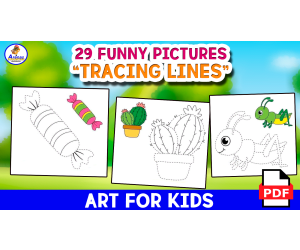
TRACING LINES - 29 Funny Pages
Creative Arts, Art, ELA, Writing, Handwriting, Kindergarten, Preschool, Grade 1, 2, 3, Activities
1. Introduction As is known, reviewing images with dots can offer different benefits and advantages for children. That's why today we present this beautiful worksheet that your children can work with. 2.Objective The objective of this worksheet encompasses the following points: - Develop fine motor skills: Reviewing images with dots involves continuing and following a specific sequence to join or connect the dots in a fine and/or precise way. This process will help and benefit to improve children's fine motor skills, which is crucial and very important for students to later develop activities such as writing, fastening buttons and even manipulating small objects. - Encourage hand-eye coordination: Performing this type of activity such as connecting dots requires students to coordinate their visual movements along with their hand movements. This hand-eye coordination is essential and essential to perform everyday, common tasks and even academic activities such as drawing and writing. - Cognitively stimulate: By performing the sequence of points, students will be practicing cognitive skills such as concentration, attention, as well as following instructions. This will help strengthen your capacity and/or ability to process visual information and improve your focus. - Stimulate numerical and sequential learning: By joining dots in numerical or sequential order, students and/or children will be exposed to understanding numerical and sequential concepts in a fun and visually attractive way. This will help your students understand the number sequence early and encourage pattern recognition. - Creatively stimulate: When students review images with dots, it is not only a structured activity , but it is also considered a form of creative expression. As students complete the images, they will have and can take advantage of the opportunity to use their imagination and creativity to interpret and personalize the drawing that results after connecting the dots. 3.Order, scheme and stages Introduce your class with a motivational song to awaken your students' attention. Then just enter the worksheet. 4.Grades or ages This worksheet is intended for children ages 4 to 8. 5. Form of application Apply this worksheet individually or in groups. 6. Answer keys This game does not require answers. 7.Use text labels art, draw lines, lines, line strokes. 8.Rules Specified above. 9.File types The archive is in PDF format. 10.Number of pages This document contains 29 pages.
Author EDITORIAL LAURA EDUCA
Tags Art, Tracing Lines, Tracing, Handwriting, Coloring, Dots, Tracing Dots

Reading Comprehension Fiction Set 4 Sample: My Love of Art (Forms)
ELA, Reading, Language Development, Spelling, Common Core, ESL, Reading Comprehension, Writing, Children’s Literature, Literature, Grade 2, 3, Centers, Activities, Assessments, Teacher Tools, Tests, Quizzes and Tests
Reading Comprehension Passages Fiction Set 4 Sample Overview Fascinating reading comprehension passages, each with an array of activities included. Stories are written for the modern classroom and topics are designed to promote enthusiasm from each student. Each lesson contains a mixed questions section to check understanding, a vocabulary or spelling activity to help remember key language introduced, and a writing exercise. Full answer keys are provided. For a more detailed overview, check the section under the links at the bottom of this description. Passage Included 6.My Love of Art: Read about the author's love of art class in this lesson. Forms Version This is the Forms editable and fillable/self grading version. This download is available in GOOGLE Docs, GOOGLE Forms, GOOGLE Slides. PDF, PPT, WORD. FULL CATALOG OF DOWNLOAD LINKS HERE Grade 2/3 Links Fiction Set 1 - Nature Google Docs Google Forms Google Slides PDF PPT Word Guided Reading Materials Fiction Set 2 - Animals Google Docs Google Forms Google Slides PDF PPT Word Guided Reading Materials Fiction Set 3 - Food Google Docs Google Forms Google Slides PDF PPT Word Guided Reading Materials Fiction Set 4 - School Google Docs Google Forms Google Slides PDF PPT Word Guided Reading Materials Fiction Set 5 - Friends Google Docs Google Forms Google Slides PDF PPT Word Guided Reading Materials Fiction Set 6 - Family Google Docs Google Forms Google Slides PDF PPT Word Guided Reading Materials Fiction Set 7 - Sports Google Docs Google Forms Google Slides PDF PPT Word Guided Reading Materials Nonfiction Set 1 - Technology Google Docs Google Forms Google Slides PDF PPT Word Guided Reading Materials Nonfiction Set 2 - Nutrition Google Docs Google Forms Google Slides PDF PPT Word Guided Reading Materials Nonfiction Set 3 - Animals Google Docs Google Forms Google Slides PDF PPT Word Guided Reading Materials Reading Passages Overview Each passage is especially written for Grade 2-3 students, including key vocabulary required for this age group. Topics are varied and are accompanied by colorful graphics. Topics are meant to educate, yet entertain the modern student. These passages are perfect for the modern classroom. Whereas textbooks can become outdated in no time, any changes to technology or the world will result in updates to this product. Mixed Questions The mixed questions section of each lesson includes a variation of fivecomprehension, vocabulary and math questions. In addition, key reading strategies are frequently covered including cause & effect, summarizing, compare & contrast and making conclusions. Three of the questions will be MCQs and two will require a written response of some kind. Full answers and example responses appear at the end of the lesson. Spelling & Vocab Each reading passage contains a variety of words and phrases designed for Grade 2-3 students. Spelling and vocab activities provide the opportunity to build fluency with these words. As it can become quite mundane doing the same activities over and over, each lesson in a set will contain a different spelling and vocab activity . Writing Prompts Writing prompts are designed to continue the theme or lessons learned in the story. Students are persuaded to write in a variety of ways and each prompt includes several cues to help. As with the spelling/vocab section, writing prompts will vary. This includes research pieces, reading responses, poetry and creative writing prompts. Full Answer Keys Full answer keys and sample responses are provided so no matter how busy you are, you know you're covered! Mixed question answers provide evidence from the text, math questions contain the relevant workings. Answers are designed for use by the teacher, but also suitable as a handout to the student. Additional File One lesson will have an additional file. This is something fun to extend the lesson with. For similar downloads and other frees, do check out Cored Group on TeachSimple.
Author Cored Education
Tags Elementary, Reading, Comprehension, Vocabulary, Answers, Ccss, Common Core, Spelling, Writing, Digital Centers

Shapes in Nature Explore Patterns in the Natural Setting
Math, Counting, Early Math, Patterns, Shapes, Numbers, Graphing, Geometry, Grade 2, 3, Crafts, Activities, Games
Discover the awesome shapes hiding all around us in nature! This activity book is great for anyone looking to explore the natural world with a new perspective. Whether you're a parent, a teacher, or a troop leader, this booklet is packed with hands-on activities that make learning fun. It has everything you need, print and go: Nature Scavenger Hunts: Go on a hunt for shapes like circles, squares, and triangles in leaves, flowers, and trees. You will have a worksheet you can use. Creative Projects: Make art using materials you find outside, from leaf stamps to tessellations. Worksheets are provided Science Experiments: Learn how to collect and sort your findings, and even create your own graphs. Worksheets are provided Fun & Games: Play games to spot symmetrical objects, recognize patterns, and learn about different birds. Worksheets and pintable's to use with games are provided This booklet is designed to be a complete resource, offering a mix of creative and scientific activities that bring geometry to life. It’s perfect for troop leaders earning the Brownie Shapes in Nature badge or for homeschooling families and classroom teachers looking for something new to add to their curriculum. Get ready to see the world in a whole new way!
Author Leader Connecting Leaders
Rating
Tags Shapes In Nature, Nature, Math In Nature