



3,988 products added recently
Page 30 - 5th Grade Activities
Support your fifth graders as they prepare for middle school with activities that promote independence and higher-order thinking. These resources offer interactive lessons and projects that make learning relevant and exciting. Incorporate them to enhance understanding and enthusiasm in your classroom.

 Show filters

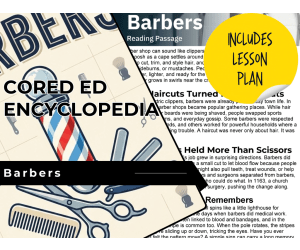
Barbers Reading Comprehension Passage - Cored Ed Encyclopedia
ELA, Language Development, Reading Comprehension, Reading, Social Studies, Writing, Vocabulary, History, Pre-Reading, Spelling, Grade 2, 3, 4, 5, Worksheets & Printables, Worksheets, Teacher Tools, Centers, Activities, Writing Prompts, Assessments, Quizzes and Tests, Quizzes, Lesson Plans
This barbers reading comprehension with lesson plan includes: Visualization (on the front cover) Start your lesson by taking a minute to think and share something about the topic. Read the script aloud (slowly), perhaps prepare some music or sound effects. Student close their eyes and let their imaginations wander. Students open their eyes, read the question aloud and give them a few minutes to complete. Ask a few students to share or keep answers until the end to compare with what they learn in the passage. Quick pause—thousands of Cored Education products are included with your TeachSimple membership. Download links and encyclopedia index available here. Pre-Reading Trivia Students will write down one thing they already know about the subject and then read five more facts and discuss. These facts are fun, and the students will enjoy learning about the subject before reading more. Give 1 minute for students to write what they already know (no pressure—best guess is fine). Read the five facts together. After each fact, do ask a student for their opinion, was it surprising? Set a purpose by asking students to highlight/underline one fact they want to learn more about during the reading. Reading Passage The text is a high-interest reading passage with set paragraphs, roughly three to four paragraphs long. It contains a variety of themes about the topic, anywhere from history to technology. The passage is between 250 and 350 words in length. First, ask students to look at the headings and see what they’ll learn about today. What do they know about the topic/heading? First read options: Teacher read-aloud (best for support). Partner reading (paragraph by paragraph). While reading, students underline important details, and vocabulary words they think may come up in the questions section. Mixed Questions The first question page contains four multiple-choice questions, each with a choice of four answers, and three written response questions that require a sentence or two from the student. Students complete the mcqs first independently, then review quickly as a class. For the 3 written responses, try to get students giving the answer with some form of evidence: “I think ___ because the text says ___.” If students get stuck, send them back to check the passage. Vocabulary Questions Practice seven key words from the text in this section across two activities. First section is scrambled words where students will unscramble three words given a clue for each. The second section is a word to meaning matching activity. Before starting, have some students read out words they underlined in the passage. Ask students to say the word and read aloud the sentence(s) around each word. Ask students to do scrambled words and the matching exercise in pairs then go through answers as a class. For the scrambled spelling task, get four pairs to come up to the board and write the words for extra practice with the other student reading out the clue. For the matching task, prompt students to give full sentences: “I matched ___ with ___ because ___.” Creative Writing In this question, the student will be required to write a five to eight sentence paragraph on a question related to the topic. Before starting, ask students write down 3 key ideas they are going to include in their piece. Ask students for ideas to share around the class to help those struggling. Pro writing expectations: 5–8 sentences At least 2 facts or details from the passage At least 2 vocabulary words from the previous page Students read their paragraphs while classmates listen for facts and vocabulary words. Extension Activities This page is optional for fast finishers or to take home. There are several activities, each one requiring a different skill. Do some, do none, do all, completely optional - but you will feel reassured knowing every possibility is planned for. Includes summary writting question and additional facts. Answer Key There are answers for the multiple-choice questions, written response questions have sample answers, vocabulary answers and if there is a summary question then a sample summary will be provided as well. Lesson Plan Included Customized lesson plan for this lesson is included. Lesson Snapshot Title: Barbers Genre: Nonfiction (informational passage) Subject: Social Studies / Careers & Community Primary Topic: What barbers do and how barbering changed over time Estimated Guided Reading Level (A–Z): S Support pages noted in the PDF: visualize prompt, pre-reading trivia, mixed questions, vocabulary activity, creative writing prompt, extension activities + “final facts,” and an answer key. What This Lesson Teaches Best What barbers do: cut, trim, and style hair, and often shave or shape facial hair. How places like barber shops can be about community (talking and sharing news) as well as haircuts. How a job can change over time, including barbers doing medical tasks in the Middle Ages and later separating from doctors and surgeons. How symbols communicate meaning: the spinning striped barber pole connects to earlier work (red/white linked to blood and bandages; a blue stripe is common in the United States). Reading for precise details (e.g., hair “swirls” near the crown; how rotating stripes create an illusion). Learning Goals Students will identify at least two services the passage says many barbers provide. Students will explain why barber shops became popular gathering places in Greece, using details from the text. Students will describe how the barber’s job “grew in surprising directions” during the Middle Ages, based on the passage. Students will describe what “bloodletting” means in the passage. Students will explain what the red and white stripes on a barber pole are often linked to and how the spinning pole can trick the eyes. Students will describe how the passage connects a simple shop sign to a long history (“a simple sign can carry a long memory”). Key Vocabulary From the Text clippers — electric tools that cut hair. mustaches — hair above the upper lip. swirls — curved patterns that twist around. bloodletting — making a small cut to let blood flow. bandages — cloth used to cover a wound. FULL CATALOG OF DOWNLOAD LINKS AND ENCYCLOPEDIA INDEX HERE
Author Cored Education
Rating
Tags Vocabulary, Reading Comprehension, Reading Passages, Lesson Plans, Ela Lesson Plans, Reading Comprehension Lesson Plans, Pre-reading, History, History Lesson Plans, Social Studies Lesson Plans
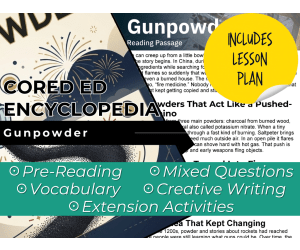
Gunpowder Reading Comprehension Passage - Cored Ed Encyclopedia
ELA, Reading Comprehension, Reading, Science, Technology, Pre-Reading, Language Development, History, Social Studies, Physics, Grade 2, 3, 4, 5, Worksheets & Printables, Worksheets, Teacher Tools, Centers, Activities, Writing Prompts, Assessments, Quizzes and Tests, Quizzes, Lesson Plans
This gunpowder reading comprehension with lesson plan includes: Visualization (on the front cover) Start your lesson by taking a minute to think and share something about the topic. Read the script aloud (slowly), perhaps prepare some music or sound effects. Student close their eyes and let their imaginations wander. Students open their eyes, read the question aloud and give them a few minutes to complete. Ask a few students to share or keep answers until the end to compare with what they learn in the passage. Quick pause—thousands of Cored Education products are included with your TeachSimple membership. Download links and encyclopedia index available here. Pre-Reading Trivia Students will write down one thing they already know about the subject and then read five more facts and discuss. These facts are fun, and the students will enjoy learning about the subject before reading more. Give 1 minute for students to write what they already know (no pressure—best guess is fine). Read the five facts together. After each fact, do ask a student for their opinion, was it surprising? Set a purpose by asking students to highlight/underline one fact they want to learn more about during the reading. Reading Passage The text is a high-interest reading passage with set paragraphs, roughly three to four paragraphs long. It contains a variety of themes about the topic, anywhere from history to technology. The passage is between 250 and 350 words in length. First, ask students to look at the headings and see what they’ll learn about today. What do they know about the topic/heading? First read options: Teacher read-aloud (best for support). Partner reading (paragraph by paragraph). While reading, students underline important details, and vocabulary words they think may come up in the questions section. Mixed Questions The first question page contains four multiple-choice questions, each with a choice of four answers, and three written response questions that require a sentence or two from the student. Students complete the mcqs first independently, then review quickly as a class. For the 3 written responses, try to get students giving the answer with some form of evidence: “I think ___ because the text says ___.” If students get stuck, send them back to check the passage. Vocabulary Questions Practice seven key words from the text in this section across two activities. First section is scrambled words where students will unscramble three words given a clue for each. The second section is a word to meaning matching activity. Before starting, have some students read out words they underlined in the passage. Ask students to say the word and read aloud the sentence(s) around each word. Ask students to do scrambled words and the matching exercise in pairs then go through answers as a class. For the scrambled spelling task, get four pairs to come up to the board and write the words for extra practice with the other student reading out the clue. For the matching task, prompt students to give full sentences: “I matched ___ with ___ because ___.” Creative Writing In this question, the student will be required to write a five to eight sentence paragraph on a question related to the topic. Before starting, ask students write down 3 key ideas they are going to include in their piece. Ask students for ideas to share around the class to help those struggling. Pro writing expectations: 5–8 sentences At least 2 facts or details from the passage At least 2 vocabulary words from the previous page Students read their paragraphs while classmates listen for facts and vocabulary words. Extension Activities This page is optional for fast finishers or to take home. There are several activities, each one requiring a different skill. Do some, do none, do all, completely optional - but you will feel reassured knowing every possibility is planned for. Includes summary writting question and additional facts. Answer Key There are answers for the multiple-choice questions, written response questions have sample answers, vocabulary answers and if there is a summary question then a sample summary will be provided as well. Lesson Plan Included Customized lesson plan for this lesson is included. Lesson Snapshot Title: Gunpowder Genre: Nonfiction (informational text) Subject: Science Primary Topic: How gunpowder was discovered and used over time Estimated Guided Reading Level (A–Z): Q What This Lesson Teaches Best Explains how gunpowder began in China during the Tang dynasty when alchemists mixed ingredients while searching for a life-lasting “elixir.” Identifies the three main powders in gunpowder—charcoal, sulfur, and saltpeter (also called potassium nitrate)—and describes what saltpeter adds to help burning. Describes how gunpowder behaves differently in an open pile versus a tight tube, leading to a strong push of hot gas. Traces how “fire medicine” was used first for celebrations and signals, then developed into fire arrows, bombs, fire lances, and hand cannons by the late 1200s. Shows how ideas travel as gunpowder and stories about rockets reached Europe, and how uses expanded to quarrying rock and digging tunnels, not only fighting. Learning Goals Students will describe how the text says gunpowder was discovered during the Tang dynasty in China. Students will identify the three main powders in gunpowder and explain what saltpeter adds to the burning process. Students will compare what happens when gunpowder burns in an open pile versus in a tight tube. Students will explain how “fire medicine” changed from signals and celebrations to fire arrows and later weapons over time. Students will describe two non-celebration uses of the powder mentioned in the text (quarrying rock and digging tunnels). Students will explain what the author means by “Ideas travel,” using the example of gunpowder reaching Europe. Key Vocabulary From the Text alchemists — people who mixed ingredients while searching for an “elixir.” elixir — a life-lasting drink they searched for. charcoal — powder from burned wood. sulfur — one of the three main powders. saltpeter — a mineral also called potassium nitrate. Discussion Prompts Pre-reading question: What do you think might happen if a powder burns very fast? Comprehension questions: How did the mixture get the name huoyao, or “fire medicine”? Comprehension questions: What role does saltpeter play when a tiny grain is lit? Comprehension questions: How did the uses of “fire medicine” change from celebrations to later tools or weapons? FULL CATALOG OF DOWNLOAD LINKS AND ENCYCLOPEDIA INDEX HERE
Author Cored Education
Rating
Tags Vocabulary, Reading Comprehension, Reading Passages, Lesson Plans, Ela Lesson Plans, Reading Comprehension Lesson Plans, Pre-reading, Science Lesson Plans, Social Studies Lesson Plans, History

The Prodigal Son Bible Story Lapbook Project Grade 3 4 5 ELA ELL
ELA, Literature, Reading, Grade 3, 4, 5, Centers, Activities, Worksheets & Printables, Worksheets, Writing Prompts, Projects, Coloring Pages
Make learning fun but more purposeful with this classic Bible story The Prodigal Son through this The Prodigal Son Lapbook Project! This special project is a definite treasure for your reading classes and Bible school lessons made for Grade 4, 5 and 6 students, homeschoolers, and EFL / ESL learners What’s Inside: 3 The Prodigal Son Differentiated Reading Passages (Easy, Average, Hard) 3 The Prodigal Son Lapbook Covers to choose from 2 The Prodigal Son Name Pages (Individual & Group Options) 1 The Prodigal Son Inner Overlap Page 2 The Prodigal Son Story Summary Page Options 1 The Prodigal Son Story Message Page (Lesson & Moral Reflection) 1 The Prodigal Son Story Sequence Pocket 6 The Prodigal Son Story Sequence Photocards 3 The Prodigal Son Story Sequencing Activity Options (Easy / Average / Hard) – 6 sequence cards per level 6 The Prodigal Son Story Retell Cards 1 The Prodigal Son Character Traits Fold 1 The Prodigal Son Story Setting Fold 1 The Prodigal Son Story Rating Page 1 The Prodigal Son Prayer Response Fold (Faith-based reflection) This set inspires reading comprehension skills and in-depth literary analysis through fun hands-on learning activities that encourages learners stay actively engaged in the lesson. It builds important skills such as sequencing, retelling, and critical thinking while reinforcing Christian values like kindness, mercy, and compassion. The differentiated activities make it perfect for mixed-ability classrooms as well as EFL/ESL learners, making sure that all students can participate meaningfully. It is also a perfect addition to Bible study units, Christian school classrooms, homeschool learning, and integrated ELA lessons.
Author It's Teacher L
Rating
Tags Reading, Mini Book, Sequencing, Writing, Reading Comprehension, ELA, ELL, Bible Stories, Sunday School
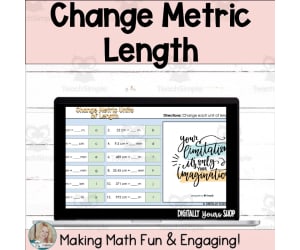
Change - Convert - Metric Units of Length Digital Self-Checking Math Activity
Math, Decimals, Measurements, Grade 4, 5, Activities
Change - Convert - Metric Units of Length Digital Self-Checking Math Activity This innovative and engaging resource is designed to make metric length conversions fun and interactive. Ideal for Grade 4 and Grade 5 students, it addresses key subjects including math with sub-topics like decimals and measurements. Key Features: Create an interactive self-checking game-like platform via Google Sheets Presents 12 questions on converting metric units of length Get instant feedback the moment you input your answers into the cells A hidden picture is revealed once correct answers are provided > This product aims to motivate learners through a game-based learning approach, offering immediate reinforcement stimulating interest and fostering learning responsiveness. Educational Interactivity at its Best: The scramble picture reveal activity in Change - Convert elevates educational interactivity effectively complementing traditional teaching approaches while fostering fun-filled learning experiences. Versatile & Adaptable Resource: This tool can be used for: Morning work activities, Homework assignments, Bell ringer tasks or exit ticket assessments, New other applications include as a check-for-understanding element during lessons or even a warm-up task before class begins. A Comprehensive Teacher’s Guide: This product allows comprehensive tracking through student recording sheets, providing complete oversight into each learner's progress during exercises or reviews. To further ease your preparation efforts while boosting efficiency levels in assessment processes; teacher answer keys are included within this package. In addition to these, Change - Convert gives you ready access via Google Drive providing immediate assignment capabilities either through Google Classroom or other Learning Management Systems – opening up avenues for application both within the-classroom environment and for home-based instruction. Concluding Thought: No-prep resources enhancing procedural and conceptual understanding can greatly benefit teachers. This product provides educators with a resource preserving the foundation of their students’ understandings in math.
Author Digitally Yours Shop
Tags Metric Conversions, Length Measurements, Digital Self-checking, Math Activity

Measurement: Board Game for 3rd-5th - MAC Software
Math, Measurements, Common Core, Grade 3, 4, 5, Activities, Games
Measurement: Board Game for 3rd-5th - MAC Software A math-teaching tool designed specifically to aid 3rd to 5th graders in comprehending and engaging with measurement concepts. This software offers a unique board game that makes learning more interactive, thereby enhancing classroom lessons and student comprehension. This user-friendly software is compatible with MAC systems and includes one zip file, making it easy for teachers to setup. The game is based on two teams answering 16 multiple-choice questions about measurements - injecting a competitive element that inspires students towards bettering their understanding of measurement concepts. The utility of this resource stretches across various scenarios as it can be effectively used in: Whole class activities, Focused smaller groups, or Intriguing alternative homework assignments. The content conforms seamlessly with Common Core State Standards ( CCSS ) and covers measurement topics under the Five Strands of Math. Additionally, it follows the guidelines provided by National Council of Teachers of Mathematics ( NCTM ), ensuring its accuracy and effectiveness as a teaching tool. As STEM values continue being emphasized from an early age within education systems, this software stands out by combining traditional learning objectives while also promoting STEM initiatives. In conclusion: For educators seeking an efficient approach to help grade 3-5 students grasp measuring concepts within an accessible MAC-compatible format; Measurement: Board Game for 3rd-5th - Mac Software proves a valuable addition to your teaching toolkit.
Author Classroom Complete Press
Tags Measurement Games, Board Game, Measurement Board Game, Digital Math, Math Activities

Art: A Full Day of Activities About Art and Artists
Creative Arts, Art, Art History, Grade 4, 5, Activities
Art: A Full Day of Activities About Art and Artists This comprehensive teaching resource serves as an inspiration for students on the topics of art and famous artists. Morning and afternoon messages: These icebreakers initiate open discussions on various art-related topics fostering creativity. In addition, a dynamic routine that includes independent reading time (fiction or nonfiction) followed by Reader Response papers helps students reflect upon their chosen reading's content, ultimately nurturing comprehension skills and critical thinking. Reading Comprehension Exercises: Houses exercises based on renowned artists such as Henri Matisse, Claude Monet, Pablo Picasso along with interviews from modern-day creators Rob Williams and Kathy Miller. Incorporates graphic organizers designed for student research on their favorite artist. Cross-over with Maths: Fuses mathematical principles into the study of art through symmetry exploration activities. It also involves grade-level computations in quilt designing demonstrated in Math activities. Promotion of Artistic Potential: Includes engaging projects such as website designing or doodling sessions to explore different drawing techniques tailored to individual abilities as well as group activities for team-building. Vocabulary Enhancement: New vocabulary worksheets encouraging individual mastery are included in this package with suggestions for innovate games promising extended practice sessions come included. The package also comprises forms vital for ensuring communication between main teachers and substitutes remains seamless. Activity Grid The activity grid conveys brief explanation about every segment involved while specifying required materials, ideal instruction methods coupled with references towards Common Core Standards - making this a practical resource explicitly useful for Grades 4-5 educators teaching Art & Music or venturing into Art History study circles. Art: A Full Day of Activities About Art and Artists can be implemented in whole class scenarios, small group sessions, homework assignments or as a valuable resource to substitute teachers. It stands out as a comprehensive yet easily manageable guide fusing art education with essential learning skills.
Author Subplanners by Jean Snowden
Tags Art, Artists, Activities, Teaching Resource, Creativity

Human Body Word List Posters (PDF)
ELA, Language Development, Resources for Teachers, Vocabulary, Spelling, ESL, Human Body, Life Sciences, Science, Grade 2, 3, 4, 5, Worksheets & Printables, Worksheets, Teacher Tools, Centers, Activities, Posters, Classroom Decor
Word List Poster Series This word list poster series is designed for students in grades 2–5. Each printable focuses on a clear, kid-friendly theme and features 8 target vocabulary words with short, student-friendly meanings or fun facts. The clean layout works as both an anchor chart and a write-in sheet, giving students a quick, visual reference they can revisit during centers and independent work. These posters are student-friendly, classroom-ready, and perfect for warmups, vocabulary walls, sub plans, or take-home reference. Display a single poster to support the day’s lesson, or group several to build a themed wall across your unit. Note: Each poster is a companion piece to its matching themed product in the series—pair it with the corresponding maze, wordsearch, or activity pack for a consistent set of 8 focus words. Human Body Word List 1. Head & Face Head, Hair, Eyes, Nose, Mouth, Ears, Teeth, Tongue 2. Arms & Hands Arm, Hand, Fingers, Thumb, Wrist, Elbow, Palm, Nails 3. Legs & Feet Leg, Knee, Foot, Toes, Heel, Ankle, Shin, Thigh 4. Inside the Body Brain, Heart, Lungs, Stomach, Bones, Muscles, Blood, Nerves 5. Senses & Feelings Sight, Hearing, Smell, Taste, Touch, Laugh, Cry, Yawn 6. Moving & Actions Walk, Run, Jump, Clap, Hug, Stretch, Bend, Wiggle PDF Version Other versions will appear here when available. Follow the store for the lastest on new products. How to Use These Word List Posters Perfect for: Morning work or early-finisher bins Vocabulary centers or anchor walls Holiday/seasonal review lessons Independent stations, sub plans, or take-home reference More Human Body Themed Products CROSSWORDS WORD SEARCHES MAZES FULL CATALOG OF DOWNLOAD LINKS HERE Themed Word List Posters Links Addition PDF Animals PDF Around the Home PDF Birthday PDF Candy PDF Christmas PDF Cinco de Mayo PDF Clothes PDF Colors PDF Days and Months PDF Division PDF Earth Day PDF Easter PDF Easy Word List Posters PDF Fall PDF Father's Day PDF Food PDF Geography (Set 1) PDF Geography (Set 2) PDF Geography (Set 3) PDF Graduation PDF Health PDF History (Set 1) PDF History (Set 2) PDF History (Set 3) PDF Human Body PDF Kindness PDF Life Skills PDF Mother's Day PDF Multiplication PDF Science (Set 1) PDF Science (Set 2) PDF Science (Set 3) PDF Shapes PDF Social Skills PDF Spring PDF Sports PDF St. Patrick's Day PDF Subtraction PDF Summer PDF Thanksgiving PDF Transport PDF Valentine's Day PDF Winter PDF Word List Posters in Depth Structure Each poster is built around a focused sub-theme and presents 8 target words with short, student-friendly meanings or fun facts. The clean A4 portrait layout works as an anchor chart on your board or as a student reference at desks. These posters are designed as companion pieces to the matching themed products (mazes, wordsearches, activity packs), so the same vocabulary stays visible across your unit. Each poster set includes: A themed word list poster with 8 words + brief meanings/facts A clean, high-contrast layout for easy printing and display Space that can double as write-in/draw-to-show-meaning during centers Themes Included Seasons & Holidays (e.g., Halloween, Easter, Valentine’s Day) Everyday Topics (e.g., Animals, Weather, School) Math & Science Connections (e.g., Number Words, Simple Machines) Special Units (e.g., Health, Earth Day, Sports, Kindness) Each topic reflects real-life experiences and interests while strengthening vocabulary recognition and content understanding in a clear, visual way. Easy extensions (optional) Sketch it: students draw a quick icon for each word Sort it: group words by category (e.g., actions, objects) Star it: highlight “I already know” vs. “I’m learning” words Match it: point to examples in a reading, video, or picture set Say it: brief oral definition or example sentence during share-out Differentiation tips Pre-teach 2–3 anchor words; add the rest later in the week Offer picture cues or gestures for emerging readers/ELLs Let students choose 4 of 8 to focus on first, then build up Color-code by part of speech or concept family for quick scanning For similar downloads and other frees, do check out Cored Group on TeachSimple.
Author Cored Education
Rating
Tags Vocabulary, Spelling, Human Body, Body, Head & Face, Arms & Hands, Legs & Feet, Posters, Body Word Lists, Human Body Word List

Watermelon Roll and Draw Games | Watermelon Day August Art Activity
Creative Arts, Art, Fine Arts, Grade 1, 2, 3, 4, 5, Games, Activities, Projects, Centers, Worksheets & Printables
Wacky Watermelon Roll and Draw Games | Celebrate Watermelon Day on August 3 | Drawing Activity Celebrate Watermelon Day with this fun, no-prep and interactive drawing game that is simple to use or use it on any day. Incorporate the optional companion roll and draw game to add more fun details to the drawing. Just grab a dice and some blank paper and engage your students with this self-directed drawing activity. You can get the whole class involved by following the Change It Up worksheet and dictating elements that students can add to their drawing. Then color and enjoy the different drawings! What are the benefits of roll and draw games? Understanding visual perceptions Increase following direction skills Improving drawing skills Included in this download: 2 Roll and Draw Game Printables 1 Change It Up Page B/W Version Included Additional creative ideas for teachers: Present completed drawings as thoughtful gifts from students Create a wall art gallery Place in students' portfolios Offer a writing activity that corresponds to drawing Perfect for: Art lessons Classroom centers Early finishers Substitute plans Morning work Creativity boosts Bring some creative fun to your classroom or homeschool with this easy and no-prep art activity!
Author Doodle Thinks
Rating
Tags Roll And Draw, Dice Game, Art Activity, Drawing Activity, Coloring, Art Integration, Art Enrichment, Art Supplement, Silly Holiday, August Art

The Sandman Fairy Tale Foldable Mini Book Grade 1 2 3 ELA ELL
Common Core, ELA, Literature, Reading, Writing, Grade 3, 4, 5, Activities, Centers, Worksheets & Printables, Worksheets
Make learning fun but more meaningful with this classic fairy tale story The Sandman in this The Sandman Foldable Mini Book Set! Created for Grade 1, 2, 3 and 4 students, homeschoolers, and EFL / ESL learners, this amazing story of The Sandman is a sure hit to your reading class and reading centers. This resource contains the following: 1. The Sandman Colored mini-book 2. The Sandman Black and white mini-book with story tracing activities 3. The Sandman Picture-fill mini-book for sequencing test or exercise 4. The Sandman Black and white mini-book for story re-tell and writing exercise 5. The Sandman Blank mini-book pages for story re-tell, writing and drawing exercises 6. The Sandman Mini Books Sample lesson plan This set is made in 3 paper sizes to give more freedom to choose what suites your needs. With five different mini-books to choose from, the possibilities for learning and exploration is endless! This activity can be used to supplement reading lessons, writing exercises, and a perfect assessment tool that can easily be a perfect addition to your students’ portfolio. Make learning about this fairy tale more memorable and creative with this The Sandman Foldable Mini Book Set!
Author It's Teacher L
Rating
Tags Fairy Tale, Reading Comprehension, Sequencing, Reading, ELL, ELA
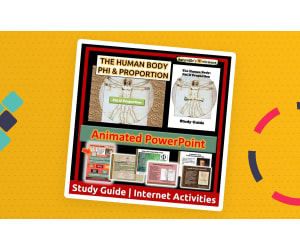
Human Body and Golden Ratio PowerPoint and Study Guide
Math, Grade 4, 5, 6, 7, 8, Projects, Activities, Presentations, Teacher Tools, Quizzes and Tests, Rubrics, Workbooks, Worksheets & Printables
Introduction to the Golden Ratio and the Human Body PowerPoint and Study Guide Lesson The Golden Ratio, or Phi, and the Human Body is a unique math PowerPoint exploration of the human body and Leonardo da Vinci's famous Vitruvian Man drawing. Academic connections are made with math, art and history. Another famous name for the Golden Ratio is the divine proportion, a proportion of beauty found throughout nature, science, art, and architecture. This lesson can be completed in one or two classes depending on how long teachers want to spend on projects. Learners will become enthralled by the idea of how math can be beautiful and learn to treat it like a treasure hunt by looking for the golden ration everywhere around them in art, nature and even their own bodies! Go down as many learning rabbit holes with NatureGlo's MathArt Library Golden Ratio and Human Body page. On this page you'll get videos, project ideas and curated website links. Enjoy the exploration! Student Objectives Students will: Complete the PowerPoint lesson Complete the study guide for the lesson. Watch the curated educational videos from the MathArt Virtual Library Website. Complete the journal in the study guide including a drawing with written descriptions. Complete the quiz. Choose and do a chosen project. Order, Outline and Steps Read the Quick Start guide that comes with the curriculum. Go through the PowerPoint lesson with the students. Students complete the study guide during or after the PowerPoint lesson. Students select and complete a chosen projects about the topic. Grades & Ages Grades 4 - 8 Ages 10 - 14 Implementation Format PowerPoint Study guide Use of Internet Activities Projects Answer Key - INCLUDED Number of Pages - 33 File Types - PowerPoint and PDF files Length of Lesson - At least one lesson, or, optionally two or more lessons
Author NatureGlo's eScience
Rating
Tags Golden Ratio, Human Body, Divine Proportion, Math Activities, Math Projects, Leonardo Da Vinci

Author At Work Writing Checklist Activity
ELA, Writing, Grade 2, 3, 4, 5, Activities
If you want to give students extra practice with writing skills, I have just the resource for you! What You Get: This is an Author at Work Writing Checklist that was designed for elementary students who need writing supports. This resource is a 6-page printable . How To Implement This Resource: Standard: Produce clear and coherent writing in which the development and organization are appropriate to task, purpose, and audience. Directions: Use the writing checklists (narrative, informative, opinion) to ensure your written work is written clearly and contains the necessary components. There are 3 types of checklists included: - Narrative Writing - Opinion Writing - Informative Writing Each checklist can be printed in color or black and white. These checklists can be utilized any time you are focusing on these writing types. These are also great to print, laminate, and display on a reading or writing bulletin board. I hope you enjoy! Here are more of my resources for you to enjoy: Total Solar Eclipse Worksheet Recognizing Fractions Worksheet Long U Matching Puzzle 1.OA.5 Common Core Math Lesson Point of View Activity Rounding to the Nearest Hundred Thousandth Worksheet You can find more resources at my storefront here: Have Fun Teaching
Author Have Fun Teaching
Tags Reading Poster, Writing Poster, Writing Checklist, Opinion Writing, Narrative Writing, Informative Writing, Author At Work

Martin Luther King | Activities
Social Studies, History, History: USA, Grade 4, 5, 6, 7, Activities
Martin Luther King | Activities Martin Luther King Day is a wonderful opportunity to teach an important part of history and the Civil Rights Movement to your students. We are going to embark on a series of activities to learn about the remarkable life and legacy of Martin Luther King Jr. Through these activities, we will explore his achievements, reflect on his powerful words, and understand the importance of his role in the Civil Rights Movement. Reading Comprehension: We will begin by reading text that shed light on Martin Luther King Jr.'s life and work. As you read, pay attention to important details, key events, and his influential message of equality and justice. Writing Activity : After gaining an understanding of Martin Luther King Jr.'s contributions, we will engage in a writing activity . You will have the opportunity to reflect on his legacy and express your thoughts and feelings. Consider how his message impacts you personally and how you can make a difference in promoting equality in your own life and community. Vocabulary: Throughout our exploration, we will encounter significant vocabulary related to civil rights, activism, and social justice. We will discuss and define these terms to deepen our understanding of the historical context and the impact of Martin Luther King Jr.'s work. Word Search: To have some interactive fun, we will engage in a word search activity featuring keywords associated with Martin Luther King Jr. and the Civil Rights Movement. It's a chance to reinforce vocabulary and have a little friendly competition while searching for the hidden words. MLK Quotes: We will explore a collection of inspiring quotes by Martin Luther King Jr. These quotes encapsulate his wisdom, passion, and vision for a better world. We will discuss the meaning behind these quotes and their relevance in today's society. Timeline Activity : To gain a chronological understanding of Martin Luther King Jr.'s life and the milestones of the Civil Rights Movement, we will create a timeline together. This activity will allow us to visualize the progression of events and understand the significant moments that shaped history. By engaging in these activities, we aim to foster a deep appreciation for Martin Luther King Jr.'s contributions, promote empathy, and encourage you to become agents of positive change. Let's honor his legacy by exploring, learning, and reflecting on the values he stood for. Are you ready to begin? Let's get started on this journey of discovery and inspiration!"
Author educ_project
Tags Martin Luther King, History Activities, Reading Comprehension, MLK Timeline, MLK Writing, MLK Vocabulary
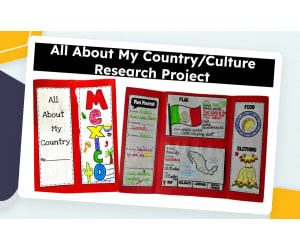
All About My Country Project
Social Studies, Geography, Grade 3, 4, 5, Activities, Projects
Introduction- This is a My Culture/Country Project that your students will love making. This activity will allow students to creatively research and display information about their country and or culture. These make great displays on your bulletin boards or can also be used as a presentation project. In addition, students can work on this activity during class or it can be assigned as a take home project. This is a fun way for students to show what they know, as they write about traditions, famous people and more! Order, Outline and Steps- very simple, just print and go! Helpful to model how to put the parts together for students before they get started so they have an idea of how to do it themselves. Grades or Ages- can be used from 2nd grade to upper 4/5th grades. Implementation Format- can be implemented during special culture days celebrated or research projects in social studies class. You may also assign countries to students or this can be completed any time you are studying a new country. How to use and Variations- this can be used at any time of the school year, especially during "international/culture week or day" at school. This activity takes a few lessons/days to complete. File Types- this file comes as a PDF that can be printed on a standard sheet of 8.5"x11' paper. Total Number of Pages- 12 pages are included Project Focus Areas: Country Flag- section to draw and write about the country flag, colors, symbols, and meaning of the flag. Country Food- a plate to draw some food Country Clothing- section to draw some traditional country clothing Country Map- includes area to daw the country, population, and size Holidays Famous Landmarks Famous People/Person Fun Facts Language Currency Climate Important products produced
Author CraftEdPrints
Tags Social Studies Project, Geography, All About My Country, Traditions, Holidays
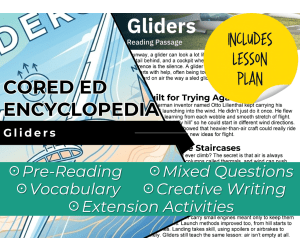
Gliders Reading Comprehension Passage - Cored Ed Encyclopedia
ELA, Reading Comprehension, Reading, Science, Technology, Pre-Reading, Language Development, Physics, History, Social Studies, Grade 2, 3, 4, 5, Worksheets & Printables, Worksheets, Teacher Tools, Centers, Activities, Writing Prompts, Assessments, Quizzes and Tests, Quizzes, Lesson Plans
This gliders reading comprehension with lesson plan includes: Visualization (on the front cover) Start your lesson by taking a minute to think and share something about the topic. Read the script aloud (slowly), perhaps prepare some music or sound effects. Student close their eyes and let their imaginations wander. Students open their eyes, read the question aloud and give them a few minutes to complete. Ask a few students to share or keep answers until the end to compare with what they learn in the passage. Quick pause—thousands of Cored Education products are included with your TeachSimple membership. Download links and encyclopedia index available here. Pre-Reading Trivia Students will write down one thing they already know about the subject and then read five more facts and discuss. These facts are fun, and the students will enjoy learning about the subject before reading more. Give 1 minute for students to write what they already know (no pressure—best guess is fine). Read the five facts together. After each fact, do ask a student for their opinion, was it surprising? Set a purpose by asking students to highlight/underline one fact they want to learn more about during the reading. Reading Passage The text is a high-interest reading passage with set paragraphs, roughly three to four paragraphs long. It contains a variety of themes about the topic, anywhere from history to technology. The passage is between 250 and 350 words in length. First, ask students to look at the headings and see what they’ll learn about today. What do they know about the topic/heading? First read options: Teacher read-aloud (best for support). Partner reading (paragraph by paragraph). While reading, students underline important details, and vocabulary words they think may come up in the questions section. Mixed Questions The first question page contains four multiple-choice questions, each with a choice of four answers, and three written response questions that require a sentence or two from the student. Students complete the mcqs first independently, then review quickly as a class. For the 3 written responses, try to get students giving the answer with some form of evidence: “I think ___ because the text says ___.” If students get stuck, send them back to check the passage. Vocabulary Questions Practice seven key words from the text in this section across two activities. First section is scrambled words where students will unscramble three words given a clue for each. The second section is a word to meaning matching activity. Before starting, have some students read out words they underlined in the passage. Ask students to say the word and read aloud the sentence(s) around each word. Ask students to do scrambled words and the matching exercise in pairs then go through answers as a class. For the scrambled spelling task, get four pairs to come up to the board and write the words for extra practice with the other student reading out the clue. For the matching task, prompt students to give full sentences: “I matched ___ with ___ because ___.” Creative Writing In this question, the student will be required to write a five to eight sentence paragraph on a question related to the topic. Before starting, ask students write down 3 key ideas they are going to include in their piece. Ask students for ideas to share around the class to help those struggling. Pro writing expectations: 5–8 sentences At least 2 facts or details from the passage At least 2 vocabulary words from the previous page Students read their paragraphs while classmates listen for facts and vocabulary words. Extension Activities This page is optional for fast finishers or to take home. There are several activities, each one requiring a different skill. Do some, do none, do all, completely optional - but you will feel reassured knowing every possibility is planned for. Includes summary writting question and additional facts. Answer Key There are answers for the multiple-choice questions, written response questions have sample answers, vocabulary answers and if there is a summary question then a sample summary will be provided as well. Lesson Plan Included Customized lesson plan for this lesson is included. Lesson Snapshot Title: Gliders Genre: Nonfiction (informational text) Subject: Science (flight/engineering) Primary Topic: How gliders fly using lift and launch methods Estimated Guided Reading Level (A–Z): Q What This Lesson Teaches Best Explains what makes a glider different from a small airplane (no motor; quiet flight; “trade height for distance”). Describes how gliders get into the sky (help at the start, including being towed; later mentions aerotows and winches). Teaches how moving air helps a glider climb—especially rising warm air (“thermals”) and wind pushed upward at a ridge or hill. Shows how design features support gliding (long, narrow wings; smooth body; low drag to lose little energy). Connects gliders to early flight experiments through Otto Lilienthal’s repeated testing and “fly hill.” Learning Goals Students will describe how a glider is similar to and different from a small airplane. Students will explain how a glider usually starts flying using details from the text. Students will identify two kinds of lift described in the passage and tell how each helps a glider climb. Students will explain why long, narrow wings and low drag help a glider glide efficiently. Students will describe how gliders and launch methods changed over time, using examples from the text. Students will explain how spoilers or airbrakes help with landing safely. Key Vocabulary From the Text cockpit — where the pilot sits and reads instruments. thermals — rising columns of warm air. drag — air resistance that slows motion. aerotows — launches where an airplane tows the glider. spoilers — panels that help a glider slow down and descend. FULL CATALOG OF DOWNLOAD LINKS AND ENCYCLOPEDIA INDEX HERE
Author Cored Education
Rating
Tags Vocabulary, Reading Comprehension, Reading Passages, Lesson Plans, Ela Lesson Plans, Reading Comprehension Lesson Plans, Pre-reading, Science Lesson Plans, Physics, History
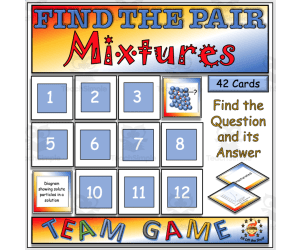
Mixtures - Solutions, Suspensions and Solubility - Find the Pair Game for Middle School
Science, Chemistry, Grade 5, 6, 7, 8, 9, Activities, Games
Mixtures - Solutions, Suspensions, and Solubility Find the Pair Game for Middle School This is an innovative teaching resource designed to make learning chemistry fun, targeting students in grades 5 through 9. The game focuses on various concepts including solutions, suspensions, dissolving processes, saturated solutions and solubility etc. Each team of students is given 42 cards which are laid out face down and they then turn over two cards at a time in order to match questions with corresponding answers. Additionally an interesting twist to this game includes a challenge option if a team member believes that chosen pairs are not correctly matched. Included in the Game Set 42 question/answer cards An instruction sheet guiding you on effective gameplay. A teacher's answer sheet for quick reference during gameplay disputes. To prepare these games , we offer multiple file types for different printing preferences such as double-sided copies or laminated sheets for increased durability over time. However it should be noted that this game does require basic knowledge of elements and compounds as well as understanding what constitutes mixtures. Bonus: One significant highlight of using this resource is the combination of fun gameplay with educational content. It makes homework more engaging as kids would be excited about grasping these educational concepts if it means scoring more points in their next game!
Author Elf off the Shelf Resources
Tags Chemistry Education, Mixtures And Solutions, Hands-on Learning, Middle School Science, Interactive Game
NO PRINT Map My Language Map Skills Amusement Park Virtual Tri
Special Resources, Speech Therapy, Preschool, Grade 1, 2, 3, 4, 5, Activities
NO PRINT Map My Language Map Skills: Amusement Park Virtual Trip This engaging teaching resource is tailored for elementary school classes ranging from Kindergarten to grade 5. It seamlessly integrates fun and learning through an imaginative trip to an amusement park, targeting a wide range of cognitive skills such as attention, memory, and executive function. Interactive PDF Compatibility The resource employs the simplicity of interactive PDFs to drive its learning objectives. Using readily available tools like Adobe Reader Comment feature or other platform fillable tools, students can directly annotate onto the PDF while honing verbal expression and auditory comprehension skills. Versatile Adaptability Whether for whole class instruction or small group activities or even individual assignments, this tool proves to be exceptionally adaptable. The versatility extends further by catering specifically for mixed groups via three distinctive map interaction activities focusing on articulation. Inbuilt Tasks within Maps Deductive Reasoning & Problem Solving: Location-related tasks allow students to estimate and manage times effectively. Creativity: Sentence creation tasks stimulate their creative thinking, triggering the use of descriptive vocabulary. Linguistic Challenges: Relational vocabulary counters push their linguistic boundaries via convergent naming. The resource also promotes parallel processing skills by introducing divided attention exercises that stimulate inferential thinking while also managing multitasking practices effectively. Bonus Articulation Features! ") Mixed groups are offered additional articulation features designed specifically for speech therapy sessions—True inclusive education in practice! The various stages within these exercises challenge children's decision-making processes—a life skill that is transferable outside of the classroom. This paves their path to develop quick prioritization abilities along with comprehension and direction-following skills. Final Thoughts Whether you're a public school teacher or homeschooler, NO PRINT Map My Language Map Skills: Amusement Park Virtual Trip offers an innovative, multifaceted approach in facilitating fundamental cognitive advancements—perfect for diversifying lesson plans and enhancing learning experiences.
Author Intrepid Speech Therapy Materials
Tags Amusement Park, Virtual Trip, Cognitive Skills, Interactive PDF, Map Skills
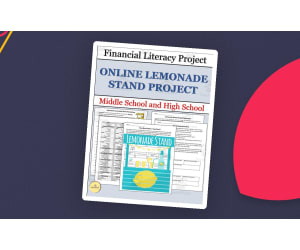
Online Lemonade Stand Project
Life Studies, Finance, Home Economics, Business, Math, Money, Grade 5, 6, 7, 8, 9, 10, 11, 12, Activities, Projects, Games
The Online Lemonade Stand Project Whether you're a public school teacher or a homeschooler, the Online Lemonade Stand Project is a resource that brings practical business principles into your classroom. Designed to simulate an engaging and realistic lemonade stand experience, this project provides an innovative educational approach for students from grade 5 up to grade 12. Nurturing Financial Literacy and Entrepreneurship The Online Lemonade Stand Project takes on the challenges of presenting financial literacy and economic insights to students in a way that is both age-appropriate and dynamic. At its core, it's about giving your pupils practical application of entrepreneurship knowledge within the confines of their learning environment; their very own virtual lemonade stand! An Interactive Experience In this interactive activity , students are tasked with managing every aspect of running a profitable lemonade stand online. From calculating production costs to creating effective pricing strategies, they will experience first-hand how supply and demand dynamics can impact business success. Data trackers: Included in the project materials are data trackers specifically designed for student use. Analyzing outcomes: These help learners analyze outcomes from different strategies. Making adjustments: Identifying areas for potential enhancement and making necessary adjustments as if they were running real-life businesses. Curriculum Alignment Aligned with life studies and math curricula including focus areas such as finance, home economics, business and money management; this learning project isn't just about teaching entrepreneurship concepts but also reinforcing math skills in real-world contexts. Greatest Benefit? The great thing about The Online Lemonade Stand Project? It's highly adaptable! Whether used during whole group lessons or small group activities - even as homework assignments - it accommodates diverse educational needs across multiple grade levels. Yet despite its versatility,the unifying goal remains consistent: To equip students with critical thinking skills essential in today's global economy whilst offering them unique opportunities to learn beyond textbooks through active exploration in digital spaces. If you're looking for versatile yet substantive teaching resources that bring education closer to life experiences – consider integrating The Online Lemonade Stand Project into your curriculum!
Author Mister G's Teacher Shop
Tags Interactive Activity, Financial Literacy, Entrepreneurship, Math Skills, Practical Application, Project Lemonade, Online Lemonade Stand, Lemonade Stand Online, Lemonade Stand Lesson Plans, Lemonade Stand Online Games

Middle School Math Stations or Centers: Triangles, Area, Angles
Math, Geometry, Measurements, Grade 5, 6, 7, 8, Centers, Activities
Middle School Math Stations or Centers : Triangles, Area, Angles This is an engaging teaching tool designed for middle school students and high school special education classrooms. It focuses on geometry concepts related to triangles: classification, types of angles, formula for area of a triangle, and calculating volume of a triangular prism. How to Use: Five ready-to-print math stations about the study of triangles. Put each station in a different area in the room. Students can rotate through a set time intervals (every 15-20 minutes), or you can allow students to work at their own pace as long as no station gets too crowded. Station 1: Students solve four word problems involving triangles. Station 2: Students explore the relationships for interior angles in triangles, quadrilaterals, pentagons, and hexagons. Station 3: Students play a simple dice game to practice classifying types of triangles. Station 4: Students work together to explain the rationale behind the area formula for triangles. Station 5: Students calculate the surface area and volume of a house shape (rectangular and triangular prism compound shape). The Learning Benefits of Math Stations: Promote physical movement in the classroom Foster cooperative learning among classmates by encouraging discussions based on these activities Allow student choice and easy differentiation (some students may complete 2 or 3 centers , some may complete all 5) Grades to Use With: This lesson is designed for students in grades 5-7 as part of their geometry unit. It covers area of triangles, classification of triangles, interior angles of polygons, and volume and surface area of compound shapes including triangles. It could also be used in high school special education classrooms where applicable. What's Included: 7 Page PDF with Title Page, 5 Stations, and Complete Answer Key If you enjoy these math stations, check out others in my store: 5 Stations for Adding and Subtracting Integers 5 Stations for Early Algebra Concepts 5 Stations for Area, Perimeter, and Volume 5 Stations for Percent, Decimals, and Fractions 5 Stations for Ratios and Rates 5 Stations for Place Value: Hundred Millions to Millionths 5 Stations for Statistics and Probability
Author Grace Under Pressure
Tags Triangles, Area, Angles, Geometry Activities, Math Stations, Math Centers, Math Games, Geometry, Grade 5 Math, Grade 7 Math
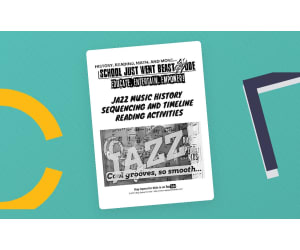
Sequencing Activities: Jazz Music History | Nonfiction Passage with Questions
ELA, Reading, Grade 5, 6, 7, Activities
Jazz Music History Sequencing Activities engage students with the history of jazz music told through rap song lyrics. Students will practice sequencing and timeline skills as they read the lyrical passages and answer multiple-choice comprehension questions. Answer keys are included. Educators can use these activities for whole-group instruction to teach reading skills or independent practice to reinforce sequencing. With content-rich vocabulary and kid-friendly rap lyrics, these passage activities offer a lively twist on traditional sequencing worksheets. Recommended for grades 5-7 language arts and reading. Everything needed for the activities is included: song lyric reading passages, sequencing graphic organizers , timeline creation, multiple choice questions with answer keys.
Author Rap Opera for Kids!
Tags Jazz Music History, Jazz Music Sequence Of Events, History Reading Comprehension, Jazz Music History Questions

Excel Stories: Pirate Edition | Computer Science Project
Science, Technology, Computer Science, STEM, Grade 3, 4, 5, Activities
This resource is an Excel Stories Computer Science Project. This is the Pirate Edition. With this project, students will become familiar with spreadsheets and operating Excel in an exciting way. You will receive instructions on how to implement this lesson successfully. Students will work through a mystery story in PowerPoint as they apply their skills in Microsoft Excel.
Author Lab LLama - Computer Skills Resources
Tags Pirates, Excel, Computer, Science, Spreadsheets
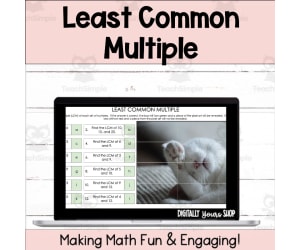
Least Common Multiple - LCM - Self-Checking Digital Activity
Math, Fractions, Multiplication and Division, Division, Grade 5, 6, Activities
Least Common Multiple - LCM - Self-Checking Digital Activity Are your students encountering challenges when tasked with finding the least common multiple? This Least Common Multiple (LCM) activity offers an interactive, non-traditional approach that moves beyond the regular worksheet. This resource merges mathematics and technology by utilizing Google Sheets to make each mathematical problem a self-checking exercise. As students solve the problems, they are immediately given feedback. Correct answers reveal part of an illustration within the sheet by turning green, while incorrect responses do not unlock any portions of the picture and turn red instead. What could be more engaging than a math problem that doubles as a mystery picture? This digital resource includes: 12 LCM problems designed to lighten your correction workload. A student recording sheet to help learners clearly lay out their mathematical process for solving each puzzle. No need for you to spend extra time creating answer keys; one is already provided in this convenient package. This paperless resource can be used in several ways: Morning work or bell ringer activities to start off a class period on an active note; An engaging alternative homework assignments; Exit tickets at the end of a lesson for quick assessment checks. Add it-to-your Google Drive – No preparation involved! The digital activity is ready-to-go after being added into your Google Drive! You can instantly assign it to students using Google Classroom or your preferred Learning Management System (LMS). This tool is specifically recommended for teachers seeking practical resources both suitable for classroom use and learning at home. Use across Grade Levels The Self-Checking Digital Activity addresses topics within Grade 5-6 Math such as fractions multiplication hinting at its versatility across grade levels—a boon especially handy when planning differentiated instruction! Uses: Whether you are aiming for a math review, test preparation, or additional practice in math concepts, this LCM activity could be an exceptional companion in your teaching journey. Enjoy moving into digital era classroom with the fusion of learning and fun!
Author Digitally Yours Shop
Tags LCM, Digital Activity, Self-checking, Google Sheets, Math Problems

Summer Special Activities, Stories and Questions (3-9 years)
ELA, Writing, Creative Writing, Kindergarten, Preschool, Grade 1, 2, 3, 4, 5, Activities
Summer Special Activities, Stories and Questions: A Complete Resource The resource, Summer Special Activities, Stories and Questions, is an interactive guide providing a fun-filled combination of linguistic exercises, cognitive tasks and captivating storytelling. Ideal for students aged 3-9 years old in diverse teaching settings such as public schools or homeschools. Engaging Storyline with Popular Characters Fundamental to the resource is an engaging storyline featuring popular characters Pom Pom, Zoggy and Sam. Their exciting seaside adventures keep young learners' curiosity peaked throughout the activities. Diverse Set of Stimulating Exercises Word Searches - A great way to expand vocabulary in a fun fashion. Puzzles - Crafted to challenge reasoning skills in early learners. Crosswords - Focusing on age-appropriate words for further enhancing vocabulary use among students. 'What Can I Tell You About My Holiday?' Section for Imaginative Development This creative section calls upon the kids' imaginative abilities as they narrate their own holiday experiences fostering critical communication skills. Promoting Independent Thinking with Open-ended Questions Features after Stories:} 'The Sandcastle'- This story ending with open-ended questions invites young readers to reflect on narratives promoting independent thinking. This enriching guide isn't limited by seasonality. It's versatility crates suitability year-round across various academic settings from whole group instructions, small learning pods or even individual homework assignments. A noteworthy feature is its length – this comprehensive PDF activity guide includes 94 pages ensuring continued learning engagement over time. To sum up - Summer Special Activities, Stories and Questions is an indispensable tool in the hands of educators looking to provide holistic learning experiences.
Author Guinea Pig Education
Tags Interactive Learning, Summer Activities, Educational Resource, Storytelling, Cognitive Exercises

Change - Convert - Customary Weight - Ounces, Pounds, and Tons Digital Activity
Math, Measurements, Grade 4, 5, Activities
The Change - Convert - Customary Weight - Ounces, Pounds, and Tons Digital Activity This dynamic teaching resource is designed to foster enthusiasm and engagement in mathematics with a particular focus on conversions among customary units of weight. It is an ideal addition to the curriculum for grade 4 or 5 teachers. Modern & Interactive Learning Approach Gone are the days of tedious textbook problems! This Google Sheets-based activity provides interactive computation practice with its exciting Mystery Picture Reveal feature which unveils parts of a mystery picture as students answer questions correctly, thus making math interesting again. Contents & Use The digital activity file includes 12 problems related to converting customary units in weight (Change 19T to ____ lbs as an example). Easily uploadable onto your Google Drive, these can be assigned via Google Classroom or other Learning Management Systems. Suitable for use as morning work, homework exercises or even bell ringers – encouraging increased student interaction and responsibility. Crafted for Convenience & Comprehension No-prep pack: This saves you valuable time spent on lesson preparation. Solving Method: Students can solve using whiteboards or scratch paper before typing their final answers into designated cells. Misconception Trapper: This self-grading tool provides insight into what areas are problematic when it comes to converting ounces to pounds and tons. The inclusion of a 'student's recording sheet' promotes substance over superficiality by tracking each child's problem-solving process. This encourages true intuitive understanding rather than rote learning. Conclusion Overall, this comprehensive teaching tool doesn’t just provide content relevance and student engagement. It streamlines lesson planning with its pre-loaded questions, immediate feedback through its self-checking feature, and caters to diverse learning styles. A truly valuable addition to reignite enthusiasm for math in your students!
Author Digitally Yours Shop
Tags Convert, Customary Weight, Ounces, Pounds, Tons

Practise Writing A Balanced Argument: Young People Eat Too Much Fast Food (9-14)
ELA, Writing, Grade 4, 5, 6, 7, 8, 9, Activities
Practise Writing A Balanced Argument: Young People Eat Too Much Fast Food (9-14) This is a valuable resource for educators interested in refining their students' persuasive writing skills. Designed for learners in Grades 4 to 9, the pack addresses key aspects of argumentative writing and engages students with pertinent topics such as healthy eating and societal issues. Aims The primary goal is to strengthen literacy competencies, thereby assisting learners in enhancing their English assignment grades. It trains students on how to present balanced opinions, back them up with strong evidence, deliver counter-arguments and skillfully deflate them – essentially offering a thorough guide on discursive writing which forms part of the Language Arts curriculum. Additional Learning Aspects: Lessons on literary devices used in persuasive language such as figurative speech, emotive words and effective vocabulary choices. The significance of tailoring arguments to a particular audience. Varying sentence structures for added impact. Excellence in written communication: Good spelling, correct punctuation usage, grammar rules are principal learning objectives here. Rationale This product distinctly emphasizes both theory learning and its real-world application; it includes model answers along with sample texts by actual students. Reinforcing learnings through practice questions(regular error corrections too) ensures steady build-up of confidence making essay writing more enjoyable than merely exam-oriented activity over time.This set comes as an easily-accessible PDF compatible seamlessly into your teaching plan - compounding flexibility via adaptability for use in whole group activities or small focus groups or even homework assignments. Flexibility makes it ideal While it is ideal for use in the classroom, it's equally great for home studying sessions; making these packs excellent complements to school lessons ensuring continuous learning irrespective of the location. These can be bought in any order you wish simplifying logistics for educators potentially saving hours on lesson preparation. Thus, the end products are confident learners, joyful writing and reduced teacher workloads - possibly the perfect trifecta resulting from this resource pack.
Author Guinea Pig Education
Tags Balanced Argument, Persuasive Writing, Literacy Skills, Healthy Eating, Discursive Writing