



3,971 products added recently
Page 96 - 8th Grade Activities
Equip your eighth-grade students for the next academic level with activities that challenge and inspire. These resources focus on advanced concepts, critical thinking, and skill refinement. Use them to ensure students are confident and prepared for the transition to high school.

 Show filters


Creative Writing: Film Review
ELA, Writing, Creative Writing, Grade 8, 9, 10, 11, Activities, Projects
Creative Writing: Film Review An educational resource primarily designed for grade 8 to grade 11 students. Not only does it focus on Language Arts and particularly, Creative Writing, it brims with opportunities for sharpening various skills from criticism and art to writing and critical thinking. Format: This product is presented in the form of activities and projects guiding students to construct insightful reviews for a film selected by their teacher. With its balance of simplicity beneath layers of detail, it caters easily to both lower-level learners as well as accelerated classes. Flexibility: The resource can serve as an extra credit assignment or aid homebound students who may not have managed to read a required novel - showcasing its inclusive design ensuring that every student gets an equal chance at learning while enjoying this activity . The application could be expanded based on each class' unique needs or individual student requirements. For example, teachers could introduce a visual component into the exercise or expect learners to present their review via PowerPoint presentations - steps which further enrich this program. Promotes peer-to-peer learning moments within your classroom community by prompting shining pupils who've performed exceptionally well in their reviews instruct fellow classmates using their own work. Accessibility: Last but not least, Creative Writing: Film Review comes available in an accessible Word Document format spanning two pages—providing plenty without overwhelming teachers with unnecessary complexity often encountered with digital resources. In essence—as wonderfully detailed—it's reminiscent of a 'little black dress', simple yet elegant that can be accessorized infinitely based on varying educational contexts—making education enjoyable yet thought-stimulating!
Author The Education Lab
Tags Education, Creative Writing, Film Analysis, Critical Thinking, Student Engagement

TinkerCAD step-by-step instructions for Castle Turret
Special Resources, Grade 5, 6, 7, 8, 9, 10, 11, 12, Activities, Projects
TinkerCAD step-by-step instructions for Castle Turret. Students only need to know the bare basics to complete this. I tested this with a fifth-grade class and most could complete it with no help. Designed to print with no supports for easy printing. Include TinkerCAD tool guide! Has a content page. Great beginners’ tool for learning to make 3D models and learn TinkerCAD. TinkerCAD is a free online program that makes 3D model that work on 3D printers, laser etching machines, water jets, plasma cutters and many more!! Tinkercad is an easy-to-use, browser-based computer-aided design (CAD) software developed by Autodesk. It is primarily used for creating and designing 3D models, particularly in the field of 3D printing. Tinkercad is popular among beginners and hobbyists due to its intuitive interface and simplified tools. Here are some key features and uses of Tinkercad: 1) 3D Modeling: Tinkercad allows users to create 3D models by combining basic shapes and manipulating them using tools such as scaling, rotating, and moving. It provides a wide range of primitive shapes like cubes, spheres, cylinders, and more, which can be customized to create complex designs. 2) Design Customization: Users can apply various modifications to their designs, including resizing, rounding edges, adding text, creating holes, and aligning objects. These tools help in refining the models and making them suitable for specific purposes or fitting them with other components. 3)Import and Export: Tinkercad supports the import of existing 3D models in STL and OBJ formats, allowing users to modify and incorporate them into their designs. It also offers export options to save the designs as STL files, which are widely used in 3D printing. 4) Collaboration and Sharing: Tinkercad provides features for collaboration, allowing multiple users to work on the same project simultaneously. It enables real-time sharing and editing, making it convenient for team projects or educational purposes. 5) Electronics Integration: One notable aspect of Tinkercad is its integration with electronics. It offers a range of electronic components, including resistors, LEDs, motors, and microcontrollers, which can be used to create interactive models and prototypes. Users can simulate circuit connections and test their designs before implementation. 6) Educational Tool: Tinkercad is widely used in educational settings, particularly for teaching students about 3D design, modeling, and prototyping. Its simple interface and beginner-friendly tools make it accessible to users of all ages and skill levels. Overall, Tinkercad is a versatile and user-friendly CAD software that allows individuals to create and customize 3D models. Whether you're a hobbyist, student, or professional, Tinkercad provides a valuable platform for designing, prototyping, and exploring the world of 3D printing and modeling. Total pages: 29 pages Commands to be learned: Group Ungroup Align Mirror Duplicate Holes Solids Rotate Move Drop Subjects: Geometry Engineering Career and technical education Types: Projects Handouts Printables
Author MontyWorks
Tags TinkerCAD, 3D Printing, 3D Printer, Projects
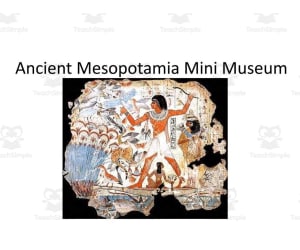
Ancient Mesopotamia Mini Museum
Social Studies, History, History: Ancient, History: Europe, Grade 6, 7, 8, Activities
The Ancient Mesopotamia Mini Museum is a fun way for students to understand part of the culture of Ancient Mesopotamia including Egypt and Sumeria. You will divide the class into groups and print the slides for each station. Directions are included for how to best implement the activity.
Author Creative Educator
Tags Mini Museum, Ancient History, Europe, Mesopotamia, Civilizations, Research, Group Work, Social Studies, Cuneiform Writing

Sectionalism
Social Studies, History, History: USA, Grade 6, 7, 8, 9, Activities
This homework activity teaches students about the sectional differences between the different regions of the United States which grew during the 19th century. THE NORTH Students learn about the growth of factories and other industries and the importance of tariffs to protect against foreign competition. Also introduces students to the growing anti-slavery movement in many northern states. THE SOUTH Covers the major crops grown in the southern states and the importance of slave labor. Also explains southern opposition to tariffs which hurt their trading relations with other nations, especially Great Britain. THE WEST Teaches about the desire of many westerners to gain government funding for roads and canals as well as their opposition to the expansion of slavery into new territories. ACTIVITIES Students can work on a map activity to illustrate and summarize the different sectional differences (examples included in the file). There is also a small crossword activity which students can use to help them research through the reading sheets. PRESENTATION Includes a short Powerpoint presentation with images and enlarged reading sections to help guide teachers and students through the materials. FILE TYPES Files come in pdf and editable Powerpoint formats for you to make any changes you need. There are also folders containing jpg images of different slides and pages which teachers can upload to their own websites or google classrooms for students to access.
Author Mr Gray History
Tags Sectionalism, Sectional, Sectionalism Facts

Oviraptor Activity
Social Studies, History, History: Ancient, History: World, Grade 2, 3, 4, 5, 6, 7, 8, Activities
Activity Introduction An amazing activity designed for the students to learn more about animals in different countries. Oviraptor Do you like dinosaurs? what is your favorite one? Do you own a pet? If yes, tell us more about it, like what its name? And what do you like most about it? Do you think that your pet has been evolved from a dinosaur? Can you write down the characteristics of your favourite dinosaur like it's shape, their rivals, where did it use to live and what was their favourite food? What is the largest and the smallest dinosaur that ever found? Why is the T-rex is so famous? Have you ever read any interesting facts about it? Can you name any of the carnivores or herbivores dinosaurs? Oviraptor Activity The activity is perfect for encouraging the researching skills for the students, while learning more about this fantastic animal. Oviraptor This friendly designed worksheet is suitable for students at school, homeschooling, and as a group activity. Instructions Fill out the following information about oviraptor. What did it eat? Name meaning What words would describe it? Format Available in a PDF format.
Author Educational Voice
Tags Oviraptor Activity, Oviraptor, Oviraptor Facts, Oviraptor Facts Fr Kids, Dinosaur, Dinosaurs , Dinosaurs Facts, Dinosaurs Facts For Kids

Amphibians vs Reptiles Activity
Science, Life Sciences, Animals, Biology, Grade 3, 4, 5, 6, 7, 8, 9, Activities
Activity Introduction An amazing activity designed for the students to learn more about famous places in different countries. Amphibians vs Reptiles Do you like animals? what is your favorite one? Do you own a pet? If yes, tell us more about it, like what its name? And what do you like most about it? What are the animal kingdoms? Can you write down the characteristics of each animal class like mammals, birds, reptiles, amphibian, fish and mollusks. Do you know that some animals can sing, can you name any of them? What is the largest and the smallest mammal in the world? What is the largest and the smallest bird in the world? What is the largest and the smallest fish in the world? Amphibians vs Reptiles Activity The activity is perfect for encouraging the researching skills for the students, while learning more about this fantastic place. Amphibians vs Reptiles This friendly designed worksheet is suitable for students at school, homeschooling, and as a group activity. Instructions Cut everything out and glue them where they belong. Format Available in a PDF format. Extend the comparison to other groups with this animal classification worksheet . Compare reptiles with another group using this mammal and reptile worksheet .
Author Educational Voice
Tags Amphibians Vs Reptiles Activity, Amphibians, Amphibian, Amphibians Facts, Amphibians Facts For Kids, Reptiles, Reptile, Reptiles Facts, Reptiles Facts For Kids
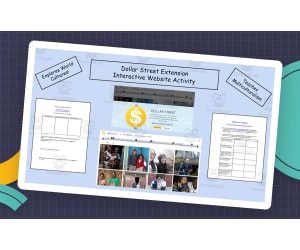
Dollar Street Extension Activities-Fully Editable!
Social Studies, History: World, Grade 6, 7, 8, 9, 10, 11, 12, Activities
These are two social studies, world cultures, separate advisory or homeroom lessons to help students understand the world better. They could be two separate lessons or one long one. The pictures shown are from the videos. In the "If The World Were 100 People" lesson, the engaging video link describes the world's population filtering for income, technology, language, etc. In the editable handout, teachers can tailor the analysis to their city and school. Students will answer questions about the video as well as analyze their own city and school communities. In the Dollar Street lesson, there is a video link to view the explanation of the Dollar Street tool-which examines families in 50 countries. The tool displays the homes as if they all lived on the same street where the richest live on the right and the poorest live on the left and everyone else in between. It is an amazing tool. For both lessons, teachers need internet access, a way to show the videos, and the ability to print off both handouts. Both handouts are FULLY editable to tailor to your school and city communities.
Author Jennifer Moyer Taylor
Tags Social Studies, Diversity, World History, Editable
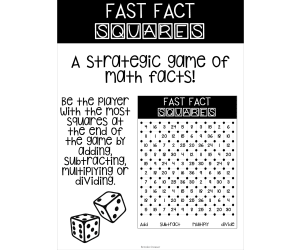
Fast Fact Squares: A strategic game to practice fact fluency!
Math, Fact Families, Addition and Subtraction, Addition, Multiplication and Division, Multiplication, Division, Subtraction, Grade 3, 4, 5, 6, 7, 8, Activities, Games
Fast Fact Squares: A strategic game of math facts! Be the player with the most squares at the end of the game by adding, subtracting, multiplying or dividing. This game is great for a variety of ages, whether they are just learning their addition facts (adding 1 through 6), are practicing all of their addition, subtraction, multiplication and/or division facts, for those who know all of their facts but are practicing their fluency...or for those who just like strategy games! This game is great to incorporate into your math lesson or throughout the day as a fast finisher activity. Students and teachers alike will also love it as an indoor recess game. Students may not even realize they are practicing their facts or how much strategy is really involved! Materials Needed: •Game Board •2 dice •Pen or pencil Object of the Game: •To be the player with the most colored squares How to Play: Decide which player goes first by rolling the dice. The person with the highest roll goes first First player rolls both dice. They may either add, subtract, multiply or divide the dice. Player finds their answer on the game board and draws ONE line by connecting any two dots that surround that number. Next player’s turn Play continues back and forth When a player connects two dots that closes off a square, they color in the square and earn a point. This player gets to roll again! Once game board has all squares colored in, player with the most points wins! Examples •Player rolls a ”6” and a “2” •Connect dots that surround a “4” (6 – 2 = 4) •Connect dots that surround a ”12” (6 x 2 = 12) •Connect dots that surround a “3” (6 ➗ 2 = 3) •Connect dots that surround an “8” (6 + 2 = 8) Challenge •Another option for keeping score is that each player earns the points that they square off. •For example, if a player squares off a “12” square, that player earns 12 points. •This adds in more strategy for squaring off higher numbers as well as additional practice for adding! Focus a game session on multiplication with these multiplication dice and spinner pages .
Author Brook Creaser
Tags Game, Multiplication, Division, Subtraction, Addition, Fact Fluency , Strategy, Facts

The Battle of Yorktown
Social Studies, History, History: USA, Grade 6, 7, 8, 9, Activities
Use this homework to teach your students about the Battle of Yorktown. READING PASSAGES The reading sheets begin with a short description of the origins of the Battle of Yorktown as the British retreated to Virginia to reinforce their numbers. Students then learn about Washington's plan to trap the British with the assistance of the French navy. "In May of 1781 the leader of the British forces in the south, General Cornwallis, decided to retreat to the port of Yorktown where he could receive supplies and reinforcements from the British fleet. General Washington found out about this plan from spies and saw that he now had a chance to trap the British. On August 19th, Washington met up with a force of 6,000 French soldiers just north of New York and then marched his allied army south as quickly as he could. At the same time, a large French fleet under Admiral de Grasse was sailing up from the Caribbean to the tip of the Chesapeake Bay. Some ships of the fleet then picked up Washington’s army and transported it to the area around Yorktown. Washington’s American forces took up positions to the south of the town while the French took up positions to the west and northwest. French and American forces also cut off the small town of Gloucester across the York River where the British also had soldiers. The French ships then blockaded Yorktown from the sea by cutting off access to the Chesapeake Bay." Students then learn about the course of the battle, starting with the imposition of a blockade and then the slow advance of the American and French forces towards Yorktown. The reading sheets then explain the ultimate reasons for the surrender of the British MATERIALS Students can work on a map to show the course of the battle. To suit your own particular needs, there are a variety of different sheets which you can use. The file also comes with an image sheet, crossword , and completed map file.
Author Mr Gray History
Tags Yorktown, Battle Of Yorktown, War Of Independence, Revolutionary War, Revolution
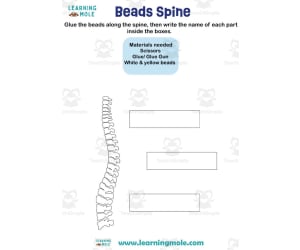
Spine Activity
Science, Life Sciences, Human Body, Biology, Grade 1, 2, 3, 4, 5, 6, 7, 8, Activities
Activity Overview The human body is full of fascinating wonders to learn. This activity is created to help the students recognize the anatomy of the spine. The Spine The gravity plays a vital role in our spine, that why we are taller in the morning that we are at the night. That also happens with the astronauts when they are at the space is they are taller that they are on Earth. Spine Activity The activity is designed to help the students recognize the different parts of the human spine while decorating it with beads. The Human Spine This friendly designed worksheet is suitable for students at school, homeschooling, and as a group activity. Instruction To decorate the spine: Glue the beads along the spine. Then for the fun learning part: Write the name of each part inside the boxes. Materials Needed Scissors Glue/glue gun White and yellow beads Format Available in a PDF format.
Author Educational Voice
Tags Spine, Spinal Cord, Spinal Cord Activity, Spinal Cord Facts For Kids, Human Spin, Human Body, Activity For Kids, Worksheet For Kids
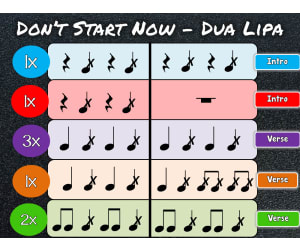
2020 Bucket Drumming MEGAPack
Creative Arts, Art, Music, Grade 4, 5, 6, 7, 8, 9, 10, 11, 12, Activities
Looking for a load of 2020 repertoire (that's clean!) for your bucket drums? Look no further to keep all of your kids drumming throughout the year! In this megapack, you will receive 9 custom arrangements of the most recent popular music from the leading artists at a15% discountwhen bought all together here... BANG!,AJR Savage Love,Jason Derulo ft. Jawsh 685 OK Not to Be OK,Marshmello/Demi Lovato Watermelon Sugar,Harry Styles Break my Heart,Dua Lipa Dance Monkey,Tones and I Don't Start Now,Dua Lipa Kings & Queens,Ava Max Dynamite,BTS All music can be found on YouTube (or Amazon music, Apple Music, Pandora, etc) as the accompaniment tracks and played in the background. You can preview the music in the store by browsing through the bucket drumming arrangements (most are designed for upper elementary, middle, and can easily be played by high schoolers) Have a great time with this!
Author Mr Litts Music Room
Tags Music Bundle, Bucket Drumming, Vocal Music, Songs, Music Lesson
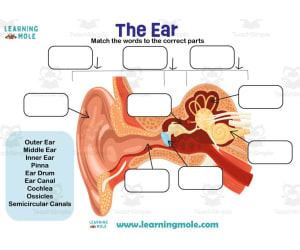
Ears Activity
Science, Life Sciences, Human Body, Grade 3, 4, 5, 6, 7, 8, 9, 10, Activities
Activity Overview The human body is full of fascinating wonders to learn. This activity is created to help the students recognize the anatomy and the job of the human body. Ears Every part and organ in our human body is vital so let's see how important they are. Have you ever imagined how we look like if we didn't have a skeleton? Did you know that because we have our amazing muscles we can stand! Do you know how many teeth do we have? Have you ever wondered about the food journey inside our body? Can you name all the glands in our body? Why do we have skin? Our nervous system is really good at sending signals. Can you tell us more about it? Are you really good at Mathematics, painting, or any other thing? You should really thank your brain about it! The famous five senses are really doing a great work? Can you explain how every sense works? Ears Activity The activity is perfect for encouraging the researching skills for the students, while learning more about our fantastic human body. Ears This friendly designed worksheet is suitable for students at school, homeschooling, and as a group activity. Instruction Match the words with the correct parts. Format Available in a PDF format.
Author Educational Voice
Tags Ears Activity, Ears, Ears Facts, Ears Facts For Kids, Human Body, Human Body Facts, Human Body Facts For Kids, Human Body Activity, STEM, STEM Facts

Back to School: 8 Stations for First Days for Secondary
, Grade 7, 8, 9, 10, 11, 12, Activities, Worksheets & Printables, Worksheets
As we usher in another Back to School season, it's time to build relationships, lay down the ground rules, establish a daily routine, and foster a positive classroom environment! Utilizing STATIONS, you can accomplish all these effectively in roughly two class periods. This adaptable 8-Station resource empowers you to modify, augment, or exclude any content that doesn't align with your class needs! It is recommended to allocate about 10 minutes for students to wrap up each station. The stations can be tackled in any order. Any station that doesn't apply to your class can be removed without impacting the overall activity. Detailed instructions for EACH station are provided! Included Stations (Designed for students in grades 7-12): 1- Introduction: An ice-breaker that encourages students to find ten shared interests within a set of guidelines, fostering classroom camaraderie. 2- Team Building: A fun and challenging task where groups of 3-4 are tasked with constructing the tallest tower within a given timeframe while adhering to set rules! 3- Cell phone Policy: In this activity, students watch a short video about the consequences of inappropriate cell phone use, especially social media, in the classroom. This will relate to your own cell phone policy. A customizable Cell Phone Policy handout is included. 4- Google Classroom/Class Syllabus: This activity allows students to explore your Google Classroom and class syllabus. A Class Syllabus template, editable to your needs, is included. If Google Classroom isn't applicable, simply remove this section! 5- Class Procedures: Students get to know your class procedures, rules, and expectations by viewing a slide presentation. An editable Google Slides template is included for you to personalize. 6- Study the Teacher: This activity allows students to learn about the teacher by scrutinizing six of your preferred things (or photographs). 7-Illustrated Name: This task lets students create a personalized illustrated nameplate, reflecting their interests, which can be used to adorn their class folder, desk, or class bulletin board . 8- Why Study History: This optional activity requires students to examine three quotes about the significance of studying history (or your respective subject) and share their views (in a Graffiti style on large butcher paper). If you don't teach history, simply delete or adjust the quotes. ***At each station, students respond to a concise question or set of questions in their group and engage in INDIVIDUAL REFLECTION. All handouts, station table tents, and station instructions are provided. For the stations, you'll need to provide: paper, large butcher paper or poster, tape, scissors, color tools, markers, computer access (for two stations). Teachers also need to bring six of their favorite items from home (photos are acceptable) for students to observe.
Author Learning is a Passion
Tags Back To School, First Day Of School, Social Emotional Learning, Class Procedures, Class Syllabus

All By Myself - errorless activity with identical and non identical animals
Special Resources, Special Education Needs (SEN), Speech Therapy, Math, Early Math, Kindergarten, Preschool, Grade 1, 2, 3, 4, 5, 6, 7, 8, 9, 10, 11, 12, Activities
Certainly, here's the same text formatted in HTML: All By Myself - Errorless Activity with Identical and Non-Identical Animals An interactive resource meticulously designed for early learners. This 27-page downloadable activity engages children in an interesting task of grouping animals as identical or non-identical, constructing a robust foundation for future cognitive development. The resource can be conveniently accessed by a broad range of students, from the youngest beginners to older, more experienced learners seeking independent tasks. It promotes success due to its errorless design where there are no incorrect answers, offering an ambiance of positivity and frequent achievement. Ideal Tool For Teachers And Occupational Therapists The product is engineered thoughtfully for educators and occupational therapists working on fine motor skills in children. The task involves placing cards onto separate squares – not only engaging but also beneficial for improving the learner’s dexterity. Features various animals: dogs, cats, horses, birds, pigs etc., including dinosaurs! Elevates student knowledge about different animal species in an exciting way. Easily Assembled And Durable Simplicity is found even in its assembly process – Just print out the pages once before laminating them. These can then be coil-bound into a book or alternatively hole-punched and held together with binder rings or placed inside binders. Once laminated cards are velcroed onto pages; it guarantees durability across numerous academic years thereby increasing cost-effectiveness. Promoting Flexibility In Learning Environments This material promotes flexible learning allowing teachers to decide its usage based on their teaching approach - whole group lessons could incorporate it collectively while smaller groups could gain from concentrated sessions optimizing student involvement. Notably, it's an excellent material to include in homework assignments for extra practice. Implementing this tool within classrooms will ensure a heightened sense of understanding with animal categories which is a critical yet often overlooked aspect within basic Math skills nurturing early math capabilities hence sparking interest within young minds paired with enriching special resource subjects. Happy teaching and enjoy learning!
Author IFIO girl - I'll Figure It Out
Tags Errorless Activity, Identical Animals, Non-identical Animals, Fine Motor Skills, Animal Categories
"The Pearl" Creative Essay Assignments
ELA, Writing, Creative Writing, Grade 8, 9, 10, 11, Activities, Projects
There are 4 options for students to choose from with "The Pearl" Creative Essay Assignments. After reading this piece of literature, students will select an essay option and compose a well-developed creative essay.
Author Cogjogger
Tags Creative Essays, The Pearl, John Steinbeck, Literature, Pearl Essay, The Pearl By John Steinbeck Essays

Pythagorean Theorem: Applying in Mathematical, Real-Life, and 3D Problems
Math, Geometry, Grade 8, Activities
This resource was developed to meet the requirements of the 8th Grade Geometry Standard below: CCSS.MATH.CONTENT.8.G.B.7 Apply the Pythagorean Theorem to determine unknown side lengths in right triangles in real-world and mathematical problems in two and three dimensions.
Author The Math Cafe
Tags Pythagorean Theorem, Word Problems, Notes, Practice, Pythagorean Theorem Real World Problems, Pythagorean Theorem Lesson Plans Grade 8, Pythagorean Theorem Activities For 8th Grade, Pythagorean Theorem 3d, 8th Grade Pythagorean Theorem Word Problems
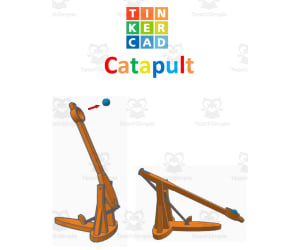
TinkerCAD step-by-step instructions for Catapult
Special Resources, Science, Technology, Engineering, Grade 5, 6, 7, 8, 9, 10, 11, 12, Activities, Projects
TinkerCAD step-by-step instructions for Catapult. Students only need to know the bare basics to complete this. I tested this with a fifth-grade class and most could complete it with no help. Designed to print with no supports for easy printing. Include TinkerCAD tool guide! Has a content page. Great beginners’ tool for learning to make 3D models and learn TinkerCAD. TinkerCAD is a free online program that makes 3D model that work on 3D printers, laser etching machines, water jets, plasma cutters and many more!! Tinkercad is an easy-to-use, browser-based computer-aided design (CAD) software developed by Autodesk. It is primarily used for creating and designing 3D models, particularly in the field of 3D printing. Tinkercad is popular among beginners and hobbyists due to its intuitive interface and simplified tools. Here are some key features and uses of Tinkercad: 1) 3D Modeling: Tinkercad allows users to create 3D models by combining basic shapes and manipulating them using tools such as scaling, rotating, and moving. It provides a wide range of primitive shapes like cubes, spheres, cylinders, and more, which can be customized to create complex designs. 2) Design Customization: Users can apply various modifications to their designs, including resizing, rounding edges, adding text, creating holes, and aligning objects. These tools help in refining the models and making them suitable for specific purposes or fitting them with other components. 3)Import and Export: Tinkercad supports the import of existing 3D models in STL and OBJ formats, allowing users to modify and incorporate them into their designs. It also offers export options to save the designs as STL files, which are widely used in 3D printing. 4) Collaboration and Sharing: Tinkercad provides features for collaboration, allowing multiple users to work on the same project simultaneously. It enables real-time sharing and editing, making it convenient for team projects or educational purposes. 5) Electronics Integration: One notable aspect of Tinkercad is its integration with electronics. It offers a range of electronic components, including resistors, LEDs, motors, and microcontrollers, which can be used to create interactive models and prototypes. Users can simulate circuit connections and test their designs before implementation. 6) Educational Tool: Tinkercad is widely used in educational settings, particularly for teaching students about 3D design, modeling, and prototyping. Its simple interface and beginner-friendly tools make it accessible to users of all ages and skill levels. Overall, Tinkercad is a versatile and user-friendly CAD software that allows individuals to create and customize 3D models. Whether you're a hobbyist, student, or professional, Tinkercad provides a valuable platform for designing, prototyping, and exploring the world of 3D printing and modeling. Total pages: 51 pages Commands to be learned: Group Ungroup Align Mirror Duplicate Holes Solids Rotate Move Drop Subjects: Geometry Engineering Career and technical education Types: Projects Handouts Printables
Author MontyWorks
Tags TinkerCAD, 3D Printing, 3D Printer, Projects

Immune System Activity
Science, Life Sciences, Human Body, Grade 3, 4, 5, 6, 7, 8, 9, 10, Activities
Activity Overview The human body is full of fascinating wonders to learn. This activity is created to help the students recognize the anatomy and the job of the human body. Immune System Every part and organ in our human body is vital so let's see how important they are. Have you ever imagined how we look like if we didn't have a skeleton? Did you know that because we have our amazing muscles we can stand! Do you know how many teeth do we have? Have you ever wondered about the food journey inside our body? Can you name all the glands in our body? Why do we have skin? Our nervous system is really good at sending signals. Can you tell us more about it? Are you really good at Mathematics, painting, or any other thing? You should really thank your brain about it! The famous five senses are really doing a great work? Can you explain how every sense works? Immune System Activity The activity is perfect for encouraging the researching skills for the students, while learning more about our fantastic human body. Immune System This friendly designed worksheet is suitable for students at school, homeschooling, and as a group activity. Instruction Draw yourself. Cut along the dotted lines. Glue page 1 on top of page 2. Open gently to see the organs inside. Which organs belong to the immune system? Write them down. Format Available in a PDF format.
Author Educational Voice
Tags Immune System Activity, Immune System, Immune System Facts, Immune System Facts For Kids, Human Body, Human Body Facts, Human Body Facts For Kids, Human Body Activity

Plotting Polygons on 4 Quadrant Grids: Make a Logo: 6th Grade Geometry
Math, Geometry, Graphing, Common Core, Grade 5, 6, 7, 8, Activities
Plotting polygons on a 4 quadrant grid? Seems like a tough standard to make interesting... I've got you covered! This comprehensive math lesson gets students to plot different polygons on a Cartesian plane, identify the kinds of polygons, think about symmetry, and discuss how to measure side lengths using the ordered pairs of the vertices: all while applying these skills to a real-life situation: making a logo! Here's how it works: First, students plot ordered pairs on a four quadrant grid (using integers). This will create 5 different polygons in a simple logo shape. Next, students answer questions that will get them thinking deeply about the math they are using and looking for relationships. Questions include: How many quadrilaterals did you draw ? Explain how you can figure out the length of shape 4 just by looking at its coordinates. What are two lines of symmetry for shape 5? After that, students have a fresh grid on which they can design their own logo. They carefully write out the ordered pairs in the correct order to create their logo. Finally, they trade their new instructions with a friend to see if they can re-create each other's logos! Grades to Use With: This lesson is specifically designed to address 6th grade geometry Common Core State Standard 6.G.A.3, but it can also be used for enrichment in 5th grade classrooms, or as a review in 7th and 8th grade classes. It could also be used in high school special education settings. What's Included: 7 Page PDF Title Page/Instructions Grid to plot logo Discussion Questions Grid to plan and make own logo Grid to plot friend's logo 2 Page Answer Key If you enjoy this geometry activity, check out others in my store: Geometry Project: Park Design: Area, Perimeter, and Volume with Budgeting Middle School Math Stations or Centers: Triangles, Angles, Area Middle School Math Stations or Centers: Area, Perimeter, and Volume Relationship Between Area and Perimeter: Math Inquiry Prompt Integers and Plotting to Make Pictures on 4 Quadrant Cartesian Planes
Author Grace Under Pressure
Tags Plotting, Ordered Pairs, Polygons, Integers, 4 Quadrant Grid, 4 Quadrant Graph, Cartesian Plane, 6th Grade Geometry, Geometry, 6th Grade Math

U.S. Government: Gallery Walk of Executive Branch and President's Role
Social Studies, History, History: USA, Government, Grade 8, 9, 10, 11, 12, Teacher Tools, Graphic Organizers, Activities
In this lesson on the US Government: Executive Branch (both Google and Traditional versions are provided), your students will partake in a Gallery Walk activity exploring the multiple "hats" (roles) the US president assumes in the course of his/her duties. The roles explored in this U.S. Government: Gallery Walk of Executive Branch and President's Role include: Commander in Chief, Chief Diplomat, Chief of State, Chief of Party, Chief Citizen, Chief Executive, Chief Legislator, and Chief Administrator. A Gallery Walk activity involves students examining various exhibits akin to a museum, which you place around the classroom. This activity is a dynamic way to present information and encourages physical movement in a structured manner – a refreshing change from conventional lectures! This product includes all necessary Museum Exhibits and corresponding student sheets! **Includes a GOOGLE and Traditional version for your use! About: Learning is a Passion Store - I have taught 6th-12th grade during my 20 year teaching career. I prefer to use lessons in my teaching practice that allow my students to become facilitators and active participants in their own learning rather than merely an audience of "my show". I love to create hands- on, interactive activities that really engage my students in the learning process.
Author Learning is a Passion
Tags Gallery Walk, Government, Executive Branch, President's Roles

Roman Numerals Activity
Social Studies, History, History: Ancient, History: Europe, History: World, Grade 3, 4, 5, 6, 7, 8, 9, Activities
Activity Introduction An amazing activity designed for the students to learn more about history. Roman Numerals Do you like history? Which topic do you really enjoy about history? Have you ever read an interesting facts about the Vikings? If yes, can you mention them? What do you like most about the Victorian era? Can you name all the Tudors? Have you ever wondered how people used to live in ancient Japan and ancient China? Do you know any interesting facts about ancient Egyptians and the Pharaohs? Have you ever visited South America? What do you know about Incas and Aztecs? Celtic culture was really one of a kind, can you name any of the places that Celts used to live in? Imagine yourself living during the ancient Roman empire, how your life will look like? Ancient Greece was an amazing place to live in. What do you know about ancient Greek life? Roman Numerals Activity The activity is perfect for encouraging the researching skills for the students, while learning more about history. Roman Numerals This friendly designed worksheet is suitable for students at school, homeschooling, and as a group activity. Instructions Cut everything out then match each number to the Roman numerals. Format Available in a PDF format.
Author Educational Voice
Tags Roman Numerals Activity, Roman Numerals, Roman Numerals Facts, Roman Numerals Facts For Kids, Ancient Rome, Ancient Rome Facts, Ancient Rome Facts For Kids, History

Fox Activity
Science, Life Sciences, Biology, Animals, Grade 3, 4, 5, 6, 7, 8, Activities
Activity Introduction An amazing activity designed for the students to learn more about famous places in different countries. The Fox Do you like animals? what is your favorite one? Do you own a pet? If yes, tell us more about it, like what its name? And what do you like most about it? What are the animal kingdoms? Can you write down the characteristics of each animal class like mammals, birds, reptiles, amphibian, fish and mollusks. Do you know that some animals can sing, can you name any of them? What is the largest and the smallest mammal in the world? What is the largest and the smallest bird in the world? What is the largest and the smallest fish in the world? Fox Activity The activity is perfect for encouraging the researching skills for the students, while learning more about this fantastic place. Fox This friendly designed worksheet is suitable for students at school, homeschooling, and as a group activity. Instructions How much do you know about foxes? Let's figure out! Format Available in a PDF format.
Author Educational Voice
Tags Fox Activity, Fox, Foxes, Fox Facts For Kids, Fox Facts, Animal, Animals, Animals Facts, Animals Facts For Kids
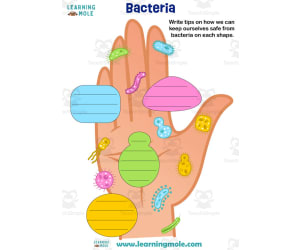
Bacteria Activity
Science, Life Sciences, Biology, Human Body, Grade 2, 3, 4, 5, 6, 7, 8, 9, 10, Activities
Activity Overview The human body is full of fascinating wonders to learn. This activity is created to help the students recognize the anatomy and the job of the human body. Bacteria Every part and organ in our human body is vital so let's see how important they are. Have you ever imagined how we look like if we didn't have a skeleton? Did you know that because we have our amazing muscles we can stand! Do you know how many teeth do we have? Have you ever wondered about the food journey inside our body? Can you name all the glands in our body? Why do we have skin? Our nervous system is really good at sending signals. Can you tell us more about it? Are you really good at Mathematics, painting, or any other thing? You should really thank your brain about it! The famous five senses are really doing a great work? Can you explain how every sense works? Bacteria Activity The activity is perfect for encouraging the researching skills for the students, while learning more about our fantastic human body. Bacteria This friendly designed worksheet is suitable for students at school, homeschooling, and as a group activity. Instruction Write tips on how we can keep ourselves safe from bacteria on each shape. Format Available in a PDF format.
Author Educational Voice
Tags Bacteria Activity, Bacteria, Bacteria Facts, Bacteria Facts For Kids, Human Body, Human Body Facts, Human Body Facts For Kids, Microorganism, Microorganism Activity, Biology

Systems of Equations: Introduction & Graphing NOTES & PRACTICE
Math, Algebra, Grade 8, Activities
Systems of Equations: Introduction & Graphing NOTES & PRACTICE A Comprehensive Teaching Resource for 8th Grade Math Educators and Homeschoolers. The educational resource introduces systems of equations providing notes and exercises to: Define and Understand systems of equations Identify solutions effectively Test these solutions in various contexts ensuring a practical understanding. It emphasizes on graphing techniques, facilitating a visual approach to understanding these problems. This product also offers multiple-choice test practice - ideal for evaluating comprehension levels post-lessons on the topic. Detailed answer keys are provided for all activities making it an efficient tool to assess task completion by students. Versatility in Classroom Implementation: This pedagogical asset can be combined with different teaching methods. It is designed: To facilitate group discussions during classroom teachings, fostering peer learning, and encouraging collaborative problem solving. To be used during small group or individual study sessions - school work or homework assignments. It supports both collective as well as differentiated instruction patterns accordingly. The resource is available in pdf format making it suitable for online/offline classrooms including homes, tutoring centers etc., via printouts or digital sharing. In conclusion, the Systems of Equations: Introduction & Graphing NOTES & PRACTICE is a reliable mathematical resource that equips future algebra enthusiasts with the necessary skills to tackle simultaneous linear equations efficiently."</p
Author The Math Cafe
Tags Systems Of Equations, Graphing, Linear Equations, Algebraic Methods, Practice Exercises