Ancient Greece Social Studies Notes (Aligned to 3rd Grade VA SOLs)
Interactive-notebook style notes pages teaching basic facts, vocabulary, geography, resources, and government of Ancient Greece, aligned to Virginia 3rd-grade Social Studies SOLs.
Classroom resources
Browse by lesson focus
Choose the topic or kind of practice you need.
Interactive-notebook style notes pages teaching basic facts, vocabulary, geography, resources, and government of Ancient Greece, aligned to Virginia 3rd-grade Social Studies SOLs.
Students fill in vocabulary definitions (fill-in-the-blank and fully-filled-out versions covering terms like ancient, B.C./A.D., civilization, contribution, pharaoh, afterlife, mummy, tomb, hieroglyphics, irrigation), and review basic-facts and Nile River geography notes pages, usable as notes, reminders, or a quiz.
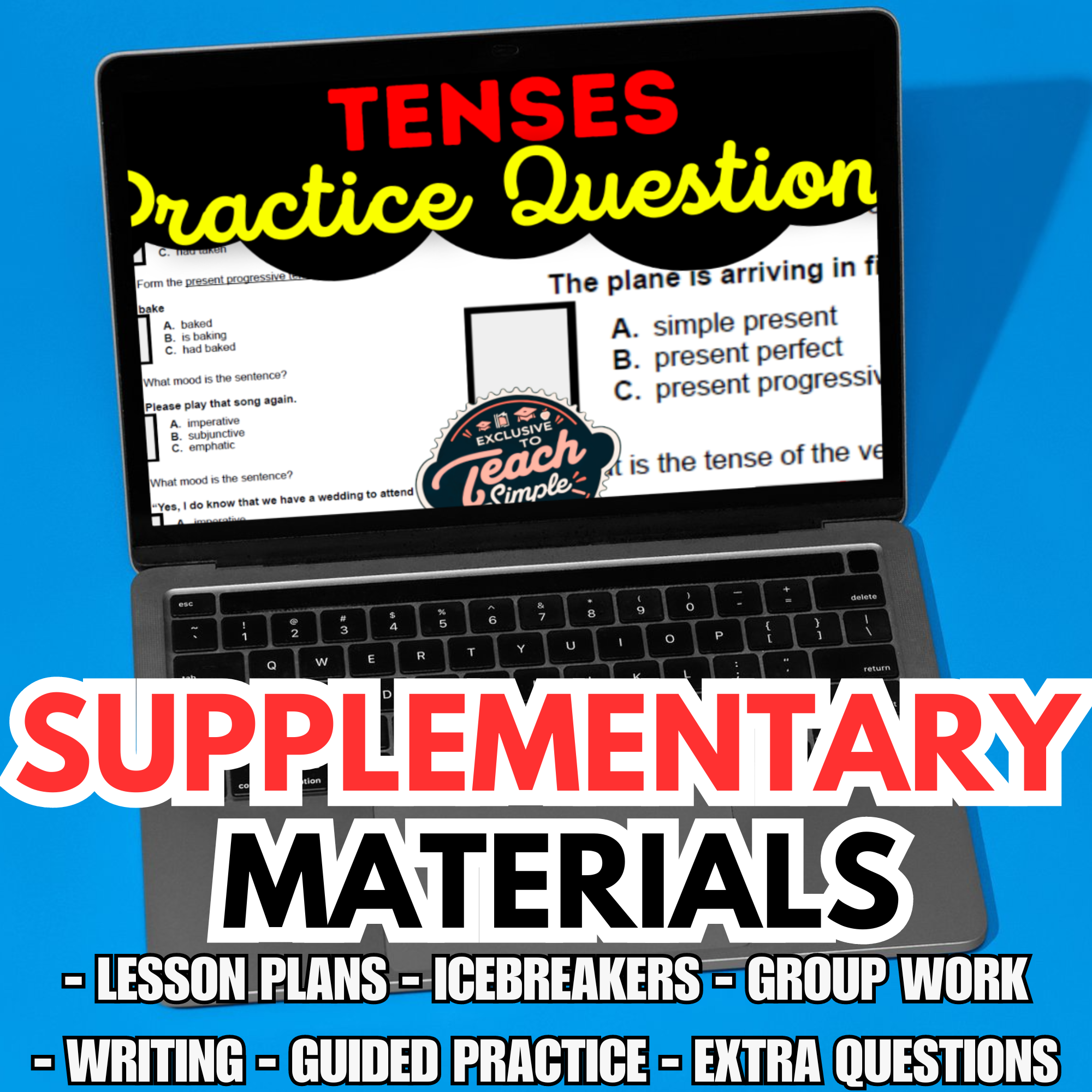
Participate in warm-up icebreaker activities and teacher-led guided practice identifying and using verb tenses (e.g., simple present vs. present progressive) in example sentences.
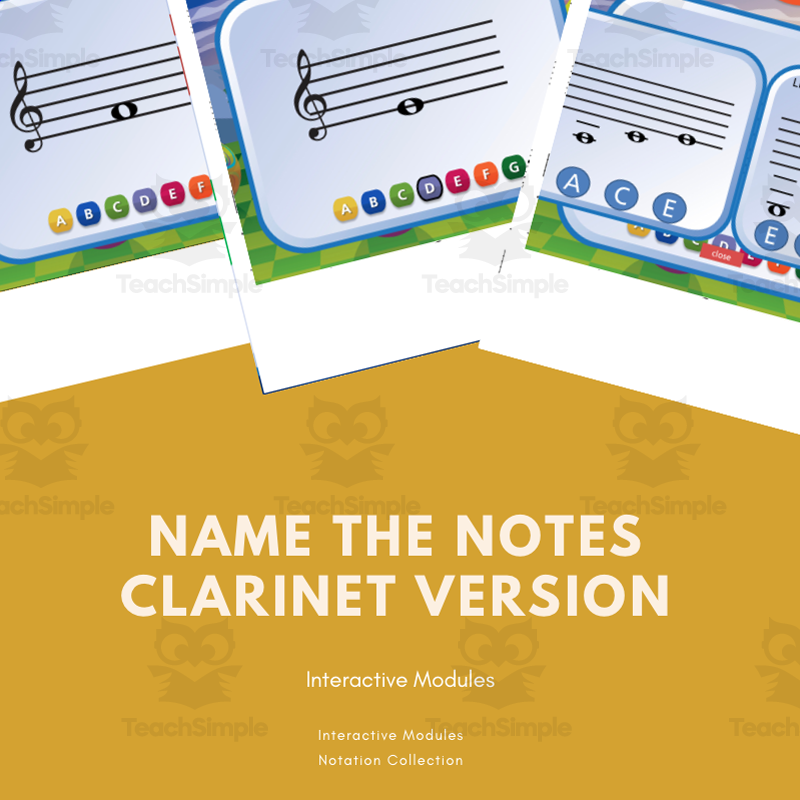
An interactive e-learning activity (delivered via external Articulate Storyline links, not embedded in the PDF itself) for reinforcing music note-reading on clarinet, in the order clarinet notes are commonly learned.
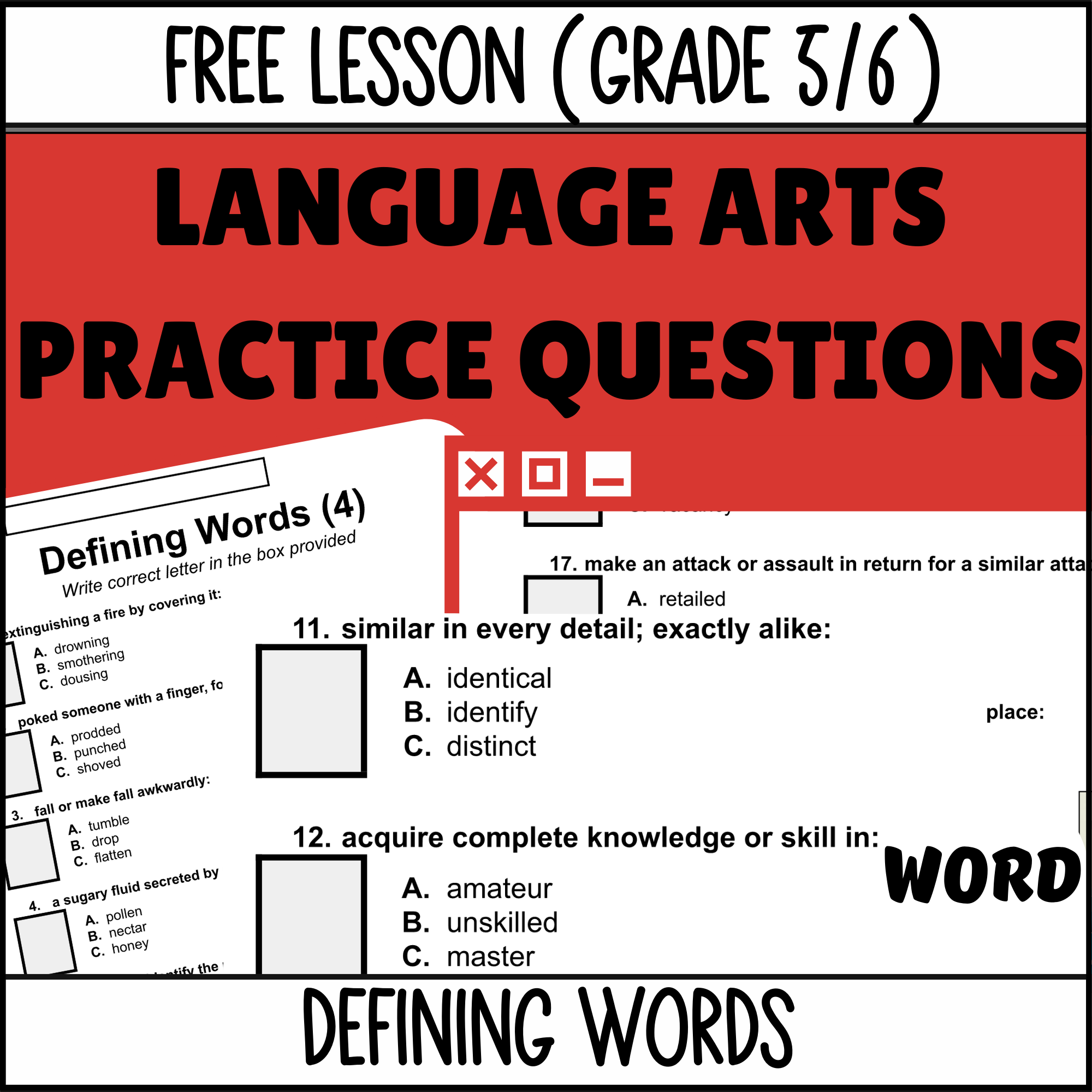
A single vocabulary practice worksheet ('Defining Words (4)') that tests word-meaning matching via multiple choice, with an answer key for self- or teacher-checking.
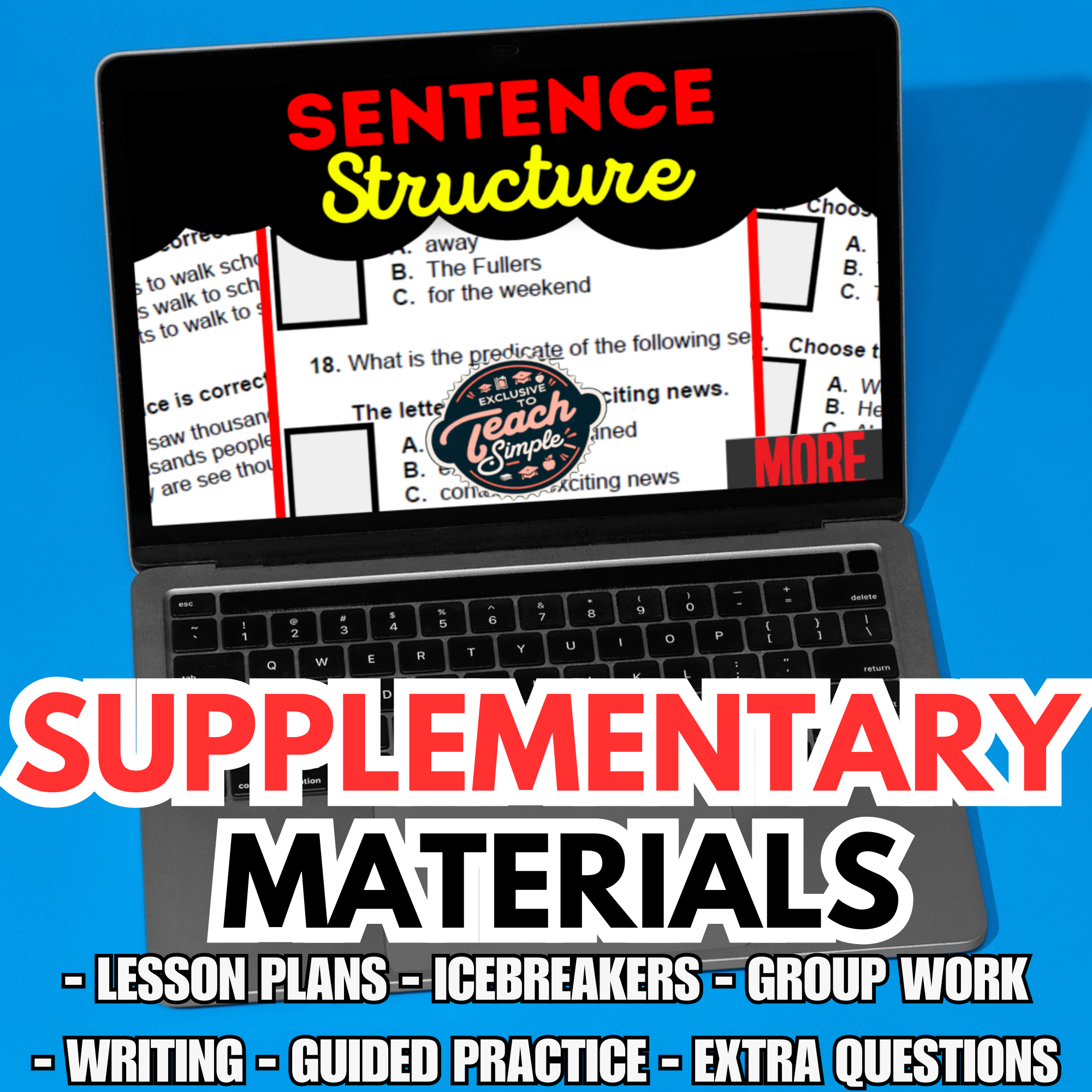
Students participate in warm-up board activities, guided practice rewriting/combining sentences, partner/team tasks (sentence sorting, compound-sentence relay), answer sets of 10 short-answer questions per lesson, and creative-writing prompts applying each lesson's grammar focus.
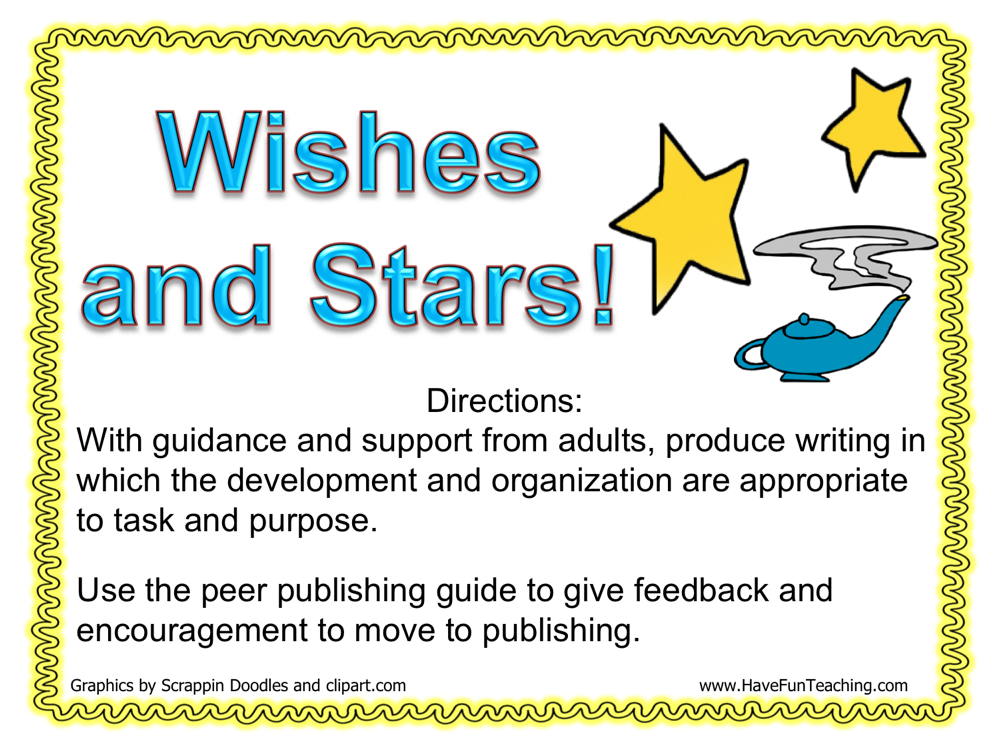
Students use a peer publishing guide checklist (linking words/phrases, a hook, supporting details, a conclusion sentence) to review a partner's writing, then record two things done well ('stars') and two wishes for the next draft.
Answer written-response and fill-in questions (e.g. describe a right angle), circle/label pictures that show right angles or angle types, draw lines of symmetry and symmetric shapes, identify congruent figures, draw slides/flips/turns on a graph and describe them in writing, identify…
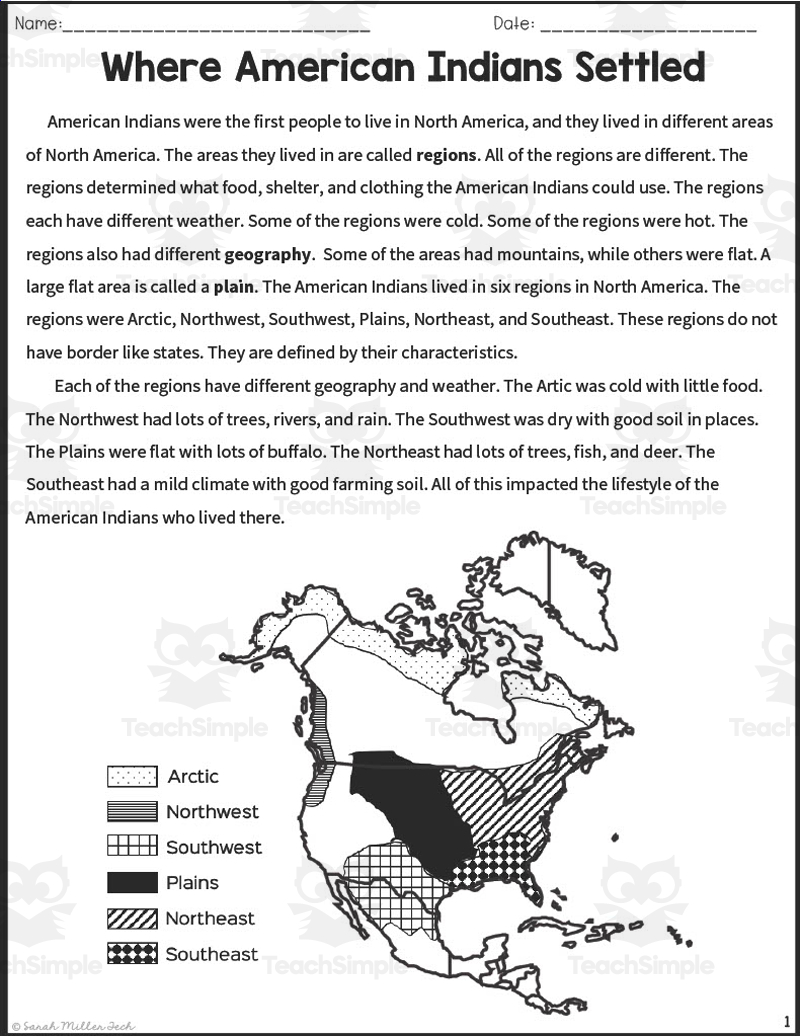
Read an informational passage about six American Indian regions, complete a labeling graphic organizer and a vocabulary matching exercise, and answer a 10-question multiple-choice/true-false/map-labeling quiz.
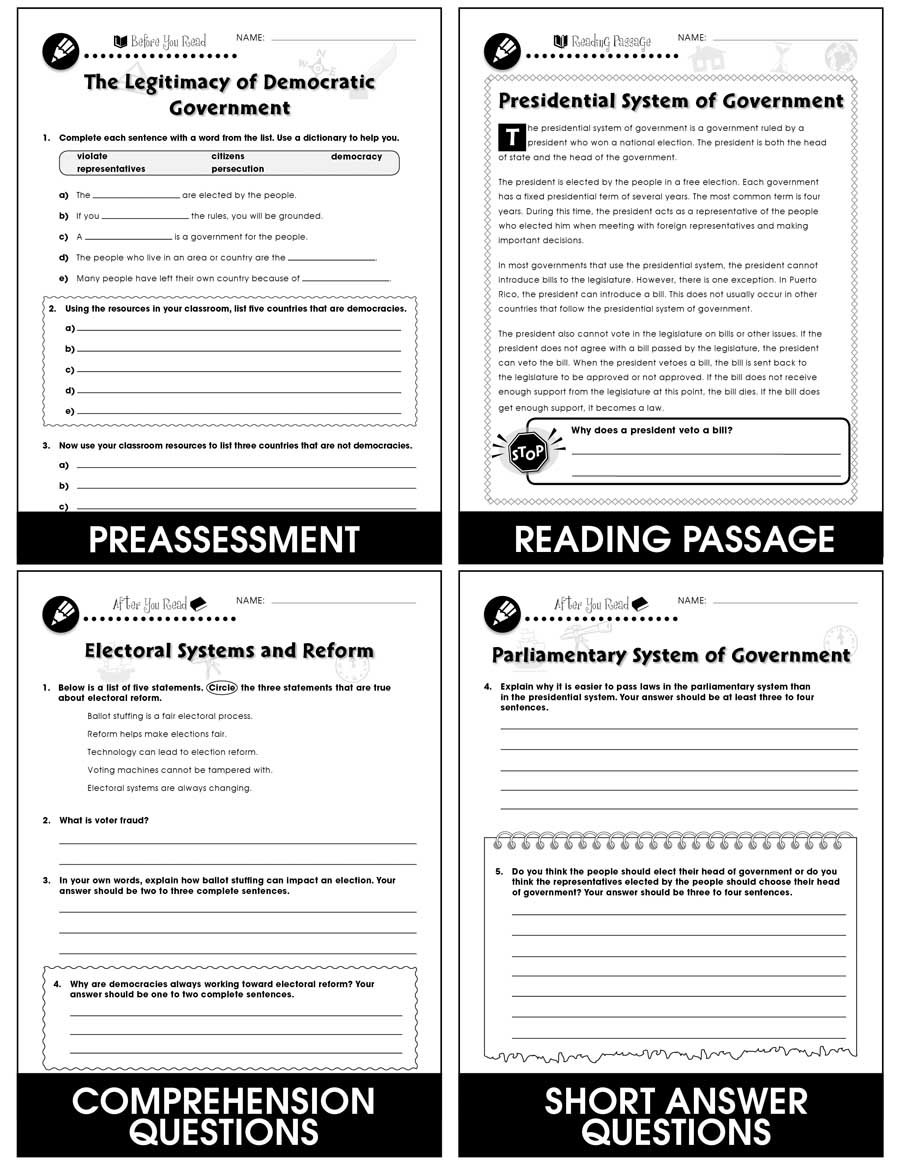
Read a comprehension passage on electoral systems and reform, complete writing tasks and graphic organizers, solve a crossword and word search, and take a comprehension quiz; answers checked against the included answer key.
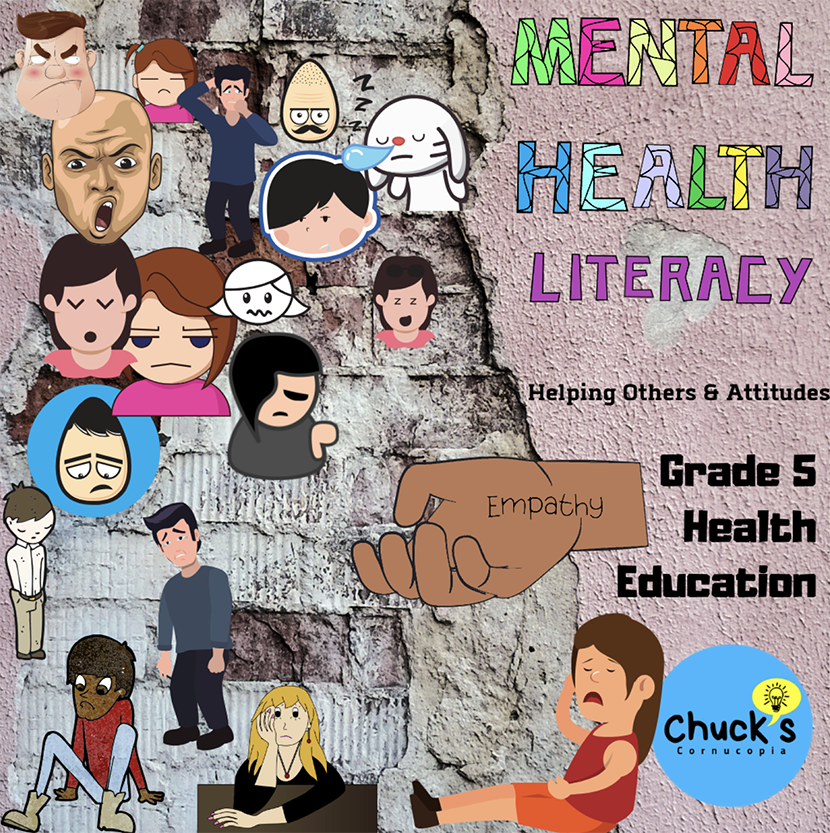
Students color a light bulb to represent positive mental health and write speech bubbles imagining reasons the other light bulbs (representing anxiety and depression) may be struggling, read about depression/anxiety symptoms and coping strategies, doodle in stress-relief page borders, draw something to brighten a gloomy room, write ways…
Students use a peer publishing guide checklist (name written, capitalization, punctuation, finger spaces, spelling) to review a partner's writing, then record two things done well ('stars') and two wishes for the next draft.
A chapter slice from a 'How to Write an Essay' workbook, based on a five-step writing model, that teaches students to draft essays using graphic organizers.
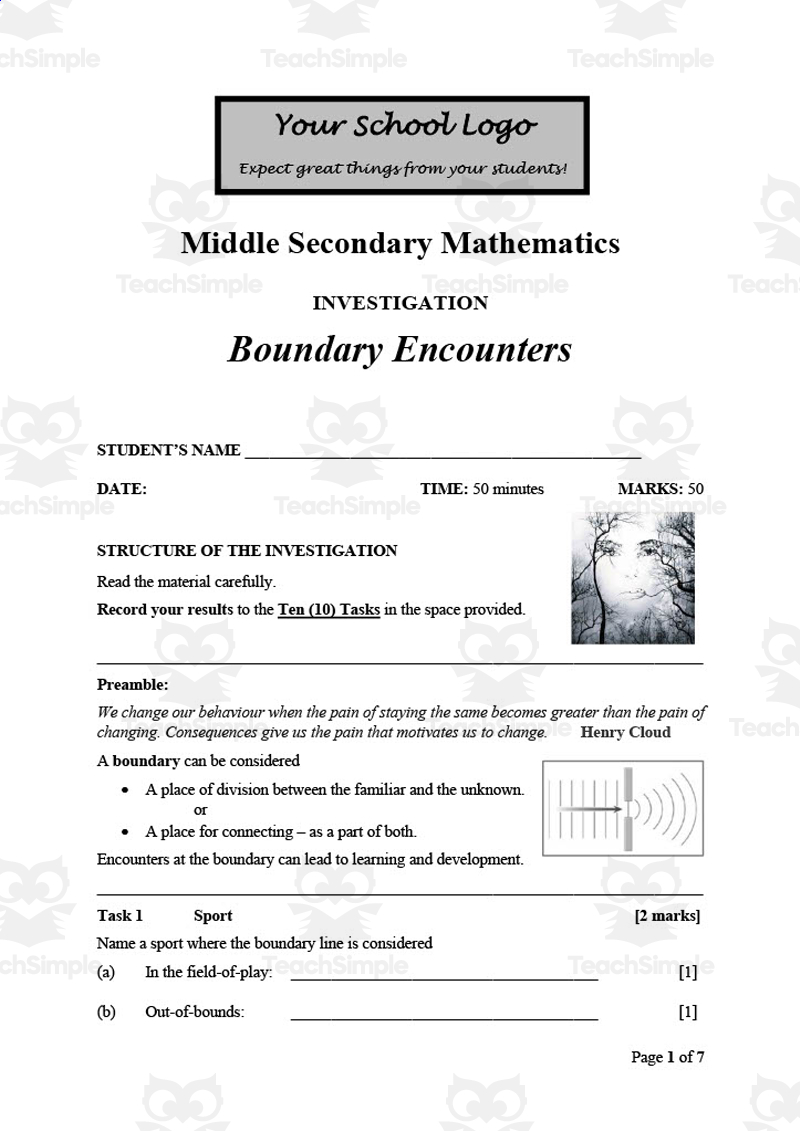
Complete 10 timed tasks (50 minutes, 50 marks total) covering topics such as reflection/refraction angles, Pick's formula for polygon area, shortest-path-on-a-cube problems, GPS satellite visibility, and a fractal snowflake perimeter, recording answers in the space provided.
Read a comprehension passage on a dictatorship government, complete writing tasks and graphic organizers, solve a crossword and word search, and take a comprehension quiz; answers checked against the included answer key.
A published Grades 5-8 reading-comprehension teaching resource (Classroom Complete Press, 'World Continents Series') covering North America through the Five Themes of Geography (Location, Place, Human and Environmental Interactions, Movement, Regions).
Complete reproducible reading-passage worksheets and activities (per the Teacher Guide's description of the series' structure: reading passages with embedded comprehension questions, short-answer creative/evaluative response questions, research and extension activities, and writing tasks); a Comprehension Quiz is referenced as a unit…
Students complete a 'Before You Read' activity matching terms/definitions (e.g. graphic organizer) and a paired student handout with a reading passage on main idea, plus a 'Using Graphic Organizers to Identify Main Ideas' worksheet; teacher-facing pages include an assessment rubric with 6-level reader-strength descriptors and guidance…
Complete reproducible reading-passage worksheets and activities such as a 'Before You Read' graphic-organizer exercise to identify main ideas, short-answer creative/evaluative response questions, and writing tasks tied to each reading passage; a Comprehension Quiz is referenced as a unit assessment.
Read seven topic-based comprehension passages, complete writing tasks and graphic organizers, solve a crossword and word search, and take a comprehension quiz; each answer is checked against the included answer key.
A 4-page math assessment using a realistic bike-ride scenario to assess students' ability to create, label, and interpret a line graph.
Answer 39 diagnostic questions covering place value to 1,000, comparing/ordering numbers, multi-digit addition and subtraction, word problems, foundations of multiplication and division (arrays/equal groups/repeated addition), money, and time.
Read a nonfiction passage on the topic, answer reading-comprehension questions, complete a hands-on activity, a crossword and a word search, and take a comprehension quiz.
Take a teacher-administered oral/written multiplication fact assessment (recording sheet notes answer and strategy per fact, e.g. 3x5, 3x3, 6x2...) using a student sheet showing only the equations; teacher organizes results on class/individual data sheets to identify facts needing focus for whole-group and small-group instruction.