



3,949 products added recently
Page 32 - 2nd Grade Lesson Plans
Enhance your second-grade classroom with lesson plans that build on foundational skills and introduce new concepts. These activities promote critical thinking and creativity across subjects. Implement these plans to keep your students motivated and progressing confidently.

 Show filters

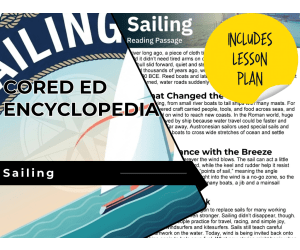
Sailing Reading Comprehension Passage - Cored Ed Encyclopedia
ELA, Language Development, Reading Comprehension, Reading, Pre-Reading, Science, Writing, Engineering, Technology, Physics, Grade 2, 3, 4, 5, Worksheets & Printables, Worksheets, Teacher Tools, Centers, Activities, Writing Prompts, Assessments, Quizzes and Tests, Quizzes, Lesson Plans
This sailing reading comprehension includes: Visualization (on the front cover) Start your lesson by taking a minute to think and share something about the topic. Read the script aloud (slowly), perhaps prepare some music or sound effects. Student close their eyes and let their imaginations wander. Students open their eyes, read the question aloud and give them a few minutes to complete. Ask a few students to share or keep answers until the end to compare with what they learn in the passage. Quick pause—thousands of Cored Education products are included with your TeachSimple membership. Download links and encyclopedia index available here. Pre-Reading Trivia Students will write down one thing they already know about the subject and then read five more facts and discuss. These facts are fun, and the students will enjoy learning about the subject before reading more. Give 1 minute for students to write what they already know (no pressure—best guess is fine). Read the five facts together. After each fact, do ask a student for their opinion, was it surprising? Set a purpose by asking students to highlight/underline one fact they want to learn more about during the reading. Reading Passage The text is a high-interest reading passage with set paragraphs, roughly three to four paragraphs long. It contains a variety of themes about the topic, anywhere from history to technology. The passage is between 250 and 350 words in length. First, ask students to look at the headings and see what they’ll learn about today. What do they know about the topic/heading? First read options: Teacher read-aloud (best for support). Partner reading (paragraph by paragraph). While reading, students underline important details, and vocabulary words they think may come up in the questions section. Mixed Questions The first question page contains four multiple-choice questions, each with a choice of four answers, and three written response questions that require a sentence or two from the student. Students complete the mcqs first independently, then review quickly as a class. For the 3 written responses, try to get students giving the answer with some form of evidence: “I think ___ because the text says ___.” If students get stuck, send them back to check the passage. Vocabulary Questions Practice seven key words from the text in this section across two activities. First section is scrambled words where students will unscramble three words given a clue for each. The second section is a word to meaning matching activity. Before starting, have some students read out words they underlined in the passage. Ask students to say the word and read aloud the sentence(s) around each word. Ask students to do scrambled words and the matching exercise in pairs then go through answers as a class. For the scrambled spelling task, get four pairs to come up to the board and write the words for extra practice with the other student reading out the clue. For the matching task, prompt students to give full sentences: “I matched ___ with ___ because ___.” Creative Writing In this question, the student will be required to write a five to eight sentence paragraph on a question related to the topic. Before starting, ask students write down 3 key ideas they are going to include in their piece. Ask students for ideas to share around the class to help those struggling. Pro writing expectations: 5–8 sentences At least 2 facts or details from the passage At least 2 vocabulary words from the previous page Students read their paragraphs while classmates listen for facts and vocabulary words. Extension Activities This page is optional for fast finishers or to take home. There are several activities, each one requiring a different skill. Do some, do none, do all, completely optional - but you will feel reassured knowing every possibility is planned for. Includes summary writting question. Answer Key There are answers for the multiple-choice questions, written response questions have sample answers, vocabulary answers and if there is a summary question then a sample summary will be provided as well. Lesson Plan Included Customized lesson plan for this lesson is included. Lesson Snapshot Title: Sailing Genre: Nonfiction (informational passage) Subject: Science (Forces & motion) / Social Studies (history of travel) Primary Topic: How wind powers boats and changed travel Estimated Guided Reading Level (A–Z): R What This Lesson Teaches Best How wind pushing on a sail can move a boat without rowing (sail as a “wind catcher” and cloth billowing). How sailing helped people travel farther and move supplies, from early boats to tall ships, including examples from Egypt, the Roman world, and Austronesian sailors. Key sailing concepts that affect movement and direction, including “points of sail,” the “no-go zone,” and zigzagging turns called tacks. How boat parts help sailing work: the sail pulling forward and the keel and rudder helping resist sliding sideways. How technology changed sailing’s role (steam engines replacing sails for many working ships) and how wind is being used again on some cargo ships to save fuel. Learning Goals Explain how wind pressing on a sail can move a boat forward. Describe how sailing grew from river boats to ships that carried people, tools, and food across seas. Identify why sailors use tacks and what the “no-go zone” means in the passage. Describe how the keel and rudder help a sailboat resist sliding sideways. Explain how sailing changed in the late 1800s and how wind is being used again today. Key Vocabulary From the Text hull — the main body of a boat. keel — a strong part that helps stop sliding sideways. rudder — a part that helps steer the boat. tacks — zigzag turns used to move into wind. cargo — goods carried on a ship. FULL CATALOG OF DOWNLOAD LINKS AND ENCYCLOPEDIA INDEX HERE
Author Cored Education
Rating
Tags Vocabulary, Reading Comprehension, Reading Passages, Reading, Creative Writing, Reading Strategies, Writing Prompts, Lesson Plans, Sailing, Engineering

I WONDER - How Do You Prevent Tooth Decay | Animated Video Lesson
Human Body, Life Sciences, Science, Biology, Grade 2, 3, 4, 5, 6, 7, 8, Lesson Plans, Teacher Tools
Video Overview The human body is full of fascinating wonders to learn. This video is created to help the students recognize the anatomy and the job of the human body. I WONDER - How Do You Prevent Tooth Decay | Animated Video Lesson Every part and organ in our human body is vital so let's see how important they are. Have you ever imagined how we look like if we didn't have a skeleton? Did you know that because we have our amazing muscles we can stand! Do you know how many teeth do we have? Have you ever wondered about the food journey inside our body? Can you name all the glands in our body? Why do we have skin? Our nervous system is really good at sending signals. Can you tell us more about it? Are you really good at Mathematics, painting, or any other thing? You should really thank your brain about it! The famous five senses are really doing a great work? Can you explain how every sense works? I WONDER - How Do You Prevent Tooth Decay | Animated Video Lesson The video is perfect for encouraging the researching skills for the students, while learning more about our fantastic human body. I WONDER - How Do You Prevent Tooth Decay | Animated Video Lesson This friendly designed video is suitable for students at school, homeschooling, and as a group activity. Format Available in MP4 format.
Author Educational Voice
Tags How Do You Prevent Tooth Decay, How Do You Prevent Tooth Decay Video, Prevent Tooth Decay, Prevent Tooth Decay Facts, Prevent Tooth Decay Facts For Kids, Prevent Tooth Decay Video, Prevent Tooth Decay Video For Kids

I WONDER - Why Do Walruses Have Tusks | Animated Video Lesson
STEM, Biology, Life Sciences, Science, Animals, Grade 1, 2, 3, 4, 5, 6, 7, 8, Lesson Plans, Teacher Tools
Video Introduction Animal kingdoms are full of fascinating wonders to learn. This video is designed for the students to learn more about animals in different countries. I WONDER - Why Do Walruses Have Tusks | Animated Video Lesson Do you like animals? what is your favorite one? Do you own a pet? If yes, tell us more about it, like what its name? And what do you like most about it? What are the animal kingdoms? Can you write down the characteristics of each animal class like mammals, birds, reptiles, amphibian, fish and mollusks. Do you know that some animals can sing, can you name any of them? What is the largest and the smallest mammal in the world? What is the largest and the smallest bird in the world? What is the largest and the smallest fish in the world? I WONDER - Why Do Walruses Have Tusks | Animated Video Lesson The video is perfect for encouraging the researching skills for the students, while learning more about these fantastic animals. I WONDER - Why Do Walruses Have Tusks | Animated Video Lesson This friendly designed video is suitable for students at school, homeschooling, and as a group activity. Format Available in MP4 format.
Author Educational Voice
Tags Why Do Walruses Have Tusks, Why Do Walruses Have Tusks Video, Walruses Tusks, Walruses Tusks Facts, Walruses Tusks Facts For Kids, Walruses Tusks Video, Walruses Tusks Video For Kids, Walrus
I WONDER - What Is Special About A Peregrine | Animated Video Lesson
STEM, Biology, Life Sciences, Science, Animals, Grade 1, 2, 3, 4, 5, 6, 7, 8, Lesson Plans, Teacher Tools
Video Introduction Animal kingdoms are full of fascinating wonders to learn. This video is designed for the students to learn more about animals in different countries. I WONDER - What Is Special About A Peregrine | Animated Video Lesson Do you like animals? what is your favorite one? Do you own a pet? If yes, tell us more about it, like what its name? And what do you like most about it? What are the animal kingdoms? Can you write down the characteristics of each animal class like mammals, birds, reptiles, amphibian, fish and mollusks. Do you know that some animals can sing, can you name any of them? What is the largest and the smallest mammal in the world? What is the largest and the smallest bird in the world? What is the largest and the smallest fish in the world? I WONDER - What Is Special About A Peregrine | Animated Video Lesson The video is perfect for encouraging the researching skills for the students, while learning more about these fantastic animals. I WONDER - What Is Special About A Peregrine | Animated Video Lesson This friendly designed video is suitable for students at school, homeschooling, and as a group activity. Format Available in MP4 format.
Author Educational Voice
Tags What Is Special About A Peregrine, What Is Special About A Peregrine Video, Peregrine, Peregrine Facts, Peregrine Facts For Kids, Peregrine Video, Peregrine Video For Kids, Animal, Animals

IB PYP - HOW WE EXPRESS OURSELVES - SHARING THROUGH STORIES PLANNER & RESOURCES
, Grade 1, 2, 3, 4, 5, 6, Teacher Tools, Lesson Plans
IB PYP - How We Express Ourselves - Sharing Through Stories Planner & Resources Addressing the vital and distinctive features of the IB Primary Years Programme, this resource provides an in-depth exploration into six Transdisciplinary Themes. These themes dive into relevant issues that hold universal importance and significance. The program offers a harmonious blend of learning about these themes as well as serving to extend knowledge beyond these areas. The expansive planner incorporates the Transdisciplinary Theme with Subject Focus, providing a Central Idea and Key Concepts. It also outlines Lines of Inquiry, planting seeds for student-led investigations while expanding their horizons beyond subject-specific confines. This approach underlines the importance of fostering a child's development not just within educational settings but also outside. Planning - Approaches to Learning (ATL's) Setting Learning Goals and Success Criteria: A crucial section within this resource is planning corresponding with Approaches to Learning (ATL's). The entire lesson path is charted out starting from setting learning goals and success criteria along. Prior Knowledge Tuning In: This part addresses what students already know at the outset by giving them a sense of ownership over their learning journey. Foster Critical Thinking: All activities are designed for a deeper understanding rather than just mere memorization, hence your teachings will ensure critical thinking tasks are included. Formative Assessment :In line with evidence-based teaching methods, Formative Assessment inclusion aids in gauging student understanding throughout instructional units rather than just at end points effectively improving lessons based on real-time feedback. Versatility across grade levels 1-6! This versatile tool can be implemented flexibly across grade levels 1-6. Whether used during whole-class instruction sessions or small group teachings; it promises engaging yet structured content letting you tailor educational strategies to suit your students' needs. A multi-functional resource, it could also be seamlessly incorporated in a homeschooling context or simply as homework assignment supplementary material. The downloadable PDF format ensures this engaging planner can become an omnipresent teaching aid for educators maneuvering the rapidly expanding education sphere. MAke sure to cover multiple subjects and sub-subjects using a singular holistic tool. Remember- at the heart of effective teaching lies innovative resources!
Author WonderWellPYP
Tags IB PYP, Transdisciplinary Themes, Student-led Investigations, Approaches To Learning (ATL's), Formative Assessment, Ib Express, Ibo Stories, How We Express Ourselves
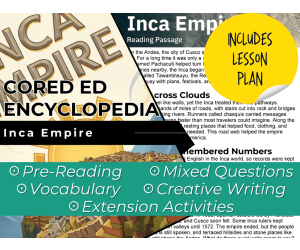
Inca Empire Reading Comprehension Passage - Cored Ed Encyclopedia
ELA, Reading Comprehension, Reading, History, Social Studies, Science, Geography, Technology, Pre-Reading, Language Development, Grade 2, 3, 4, 5, Worksheets & Printables, Worksheets, Teacher Tools, Centers, Activities, Writing Prompts, Assessments, Quizzes and Tests, Quizzes, Lesson Plans
This Inca Empire reading comprehension with lesson plan includes: Visualization (on the front cover) Start your lesson by taking a minute to think and share something about the topic. Read the script aloud (slowly), perhaps prepare some music or sound effects. Student close their eyes and let their imaginations wander. Students open their eyes, read the question aloud and give them a few minutes to complete. Ask a few students to share or keep answers until the end to compare with what they learn in the passage. Quick pause—thousands of Cored Education products are included with your TeachSimple membership. Download links and encyclopedia index available here. Pre-Reading Trivia Students will write down one thing they already know about the subject and then read five more facts and discuss. These facts are fun, and the students will enjoy learning about the subject before reading more. Give 1 minute for students to write what they already know (no pressure—best guess is fine). Read the five facts together. After each fact, do ask a student for their opinion, was it surprising? Set a purpose by asking students to highlight/underline one fact they want to learn more about during the reading. Reading Passage The text is a high-interest reading passage with set paragraphs, roughly three to four paragraphs long. It contains a variety of themes about the topic, anywhere from history to technology. The passage is between 250 and 350 words in length. First, ask students to look at the headings and see what they’ll learn about today. What do they know about the topic/heading? First read options: Teacher read-aloud (best for support). Partner reading (paragraph by paragraph). While reading, students underline important details, and vocabulary words they think may come up in the questions section. Mixed Questions The first question page contains four multiple-choice questions, each with a choice of four answers, and three written response questions that require a sentence or two from the student. Students complete the mcqs first independently, then review quickly as a class. For the 3 written responses, try to get students giving the answer with some form of evidence: “I think ___ because the text says ___.” If students get stuck, send them back to check the passage. Vocabulary Questions Practice seven key words from the text in this section across two activities. First section is scrambled words where students will unscramble three words given a clue for each. The second section is a word to meaning matching activity. Before starting, have some students read out words they underlined in the passage. Ask students to say the word and read aloud the sentence(s) around each word. Ask students to do scrambled words and the matching exercise in pairs then go through answers as a class. For the scrambled spelling task, get four pairs to come up to the board and write the words for extra practice with the other student reading out the clue. For the matching task, prompt students to give full sentences: “I matched ___ with ___ because ___.” Creative Writing In this question, the student will be required to write a five to eight sentence paragraph on a question related to the topic. Before starting, ask students write down 3 key ideas they are going to include in their piece. Ask students for ideas to share around the class to help those struggling. Pro writing expectations: 5–8 sentences At least 2 facts or details from the passage At least 2 vocabulary words from the previous page Students read their paragraphs while classmates listen for facts and vocabulary words. Extension Activities This page is optional for fast finishers or to take home. There are several activities, each one requiring a different skill. Do some, do none, do all, completely optional - but you will feel reassured knowing every possibility is planned for. Includes summary writting question and additional facts. Answer Key There are answers for the multiple-choice questions, written response questions have sample answers, vocabulary answers and if there is a summary question then a sample summary will be provided as well. Lesson Plan Included Customized lesson plan for this lesson is included. Lesson Snapshot Title: Inca Empire Genre: Nonfiction (informational passage) Subject: Social Studies (History) / Reading (Informational Text) Primary Topic: Cusco, roads, quipu records, terraces, legacy Estimated Guided Reading Level (A–Z): S What This Lesson Teaches Best How Cusco grew from a small kingdom into a larger Inca state in the 1400s under a leader named Pachacuti, and how the state was called Tawantinsuyu (the Realm of the Four Parts). How Inca engineers built a wide road system with stairs cut into rock and bridges, plus storehouses and resting places that helped the empire spread across western South America. How the Inca kept records without an English-like alphabet by using a quipu (cords with knots and colors for counts and notes). How terraces were used on hillsides to hold soil and water for crops like potatoes and corn, and how work was organized by the state as a kind of tax. How the empire ended after conflict and Spanish conquest, while people and culture continued (Quechua still spoken; terraces and stone places remain). Learning Goals Describe how Cusco changed in the 1400s and name the Inca state described in the passage. Explain how roads, bridges, and storehouses helped the Inca move messages, supplies, and armies. Explain what a quipu is and what it could record, based on the text. Describe what terraces are used for and how they helped farming on hillsides. Identify what happened in the 1500s that led to the end of the empire and one way Inca life continued afterward. Key Vocabulary From the Text Tawantinsuyu — the Inca state called the Realm of the Four Parts. chasquis — runners who carried messages from stop to stop. quipu — cords with knots and colors for records. terraces — flat steps that hold soil and water. storehouses — places along routes that kept needed supplies. FULL CATALOG OF DOWNLOAD LINKS AND ENCYCLOPEDIA INDEX HERE
Author Cored Education
Rating
Tags Vocabulary, Reading Comprehension, Reading Passages, Lesson Plans, Ela Lesson Plans, Reading Comprehension Lesson Plans, Pre-reading, History, Social Studies Lesson Plans, Geography

I WONDER - Why Do Kangaroos Live In Herds | Animated Video Lesson
STEM, Animals, Life Sciences, Science, Biology, Grade 1, 2, 3, 4, 5, 6, 7, 8, Lesson Plans, Teacher Tools
Video Introduction Animal kingdoms are full of fascinating wonders to learn. This video is designed for the students to learn more about animals in different countries. I WONDER - Why Do Kangaroos Live In Herds | Animated Video Lesson Do you like animals? what is your favorite one? Do you own a pet? If yes, tell us more about it, like what its name? And what do you like most about it? What are the animal kingdoms? Can you write down the characteristics of each animal class like mammals, birds, reptiles, amphibian, fish and mollusks. Do you know that some animals can sing, can you name any of them? What is the largest and the smallest mammal in the world? What is the largest and the smallest bird in the world? What is the largest and the smallest fish in the world? I WONDER - Why Do Kangaroos Live In Herds | Animated Video Lesson The video is perfect for encouraging the researching skills for the students, while learning more about these fantastic animals. I WONDER - Why Do Kangaroos Live In Herds | Animated Video Lesson This friendly designed video is suitable for students at school, homeschooling, and as a group activity. Format Available in MP4 format.
Author Educational Voice
Tags Why Do Kangaroos Live In Herds, Why Do Kangaroos Live In Herds Video, Kangaroos, Kangaroos Herds, Kangaroos Herds Facts, Kangaroos Herds Facts For Kids, Kangaroos Herds Video, Kangaroos Herds Video For Kids

Let's Chat Conversation Cards | "Be The Best You YOU Can Be"
Special Resources, Social Emotional Learning (SEL), Kindergarten, Preschool, Grade 2, 3, 4, 5, 6, Teacher Tools, Lesson Plans
Let's Chat Conversation Cards for "Be The Best You YOU Can Be" is a respectful, trauma-informed resource that helps students develop compassion, perseverance, respect and responsibility. The 57 conversation card sets spark meaningful dialogue so students can understand different perspectives and strengthen friendships. Cards cover self-esteem, growth mindset, mindfulness, empathy and more. Educators can use these versatile cards whole-group, small-group or as a homework extension. Assessment surveys help identify student needs. Custom workshops and blended PBIS/MTSS integration ensure educators have ongoing support. Data shows schools using this social-emotional learning program have 12% higher GPAs, 37% better attendance and 93% fewer referrals. This comprehensive tool equips students with mindsets and skills to achieve great things.
Author Respectful Ways
Tags Conversation Cards, Spanish, SEL, Respectful Ways, Be The Best, Responsibility, Self-love, Social Emotional Learning, Trauma-informed, Character Education

Move to Learn!
P.E. & Health, Resources for Teachers, Classroom Management, Grade 2, 3, 4, 5, 6, Teacher Tools, Lesson Plans
Move to Learn: A Comprehensive Educational Resource Move to Learn is a comprehensive educational resource designed specifically for educators in both classroom and homeschool settings. This valuable kit offers a blend of physical education and academic lessons, engineered to optimize student's brain capacity and enhance learning outcomes. Grounded in scientific studies that illustrate the positive impact of physical movement on cognitive capabilities, Move to Learn introduces an array of 33 games , all creatively tailored to engage students dynamically. It encourages active participation, fosters peer interaction, and promotes healthier classroom environment while simultaneously contributing towards the improvement of memory power and focus levels amongst learners. Versatile Applications and Multi-Grade Approach The exercises are highly adaptable spanning across several subject areas making them flexible in integration with existing curriculum plans or even as standalone sessions. This tool is equipped with versatile applications meeting different teaching methods - whole-group instruction, small group engagement or even fun homework assignments. Caters effectively to early intermediate level (Grade 2) extending up until Grade 6 delivering age-appropriate content for each tier. The multi-grade approach allows educators to make progressive adjustments based on their student's developmental trajectory ensuring every child's needs are catered for individually. User-Friendly Navigation Packaged as a single PDF file under the Lesson Plans category within the P.E. & Health department along with Classroom Management resources for teachers section on TeachSimple.com - Move To Learn ensures easy accessibility and user-friendly navigation throughout its contents enabling quick planning for educators on-the-go. In Summary... If you're seeking out innovative instruments that bring joyous vitality into your teaching setting while augmenting academic aptitude - Move To Learn is one significant addition worth considering!
Author Classroom Complete Press
Tags Move To Learn, Games, Movement, Classroom Management, Strategies For Classroom Management

All About Fractions | Animated Math Video Lesson
Math, Fractions, Grade 2, 3, 4, 5, Lesson Plans, Teacher Tools
All About Fractions | Animated Math Video Lesson An invaluable resource designed to quickly and effectively introduce fractions to students in grades 2-5 in a captivating way. This interactive animated video simplifies the process of understanding and solving fractional problems, transforming learning into an engaging experience. The use of vivid animation breaks down complex fraction concepts into simpler parts, hence easily accessible for early elementary students and beyond. The video fits perfectly within an 8-minute timeframe promoting effective time management whilst holding the learner's attention. Versatility in Utilisation: Classroom Instruction: A powerful supplement for teachers aiming to diversify their lesson delivery on fractions. Small Group Settings: Can also be utilized where certain skills need emphasis or reinforcement. Homing/Assignment Inclusion: Creating smooth link between school work and at-home reinforcement can be achieved by incorporating it as part of given assignments. This teaching tool comes in MP4 format making it conveniently playable across different digital platforms such as laptops during online tutoring sessions, or even on personal devices during revision intervals. The All About Fractions | Animated Math Video Lesson does more than just instruct - it uses dynamic visuals and memorable formulas to cultivate a deeper understanding about fractions, lessening math anxiety while fostering excitement.
Author Educational Voice
Tags Fractions, Math Video, Animated Lesson, Interactive Learning, Visual Aids

Cattle Drive: History - Hands On
Social Studies, History, History: USA, Grade 1, 2, 3, 4, Teacher Tools, Lesson Plans
Cattle Drive: History - Hands On A highly engaging teaching resource developed to make history immersive and relatable for middle school students (Grade 1- Grade 4). Focusing on USA History, this resource acts as a practical tool in expanding student's knowledge. In one easy-to-use PDF file, there are 34 ready-to-print pages filled with meaningful content about the adventurous lives of cowboys. The stories tell of early settlers driving large herds across prairies to marketplaces, giving students an insight into their exciting but challenging lives. This resource goes beyond simply learning about the past. It provides an emotional connection to history that can inspire both boys intrigued by tales of rugged rangers and girls excited to discover historical stories. The module can be used in a variety of classroom settings or even at home. Suitable for whole-group instruction or smaller groups. Perfect as quiet-time reading material that boosts comprehension skills or homework assignments that encourage discussion at home. No matter how you use it, Cattle Drive: History - Hands On, promises to make understanding history enjoyable and insightful.
Author Classroom Complete Press
Tags Cowboys, Horses, History Book, Alphabet, North America
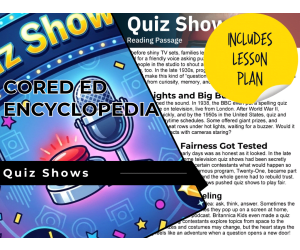
Quiz Shows Reading Comprehension Passage - Cored Ed Encyclopedia
ELA, Language Development, Reading Comprehension, Reading, Pre-Reading, Writing, Strategies, Vocabulary, History, Social Studies, Grade 2, 3, 4, 5, Worksheets & Printables, Worksheets, Teacher Tools, Centers, Activities, Writing Prompts, Assessments, Quizzes and Tests, Quizzes, Lesson Plans
This quiz shows reading comprehension includes: Visualization (on the front cover) Start your lesson by taking a minute to think and share something about the topic. Read the script aloud (slowly), perhaps prepare some music or sound effects. Student close their eyes and let their imaginations wander. Students open their eyes, read the question aloud and give them a few minutes to complete. Ask a few students to share or keep answers until the end to compare with what they learn in the passage. Quick pause—thousands of Cored Education products are included with your TeachSimple membership. Download links and encyclopedia index available here. Pre-Reading Trivia Students will write down one thing they already know about the subject and then read five more facts and discuss. These facts are fun, and the students will enjoy learning about the subject before reading more. Give 1 minute for students to write what they already know (no pressure—best guess is fine). Read the five facts together. After each fact, do ask a student for their opinion, was it surprising? Set a purpose by asking students to highlight/underline one fact they want to learn more about during the reading. Reading Passage The text is a high-interest reading passage with set paragraphs, roughly three to four paragraphs long. It contains a variety of themes about the topic, anywhere from history to technology. The passage is between 250 and 350 words in length. First, ask students to look at the headings and see what they’ll learn about today. What do they know about the topic/heading? First read options: Teacher read-aloud (best for support). Partner reading (paragraph by paragraph). While reading, students underline important details, and vocabulary words they think may come up in the questions section. Mixed Questions The first question page contains four multiple-choice questions, each with a choice of four answers, and three written response questions that require a sentence or two from the student. Students complete the mcqs first independently, then review quickly as a class. For the 3 written responses, try to get students giving the answer with some form of evidence: “I think ___ because the text says ___.” If students get stuck, send them back to check the passage. Vocabulary Questions Practice seven key words from the text in this section across two activities. First section is scrambled words where students will unscramble three words given a clue for each. The second section is a word to meaning matching activity. Before starting, have some students read out words they underlined in the passage. Ask students to say the word and read aloud the sentence(s) around each word. Ask students to do scrambled words and the matching exercise in pairs then go through answers as a class. For the scrambled spelling task, get four pairs to come up to the board and write the words for extra practice with the other student reading out the clue. For the matching task, prompt students to give full sentences: “I matched ___ with ___ because ___.” Creative Writing In this question, the student will be required to write a five to eight sentence paragraph on a question related to the topic. Before starting, ask students write down 3 key ideas they are going to include in their piece. Ask students for ideas to share around the class to help those struggling. Pro writing expectations: 5–8 sentences At least 2 facts or details from the passage At least 2 vocabulary words from the previous page Students read their paragraphs while classmates listen for facts and vocabulary words. Extension Activities This page is optional for fast finishers or to take home. There are several activities, each one requiring a different skill. Do some, do none, do all, completely optional - but you will feel reassured knowing every possibility is planned for. Includes summary writting question. Answer Key There are answers for the multiple-choice questions, written response questions have sample answers, vocabulary answers and if there is a summary question then a sample summary will be provided as well. Lesson Plan Included Customized lesson plan for this lesson is included. Lesson Snapshot Title: Quiz Shows Genre: Nonfiction (informational reading passage) Subject: Reading (Informational Text) / Social Studies (media history) Primary Topic: Quiz shows from radio to TV to podcasts Estimated Guided Reading Level (A–Z): R What This Lesson Teaches Best How quiz shows changed over time, from radio “question games” to television and modern podcasts. Key historical milestones and examples (late 1930s radio programs; 1938 BBC spelling quiz on TV; 1950s U.S. daytime quiz/game shows). Understanding fairness and trust in media (some shows were “rigged,” followed by investigations, hearings, and stronger rules). Text structure practice using section headings to track ideas (early radio → TV era → fairness tested → today). Strong built-in supports that match the passage (questions, vocabulary work, writing prompt, and extensions align to passage details). Learning Goals Students will describe how people participated in quiz shows before TVs were common, using details from the passage. Students will explain how television changed quiz shows, including what it was like for contestants under cameras and lights. Students will explain what “rigged” means in the passage and why quiz shows had to “rebuild trust.” Students will identify ways quiz shows appear today (board, screen at home, or podcast), based on the passage. Students will use the section headings to state the main idea of each section and support it with one detail. Key Vocabulary From the Text contestants — people who compete in a game rigged — secretly fixed so it is not fair producers — people who run and plan a show investigations — careful searches to find out what happened genre — a type or category of show FULL CATALOG OF DOWNLOAD LINKS AND ENCYCLOPEDIA INDEX HERE
Author Cored Education
Rating
Tags Vocabulary, Reading Comprehension, Reading Passages, Reading, Creative Writing, Reading Strategies, Writing Prompts, Lesson Plans, Quiz Shows, History

Fiction Elements: Fiction Story Lesson
ELA, Reading, Preschool, Grade 1, 2, 3, Teacher Tools, Lesson Plans
This resource is a Fiction Elements: Fiction Story Lesson. Students will apply reading, creative thinking, problem solving and so much more as they work through these interactive slides. Students will learn all about fiction stories - what they are, what they entail and how to write one. Class discussions and practice activities are included for students to apply their knowledge. There are 3 different presentations - 1 for the teacher, 1 for the student and 1 answer slide presentation.
Author Ezee 101
Tags Fiction Story, Reading Lesson, Problem And Solution, Story Elements, Google Classroom
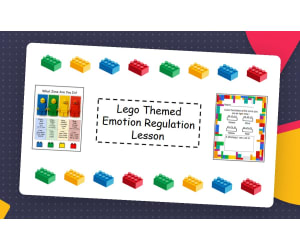
Lego-Themed Emotion Regulation Lesson
Special Resources, Social Emotional Learning (SEL), Kindergarten, Grade 1, 2, 3, Teacher Tools, Lesson Plans
In this Lego themed lesson, students will learn about the different zones made up of feelings and energy levels. There are directions for lesson one and two. The first lesson is to teach about the zones and to use a Lego themed poster to help explain them. There is a link to a cute song using Lego characters and teaching about the zones. There are instructions on what students will do next to build a robot, tower or person made up of the color zone(s) they are feeling. For example, if the student is feeling happy and tired, the structure would be made up of green and blue bricks. It is important to buy either Legos or a generic brand of toy bricks for this lesson. After the students create their structures, they can share with a partner, group or class. In the 2nd part of the lesson, students will discuss different types of strategies for how to move from the red, yellow or blue zones and get back to the green zone. They will then build a structure that represents a calm down strategy for them to use when they are in the other zones besides green and need to be focused to learn. For example students can build a cup to represent getting a drink of water. Then students will reflect on their learning by filling out a worksheet. This is a fun, engaging, and hands-on lesson to teach about emotion regulation. It is suitable for kindergarten, first, second and third grades. Each student can bring home the poster to share with their families. Then families can reinforce these concepts at home with their children. For more SEL lessons, activities, and presentations, please feel free to visit my SEL store here: https://teachsimple.com/contributor/jennifer-moyer-taylor For other SEL lessons that are Lego themed, check out these: https://teachsimple.com/product/sel-lego-people-emoji-feelings-chart-coloring-page-and-i-spy-activity https://teachsimple.com/product/lego-themed-following-instructions-sel-lesson
Author Jennifer Moyer Taylor
Rating
Tags Legos, Sel, Social Emotional Learning, Self-regulation, Emotion Regulation, Self-managemet, School Counseling, Counseling, Zones, Regulation

Learn to Read and Spell Sight Words | Lesson 19 | Micro-Learning Deck
ELA, Language Development, Spelling, Preschool, Grade 1, 2, Teacher Tools, Lesson Plans
This download is Lesson 19 for Learn to Read and Spell Sight Words. This is a digital lesson with 30 slides to help teach sight words! The sight words for this lesson are: -to -two -up -use -was There are 6 different activities to teach the sight words for this lesson. Activities: -Write words -Letter tiles -Type words -Match the words -Close reading -Sentences
Author Teach Me This
Tags Learn To Read, Learn To Spell, Sight Words, Letter Tiles, Learning Deck

Plate Tectonics Earth Science Unit – Grades 1–4
Science, Earth and Environmental Sciences, Earth Sciences, Grade 1, 2, 3, 4, Lesson Plans, Teacher Tools
All About Plate Tectonics | Earth Science Unit Tailor your instructional approach with this meticulously crafted resource, empowering teachers to lead students from grade 1 to grade 4 on an enlightening journey into the world of plate tectonics. Engaging poster-style visuals which double as interactive slides for online classrooms. Print them and create a classroom display if you desire! Two articles provided at differentiated reading levels – 'The Earth is Always Moving' and 'Ancient Pangaea'. A Sample Earth Science Lesson Plan Schedule Suggested Projects and Activities Included Video Links (QR codes & URL addresses) Bolster comprehension with beginner-friendly tools: Cut-and-glue activities exploring types of tectonic boundaries. Inclusive early writing templates. Vocabulary strips for technical terms like Oceanic Crust or Divergent Boundary. Contact with knowledge beyond textbooks! Creative projects included like constructing a Tectonic Plates Puzzle or modeling Globes in three variations. Also integrated is a Printable Questions & Review Game Rules setup guide for structuring both whole group instruction and collaborative small groups exploration. Dive Right In! Magnify the magic our earth possesses through 'All About Plate Tectonics | Earth Science Unit'. Empower young minds today by grounding their understanding of how our world moves right under our feet.
Author Simply Schoolgirl
Rating
Tags Earth Science, Writing Templates, Hands-on Activities

Algebra: Ordering & Grouping - Learn the Skill - FLASH-MAC
Math, Algebra, Common Core, Grade 1, 2, Teacher Tools, Lesson Plans
Algebra: Ordering & Grouping - Learn the Skill - FLASH-MAC FLASH-MAC brings algebra to life for your first and second grade learners. This resource specializes in developing their understanding of algebra's ordering and grouping concepts. With FLASH-MAC, students have an opportunity to tackle real-world word problems that promote a clearer understanding of these concepts through practical application. The learning tool features: A hands-on approach to teaching Algebra with math accoutrements for an easier teaching experience. Linguistics integration into mathematics education, perfect for multicultural classrooms or homes schools with dual English-Spanish voice over options. Adherence not only to Common Core State Standards but also aligns seamlessly with STEM initiatives, written in line with NCTM standards too. No learner is left out during sessions or homework assignments due to language barriers; that's inclusion at its best! This tool does more than just guide your scholars on how numbers group together or order in equations—it sets them up for long-term academic achievement beyond regular classroom walls! In conclusion, The Algebra: Ordering & Grouping - Learn The Skill-FLASH MAC is a powerful ally to teachers and students regardless of the setting (be it classrooms or homeschools). Use it as whole group instruction during your math block, reinforcement activity at small group stations, or individual practice like homework assignment. It empowers students while alleviating teachers’ workload thus enabling more concentration on guiding each pupil to their unique potential.
Author Classroom Complete Press
Tags Software (Mac)

Data Analysis & Probability: Pictographs - Learn the Skill - PC Software
Math, Graphing, Common Core, Kindergarten, Preschool, Grade 1, 2, Teacher Tools, Lesson Plans
Data Analysis & Probability: Pictographs - Learn the Skill - PC Software Overview: A versatile tool intended for educators, this software enhances students' understanding of data analysis and probability while making abstract concepts tangible and relatable. Its goal is to make reading pictographs enjoyable and approachable for students at different levels. Key Features: Made specifically as a PC software, aligns with modern classroom settings. Available in English and Spanish which enhances accessibility. Focused on revealing significant aspects of Data Analysis & Probability through mini lessons on pictographs. Inclusive of math tools consolidating practical applications of learned concepts. Possible ways to implement this resource include: In a whole-group setting where shared learning encourages every child's engagement. In small group activities inducing more focused discussions with interchangeable roles. Or even better, - As homework allowing learners to practice skills within familiar settings to exponentially build confidence! Note: This resource aligns with Common Core State Standards (CCSS) along with caterings towards STEM initiatives while meeting National Council of Teachers Mathematics' (NCTM) guidelines! The download contains all these features neatly packed into an easy one-click single zip file. Elevate your Math teachings today with Data Analysis & Probability: Pictographs!.
Author Classroom Complete Press
Tags Math Lesson Plan, Digital Math, Digital Graphs, Pictographs, Math Skills

Measurement: Measuring Length - Practice the Skill 1 - MAC Software
Math, Measurements, Common Core, Kindergarten, Preschool, Grade 1, 2, Teacher Tools, Lesson Plans
Measurement: Measuring Length - Practice the Skill 1 - MAC Software Experience a practical, hands-on learning with the 'Measurement: Measuring Length - Practice the Skill 1' MAC software. This teaching resource is suitable for educators as it focuses on an essential aspect of mathematics - measuring length. Main Features: Curriculum -based content centered around measuring length. A focus on practice-the-skill timed drill activities. An interactive approach for students to identify longest lengths in given pairs. Inclusion of readymade math tools to aid understanding of measurement concepts. This software complements both teachers' regular lesson plans and homeschool curriculums. It has been designed considering multilingual classrooms hence includes both English and Spanish voice-over and text options! 'Measurement: Measuring Length' aligns with Common Core State Standards, STEM initiatives, and NCTM guidelines ensuring compatibility with existing educational frameworks. Ease-of-Access: The software comes as a single zip file that can be easily downloaded onto your MAC system maximizing use during instruction hours or formulating your homeschooling coursework. Appropriate for grades ranging from Preschool up till Grade 2 Note: This digital asset supports skill-building particularly related to measurements in Math lessons enhancing instructional efforts while nurturing students' academic development effectively.
Author Classroom Complete Press
Tags Measurement Lesson, Math Lesson Plan, Math Skills, Digital Math, Length

Algebra: Number Sentences & Fact Families - MAC Software
Math, Fact Families, Kindergarten, Preschool, Grade 1, 2, Teacher Tools, Lesson Plans
Algebra: Number Sentences & Fact Families - MAC Software MAC Software is designed to enrich the teaching and learning process surrounding number sentences and fact families in Algebra. This versatile resource is a valuable tool for teachers, homeschoolers, and other educators. Educational Content This chapter mini provides curriculum-based content that enhances students' understanding of algebraic number sentences and fact families. It starts with a pre- assessment stage to help educators gauge the current proficiency level of their learners. The following structured lesson plans can be readily adapted to meet the needs of different classroom sizes or settings. The lesson plans incorporate numerous real-world word problems promoting context-based learning through practical applications of algebraic principles. To extend practice beyond classroom hours, there are timed drill activities designed in an engaging format to build mathematical expertise. These exercises can be assigned as homework or used during individual study periods. Making Learning Fun! This software isn't just about imparting knowledge; it's also about making learning enjoyable! Among its features are various games such as memory match game, spinner game, and a board game - thus offering students interactive ways to master number sentences and fact families. Ease of Integration & Multilingual Compatibility To assist educators in incorporating this software effectively into their classrooms: A detailed teacher guide is provided along with suitable printouts – facilitating smooth integration into existing curricula without causing undue stress for either teacher or student. A unique highlight of this product is its English-Spanish multilingual compatibility – ensuring inclusive ambience within diverse classroom environments. In conclusion, Algebra: Number Sentences & Fact Families - MAC Software blends technology with traditional pedagogical practices to offer enriching instruction. With its multifaceted approach, it addresses different learning styles and accommodates innovative teaching methods suitable for the current education climate.
Author Classroom Complete Press
Tags Math Lesson Plans, Algebra Lesson, Number Sentences, Fact Families, Digital Math
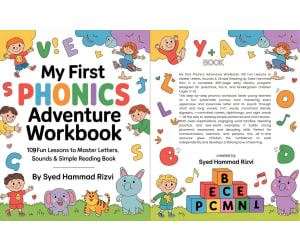
My First Phonics Adventure Workbook 109 Fun Lessons to Master Letters
ELA, Language Development, Literature, Reading, Writing, Phonics, Children’s Literature, Reading Comprehension, Strategies, Creative Writing, Kindergarten, Preschool, Grade 1, 2, 3, 4, 5, Projects, Activities, Teacher Tools, Assessments, Lesson Plans, Presentations, Workbooks, Worksheets & Printables, Literacy Readers, Graphic Organizers
Discover the ultimate preschool and kindergarten phonics workbook called the "My First Phonics Adventure Workbook: 109 fun lessons helping children to master letters, sounds and beginning reading!" This 369-page resource for early literacy education presents a sequentially organized curriculum of phonics skills (i.e., identification of uppercase/lowercase letters; pronunciation of short and long vowel sounds; recognition of CVC words; consonant blend sounds; recognition of diagraph sounds (e.g., "sh," "ch," "th," "wh"); pronunciation of r-controlled vowel sounds; recognition and pronunciation of diphthongs; identification of double consonant letters; recognition and use of sight words; simple sentence/story reading). Written in an easy-to-read and engaging style with many examples of the different types of words for blending activities and everyday application of reading skills, this learn to read workbook provides children with a strong phonemic awareness base and confidence in decoding words when reading. It is great for homeschoolers, teachers, or parents who want to use a comprehensive first-time reader program starting with A-Z letters, and ending with reading comprehension of a whole story; no prior knowledge required; ages 3-6. Improve child reading fluency from an all-inclusive phonics adventure that will support your preschool, Pre-K, or kindergarten child's growth towards success as a reader. Start today by downloading and becoming part of your child's journey toward unlocking the beauty of reading! Why Parents/Teachers Love: Systematic and Comprehensive Coverage — 109 accumulation chapters lead children from single letters to fluent reading of stories — no holes, no additional books needed. Creates True Confidence — Simple explanations with rules of word families and blending activities allow children to independently decode words they have not seen before, providing less frustration to children. Parent and Teacher Friendly — Ready-to-use lessons with examples; works well as a homeschooling, center, or daily practice resource. Proven Early Literacy Base — Phonics standard based and result driven methods that predict long-term success of reading. Affordable and All-in-One Resource – One download replaces more than one costly workbook and offers high quality profession instruction. Target Audience: This workbook is designed for children ages 3–7 in preschool (Pre-K) or early grade 1. Pre-k – Ideal for teaching children to recognize the letters of the alphabet, the sounds they make, and the beginning of their ability to read (Chapters 1-33). Kindergarten – This workbook provides a variety of activities that correlate to the core objectives found in the K-12 English language arts curriculum such as: recognizing and reading short/long vowel sounds, identifying consonant blends/digraphs, and writing simple sentences (Chapters 34-102). Early Grade 1 – This workbook can be used to reinforce and build on skills associated with r-controlled vowels, diphthongs, sight words, and text comprehension (Chapters 103-109). This workbook’s skills are foundational and will assist children who are developing as readers; however, the skills may be too easy for students in 2nd grade and above. Copyright Notice / Terms and Conditions: This Book is owned by Syed Hammad Rizvi. The Book is intended for personal use and only in one classroom. It may not be modified or sold by you, nor may it be distributed over the internet for others to download. If you would like to share the Book with your coworkers, please purchase more licenses for the Book on Teachsimple. Thank you for respecting these terms of use. Syed Hammad Rizvi is pleased to provide you with this product.
Author Creative Book Store
Rating
Tags Phonics, PhonicsFun, PhonicsForKids, PhonicsActivities, EarlyLiteracy, EarlyReading, LearnToRead, ReadingSkills, Literacy, ScienceOfReading

I WONDER - What Did Roman Children Wear | Animated Video Lesson
History: Ancient, History, Social Studies, History: Europe, Grade 1, 2, 3, 4, 5, 6, 7, 8, Lesson Plans, Teacher Tools
Video Introduction An amazing video designed for the students to learn more about history. I WONDER - What Did Roman Children Wear | Animated Video Lesson Do you like history? Which topic do you really enjoy about history? Have you ever read an interesting fact about the Vikings? If yes, can you mention them? What do you like most about the Victorian era? Can you name all the Tudors? Have you ever wondered how people used to live in ancient Japan and ancient China? Do you know any interesting facts about ancient Egyptians and the Pharaohs? Have you ever visited South America? What do you know about Incas and Aztecs? Celtic culture was really one of a kind, can you name any of the places that Celts used to live in? Imagine yourself living during the ancient Roman empire, how your life will look like? Ancient Greece was an amazing place to live in. What do you know about ancient Greek life? I WONDER - What Did Roman Children Wear | Animated Video Lesson The video is perfect for encouraging the researching skills for the students, while learning more about history. I WONDER - What Did Roman Children Wear | Animated Video Lesson This friendly designed video is suitable for students at school, homeschooling, and as a group activity. Format Available in MP4 format.
Author Educational Voice
Tags What Did Roman Children Wear, What Did Roman Children Wear Video, Roman Children, Roman Children Facts, Roman Children Video, Roman Children Facts For Kids, Roman Children Video For Kids
Algebra: Number Sentences & Fact Families - Practice the Skill 2 - PC Software
Math, Fact Families, Common Core, Kindergarten, Preschool, Grade 1, 2, Teacher Tools, Lesson Plans
Algebra: Number Sentences & Fact Families - Practice the Skill 2 - PC Software Empower your teaching strategies and facilitate an enhanced learning experience with this innovative educational resource! The Algebra: Number Sentences & Fact Families - Practice the Skill 2 software on PC challenges your students to partake in skill-fortifying timed drill activities. Specially designed to improve understanding of number sentences and fact families within algebra, this interactive tool ensures curriculum -based content is easily accessible and engaging for learners. Hands-on Learning This hands-on resource promises a rich learning experience with exercises that encourage students to determine the truth value of given number sentences. Apart from supporting comprehension development, it also presents an excellent opportunity for kids in kids in kindergarten through grade 2 to cultivate their critical thinking skills as they attempt to solve problems using math tools included in the package. Multilingual Resource Widening its teaching scope, this resource comes equipped with both English and Spanish voice over and text options. This will not only cater to a diverse student population but also provides an inherent chance for language exposure, further strengthening bilingual proficiencies amongst young learners. Educational Standards Alignment You can assure parents that this software successfully fulfills recommended learning needs and outcomes. Versatile Implementation Options: The program can be used during whole group sessions providing teachers an avenue for active instruction or utilized during small group activities promoting peer-based learning experiences. Assigning these drills as homework allows students additional practice time which aids better concept retention. To ensure ease while managing digital resources in classrooms, this product comes neatly packaged in a single zip file offering straightforward installation on all PCs. With Algebra: Number Sentences & Fact Families - Practice the Skill 2 software; educators are effectively equipped to combine academic rigor with contemporary educational tools leading to enriched teaching and optimized learning experiences.
Author Classroom Complete Press
Tags Math Lessons, Algebra Lesson Plan, Digital Math, Number Sentences, Fact Families
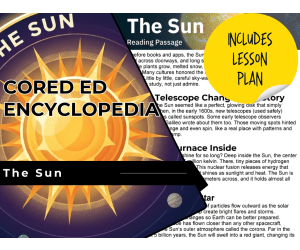
The Sun Reading Comprehension Passage - Cored Ed Encyclopedia
ELA, Language Development, Reading Comprehension, Reading, Pre-Reading, Writing, Science, Earth Sciences, Earth and Environmental Sciences, Space, Grade 2, 3, 4, 5, Worksheets & Printables, Worksheets, Teacher Tools, Centers, Activities, Writing Prompts, Assessments, Quizzes and Tests, Quizzes, Lesson Plans
This Sun reading comprehension includes: Visualization (on the front cover) Start your lesson by taking a minute to think and share something about the topic. Read the script aloud (slowly), perhaps prepare some music or sound effects. Student close their eyes and let their imaginations wander. Students open their eyes, read the question aloud and give them a few minutes to complete. Ask a few students to share or keep answers until the end to compare with what they learn in the passage. Quick pause—thousands of Cored Education products are included with your TeachSimple membership. Download links and encyclopedia index available here. Pre-Reading Trivia Students will write down one thing they already know about the subject and then read five more facts and discuss. These facts are fun, and the students will enjoy learning about the subject before reading more. Give 1 minute for students to write what they already know (no pressure—best guess is fine). Read the five facts together. After each fact, do ask a student for their opinion, was it surprising? Set a purpose by asking students to highlight/underline one fact they want to learn more about during the reading. Reading Passage The text is a high-interest reading passage with set paragraphs, roughly three to four paragraphs long. It contains a variety of themes about the topic, anywhere from history to technology. The passage is between 250 and 350 words in length. First, ask students to look at the headings and see what they’ll learn about today. What do they know about the topic/heading? First read options: Teacher read-aloud (best for support). Partner reading (paragraph by paragraph). While reading, students underline important details, and vocabulary words they think may come up in the questions section. Mixed Questions The first question page contains four multiple-choice questions, each with a choice of four answers, and three written response questions that require a sentence or two from the student. Students complete the mcqs first independently, then review quickly as a class. For the 3 written responses, try to get students giving the answer with some form of evidence: “I think ___ because the text says ___.” If students get stuck, send them back to check the passage. Vocabulary Questions Practice seven key words from the text in this section across two activities. First section is scrambled words where students will unscramble three words given a clue for each. The second section is a word to meaning matching activity. Before starting, have some students read out words they underlined in the passage. Ask students to say the word and read aloud the sentence(s) around each word. Ask students to do scrambled words and the matching exercise in pairs then go through answers as a class. For the scrambled spelling task, get four pairs to come up to the board and write the words for extra practice with the other student reading out the clue. For the matching task, prompt students to give full sentences: “I matched ___ with ___ because ___.” Creative Writing In this question, the student will be required to write a five to eight sentence paragraph on a question related to the topic. Before starting, ask students write down 3 key ideas they are going to include in their piece. Ask students for ideas to share around the class to help those struggling. Pro writing expectations: 5–8 sentences At least 2 facts or details from the passage At least 2 vocabulary words from the previous page Students read their paragraphs while classmates listen for facts and vocabulary words. Extension Activities This page is optional for fast finishers or to take home. There are several activities, each one requiring a different skill. Do some, do none, do all, completely optional - but you will feel reassured knowing every possibility is planned for. Includes summary writting question. Answer Key There are answers for the multiple-choice questions, written response questions have sample answers, vocabulary answers and if there is a summary question then a sample summary will be provided as well. Lesson Plan Included Customized lesson plan for this lesson is included. Lesson Snapshot Title: The Sun Genre: Nonfiction (informational text with support pages) Subject: Science (Space Science) Primary Topic: How the Sun affects Earth and works Estimated Guided Reading Level (A–Z): S What This Lesson Teaches Best How people used the Sun and changing shadows to notice time long before clocks, phones, and apps. How telescopes in the early 1600s revealed sunspots and helped people realize the Sun can change and even spin. How the Sun shines for so long because nuclear fusion joins hydrogen to make helium and releases energy as sunlight and heat. Key facts about the Sun’s size and importance in the solar system (about 1.39 million kilometres across; holds almost all the mass in the solar system). How the Sun can be active (solar wind, flares, storms) and how spacecraft like NASA’s Parker Solar Probe study the Sun’s outer atmosphere, the corona . Learning Goals Describe how changing shadows helped people notice time long ago. Explain what sunspots are and what they helped early observers realize about the Sun. Explain, using details from the text, how nuclear fusion makes energy inside the Sun. Identify what the corona is and why the Parker Solar Probe flew close to the Sun. Describe two ways the Sun is “not always calm,” based on the passage. Key Vocabulary From the Text telescopes — tools used to see faraway objects in the sky. sunspots — dark freckles seen on the Sun. hydrogen — a gas that joins together deep inside the Sun. helium — what hydrogen becomes when it joins together. corona — the Sun’s outer atmosphere. FULL CATALOG OF DOWNLOAD LINKS AND ENCYCLOPEDIA INDEX HERE
Author Cored Education
Rating
Tags Vocabulary, Reading Comprehension, Reading Passages, Lesson Plans, Ela Lesson Plans, Reading Comprehension Lesson Plans, Reading, Pre-reading, The Sun, Earth Science