



3,949 products added recently
Page 34 - 2nd Grade Lesson Plans
Enhance your second-grade classroom with lesson plans that build on foundational skills and introduce new concepts. These activities promote critical thinking and creativity across subjects. Implement these plans to keep your students motivated and progressing confidently.

 Show filters


Character Building: Literature-Based Theme Units
Special Resources, Social Skills, Preschool, Kindergarten, Grade 1, 2, 3, Teacher Tools, Lesson Plans
Character Building: Literature-Based Theme Units This teaching resource offers an enriching approach to embedding essential virtues in young minds. It is primarily intended for Preschool, Kindergarten and Grades 1, 2, and 3 students. This useful tool serves as a valuable instrument in teaching core principles such as honesty, respect, responsibility, compassion, self-discipline and perseverance. Intriguing selection of literature The essence of 'Character Building: Literature-Based Theme Units' lies in its variety of stimulating literature. Each narrative imparts a distinct theme that urges character development among students. A range of enjoyable activities follow each story which help reiterate the lessons conveyed. 144 ready-to-print pages: The set includes 144 carefully compiled pages, This allows teachers to reinforce learning consistently whilst saving planning time. Ranging topics: Variety of topics covered focusing predominantly on enhancing social skills across various themes. Fits Various Learning Environments This versatile product accommodates varying educational settings. Whether it be part of a whole-group instruction or small-group activities – this unit can conform to the unique needs and style preferences within different classrooms. Moreover, this resource is applicable beyond formal lessons with possibility for conversion into homework assignments enabling students continued reinforcement at home and maintaining parental involvement in their child’s learning routine the whole while. Whether you are a public school teacher seeking guided lesson plans or an independent homeschool educator looking for rigorous instructional content that delves beyond academics; ‘Character Building: Literature-Based Theme Units’ promises to be your ally in nurturing collaborative societies at their earliest root – our students' classrooms.
Author Classroom Complete Press
Tags Social Skills, Character Building, Literature, Theme Units, Lesson Plan
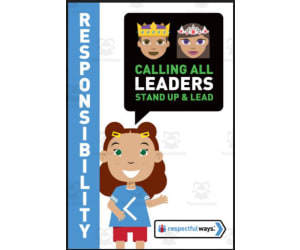
Let's Chat Conversation Cards | "Calling All Leaders, Stand Up and Lead"
Special Resources, Social Emotional Learning (SEL), Grade 2, 3, 4, 5, 6, Teacher Tools, Lesson Plans
Let's Chat Conversation Cards for "Calling All Leaders, Stand Up and Lead" is a social-emotional learning resource that helps students develop leadership qualities like compassion, perseverance, respect and responsibility. This resource contains conversation starter cards that facilitate meaningful dialogue between students, allowing them to understand different perspectives and strengthen friendships. Implement in whole group, small group, or as a homework assignment. Developed by trauma-informed program Respectful Ways, this resource integrates seamlessly with PBIS and MTSS frameworks. Data shows Respectful Ways helps improve GPAs, attendance, and decrease referrals. For more information on how this research-based resource can meet your school's social-emotional needs, contact Pam@RespectfulWays.com or call 404-955-8882.
Author Respectful Ways
Tags Conversation Cards, Respectful Ways, Leaders, SEL, Spanish, Social Emotional Learning, Character Education, Let's Chat, Trauma-informed, Responsibility

More Writing Workouts That Work: By the authors of Four Square Writing
ELA, Writing, Grade 2, 3, 4, 5, 6, Teacher Tools, Lesson Plans
More Writing Workouts That Work: By the authors of Four Square Writing This teaching resource, "More Writing Workouts That Work", offers a simple and practical guide for both public school teachers and homeschoolers to elevate their students' writing skills. The creators, who are also the authors of 'Four Square Writing', have devised this resource considering educators who wish to extend their resources beyond conventional solutions. Suitable For Grade 2 - 6 Students Perfectly suitable for grade 2 up to grade 6 students, this comprehensive guide is set out to introduce dynamic exercises designed to help learners improve in various aspects of writing. It includes stimulating material aimed at helping students: discover topics for written tasks more creatively, use language with precision, diversify sentence structures effectively understand the art of shaping voice in writings alongside mastering successful beginnings and endings. Beyond Just Writing This document encourages learners not just to write but also instills crucial skillsets such as using dialogue appropriately within narratives and revising written work more efficiently. The expertly-created content serves as an ideal tool that can be adapted into writer's workshop mini lessons or utilized as part of language arts instruction. User-friendly Convenience & Versatility The user-friendly nature of this product file comes with immense convenience - it's available as a single PDF file type boosting ease-of-access across digital platforms making it easy-to-use while enhancing its versatile applicability within varied classroom environments or homeschooling setups alike keeping adaptability at its core offering - truly answering modern-day learning challenges while catering authentically educational needs! "From mainstream classrooms through remote learning situations right down till homeschooling environments - wherever you are aiming targeted skill enhancement when it comes to writing; remember more workouts that work, indeed work!"
Author Classroom Complete Press
Tags PDF

Matter Properties: Liquids & Solids Gr. 2-3
Science, Physics, Grade 2, 3, Teacher Tools, Lesson Plans
Matter Properties: Liquids & Solids for Gr. 2-3 An educational resource designed specifically for second and third grade classrooms, this product is a great tool for homeschooling communities as well. Rooted in physical science curricula, it has immense value. Understanding the various properties of materials and their similarities and differences is key to this resource. It even expands on these concepts by demonstrating how certain materials can exist as both solids or liquids - enhancing observational skills considerably. Definition of Matter Function of Molecules Three States of Matter Understanding The Interactions between certain Solids & Liquids This product finds application in multiple teaching scenarios with ease. Its effectiveness shines during whole-group instruction time introducing new concepts or as a guide during small group instructions helping target specific learning needs better. Furthermore, it can be conveniently assigned as homework material enabling active reinforcement at home giving you wider flexibility! Read! Act! Learn! Packed within are numerous reading passages and constructed activities to help ensure new learnings get ingrained effectively while enjoying the process too. Activities like crosswords or word searches only add to practice opportunities making learning ever exciting! Matter Properties: Liquids & Solids Gr 2-3 : As easy and straightforward it gets, comes in PDF format aiding effortless accessibility on any digital device used these days. Ethical Considerations: We place high priority on transparency thus ensuring each information piece encountered through our content is factual and precise serving educators worldwide efficiently.
Author Classroom Complete Press
Tags PDF

Hands-On - Earth & Space Science: Solar System Gr. 1-5
Science, Earth and Environmental Sciences, Space, Grade 1, 2, 3, 4, 5, Teacher Tools, Lesson Plans
The Hands-On - Earth & Space Science: Solar System Gr. 1-5 This innovative teaching resource is designed to motivate students in grades 1-5 to discover and understand our fascinating planet and the boundless universe that lies beyond it. Carefully aligned with STEAM objectives, it integrates the interconnected domains of Science, Technology, Engineering, Art and Math that are fundamental to our comprehension of Earth & Space Science. Unique Features: A seamless blend of theoretical concepts with hands-on activities for practical understanding. Guidance for teachers to involve students in group activities like devising their weather forecasts. An approach which allows learners a flexible structure from which they can gradually become independent while gaining immersive experiences of different scientific phenomena. Classroom Implementation: The product's application can take several forms such as: Whole group lessons Small groups assignments Learners could create sand dunes or rain gauges straight in the classroom setting at school. Alternatively, teachers could assign tasks as homework where students independently assemble solar cells or windmills at home. The Learning Approach: This curriculum fosters active participation through comprehension activities paired up with hands-on science experiments instead of passive knowledge absorption. Additonal Resources: Reading passages outlining essential concepts matched to grades 1-5 reading abilities. Graphic organizers aimed at guiding student thought patterns making them proficient problem solvers capable of logically interpreting scientific data. Evaluation Process: To track the pupils' learning progress consistently throughout instruction periods assessment activities are incorporated aiding teachers trace individual student progress. Lastly desirable is the nurturing of STEM inclined minds yearning exploration discovery precisely what Hands-On - Earth & Space Science: Solar System Gr. 1-5 aims for.
Author Classroom Complete Press
Tags PDF
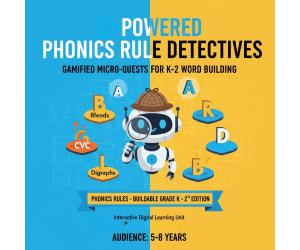
Powered Phonics Rule Detectives Gamified Micro-Quests for K-2
Reading, ELA, Literature, Children’s Literature, Mental Health, P.E. & Health, Mindfulness, Health, Research, STEM, Homeschool Curriculum, Grade 1, 2, 3, 4, 5, Activities, Games, Projects, Experiments, Assessments, Teacher Tools, Lesson Plans, Literacy Readers, Presentations, Rubrics
Unleash the Potential of Literacy with this Full, AI-Supported Phonics Learning Program for Grade K-2 Students! "AIPowered Phonics Rule Detectives: Gamified Micro-Quests for K-2 Word Building - Phonics Rules Buildable Grade K-2nd Edition" features 45 pages of interactive digital lesson material that can turn conventional phonics lesson delivery into an incredibly fun and fascinating detective hunt mystery series for kids. A full range of interactive elements, digital AI advisory tools for adaptive content delivery, worksheets for kids, teacher support material, images, and solution keys have been included in this resource tools package for teachers and home schooling parents for effective decoding, reading, and spelling skill development for kids in Grade K-2. Based on a strong systematic and explicit phonics and synthetic background, the "buildable" sequence in the curriculum includes the following skills for each grade level: Kindergarten—basic CVC words and letter sounds, Grade 1—digraphs, blends, CVCE (or "magic e"), and long vowels, Grade 2—vowel teams, r-controlled vowels, diphthongs, syllables, soft C/G, and silent letters. Use the power of Artificial Intelligence to generate unlimited differentiated scenarios, sentences, and activities for remediation, on-grade, or enrichment purposes, and add gamification components such as role-playing, stories, points, badges, and feedback. Why Parents/Schools Love It: Engage Gamification Increases Motivation: Converts phonics lessons into enjoyable 'detective missions' involving stories, badges, & micro-quests, keeping children eager & preventing burnout, underpinning theories such as Self-Determination Theory & Behaviorism. AI-Enabled Personalization: Saves Time “Teachers use prompt cards to create endless differentiated learning material instantly, serving all children, from struggling to advanced learners, without consuming teaching hours.” Established Effectiveness with Data-Driven Insights: Comes with personalized student data indicating an 60-85% proficiency rate for essential rules, as well as assessment and tracking for literacy gains. Complete Ready-to-Use Resources: The all-inclusive resources are available as a single PDF that includes theory lessons, activity sheets, and answer keys and ethics guidelines related to AI that are suitable according to literacy best practices. It Helps Develop Lifelong Reading Confidence: This scaffolding approach leads children to gain a strong conceptual foundation regarding phonics rules, which results in their fluent reading skills, ability to master spelling concepts, as well as developing their lifelong love Target Classes/Students : On the basis of a comprehensive analysis of the PDF document, which includes the flow of the document, developmental phases, categories of rules, worksheets, as well as examples, the following groups of students can be targeted by it: Kindergarten (Emergent Readers): Emphasis on basic components including letter/sound association, vowel concepts, CVC words, and initial/final sounds. This is to promote cognitive balance in the content. Grade 1: Focuses on mastery of CVC words, introduction to digraphs (sh, ch, th, wh), blends (bl, fr, st), CVCE, magic 'e', Long Vowel teams - ai, ee, oa. Grade 2 (Developing Readers) Focuses on complex long vowel combinations, complex pairs of vowels in a word or syllable (ou, oy, ie), r-controlled combinations of letters and vowels (ar, er, ir, or, ur), diphthongs, inflectional suffixes, syllables, and silent letters Its K-2 continuum is "buildable," in that the rules ramp up cumulatively, and it is therefore ideal for mixed-age, intervention, or enrichment settings in the early grades of schooling. Copyright/Terms of Use : «This Book was copyrighted by Syed Hammad Rizvi.» You cannot modify it or give it or any part of it away or resell it. That means you cannot put it on the Internet where it might be downloaded by anyone who wants it. However, if you need to share this resource with colleagues, just purchase more licenses from Teachsimple. Thanks for following the terms of use! This product has been very proudly presented to you by Syed Hammad Rizvi
Author Creative Book Store
Rating
Tags AIPoweredPhonics, PhonicsRuleDetectives, GamifiedMicroQuests, K2WordBuilding, PhonicsRulesK2, BuildablePhonicsCurriculum, KindergartenPhonics, Grade1Phonics, Grade2Phonics, EarlyLiteracyDevelopment
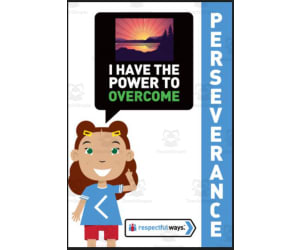
Let's Chat Conversation Cards | "I Have the Power to Overcome"
Special Resources, Social Emotional Learning (SEL), Grade 2, 3, 4, 5, Teacher Tools, Lesson Plans
Let's Chat Conversation Cards | "I Have the Power to Overcome" This resource helps build students' self-confidence and perseverance mindset. The 57 sets of conversation starter cards facilitate meaningful dialogue so students gain insight into different perspectives while strengthening friendships. Use for whole-class, small groups, or partner discussions. District data shows the program, integrated with PBIS, improves GPAs 12%, attendance 37%, and decreases referrals 93%. The trauma-informed Respectful Ways curriculum aligns with MTSS and PBIS frameworks. Includes matching visuals and Home Connects for family engagement. For more, contact Pam@RespectfulWays.com.
Author Respectful Ways
Tags Conversation Cards, Respectful Ways, Power To Overcome, Perseverance, Social Emotional Learning, Let's Chat, Grief, SEL, Character Education, Trauma-informed

Special Handshake SEL Lesson Plus Handouts
Special Resources, Social Emotional Learning (SEL), Special Education Needs (SEN), Social Skills, Grade 1, 2, 3, 4, Teacher Tools, Lesson Plans
Special Handshake SEL Lesson Plus Handouts: An Enthralling Expedition Into Social Emotional Learning Welcome to the universe of Social Emotional Learning (SEL) with the Special Handshake SEL Lesson Plus Handouts. This resource is a delightful tool designed for Grade 1 to Grade 4 students. Embrace Community Building and Inter-Student Connection We introduce an engaging activity where students are coupled randomly, preferably with someone less familiar, to create their own special handshake involving 8 to 10 unique gestures. Mimicry through Model Videos A short video featuring a teacher exemplifying special handshakes kindles inspiration into minds of young observers - preparing them for this intriguing task. They then perform and practice these handshakes until it becomes their second nature—young minds thus attain familiarity in social awareness and relationship building skills. Ciphering Codes – Taking Lessons Beyond Gestures! The class splits into two groups each entrusted with decoding different cryptic messages adding intrigue as well as bolstering team spirit. Kids discover how crucial it is being discreet during such tasks; leading them towards learning fun & propriety together! Incorporating this captivating educational resource can significantly enrich classroom dynamics whether applied within whole group discussions or small group activities—even serving as homework assignments sparking interactive involvement among family members! This ready-to-use Google Slide formatted product ensures ease of use without any hassles related to preparation or comprehension of instructions—a completely user-friendly experience! Promote social emotional education while maintaining high spirits today by adopting the invigorating world of Special Handshake SEL Lesson Plus Handouts—it truly does more than just bridging the 'classroom-community' gap. It channels students towards enhanced social skills & improved bonding activities.
Author Jennifer Moyer Taylor
Tags Social Awareness, Relationship Building, Community Bonding, Interactive Activities, Social Emotional Learning, Special Handshake

Number & Operations: Grouping Objects & Number Lines - MAC Software
Math, Number Lines, Kindergarten, Preschool, Grade 1, 2, Teacher Tools, Lesson Plans
The Number & Operations: Grouping Objects & Number Lines - MAC Software An indispensable tool for educators, this software is designed to streamline and innovate the teaching of essential math skills. The key focuses here are the concepts of grouping objects and understanding number lines. It serves as a mini curriculum unit for Preschool, Kindergarten, Grade 1 and Grade 2 students. Main Features: Pre- assessment tools to gauge current knowledge levels before embarking on new lessons. Grouping objects lesson plan frameworks. Real-world word problems focused on number lines. Timed drill activities for effective instruction. This package also includes an exciting assortment of interactive games such as memory matches and spinner games intended to both reinforce taught concepts and stimulate further interest in numbers and operations. Packaging Overview:The product comes within one zip file ready for installation on any MAC system. Notably present in this software is default English voice over and text. To meet educational diversity needs there’s additionally Spanish voice over available with a text option. A teacher guide plus printables are included as additional support materials especially crucial for teachers struggling with workload. The embedded SMART Response assessments serve to evaluate student progress throughout teaching effectively. Lastly, aspects of this software can be assigned as homework assignments – bringing learning right into students' homes! Achieve math education objectives seamlessly today with The Number & Operations: Grouping Objects & Number Lines – MAC Software!
Author Classroom Complete Press
Tags Operations, Number Lines, Digital Math, Grouping Objects, Number Practice
I WONDER - Why Does An Octopus Have Ink | Animated Video Lesson
STEM, Biology, Life Sciences, Science, Animals, Grade 1, 2, 3, 4, 5, 6, 7, 8, Lesson Plans, Teacher Tools
Video Introduction Animal kingdoms are full of fascinating wonders to learn. This video is designed for the students to learn more about animals in different countries. I WONDER - Why Does An Octopus Have Ink | Animated Video Lesson Do you like animals? what is your favorite one? Do you own a pet? If yes, tell us more about it, like what its name? And what do you like most about it? What are the animal kingdoms? Can you write down the characteristics of each animal class like mammals, birds, reptiles, amphibian, fish and mollusks. Do you know that some animals can sing, can you name any of them? What is the largest and the smallest mammal in the world? What is the largest and the smallest bird in the world? What is the largest and the smallest fish in the world? I WONDER - Why Does An Octopus Have Ink | Animated Video Lesson The video is perfect for encouraging the researching skills for the students, while learning more about these fantastic animals. I WONDER - Why Does An Octopus Have Ink | Animated Video Lesson This friendly designed video is suitable for students at school, homeschooling, and as a group activity. Format Available in MP4 format.
Author Educational Voice
Tags Why Does An Octopus Have Ink, Why Does An Octopus Have Ink Video, Octopus Ink, Octopus Ink Facts, Octopus Ink Facts For Kids, Octopus Ink Video, Octopus Ink Video For Kids, Octopus
I WONDER - How Do Pangolins Protect Themselves | Animated Video Lesson
Animals, Life Sciences, Science, STEM, Grade 2, 3, 4, 5, 6, 7, 8, Lesson Plans, Teacher Tools
Video Introduction Animal kingdoms are full of fascinating wonders to learn. This video is designed for the students to learn more about animals in different countries. I WONDER - How Do Pangolins Protect Themselves | Animated Video Lesson Do you like animals? what is your favorite one? Do you own a pet? If yes, tell us more about it, like what its name? And what do you like most about it? What are the animal kingdoms? Can you write down the characteristics of each animal class like mammals, birds, reptiles, amphibian, fish and mollusks. Do you know that some animals can sing, can you name any of them? What is the largest and the smallest mammal in the world? What is the largest and the smallest bird in the world? What is the largest and the smallest fish in the world? I WONDER - How Do Pangolins Protect Themselves | Animated Video Lesson The video is perfect for encouraging the researching skills for the students, while learning more about these fantastic animals. I WONDER - How Do Pangolins Protect Themselves | Animated Video Lesson This friendly designed video is suitable for students at school, homeschooling, and as a group activity. Format Available in MP4 format.
Author Educational Voice
Tags How Do Pangolins Protect Themselves, How Do Pangolins Protect Themselves Video, Pangolins, Pangolin, Pangolins Facts, Pangolins Facts For Kids, Pangolins Video, Pangolins Video For Kids
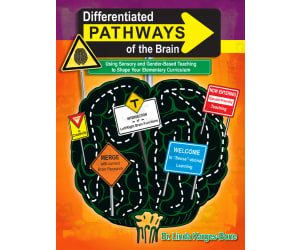
Differentiated Pathways of the Brain: Using Sensory and Gender-Based Teaching to Shape Your Elementary Curriculum
, Preschool, Grade 1, 2, 3, 4, 5, 6, Teacher Tools, Lesson Plans
The Differentiated Pathways of the Brain: Using Sensory and Gender-Based Teaching to Shape Your Elementary Curriculum This comprehensive 144 page PDF teaching resource is loaded with content suitable for Kindergarten to Grade 6, designed for both classroom educators and homeschoolers. Braided with Brain Research: The material is guided by recent brain research findings, providing educators with deep insights into sensory learning techniques and gender-based teaching methods aimed at boosting student engagement. Learn about optimal classroom groupings to facilitate learning while minimizing friction among students. Tactical teaching methods such as leveraging boys' inherent energy levels in language arts or utilizing girls' verbal skills effectively when facing math problems are explored in detail. The scope goes beyond traditional academic subjects, extending to different types of plans from overseeing single lesson objectives up to broader curriculum development projects. A Versatile Tool Designed with Today's Educational Landscape in Mind: An excellent tool amidst increasingly specialized teaching methodologies; this guide provides timely information rooted in thoughtful research. It paves the way for engaging students through differentiated instruction that caters uniquely to each child’s needs. Implementation applies across various scenarios like full class instruction, small-group activities or even homework planning. Sowing Seeds for a Cognitive Classroom: 'The Differentiated Pathways of the Brain' offers teachers strategic pedagogical approaches anchored on understanding cognitive processes. Rather than prescribing set lessons, it fosters an environment conducive to tailoring instructions based on individual learning requirements - ensuring optimal results overall.
Author Classroom Complete Press
Tags Teacher Lesson Plan, Poathways, Sensory Based Teaching, Gender Based Teaching, Curriculum

Measurement: Area & Volume - Practice the Skill 3 - FLASH-MAC
Math, Measurements, Common Core, Grade 1, 2, Teacher Tools, Lesson Plans
Measurement: Area & Volume - Practice the Skill 3 - FLASH-MAC The Measurement: Area & Volume - Practice the Skill 3 on FLASH-MAC is an instrumental resource for teaching students in grades 1 and 2 about essential concepts of measurements. It facilitates an understanding of area and volume, this product offers practice drills designed with the intent to assess comprehension as well as cultivate proficiency. The application is equipped with structured timed exercises that encourage students to convert provided volume measurements using corresponding formulas. This educational modality cultivates numeracy skills while promoting cognitive engagement by challenging learners to think critically and strategically. Essential math tools incorporated into this software act as aids in problem-solving mechanisms. Hence, it serves not only as a learning instrument but also efficiently doubles as a medium for reinforcing fundamental math concepts. In terms of language features, this product stands out by catering to both English- and Spanish-speaking students alike. It comes default with English voice over and text supplemented by a Spanish version making it user-friendly for every child regardless of their native language. Educational Alignment: This tool aligns with core curricula guidelines like the Common Core State Standards (CCSS) and STEM initiatives for mathematics education making it appropriate for use across public schools or homeschooling scenarios. Moreover, its content also conforms with guidelines drafted by the National Council of Teachers of Mathematics (NCTM). Versatility: The versatility use-cases ensure flexibility according to various contexts- implemented at an individual level or adopted within small groups for cooperative puzzles or even integrated into homework assignmentsfor additional self-paced practice outside classroom hours. Conclusion: To sum up, Measurement: Area & Volume – Practice The Skill 3 – FLASH-MAC isn't just a digital tool but an academically grounded teaching aid intended to make mastering measurement fun yet rigorously informative; shaping learners who are ready tackle numerical challenges head on confidently.
Author Classroom Complete Press
Tags Software (Mac)
I WONDER - What Did They Teach In Ancient Roman Schools
History: Ancient, History, Social Studies, History: Europe, Grade 2, 3, 4, 5, 6, 7, 8, Lesson Plans, Teacher Tools
Video Introduction An amazing video designed for the students to learn more about history. I WONDER - What Did They Teach In Ancient Roman Schools | Animated Video Lesson Do you like history? Which topic do you really enjoy about history? Have you ever read an interesting fact about the Vikings? If yes, can you mention them? What do you like most about the Victorian era? Can you name all the Tudors? Have you ever wondered how people used to live in ancient Japan and ancient China? Do you know any interesting facts about ancient Egyptians and the Pharaohs? Have you ever visited South America? What do you know about Incas and Aztecs? Celtic culture was really one of a kind, can you name any of the places that Celts used to live in? Imagine yourself living during the ancient Roman empire, how your life will look like? Ancient Greece was an amazing place to live in. What do you know about ancient Greek life? I WONDER - What Did They Teach In Ancient Roman Schools | Animated Video Lesson The video is perfect for encouraging the researching skills for the students, while learning more about history. I WONDER - What Did They Teach In Ancient Roman Schools | Animated Video Lesson This friendly designed video is suitable for students at school, homeschooling, and as a group activity. Format Available in MP4 format.
Author Educational Voice
Tags Ancient Roman Schools, Ancient Roman Schools Video, Ancient Roman Schools Facts, Ancient Roman Schools Video For Kids, Ancient Roman Schools Facts For Kids, What Did They Teach In Ancient Roman Schools
I WONDER - How Do Elephants Communicate | Animated Video Lesson
STEM, Animals, Life Sciences, Science, Biology, Grade 1, 2, 3, 4, 5, 6, 7, 8, Lesson Plans, Teacher Tools
Video Introduction Animal kingdoms are full of fascinating wonders to learn. This video is designed for the students to learn more about animals in different countries. I WONDER - How Do Elephants Communicate | Animated Video Lesson Do you like animals? what is your favorite one? Do you own a pet? If yes, tell us more about it, like what its name? And what do you like most about it? What are the animal kingdoms? Can you write down the characteristics of each animal class like mammals, birds, reptiles, amphibian, fish and mollusks. Do you know that some animals can sing, can you name any of them? What is the largest and the smallest mammal in the world? What is the largest and the smallest bird in the world? What is the largest and the smallest fish in the world? I WONDER - How Do Elephants Communicate | Animated Video Lesson The video is perfect for encouraging the researching skills for the students, while learning more about these fantastic animals. I WONDER - How Do Elephants Communicate | Animated Video Lesson This friendly designed video is suitable for students at school, homeschooling, and as a group activity. Format Available in MP4 format.
Author Educational Voice
Tags How Do Elephants Communicate, How Do Elephants Communicate Video, Elephants, Elephant, Elephants Communication, Elephants Communication Facts, Elephants Communication Video, Elephants Communication Facts For Kids
I WONDER - Do All Mollusks Have Shells | Animated Video Lesson
STEM, Animals, Life Sciences, Science, Biology, Grade 1, 2, 3, 4, 5, 6, 7, 8, Teacher Tools, Lesson Plans
Video Introduction Animal kingdoms are full of fascinating wonders to learn. This video is designed for the students to learn more about animals in different countries. I WONDER - Do All Mollusks Have Shells | Animated Video Lesson Do you like animals? what is your favorite one? Do you own a pet? If yes, tell us more about it, like what its name? And what do you like most about it? What are the animal kingdoms? Can you write down the characteristics of each animal class like mammals, birds, reptiles, amphibian, fish and mollusks. Do you know that some animals can sing, can you name any of them? What is the largest and the smallest mammal in the world? What is the largest and the smallest bird in the world? What is the largest and the smallest fish in the world? I WONDER - Do All Mollusks Have Shells | Animated Video Lesson The video is perfect for encouraging the researching skills for the students, while learning more about these fantastic animals. I WONDER - Do All Mollusks Have Shells | Animated Video Lesson This friendly designed video is suitable for students at school, homeschooling, and as a group activity. Format Available in MP4 format.
Author Educational Voice
Tags Do All Mollusks Have Shells, Do All Mollusks Have Shells Video, Mollusks Shells, Mollusks Shells Facts, Mollusks Shells Facts For Kids, Mollusks Shells Video, Mollusks Shells Video For Kids, Mollusks
All About Addition to 10,000 | Animated Math Video Lesson
Math, Addition and Subtraction, Addition, Grade 2, 3, 4, Lesson Plans, Teacher Tools
All About Addition to 10,000 | Animated Math Video Lesson is a comprehensive teaching resource ideal for Grade 2 through Grade 4 mathematics . This video lesson exclusively deals with the subject of addition and serves as an engaging interactive tool for perfecting the skill of adding large numbers up to 10,000. The video combines entertainment with education via its captivating visuals and professionally-crafted animations. The complex topic of numeric addition is presented simply and intuitively to cater to students' diverse learning needs. Every step in the process is explained thoroughly, not only teaching students how to add large numbers but also acquainting them with the concept of regrouping. The animated format keeps learners engaged throughout the video — approximately eight minutes long. To assist comprehension, a clear voiceover guides users through each algorithmic step in solving addition problems. Purchasing this product provides you with one downloadable MP4 file making it versatile across various applications. You can use it for: Whole-group instruction Small-group activities or supplementary material An at-home learning tool or homework visual aid. In conclusion ,All About Addition to 10,000 | Animated Math Video Lesson harmoniously merges technology and math pedagogy. It can augment your existing curriculum plan while providing accessible solutions that help young minds master five-digit addition operations.</p
Author Educational Voice
Tags Addition, Large Numbers, Regrouping, Math Video, Interactive

I WONDER - Are There Different Types Of Volleyball | Animated Video
Sports, P.E. & Health, Grade 2, 3, 4, 5, 6, 7, 8, Lesson Plans, Teacher Tools
Video Introduction An amazing video designed for the students to learn more about sports in different countries. I WONDER - Are There Different Types Of Volleyball | Animated Video Lesson What is your favorite sport? Tell us more about it. Who is your favorite athlete? Or what is your favorite team? Do you know who invented basketball? When basketball has been invented? Can you tell us where is the first time it has been played? Have you ever played soccer or football? If yes, tell us what was your position: A goal keeper, midfield player, or a defender? Do you like watching golf? If yes who is your favorite player? Can you name the differences between tennis and ping pong? Have you ever played volleyball on the beach? When it has been officially recognized by the Olympics? Do you like watching Formula 1 races? If yes, who is your favorite team or driver? Have you ever tried to play handball? If yes tell us more. Do you like watching people skiing or surfing? I WONDER - Are There Different Types Of Volleyball | Animated Video Lesson The video is perfect for encouraging the researching skills for the students, while learning more about this sport. I WONDER - Are There Different Types Of Volleyball | Animated Video Lesson This friendly designed video is suitable for students at school, homeschooling, and as a group activity. Format Available in MP4 format.
Author Educational Voice
Rating
Tags Are There Different Types Of Volleyball, Are There Different Types Of Volleyball Video, Different Types Of Volleyball, Different Types Of Volleyball Facts, Different Types Of Volleyball Video, Different Types Of Volleyball Video For Kids

Orthographic Mapping Phonics Grids
Science, Basic Science, Inventors, Theories, Life Sciences, Human Body, STEM, Special Resources, Life Skills, Special Education Needs (SEN), Kindergarten, Preschool, Homeschool Curriculum, Grade 1, 2, 3, 4, Worksheets & Printables, Workbooks, Worksheets, Word Searches, Teacher Tools, Lesson Plans, Quizzes and Tests, Quizzes, Tests, Assessments
Unleash the Power of the Science of Reading! The Ultimate Orthographic Mapping Phonics Toolkit for K-2 Are you searching for a rigorous, no-prep phonics resource that aligns perfectly with the Science of Reading (SoR)? Transform your literacy instruction and empower your students to move beyond rote memorization with this comprehensive Orthographic Mapping Phonics Grids workbook. This is not just a collection of worksheets; it's a complete pedagogical system designed to rewire the brain for fluent reading and spelling. Based on the evidence-based principles of orthographic mapping, these worksheets guide students through the crucial process of connecting phonemes (sounds) to graphemes (letters). By explicitly teaching students to segment sounds and map them to their written representations, you will build a solid foundation for decoding, eliminate the habit of guessing, and permanently store words in their sight vocabulary. This massive, 38-page resource is perfect for core instruction, small group intervention (RTI), literacy centers, tutoring, and even for homeschool parents looking to provide research-backed support. WHAT'S INCLUDED: A Comprehensive Educator's Guide (10 Pages): Dive deep into the neuroscience and methodology behind orthographic mapping. This guide explains the "why" with clarity, covering Linnea Ehri's phases of development, the anatomy of a phonics grid, and case studies proving its effectiveness. Teach with the confidence of an expert! Systematic Student Worksheets (18 Pages): A strategically sequenced set of worksheets that build in complexity: Worksheet 1: CVC Words Worksheet 2: Consonant Digraphs (sh, ch, th, etc.) Worksheet 3: Initial Consonant Blends (sl, fr, st, etc.) Worksheet 4: Final Consonant Blends (nd, st, mp, etc.) Worksheet 5: The FLOSS Rule (ff, ll, ss, zz) Worksheet 6: CVCe / Magic E Words (cake, time, rope) Visuals & Teacher Resources (10 Pages): Clear diagrams illustrating the cognitive process of orthographic mapping. A "Tap, Map, Graph" implementation guide. A complete, diagnostic Answer Key with grapheme breakdowns to help you identify phonological vs. orthographic deficits. Keywords for SEO/Tags: Science of Reading, SoR, Orthographic Mapping, Phonics Worksheets, K-2 Phonics, Kindergarten, First Grade, Second Grade, Phoneme Grapheme Mapping, CVC Words, Digraphs, Blends, Magic E, CVCe, Structured Literacy, Reading Intervention, RTI, Special Education, Homeschool, Orton-Gillingham aligned, No Prep, Printable. Why Parents/Schools Love It: Brain-Based & Research-Backed: It's not a fad. This resource is built on the proven neurological science of how children actually learn to read, aligning perfectly with the Science of Reading (SoR). Builds Real Decoding Skills: It systematically teaches students to analyze words by sound, ending the frustrating cycle of guessing based on pictures or first letters. Comprehensive & All-in-One: From a deep-dive educator guide to student worksheets and a full answer key, it provides everything a teacher or parent needs to implement the strategy with confidence, right away. Highly Diagnostic Tool: The unique grid format makes it immediately obvious where a student is struggling—whether it's hearing the sounds (phonological awareness) or knowing the letters (orthographic knowledge). Fosters Independent, Confident Readers: By making the structure of English visible and predictable, these worksheets empower students, reduce anxiety around spelling, and build a solid foundation for a lifetime of fluent reading. Target Student Classes : Based on the clear and systematic progression of phonics skills presented in the worksheets, target educators and parents of students in: Kindergarten: (For the CVC words and introducing digraphs) First Grade: (This is the sweet spot, covering CVC, digraphs, blends, FLOSS rule, and CVCe) Second Grade: (Excellent for review, intervention for struggling readers, or students just beginning to work with more complex vowel patterns) This resource is ideal for reading specialists, interventionists, and special education teachers working with students of any age who have gaps in these foundational skills. Copyright/Terms of Use: This Book was copyrighted by Syed Hammad Rizvi. This resource is for personal and single classroom use only. You may not alter, redistribute, or sell any part of this resource. In other words, you may not put it on the Internet where it could be publicly found and downloaded. If you want to share this resource with colleagues, please purchase additional licenses from Teachsimple. Thank you for respecting these terms of use. This product is happily brought to you by Syed Hammad Rizvi
Author Creative Book Store
Rating
Tags Scienceofreading, Orthographicmapping, Structuredliteracy, Phonics, Sor, Phonemegraphemema, Brainbasedlearning, Readingresearch, Cvcwords, Consonantdigraphs
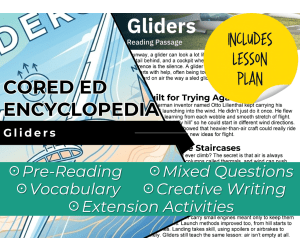
Gliders Reading Comprehension Passage - Cored Ed Encyclopedia
ELA, Reading Comprehension, Reading, Science, Technology, Pre-Reading, Language Development, Physics, History, Social Studies, Grade 2, 3, 4, 5, Worksheets & Printables, Worksheets, Teacher Tools, Centers, Activities, Writing Prompts, Assessments, Quizzes and Tests, Quizzes, Lesson Plans
This gliders reading comprehension with lesson plan includes: Visualization (on the front cover) Start your lesson by taking a minute to think and share something about the topic. Read the script aloud (slowly), perhaps prepare some music or sound effects. Student close their eyes and let their imaginations wander. Students open their eyes, read the question aloud and give them a few minutes to complete. Ask a few students to share or keep answers until the end to compare with what they learn in the passage. Quick pause—thousands of Cored Education products are included with your TeachSimple membership. Download links and encyclopedia index available here. Pre-Reading Trivia Students will write down one thing they already know about the subject and then read five more facts and discuss. These facts are fun, and the students will enjoy learning about the subject before reading more. Give 1 minute for students to write what they already know (no pressure—best guess is fine). Read the five facts together. After each fact, do ask a student for their opinion, was it surprising? Set a purpose by asking students to highlight/underline one fact they want to learn more about during the reading. Reading Passage The text is a high-interest reading passage with set paragraphs, roughly three to four paragraphs long. It contains a variety of themes about the topic, anywhere from history to technology. The passage is between 250 and 350 words in length. First, ask students to look at the headings and see what they’ll learn about today. What do they know about the topic/heading? First read options: Teacher read-aloud (best for support). Partner reading (paragraph by paragraph). While reading, students underline important details, and vocabulary words they think may come up in the questions section. Mixed Questions The first question page contains four multiple-choice questions, each with a choice of four answers, and three written response questions that require a sentence or two from the student. Students complete the mcqs first independently, then review quickly as a class. For the 3 written responses, try to get students giving the answer with some form of evidence: “I think ___ because the text says ___.” If students get stuck, send them back to check the passage. Vocabulary Questions Practice seven key words from the text in this section across two activities. First section is scrambled words where students will unscramble three words given a clue for each. The second section is a word to meaning matching activity. Before starting, have some students read out words they underlined in the passage. Ask students to say the word and read aloud the sentence(s) around each word. Ask students to do scrambled words and the matching exercise in pairs then go through answers as a class. For the scrambled spelling task, get four pairs to come up to the board and write the words for extra practice with the other student reading out the clue. For the matching task, prompt students to give full sentences: “I matched ___ with ___ because ___.” Creative Writing In this question, the student will be required to write a five to eight sentence paragraph on a question related to the topic. Before starting, ask students write down 3 key ideas they are going to include in their piece. Ask students for ideas to share around the class to help those struggling. Pro writing expectations: 5–8 sentences At least 2 facts or details from the passage At least 2 vocabulary words from the previous page Students read their paragraphs while classmates listen for facts and vocabulary words. Extension Activities This page is optional for fast finishers or to take home. There are several activities, each one requiring a different skill. Do some, do none, do all, completely optional - but you will feel reassured knowing every possibility is planned for. Includes summary writting question and additional facts. Answer Key There are answers for the multiple-choice questions, written response questions have sample answers, vocabulary answers and if there is a summary question then a sample summary will be provided as well. Lesson Plan Included Customized lesson plan for this lesson is included. Lesson Snapshot Title: Gliders Genre: Nonfiction (informational text) Subject: Science (flight/engineering) Primary Topic: How gliders fly using lift and launch methods Estimated Guided Reading Level (A–Z): Q What This Lesson Teaches Best Explains what makes a glider different from a small airplane (no motor; quiet flight; “trade height for distance”). Describes how gliders get into the sky (help at the start, including being towed; later mentions aerotows and winches). Teaches how moving air helps a glider climb—especially rising warm air (“thermals”) and wind pushed upward at a ridge or hill. Shows how design features support gliding (long, narrow wings; smooth body; low drag to lose little energy). Connects gliders to early flight experiments through Otto Lilienthal’s repeated testing and “fly hill.” Learning Goals Students will describe how a glider is similar to and different from a small airplane. Students will explain how a glider usually starts flying using details from the text. Students will identify two kinds of lift described in the passage and tell how each helps a glider climb. Students will explain why long, narrow wings and low drag help a glider glide efficiently. Students will describe how gliders and launch methods changed over time, using examples from the text. Students will explain how spoilers or airbrakes help with landing safely. Key Vocabulary From the Text cockpit — where the pilot sits and reads instruments. thermals — rising columns of warm air. drag — air resistance that slows motion. aerotows — launches where an airplane tows the glider. spoilers — panels that help a glider slow down and descend. FULL CATALOG OF DOWNLOAD LINKS AND ENCYCLOPEDIA INDEX HERE
Author Cored Education
Rating
Tags Vocabulary, Reading Comprehension, Reading Passages, Lesson Plans, Ela Lesson Plans, Reading Comprehension Lesson Plans, Pre-reading, Science Lesson Plans, Physics, History
I WONDER - What Are Eyebrows For | Animated Video Lesson
Human Body, Life Sciences, Science, Biology, STEM, Grade 1, 2, 3, 4, 5, 6, 7, 8, Lesson Plans, Teacher Tools
Video Overview The human body is full of fascinating wonders to learn. This video is created to help the students recognize the anatomy and the job of the human body. I WONDER - What Are Eyebrows For | Animated Video Lesson Every part and organ in our human body is vital so let's see how important they are. Have you ever imagined how we look like if we didn't have a skeleton? Did you know that because we have our amazing muscles we can stand! Do you know how many teeth do we have? Have you ever wondered about the food journey inside our body? Can you name all the glands in our body? Why do we have skin? Our nervous system is really good at sending signals. Can you tell us more about it? Are you really good at Mathematics, painting, or any other thing? You should really thank your brain about it! The famous five senses are really doing a great work? Can you explain how every sense works? I WONDER - What Are Eyebrows For | Animated Video Lesson The video is perfect for encouraging the researching skills for the students, while learning more about our fantastic human body. I WONDER - What Are Eyebrows For | Animated Video Lesson This friendly designed video is suitable for students at school, homeschooling, and as a group activity. Format Available in MP4 format.
Author Educational Voice
Tags What Are Eyebrows For, What Are Eyebrows For Video, Eyebrows, Eyebrows Facts, Eyebrows Facts For Kids, Eyebrow, Eye, Eyes, Eyes Facts, Eyes Facts For Kids
I WONDER - Do All Penguins Live In Cold Places | Animated Video Lesson
STEM, Animals, Life Sciences, Science, Biology, Grade 1, 2, 3, 4, 5, 6, 7, 8, Lesson Plans, Teacher Tools
Video Introduction Animal kingdoms are full of fascinating wonders to learn. This video is designed for the students to learn more about animals in different countries. I WONDER - Do All Penguins Live In Cold Places | Animated Video Lesson Do you like animals? what is your favorite one? Do you own a pet? If yes, tell us more about it, like what its name? And what do you like most about it? What are the animal kingdoms? Can you write down the characteristics of each animal class like mammals, birds, reptiles, amphibian, fish and mollusks. Do you know that some animals can sing, can you name any of them? What is the largest and the smallest mammal in the world? What is the largest and the smallest bird in the world? What is the largest and the smallest fish in the world? I WONDER - Do All Penguins Live In Cold Places | Animated Video Lesson The video is perfect for encouraging the researching skills for the students, while learning more about these fantastic animals. I WONDER - Do All Penguins Live In Cold Places | Animated Video Lesson This friendly designed video is suitable for students at school, homeschooling, and as a group activity. Format Available in MP4 format.
Author Educational Voice
Tags Do All Penguins Live In Cold Places, Do All Penguins Live In Cold Places Video, Penguins, Penguin, Penguins Facts, Penguins Facts For Kids, Penguins Video, Penguins Video For Kids, Penguin Video

I WONDER - What Is A Carbohydrate | Animated Video Lesson
Biology, Life Sciences, Science, Human Body, STEM, Grade 1, 2, 3, 4, 5, 6, 7, 8, Lesson Plans, Teacher Tools
Video Overview The human body is full of fascinating wonders to learn. This video is created to help the students recognize the anatomy and the job of the human body. I WONDER - What Is A Carbohydrate | Animated Video Lesson Every part and organ in our human body is vital so let's see how important they are. Have you ever imagined how we look like if we didn't have a skeleton? Did you know that because we have our amazing muscles we can stand! Do you know how many teeth do we have? Have you ever wondered about the food journey inside our body? Can you name all the glands in our body? Why do we have skin? Our nervous system is really good at sending signals. Can you tell us more about it? Are you really good at Mathematics, painting, or any other thing? You should really thank your brain about it! The famous five senses are really doing a great work? Can you explain how every sense works? I WONDER - What Is A Carbohydrate | Animated Video Lesson The video is perfect for encouraging the researching skills for the students, while learning more about our fantastic human body. I WONDER - What Is A Carbohydrate | Animated Video Lesson This friendly designed video is suitable for students at school, homeschooling, and as a group activity. Format Available in MP4 format.
Author Educational Voice
Tags What Is A Carbohydrate, What Is A Carbohydrate Video, Carbohydrate, Carbohydrate Facts, Carbohydrates, Carbohydrates Facts, Carbohydrates Facts For Kids, Carbohydrates Video, Carbohydrates Video For Kids

Vocabulary Review Game Back to School Words I Have, Who Has, Editable
Life Studies, ELA, Language Development, ESL, Vocabulary, Preschool, Grade 1, 2, 3, 4, 5, 6, 7, Teacher Tools, Lesson Plans, Activities, Games
Vocabulary Review Game Back to School Words I Have, Who Has, Editable Transform your classroom's language skills development with the engaging Vocabulary Review Game Back to School Words I Have, Who Has, Editable. This game targets students in Grades 1-5 as well as adults learning a new language or adult ELL's. Product Features: 24 ready-to-print vocabulary cards Editability for flexibility and customization Mechanism promoting conversation between participants - a student starts with the question 'Who has…' and the game proceeds in a chain format With a minimum of 2 players, this game is perfect for pairs, small group, or whole-class practice with up to 16 players! Easy print and go format makes this game great for those last few minutes before class ends, or for small group practice. This product further improves learning by providing a QR code linked Google Slides presentation , offering real-life images of each item being identified. Educational Value: This resource efficiently supports instructional targets in Life Studies and Language Arts subjects including ESL teaching and Vocabulary Mastery. The game serves as both warming-up activity or wrap-up event enhancing classroom bonding while targeting essential 21st-century skills! Suitability: Apt for SPED pupils or EL learners' development . Repetition across different setups strengthens retention performance over time. About The Download: The download, an 8 PPTX slides package translates easily into a Google Slides activity. Perfect for teachers seeking versatility when working on their students' vocabulary range! This PDF download includes game instructions, the easy to use QR code link to the realia presentation, two pages to print, as well as a blank page for you to add in additional vocabulary words and drawings! Be sure to check out additional "I Have, Who Has" vocabulary games in English, French, and Spanish: School and Classroom, Calendar : Days, Months, & Seasons, Food & Drink, Numbers 1-10, Colors, and Patterns, Weather & Landforms!
Author Melissa Is Teaching
Tags Vocabulary Building, Classroom Game, Back To School, Interactive Learning, Language Skills