



3,890 products added recently
Page 20 - 3rd Grade Lesson Plans
Support your third graders' expanding abilities with lesson plans that encourage exploration and deeper understanding. Covering a range of subjects, these resources offer hands-on activities and discussions. Use them to create a vibrant learning atmosphere that fosters enthusiasm.

 Show filters

I WONDER - What Does Judo Mean | Animated Video Lesson
Sports, P.E. & Health, Grade 2, 3, 4, 5, 6, 7, 8, Lesson Plans, Teacher Tools
Video Introduction An amazing video designed for the students to learn more about sports in different countries. I WONDER - What Does Judo Mean | Animated Video Lesson What is your favorite sport? Tell us more about it. Who is your favorite athlete? Or what is your favorite team? Do you know who invented basketball? When basketball has been invented? Can you tell us where is the first time it has been played? Have you ever played soccer or football? If yes, tell us what was your position: A goal keeper, midfield player, or a defender? Do you like watching golf? If yes who is your favorite player? Can you name the differences between tennis and ping pong? Have you ever played volleyball on the beach? When it has been officially recognized by the Olympics? Do you like watching Formula 1 races? If yes, who is your favorite team or driver? Have you ever tried to play handball? If yes tell us more. Do you like watching people skiing or surfing? I WONDER - What Does Judo Mean | Animated Video Lesson The video is perfect for encouraging the researching skills for the students, while learning more about this sport. I WONDER - What Does Judo Mean | Animated Video Lesson This friendly designed video is suitable for students at school, homeschooling, and as a group activity. Format Available in MP4 format.
Author Educational Voice
Rating
Tags What Does Judo Mean, What Does Judo Mean Video, Judo, Judo Facts, Judo Video, Judo Video For Kids, Judo Facts For Kids, Sport, Sports, Sports Video

Earth's Layers & Spheres – Science Unit Pack
Science, Earth and Environmental Sciences, Earth Sciences, Grade 1, 2, 3, 4, Lesson Plans, Teacher Tools
Leverage these engaging tools to craft a comprehensive unit addressing the Earth's four layers (crust, mantle, outer core, and inner core) while also elucidating the concept of the four Earth spheres (lithosphere, hydrosphere, biosphere, and atmosphere). How To Use This: Dive into this collection of resources crafted just for your classroom. Choose the ones that fit perfectly with your Earth's layers unit. Whether you go for the whole package or mix and match, it's all about what works for you. I've made sure there's something for everyone, giving you the flexibility to teach in a way that feels right for you. Your classroom, your rules! What You Get: Earth Science Lesson Plan Schedule Overview Project and Activity Recommendations for the Study of Earth's Layers Video Links Suggestions for Exploring Earth's Layers (Includes QR codes and URL addresses) Vocabulary and Spelling Word List for Earth's Layers 8 Vocabulary Word Strips: (Lithosphere, Hydrosphere, Biosphere, Atmosphere, Outer Core, Inner Core, Mantle, Crust) Article on "The Layers of the Earth" (Available in Two Reading Levels) Article on "The Deepest Hole Ever Dug" (Available in Two Reading Levels) 2 Posters that Define and Illustrate the Four Spheres 2 Posters Labeling the Four Layers of the Earth 1 Poster Featuring an Egg Analogy (Comparing Earth's Layers to an Egg) Photo Depicting an Imagined View of Earth's Layers Coloring and Labeling Worksheet for Earth's 4 Spheres 2 Worksheets for Coloring and Labeling Earth's 4 Layers Word Search Featuring Vocabulary and Keywords Craft Project: Earth Layers Project Template Craft Project: Earth Spheres Project Template 4 Writing Templates Exploring Earth's Layers (Includes 3 Early Writing Templates and 2 Beginner Writing Templates) Rules, Setup Instructions, and Printable Questions for the Review Game *Make sure to check out all the other earth science units I have created to create a cohesive earth science approach!
Author Simply Schoolgirl
Rating
Tags Earth Science, Earth's Layers, Sphere, Layer, Earth's Spheres, Lithosphere, Hydrosphere, Atmosphere, Biosphere, Mantle, Project Earth's Layers, All The Spheres Of The Earth, Four Spheres Of The Earth Diagram, 4 Spheres Of Earth Project, Layers Of Earth Science Project, All 4 Layers Of The Earth, Spheres Of The Earth Diagram, All Of The Layers Of The Earth, Earths 4 Layers, Layers Of The Earth Craft, All Earth Spheres, All Of The Earth's Layers, Earth's Layers Project, Order Of Earth's Layers, 4 Spheres Of The Earth Diagram, Levels Of The Earth, Earth's Spheres Project, All Of The Spheres Of The Earth, All About The Earth's Layers, Spheres Of The Earth Worksheet, List Earth's Four Spheres, Layers Of The Earth Activities, Earth Science Spheres, Earth's Spheres Diagram, All Earth's Layers, All Spheres Of The Earth, Unit Layers, All Of Earth's Spheres

Literary Devices - Digital Lesson Plan Gr. 5-8 - FLASH-MAC
ELA, Strategies, Grade 3, 4, 5, 6, 7, 8, Teacher Tools, Lesson Plans
Unleash the art of storytelling with the 'Literary Devices - Digital Lesson Plan Gr. 5-8 - FLASH-MAC', a teaching resource tailor-made for educators and students from Grade 3 to Grade 8. This digital lesson plan encompasses language arts strategies, heavily focusing on literary devices as tools for understanding and appreciating literature. Created to engage learners, this product presents an array of literary devices such as characterization, setting, plot, theme, point of view, foreshadowing, flashback symbolism and irony The resource features a whopping set of 80 interactive screen-pages exploring these components found in all great stories. The text-to-speech feature along with supporting audio and videos within each page adds to the efficacy of learning. Beyond just reading passages related to every topic covered: Included are interactive activities both before and after reading each section that stimulate engagement from the student's side. A fun memory match game is incorporated into the package which helps improve retention rates among students. Included also is a crossword puzzle enhancing vocabulary abilities while aiding understanding about different aspects delivered through readings. Moving forward: The assessment tools like test preparation resources comprehension quiz expose students' grasp sealing their understanding. This also serves teachers as analytical tool assessing every student’s progress over time giving teachers chance to modify their teaching methodologies if needed. > Aligned with state standards written according Bloom’s taxonomy ensures balanced focused approaches between cognitive skill levels intellectual capacities For those seeking new ways teach Language arts strategies effectively efficiently, Literary Devices - Digital Lesson Plan Gr 5-8 - FLASH-MAC is an divine fit.
Author Classroom Complete Press
Tags Software (Mac)
I WONDER - What Is The Smallest Tortoise Species In The World
STEM, Animals, Life Sciences, Science, Biology, Grade 1, 2, 3, 4, 5, 6, 7, 8, Lesson Plans, Teacher Tools
Video Introduction Animal kingdoms are full of fascinating wonders to learn. This video is designed for the students to learn more about animals in different countries. I WONDER - What Is The Smallest Tortoise Species In The World | Animated Video Lesson Do you like animals? what is your favorite one? Do you own a pet? If yes, tell us more about it, like what its name? And what do you like most about it? What are the animal kingdoms? Can you write down the characteristics of each animal class like mammals, birds, reptiles, amphibian, fish and mollusks. Do you know that some animals can sing, can you name any of them? What is the largest and the smallest mammal in the world? What is the largest and the smallest bird in the world? What is the largest and the smallest fish in the world? I WONDER - What Is The Smallest Tortoise Species In The World | Animated Video Lesson The video is perfect for encouraging the researching skills for the students, while learning more about these fantastic animals. I WONDER - What Is The Smallest Tortoise Species In The World | Animated Video Lesson This friendly designed video is suitable for students at school, homeschooling, and as a group activity. Format Available in MP4 format.
Author Educational Voice
Tags What Is The Smallest Tortoise Species In The World, What Is The Smallest Tortoise Species In The World Video, Smallest Tortoise In The World, Smallest Tortoise Species, Smallest Tortoise In The World Video, Smallest Tortoise Species Video

Kindness & Gratitude Daily Reflection Journals
Special Resources, Life Skills, Social Emotional Learning (SEL), Social Skills, Special Education Needs (SEN), Speech Therapy, STEM, Resources for Teachers, Classroom Management, Community Building, Kindergarten, Grade 1, 2, 3, 4, 5, Worksheets & Printables, Workbooks, Worksheets, Word Searches, Teacher Tools, Lesson Plans, Presentations, Quizzes and Tests, Quizzes, Tests
With the Kindness and Gratitude Daily Reflection Journals (e.g K-5), you have the ability to turn your classroom or home into a center of kindness and emotional intelligence. This wonderful curriculum is a complete forty-three page pdf that contains research-based information from the fields of child development, affective neuroscience, and Somatic-Cognitive Integration Methodology as well as ten student worksheets that are ready for live implementation, and teacher implementation resources. This resource is designed specifically for classrooms with student populations from Kindergarten to 5th grade and is built on the facilitation of social skills through three developmental tiers: K-1: Sensory and Affective Identification (visual prompts/drawing) 2-3: Relational Reciprocation and Theory of Mind 4-5: Complex Systems (Ripple Effect) Thinking, and Intrinsic Altruism Through this curriculum, students will become "Kindness Detectives", engage in an Action-Reflection Cycle, create a map of gratitude through various ecosystems, develop their resilience using silver-lining prompts, and implement acts of altruism through a "Kindness Architect" blueprint. In addition, the curriculum includes theory around neuroplasticity, case studies of real-world use that show 42% drop in conflicts in the morning and 60% increase of student feeling "seen and valued", structural schematics (SVG format), differentiation strategies for reluctant learners, and a complete Teacher Implementation Guide. The Kindness Journals are perfect to use in morning meeting times, social/emotional learning blocks, restorative justice, homeschooling, or guidance/counseling sessions. This zero-preparation curriculum is available as a digital download, and you can easily print the material or assign the material digitally. The Kindness Journals can help increase emotional granularity, empathy, and an overall positive class culture within your classroom, while also providing a resource that supports SEL competencies as developed by CASEL. The reason teachers and parents are happy using this program: Results are measurable! Real-life classroom studies show that using the academic curriculum has decreased morning conflict by 42% and has helped 60% of the children who take part be recognized and appreciated. Both parents and teachers see these changes immediately! There is little preparation time needed to use the academic program. There are 10 ready-to-use worksheets and a teacher's guide with supportive materials for you to be able to use this program right now without spending any time preparing. The academic curriculum has been designed to have the ability to grow as the child grows, from drawing pictures in Kindergarten and First Grade to developing a sense of right and wrong in Fourth and Fifth grade. This ensures that each child in the room is able to be challenged and feel successful through the entire academic experience. The academic program uses what's called mirror neurons, neuroplasticity, and body language to ensure children will exhibit kindness as a daily behavior rather than as a rule. The academic program teaches children to look internally for their own feelings and authentic emotions as opposed to focusing on external rewards or expectations (performative kindness). The result of this process helps to create a child with a higher level of empathy and emotional resilience. Who this is for : This document has been created specifically for K-5 students (ages 5-11). It's not right for Pre-K (the material is too advanced) or Middle School./ For grades K-5, the three-level scaffolding aligns directly with elementary learner neuro-developmental stages., making this resource a match for the following categories of K-5 educators: -General education elementary classrooms (Grades K-5) -Families who homeschool their children -School Counselors / Social-Emotional Learning (SEL) Coordinators -Special education / inclusive classrooms (differentiated activities provided) . -After school program or character education clubs . Copyright / Terms of Use: This book is copyrighted by Syed Hammad Rizvi. This product can only be used for personal use and/or by individual classes. You may not modify, redistribute, or sell any portion of this product. You also cannot place it online where it can be found and downloaded by anyone else. To share this product with other teachers, please purchase additional copies from Teachsimple. Your cooperation in following these rules is greatly appreciated. This product is brought to you by Syed Hammad Rizvi in a state of happy non-ownership.
Author Creative Book Store
Rating
Tags KindnessJournal, GratitudeJournal, SELActivities, DailyReflectionJournal, KindnessAndGratitude, GratitudeForKids, ElementarySEL, K5SEL, SocialEmotionalLearning, ElementaryTeacher

Patterns in Nature - Concentric Rings
Math, Geometry, Grade 3, 4, 5, 6, Teacher Tools, Lesson Plans, Presentations, Activities, Projects
Get ready to explore Patterns in Nature - Concentric Rings found in nature, art, and beyond here on Earth and throughout the universe! Did you know that concentric rings can be found not only in nature but also in art, technology, and even in our solar system and beyond? Bring any elementary math lesson alive with this geometry-centered mini unit study. Don't let the "mini" part of the lesson fool you as you and your learners can jump down myriads of learning rabbit holes for up to months at a time with the given complimentary Internet Activities. Learners enjoy learning about where concentric rings and polygons are found beautifully throughout nature from the cross-section of a tree to the rings of Saturn. There was even a strange discovery of rings forming on rocks through a chemical reaction! Concepts Covered: Geometry definition of concentric rings Concentric polygons How to find the area of concentric rings Examples of concentric rings in nature and art Concentric rings found in rocks and minerals Liesegang Rings Concentric rings found in water Russian Painter, Wassily Kandinsky's Squares with Concentric Circles Saturn's concentric rings What's Included: 7-slide PowerPoint PDF version of PowerPoint Quick Start Guide Internet Activities: videos, project ideas, web resources
Author NatureGlo's eScience
Tags Math Art, Math, Geometry, Concentric Rings, Patterns In Nature, Concentric Circles, Wassily Kandinsky
I WONDER - What Is A Blizzard | Animated Video Lesson
Geography, Social Studies, Environmental Science, Earth and Environmental Sciences, Science, Earth Sciences, Grade 1, 2, 3, 4, 5, 6, 7, 8, Teacher Tools, Lesson Plans
Video Introduction An amazing video designed for the students to learn more about natural disasters in different countries. I WONDER - What Is A Blizzard | Animated Video Lesson What do you know about this natural disaster? Do you know in which part of the world this could happen? Have you ever read about the safety misusers that we could have to protect ourselves from this natural disaster? If yes, can you tell us more about them? Can you name other natural disasters? If yes, tell us more about where they are likely to happen? And how frequently? Do you like reading about Geography? What is your favorite country in the whole world? If you are going on a trip where it will be? Which country? What you are going to see there? Does this country has a famous place to visit? Do you like reading about Geology? If yes, what is your favourite topic? I WONDER - What Is A Blizzard | Animated Video Lesson The video is perfect for encouraging the researching skills for the students, while learning more about this fantastic phenomenon. I WONDER - What Is A Blizzard | Animated Video Lesson This friendly designed video is suitable for students at school, homeschooling, and as a group activity. Format Available in MP4 format.
Author Educational Voice
Tags What Is A Blizzard, What Is A Blizzard Video, Blizzard, Blizzards, Blizzard Facts, Blizzard Facts For Kids, Blizzard Video, Blizzard Video For Kids, Blizzards Facts, Blizzards Video

Geometry: Transformations & Symmetry - Practice the Skill 2 - FLASH-MAC
Math, Geometry, Common Core, Grade 3, 4, 5, Teacher Tools, Lesson Plans
Geometry: Transformations & Symmetry - Practice the Skill 2 - FLASH-MAC FLASH-MAC is a refined teaching resource designed to immerse students into the world of geometric transformations and symmetry. Primarily beneficial for Grade 3, Grade 4, and Grade 5 students, this tool aligns effectively with the Common Core State Standards, enabling uniform learning across diverse educational setups. Main Focus The core of this product revolves around well-structured drill activities . These exercises help students recognize shapes as either congruent or similar, further facilitating understanding of geometric transformations and symmetry through active participation in logical thinking exercises. Educational Tools Integrated This software serves as an instruction guide that transforms into a hands-on interactive tool capturing student's interests while teaching essential mathematical skills. We acknowledge classroom diversity; hence our software extends language support with Spanish voiceover and text options to ensure inclusivity for all learners. The implementation flexibility ensures it instantly adapts based on any teaching style. Thus establishing itself as an effective instructional medium for geometry education at crucial elementary grade levels. Ease of Use & Accessibility The file comes fashioned in a Software (Mac) format ensuring effortless use specifically for Mac users while its digital download process stays fast and convenient. In conclusion, Geometry: Transformations & Symmetry - Practice the Skill 2 - FLASH-MAC provides substantial value to your geometry lessons regardless of your specific context - public schools or home educational setups.
Author Classroom Complete Press
Tags Software (Mac)

I WONDER - Do Snakes Have Bones | Animated Video Lesson
STEM, Animals, Life Sciences, Science, Biology, Grade 1, 2, 3, 4, 5, 6, 7, 8, Lesson Plans, Teacher Tools
Video Introduction Animal kingdoms are full of fascinating wonders to learn. This video is designed for the students to learn more about animals in different countries. I WONDER - Do Snakes Have Bones | Animated Video Lesson Do you like animals? what is your favorite one? Do you own a pet? If yes, tell us more about it, like what its name? And what do you like most about it? What are the animal kingdoms? Can you write down the characteristics of each animal class like mammals, birds, reptiles, amphibian, fish and mollusks. Do you know that some animals can sing, can you name any of them? What is the largest and the smallest mammal in the world? What is the largest and the smallest bird in the world? What is the largest and the smallest fish in the world? I WONDER - Do Snakes Have Bones | Animated Video Lesson The video is perfect for encouraging the researching skills for the students, while learning more about these fantastic animals. I WONDER - Do Snakes Have Bones | Animated Video Lesson This friendly designed video is suitable for students at school, homeschooling, and as a group activity. Format Available in MP4 format.
Author Educational Voice
Tags Do Snakes Have Bones, Do Snakes Have Bones Video, Snakes Bones, Snakes Bones Facts, Snakes Bones Facts For Kids, Snakes Bones Video, Snakes Bones Video For Kids, Snakes, Snakes Video

I WONDER - What Is The Colon | Animated Video Lesson
STEM, Human Body, Life Sciences, Science, Biology, Grade 2, 3, 4, 5, 6, 7, 8, Lesson Plans, Teacher Tools
Video Overview The human body is full of fascinating wonders to learn. This video is created to help the students recognize the anatomy and the job of the human body. I WONDER - What Is The Colon | Animated Video Lesson Every part and organ in our human body is vital so let's see how important they are. Have you ever imagined how we look like if we didn't have a skeleton? Did you know that because we have our amazing muscles we can stand! Do you know how many teeth do we have? Have you ever wondered about the food journey inside our body? Can you name all the glands in our body? Why do we have skin? Our nervous system is really good at sending signals. Can you tell us more about it? Are you really good at Mathematics, painting, or any other thing? You should really thank your brain about it! The famous five senses are really doing a great work? Can you explain how every sense works? I WONDER - What Is The Colon | Animated Video Lesson The video is perfect for encouraging the researching skills for the students, while learning more about our fantastic human body. I WONDER - What Is The Colon | Animated Video Lesson This friendly designed video is suitable for students at school, homeschooling, and as a group activity. Format Available in MP4 format.
Author Educational Voice
Tags What Is The Colon, What Is The Colon Video, The Colon, The Colon Facts, The Colon Facts For Kids, The Colon Video, The Colon Video For Kids, Digestive System, Digestive System Facts
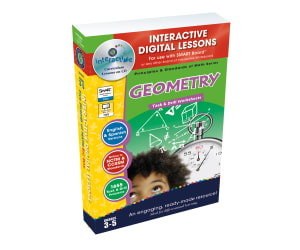
Geometry - Digital Lesson Plan Gr. 3-5 - FLASH-PC
Math, Geometry, Grade 3, 4, Teacher Tools, Lesson Plans
Geometry - Digital Lesson Plan Gr. 3-5 - FLASH-PC A meticulously structured math program designed for grades 3 to 5. This resource boasts of an extraordinary compilation of over 230 individual activities spread out across more than 80 interactive screen pages. This product places emphasis on the Geometry component of both the NCTM (National Council of Teachers of Mathematics) standards, and your specific State Curriculum's Geometry standards, ensuring substantial coverage in line with national and state educational needs. A perfect mix of task-oriented exercises along with drill routines allowing students ample opportunities to fortify their understanding at varying levels. The package begins with pre- assessment tasks that gauge student-familiarity before introducing students to a series of authentic word problems, making abstract notions applicable in real-life context. In addition to these, an extra set of over 150 exclusive drill problems are included for effective practice and proficiency enhancement. The distinct feature here being each tailor-made screen comes equipped with several supporting aids like text-to-speech functionality in both English and Spanish, printable material options, alongside interactive lessons paired with test prep resources modeled around actual test designs. To make learning sessions fun yet significant; a Math memory match game, a board game & spinner game are available within this single resource package. Effective Progress Tracking: An assessment quiz after every chapter tests the student’s grasp level which serves as responsive input towards effective result-driven guidance based on individual performance analysis . The "Geometry - Digital Lesson Plan Gr. 3-5 - FLASH-PC" stands as an indispensable teaching aid catering needs from whole group instruction to individual learning scenarios.
Author Classroom Complete Press
Tags Software (PC)

Guided Reading Activities and Lesson Plans Nonfiction Set 2 Nutrition
ELA, Reading, Reading Comprehension, Common Core, ESL, Language Development, Pre-Reading, Vocabulary, Resources for Teachers, Grade 2, 3, Worksheets & Printables, Worksheets, Lesson Plans, Teacher Tools, Activities
Guided Reading Activities with Lesson Plans Nonfiction Set 2 Note: This download DOES NOT include the passages themselves. If you have not already done so, download in a format of your choice in the "reading links" section below. Overview The perfect companion materials for Cored Education reading comprehension downloads. This collection of guided reading lessons includes a wide array of engaging themes that aim to foster comprehension, vocabulary development, and creative thinking. Each lesson is crafted to be interactive and immersive, making learning enjoyable while promoting essential literacy skills. The lessons are designed for students to actively engage with both the material and the world around them, creating connections to their personal experiences while developing key skills. Includes Guided Reading Materials For: 1.Proteins 2.Carbohydrates 3.Fats 4.Milk 5.Potatoes 6.Composting Reading Links: This is the guided reading materials version and DOES NOT include the passages themselves. The passages related to this download are available here in GOOGLE Docs, GOOGLE Forms, GOOGLE Slides. PDF, PPT, WORD. Google Docs Google Forms Google Slides PDF PPT Word Details Pre-reading Discussions Each lesson begins with pre-reading questions that help activate prior knowledge and engage students in the theme of the lesson. This allows students to make personal connections with the content before diving into the reading material. Vocabulary Development Every lesson includes vocabulary exploration that introduces key terms students will encounter in the reading. These words are essential for understanding the passage, and activities encourage students to apply the new vocabulary in context. Comprehension Check After the reading, the lessons provide comprehension questions (typically multiple-choice) that assess students’ understanding of the story. These questions help students reflect on key events, characters, and concepts within the text, reinforcing their comprehension. Creative Writing Prompts To foster creativity, the lessons include writing activities that challenge students to apply what they've learned in imaginative ways. These prompts allow students to practice creative expression while reinforcing the lesson’s theme. Discussion Topics Each lesson ends with wrap-up discussion questions that encourage students to think critically and engage in group conversations. These discussions can enhance social learning and deepen understanding by connecting the lesson's content to broader real-world applications. Theme-Based Learning The themes (e.g., winter, nature walks, photography, flowers) are universally appealing and offer opportunities for cross-curricular connections with science, art, and environmental studies. This makes the lessons versatile for a wide range of teaching contexts. Student-Centered Approach The activities are designed to be interactive and student-driven, allowing them to explore the content through discussions, hands-on vocabulary practice, and personal reflections. This promotes active learning and keeps students engaged. FULL CATALOG OF DOWNLOAD LINKS HERE Grade 2/3 Links Fiction Set 1 - Nature Google Docs Google Forms Google Slides PDF PPT Word Guided Reading Materials Fiction Set 2 - Animals Google Docs Google Forms Google Slides PDF PPT Word Guided Reading Materials Fiction Set 3 - Food Google Docs Google Forms Google Slides PDF PPT Word Guided Reading Materials Fiction Set 4 - School Google Docs Google Forms Google Slides PDF PPT Word Guided Reading Materials Fiction Set 5 - Friends Google Docs Google Forms Google Slides PDF PPT Word Guided Reading Materials Fiction Set 6 - Family Google Docs Google Forms Google Slides PDF PPT Word Guided Reading Materials Fiction Set 7 - Sports Google Docs Google Forms Google Slides PDF PPT Word Guided Reading Materials Nonfiction Set 1 - Technology Google Docs Google Forms Google Slides PDF PPT Word Guided Reading Materials Nonfiction Set 2 - Nutrition Google Docs Google Forms Google Slides PDF PPT Word Guided Reading Materials Nonfiction Set 3 - Animals Google Docs Google Forms Google Slides PDF PPT Word Guided Reading Materials Reading Passages Overview Each passage is especially written for Grade 2-3 students, including key vocabulary required for this age group. Topics are varied and are accompanied by colorful graphics. Topics are meant to educate, yet entertain the modern student. These passages are perfect for the modern classroom. Whereas textbooks can become outdated in no time, any changes to technology or the world will result in updates to this product. Mixed Questions The mixed questions section of each lesson includes a variation of fivecomprehension, vocabulary and math questions. In addition, key reading strategies are frequently covered including cause & effect, summarizing, compare & contrast and making conclusions. Three of the questions will be MCQs and two will require a written response of some kind. Full answers and example responses appear at the end of the lesson. Spelling & Vocab Each reading passage contains a variety of words and phrases designed for Grade 2-3 students. Spelling and vocab activities provide the opportunity to build fluency with these words. As it can become quite mundane doing the same activities over and over, each lesson in a set will contain a different spelling and vocab activity . Writing Prompts Writing prompts are designed to continue the theme or lessons learned in the story. Students are persuaded to write in a variety of ways and each prompt includes several cues to help. As with the spelling/vocab section, writing prompts will vary. This includes research pieces, reading responses, poetry and creative writing prompts. Full Answer Keys Full answer keys and sample responses are provided so no matter how busy you are, you know you're covered! Mixed question answers provide evidence from the text, math questions contain the relevant workings. Answers are designed for use by the teacher, but also suitable as a handout to the student. Additional File One lesson will have an additional file. This is something fun to extend the lesson with. For similar downloads and other frees, do check out Cored Group on TeachSimple.
Author Cored Education
Tags Elementary, Reading, Comprehension, Vocabulary, Answers, Ccss, Guided Reading, Guided Reading Activity, Guided Reading Lesson Plans, Guided Reading Lesson Plan

I WONDER - When Was The First Grand Prix | Animated Video Lesson
Sports, P.E. & Health, Grade 3, 4, 5, 6, 7, 8, 9, Lesson Plans, Teacher Tools
Video Introduction An amazing video designed for the students to learn more about sports in different countries. I WONDER - When Was The First Grand Prix | Animated Video Lesson What is your favorite sport? Tell us more about it. Who is your favorite athlete? Or what is your favorite team? Do you know who invented basketball? When basketball has been invented? Can you tell us where is the first time it has been played? Have you ever played soccer or football? If yes, tell us what was your position: A goal keeper, midfield player, or a defender? Do you like watching golf? If yes who is your favorite player? Can you name the differences between tennis and ping pong? Have you ever played volleyball on the beach? When it has been officially recognized by the Olympics? Do you like watching Formula 1 races? If yes, who is your favorite team or driver? Have you ever tried to play handball? If yes tell us more. Do you like watching people skiing or surfing? I WONDER - When Was The First Grand Prix | Animated Video Lesson The video is perfect for encouraging the researching skills for the students, while learning more about this sport. I WONDER - When Was The First Grand Prix | Animated Video Lesson This friendly designed video is suitable for students at school, homeschooling, and as a group activity. Format Available in MP4 format.
Author Educational Voice
Rating
Tags When Was The First Grand Prix, When Was The First Grand Prix Video, The First Grand Prix, The First Grand Prix Video, The First Grand Prix Facts, The First Grand Prix Facts For Kids, The First Grand Prix Video For Kids

I WONDER - What Activities Can You Do At The Grand Canyon
Geography, Social Studies, Grade 3, 4, 5, 6, 7, 8, 9, Lesson Plans, Teacher Tools
Video Introduction An amazing video designed for the students to learn more about famous places in different countries. I WONDER - What Activities Can You Do At The Grand Canyon | Animated Video Lesson What do you know about this place? Do you know in which part of the world it is? Have you ever visited this place? If yes, can you tell us more about your adventure, and what do you like the most about this place? Do you like reading about Geography? What is your favorite country in the whole world? If you are going on a trip where it will be? Which country? What you are going to see there? Does this country has a famous place to visit? I WONDER - What Activities Can You Do At The Grand Canyon | Animated Video Lesson The activity is perfect for encouraging the researching skills for the students, while learning more about this fantastic place. I WONDER - What Activities Can You Do At The Grand Canyon | Animated Video Lesson This friendly designed video is suitable for students at school, homeschooling, and as a group activity. Format Available in MP4 format.
Author Educational Voice
Tags What Activities Can You Do At The Grand Canyon, What Activities Can You Do At The Grand Canyon Video, The Grand Canyon, The Grand Canyon Facts, The Grand Canyon Facts For Kids, The Grand Canyon Video

All About Himalayas | Geographical Wonders Video Lesson
Social Studies, Geography, Grade 3, 4, 5, 6, 7, Lesson Plans, Teacher Tools
All About Himalayas | Geographical Wonders Video Lesson All About Himalayas | Geographical Wonders Video Lesson brings the scenic landscapes of the Himalayas into classrooms and homeschool environments, offering a thorough comprehension of this unique geographical wonder. This teaching resource uncovers the captivating gems of the Himalayas, transporting learners on an immersive journey through its fascinating landforms. What it presents? The video lesson is an influential tool for teachers to unite their students in an interactive medium for dissecting geography. It is particularly tailored to students spanning grades 3 to 7. Whether within social studies or as part of more significant geography study units, this resource can be easily incorporated. How to use it? This multimedia resource comes as a single MP4 file delivered directly to educators for easy implementation. A twelve-minute-long video optimally catered to maintaining student concentration and fostering their curiosity about worldly vistas without sacrificing essential learning time. Purposes: Classroom Applications: Whole group exploration An integral component within smaller group work where discussions and observations stem from student-led conversations. Apart from Classroom Applications: Educators may assign The All About Himalaya video lesson as homework—engaging parental involvement while allowing student recapitulation outside school hours. Suitable for remedial purposes—revisiting informative content during review sessions before evaluations or guaranteeing struggling learners have sturdy resources framing their additional studies around. The fusion of technology with education ignites student interest without damaging academic rigor. The potential knowledge gains are just waiting—like Mount Everest—to be ascended by the students under your stewardship. So come, embark on an educational expedition through Earth's highest mountain range with the All About Himalayas | Geographical Wonders Video Lesson!
Author Educational Voice
Tags Himalayas, Geography, Landforms, Video Lesson, Interactive Medium
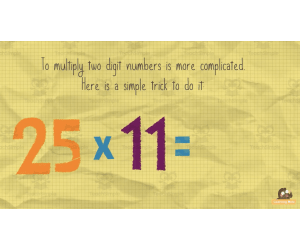
Multiple by 11 Trick | Interactive Math Video Lesson
Math, Multiplication and Division, Division, Grade 2, 3, 4, Lesson Plans, Teacher Tools
This animated video is a math lesson Multiply by 11 Trick. Students will love this engaging and interactive video. This video serves as a great introduction or review video for your learners. This is a 1-minute video lesson.
Author Educational Voice
Tags Math Video, Math Lesson, Math Tricks, Multiplying , Times Table
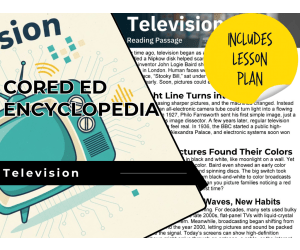
Television Reading Comprehension Passage - Cored Ed Encyclopedia
ELA, Language Development, Reading Comprehension, Reading, Pre-Reading, Science, Technology, Engineering, History, Social Studies, Grade 2, 3, 4, 5, Worksheets & Printables, Worksheets, Teacher Tools, Centers, Activities, Writing Prompts, Assessments, Quizzes and Tests, Quizzes, Lesson Plans
This television reading comprehension includes: Visualization (on the front cover) Start your lesson by taking a minute to think and share something about the topic. Read the script aloud (slowly), perhaps prepare some music or sound effects. Student close their eyes and let their imaginations wander. Students open their eyes, read the question aloud and give them a few minutes to complete. Ask a few students to share or keep answers until the end to compare with what they learn in the passage. Quick pause—thousands of Cored Education products are included with your TeachSimple membership. Download links and encyclopedia index available here. Pre-Reading Trivia Students will write down one thing they already know about the subject and then read five more facts and discuss. These facts are fun, and the students will enjoy learning about the subject before reading more. Give 1 minute for students to write what they already know (no pressure—best guess is fine). Read the five facts together. After each fact, do ask a student for their opinion, was it surprising? Set a purpose by asking students to highlight/underline one fact they want to learn more about during the reading. Reading Passage The text is a high-interest reading passage with set paragraphs, roughly three to four paragraphs long. It contains a variety of themes about the topic, anywhere from history to technology. The passage is between 250 and 350 words in length. First, ask students to look at the headings and see what they’ll learn about today. What do they know about the topic/heading? First read options: Teacher read-aloud (best for support). Partner reading (paragraph by paragraph). While reading, students underline important details, and vocabulary words they think may come up in the questions section. Mixed Questions The first question page contains four multiple-choice questions, each with a choice of four answers, and three written response questions that require a sentence or two from the student. Students complete the mcqs first independently, then review quickly as a class. For the 3 written responses, try to get students giving the answer with some form of evidence: “I think ___ because the text says ___.” If students get stuck, send them back to check the passage. Vocabulary Questions Practice seven key words from the text in this section across two activities. First section is scrambled words where students will unscramble three words given a clue for each. The second section is a word to meaning matching activity. Before starting, have some students read out words they underlined in the passage. Ask students to say the word and read aloud the sentence(s) around each word. Ask students to do scrambled words and the matching exercise in pairs then go through answers as a class. For the scrambled spelling task, get four pairs to come up to the board and write the words for extra practice with the other student reading out the clue. For the matching task, prompt students to give full sentences: “I matched ___ with ___ because ___.” Creative Writing In this question, the student will be required to write a five to eight sentence paragraph on a question related to the topic. Before starting, ask students write down 3 key ideas they are going to include in their piece. Ask students for ideas to share around the class to help those struggling. Pro writing expectations: 5–8 sentences At least 2 facts or details from the passage At least 2 vocabulary words from the previous page Students read their paragraphs while classmates listen for facts and vocabulary words. Extension Activities This page is optional for fast finishers or to take home. There are several activities, each one requiring a different skill. Do some, do none, do all, completely optional - but you will feel reassured knowing every possibility is planned for. Includes summary writting question. Answer Key There are answers for the multiple-choice questions, written response questions have sample answers, vocabulary answers and if there is a summary question then a sample summary will be provided as well. Lesson Plan Included Customized lesson plan for this lesson is included. Lesson Snapshot Title: Television Genre: Nonfiction (informational text) Subject: Science (Technology) Primary Topic: How television changed from mechanical to digital Estimated Guided Reading Level (A–Z): S What This Lesson Teaches Best How an invention changed over time, from a “spinning disk” experiment to modern screens and signals. Key milestones in television’s development (1925 Selfridges demo, 1927 Farnsworth, 1936 BBC service, late 2000s flat-panels). How pictures can be broken into lines/signals and sent by wire, radio, antenna, cable, or internet. The shift from black-and-white to color broadcasts and how viewers experienced that change over decades. Comparing analog and digital signals as two different ways information travels. Learning Goals Students will describe how early television used a spinning Nipkow disk to scan pictures into lines. Students will identify key people, places, and dates from the passage (Baird, Farnsworth, Selfridges, Alexandra Palace). Students will explain how television changed from mechanical parts to all-electronic systems that made clearer pictures. Students will summarize how TV viewing changed from bulky cathode-ray tubes to flat-panel screens and high-definition images. Students will compare analog and digital signals using details from the text. Key Vocabulary From the Text scan — break a picture into lines to send it. signals — messages that carry picture or sound information. broadcasting — sending TV so many people can receive it. analog — a smooth, continuous wave way of sending. digital — coded bits that travel more cleanly. FULL CATALOG OF DOWNLOAD LINKS AND ENCYCLOPEDIA INDEX HERE
Author Cored Education
Rating
Tags Vocabulary, Reading Comprehension, Reading Passages, Lesson Plans, Ela Lesson Plans, Reading Comprehension Lesson Plans, Pre-reading, History, Social Studies, Social Studies Lesson Plans

Science Seek and Find Plants and Animals
Science, Life Sciences, Nature & Plants, Grade 2, 3, 4, Teacher Tools, Lesson Plans
Science Seek and Find Plants and Animals Resource The Science Seek and Find Plants and Animals resource is an engaging teaching tool, designed specifically for educators working with students in grades 2 through 4. This resource integrates botany learning with effective pedagogical practices as part of the science curriculum. Scope: This tool provides students a view into plants and animals knowledge. The twenty meticulously designed lessons intended to enhance young learners understanding on diverse characteristics, habitats, and intrinsic fascinations surrounding flora and fauna. Illustrations: Each lesson boasts finely detailed illustrations that encourage deeper understanding—reinforcing knowledge while stimulating curiosity. Engaging artwork across brings dual benefits: capturing attention while offering useful visual cues for memory enhancement. Versatility: This tool can adapt to several formats: In-class whole group instruction - Provokes discussions around animals & plants fostering critical thinking In smaller group instruction - Encourages detailed exploration of each aspect discussed related to flora & fauna As individual homework - Assists learners at their pace in unravelling key concepts about botany while encouraging them to know more about the immense animal diversity across earth's habitats Digital Format: We offer this product in a user-friendly PDF format which can be smoothly integrated into your lesson strategy, maintaining focus on learner outcomes without compromising on fun during the science learning journey – all set to light their interest path towards natural sciences from early age. In Nutshell... "Science Seek & Find: Plants &Animals" helps build bridges between fact-based education application including creative exploration giving enriching experience for student through comprehensive understanding leaning toward scientific literacy concerning plant life along triggering curiosity regarding myriad gorgeous species sharing Earth with us.</i
Author Classroom Complete Press
Tags PDF

I WONDER - Can Any Bones In The Skull Move | Animated Video Lesson
Human Body, Life Sciences, Science, Biology, STEM, Grade 3, 4, 5, 6, 7, 8, 9, Lesson Plans, Teacher Tools
Video Overview The human body is full of fascinating wonders to learn. This video is created to help the students recognize the anatomy and the job of the human body. I WONDER - Can Any Bones In The Skull Move | Animated Video Lesson Every part and organ in our human body is vital so let's see how important they are. Have you ever imagined how we look like if we didn't have a skeleton? Did you know that because we have our amazing muscles we can stand! Do you know how many teeth do we have? Have you ever wondered about the food journey inside our body? Can you name all the glands in our body? Why do we have skin? Our nervous system is really good at sending signals. Can you tell us more about it? Are you really good at Mathematics, painting, or any other thing? You should really thank your brain about it! The famous five senses are really doing a great work? Can you explain how every sense works? I WONDER - Can Any Bones In The Skull Move | Animated Video Lesson The video is perfect for encouraging the researching skills for the students, while learning more about our fantastic human body. I WONDER - Can Any Bones In The Skull Move | Animated Video Lesson This friendly designed video is suitable for students at school, homeschooling, and as a group activity. Format Available in MP4 format.
Author Educational Voice
Tags Can Any Bones In The Skull Move, Can Any Bones In The Skull Move Video, The Skull, The Skull Facts, The Skull Facts For Kids, The Skull Video, The Skull Video For Kids, The Skull Bones, The Skull Bones Facts For Kids
I WONDER - What Is Ocean Energy | Animated Video Lesson
Environmental Science, Earth and Environmental Sciences, Science, Earth Sciences, Grade 1, 2, 3, 4, 5, 6, 7, 8, Lesson Plans, Teacher Tools
Video Introduction An amazing video designed for the students to learn more about STEM. I WONDER - What Is Ocean Energy | Animated Video Lesson Do you like STEM subjects? what is your favorite one? Have you ever tried to plant a seed? If yes, tell us more about it. Or have you ever tried to invent something? If yes, tell us more about it. And how do you think it will help us? Have you ever seen a microorganism under a microscope? What was it? And how it looked like? Mathematics is a marvelous subject. Let' sharpen our brains and solve some equations. Do you like timetable tricks? What is your favorite one? Do you know how to code? Have you ever created an app or a game before? If yes, how was it like? I WONDER - What Is Ocean Energy | Animated Video Lesson The video is perfect for encouraging the researching skills for the students, while learning more about this fantastic topic. I WONDER - What Is Ocean Energy | Animated Video Lesson This friendly designed video is suitable for students at school, homeschooling, and as a group activity. Format Available in MP4 format.
Author Educational Voice
Tags What Is Ocean Energy, What Is Ocean Energy Video, Ocean Energy, Ocean Energy Facts, Ocean Energy Facts For Kids, Ocean Energy Video, Ocean Energy Video For Kids, Energy, Energy Facts For Kids
I WONDER - How Do Animals Use Their Tongues | Animated Video Lesson
STEM, Biology, Life Sciences, Science, Animals, Grade 1, 2, 3, 4, 5, 6, 7, 8, Lesson Plans, Teacher Tools
Video Introduction Animal kingdoms are full of fascinating wonders to learn. This video is designed for the students to learn more about animals in different countries. I WONDER - How Do Animals Use Their Tongues | Animated Video Lesson Do you like animals? what is your favorite one? Do you own a pet? If yes, tell us more about it, like what its name? And what do you like most about it? What are the animal kingdoms? Can you write down the characteristics of each animal class like mammals, birds, reptiles, amphibian, fish and mollusks. Do you know that some animals can sing, can you name any of them? What is the largest and the smallest mammal in the world? What is the largest and the smallest bird in the world? What is the largest and the smallest fish in the world? I WONDER - How Do Animals Use Their Tongues | Animated Video Lesson The video is perfect for encouraging the researching skills for the students, while learning more about these fantastic animals. I WONDER - How Do Animals Use Their Tongues | Animated Video Lesson This friendly designed video is suitable for students at school, homeschooling, and as a group activity. Format Available in MP4 format.
Author Educational Voice
Tags How Do Animals Use Their Tongues, How Do Animals Use Their Tongues Video, Animals Tongues, Animals' Tongues, Animals' Tongues Facts, Animals' Tongues Facts For Kids, Animals' Tongues Video

Algebra: Equations - Solving with a Variable Input - Learn the Skill - FLASH-PC
Math, Algebra, Common Core, Grade 3, 4, 5, Teacher Tools, Lesson Plans
FLASH-PC: Algebra - Equations with a Variable Input (An Educator's Resource) This teaching resource is specifically designed for educators who aim to simplify the complex concept of solving equations in Algebra for grade 3-5 students. It provides substantive content and practical real-world examples, enabling learners to understand and apply their knowledge effectively. Main Features Presents a mini chapter full of curriculum-based content using a ‘learning skill’ approach. This guides students through real-world worded problems, aiding comprehension of Algebra applications. Useful in various teaching scenarios, such as whole group instruction sessions, small study groups or as homework assignments." Fully adheres to Common Core State Standards and STEM initiatives, aligning with standards set by NCTM ensuring top-tier mathematical education. The Benefits: Innovative Math tools that support students while working through each equation appended alongside every problem. Multilingual support including English and Spanish voice over options along with text translations catering for diverse classrooms, especially English Language Learners (ELLs) and dual-language classes. 'FLASH-PC': indicates the software's modularity—it is compatible with PC systems making implementation quick allowing easy integration into classrooms. @WebServletContextListener includes one comprehensive product file titled ‘Algebra: Equations -Solving with a Variable Input’ .
Author Classroom Complete Press
Tags Software (PC)

I WONDER - How Big Are Viruses | Animated Video Lesson
Human Body, Life Sciences, Science, Biology, STEM, Grade 3, 4, 5, 6, 7, 8, 9, Lesson Plans, Teacher Tools
Video Overview The human body is full of fascinating wonders to learn. This video is created to help the students recognize the anatomy and the job of the human body. I WONDER - How Big Are Viruses | Animated Video Lesson Every part and organ in our human body is vital so let's see how important they are. Have you ever imagined how we look like if we didn't have a skeleton? Did you know that because we have our amazing muscles we can stand! Do you know how many teeth do we have? Have you ever wondered about the food journey inside our body? Can you name all the glands in our body? Why do we have skin? Our nervous system is really good at sending signals. Can you tell us more about it? Are you really good at Mathematics, painting, or any other thing? You should really thank your brain about it! The famous five senses are really doing a great work? Can you explain how every sense works? I WONDER - How Big Are Viruses | Animated Video Lesson The video is perfect for encouraging the researching skills for the students, while learning more about our fantastic human body. I WONDER - How Big Are Viruses | Animated Video Lesson This friendly designed video is suitable for students at school, homeschooling, and as a group activity. Format Available in MP4 format.
Author Educational Voice
Tags How Big Are Viruses, How Big Are Viruses Video, Viruses, Virus, Viruses Facts, Viruses Facts For Kids, Viruses Video, Viruses Video For Kids, Human Body Facts, Human Body Facts For Kids

Multiplication and Division Math Interactive Notebook
Math, Multiplication and Division, Division, Grade 3, 4, 5, Teacher Tools, Lesson Plans
This product covers the 2016 Virginia (VA) Standards of Learning (SOL) 3.4: The student will a) represent multiplication and division through 10 × 10, using a variety of approaches and models; b) create and solve single-step practical problems that involve multiplication and division through 10 x 10; and c) demonstrate fluency with multiplication facts of 0, 1, 2, 5, and 10; d) solve single-step practical problems involving multiplication (note that this will also work for the 2023 VA SOL 3.CE.2 The student will recall with automaticity multiplication and division facts through 10 × 10; and represent, solve, and justify solutions to single-step contextual problems using multiplication and division with whole numbers. It contains notes pages on understanding multiplication models, division models, properties, different ways to solve multiplication and division problems. It also has notes and practice pages for multiplication facts practice as well as word problems and double-digit by single-digit multiplication. There are practice pages for each topic, with an answer key included. The notes pages come in two sizes. The first size is a full-page size. You can print them as-is, or you can print them two to a pages. This is what I do as it saves on paper and the sheets will fit in a notebook. The second size is formatted to fit on a standard composition notebook page. Additionally, there are two links included in the pdf: one which opens a digital version of the notes, and another that opens a slide show version, optimized for a projector or interactive board. In both cases, which you click the link, you will be prompted to make a copy, which you can then use with Google Slides or download and use with Keynote or PowerPoint. Pages included in the notebook: Vocabulary Repeated Addition Repeated Subtraction Equal Groups Multiplication Equal Groups Division G.E.T. strategy (groups-each-total for equal groups with multiplication) Arrays Area Model Number Line Multiplication Number Line Division Identity Property of Multiplication Commutative Property of Multiplication Balancing Equations Related Facts/Inverse Facts ("Fact families") Skip Counting Practice Pages Word Problem Strategies Math Verbs/Key Words pages Multiplication and Division Word Problems Multiplication Fact Practice Double Digit Multiplication Mathematical Properties For more no and low-prep activities, check these out: October No-Prep Math Activities No Prep Spiral Math Daily Review and Quizzes Comparing Money Practice 1 Identifying Money Practice Area and Perimeter Digital Activity Counting Money Practice
Author SchoolingSara
Tags Multiplication, Division, VA SOL, Related Facts, Word Problems