Math instruction
Envision Math 5 Topic 10: Adding and Subtracting Mixed Numbers
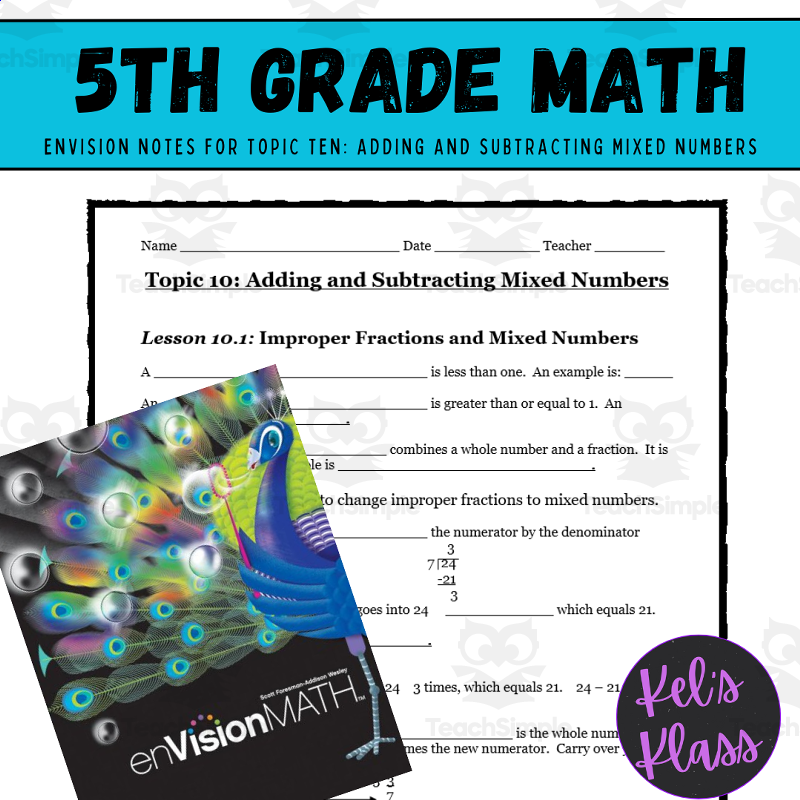
Envision Math Grade 5 – Topic 10: Adding and Subtracting Mixed Numbers provides everything you need to teach this tricky skill with clarity and confidence.




Classroom resources
Browse by lesson focus
Choose the topic or kind of practice you need.
Showing 625–648 of 1060 resources

 Show filters
 Envision Math Grade 5 – Topic 10: Adding and Subtracting Mixed Numbers provides everything you need to teach this tricky skill with clarity and confidence.
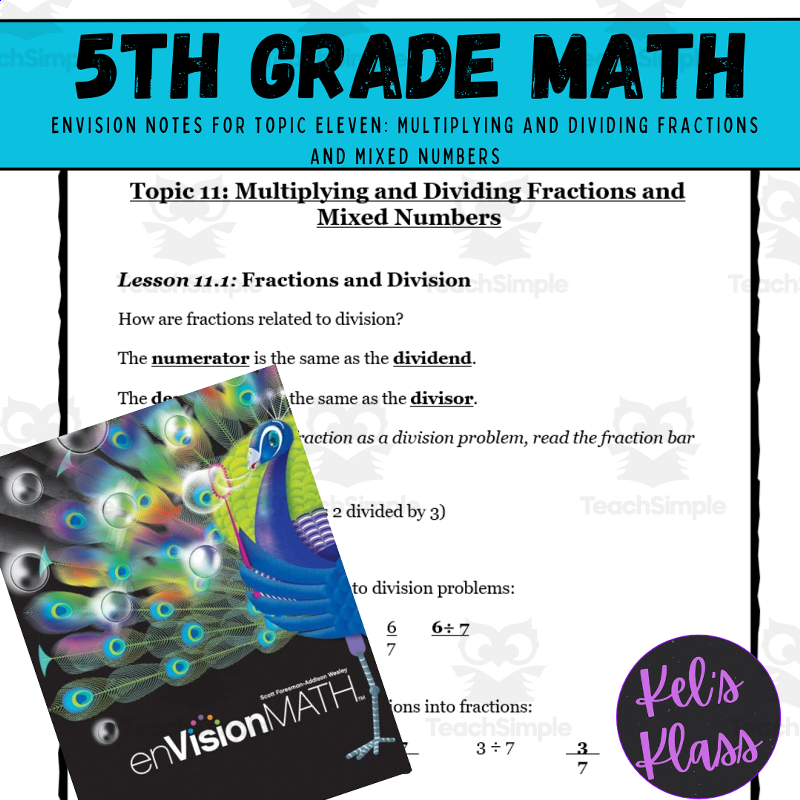
Teach and provide guided practice for multiplying and dividing fractions and mixed numbers, aligned to (but not excerpted from) the Envision Math Grade 5 Topic 11 curriculum sequence.
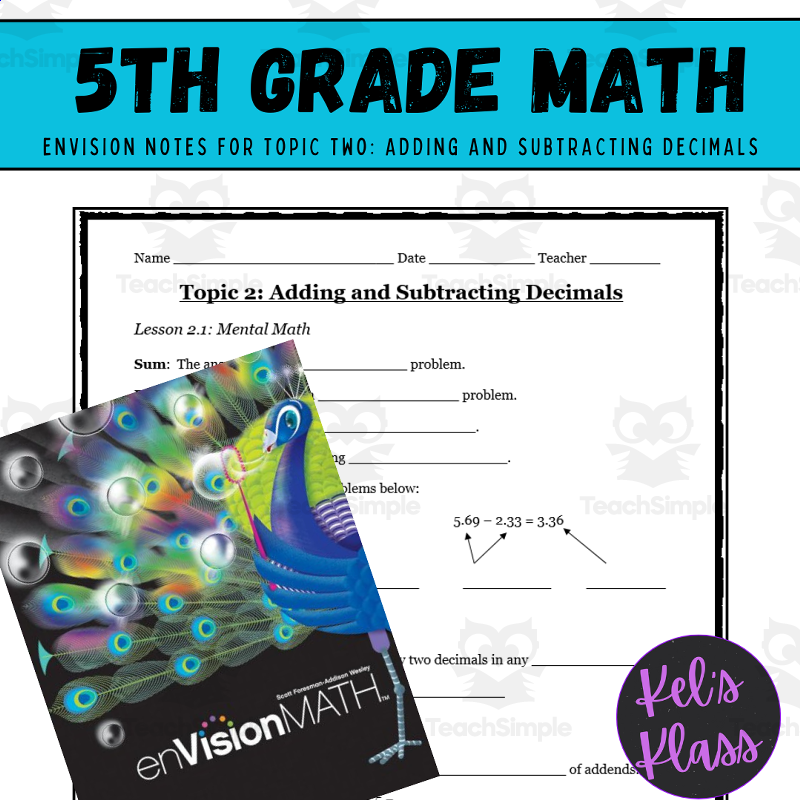
Teach and provide guided practice for adding and subtracting decimals, including mental math strategies, rounding, estimation, and standard algorithms, aligned to (but not excerpted from) the Envision Math Grade 5 Topic 2 curriculum sequence.
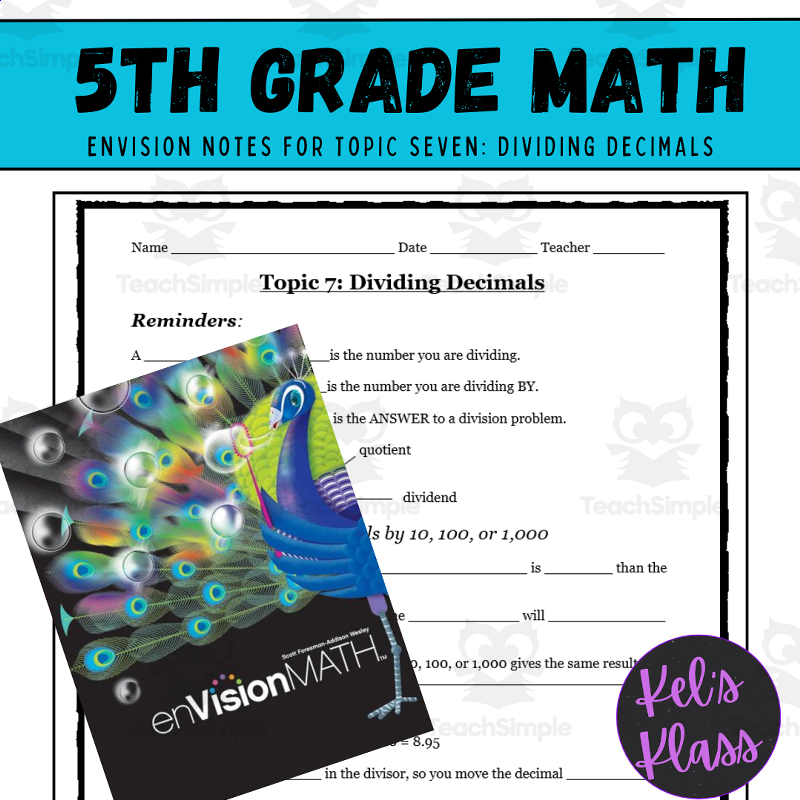
Teach and provide guided practice for dividing decimals, including dividing by powers of 10, estimating quotients, and standard algorithms for dividing by whole numbers and decimals, aligned to (but not excerpted from) the Envision Math Grade 5 Topic 7 curriculum sequence.
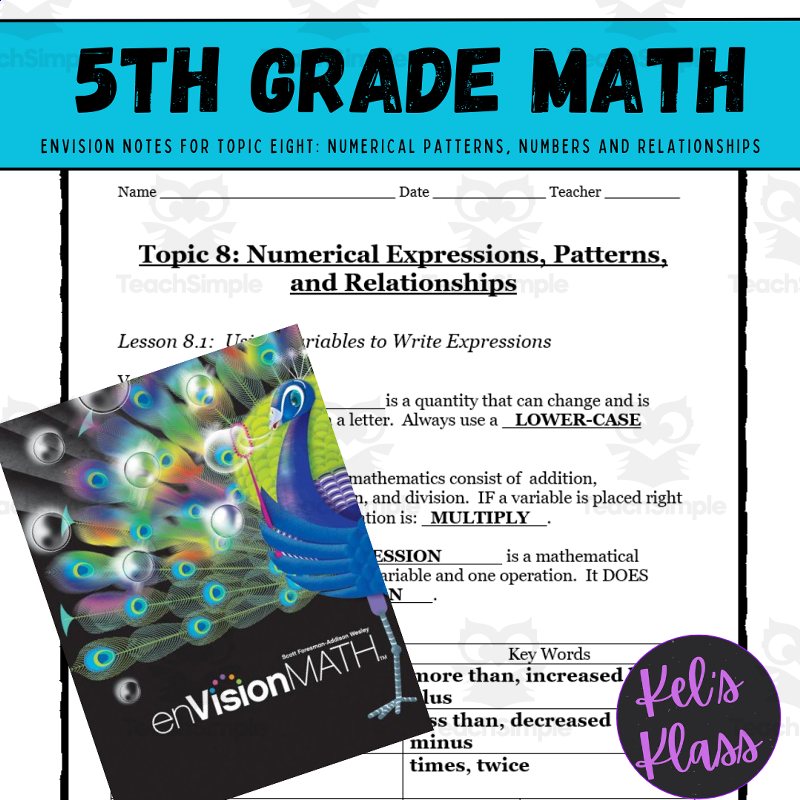
The eight-lesson packet connects expression vocabulary with calculation and pattern work. Students translate phrases into expressions, evaluate using the order of operations, and work with rules for numerical patterns. Teacher examples support the notes, while the cumulative quiz and its answer key provide a separate check after the lesson sequence.
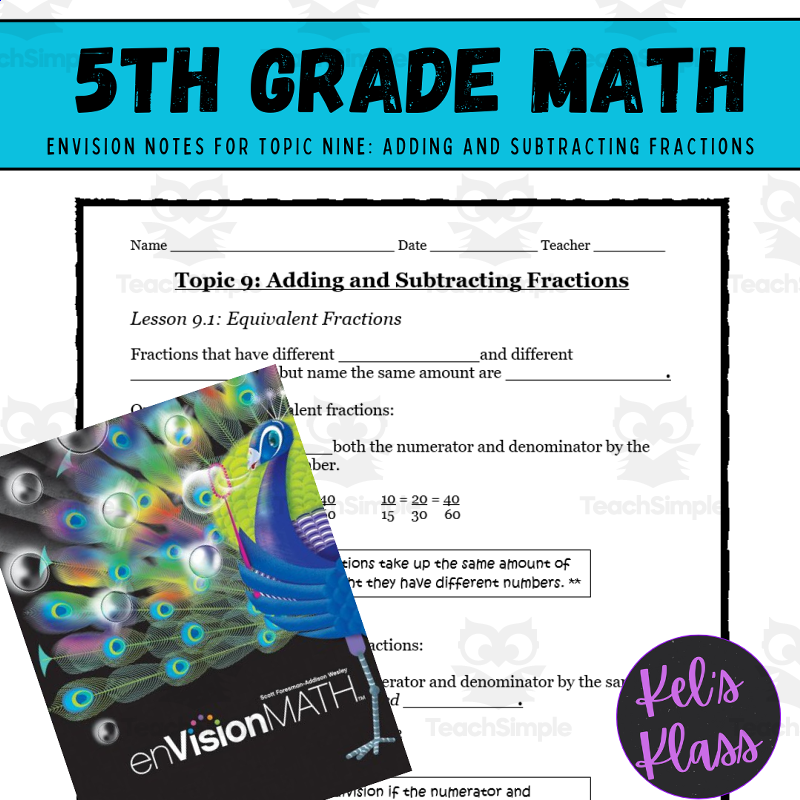
Guided (fill-in-the-blank) student notes for Grade 5 Envision Math Topic 9, teaching equivalent fractions, simplest form, common multiples/LCM, common denominators, and adding/subtracting fractions with unlike denominators.
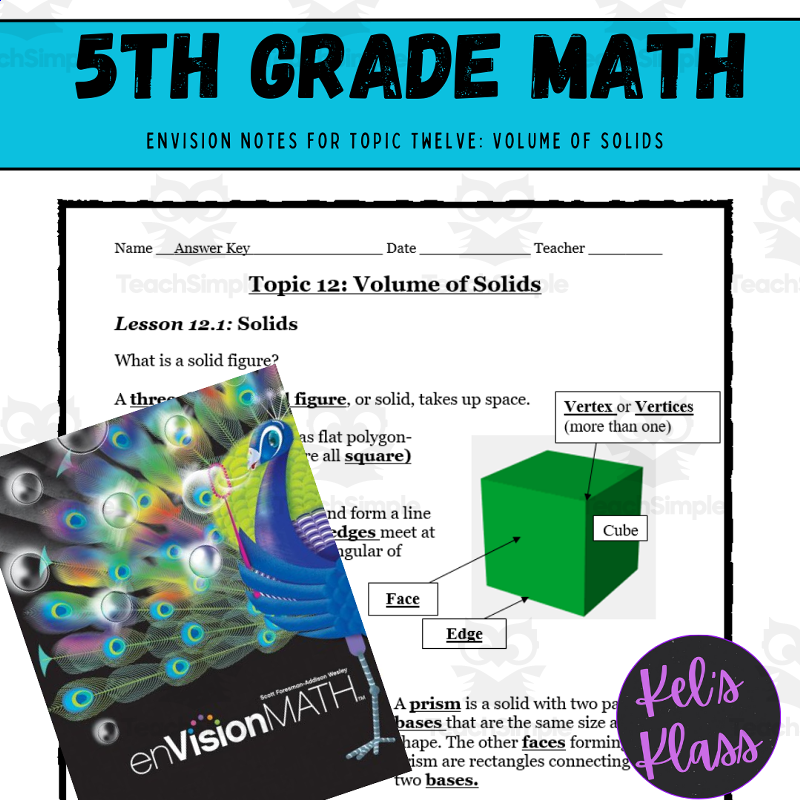
Envision Math Grade 5 – Topic 12: Volume of Solids gives students hands-on practice with 3D shapes, spatial reasoning, and measuring volume.
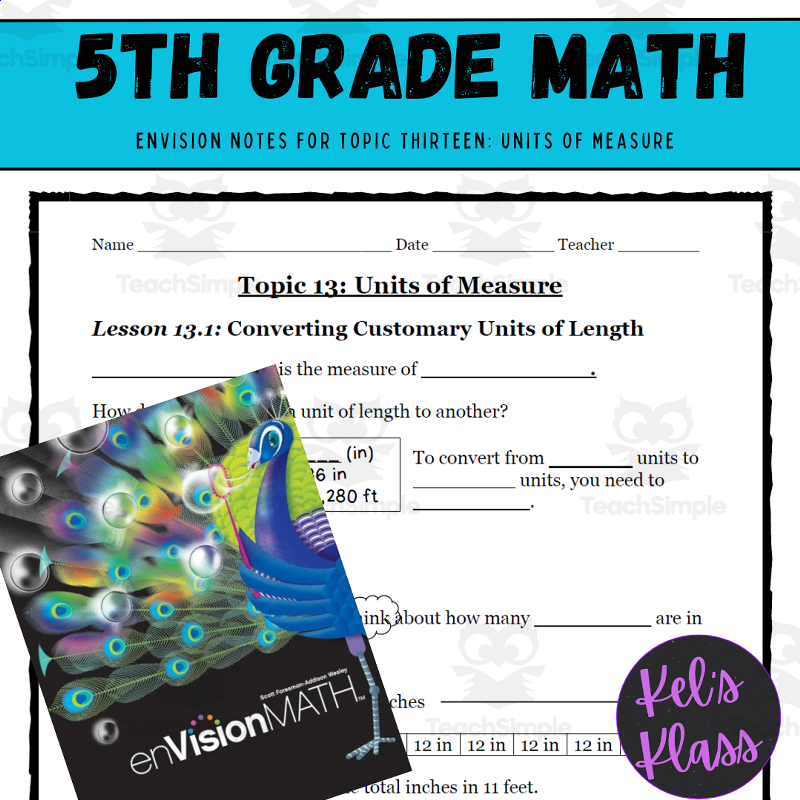
Envision Math Grade 5 – Topic 13: Units of Measure helps students master both customary and metric systems through guided lessons and practice.
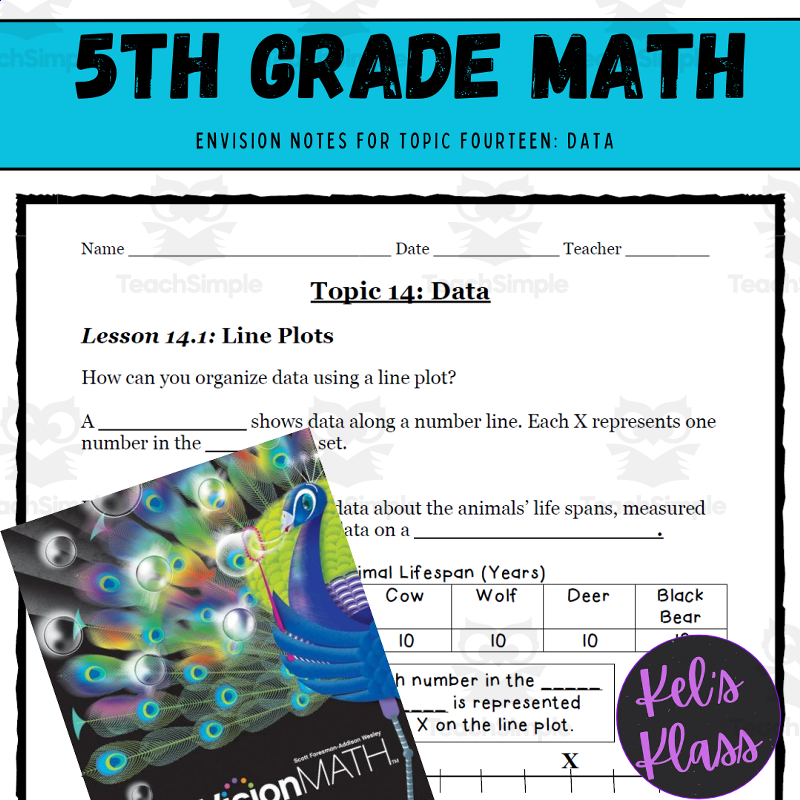
Teach and provide guided practice for organizing and interpreting data using line plots and frequency tables, including survey data and fractional measurement data, aligned to (but not excerpted from) the Envision Math Grade 5 Topic 14 curriculum sequence.
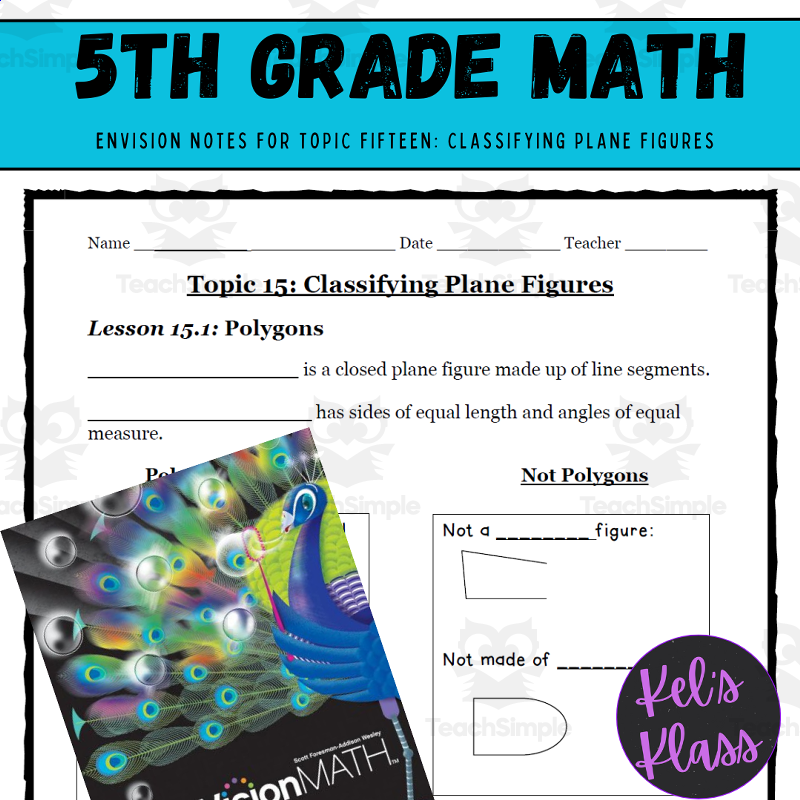
Complete guided-notes and quiz packet for Grade 5 Envision Math Topic 15, teaching classification of polygons, triangles, and quadrilaterals.
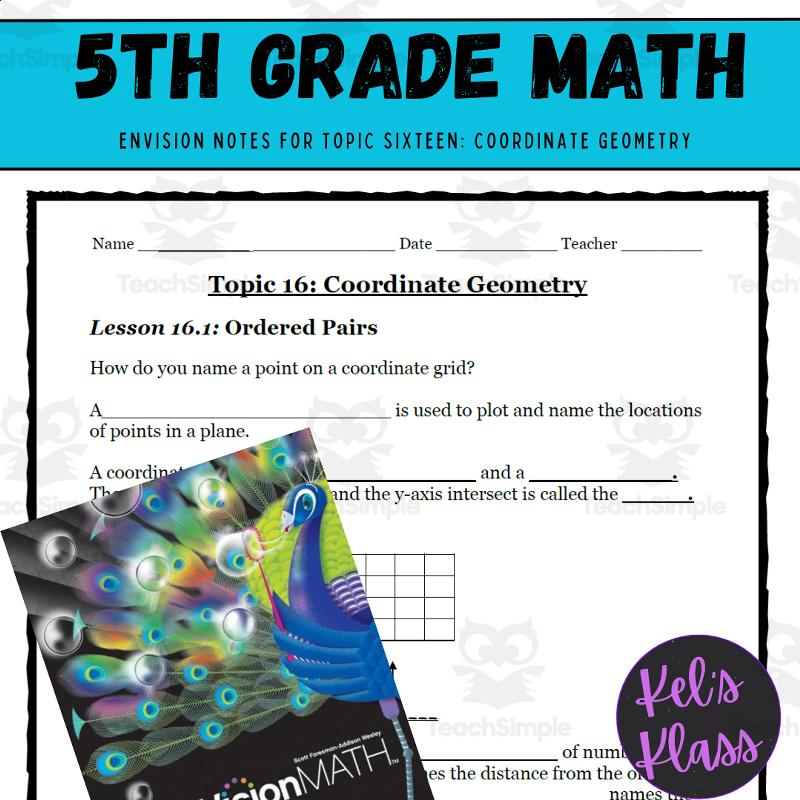
Complete guided-notes and quiz packet for Grade 5 Envision Math Topic 16, teaching coordinate-plane basics: plotting ordered pairs, finding distances between points, and using coordinate graphs to find and extend patterns.
 Free download
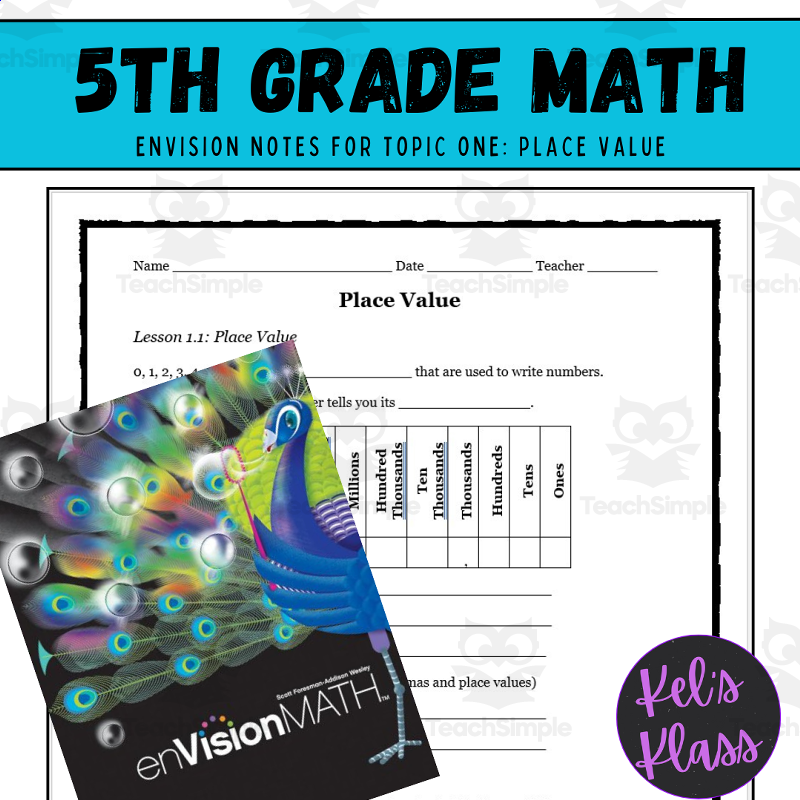
 Are you looking for a simple, ready-to-use resource to strengthen your 5th graders’ understanding of place value and decimals ? This packet for Envision Math Grade 5, Topic 1: Place Value is teacher-created and designed to make your math instruction smoother, whether or not you use the Envision Math textbook. Included, you’ll find…
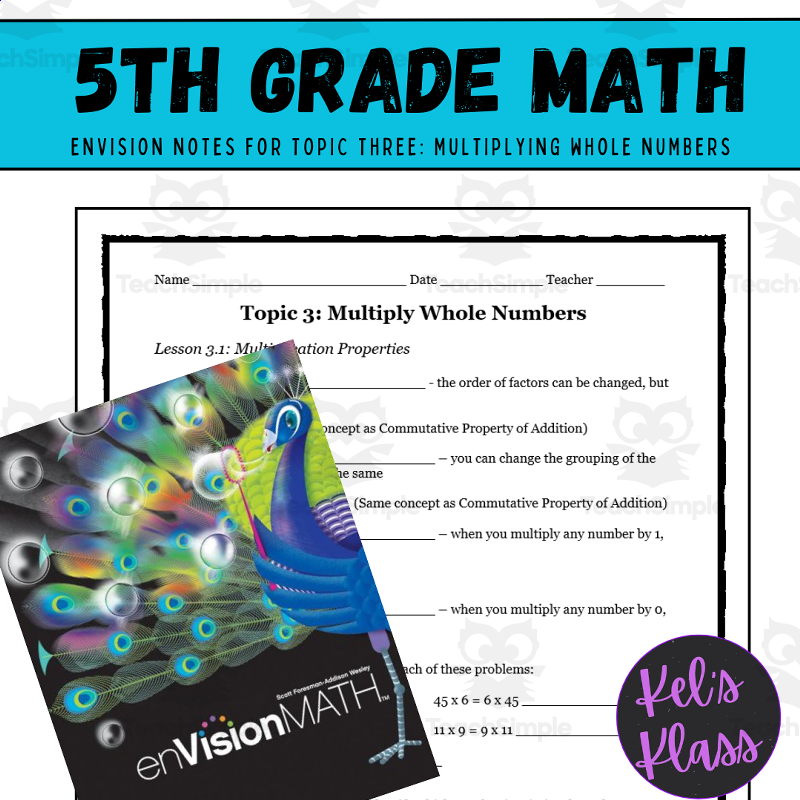
Teach and provide guided practice for multiplying whole numbers, including multiplication properties, mental math strategies, estimation, the distributive property, and standard multiplication algorithms, aligned to (but not excerpted from) the Envision Math Grade 5 Topic 3 curriculum sequence.
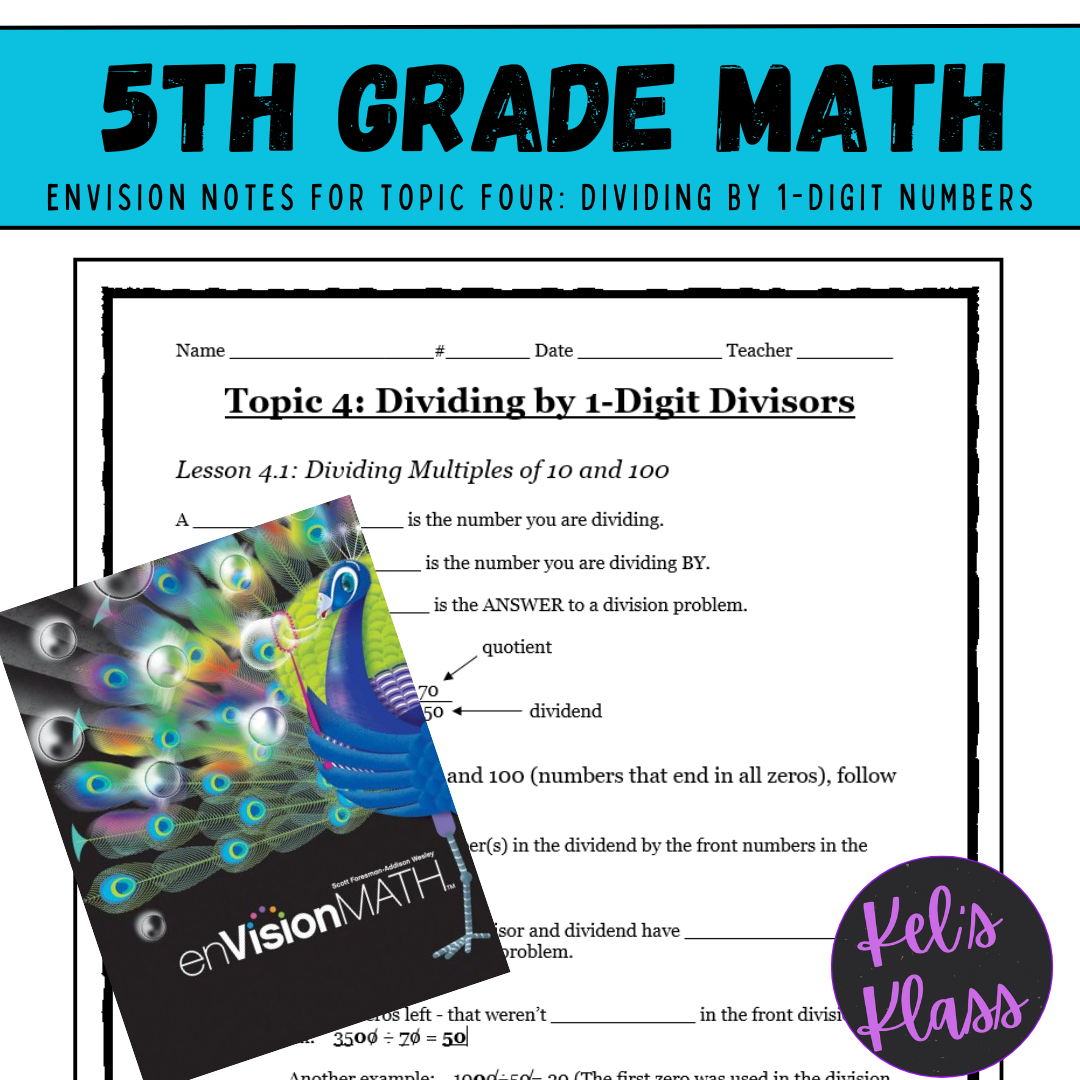
Teach and provide guided practice for dividing by 1-digit divisors, including dividing multiples of 10/100, estimating quotients, and the standard division algorithm (including quotients with zeros), aligned to (but not excerpted from) the Envision Math Grade 5 Topic 4 curriculum sequence.
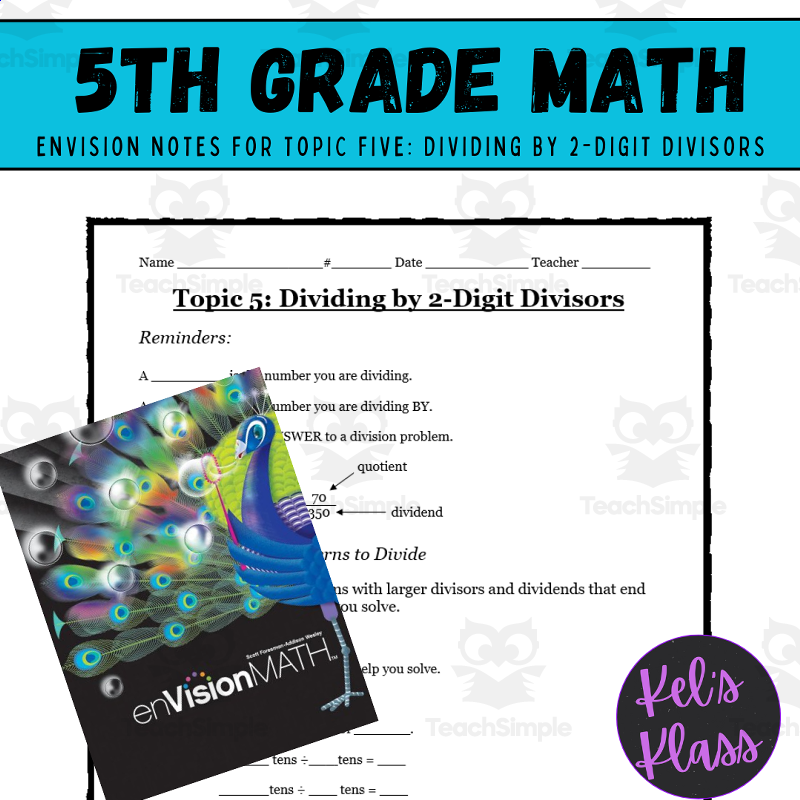
Teach and provide guided practice for dividing by 2-digit divisors, including pattern-based mental strategies, estimating quotients, dividing by multiples of 10, and the standard algorithm for 1-digit and 2-digit quotients with greater numbers, aligned to (but not excerpted from) the Envision Math Grade 5 Topic 5 curriculum sequence.
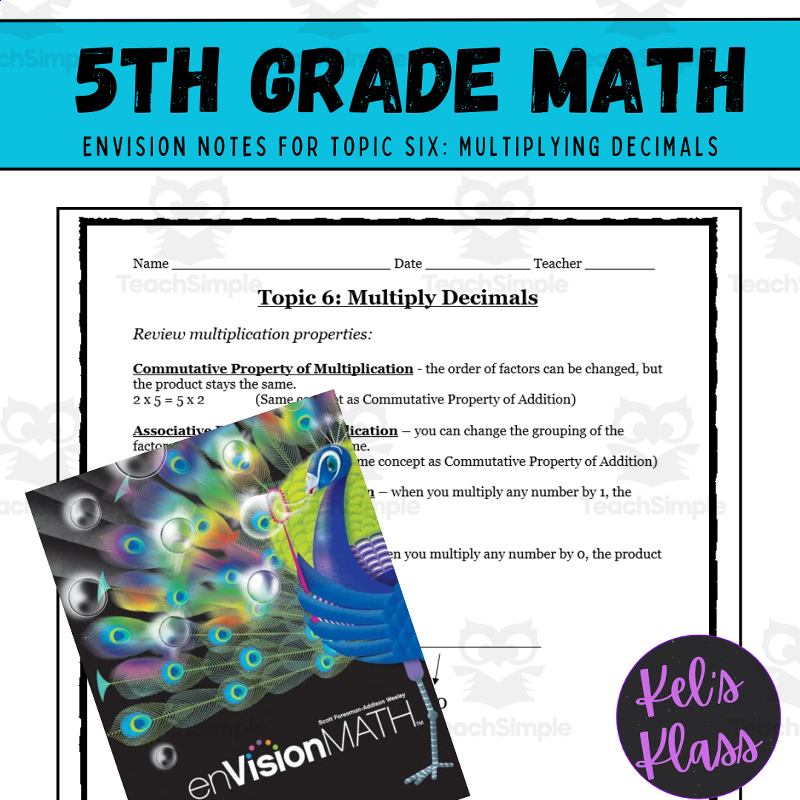
Guided notes and a quiz that teach and assess multiplying decimals (by powers of ten, estimation, decimal-by-decimal, decimal-by-whole-number, and area models), aligned to Envision Math Grade 5 Topic 6.

A novel study unit guiding students through comprehension, vocabulary, and writing activities for the novel Esperanza Rising.
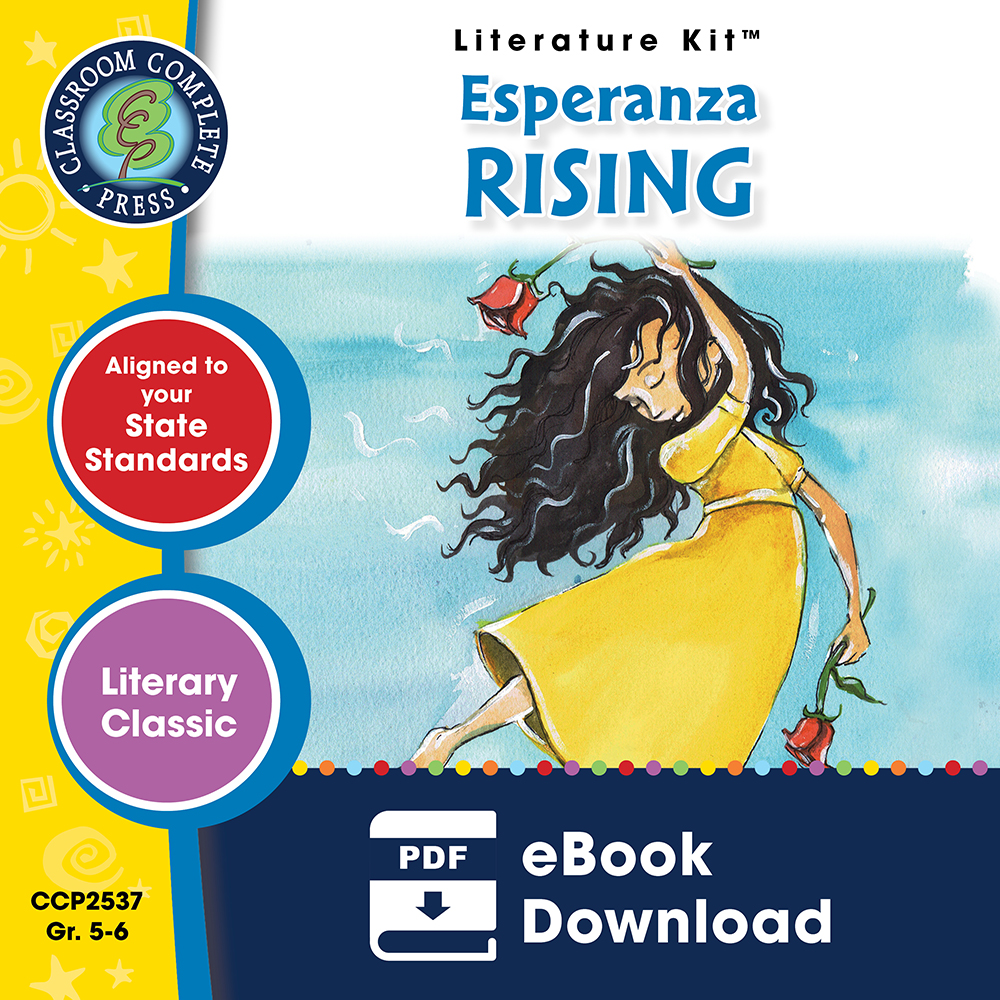
English-language literature kit for the novel "Esperanza Rising" by Pam Muñoz Ryan, providing a full teacher guide plus chapter-by-chapter student activities to build reading comprehension and critical-thinking skills across Bloom's Taxonomy levels, for grades 5-6.

An 81-page Canadian-history resource on European exploration of Canada, covering explorers' motivations, challenges, routes, navigation technology, and interactions with Indigenous peoples, through reading passages, comprehension questions, and activities.
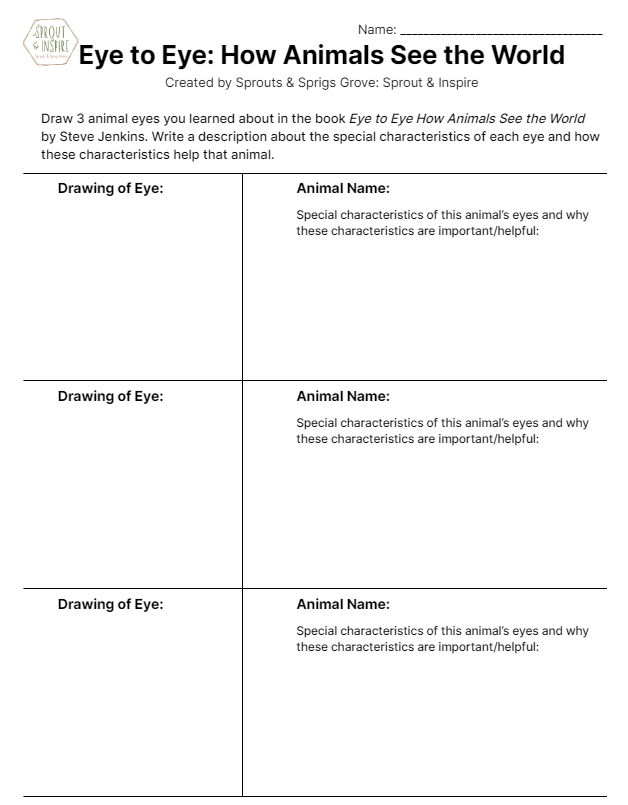
A homeschool/co-op-friendly lesson plan built around the picture book 'Eye to Eye: How Animals See the World' by Steve Jenkins, guiding a child through discussion, reading, drawing, and video activities to learn about different animal eye designs and functions, then create and present a model of an animal's eye.

A social studies resource introducing Grade 4-6 students to notable Canadians across entertainment, sports, art, science, and politics.
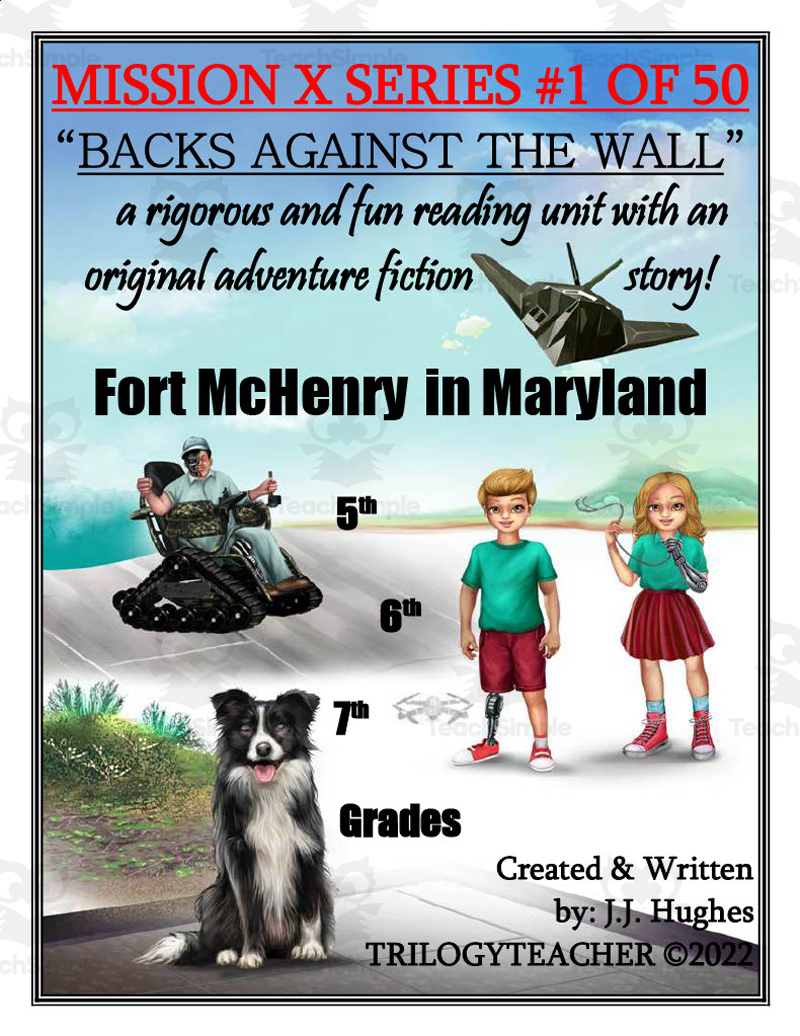
A cross-curricular ELA reading unit built around an original adventure fiction story (Mission X Series #1 of 50, 'Backs Against the Wall', set at Fort McHenry in Maryland) that teaches figurative language, context clues, main idea, theme, inference, tone, text structures, grammar, Greek/Latin roots, and vocabulary while integrating history, science, and…
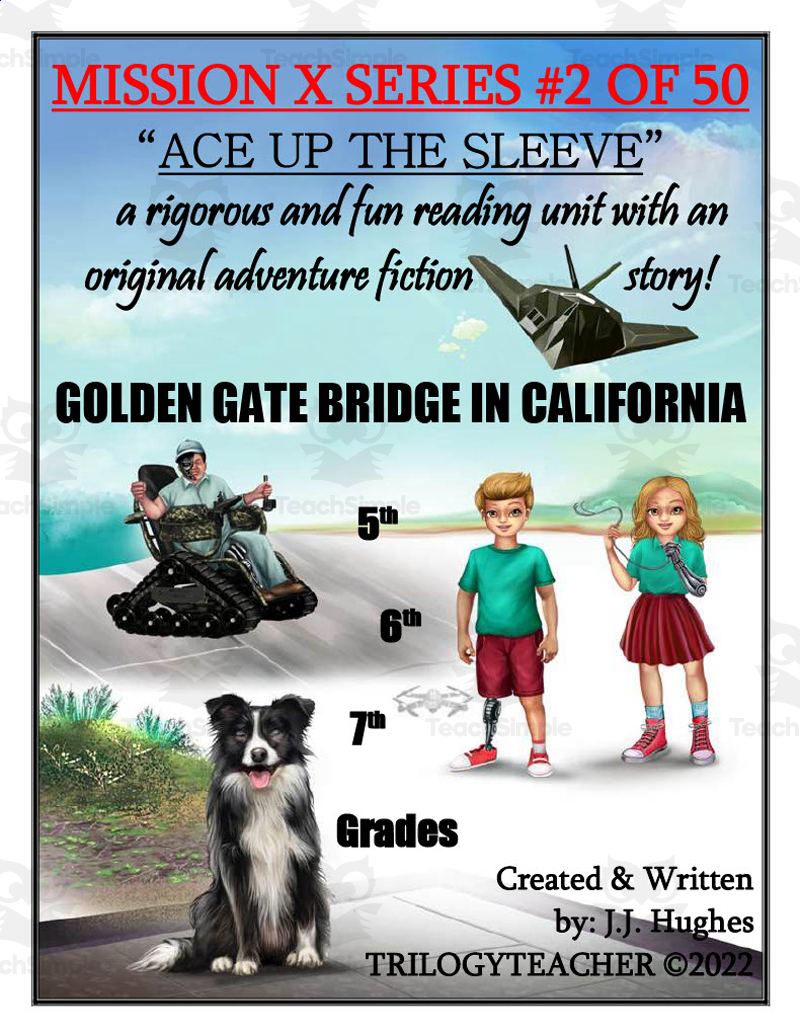
A cross-curricular ELA reading unit built around an original adventure fiction story (Mission X Series #2 of 50, 'Ace Up the Sleeve', set at the Golden Gate Bridge in California) that teaches figurative language, context clues, main idea, theme, inference, tone, text structures, grammar, Greek/Latin roots, and vocabulary while integrating history,…
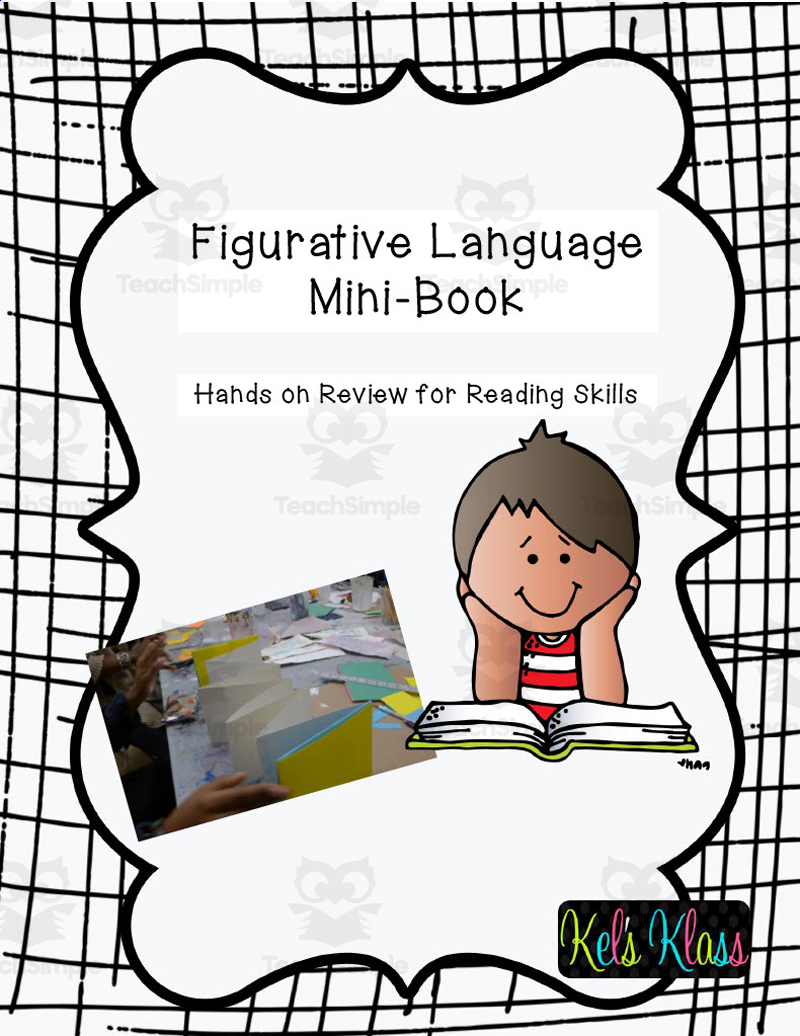
A hands-on review project where students build an accordion-style 'mini-book' demonstrating understanding of eight types of figurative language (simile, metaphor, hyperbole, onomatopoeia, idiom, personification, alliteration, allusion), addressing Common Core standards on figurative language (grades 3-5).