



3,952 products added recently
Page 2 - Vocabulary Lesson Plans
Elevate your students' communication skills with vocabulary lesson plans that introduce new words in meaningful contexts. These resources provide interactive methods for word learning and retention. Integrate them into your curriculum to help students express themselves more effectively.

 Show filters


Word Families: Short Vowels - Digital Lesson Plan Gr. PK-2 | PC Software
ELA, Language Development, Vocabulary, Kindergarten, Preschool, Grade 1, 2, Teacher Tools, Lesson Plans
Word Families: Short Vowels - Digital Lesson Plan Gr. PK-2 | PC Software Boosting students' command over language arts comes to life with Word Families: Short Vowels developed for Preschool, Kindergarten, Grade 1 and Grade 2. This distinct digital lesson plan is centered around harnessing vocabulary skills, escalating sight word familiarity and amplifying comprehension levels. About the Product This unique educational resource offers 80 interactive screen-pages aimed at creating an optimal learning setting as well as a fruitful teaching method. The instructional material encourages students to pronounce short vowel phonograms or word families correctly through the use of eye-catching real-life images for visual aid. Ease of Learning with Word Families: Short Vowels The design of the product helps learners form clear onset and rhyme connections found in word families. This tool aids learners in understanding that words aren't just individual letters and sounds but identifiable chunks forming comprehensible language units. The screen pages consist of working-with-words interactive activities keeping learners engaged effectively. In order to encourage revision habits and assess learning uptake, test prep sections along with memory match games are included within this product. Elevation in Learning through Ancillary Activities Further enhancing student grasp over topics taught are crosswords and word searches integrated into this software ensuring teachings transgress beyond their usual school syllabus confines. Each lesson wraps up via a comprehension quiz designed specifically to measure students’ understanding after each teaching session . Note: The content strictly adheres to State Standards guidelines ensuring uncompromised quality education corresponding to standards across different states. All lesson plans abide by Bloom's Taxonomy that is a globally accepted method for determining various levels of cognitive domains in learning. The package comes bundled in a zip file compatible with PC software, making it user-friendly and easy to use for educational purposes. Its comprehensive model incorporating technology into secular learning can be employed in whole groups or small group settings, and even as individual assignments effectively implemented for homework activities. This then becomes an invaluable asset particularly for language arts educators dealing with vocabulary lessons within the target grade levels.
Author Classroom Complete Press
Tags Digital Lesson Plan, Memory Match Game, Short Vowels, Word Families, Reading Lesson

High Frequency Sight Words: Sentence Completion - FLASH-MAC
ELA, Language Development, Vocabulary, Grade 1, 2, Teacher Tools, Lesson Plans
High Frequency Sight Words: Sentence Completion - FLASH-MAC A dynamic teaching resource specifically designed for grade 1 and grade 2 educators in the field of Language Arts and Vocabulary. This tool takes students through an expansive journey exploring Dolch Sight Words, to set up a conducive learning environment. Sentence Completion Activities Focusing on these activities ensures learners get ample opportunities to familiarize themselves with High-Frequency Sight Words. Practical vocabulary enhancements draw student engagement and improve cognitive skills vital for literacy development. Transparency and Usability This educational aid comes bundled with Dolch sight word flashcards, providing visual cues for efficient language term absorption. Additionally, included graphic organizers simplify the teaching task by showcasing visual relationships between literature facts and ideas. Printable Materials The package includes printable materials that cater to diverse teaching styles. It can be seamlessly incorporated into whole group instructions or small group activities, or it can be used as homework assignments. Specific MAC OS Design Tailored specifically for Mac OS in a Software file format guarantees effortless access and efficient performance during lessons without any compromises. Note: An ideal option not only for public school teachers but also educators planning home-schooling arrangements. High Frequency Sight Words: Sentence Completion - FLASH-MAC: A perfect blend of efficiency & efficacy effectively bridging literacy gaps while making lessons an enjoyable experience promoting all-round development。</p
Author Classroom Complete Press
Tags Software (Mac)
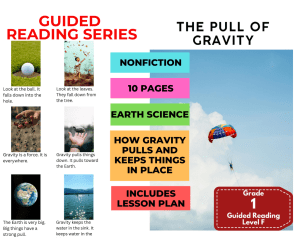
The Pull of Gravity: Guided Reading Level F with Lesson Plan
ELA, Resources for Teachers, Reading Comprehension, Reading, Science, Language Development, Vocabulary, Physics, Earth and Environmental Sciences, Pre-Reading, Kindergarten, Grade 1, 2, Worksheets & Printables, Worksheets, Teacher Tools, Centers, Activities, Literacy Readers, Quizzes, Quizzes and Tests, Assessments, Lesson Plans
This The Pull of Gravity (level f) guided reading book with lesson plan includes: Guided Reading Color Label (front cover x1) This is a quick way to match the book’s demands to what students can generally handle.. The overall goal is to use the level/color to pick books for several smaller groups. To qualify for a certain level, a student is expected to read a book from that level with about 90–94% accuracy. If a student is consistently accurate and understands, move up a level. If the student is struggling at that level, drop down and add more support. Each student will improve at completely different rates, but it is generally one of the best ways to check progress across the class. DOWNLOAD THE CATALOG TO VIEW ALL GUIDED READING BOOKS AVAILABLE (SORTED LEVELS A-Z) COMPANION VIDEO NOW AVAILABLE (EMBEDDED AFTER PREVIEW PICTURES IN PRODUCT DESCRIPTION) Pre-Reading Question (x1) The teacher says the question aloud, either while showing the cover or the first page. Students share what they already know or make sensible guesses based on the cover. Encourage them to use the target vocabulary where possible. Write a few of their ideas on the board so you can return to them during or after the reading. Vocabulary Words (x5) Introduce the five words one at a time. Say each word aloud, have students repeat it, and then ask if anyone already knows what it means. Read the meaning together and briefly connect each word to a picture, action, or gesture so it feels more memorable. Ask students to flip through the book and point to any pages where they spot the vocabulary words. While reading, pause when one of the words appears, or reread the sentence so students clearly notice and understand it in context. Optional: Ask students to raise their hands whenever they see or hear one of the new words. Guided Reading Pages (x10) Check the book snapshot below for: Primary topic — decide whether students need a quick introduction or extra background first. What this lesson teaches best — choose 1–2 key points to focus on during the session. Learning goals — keep in mind what students should be able to understand or say by the end. Key vocabulary — review and reinforce these throughout the lesson. Questions overview — look ahead so you know what students will be asked and whether any extra support is needed. Run the lesson You may already have looked at a few pages together, but it can help to revisit some of the pictures first to build meaning. Depending on your time and how confident the group is with guided reading, you may want to read the whole book aloud to them first. Students can then whisper-read or partner-read while you listen in. If time allows, you can also read as a group, with each student taking a page. Use the guided reading prompts to support them, such as: “Check the picture—does it make sense?” “Point under the words.” “Try the first sound.” “Reread the sentence smoothly.” It can be helpful to focus more closely on one student each session, rotating over time, so you can better judge whether they are ready to move up or may need more support at their current level. Comprehension Questions (back cover x3) This is where you check that students understood the text, not just the words on the page. Start by letting students answer by pointing to a page or picture and saying a short sentence. After they respond, follow up with: “Show me where you found that in the text.” In larger groups, let partners discuss their answer first for 10–20 seconds, then invite 2–3 students to share. Differentiation tips Emerging speakers / struggling readers: oral response + pointing On-level: oral response in a full sentence Higher: one written sentence or a drawing with labels Lesson Snapshot Title: The Pull of Gravity Genre: Nonfiction (informational) Subject: Science (Physical Science) Primary Topic: How gravity pulls things and helps keep them in place Estimated Guided Reading Level (A–Z): F What This Lesson Teaches Best Explains that gravity is a force and that it is all around us. Shows that gravity pulls things down and toward the Earth. Uses simple, everyday examples like a ball, leaves, water, rocks, sand, and air to show gravity in action. Helps students understand that larger objects, like Earth, have a stronger pull. Introduces the idea that gravity is also in space and helps pull the moon. Learning Goals Students will identify that gravity is a force found everywhere. Students will describe how gravity pulls things down and toward the Earth. Students will give examples from the text of things gravity pulls or keeps in place. Students will explain what the text says about Earth’s strong pull. Students will answer questions about gravity using details from the book. Key Vocabulary From the Text gravity — a pull that makes things go down force — a push or a pull toward — moving closer to something space — the place above Earth mountain — a very high hill of land Discussion Prompts Pre-reading question: What do you think makes things fall down to the ground? Comprehension question: What does the book say gravity is? Comprehension question: What does gravity pull things toward? Comprehension question: Name one thing the book says gravity keeps in place. 1. Best Printing Method (Recommended) Booklet printing is the best option if your printer or PDF viewer supports it. This method usually places the pages in the correct order automatically and makes folding much easier. Settings to use: Print mode: Booklet Paper size: Letter or A4 Orientation: Landscape Print on both sides: Yes Flip on: Short edge Scaling: Fit to printable area Booklet subset: First, print front sides only Then, print back sides only This will automatically: Pair the pages correctly Place the cover on the outside Help everything line up properly for folding After printing, fold the pages in half and staple along the spine. 2. If “Booklet” Printing Is Not Available You can still print the book correctly by using manual duplex printing . Step-by-step: Open the PDF. Click Print . Use these settings: Orientation: Landscape Pages per sheet: 1 Print on both sides: Yes Flip on: Short edge Print all pages. Since each PDF page already contains two facing book pages, the pages should still fold neatly into a book. Thousands of Cored Education products are included with your TeachSimple membership. Download links and encyclopedia index available here.
Author Cored Education
Rating
Tags Reading Comprehension, Reading Passages, Reading, Guided Reading, Guided Reading Lesson Plan, Guided Reading Activity, Pre-reading, Science Lesson Plans, Earth Science, Physics

Aztecs Reading Comprehension Passage - Cored Ed Encyclopedia
ELA, Language Development, Reading Comprehension, Reading, Social Studies, Writing, Vocabulary, Geography, History, History: Ancient, Grade 2, 3, 4, 5, Worksheets & Printables, Worksheets, Teacher Tools, Centers, Activities, Writing Prompts, Assessments, Quizzes and Tests, Quizzes, Lesson Plans
This Aztecs reading comprehension with lesson plan includes: Visualization (on the front cover) Start your lesson by taking a minute to think and share something about the topic. Read the script aloud (slowly), perhaps prepare some music or sound effects. Student close their eyes and let their imaginations wander. Students open their eyes, read the question aloud and give them a few minutes to complete. Ask a few students to share or keep answers until the end to compare with what they learn in the passage. Quick pause—thousands of Cored Education products are included with your TeachSimple membership. Download links and encyclopedia index available here. Pre-Reading Trivia Students will write down one thing they already know about the subject and then read five more facts and discuss. These facts are fun, and the students will enjoy learning about the subject before reading more. Give 1 minute for students to write what they already know (no pressure—best guess is fine). Read the five facts together. After each fact, do ask a student for their opinion, was it surprising? Set a purpose by asking students to highlight/underline one fact they want to learn more about during the reading. Reading Passage The text is a high-interest reading passage with set paragraphs, roughly three to four paragraphs long. It contains a variety of themes about the topic, anywhere from history to technology. The passage is between 250 and 350 words in length. First, ask students to look at the headings and see what they’ll learn about today. What do they know about the topic/heading? First read options: Teacher read-aloud (best for support). Partner reading (paragraph by paragraph). While reading, students underline important details, and vocabulary words they think may come up in the questions section. Mixed Questions The first question page contains four multiple-choice questions, each with a choice of four answers, and three written response questions that require a sentence or two from the student. Students complete the mcqs first independently, then review quickly as a class. For the 3 written responses, try to get students giving the answer with some form of evidence: “I think ___ because the text says ___.” If students get stuck, send them back to check the passage. Vocabulary Questions Practice seven key words from the text in this section across two activities. First section is scrambled words where students will unscramble three words given a clue for each. The second section is a word to meaning matching activity. Before starting, have some students read out words they underlined in the passage. Ask students to say the word and read aloud the sentence(s) around each word. Ask students to do scrambled words and the matching exercise in pairs then go through answers as a class. For the scrambled spelling task, get four pairs to come up to the board and write the words for extra practice with the other student reading out the clue. For the matching task, prompt students to give full sentences: “I matched ___ with ___ because ___.” Creative Writing In this question, the student will be required to write a five to eight sentence paragraph on a question related to the topic. Before starting, ask students write down 3 key ideas they are going to include in their piece. Ask students for ideas to share around the class to help those struggling. Pro writing expectations: 5–8 sentences At least 2 facts or details from the passage At least 2 vocabulary words from the previous page Students read their paragraphs while classmates listen for facts and vocabulary words. Extension Activities This page is optional for fast finishers or to take home. There are several activities, each one requiring a different skill. Do some, do none, do all, completely optional - but you will feel reassured knowing every possibility is planned for. Includes summary writting question and additional facts. Answer Key There are answers for the multiple-choice questions, written response questions have sample answers, vocabulary answers and if there is a summary question then a sample summary will be provided as well. Lesson Plan Included Customized lesson plan for this lesson is included. Lesson Snapshot Title: Aztecs Genre: Nonfiction (informational passage) Subject: Social Studies (Ancient Civilizations) / Reading (Informational Text) Primary Topic: Building lake-city life and what happened later Estimated Guided Reading Level (A–Z): S What This Lesson Teaches Best How a wandering Nahua group (the Mexica) chose a home based on a sign and began building a city on a lake. How people adapted to living on water using chinampas , canals, and causeways to grow food and move around. How Triple Alliance (between Tenochtitlan , Texcoco , and Tlacopan ) helped the capital grow powerful through victories and tribute. Using headings to track a sequence: founding and growth, alliance and power, then conflict and destruction, and what remains today. Connecting past to present by noting how the eagle-and-cactus story lives on and how archaeologists still uncover remains beneath modern streets. Learning Goals Identify the sign the Mexica saw that helped them choose their home. Describe how builders expanded the island and how chinampas helped crops grow near home. Explain how canals and causeways helped the city get fresh water and connect to the shore. Describe how tribute (examples named in the text) helped the capital grow powerful. Describe what the passage says happened after Spanish explorers arrived, including the year the city fell. Explain what the passage says exists today where the city once stood. Key Vocabulary From the Text chinampas — raised garden beds packed with mud. causeways — broad raised roads that connect land and water. tribute — goods sent to rulers as payment. levees — walls or banks that help stop floods. archaeologists — people who uncover and study the past. FULL CATALOG OF DOWNLOAD LINKS AND ENCYCLOPEDIA INDEX HERE
Author Cored Education
Rating
Tags Vocabulary, Reading Comprehension, Reading Passages, Lesson Plans, Ela Lesson Plans, Reading Comprehension Lesson Plans, Pre-reading, History, History Lesson Plans, Geography

High Frequency Sight Words: Mixed Up Words - FLASH-PC
ELA, Language Development, Vocabulary, Grade 1, 2, Teacher Tools, Lesson Plans
High Frequency Sight Words: Mixed Up Words - FLASH-PC The High Frequency Sight Words: Mixed Up Words - FLASH-PC is an effective teaching resource precisely designed for educators who wish to streamline and enhance their instruction in language arts. This tool, conceptualized for Grade 1 and Grade 2 learners, mainly focuses on vocabulary development through engaging and progressive lessons. A key component of this resource is its emphasis on Dolch Sight Words—the commonly used English words that children should ideally recognize without needing to sound out. A mastery of these Dolch Sight Words can significantly aid in improving the speed, fluency, and comprehension level of young readers. In this regard, the FLASH-PC incorporates a 'Blend of 'Mixed Up Word' activities wherein words are arranged differently to stimulate students' letter recognition skills. Not only does this approach present opportunities for creative engagement, but it also fosters an environment that promotes cognitive development at its own individual pace. Included Materials: Dolch sight word flashcards Printable materials reinforcing interactive activities Graphic Organizers In terms of flexibility, these materials can be wisely incorporated within daily lessons plans or as special projects or homework assignments allowing diverse learners abundant opportunities for practice beyond classroom boundaries. Sold as a single product file type in PC software format - it assures easily accessible resources compatible with most devices used today by educators across diverse educational settings like public schools or home-based education environments. To sum up, 'High Frequency Sight Words: Mixed Up Words - FLASH-PC' '+ offers an all-encompassing experience aimed towards building linguistics fundamentals by efficiently using technology further enabling students reach commendable levels of proficiency with high-frequency words.
Author Classroom Complete Press
Tags Software (PC)
Electronics Reading Comprehension Passage - Cored Ed Encyclopedia
ELA, Reading Comprehension, Reading, Science, Technology, Pre-Reading, Language Development, Physics, Writing, Vocabulary, Grade 2, 3, 4, 5, Worksheets & Printables, Worksheets, Teacher Tools, Centers, Activities, Writing Prompts, Assessments, Quizzes and Tests, Quizzes, Lesson Plans
This electronics reading comprehension with lesson plan includes: Visualization (on the front cover) Start your lesson by taking a minute to think and share something about the topic. Read the script aloud (slowly), perhaps prepare some music or sound effects. Student close their eyes and let their imaginations wander. Students open their eyes, read the question aloud and give them a few minutes to complete. Ask a few students to share or keep answers until the end to compare with what they learn in the passage. Quick pause—thousands of Cored Education products are included with your TeachSimple membership. Download links and encyclopedia index available here. Pre-Reading Trivia Students will write down one thing they already know about the subject and then read five more facts and discuss. These facts are fun, and the students will enjoy learning about the subject before reading more. Give 1 minute for students to write what they already know (no pressure—best guess is fine). Read the five facts together. After each fact, do ask a student for their opinion, was it surprising? Set a purpose by asking students to highlight/underline one fact they want to learn more about during the reading. Reading Passage The text is a high-interest reading passage with set paragraphs, roughly three to four paragraphs long. It contains a variety of themes about the topic, anywhere from history to technology. The passage is between 250 and 350 words in length. First, ask students to look at the headings and see what they’ll learn about today. What do they know about the topic/heading? First read options: Teacher read-aloud (best for support). Partner reading (paragraph by paragraph). While reading, students underline important details, and vocabulary words they think may come up in the questions section. Mixed Questions The first question page contains four multiple-choice questions, each with a choice of four answers, and three written response questions that require a sentence or two from the student. Students complete the mcqs first independently, then review quickly as a class. For the 3 written responses, try to get students giving the answer with some form of evidence: “I think ___ because the text says ___.” If students get stuck, send them back to check the passage. Vocabulary Questions Practice seven key words from the text in this section across two activities. First section is scrambled words where students will unscramble three words given a clue for each. The second section is a word to meaning matching activity. Before starting, have some students read out words they underlined in the passage. Ask students to say the word and read aloud the sentence(s) around each word. Ask students to do scrambled words and the matching exercise in pairs then go through answers as a class. For the scrambled spelling task, get four pairs to come up to the board and write the words for extra practice with the other student reading out the clue. For the matching task, prompt students to give full sentences: “I matched ___ with ___ because ___.” Creative Writing In this question, the student will be required to write a five to eight sentence paragraph on a question related to the topic. Before starting, ask students write down 3 key ideas they are going to include in their piece. Ask students for ideas to share around the class to help those struggling. Pro writing expectations: 5–8 sentences At least 2 facts or details from the passage At least 2 vocabulary words from the previous page Students read their paragraphs while classmates listen for facts and vocabulary words. Extension Activities This page is optional for fast finishers or to take home. There are several activities, each one requiring a different skill. Do some, do none, do all, completely optional - but you will feel reassured knowing every possibility is planned for. Includes summary writting question and additional facts. Answer Key There are answers for the multiple-choice questions, written response questions have sample answers, vocabulary answers and if there is a summary question then a sample summary will be provided as well. Lesson Plan Included Customized lesson plan for this lesson is included. Lesson Snapshot Title: Electronics Genre: Nonfiction (Informational Text) Subject: Science (Technology/Physical Science) / Reading (Informational Text) Primary Topic: How electronics evolved to carry signals Estimated Guided Reading Level (A–Z): Q What This Lesson Teaches Best Defines electrons as tiny charged particles and explains that electronics guides them to carry a message (a “signal”), not just power devices. Traces a clear timeline of inventions : early radio parts → vacuum tubes → transistor (1947) → integrated circuits on silicon chips. Explains how devices can amplify signals (making a small signal stronger), using the vacuum tube and transistor examples. Shows how engineering changes over time led to smaller, more powerful technology , with chips holding millions (even billions) of transistors. Learning Goals Students will describe how electrons moving through wires can carry a message. Students will explain how vacuum tubes helped make radio signals stronger. Students will identify how the transistor differed from vacuum tubes (material used, size, and power use). Students will describe what integrated circuits are and why they allow devices to stay small. Students will summarize how electronics changed from early inventions to modern chips. Key Vocabulary From the Text electrons — tiny charged particles that move through wires. signal — a message carried through a device. vacuum — space with most air removed. transistor — a smaller part that can switch and amplify signals. semiconductor — a material used instead of a vacuum for a transistor. FULL CATALOG OF DOWNLOAD LINKS AND ENCYCLOPEDIA INDEX HERE
Author Cored Education
Rating
Tags Vocabulary, Reading Comprehension, Reading Passages, Lesson Plans, Ela Lesson Plans, Reading Comprehension Lesson Plans, Pre-reading, Science Lesson Plans, Technology, Physics
Guided Reading Activities and Lesson Plan Nonfiction Set 5 Sea Animals
ELA, Reading, Reading Comprehension, Common Core, ESL, Language Development, Pre-Reading, Vocabulary, Resources for Teachers, Grade 4, 5, Worksheets & Printables, Worksheets, Lesson Plans, Teacher Tools, Activities
Guided Reading Activities with Lesson Plans Nonfiction Set 5 Note: This download DOES NOT include the passages themselves. If you have not already done so, download in a format of your choice in the "reading links" section below. Overview The perfect companion materials for Cored Education reading comprehension downloads. This collection provides structured lessons designed to enhance students' reading, comprehension, vocabulary, and creative thinking. Each lesson follows a consistent format that includes pre-reading activities to engage students, vocabulary-building exercises, comprehension checks, creative writing prompts, and discussion topics that promote critical thinking. The lessons are designed to foster active participation, encourage reflection, and develop key literacy skills through interactive and immersive learning experiences. The series is ideal for guided reading sessions, providing teachers with a comprehensive toolkit to engage students in both individual and group activities, enhancing their understanding of text and expanding their language skills. Includes Guided Reading Materials For: 1.Stingray 2.That's Electric 3.Whale Shark 4.Scared of Sharks 5.Under the Sea 6.All About Jellyfish Reading Links: This is the guided reading materials version and DOES NOT include the passages themselves. The passages related to this download are available here in GOOGLE Docs, GOOGLE Forms, GOOGLE Slides. PDF, PPT, WORD. Google Docs Google Forms Google Slides PDF PPT Word Key Features: Engaging Lesson Structure: Each lesson follows a clear and predictable format, which includes pre-reading discussions, vocabulary exercises, reading activities, and creative tasks to maintain student engagement. Vocabulary Development: Focus on introducing and applying new vocabulary in context, helping students internalize new words and use them effectively. Comprehension and Reflection: The lessons include comprehension questions and reflective prompts that encourage students to think critically about the text and its themes. Creative Writing and Discussion: Opportunities for students to express themselves through writing and group discussions, reinforcing their understanding while fostering creativity. Interactive and Student-Centered: The activities are designed to be interactive, allowing students to engage directly with the content and each other, promoting active learning. FULL CATALOG OF DOWNLOAD LINKS HERE Grade 4/5 Links Fiction Set 1 - Animals Google Docs Google Forms Google Slides PDF PPT Word Guided Reading Materials Fiction Set 2 - Family Google Docs Google Forms Google Slides PDF PPT Word Guided Reading Materials Fiction Set 3 - Friends Google Docs Google Forms Google Slides PDF PPT Word Guided Reading Materials Fiction Set 4 - School Google Docs Google Forms Google Slides PDF PPT Word Guided Reading Materials Fiction Set 5 - Sports Google Docs Google Forms Google Slides PDF PPT Word Guided Reading Materials Nonfiction Set 1 - Birds Google Docs Google Forms Google Slides PDF PPT Word Guided Reading Materials Nonfiction Set 2 - Insects Google Docs Google Forms Google Slides PDF PPT Word Guided Reading Materials Nonfiction Set 3 - Mammals Google Docs Google Forms Google Slides PDF PPT Word Guided Reading Materials Nonfiction Set 4 - Nature Google Docs Google Forms Google Slides PDF PPT Word Guided Reading Materials Nonfiction Set 5 - Sea Animals Google Docs Google Forms Google Slides PDF PPT Word Guided Reading Materials Reading Passages Overview Each passage is especially written for Grade 4-5 students, including key vocabulary required for this age group. Topics are varied and are accompanied by colorful graphics. Topics are meant to educate, yet entertain the modern student. These passages are perfect for the modern classroom. Whereas textbooks can become outdated in no time, any changes to technology or the world will result in updates to this product. Mixed Questions The mixed questions section of each lesson includes a variation of five comprehension, vocabulary and math questions. In addition, key reading strategies are frequently covered including cause & effect, summarizing, compare & contrast and making conclusions. Two or three of the questions will be MCQs and other questions will require a written response of some kind. Full answers and example responses appear at the end of the lesson. Spelling & Vocab Each reading passage contains a variety of words and phrases designed for Grade 4-5 students. Spelling and vocab activities provide the opportunity to build fluency with these words. As it can become quite mundane doing the same activities over and over, each lesson in a set will contain a different spelling and vocab activity . Activities include: spelling games, sentence match-ups, mixed-up text and decoding words from the lesson. Writing Prompts Writing prompts are designed to continue the theme or lessons learned in the story. Students are persuaded to write in a variety of ways and each prompt includes several cues to help. As with the spelling/vocab section, writing prompts will vary. This includes research pieces, reading responses, poetry and creative writing prompts. Full Answer Keys Full answer keys and sample responses are provided so no matter how busy you are, you know you're covered! Mixed question answers provide evidence from the text, math questions contain the relevant workings. Answers are designed for use by the teacher, but also suitable as a handout to the student. Just for Fun Each lesson will have a bonus extension exercise. This is something fun to extend the lesson with. You can find these at the end of each lesson, titled Just for Fun. Just for Funs are optional. Some you may like, some you may not. Either way, they are there to do with as you wish. For similar downloads and other frees, do check out Cored Group on TeachSimple.
Author Cored Education
Tags Elementary, Reading, Comprehension, Vocabulary, Answers, Ccss, Guided Reading, Guided Reading Activity, Guided Reading Lesson Plans, Guided Reading Lesson Plan

History of the Domestic Dog: Guided Reading Level R with Lesson Plan
ELA, Resources for Teachers, Reading Comprehension, Reading, Science, Language Development, Life Sciences, Vocabulary, History, Social Studies, Grade 3, 4, 5, Worksheets & Printables, Worksheets, Teacher Tools, Centers, Activities, Literacy Readers, Quizzes, Quizzes and Tests, Assessments, Lesson Plans
This History of the Domestic Dog (level r) guided reading book with lesson plan includes: Guided Reading Color Label (front cover x1) This is a quick way to match the book’s demands to what students can generally handle.. The overall goal is to use the level/color to pick books for several smaller groups. To qualify for a certain level, a student is expected to read a book from that level with about 90–94% accuracy. If a student is consistently accurate and understands, move up a level. If the student is struggling at that level, drop down and add more support. Each student will improve at completely different rates, but it is generally one of the best ways to check progress across the class. DOWNLOAD THE CATALOG TO VIEW ALL GUIDED READING BOOKS AVAILABLE (SORTED LEVELS A-Z) Pre-Reading Question (x1) Teacher asks the prompt aloud, can be while showing the cover or first page. Students share what they already know, or make educated guesses from the cover. Prompt them to use the target vocabulary. Write some of their responses on the board to look back at during the reading. Vocabulary Words (x5) Introduce the five words, best doing it one at a time. Start by saying it, while students repeat and then see if anyone knows what it means before reading further. Read through the meaning and try to briefly connect each word to a picture or gesture so it’s meaningful. Ask students to flip through the book pages and point to where they see each of the vocabulary words. While reading the book pause upon coming across one of the vocab words or read the sentence twice to make sure students understand the word has appeared. Optional: Ask students to raise hands whenever they see/hear one of the new words. Guided Reading Pages (x10) Check the book snapshot (below) for: primary topic - do you need to prep extra reading or intro materials on this? what is taught best - decide on 1-2 bullets to focus on, use the prompt or words provided here for best results. learning goals - what you are checking for students to be able to do after the session, elicit answers using prompts or words provided. key vocabulary (see section above). questions overview - so you know what is coming up and if you need to prep extra materials to assist understanding. Run the lesson You may have already looked at a few of the pages together, but you can show them some of the pictures again first to set meaning. Depending on how much time you have and how familiar your students are with guided reading class, you may want to read the book aloud first with the group first. Students whisper or partner read, while you listen in. If time, do it as a group, one student reading a page each. Use the guided page’s prompts to coach: “Check the picture / does it make sense?” “Point under the words / try the first sound” “Reread the sentence smoothly”. Try to focus more on one student per session (rotating every time), so you can work out if they are ready to move up or need to move down a level. Comprehension Questions (back cover x3) This is your way to check that students didn’t just say the words, but actually understood the text. First, let students answer by pointing to the page/picture and saying a short sentence. After any answer, follow with: “Show me where you found that in the text.” In bigger groups, have partners answer first (10–20 seconds), then call on 2–3 students to share. Differentiation tips: Emerging speakers/struggling readers: oral + pointing On-level: oral in a full sentence Higher: one written sentence or draw + label Book Snapshot Title: The Science and History of the Domestic Dog Genre: Nonfiction (informational) Subject: Life Science Primary Topic: Domestication, traits, and roles of dogs Estimated Guided Reading Level (A–Z): R What This Book Teaches Best Explains dogs’ biological connection to gray wolves , including shared DNA and instincts tied to social behavior and communication. Describes the history of domestication and how human artificial selection led to many distinct dog breeds. Uses specific evidence to show why dogs have exceptional smell and hearing (brain structures, scent receptors, and hearing frequencies). Shows how selective breeding creates specialists for different jobs (speed, herding, cold-weather survival, and service work). Teaches how to read dog communication signals (tail wag speed/height, ear position, facial muscles, back posture). Learning Goals Explain how the text connects domestic dogs to gray wolves using specific evidence (classification and DNA). Describe how domestication began and how humans’ breeding choices created many breeds over time. Identify details that show why dogs can smell better than humans (olfactory bulb and scent receptors). Identify details that show why dogs can hear better than humans (frequencies and ear muscles). Compare at least two breeds in the text by explaining how traits match their work or environment (speed, herding, cold climate, service). Describe what the text says people can look for to understand a dog’s emotional state. Key Vocabulary From the Text subspecies — a smaller group within a kind of animal. domestication — animals becoming used to living with people. olfactory — having to do with smell. frequencies — how high or low a sound is. resilient — able to handle hard conditions and keep going. Discussion Prompts Pre-reading question: What jobs or tasks have you seen dogs do for people? Comprehension questions: According to the text, how are domestic dogs connected to gray wolves? Comprehension questions: What evidence does the text give to show how powerful a dog’s sense of smell is? Comprehension questions: What signs does the text say people can look for to understand a dog’s emotional state? Printing Tips 1. Best Printing Method (Recommended) “Booklet” Printing (Best if Available) If your printer or PDF viewer supports Booklet Printing , use this. Settings to use: Print mode: Booklet Paper size: Letter or A4 (either works) Orientation: Landscape Print on both sides: Yes Flip on: Short edge Scaling: Fit to printable area Booklet subset: First test: Front sides only Then: Back sides only This will automatically: Pair pages correctly Put the cover on the outside Align everything for folding After printing, fold in half and staple along the spine . 2. If “Booklet” Printing Is NOT Available You can still print this correctly with manual duplex printing . Step-by-step: Open the PDF. Choose Print . Set: Orientation: Landscape Pages per sheet: 1 Print on both sides: Yes Flip on: Short edge Print all pages . Because each PDF page already contains two facing book pages, the result will still fold cleanly into a book. Thousands of Cored Education products are included with your TeachSimple membership. Download links and encyclopedia index available here.
Author Cored Education
Rating
Tags Reading Comprehension, Reading Passages, Reading, Guided Reading, Guided Reading Lesson Plan, Guided Reading Activity, Pre-reading, Science Lesson Plans, Life Science, History
High Frequency Sight Words: Boxed Words - FLASH-PC
ELA, Language Development, Vocabulary, Grade 1, 2, Teacher Tools, Lesson Plans
High Frequency Sight Words: Boxed Words - FLASH-PC The High Frequency Sight Words: Boxed Words - FLASH-PC is a learning resource designed to equip educators with the necessary tools for teaching Dolch Sight Words. It aims at providing engaging and rewarding activities for students in Grades 1 and 2. This resource deeply integrates curriculum-based concepts; featuring an array of teaching aids aimed at mastering high-frequency sight words. The core feature being the Boxed Words. These activities promote active student involvement, simplifying the task of rooting language arts basics into young learners. To ensure better understanding, versatile printables are also provided for reinforcement through repetitive practice. The learning needs of visual learners are catered to with Dolch sight word flash cards—perfect for quick review sessions or fun learning snapshots throughout the day. Packed as well within this rich resource trove are graphic organizers—excellent tools promoting systematic exploration of vocabulary growth while honing logical thinking skills. An interactive feature includes ready-made digital exercises designed to invoke curiosity and maintain student engagement—a perfect consideration for center rotations or small group assignments. With its software (PC) format, it is an efficient take-home material allowing seamless integration into independent learning exercises! In a nutshell, the High Frequency Sight Words: Boxed Words-FLASH PC serves as not just another lesson plan but an experiential toolkit packed with diverse approaches celebrating multiple learning styles amongst Grade 1 & 2 pupils—with a keen focus on enhancing their Language Arts proficiency particularly around Vocabulary subarea. Note: Homeschoolers would find this comprehensive resource extremely beneficial too, as it's adaptable enough to allow personalization according to each learner's unique needs—guaranteeing daily individualized learning experiences for every child.
Author Classroom Complete Press
Tags Software (PC)
Context Clues Supplementary Materials Grade 5-6 (PDF)
ELA, Language Development, ESL, Common Core, Resources for Teachers, Vocabulary, Grade 5, 6, Worksheets & Printables, Worksheets, Teacher Tools, Lesson Plans
Context Clues Supplementary Materials Note: This download DOES NOT include the tests themselves. You can still make use of these materials without them but they are recommended. Download in a format of your choice in the "Links" section below. In the Supplementary Pack Interactive Ice Breakers: Engaging warm-up activities that introduce students to key ELA concepts, such as quick capitalization corrections and punctuation challenges. Guided Practice: Structured teacher-led exercises that reinforce grammar and punctuation rules, helping students identify and apply them correctly in sentences. Group and Partner Tasks: Collaborative activities where students work together to edit sentences, correct capitalization, and improve punctuation through peer discussion and teamwork. Independent Worksheets: Carefully designed worksheets that provide focused practice, allowing students to apply learned concepts and refine their skills independently. Exit Tasks: Quick assessments at the end of each lesson, prompting students to reflect on what they’ve learned and apply their knowledge in writing and editing tasks. Links Definitions/Restatements Synonyms Antonyms Examples/Explanations Google Docs Google Forms Google Slides PDF PPT Word FULL CATALOG OF DOWNLOAD LINKS HERE Grade 5/6 Links: Capitalization & Punctuation Google Docs Google Forms Google Slides PDF PPT Word Free Supplementary Materials Pack Adjectives Google Docs Google Forms Google Slides PDF PPT Word Free Supplementary Materials Pack Nouns Google Docs Google Forms Google Slides PDF PPT Word Free Supplementary Materials Pack Pronouns Google Docs Google Forms Google Slides PDF PPT Word Free Supplementary Materials Pack Verbs Google Docs Google Forms Google Slides PDF PPT Word Free Supplementary Materials Pack Prefixes & Suffixes Google Docs Google Forms Google Slides PDF PPT Word Free Supplementary Materials Pack Sentence Structure Google Docs Google Forms Google Slides PDF PPT Word Free Supplementary Materials Pack Subject Verb Agreement Google Docs Google Forms Google Slides PDF PPT Word Free Supplementary Materials Pack Tenses Google Docs Google Forms Google Slides PDF PPT Word Free Supplementary Materials Pack Context Clues Google Docs Google Forms Google Slides PDF PPT Word Free Supplementary Materials Pack Defining Words Google Docs Google Forms Google Slides PDF PPT Word Free Supplementary Materials Pack Fill in the Blanks Google Docs Google Forms Google Slides PDF PPT Word Free Supplementary Materials Pack Homophones Google Docs Google Forms Google Slides PDF PPT Word Free Supplementary Materials Pack Synonyms Google Docs Google Forms Google Slides PDF PPT Word Free Supplementary Materials Pack ELA Review Questions Overview Questions have three answer choices. There are a handful of pictures on each test for aesthetic purposes, as well as a review sheet covering most of the topics covered in the product. Introduction or Example Sheet Each topic will include an introduction or example sheet to go through first with your students. Full Answer Keys Full answer keys and sample responses are provided so no matter how busy you are, you know you're covered! For More Like This For similar downloads and other frees, do check out Cored Group on TeachSimple.
Author Cored Education
Tags Elementary, Answers, Ccss, Common Core, Tests, Test Prep, Assessment, Grade 5, Grade 6, Vocabulary
Gasoline Reading Comprehension Passage - Cored Ed Encyclopedia
ELA, Reading Comprehension, Reading, Science, Technology, Earth and Environmental Sciences, Pre-Reading, Language Development, Vocabulary, Physics, Grade 2, 3, 4, 5, Worksheets & Printables, Worksheets, Teacher Tools, Centers, Activities, Writing Prompts, Assessments, Quizzes and Tests, Quizzes, Lesson Plans
This gasoline reading comprehension with lesson plan includes: Visualization (on the front cover) Start your lesson by taking a minute to think and share something about the topic. Read the script aloud (slowly), perhaps prepare some music or sound effects. Student close their eyes and let their imaginations wander. Students open their eyes, read the question aloud and give them a few minutes to complete. Ask a few students to share or keep answers until the end to compare with what they learn in the passage. Quick pause—thousands of Cored Education products are included with your TeachSimple membership. Download links and encyclopedia index available here. Pre-Reading Trivia Students will write down one thing they already know about the subject and then read five more facts and discuss. These facts are fun, and the students will enjoy learning about the subject before reading more. Give 1 minute for students to write what they already know (no pressure—best guess is fine). Read the five facts together. After each fact, do ask a student for their opinion, was it surprising? Set a purpose by asking students to highlight/underline one fact they want to learn more about during the reading. Reading Passage The text is a high-interest reading passage with set paragraphs, roughly three to four paragraphs long. It contains a variety of themes about the topic, anywhere from history to technology. The passage is between 250 and 350 words in length. First, ask students to look at the headings and see what they’ll learn about today. What do they know about the topic/heading? First read options: Teacher read-aloud (best for support). Partner reading (paragraph by paragraph). While reading, students underline important details, and vocabulary words they think may come up in the questions section. Mixed Questions The first question page contains four multiple-choice questions, each with a choice of four answers, and three written response questions that require a sentence or two from the student. Students complete the mcqs first independently, then review quickly as a class. For the 3 written responses, try to get students giving the answer with some form of evidence: “I think ___ because the text says ___.” If students get stuck, send them back to check the passage. Vocabulary Questions Practice seven key words from the text in this section across two activities. First section is scrambled words where students will unscramble three words given a clue for each. The second section is a word to meaning matching activity. Before starting, have some students read out words they underlined in the passage. Ask students to say the word and read aloud the sentence(s) around each word. Ask students to do scrambled words and the matching exercise in pairs then go through answers as a class. For the scrambled spelling task, get four pairs to come up to the board and write the words for extra practice with the other student reading out the clue. For the matching task, prompt students to give full sentences: “I matched ___ with ___ because ___.” Creative Writing In this question, the student will be required to write a five to eight sentence paragraph on a question related to the topic. Before starting, ask students write down 3 key ideas they are going to include in their piece. Ask students for ideas to share around the class to help those struggling. Pro writing expectations: 5–8 sentences At least 2 facts or details from the passage At least 2 vocabulary words from the previous page Students read their paragraphs while classmates listen for facts and vocabulary words. Extension Activities This page is optional for fast finishers or to take home. There are several activities, each one requiring a different skill. Do some, do none, do all, completely optional - but you will feel reassured knowing every possibility is planned for. Includes summary writting question and additional facts. Answer Key There are answers for the multiple-choice questions, written response questions have sample answers, vocabulary answers and if there is a summary question then a sample summary will be provided as well. Lesson Plan Included Customized lesson plan for this lesson is included. Lesson Snapshot Title: Gasoline Genre: Nonfiction (informational text) Subject: Science Primary Topic: What gasoline is, how it works, and impacts Estimated Guided Reading Level (A–Z): Q What This Lesson Teaches Best Explains what gasoline is and why it must be handled carefully because it “can catch fire very easily.” Describes how gasoline helps a car engine work (a spark burns gasoline in a controlled way to move parts that turn the wheels). Traces a brief history of gasoline’s changing value (from “leftover” in 1859 to useful once automobiles appeared in 1892). Introduces the idea of octane ratings and how they relate to engine “knocking” and early ignition. Connects gasoline use to environmental effects (vapors can pollute; burning creates gases including carbon dioxide) and mentions cleaner travel choices. Learning Goals Students will identify what gasoline is and where it comes from (petroleum/crude oil from deep underground). Students will describe how gasoline is used inside a car engine to help make the wheels turn. Students will explain how gasoline changed from being thrown away to becoming a valuable fuel. Students will explain what “octane” measures and how it relates to engine knocking. Students will describe two ways gasoline can affect the air (vapors and burning gases). Students will name choices mentioned in the text for using less gasoline (electric vehicles, bikes, buses, walking). Key Vocabulary From the Text gasoline — fuel liquid used in many cars. petroleum — thick oil material gasoline is made from. crude — raw oil from deep underground. kerosene — lamp fuel people wanted in 1859. octane — rating showing resistance to early ignition. FULL CATALOG OF DOWNLOAD LINKS AND ENCYCLOPEDIA INDEX HERE
Author Cored Education
Rating
Tags Vocabulary, Reading Comprehension, Reading Passages, Lesson Plans, Ela Lesson Plans, Reading Comprehension Lesson Plans, Pre-reading, Science Lesson Plans, Earth Science, Physics
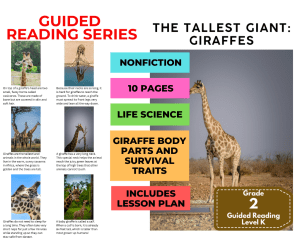
Guided Reading Level K - Tallest Giant Giraffes (with Lesson Plan)
ELA, Resources for Teachers, Reading Comprehension, Reading, Science, Language Development, Life Sciences, Animals, Pre-Reading, Vocabulary, Grade 2, 3, 4, Worksheets & Printables, Worksheets, Teacher Tools, Centers, Activities, Literacy Readers, Quizzes, Quizzes and Tests, Assessments, Lesson Plans
This Guided Reading Book - Tallest Giant Giraffes (Level K) with lesson plan includes: Guided Reading Color Label (front cover x1) This is a quick way to match the book’s demands to what students can generally handle.. The overall goal is to use the level/color to pick books for several smaller groups. To qualify for a certain level, a student is expected to read a book from that level with about 90–94% accuracy. If a student is consistently accurate and understands, move up a level. If the student is struggling at that level, drop down and add more support. Each student will improve at completely different rates, but it is generally one of the best ways to check progress across the class. DOWNLOAD THE CATALOG TO VIEW ALL GUIDED READING BOOKS AVAILABLE (SORTED LEVELS A-Z) Pre-Reading Question (x1) Teacher asks the prompt aloud, can be while showing the cover or first page. Students share what they already know, or make educated guesses from the cover. Prompt them to use the target vocabulary. Write some of their responses on the board to look back at during the reading. Vocabulary Words (x5) Introduce the five words, best doing it one at a time. Start by saying it, while students repeat and then see if anyone knows what it means before reading further. Read through the meaning and try to briefly connect each word to a picture or gesture so it’s meaningful. Ask students to flip through the book pages and point to where they see each of the vocabulary words. While reading the book pause upon coming across one of the vocab words or read the sentence twice to make sure students understand the word has appeared. Optional: Ask students to raise hands whenever they see/hear one of the new words. Guided Reading Pages (x10) Check the book snapshot (below) for: primary topic - do you need to prep extra reading or intro materials on this? what is taught best - decide on 1-2 bullets to focus on, use the prompt or words provided here for best results. learning goals - what you are checking for students to be able to do after the session, elicit answers using prompts or words provided. key vocabulary (see section above). questions overview - so you know what is coming up and if you need to prep extra materials to assist understanding. Run the lesson You may have already looked at a few of the pages together, but you can show them some of the pictures again first to set meaning. Depending on how much time you have and how familiar your students are with guided reading class, you may want to read the book aloud first with the group first. Students whisper or partner read, while you listen in. If time, do it as a group, one student reading a page each. Use the guided page’s prompts to coach: “Check the picture / does it make sense?” “Point under the words / try the first sound” “Reread the sentence smoothly”. Try to focus more on one student per session (rotating every time), so you can work out if they are ready to move up or need to move down a level. Comprehension Questions (back cover x3) This is your way to check that students didn’t just say the words, but actually understood the text. First, let students answer by pointing to the page/picture and saying a short sentence. After any answer, follow with: “Show me where you found that in the text.” In bigger groups, have partners answer first (10–20 seconds), then call on 2–3 students to share. Differentiation tips: Emerging speakers/struggling readers: oral + pointing On-level: oral in a full sentence Higher: one written sentence or draw + label Book Snapshot Title: The Tallest Giant: Giraffes Genre: Nonfiction (informational) Subject: Life Science + Reading (Informational Text) Primary Topic: Giraffe body parts and survival traits Estimated Guided Reading Level (A–Z): K What This Book Teaches Best Giraffes are the tallest land animals and live in the warm, sunny savanna in Africa. A giraffe’s long neck helps it reach “juicy green leaves” on tall trees that other animals cannot touch. Giraffes use a long, strong, dark tongue to wrap around branches and pull off leaves, even with sharp thorns. Each giraffe has a unique pattern of spots; no two have the exact same shapes or colors on their fur. The text highlights survival behaviors and features (drinking stance, short standing naps for safety, fast running, and newborn calf size). Learning Goals Students will describe where giraffes live using details from the text. Students will explain how a giraffe’s long neck helps it get food. Students will describe how a giraffe uses its tongue to pull off leaves, even when there are thorns. Students will explain what is unique about each giraffe’s spots. Students will describe what a giraffe must do to drink water and why it is hard to reach the ground. Students will identify two facts about how giraffes stay safe or move (short naps standing up; running up to thirty-five miles per hour; traveling long distances). Key Vocabulary From the Text savanna — a warm, sunny place with grass and tall trees. juicy — full of liquid; wet and tasty. thorns — sharp points on a plant that can poke you. unique — one of a kind; not the same as others. ossicones — small, fuzzy horns on top of a giraffe’s head. Discussion Prompts Pre-reading question: What body parts might help a giraffe get food and stay safe? Comprehension questions: How does a giraffe’s long neck help it reach food that other animals cannot touch? Comprehension questions: What does the book say a giraffe must do to drink water? Comprehension questions: What is special about each giraffe’s pattern of spots? Printing Tips 1. Best Printing Method (Recommended) “Booklet” Printing (Best if Available) If your printer or PDF viewer supports Booklet Printing , use this. Settings to use: Print mode: Booklet Paper size: Letter or A4 (either works) Orientation: Landscape Print on both sides: Yes Flip on: Short edge Scaling: Fit to printable area Booklet subset: First test: Front sides only Then: Back sides only This will automatically: Pair pages correctly Put the cover on the outside Align everything for folding After printing, fold in half and staple along the spine . 2. If “Booklet” Printing Is NOT Available You can still print this correctly with manual duplex printing . Step-by-step: Open the PDF. Choose Print . Set: Orientation: Landscape Pages per sheet: 1 Print on both sides: Yes Flip on: Short edge Print all pages . Because each PDF page already contains two facing book pages, the result will still fold cleanly into a book. Thousands of Cored Education products are included with your TeachSimple membership. Download links and encyclopedia index available here.
Author Cored Education
Rating
Tags Reading Comprehension, Reading Passages, Reading, Guided Reading, Guided Reading Lesson Plan, Guided Reading Activity, Pre-reading, Science Lesson Plans, Life Science, Animals
First Grade Sight Words - 100 Words to Practice and Learn
ELA, Language Development, Pre-Reading, Reading, Spelling, Vocabulary, Grade 1, 2, Worksheets & Printables, Worksheets, Lesson Plans, Teacher Tools
This list includes 10 take home sight word sheets for a total of 100 First Grade words. 100 FIRST GRADE FRY Sight Words! 10 PAGES INCLUDED! For children to learn how to read, sight words are important for kids to master. Practicing and reading sight words account for seventy five percent of words that children read. The Fry Sight words are words that are most often used and begins with the first one hundred words for Kindergarten.Using these words often to practice reading is essential to their skills and to improve in their reading comprehension. These words are often not easy to sound out like most CVC words, so recognizing them and memorizing these words is the most helpful to enhance a child's reading skills. You can find the first 100 words here which include some of the following words as an example: over knew take only little me work back give most very after things our man good think help where great say This list includes the second one hundred words for First Grade. There are different sight words for each grade level and the words build on each other. Students will recognize the previous words and continue to add more words to their memory as they practice them over and over. This list is mainly used for first and second grade students. It is intended to be used not only in the classroom, but to be used at home for practice with an adult. Then, it can be signed by a parent or guardian of the child and passed off at school. A total of 13 pages for students to practice and pass off once the students have mastered each word. Have parents sign the page once students are ready to pass them off with their teacher.
Author K-5 Treasures
Tags Sight Words, List Of Words, Reading, 1st Grade Reading, First Grade Sight Words, First Grade Reading, 1st Grade Sight Words, FRY Sight Words, 2nd Grade Sight Words, Second Grade Sight Words
High Frequency Sight Words: Sentence Completion - FLASH-PC
ELA, Language Development, Vocabulary, Grade 1, 2, Teacher Tools, Lesson Plans
High Frequency Sight Words: Sentence Completion - FLASH-PC The High Frequency Sight Words: Sentence Completion - FLASH-PC is a resource designed to promote learning in the classroom and beyond. This product, focused on Dolch High Frequency Sight Words, is particularly perfect for 1st and 2nd grade educators focusing on language arts. Purpose of the Resource The primary purpose of this tool, as evident from the title 'Sentence Completion', is to significantly improve students' vocabulary skills through engaging activities. The software helps improve Lexical competency by emphasizing sentence formulation based on Dolch Sight Words, along with cultivating conceptual understanding via contextual usage of words. Main Features An integrated bundles set that includes printable teaching aids like graphic organizers and interactive activities. Suitable for various instructional methods such as whole-class instruction or small group learning circles. A god-send for parents engaged in homeschooling efforts who can incorporate these dependable aids into their routine. Dolch Sight Word Flashcards Included inherently within its teaching kit are individual Dolch sight word flashcards . These versatile tools are ideal for exercising various learning strategies, enhancing sight-word recognition among new readers, or even to be given as homework assignments extending lesson engagement outside classroom constraints. Compatible with PC This easily accessible format common within education communities worldwide promotes smooth application into any contemporary instruction model void of obstacles or setbacks. To summarize, if you're seeking an easy-to-use digital method to enhance young learners' mastery over high-frequency sight words then give due consideration to this diligently assembled Sentence Completion - FLASH-PC tool - your potential keystone resource on your teaching journey.
Author Classroom Complete Press
Tags Software (PC), Sight Words, ELA Lesson Plan, Sentence Completion, Vocabulary
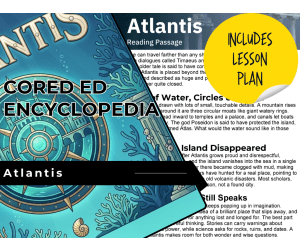
Atlantis Reading Comprehension Passage - Cored Ed Encyclopedia
ELA, Language Development, Reading Comprehension, Reading, Social Studies, Writing, Vocabulary, Geography, History, History: Ancient, Grade 2, 3, 4, 5, Worksheets & Printables, Worksheets, Teacher Tools, Centers, Activities, Writing Prompts, Assessments, Quizzes and Tests, Quizzes, Lesson Plans
This Atlantis reading comprehension with lesson plan includes: Visualization (on the front cover) Start your lesson by taking a minute to think and share something about the topic. Read the script aloud (slowly), perhaps prepare some music or sound effects. Student close their eyes and let their imaginations wander. Students open their eyes, read the question aloud and give them a few minutes to complete. Ask a few students to share or keep answers until the end to compare with what they learn in the passage. Quick pause—thousands of Cored Education products are included with your TeachSimple membership. Download links and encyclopedia index available here. Pre-Reading Trivia Students will write down one thing they already know about the subject and then read five more facts and discuss. These facts are fun, and the students will enjoy learning about the subject before reading more. Give 1 minute for students to write what they already know (no pressure—best guess is fine). Read the five facts together. After each fact, do ask a student for their opinion, was it surprising? Set a purpose by asking students to highlight/underline one fact they want to learn more about during the reading. Reading Passage The text is a high-interest reading passage with set paragraphs, roughly three to four paragraphs long. It contains a variety of themes about the topic, anywhere from history to technology. The passage is between 250 and 350 words in length. First, ask students to look at the headings and see what they’ll learn about today. What do they know about the topic/heading? First read options: Teacher read-aloud (best for support). Partner reading (paragraph by paragraph). While reading, students underline important details, and vocabulary words they think may come up in the questions section. Mixed Questions The first question page contains four multiple-choice questions, each with a choice of four answers, and three written response questions that require a sentence or two from the student. Students complete the mcqs first independently, then review quickly as a class. For the 3 written responses, try to get students giving the answer with some form of evidence: “I think ___ because the text says ___.” If students get stuck, send them back to check the passage. Vocabulary Questions Practice seven key words from the text in this section across two activities. First section is scrambled words where students will unscramble three words given a clue for each. The second section is a word to meaning matching activity. Before starting, have some students read out words they underlined in the passage. Ask students to say the word and read aloud the sentence(s) around each word. Ask students to do scrambled words and the matching exercise in pairs then go through answers as a class. For the scrambled spelling task, get four pairs to come up to the board and write the words for extra practice with the other student reading out the clue. For the matching task, prompt students to give full sentences: “I matched ___ with ___ because ___.” Creative Writing In this question, the student will be required to write a five to eight sentence paragraph on a question related to the topic. Before starting, ask students write down 3 key ideas they are going to include in their piece. Ask students for ideas to share around the class to help those struggling. Pro writing expectations: 5–8 sentences At least 2 facts or details from the passage At least 2 vocabulary words from the previous page Students read their paragraphs while classmates listen for facts and vocabulary words. Extension Activities This page is optional for fast finishers or to take home. There are several activities, each one requiring a different skill. Do some, do none, do all, completely optional - but you will feel reassured knowing every possibility is planned for. Includes summary writting question and additional facts. Answer Key There are answers for the multiple-choice questions, written response questions have sample answers, vocabulary answers and if there is a summary question then a sample summary will be provided as well. Lesson Plan Included Customized lesson plan for this lesson is included. Lesson Snapshot Title: Atlantis Genre: Nonfiction (informational passage about a myth/story’s origins and meaning) Subject: Reading (Informational Text) / Social Studies (Myths & ancient world references) Primary Topic: Atlantis in writing, details, and “lesson” meaning Estimated Guided Reading Level (A–Z): T What This Lesson Teaches Best Identifying where an idea “first appears in writings” and tracking its source (the passage names Plato and two dialogues). Visualizing and describing setting details from informational text (rings of water, bridges, gates, canals, temples, palace). Cause/effect in a legend: how pride and disrespect lead to destruction (earthquakes, floods, island vanishes; travel becomes hard). Distinguishing story-meaning vs scientific proof: stories can warn; science looks for “rocks, ruins, and dates.” Understanding how a name becomes a symbol for “anything lost and longed for” and why mysteries keep people thinking. Learning Goals Students will identify where the Atlantis story first appears and name the two dialogues the passage lists. Students will describe Atlantis’s “circles of water” using details from the passage (moats, bridges, gates, canals). Students will explain what events cause the island to vanish and how the water changes afterward. Students will summarize why people keep hunting for a real location and what “most scholars” think instead. Students will compare what the passage says stories do versus what science asks for. Students will explain how the passage describes Atlantis as a “shortcut” for things that are lost. Key Vocabulary From the Text dialogues — written conversations between speakers. moats — water ditches around a place. canals — water paths that boats can travel on. clogged — blocked so movement becomes difficult. scholars — people who study a topic deeply. FULL CATALOG OF DOWNLOAD LINKS AND ENCYCLOPEDIA INDEX HERE
Author Cored Education
Rating
Tags Vocabulary, Reading Comprehension, Reading Passages, Lesson Plans, Ela Lesson Plans, Reading Comprehension Lesson Plans, Pre-reading, History, History Lesson Plans, Geography

Word Power Gr 4-5
ELA, Language Development, Vocabulary, Grade 4, 5, Teacher Tools, Lesson Plans
Word Power Gr 4-5: An Exceptional Educational Resource Word Power Gr 4-5 is a dedicated teaching tool suspected to foster advanced vocabulary skills among students in grades 4 and 5. This interactive platform successfully aligns with the Language Arts curriculum , intended especially for effective vocabulary learning. The emphasis lies on incorporating over sixty challenging yet applicable words, thus extending beyond traditional terms typically incorporated into present-day textbooks. The importance of these new words lie in their selection - retrieved from prevalent literature correlating to grade levels 4 and 5, granting pupils an exceptional opportunity to familiarize themselves with pertinent vocabulary likely to be encountered as they advance their reading habits. This methodical mode of choice fundamentally supports experiential learning rather than forceful memorization. An Invigorating Journey Through Vocabulary Knowledge The voluminous Word Power Gr 4-5, not merely introduces but also consolidates learners' understanding of new vocabularies through enticing activities permeating its chapters. Included are a whopping twenty-two activities painstakingly curated by teachers themselves, primed for effective delivery and optimal comprehension catered for all ability levels. Diverse educational tasks that are engaging Learning exercises include word matching activities Inclusion of puzzles focused around the newly introduced words Skillful consolidation techniques designed for long-term retention A sturdy feature embedded within this lesson series allows for sporadic two-page reviews at three strategic intervals. These serve as reinforcement tools fortifying key concepts learned up until each point. Meticulous Design Geared Towards Success An included full-fledged teaching guide offers educators helpful supplementary resources. Vital assets such as list of source books that align particularly well with each junior grade level (grades 4 and 5) come as a boon during lesson planning stages. The resource is delivered in an effortless PDF format, boiling it down to a smooth sailing experience for teachers wanting to utilize these materials in diverse contexts. The utility can range from full classroom sessions, small-group studies, or even assigning them as homework activities crafted for autonomous learning. With such versatility at its core, Word Power Gr 4-5 demonstrates itself as an indispensable augmentation to any academic environment aimed towards nurturing student vocabulary at the intermediate grade levels.
Author Classroom Complete Press
Tags PDF
Word Puzzlers - Grades 6-7
ELA, Language Development, Vocabulary, Grade 6, 7, Teacher Tools, Lesson Plans
Word Puzzlers for Grades 6-7: A Stimulating Teaching Resource Stimulate student interest in words and enrich their vocabulary with this collection of word puzzles, an essential addition to any middle school teacher's resource kit. Educational and Engaging The Word Puzzlers for Grades 6-7 combines the delight of solving puzzles with the value of vocabulary learning. Modeled as an educational exerciser, these word puzzles nourish students' language skills while keeping their minds active. Variety in Learning Formats Codes Mazes Riddles, rhymes & rebuses Word searches Matching activities & crossword puzzles All these puzzle formats scrutinize reasoning skills and reinforce spelling proficiency. A Beyond Downtime Activity ! Nobody ever said no to fun - especially when it stimulates the brain! The Word Puzzlers serves as action-packed alternatives to routine lesson plans. They can supplement core or extended curricular materials effortlessly giving your learning process that much-needed spice! Fits Wide Span of Settings: Whole group activities around cooperative learning spaces, Small group tasks promoting collective problem-solving, Inidividual at-home assignments. Hassle-free Access! The icing on the cake? Teachers get access to 35 print-ready pages packed in one easily downloadable PDF file — perfect for busy teaching schedules! It's particularly helpful for teachers counseling Grade 6 and Grade 7 Language Arts classes specializing in Vocabulary subjects. Word Puzzler, a comprehensive yet uncomplicated teaching resource.
Author Classroom Complete Press
Tags Word Puzzles, Vocabulary Activity, Word Search, Grammar, Language Arts

How to Write an Essay: What is a Narrative Essay?
ELA, Writing, Common Core, Vocabulary, Grade 5, 6, 7, 8, Teacher Tools, Lesson Plans, Graphic Organizers, Quizzes, Crosswords Puzzles, Word Searches
How to Write an Essay: What is a Narrative Essay? Rooted in the earnest desire to simplify the essay writing process for students, this resource decomposes every step of essay composition. Devised as an autonomous chapter from the expansive lesson plan 'How to Write an Essay,' this instructional handbook propounds a novel approach for elucidating and streamlining what often arises as a daunting assignment. The key is in simplicity, and this teaching resource impeccably delivers it. This 24-page PDF guide offers lucid yet captivating content tailored specifically for grade 5-8 students. Adhering to Bloom's Taxonomy principles, it ensures seamless flow from one topic to another, thereby serving perfectly fit for group learning or guiding small group activities. Imagine leading student cognition of narrative essays beyond basic definition. The module not only provides simple definitions but delves into various stages of essay writing - selecting topics, building arguments, crafting climactic conclusions - leaving no stones unturned. The real treasure lies in its explicit segments on four widespread types of essays along with recap sessions around essential elements such as verbs, adjectives, and pronouns that are useful across all subjects requiring proficient written communication skills. Educational value shouldn't be confined only within classrooms . Recognising the importance of independent learning too,this guide can be seamlessly used as homework material encouraging learning away from school. You'll marvel at the ease with which evaluation can be executed using this bundle owing not just to individual word puzzle exercises & comprehension quizzes but also through detailed scoring rubrics enabling smooth tracking of learner progress. Additionally,it incorporates six full-colored graphic organizers offering visual aids aimed towards easy grasp of key concepts while steering your class towards completion their own engaging narratives successfully. An added benefit is its compliance with Common Core State Standards, reassuring reliability and effectiveness. Choose 'How To Write An Essay: What is a Narrative Essay?' for its intricate design and effective structure that make teaching essay writing an achievable and less intimidating task.
Author Classroom Complete Press
Tags Language Arts, Writing, Essay Writing, Narrative Essay, Comprehension Quiz
Word Power Gr 5-6
ELA, Language Development, Vocabulary, Grade 5, 6, Teacher Tools, Lesson Plans
Word Power Gr 5-6: An Interactive Language Arts Learning Tool The Word Power Gr 5-6 is a learning resource designed specifically for strengthening the language arts skills of Grade 5 and Grade 6 students. Remarkably, this tool is not a standard vocabulary builder, but one that utilizes words taken directly from popular literature relevant for these grade levels - leading to more natural and practical word-learning scenarios. Vibrant Variety of Activities This versatile educational device offers a sum total of 22 interactive activities, each introducing over 60 new challenge words in context. These differentiated exercises span various learner needs - from pairing words with their meanings to organizing words alphabetically, interacting with antonyms, and solving puzzles. Anchors vocabulary enhancement Promotes critical thinking skills through interactive engagement with fresh vocabularies Ample reinforcement on each page via engaging tasks designed by experienced educators for maximum recall. Innovative Review Systems & Comprehensive Guides In addition, three two-page reviews are sprinkled judiciously throughout the Word Power Gr 5-6 to ensure a firm understanding of word usage before moving onto newer concepts. This fosters gradual scaffolded growth. A companion teacher's guide includes an extensive list of source books at every level – making it an ideal fit into any structured Language Arts curriculum or enriching support for homeschoolers looking forward to enhancing vocabulary development at home. Easily Adoptable Format All resources come in a user-friendly PDF file format that can be effortlessly integrated into any Learning Management System (LMS) or printed out directly – catering inexhaustibly to all teaching environments. Builds Robust Linguistic Foundations Focusing on real-world word usage and comprehension-focused exercises, Word Power Gr 5-6 is a vital asset for enabling efficient vocabulary instruction.
Author Classroom Complete Press
Tags PDF
Fossils Reading Comprehension Passage - Cored Ed Encyclopedia
ELA, Reading Comprehension, Reading, Science, Technology, Earth and Environmental Sciences, Life Sciences, Pre-Reading, Language Development, Vocabulary, Grade 2, 3, 4, 5, Worksheets & Printables, Worksheets, Teacher Tools, Centers, Activities, Writing Prompts, Assessments, Quizzes and Tests, Quizzes, Lesson Plans
This fossils reading comprehension with lesson plan includes: Visualization (on the front cover) Start your lesson by taking a minute to think and share something about the topic. Read the script aloud (slowly), perhaps prepare some music or sound effects. Student close their eyes and let their imaginations wander. Students open their eyes, read the question aloud and give them a few minutes to complete. Ask a few students to share or keep answers until the end to compare with what they learn in the passage. Quick pause—thousands of Cored Education products are included with your TeachSimple membership. Download links and encyclopedia index available here. Pre-Reading Trivia Students will write down one thing they already know about the subject and then read five more facts and discuss. These facts are fun, and the students will enjoy learning about the subject before reading more. Give 1 minute for students to write what they already know (no pressure—best guess is fine). Read the five facts together. After each fact, do ask a student for their opinion, was it surprising? Set a purpose by asking students to highlight/underline one fact they want to learn more about during the reading. Reading Passage The text is a high-interest reading passage with set paragraphs, roughly three to four paragraphs long. It contains a variety of themes about the topic, anywhere from history to technology. The passage is between 250 and 350 words in length. First, ask students to look at the headings and see what they’ll learn about today. What do they know about the topic/heading? First read options: Teacher read-aloud (best for support). Partner reading (paragraph by paragraph). While reading, students underline important details, and vocabulary words they think may come up in the questions section. Mixed Questions The first question page contains four multiple-choice questions, each with a choice of four answers, and three written response questions that require a sentence or two from the student. Students complete the mcqs first independently, then review quickly as a class. For the 3 written responses, try to get students giving the answer with some form of evidence: “I think ___ because the text says ___.” If students get stuck, send them back to check the passage. Vocabulary Questions Practice seven key words from the text in this section across two activities. First section is scrambled words where students will unscramble three words given a clue for each. The second section is a word to meaning matching activity. Before starting, have some students read out words they underlined in the passage. Ask students to say the word and read aloud the sentence(s) around each word. Ask students to do scrambled words and the matching exercise in pairs then go through answers as a class. For the scrambled spelling task, get four pairs to come up to the board and write the words for extra practice with the other student reading out the clue. For the matching task, prompt students to give full sentences: “I matched ___ with ___ because ___.” Creative Writing In this question, the student will be required to write a five to eight sentence paragraph on a question related to the topic. Before starting, ask students write down 3 key ideas they are going to include in their piece. Ask students for ideas to share around the class to help those struggling. Pro writing expectations: 5–8 sentences At least 2 facts or details from the passage At least 2 vocabulary words from the previous page Students read their paragraphs while classmates listen for facts and vocabulary words. Extension Activities This page is optional for fast finishers or to take home. There are several activities, each one requiring a different skill. Do some, do none, do all, completely optional - but you will feel reassured knowing every possibility is planned for. Includes summary writting question and additional facts. Answer Key There are answers for the multiple-choice questions, written response questions have sample answers, vocabulary answers and if there is a summary question then a sample summary will be provided as well. Lesson Plan Included Customized lesson plan for this lesson is included. Lesson Snapshot Title: Fossils Genre: Nonfiction (Informational Text) Subject: Science (Earth Science/Life Science) / Reading (Informational Text) Primary Topic: Fossils, how they form, and what they reveal Estimated Guided Reading Level (A–Z): Q What This Lesson Teaches Best Defines a fossil and explains that fossils can be body parts (tooth, bone) or traces (footprint, burrow, fossilized poop) that become clues in the “fossil record.” Explains how fossils form when remains are quickly covered by sediment , and minerals in water replace material or fill empty spaces until remains harden like stone. Teaches mold and cast formation: a body can disappear, leaving a hollow mold that later fills to make a cast. Introduces paleontology and shows how scientists “read” patterns in sedimentary rock layers to learn how life has changed over time. Shows how fossils can guide new discoveries , including using rock layers to search for missing kinds of creatures (Tiktaalik example). Learning Goals Students will identify two kinds of fossils named in the text and give an example of each. Students will explain how sediment and minerals help remains become hard “as stone.” Students will describe how a mold and a cast can form, using the text’s explanation. Students will explain how scientists use patterns in sedimentary rock layers to learn which fossils are older. Students will describe why the fossil record is “not complete,” based on the passage. Students will describe how fossils can help scientists decide where to search for new discoveries. Key Vocabulary From the Text sediment — dirt and tiny bits of rock. minerals — materials in water that can harden remains. mold — a hollow shape left after a body is gone. cast — a filled-in copy of a hollow shape. paleontology — the study of ancient life using fossils. FULL CATALOG OF DOWNLOAD LINKS AND ENCYCLOPEDIA INDEX HERE
Author Cored Education
Rating
Tags Vocabulary, Reading Comprehension, Reading Passages, Lesson Plans, Ela Lesson Plans, Reading Comprehension Lesson Plans, Pre-reading, Science Lesson Plans, Earth Science, Life Science

Word Puzzlers - Grades 4-5
ELA, Language Development, Vocabulary, Grade 4, 5, Teacher Tools, Lesson Plans
Word Puzzlers - Grades 4-5 is an outstanding educational resource tailored to markedly enhance students' language skills and vocabulary. Primarily designed for Grade 4 and Grade 5, these word puzzle books seamlessly merge learning with fun. The versatile nature of Word Puzzlers grants teachers the flexibility to use this tool in different teaching contexts, be it whole group instruction, small group tasks or independent homework assignments. This ensures optimum utility regardless of the size or structure of the classroom. Vocabulary Enrichment The primary focus being enriching language arts curricula, Word Puzzlers feature puzzles varying in formats and themes that complement core curriculum materials as well as supplementary ones. To illustrate, one day students could be tracing their way through interesting word mazes while another day they might find themselves breaking secret codes. Beyond Spelling Drills Riddles - Stimulates cognitive processes from a variety of perspectives. Rhymes - Encourages interest in learning new words. Ribuses & Matching Activities - Reinforces understanding of new words through interactive exercises. Crossword puzzles - Ensures continued student engagement. Word Puzzlers - Grades 4-5, rather than just existing as extra material extends beyond traditional teaching methods by integrating vocabulary acquisition within fun exercises that engage student's cognitive skills effectively fostering enthusiasm for words. Digital Accessible Resource: Note: This product is provided as a single PDF file enabling easy digital access across online tutoring and homeschooling settings. This amplifies its adaptability in different educational environments thus affirming its indispensability for current-day educators working hard to ease teaching methods while improving learning experiences.
Author Classroom Complete Press
Tags PDF
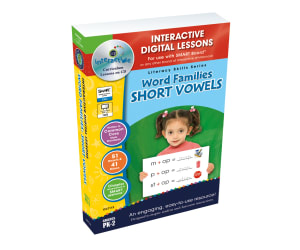
Word Families: Short Vowels - Digital Lesson Plan Gr. PK-2 | MAC Software
ELA, Language Development, Vocabulary, Kindergarten, Preschool, Grade 1, 2, Teacher Tools, Lesson Plans
Word Families: Short Vowels - Digital Lesson Plan Gr. PK-2 This is an innovative teaching resource, expertly designed for MAC Software users. It functions as a vital tool for educators to augment the language arts learning journey of their students. Main Features: A terrific suite of 80 digital screen-pages stimulating student curiosity and promoting engagement. A core purpose of fostering precise Short Vowel phonogram pronunciation using real-life imagery. An interactive format that enhances reading capabilities while improving comprehension skills. Inclusive working with words activities on each page, encouraging practical language application and positive long-term retention. Evaluation Mechanisms: Versatile testing formats including memory match games, crosswords and word searches to keep assessments comprehensive yet enjoyable. Comprehension Quizzes at every level acting as informative markers to evaluate learner understanding and track progress over time. This dynamic tool is perfect for teachers employing diverse instruction strategies across Preschool through Grade 2. Its user-friendly design also makes it suitable for homework assignments extending learning outside the classroom bounds! All content aligns with state standards underlining the widely recognized pedagogical methodology of Blooms Taxonomy ensuring a balance between curriculum mandates and learning goals thus enriching educational experiences profoundly!
Author Classroom Complete Press
Tags Word Families, Short Vowels, Short Vowel Word Family, Digital Lesson Plan, Reading Lesson
Quesadillas Reading Comprehension Passage - Cored Ed Encyclopedia
ELA, Language Development, Reading Comprehension, Reading, Pre-Reading, Social Studies, Writing, Strategies, Geography, Vocabulary, Grade 2, 3, 4, 5, Worksheets & Printables, Worksheets, Teacher Tools, Centers, Activities, Writing Prompts, Assessments, Quizzes and Tests, Quizzes, Lesson Plans
This quesadillas reading comprehension includes: Visualization (on the front cover) Start your lesson by taking a minute to think and share something about the topic. Read the script aloud (slowly), perhaps prepare some music or sound effects. Student close their eyes and let their imaginations wander. Students open their eyes, read the question aloud and give them a few minutes to complete. Ask a few students to share or keep answers until the end to compare with what they learn in the passage. Quick pause—thousands of Cored Education products are included with your TeachSimple membership. Download links and encyclopedia index available here. Pre-Reading Trivia Students will write down one thing they already know about the subject and then read five more facts and discuss. These facts are fun, and the students will enjoy learning about the subject before reading more. Give 1 minute for students to write what they already know (no pressure—best guess is fine). Read the five facts together. After each fact, do ask a student for their opinion, was it surprising? Set a purpose by asking students to highlight/underline one fact they want to learn more about during the reading. Reading Passage The text is a high-interest reading passage with set paragraphs, roughly three to four paragraphs long. It contains a variety of themes about the topic, anywhere from history to technology. The passage is between 250 and 350 words in length. First, ask students to look at the headings and see what they’ll learn about today. What do they know about the topic/heading? First read options: Teacher read-aloud (best for support). Partner reading (paragraph by paragraph). While reading, students underline important details, and vocabulary words they think may come up in the questions section. Mixed Questions The first question page contains four multiple-choice questions, each with a choice of four answers, and three written response questions that require a sentence or two from the student. Students complete the mcqs first independently, then review quickly as a class. For the 3 written responses, try to get students giving the answer with some form of evidence: “I think ___ because the text says ___.” If students get stuck, send them back to check the passage. Vocabulary Questions Practice seven key words from the text in this section across two activities. First section is scrambled words where students will unscramble three words given a clue for each. The second section is a word to meaning matching activity. Before starting, have some students read out words they underlined in the passage. Ask students to say the word and read aloud the sentence(s) around each word. Ask students to do scrambled words and the matching exercise in pairs then go through answers as a class. For the scrambled spelling task, get four pairs to come up to the board and write the words for extra practice with the other student reading out the clue. For the matching task, prompt students to give full sentences: “I matched ___ with ___ because ___.” Creative Writing In this question, the student will be required to write a five to eight sentence paragraph on a question related to the topic. Before starting, ask students write down 3 key ideas they are going to include in their piece. Ask students for ideas to share around the class to help those struggling. Pro writing expectations: 5–8 sentences At least 2 facts or details from the passage At least 2 vocabulary words from the previous page Students read their paragraphs while classmates listen for facts and vocabulary words. Extension Activities This page is optional for fast finishers or to take home. There are several activities, each one requiring a different skill. Do some, do none, do all, completely optional - but you will feel reassured knowing every possibility is planned for. Includes summary writting question. Answer Key There are answers for the multiple-choice questions, written response questions have sample answers, vocabulary answers and if there is a summary question then a sample summary will be provided as well. Lesson Plan Included Customized lesson plan for this lesson is included. Lesson Snapshot Title: Quesadillas Genre: Nonfiction (informational passage with support pages) Subject: Reading (Informational Text) / Social Studies (Culture & Food Traditions) Primary Topic: How quesadillas began and changed by place Estimated Guided Reading Level (A–Z): Q What This Lesson Teaches Best How foods and traditions change as people share them in different places (homes, markets, restaurants, and around the world). Comparing regional variations (corn vs. flour tortillas; different cheeses and fillings in different parts of Mexico and the U.S.). Building vocabulary and background knowledge about cooking tools and ingredients (comal, Oaxaca cheese, huitlacoche, guacamole). Identifying main ideas and key details across sections with headings (history/origin, filling choices, spreading beyond Mexico). Learning Goals Students can explain how the passage says a quesadilla is made (tortilla, filling, folded, heated). Students can describe how quesadillas changed in different places using details from the text. Students can compare quesadillas in different regions mentioned (central/southern Mexico, northern Mexico, Mexico City, Southwestern United States). Students can identify the main idea of each section heading and support it with one detail. Students can use key vocabulary from the passage when discussing the topic. Key Vocabulary From the Text colonial — from the time when a country was ruled by another comal — a flat griddle for heating and cooking tortillas Oaxaca — a place in Mexico named in the passage huitlacoche — a corn fungus used as a savory filling guacamole — a topping served with some quesadillas Discussion Prompts Pre-reading question: What foods have you seen change in different places or families? Comprehension questions: According to the passage, what is a quesadilla and how is it cooked? Comprehension questions: What are two different fillings or cheeses the passage says people use? Comprehension questions: How does the passage explain quesadillas changing as they spread beyond Mexico? FULL CATALOG OF DOWNLOAD LINKS AND ENCYCLOPEDIA INDEX HERE
Author Cored Education
Rating
Tags Vocabulary, Reading Comprehension, Reading Passages, Reading, Creative Writing, Reading Strategies, Writing Prompts, Lesson Plans, Quesadillas, Social Studies

Community Helpers Curriculum Pack
Creative Arts, Art, Social Studies, ELA, Math, Early Math, Science, Basic Science, Language Development, Vocabulary, Kindergarten, Lesson Plans, Teacher Tools
If your students are studying community helpers or are about to begin a careers unit, I have just the resource to provide you with everything you need and more! This is a Community Helpers Curriculum Pack complete with an abundance of printable resources and engaging activities for students to complete. This curriculum was designed for your preschool students. The curriculum goal is to expand upon the knowledge children possess about jobs, careers, and the world around them, and to promote optimism about their future and the many diverse opportunities available to them. The vocabulary that students will focus on is occupation, retail, vocation, college, training, career, paycheck, income, schedule, uniform, business and job. This curriculum will come with a color of the week (purple) and a letter of the week (W). This curriculum pack includes: --Sensory Table Ideas --Art Activities --Cooking Experience --Community Time --Math Activities --Home/School Connection Ideas --Science Table Enrichments --Science Concepts/Activities --Prop Box Ideas/Dramatic Play Enrichments --Movement and Motor --Playground/Walk Activities --Transition/Waiting Ideas --Block Area Enrichments --Flannel Board --Teacher Made Enrichment Ideas --Field Trip Ideas --Supplemental Learning Ideas/Activities At the start of this pack, you will receive a list of supplies needed for activities and projects. The worksheets, activities, and tasks included in this pack are intended to be completed in a variety of formats – whole group, small group, and independent work. I hope you enjoy!
Author Learning Foundations
Tags Learning Foundations, Community Helpers, Social Studies Curriculum, Sensory Table, Art Activities, Color Of The Week, Cross-curricular, Literacy