Celebrate Everyday October: A Micro-Learning Deck | Digital Mini Lessons
A year-long series of daily micro-lessons ("Celebrate Everyday") giving students a short warm-up/wrap-up activity tied to a notable day or observance in October.
122 resources
Explore sub-categories
2 sub-categories · 122 resources
A year-long series of daily micro-lessons ("Celebrate Everyday") giving students a short warm-up/wrap-up activity tied to a notable day or observance in October.
A year-long series of daily micro-lessons ("Celebrate Everyday") giving students a short warm-up/wrap-up activity tied to a notable day or observance in September.
The Chinese New Year: A Micro-Learning Deck | Reading Activities resource is an 11-slide download that exposes your students to informational texts for Chinese New Year.
Gives secondary teachers a multi-activity vocabulary unit (competition, word draft, flashcards, and video project) to build student retention of assigned vocabulary words instead of rote memorization.
A digital micro-lesson teaching about Christopher Columbus and Columbus Day through an informational reading passage, embedded video links, and comprehension activities.
A mini-lesson/workshop teaching secondary students the 'show, don't tell' writing principle, using a slideshow contrasting telling sentences with showing paragraphs, then having students turn a randomly-drawn telling sentence into a descriptive showing paragraph.
A mini-lesson/workshop teaching secondary students to identify and create literary 'voice' (diction, syntax, tone) through a poem-reconstruction group activity and an original-writing exercise.
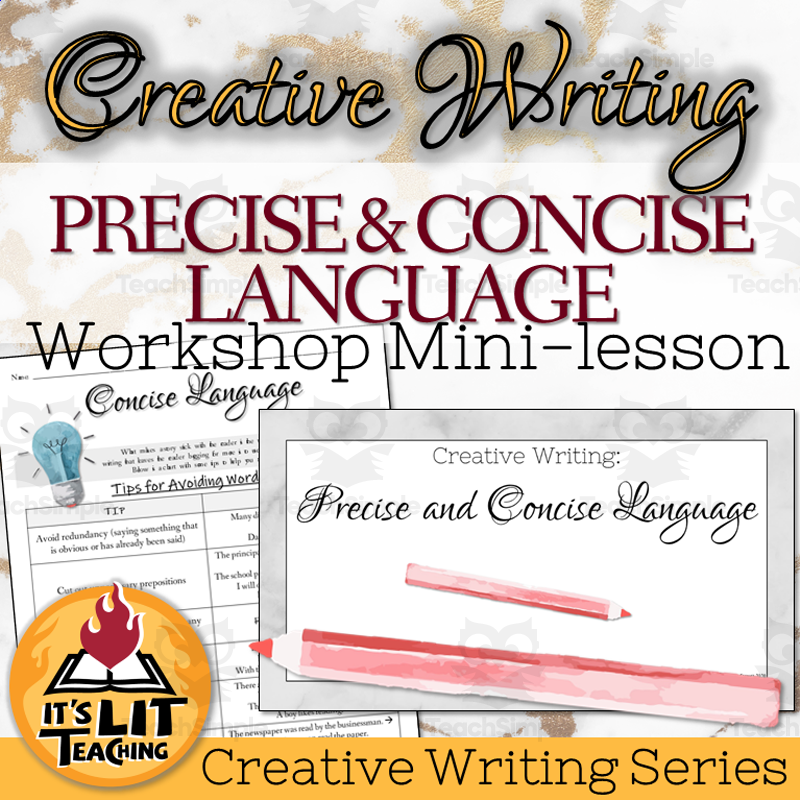
A mini-lesson/workshop teaching secondary students to write with more precise and concise language, using a slideshow of weak-vs-strong sentence examples, a reference handout, and a two-part worksheet with answer key.
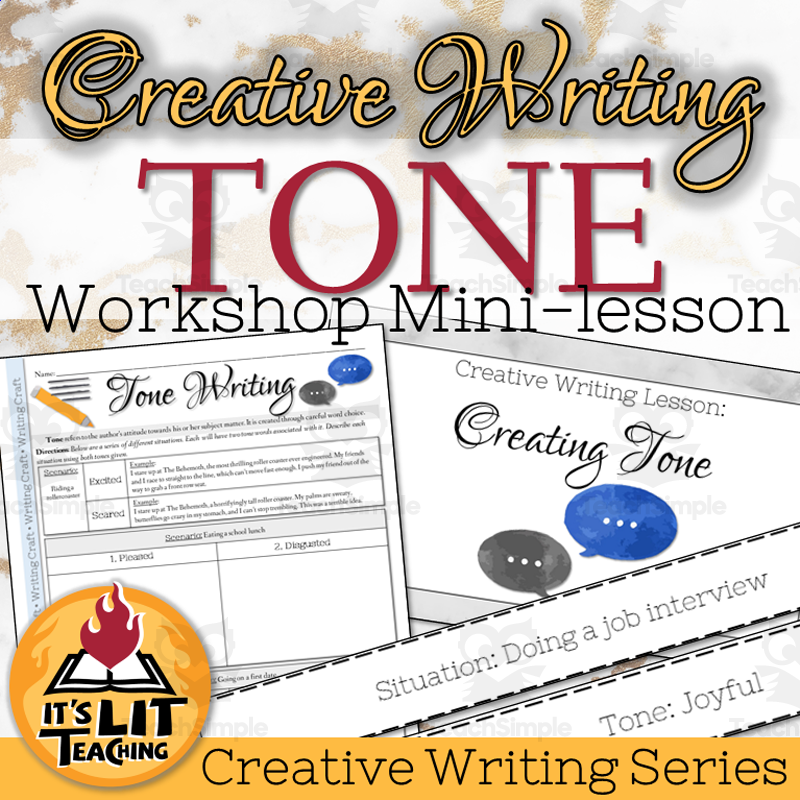
A mini-lesson/workshop teaching secondary students to identify, analyze, and create tone in writing, using a slideshow, guided practice with poems and Shakespearean sonnets, and a situation/tone-strip writing activity distinguishing tone from mood.
Novel study bundle for the book 'Dear Martin', combining a student workbook (print and digital versions), teacher guide, literature-circle structure, editable reading schedule, and a final social-justice research/campaign project with rubric.
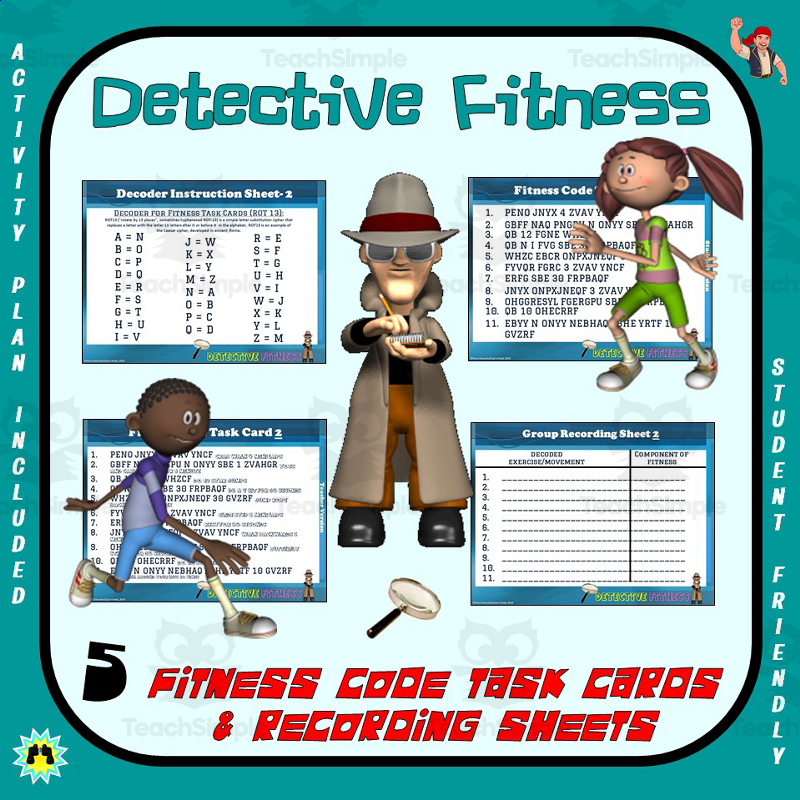
Deliver a cooperative small-group PE activity where students decode fitness task cards and perform fitness, locomotor, and manipulative-skill exercises while identifying the fitness component used.
An educator's guide presenting a specialized visual-phonics reading-intervention framework (the Visuo-Phonological Anchor Model) for teaching phonics to dyslexic and neurodivergent early-elementary students using color-coding and visual scaffolding instead of standard black-and-white phonics worksheets.
Edgar Allan Poe Literature Circles (With Lexiled Texts) The Edgar Allan Poe Literature Circles resource offers an engaging platform to dive into classic literature.
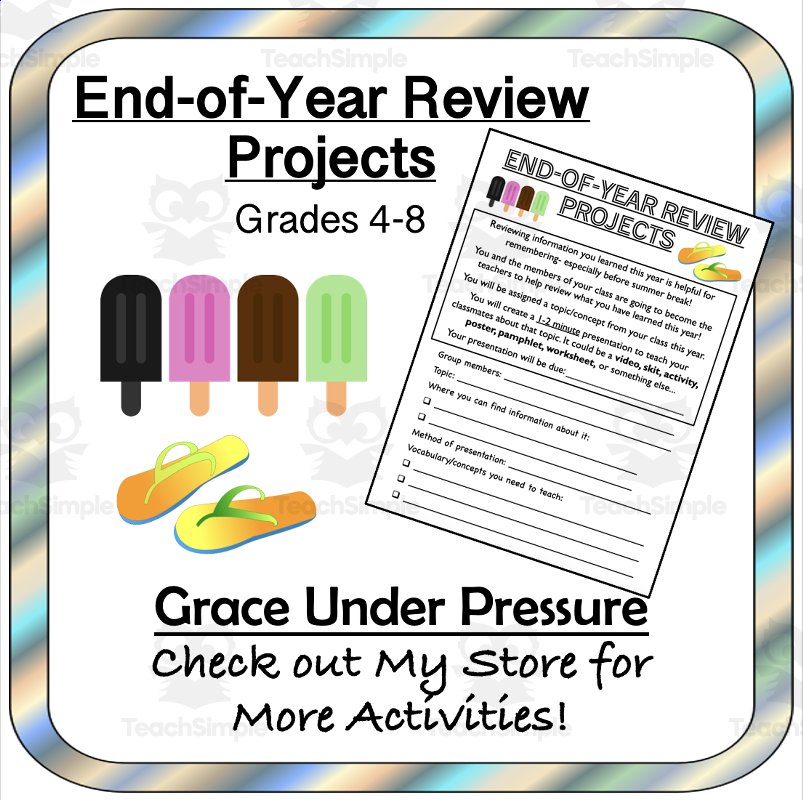
A teacher-facing activity guide for organizing small-group student-led review presentations on a chosen subject (math, science, or social studies) for the last week of school.
A set of 5 physical education mini-lessons teaching the correct technique for a football kickoff, broken into discrete skill components
A social-emotional learning mini-lesson that teaches first and second graders about patience: what it is, why it matters, and where/how to practice it.
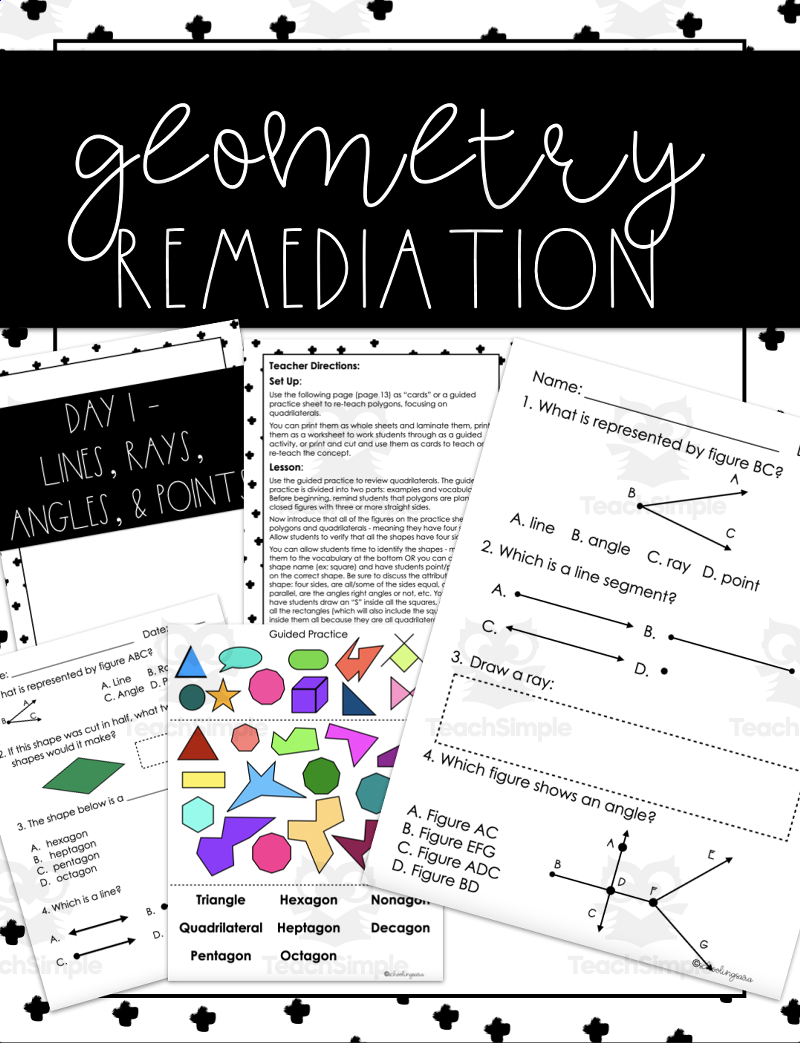
Provide a five-day small-group or whole-group remediation/reteaching plan reviewing lines, rays, angles, points, line segments, polygons, and quadrilaterals, tied to VA SOL 3.11 and 3.12.
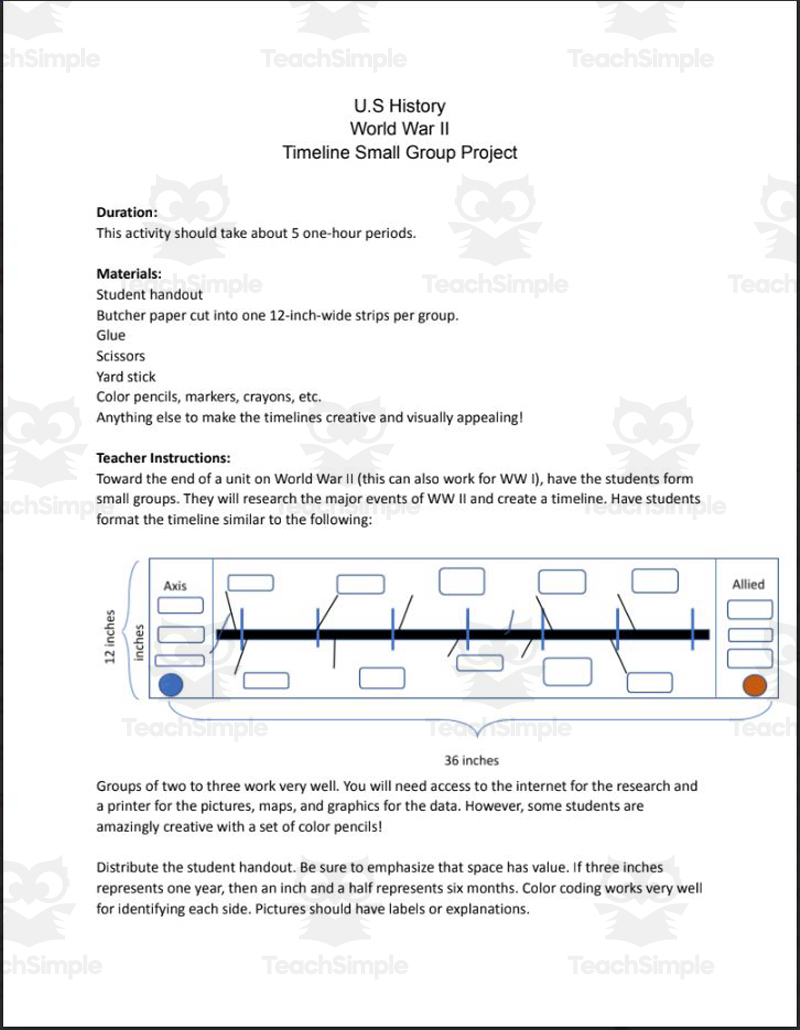
A teacher-led small-group project instructing students to research and build a physical illustrated timeline of major World War II events, including comparative Allied/Axis statistics.
A guided reading lesson plan for Grade 1, built around the anchor text Brown Bear, Brown Bear, What Do You See? by Bill Martin Jr. (example picture book), targeting color/animal vocabulary, predictions from pictures, fluency through repetition and rhythm.
A guided reading lesson plan for Grade 4, built around the anchor text Charlotte's Web by E.B. White (Chapter 3: "Escape"), targeting character trait analysis (Wilbur and Charlotte) and text-to-self/text/world connections.
A guided-reading lesson plan for Kindergarten built around a simple beginner-level book (referenced as "The Cat and the Hat" or similar), focused on phonics, sight-word recognition, and reading comprehension.
A 13-part bundle of guided-reading lesson plans, one per grade level from Kindergarten through Grade 12, each built around a grade-appropriate book (e.g., a picture book for Grade 1, "Of Mice and Men" for Grade 10, "The Great Gatsby" for Grade 11) with matching discussion, vocabulary, and comprehension activities.
Plan a jigsaw reading activity around fiction or nonfiction using the teacher planning page and group overview. You can give students the same text with different expert focuses, or different texts with the same focus. Choices include main idea , text features, character, and plot. Teacher and student trackers record assignments and due dates, while cut-out cards keep the task visible in reading notebooks.
Provide a teacher-facing kindergarten Reader's Workshop mini-lesson pack covering foundational reading-community skills (book care, who/what/where/when/why readers read, and ways to read) using the workshop model.