



3,905 products added recently
Page 51 - Science Lesson Plans
Bring science to life with lesson plans that cover biology, chemistry, physics, and more. These resources offer experiments and interactive lessons to stimulate curiosity. Implement them to foster a deep understanding of scientific principles and a passion for discovery.

 Show filters

Conservation: Ocean Water Resources: Conservation: What We Can Do Gr. 5-8
Science, Earth and Environmental Sciences, Environmental Science, Grade 5, 6, 7, 8, Teacher Tools, Lesson Plans
Conservation: Ocean Water Resources: Conservation: What We Can Do Gr. 5-8 This comprehensive teaching resource is specifically designed to immerse students from Grade 5 through to Grade 8 in an in-depth investigation of our planet's rich ocean resources. Furthermore, it highlights the urgency of conservation and presents the captivating science of oceanography. The approach is rooted in Blooms Taxonomy and STEAM initiatives. These foundations blend theoretical understanding with pragmatic exercise effectively. For example, students can design their own board games that display the effects of climate change on Earth’s oceans or partake in experiments where they concoct their own salt water resembling Earth's oceans. Versatility: It can be used for whole group activities during class discussions on climate change effects, small guided groups examining ocean currents exhaustively, individual tasks like research assignments regarding lost shipping containers due to sea storms, or even as homework tasks prompting learners to unearth practical ways to conserve water at home. Resourceful Hands-On Activities and Graphic Organizers:: This aids data organization simpler and more intuitive alongside stimulating practical exercises. Puzzles:: Crossword puzzles and word searches encourage a fun learning atmosphere while consolidating key concepts introduced. Comprehension Quiz:: A tool for teachers and scholars alike that allows tracking progress over periods of time. An answer key is provided for facilitation purposes too! In conclusion, "Conservation: Ocean Water Resources: Conservation: What We Can Do Gr. 5-8" helps educators in developing dynamic learning experiences aimed at shaping our future earth-stewards! They will gain insight into one of our world’s most abundant yet threatened resource - water.
Author Classroom Complete Press
Tags PDF

I WONDER - How Fast Can Hippos Run | Animated Video Lesson
Biology, Life Sciences, Science, Animals, STEM, Grade 1, 2, 3, 4, 5, 6, 7, 8, Lesson Plans, Teacher Tools
Video Introduction Animal kingdoms are full of fascinating wonders to learn. This video is designed for the students to learn more about animals in different countries. I WONDER - How Fast Can Hippos Run | Animated Video Lesson Do you like animals? what is your favorite one? Do you own a pet? If yes, tell us more about it, like what its name? And what do you like most about it? What are the animal kingdoms? Can you write down the characteristics of each animal class like mammals, birds, reptiles, amphibian, fish and mollusks. Do you know that some animals can sing, can you name any of them? What is the largest and the smallest mammal in the world? What is the largest and the smallest bird in the world? What is the largest and the smallest fish in the world? I WONDER - How Fast Can Hippos Run | Animated Video Lesson The video is perfect for encouraging the researching skills for the students, while learning more about these fantastic animals. I WONDER - How Fast Can Hippos Run | Animated Video Lesson This friendly designed video is suitable for students at school, homeschooling, and as a group activity. Format Available in MP4 format.
Author Educational Voice
Tags How Fast Can Hippos Run, How Fast Can Hippos Run Video, Hippos, Hippo, Hippos Facts, Hippos Facts For Kids, Hippos Video, Hippos Video For Kids, Hippos Running Fast, Hippo Facts

Reading Food Labels for Endocrine Disruptors
Science, Chemistry, Basic Science, Inventors, Theories, Life Sciences, Biology, Human Body, P.E. & Health, Health, Grade 6, 7, 8, 9, 10, 11, 12, Workbooks, Worksheets & Printables, Worksheets, Word Searches, Teacher Tools, Lesson Plans, Quizzes and Tests, Quizzes, Tests, Assessments
Are your students truly aware of what's hiding in their snacks? Transform your classroom or home into a real-world science lab with this comprehensive, no-prep curriculum that teaches students to become "Pantry Detectives!" This engaging, project-based unit empowers students to investigate their own food, decode confusing labels, and understand the science behind endocrine-disrupting chemicals (EDCs) , artificial food dyes , and microplastics . Moving beyond abstract concepts, this resource makes health and biology tangible, relevant, and incredibly important to their daily lives. Students will embark on a "scavenger hunt" through their own pantries, applying a three-tiered investigative methodology to uncover hidden chemicals in everyday foods like mac & cheese, fruit snacks, and sports drinks. They will learn to think like toxicologists and act as educated consumer advocates for their own health. This All-in-One Digital PDF Unit Includes: Part 1: The Informational Text (11 pages): A detailed, student-friendly "textbook" covering: The Endocrine System and its function. How EDCs like artificial dyes (Red 40, Yellow 5) and microplastics (BPA, Phthalates) interfere with hormones. Real-world case studies analyzing popular food products. Part 2: The Student Workbook (20 pages): Ten hands-on, investigative worksheets that guide students through their scavenger hunt. Activities include: The Pantry Reconnaissance Mission The Colorful Culprits (Artificial Dyes) The Packaging Problem (Microplastics) The "Natural" Deception (Marketing vs. Reality) The EDC-Free Action Plan (A final synthesis project) Part 3: Teacher Resources & Visuals (10 pages): Everything you need for seamless instruction: 3 High-Resolution Visual Diagrams/Anchor Charts: Perfect for presentations or classroom posters (EDC Pathway, Scavenger Hunt Matrix, Label Decoding Chart). Comprehensive Answer Key: A complete, easy-to-use answer key for all 10 worksheets. Skills & Subjects Covered: Science/Biology: Endocrine system, hormones, cellular receptors, toxicology. Health & Nutrition: Reading food labels, processed foods, making healthy choices. Critical Thinking: Analyzing marketing claims, data synthesis, problem-solving. ELA: Reading comprehension of technical text, vocabulary building. Perfect for middle school science, health class, a homeschool co-op, or a project-based learning (PBL) unit, this resource is ready to print and go. Empower your students to take control of their health by understanding the chemical landscape of their own pantry. Download today! Keywords: Middle School Science, Health, Nutrition, Endocrine System, Food Labels, Scavenger Hunt, Project-Based Learning, PBL, Artificial Dyes, Food Coloring, Microplastics, BPA, Reading Labels, Critical Thinking, Hands-On Activity, Digital, Printable, Worksheet, Homeschool, No Prep, Biology, Consumer Science. Why Parents/Schools Love It: Real-World Relevance: It brilliantly connects abstract biology and chemistry concepts directly to the food students eat every day, making learning tangible and unforgettable. Empowers Students: This isn't just a worksheet; it's a life skill. It teaches students to become critical thinkers and proactive guardians of their own long-term health. Engaging & Hands-On: The "scavenger hunt" format is fun and investigative, promoting active learning over passive memorization. Students are doing science, not just reading about it. Comprehensive & No-Prep: This is a complete, ready-to-use unit. It includes the informational text, all student activities, high-quality visuals, and a full answer key, saving teachers valuable preparation time. Target Student Audience : Based on the explicit mention on page 1 ("For a Grade 7 student") and the complexity of the topics (e.g., Bisphenol-A, petroleum-based dyes, cellular disruption), target audience is: Primary Target: Middle School students (Grades 6, 7, and 8) in Science, Health, or Life Science classes. Secondary Target: Early High School students (Grade 9) in introductory Biology, Health, or Environmental Science courses. It's also an excellent resource for Homeschooling families looking for a relevant, hands-on science curriculum. Copyright/Terms of Use: This Book was copyrighted by Syed Hammad Rizvi. This resource is for personal and single classroom use only. You may not alter, redistribute, or sell any part of this resource. In other words, you may not put it on the Internet where it could be publicly found and downloaded. If you want to share this resource with colleagues, please purchase additional licenses from Teachsimple. Thank you for respecting these terms of use. This product is happily brought to you by Syed Hammad Rizvi
Author Creative Book Store
Rating
Tags ScienceScavengerHunt, FoodLabels, ReadingLabels, EndocrineDisruptors, ProjectBasedLearning, PBL, ArtificialDyes, Microplastics, ChemicalsInFood, ConsumerScience

I WONDER - What Age Can Dogs Live To | Animated Video Lesson
STEM, Biology, Life Sciences, Science, Animals, Grade 1, 2, 3, 4, 5, 6, 7, 8, Lesson Plans, Teacher Tools
Video Introduction Animal kingdoms are full of fascinating wonders to learn. This video is designed for the students to learn more about animals in different countries. I WONDER - What Age Can Dogs Live To | Animated Video Lesson Do you like animals? what is your favorite one? Do you own a pet? If yes, tell us more about it, like what its name? And what do you like most about it? What are the animal kingdoms? Can you write down the characteristics of each animal class like mammals, birds, reptiles, amphibian, fish and mollusks. Do you know that some animals can sing, can you name any of them? What is the largest and the smallest mammal in the world? What is the largest and the smallest bird in the world? What is the largest and the smallest fish in the world? I WONDER - What Age Can Dogs Live To | Animated Video Lesson The video is perfect for encouraging the researching skills for the students, while learning more about these fantastic animals. I WONDER - What Age Can Dogs Live To | Animated Video Lesson This friendly designed video is suitable for students at school, homeschooling, and as a group activity. Format Available in MP4 format.
Author Educational Voice
Tags What Age Can Dogs Live To, What Age Can Dogs Live To Video, Dogs Age, Dogs Age Facts, Dogs Age Facts For Kids, Dogs Age Video, Dogs Age Video For Kids, Dogs, Dog, Dogs Video
Prompt Engineering for Content Creators & Freelancers Book
Science, Technology, Computer Science, Engineering, Resources for Teachers, Classroom Management, Research, Basic Science, Special Resources, Special Education Needs (SEN), Homeschool Curriculum, Homeschool Templates, Grade 9, 10, 11, 12, Projects, Activities, Experiments, Labs, Teacher Tools, Lesson Plans, Presentations, Assessments, Workbooks, Worksheets & Printables
Utilize AI to its largest extent while becoming a successful content creation business with the Ultimate Guide to Prompt Engineering. This book has been designed specifically for freelancers, digital entrepreneurs, and business service providers aged from twenty-two up through forty. By leveraging AI tools such as ChatGPT, Claude, and Gemini, you will learn how to increase your output by ten times; decrease content creation time by as much as sixty percent; and establish a sustainable, scalable income by creating engaging, informative content that drives traffic to your site. You will learn how to apply the Six-Component Framework for developing flawless prompts, as well as several advanced techniques (attributed to Steve Bidstrup) that allow a creator to express their brand's voice (Chain of Thought and Few-Shot) to produce business-specific content (Twitter/X, YouTube Channel, LinkedIn Page, Instagram Account, Email Newsletter) using case study examples illustrating how content creators such as Sarah and Marcus accomplished their respective businesses by utilizing the techniques contained within this book, while also reducing the total amount of hours worked per week by three. In addition, you will receive a complete thirty-day implementation guide; prompt templates that can be reused; and an ethics guide that will assist in the preservation of your current skill set. If your business model includes selling content services, a newsletter, and managing multiple social channels, then this guide will provide you with an unfair advantage in the modern AI-powered creation economy. You will no longer be required to wrestle with one-size-fits-all AI-generated materials; rather, you will engineer materials that drive commitment, conversion, and cash. Noteworthy Characteristics: The Reliable Six-Component Prompting System To Create Professional Grade AI Results. Site-Specific Prompting Formats and Guidelines for Most Major Platforms such as Twitter, Linked_in, Youtube, Instagram, And Email. Chain Of Thought And Few Shot Methods To Match Your “Real Voice” Exactly. A Full 30 Day Plan For Implementing Once You Have Laid Your Foundations -- To Finally Become Masterful At Using AI. Turnkey Productivity Systems that Will Give You Back 15-20 Hours A Week To Do Core Tasks. Monetization Strategies For Freelancers to Help Scale Their Service Offerings And Prevent From Getting Burned Out. An Ethics System Which Includes A Checklist For Quality Gatekeeping, So You Can Maintain Trust And Credibility As An AI User. Parents/Schools Appreciate It Because: Future-Proofed Career Skills. Students get hands-on experience communicating using AI, an in-demand skill regardless of career path, with a 30-day strategy to turn theoretical knowledge into applicable real-world knowledge through practical experience. Promoting the Ethical Use of AI. This book teaches the ethical and transparent use of AI via its dedicated chapter to ethics and quality gate systems, which enable students to avoid absences and misinformation, eliminate diluted voices, and understand how to leverage AI responsibly. Saving Time for Educators. This book contains pre-prompted library & system tools for educational institutions to utilize as time-savings in lesson plan creation while also modeling how to use AI to create an efficient workflow. Supporting Multidisciplinary & Cross-Curricular Learning. The content relates to English, business, technology, and media classes, representing an adaptable resource to support project-based learning and cross-curricular integration opportunities. Enhancing School Program Engagement and Revenue. It includes a strong emphasis on monetization and scaling of freelance businesses, resulting in veritable economic impact on career-tech programs, providing attractiveness for parents and school districts concerned with job placement readiness. Determine Which Students/Classrooms Are Targeted : This book is written with a professional audience in mind (22-40 yrs old), so your focus should be on post-secondary and professional development settings. Ideal audiences would be: Corporations and Universities Offering Courses in Digital Marketing, Media Creation, Journalism, Communications, Entrepreneurship and Business– Can be Contributed To As Either Textbook Or Suggested Reading For Any Course Of Study Related to Digital Strategy, Applications of AI in Business and/or Online Monetization Of Content. Vocational Training Certificates in Freelance Writing, Social Media Management, Digital Entrepreneurship and AI Literacy. Professional Development Workshops For Freelancers, Marketing Teams, Business Owners Who Want To Improve Their Skill Sets. High School Electives (Grades 11-12) Involved with Media Studies, Tech, Business or Career Readiness –Content Is Constructed Accessible With An Older Teenager Mindset(Preparing For The Digital Workforce). Use This Resource As An Add-On To Your Career Readiness Curriculums Provided By Business/Tech Teachers To High Schools Or As A PD Tool To Educators Who Want To Leverage AI In Their Content Creation. This book is written and published by Syed Hammad Rizvi, with exclusive copyright. This book can only be used individually (by one person) and in a class (by one class), and you cannot make any changes or distribute this book; that is, you cannot put the book on the internet or make it accessible. In order for you to share this book with your coworkers means you need to buy additional licenses to be able to share or give your coworkers. I want to express my sincere thanks to you for adhering to these guidelines of use as I truly appreciate you doing so. This product is made available to you through Syed Hammad Rizvi.
Author Creative Book Store
Rating
Tags PromptEngineering, AIContentCreation, ContentCreator, FreelancerLife, AItools, ChatGPT, ClaudeAI, DigitalProduct, CreatorEconomy, ContentMarketing
Playful Penguins Unit
Science, Life Sciences, Animals, Grade 1, 2, 3, Lesson Plans, Teacher Tools
This resource is a Playful Penguins Unit. This is a great cross-curricular resource that can be used in your reading or science instruction. Your students will get to learn about penguins and apply their knowledge in fun ways! Included: - 2 graphic organizers - 10 page reader w/ glossary (printed 2 per page) - definition cards - Text feature chart - Facts and opinions - Penguin quiz - Research graphic organizer - Fact or opinion game
Author Literacy Life
Tags Graphic Organizers, Animal Habitats, Penguins, Reader, Cross Curricular
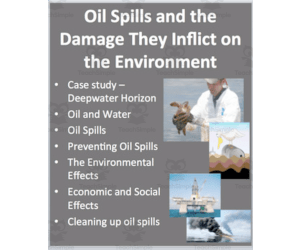
Oil Spills and the Damage They Inflict - Inquiry Lesson
Science, Earth and Environmental Sciences, Environmental Science, Grade 7, 8, 9, Teacher Tools, Lesson Plans
Oil Spills and the Damage They Inflict on the Environment - Everything you need is right here including the lesson (student and teacher versions), 4 embedded videos and a student lesson handout. The lesson begins by examining the case of the Deepwater Horizon which blew up in 2010 and caused massive damage to the Gulf Coast. It then looks at the relationship between Oil and Water, Oil Spills, Preventing Oil Spills, The Environmental, Economic, and Social Effects and ends with Cleaning up oil spills. Inside the lesson package you'll find: - The teacher version of the presentation - The student version of the presentation - 4 embedded videos - Student lesson handout In order, the lesson covers: - Case study – Deepwater Horizon - Oil and Water - Oil Spills - Preventing Oil Spills - The Environmental Effects - Economic and Social Effects - Cleaning up oil spills The student version of the power point contains multiple blanks that need to be filled in throughout the lesson. These blanks are conveniently underlined and bolded on the teacher copy. I have found this to be the most effective means of keeping my students engaged and active without having them write everything out. This also leaves more time for discussion and activities. ********************************************************************** I also have a range of assignments and lessons/units from other grade levels at my store. Teach With Fergy - Please come, have a look around and don’t forget to follow if you like what you see. Also, please visit my website Teach With Fergy for my thoughts on teaching, learning and everything in between.
Author Teach With Fergy
Tags Oil Spills, Environment, Science Lesson

INVESTIGATING INSECTS Gr. 5-7
Science, Life Sciences, Animals, Grade 5, 6, Teacher Tools, Lesson Plans
INVESTIGATING INSECTS Gr. 5-7 A pivotal resource designed specifically for Grade 5 to Grade 7 teachers and educators, focuses on the extensive world of insects. This inclusive teaching resource seeks to pique students' interest in science and zoology with an engaging study of insects that far exceeds the usual study material. A significant majority of known animals are insects which have a noteworthy impact on both economics and medicine. Interestingly enough, despite being omnipresent in our lives, many insect species go unnoticed or unidentified regularly. This dynamic teaching aid aims at lending students an insight into the lives and roles of these diverse creatures by initiating them into comprehensive insect studies. This unit comprises: Insect Order Information Sheets, aiding students to carefully differentiate and categorize various species based on their innate characteristics. An instructive Insect booklet that delivers well-rounded knowledge about each species covered within. Up to forty-eight research-based activities involving language comprehension and imaginative work promoting critical thinking among students. The content isn't limited only for classroom instruction; instead it's flexible enough for implementation in small group learning sessions or even as independent homework assignments: supporting versatile learning approaches as per individual student needs while promoting peer discussion or self-study depending upon application. Specifications: Total Pages: Comprises 115 ready-to-print pages bundled up in one easy-access PDF file type this lesson plan gives adequate course material at your fingertips anytime you need it - no sifting required! A key takeaway from this unit is that although it is exceptionally inclusive when it comes to covering its subject matter i.e., insects - it does not intend nor suggest itself as a standalone educational resource about insects but substantiates any existing course materials on zoology quite effectively making your lessons more interactive and enriching ensuring you have all possible aid when imbuing your class with knowledge about this fascinating topic. In essence, INVESTIGATING INSECTS Gr. 5-7 is a one-stop teaching resource that integrates the world of insects into a classroom setting, with both enthusiasm and pedagogical craft , while enabling teachers to venture beyond traditional teaching methods towards a more involved and interactive learning experience.
Author Classroom Complete Press
Tags Comprehension, Science, Insects, Reading Passages, True Or False

I WONDER - Why Do We Yawn | Animated Video Lesson
Biology, Life Sciences, Science, Human Body, Grade 2, 3, 4, 5, 6, 7, 8, Lesson Plans, Teacher Tools
Video Overview The human body is full of fascinating wonders to learn. This video is created to help the students recognize the anatomy and the job of the human body. I WONDER - Why Do We Yawn | Animated Video Lesson Every part and organ in our human body is vital so let's see how important they are. Have you ever imagined how we look like if we didn't have a skeleton? Did you know that because we have our amazing muscles we can stand! Do you know how many teeth do we have? Have you ever wondered about the food journey inside our body? Can you name all the glands in our body? Why do we have skin? Our nervous system is really good at sending signals. Can you tell us more about it? Are you really good at Mathematics, painting, or any other thing? You should really thank your brain about it! The famous five senses are really doing a great work? Can you explain how every sense works? I WONDER - Why Do We Yawn | Animated Video Lesson The video is perfect for encouraging the researching skills for the students, while learning more about our fantastic human body. I WONDER - Why Do We Yawn | Animated Video Lesson This friendly designed video is suitable for students at school, homeschooling, and as a group activity. Format Available in MP4 format.
Author Educational Voice
Tags Why Do We Yawn, Why Do We Yawn Video, Yawn, Yawn Facts, Yawn Facts For Kids, Yawn Video, Yawn Video For Kids, Human Body, Human Body Facts, Human Body Facts For Kids

Lesson 8.3 - Chemical Reactions
Science, Chemistry, Grade 6, 7, 8, 9, 10, 11, 12, Lesson Plans, Teacher Tools
Lesson 8.3 - Chemical Reactions This package is designed to enhance the teaching and understanding of four major chemical reactions— synthesis, decomposition, single replacement, and double replacement. This educational resource is vital for public school educators and homeschoolers teaching Science focusing on Chemistry from Grade 6 through Grade 12. Inclusions in the Package: Fully-loaded Notes: Two versions of worksheets (A & B) are provided. Version 'A' has blanks to promote active learning while 'B' version has filled-out data for those who may be absent or require assistance. Practice Sheet: : Also available in two different versions ('A' & 'B'), helping students apply their knowledge by identifying types of chemical reactions through illustrations and equations. Including a ppt on Objectives & Starter Questions, it presents primary learning goals this lesson targets with sample introductory questions promoting class discussions or homework assignment. Absolute Standards Adherence: : The product strictly adheres to the 2016 Indiana State Standards for Integrated Chemistry & Physics relating specifically to particle diagrams representation, mathematical expression of chemical changes along with differentiation between synthesis, decomposition combustion single replacement double reactions. Editability & File Formats: All materials related to Lesson 8.3 - Chemical Reactions come as .docx files (Word documents) or .pptx files (PowerPoint presentations). Both these file types are editable ensuring flexibility according based your specific needs requirements . You also have access PDF versions documents preserve original formatting if printing distribution becomes necessary. Suggestions: Love teaching science? Consider purchasing the entire Unit 8 bundle which includes all three lessons, a binder divider, test, and quiz. It's comprehensive and cost-effective for your chemistry students. Acknowledgement: Your tool is only as good as you make it! So dive in, take advantage of this educational resource and make chemistry come alive in your classroom!
Author Integrated Chemistry and Physics
Tags Chemical Reactions, Synthesis, Decomposition, Single Replacement, Double Replacement
Reducing Your Community's Carbon Footprint: Reduce, Reuse, Recycle, and Plant Gr. 5-8
Science, Earth and Environmental Sciences, Environmental Science, Grade 5, 6, 7, 8, Teacher Tools, Lesson Plans
Reducing Your Communitys Carbon Footprint: Reduce, Reuse, Recycle and Plant Gr. 5-8 An engaging educational resource, designed primarily for grades 5 to 8 students. It aims to enhance environmental consciousness by offering profound insights into the community's carbon footprint and its effect on global climate change. Evaluation of cause-and-effect incidents: The resource encourages learners to assess the sequence of events that stem from simple routines like commuting to work or substantial implications like reducing island size. Versatile usage: This material is adaptable across different learning environments - ideal not only for whole-group instructions in conventional classrooms but also for small group activities, homework assignments and interactive online sessions. Inspiring transformations: Beyond highlighting the adverse consequences of climate change, this curriculum narrates how Cubans adopted a completely fossil fuel-free farming system within a decade and discusses urban heat island effects caused by urbanization with fact-based analyses. Bloom’s Taxonomy and STEAM initiatives guidelines compliance: This resource marries enlightenment with engagement through crossword puzzles, quizzes which offer self- assessment opportunities with carbon footprint calculators as per Bloom’s Taxonomy guidelines. The curriculum is available as a downloadable PDF format file ensuring easy access and adaptable printing choices whether you wish to use it remotely or in a physical classroom environment. Specially formulated for Environmental Science subject under Science courses, Reducing Your Communitys Carbon Footprint: Reduce, Reuse, Recycle, and Plant Gr. 5-8 offers an intriguing yet pragmatic perspective on environmental conservation promoting sustainable lifestyle habits ensuring us all a healthier future.
Author Classroom Complete Press
Tags PDF
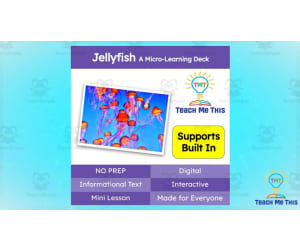
Jellyfish | Interactive Science Lesson | Micro-Learning Deck
Science, Life Sciences, Animals, Grade 5, 6, 7, 8, Teacher Tools, Lesson Plans
Engage your middle school science students with this informative slideshow on jellyfish. This digital micro-learning deck acts as a supplementary resource to enhance your existing zoology curriculum. Students will watch a video lesson explaining what jellyfish are, how they function, and where they live. An accompanying reading passage, close reading activity, and quick write prompt allow students to strengthen literacy skills while learning about science. Implement this versatile resource in a variety of ways - use the deck for whole class instruction, small group remediation, or as an independent homework assignment. With informational text, informal assessments , and engaging visuals, this supplementary resource will capture student interest in your science lessons on zoology.
Author Teach Me This
Tags Vocabulary, Comprehension, Science Lesson, Interactive, Digital

I WONDER - What Is A Star | Animated Video Lesson
Space, Earth and Environmental Sciences, Science, Grade 4, 5, 6, 7, 8, 9, 10, Lesson Plans, Teacher Tools
Video Introduction An amazing video designed for the students to learn more about space facts. I WONDER - What Is A Star | Animated Video Lesson Do you like reading about space? If yes, what is your favorite topic? What do you know about our solar system? What is the smallest planet in our solar system? What is the biggest planet in our solar system? What is the hottest planet in our solar system? And what is the coldest one? Do you think there are aliens? If yes, what do you think they look like? What do they eat and how they speak to each other? Where do they live? What is a galaxy? And what is a milky way? Have you recently saw a shooting star? If yes, tell us more about it, like when did it happen and where? What is a blackhole? Can a blackhole gets bigger by time? Do you like counting the stars? What do you think a star is made of? I WONDER - What Is A Star | Animated Video Lesson The video is perfect for encouraging the researching skills for the students, while learning more about the fantastic space. I WONDER - What Is A Star | Animated Video Lesson This friendly designed video is suitable for students at school, homeschooling, and as a group activity. Format Available in MP4 format.
Author Educational Voice
Tags What Is A Star, What Is A Star Video, Star, Star Facts, Stars, Star Facts For Kids, Stars Video, Stars Video For Kids, Space, Space Video For Kids
Crash Course Study Hall: Chemistry Episodes 11-15
Science, Chemistry, Grade 9, 10, 11, 12, Teacher Tools, Lesson Plans
Crash Course Study Hall: Chemistry Episodes 11-15 This educational resource is built with precision for teachers. Its goal is to enhance understanding of critical chemistry topics relevant to grades 9 through 12. The content encompasses: Multi-Step Stoichiometry, Theoretical Percent Yields, Excess Reactants, Left Over Neutralization, and Acids, Bases, and Buffers. A boon for educators dealing with Science, especially Chemistry - This teaching aid simplifies lesson planning while maintaining a high standard of education. This comprehensive toolbox furnishes guide links for all topics mentioned above - making it an ideal choice for any educator wishing to offer deeper insights during instruction. Educational Flexibility The product introduces a versatile method of teaching these subjects by providing episode guides that students can work on both with and without timestamps. These components bestow flexibility on how this resource may be used - in whole group instruction or small work groups; additionally used as review materials or homework assignments. Detailed Yet Simple Covering each topic extensively yet simply is crucial when dealing with complex subjects such as Chemistry which lends the value in Crash Course Study Hall: Chemistry Episodes 11-15's comprehensiveness that doesn't compromise simplicity thus easy from students' viewpoint but also rich enough even from a teacher's perspective. Including PDF Format - This single file includes ready-for-print reference materials spanning across 24 pages mitigating educators' prep time considerably. Key answers are also contained within the package thereby aiding in assessment tasks making grading assignments less laborious. A Proven Tool For Various Classroom Environments This tried-and-tested tool reaps immense benefits across various classroom settings—not limited to typical schoolteachers but also for crafty home-schooling parents who appreciate premium supplementary learning tools. From planning lessons to assessing assignments, Crash Course Study Hall: Chemistry Episodes 11-15 delivers an exhilarating and comprehensive teaching strategy in addressing vital chemistry topics.
Author Karen Maxson
Tags Chemistry, Education, Teaching Aid, Episode Guides, Stoichiometry, Crash Course Chemistry Acid Base

I WONDER - What Is Chemical Energy | Animated Video Lesson
Chemistry, Science, STEM, Grade 6, 7, 8, 9, 10, 11, 12, Lesson Plans, Teacher Tools
Video Introduction An amazing video designed for the students to learn more about STEM. I WONDER - What Is Chemical Energy | Animated Video Lesson Do you like STEM subjects? what is your favorite one? Have you ever tried to plant a seed? If yes, tell us more about it. Or have you ever tried to invent something? If yes, tell us more about it. And how do you think it will help us? Have you ever seen a microorganism under a microscope? What was it? And how it looked like? Mathematics is a marvelous subject. Let' sharpen our brains and solve some equations. Do you like timetable tricks? What is your favorite one? Do you know how to code? Have you ever created an app or a game before? If yes, how was it like? I WONDER - What Is Chemical Energy | Animated Video Lesson The video is perfect for encouraging the researching skills for the students, while learning more about this fantastic topic. I WONDER - What Is Chemical Energy | Animated Video Lesson This friendly designed video is suitable for students at school, homeschooling, and as a group activity. Format Available in MP4 format.
Author Educational Voice
Tags What Is Chemical Energy, What Is Chemical Energy Video, Chemical Energy, Chemical Energy Facts, Chemical Energy Facts For Kids, Chemical Energy Video, Chemical Energy Video For Kids

Grade 4 Digital Citizenship Yearlong Curriculum | 36 Weekly Lessons
Technology, Science, Grade 4, Worksheets & Printables, Lesson Plans, Teacher Tools
Grade 4 Digital Citizenship Curriculum | Yearlong Digital Citizenship Lessons, Internet Safety, Media Literacy, Online Research, Worksheets & Slides Help your students become responsible online researchers and critical digital thinkers with this comprehensive Grade 4 Digital Citizenship Curriculum ! This complete 36-week digital citizenship program goes beyond internet safety by teaching students how search engines work, verify online information, recognize advertising and persuasion, evaluate evidence, use copyright responsibly, and collaborate effectively in digital environments. With ready-to-teach lessons, engaging activities, assessments, projects, and interactive slides, you'll have everything needed for an entire year of meaningful digital citizenship instruction. What's Included This complete curriculum includes everything needed to teach one engaging digital citizenship lesson each week: ⭐ 36 complete weekly digital citizenship lessons ⭐ Comprehensive teacher lesson plans with scripted instruction ⭐ Student workbook with over 300 printable pages ⭐ Weekly student reflection journal ⭐ Approximately 264 presentation slides with built-in teaching notes ⭐ 160+ printable no-prep worksheets ⭐ 36 weekly exit tickets ⭐ 18 standards-aligned quizzes ⭐ 10 engaging classroom projects with student-friendly rubrics ⭐ Complete answer keys ⭐ Teacher Planning & Assessment Pack with class record sheets, reteach plans, vocabulary references, and skills progression ⭐ Teacher Toolkit featuring assessment guidance, differentiation, classroom management strategies, cross-curricular connections, substitute plans, family communication, and planning resources ⭐ Graphs, class charts, and progress trackers to reinforce key concepts visually How It Works in the Classroom Every lesson follows a consistent weekly routine that builds student confidence while minimizing teacher preparation. Each lesson includes: Bell ringer activity Teacher mini lesson Interactive presentation slides Student reading passage Guided notes Hands-on practice activity Partner discussions Real-world digital citizenship scenarios Independent application tasks Weekly reflection journal Exit ticket Optional family connection Differentiation ideas Complete answer keys Perfect for: Classroom teachers Technology and computer classes Library and media centers STEM programs Homeschool instruction Whole-group lessons Print or digital learning environments Standards & Learning Goals Students develop advanced digital literacy and digital citizenship skills through six engaging units: Unit 1 – Search Strategies How search engines rank results Filtering by site, file type, and date Reading search results critically Reverse image searching Databases and catalogs Search refinement strategies Unit 2 – Reliable Sources & Verification Primary and secondary sources Lateral reading Corroborating information Following claims to their original source Corrections, updates, and retractions Website investigations Unit 3 – Advertisements & Persuasion How advertising funds the internet Native advertising Sponsored content Influencer disclosure Targeted advertising Clickbait and persuasive techniques Unit 4 – Fact, Opinion & Evidence Distinguishing facts, opinions, and claims Testing whether claims are verifiable Evaluating the strength of evidence Reading misleading graphs Correlation vs. causation Evidence-based debates Unit 5 – Copyright, Creative Commons & Citation Copyright and licensing Creative Commons Proper attribution Ethical use of digital content Research citation Academic integrity Unit 6 – Collaboration & Digital Footprints Online collaboration Shared documents Digital communication Responsible online participation Digital footprints Becoming a responsible online researcher Why Teachers Love It ❤️ Complete yearlong curriculum with minimal prep ❤️ Ready-to-use lessons, slides, worksheets, and assessments ❤️ Focuses on real-world digital literacy and media literacy skills ❤️ Builds critical thinking, research, and evidence evaluation ❤️ Authentic scenarios encourage meaningful classroom discussions ❤️ Reflection journals promote student self-awareness and growth ❤️ Built-in formative and summative assessments simplify progress monitoring ❤️ Hands-on projects strengthen inquiry, collaboration, and problem-solving ❤️ Teacher planning tools make differentiation and data collection easy ❤️ Ideal for classroom teachers, technology teachers, media specialists, and homeschool educators looking for a comprehensive digital citizenship curriculum. Build Confident, Critical Digital Citizens Today's students need more than internet safety—they need the ability to evaluate online information, recognize persuasive media, verify sources, think critically, collaborate responsibly, and make informed digital decisions. This Grade 4 Digital Citizenship Curriculum provides a complete, engaging, and easy-to-teach solution that develops those lifelong skills while saving teachers valuable planning time.
Author Bright Classroom Ideas Marketplace
Rating
Tags Digital, Citizenship, Technology, Yearlong, Curriculum, Full Year
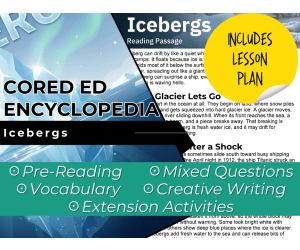
Icebergs Reading Comprehension Passage - Cored Ed Encyclopedia
ELA, Reading Comprehension, Reading, Language Development, History, Social Studies, Science, Physics, Earth and Environmental Sciences, Pre-Reading, Grade 2, 3, 4, 5, Worksheets & Printables, Worksheets, Teacher Tools, Centers, Activities, Writing Prompts, Assessments, Quizzes and Tests, Quizzes, Lesson Plans
This Icebergs reading comprehension with lesson plan includes: Visualization (on the front cover) Start your lesson by taking a minute to think and share something about the topic. Read the script aloud (slowly), perhaps prepare some music or sound effects. Student close their eyes and let their imaginations wander. Students open their eyes, read the question aloud and give them a few minutes to complete. Ask a few students to share or keep answers until the end to compare with what they learn in the passage. Quick pause—thousands of Cored Education products are included with your TeachSimple membership. Download links and encyclopedia index available here. Pre-Reading Trivia Students will write down one thing they already know about the subject and then read five more facts and discuss. These facts are fun, and the students will enjoy learning about the subject before reading more. Give 1 minute for students to write what they already know (no pressure—best guess is fine). Read the five facts together. After each fact, do ask a student for their opinion, was it surprising? Set a purpose by asking students to highlight/underline one fact they want to learn more about during the reading. Reading Passage The text is a high-interest reading passage with set paragraphs, roughly three to four paragraphs long. It contains a variety of themes about the topic, anywhere from history to technology. The passage is between 250 and 350 words in length. First, ask students to look at the headings and see what they’ll learn about today. What do they know about the topic/heading? First read options: Teacher read-aloud (best for support). Partner reading (paragraph by paragraph). While reading, students underline important details, and vocabulary words they think may come up in the questions section. Mixed Questions The first question page contains four multiple-choice questions, each with a choice of four answers, and three written response questions that require a sentence or two from the student. Students complete the mcqs first independently, then review quickly as a class. For the 3 written responses, try to get students giving the answer with some form of evidence: “I think ___ because the text says ___.” If students get stuck, send them back to check the passage. Vocabulary Questions Practice seven key words from the text in this section across two activities. First section is scrambled words where students will unscramble three words given a clue for each. The second section is a word to meaning matching activity. Before starting, have some students read out words they underlined in the passage. Ask students to say the word and read aloud the sentence(s) around each word. Ask students to do scrambled words and the matching exercise in pairs then go through answers as a class. For the scrambled spelling task, get four pairs to come up to the board and write the words for extra practice with the other student reading out the clue. For the matching task, prompt students to give full sentences: “I matched ___ with ___ because ___.” Creative Writing In this question, the student will be required to write a five to eight sentence paragraph on a question related to the topic. Before starting, ask students write down 3 key ideas they are going to include in their piece. Ask students for ideas to share around the class to help those struggling. Pro writing expectations: 5–8 sentences At least 2 facts or details from the passage At least 2 vocabulary words from the previous page Students read their paragraphs while classmates listen for facts and vocabulary words. Extension Activities This page is optional for fast finishers or to take home. There are several activities, each one requiring a different skill. Do some, do none, do all, completely optional - but you will feel reassured knowing every possibility is planned for. Includes summary writting question and additional facts. Answer Key There are answers for the multiple-choice questions, written response questions have sample answers, vocabulary answers and if there is a summary question then a sample summary will be provided as well. Lesson Plan Included Customized lesson plan for this lesson is included. Lesson Snapshot Title: Icebergs Genre: Nonfiction (informational passage) Subject: Reading (Informational Text) / Earth Science Primary Topic: How icebergs form, drift, and change Estimated Guided Reading Level (A–Z): R What This Lesson Teaches Best Key facts about iceberg floating: ice is lighter than seawater and most of an iceberg is below the surface (about 90% underwater). How icebergs form from glaciers on land, including the process called calving when a piece breaks away at the sea. Human safety and history connections: the Titanic tragedy and how the International Ice Patrol began sending warnings to ships. How icebergs change shape over time (waves at the waterline, meltwater weakening from above) and why scientists track them (ocean currents, changing polar ice). Using headings to organize information into focused sections (formation, safety/history, observation/science clues). Learning Goals Explain why most of an iceberg is hidden under the ocean’s surface. Describe how snow becomes hard glacier ice and how a new iceberg forms. Define calving using details from the passage. Identify what happened in 1912 and how it led to safer travel for ships. Describe two ways an iceberg can change shape and one reason scientists watch iceberg paths. Key Vocabulary From the Text seawater — ocean water with salt in it. surface — the top layer of something. glacier — a huge, slow-moving river of ice. calving — when a piece breaks off a glacier. currents — moving flows of ocean water. FULL CATALOG OF DOWNLOAD LINKS AND ENCYCLOPEDIA INDEX HERE
Author Cored Education
Rating
Tags Vocabulary, Reading Comprehension, Reading Passages, Lesson Plans, Ela Lesson Plans, Reading Comprehension Lesson Plans, Pre-reading, History, Science Lesson Plans, Earth Science
Zoo Animal Research Writing Project on PANDAS for K-2nd Grade
Life Studies, ELA, Writing, Creative Writing, Reading, Science, Life Sciences, Animals, Research, Kindergarten, Grade 1, 2, Teacher Tools, Lesson Plans, Worksheets & Printables, Worksheets, Writing Prompts, Coloring Pages, Presentations
Animal Research Writing Project on Pandas for K-2nd Grade. Introduce young students to pandas through this engaging 19-page informational writing project. Students will read panda facts, examine real-life photos, color pictures, draw a panda habitat, organize information using a color-coding system, and write about what they learned using differentiated writing pages for various ability levels. This versatile resource can be used for whole group, small group, or individual work. Encourage creativity, reading, research, and writing skills with this panda-themed project. Extend the learning by creating a whole classbook with students' final writing and artwork compiled together. Compatible for kindergarten, 1st grade, or 2nd grade. Click the author link to see other animal-themed writing project units spanning topics like tigers, dolphins, whales and more. Teachers appreciate the ready-to-use animal units covering reading, note-taking, drafting, illustrating, and publishing. Engage your class in meaningful informational writing with this standards-based project on monkeys. Plus, there are many more zoo animals to research as well in my store: K-5 Treasures! For additional Zoo Animal reports, click on the following links below: Animal Research Writing Project on TIGERS for K-2nd Grade Animal Research Writing Project on MONKEYS for K-2nd Grade Animal Research Writing Project on PANDAS for K-2nd Grade Animal Research Writing Project on HIPPOS for K-2nd Grade Animal Research Writing Project on ELEPHANTS for K-2nd Grade Animal Research Writing Project on GIRAFFES for K-2nd Grade Here are even more informational resources on report writing for OCEAN ANIMALS. Click on the links below: Animal Research Writing Project on WHALES for K-2nd Grade Animal Research Writing Project on the OCTOPUS for K-2nd Grade Animal Research Writing Project on SEA TURTLES for K-2nd Grade Animal Research Writing Project on ORCAS for K-2nd Grade Animal Research Writing Project on the SHELLFISH for K-2nd Grade Animal Research Writing Project on DOLPHINS for K-2nd Grade Animal Research Writing Project on SEALS for K-2nd Grade
Author K-5 Treasures
Tags Animal Research, Informational Writing, Writing Report, Zoo Animals, Report On Animals, Report On Zoo Animals, 1st Grade Writing, 2nd Grade Writing, Pandas, Report On Pandas

Global Warming: Effects - Digital Lesson Plan Gr. 5-8 - FLASH-PC
Science, Earth and Environmental Sciences, Environmental Science, Grade 3, 4, 5, 6, 7, 8, Teacher Tools, Lesson Plans
Global Warming: Effects - Digital Lesson Plan Gr. 5-8 - FLASH-PC is an innovative teaching resource, meticulously designed to invigorate students' learning experiences. Ideal for students between grade 3 and grade 8, this product is a perfect fit for a variety of classroom structures such as whole group discussions, small study circles, or individual homework assignments. This comprehensive resource assists educators in imparting essential knowledge on global warming’s effects. Featuring both reading passages and interactive activities, it captures student attention before, during and after reading sessions. Details comparison between global warming versus natural climate change forms an integral component of the lesson plan introducing students to key topics in environmental science today. The consistent climate pattern's importance for human societies' survival over centuries Effects like rising sea levels and the retreat of glaciers Changes in agricultural patterns due to climatic changes An additional focus is laid upon local impacts such as: The surge in extreme weather events affecting fresh water supply Impact on human health and wildlife welfare b>Economic consequences induced by unpredictable weather patterns alongside shifting global temperatures pairs. Interactive features from this robust flash PC software include test preparation materials like crossword puzzles & word searches that sharpen cognitive skills while being fun! Coupled with supportive video & audio content makes grasping complex subjects smooth ride for diverse learners. Rounding up all the informative elements presented under the umbrella of state standards consulted through Bloom's Taxonomy – this creates a holistic educational growth platform promoting comprehension improvement to increased critical thinking abilities among learners from diverse backgrounds. Call on your students to learn and explore about a significant matter like Global Warming using our engaging digital planning tool today! ?>
Author Classroom Complete Press
Tags Software (PC)

Cell Membrane and Transport - Middle School Lesson & Notes
Science, Life Sciences, Biology, Grade 6, 7, 8, Teacher Tools, Lesson Plans
Cell Membrane and Transport Middle School - This Introductory Biology lesson Lesson is meant to be done over 2-3 days and is broken up accordingly. It discusses both the cell membrane (structure and function) as well as the different types of transport across the membrane. It is geared towards students who are unfamiliar with both. The lesson provides multiple guided opportunities for the students to create thinking maps and check their understanding. This lesson package includes the lesson (student and teacher versions), SIX embedded videos, a student lesson handout as a document, and a 4-question exit ticket. The lesson content includes: Cell Membrane Structure and Function Cell Membrane Channels Cell Membrane Transport Simple Diffusion and Temperature Facilitated Diffusion and Osmosis Passive Transport Hypo, Hyper, and Isotonic Solutions Active Transport Included in the lesson package: The teacher version of the presentation The student version of the presentation SIX embedded videos An auto-graded Exit Ticket Student lesson handout The student version of the presentation contains multiple blanks that need to be filled in throughout the lesson. These blanks are conveniently underlined and bolded on the teacher copy. I have found this to be the most effective means of keeping my students engaged and active without having them write everything out. This also leaves more time for discussion and activities. ----------------------------------------------- Google and Distance Learning Ready This lesson includes both Office and Google formats for ALL resources. The presentation is in PowerPoint and Google Slides while all documents contain Word and Google Doc versions. Your resource is perfect for distance learning and integrates seamlessly with Google Classroom as I've included a link that will automatically create a copy of the resources and put them directly into your Google Drive with one click. Purchase --> Open --> Click --> Assign to your students Having both options allows you to use either without worrying about formatting issues as all the work has already been done for you. It safeguards you in case your department or school decides to go Google 100% and allows you as well as your students to access everything no matter where you are or what kind of equipment is being used. Exit Ticket Included in your package is an Exit Ticket which can be directly accessed from the last Google Slide . Additionally, your purchase will create a copy of the Google Form Exit Ticket which you can edit to meet your class needs. Also, please visit my blog Teach With Fergy for my thoughts on teaching, learning, and everything in between.
Author Teach With Fergy
Tags Cells, Membrane, Transport, Biology Lesson
I WONDER - How Does The Angler Fish Glow | Animated Video Lesson
Animals, Life Sciences, Science, Biology, Grade 4, 5, 6, 7, 8, 9, 10, Lesson Plans, Teacher Tools
Video Introduction Animal kingdoms are full of fascinating wonders to learn. This video is designed for the students to learn more about animals in different countries. I WONDER - How Does The Angler Fish Glow | Animated Video Lesson Do you know what are axolotls? How do they look like and what is special about them? How does the angler fish glow? Do you where does the angler fish live? Can you name any other bioluminescent animal? How does the aye-aye lemur find food? Can you name any other lemurs? and where do they live? Are wolves loyal to their mates? Do all wolf howls sound the same? What is your favourite animal? Where does it live? Can you name any of the animals kingdoms? Do you have a pet animal? If yes, tell us what its name and what kind of animal, bird or fish is it? Format Available in MP4 format.
Author Educational Voice
Rating
Tags How Does The Angler Fish Glow, Angler Fish, Angler Fish Video, Angler Fish Facts, Angler Fish Video For Kids, Angler Fish Facts For Kids, Bioluminescent, Bioluminescent Fish, Bioluminescent Animal

I WONDER - How Big Is Jupiter | Animated Video Lesson
Space, Earth and Environmental Sciences, Science, Grade 6, 7, 8, 9, 10, 11, 12, Lesson Plans, Teacher Tools
Video Introduction An amazing video designed for the students to learn more about space facts. I WONDER - How Big Is Jupiter | Animated Video Lesson Do you like reading about space? If yes, what is your favorite topic? What do you know about our solar system? What is the smallest planet in our solar system? What is the biggest planet in our solar system? What is the hottest planet in our solar system? And what is the coldest one? Do you think there are aliens? If yes, what do you think they look like? What do they eat and how they speak to each other? Where do they live? What is a galaxy? And what is a milky way? Have you recently saw a shooting star? If yes, tell us more about it, like when did it happen and where? What is a blackhole? Can a blackhole gets bigger by time? Do you like counting the stars? What do you think a star is made of? I WONDER - How Big Is Jupiter | Animated Video Lesson The video is perfect for encouraging the researching skills for the students, while learning more about the fantastic space. I WONDER - How Big Is Jupiter | Animated Video Lesson This friendly designed video is suitable for students at school, homeschooling, and as a group activity. Format Available in MP4 format.
Author Educational Voice
Tags How Big Is Jupiter, How Big Is Jupiter Video, Jupiter, Jupiter Facts, Jupiter Facts For Kids, Jupiter Video, Jupiter Video For Kids, Planet Jupiter, Planet Jupiter Video, Planet Jupiter Facts
Eco-Intelligence:The Science of Winter Survival & Climate Adaptation
Winter, Seasons, Holiday & Seasonal, Science, Earth and Environmental Sciences, Earth Sciences, Environmental Science, Geology, Space, STEM, Homeschool Curriculum, Homeschool Templates, Grade 2, 3, 4, 5, 6, Worksheets & Printables, Workbooks, Worksheets, Teacher Tools, Assessments, Lesson Plans, Outlines, Presentations, Rubrics, Literacy Readers
Discover the ultimate Groundhog Day reading comprehension activity with this engaging Eco-Intelligence Interactive Literacy Kit, which is perfect for blending science and literacy within the confines of your classroom or homeschool setup. The 40-page digital resource looks into winter survival, climate adaptation, and animal behavior as highly interesting topics: Groundhog Day, Valentine's Day main idea passages, and science regarding hibernation. Merging in some nature's seasonal cycles-phenology-with important reading skills for elementary students, such as determining main ideas versus supporting details, vocabulary building, structures of compare and contrast, and thematic synthesis. They will love the "Anchor & Abstract" methodology that anchors abstract concepts like photoperiodism, metabolism, and ethology to holidays they know well. This Kit is full of sample texts, cloze, sorting activities, visual literacy, paragraph shrinking techniques, and exercises on conservation tasks. It reworks folklore into rigorous STEM education. Ideal for 3rd grade reading comprehension worksheets, 4th grade science units, Valentine's Day classroom activities, and Groundhog Day crafts with a twist: increase the level of engagement for your students while aligning them to Common Core standards for non-fiction reading and biological sciences. Download immediately upon purchase of this printable PDF today for instant access to neuro-inclusive, multidisciplinary lessons. Why Parents/Schools Love It: Multidisciplinary Engagement: Blends science topics like hibernation, photoperiodism, animal adaptation with literacy skills like main idea, vocabulary, text evidence, translating holiday topics into meaningful STEM learning that holds kids’ interest without sacrificing academic content. Neuro-Inclusive Design: Follows principles of 'Anchor & Abstract' which utilizes visual aids to meet the needs of learners suffering from dyslexia or those facing difficulties in terms of Executive Functions. Holiday-Relevant Rigor: Reframes Groundhog Day and Valentine's Day in terms of biology and nature, skipping over "fluff" and still providing holiday-relevant learning objectives—great in an already existing unit of instruction in early February about predicting the weather, animal behaviors, and protecting nature. Ready to Use Activities - Several types of activities such as sorting strategies, a cloze activity with a passage, a paragraph shrinking activity, and a highlighting protocol are available in CTL. Proven Skill Building: Assists students in progressing from memorization to abstract thematic comprehension, nurturing neural pathways for ultimate comprehension, along with real-world practice for projects creating environments for wildlife. Target Classes/Students : From the analysis of the 40-page document, which is summarized in its introduction of various teaching methods, in-depth discussions of chronobiology, metabolic sciences, the science of biological courtship, and the teaching of literacy themes, followed by the various exercises, activities, and aids in the latter portion of the document, it is clear that the document is intended for elementary school-level students in Grades 2-5, particularly with the emphasis on Grades 3 and 4, as it addresses the transition from the "Learning to Read" to the "Reading to Learn" approach, which is in line with the cognitive developmental level of the subject matter, utilizing words of higher tiers, cause and effect, as well as cognitive elements of main idea determination, among others, which is intended for Grades 2 as a foundational introduction, intensive synthetic exercises in Grade 5, and can therefore find its place in a heterogeneous or special educational model that emphasizes neuro-accessibility. Copyright/Terms of Use : Book Copyright by Syed Hammad Rizvi. This resource is intended only for personal and single classroom use, and you may not alter, redistribute, or sell the resource in any form. In other words, you cannot put it on the Internet, where it can be found and downloaded by the public freely. If you need to share this file with your colleagues, please consider buying additional licenses from Teachsimple. Thanks for respecting the terms of use! This product is happily brought to you by Syed Hammad Rizvi
Author Creative Book Store
Rating
Tags GroundhogDayActivities, ValentinesDayWorksheets, WinterSurvivalScience, ElementaryLiteracyKit, HomeschoolResources, ReadingComprehension, MainIdeaPassages, AnimalAdaptation, HibernationScience, Photoperiodism

Global Warming REDUCTION: The Masdar Initiative - FLASH-MAC
Science, Earth and Environmental Sciences, Environmental Science, Common Core, Grade 5, 6, 7, 8, Teacher Tools, Lesson Plans
Title: Global Warming REDUCTION: The Masdar Initiative - FLASH-MAC This teaching resource provides comprehensive coverage of the Masdar Initiative, tackling global warming. Aimed at Grade 5 to Grade 8 students, it is a perfect fit for science and environmental studies lessons. Digital Interactivity & Multimedia Learning: The tool combines engaging reading materials with interactive activities. It includes before-you-read and after-you-read questions designed to reinforce comprehension. Also features printable resources and vocabulary flashcards—a helpful reference guide for students. Incorporates audio-visual content compatible with Flash Mac software targeting auditory learners. Educational Alignment & Flexibility: The resource adheres to Common Core State Standards aligning content with national educational metrics. Basis on Bloom's Taxonomy encourages higher level thinking in readers, shifting emphasis from rote learning. This teaching module offers multiple modes of usage—can serve as a study guide during lectures or reinforcement material post classes, or be assigned as homework fostering independent learning skills among students. center "> In summary, Global Warming REDUCTION: The Masdar Initiative - FLASH-MAC builds an all-round understanding of environmental science among young learners by adopting a multi-sensory teaching approach. An essential tool in shaping next-generation citizens ready to address modern societal challenges like global warming. -</div
Author Classroom Complete Press
Tags Software (Mac)