GCSE English Literature: (1) Macbeth – Act 1 Scenes 1, 2 and 3
GCSE English Literature: Macbeth – Act 1 Scenes 1, 2 and 3 This PowerPoint lesson presents a comprehensive exploration of William Shakespeare's iconic work.




6,023 resources
Explore sub-categories
18 sub-categories · 6,023 resources
GCSE English Literature: Macbeth – Act 1 Scenes 1, 2 and 3 This PowerPoint lesson presents a comprehensive exploration of William Shakespeare's iconic work.

GCSE English Literature: (10) Macbeth - Act 5 Scenes 8, 9, 10, and 11 A teaching resource that is designed to assist educators in guiding their students through the final scenes of Shakespeare's 'Macbeth'.
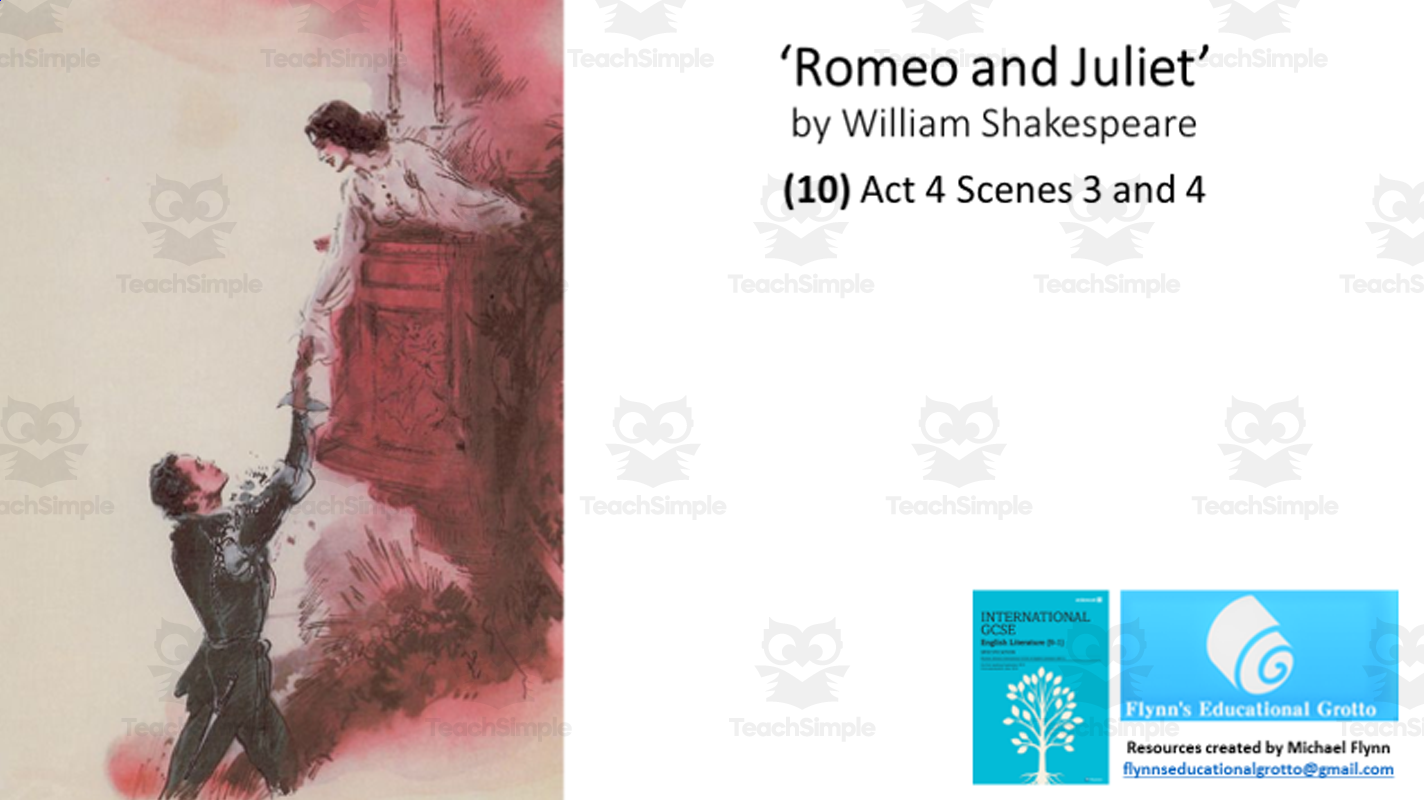
GCSE English Literature: (10) Romeo and Juliet Act 4 Scenes 3 and 4 This is a comprehensive teaching resource that focuses on William Shakespeare’s classic play.
GCSE English Literature: (2) Macbeth Act 1, Scenes 4, 5 and 6 An interactive teaching tool designed for educators. This resource focuses on Macbeth's Act 1, scenes four through six.
GCSE English Literature: (3) Macbeth – Act 1 Scene 7, and Act 2 Scenes 1 and 2 This is a teaching resource designed for educators to shape students' understanding of Shakespeare's iconic tragedy: Macbeth.
GCSE English Literature: (4) Macbeth – Act 2 Scenes 3 and 4, and Act 3 Scene 1 William Shakespeare tragic tale of misplaced ambition, betrayal and murder is brought to life in this dynamic PowerPoint lesson that covers Act 2 Scenes 3 and…
GCSE English Literature: (5) Macbeth – Act 3 Scenes 2, 3 and 4 This is an dynamic teaching resource designed to bring Shakespeare's complex drama of ambition, betrayal, and consequences into your classroom.

GCSE English Literature: (6) Macbeth – Act 3 Scenes 5 and 6, and Act 4 Scene 1 This is an engaging teaching resource designed to make the bard's classic play come alive for high school students.
GCSE English Literature: (7) Macbeth – Act 4 Scenes 2 and 3, and Act 5 Scene 1 William Shakespeare tragic tale of misplaced ambition, betrayal and murder is brought to life in this dynamic PowerPoint lesson that covers Act 4 Scenes 2 and…
A GCSE/KS4 English Literature PowerPoint lesson guiding students through a close reading and analysis of Macbeth Act 5, Scenes 2, 3 and 4, framed around the theme of insanity/loss of power.

A GCSE English Literature PowerPoint lesson guiding students through a close reading and analysis of Romeo and Juliet Act 3, Scenes 2 and 3 (see internal_notes: the catalog title/slug claims Scenes 4 and 5), framed around the theme of sexism/gender inequality.

A GCSE English Literature PowerPoint lesson guiding students through a close reading and analysis of Romeo and Juliet Act 5, Scenes 1, 2 and 3 (Romeo's dream and Balthasar's news, Friar John's failed errand, the deaths at the Capulet tomb), framed around audience regard for the leading characters.
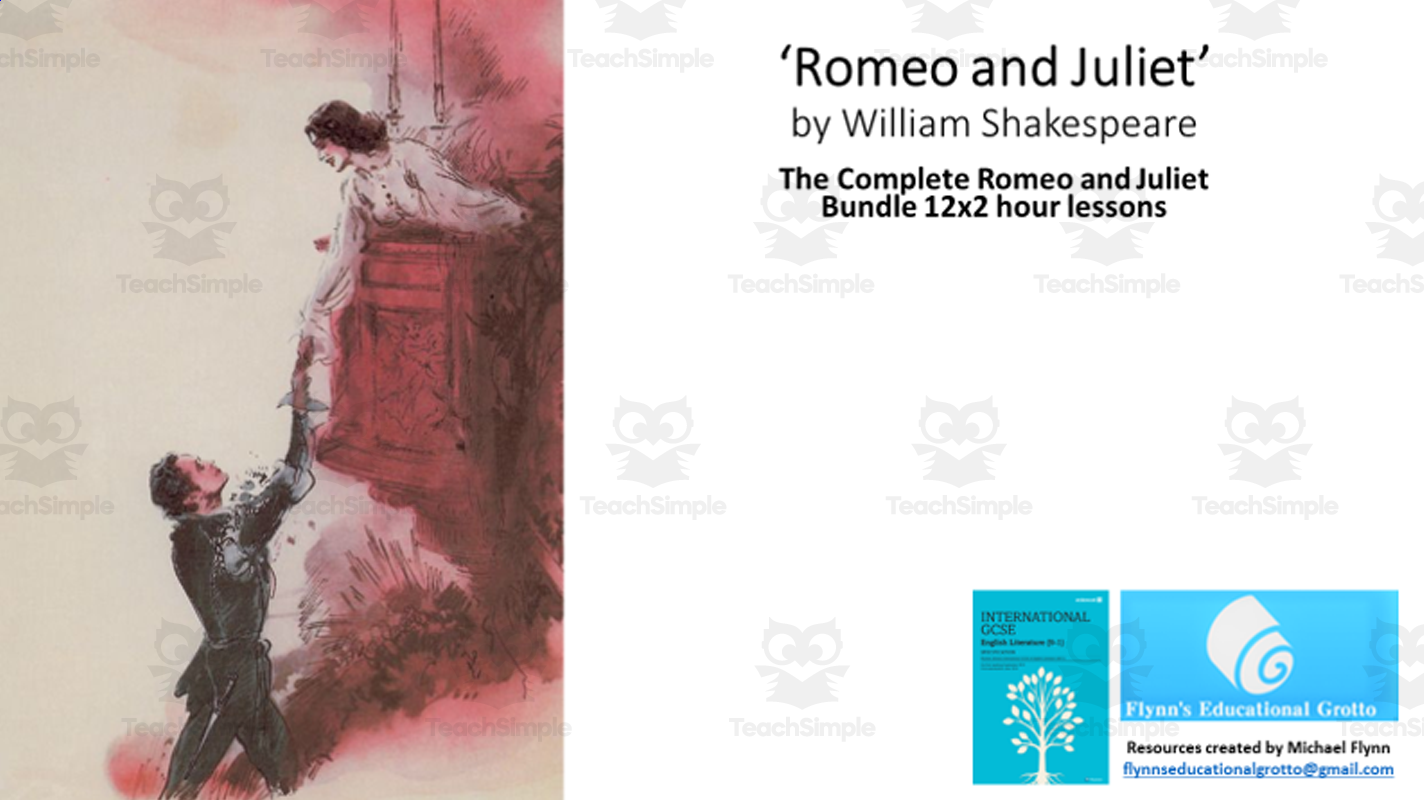
A complete set of 11 PowerPoint lessons (framed as 12x2-hour lessons) covering Shakespeare's Romeo and Juliet act-by-act for UK GCSE English Literature, with adaptability noted for American classrooms.
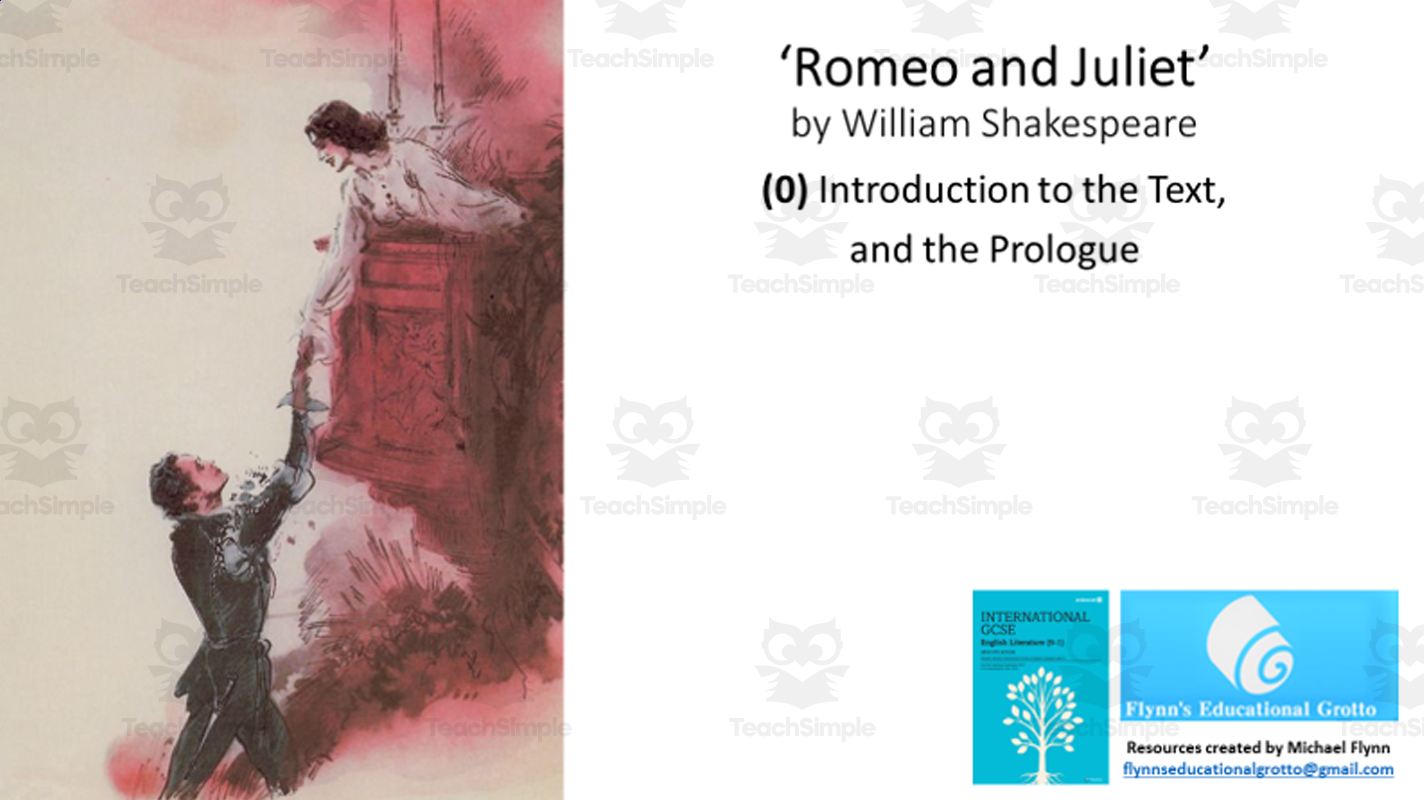
A GCSE English Literature introductory PowerPoint lesson on Shakespeare's 'Romeo and Juliet', covering the author's biography, key literary terms (aside, soliloquy, plot/climax/resolution), the play's leading themes, and its leading characters, as a bridge into studying the full text.
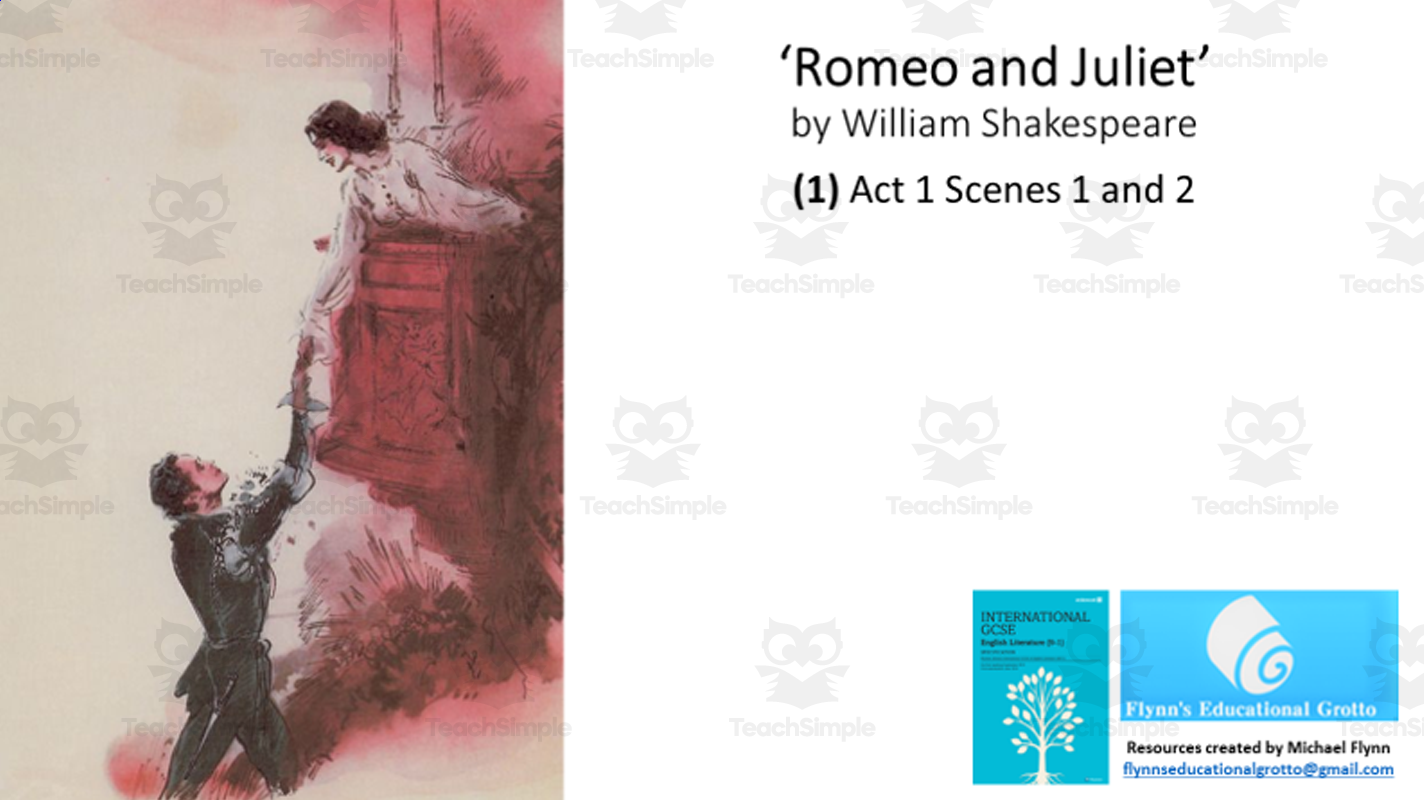
A GCSE English Literature PowerPoint lesson guiding students through a close reading and analysis of Romeo and Juliet Act 1, Scenes 1 and 2 (the opening street brawl and Romeo's introduction), framed around the theme of verbal confrontations/insults.
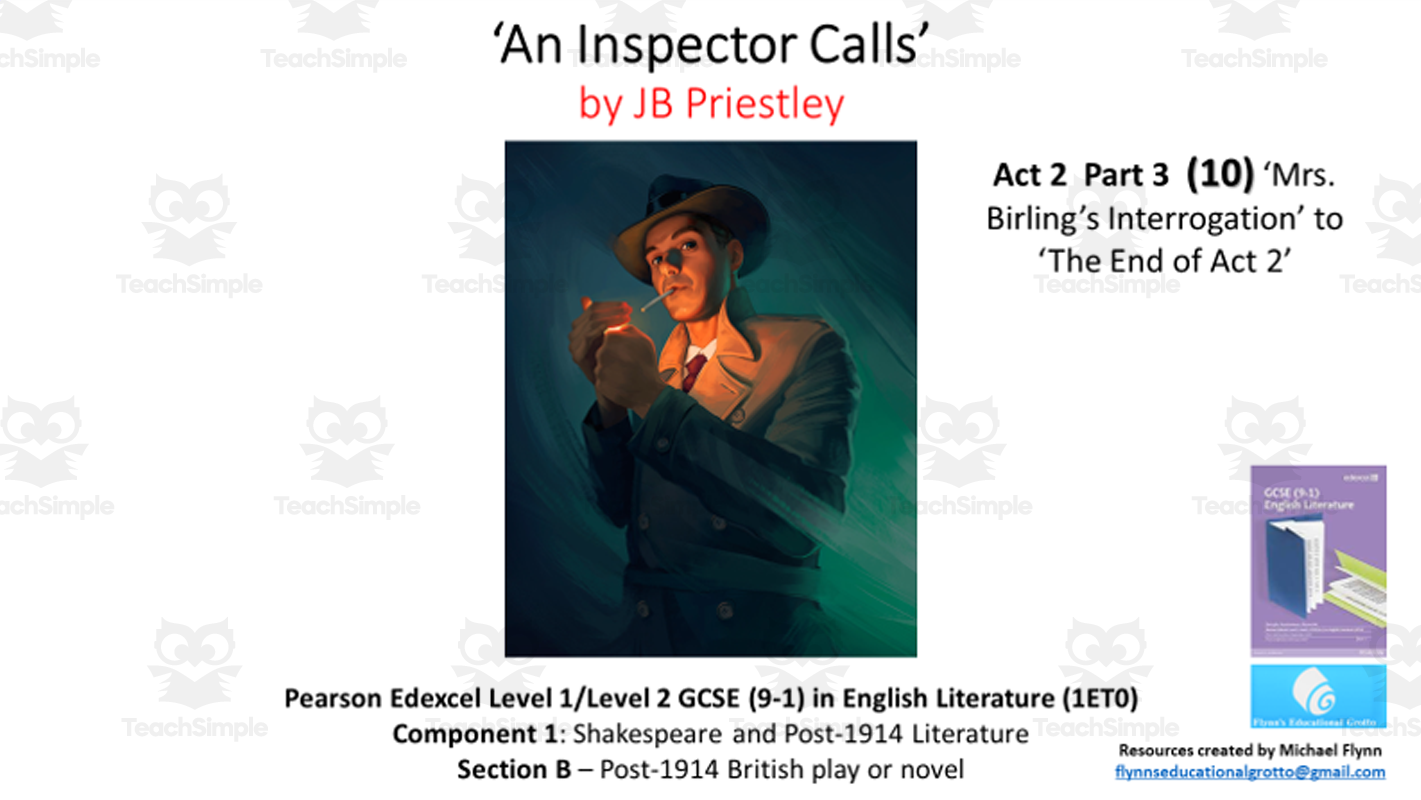
A GCSE English Literature PowerPoint lesson analytically reading 'An Inspector Calls' Act 2 Part 3, from Mrs Birling's interrogation to the end of Act 2 (the revelation of Eva Smith's pregnancy and Eric's likely involvement), framed around the concept of dichotomy.
A guided-essay-writing lesson (PETAL paragraph method) for GCSE English Literature students studying JB Priestley's 'An Inspector Calls', built around Pearson Edexcel GCSE (9-1) English Literature Component 1 assessment objectives (AO1-AO4). This unit (11) is a Half-Term Assessment 2 focused on the essay question: 'Trace the different…
A GCSE English Literature PowerPoint lesson analytically reading 'An Inspector Calls' Act 3 Part 2, from Eric's interrogation to Gerald's doubts (Gerald's discovery that Inspector Goole may be fake, and the generational split over how seriously to take the revelations), framed around the concept of confession.
A GCSE English Literature PowerPoint lesson analytically reading 'An Inspector Calls' Act 3 Part 3, from Gerald's doubts to the close of the play (confirming no suicide occurred, the family's divided response, and the final twist telephone call), framed around the concept of alliance.
A guided-essay-writing lesson (PETAL paragraph method) for GCSE English Literature students studying JB Priestley's 'An Inspector Calls', built around Pearson Edexcel GCSE (9-1) English Literature Component 1 assessment objectives (AO1-AO4). This unit (18) is an End-Term Assessment focused on the essay question: ‘Mr. Birling’s…
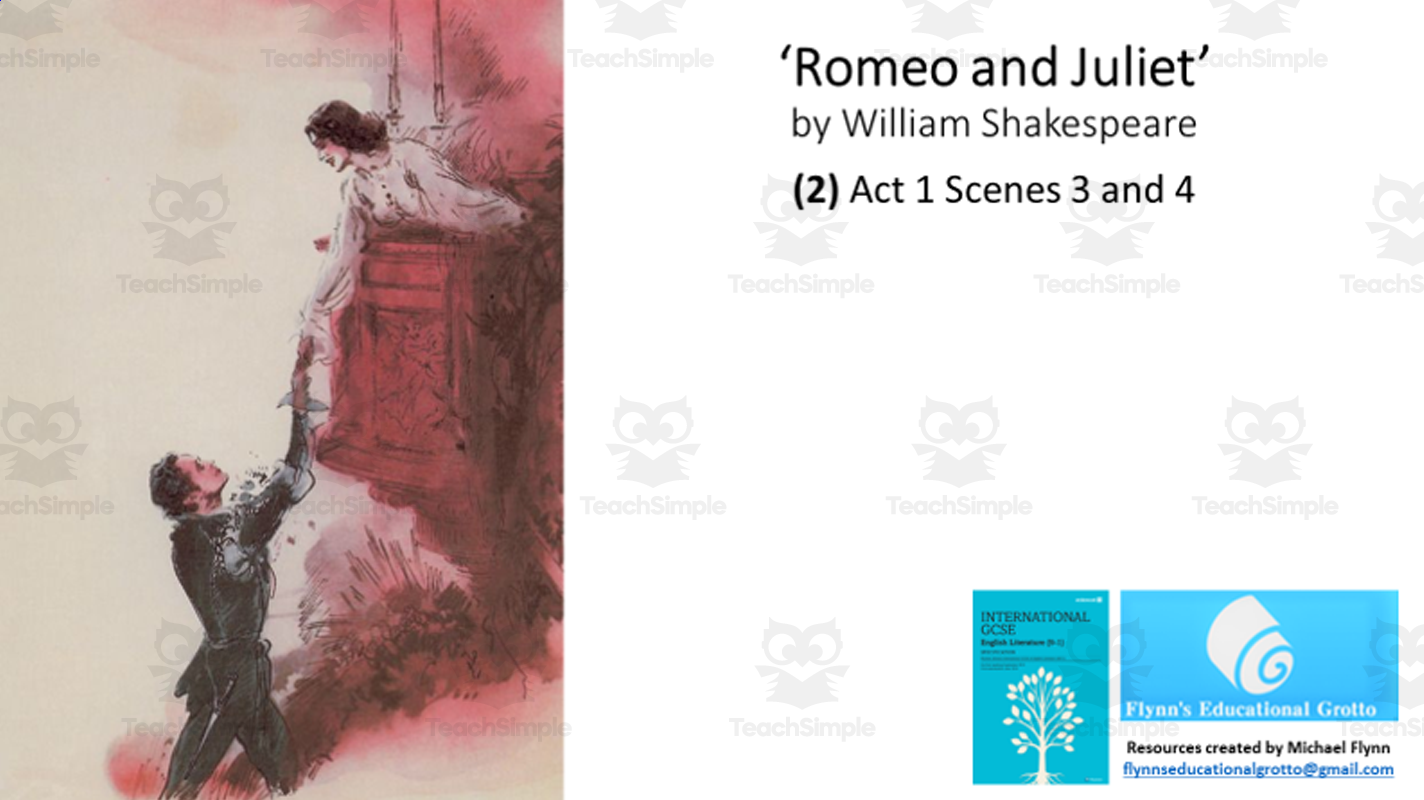
A GCSE English Literature PowerPoint lesson guiding students through a close reading and analysis of Romeo and Juliet Act 1, Scenes 3 and 4 (Lady Capulet raising marriage with Juliet, and Romeo/Mercutio/Benvolio en route to the Capulet feast), framed around the theme of innocence.
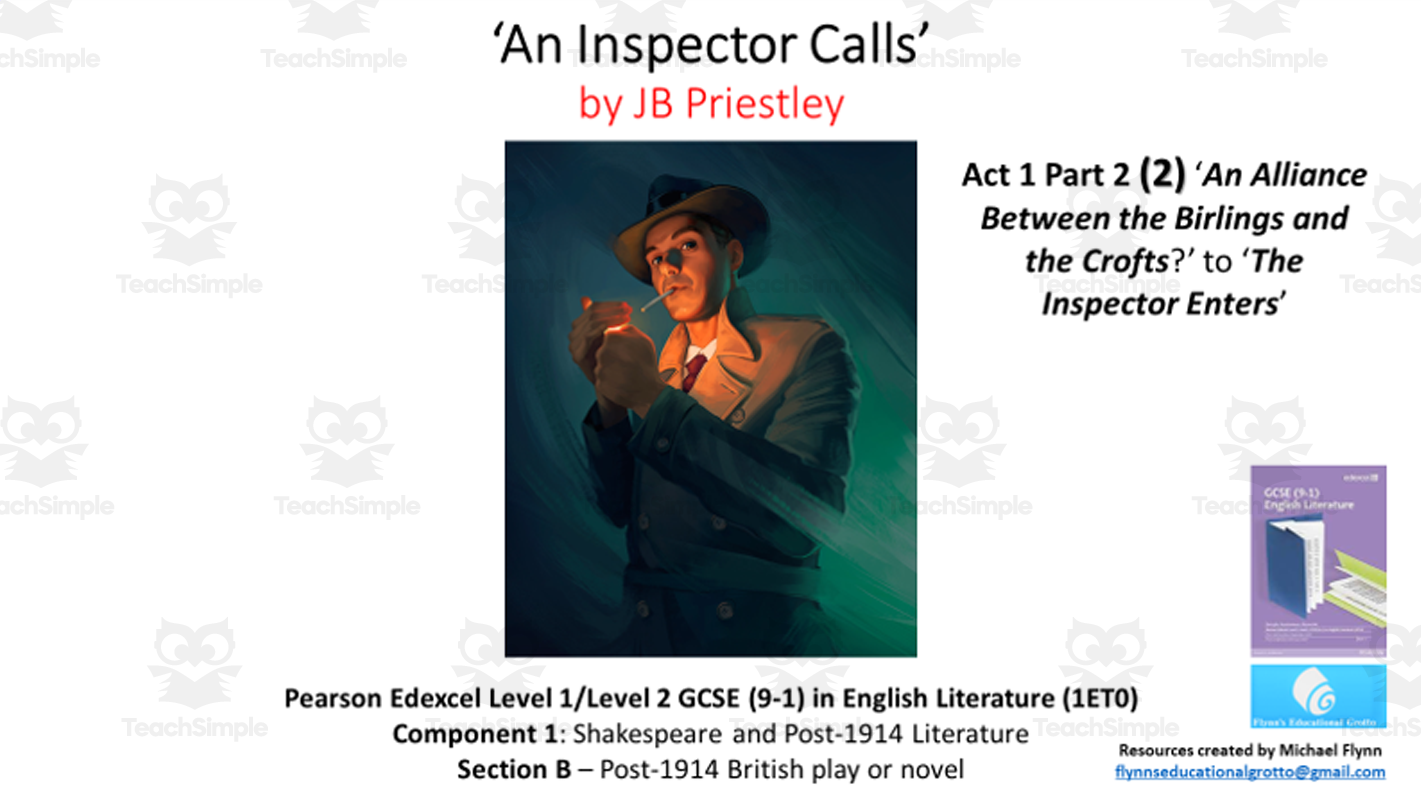
A GCSE English Literature PowerPoint lesson analytically reading 'An Inspector Calls' Act 1 Part 2, from 'An Alliance Between the Birlings and the Crofts?' to 'The Inspector Enters' (the engagement toast, Mr Birling's dramatic-irony-laden speeches, and the Inspector's arrival with news of Eva Smith's suicide), framed around the device of foreshadowing.
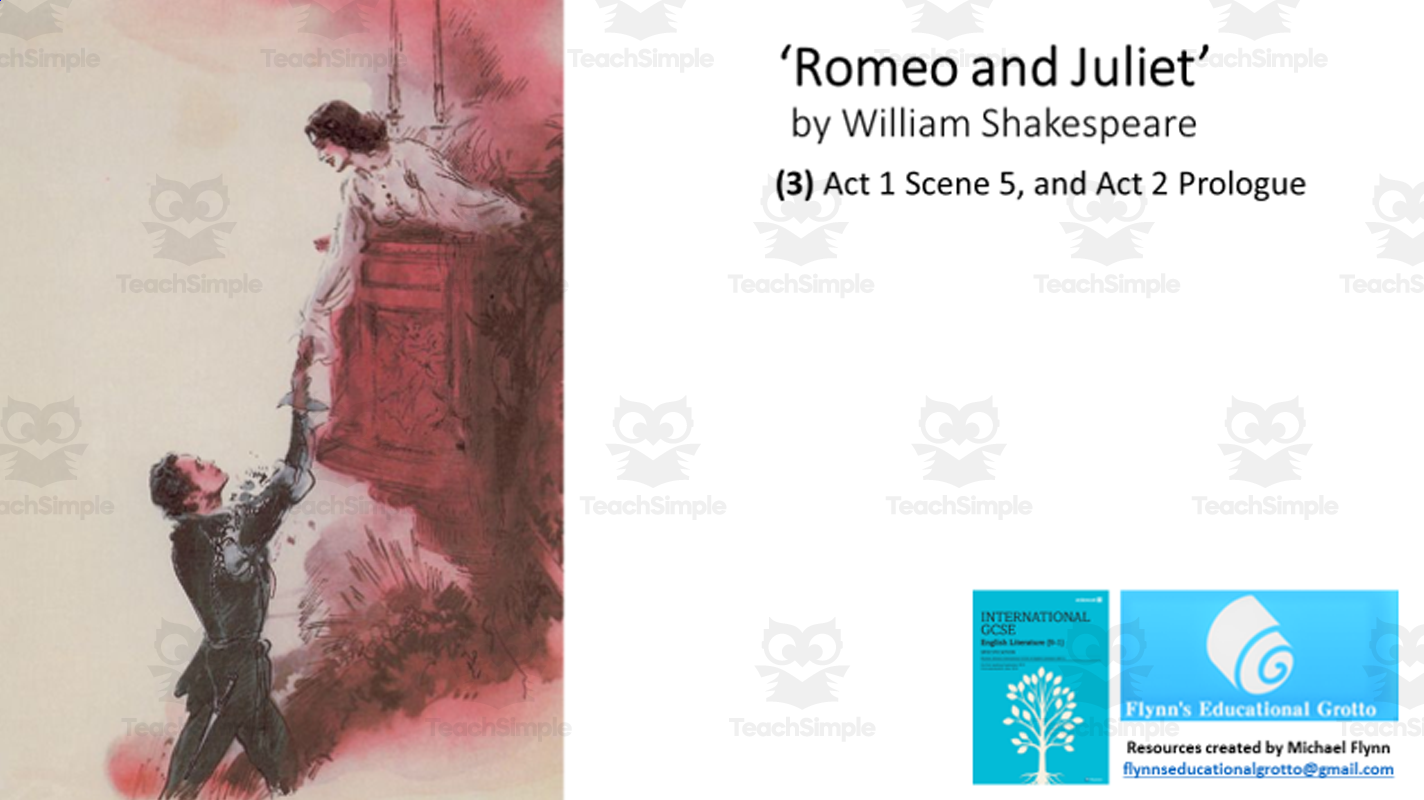
A GCSE English Literature PowerPoint lesson guiding students through a close reading and analysis of Romeo and Juliet Act 1 Scene 5 and the Act 2 Prologue (Romeo and Juliet's first meeting/kiss at the Capulet feast, Tybalt's fury, and the Chorus's sonnet on their obstacles), framed around the theme of love.
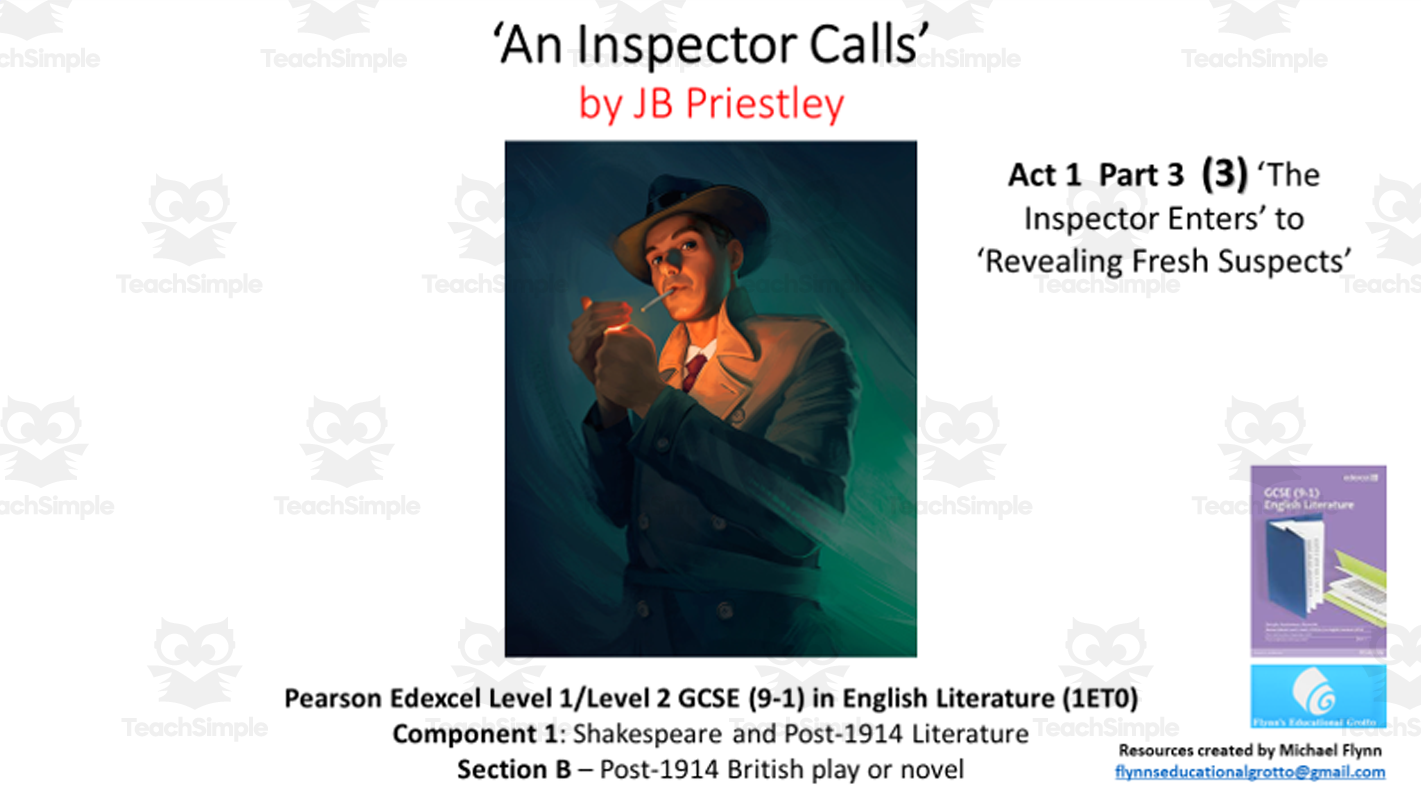
A GCSE English Literature PowerPoint lesson analytically reading 'An Inspector Calls' Act 1 Part 3, from the Inspector's entrance to revealing fresh suspects (Mr Birling's confession about firing Eva Smith, and the Inspector implicating other family members), framed around the concept of being human.