Earth's Revolution, Tilt, and Seasons - Lesson Bundle
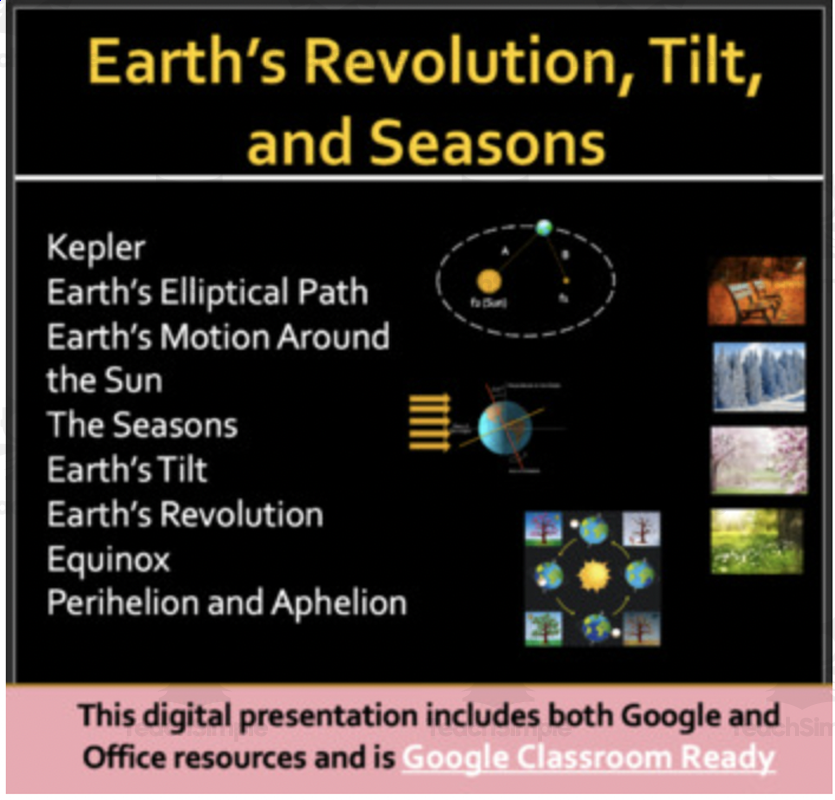
A slide-based lesson teaching why Earth has seasons, covering Kepler's elliptical orbit, Earth's tilt and revolution, equinoxes, and perihelion/aphelion for 9th-10th grade science students.
510 resources
Explore sub-categories
7 sub-categories · 510 resources
A slide-based lesson teaching why Earth has seasons, covering Kepler's elliptical orbit, Earth's tilt and revolution, equinoxes, and perihelion/aphelion for 9th-10th grade science students.
Put scientific-method ideas into practice by comparing how much water different paper towels absorb. Students plan a controlled comparison, record measurements, calculate averages and use a graph to support their conclusion. Student notes and matched completed slides introduce variables and hypotheses beforehand, while an extension sheet suggests changing the liquid or measuring absorption time for a later investigation.
An informational micro-lesson slideshow introducing spiders for middle/high school science classes.
Deliver an interactive digital slideshow lesson about dolphins combining a video, reading passage, close reading, and writing activities.
An informational micro-lesson slideshow introducing the Spinosaurus for middle/high school science classes.
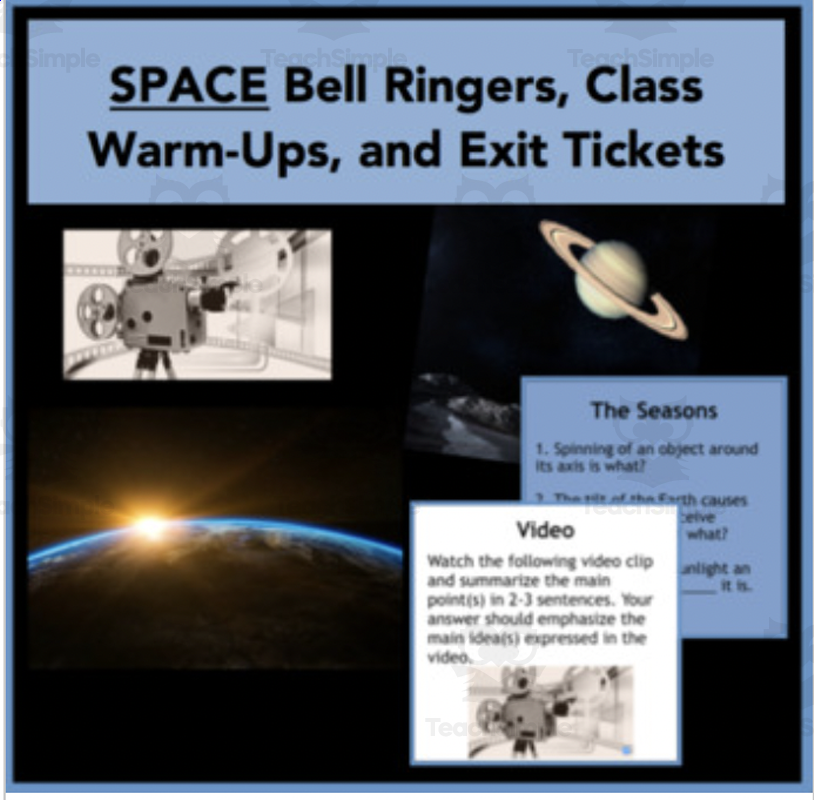
A recurring daily warm-up/exit-ticket system for a space/astronomy science unit, used to review prior lessons and build a review-and-focus classroom routine.
A slide-based lesson for senior (grade 10-12) earth and space science students teaching why Earth has seasons, covering Kepler's elliptical orbit, Earth's tilt and revolution, equinoxes, and perihelion/aphelion.
A 9-presentation science unit teaching the properties, behavior, and real-world applications of fluids (liquids and gases) as part of a matter-and-energy course.
An interactive digital slide-deck science lesson (micro-learning format) teaching about Death Valley's extreme geography and climate through a video, a close-reading passage, vocabulary, and comprehension activities.
An interactive digital slide deck (micro-learning lesson) teaching the causes and effects of global warming through a narrative reading passage with embedded audio, close reading, and informal assessment activities.
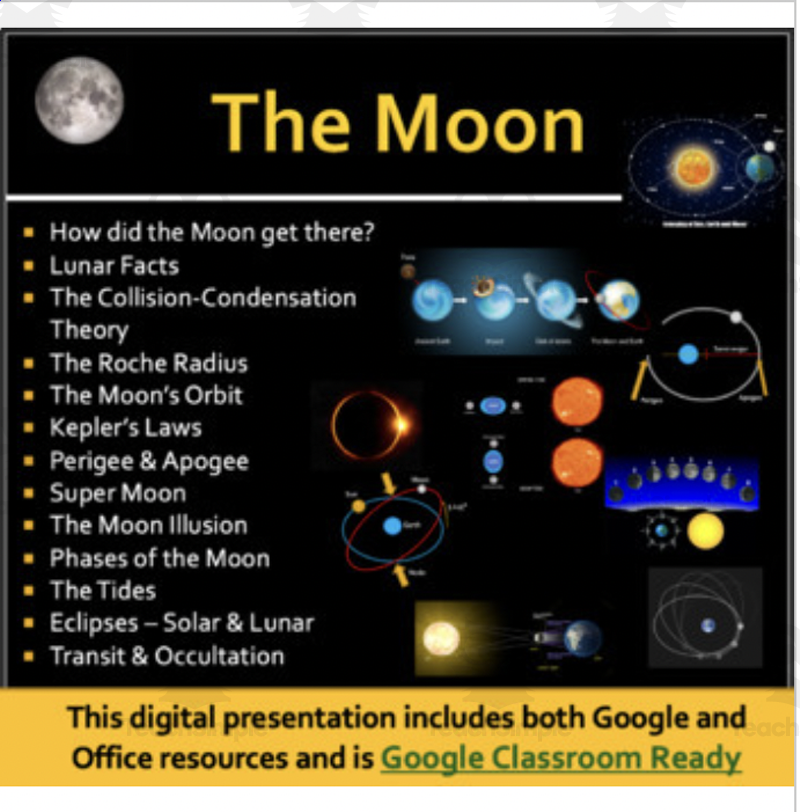
A three-day senior Earth and Space Science lesson on the Moon's origin (Collision-Condensation theory), orbital mechanics, phases, eclipses, and tidal influence, delivered via slide presentation with guided student notes.
A digital, interactive micro-learning slide deck teaching middle-school science students about honey bees - physiology, hive roles, pollination, and how bees make honey.
An interactive, no-prep slide-deck micro-lesson teaching butterfly facts (life cycle, habitat, migration, pollination, predators/defenses) through a non-fiction reading passage, video, vocabulary and writing activities.
An interactive micro-learning digital slide deck teaching students about great blue heron facts (physical traits, habitat, behavior) through informational text, close reading, vocabulary, and summarizing activities, part of a 'Nature Collection' series.
An interactive digital micro-learning deck (PowerPoint) that teaches middle/high school Earth and Space Science content about the Sun as a star: its layers, energy production, and how space weather (solar wind, solar flares, radiation) affects Earth, via an informational close-reading passage paired with vocabulary and comprehension activities.
Deliver a micro-learning science lesson teaching facts about pond slider turtles through an interactive slide deck.
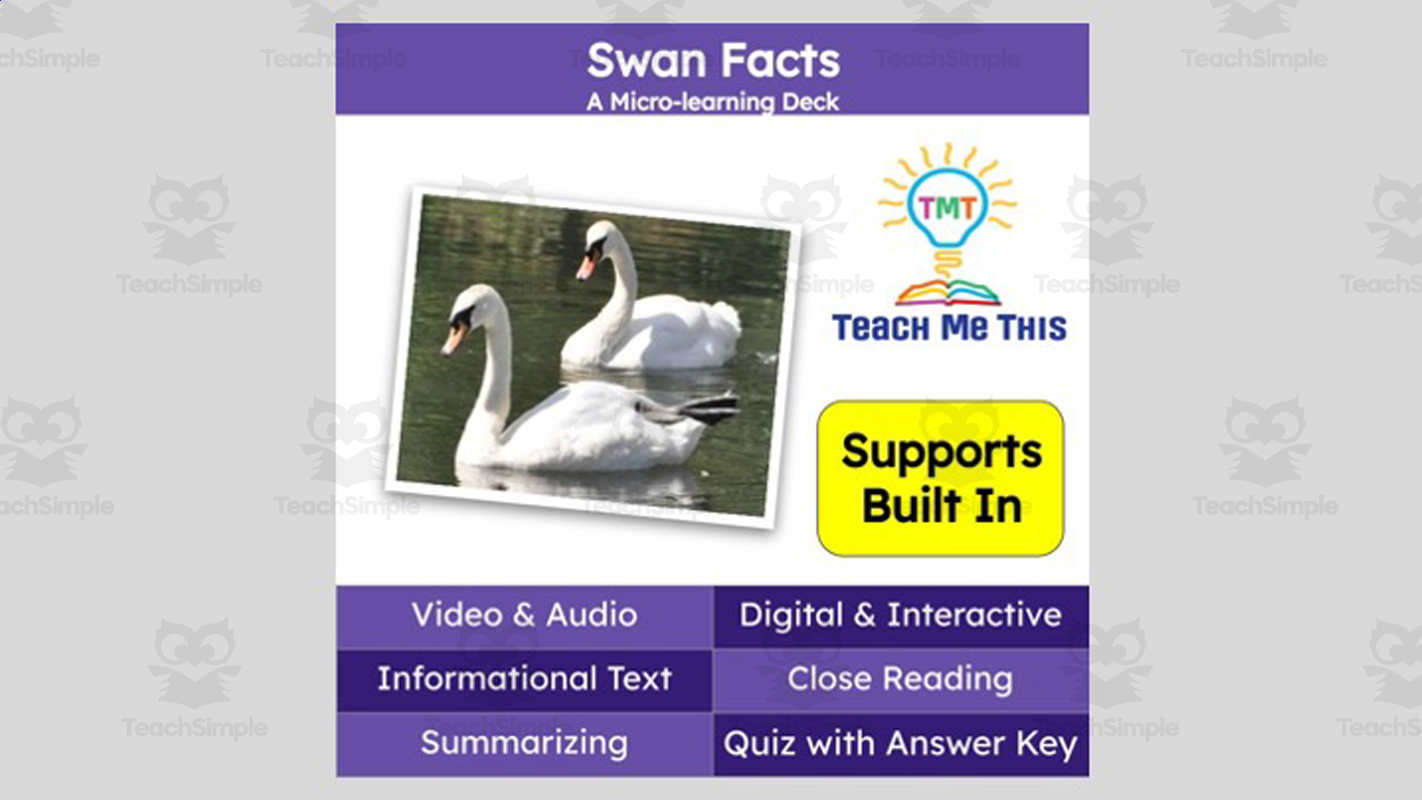
Interactive multimedia PowerPoint lesson deck teaching facts about swans (breeding behaviors, habitats) through video, an audio-supported reading passage, and reflection activities.
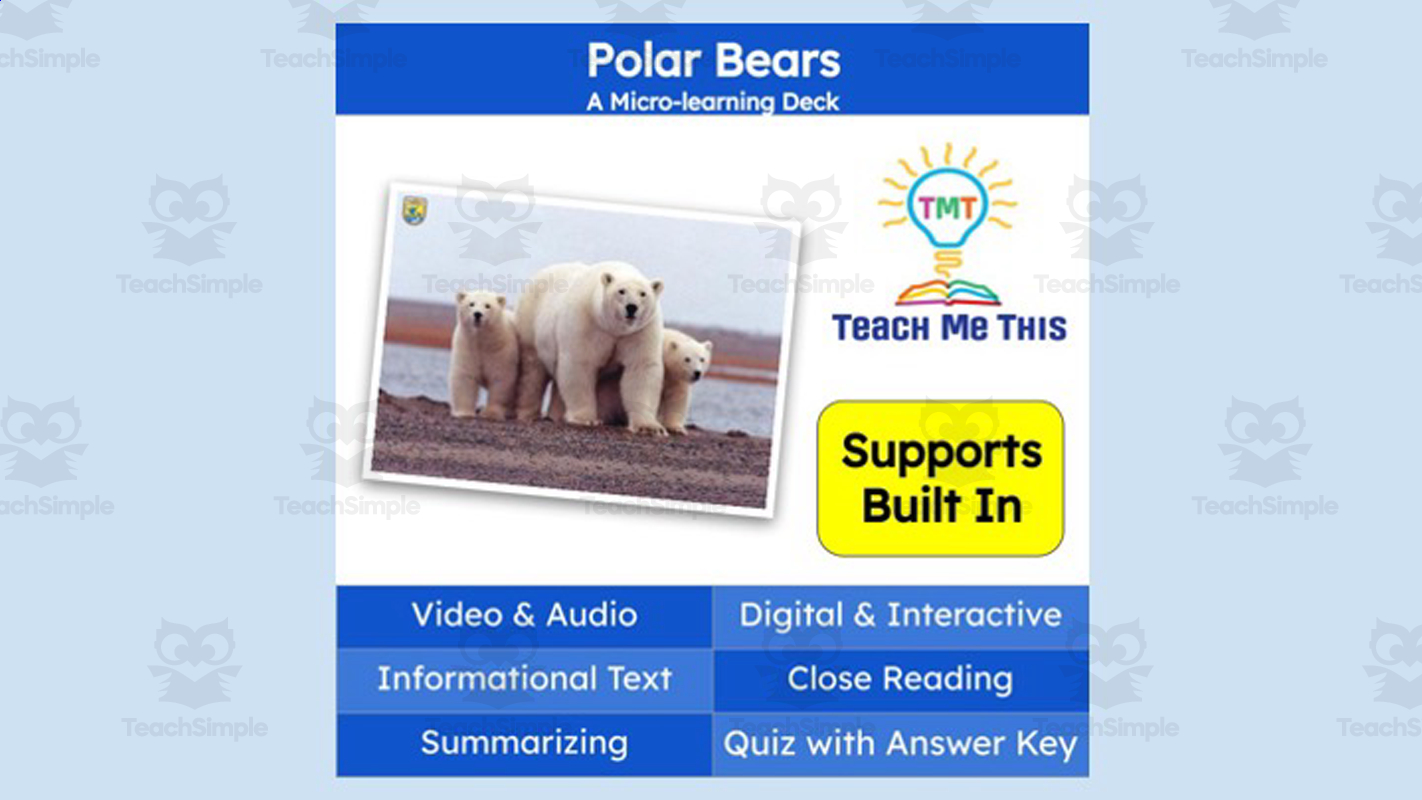
Teach students facts about polar bears (habitat, behavior, physical traits) through an interactive multimedia slide deck combining a reading passage, vocabulary, and comprehension activities.
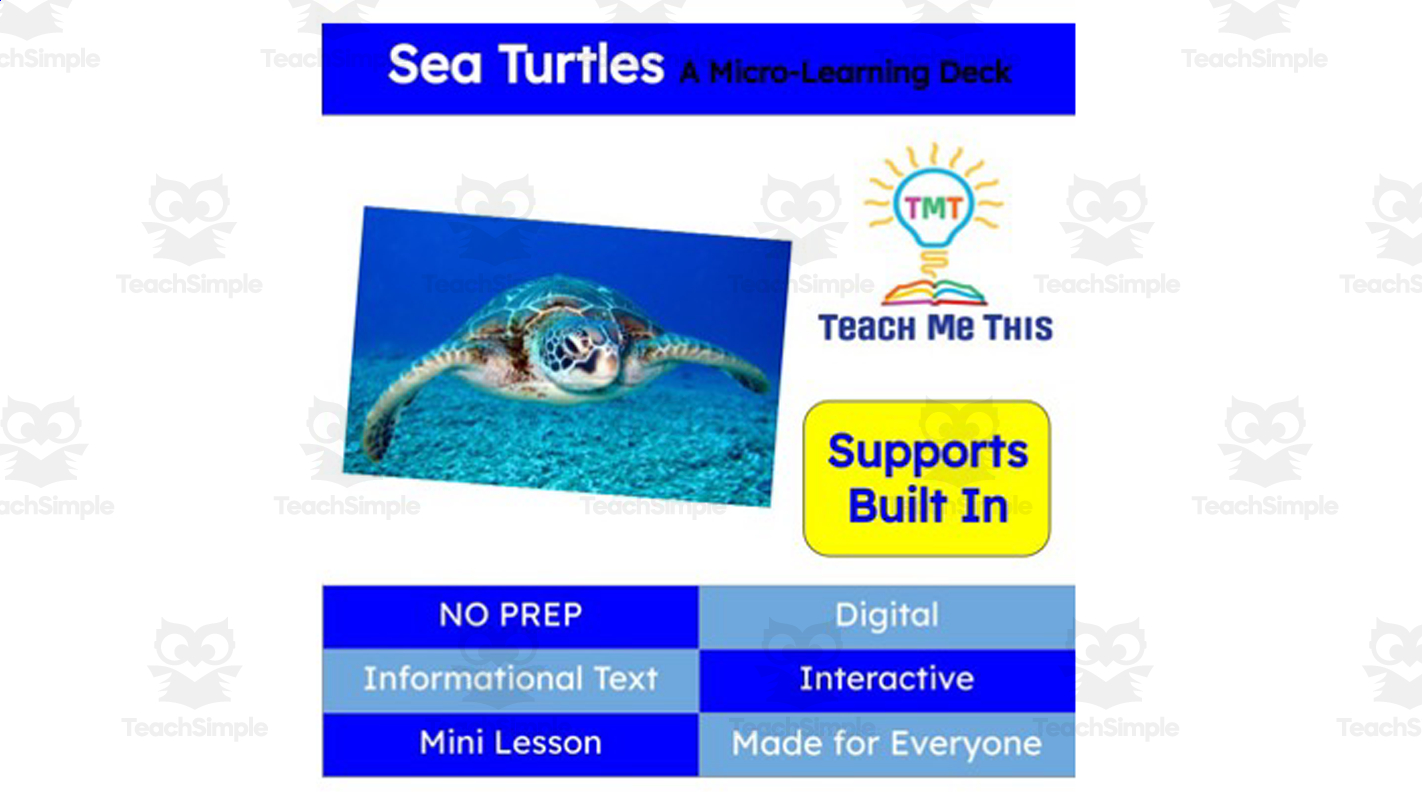
No-prep digital 'micro-learning deck' (slide presentation) teaching about sea turtles, for middle/early-high-school science.
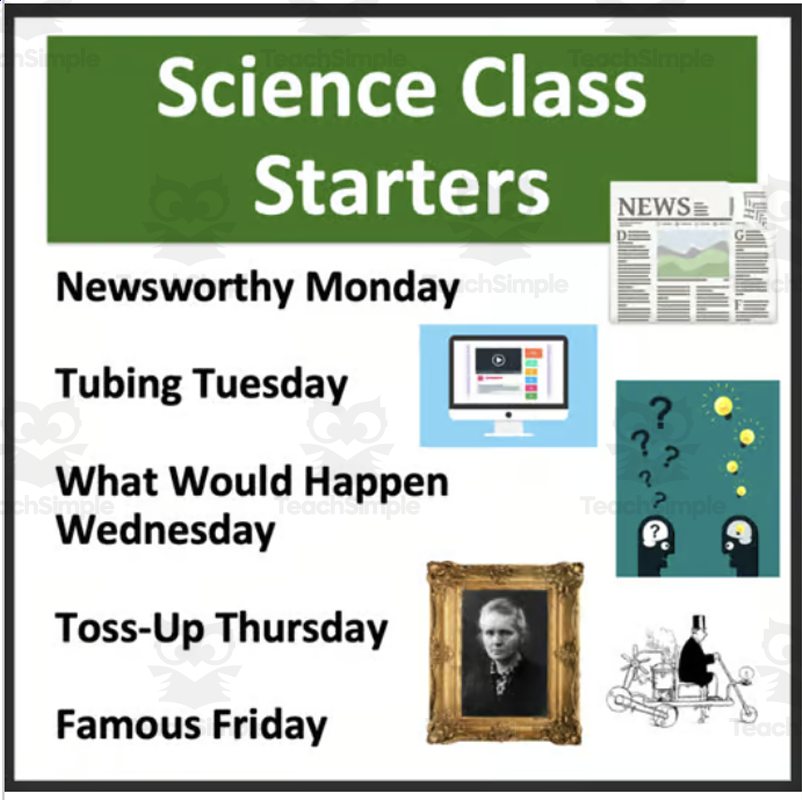
A large collection of 200 daily 5-7 minute science warm-up/starter activities organized into a 40-week, 5-day-per-week rotation (Newsworthy Monday, Tubing Tuesday, What If Wednesday, Toss-Up Thursday, Famous Friday) to open middle and high school science classes.
A no-prep interactive slide deck ('micro-learning' format) teaching upper-elementary/middle-school students about cheetahs through a short video, a nonfiction reading passage, vocabulary, comprehension activities, and a writing prompt.
A no-prep, digitally interactive micro-learning deck (PowerPoint) teaching facts about hummingbirds (focused on the ruby-throated hummingbird) through a short reading passage, video, vocabulary, and writing/comprehension activities.
Deliver a complete, NGSS-aligned Grade 3 science curriculum for a full 36-week school year across 10 units (Forces & Motion, Weather & Climate, Life Cycles, Ecosystems, Traits & Inheritance, Engineering Design, Earth Systems, Habitats, Natural Hazards, and Review & Capstone Projects), built on the 5E instructional model (Engage,…
Teach students facts about Stegosaurus anatomy, diet, and behavior through a multimedia, self-paced micro-learning slide deck that builds reading, vocabulary, and summarizing skills.