Brain Anatomy Lecture Slides
A lecture slide deck teaching the structures and functions of the human brain and how they relate to behavior and mental processes, aligned to AP Psychology content standards.


510 resources
Explore sub-categories
7 sub-categories · 510 resources
A lecture slide deck teaching the structures and functions of the human brain and how they relate to behavior and mental processes, aligned to AP Psychology content standards.
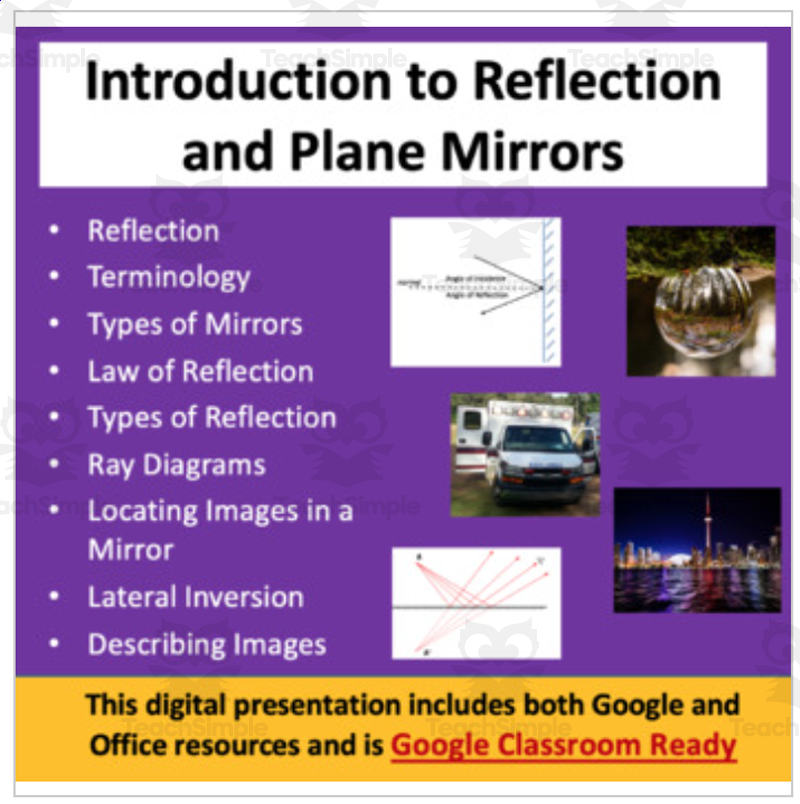
A physics lesson presentation teaching reflection, plane mirrors, the law of reflection, ray diagrams, lateral inversion, and describing images (SALT method).
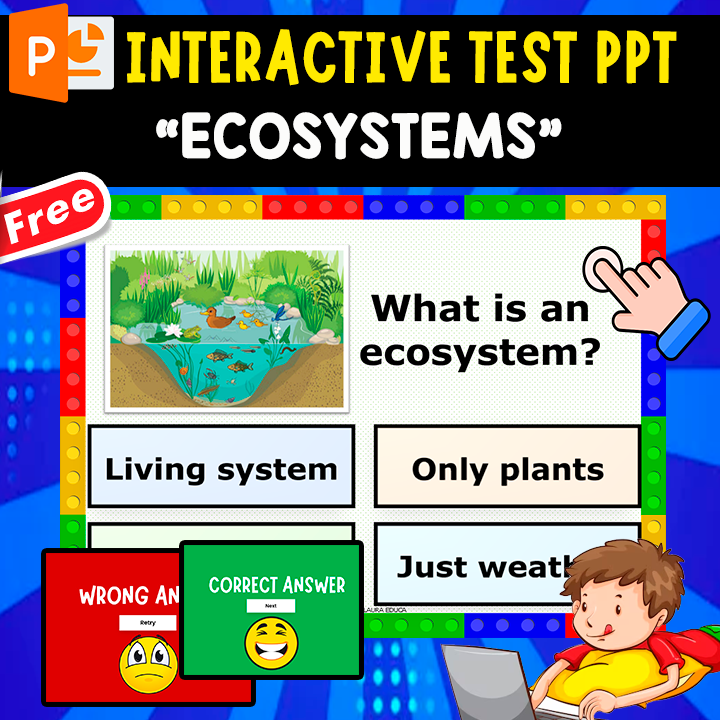 Free download
An interactive PowerPoint quiz game reviewing basic ecosystem vocabulary and concepts (producers, consumers, decomposers, food chains/webs, habitats, predator/prey).

An interactive multimedia (slide-deck) science lesson teaching ant biology and behavior through video, an audio-supported reading passage, close reading, and writing activities.

A senior chemistry lesson teaching the Ideal Gas Law (PV = nRT), covering gas properties, kinetic theory, deriving and applying the law, and standard conditions (STP/SATP).

Deliver a multi-day slide-based lesson on the human digestive system, covering why the body needs digestion, digestive organs, digestive enzymes, and mechanical vs. chemical digestion.

A high school physics lesson teaching refraction, index of refraction, and Snell's Law, including finding the critical angle.

An interactive digital slideshow micro-lesson teaching students what a solar system is, its planets, and related terms, using a reading passage, vocabulary, and comprehension activities.

Deliver a video-guided, note-taking lesson on ecosystem fundamentals (abiotic/biotic factors, population, community, ecosystem recycling, sustainability, and human impacts) for in-class or distance learning.

A multi-file distance-learning/homeschool chemistry pack teaching mixtures, solutions, dissolving, suspensions, and saturated solutions via an animated PowerPoint, worksheets, and a photocopiable lesson.

Three PowerPoint note-taking presentations covering the female reproductive system, male reproductive system, and the menstrual cycle for a high school Anatomy/Physiology or Biology class.
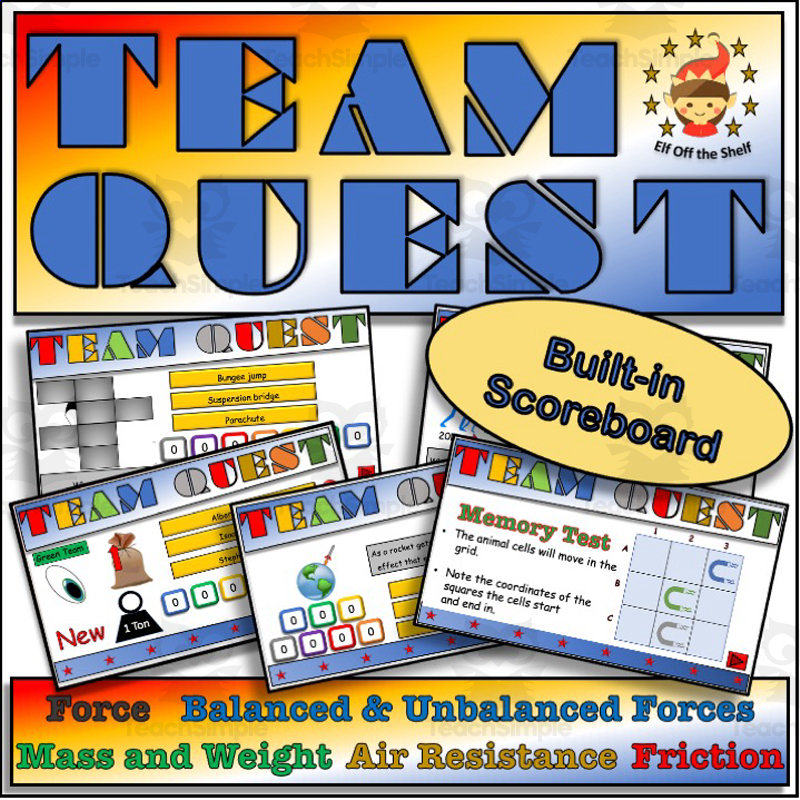
An interactive, animated PowerPoint quiz game reviewing physics topics (forces, moments, speed, pressure) for consolidating learning at the end of a module
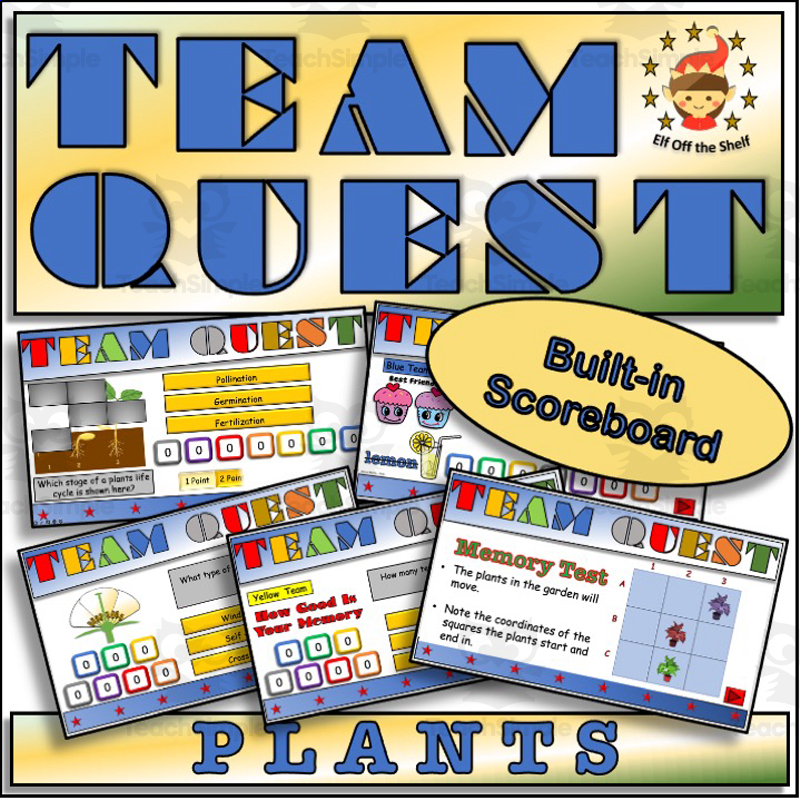
Provide an interactive, animated PowerPoint-based game/quiz reviewing plant knowledge for team and individual play, with a built-in scoreboard for up to seven teams.
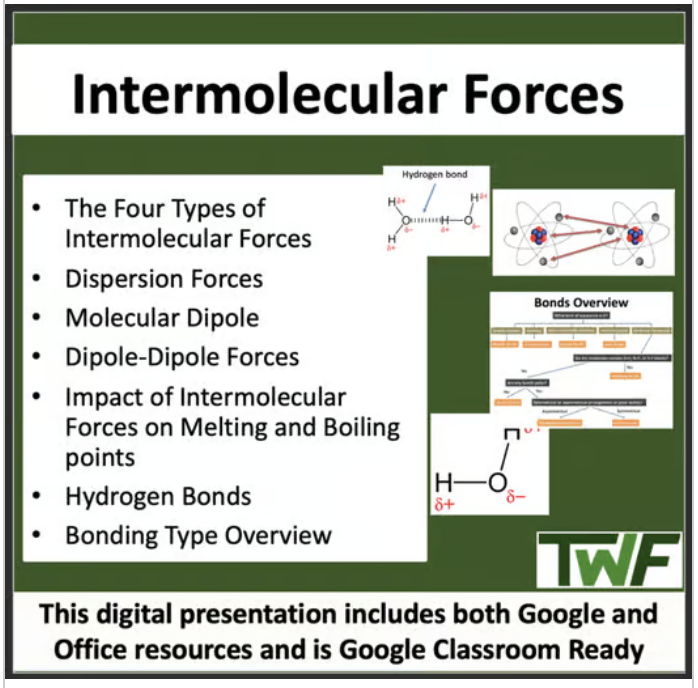
Teach the four types of intermolecular forces (dispersion, molecular dipole, dipole-dipole, hydrogen bonding) and how they affect melting and boiling points, for senior-level chemistry.

A PowerPoint lesson presentation on Excess Post-exercise Oxygen Consumption (EPOC) for GCSE PE anatomy and physiology, explaining oxygen debt and recovery from exercise.
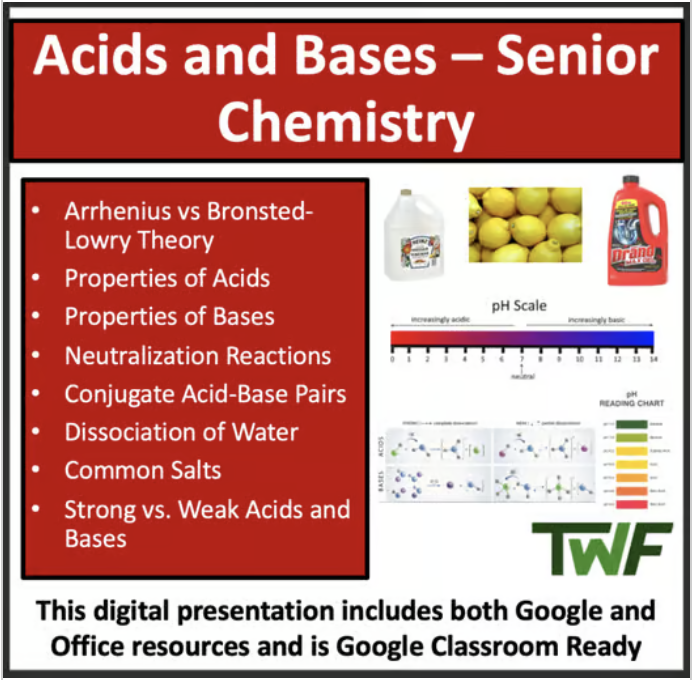
Teach senior-level chemistry students the theory and properties of acids and bases, from Arrhenius through Bronsted-Lowry models, neutralization, and related concepts.
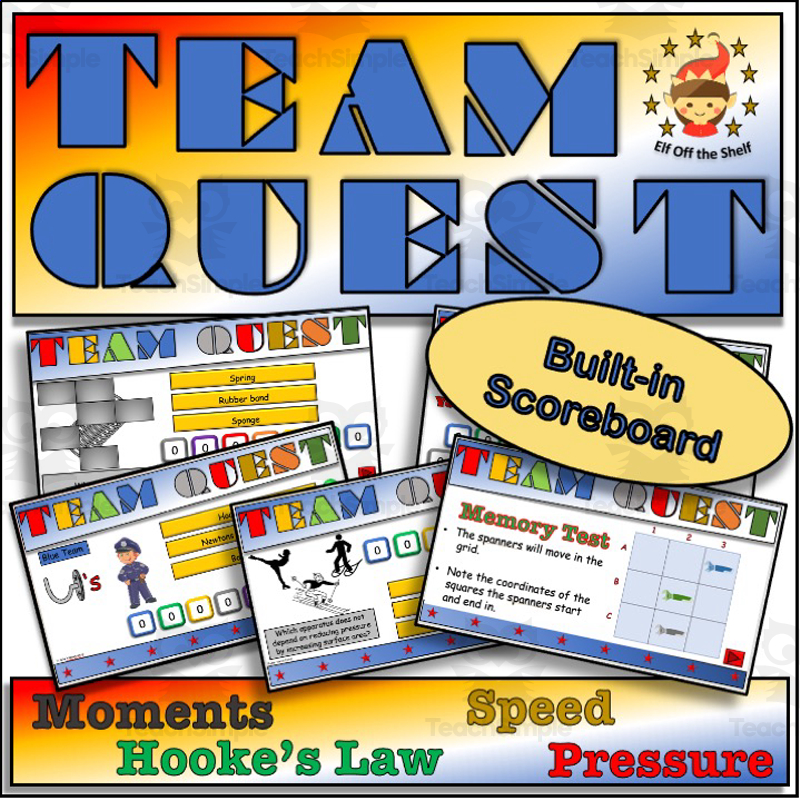
An interactive, animated PowerPoint quiz game reviewing physics topics (forces, moments, speed, pressure) for consolidating learning at the end of a module

A micro-learning slide deck teaching how to predict severe weather, combining video, a reading passage with audio, close reading, and vocabulary practice.

Teach high school chemistry students about types of chemical bonds: forces of attraction, ionic vs. covalent bonds, single/double/triple covalent bonds, polar covalent bonds, and metallic bonds.
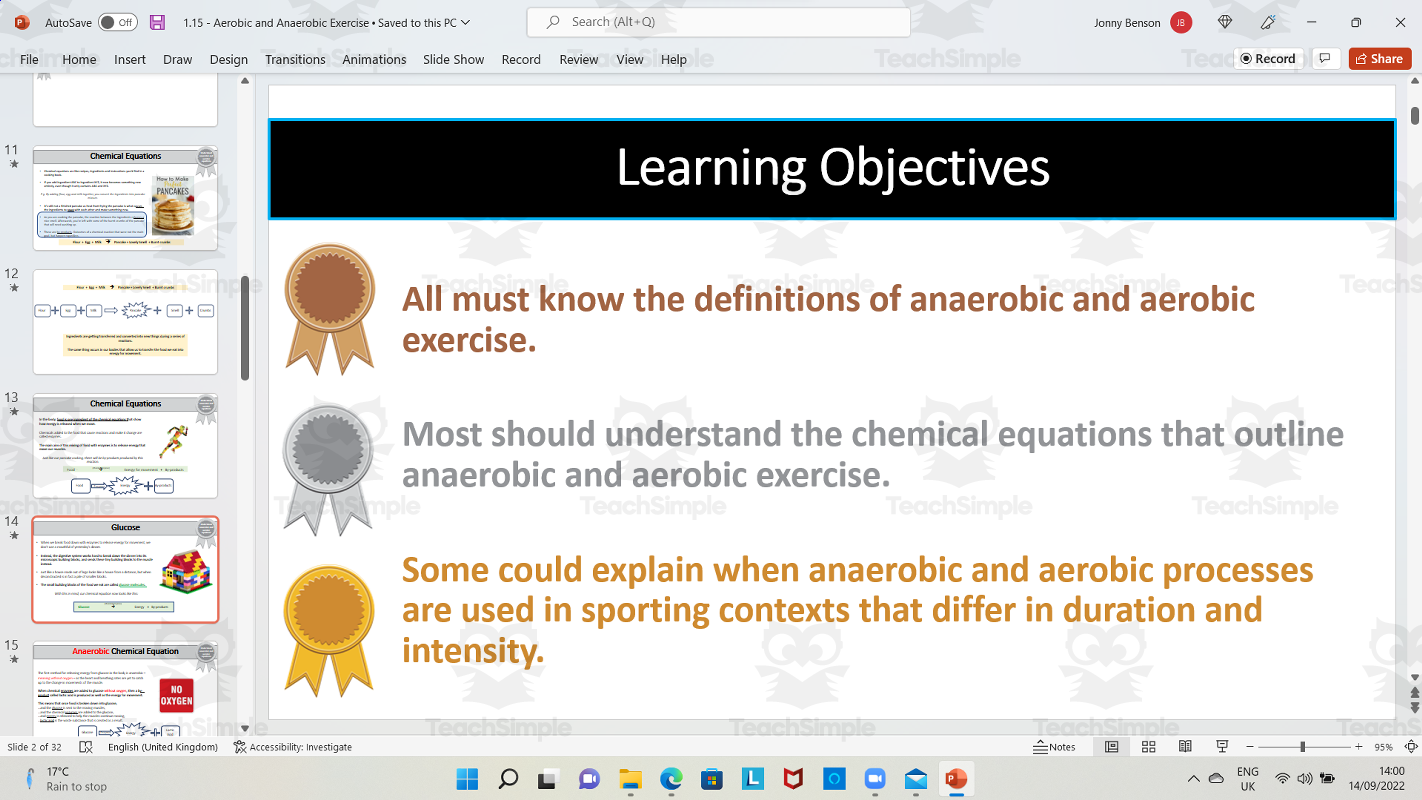
A GCSE PE (Anatomy & Physiology) PowerPoint lesson teaching the definitions, chemical equations, and sporting applications of aerobic and anaerobic energy systems.

Interactive Smart Board (IWB) bingo game reviewing middle/high school physics concepts of light: reflection, refraction, and lenses
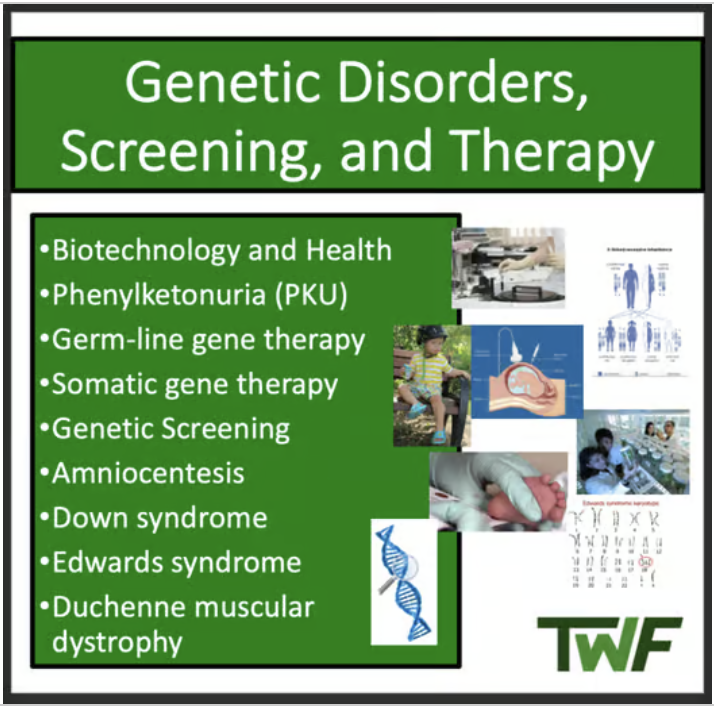
A senior high-school biology lesson presentation covering biotechnology and genetic disorders/screening/therapy topics (PKU, gene therapy, genetic screening, amniocentesis, Down syndrome, Edwards syndrome, Turner syndrome, Duchenne muscular dystrophy), provided as a complete teacher version and a blank-note-taking student version.

A 26-slide PowerPoint/PDF chemistry lesson teaching how to balance redox (oxidation-reduction) half reactions in acidic solutions, including a worked step-by-step method, practice 'Check Your Understanding' problems, and a section on corrosion, its dangers, and corrosion protection by oxide coating.
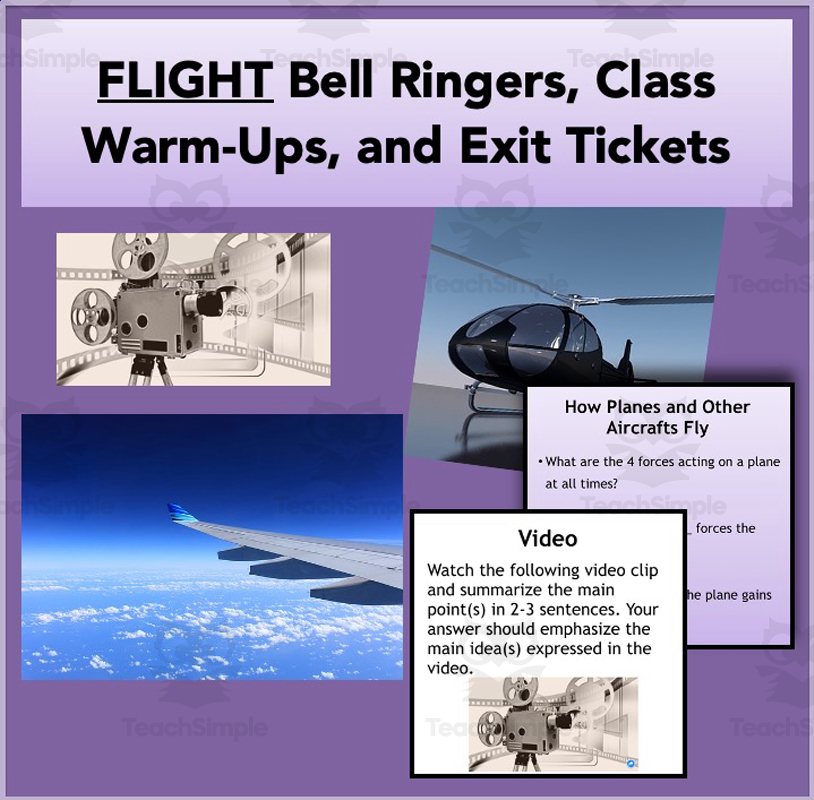
A set of bell-ringer/warm-up/exit-ticket questions on the physics of flight, meant to be given daily so students review and apply the previous lesson's content in a short routine at the start or end of class.