Number skills & operations
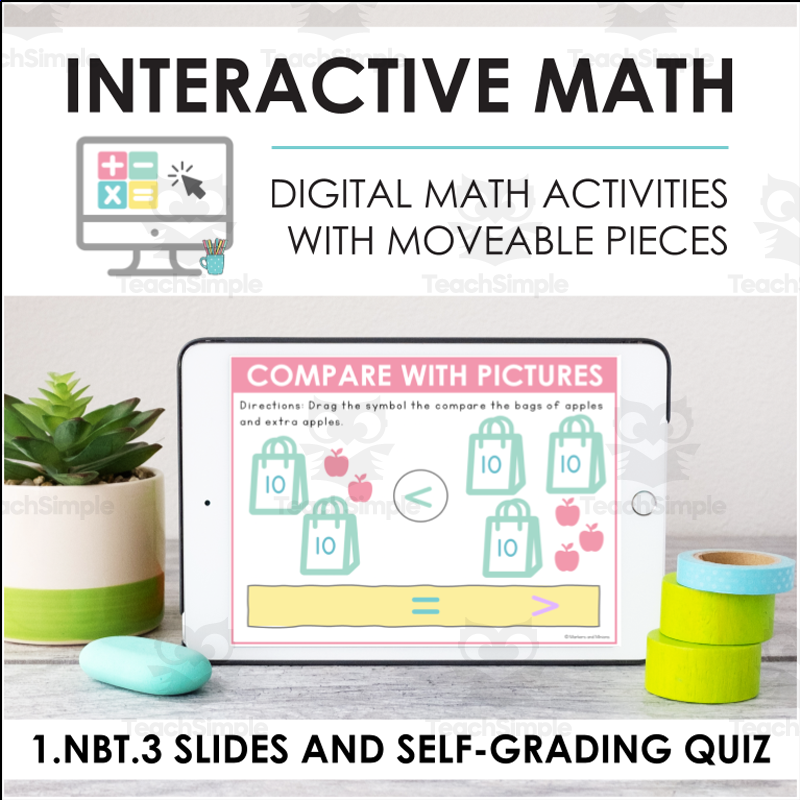
Digital Math for 1.NBT.3 - Understanding Place Value (Slides + Self-Grading Quiz)
Interactive digital math practice and self-grading quiz for CCSS 1.NBT.3 (comparing two-digit numbers), first-grade level.




Classroom resources
Browse by lesson focus
Choose the topic or kind of practice you need.
Showing 265–288 of 318 resources

 Show filters
 Interactive digital math practice and self-grading quiz for CCSS 1.NBT.3 (comparing two-digit numbers), first-grade level.
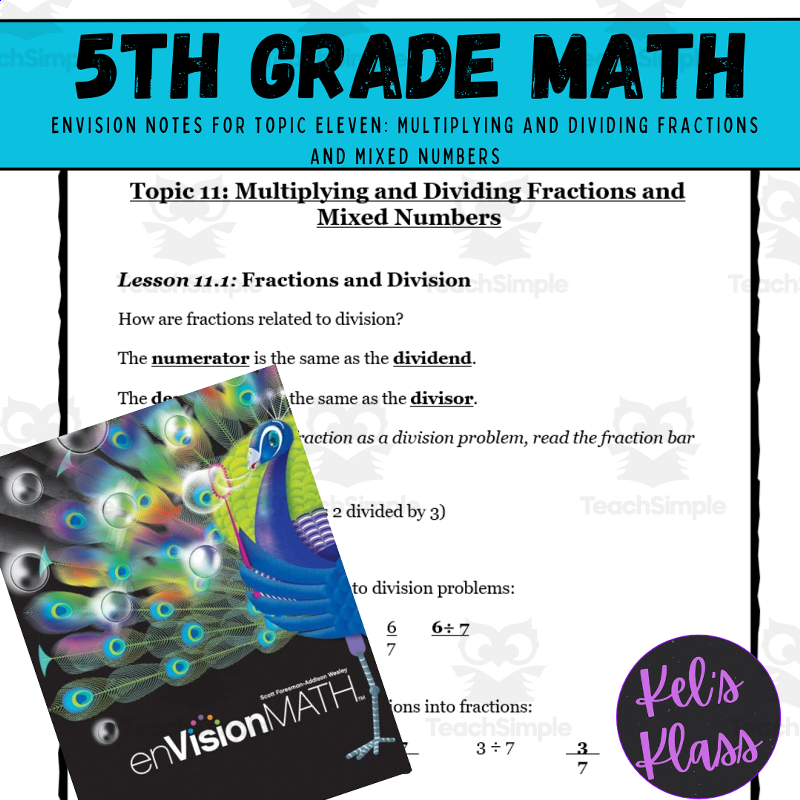
Fill in guided notes explaining fraction-division relationships, multiplying fractions by whole numbers, multiplying two fractions, multiplying mixed numbers, and dividing whole numbers by unit fractions, completing practice problems in each lesson; then complete an 11-question quiz applying these skills, showing all…
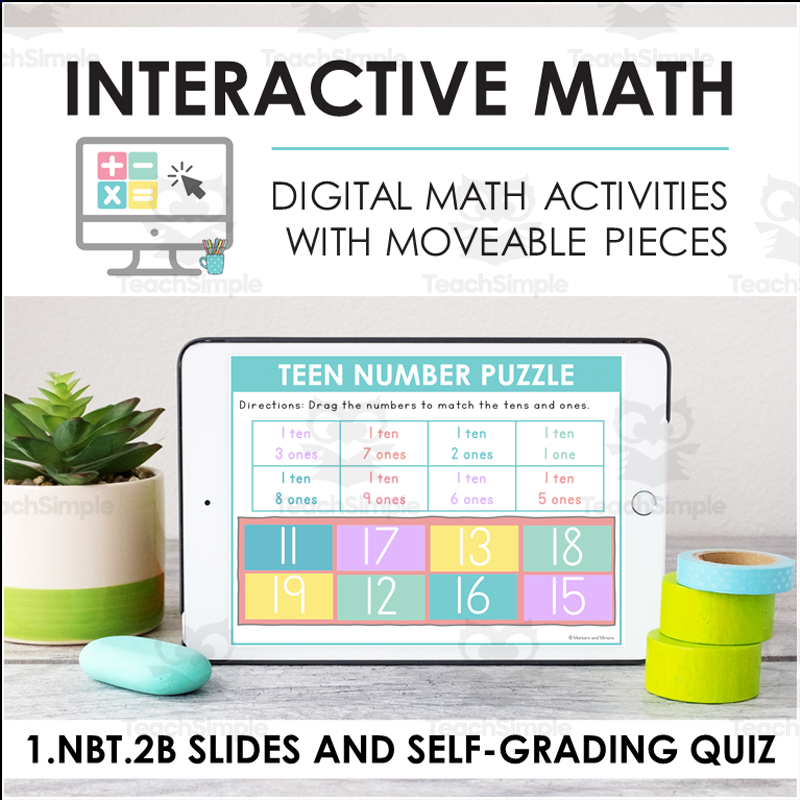
Interactive digital math practice and self-grading quiz for CCSS 1.NBT.2B (understanding teen numbers as ten ones and some more ones), first-grade level.
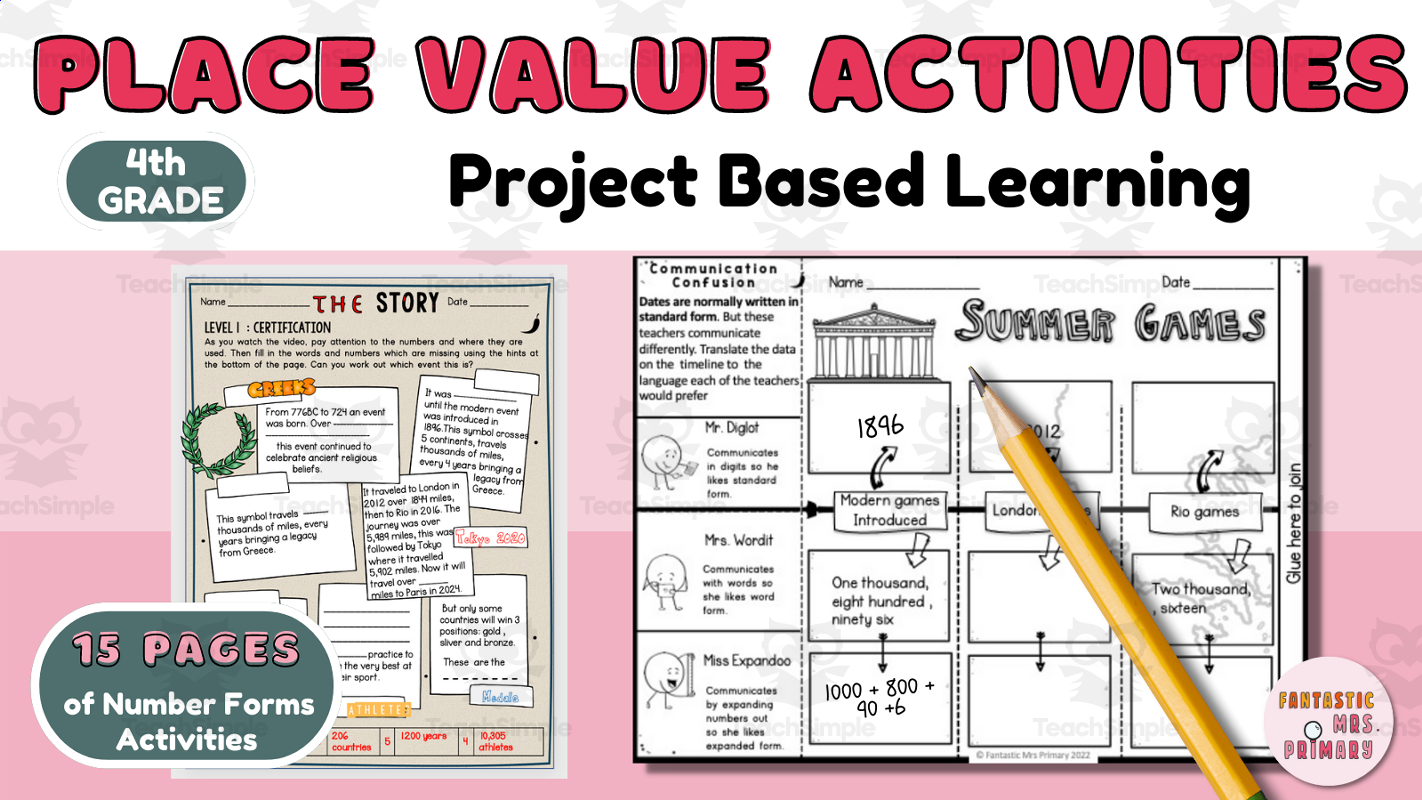
Students watch an entry-event video on the history of the Summer Games, respond orally/in writing to a video-response activity, then build a timeline converting numbers (Games dates, athlete counts, TV viewer counts) between standard, word, and expanded form and comparing them with inequalities; differentiated 'chili…
Work through modeled examples then practice pages (matching, tables, real-world problems like computer purchases or gas mileage, evaluating and writing expressions, graphing) for each topic, finishing each topic with a one-page quiz.
Fill in guided notes defining vocabulary (dividend, divisor, quotient), practice dividing decimals by 10/100/1,000 using decimal-point movement, estimate decimal quotients using rounding and compatible numbers, and practice the standard algorithm for dividing by a whole number, dividing a whole number by a decimal…

Open a linked Google Form, make a personal copy, and answer multiple-choice questions that require simplifying or reducing fractions.

Four remainder-interpretation strategies — Drop It, Use It, Add It, and Keep It — are each explained with teacher notes describing when to apply them, then practiced through a modeled example and a matching word problem that students solve and illustrate. A 'Match It' page has students pair word problems with their correct division model, a 'Write It' page asks students to compose and solve their own word problem for each of the four categories, and a six-question 'Test It' mastery check closes the booklet. A complete answer key follows, showing worked division and the correct strategy applied to every practice page and mastery-check question. The booklet is copyrighted by 'Teachers R Us,' 2016.
A large multi-day Guided Math unit teaching place value and number composition/decomposition up to 100,000 for 3rd grade, including teacher-facing methodology notes, learning-target tracking tools, and a day-by-day (Day 1 onward) sequence of lessons, station activities, games, and exit tickets.
Fill in blanks in guided notes explaining multiplication properties and decimal-multiplication rules, work practice problems multiplying decimals, estimate products, interpret area/array models, and complete a quiz with computation and one word problem.
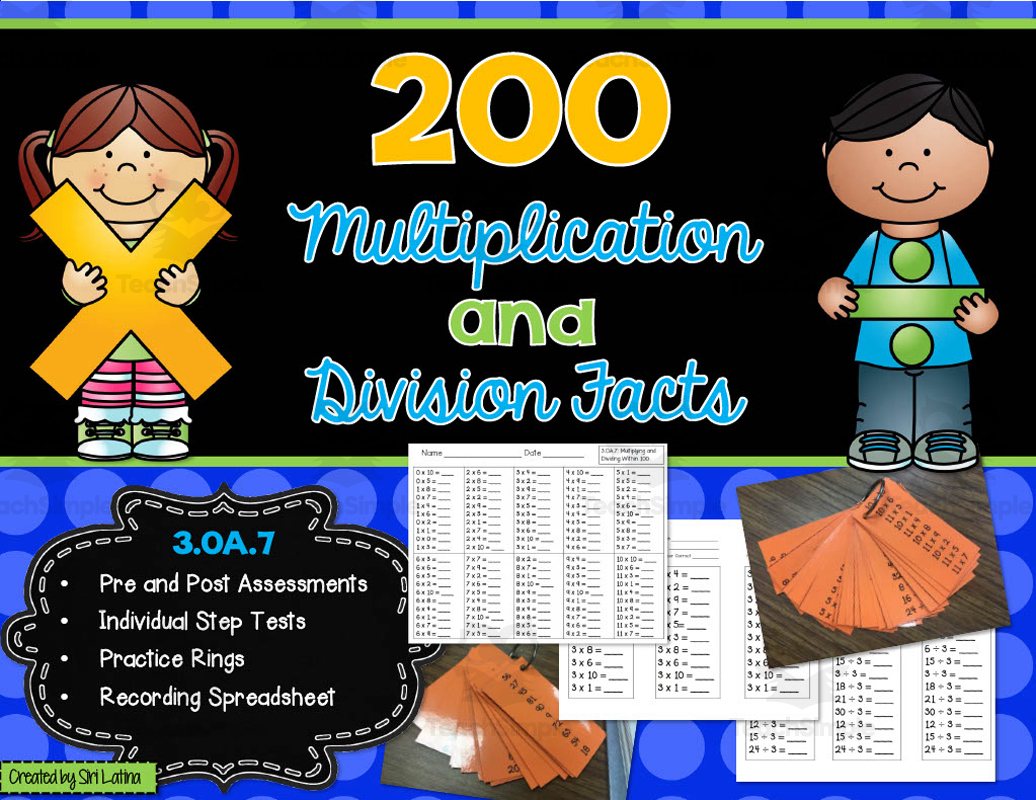
Complete timed whole-sheet pre/post assessments and 30-second individual step mini-tests by writing the missing product or quotient for each fact; use practice rings for repeated drill.
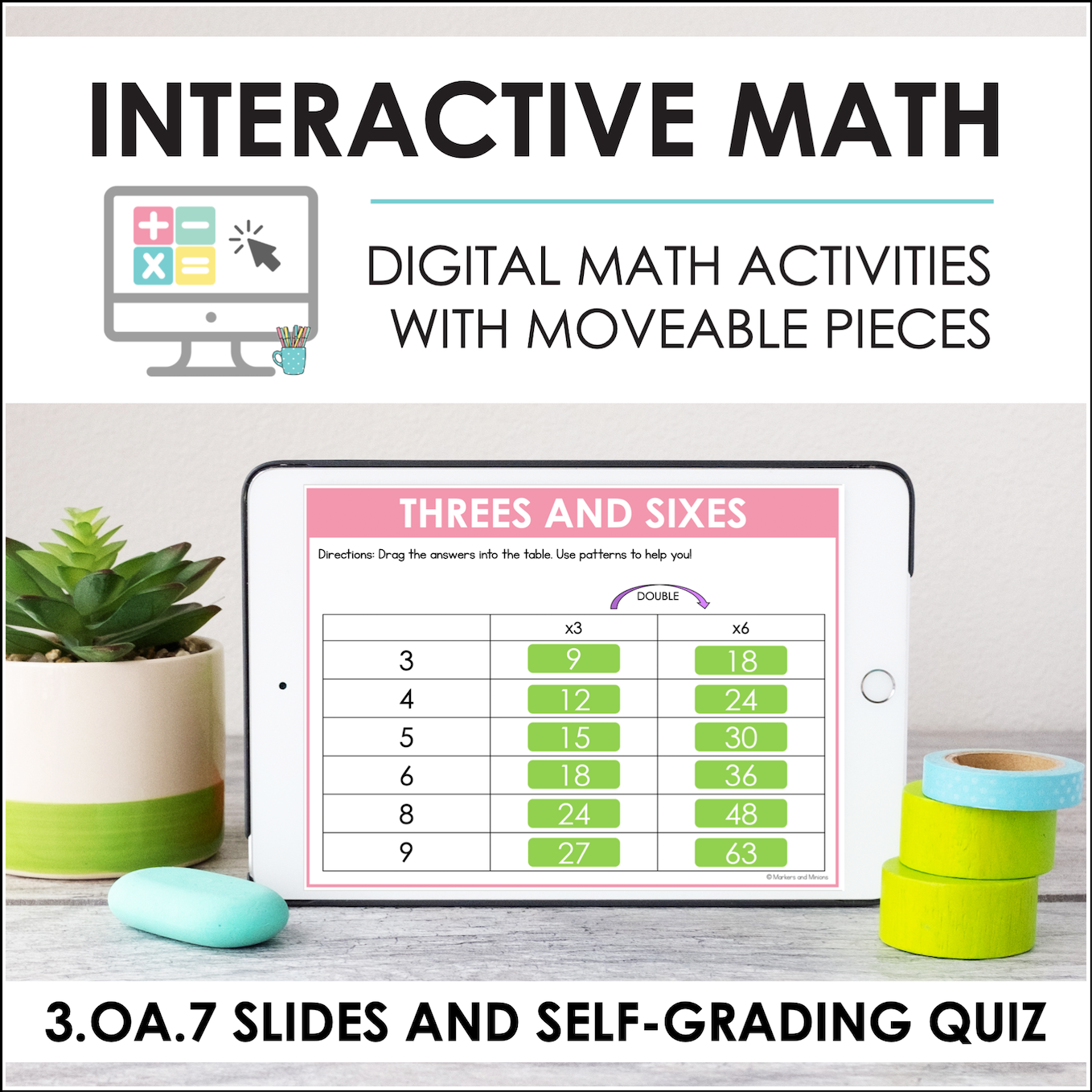
Interactive digital slide deck plus a linked self-grading Google Form quiz for building multiplication and division fact fluency (CCSS 3.OA.7), with a pattern-based approach.

Complete exercises across four sections: label and interpret bar graphs, complete tables and stem-and-leaf plots and find mean/median/mode from them, draw and interpret circle graphs from survey/percentage data, and complete tree diagrams to find probability and sample space for coin-flip scenarios; each section ends…
 Free download
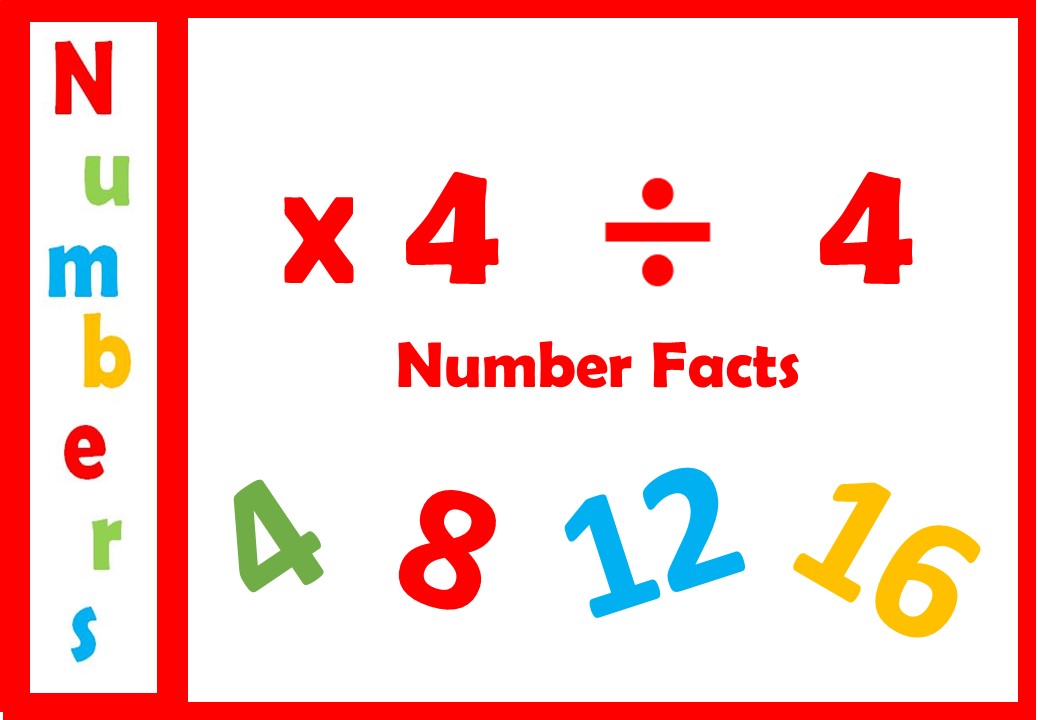
 Answer multiplication (x4) and related division (÷4) fact flashcards presented in a timed quiz/game format ('Ready Steady GO' ... 'STOP').

Give students extra practice, homework, and assessment on the 'Round and Adjust' mental math strategy for adding decimals, as a supplement to daily Number Talks.
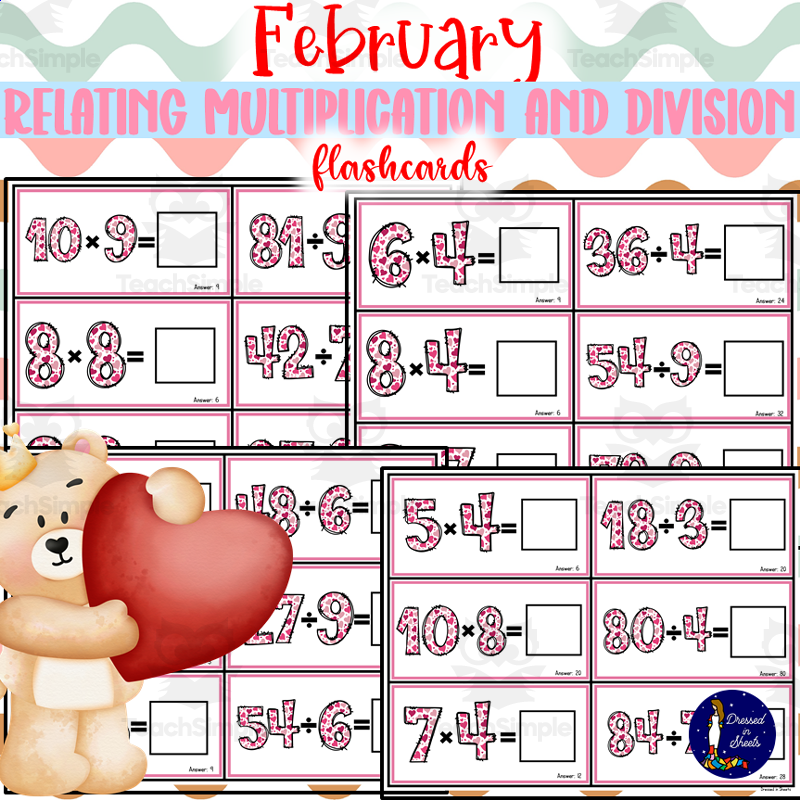
Cut out, fold, and glue flashcards with a multiplication problem on the front and the related division problem on the back; use them to practice/quiz multiplication and division facts, ideally with a partner.

Read the divisibility rules guide and poster explaining each rule/proof, then apply the rules on worksheets to test divisibility of even numbers, odd numbers, and to determine prime numbers.

Digital interactive-slides review and self-grading quiz practicing CCSS 5.OA.1 - writing and interpreting numerical expressions.
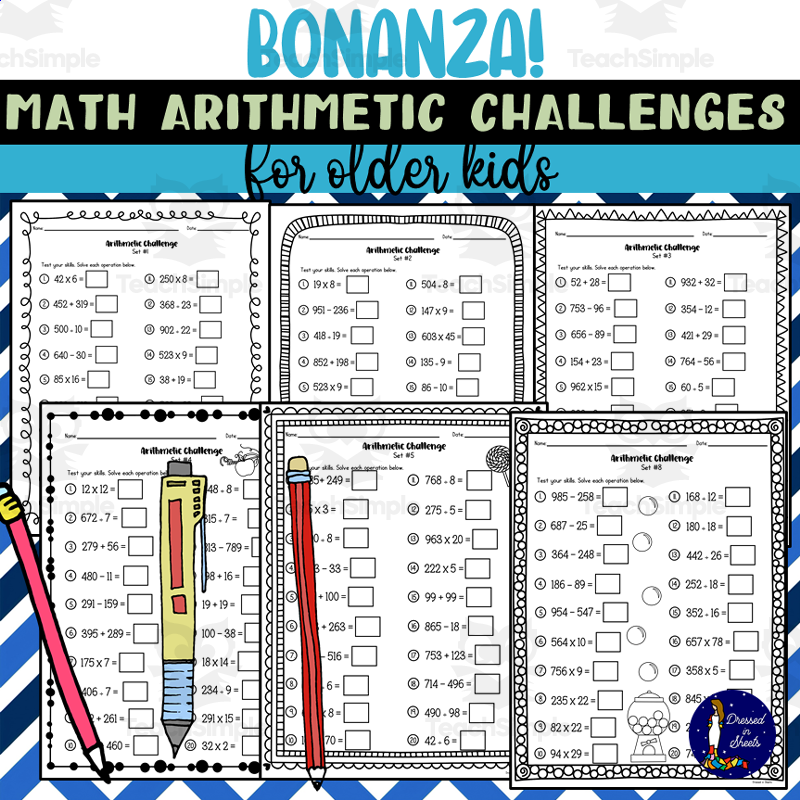
Provide timed arithmetic practice sheets mixing addition, subtraction, multiplication, and division problems for daily warm-ups, bell ringers, or test prep.
Students answer 30 multiple-choice and open-response math questions covering grade-level math domains, showing work for open-response items.
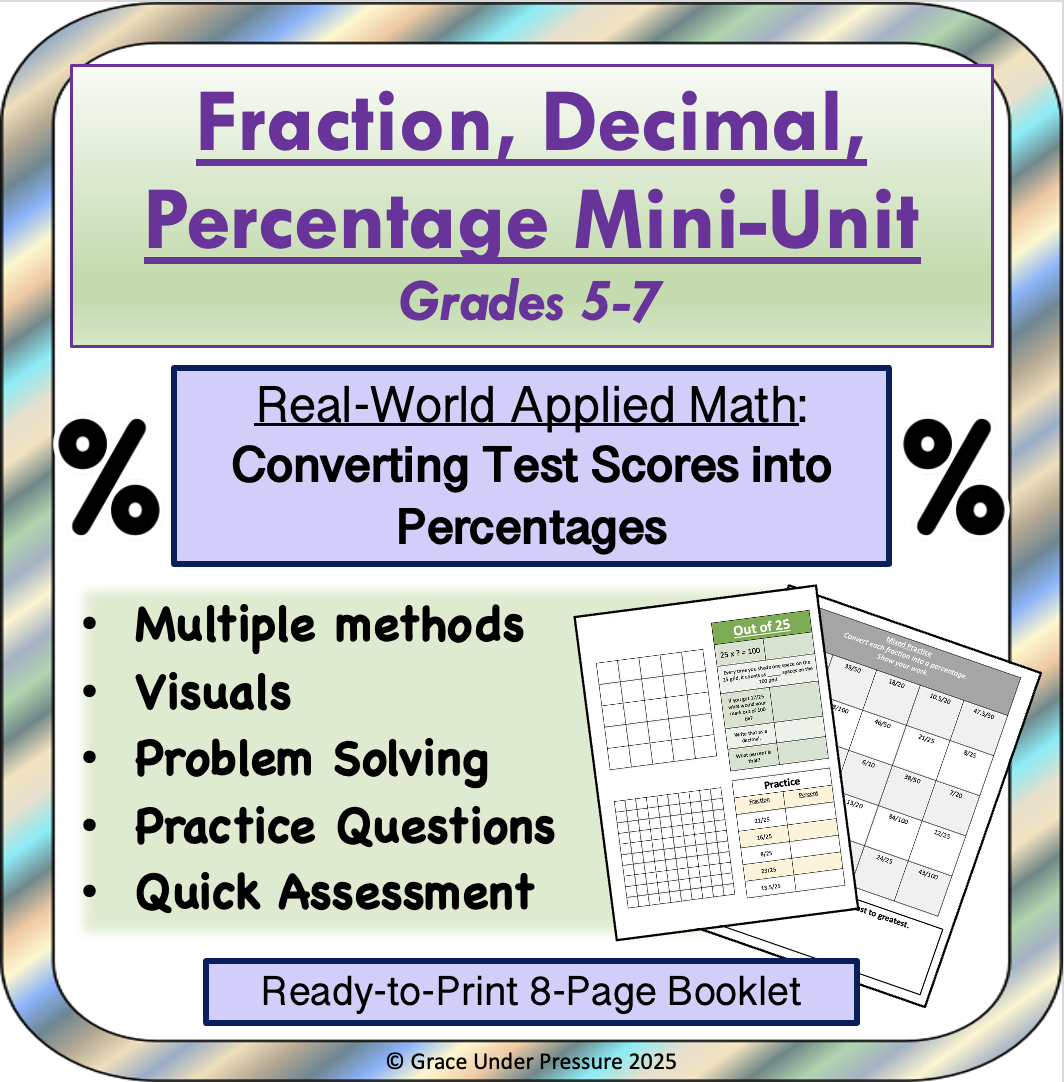
Convert given fraction scores (e.g., out of 50, 25, 20, 10) into percentages and decimals by shading grids, finding equivalent fractions with denominator 100, and using long division for harder denominators; complete practice and mixed-practice problem sets, including a partner problem-solving task and a…
Continue the knight's-quest narrative through four puzzle activities (Stone Wall, Fireflies, Enchanted Tree, Dragon's Test) plus an extra-time activity, applying multiplication/division vocabulary (e.g. twice, product, times, quotient) to solve puzzles.
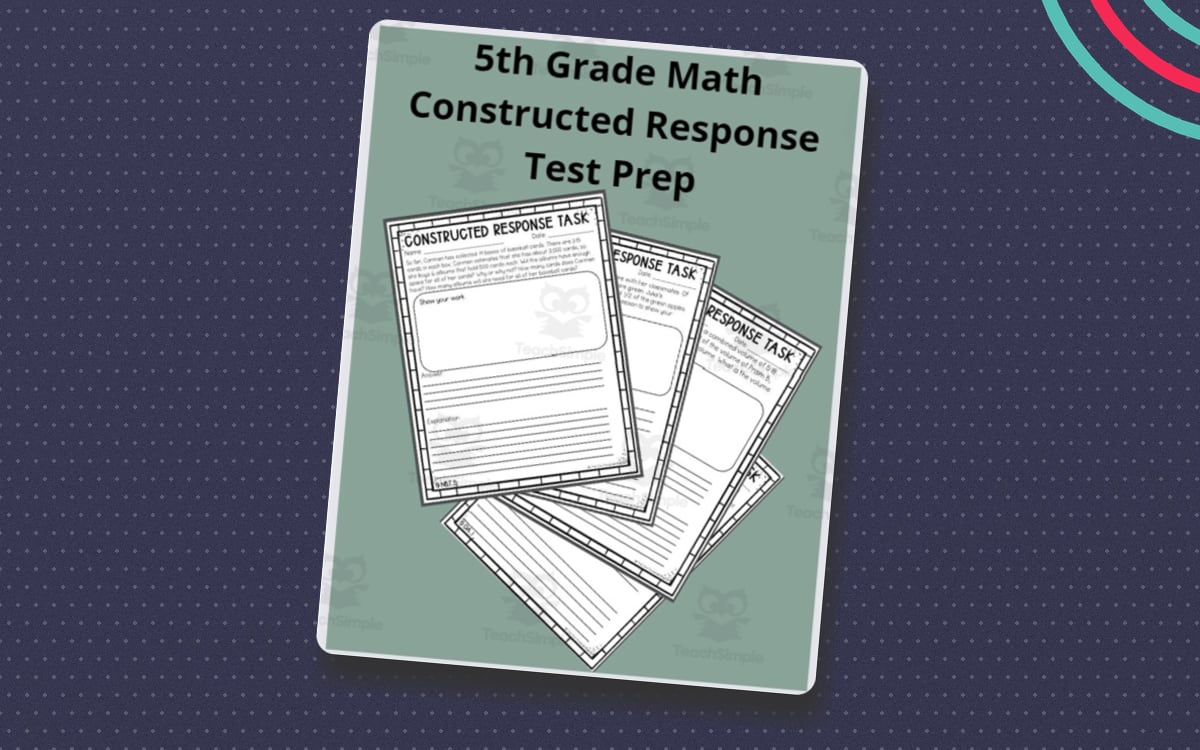
Model the difference between showing a calculation and explaining why it works. Choose tasks for the skills you are reviewing and discuss more than one clear way to represent a solution.
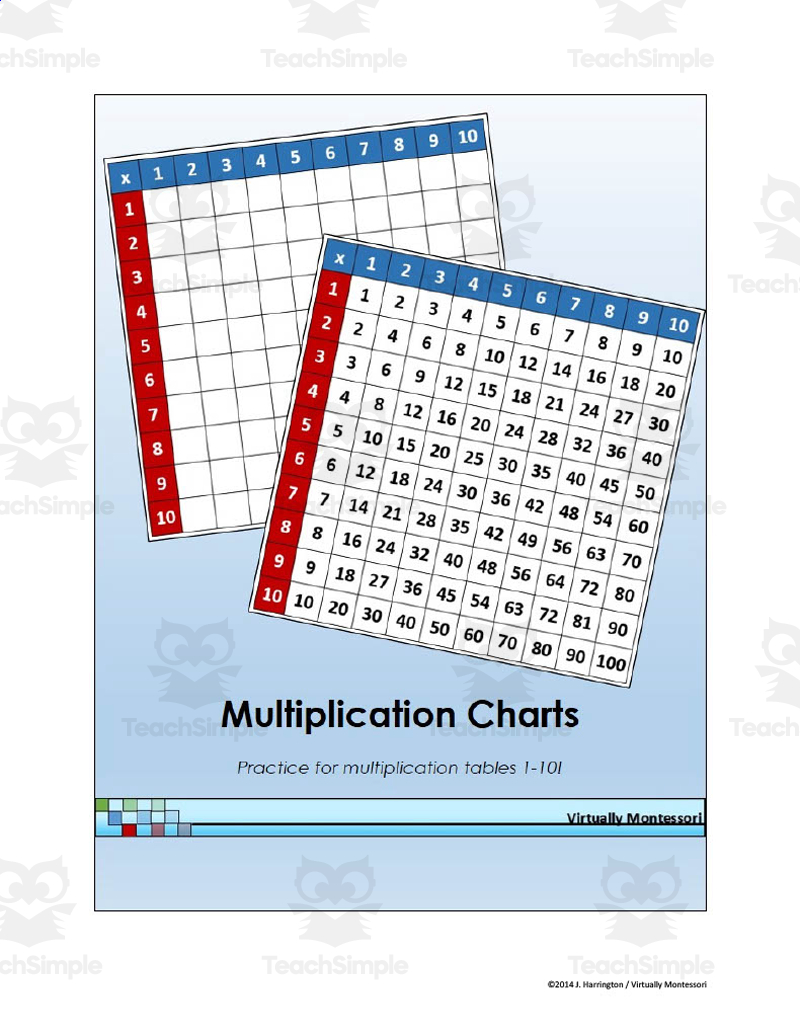
Fill in products on a blank 1-10 x 1-10 chart using finger-tracing from the top row and left column, then check answers against the completed chart; can also be used as a timed self-assessment.