Positivity Journal
A fill-in-the-blank daily journal encouraging students to reflect on their feelings and record positive moments, gratitude, and things they're proud of, to build optimistic thinking and emotional resilience.
Classroom resources
Browse by lesson focus
Choose the topic or kind of practice you need.
A fill-in-the-blank daily journal encouraging students to reflect on their feelings and record positive moments, gratitude, and things they're proud of, to build optimistic thinking and emotional resilience.
Provides 125 open-ended math journal prompts (one per page) across five math strands to promote written explanation of mathematical thinking, differentiation, and use as fast-finisher/enrichment activities, aligned to grade 3-4 Common Core standards.
A set of daily writing/journal prompts themed around June and summer, intended to give students a new creative or reflective writing topic each day.
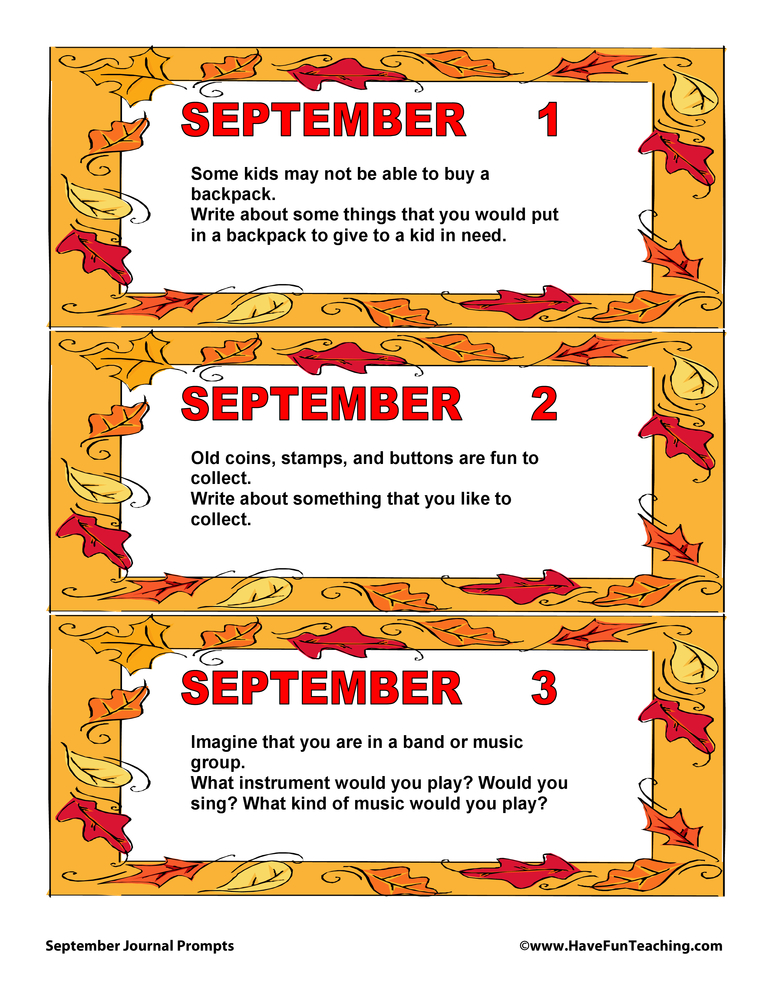
September Daily Journal Prompts: These September journal prompts are the perfect way for students to practice their writing skills while responding to September-themed prompts! With 50 different prompts to choose from, there’s something for everyone. Whether your students are just getting started with journaling or are experienced…
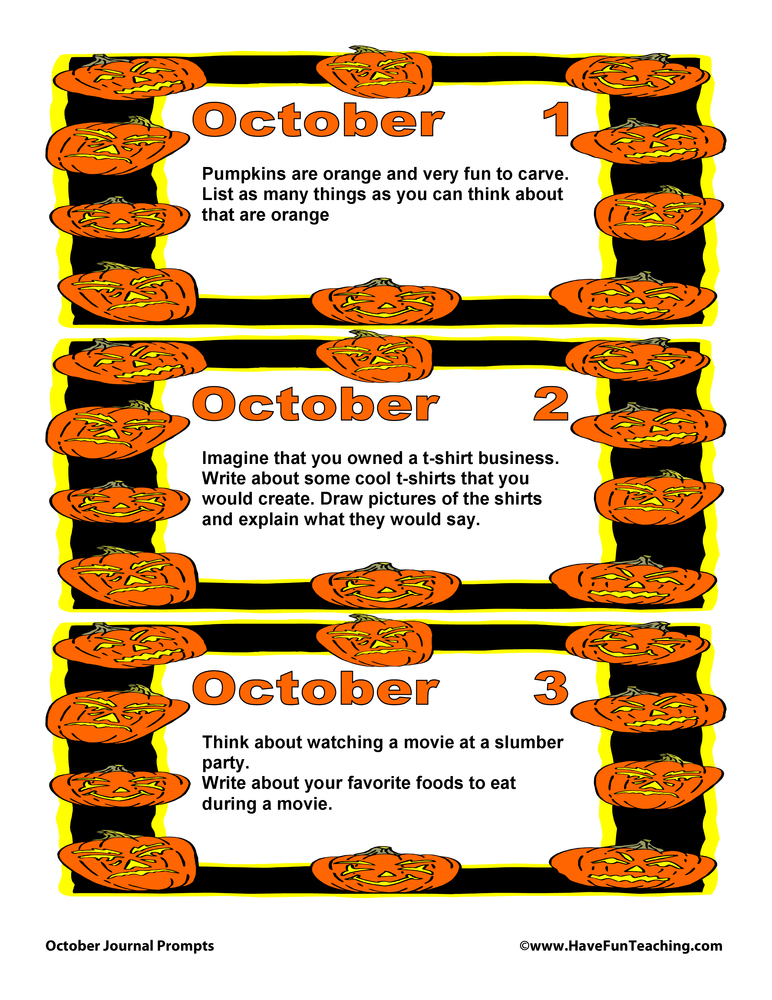
These October Daily Journal Prompts are a great way for students to practice their writing skills. The prompts are October themed, so students can write about their favorite things about the month.
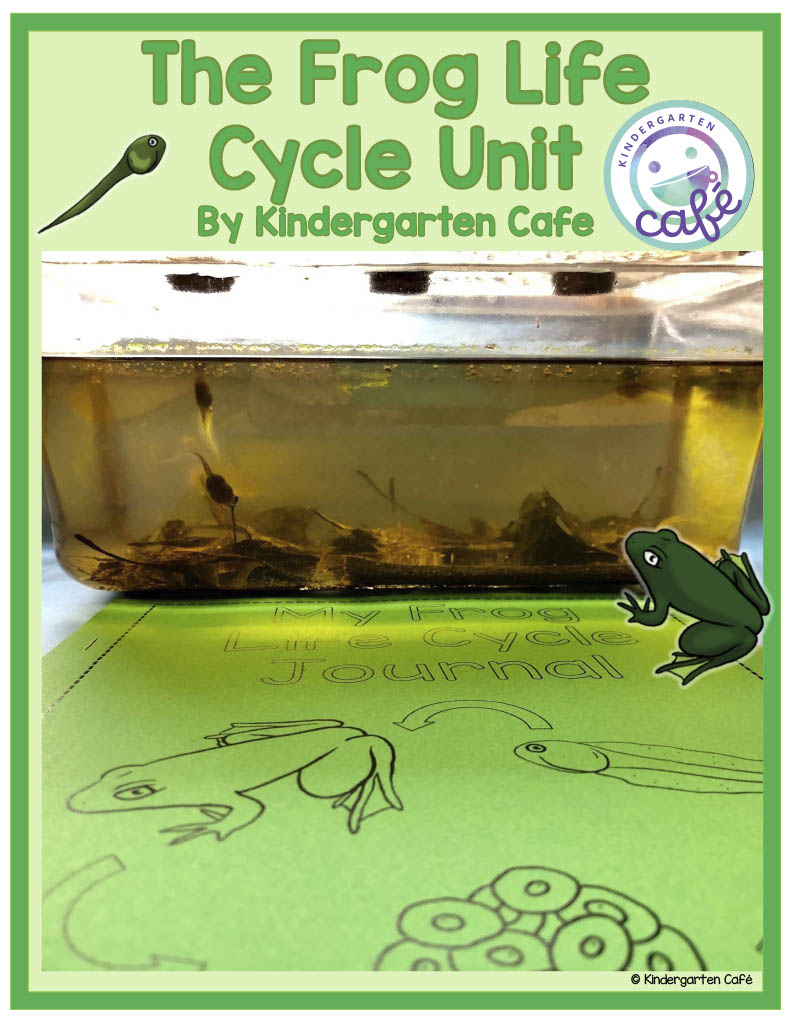
A science unit that teaches the frog life cycle (egg, tadpole, froglet, frog) through a science journal, labeling diagrams, and sequencing activities.
A frog/amphibian science activity packet teaching young students about frog habitats, diet, camouflage, and the frog life cycle (eggs, tadpole, mature tadpole, froglet, adult frog)
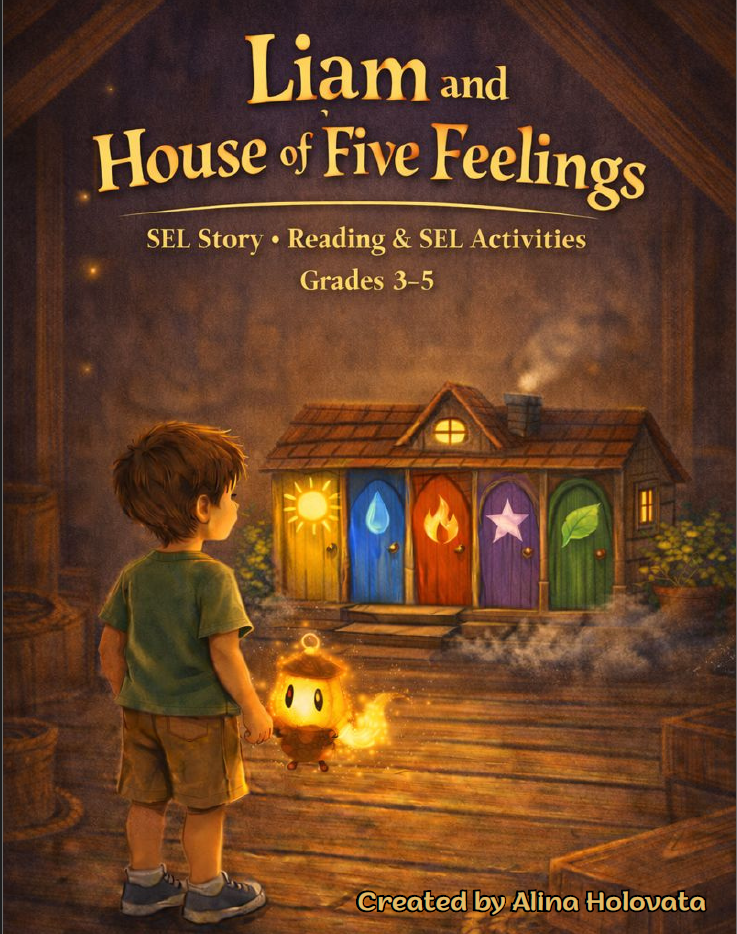
An SEL (social-emotional learning) resource pack built around a printable story, 'Liam and the House of Five Feelings,' teaching students to identify and manage five emotions (happy, sad, angry, scared, calm).
A set of daily no-prep morning-work worksheets for August, giving 2nd/3rd graders 10-15 minutes of mixed math and language-arts review as they settle into the classroom.
A set of daily no-prep morning-work worksheets for June, giving 2nd/3rd graders 10-15 minutes of mixed math and language-arts review as they settle into the classroom.
A set of daily no-prep morning-work worksheets for April, giving 2nd/3rd graders 10-15 minutes of mixed math and language-arts review as they settle into the classroom.
Provides double-entry journal prompts and summary/analysis questions for Act 1, Scenes 4 and 5 of Romeo and Juliet.
Provides double-entry journal prompts and summary/analysis questions for Act 2, Scenes 1 and 2 of Romeo and Juliet.
Provides double-entry journal prompts and a summary question analyzing Act 3, Scene 2 of Romeo and Juliet.
Provides double-entry journal prompts and analysis questions for Act 3, Scene 5 of Romeo and Juliet, the dawn parting scene.
A chapter-by-chapter creative-response student handbook for Harry Potter and the Sorcerer's Stone, designed to build engagement and creativity through character analysis, prediction, and imaginative writing prompts rather than traditional right/wrong comprehension questions.
Provides double-entry journal prompts and analysis questions for Act 3, Scene 1 of Romeo and Juliet, the scene in which Tybalt is killed and Romeo is banished.
Provides four double-entry journal prompts and a summary question analyzing Act 1, Scene 1 of Romeo and Juliet, focused on character relationships and power dynamics.
Provides double-entry journal prompts and summary questions analyzing Act 1, Scenes 2 and 3 of Romeo and Juliet, focused on character relationships and power dynamics.
A double entry journal worksheet for close reading and analysis of Chapter 2 of John Steinbeck's The Pearl, focused on textual evidence, authorial attitude, and imagery.
A double entry journal worksheet for close reading and analysis of Chapter 3 of John Steinbeck's The Pearl, focused on textual evidence, figurative language, and character shifts.
A double entry journal worksheet for close reading and analysis of Chapter 4 of John Steinbeck's The Pearl, focused on textual evidence, negotiation tactics, and character message/lesson.
A double-entry journal worksheet for close reading of Act 1, Scene 1 of Shakespeare's 'Much Ado About Nothing,' focused on using textual evidence to identify character relationships, power dynamics, and dramatic irony.
A double entry journal worksheet for close reading and analysis of Chapter 1 of John Steinbeck's The Pearl, focused on textual evidence, imagery, character traits, and inference.