



3,984 products added recently
Page 42 - 8th Grade Activities
Equip your eighth-grade students for the next academic level with activities that challenge and inspire. These resources focus on advanced concepts, critical thinking, and skill refinement. Use them to ensure students are confident and prepared for the transition to high school.

 Show filters

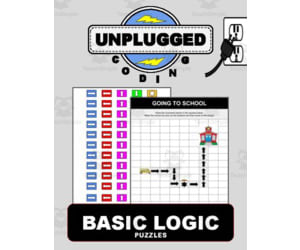
Basic Logic Puzzles (Unplugged Coding #3)
Science, Technology, Computer Science, Grade 1, 2, 3, 4, 5, 6, 7, 8, Activities
Basic Logic Puzzles (Unplugged Coding #3) - Teaching Resource A unique teaching resource targeted towards initiating coders in grades 1 to 8, Basic Logic Puzzles (Unplugged Coding #3) ensures that learning about programming doesn't always necessitate a computer. It comprises printable activities aimed at fostering analogous logic and strategies your students would employ when using coding websites or apps. Features The core focus of this teaching resource is basic logic puzzles, offered as printable and interactive puzzles with cuttable commands. The puzzles can be used for group instruction, small group sessions, or even as homework assignments. Incorporates a diverse range of topics including food, school-related concepts and special holidays like Christmas and Halloween! In these interactive challenges, there's more than one solution — students can find multiple correct paths to solve a challenge if each coding command is correctly used. Add-ons Included in the package: 'Commands Info Page': A page offering an explanation about the function of each command and how they can be utilised within the puzzles. A Commands grid:: This grid furnishes both color and black-and-white versions adding convenience based on individual printing preferences. Towards Strong Foundational Programming Skills Suitable for educators handling computer science classes in schools as well as parents homeschooling their children - Basic Logic Puzzles (Unplugged Coding #3) aids in nurturing essential programming skills without the constant need for digital access. Note:This educational resource document comes in an easily downloadable PDF format for ready use!
Author Roombop
Tags Logic Puzzles, Unplugged Coding, Interactive Activities, Problem Solving, Commands, Coding Riddle, Simple Logic Problems, Coding Puzzle, Simple Logic Puzzle, Coding Puzzles
Blood Drops Activity
Science, Life Sciences, Human Body, Grade 3, 4, 5, 6, 7, 8, 9, Activities
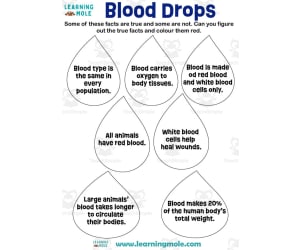
Activity Overview The human body is full of fascinating wonders to learn. This activity is created to help the students recognize the anatomy and the job of the human body. Blood Drops Every part and organ in our human body is vital so let's see how important they are. Have you ever imagined how we look like if we didn't have a skeleton? Did you know that because we have our amazing muscles we can stand! Do you know how many teeth do we have? Have you ever wondered about the food journey inside our body? Can you name all the glands in our body? Why do we have skin? Our nervous system is really good at sending signals. Can you tell us more about it? Are you really good at Mathematics, painting, or any other thing? You should really thank your brain about it! The famous five senses are really doing a great work? Can you explain how every sense works? Blood Drops Activity The activity is perfect for encouraging the researching skills for the students, while learning more about our fantastic human body. Blood Drops This friendly designed worksheet is suitable for students at school, homeschooling, and as a group activity. Instruction Some of these facts are true and some are not. Can you figure out the true facts and colour them red. Format Available in a PDF format.
Author Educational Voice
Tags Blood Drops Activity, Blood Drops, Blood Drops Facts, Blood Drops Facts For Kids, Human Body, Human Body Facts, Human Body Facts For Kids , Science, Science Facts

Robert Boyle – Exploring the Foundations of Modern Chemistry
Life Sciences, Science, STEM, Social Studies, Biographies, Inventors, Basic Science, Physics, Chemistry, Human Body, Grade 6, 7, 8, 9, 10, 11, Worksheets, Worksheets & Printables, Quizzes, Quizzes and Tests, Teacher Tools, Projects, Activities
Robert Boyle – Exploring the Foundations of Modern Chemistry A short reading and activity set for grades 7–10 (PDF + H5P) ⚗️📘 A printable and digital resource This material introduces students to Robert Boyle, a 17th-century scientist often considered one of the founders of modern chemistry. His work on gases and scientific experimentation is still relevant today, especially when students first encounter Boyle’s Law or the basics of pressure and volume. The text and tasks are structured in a way that makes them easy to use in a regular lesson or even in a non-specialist substitute setting. Students work independently or in pairs to read, reflect, and test their understanding. Included in this resource: Informational text on Robert Boyle and his contributions Profile worksheet to guide understanding Quiz questions with solutions Two optional follow-up tasks: – Students write their own questions about the text – Partner activity: exchange and answer peer questions Formats: – Printable PDF – Editable DOCX (text only) – H5P version for interactive, digital use Classroom use: I’ve used materials like this to complement lessons on gas laws or to introduce a historical perspective on chemistry. It works well as part of a science unit, a literacy-focused lesson, or even during quiet working phases. Students read the short info text, fill out a profile sheet, and complete the quiz. The additional tasks are great for early finishers or small group work. The H5P version is useful for digital platforms and allows students to check their answers independently. No special preparation is needed – just print or upload and the activity is ready to go. Have fun exploring the world of science with your students! Warmly, Lernfitness Did You Know? I teach with a certified therapy dog, and together we focus on creating a positive and inspiring learning environment.
Author Lernfitness
Rating
Tags Science, Famous Scientists Lesson, H5P, Interactive Science Exercises, STEM, History, Scientists, Chemistry, Robert Boyle, Gases
The Tragedy of the Commons Simulation (Slides, Worksheet, Instructions)
Social Studies, History, Psychology, Grade 7, 8, 9, 10, 11, 12, Activities, Games
The Tragedy of the Commons Simulation introduces students to the economic concept of the "tragedy of the commons" through an engaging in-class game . Students compete in rounds to collect the most slips of paper, learning firsthand how self-interest can lead to overuse and depletion of shared resources. Accompanying slides explain the concept and connect it to real-world examples. This complete lesson includes teacher instructions outlining the lively simulation, student worksheets for reflection and discussion, printable slips for the game , and presentation slides summarizing key learnings. Applicable for middle and high school economics, social studies, or psychology, this hands-on group activity sparks critical thought on cooperation vs. competition and responsible use of shared resources.
Author Ed Dynamic
Tags Economics, Social Studies, Psychology, Cooperation, Competition

Animal Skin, Cats, and T. Rex: Reading passages (FILLABLE PDF)
Science, ELA, Reading, Reading Comprehension, Strategies, Resources for Teachers, Life Sciences, Animals, Insects, Nature & Plants, Grade 6, 7, 8, 9, Writing Prompts, Worksheets & Printables, Centers, Activities, Teacher Tools, Assessments, Quizzes and Tests, Quizzes, Tests
Animal Skin, Cats, & T. Rex: Reading Comprehension Passages (PDF) This very engaging and fillable collection of life science reading passages about Animal Skin, Cats, & T. Rex is designed to bridge the gap between science and literacy through strengthening reading comprehension and sparking scientific curiosity in middle school students. Each passage blends English Language Arts skills with accurate science content that supports NGSS classroom practice. Ideal for interdisciplinary learning in ELA and Science. Suitable for Grade 9 review, too! These worksheets are designed as fillable PDFs , which means students can type their answers directly into the document on any computer or tablet . Each page includes highlighted text fields that show them exactly where to type! What Is Included? There are (3) informational passages: Tyrannosaurus rex: The Tyrant Lizard King Cats and Sweetness: A Taste They Don’t Have Animal Skin: A Tool for Survival Student Tasks for Each Passage: 5 multiple-choice questions targeting main idea, key details, inference, vocabulary in context, and use of evidence 5 vocabulary matching items with clear, student-friendly definitions 5 text-based questions that require citing specific lines or facts 1 summary prompt that asks students to condense central ideas accurately Full answer key for every section Available Formats for this Resource Word Docs Google Docs FULL CATALOG OF DOWNLOADING LINKS HERE Other Science Reading Collections and Topics You May Find in the Store: 1. Astronomy & Space Science 2. Volcanoes, Rocks, & Mountains 3. Rock Cycle, Soil, & Sinkholes 4. Mars, Glaciers, & Antarctica 5. Water Cycle, Acid Rain, & Wastewater 6. Insects, Animals, & Ecosystems 7. Bioluminescence & Insects 8. Animal Skin, Cats, & T. Rex 9. Human Body and Senses 10. Health & Applied Bioscience 11. Waves, Light, & Imaging 12. Electricity & Energy 13. Motion & Materials 14. Chemistry and Materials Science 15. Electromagnetism 16. Acids and Bases 17. Gas Laws 18. Biotechnology 19. Periodic Trends 20. Protists and Fungi 21. Microevolution 22. Blood 23. Chemical Bonding 24. Magnets 25. Muscles 26. Nuclear Chemistry 27. Electromagnetic Devices 28. Epigenetics 29. The Law of Conservation of Mass 30. Atomic Models 31. Isotopes and Ions 32. Light 33. Human-Environment Interaction 34. Theory of Evolution 35. Photosynthesis 36. Origins of Life and Early Earth 37. Gene Expression and Regulation 38. Thermochemistry 39. Allergies 40. Coevolution 41. Birth to Adulthood 42. Cells 43. Entropy and Free Energy 44. The Human Brain 45. Mixtures and Solutions 46. Invertebrates 47. Zoo Animals 48. Biochemistry 49. Animal Behavior 50. Population Ecology ...and many more engaging science reading passages that cover intriguing and important topics designed to spark curiosity and support student learning. How to Use These PDFs Click on the highlighted area to start typing your answer. Move to the next question by clicking in the next highlighted box. When you are finished, close the document and select SAVE so your answers stay recorded. If you want to keep a blank copy for later, choose Save As and give your completed version a new name. Product Details Length: 1e pages total Grades: 6–8, also suitable for Grade 9 review Use cases: close reading, stations, homework, intervention, test prep, and sub plans Standards support: reinforces informational-text skills and supports NGSS-style sense making through observation, modeling, and clear use of claim, evidence, and reasoning Why Teachers Choose This Set Authentic science content paired with rigorous literacy practice Consistent task structure across all passages for easier planning and smoother student routines Clear, age-appropriate writing that builds confidence without oversimplifying Use this set to reinforce ELA skills in science, to add literacy to your lessons, or to support independent work. The passages strengthen main idea, evidence use, vocabulary in context, inference, cause and effect, and summary writing. With ready-to-use assessments and complete answer keys, you can provide focused practice that is simple to run and fast to review.
Author Middle & High School - CORED Education
Rating
Tags Middle School, Reading Comprehension, Reading Strategies, ELA, Centers, Reading Passage, Assessments, Vocabulary, Life Science, Dinosaurs

Life Science Reading Comprehension Passage: Insects (Word)
Science, ELA, Reading, Reading Comprehension, Strategies, Resources for Teachers, Life Sciences, Insects, Grade 6, 7, 8, 9, Writing Prompts, Worksheets & Printables, Centers, Activities, Teacher Tools, Assessments, Quizzes and Tests, Quizzes, Tests
Life Science Reading Comprehension Passage and Questions: Insects (Word) This very engaging life science reading passage about insects . It explains that insects may be small, but they have a huge impact. They help pollinate plants , spread seeds , recycle waste , and provide food for many animals . It also explains what makes an insect an insect, including its exoskeleton, three body parts, six legs, and antennae . This passage is designed to bridge the gap between science and literacy through strengthening reading comprehension and sparking scientific curiosity in middle school students. The passage blends English Language Arts skills with accurate science content that supports NGSS classroom practice. Ideal for interdisciplinary learning in ELA and Science. Suitable for Grade 9 review, too! Student Tasks for The Passage: 5 multiple-choice questions targeting main idea, key details, inference, vocabulary in context, and use of evidence 5 vocabulary matching items with clear, student-friendly definitions 5 text-based questions that require citing specific lines or facts 1 summary prompt that asks students to condense central ideas accurately Full answer key for every section Available Formats for this Resource PDF Fillable PDF Google Docs FULL CATALOG OF DOWNLOADING LINKS HERE Product Details Length: 4 pages total Grades: 6–8, also suitable for Grade 9 review Use cases: close reading, stations, homework, intervention, test prep, and sub plans Standards support: reinforces informational-text skills and supports NGSS-style sense making through observation, modeling, and clear use of claim, evidence, and reasoning Why Teachers Choose This Set Authentic science content paired with rigorous literacy practice Consistent task structure across all passages for easier planning and smoother student routines Clear, age-appropriate writing that builds confidence without oversimplifying Other Science Reading Collections you May find in the store: 1. Astronomy & Space Science 2. Volcanoes, Rocks, & Mountains 3. Rock Cycle, Soil, & Sinkholes 4. Mars, Glaciers, & Antarctica 5. Water Cycle, Acid Rain, & Wastewater 6. Insects, Animals, & Ecosystems 7. Bioluminescence & Insects 8. Animal Skin, Cats, & T. Rex 9. Human Body and Senses 10. Health & Applied Bioscience 11. Waves, Light, & Imaging 12. Electricity & Energy 13. Motion & Materials 14. Chemistry and Materials Science Use this set to reinforce ELA skills in science, to add literacy to your lessons, and to support independent work. The passages strengthen main idea, evidence use, vocabulary in context, inference, cause and effect, and summary writing. With ready-to-use assessments and complete answer keys, you can provide focused practice that is simple to run and fast to review.
Author Middle & High School - CORED Education
Rating
Tags Middle School, Reading Comprehension, Reading Strategies, ELA, Centers, Reading Passage, Assessments, Vocabulary, Life Science, Insects
Earth Science Reading Comprehension Passage: Igneous Rocks (Word)
Science, ELA, Reading, Reading Comprehension, Strategies, Resources for Teachers, Earth and Environmental Sciences, Earth Sciences, Grade 6, 7, 8, 9, Writing Prompts, Worksheets & Printables, Centers, Activities, Teacher Tools, Assessments, Quizzes and Tests, Quizzes, Tests
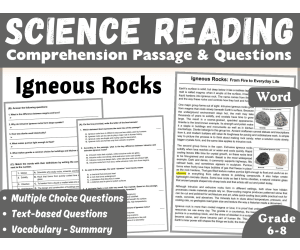
Science Reading Comprehension Passages and Questions: Igneous Rocks (Word) This very engaging earth science reading passage about Igneous Rocks is designed to bridge the gap between science and literacy through strengthening reading comprehension and sparking scientific curiosity in middle school students. The passage blends English Language Arts skills with accurate science content that supports NGSS classroom practice. Ideal for interdisciplinary learning in ELA and Science. Suitable for Grade 9 review, too! Student Tasks for The Passage: 5 multiple-choice questions targeting main idea, key details, inference, vocabulary in context, and use of evidence 5 vocabulary matching items with clear, student-friendly definitions 5 text-based questions that require citing specific lines or facts 1 summary prompt that asks students to condense central ideas accurately Full answer key for every section Available Formats for this Resource PDF Fillable PDF Google Docs FULL CATALOG OF DOWNLOADING LINKS HERE Product Details Length: 4 pages total Grades: 6–8, also suitable for Grade 9 review Use cases: close reading, stations, homework, intervention, test prep, and sub plans Standards support: reinforces informational-text skills and supports NGSS-style sense making through observation, modeling, and clear use of claim, evidence, and reasoning Why Teachers Choose This Set Authentic science content paired with rigorous literacy practice Consistent task structure across all passages for easier planning and smoother student routines Clear, age-appropriate writing that builds confidence without oversimplifying Other Science Reading Collections you May find in the store: 1. Astronomy & Space Science 2. Volcanoes, Rocks, & Mountains 3. Rock Cycle, Soil, & Sinkholes 4. Mars, Glaciers, & Antarctica 5. Water Cycle, Acid Rain, & Wastewater 6. Insects, Animals, & Ecosystems 7. Bioluminescence & Insects 8. Animal Skin, Cats, & T. Rex 9. Human Body and Senses 10. Health & Applied Bioscience 11. Waves, Light, & Imaging 12. Electricity & Energy 13. Motion & Materials 14. Chemistry and Materials Science Use this set to reinforce ELA skills in science, to add literacy to your lessons, and to support independent work. The passages strengthen main idea, evidence use, vocabulary in context, inference, cause and effect, and summary writing. With ready-to-use assessments and complete answer keys, you can provide focused practice that is simple to run and fast to review.
Author Middle & High School - CORED Education
Rating
Tags Middle School, Reading Comprehension, Reading Strategies, ELA, Centers, Reading Passage, Assessments, Vocabulary, Environmental Science, Earth Science

Ancient Egyptian Food Activity
Social Studies, History, History: Ancient, History: African, History: World, Grade 3, 4, 5, 6, 7, 8, 9, Activities
Activity Introduction An amazing activity designed for the students to learn more about history. Ancient Egyptian Food Do you like history? Which topic do you really enjoy about history? Have you ever read an interesting facts about the Vikings? If yes, can you mention them? What do you like most about the Victorian era? Can you name all the Tudors? Have you ever wondered how people used to live in ancient Japan and ancient China? Do you know any interesting facts about ancient Egyptians and the Pharaohs? Have you ever visited South America? What do you know about Incas and Aztecs? Celtic culture was really one of a kind, can you name any of the places that Celts used to live in? Imagine yourself living during the ancient Roman empire, how your life will look like? Ancient Greece was an amazing place to live in. What do you know about ancient Greek life? Ancient Egyptian Food Activity The activity is perfect for encouraging the researching skills for the students, while learning more about history. Ancient Egyptian Food This friendly designed worksheet is suitable for students at school, homeschooling, and as a group activity. Instructions Cut out the food on page 2 then make four ancient Egyptian recipes or meals, and write down how Egyptians ate them. Format Available in a PDF format.
Author Educational Voice
Tags Ancient Egyptian Food Activity, Ancient Egyptian Food, Ancient Egyptian Food Facts, Ancient Egyptian Food Facts For Kids, Ancient Egypt, Ancient Egypt Facts, Ancient Egypt Facts For Kids, History

How to Write a Paragraph: Paragraph Sandwich - FLASH-MAC
ELA, Writing, Common Core, Grade 5, 6, 7, 8, Activities
In this Paragraph Sandwich Graphic Organizer , students will learn the steps to drafting a paragraph. Students touch the parts of the sandwich to see the steps in drafting a paragraph. Our content meets the Common Core State Standards and are written to Bloom's Taxonomy.
Author Classroom Complete Press
Tags Software (Mac), Sandwich Graphic Organizer, Sandwich Paragraph

Pig Facts Activity
Science, Life Sciences, Biology, Animals, Grade 3, 4, 5, 6, 7, 8, 9, Activities
Activity Introduction An amazing activity designed for the students to learn more about famous places in different countries. The Nocturnal Animals Do you like animals? what is your favorite one? Do you own a pet? If yes, tell us more about it, like what its name? And what do you like most about it? What are the animal kingdoms? Can you write down the characteristics of each animal class like mammals, birds, reptiles, amphibian, fish and mollusks. Do you know that some animals can sing, can you name any of them? What is the largest and the smallest mammal in the world? What is the largest and the smallest bird in the world? What is the largest and the smallest fish in the world? Nocturnal Animals Hall of Fame Activity The activity is perfect for encouraging the researching skills for the students, while learning more about this fantastic place. Nocturnal Animals Hall of Fame This friendly designed worksheet is suitable for students at school, homeschooling, and as a group activity. Instructions Pig facts: True or false? Format Available in a PDF format.
Author Educational Voice
Tags Pig Facts Activity, Pig, Pigs, Pig Facts, Pigs Facts, Pigs Facts For Kids, Animal, Animals, Animals Facts, Animals Facts For Kids
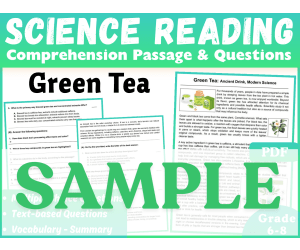
Science Reading Comprehension Passage: Green Tea. SAMPLE
Science, ELA, Reading, Reading Comprehension, Strategies, Resources for Teachers, Grade 6, 7, 8, 9, Writing Prompts, Worksheets & Printables, Centers, Activities, Teacher Tools, Assessments, Quizzes and Tests, Quizzes, Tests
This is a free passage sample from the complete resource. The full version includes everything needed for a complete reading comprehension activity: the passage, multiple-choice questions, short-answer questions, vocabulary matching, a summary-writing task, and a detailed answer key. Download the complete passage resource by clicking on the following links: PDF Fillable PDF Word Docs Google Docs Science Reading Comprehension Passage and Questions: Green Tea (PDF) This very engaging science reading passage about green tea, its ingredients, and how science studies its possible effects on the body. It explains that green tea comes from the same plant as black tea, Camellia sinensis , but green tea leaves are heated quickly to stop oxidation. This helps preserve more of the leaves’ original compounds. The passage focuses on key ingredients such as caffeine , catechins , and L-theanine , and explains how they may affect alertness, relaxation, cell protection, heart health, sleep, and iron absorption. It also makes clear that green tea can be part of healthy habits, but it is not a miracle drink or medical treatment . This passage is designed to bridge the gap between science and literacy through strengthening reading comprehension and sparking scientific curiosity in middle school students. The passage blends English Language Arts skills with accurate science content that supports NGSS classroom practice. Ideal for interdisciplinary learning in ELA and Science. Suitable for Grade 9 review, too! Student Tasks for The Passage: 5 multiple-choice questions targeting main idea, key details, inference, vocabulary in context, and use of evidence 5 vocabulary matching items with clear, student-friendly definitions 5 text-based questions that require citing specific lines or facts 1 summary prompt that asks students to condense central ideas accurately Full answer key for every section FULL CATALOG OF DOWNLOADING LINKS HERE Product Details Length: 5 pages total Grades: 6–8, also suitable for Grade 9 review Use cases: close reading, stations, homework, intervention, test prep, and sub plans Standards support: reinforces informational-text skills and supports NGSS-style sense making through observation, modeling, and clear use of claim, evidence, and reasoning Why Teachers Choose This Set Authentic science content paired with rigorous literacy practice Consistent task structure across all passages for easier planning and smoother student routines Clear, age-appropriate writing that builds confidence without oversimplifying Other Science Reading Collections you May find in the store: 1. Astronomy & Space Science 2. Volcanoes, Rocks, & Mountains 3. Rock Cycle, Soil, & Sinkholes 4. Mars, Glaciers, & Antarctica 5. Water Cycle, Acid Rain, & Wastewater 6. Insects, Animals, & Ecosystems 7. Bioluminescence & Insects 8. Animal Skin, Cats, & T. Rex 9. Human Body and Senses 10. Health & Applied Bioscience 11. Waves, Light, & Imaging 12. Electricity & Energy 13. Motion & Materials 14. Chemistry and Materials Science Use this set to reinforce ELA skills in science, to add literacy to your lessons, and to support independent work. The passages strengthen main idea, evidence use, vocabulary in context, inference, cause and effect, and summary writing. With ready-to-use assessments and complete answer keys, you can provide focused practice that is simple to run and fast to review.
Author Middle & High School - CORED Education
Rating
Tags Middle School, Reading Comprehension, Reading Strategies, ELA, Centers, Reading Passage, Assessments, Vocabulary, Bioscience, Green Tea

Middle School TEKS Team-Building Challenge: 11-Station Journey
Science, Basic Science, Physics, Grade 6, 7, 8, Activities
Middle School TEKS Team-Building Challenge: 11-Station Journey Introducing a dynamic way to kick off the school year or shake up the classroom routine with our Middle School TEKS Team-Building Challenge. This collection includes 11 interactive station activities tailored to align with the Texas Essential Knowledge and Skills (TEKS) for middle school. These stations come ready for easy implementation both in-person and online, complete with fully formatted Google versions for digital access. Every station is designed to promote cooperation, setting a tone for the semester and/or offering a refreshing change of pace from regular class activities. Your Comprehensive Package Includes: A suite of 11 Interactive Stations available in PowerPoint , Google, and PDF formats A point-based system where students earn rewards for task completion, emphasizing teamwork An engaging method to establish a positive class culture at the term's outset An environment ripe for fun and cooperative learning experiences How to Use Them: Put your students into groups of 2-4 Place the 11 stations around the room and instruct the groups to move from station to station completing the activities Great way to create a fun and inclusive learning environment I've used these stations in my classroom to great success. It gets my students out of their seats, engaging in science, and learning to work together.
Author Teach With Fergy
Tags Start Of Year, Team Building

Tea Cup Craft
Science, Earth and Environmental Sciences, Life Sciences, Nature & Plants, Grade 2, 3, 4, 5, 6, 7, 8, 9, Crafts, Activities
Activity Introduction An amazing activity designed for the students to learn more about famous places in different countries. Tea Facts Do you like STEM subjects? what is your favorite one? Have you ever tried to plant a seed? If yes, tell us more about it. Or have you ever tried to invent something? If yes, tell us more about it. And how do you think it will help us? Have you ever seen a microorganism under a microscope? What was it? And how it looked like? Mathematics is a marvelous subject. Let' sharpen our brains and solve some equations. Do you like timetable tricks? What is your favorite one? Do you know how to code? Have you ever created an app or a game before? If yes, how was it like? Tea Cup Craft Activity The activity is perfect for encouraging the researching skills for the students, while learning more about this fantastic place. Tea Cup Craft This friendly designed worksheet is suitable for students at school, homeschooling, and as a group activity. Instructions Draw Chip's face on the cup. Color the top of the cup yellow. Cut a small part for its broken piece. Cut a small piece of the yellow pipe cleaner, then bend it and glue it to make its nose. Cut a piece of the pipe cleaner and make 2 circles. Paint the bottle cap with Chip's pattern. Glue both circles to the top and bottom of the bottle cap. Glue the bottle cap under the cup. Materials Needed Paper cup Yellow pipe cleaner Bottle cap Glue Markers Paint Format Available in a PDF format.
Author Educational Voice
Tags Agriculture, Stem, Farming, Activities For Kids, Agriculture Facts, Agriculture Facts For Kids, Tea Cup Craft, Tea, Tea Facts, Tea Facts For Kids
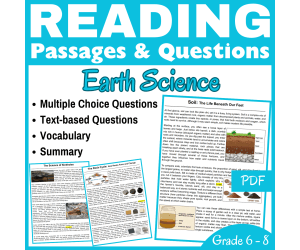
Rock Cycle, Soil, & Sinkholes: Reading Comprehension Passages (PDF)
Science, Earth and Environmental Sciences, ELA, Reading, Reading Comprehension, Strategies, Resources for Teachers, Geology, Earth Sciences, Grade 6, 7, 8, 9, Writing Prompts, Worksheets & Printables, Centers, Activities, Teacher Tools, Assessments, Quizzes and Tests, Quizzes, Tests
Rock Cycle, Soil, & Sinkholes: Reading Comprehension Passages (PDF) This engaging collection of earth science reading passages about Rock Cycle, Soil, and Sinkholes is designed to bridge the gap between science and literacy through strengthening reading comprehension and sparking scientific curiosity in middle school students. Each passage blends English Language Arts skills with accurate science content that supports NGSS classroom practice. Ideal for interdisciplinary learning in ELA and Science. Suitable for Grade 9 review, too! What Is Included? There are (3) informational passages: Soil: The Life Beneath Our Feet Explore how minerals, organic matter, water, and air build layered soil, and see how texture and structure affect roots, drainage, clean water, and healthy habitats. The Science of Sinkholes Understand how dissolving rock creates underground voids, what can trigger subsidence or collapse, and how mapping and prevention reduce risk in vulnerable areas. The Rock Cycle: How Rocks Form and Change Follow rock material as it melts, crystallizes, weathers, compacts, and transforms under heat and pressure, then connect these processes to examples in nature and everyday life. Student Tasks for Each Passage: 5 multiple-choice questions targeting main idea, key details, inference, vocabulary in context, and use of evidence 5 vocabulary matching items with clear, student-friendly definitions 5 text-based questions that require citing specific lines or facts 1 summary prompt that asks students to condense central ideas accurately Full answer key for every section Available Formats for this Resource Word Docs Google Docs FULL CATALOG OF DOWNLOADING LINKS HERE Other Science Reading Collections and Topics You May Find in the Store: 1. Astronomy & Space Science 2. Volcanoes, Rocks, & Mountains 3. Rock Cycle, Soil, & Sinkholes 4. Mars, Glaciers, & Antarctica 5. Water Cycle, Acid Rain, & Wastewater 6. Insects, Animals, & Ecosystems 7. Bioluminescence & Insects 8. Animal Skin, Cats, & T. Rex 9. Human Body and Senses 10. Health & Applied Bioscience 11. Waves, Light, & Imaging 12. Electricity & Energy 13. Motion & Materials 14. Chemistry and Materials Science 15. Electromagnetism 16. Acids and Bases 17. Gas Laws 18. Biotechnology 19. Periodic Trends 20. Protists and Fungi 21. Microevolution 22. Blood 23. Chemical Bonding 24. Magnets 25. Muscles 26. Nuclear Chemistry 27. Electromagnetic Devices 28. Epigenetics 29. The Law of Conservation of Mass 30. Atomic Models 31. Isotopes and Ions 32. Light 33. Human-Environment Interaction 34. Theory of Evolution 35. Photosynthesis 36. Origins of Life and Early Earth 37. Gene Expression and Regulation 38. Thermochemistry 39. Allergies 40. Coevolution 41. Birth to Adulthood 42. Cells 43. Entropy and Free Energy 44. The Human Brain 45. Mixtures and Solutions 46. Invertebrates 47. Zoo Animals 48. Biochemistry 49. Animal Behavior 50. Population Ecology ...and many more engaging science reading passages that cover intriguing and important topics designed to spark curiosity and support student learning. Product Details Length: 15 pages total Grades: 6–8, also suitable for Grade 9 review Use cases: close reading, stations, homework, intervention, test prep, and sub plans Standards support: reinforces informational-text skills and supports NGSS-style sense making through observation, modeling, and clear use of claim, evidence, and reasoning Why Teachers Choose This Set Authentic science content paired with rigorous literacy practice Consistent task structure across all passages for easier planning and smoother student routines Clear, age-appropriate writing that builds confidence without oversimplifying Use this set to reinforce ELA skills in science, to add literacy to your lessons, or to support independent work. The passages strengthen main idea, evidence use, vocabulary in context, inference, cause and effect, and summary writing. With ready-to-use assessments and complete answer keys, you can provide focused practice that is simple to run and fast to review.
Author Middle & High School - CORED Education
Rating
Tags Middle School, Reading Comprehension, Reading Strategies, Reading Passages, ELA, Centers, Reading Passage, Assessments, Vocabulary, Earth Science

Biology Binder Covers – Templates for Classroom Use
Life Sciences, Science, STEM, Basic Science, Special Resources, Montessori, Classroom Management, Resources for Teachers, Biology, Human Body, Homeschool Templates, Grade 7, 8, 9, 10, 11, 12, Worksheets, Worksheets & Printables, Teacher Tools, Projects, Activities, Workbooks, Drawing Templates & Outlines, Templates, Graphic Organizers, Experiments
Biology Binder Covers – Templates for Classroom Use Organize your biology handouts, notes, and units with visual clarity Simple and flexible templates to help organize your biology materials In my biology classes, it can be a challenge to keep things organized - especially when it comes to multiple units, lab notes, worksheets and review materials. To make it easier for my students and myself, I designed these simple binder sleeves. There are 12 different pages. The covers have a clean, colorful blob layout that is friendly but not distracting. I usually print them out and use them as cover sheets or as dividers in folders for students or teachers. They also work well for digital learning environments, e.g. as section covers in PDF files or on classroom platforms. I like that the color scheme allows students to quickly find what they are looking for, and it brings a little more structure to a subject that is often riddled with formulas and technical terms. When used as cover sheets, students can choose their favorite color for their cover sheet. This resource is handy - and has saved me a lot of time in lesson preparation and follow-up. What’s included: 12 biology-themed cover pages different colors zu choose as a cover sheet as a divider between the individual biology topics I've printed these on colored paper for my own binder and also used them digitally in student notebooks. Works well for both teacher organization and student-facing materials. 📍 Best wishes, Heike from Lernfitness Biology teacher (Chemistry teacher, Math teacher) in Germany Did You Know? I teach with a certified therapy dog, and together we create a positive and inspiring learning environment. 🐶✨
Author Lernfitness
Rating
Tags Science, Biology, STEM, Binder, Cover Sheet, Template, Organizer, Organize, GoodNotes, PDF
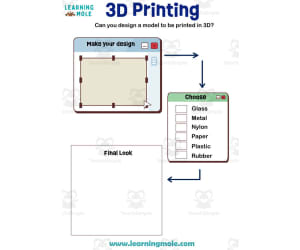
3D Printing Activity
Science, Basic Science, Technology, Grade 3, 4, 5, 6, 7, 8, 9, Activities
Activity Introduction An amazing activity designed for the students to learn more about STEM subjects. 3D Printing Do you like STEM subjects? what is your favorite one? Have you ever tried to plant a seed? If yes, tell us more about it. Or have you ever tried to invent something? If yes, tell us more about it. And how do you think it will help us? Have you ever seen a microorganism under a microscope? What was it? And how it looked like? Mathematics is a marvelous subject. Let' sharpen our brains and solve some equations. Do you like timetable tricks? What is your favorite one? Do you know how to code? Have you ever created an app or a game before? If yes, how was it like? 3D Printing Activity The activity is perfect for encouraging the researching skills for the students, while learning more about this topic. 3D Printing This friendly designed worksheet is suitable for students at school, homeschooling, and as a group activity. Instructions Can you design a model to be printed in 3D? Format Available in a PDF format.
Author Educational Voice
Tags 3D Printing Activity, 3D Printing, 3D Printing Facts, 3D Printing Facts For Kids, STEM, STEM Facts, STEM Facts For Kids, Technology, Technology Facts, Technology Facts For Kids

The Vikings - Interactive Notebook
Social Studies, History, History: Europe, History: World, Grade 5, 6, 7, 8, Activities
Teach your students all about the fascinating world of the Vikings across XX topics. SCANDINAVIAN GEOGRAPHY Students learn about the role of glaciers in shaping the geography of Scandinavia as well as the arctic climate of much of the year. VIKING RAIDS Covers the reasons why the Vikings began raiding as well as why monasteries became a major target. Here's a short sample text: "The first recorded Viking raid took place in 793 AD when a group attacked and pillaged a monastery on the island of Lindisfarne off the east coast of Britain. Monasteries quickly became a major target for different groups of Vikings as they were often home to many valuable items made from gold and silver. The monks were also often unable, or unwilling, to fight back and could be captured and sold into slavery. Monasteries were also often built in very isolated areas, far from any help. News of the raid on Lindisfarne convinced other Vikings to launch raids of their own. Some places tried to protect themselves by paying different Viking groups to leave them alone (payments known as danegeld) – however this often only encouraged other groups to attack." SHIPS & WEAPONS Students learn about why longships were so effective for raiding and how they were decorated. Students also learn about the common weapons and types of armor they used. KINGDOMS Covers the foundation of large Viking kingdoms in Britain and France. EXPLORERS & SETTLEMENTS Shows how Vikings created colonies in Ireland, Iceland, Greenland, and North America. VIKINGS IN RUSSIA Shows how the Vikings took over large areas of Russia between the 800s and 1200s AD END OF THE VIKING AGE Students learn why the Viking raids came to an end with the creation of more powerful Christian kingdoms in Europe. ACTIVITIES The file comes with a variety of different interactive notebook sheets for students to complete using the information they learn during the unit. Sheets come in versions with and without images and in formats where they can be printed out and glued together or put into a notebook. PRESENTATION Use the included presentation to help guide students through each lesson with enlarged reading passages, images, and instructions.
Author Mr Gray History
Tags Vikings, Viking, Interactive Notebook
Map Wars: U.S. State Capitals Edition | Interactive Geography Game
Social Studies, Geography, Grade 5, 6, 7, 8, Activities, Games
This resource is a Map Wars: U.S. State Capitals Edition Interactive Geography Game. This game is an exciting way for students to apply geography and mapping skills. This is a team game requiring 2 teams that can be played in multiple rounds. Students will love this engaging game! Directions for how to play are included.
Author The Social Studies Doctor
Tags Capitals, Map Wars, Mapping, Team Games, Geography, Interactive States Games
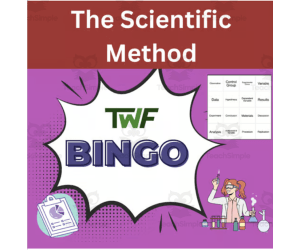
The Scientific Method Science BINGO Activity
Science, Earth and Environmental Sciences, Earth Sciences, Grade 6, 7, 8, 9, 10, 11, Activities
Your students will love this engaging science review activity. Everyone loves BINGO and it makes for a great review activity that is fun and competitive. This interactive game reinforces key scientific concepts and theories, ensuring curriculum relevance and accuracy. The game package includes 36 unique 4x4 bingo cards featuring essential terms and concepts from The Scientific Method, a set of call-out cards with clear and concise definitions tailored to the students' level, and detailed gameplay instructions. Here is a sample from the instructions. BINGO – Instructions, Terms, and Descriptions Cut out and distribute the BINGO cards to your students. Each student will get a unique card. Students can use markers or chips to cover squares that have been called. Print out and cut out each term/description below – these are the call-out cards. Fold each call-out card and place in a hat or box and remove one at a time. After you’ve read the call-out card description, your students are to place a marker on the term associated with the description located on their card. The first student to get 4 in a row horizontally or vertically, wins. Ensure accuracy by checking marked terms on student card to the called-out descriptions.
Author Teach With Fergy
Tags Science Bingo, Bingo Activity, Scientific Method, Scientific Method Activity
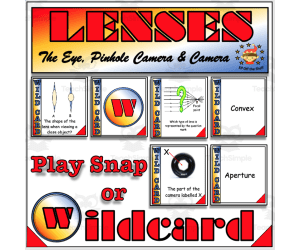
Light - Lenses, the Eye, the Pinhole camera and the Camera - Wildcard and Snap Card Games for Middle School
Science, Physics, Grade 5, 6, 7, 8, 9, Games, Activities
Light - Lenses, the Eye, the Pinhole camera and the Camera - Wildcard and Snap Card Games for Middle School: A Must-Have Educational Resource Designed for students in grades 5-9, this engaging teaching resource offers a unique approach to hands-on learning about optics. This comprehensive card deck covers topics that range from Lenses to Eye Anatomy, from Pinhole Cameras to Camera Technology. The pack includes: 66 Educative Playing Cards with scientific facts and diagrams related predominantly to physics. A systematic covering of facts around convex lenses used in various optical devices; how concave lenses work; visual perception through image formation by the eye lens; light regulation by iris-pupil dynamics etc.; this set is a versatile teaching aid. An exploration into interrelated topics such as how glasses correct sight abnormalities using various types of lenses based on individual need and ray diagrams ' working mechanism as it pertains specifically to distant & close object view recognition. The game set has been designed with a 'Wildcard' game apart from basic 'Snap' cards providing an interactive learning experience. The inclusion of an Animated PowerPoint that guides participants through game rules ensures smooth gameplay. Additionale Features: In-depth comparison between a camera’s functioning mechanism versus human vision enables learners to understand real-world applications. Suitable for cooperative education modules such as group activities as well is useful for individual self-study too! Homeschooling parents will find this multi-subject resource highly beneficial. In conclusion:, "Light - Lenses, the Eye, the Pinhole camera and the Camera" effectively makes abstract scientific theories tangible via gamified education while promoting holistic science learning.
Author Elf off the Shelf Resources
Tags Optics, Lenses, Eye Anatomy, Pinhole Camera, Camera Technology

Research Organizer & Essay Assignment: Jason Reynolds
ELA, Literature, Writing, Grade 6, 7, 8, 9, 10, Activities, Projects, Worksheets & Printables, Worksheets
This resource provides your students with the opportunity to independently research and write about the life of the renowned young adult novelist Jason Reynolds, author of the Tracks series, with this engaging research planner and essay assignment. This carefully scaffolded and easy-to-assign-AND-assess resource has been designed to guide student learning from Reynolds fact-collection to the careful development of a five-paragraph research essay. Teaching this resource could not be easier! Start by handing out the background research and note-taking worksheet (you could also ONLY hand this out if you want a shorter lesson!). Once students have found their facts and sources, provide them with the essay outline activity, which guides them step-by-step through the requirements of a short research essay. From there, drafting their essay, using the provided peer review checklist, and submitting their final draft will be no problem at all. And then you can assess their work with the provided Common Core rubric! Use this entire resource as a complete research lesson or just part of it as a short research activity or sub plan! This TeachSimple download includes: A Jason Reynolds essay writing assignment with directions, requirements, research essay writing tips, a peer review checklist, and Common Core-tied grading rubric An editable rubric, provided as a link, that lets you make adjustments to the grade values and guidelines. This link is provided as as Google Sheet specifically built for integration into Google Classroom, although you can also modify it for use in other Learning Management Systems (LMSs) A Jason Reynolds biography and note-taking worksheet that will guide your students through information gathering. This straightforward two-page handout includes instructions for background research, a fun drawing section, and an area to cite quality sources and organize conducted research A research essay outlining worksheet, so students build on their Jason Reynolds notes in a clear and simple manner as they build their work towards a draft and final paper All 6-pages of this lesson are provided in full-color and B&W versions Although this resource can be fitted for any secondary Language Arts classroom, it has been carefully designed to work best in grades 8 through 11. The included rubric is subtly but specifically tied to Common Core ELA Standards for Language (3) and Writing (2 and 7). This resource is provided as a print-ready, bookmarked, and adjustable PDF file. The rubric is also included as an editable Google Sheet. This resource contains 6 pages and 1 Google Sheet.
Author The Language of Educational Art, LLC
Tags Essay, Research, Rubric, Notetaking, Outlining
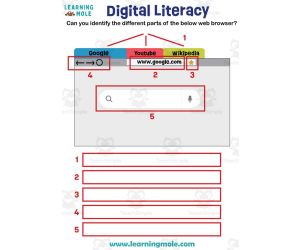
Digital Literacy Activity
Technology, Science, Computer Science, Grade 3, 4, 5, 6, 7, 8, 9, 10, 11, 12, Activities
Activity Introduction An amazing activity designed for the students to learn more about STEM. Digital Literacy Do you like STEM subjects? what is your favorite one? Have you ever tried to plant a seed? If yes, tell us more about it. Or have you ever tried to invent something? If yes, tell us more about it. And how do you think it will help us? Have you ever seen a microorganism under a microscope? What was it? And how it looked like? Mathematics is a marvelous subject. Let' sharpen our brains and solve some equations. Do you like timetable tricks? What is your favorite one? Do you know how to code? Have you ever created an app or a game before? If yes, how was it like? Digital Literacy Activity The activity is perfect for encouraging the researching skills for the students, while learning more about this fantastic topic. Digital Literacy This friendly designed worksheet is suitable for students at school, homeschooling, and as a group activity. Instructions Can you identify the different parts of the below web browser? Format Available in a PDF format.
Author Educational Voice
Tags Digital Literacy Activity, Digital Literacy, Digital Literacy Facts, Digital Literacy Facts For Kids, Technology, Technology Activity, Computer Science, Computer Science Activity, Technology Facts

Kinetic Theory, Mixtures, Separating Mixtures - Smart Board Bingo for Middle School
Science, Chemistry, Grade 5, 6, 7, 8, 9, Activities, Games
Kinetic Theory, Mixtures, Separating Mixtures - Smart Board Bingo for Middle School This interactive teaching resources offers a refreshing approach to instruct middle school students on key chemistry concepts, such as the kinetic theory of matter and mixtures properties and compositions. Core Concepts Covered: Kinetic theory of matter Properties and composition of mixtures Methods of separating mixtures This resource reinforces understanding in: Particle arrangement in various states of matter (solids, liquids, gases) Dynamics associated with state changes In-depth topics include: - Solubility definitions - Factors affecting solubility (e.g. temperature or stirring effects) - Characteristics & behaviours of suspensions & saturated solutions - Methods for isolating components (evaporation to dryness or distillation types) - Distinctions between compounds vs elements relative to mixture purity The primary teaching tool is presented through an engaging interactive bingo game accessed on a smart board. Fifty questions are generated randomly by software. If the number called out aligns with their bingo card number, students must not only cross off that number but also provide written answers on their card. This promotes active engagement and makes learning fun! Note: This package contains an answer PowerPoint and answer sheets that can be used for verification after games. Listed amongst included resources are: An Answer Powerpoint A set accommodating up-to-48 bingo cards ensuring every student's inclusion regardless of class size Breakaway sheets for the verification of student responses and topic discussions A variety of supportive supplementary materials to bolster revision at a student’s personal pace may it be as homework task or collaboratively in classroom setting In conclusion: The Kinetic Theory, Mixtures, Separating Mixtures - Smart Board Bingo for Middle School teaching resource changes the landscape of standard lessons into dynamic, interactive learning sessions. It seamlessly combines theories with fun activities that make students grasp and remember these essential chemistry concepts effectively while alluringly building their problem-solving skills. An absolutely joyous learning journey inviting middle schoolers towards charming world encapsulated within molecules leading them to have strong foundation prepping up for higher-grade studies.
Author Elf off the Shelf Resources
Tags Kinetic Theory, Mixtures, Separating Mixtures, Smart Board Bingo, Middle School

Photosynthesis Lesson | Middle School Lesson and Infographic Activity
Science, Basic Science, Earth and Environmental Sciences, Life Sciences, Nature & Plants, Biology, Grade 6, 7, 8, Activities, Projects, Lesson Plans, Teacher Tools, Presentations, Worksheets
Introduce students to the essentials of Photosynthesis and its connection to Cellular Respiration with this ready-to-use science lesson designed for Grades 6–8. This middle school resource provides both foundational knowledge and opportunities for scientific discussion and inquiry-based learning. ✅ Covers Photosynthesis and Cellular Respiration using interactive slides and critical thinking questions ✅ Includes Editable Presentations, Auto-Graded Exit Ticket , Infographic Task, and Student Notes ✅ Aligned to NGSS Standards MS-LS1-5, MS-LS1-6, MS-LS1-7, and MS-LS2-3 ✅ No-Prep Resource with built-in videos and fill-in-the-blank guided notes to support active learning This lesson package is comprehensive and student-friendly. It includes everything needed for a full class session or more, offering a smooth and engaging way to teach key life science concepts. Students will explore how energy from the sun drives life on Earth, how plants process that energy, and how it's transferred through ecosystems. Topics covered in the lesson include: The sun as Earth’s energy source Distribution of energy on Earth The structure and role of chloroplasts The function of chlorophyll Why leaves change color The processes of Photosynthesis and Cellular Respiration ATP as a cellular energy carrier How Photosynthesis supports all life on Earth What’s inside the download: A teacher slideshow with full content and answers A student version of the slideshow with fill-in-the-blank sections An auto-graded 4-question Exit Ticket for quick assessment Two instructional videos embedded within the presentation An infographic-based activity to reinforce learning A printable student worksheet to guide note-taking and discussion Standards alignment: MS-LS1-5 : Students examine how plants rely on air and water to build materials needed for growth, tying into carbon dioxide and water’s role in photosynthesis. MS-LS1-6 : Learners explain how photosynthesis drives the flow of matter and energy in living systems. MS-LS1-7 : The lesson supports modeling how food undergoes chemical reactions in cellular respiration to release energy and support growth. MS-LS2-3 : Students explore how energy and matter cycle between organisms and their environment. The student notes are designed to maximize participation without overwhelming learners with too much writing. Strategic fill-in-the-blank prompts help students focus on key vocabulary and ideas while leaving time for group discussion, exploration, and deeper analysis. These prompts are clearly marked in the teacher copy to make instruction seamless. Whether you’re teaching in person or online, this lesson gives you everything you need to introduce photosynthesis and cellular respiration in a clear, structured, and student-centered way.
Author Teach With Fergy
Rating
Tags Photosynthesis, Cellular Respiration, Biology Lesson, Chloroplast, Plants