
Play & discovery
Hibernation Letter Match Game
Practice upper- and lowercase letter recognition and matching, themed around hibernation.


Classroom resources
Browse by lesson focus
Choose the topic or kind of practice you need.
Showing 385–408 of 6055 resources

 Show filters
Practice upper- and lowercase letter recognition and matching, themed around hibernation.
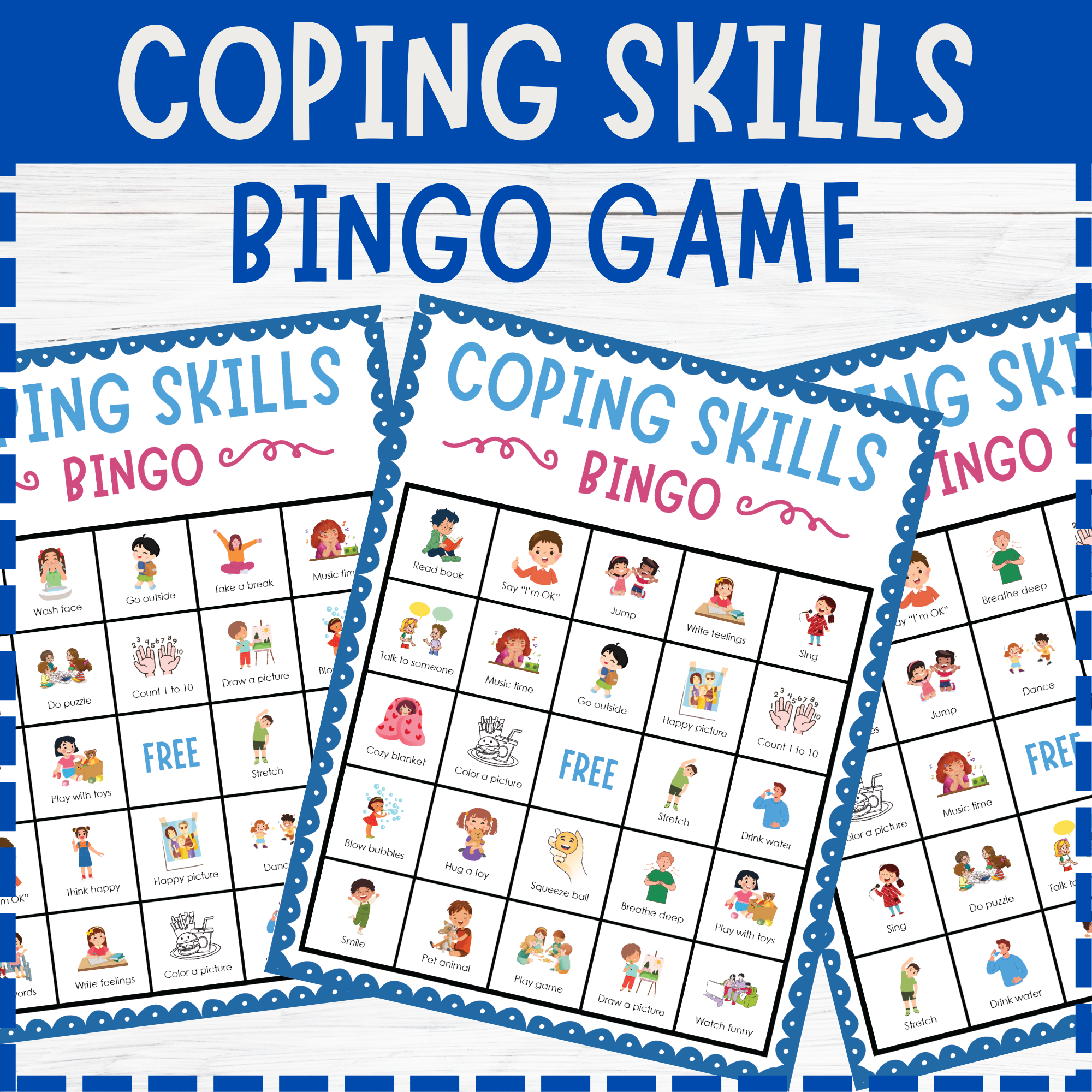
Dozens of uniquely arranged coping-skills bingo cards pair a 5-by-5 grid of self-regulation strategies -- breathe deep, count 1 to 10, hug a toy, squeeze ball, talk to someone, take a break -- with a matching set of calling cards a teacher reads aloud to run the game, plus a free-space center square on every card. An included how-to-use guide walks teachers through preparing and laminating materials, distributing a card and chips to each player, explaining horizontal, vertical, and diagonal winning patterns, and calling out items one at a time from the shuffled calling cards. A separate bingo-marker page supplies a printable chip or token sheet to cover called squares as they come up. The activity doubles as a bingo game and a mindfulness/SEL vocabulary review, since students must recognize and recall each coping strategy by name as it's called.
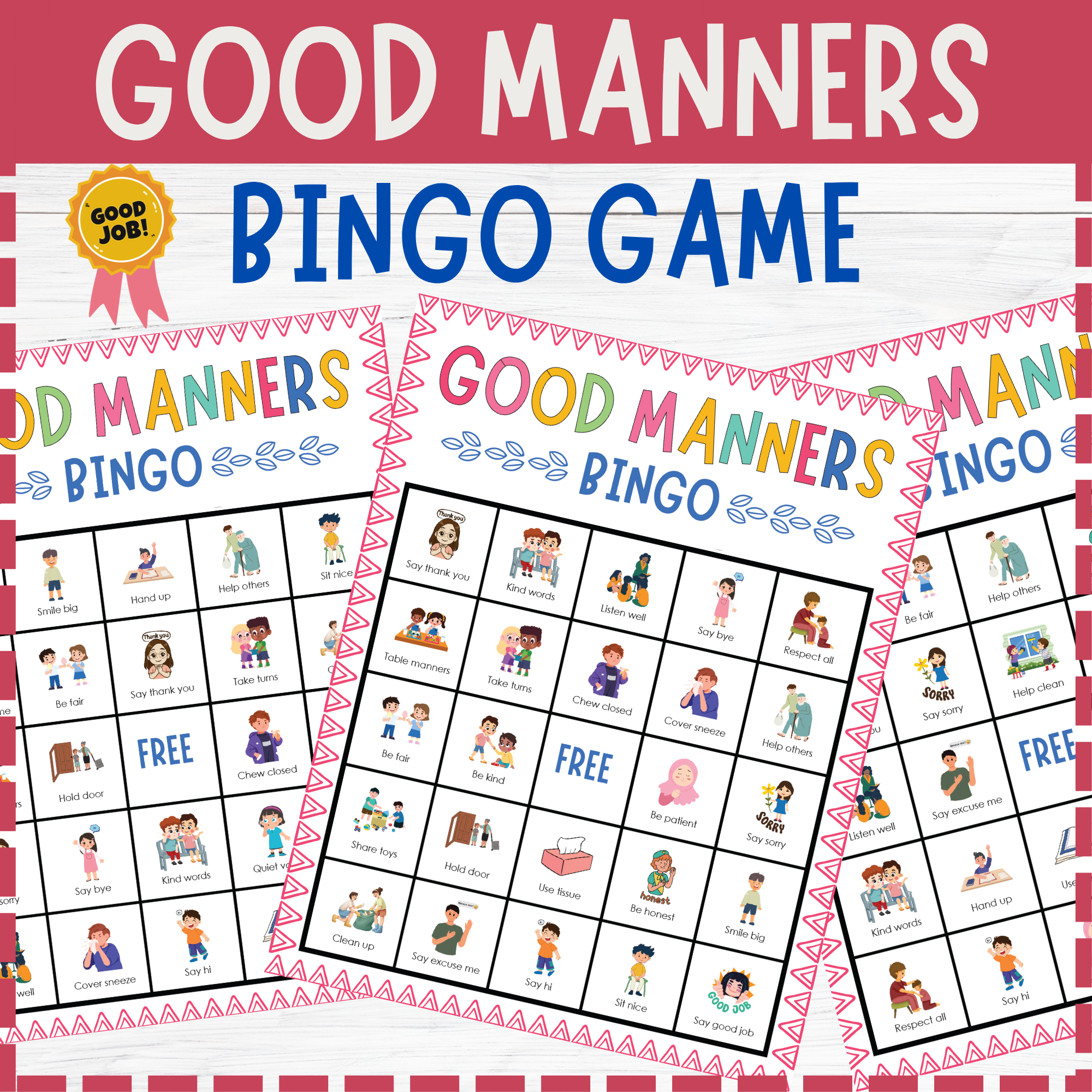
Turn familiar manners into a listening game with 50 bingo cards and a set of calling cards. Students find the phrase you read, cover its space, and watch for a winning line. The included markers and directions support setup; between rounds, you can invite children to give an example of one phrase in classroom life.
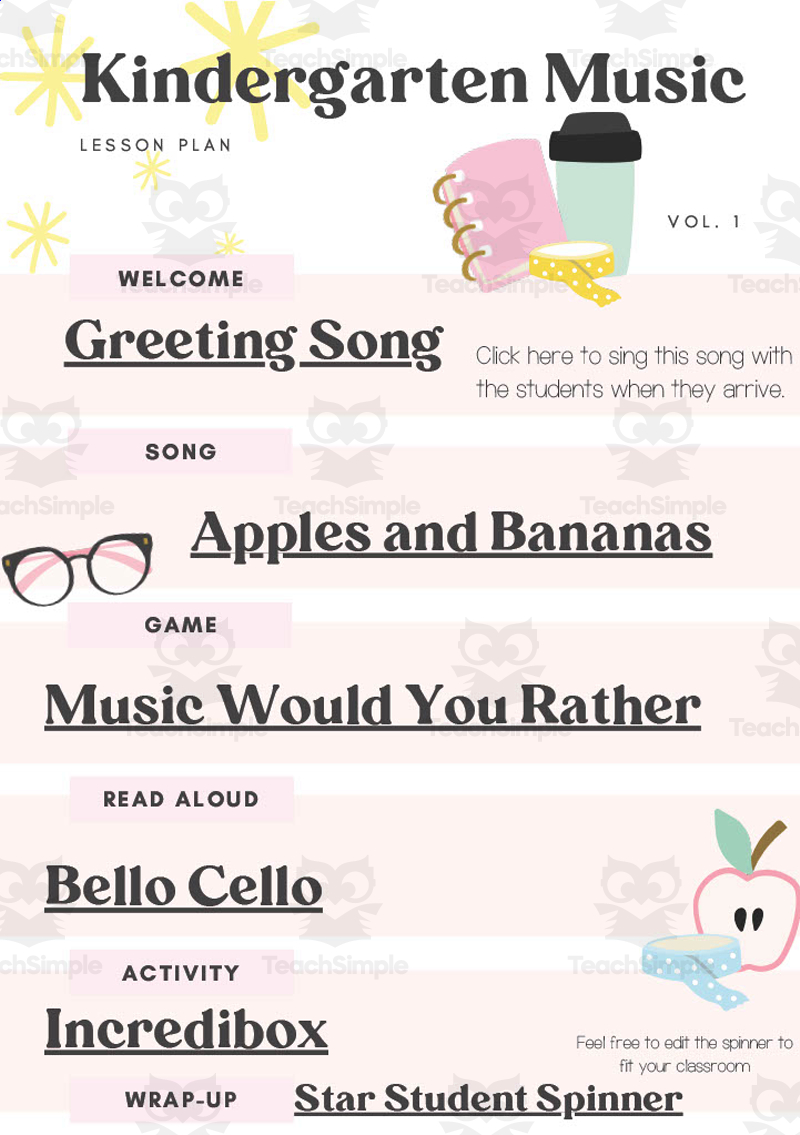
A set of one-day, hyperlink-driven substitute lesson plans for elementary music class covering Kindergarten through 5th grade.
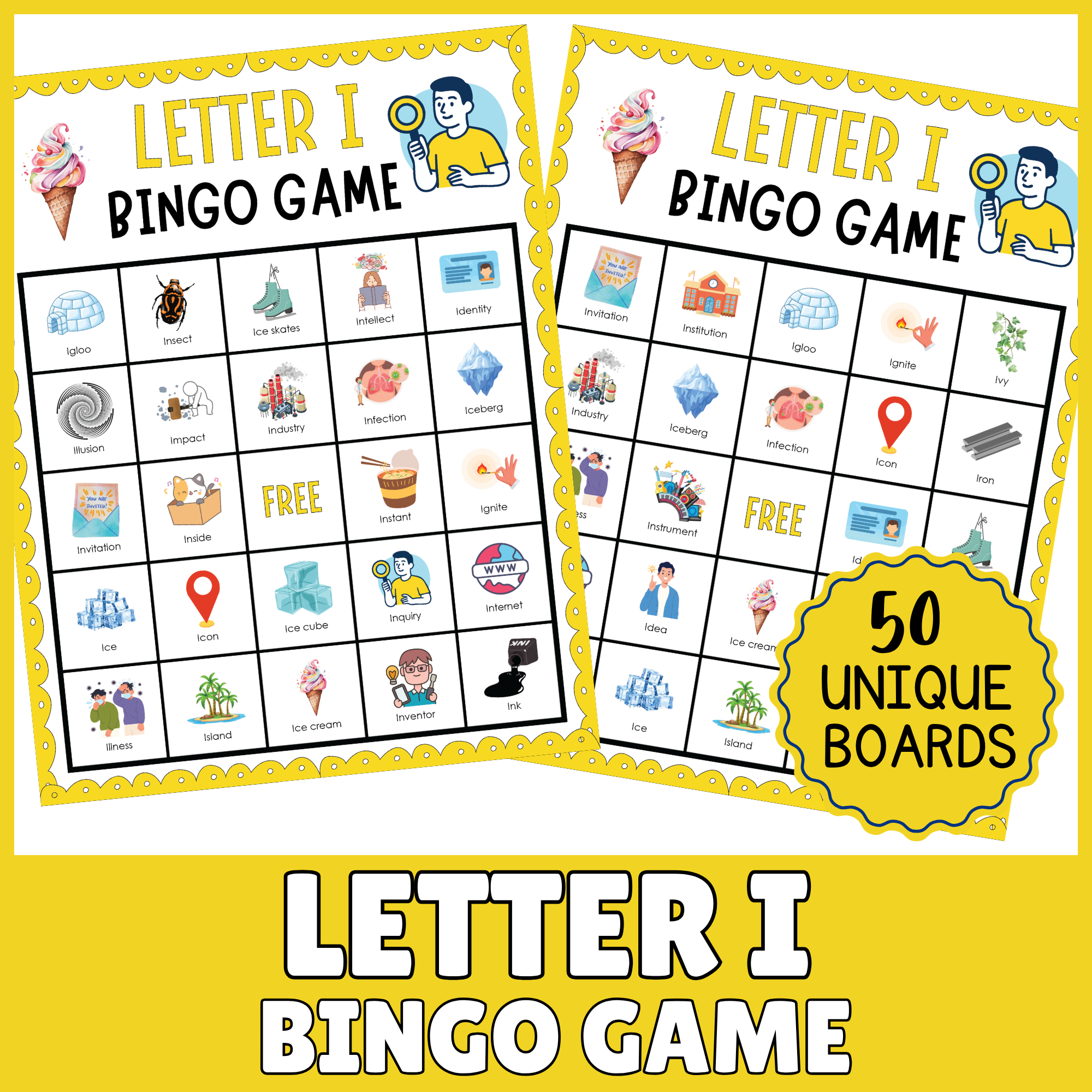
Letter I Bingo Game is a fun way to help kids recognize the letter I and practice its beginning sounds. Since bingo is something most students already enjoy, it makes learning feel more like a game than a lesson. I usually bring this out during our letter of the week or when we need a quick review. It’s easy to prepare and works well with different group…

Students create an introductory rainbow by writing personal facts and preferences on strips beneath a name cloud. The templates include prompts for age, birthday, food, color, siblings and pets, with glue guides for assembly. Read the categories together before children write, color and cut, then join the pieces into a display that shares their chosen details.
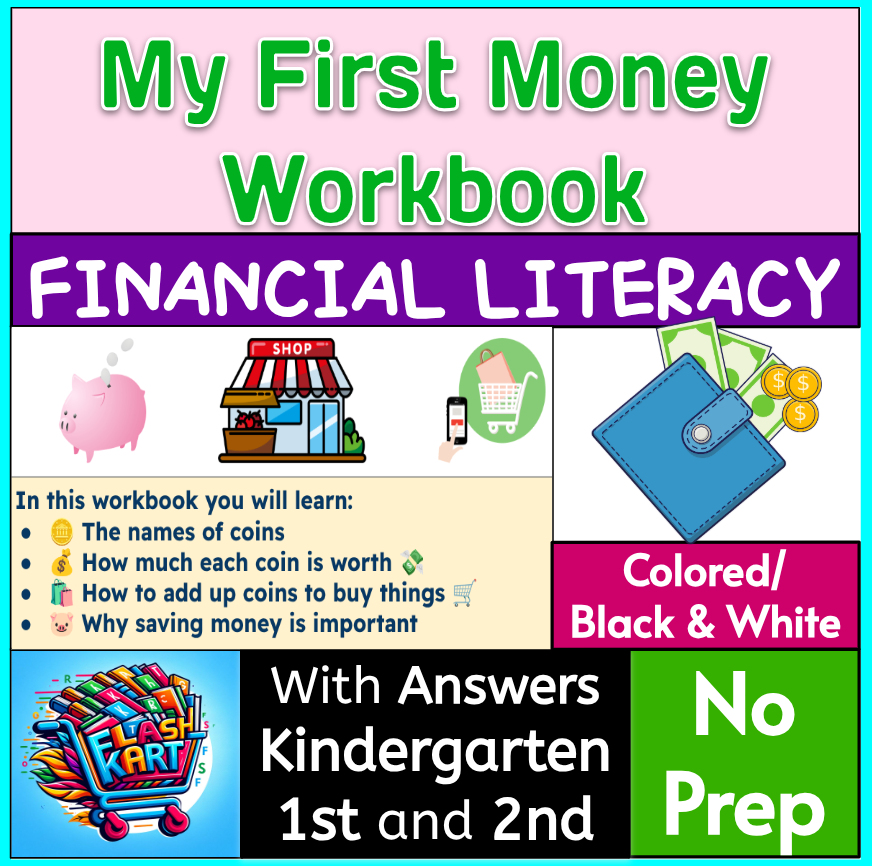
Teaches young students to identify US coins and the dollar bill, learn their values, and practice counting and comparing money amounts.

Provide a spinning-wheel paper craft for each letter of the alphabet: students color and cut out a two-layer wheel and attach it with a brad so that spinning it reveals different pictures/words that begin with the target letter.
 Free download
DETAILS OF THIS PRODUCT: NOW PLEASE READ CAREFULLY THE FOLLOWING INFORMATION WE PROVIDE YOU REGARDING THIS PRODUCT: A. The name of this educational resource is The title of this educational product is "20 puzzles for children to cut out" B.
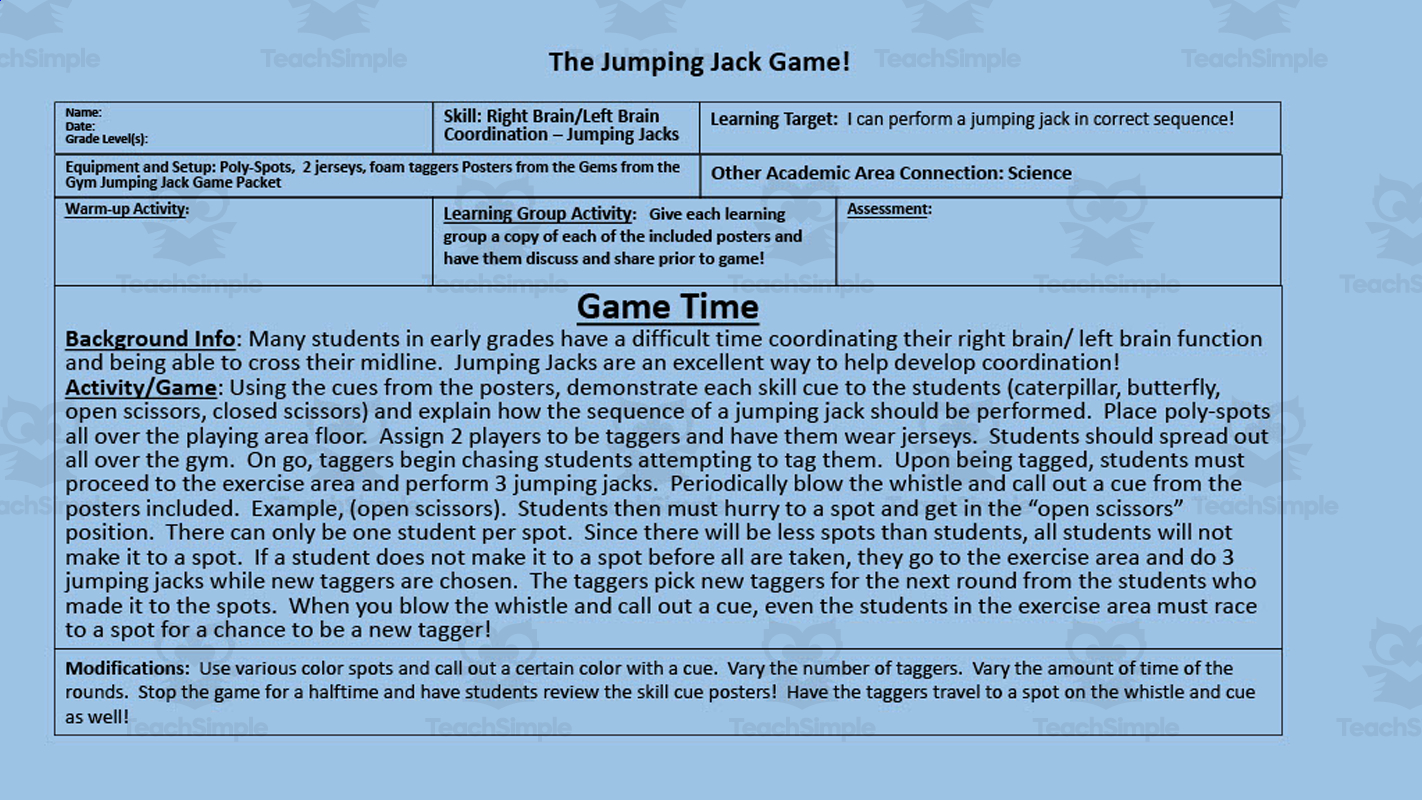
A physical education tag/movement game teaching correct jumping jack sequencing and cross-lateral (right brain/left brain) coordination for early-grade students.
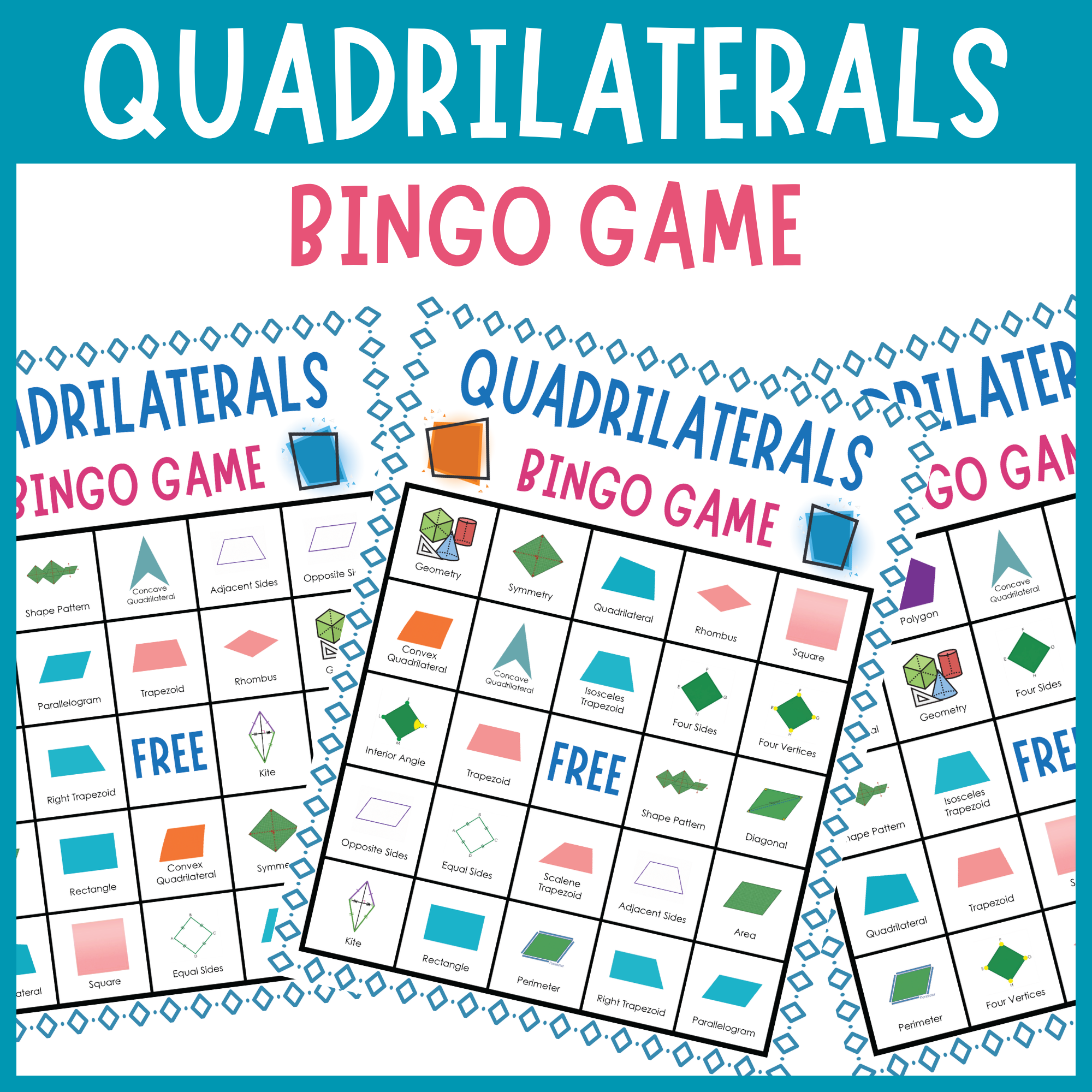
No Prep Geometry Quadrilaterals Bingo Game is a fun and engaging way to help students recognize, identify, and compare common quadrilateral shapes. Since bingo is a familiar game, it's easy to set up and encourages active participation while reinforcing essential geometry vocabulary and shape recognition skills. I like using this activity during geometry…
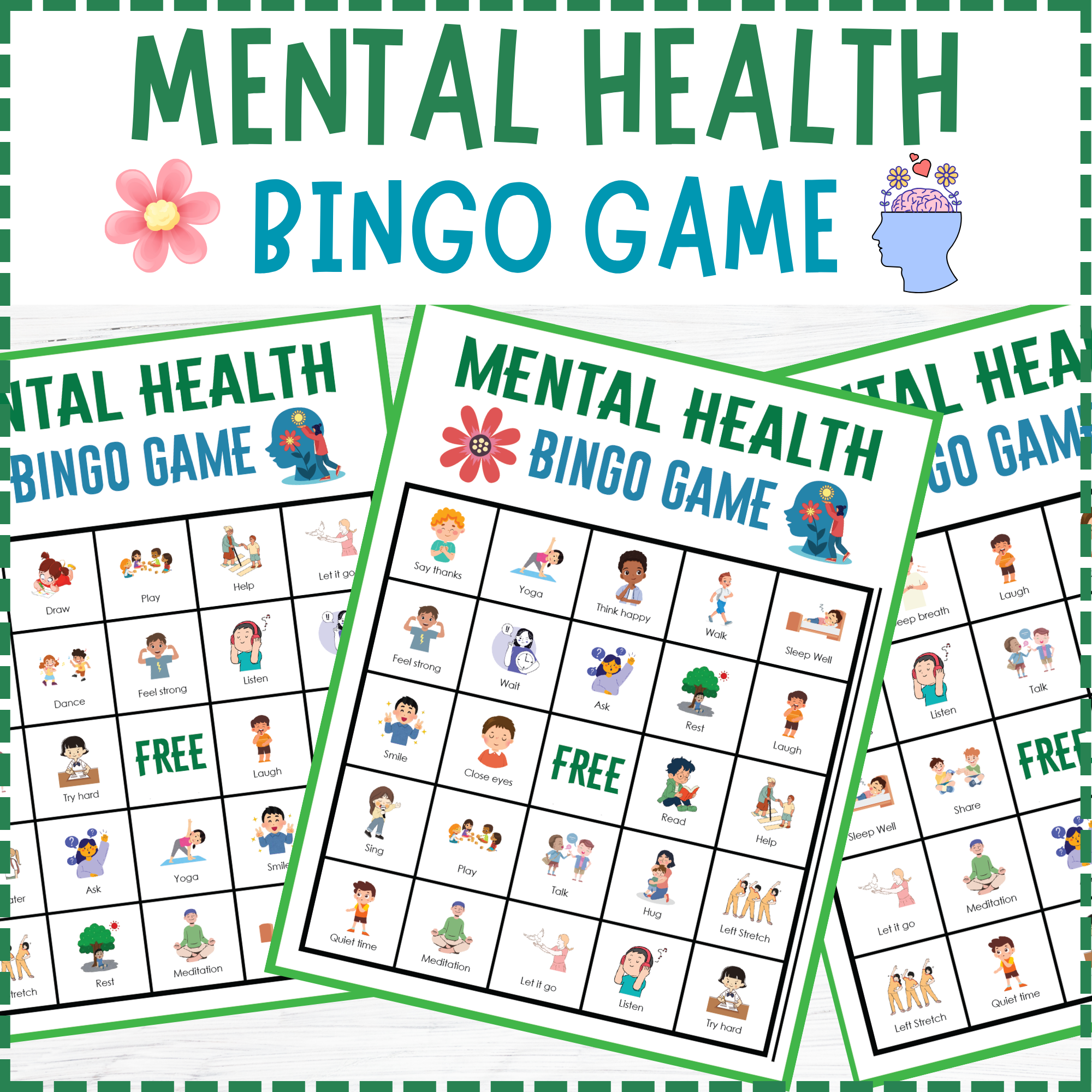
Self-care and self-esteem vocabulary — deep breath, meditation, yoga, drink water, feel strong, let it go, say thanks, and more — is built into a standard bingo format in this printable game. A two-page how-to-use guide walks the teacher through the full setup: printing and laminating the calling cards and bingo cards, distributing one unique card per student along with a set of bingo chips, explaining horizontal, vertical, and diagonal winning patterns, and calling out items one at a time from a shuffled deck of calling cards. Forty individually laid-out bingo cards are included, one per page, so a full class can play at once without duplicate boards, along with a separate bingo-chip marker sheet. The game is framed as a tool for introducing and reviewing self-care vocabulary and themes rather than an academic content check.
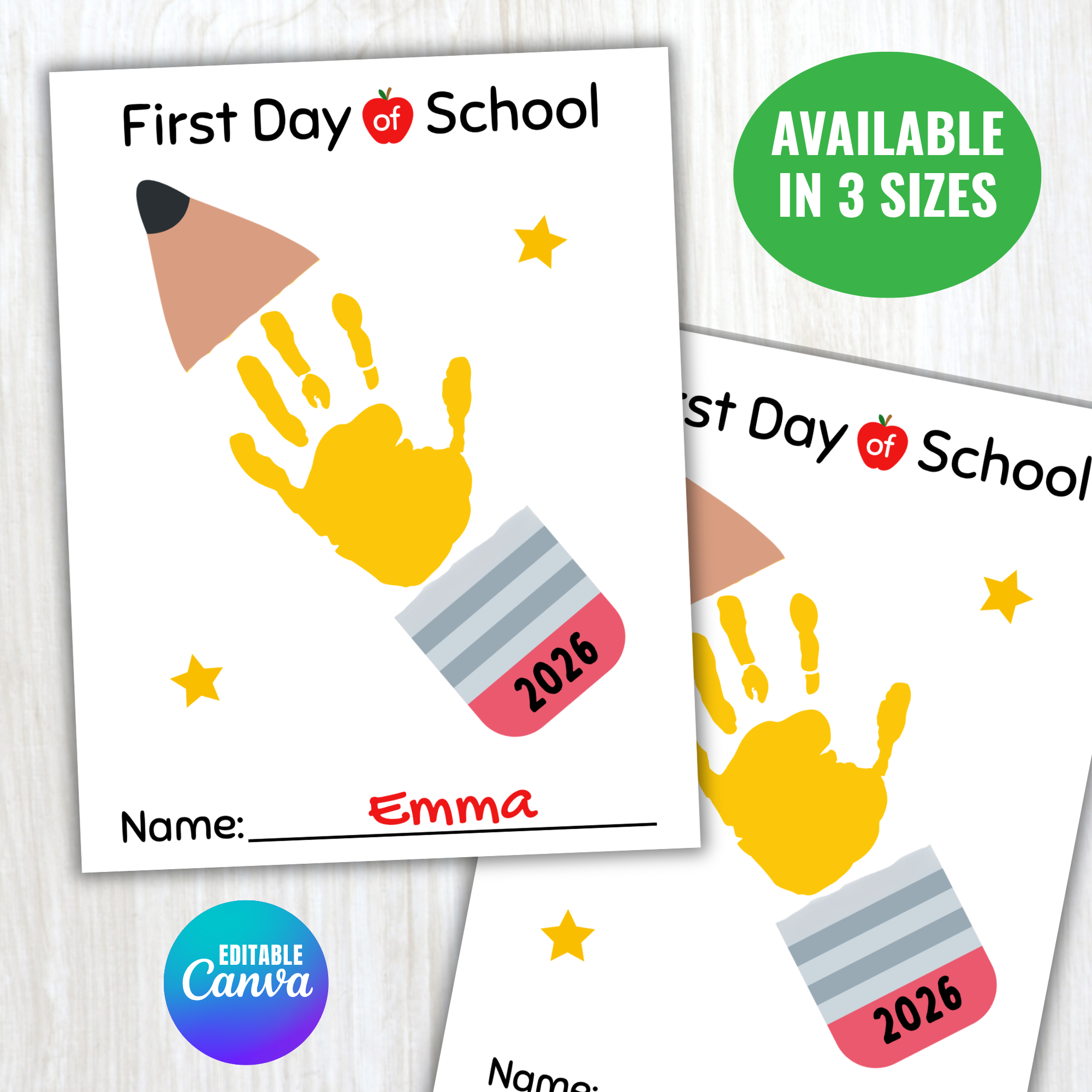
A pencil-themed handprint craft template used as a low-prep first-week-of-school icebreaker and keepsake, where a child's painted handprint forms the top of a pencil design.

A published collection of whole-class music games and listening/rhythm activities for K-6 music class.
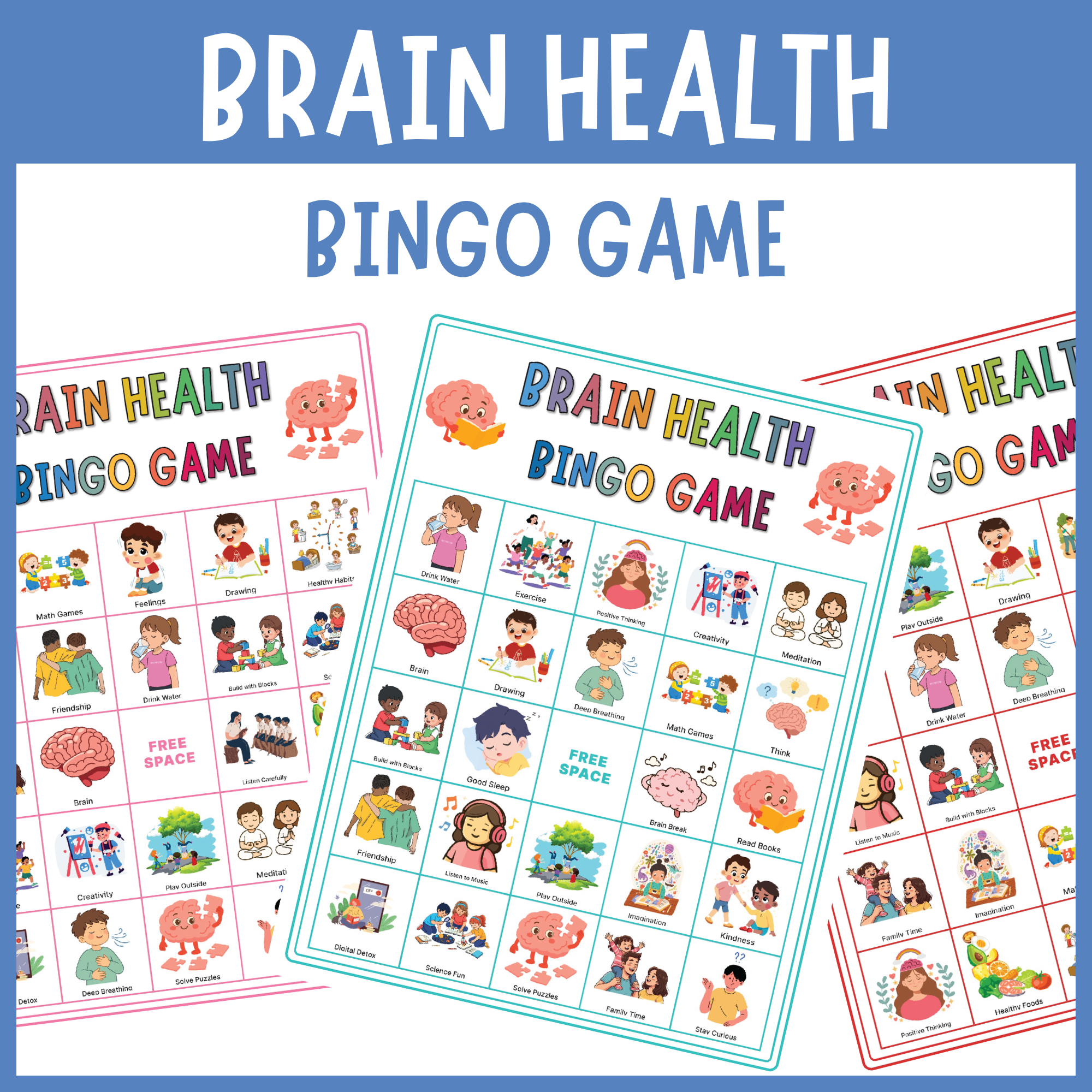
Practice SEL/wellness vocabulary (brain health, mindfulness, healthy habits) through a no-prep bingo game.
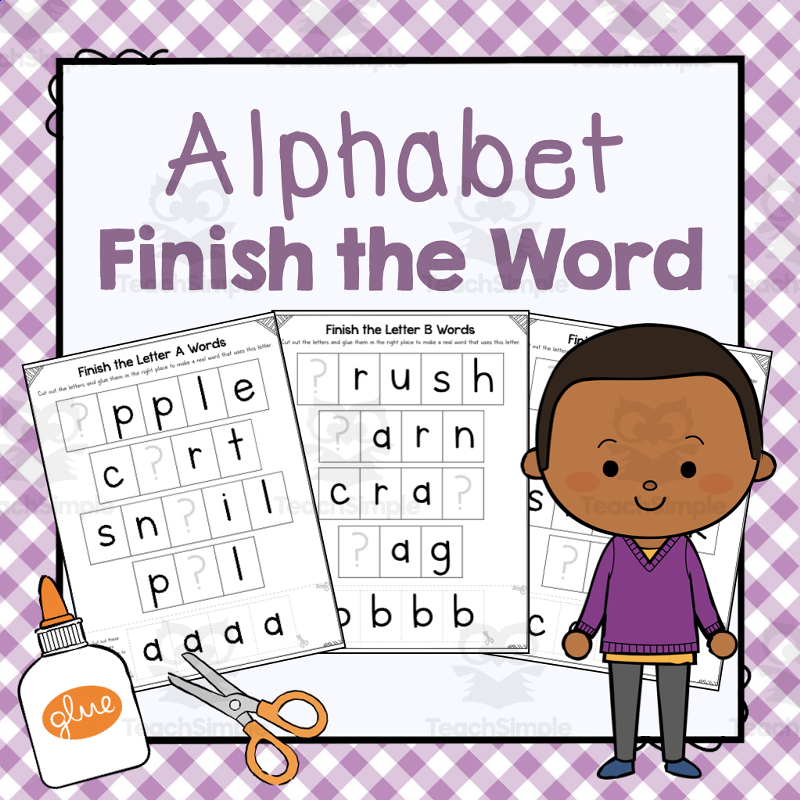
A cut-and-glue alphabet activity book where students complete real words by gluing in the missing target letter, building letter recognition and phonics skills.
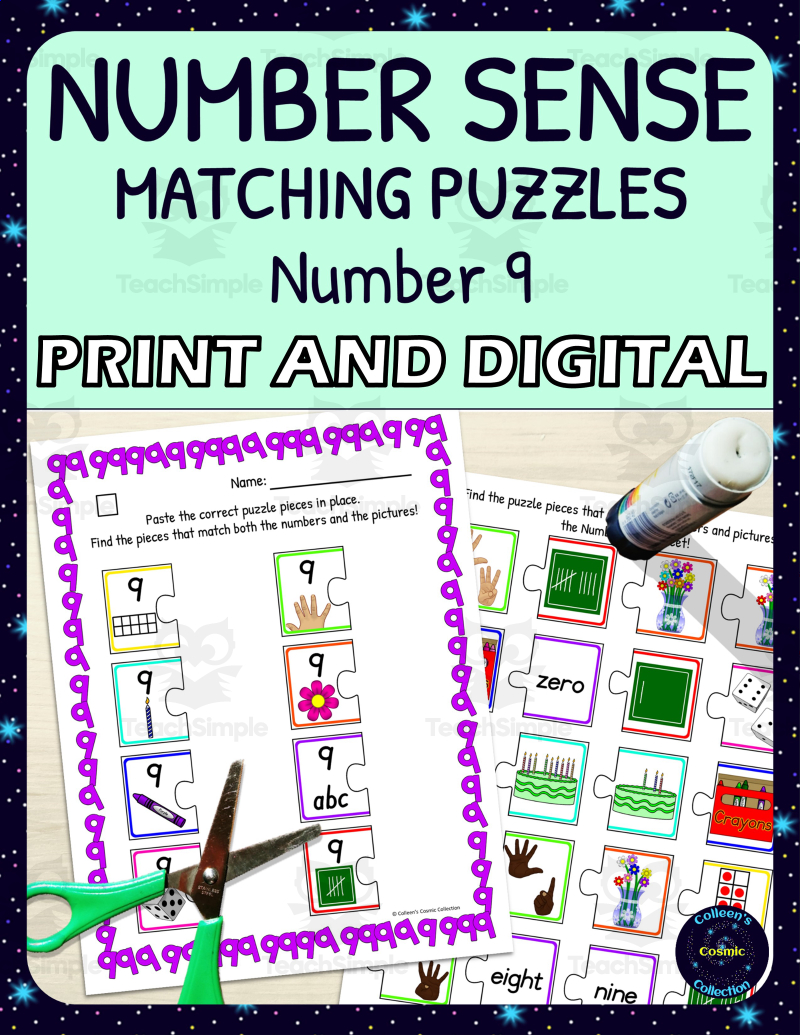
Practice number recognition and number sense for the number 9 through a self-checking cut-and-paste matching puzzle.
 Free download
WELCOME TO THE EDITORIAL ARENAS EDUCATIVAS RESOURCE STORE! This time we bring you these fantastic 20 puzzles to cut out!

Forever June Digital Design Presenting my easy to use DIY Juneteenth FREEDOM Handprint Craft & Colouring Activity, which is an excellent Social Emotional Learning (SEL) resource that was created especially for Juneteenth! Featuring the words FREEDOM, in large colourable letters, and with and without the text free at last, children are…

Letter Q puzzle-assembly activity for letter recognition, per the file's 'ALPHABET PUZZLE' pages.
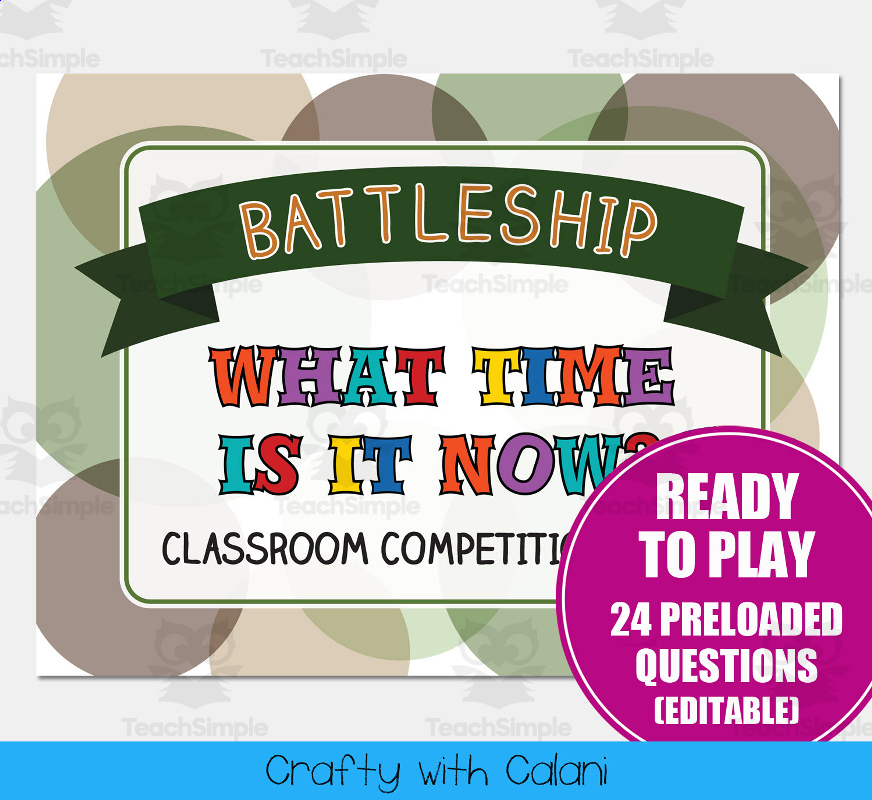
A Battleship-style PowerPoint game for practicing analog clock reading, where teams answer time-telling questions to locate hidden 'battleships.'
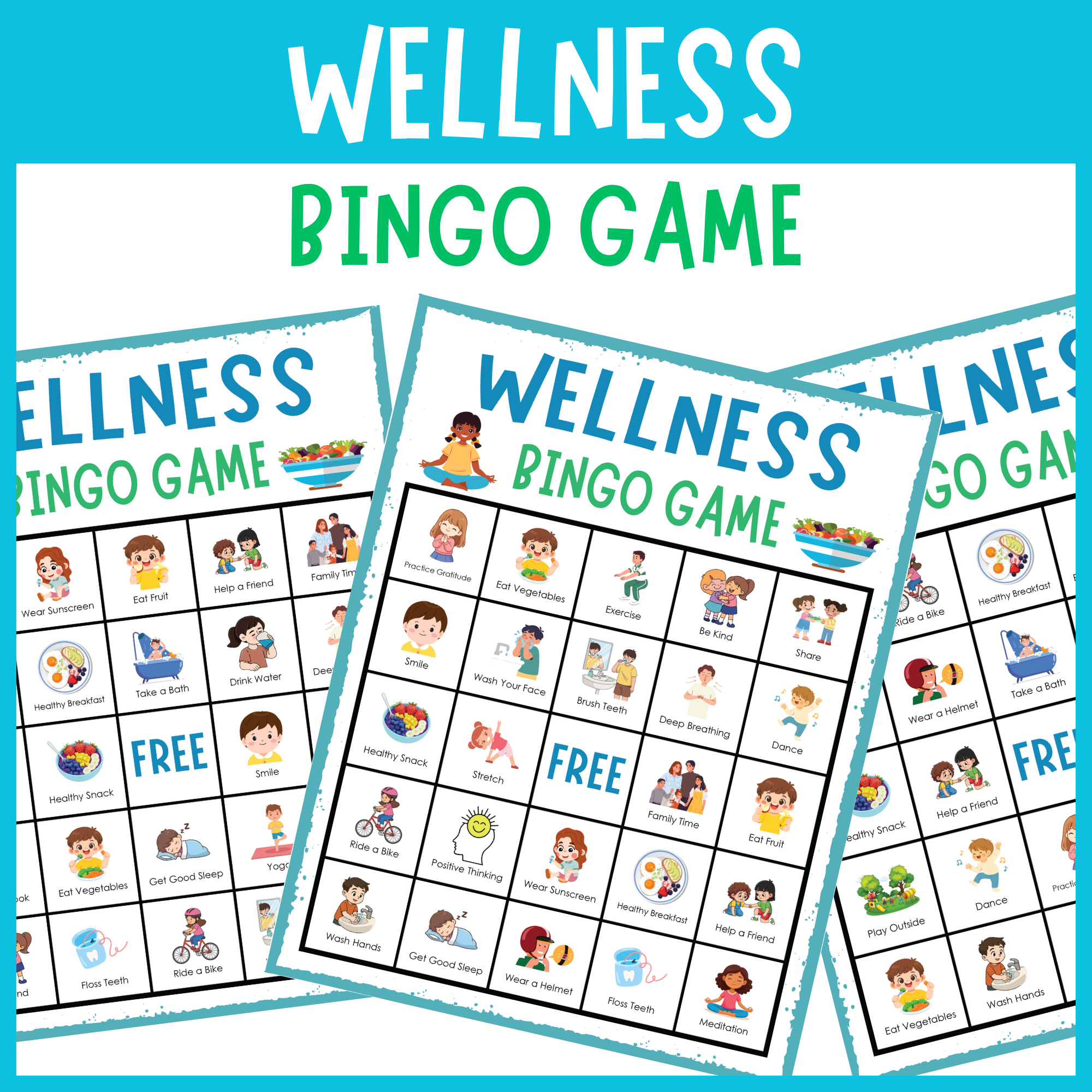
No Prep Personal Health & Wellness Bingo Game is a fun and engaging way to teach students about healthy habits, personal hygiene, and social-emotional well-being. Since bingo is a familiar game, it’s easy to set up and encourages active participation while reinforcing essential life skills. I like using this activity during health…
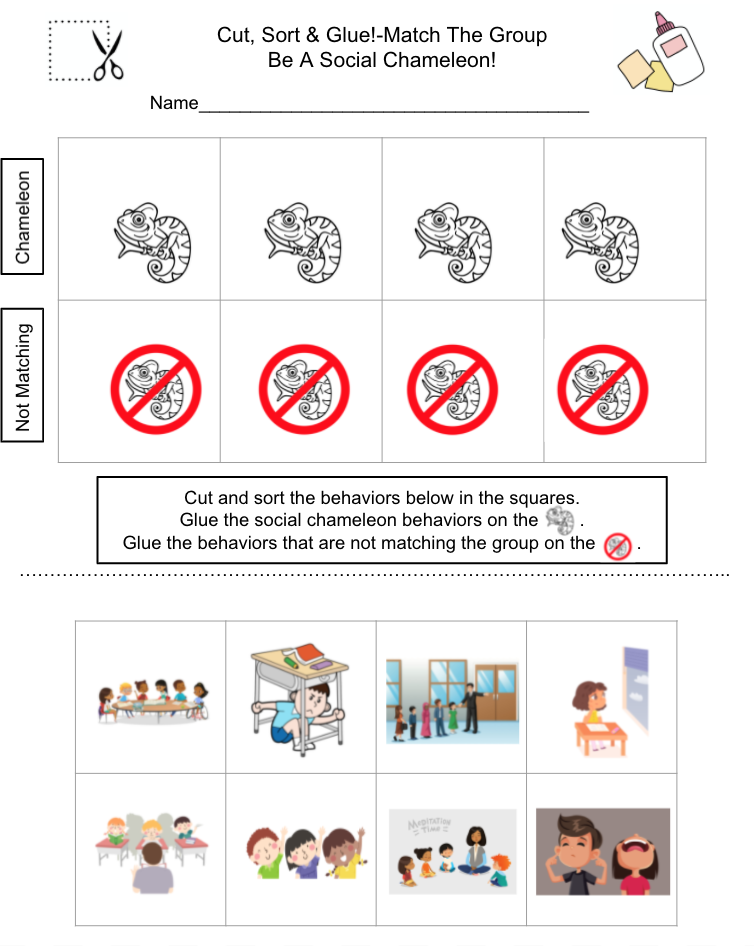
A one-page cut-sort-and-glue worksheet that has students sort short scenario phrases or pictures into two contrasting categories (matching the group (chameleon) vs. not matching) as social-emotional-learning (SEL) practice.
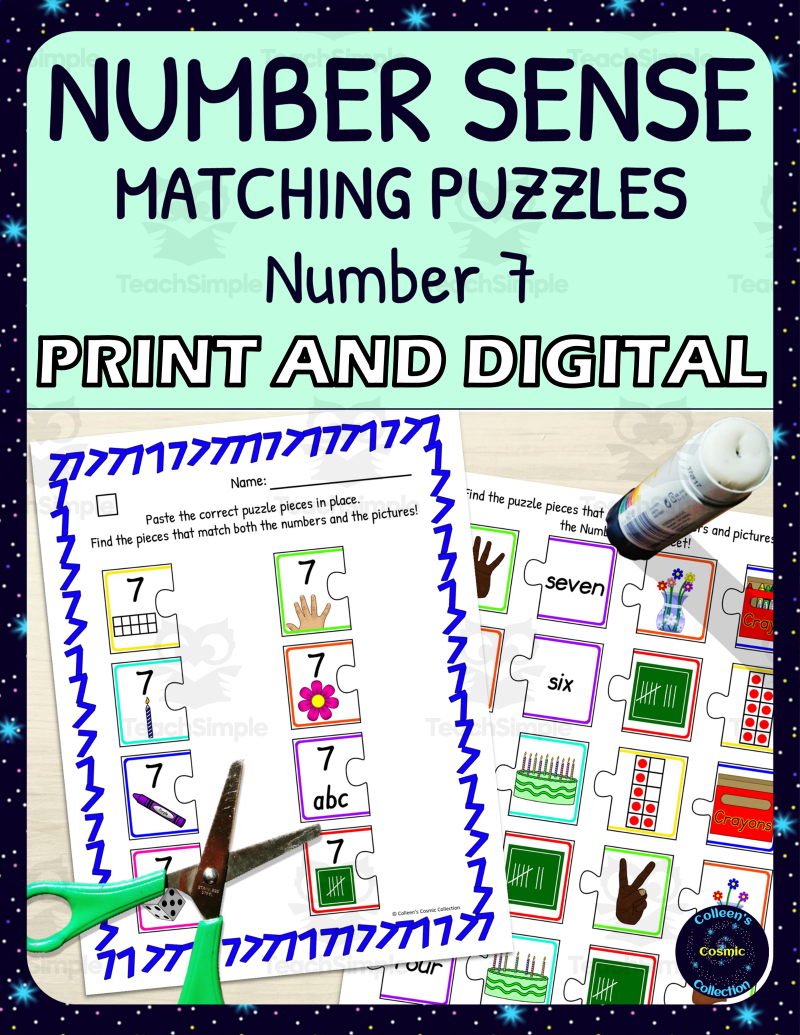
Practice number recognition and number sense for the number 7 through a self-checking cut-and-paste matching puzzle.