



3,885 products added recently
Page 66 - ELA Activities
Explore a variety of ELA activities designed to enrich your students' learning experience. From reading comprehension exercises to creative writing prompts, these resources support the development of essential literacy skills. Engage your class with interactive lessons that foster a love for language and literature. These activities are suitable for various grade levels and can be seamlessly integrated into your curriculum, helping you create dynamic and effective English Language Arts lessons.

 Show filters


St. Augustine Research Organizer & Essay Assignment
Social Studies, ELA, Biographies, History, History: World, History: Ancient, Grade 7, 8, 9, 10, Activities, Projects, Worksheets & Printables, Worksheets
St. Augustine was theologian from the earlier period of Christianity whose writing greatly influenced medieval society. This resource provides your students with the opportunity to independently explore and write about the life of the "patron saint of theology" with this engaging research planner and essay assignment. This carefully scaffolded and easy-to-assign-AND-assess resource has been designed to guide student learning from St. Augustine fact-collection to the careful development of a five-paragraph research essay. Teaching this resource could not be easier! Start by handing out the background research and note-taking worksheet (you could also ONLY hand this out if you want a shorter lesson!). Once students have found their facts and sources, provide them with the essay outline activity, which guides them step-by-step through the requirements of a short research essay. From there, drafting their essay, using the provided peer review checklist, and submitting their final draft will be no problem at all. And then you can assess their work with the provided Common Core rubric! Use this entire resource as a complete research lesson or just part of it as a short research activity or sub plan! This TeachSimple download includes: - A St. Augustine essay writing assignment with directions, requirements, research essay writing tips, a peer review checklist, and Common Core-tied grading rubric - An editable rubric, provided as a link, that lets you make adjustments to the grade values and guidelines. This link is provided as as Google Sheet specifically built for integration into Google Classroom, although you can also modify it for use in other Learning Management Systems (LMSs) - A St. Augustine biography and note-taking worksheet that will guide your students through information gathering. This straightforward two-page handout includes instructions for background research, a fun drawing section, and an area to cite quality sources and organize conducted research - A research essay outlining worksheet, so students build on their St. Augustine notes in a clear and simple manner as they build their work towards a draft and final paper - All 6-pages of this lesson are provided in full-color and B&W versions Although this resource can be fitted for any secondary Language Arts classroom, it has been carefully designed to work best in grades 8 through 11. The included rubric is subtly but specifically tied to Common Core ELA Standards for Language (3) and Writing (2 and 7). This resource is provided as a print-ready, bookmarked, and adjustable PDF file. The rubric is also included as an editable Google Sheet. This resource contains 6 pages and 1 Google Sheet.
Author The Language of Educational Art, LLC
Tags Essay, Rubric, Research, Notetaking, Outlining

ABC WORDSEARCH ACTIVITY | 26 PAGES
ELA, Writing, Handwriting, Reading, Language Development, Phonics, Grammar, Spelling, Pre-Reading, Early Learning, Elementary, Homeschool Resources, Not Grade Specific, Pre-K, Activities, Worksheets & Printables
ABC WORDSEARCH ACTIVITY | 26 PAGES INTRODUCTION: At EDITORIAL ARENAS EDUCATIVAS our goal is to create engaging and effective educational resources that help children learn and grow. We invite you to explore our full store and discover a wide range of materials. You'll find resources for reading, writing, math, and Spanish language development! DESCRIPTION OF THIS PRODUCT: 1) Is this material up to date with the latest educational changes? Yes, this material primarily addresses all learning theories about children, which tell us that children should learn in an educational and fun way. 2) What printing format guarantees the best results? I recommend printing this document in PDF format. I would also ask you to carefully check whether you have a color or black and white printer. 3) What recognition or endorsement does the author of this material have? This document has been prepared by EDITORIAL ARENAS EDUCATIVAS, and we guarantee that this document has been carefully selected, ensuring that your students have a fun and successful learning experience. 4) Are there additional or complementary versions of this resource? No, there are no additional versions, unless we announce an update at some point. SECONDARY AND COMPLEMENTARY INFORMATION: 1) Does this material allow for custom editing? This educational document is available in PDF format, so you cannot edit it. You simply need to download and then print it. 2) What main topic does the resource cover? This document has been developed to address a basic topic that children in kindergarten through elementary school should master. This document will also be helpful to the general public who want to learn. 3) What version does this document correspond to? This educational resource is designed in PDF format, which will make your download experience much simpler and easier to use. OTHER FREE RESOURCES FOR YOU: COMPLETE THE NUMBERS: https://teachsimple.com/product/complete-the-sequence-numbers-1-to-100 FRUIT PUZZLE: https://teachsimple.com/product/16-free-puzzles-fruits-themed
Author EDITORIAL LAURA EDUCA
Rating
Tags FREE, FREE RESOURCES, ALPHABET, TRACING, TRACING LETTERS, MINIBOOK, PREREADING, HANDWRITING

Chemistry & Materials Science: Reading Comprehension Passages (Word)
Science, ELA, Reading, Reading Comprehension, Strategies, Resources for Teachers, Chemistry, Grade 6, 7, 8, 9, Writing Prompts, Worksheets & Printables, Centers, Activities, Teacher Tools, Assessments, Quizzes and Tests, Quizzes, Tests
Chemistry and Materials Science: Reading Comprehension Passages (Word) This very engaging collection of physical science reading passages about chemistry and material science is designed to bridge the gap between science and literacy through strengthening reading comprehension and sparking scientific curiosity in middle school students. Each passage blends English Language Arts skills with accurate science content that supports NGSS classroom practice. Ideal for interdisciplinary learning in ELA and Science. Suitable for Grade 9 review, too! What Is Included? There are (3) informational passages: Salt: Tiny Crystals, Big Effects The Hidden Science of Clothing Fingerprints: Patterns That Solve Crimes Student Tasks for Each Passage: 5 multiple-choice questions targeting main idea, key details, inference, vocabulary in context, and use of evidence 5 vocabulary matching items with clear, student-friendly definitions 5 text-based questions that require citing specific lines or facts 1 summary prompt that asks students to condense central ideas accurately Full answer key for every section Available Formats for this Resource PDF Google Docs FULL CATALOG OF DOWNLOADING LINKS HERE Other Science Reading Collections you May find in the store: 1. Astronomy & Space Science 2. Volcanoes, Rocks, & Mountains 3. Rock Cycle, Soil, & Sinkholes 4. Mars, Glaciers, & Antarctica 5. Water Cycle, Acid Rain, & Wastewater 6. Insects, Animals, & Ecosystems 7. Bioluminescence & Insects 8. Animal Skin, Cats, & T. Rex 9. Human Body and Senses 10. Health & Applied Bioscience 11. Waves, Light, & Imaging 12. Electricity & Energy 13. Motion & Materials 14. Chemistry and Materials Science Product Details Length: 13 pages total Grades: 6–8, also suitable for Grade 9 review Use cases: close reading, stations, homework, intervention, test prep, and sub plans Standards support: reinforces informational-text skills and supports NGSS-style sense making through observation, modeling, and clear use of claim, evidence, and reasoning Why Teachers Choose This Set Authentic science content paired with rigorous literacy practice Consistent task structure across all passages for easier planning and smoother student routines Clear, age-appropriate writing that builds confidence without oversimplifying Use this set to reinforce ELA skills in science, to add literacy to your lessons, or to support independent work. The passages strengthen main idea, evidence use, vocabulary in context, inference, cause and effect, and summary writing. With ready-to-use assessments and complete answer keys, you can provide focused practice that is simple to run and fast to review.
Author Middle & High School - CORED Education
Rating
Tags Middle School, Reading Comprehension, Reading Strategies, ELA, Centers, Reading Passage, Assessments, Vocabulary, Physical Science, Chemistry

Language Arts Adventures in Team Building: Building Community in the Classroom
ELA, Grade 1, 2, Activities
Language Arts Adventures in Team Building: Building Community in the Classroom A practical teaching resource that fuses community-building activities with language arts topics. Specifically tailored for first and second grade levels aimed at enhancing learning dynamics through engaging participation games and exercises. Key Features: Exciting tasks such as arranging letters, creating contractions, crafting unique spelling practices patterns, generating rhymes etc. Cultivates community spirit while fostering an inviting atmosphere for learners to share thoughts freely. Suitable for whole-group activities or smaller huddle sessions ideal for fortifying team-building skills amongst peers. Flexibility: The games can be condensed into short breaks or expanded across multiple rounds as per curriculum 's requirements. No two classes have one-size-fits-all experiences; each session contributes towards building a lively classroom environment where education meets camaraderie. Included Resources: 16 ready-to-print pages encompassed within one practical PDF file which renders implementation simple for instructors wishing to enrich their classes' ambiance while enriching key understanding of Language Arts prerequisites simultaneously. In Essence The Language Arts Adventures in Team Building: Building Community in the Classroom serves as an inclusive educational platform promoting communal vibes whilst educating young minds about integral facets of language art subjects via appealing yet tactical games/tasks ensuring well-rounded student development inside out.
Author Classroom Complete Press
Tags Language Arts, Adventures, Team Building, Printable, Classroom Community
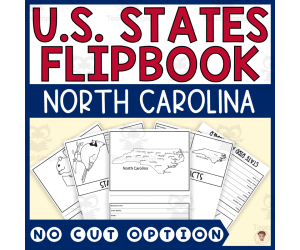
North Carolina State Flipbook (Capital, Bird, Flower, Flag, Animal)
ELA, Creative Arts, Art, Social Studies, Reading, Reading Comprehension, Grammar, Language Development, Spelling, Writing, History, History: USA, Geography, Grade 2, 3, 4, Activities, Projects
About North Carolina State Flipbook The North Carolina State Flipbook is a comprehensive teaching tool that breathes life into the learning of state facts and symbols. It fosters an interactive and tactile environment where students from grades 2 to 4 can delve deeper into understanding the character and identity of North Carolina through its key symbols—the capital, bird, flower, flag, and animal. Cross-Curricular Teaching with the Flipbook This product uses cross-curricular teaching techniques that allow students to explore multiple subjects: Art Reading comprehension grammar spelling English language arts geography US history in a fun-filled manner. Variations for Different Learning Styles This low-prep resource caters for varied learning styles with two different printing options: A cutting required version. A no-cut option. And two design alternatives—one with pictures for visual learners and another one text-based for kids who enjoy reading or research. Purpose & Integration Possibilities You will find this flipbook effective whether it's used in large group studies about U.S states or during smaller discussion groups focused on the Southeast region or specifically North Carolina. If you're homeschooling your child, this can serve as an all-in-one activity that covers various subjects while making social studies interesting. Inclusion & Customization in Classes The package provides instructions on how to assemble four distinct flipbooks featuring seven topics covering items such as North Carolina’s state capital's specifics up to devising learners’ Know-Want-Learn (KWL) strategy related to the topic. This array allows educators flexibility in customizing lessons based on classroom requirements. More Than Just Fun! Apart from general social studies class, these resources can be effectively integrated into specific writing lessons or even serve as engaging tools during separate art sessions focused on coloring—definitely more than just fun! Digital Format For Today's Learners Take advantage of this soft copy (PDF file) project-type activity which enables seamless sharing among today's digital natives—it means less preparation time but more immersive learning experiences! Spider as the official state spider of Alabama! So whether you are introducing the wonders of Alabama or looking for a lively tool to review previous learnings about it—the flipbooks excel at both ends! Expanding Learning Horizons If you want to expand your horizons, there are more U.S states flipbooks available for you to explore. From Alabama to Wyoming, there are options where you can delve into each state’s unique attributes with practical research assignments and curated video evaluations bundled with interactive notebooks and other engaging activities. Allow your students the chance to become adept at other state symbols in a hands-on, learner-centered way.
Author Heather Huhman
Tags State Symbols, North Carolina, Interactive Learning, Cross-curricular Teaching, Tactile Environment

Spell It Board Game with Basic Code
ELA, Language Development, Spelling, Preschool, Grade 1, 2, 3, Activities, Games
This resource is a Spell It Board Game with Basic Code. Single syllable and multi-syllabic words are included. This game focuses on the different ways to spell a sound. There are 2 different game boards to keep things interesting. This card game works well as a whole group or small group game. There are 16 sets of sounds included.
Author Top Notch Teaching
Tags Spelling, Board Game, Basic Code, VCC Words, Blends, How Do You Spell Board Games

Military Veteran Research Project
ELA, Writing, Research, Grade 6, 7, 8, 9, 10, Activities
Military Veteran Research Project: An Essential Academic Tool The Military Veteran Research Project is an essential academic tool for teachers and homeschoolers. It caters to students from grade 6 to grade 10 and simplifies the research processes about a U.S military veteran. The project integrates a step-by-step methodology enhancing the learning experience. Versatility of the Product This product can be used as both, a week-long research unit or as a unique Veterans Day project. You can use this versatile tool in various settings including: Whole-class scenarios Small group sessions Homework assignments A flexible teaching approach can be adopted using this tool. Detailed Structure of Activities The project begins with PowerPoint presentations introducing MLA Style to students, ensuring comprehension of essential essay formatting techniques extensively used today. It keeps students excited about project requirements and provides useful tips on research essay writing supplemented with checklists for self- assessment and peer review. Rubrics & Collaborative Exercises L-EA's Military Veteran Research Project tailors multiple grading rubrics meeting CCRA standards that facilitate not just essay writing but also formal presentations enhancing communication skills among learners. Moreover, it promotes cooperative learning environments through worksheets enabling interaction among peers. Compatibility with Technology-Enhanced Instruction & LMS This resource extends its functionality beyond classroom teaching into technology-enhanced instruction perfect for any Learning Management System (LMS). Be it face-to-face or remote learning scenarios, this resource complements every form contributing towards maintaining consistent educational experiences across diverse settings. Empowering Future Academic Pursuits Using this resource for language arts subjects under writing subcategories, learners learn argumentation tactics relevant across varied disciplines enabling them for future academic pursuits. It therefore stands as an invaluable asset to every educator.
Author The Language of Educational Art, LLC
Tags Military Veteran Research, Academic Tool, Research Process, Essay Writing, Communication Skills
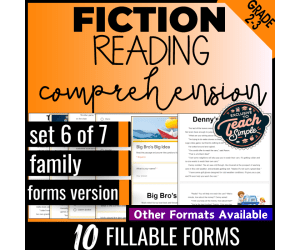
Reading Comprehension Passages Fiction Set 6 - Family (Google Forms)
ELA, Reading, Language Development, Vocabulary, Common Core, Spelling, Children’s Literature, Literature, Writing, Resources for Teachers, Grade 2, 3, Assessments, Teacher Tools, Tests, Quizzes and Tests, Activities, Centers
Reading Comprehension Passages Fiction Set 6 Overview Fascinating reading comprehension passages, each with an array of activities included. Stories are written for the modern classroom and topics are designed to promote enthusiasm from each student. Each lesson contains a mixed questions section to check understanding, a vocabulary or spelling activity to help remember key language introduced, and a writing exercise. Full answer keys are provided. For a more detailed overview, check the section under the links at the bottom of this description. Passages Include 1.Molly's Home Carnival: It looks like Molly will miss the carnival. Until... 2.Big Bro's Big Idea: Noah's big brother does his best to cheer him up. 3.Denny's Car Wash: Denny wants a new game, but does he get the money for it? 4.Tessa's Grandma: Emma misses her grandma, but Tessa has a great idea. 5.Tom's Canadian Mom: The most important person from Canada is...Tom's mom! 6.Big Brother Woes: Big Brother gets to do whatever he wants. It's just not fair! 7.Tell Us a Story, Grandpa: Grandpa's tales are true family treasures. 8.My Weekend: Read about the author's fun weekend in this interesting story. 9.All in the Picture: Learn how the author has changed in the last 22 years. 10.California 'Coaster: Find out how this author spends his summer vacation. Additional File: Big Bro's Big Idea: Cork Boat Instructions Google Forms Version This is the Google Forms editable and fillable/self grading version. This download is available in GOOGLE Docs, GOOGLE Forms, GOOGLE Slides. PDF, PPT, WORD. FULL CATALOG OF DOWNLOAD LINKS HERE Grade 2/3 Links Fiction Set 1 - Nature Google Docs Google Forms Google Slides PDF PPT Word Guided Reading Materials Fiction Set 2 - Animals Google Docs Google Forms Google Slides PDF PPT Word Guided Reading Materials Fiction Set 3 - Food Google Docs Google Forms Google Slides PDF PPT Word Guided Reading Materials Fiction Set 4 - School Google Docs Google Forms Google Slides PDF PPT Word Guided Reading Materials Fiction Set 5 - Friends Google Docs Google Forms Google Slides PDF PPT Word Guided Reading Materials Fiction Set 6 - Family Google Docs Google Forms Google Slides PDF PPT Word Guided Reading Materials Fiction Set 7 - Sports Google Docs Google Forms Google Slides PDF PPT Word Guided Reading Materials Nonfiction Set 1 - Technology Google Docs Google Forms Google Slides PDF PPT Word Guided Reading Materials Nonfiction Set 2 - Nutrition Google Docs Google Forms Google Slides PDF PPT Word Guided Reading Materials Nonfiction Set 3 - Animals Google Docs Google Forms Google Slides PDF PPT Word Guided Reading Materials Reading Passages Overview Each passage is especially written for Grade 2-3 students, including key vocabulary required for this age group. Topics are varied and are accompanied by colorful graphics. Topics are meant to educate, yet entertain the modern student. These passages are perfect for the modern classroom. Whereas textbooks can become outdated in no time, any changes to technology or the world will result in updates to this product. Mixed Questions The mixed questions section of each lesson includes a variation of fivecomprehension, vocabulary and math questions. In addition, key reading strategies are frequently covered including cause & effect, summarizing, compare & contrast and making conclusions. Three of the questions will be MCQs and two will require a written response of some kind. Full answers and example responses appear at the end of the lesson. Spelling & Vocab Each reading passage contains a variety of words and phrases designed for Grade 2-3 students. Spelling and vocab activities provide the opportunity to build fluency with these words. As it can become quite mundane doing the same activities over and over, each lesson in a set will contain a different spelling and vocab activity . Writing Prompts Writing prompts are designed to continue the theme or lessons learned in the story. Students are persuaded to write in a variety of ways and each prompt includes several cues to help. As with the spelling/vocab section, writing prompts will vary. This includes research pieces, reading responses, poetry and creative writing prompts. Full Answer Keys Full answer keys and sample responses are provided so no matter how busy you are, you know you're covered! Mixed question answers provide evidence from the text, math questions contain the relevant workings. Answers are designed for use by the teacher, but also suitable as a handout to the student. Additional File One lesson will have an additional file. This is something fun to extend the lesson with. For similar downloads and other frees, do check out Cored Group on TeachSimple.
Author Cored Education
Rating
Tags Elementary, Reading, Comprehension, Vocabulary, Answers, Common Core, Spelling, Writing, Digital Centers, Self Assessment

Science Reading Comprehension Passage: Fingerprints (PDF)
Science, ELA, Reading, Reading Comprehension, Strategies, Resources for Teachers, Grade 6, 7, 8, 9, Writing Prompts, Worksheets & Printables, Centers, Activities, Teacher Tools, Assessments, Quizzes and Tests, Quizzes, Tests
Science Reading Comprehension Passage and Questions: Fingerprints (PDF) This very engaging science reading passage is about fingerprints and how they are used to solve crimes . It explains that fingerprints are unique, permanent patterns formed by friction ridges on the skin. It describes how investigators find and develop latent prints left behind by sweat and natural skin oils, compare ridge details, and use modern tools such as AFIS and live-scan devices to search and record fingerprints. The passage also explains why fingerprint evidence can be strong when it is collected, documented, and compared carefully. This passage is designed to bridge the gap between science and literacy through strengthening reading comprehension and sparking scientific curiosity in middle school students. The passage blends English Language Arts skills with accurate science content that supports NGSS classroom practice. Ideal for interdisciplinary learning in ELA and Science. Suitable for Grade 9 review, too! Student Tasks for The Passage: 5 multiple-choice questions targeting main idea, key details, inference, vocabulary in context, and use of evidence 5 vocabulary matching items with clear, student-friendly definitions 5 text-based questions that require citing specific lines or facts 1 summary prompt that asks students to condense central ideas accurately Full answer key for every section Available Formats for this Resource Fillable PDF Word Docs Google Docs FULL CATALOG OF DOWNLOADING LINKS HERE Product Details Length: 4 pages total Grades: 6–8, also suitable for Grade 9 review Use cases: close reading, stations, homework, intervention, test prep, and sub plans Standards support: reinforces informational-text skills and supports NGSS-style sense making through observation, modeling, and clear use of claim, evidence, and reasoning Why Teachers Choose This Set Authentic science content paired with rigorous literacy practice Consistent task structure across all passages for easier planning and smoother student routines Clear, age-appropriate writing that builds confidence without oversimplifying Other Science Reading Collections you May find in the store: 1. Astronomy & Space Science 2. Volcanoes, Rocks, & Mountains 3. Rock Cycle, Soil, & Sinkholes 4. Mars, Glaciers, & Antarctica 5. Water Cycle, Acid Rain, & Wastewater 6. Insects, Animals, & Ecosystems 7. Bioluminescence & Insects 8. Animal Skin, Cats, & T. Rex 9. Human Body and Senses 10. Health & Applied Bioscience 11. Waves, Light, & Imaging 12. Electricity & Energy 13. Motion & Materials 14. Chemistry and Materials Science Use this set to reinforce ELA skills in science, to add literacy to your lessons, and to support independent work. The passages strengthen main idea, evidence use, vocabulary in context, inference, cause and effect, and summary writing. With ready-to-use assessments and complete answer keys, you can provide focused practice that is simple to run and fast to review.
Author Middle & High School - CORED Education
Rating
Tags Middle School, Reading Comprehension, Reading Strategies, ELA, Centers, Reading Passage, Assessments, Vocabulary, Technology
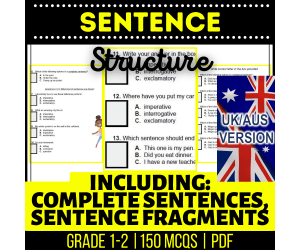
UK/Aus Spelling Sentence Structure Practice Year 2-3 Grammar (PDF)
ELA, Language Development, ESL, Grammar, Common Core, Resources for Teachers, Grade 1, 2, Worksheets & Printables, Worksheets, Assessments, Teacher Tools, Tests, Quizzes and Tests, Centers, Activities
THIS IS THE UK/AUS ENGLISH SPELLING VERSION. CHECK THE CATALOG FOR THE ORIGINAL AMERICAN ENGLISH VERSION. Sentence Structure Grammar Practice MCQS: 10 lessons, 150 MCQS, 43 pages ELA MCQs Overview: This grammar resource gives students plenty of focused practice with two essential writing skills: capitalisation and punctuation. Across 10 lessons and 150 multiple-choice questions, students work through clear, manageable practice that helps them spot mistakes, improve accuracy, and build real confidence over time. The lessons are designed to feel structured without becoming dry or repetitive. Each one builds naturally on the previous lesson, giving students the chance to review, strengthen, and apply what they have learned. With a mix of direct teaching, group work, and independent practice, the resource works well for whole-class lessons, revision, homework, or extra support. This UK/Aus English version is especially useful for schools, teachers, and families working with British-based spelling and language conventions. It is a helpful option for classrooms using UK curriculum expectations, international programmes influenced by British English, or any setting where learners need to practise the correct capitalisation and punctuation forms for that version of English. Sentence Structure Overview: Includes: Complete Sentences Sentence Fragments Subject of a Sentence Types of Sentence End Punctuation PDF Version This is the PDF uneditable version. This download is available in GOOGLE Docs, GOOGLE Forms, GOOGLE Slides. PDF, PPT, WORD, check the links below for more details. FULL CATALOG OF DOWNLOAD LINKS HERE ELA Review Questions Overview Each review test includes three answer choices for every question. The format is clear and easy for students to follow. A small number of pictures are included on each test to make the pages feel more welcoming and less plain. A review sheet is also included to help students go back over many of the main skills covered in the product. Introduction or Example Sheet Each topic includes an introduction or example sheet to use before students begin. This gives students a clear starting point. It also helps refresh key ideas before they move into the practice. Full Answer Keys Full answer keys are included for easy checking. Sample responses are also provided where needed. This helps save time and makes the resource easier to use, even on busy days. In the Supplementary Pack Interactive Ice Breakers: Simple hands-on activities to help students start thinking about the topic. Guided Practice: Teacher-led work that helps students build understanding before working alone. Group and Partner Tasks: Activities that encourage discussion, shared ideas, and teamwork. Independent Worksheets: Extra practice pages for students to complete by themselves. Exit Tasks: Short end-of-lesson activities to check understanding and review learning. For similar downloads and other frees, do check out Cored Group on TeachSimple.
Author Cored Education
Rating
Tags Elementary, Vocabulary, Answers, Ccss, Common Core, Spelling, Writing, Sentence Structure, Grammar, Grammar Worksheets

Guided Reading Level N - Manchester (with Lesson Plan)
ELA, Resources for Teachers, Reading Comprehension, Reading, Social Studies, Geography, Earth and Environmental Sciences, Science, History, Economics, Grade 2, 3, 4, Worksheets & Printables, Worksheets, Teacher Tools, Centers, Activities, Literacy Readers, Quizzes, Quizzes and Tests, Assessments, Lesson Plans
This Guided Reading Book - Manchester (Level N) with lesson plan includes: Guided Reading Color Label (front cover x1) This is a quick way to match the book’s demands to what students can generally handle.. The overall goal is to use the level/color to pick books for several smaller groups. To qualify for a certain level, a student is expected to read a book from that level with about 90–94% accuracy. If a student is consistently accurate and understands, move up a level. If the student is struggling at that level, drop down and add more support. Each student will improve at completely different rates, but it is generally one of the best ways to check progress across the class. DOWNLOAD THE CATALOG TO VIEW ALL GUIDED READING BOOKS AVAILABLE (SORTED LEVELS A-Z) Pre-Reading Question (x1) Teacher asks the prompt aloud, can be while showing the cover or first page. Students share what they already know, or make educated guesses from the cover. Prompt them to use the target vocabulary. Write some of their responses on the board to look back at during the reading. Vocabulary Words (x5) Introduce the five words, best doing it one at a time. Start by saying it, while students repeat and then see if anyone knows what it means before reading further. Read through the meaning and try to briefly connect each word to a picture or gesture so it’s meaningful. Ask students to flip through the book pages and point to where they see each of the vocabulary words. While reading the book pause upon coming across one of the vocab words or read the sentence twice to make sure students understand the word has appeared. Optional: Ask students to raise hands whenever they see/hear one of the new words. Guided Reading Pages (x10) Check the book snapshot (below) for: primary topic - do you need to prep extra reading or intro materials on this? what is taught best - decide on 1-2 bullets to focus on, use the prompt or words provided here for best results. learning goals - what you are checking for students to be able to do after the session, elicit answers using prompts or words provided. key vocabulary (see section above). questions overview - so you know what is coming up and if you need to prep extra materials to assist understanding. Run the lesson You may have already looked at a few of the pages together, but you can show them some of the pictures again first to set meaning. Depending on how much time you have and how familiar your students are with guided reading class, you may want to read the book aloud first with the group first. Students whisper or partner read, while you listen in. If time, do it as a group, one student reading a page each. Use the guided page’s prompts to coach: “Check the picture / does it make sense?” “Point under the words / try the first sound” “Reread the sentence smoothly”. Try to focus more on one student per session (rotating every time), so you can work out if they are ready to move up or need to move down a level. Comprehension Questions (back cover x3) This is your way to check that students didn’t just say the words, but actually understood the text. First, let students answer by pointing to the page/picture and saying a short sentence. After any answer, follow with: “Show me where you found that in the text.” In bigger groups, have partners answer first (10–20 seconds), then call on 2–3 students to share. Differentiation tips: Emerging speakers/struggling readers: oral + pointing On-level: oral in a full sentence Higher: one written sentence or draw + label Book Snapshot Title: World Cities: Manchester Genre: Nonfiction (informational text) Subject: Social Studies (Geography) Primary Topic: Manchester’s location, waterways, climate, and growth Estimated Guided Reading Level (A–Z): N What This Book Teaches Best How Manchester’s location and landform (a bowl-shaped plain) help describe where the city sits and what surrounds it. How waterways shape a city’s geography, including the River Irwell as a border and nearby rivers that join it. How people changed transportation and trade by building the Manchester Ship Canal to connect the inland city to the Irish Sea. How weather and climate connect to land features, including nearby hills trapping clouds and creating frequent grey skies and light rain. How Manchester has changed over time, from textile mills in the 1800s to a skyline with new skyscrapers in recent years. Learning Goals Students will identify where Manchester is located in England using details from the text. Students will describe how Manchester’s rivers and waterways affect the city’s geography. Students will explain why the Manchester Ship Canal was built and what it connects to. Students will describe Manchester’s temperate maritime climate using evidence from the text. Students will explain how damp air influenced textile mills in the 1800s, according to the text. Students will describe one way Manchester’s city center or skyline has changed, using text details. Key Vocabulary From the Text waterways — rivers or channels that water flows through. terrain — what the land is like. maritime — connected to the sea or ocean. municipal — belonging to a city or town. skyscrapers — very tall buildings with many floors. Discussion Prompts Pre-reading question: How might rivers, hills, and weather shape what a city becomes like? Comprehension questions: Where does the text say Manchester is located in England? Comprehension questions: What did the Manchester Ship Canal connect Manchester to? Comprehension questions: According to the text, how did damp air help cotton threads in the 1800s? Printing Tips 1. Best Printing Method (Recommended) “Booklet” Printing (Best if Available) If your printer or PDF viewer supports Booklet Printing , use this. Settings to use: Print mode: Booklet Paper size: Letter or A4 (either works) Orientation: Landscape Print on both sides: Yes Flip on: Short edge Scaling: Fit to printable area Booklet subset: First test: Front sides only Then: Back sides only This will automatically: Pair pages correctly Put the cover on the outside Align everything for folding After printing, fold in half and staple along the spine . 2. If “Booklet” Printing Is NOT Available You can still print this correctly with manual duplex printing . Step-by-step: Open the PDF. Choose Print . Set: Orientation: Landscape Pages per sheet: 1 Print on both sides: Yes Flip on: Short edge Print all pages . Because each PDF page already contains two facing book pages, the result will still fold cleanly into a book. Thousands of Cored Education products are included with your TeachSimple membership. Download links and encyclopedia index available here.
Author Cored Education
Rating
Tags Reading Comprehension, Reading Passages, Reading, Guided Reading, Guided Reading Lesson Plan, Guided Reading Activity, Pre-reading, Geography, Social Studies Lesson Plans, History

Cut & Glue: Spring
ELA, Reading, Preschool, Grade 1, 2, Activities
Cut & Glue: Spring is a reading activity for young learners focused on the season of spring. Students will cut out images related to springtime, such as flowers, baby animals, rain, and sunshine. They will then glue each image next to the corresponding word, allowing them to work on developing reading skills, expanding their vocabulary, and making text-to-image connections. This hands-on resource can be used individually or with partners, during morning work or center time, or even assigned as homework. The spring-themed images and content also present a fun way to build students' background knowledge ahead of spring-focused reading passages. With just some scissors, glue, and printer access, Cut & Glue: Spring engages primary students in purposeful literacy skill-building.
Author Better Teaching Resources
Tags Cut, Glue, Spring, Matching, Words

Cesar Chavez - "Si, Se Puede" ("Yes, it can be done")
Social Studies, ELA, Biographies, Reading, Reading Comprehension, Writing, Grade 4, 5, 6, Activities
About This Product Cesar Chavez – “Si, Se Puede” (“Yes, it can be done”) Thistop-seller Level T Fifth Gradereader is a great way for your students to learn more about the life of Cesar Chavez, a champion for the rights of migrant farm workers. The resource includes objectives to be taught as well as the sight words needed for successfully reading the information about Cesar Chavez. The sight words (vocabulary) are listed in a table on the first page so students can preview the words to ensure understanding. The passage is three pages long followed by multiple practice pages to include a word search for students to find some of the vocabulary words, several multiple-choice questions, and open-ended questions for students to respond with their own words. Through the completion of these activities, students will be engaging in reading, language development, spelling, and writing while reviewing key ELA and Social Studies concepts. Many ELA Common Core Standards are aligned with this text. Additionally, this resource comes with an Answer Key for the teacher to easily review their students' work and plan subsequent lessons. ThisCesar Chavez – “Si, Se Puede” (“Yes, it can be done”)resource can be used with a variety of students besides 5th grade readers, including: · Younger students who are advanced readers · Special Ed students · ELLs with different reading levels · Homeschooling students The text, Teacher's Guide, and Student Activities complete this 8-page resource.
Author Sue Peterson
Tags English Language Arts, Informational Text, Worksheets, Biography, Cesar Chavez, Reading Comprehension, Writing, Si Se Puede Quote, Cesar Chavez Si Se Puede, Si Se Puede Cesar Chavez

I'm Ready for School! Audio Book
ELA, Kindergarten, Preschool, Grade 1, Read Alouds, Activities
Have you ever heard of a school bus that talked to the children as he drove them to school? The Johnson twins, Bobby and Tommy, can’t believe their ears! Find out what happens in the adorable story “The Little School Bus That Talked.” Then you will meet Amy, a little girl that is nervous about her first day at school. Her mother has a great idea to calm Amy’s nerves—and it worked! Follow Amy throughout her day as she meets friends, eats lunch, and plays on the playground. Get ready to go back to school with fun stories, silly sing-along songs , and a talking school bus!
Author Twin Sisters Digital Media
Tags Story, Classroom, Playground, School, Ebook

Letter F Trains Worksheets and Centers
ELA, Writing, Handwriting, Language Development, Phonics, Kindergarten, Preschool, Activities, Worksheets & Printables, Worksheets
The Letter F Trains Worksheets and Centers This resource is a perfect teaching tool for both public school teachers and homeschoolers. These worksheets and activity cards are designed for train-enthused pupils, from preschool through Kindergarten, providing an engaging way to practice letter recognition and beginning sounds. What's Included? 8 diversely colored train engine cards 12 train cars with pictures of objects starting with the letter F An additional set of 8 cars featuring the letter 'F' 4 sorting mats in the form of railway tracks A pair of task box direction cards along with cover design-images Inclusive Sessional Activities & Materials: 'Alphabetically Speaking': -Capital vs Lowercase Distinction Worksheet + Handwriting exercises. 'Sounds Abound': - Activity practicing starters sound connections (Image linked phonemes). To further support learning about letter foundations in early literacy development check out: Beginning Sounds Center Games Bundle... and Alphabet Dice Games for Handwriting Practice sessions... . This package not only helps students immerse into the world of letters through play-like deeds but also provides reinforcement via cut-and-paste worksheets designed around the joyful theme: Trains! Moreover, given its durability due to lamination, this educational tool can be utilized more than once. Should you seek expansion towards a complete literary endeavour,"ABC Letter Trains A-Z" from within Alphabet Task Box Activities might suit your needs. Note: All train-themed pieces and worksheets solely embody the letter 'F' . For exposure to additional letters via similar playful formats, do check out our other resources.
Author The Connett Connection
Tags Trains, Letter Recognition, Beginning Sounds, Preschool Activities, Literacy Centers
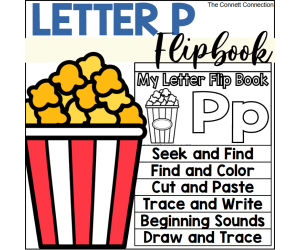
Letter P Flip Book
ELA, Language Development, Phonics, Kindergarten, Preschool, Activities
This letter P flipbook is the perfect tool to help preschoolers and kindergarteners learn all about the letter P! The different pages in this flip book allow students to practice recognizing the letter, writing the letter, and identifying words that begin with the letter. What is Included: This flip book has a cover page for students to simply color. The seek and find page practices letter recognition by having students identify capital and lowercase forms of the letter. The find and color page practices letter recognition of the target letter from other letters of the alphabet. Students can use dot markers to mark the letters, they can color in the letter or use stickers to cover the letters. The cut and paste page allows students to work with scissor skills to cut out examples of the letter from either printed materials, like magazines or newspapers, or students can use the letters provided at the bottom of the page. The trace and write page allows students to practice tracing and writing the capital and lowercase forms of the letter. The beginnings sound page has students coloring the pictures that begin with the letter. The trace and draw page has students tracing a word that begins with the letter, then drawing a picture to represent that word. When to Use: Literacy Centers - This flip book can be placed in a literacy center for students to work on identifying the letter. Morning Work - This flip book is a perfect morning work activity. Doing one or two pages each morning, students can finish one flip book a week. Homework - These flip books can be sent home for parents to work with letter recognition with their children. Small Group Activity - Students who need extra help with identifying letters and sounds can work with the teacher in a small group setting.
Author The Connett Connection
Tags Flip Book, Hands-on Learning, Phonics, Literacy Centers, Letter P, Letter P Activity

Guided Reading Level M - All About Sand (with Lesson Plan)
ELA, Resources for Teachers, Reading Comprehension, Reading, Science, Earth and Environmental Sciences, Life Sciences, Technology, Geography, Social Studies, Grade 1, 2, 3, Worksheets & Printables, Worksheets, Teacher Tools, Centers, Activities, Literacy Readers, Quizzes, Quizzes and Tests, Assessments
This Guided Reading Book - All About Sand (Level M) with lesson plan includes: Guided Reading Color Label (front cover x1) This is a quick way to match the book’s demands to what students can generally handle.. The overall goal is to use the level/color to pick books for several smaller groups. To qualify for a certain level, a student is expected to read a book from that level with about 90–94% accuracy. If a student is consistently accurate and understands, move up a level. If the student is struggling at that level, drop down and add more support. Each student will improve at completely different rates, but it is generally one of the best ways to check progress across the class. DOWNLOAD THE CATALOG TO VIEW ALL GUIDED READING BOOKS AVAILABLE (SORTED LEVELS A-Z) Pre-Reading Question (x1) Teacher asks the prompt aloud, can be while showing the cover or first page. Students share what they already know, or make educated guesses from the cover. Prompt them to use the target vocabulary. Write some of their responses on the board to look back at during the reading. Vocabulary Words (x5) Introduce the five words, best doing it one at a time. Start by saying it, while students repeat and then see if anyone knows what it means before reading further. Read through the meaning and try to briefly connect each word to a picture or gesture so it’s meaningful. Ask students to flip through the book pages and point to where they see each of the vocabulary words. While reading the book pause upon coming across one of the vocab words or read the sentence twice to make sure students understand the word has appeared. Optional: Ask students to raise hands whenever they see/hear one of the new words. Guided Reading Pages (x10) Check the book snapshot (below) for: primary topic - do you need to prep extra reading or intro materials on this? what is taught best - decide on 1-2 bullets to focus on, use the prompt or words provided here for best results. learning goals - what you are checking for students to be able to do after the session, elicit answers using prompts or words provided. key vocabulary (see section above). questions overview - so you know what is coming up and if you need to prep extra materials to assist understanding. Run the lesson You may have already looked at a few of the pages together, but you can show them some of the pictures again first to set meaning. Depending on how much time you have and how familiar your students are with guided reading class, you may want to read the book aloud first with the group first. Students whisper or partner read, while you listen in. If time, do it as a group, one student reading a page each. Use the guided page’s prompts to coach: “Check the picture / does it make sense?” “Point under the words / try the first sound” “Reread the sentence smoothly”. Try to focus more on one student per session (rotating every time), so you can work out if they are ready to move up or need to move down a level. Comprehension Questions (back cover x3) This is your way to check that students didn’t just say the words, but actually understood the text. First, let students answer by pointing to the page/picture and saying a short sentence. After any answer, follow with: “Show me where you found that in the text.” In bigger groups, have partners answer first (10–20 seconds), then call on 2–3 students to share. Differentiation tips: Emerging speakers/struggling readers: oral + pointing On-level: oral in a full sentence Higher: one written sentence or draw + label Book Snapshot Title: All About Sand Genre: Nonfiction (informational text) Subject: Science (Earth science) Primary Topic: How sand forms and why it matters Estimated Guided Reading Level (A–Z): M What This Book Teaches Best How sand forms over millions of years through weathering (rain, wind, and ice breaking rocks into smaller pieces). How rivers move rock pieces and help make them “smooth and round,” and how ocean waves help build beaches. How sand can be different colors and how those colors can come from different materials (like volcanic lava, coral, and seashells). How sand can look different under a microscope and what sand’s colors can reveal about minerals inside it. Why sand is important to people and nature (uses in products and roles like protecting coastlines and providing habitat). Learning Goals Students will describe where sand is found and what it can cover in the world. Students will explain how weathering breaks rocks into smaller and smaller pieces over time. Students will describe how rivers carry rock fragments and how moving water changes the rocks’ edges. Students will explain what happens when a river reaches the ocean and how waves help create a beach. Students will identify different kinds/colors of sand described in the text and what they come from. Students will describe at least one way sand helps humans and one way it helps Earth’s surface. Key Vocabulary From the Text weathering — breaking rocks into smaller pieces over time. fragments — small broken pieces. volcanic — related to volcanoes and lava. microscope — tool that helps you see tiny things. habitat — place where a plant or animal lives. Discussion Prompts Pre-reading question: What are some natural forces that might change big rocks over a long time? Comprehension questions: What does the text say weathering does to rocks over millions of years? Comprehension questions: According to the text, what happens when a river reaches the ocean that helps create a beach? Comprehension questions: What are two things the text says humans use sand to make? Printing Tips 1. Best Printing Method (Recommended) “Booklet” Printing (Best if Available) If your printer or PDF viewer supports Booklet Printing , use this. Settings to use: Print mode: Booklet Paper size: Letter or A4 (either works) Orientation: Landscape Print on both sides: Yes Flip on: Short edge Scaling: Fit to printable area Booklet subset: First test: Front sides only Then: Back sides only This will automatically: Pair pages correctly Put the cover on the outside Align everything for folding After printing, fold in half and staple along the spine . 2. If “Booklet” Printing Is NOT Available You can still print this correctly with manual duplex printing . Step-by-step: Open the PDF. Choose Print . Set: Orientation: Landscape Pages per sheet: 1 Print on both sides: Yes Flip on: Short edge Print all pages . Because each PDF page already contains two facing book pages, the result will still fold cleanly into a book. Thousands of Cored Education products are included with your TeachSimple membership. Download links and encyclopedia index available here.
Author Cored Education
Rating
Tags Reading Comprehension, Reading Passages, Reading, Guided Reading, Guided Reading Lesson Plan, Guided Reading Activity, Pre-reading, Vocabulary, Science Lesson Plans, Earth Science
CVC Word Frames
ELA, Language Development, Phonics, Pre-Reading, Preschool, Grade 1, 2, Activities
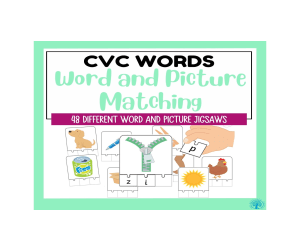
Mastering CVC words is an essential step for emerging readers and writers. This hands-on resource allows children to practice decoding, spelling, and writing consonant-vowel-consonant words in an engaging way. Featuring 48 colorful illustrations paired with letter boxes, this activity develops critical early literacy skills. Children will see vivid pictures of familiar CVC vocabulary like cat, bus, and cup. Below each image are three blank boxes to spell the word using the included letter cards. By sounding out the pictured word and constructing it letter by letter, learners strengthen phonics connections. This process builds phonemic awareness, spelling ability, and penmanship. With ample picture cues and movable letters, children are actively engaged in creating CVC words. Teachers can use this resource to introduce new vocabulary or review previously learned words. The self-checking format provides immediate feedback. Durable and reusable, simply laminate these sheets and letter cards for countless phonics learning games . This interactive resource brings CVC word study to life. Children will delight in spelling simple words and seeing the letters snap together to form vocabulary. This multisensory experience cements essential literacy skills. This set includes 48 CVC word pictures with enough corresponding letter cards for each word. Clipart images courtesy of Kari Bolt Children’s Illustrator.
Author SEN Resource Source
Tags CVC, Phonics, Reading, Early Writing, CVC Words, Word And Picture Matching, Phonics Activities, Early Literacy, Literacy Skills, Phonemic Awareness

Been Song (MP3)
ELA, Reading, Preschool, Kindergarten, Grade 1, Songs, Activities
This product is great for helping students recognize the sight word BEEN. The BEEN Song (MP3) is put to a catchy tune and is repeated, spelled, and used in sentences. This is a great resource for teachers who want to help their students learn.
Author Have Fun Teaching
Tags Counting

The Art Gallery: Write A Story (9-13 years)
ELA, Writing, Creative Writing, Grade 3, 4, 5, 6, Activities
The Art Gallery: Write A Story (9-13 years) This comprehensive teaching resource is specifically designed to foster creative writing skills for learners aged 9 to 12. Serving as an intensive educational tool for students in grades 3, 4, 5, and 6, this resource focuses on harnessing the imaginative prowess of young writers. A Hands-On Approach Students are encouraged to write their own story titled 'The Art Gallery.' This process enables them to learn essential skills such as structuring stories effectively. They learn the significance of creating compelling beginnings and how these set the tone for plots filled with action sequences and suspense. In-depth Features Planning sheets: Guide learners in crafting engaging story endings that provide resolution up until the last sentence. Creative Expansion: Students can flex their creative muscles by imagining follow-up scenarios - expanding their initial stories while practicing narrative continuity. Versatile Learning Aid This learning aid excels either in whole group discussions or small group collaborations within a public school setting or homeschool environment. Teachers can stimulate interactive classroom discussions about different writing approaches drawn from varied student works; fostering a collaborative learning atmosphere. Homeschoolers also benefit from individual usage or inclusion into diverse tasks such as homework assignments. Detailed Outlines and Ready-to-use Examples The package also includes outlines and examples capable of providing advanced students with challenges through complex vocabulary usage. Digital Friendly Format The package comes accessible via PDF format across nine informative pages making it easily convenient across different tech devices—be it printing out worksheets or directly engaging learners on digital platforms. Empowering students while enhancing crucial language arts skills in an interesting manner indeed stands testament to the necessity of this resource in any active learning environment that upholds quality education enriched by creativity.
Author Guinea Pig Education
Tags Creative Writing, Storytelling, Imagination, Art Education, Interactive Learning

Guided Reading Level B: Clouds You Can Spot
ELA, Resources for Teachers, Reading Comprehension, Reading, Science, Language Development, Pre-Reading, Vocabulary, Earth and Environmental Sciences, Earth Sciences, Kindergarten, Preschool, Grade 1, Worksheets & Printables, Worksheets, Teacher Tools, Centers, Activities, Literacy Readers, Quizzes, Quizzes and Tests, Assessments
This Guided Reading Book - Clouds You Can Spot (Level B) includes: Guided Reading Color Label (front cover x1) This is a quick way to match the book’s demands to what students can generally handle.. The overall goal is to use the level/color to pick books for several smaller groups. To qualify for a certain level, a student is expected to read a book from that level with about 90–94% accuracy. If a student is consistently accurate and understands, move up a level. If the student is struggling at that level, drop down and add more support. Each student will improve at completely different rates, but it is generally one of the best ways to check progress across the class. DOWNLOAD THE CATALOG TO VIEW ALL GUIDED READING BOOKS AVAILABLE (SORTED LEVELS A-Z) Pre-Reading Question (x1) Teacher asks the prompt aloud, can be while showing the cover or first page. Students share what they already know, or make educated guesses from the cover. Prompt them to use the target vocabulary. Write some of their responses on the board to look back at during the reading. Vocabulary Words (x5) Introduce the five words, best doing it one at a time. Start by saying it, while students repeat and then see if anyone knows what it means before reading further. Read through the meaning and try to briefly connect each word to a picture or gesture so it’s meaningful. Ask students to flip through the book pages and point to where they see each of the vocabulary words. While reading the book pause upon coming across one of the vocab words or read the sentence twice to make sure students understand the word has appeared. Optional: Ask students to raise hands whenever they see/hear one of the new words. Guided Reading Pages (x10) Check the book snapshot (below) for: primary topic - do you need to prep extra reading or intro materials on this? what is taught best - decide on 1-2 bullets to focus on, use the prompt or words provided here for best results. learning goals - what you are checking for students to be able to do after the session, elicit answers using prompts or words provided. key vocabulary (see section above). questions overview - so you know what is coming up and if you need to prep extra materials to assist understanding. Run the lesson You may have already looked at a few of the pages together, but you can show them some of the pictures again first to set meaning. Depending on how much time you have and how familiar your students are with guided reading class, you may want to read the book aloud first with the group first. Students whisper or partner read, while you listen in. If time, do it as a group, one student reading a page each. Use the guided page’s prompts to coach: “Check the picture / does it make sense?” “Point under the words / try the first sound” “Reread the sentence smoothly”. Try to focus more on one student per session (rotating every time), so you can work out if they are ready to move up or need to move down a level. Comprehension Questions (back cover x3) This is your way to check that students didn’t just say the words, but actually understood the text. First, let students answer by pointing to the page/picture and saying a short sentence. After any answer, follow with: “Show me where you found that in the text.” In bigger groups, have partners answer first (10–20 seconds), then call on 2–3 students to share. Differentiation tips: Emerging speakers/struggling readers: oral + pointing On-level: oral in a full sentence Higher: one written sentence or draw + label Book Snapshot Title: Clouds You Can Spot Genre: Nonfiction (informational) Subject: Earth Science (Weather) / Early Literacy Primary Topic: Observing clouds using simple describing words Estimated Guided Reading Level (A–Z): B What This Book Teaches Best Builds early nonfiction observation language by naming what you can see in the sky (sun, clouds, sky). Teaches describing words (adjectives) for clouds: big/small, white/grey, high/low, and “rain clouds.” Supports patterned reading and fluency through repeated sentence structure: “See the ____.” Encourages compare/contrast thinking using paired opposites (big vs. small; high vs. low; white vs. grey). Learning Goals Students will identify things the book says you can see (sun, clouds, sky). Students will describe clouds using words from the text (big, small, white, grey, high, low, rain). Students will retell the book’s sequence using the repeated pattern “See the ____.” Students will compare two cloud descriptions from the book (such as high/low or big/small). Students will answer simple questions about what the book tells the reader to see. Key Vocabulary From the Text clouds — white or grey puffs you see in the sky grey — a color between white and black high — up far above you low — down close to the ground rain — water that falls from clouds Discussion Prompts Pre-reading question: What do you think you might see when you look up at the sky? Comprehension questions: What is the first thing the book says to see? Comprehension questions: What are two different kinds of clouds the book tells you to see? Comprehension questions: What is the last thing the book says to see? Printing Tips 1. Best Printing Method (Recommended) “Booklet” Printing (Best if Available) If your printer or PDF viewer supports Booklet Printing , use this. Settings to use: Print mode: Booklet Paper size: Letter or A4 (either works) Orientation: Landscape Print on both sides: Yes Flip on: Short edge Scaling: Fit to printable area Booklet subset: First test: Front sides only Then: Back sides only This will automatically: Pair pages correctly Put the cover on the outside Align everything for folding After printing, fold in half and staple along the spine . 2. If “Booklet” Printing Is NOT Available You can still print this correctly with manual duplex printing . Step-by-step: Open the PDF. Choose Print . Set: Orientation: Landscape Pages per sheet: 1 Print on both sides: Yes Flip on: Short edge Print all pages . Because each PDF page already contains two facing book pages, the result will still fold cleanly into a book. Thousands of Cored Education products are included with your TeachSimple membership. Download links and encyclopedia index available here.
Author Cored Education
Rating
Tags Vocabulary, Reading Comprehension, Reading Passages, Literacy Readers, Leveled Reading, Nonfiction, Reading, Guided Reading, Earth Science, Clouds

Camping Alphabet Cards
ELA, Holiday & Seasonal, Language Development, Pre-Reading, Seasons, Summer, Kindergarten, Preschool, Activities
These camping themed alphabet cards are perfect for students who are learning with a summer theme. They make the perfect tool for students to learn the letters of the alphabet. What is Included: This set includes one capital letter card and one lowercase letter card for each letter. Ways to Use the Cards: Play a matching game by matching the capital letters to the lowercase letters. Attach a paper clip to a letter card and use a magnetic fishing pole to "catch" the letters for a fun fishing game. Use a sand or salt tray for students to practice writing the letters on each card. Have students find the letters that you have hidden around the room for a fun letter hunt. Place the letter cards in alphabetical order. Create a pocket char game where you place the cards on a pocket chart and hide a picture behind one of the letters. The students will guess which letter the hidden picture is behind. Add objects that begin with each letter for students to match to each letter card. When to Use: Literacy Center - Place the cards in a literacy center for students to match independently or with a partner. Morning Tubs or Baskets - Place the cards in a morning bin for students to work on while their classmates arrive to class. Small Group Activities - The teacher can pull aside a small group of students who need extra practice identifying letters to use these cards. These bee alphabet cards are a great activity for students to practice letter recognition during the spring months. They are a low prep activity for teachers to prepare for students. Simply print, cut apart and laminate for durability. These cards can be stored in a task box for easy set up, clean up, and storage. Skills Assessed: These cards, depending on the materials added, can assess both letter recognition of capital and lowercase letters as well as identifying beginning sounds.
Author The Connett Connection
Tags Alphabet Activities, Letter Recognition, Alphabet Games, Camping Cards, Alphabet Cards

Letter V Counting to 10 Center
ELA, Math, Early Math, Numbers, Language Development, Phonics, Kindergarten, Preschool, Centers, Activities
This Letter V Counting to 10 Center is a counting to 10 math matching center for the letter V. This resource is great for letter recognition and practicing counting with tens frames. This is a quick, easy, and engaging activity to give preschooler or kindergartener students who need practice with recognizing the lowercase form of the letter V, who need practice recognizing numbers up to 10, as well as for those students who need extra practice counting to 10. What is Included: A tens frame card for each number 1 to 10 with lowercase letter V as counters Vase themed number cards for 1 to 10 This counting math center can be used in the following ways Math centers Matching centers Small group activities Morning tubs or baskets Emergency sub plans Quick hands on counting assessment Quick number recognition assessment Skills assessed with this letter V counting activity Lowercase letter V recognition Ability to count to 10 Recognizing amounts when represented in a tens frame Ability to match numbers to the correct tens frame Fine Motor Skills This counting to 10 math center is low prep. All that is required is for the teacher to print it out, cut it out and laminate it if so desired. Once created, this counting center can be used over and over. The center provides a great way for students to practice counting to 10 and practicing letter recognition of lowercase letters at the same time. Students can work on this counting center independently, in pairs, or in small groups to complete. You can add manipulatives for students to cover each letter V as they count if they need a more hands on approach, or a more guided way to practice counting each letter V. For similar resources about the alphabet, visit my store!
Author The Connett Connection
Tags Counting To 10, Counting To Ten, Letter Recognition, Tens Frames, Counting With Tens Frames, Ladybug Counting, Preschool Math, Math Center, Letter V, Letter V Activities
Shapes Maze: 1 Page Sample (PDF)
ELA, Language Development, Resources for Teachers, Vocabulary, Spelling, ESL, Shapes, Early Math, Math, Grade 2, 3, 4, 5, Worksheets & Printables, Worksheets, Teacher Tools, Centers, Activities, Mazes
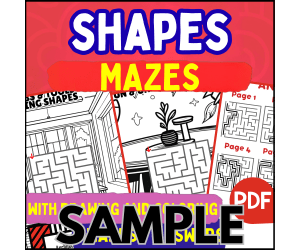
THIS IS A ONE PAGE SAMPLE OF A SIX PAGE MAZE DOWNLOAD FULL SIX MAZE DOWNLOAD INFORMATION: Maze Series This maze series is designed for students in grades 2–5. Each set features a clear, kid-friendly theme with scene-based mazes that students first navigate, then complete by drawing a few target words from a simple word list. Pages come in varied styles and graduated difficulty, with an optional “color it in” step—and some themes invite quick calculations to match the task. These mazes are student-friendly, classroom-ready, and perfect for literacy warmups, seasonal units, fast-finisher bins, centers, sub plans, or home learning extensions. The playful, structured format builds problem-solving, attention to detail, and fine-motor control while reinforcing themed content in a motivating way. Note: Unlike many themed products, not all word-list words appear on the maze pages. To support full vocabulary coverage, we’ve released a companion word list you can find in the links section. Shapes Word List 1. Basic Shapes Circle, Square, Triangle, Rectangle, Oval, Star, Heart, Diamond 2. 3D Shapes Cube, Sphere, Cylinder, Cone, Pyramid, Rectangular prism, Hemisphere, Torus 3. Shapes in Everyday Life Wheel, Window, Stop sign, Ball, Pizza slice, Dice, Ice cream cone, Tabletop 4. Describing Shapes Round, Pointy, Flat, Curved, Straight, Symmetrical, Wide, Narrow 5. Fun & Unique Shapes Hexagon, Pentagon, Octagon, Crescent, Trapezoid, Parallelogram, Spiral, Arrow 6. Jobs & Tools Using Shapes Architect, Artist, Engineer, Designer, Carpenter, Mapmaker, Mathematician, Puzzle maker PDF Version Other versions will appear here when available. Follow the store for the lastest on new products. How to Use These Mazes Perfect for: Morning work or early-finisher bins Literacy or STEM centers Holiday/seasonal review lessons Independent stations, sub plans, or take-home enrichment More Shapes Themed Products CROSSWORDS WORD SEARCHES FULL CATALOG OF DOWNLOAD LINKS HERE Themed Mazes Links Addition PDF Animals PDF Around the Home PDF Birthday PDF Candy PDF Christmas PDF Cinco de Mayo PDF Clothes PDF Colors PDF Days and Months PDF Division PDF Earth Day PDF Easter PDF Easy Mazes PDF Fall PDF Father's Day PDF Food PDF Geography (Set 1) PDF Geography (Set 2) PDF Geography (Set 3) PDF Graduation PDF Health PDF History (Set 1) PDF History (Set 2) PDF History (Set 3) PDF Human Body PDF Kindness PDF Life Skills PDF Mother's Day PDF Multiplication PDF Science (Set 1) PDF Science (Set 2) PDF Science (Set 3) PDF Shapes PDF Social Skills PDF Spring PDF Sports PDF St. Patrick's Day PDF Subtraction PDF Summer PDF Thanksgiving PDF Transport PDF Valentine's Day PDF Winter PDF Mazes in Depth Structure Each maze is crafted around a focused sub-theme. Students navigate the maze, encountering branches and cul-de-sacs that build attention and planning. Most pages include a tiny follow-up box—students draw or label 2–3 target words from a small word box, add a quick count, or color in the scene—so the activity reinforces both content and skills in a highly engaging format. Each completed set includes: A themed maze page. A simple student instruction strip. An answer key showing the solved path for teacher support or self-checking Themes Included These mazes cover a wide range of fun, age-appropriate themes, including: Seasons & Holidays (e.g., Halloween, Easter, Valentine’s Day) Math-Lite Connections (e.g., quick counts, number words) Everyday Topics (e.g., Animals, Weather, School) Special Units (e.g., Health, Earth Day, Sports, Kindness) Each topic reflects students’ real-life experiences and interests while strengthening problem-solving, visual scanning, and fine-motor control in a playful, highly visual way. Easy extensions (optional): Time it: solve once in pencil, then try to beat the time in pen Retell the route using sequence words (first, next, then, finally) Count intersections or turns and graph the results Write a 1–2 sentence mini-story about the scene using the target words Design a tiny maze in the corner for a partner to solve Differentiation tips: Offer a finger-trace pass before pencils for emerging learners Highlight the borders of the correct region on first attempts Use thicker-line versions or simpler pages to build confidence Pair roles: “navigator” gives directions; “driver” traces the path For similar downloads and other frees, do check out Cored Group on TeachSimple.
Author Cored Education
Rating
Tags Vocabulary, Spelling, Basic Shapes, 3D Shapes, Shapes, Math, Describing Shapes, Shape Maze, Mazes, Math Mazes