



3,979 products added recently
Page 47 - Science Activities
Ignite your students' interest in science with activities that make learning interactive and exciting. This collection offers experiments, demonstrations, and inquiry-based projects covering various scientific fields. By integrating these science activities into your lessons, you can encourage critical thinking, foster curiosity, and deepen understanding of scientific concepts.

 Show filters

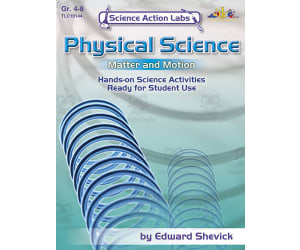
Science Action Labs Physical Science: Matter and Motion
Science, Physics, Grade 4, 5, 6, 7, 8, Labs, Experiments, Activities
Science Action Labs Physical Science: Matter and Motion An essential teaching resource designed for educators of Grade 4 to Grade 8 students with a primary focus on Newton's First Law of Motion. This versatile science guide forms the foundation for a range of engaging activities. Lessons grounded in physical science, revolving around essentials such as matter and motion. Characteristics of matter, friction integration and understanding concept made effortless with this pragmatic resource. Actionable Labs The many engaging projects include: Building simple pendulums. Creating miniature scenarios to demonstrate overcoming friction. The activities introduce novel methods to explore conventional concepts through active learning. This affluence in implementation strategies meets varying teaching needs from whole group instruction to individual assignments based on the class or student requirements. Ease of Use The constructively organized PDF entails: A ready-to-print format containing 64 straightforward pages - easing preparation time with well-designed activities available at your fingertips! To summarize,, "Science Action Labs : Physical Science - Matter And Motion" strikes an effective balance between theory and practice cultivating an active learning environment for conceptual mastery via real-world application focused hands-on activities.
Author Classroom Complete Press
Tags Hands-on Science, Edible Atoms, Mousetrap Science, Momentum Challenge, Inertia
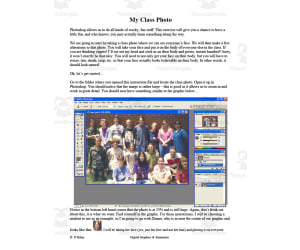
My Class Photo Photoshop Activity
Science, Technology, Grade 7, 8, 9, 10, Activities
Students will work with digital tools in the My Class Photo Photoshop Activity . Students will take a class photo and make alterations to it. Step by step directions are included.
Author OK Products
Tags Science, Technology, Computer Science, Class Photo, Graphic Design, Design Concepts, Clip Art, Photoshop, Photopea
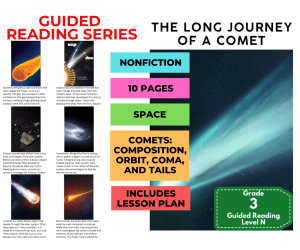
Guided Reading Level N - The Long Journey of Comets (with Lesson Plan)
ELA, Resources for Teachers, Reading Comprehension, Reading, Language Development, Science, Pre-Reading, Space, Earth and Environmental Sciences, Physics, Grade 2, 3, 4, Worksheets & Printables, Worksheets, Teacher Tools, Centers, Activities, Literacy Readers, Quizzes, Quizzes and Tests, Assessments
This Guided Reading Book - The Long Journey of a Comet (Level N) with lesson plan includes: Guided Reading Color Label (front cover x1) This is a quick way to match the book’s demands to what students can generally handle.. The overall goal is to use the level/color to pick books for several smaller groups. To qualify for a certain level, a student is expected to read a book from that level with about 90–94% accuracy. If a student is consistently accurate and understands, move up a level. If the student is struggling at that level, drop down and add more support. Each student will improve at completely different rates, but it is generally one of the best ways to check progress across the class. DOWNLOAD THE CATALOG TO VIEW ALL GUIDED READING BOOKS AVAILABLE (SORTED LEVELS A-Z) Pre-Reading Question (x1) Teacher asks the prompt aloud, can be while showing the cover or first page. Students share what they already know, or make educated guesses from the cover. Prompt them to use the target vocabulary. Write some of their responses on the board to look back at during the reading. Vocabulary Words (x5) Introduce the five words, best doing it one at a time. Start by saying it, while students repeat and then see if anyone knows what it means before reading further. Read through the meaning and try to briefly connect each word to a picture or gesture so it’s meaningful. Ask students to flip through the book pages and point to where they see each of the vocabulary words. While reading the book pause upon coming across one of the vocab words or read the sentence twice to make sure students understand the word has appeared. Optional: Ask students to raise hands whenever they see/hear one of the new words. Guided Reading Pages (x10) Check the book snapshot (below) for: primary topic - do you need to prep extra reading or intro materials on this? what is taught best - decide on 1-2 bullets to focus on, use the prompt or words provided here for best results. learning goals - what you are checking for students to be able to do after the session, elicit answers using prompts or words provided. key vocabulary (see section above). questions overview - so you know what is coming up and if you need to prep extra materials to assist understanding. Run the lesson You may have already looked at a few of the pages together, but you can show them some of the pictures again first to set meaning. Depending on how much time you have and how familiar your students are with guided reading class, you may want to read the book aloud first with the group first. Students whisper or partner read, while you listen in. If time, do it as a group, one student reading a page each. Use the guided page’s prompts to coach: “Check the picture / does it make sense?” “Point under the words / try the first sound” “Reread the sentence smoothly”. Try to focus more on one student per session (rotating every time), so you can work out if they are ready to move up or need to move down a level. Comprehension Questions (back cover x3) This is your way to check that students didn’t just say the words, but actually understood the text. First, let students answer by pointing to the page/picture and saying a short sentence. After any answer, follow with: “Show me where you found that in the text.” In bigger groups, have partners answer first (10–20 seconds), then call on 2–3 students to share. Differentiation tips: Emerging speakers/struggling readers: oral + pointing On-level: oral in a full sentence Higher: one written sentence or draw + label Book Snapshot Title: The Long Journey of a Comet Genre: Nonfiction (informational) Subject: Earth & Space Science Primary Topic: Comets: composition, orbit, coma, and tails Estimated Guided Reading Level (A–Z): N What This Book Teaches Best What comets are and what they’re made of (a “dirty snowball” mixture of ice, dust, and rock). How comets travel through the solar system, including long, oval-shaped orbits and time spent in the Kuiper Belt. What changes when a comet nears the Sun, including sublimation and the formation of a glowing coma. How solar wind and radiation create two tails that point away from the Sun, and how dust and ion tails differ. Why comets matter to scientists, described as “time capsules” that help scientists learn about the universe’s history. Learning Goals Students can describe what a comet is and identify materials the text says it contains. Students can explain what the nucleus is using details from the book. Students can describe what happens as a comet moves closer to the Sun, including sublimation and coma formation. Students can explain why a comet’s tails form and why they point away from the Sun. Students can compare the dust tail and the ion tail using text details. Students can explain what scientists can learn by studying comets, according to the text. Key Vocabulary From the Text mixture — different things combined together. nucleus — the solid center part of a comet. sublimation — when ice turns directly into gas. radiation — energy that travels out from the Sun. distinct — clearly different from something else. Discussion Prompts Pre-reading question: What do you think happens to a comet as it travels closer to the Sun? Comprehension questions: What does the text say a comet is made of? According to the text, what causes a comet to form a coma? What does the text say scientists can learn by studying comets? Printing Tips 1. Best Printing Method (Recommended) “Booklet” Printing (Best if Available) If your printer or PDF viewer supports Booklet Printing , use this. Settings to use: Print mode: Booklet Paper size: Letter or A4 (either works) Orientation: Landscape Print on both sides: Yes Flip on: Short edge Scaling: Fit to printable area Booklet subset: First test: Front sides only Then: Back sides only This will automatically: Pair pages correctly Put the cover on the outside Align everything for folding After printing, fold in half and staple along the spine . 2. If “Booklet” Printing Is NOT Available You can still print this correctly with manual duplex printing . Step-by-step: Open the PDF. Choose Print . Set: Orientation: Landscape Pages per sheet: 1 Print on both sides: Yes Flip on: Short edge Print all pages . Because each PDF page already contains two facing book pages, the result will still fold cleanly into a book. Thousands of Cored Education products are included with your TeachSimple membership. Download links and encyclopedia index available here.
Author Cored Education
Rating
Tags Reading Comprehension, Reading Passages, Reading, Guided Reading, Guided Reading Lesson Plan, Guided Reading Activity, Pre-reading, Vocabulary, Science Lesson Plans, Space
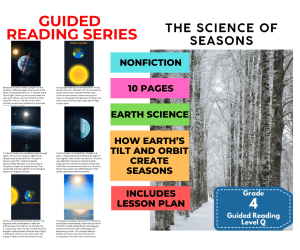
Guided Reading Level Q - Science of Seasons (with Lesson Plan)
ELA, Resources for Teachers, Reading Comprehension, Reading, Life Sciences, Science, Earth and Environmental Sciences, Geography, Social Studies, Space, Grade 3, 4, 5, Worksheets & Printables, Worksheets, Teacher Tools, Centers, Activities, Literacy Readers, Quizzes, Quizzes and Tests, Assessments
This Guided Reading Book - Science of Seasons (Level Q) with lesson plan includes: Guided Reading Color Label (front cover x1) This is a quick way to match the book’s demands to what students can generally handle.. The overall goal is to use the level/color to pick books for several smaller groups. To qualify for a certain level, a student is expected to read a book from that level with about 90–94% accuracy. If a student is consistently accurate and understands, move up a level. If the student is struggling at that level, drop down and add more support. Each student will improve at completely different rates, but it is generally one of the best ways to check progress across the class. DOWNLOAD THE CATALOG TO VIEW ALL GUIDED READING BOOKS AVAILABLE (SORTED LEVELS A-Z) Pre-Reading Question (x1) Teacher asks the prompt aloud, can be while showing the cover or first page. Students share what they already know, or make educated guesses from the cover. Prompt them to use the target vocabulary. Write some of their responses on the board to look back at during the reading. Vocabulary Words (x5) Introduce the five words, best doing it one at a time. Start by saying it, while students repeat and then see if anyone knows what it means before reading further. Read through the meaning and try to briefly connect each word to a picture or gesture so it’s meaningful. Ask students to flip through the book pages and point to where they see each of the vocabulary words. While reading the book pause upon coming across one of the vocab words or read the sentence twice to make sure students understand the word has appeared. Optional: Ask students to raise hands whenever they see/hear one of the new words. Guided Reading Pages (x10) Check the book snapshot (below) for: primary topic - do you need to prep extra reading or intro materials on this? what is taught best - decide on 1-2 bullets to focus on, use the prompt or words provided here for best results. learning goals - what you are checking for students to be able to do after the session, elicit answers using prompts or words provided. key vocabulary (see section above). questions overview - so you know what is coming up and if you need to prep extra materials to assist understanding. Run the lesson You may have already looked at a few of the pages together, but you can show them some of the pictures again first to set meaning. Depending on how much time you have and how familiar your students are with guided reading class, you may want to read the book aloud first with the group first. Students whisper or partner read, while you listen in. If time, do it as a group, one student reading a page each. Use the guided page’s prompts to coach: “Check the picture / does it make sense?” “Point under the words / try the first sound” “Reread the sentence smoothly”. Try to focus more on one student per session (rotating every time), so you can work out if they are ready to move up or need to move down a level. Comprehension Questions (back cover x3) This is your way to check that students didn’t just say the words, but actually understood the text. First, let students answer by pointing to the page/picture and saying a short sentence. After any answer, follow with: “Show me where you found that in the text.” In bigger groups, have partners answer first (10–20 seconds), then call on 2–3 students to share. Differentiation tips: Emerging speakers/struggling readers: oral + pointing On-level: oral in a full sentence Higher: one written sentence or draw + label Book Snapshot Title: The Science of Seasons Genre: Nonfiction (informational text) Subject: Earth & Space Science / Reading (Informational Text) Primary Topic: How Earth’s tilt and orbit create seasons Estimated Guided Reading Level (A–Z): Q What This Book Teaches Best Cause-and-effect in Earth science: The text explains how Earth’s orbit and its 23.5° axial tilt lead to changing seasons. Sunlight angle and temperature: Readers learn how direct, concentrated sunlight warms more than slanted rays that spread out and provide less heat. Key seasonal markers: The vernal equinox, summer solstice, autumnal equinox, and winter solstice are described with what happens to daylight and seasons. Hemispheres and opposite seasons: The book states seasons are opposite in the Northern and Southern Hemispheres because of Earth’s tilt. How living things respond to seasons: It describes animals migrating or hibernating when weather turns cold and food becomes scarce. Learning Goals Students will describe Earth’s orbit and explain that one trip takes approximately 365 days. Students will explain how Earth’s axial tilt affects the angles of sunlight hitting Earth. Students will compare direct rays and slanted rays using the text’s heat descriptions. Students will identify what happens during an equinox and during a solstice, based on the text. Students will explain why seasons are opposite in the Northern and Southern Hemispheres. Students will describe two ways animals survive seasonal change: migrating and hibernating. Key Vocabulary From the Text orbit — the path Earth travels around the Sun. axial — related to the line an object spins around. hemisphere — half of Earth. equinox — when day and night are nearly equal. migrate — move to a new place for better conditions. Discussion Prompts Pre-reading question: What do you think makes Earth have different seasons during the year? Comprehension questions: According to the text, how do Earth’s orbit and axial tilt help create the seasons? Comprehension questions: What happens to daylight and darkness during the vernal or autumnal equinox? Comprehension questions: What are two ways animals survive when the weather turns cold and food becomes scarce? Printing Tips 1. Best Printing Method (Recommended) “Booklet” Printing (Best if Available) If your printer or PDF viewer supports Booklet Printing , use this. Settings to use: Print mode: Booklet Paper size: Letter or A4 (either works) Orientation: Landscape Print on both sides: Yes Flip on: Short edge Scaling: Fit to printable area Booklet subset: First test: Front sides only Then: Back sides only This will automatically: Pair pages correctly Put the cover on the outside Align everything for folding After printing, fold in half and staple along the spine . 2. If “Booklet” Printing Is NOT Available You can still print this correctly with manual duplex printing . Step-by-step: Open the PDF. Choose Print . Set: Orientation: Landscape Pages per sheet: 1 Print on both sides: Yes Flip on: Short edge Print all pages . Because each PDF page already contains two facing book pages, the result will still fold cleanly into a book. Thousands of Cored Education products are included with your TeachSimple membership. Download links and encyclopedia index available here.
Author Cored Education
Rating
Tags Reading Comprehension, Reading Passages, Reading, Guided Reading, Guided Reading Lesson Plan, Guided Reading Activity, Pre-reading, Science Lesson Plans, Geography, Space
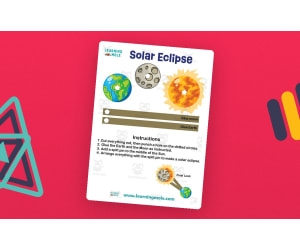
Solar Eclipse Activity
Science, Earth and Environmental Sciences, Space, Grade 2, 3, 4, 5, 6, 7, 8, Activities
Activity Introduction An amazing activity designed for the students to learn more about famous places in different countries. Solar Eclipse Do you like reading about space? If yes, what is your favorite topic? What do you know about our solar system? What is the smallest planet in our solar system? What is the biggest plant in our solar system? What is the hottest plant in our solar system? And what is the coldest one? Do you think there are aliens? If yes, what do you think they look like? What do they eat and how they speak to each other? Where do they live? What is a galaxy? And what is a milky way? Have you recently saw a shooting star? If yes, tell us more about it, like when did it happen and where? What is a blackhole? Can a blackhole gets bigger by time? Do you like counting the stars? What do you think a star is made of? Solar Eclipse Activity The activity is perfect for encouraging the researching skills for the students, while learning more about this fantastic place. Solar Eclipse This friendly designed worksheet is suitable for students at school, homeschooling, and as a group activity. Instructions Cut everything out, then punch a hole on the dotted circles. Glue the Earth and the Moon as instructed. Add a split pin to the middle of the Sun. Arrange everything with the split pin to make a solar eclipse. Format Available in a PDF format.
Author Educational Voice
Tags Solar Eclipse Activity, Solar Eclipse, Solar Eclipse Facts, Solar Eclipse Facts For Kids, Sun, Sun Facts, Sun Facts For Kids, Space, Space Facts, Space Facts For Kids

Snake Activity
Science, Life Sciences, Biology, Animals, Grade 2, 3, 4, 5, 6, 7, 8, 9, Activities
Activity Introduction An amazing activity designed for the students to learn more about famous places in different countries. The Snakes Do you like animals? what is your favorite one? Do you own a pet? If yes, tell us more about it, like what its name? And what do you like most about it? What are the animal kingdoms? Can you write down the characteristics of each animal class like mammals, birds, reptiles, amphibian, fish and mollusks. Do you know that some animals can sing, can you name any of them? What is the largest and the smallest mammal in the world? What is the largest and the smallest bird in the world? What is the largest and the smallest fish in the world? Snake Activity The activity is perfect for encouraging the researching skills for the students, while learning more about this fantastic place. Snake This friendly designed worksheet is suitable for students at school, homeschooling, and as a group activity. Instructions Can you complete the investigation and answer those questions to figure out which snake is it? Format Available in a PDF format.
Author Educational Voice
Tags Snake Activity, Snake, Snakes, Snakes Facts, Snakes Facts For Kids, Animal, Reptile, Reptiles, Reptiles Facts, Reptiles Facts For Kids

Lions, Tigers and Bears: A Text Feature Exploration
Science, Life Sciences, Animals, Grade 2, Activities
This Lions, Tigers and Bears: A Text Feature Exploration is an activity great for guided reading. It is equipped with varied levels of difficulty as students become familiar with text features. Bolded words have context clues to help students find meaning. Students will read nonfiction passages about lions, tigers and bears and then they will apply text features to each passage. The bottom of the passage will tell students what they need to develop for each passage.
Author O'Hoppy Day
Tags Text Features, Lions, Nonfiction Text, Captions, Guided Reading

Jeeps Reading Comprehension Passage - Cored Ed Encyclopedia
ELA, Reading Comprehension, Reading, Language Development, Vocabulary, History, Social Studies, Technology, Science, Pre-Reading, Grade 2, 3, 4, 5, Worksheets & Printables, Worksheets, Teacher Tools, Centers, Activities, Writing Prompts, Assessments, Quizzes and Tests, Quizzes, Lesson Plans
This Jeeps reading comprehension with lesson plan includes: Visualization (on the front cover) Start your lesson by taking a minute to think and share something about the topic. Read the script aloud (slowly), perhaps prepare some music or sound effects. Student close their eyes and let their imaginations wander. Students open their eyes, read the question aloud and give them a few minutes to complete. Ask a few students to share or keep answers until the end to compare with what they learn in the passage. Quick pause—thousands of Cored Education products are included with your TeachSimple membership. Download links and encyclopedia index available here. Pre-Reading Trivia Students will write down one thing they already know about the subject and then read five more facts and discuss. These facts are fun, and the students will enjoy learning about the subject before reading more. Give 1 minute for students to write what they already know (no pressure—best guess is fine). Read the five facts together. After each fact, do ask a student for their opinion, was it surprising? Set a purpose by asking students to highlight/underline one fact they want to learn more about during the reading. Reading Passage The text is a high-interest reading passage with set paragraphs, roughly three to four paragraphs long. It contains a variety of themes about the topic, anywhere from history to technology. The passage is between 250 and 350 words in length. First, ask students to look at the headings and see what they’ll learn about today. What do they know about the topic/heading? First read options: Teacher read-aloud (best for support). Partner reading (paragraph by paragraph). While reading, students underline important details, and vocabulary words they think may come up in the questions section. Mixed Questions The first question page contains four multiple-choice questions, each with a choice of four answers, and three written response questions that require a sentence or two from the student. Students complete the mcqs first independently, then review quickly as a class. For the 3 written responses, try to get students giving the answer with some form of evidence: “I think ___ because the text says ___.” If students get stuck, send them back to check the passage. Vocabulary Questions Practice seven key words from the text in this section across two activities. First section is scrambled words where students will unscramble three words given a clue for each. The second section is a word to meaning matching activity. Before starting, have some students read out words they underlined in the passage. Ask students to say the word and read aloud the sentence(s) around each word. Ask students to do scrambled words and the matching exercise in pairs then go through answers as a class. For the scrambled spelling task, get four pairs to come up to the board and write the words for extra practice with the other student reading out the clue. For the matching task, prompt students to give full sentences: “I matched ___ with ___ because ___.” Creative Writing In this question, the student will be required to write a five to eight sentence paragraph on a question related to the topic. Before starting, ask students write down 3 key ideas they are going to include in their piece. Ask students for ideas to share around the class to help those struggling. Pro writing expectations: 5–8 sentences At least 2 facts or details from the passage At least 2 vocabulary words from the previous page Students read their paragraphs while classmates listen for facts and vocabulary words. Extension Activities This page is optional for fast finishers or to take home. There are several activities, each one requiring a different skill. Do some, do none, do all, completely optional - but you will feel reassured knowing every possibility is planned for. Includes summary writting question and additional facts. Answer Key There are answers for the multiple-choice questions, written response questions have sample answers, vocabulary answers and if there is a summary question then a sample summary will be provided as well. Lesson Plan Included Customized lesson plan for this lesson is included. Lesson Snapshot Title: Jeeps Genre: Nonfiction (informational text) Subject: Social Studies (History) / Reading (Informational Text) Primary Topic: WWII jeep origins and how the Jeep line evolved Estimated Guided Reading Level (A–Z): S What This Lesson Teaches Best Explains why the U.S. Army wanted a small, tough 4-wheel-drive truck in 1940 and how designs led to the World War II jeep (Willys MB and Ford GPW). Uses concrete facts and numbers (more than 600,000 built; held 3 to 6 people; carried scouts, messengers, and heavy gear). Explores multiple possible origins of a word/nickname (“g.p.”, soldier slang, and Eugene the Jeep) and shows that history can have more than one source. Traces change over time: military jeep → civilian CJs (starting 1945) → a family of vehicles including SUVs and the Wrangler as a descendant of the CJ line. Supports comprehension with clear section headings that organize the timeline and ideas. Learning Goals Identify the problem armies faced in 1940 and what kind of truck the U.S. Army wanted. Describe two details about World War II jeeps (names, number built, what they carried, or how many people fit). Explain why the passage says the nickname “jeep” is “not that simple,” using text evidence. Describe how jeeps changed after the war when Willys began selling CJs. Summarize how the Jeep line continued and changed “over the years,” including the Wrangler and one feature it kept. Key Vocabulary From the Text 4-wheel-drive — power can go to all four wheels. nickname — a fun or short name. civilian — not in the military. surplus — extra items left over after use. descendant — a newer vehicle from the same family line. FULL CATALOG OF DOWNLOAD LINKS AND ENCYCLOPEDIA INDEX HERE
Author Cored Education
Rating
Tags Vocabulary, Reading Comprehension, Reading Passages, Lesson Plans, Ela Lesson Plans, Reading Comprehension Lesson Plans, Pre-reading, Social Studies Lesson Plans, History, Technology
Gliders Reading Comprehension Passage - Cored Ed Encyclopedia
ELA, Reading Comprehension, Reading, Science, Technology, Pre-Reading, Language Development, Physics, History, Social Studies, Grade 2, 3, 4, 5, Worksheets & Printables, Worksheets, Teacher Tools, Centers, Activities, Writing Prompts, Assessments, Quizzes and Tests, Quizzes, Lesson Plans
This gliders reading comprehension with lesson plan includes: Visualization (on the front cover) Start your lesson by taking a minute to think and share something about the topic. Read the script aloud (slowly), perhaps prepare some music or sound effects. Student close their eyes and let their imaginations wander. Students open their eyes, read the question aloud and give them a few minutes to complete. Ask a few students to share or keep answers until the end to compare with what they learn in the passage. Quick pause—thousands of Cored Education products are included with your TeachSimple membership. Download links and encyclopedia index available here. Pre-Reading Trivia Students will write down one thing they already know about the subject and then read five more facts and discuss. These facts are fun, and the students will enjoy learning about the subject before reading more. Give 1 minute for students to write what they already know (no pressure—best guess is fine). Read the five facts together. After each fact, do ask a student for their opinion, was it surprising? Set a purpose by asking students to highlight/underline one fact they want to learn more about during the reading. Reading Passage The text is a high-interest reading passage with set paragraphs, roughly three to four paragraphs long. It contains a variety of themes about the topic, anywhere from history to technology. The passage is between 250 and 350 words in length. First, ask students to look at the headings and see what they’ll learn about today. What do they know about the topic/heading? First read options: Teacher read-aloud (best for support). Partner reading (paragraph by paragraph). While reading, students underline important details, and vocabulary words they think may come up in the questions section. Mixed Questions The first question page contains four multiple-choice questions, each with a choice of four answers, and three written response questions that require a sentence or two from the student. Students complete the mcqs first independently, then review quickly as a class. For the 3 written responses, try to get students giving the answer with some form of evidence: “I think ___ because the text says ___.” If students get stuck, send them back to check the passage. Vocabulary Questions Practice seven key words from the text in this section across two activities. First section is scrambled words where students will unscramble three words given a clue for each. The second section is a word to meaning matching activity. Before starting, have some students read out words they underlined in the passage. Ask students to say the word and read aloud the sentence(s) around each word. Ask students to do scrambled words and the matching exercise in pairs then go through answers as a class. For the scrambled spelling task, get four pairs to come up to the board and write the words for extra practice with the other student reading out the clue. For the matching task, prompt students to give full sentences: “I matched ___ with ___ because ___.” Creative Writing In this question, the student will be required to write a five to eight sentence paragraph on a question related to the topic. Before starting, ask students write down 3 key ideas they are going to include in their piece. Ask students for ideas to share around the class to help those struggling. Pro writing expectations: 5–8 sentences At least 2 facts or details from the passage At least 2 vocabulary words from the previous page Students read their paragraphs while classmates listen for facts and vocabulary words. Extension Activities This page is optional for fast finishers or to take home. There are several activities, each one requiring a different skill. Do some, do none, do all, completely optional - but you will feel reassured knowing every possibility is planned for. Includes summary writting question and additional facts. Answer Key There are answers for the multiple-choice questions, written response questions have sample answers, vocabulary answers and if there is a summary question then a sample summary will be provided as well. Lesson Plan Included Customized lesson plan for this lesson is included. Lesson Snapshot Title: Gliders Genre: Nonfiction (informational text) Subject: Science (flight/engineering) Primary Topic: How gliders fly using lift and launch methods Estimated Guided Reading Level (A–Z): Q What This Lesson Teaches Best Explains what makes a glider different from a small airplane (no motor; quiet flight; “trade height for distance”). Describes how gliders get into the sky (help at the start, including being towed; later mentions aerotows and winches). Teaches how moving air helps a glider climb—especially rising warm air (“thermals”) and wind pushed upward at a ridge or hill. Shows how design features support gliding (long, narrow wings; smooth body; low drag to lose little energy). Connects gliders to early flight experiments through Otto Lilienthal’s repeated testing and “fly hill.” Learning Goals Students will describe how a glider is similar to and different from a small airplane. Students will explain how a glider usually starts flying using details from the text. Students will identify two kinds of lift described in the passage and tell how each helps a glider climb. Students will explain why long, narrow wings and low drag help a glider glide efficiently. Students will describe how gliders and launch methods changed over time, using examples from the text. Students will explain how spoilers or airbrakes help with landing safely. Key Vocabulary From the Text cockpit — where the pilot sits and reads instruments. thermals — rising columns of warm air. drag — air resistance that slows motion. aerotows — launches where an airplane tows the glider. spoilers — panels that help a glider slow down and descend. FULL CATALOG OF DOWNLOAD LINKS AND ENCYCLOPEDIA INDEX HERE
Author Cored Education
Rating
Tags Vocabulary, Reading Comprehension, Reading Passages, Lesson Plans, Ela Lesson Plans, Reading Comprehension Lesson Plans, Pre-reading, Science Lesson Plans, Physics, History
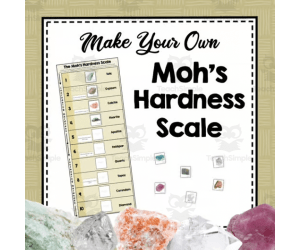
Make Your Own Moh's Hardness Scale | Mineral Study | Geology Project
Science, Earth and Environmental Sciences, Grade 1, 2, 3, 4, Activities
Help your students make their own "Moh's Hardness Scale" as they learn about classifying minerals by their hardness. This hands-on project is a perfect supplementary activity to enhance your study of geology and rocks. By physically handling and organizing the minerals, students will gain a clearer understanding of the scale and its applications in identifying different minerals based on their hardness. Glue the two pages of the scale together and then cut out each mineral. Students can then match each mineral to the appropriate box where it belongs on the scale, reinforcing their knowledge of the ranking from talc to diamond. This activity encourages critical thinking as they assess the properties of each mineral and determine its position on the scale. You can also incorporate discussions about the practical applications of Moh's Hardness Scale in real-world geology and mining. This engaging project not only reinforces learning but also allows students to develop their skills in classification and analysis within the field of earth science. What You Get: 2 vocabulary word strips 2 teacher slides about the characteristics and properties of minerals Hardness Scale Template Cut-out page of minerals
Author Simply Schoolgirl
Tags Moh's Hardness, Moh's Scale, Rock Craft, Moh's Hardness Scale, Moh's Hardness Scale Craft

Sugar Intake Activity
Science, Life Sciences, Human Body, Grade 1, 2, 3, 4, 5, 6, 7, 8, Activities
Activity Introduction An amazing activity designed for the students to learn more about famous places in different countries. The Daily Sugar Intake Do you like STEM subjects? what is your favorite one? Have you ever tried to plant a seed? If yes, tell us more about it. Or have you ever tried to invent something? If yes, tell us more about it. And how do you think it will help us? Have you ever seen a microorganism under a microscope? What was it? And how it looked like? Mathematics is a marvelous subject. Let' sharpen our brains and solve some equations. Do you like timetable tricks? What is your favorite one? Do you know how to code? Have you ever created an app or a game before? If yes, how was it like? Sugar Intake Activity The activity is perfect for encouraging the researching skills for the students, while learning more about this fantastic place. Sugar This friendly designed worksheet is suitable for students at school, homeschooling, and as a group activity. Instructions Do some research to find out the amount of sugar found in these unhealthy foods and their healthy alternatives. Format Available in a PDF format.
Author Educational Voice
Tags Sugar Intake Activity, Sugar, Sugar Facts, Sugar Facts For Kids, Human Body, Human Body Facts, Human Body Facts For Kids, Activities For Kids

Guided Reading Level H - Snow, Sleet, and Hail
ELA, Resources for Teachers, Reading Comprehension, Reading, Science, Pre-Reading, Language Development, Earth and Environmental Sciences, Earth Sciences, Physics, Kindergarten, Grade 1, 2, Worksheets & Printables, Worksheets, Teacher Tools, Centers, Activities, Literacy Readers, Quizzes, Quizzes and Tests, Assessments
This Guided Reading Book - Snow, Sleet, and Hail (Level H) includes: Guided Reading Color Label (front cover x1) This is a quick way to match the book’s demands to what students can generally handle.. The overall goal is to use the level/color to pick books for several smaller groups. To qualify for a certain level, a student is expected to read a book from that level with about 90–94% accuracy. If a student is consistently accurate and understands, move up a level. If the student is struggling at that level, drop down and add more support. Each student will improve at completely different rates, but it is generally one of the best ways to check progress across the class. DOWNLOAD THE CATALOG TO VIEW ALL GUIDED READING BOOKS AVAILABLE (SORTED LEVELS A-Z) Pre-Reading Question (x1) Teacher asks the prompt aloud, can be while showing the cover or first page. Students share what they already know, or make educated guesses from the cover. Prompt them to use the target vocabulary. Write some of their responses on the board to look back at during the reading. Vocabulary Words (x5) Introduce the five words, best doing it one at a time. Start by saying it, while students repeat and then see if anyone knows what it means before reading further. Read through the meaning and try to briefly connect each word to a picture or gesture so it’s meaningful. Ask students to flip through the book pages and point to where they see each of the vocabulary words. While reading the book pause upon coming across one of the vocab words or read the sentence twice to make sure students understand the word has appeared. Optional: Ask students to raise hands whenever they see/hear one of the new words. Guided Reading Pages (x10) Check the book snapshot (below) for: primary topic - do you need to prep extra reading or intro materials on this? what is taught best - decide on 1-2 bullets to focus on, use the prompt or words provided here for best results. learning goals - what you are checking for students to be able to do after the session, elicit answers using prompts or words provided. key vocabulary (see section above). questions overview - so you know what is coming up and if you need to prep extra materials to assist understanding. Run the lesson You may have already looked at a few of the pages together, but you can show them some of the pictures again first to set meaning. Depending on how much time you have and how familiar your students are with guided reading class, you may want to read the book aloud first with the group first. Students whisper or partner read, while you listen in. If time, do it as a group, one student reading a page each. Use the guided page’s prompts to coach: “Check the picture / does it make sense?” “Point under the words / try the first sound” “Reread the sentence smoothly”. Try to focus more on one student per session (rotating every time), so you can work out if they are ready to move up or need to move down a level. Comprehension Questions (back cover x3) This is your way to check that students didn’t just say the words, but actually understood the text. First, let students answer by pointing to the page/picture and saying a short sentence. After any answer, follow with: “Show me where you found that in the text.” In bigger groups, have partners answer first (10–20 seconds), then call on 2–3 students to share. Differentiation tips: Emerging speakers/struggling readers: oral + pointing On-level: oral in a full sentence Higher: one written sentence or draw + label Book Snapshot Title: Snow, Sleet, and Hail Genre: Nonfiction (informational) Subject: Life Science / Earth Science Primary Topic: Types of frozen water from the sky Estimated Guided Reading Level (A–Z): H What This Book Teaches Best Introduces three kinds of frozen water that fall from the sky: snow, sleet, and hail. Explains simple conditions and traits: snow falls when air is cold and feels “soft and light.” Builds science vocabulary using clear examples (snowflakes as “tiny crystal,” sleet as rain that “freezes as it falls”). Describes how hail forms and changes size (“grows inside a tall cloud” and “gets bigger and bigger”). Learning Goals Identify snow, sleet, and hail as kinds of frozen water. Describe what the text says snow is like and when it falls. Explain what a snowflake is, using the book’s words. Explain how the book says sleet forms as it falls. Describe how the book says hail forms and grows before it falls. Tell how frozen water affects Earth in the book (it “covers the earth,” and cold weather “changes the land”). Key Vocabulary From the Text crystal — a hard, shiny shape. sleet — rain that freezes as it falls. freezes — turns from water into ice when very cold. bounces — jumps back up after it hits something. hail — hard ice that falls during a big storm. Discussion Prompts Pre-reading question: What kinds of frozen water have you seen fall from the sky? Comprehension questions: What does the book say snow is like when it falls? Comprehension questions: What does the book say sleet is made from as it falls? Comprehension questions: Where does the book say hail grows before it falls? Printing Tips 1. Best Printing Method (Recommended) “Booklet” Printing (Best if Available) If your printer or PDF viewer supports Booklet Printing , use this. Settings to use: Print mode: Booklet Paper size: Letter or A4 (either works) Orientation: Landscape Print on both sides: Yes Flip on: Short edge Scaling: Fit to printable area Booklet subset: First test: Front sides only Then: Back sides only This will automatically: Pair pages correctly Put the cover on the outside Align everything for folding After printing, fold in half and staple along the spine . 2. If “Booklet” Printing Is NOT Available You can still print this correctly with manual duplex printing . Step-by-step: Open the PDF. Choose Print . Set: Orientation: Landscape Pages per sheet: 1 Print on both sides: Yes Flip on: Short edge Print all pages . Because each PDF page already contains two facing book pages, the result will still fold cleanly into a book. Thousands of Cored Education products are included with your TeachSimple membership. Download links and encyclopedia index available here.
Author Cored Education
Rating
Tags Vocabulary, Reading Comprehension, Reading Passages, Leveled Reading, Nonfiction, Reading, Guided Reading, Earth Science, Weather, Physics

Science Word Search - Set 1: 1 Page Sample (PDF)
ELA, Language Development, Vocabulary, Spelling, ESL, Resources for Teachers, Science, Physics, Earth and Environmental Sciences, Life Sciences, Grade 2, 3, 4, 5, Worksheets & Printables, Worksheets, Teacher Tools, Centers, Activities, Word Searches
THIS IS A ONE PAGE SAMPLE OF A SIX PAGE WORD SEARCH DOWNLOAD FULL SIX PAGE WORD SEARCH DOWNLOAD INFORMATION This wordsearch series is designed for students in grades 2–5. Each set of wordsearches is built around a clear vocabulary theme, helping students develop word recognition, improve spelling, and boost topic-related understanding through engaging visual puzzles. Every wordsearch also includes a fun hidden shape for students to guess—adding an interactive twist to traditional vocabulary practice. These wordsearches are student-friendly, classroom-ready, and perfect for integrating into literacy warmups, seasonal units, fast-finisher tasks, or home learning extensions. Each puzzle reinforces themed vocabulary in a playful, structured format that keeps learners motivated. Science Word Search Set 1 Word List 1. Forces and Motion Gravity, Friction, Push, Pull, Speed, Force, Ramp, Energy 2. Matter and Materials Solid, Liquid, Gas, Melt, Freeze, Boil, Evaporate, Condense 3. The Solar System Planet, Orbit, Moon, Sun, Star, Asteroid, Comet, Telescope 4. The Human Body Brain, Heart, Lungs, Bones, Muscle, Veins, Digest, Nerves 5. Ecosystems and Habitats Ecosystem, Habitat, Food Chain, Predator, Prey, Adapt, Forest, Ocean 6. Weather and Climate Temperature, Clouds, Precipitation, Hurricane, Tornado, Forecast, Climate, Drought PDF Version Other versions will appear here when available. Follow the store for the lastest on new products. How to Use These Wordsearches These wordsearches are ideal for: Morning work or early finisher bins Vocabulary centers or anchor activities Holiday or seasonal review lessons Independent literacy stations or take-home enrichment Each puzzle includes a themed word list and a shaped grid for students to complete. Word directions may vary (horizontal, vertical, diagonal), and answer keys are included for easy checking. Optional vocabulary challenges or writing tasks can be added to extend the learning experience. Whether you're reviewing key vocabulary, exploring a seasonal topic, or offering fun literacy practice, these wordsearches provide a flexible and engaging tool to support vocabulary growth in grades 2–5. More Science Themed Products Science Crosswords (Set 1) PDF Science Crosswords (Set 2) PDF Science Crosswords (Set 3) PDF Science Word Searches (Set 2) PDF Science Word Searches (Set 3) PDF FULL CATALOG OF DOWNLOAD LINKS HERE Themed Word Search Links Addition PDF Animals PDF Around the Home PDF Birthday PDF Candy PDF Christmas PDF Cinco de Mayo PDF Clothes PDF Colors PDF Days and Months PDF Division PDF Earth Day PDF Easter PDF Easy Word Searches PDF Fall PDF Father's Day PDF Food PDF Geography (Set 1) PDF Geography (Set 2) PDF Geography (Set 3) PDF Graduation PDF Health PDF History (Set 1) PDF History (Set 2) PDF History (Set 3) PDF Human Body PDF Kindness PDF Life Skills PDF Mother's Day PDF Multiplication PDF Science Word Searches (Set 1) PDF Science Word Searches (Set 2) PDF Science Word Searches (Set 3) PDF Shapes PDF Social Skills PDF Spring PDF Sports PDF St. Patrick's Day PDF Subtraction PDF Summer PDF Thanksgiving PDF Transport PDF Valentine's Day PDF Winter PDF Wordsearches in Depth Structure Each wordsearch is crafted around a focused sub-theme and includes a visual puzzle shaped like a related object (e.g., balloon, gift, snowman). Students complete each puzzle using the provided themed word list, strengthening both content knowledge and spelling skills in a highly engaging format. Each completed set includes: A shaped wordsearch puzzle with 10 vocabulary words A student instruction guide with search directions (horizontal, vertical, diagonal) An answer key for teacher support or student self-checking A Did You Know? fact connected to the theme for enrichment or discussion Themes Included The wordsearches cover a wide range of fun, age-appropriate themes, including: Seasons & Holidays (e.g., Halloween, Easter, Valentine’s Day) Math Concepts (e.g., Addition, Number Words) Everyday Topics (e.g., Animals, Weather, School) Special Units (e.g., Health, Earth Day, Sports, Kindness) Each topic is selected to reflect students’ real-life experiences and interests while reinforcing literacy skills and content understanding in a playful, visual way. For similar downloads and other frees, do check out Cored Group on TeachSimple.
Author Cored Education
Rating
Tags Vocabulary, Spelling, Forces And Motion, Matter And Materials, The Solar System, The Human Body, Weather And Climate, Science, Science Word Searches, Word Searches
Energy Flow In Ecosystems - 7 Lab Station Activities
Science, Life Sciences, Biology, Grade 6, 7, 8, Activities
Energy Flow in Ecosystems Lab Stations Students will explore energy flow through ecosystems with these engaging lab stations. Over the course of eight stations, learners will get hands-on with drawing activities, conduct online research, watch informative videos, answer knowledge checks, and more. The activities cover key biology concepts like photosynthesis, cellular respiration, food chains, ecological pyramids, and how energy moves through different trophic levels. Students will gain a deeper understanding of these topics while staying engaged through the variety of interactive tasks. To complement the stations, students can work on bonus vocabulary activities during any downtime, with word scrambles and word searches reinforcing key terms. This comprehensive set of activities is designed to boost comprehension and excitement around ecosystem science. With minimal prep required from teachers, it's an impactful addition to any life science curriculum for middle school grades.
Author Teach With Fergy
Tags Energy Flow, Ecosystems, Ecology, Lab Station
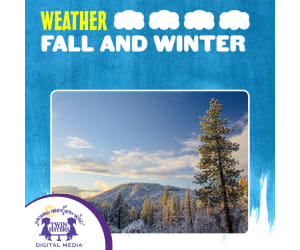
Fall And Winter Audio Book
Science, Earth and Environmental Sciences, Environmental Science, Preschool, Kindergarten, Grade 1, 2, 3, Read Alouds, Activities
Fall brings cooler weather and in autumn there are shorter days. The leaves change from green to orange, red, and purple, until they start falling to the ground.
Author Twin Sisters Digital Media
Tags Fall, Winter, Autumn, Seasons, Change
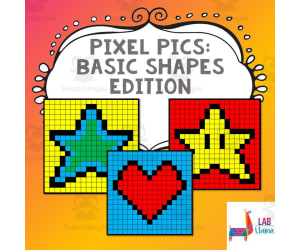
Pixel Pics Spreadsheet Activity: Basics Edition
Science, Technology, Computer Science, Not Grade Specific, Activities
Whether students are in the classroom or in the computer lab , you may be on the hunt for some computer skills resources that you know students will love. Many of our students, young and old, enjoy putting their tech skills to use. It is always impactful when we can give them opportunities to show what they know and/or teach them new things! This is a Pixel Pics Spreadsheet Activity. It is the Basics Edition. This activity would work for any age of students who have learned about different computer applications, including Microsoft Excel. Students will be given access to 1 spreadsheet. On this spreadsheet, there are 7 tabs. Students can complete all 7 tabs, you can assign which tabs you want them to complete, or you can let the students choose which ones to complete. The tabs include: -Heart Level 1 -Heart Level 2 -Heart Level 3 -Star Level 1 -Star Level 2 -Multiple Shapes -Make Your Own On each tab, students will follow the color code to complete the picture. A completed example spreadsheet is included. Here are more resources to enjoy in my store: https://teachsimple.com/product/excel-stories-pirate-edition-computer-science-project https://teachsimple.com/product/excel-stories-detective-edition-computer-science-project https://teachsimple.com/product/finger-placement-practice-teaching-typing-lesson https://teachsimple.com/product/spot-the-differences-activity Check out many more resources at my storefront here: https://teachsimple.com/contributor/lab-llama-computer-skills-resources I can be contacted for questions and concerns at labllamasam@gmail.com .
Author Lab LLama - Computer Skills Resources
Tags Computer Lesson, Computer Activity, Computer Science, Lab Llama, Spreadsheet Activity, Shapes, Color By Code, Digital Coloring, Google
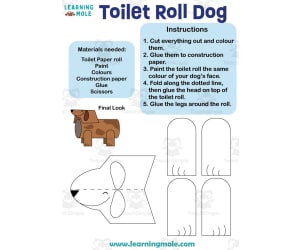
Toilet Roll Dog Activity
Animals, Life Sciences, Science, Grade 1, 2, 3, 4, 5, 6, 7, 8, Activities
Activity Introduction An amazing activity /craft designed for the students to have fun learning about our daily activities or even to have fun doing some DIY crafts. Toilet Roll Dog Do you like group activities or crafts that you can enjoy with your friends and family? Or do you like individua activities and crafts that you can do on your own then show the world how creative you are? Have you ever tried to do a do it yourself craft? If yes tell us more about it, like has any one helped you, what was it about, what materials dd you use to create it and how much time did you suspend creating it? Do you like colouring? What is your favourite colour? Toilet Roll Dog Activity The activity is perfect for encouraging the creativity skills for the students, while having fun with our cool activities and crafts. Toilet Roll Dog This friendly designed worksheet is suitable for students at school, homeschooling, and as a group activity . Instructions Cut everything out and colour them. Glue them to construction paper. Paint the toilet roll the same colour of your dog's face. Fold along the dotted line, then glue the head on top of the toilet roll. Glue the legs around the roll. Format Available in a PDF format.
Author Educational Voice
Tags Toilet Roll Dog Activity, Toilet Roll Dog, Toilet Roll Dog Craft, Dog Activity, Dog Craft, Dog, Dogs, Dogs Facts, Dogs Facts For Kids, Fun Craft
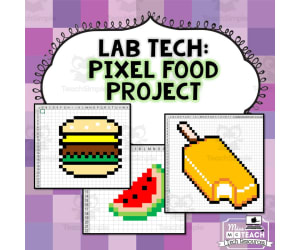
Pixel Pics Spreadsheet Activity: Food Edition
Science, Technology, Computer Science, Not Grade Specific, Activities
Whether students are in the classroom or in the computer lab , you may be on the hunt for some computer skills resources that you know students will love. Many of our students, young and old, enjoy putting their tech skills to use. It is always impactful when we can give them opportunities to show what they know and/or teach them new things! This is a Pixel Pics Spreadsheet Activity. It is the Food Edition. This activity would work for any age of students who have learned about different computer applications, including Microsoft Excel. Students will be given access to 1 spreadsheet. On this spreadsheet, there are 5 tabs. Students can complete all 5 tabs, you can assign which tabs you want them to complete, or you can let the students choose which ones to complete. The tabs include: -Cheeseburger -Watermelon -Strawberry -Popsicle -Happy Ice Cream On each tab, students will follow the color code to complete the picture. Here are more resources to enjoy in my store: https://teachsimple.com/product/excel-stories-pirate-edition-computer-science-project https://teachsimple.com/product/excel-stories-detective-edition-computer-science-project https://teachsimple.com/product/finger-placement-practice-teaching-typing-lesson https://teachsimple.com/product/spot-the-differences-activity Check out many more resources at my storefront here: https://teachsimple.com/contributor/lab-llama-computer-skills-resources I can be contacted for questions and concerns at labllamasam@gmail.com .
Author Lab LLama - Computer Skills Resources
Tags Lab Llama, Computer Skills, Computer Lesson, Computer Activity, Spreadsheets, Microsoft Excel, Google Spreadsheets, Food, Vocabulary
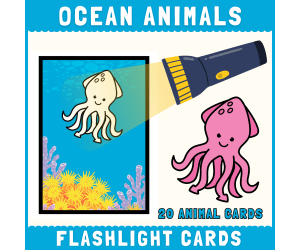
Ocean animals flashlight cards hidden picture science center activity
Animals, Life Sciences, Science, Environmental Science, Earth and Environmental Sciences, Kindergarten, Preschool, Toddler, Grade 1, 2, Flashcards, Worksheets & Printables, Centers, Activities, Games
Make learning about ocean animals fun and interactive with these Ocean Animals Flashlight Cards! Students will use a flashlight to reveal hidden ocean animal pictures while practicing animal recognition and building science vocabulary through an exciting hands-on science center activity. I like using these flashlight cards during ocean animal units, marine life studies, animal science lessons, preschool and kindergarten science centers, ocean-themed activities, and homeschool learning. It’s an engaging, low-prep activity that adds a fun element of discovery to ocean animal learning. What You Will Get This printable Ocean Animals Flashlight Cards resource gives students an exciting way to discover hidden ocean animals and review marine life vocabulary. What’s Included in this Resource? • Printable ocean animal flashlight cards • Hidden picture reveal activity • Ocean animal vocabulary • Hands-on flashlight discovery activity • Student-friendly science center format • Easy-to-use printable cards • Great for independent or small-group learning This resource is perfect for: • Ocean animal science units • Marine life studies • Preschool and kindergarten science centers • Ocean-themed learning • Animal science lessons • Science centers • Small-group activities • Homeschool learning Why you will love this? • Easy to prepare and use • Creates an exciting hands-on learning experience • Builds observation and visual recognition skills • Reinforces ocean animal vocabulary • Encourages curiosity and independent discovery • Great for science centers and thematic units These Ocean Animals Flashlight Cards are a fun way for young learners to discover hidden ocean animals, practice animal recognition, and build observation skills through an interactive science center activity.
Author Perfect_Printables
Rating
Tags Farm Animals Flashlight, Animal Science, Science Center Activities, Hidden Picture Activities, Flashlight Cards, Animal Vocabulary, Ocean Animals Activity, Under The Sea, Animal Reveal Game, Ocean Animals

Biology Binder Covers – Templates for Classroom Use
Life Sciences, Science, STEM, Basic Science, Special Resources, Montessori, Classroom Management, Resources for Teachers, Biology, Human Body, Homeschool Templates, Grade 7, 8, 9, 10, 11, 12, Worksheets, Worksheets & Printables, Teacher Tools, Projects, Activities, Workbooks, Drawing Templates & Outlines, Templates, Graphic Organizers, Experiments
Biology Binder Covers – Templates for Classroom Use Organize your biology handouts, notes, and units with visual clarity Simple and flexible templates to help organize your biology materials In my biology classes, it can be a challenge to keep things organized - especially when it comes to multiple units, lab notes, worksheets and review materials. To make it easier for my students and myself, I designed these simple binder sleeves. There are 12 different pages. The covers have a clean, colorful blob layout that is friendly but not distracting. I usually print them out and use them as cover sheets or as dividers in folders for students or teachers. They also work well for digital learning environments, e.g. as section covers in PDF files or on classroom platforms. I like that the color scheme allows students to quickly find what they are looking for, and it brings a little more structure to a subject that is often riddled with formulas and technical terms. When used as cover sheets, students can choose their favorite color for their cover sheet. This resource is handy - and has saved me a lot of time in lesson preparation and follow-up. What’s included: 12 biology-themed cover pages different colors zu choose as a cover sheet as a divider between the individual biology topics I've printed these on colored paper for my own binder and also used them digitally in student notebooks. Works well for both teacher organization and student-facing materials. 📍 Best wishes, Heike from Lernfitness Biology teacher (Chemistry teacher, Math teacher) in Germany Did You Know? I teach with a certified therapy dog, and together we create a positive and inspiring learning environment. 🐶✨
Author Lernfitness
Rating
Tags Science, Biology, STEM, Binder, Cover Sheet, Template, Organizer, Organize, GoodNotes, PDF

Paper Towel Absorbency Test – Scientific Method Lesson
Science, Grade 6, 7, 8, 9, Experiments, Lesson Plans, Presentations, Activities
Paper Towel Absorbency Test - Scientific Method Lesson Included This engaging activity introduces students to the scientific method through an experiment involving a common household material - paper towels. Students will form a hypothesis about which paper towel will be the most absorbent. They will then collect data by placing different paper towel brands into a liquid to see the effect. Your students are provided with clear procedures that will guide them to record their results in a well-organized data table and graph. As a class, data can be compiled and percentages calculated to identify trends. Students learn important data analysis skills as they create graphs to visually represent the results. Educators will appreciate the post-experiment reflection questions that reinforce the purpose and process of the scientific method. This hands-on lab nurtures students' natural curiosity while teaching fundamental experimental design. With its real-world topic and tactile investigation, it motivates learners across various grades and learning styles. After completing the activity, students will better understand how to use observation, critical thinking, and representation of evidence to answer a testable question. Additionally, this resource includes my lesson on the Scientific Method. The lesson includes a detailed overview of what the scientific method is as well as how to implement it.
Author Teach With Fergy
Rating
Tags Scientific Method, Graphing, Test
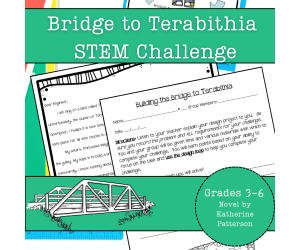
Bridge to Terabithia STEM Experiment + STEM Project for Grades 4, 5, 6
Science, Technology, Engineering, STEM, Grade 4, 5, 6, Experiments, Activities, Projects, Diagrams, Teacher Tools, Graphic Organizers, Rubrics
Bring literature to life with this exciting STEM activity inspired by Bridge to Terabithia! This challenge sparks creativity and problem-solving as students plan and construct a bridge for King Jesse as he plans to make entrance to Terabithia safer. Perfect for blending literature with science, it allows students to explore engineering concepts using simple supplies while promoting teamwork and critical thinking. What’s Inside This Resource: Student Letter: A letter from Jesse introduces the challenge, linking the story to a real-world engineering task. Design Loop Graphic: A visual students can attach to their science journals, serving as a step-by-step guide throughout the activity. Detailed Instructions: Choose to print the guide as a packet or have students record each stage in their journals for an interactive experience. Teacher Tips: Practical guidance for crafting a clear problem statement with time constraints, materials, and success criteria tailored to your classroom. Skills Your Students Will Build: ✔ Problem-Solving: Identify obstacles and create inventive solutions. ✔ Engineering Design: Navigate the design loop—plan, construct, test, and refine. This page can easily be enlarged for a classroom poster. ✔ Critical Thinking: Assess their prototype’s performance and pinpoint ways to enhance it. ✔ Teamwork: Collaborate effectively to accomplish shared goals. Versatile Classroom Application: Whether as guided instruction or part of an integrated literature and science unit, this STEM activity encourages students to think creatively, document their process, and meet science and engineering standards. The rubric included is based on engineering concepts, but can also be used as a nonfiction writing rubric for cross-curricular options. Why Educators Love This Resource: ⭐ “My students were fully engaged, combining their passion for reading with STEM!” ⭐ “Simple to set up and encourages creativity and teamwork.” ⭐ “A seamless connection between literature and science for cross-curricular learning!” Empower your students to solve Jesse’s challenge and experience the excitement of engineering with this standards-aligned STEM adventure!
Author Kel's Klass
Tags 4th Grade Science Project, 4th Grade Science Experiment, 5th Grade Science Project, 5th Grade Science Experiment, 6th Grade Science Project, 6th Grade Science Experiment, Engineering Diagram, Science Graphic Organizer, Science Rubric, Bridge To Terabithia
Ecosystems and Ecology – Digital Interactive Notebook
Science, Life Sciences, Biology, Grade 8, 9, 10, 11, Activities
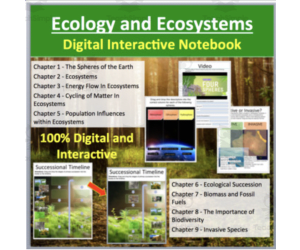
Middle School and Freshman High School Digital Interactive Notebook - Ecology and Ecosystems. Designed specifically for the 1:1 classroom utilizing any kind of digital device such as Chromebooks, Cellphones, or Tablets. This resource comes packed with 28 engaging activities spread over 45 interactive pages. It covers the entire ecology curriculum and includes an teacher answer copy. Each page was created to look and feel like a traditional notebook but was designed to take advantage of everything that digital brings. Digital Interactive Notebook for Google and OneDrive cloud services. If you don’t currently have a Google account, you can sign up for one completely free and get started in 5 minutes. If you’re a OneDrive user no problem. Simply download the notebook as a PowerPoint file to your computer then upload it to your OneDrive account. The majority of the items in this resource are fully editable. In addition, slides can be added or removed easily to suit your classroom needs. This Digital Interactive Notebook is broken down into 9 chapters. Chapters can easily be removed if they don’t correspond to your curriculum needs. The following chapters are included with your purchase. Chapter 1 - The Spheres of the Earth Chapter 2 - Ecosystems Chapter 3 - Energy Flow In Ecosystems Chapter 4 - Cycling of Matter In Ecosystems Chapter 5 - Population Influences within Ecosystems Chapter 6 - Ecological Succession Chapter 7 - Biomass and Fossil Fuels Chapter 8 - The Importance of Biodiversity Chapter 9 - Invasive Species THEN: Before computers, we used interactive notebooks to engage our students and keep their notebooks organized and accessible. This however required a lot of material and the unwelcomed task of lugging them all home with you to mark. But we used them because they were effective and allowed us to effectively assess our students understanding. NOW: Why use digital interactive notebooks? As prices decrease, many schools are moving towards a 1:1, computer-student ratio and are becoming digital, the way we teach needs to keep up. You don’t even need a class set of computer, a personal device (cell phone, laptop, tablet, etc. will work just as well). Digital interactive notebooks provide all the same means of organization and assessment but without the physical notebook. This… 1) Saves you from bringing them back and forth/storing them in your class. 2) Purchasing all the necessary supplies. 3) Having them get lost, misplace pages, etc. Once you purchase, you’ll get a direct link. This link will allow you to place your own copy of the digital notebook into your Google Drive folder. From there, simply distribute the file to your students. No notebooks, no glue, no scissors, not even a USB in sight. Everything is stored and can be assessed in the cloud from any computer in the world. If your students go on holiday, they can access it. If they’re sick, they can access it. What activities will you find inside my Digital Interactive Notebooks? • Interactive drag-and-drop activities • Embedded Videos that play inside the slides along with questions • Calculation questions • Audio recorders – students record and upload their own auditory answers to questions • Fill-in-the-blanks • Drawings – students create their own drawing then easily upload them to their slides using their device or computer • Research questions • Extension questions for early finishers, those wanting extra credit, or incorporated into the mainstream assignment • Vocabulary check on the entire unit • Lots more Click here to get immediate access to a sample file so you can see exactly what’s being offered → http://bit.ly/TWF-DINB . Keep in mind that the sample file is for my SPACE notebook but it does give you a good idea of how the resource is structured. What if my school won’t pay for Google products or access to Google Classroom? No problem, G-Suite as it’s called, is completely free and includes everything you’ll need to access your digital notebooks. What if your students don’t have internet access for some reason? These notebooks can easily be made available off-line for access anywhere. Left-side/Rights-side. Is there a place for students to include their own notes? Yes! That’s the beauty of going digital. You don’t need a left and right side. When you or your students want some more room, just add a slide and go to town. Worried about plagiarism? I use turnitin.com to ensure my students are submitting their own work. However, I attempt to make these as interactive and individual as possible, which all but eliminates cheating. Do you feel that your students will miss out on the hands-on experience they receive from traditional interactive notebooks? In today’s world, I don’t think that’s a concern. Your students are and need to be well versed in the world of technology and how to manipulate it to suit their needs. This resource will help. If you have any questions, please send me an email - devon@teachwithfergy.com
Author Teach With Fergy
Tags Ecosystems, Biodiversity, Succession, Interactive, Notebook
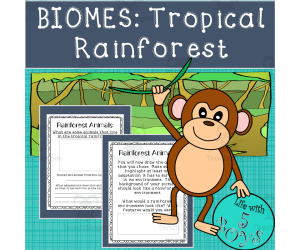
Tropical Rainforest Biome Activity
Science, Earth and Environmental Sciences, Earth Sciences, Grade 1, 2, 3, 4, 5, Activities
Tropical Rainforest Biome Activity Transport students to the lush and vibrant tropical rainforest biome with this engaging science activity. Students will brainstorm rainforest animals, choose one to research, and write about its adaptations that enable survival in the hot, wet climate. Next, learners will study the tropical rainforest's environment and climate. Finally, students will draw their chosen rainforest creature, focusing on detail and scale to showcase features and adaptations. This activity can be implemented in one session or over several days. Use it for whole-class instruction, small groups, partner work, or independent practice across elementary grade levels. The multiple components promote creativity, research skills, and retention of rainforest biome concepts.
Author Life with 5 Boys
Tags Biomes, Habitats, Rainforest, Rain Forest, Tropical Rainforest, Tropical Rain Forest, Science, Activities In Tropical Rainforest, Biome Activities, Tropical Rainforest Biome Project Ideas, Tropical Rainforest Activities, Activities To Do In The Tropical Rainforest, Animal In The Tropical Rainforest Biome