



3,980 products added recently
Page 49 - Science Activities
Ignite your students' interest in science with activities that make learning interactive and exciting. This collection offers experiments, demonstrations, and inquiry-based projects covering various scientific fields. By integrating these science activities into your lessons, you can encourage critical thinking, foster curiosity, and deepen understanding of scientific concepts.

 Show filters

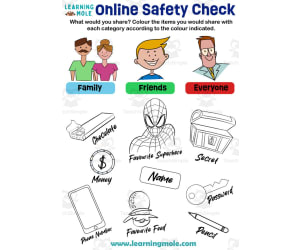
Online Safety Check Activity
Technology, Science, Computer Science, Life Skills, Special Resources, Social Skills, Grade 3, 4, 5, 6, 7, 8, 9, 10, 11, 12, Activities
Activity Introduction An amazing activity designed for the students to learn more about social and soft skills in our daily life. Online Safety Check Have you ever read about soft skills or social skills? If yes, can you tell us more about them? Body language is so important for us to learn about, as it teaches us how to deliver the correct message to the people we are talking to, and get the right message from the people who talk to us, by simply reading their body language. What do you know about etiquette? Do you know that every country has got its unique etiquette? What do you know about online etiquette? What is your strongest soft/social skill? Can you name other social or soft skills? Do you think we should be always nice to our friends and family? Do you think we should be kind with animals? Have you ever read about online etiquette? If yes, tell us more about it. What are the essential skills that we should have while dealing with people online? Online Safety Check Activity The activity is perfect for encouraging the researching skills for the students, while learning more about these fantastic social and soft skills in our daily life. Online Safety Check This friendly designed worksheet is suitable for students at school, homeschooling, and as a group activity. Instructions What would you share? Colour the items you would share with each category according to the colour indicated. Format Available in a PDF format.
Author Educational Voice
Tags Online Safety Check Activity, Online Safety Activity, Online Safety Check, Online Safety, Online Safety Facts, Online Safety Facts For Kids, Technology, Technology Facts, Technology Facts For Kids

Chemistry & Materials Science: SAMPLE Reading Passage (Google)
Science, ELA, Reading, Reading Comprehension, Strategies, Resources for Teachers, Chemistry, Grade 6, 7, 8, 9, Writing Prompts, Worksheets & Printables, Centers, Activities, Teacher Tools, Assessments, Quizzes and Tests, Quizzes, Tests
This is a ONE PASSAGE SAMPLE. The following is the description of the FULL resource and the downloading links: Chemistry and Materials Science: Reading Comprehension Passages (Google) This very engaging collection of physical science reading passages about chemistry and material science is designed to bridge the gap between science and literacy through strengthening reading comprehension and sparking scientific curiosity in middle school students. Each passage blends English Language Arts skills with accurate science content that supports NGSS classroom practice. Ideal for interdisciplinary learning in ELA and Science. Suitable for Grade 9 review, too! What Is Included? There are (3) informational passages: Salt: Tiny Crystals, Big Effects The Hidden Science of Clothing Fingerprints: Patterns That Solve Crimes Student Tasks for Each Passage: 5 multiple-choice questions targeting main idea, key details, inference, vocabulary in context, and use of evidence 5 vocabulary matching items with clear, student-friendly definitions 5 text-based questions that require citing specific lines or facts 1 summary prompt that asks students to condense central ideas accurately Full answer key for every section Available Formats for this Resource PDF Word Docs FULL CATALOG OF DOWNLOADING LINKS HERE Other Science Reading Collections and Topics You May Find in the Store: 1. Astronomy & Space Science 2. Volcanoes, Rocks, & Mountains 3. Rock Cycle, Soil, & Sinkholes 4. Mars, Glaciers, & Antarctica 5. Water Cycle, Acid Rain, & Wastewater 6. Insects, Animals, & Ecosystems 7. Bioluminescence & Insects 8. Animal Skin, Cats, & T. Rex 9. Human Body and Senses 10. Health & Applied Bioscience 11. Waves, Light, & Imaging 12. Electricity & Energy 13. Motion & Materials 14. Chemistry and Materials Science 15. Electromagnetism 16. Acids and Bases 17. Gas Laws 18. Biotechnology 19. Periodic Trends 20. Protists and Fungi 21. Microevolution 22. Blood 23. Chemical Bonding 24. Magnets 25. Muscles 26. Nuclear Chemistry 27. Electromagnetic Devices 28. Epigenetics 29. The Law of Conservation of Mass 30. Atomic Models 31. Isotopes and Ions 32. Light 33. Human-Environment Interaction 34. Theory of Evolution 35. Photosynthesis 36. Origins of Life and Early Earth 37. Gene Expression and Regulation 38. Thermochemistry 39. Allergies 40. Coevolution 41. Birth to Adulthood 42. Cells 43. Entropy and Free Energy 44. The Human Brain 45. Mixtures and Solutions 46. Invertebrates 47. Zoo Animals 48. Biochemistry 49. Animal Behavior 50. Population Ecology ...and many more engaging science reading passages that cover intriguing and important topics designed to spark curiosity and support student learning. Product Details Length: 13 pages total Grades: 6–8, also suitable for Grade 9 review Use cases: close reading, stations, homework, intervention, test prep, and sub plans Standards support: reinforces informational-text skills and supports NGSS-style sense making through observation, modeling, and clear use of claim, evidence, and reasoning Why Teachers Choose This Set Authentic science content paired with rigorous literacy practice Consistent task structure across all passages for easier planning and smoother student routines Clear, age-appropriate writing that builds confidence without oversimplifying Use this set to reinforce ELA skills in science, to add literacy to your lessons, or to support independent work. The passages strengthen main idea, evidence use, vocabulary in context, inference, cause and effect, and summary writing. With ready-to-use assessments and complete answer keys, you can provide focused practice that is simple to run and fast to review.
Author Middle & High School - CORED Education
Rating
Tags Middle School, Reading Comprehension, Reading Strategies, ELA, Centers, Reading Passage, Assessments, Vocabulary, Physical Science, Chemistry

Interactive Chemistry Quiz: GHS Symbols – Genially + PDF Version
Science, STEM, Chemistry, Physics, Life Sciences, Earth and Environmental Sciences, Technology, Basic Science, Biology, P.E. & Health, Homeschool Templates, Grade 6, 7, 8, 9, 10, 11, Teacher Tools, Experiments, Activities, Labs, Worksheets & Printables, Escape Room, Games, Presentations, Quizzes and Tests, Quizzes
Interactive Chemistry Quiz: GHS Symbols – Genially (+ PDF Version) Bring lab safety to life with this interactive quiz on the GHS (Globally Harmonized System) hazard symbols – perfect for middle and high school chemistry lessons. Whether you're starting the unit or wrapping up a safety review, this quiz adds variety, visual appeal, and a bit of fun to your lesson plan. You’ll get two versions of the quiz: – A PDF version that can be used digitally or printed (but it works not well) – A Genially link that leads to an animated, interactive version (includes sound – which can be muted) Both versions test students on the meanings of the various GHS symbols – from corrosive substances to environmental hazards. The quiz includes original clipart and my own glitter-animated GHS symbols to make the content more visually appealing without distracting from the important safety message. I usually use the Genially quiz for individual work in the computer lab or on tablets, so each student can go at their own pace. But it also works well as a station activity , a class-wide quiz , or even as homework , depending on your classroom setup. At the end of the PDF, you’ll find: A QR code to scan directly to the Genially A clickable link for browser access An iframe embed code , if you want to use it on your (non-commercial) learning platform Attention: The interactive PDF does not contain the full scope of the material. The quiz works. Unfortunately, the additional tasks do not. Using Genially is therefore recommended and much more motivating for the pupils. For the interactive quiz you need an internet connection and a terminal device. The quiz can be carried out with the whole class or as partner or individual work. I prefer individual work at each student's own pace. To get to the Genially link, either scan the QR code at the end of the document or click on the link button available there. You can also copy the iframe code and embed the Genially on a learning platform or other... The Genially can be used either at the beginning of the topic or as a backup. It is also worth using as a station in station work. The interactive version includes motivating sound effects , a self-paced structure , and a clear, age-appropriate design for grades 7–10. 📌 Important note : The Genially quiz is protected by copyright. It’s for your own classroom use only . Please don’t share the link or embed it outside a private, secure learning environment. Sharing with colleagues, online platforms, or social media is not permitted. I hope your students enjoy reviewing GHS symbols as much as mine do! – Heike from @Lernfitness Did You Know? I teach with a certified therapy dog, and together we create a positive and welcoming learning environment. 🐶
Author Lernfitness
Rating
Tags GHS, Science, Lab, Chemistry, Pictograms, Genially, Interactive, Lab Safety, Hazard Symbols, Individual Work
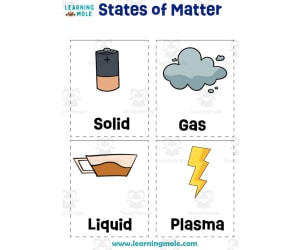
States of Matter Activity
Science, Basic Science, Grade 2, 3, 4, 5, 6, 7, 8, 9, Activities
Activity Introduction An amazing activity designed for the students to learn more about STEM subjects. States of Matter Do you like STEM subjects? what is your favorite one? Have you ever tried to plant a seed? If yes, tell us more about it. Or have you ever tried to invent something? If yes, tell us more about it. And how do you think it will help us? Have you ever seen a microorganism under a microscope? What was it? And how it looked like? Mathematics is a marvelous subject. Let' sharpen our brains and solve some equations. Do you like timetable tricks? What is your favorite one? Do you know how to code? Have you ever created an app or a game before? If yes, how was it like? States of Matter Activity The activity is perfect for encouraging the researching skills for the students, while learning more about this topic. States of Matter This friendly designed worksheet is suitable for students at school, homeschooling, and as a group activity. Instructions Cut along the dotted lines, then glue page 1 on top of page 2. Look for pictures that match each state of matter and glue them on the right rectangle. Open each rectangle gently to find your examples. Format Available in a PDF format.
Author Educational Voice
Tags States Of Matter Activity, States Of Matter, States Of Matter Facts, States Of Matter Facts For Kids, STEM, STEM Facts, STEM For Facts For Kids, Science, Science Facts, Science Facts For Kids

Earth Science Reading Comprehension Passage: The Water Cycle. SAMPLE
Science, ELA, Reading, Reading Comprehension, Strategies, Resources for Teachers, Earth and Environmental Sciences, Earth Sciences, Environmental Science, Grade 6, 7, 8, 9, Writing Prompts, Worksheets & Printables, Centers, Activities, Teacher Tools, Assessments, Quizzes and Tests, Quizzes, Tests
This is a free passage sample from the complete resource. The full version includes everything needed for a complete reading comprehension activity: the passage, multiple-choice questions, short-answer questions, vocabulary matching, a summary-writing task, and a detailed answer key. Download the complete passage resource by clicking on the following links: PDF Fillable PDF Word Docs Google Docs Science Reading Comprehension Passages and Questions: The Water Cycle (PDF) This very engaging earth science reading passage about the Water Cycle . It is designed to bridge the gap between science and literacy through strengthening reading comprehension and sparking scientific curiosity in middle school students. The passage blends English Language Arts skills with accurate science content that supports NGSS classroom practice. Ideal for interdisciplinary learning in ELA and Science. Suitable for Grade 9 review, too! Student Tasks for The Passage: 5 multiple-choice questions targeting main idea, key details, inference, vocabulary in context, and use of evidence 5 vocabulary matching items with clear, student-friendly definitions 5 text-based questions that require citing specific lines or facts 1 summary prompt that asks students to condense central ideas accurately Full answer key for every section FULL CATALOG OF DOWNLOADING LINKS HERE Product Details Length: 5 pages total Grades: 6–8, also suitable for Grade 9 review Use cases: close reading, stations, homework, intervention, test prep, and sub plans Standards support: reinforces informational-text skills and supports NGSS-style sense making through observation, modeling, and clear use of claim, evidence, and reasoning Why Teachers Choose This Set Authentic science content paired with rigorous literacy practice Consistent task structure across all passages for easier planning and smoother student routines Clear, age-appropriate writing that builds confidence without oversimplifying Other Science Reading Collections you May find in the store: 1. Astronomy & Space Science 2. Volcanoes, Rocks, & Mountains 3. Rock Cycle, Soil, & Sinkholes 4. Mars, Glaciers, & Antarctica 5. Water Cycle, Acid Rain, & Wastewater 6. Insects, Animals, & Ecosystems 7. Bioluminescence & Insects 8. Animal Skin, Cats, & T. Rex 9. Human Body and Senses 10. Health & Applied Bioscience 11. Waves, Light, & Imaging 12. Electricity & Energy 13. Motion & Materials 14. Chemistry and Materials Science Use this set to reinforce ELA skills in science, to add literacy to your lessons, and to support independent work. The passages strengthen main idea, evidence use, vocabulary in context, inference, cause and effect, and summary writing. With ready-to-use assessments and complete answer keys, you can provide focused practice that is simple to run and fast to review.
Author Middle & High School - CORED Education
Rating
Tags Middle School, Reading Comprehension, Reading Strategies, ELA, Centers, Reading Passage, Assessments, Vocabulary, Environmental Science, Water Cycle
Skyscraper Activity
Science, Technology, Engineering, Grade 3, 4, 5, 6, 7, 8, 9, Activities
Activity Introduction An amazing activity designed for the students to learn more about STEM. Skyscraper Do you like STEM subjects? what is your favorite one? Have you ever tried to plant a seed? If yes, tell us more about it. Or have you ever tried to invent something? If yes, tell us more about it. And how do you think it will help us? Have you ever seen a microorganism under a microscope? What was it? And how it looked like? Mathematics is a marvelous subject. Let' sharpen our brains and solve some equations. Do you like timetable tricks? What is your favorite one? Do you know how to code? Have you ever created an app or a game before? If yes, how was it like? Skyscraper Activity The activity is perfect for encouraging the researching skills for the students, while learning more about this fantastic topic. Skyscraper This friendly designed worksheet is suitable for students at school, homeschooling, and as a group activity. Instructions Design a new skyscraper, make it as creative as you can! Next, write down the materials you'll use in constructing it and the unique features it will have. Format Available in a PDF format.
Author Educational Voice
Tags Skyscraper Activity, Skyscraper, Skyscrapers, Skyscrapers Facts, Skyscraper Facts For Kids, Engineering, Engineering Facts, Engineering Facts For Kids, STEM, STEM Facts

How Planes Fly – Lab Station Activity
Science, Technology, Engineering, Grade 7, 8, 9, 10, Labs, Experiments, Activities
The How Planes Fly - Lab Station Activity An interactive teaching resource designed to engage students in a hands-on exploration of aeronautics. This activity is tailored for Grade 7-10 students, covering critical aspects of how airplanes achieve flight. Features: Exploration of the four forces of flight. Understanding why planes travel at such heights. Distinguishing visual differences between airplanes and helicopters. Ease of Use for Educators: This fuss-free activity requires minimal preparation. Simply print the provided station cards, strategically distribute them around the classroom,and guide the students to embark on their discovery journey through seven engaging lab stations. An answer key is also conveniently provided where necessary. Each lab station provides unique learning opportunities while testing student knowledge in different ways: from drawing conclusions based on videos or readings to active participation with independent research tasks or hands-on creative projects and question-answer scenarios positioning student as an expert opinion-holder; it packages engagement with learning seamlessly! Versatility: A standout feature - this resource's flexibility regarding implementation methods can smoothly adapt into any classroom setup allowing whole group participation or be broken down for smaller groups or even assigned as individual homeworks. Bonus Features: To foster continuous engagement even during transitions from one station to another, bonus activities have been included: Word scrambles . /> In summary, Whether you're planning your next science class about aeronautics, or need an interactive tool that engrosses each student while ensuring they grasp key concepts about flight — this product acts as your valuable educational enhancement tool. It’s not just us assuring you, countless educators have experienced it before –once implemented in class–your students will undoubtedly enjoy learning through these stimulating hands-on activities.
Author Teach With Fergy
Tags Planes, Flight, Aeronautics, Lab Activity, Education

Galaxy Photoshop Activity
Science, Technology, Grade 7, 8, 9, 10, Activities
Students will work with digital tools in the Galaxy Photoshop Activity . Students will work with a variety of tools to create a galaxy. Step by step directions are included.
Author OK Products
Tags Photoshop, Mobile Applications, Computer Lesson, Computer Activity, Technology, Graphic Design, Design Concepts, Galaxy, Astronomy
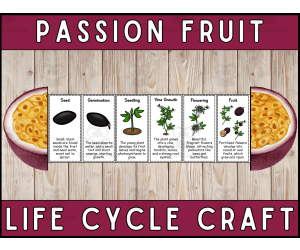
Passion Fruit Life Cycle Craft Foldable Science Cut and Paste Activity
Biology, Life Sciences, Science, Nature & Plants, Elementary, Crafts, Activities
Take your students on a tropical botanical journey with this interactive Passion Fruit Life Cycle Craft Foldable ! This vibrant hands-on resource explores the fascinating development of passion fruit from exotic flower to tangy tropical fruit, perfect for bringing plant science to life. Educational Benefits: Introduces unique tropical plant biology concepts Showcases the connection between specialized flowers and fruit production Teaches vine plant growth patterns and climbing adaptations Compares temperate and tropical fruit life cycles Watch students marvel as they unfold the story of this extraordinary plant, from its intricate flowers to its tangy fruits! The foldable format makes the passion fruit's complex life cycle accessible and engaging for young learners. Great for homeschooling, classroom education, or extra practice. Number of pages: 6 pages Format PDF file size: 11*8.5 Inches If you and your students or your children enjoy using this educational and engaging resource. please rate it and follow my store to be the first to know about my new teaching resources and freebies. Enjoy!
Author Wonderland School
Tags Passion Fruit, Passion Fruit Life Cycle, Science Craft, Science Lesson, Spring Craft, Summer Craft, Spring Coloring Pages, Science, Biology, Craft
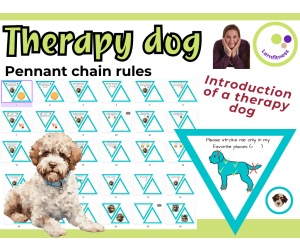
Therapy Dog Classroom Rules – Create, Discuss & Decorate! 🐶🏫 Banner
Social Emotional Learning (SEL), Special Resources, Social Skills, Special Education Needs (SEN), Life Skills, Animals, Life Sciences, Science, Classroom Management, Resources for Teachers, High School, Middle School, Elementary, Early Learning, Pre-K, Classroom Decor, Banners, Bulletin Boards, Projects, Activities, Drawing Templates & Outlines, Worksheets & Printables, Coloring Pages, Worksheets
Therapy Dog Classroom Rules Create, Discuss & Decorate! 🐶🏫 Bringing a therapy dog into the classroom is an exciting and rewarding experience, but it also requires clear expectations and structure. This Therapy Dog Rules Pennant Banner is a creative and engaging way to introduce, reinforce, and display important guidelines for students when interacting with a school therapy dog. Whether your school already has a therapy dog or you’re just starting to introduce the idea, these pennants help students understand respectful behavior, responsibilities, and boundaries in a fun and visual way. 🐾 Why This Resource is Perfect for Your Classroom ✔ Encourages Respectful Interactions – Helps students learn how to behave around a therapy dog. ✔ Interactive & Creative – Students can draw, write, or collage their own pennants to personalize the display. ✔ Supports Classroom Discussions – Use as a conversation starter about animal care, empathy, and safety. ✔ A Fun Visual Reminder – Display the banner in the classroom or on the door so rules are always visible. ✔ Perfect for Any Therapy Dog Setting – Ideal for schools, counseling offices, and special education programs. 📌 What’s Included? 📜 Printable Therapy Dog Rules Pennants, featuring: ✔ Ready-made rule templates ✔ Blank versions for students to create their own rules ✔ Simple, clear visuals for all ages ✔ pre-colored for quick use 🎨 How to Use This Resource 1️⃣ Print the pennants and the door sign. 2️⃣ Let students illustrate, decorate, or collage the rules in their own creative way. 3️⃣ Cut out and string the pennants together to create a classroom banner. 4️⃣ Hang the banner somewhere visible to reinforce positive interactions with the therapy dog. 🏆 Classroom Tip: Involve students in writing the rules together before decorating their pennants. This makes them feel more responsible for following the guidelines! 🐶 Why Teachers Love It ✔ “A great way to help kids understand boundaries around therapy dogs.” ✔ “The perfect mix of creativity and structure—students loved making their own rules!” ✔ “Looks great on the classroom wall and actually helps reinforce good behavior!” 🏫 Make Your Therapy Dog Program a Success! Having a therapy dog in the classroom can be an incredible learning experience—but students need guidance to make sure it’s a safe and positive environment. This banner set makes it easy, interactive, and fun to set those expectations! 📥 Download now and start creating your therapy dog-friendly classroom today! 🐾✨ 📍 Best, Heike from Lernfitness Did You Know? I teach with a certified therapy dog, and together we create a positive and inspiring learning environment. 🐶✨ Keep expectations visible with these classroom dog rules posters .
Author Lernfitness
Tags Therapy Dog, Animal-assisted Learning, Inclusive Education Tools, Therapy Dog Rules, Classroom Pet Guidelines, Therapy Dog In School, Social-emotional Learning, SEL, Dog Classroom Rules
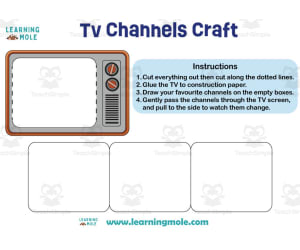
TV Channels Craft
Science, Technology, Grade 1, 2, 3, 4, 5, 6, 7, 8, Crafts, Activities
Activity Introduction An amazing activity designed for the students to learn more about famous places in different countries. TV Channels Craft Do you like STEM subjects? what is your favorite one? Have you ever tried to plant a seed? If yes, tell us more about it. Or have you ever tried to invent something? If yes, tell us more about it. And how do you think it will help us? Have you ever seen a microorganism under a microscope? What was it? And how it looked like? Mathematics is a marvelous subject. Let' sharpen our brains and solve some equations. Do you like timetable tricks? What is your favorite one? Do you know how to code? Have you ever created an app or a game before? If yes, how was it like? TV Channels Craft The activity is perfect for encouraging the researching skills for the students, while learning more about this fantastic place. TV Channels This friendly designed worksheet is suitable for students at school, homeschooling, and as a group activity. Instructions Cut everything out then cut along the dotted lines. Glue the TV to construction paper. Draw your favorite channels on the empty boxes. Gently pass the channels through the TV screen, and pull to the side to watch them change. Format Available in a PDF format.
Author Educational Voice
Tags TV Channels Craft, TV Facts, Tv Activity, Tv Channels Activity, Technology, Technology Facts, Technology Facts For Kids, Crafts For Kids, Activities For Kids
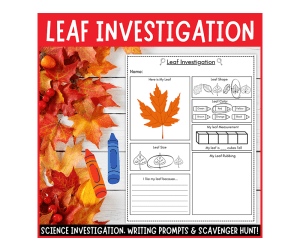
Fall Leaf Investigation Science Center Observation Sheet for Preschool
Fall, Seasons, Holiday & Seasonal, Biology, Life Sciences, Science, Nature & Plants, Kindergarten, Preschool, Centers, Activities, Games, Writing Prompts, Worksheets & Printables
Encourage curiosity and scientific thinking in young learners with this Fall Leaf Investigation Science Center Observation Sheet for Preschool ! Perfect for autumn-themed lessons, this activity helps children observe, compare, and record the details of fall leaves while practicing early science and literacy skills. What’s Included In This Leaf Investigation Pack? • Printable fall leaf observation sheet • Prompt Writing Page For Kids • Fall Leaf Scavenger Hunt Sheet • Easy-to-use format for science centers or outdoor learning Why Teachers Love It • Builds early science inquiry skills • Encourages hands-on exploration and observation • Strengthens vocabulary and descriptive language • No prep – just print and use • Perfect for integrating science with art and literacy This Resource is Great For • Preschool and Pre-K classrooms • Autumn science centers and nature walks • Outdoor classroom activities • Homeschool fall unit studies • Leaf-themed bulletin board displays This Fall Leaf Observation Sheet makes learning hands-on and engaging while helping preschoolers connect with nature during the autumn season!
Author Perfect_Printables
Rating
Tags Leaf Investigation, Fall Leaf Activity, Autumn Science Center, Preschool Leaf Study, Leaf Observation Sheet, Pre K Science Activity, Autumn Leaf Worksheet, Fall Classroom Activity, Leaf Identification, Nature Study Kids
Force: Forces Used to Ride a Bike - FLASH-MAC
Science, Physics, Common Core, Grade 5, 6, 7, 8, Activities
Force: Forces Used to Ride a Bike - FLASH-MAC A must-have pedagogical tool for students in grades 5 through 8 studying physics and the forces of motion. This resource introduces essential push and pull force concepts applied to a fun day-to-day activity – bike riding! Suitable for Various Learning Scenarios In small group discussions where students can share and compare their results. As homework assignments encouraging individual exploration. Demonstration during whole-class instruction using smartboards, promoting intriguing conversations about cycling biomechanics. Pedagogically Sound Resource This tool not only adheres to Common Core State Standards but also aligns with Bloom's Taxonomy, fostering higher-level thinking while simplifying complex physical principles. User-Friendly Compatibility with Macintosh Computers The educational software runs smoothly on Macintosh computers. Its robust yet easy-to-navigate technology ensures that any technical problems won't interrupt the learning process or cause unnecessary frustration among students. It stimulates active engagement instead! To Sum it Up... "Force: Forces Used to Ride a Bike FLASH-MAC" is guaranteed to add value to any science class dealing with physics /forces while ensuring total student engagement! Note: The purchase contains one single product file, available for immediate download upon completion of the purchase transaction at the URL address provided under ‘Product Information’.
Author Classroom Complete Press
Tags Software (Mac)

Meteors Reading Comprehension Passage - Cored Ed Encyclopedia
ELA, Language Development, Resources for Teachers, Reading Comprehension, Reading, Pre-Reading, Science, Earth Sciences, Earth and Environmental Sciences, Space, Grade 2, 3, 4, 5, Worksheets & Printables, Worksheets, Teacher Tools, Centers, Activities, Writing Prompts, Assessments, Tests, Quizzes and Tests, Quizzes
This meteors reading comprehension contains the following: Visualize on the Cover (Teacher Read Aloud Script) Start your lesson by taking a few moments to visualize the topic and share thoughts or feelings about it. Pre-Reading Trivia Students will write down one thing they already know about the subject and then read five more facts and discuss. These facts are fun, and the students will enjoy learning about the subject before reading more. Reading Passage The text is a high-interest reading passage with set paragraphs, roughly three to four paragraphs long. It contains a variety of themes about the topic, anywhere from history to technology. The passage is between 250 and 350 words in length. Mixed Questions The first question page contains four multiple-choice questions, each with a choice of four answers, and three written response questions that require a sentence or two from the student. Vocabulary Questions Practice seven key words from the text in this section across two activities. First section is scrambled words where students will unscramble three words given a clue for each. The second section is a word to meaning matching activity. Creative Writing In this question, the student will be required to write a five to eight sentence paragraph on a question related to the topic. Extension Activities This page is optional for fast finishers or to take home. There are several activities, each one requiring a different skill. Do some, do none, do all, completely optional - but you will feel reassured knowing every possibility is planned for. Includes summary writting question. Answer Key There are answers for the multiple-choice questions, written response questions have sample answers, vocabulary answers and if there is a summary question then a sample summary will be provided as well. FULL CATALOG OF DOWNLOAD LINKS AND ENCYCLOPEDIA INDEX HERE Lesson Snapshot Title: Meteors Genre: Nonfiction Subject: Science (Earth & Space Science) Primary Topic: Meteoroids, meteors, meteorites, and meteor showers Estimated Guided Reading Level (A–Z): N What This Lesson Teaches Best Clarifies what a “shooting star” is by explaining how a space rock glows in Earth’s air. Teaches the three related terms— meteoroid , meteor , and meteorite —based on where the space rock is found. Explains why most meteors don’t reach the ground and describes what a meteorite can look like after a “fiery trip.” Describes meteor showers and explains why many streaks can seem to point back to one spot in the sky. Builds science curiosity by explaining that some meteorites are extremely old and can act like “time capsules.” Learning Goals Explain why a meteor is sometimes called a “shooting star,” using details from the text. Identify and describe the difference between a meteoroid, a meteor, and a meteorite. Describe what makes the bright streak of a meteor in Earth’s air. Explain what a meteor shower is and what causes it, based on the passage. Describe why meteorite finds are rare and why museums and scientists collect them. Key Vocabulary From the Text Meteoroid — a space rock while it is still in space. Meteor — a bright streak made as a space rock burns in air. Meteorite — a space rock that lands on the ground. Atmosphere — the air around Earth. Constellation — a named pattern of stars. Cored Ed Encyclopedia Overview The Cored Ed Encyclopedia is a weekly series of lessons that you can pick up and use right away. These short readings fit into whatever time you have available. Each one includes a warm-up, a reading, and a set of questions, but it’s flexible — you can do just the reading, the full lesson, or skip the writing section if you need to. Each lesson focuses on a single topic so students don’t get lost. The writing is clear but never childish, making it perfect for grades two through five. Topics range from animals and science to history, inventions, and everyday things. No matter the level of the student, everyone should take away at least one new idea or fact from each lesson. The materials are easy to print, easy to explain, and require no setup. They work well for whole-class teaching, partner work, or independent study.
Author Cored Education
Rating
Tags Vocabulary, Spelling, Reading Comprehension, Reading Passages, Reading, Creative Writing, Reading Strategies, Writing Prompts, Meteors, Space

Olive Tree Life Cycle Craft Foldable Science Cut and Paste Activity
Nature & Plants, Life Sciences, Science, Elementary, Middle School, Crafts, Activities
This engaging and hands-on teaching resource is designed to help students explore the life cycle of an olive tree (Olea europaea) through a creative craft activity. The Olive Life Cycle Craft Foldable provides an interactive way for students to learn about the stages of an olive tree's growth, from seed to fruit, while reinforcing key science and plant biology concepts. This activity is perfect for science lessons, plant life cycle units, or studies on agriculture and horticulture. It encourages sequencing, critical thinking, and creativity, making it ideal for elementary and middle school students. The foldable can be used individually, in small groups, or as a whole-class project, and it also serves as a great display piece or take-home item to share learning with families. Great for homeschooling, classroom education, or extra practice. Number of pages: 6 pages Format PDF file size: 11*8.5 Inches If you and your students or your children enjoy using this educational and engaging resource. please rate it and follow my store to be the first to know about my new teaching resources and freebies. Enjoy!
Author Wonderland School
Tags Olive Life Cycle, Life Cycle Of An Olive Tree, Olive Life Cycle Craft, Olive Tree Life Cycle, Science Unit, Spring Craft, Life Cycle, Spring Craftivity, Plant Life Cycle, Tree Life Cycle
Electronics Reading Comprehension Passage - Cored Ed Encyclopedia
ELA, Reading Comprehension, Reading, Science, Technology, Pre-Reading, Language Development, Physics, Writing, Vocabulary, Grade 2, 3, 4, 5, Worksheets & Printables, Worksheets, Teacher Tools, Centers, Activities, Writing Prompts, Assessments, Quizzes and Tests, Quizzes, Lesson Plans
This electronics reading comprehension with lesson plan includes: Visualization (on the front cover) Start your lesson by taking a minute to think and share something about the topic. Read the script aloud (slowly), perhaps prepare some music or sound effects. Student close their eyes and let their imaginations wander. Students open their eyes, read the question aloud and give them a few minutes to complete. Ask a few students to share or keep answers until the end to compare with what they learn in the passage. Quick pause—thousands of Cored Education products are included with your TeachSimple membership. Download links and encyclopedia index available here. Pre-Reading Trivia Students will write down one thing they already know about the subject and then read five more facts and discuss. These facts are fun, and the students will enjoy learning about the subject before reading more. Give 1 minute for students to write what they already know (no pressure—best guess is fine). Read the five facts together. After each fact, do ask a student for their opinion, was it surprising? Set a purpose by asking students to highlight/underline one fact they want to learn more about during the reading. Reading Passage The text is a high-interest reading passage with set paragraphs, roughly three to four paragraphs long. It contains a variety of themes about the topic, anywhere from history to technology. The passage is between 250 and 350 words in length. First, ask students to look at the headings and see what they’ll learn about today. What do they know about the topic/heading? First read options: Teacher read-aloud (best for support). Partner reading (paragraph by paragraph). While reading, students underline important details, and vocabulary words they think may come up in the questions section. Mixed Questions The first question page contains four multiple-choice questions, each with a choice of four answers, and three written response questions that require a sentence or two from the student. Students complete the mcqs first independently, then review quickly as a class. For the 3 written responses, try to get students giving the answer with some form of evidence: “I think ___ because the text says ___.” If students get stuck, send them back to check the passage. Vocabulary Questions Practice seven key words from the text in this section across two activities. First section is scrambled words where students will unscramble three words given a clue for each. The second section is a word to meaning matching activity. Before starting, have some students read out words they underlined in the passage. Ask students to say the word and read aloud the sentence(s) around each word. Ask students to do scrambled words and the matching exercise in pairs then go through answers as a class. For the scrambled spelling task, get four pairs to come up to the board and write the words for extra practice with the other student reading out the clue. For the matching task, prompt students to give full sentences: “I matched ___ with ___ because ___.” Creative Writing In this question, the student will be required to write a five to eight sentence paragraph on a question related to the topic. Before starting, ask students write down 3 key ideas they are going to include in their piece. Ask students for ideas to share around the class to help those struggling. Pro writing expectations: 5–8 sentences At least 2 facts or details from the passage At least 2 vocabulary words from the previous page Students read their paragraphs while classmates listen for facts and vocabulary words. Extension Activities This page is optional for fast finishers or to take home. There are several activities, each one requiring a different skill. Do some, do none, do all, completely optional - but you will feel reassured knowing every possibility is planned for. Includes summary writting question and additional facts. Answer Key There are answers for the multiple-choice questions, written response questions have sample answers, vocabulary answers and if there is a summary question then a sample summary will be provided as well. Lesson Plan Included Customized lesson plan for this lesson is included. Lesson Snapshot Title: Electronics Genre: Nonfiction (Informational Text) Subject: Science (Technology/Physical Science) / Reading (Informational Text) Primary Topic: How electronics evolved to carry signals Estimated Guided Reading Level (A–Z): Q What This Lesson Teaches Best Defines electrons as tiny charged particles and explains that electronics guides them to carry a message (a “signal”), not just power devices. Traces a clear timeline of inventions : early radio parts → vacuum tubes → transistor (1947) → integrated circuits on silicon chips. Explains how devices can amplify signals (making a small signal stronger), using the vacuum tube and transistor examples. Shows how engineering changes over time led to smaller, more powerful technology , with chips holding millions (even billions) of transistors. Learning Goals Students will describe how electrons moving through wires can carry a message. Students will explain how vacuum tubes helped make radio signals stronger. Students will identify how the transistor differed from vacuum tubes (material used, size, and power use). Students will describe what integrated circuits are and why they allow devices to stay small. Students will summarize how electronics changed from early inventions to modern chips. Key Vocabulary From the Text electrons — tiny charged particles that move through wires. signal — a message carried through a device. vacuum — space with most air removed. transistor — a smaller part that can switch and amplify signals. semiconductor — a material used instead of a vacuum for a transistor. FULL CATALOG OF DOWNLOAD LINKS AND ENCYCLOPEDIA INDEX HERE
Author Cored Education
Rating
Tags Vocabulary, Reading Comprehension, Reading Passages, Lesson Plans, Ela Lesson Plans, Reading Comprehension Lesson Plans, Pre-reading, Science Lesson Plans, Technology, Physics

Weathering, Erosion, and Deposition Flipbook | Geology Project
Science, Earth and Environmental Sciences, Grade 1, 2, 3, 4, Activities
Create a Weathering, Erosion, and Deposition Flipbook! Engage your students with this hands-on flipbook project , perfect for reinforcing their understanding of weathering, erosion, and deposition. This activity is always a student favorite! Ideal as a supplement to your landforms and geography lessons, it promotes both creativity and comprehension. Students will explore these earth-shaping processes, then assemble their own flipbook to solidify what they’ve learned through visual and reflective learning. Two versions are included: One with pre-written descriptions for each stage (Students can color the book.) One with blank spaces for students to add their own explanations (Students can write and color the book.) This flexible activity encourages personalized learning while making key concepts easy to grasp. What’s Included: 3 vocabulary strips covering key terms 1 teacher slide with the W.E.D. acronym (explaining how the earth is broken down, moved, and reshaped) 1 8-page flipbook with pre-written descriptions 1 8-page flipbook with space for students to write their own descriptions
Author Simply Schoolgirl
Tags Earth Science, Earth Science Flipbook, Erosion, Weathering, Earth Science Craft, Earth Science Activitiy
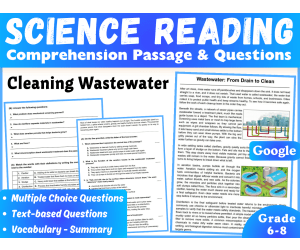
Earth Science Reading Passage: Cleaning Wasterwater (Docs)
Science, ELA, Reading, Reading Comprehension, Strategies, Resources for Teachers, Earth and Environmental Sciences, Earth Sciences, Environmental Science, Grade 6, 7, 8, 9, Writing Prompts, Worksheets & Printables, Centers, Activities, Teacher Tools, Assessments, Quizzes and Tests, Quizzes, Tests
Science Reading Comprehension Passages and Questions: Cleaning Wastewater (Docs) This very engaging earth science reading passage about Cleaning Wastewater . It is designed to bridge the gap between science and literacy through strengthening reading comprehension and sparking scientific curiosity in middle school students. The passage blends English Language Arts skills with accurate science content that supports NGSS classroom practice. Ideal for interdisciplinary learning in ELA and Science. Suitable for Grade 9 review, too! Student Tasks for The Passage: 5 multiple-choice questions targeting main idea, key details, inference, vocabulary in context, and use of evidence 5 vocabulary matching items with clear, student-friendly definitions 5 text-based questions that require citing specific lines or facts 1 summary prompt that asks students to condense central ideas accurately Full answer key for every section Available Formats for this Resource PDF Fillable PDF Word Docs FULL CATALOG OF DOWNLOADING LINKS HERE Product Details Length: 4 pages total Grades: 6–8, also suitable for Grade 9 review Use cases: close reading, stations, homework, intervention, test prep, and sub plans Standards support: reinforces informational-text skills and supports NGSS-style sense making through observation, modeling, and clear use of claim, evidence, and reasoning Why Teachers Choose This Set Authentic science content paired with rigorous literacy practice Consistent task structure across all passages for easier planning and smoother student routines Clear, age-appropriate writing that builds confidence without oversimplifying Other Science Reading Collections you May find in the store: 1. Astronomy & Space Science 2. Volcanoes, Rocks, & Mountains 3. Rock Cycle, Soil, & Sinkholes 4. Mars, Glaciers, & Antarctica 5. Water Cycle, Acid Rain, & Wastewater 6. Insects, Animals, & Ecosystems 7. Bioluminescence & Insects 8. Animal Skin, Cats, & T. Rex 9. Human Body and Senses 10. Health & Applied Bioscience 11. Waves, Light, & Imaging 12. Electricity & Energy 13. Motion & Materials 14. Chemistry and Materials Science Use this set to reinforce ELA skills in science, to add literacy to your lessons, and to support independent work. The passages strengthen main idea, evidence use, vocabulary in context, inference, cause and effect, and summary writing. With ready-to-use assessments and complete answer keys, you can provide focused practice that is simple to run and fast to review.
Author Middle & High School - CORED Education
Rating
Tags Middle School, Reading Comprehension, Reading Strategies, ELA, Centers, Reading Passage, Assessments, Vocabulary, Environmental Science
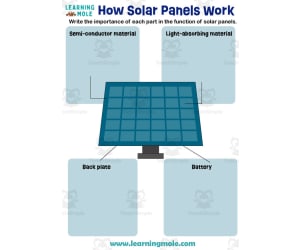
How Solar Panels Work Activity
Science, Earth and Environmental Sciences, Environmental Science, Technology, Grade 3, 4, 5, 6, 7, 8, 9, 10, Activities
Activity Introduction An amazing activity designed for the students to learn more about STEM subjects. How Solar Panels Work Do you like STEM subjects? what is your favorite one? Have you ever tried to plant a seed? If yes, tell us more about it. Or have you ever tried to invent something? If yes, tell us more about it. And how do you think it will help us? Have you ever seen a microorganism under a microscope? What was it? And how it looked like? Mathematics is a marvelous subject. Let' sharpen our brains and solve some equations. Do you like timetable tricks? What is your favorite one? Do you know how to code? Have you ever created an app or a game before? If yes, how was it like? How Solar Panels Work Activity The activity is perfect for encouraging the researching skills for the students, while learning more about this topic. How Solar Panels Work This friendly designed worksheet is suitable for students at school, homeschooling, and as a group activity. Instructions Write the importance of each part in the function of solar panels. Format Available in a PDF format.
Author Educational Voice
Tags How Solar Panels Work Activity, How Solar Panels Work, Solar Panels, Solar Panels Facts, Solar Panels Facts For Kids, Environment, Environment Facts, Technology, Technology Facts

Jellyfish Reading Comprehension Passage - Cored Ed Encyclopedia
ELA, Language Development, Resources for Teachers, Reading Comprehension, Reading, Pre-Reading, Writing, Science, Animals, Life Sciences, Grade 2, 3, 4, 5, Worksheets & Printables, Worksheets, Teacher Tools, Centers, Activities, Writing Prompts, Assessments, Tests, Quizzes and Tests, Quizzes
This jellyfish reading comprehension contains the following: Visualize on the Cover Start your lesson by taking a few moments to visualize the topic and share thoughts or feelings about it. Pre-Reading Trivia Students will write down one thing they already know about the subject and then read five more facts and discuss. These facts are fun, and the students will enjoy learning about the subject before reading more. Reading Passage The text is a high-interest reading passage with set paragraphs, roughly three to four paragraphs long. It contains a variety of themes about the topic, anywhere from history to technology. The passage is between 250 and 350 words in length. Mixed Questions The first question page contains four multiple-choice questions, each with a choice of four answers, and three written response questions that require a sentence or two from the student. Vocabulary Questions Practice seven key words from the text in this section across two activities. First section is scrambled words where students will unscramble three words given a clue for each. The second section is a word to meaning matching activity. Creative Writing In this question, the student will be required to write a five to eight sentence paragraph on a question related to the topic. Extension Activities This page is optional for fast finishers or to take home. There are several activities, each one requiring a different skill. Do some, do none, do all, completely optional - but you will feel reassured knowing every possibility is planned for. Answer Key There are answers for the multiple-choice questions, written response questions have sample answers, vocabulary answers and if there is a summary question then a sample summary will be provided as well. FULL CATALOG OF DOWNLOAD LINKS AND ENCYCLOPEDIA INDEX HERE Lesson Snapshot Title: Jellyfish Genre: Nonfiction (Informational Text) Subject: Life Science / Reading (Informational Text) Primary Topic: Jellyfish bodies, movement, stings, and life changes Estimated Guided Reading Level (A–Z): N What This Lesson Teaches Best Identifies what jellyfish are (not fish) and describes their watery, bell-shaped bodies. Explains how jellyfish move by squeezing and relaxing their bell, and sometimes squirting water. Describes how tentacles help jellyfish catch prey using tiny stinging cells. Introduces how jellyfish change forms across their lives (drifting young, attached form, then floating swimmers). Uses headings to organize science information and includes follow-up questions/activities tied to the passage. Learning Goals Describe what a jellyfish can look like and what its main body part is called. Explain why a jellyfish is not a fish, using details from the text. Explain how a jellyfish moves through water. Describe what tentacles do and why people should be careful near jellyfish. Describe one way jellyfish change during their lives. Key Vocabulary From the Text invertebrates — animals without bones. tentacles — long parts that can sting and catch prey. plankton — very small sea life that animals can eat. bell — the main body part shaped like an umbrella. blooms — groups of jellyfish gathered together. Cored Ed Encyclopedia Overview The Cored Ed Encyclopedia is a weekly series of lessons that you can pick up and use right away. These short readings fit into whatever time you have available. Each one includes a warm-up, a reading, and a set of questions, but it’s flexible — you can do just the reading, the full lesson, or skip the writing section if you need to. Each lesson focuses on a single topic so students don’t get lost. The writing is clear but never childish, making it perfect for grades two through five. Topics range from animals and science to history, inventions, and everyday things. No matter the level of the student, everyone should take away at least one new idea or fact from each lesson. The materials are easy to print, easy to explain, and require no setup. They work well for whole-class teaching, partner work, or independent study.
Author Cored Education
Rating
Tags Vocabulary, Spelling, Reading Comprehension, Reading Passages, Reading, Creative Writing, Reading Strategies, Writing Prompts, Jellyfish, Life Science

Science Reading Passage: The Dinosaur Tyrannosaurus rex (Fillable PDF)
Science, ELA, Reading, Reading Comprehension, Strategies, Resources for Teachers, Life Sciences, Animals, Biology, Grade 6, 7, 8, 9, Writing Prompts, Worksheets & Printables, Centers, Activities, Teacher Tools, Assessments, Quizzes and Tests, Quizzes, Tests
Life Science Reading Comprehension Passage and Questions: The Dinosaur Tyrannosaurus rex (Fillable PDF) This very engaging science reading passage about Tyrannosaurus rex and how scientists use fossils to understand how it lived. It explains what fossils are, where and when T. rex lived, and what fossil evidence reveals about its size, teeth, skull, movement, speed, diet, hunting, and scavenging. It also shows how modern tools, such as CT scans, imaging, computer simulations, and coprolites , help paleontologists build a clearer picture of T. rex as a powerful predator from the late Cretaceous period. This passage is designed to bridge the gap between science and literacy through strengthening reading comprehension and sparking scientific curiosity in middle school students. The passage blends English Language Arts skills with accurate science content that supports NGSS classroom practice. Ideal for interdisciplinary learning in ELA and Science. Suitable for Grade 9 review, too! This passage is designed as a fillable PDF , which means students can type their answers directly into the document on any computer or tablet . Each page includes highlighted text fields that show them exactly where to type! Student Tasks for The Passage: 5 multiple-choice questions targeting main idea, key details, inference, vocabulary in context, and use of evidence 5 vocabulary matching items with clear, student-friendly definitions 5 text-based questions that require citing specific lines or facts 1 summary prompt that asks students to condense central ideas accurately Full answer key for every section Available Formats for this Resource PDF Word Docs Google Docs FULL CATALOG OF DOWNLOADING LINKS HERE Product Details Length: 5 pages total Grades: 6–8, also suitable for Grade 9 review Use cases: close reading, stations, homework, intervention, test prep, and sub plans Standards support: reinforces informational-text skills and supports NGSS-style sense making through observation, modeling, and clear use of claim, evidence, and reasoning Why Teachers Choose This Set Authentic science content paired with rigorous literacy practice Consistent task structure across all passages for easier planning and smoother student routines Clear, age-appropriate writing that builds confidence without oversimplifying Other Science Reading Collections you May find in the store: 1. Astronomy & Space Science 2. Volcanoes, Rocks, & Mountains 3. Rock Cycle, Soil, & Sinkholes 4. Mars, Glaciers, & Antarctica 5. Water Cycle, Acid Rain, & Wastewater 6. Insects, Animals, & Ecosystems 7. Bioluminescence & Insects 8. Animal Skin, Cats, & T. Rex 9. Human Body and Senses 10. Health & Applied Bioscience 11. Waves, Light, & Imaging 12. Electricity & Energy 13. Motion & Materials 14. Chemistry and Materials Science Use this set to reinforce ELA skills in science, to add literacy to your lessons, and to support independent work. The passages strengthen main idea, evidence use, vocabulary in context, inference, cause and effect, and summary writing. With ready-to-use assessments and complete answer keys, you can provide focused practice that is simple to run and fast to review.
Author Middle & High School - CORED Education
Rating
Tags Middle School, Reading Comprehension, Reading Strategies, ELA, Centers, Reading Passage, Assessments, Vocabulary, Life Science, The Dinosaur Tyrannosaurus Rex

Reindeer Life Activity
Animals, Life Sciences, Science, Grade 1, 2, 3, 4, 5, 6, 7, 8, Activities
Activity Introduction An amazing activity designed for the students to learn more about animals in different countries. Reindeer Life Do you like animals? what is your favorite one? Do you own a pet? If yes, tell us more about it, like what its name? And what do you like most about it? What are the animal kingdoms? Can you write down the characteristics of each animal class like mammals, birds, reptiles, amphibian, fish and mollusks. Do you know that some animals can sing, can you name any of them? What is the largest and the smallest mammal in the world? What is the largest and the smallest bird in the world? What is the largest and the smallest fish in the world? Reindeer Life Activity The activity is perfect for encouraging the researching skills for the students, while learning more about this fantastic animal. Reindeer Life This friendly designed worksheet is suitable for students at school, homeschooling, and as a group activity. Instructions Can you write information about each of the following stages in a reindeer's life? Format Available in a PDF format.
Author Educational Voice
Tags Reindeer Life Activity, Reindeer Activity, Reindeer Life, Reindeer, Reindeers, Reindeer Facts, Reindeer Facts For Kids, Animals, Animal, Animals Facts

Virus or Bacteria Activity
Science, Life Sciences, Human Body, Grade 3, 4, 5, 6, 7, 8, 9, Activities
Activity Overview The human body is full of fascinating wonders to learn. This activity is created to help the students recognize the anatomy and the job of the human body. Virus or Bacteria Every part and organ in our human body is vital so let's see how important they are. Have you ever imagined how we look like if we didn't have a skeleton? Did you know that because we have our amazing muscles we can stand! Do you know how many teeth do we have? Have you ever wondered about the food journey inside our body? Can you name all the glands in our body? Why do we have skin? Our nervous system is really good at sending signals. Can you tell us more about it? Are you really good at Mathematics, painting, or any other thing? You should really thank your brain about it! The famous five senses are really doing a great work? Can you explain how every sense works? Virus or Bacteria Activity The activity is perfect for encouraging the researching skills for the students, while learning more about our fantastic human body. Virus or Bacteria This friendly designed worksheet is suitable for students at school, homeschooling, and as a group activity. Instruction Are these diseases caused by a virus or bacteria? Cut everything out on this page and glue them on the right circles. Format Available in a PDF format.
Author Educational Voice
Tags Virus Or Bacteria Activity, Bacteria Activity, Virus Activity, Virus, Virus Facts, Virus Facts For Kids, Bacteria, Bacteria Facts For Kids, Bacteria Facts, Human Body
Genetics ~ Create a Baby Lab
Science, Life Sciences, Human Body, Grade 8, 9, 10, 11, 12, Activities
Have your students “Create a Baby” based on specific dominant or recessive traits! The Create A Baby lab can be used during any unit on genetics, all that is needed are some pennies and colored pencils. Students will “create” or draw a baby based on traits acquired through chance. This lab is very flexible as it will work for any level student from English Learner - EL - to more advanced students. This product includes a complete lab, brief guidelines, an answer key and discussion questions.
Author The Teacher Team
Tags Anatomy, Biology, Genetics, Lab, ELL