



3,980 products added recently
Page 52 - Science Activities
Ignite your students' interest in science with activities that make learning interactive and exciting. This collection offers experiments, demonstrations, and inquiry-based projects covering various scientific fields. By integrating these science activities into your lessons, you can encourage critical thinking, foster curiosity, and deepen understanding of scientific concepts.

 Show filters


Ionic Compound Naming and Formula Writing Science BINGO Activity
Science, Chemistry, Grade 10, 11, 12, Activities
Your students will love this engaging science review activity. Everyone loves BINGO and it makes for a great review activity that is fun and competitive. This interactive game reinforces key scientific concepts and theories, ensuring curriculum relevance and accuracy. The game package includes 36 unique 4x4 bingo cards featuring essential terms and concepts from Ionic Compound Naming and Formula Writing, a set of call-out cards with clear and concise definitions tailored to the students' level, and detailed gameplay instructions. To play, simply distribute the bingo cards to your students along with markers or chips. Read out the definitions from the call-out cards in a random order, and have students place a marker on the corresponding term on their card. The first student to complete a row or column exclaims "Bingo!" and emerges victorious. Following the game, engage in a discussion of the terms to reinforce understanding and clarify any misconceptions. The beauty of this game is that it allows for multiple rounds of learning and review. Here is a sample from the instructions. BINGO – Instructions, Terms, and Descriptions Cut out and distribute the BINGO cards to your students. Each student will get a unique card. Students can use markers or chips to cover squares that have been called. Print out and cut out each term/description below – these are the call-out cards. Fold each call-out card and place in a hat or box and remove one at a time. After you’ve read the call-out card description, your students are to place a marker on the term associated with the description located on their card. The first student to get 4 in a row horizontally or vertically, wins. Ensure accuracy by checking marked terms on student card to the called-out descriptions.
Author Teach With Fergy
Tags Science Bingo, Bingo Activity, Ionic Compounds, Ionic Compound Formulas, Ionic Compound Formula Writing
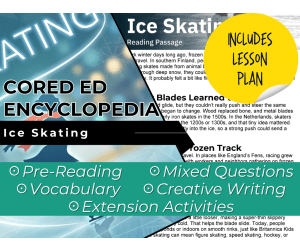
Ice Skating Reading Comprehension Passage - Cored Ed Encyclopedia
ELA, Reading Comprehension, Reading, Language Development, History, Social Studies, Science, Physics, Sports, P.E. & Health, Grade 2, 3, 4, 5, Worksheets & Printables, Worksheets, Teacher Tools, Centers, Activities, Writing Prompts, Assessments, Quizzes and Tests, Quizzes, Lesson Plans
This Ice Skating reading comprehension with lesson plan includes: Visualization (on the front cover) Start your lesson by taking a minute to think and share something about the topic. Read the script aloud (slowly), perhaps prepare some music or sound effects. Student close their eyes and let their imaginations wander. Students open their eyes, read the question aloud and give them a few minutes to complete. Ask a few students to share or keep answers until the end to compare with what they learn in the passage. Quick pause—thousands of Cored Education products are included with your TeachSimple membership. Download links and encyclopedia index available here. Pre-Reading Trivia Students will write down one thing they already know about the subject and then read five more facts and discuss. These facts are fun, and the students will enjoy learning about the subject before reading more. Give 1 minute for students to write what they already know (no pressure—best guess is fine). Read the five facts together. After each fact, do ask a student for their opinion, was it surprising? Set a purpose by asking students to highlight/underline one fact they want to learn more about during the reading. Reading Passage The text is a high-interest reading passage with set paragraphs, roughly three to four paragraphs long. It contains a variety of themes about the topic, anywhere from history to technology. The passage is between 250 and 350 words in length. First, ask students to look at the headings and see what they’ll learn about today. What do they know about the topic/heading? First read options: Teacher read-aloud (best for support). Partner reading (paragraph by paragraph). While reading, students underline important details, and vocabulary words they think may come up in the questions section. Mixed Questions The first question page contains four multiple-choice questions, each with a choice of four answers, and three written response questions that require a sentence or two from the student. Students complete the mcqs first independently, then review quickly as a class. For the 3 written responses, try to get students giving the answer with some form of evidence: “I think ___ because the text says ___.” If students get stuck, send them back to check the passage. Vocabulary Questions Practice seven key words from the text in this section across two activities. First section is scrambled words where students will unscramble three words given a clue for each. The second section is a word to meaning matching activity. Before starting, have some students read out words they underlined in the passage. Ask students to say the word and read aloud the sentence(s) around each word. Ask students to do scrambled words and the matching exercise in pairs then go through answers as a class. For the scrambled spelling task, get four pairs to come up to the board and write the words for extra practice with the other student reading out the clue. For the matching task, prompt students to give full sentences: “I matched ___ with ___ because ___.” Creative Writing In this question, the student will be required to write a five to eight sentence paragraph on a question related to the topic. Before starting, ask students write down 3 key ideas they are going to include in their piece. Ask students for ideas to share around the class to help those struggling. Pro writing expectations: 5–8 sentences At least 2 facts or details from the passage At least 2 vocabulary words from the previous page Students read their paragraphs while classmates listen for facts and vocabulary words. Extension Activities This page is optional for fast finishers or to take home. There are several activities, each one requiring a different skill. Do some, do none, do all, completely optional - but you will feel reassured knowing every possibility is planned for. Includes summary writting question and additional facts. Answer Key There are answers for the multiple-choice questions, written response questions have sample answers, vocabulary answers and if there is a summary question then a sample summary will be provided as well. Lesson Plan Included Customized lesson plan for this lesson is included. Lesson Snapshot Title: Ice Skating Genre: Nonfiction (informational text) Subject: Reading (Informational Text) / Science Primary Topic: How ice skating began and why blades glide Estimated Guided Reading Level (A–Z): R What This Lesson Teaches Best Explains how ice skating was first used for winter travel long ago (frozen lakes and rivers as “the easiest way to travel”). Describes how skates changed over time (from animal bones to wood to metal blades) and why sharpened edges mattered for control. Shows how skating shifted from travel to organized sport, including races, rules, championships, and the Olympic stage. Introduces a simple science idea for why skates glide: a super-thin slippery surface layer where ice molecules are a little looser. Uses text features (section headings) to chunk information and support comprehension. Learning Goals Identify the main idea and key details about how ice skating began and changed over time. Describe the difference between early bone skates and later skates with sharpened metal edges. Explain how sharpened edges helped skaters push, steer, and move with control. Explain, using the text, why a skate blade can slide well on ice. Describe how skating became an organized sport with rules, championships, and worldwide attention. Key Vocabulary From the Text blades — thin metal parts of skates that touch the ice. edges — sharpened sides that help a skate grip ice. molecules — tiny pieces that make up ice. championships — contests to find winners in a sport. standards — agreed rules that keep things consistent. FULL CATALOG OF DOWNLOAD LINKS AND ENCYCLOPEDIA INDEX HERE
Author Cored Education
Rating
Tags Vocabulary, Reading Comprehension, Reading Passages, Lesson Plans, Ela Lesson Plans, Reading Comprehension Lesson Plans, Pre-reading, History, P.e. Lesson Plans, Sports

Science Revision for Grade 4
Science, Grade 4, Activities, Worksheets & Printables, Assessments, Teacher Tools
This Grade 4 Science Worksheet is perfect for busy teachers. It includes 30 ready-to-use activities that cover key science topics. Students will learn about plants, animals, matter, energy, weather, ecosystems, and more. Each task helps students think, observe, and explain. They match, classify, label, draw, read data, and answer questions. The worksheet builds skills step-by-step. It includes scientific vocabulary, diagrams, and real-world examples. Students practice reading graphs, identifying changes in matter, and describing the water cycle. They also explore conservation, food chains, and the scientific method. All the activities can be done on paper. There is no prep needed. Just print and go! The answer key is included at the end to save time. This worksheet works well for classwork, homework, or revision. It supports science learning in a clear and fun way. Use it to check understanding or as a review before tests. It’s simple, engaging, and effective. Give your students the tools they need to succeed in science!
Author Bright Classroom Ideas Marketplace
Rating
Tags Science, Revision, Grade 4
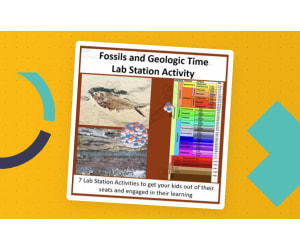
Fossils and Geologic Time – Lab Station Activity
Science, Earth and Environmental Sciences, Grade 8, 9, 10, 11, 12, Labs, Experiments, Activities
Fossils and the Geologic Time Scale - Lab Station Activity Bring the fossil record to life in your middle or high school science classroom with this engaging lab activity. Students will rotate through 9 stations to analyze fossils, date rocks, explore timescales, and more. The self-guided format allows them to work at their own pace while answering questions, watching videos, doing research, and getting creative. Topics span fossilization, radiometric dating, rock strata, the La Brea Tar Pits, and major boundaries in Earth's history. This customizable resource includes reading passages, comprehension questions, creative prompts, and bonus vocabulary builders to maximize the learning potential. Students will love moving freely around the classroom as they dive into hands-on archaeology.
Author Teach With Fergy
Tags Fossils, Fossilization, Rock, Strata, Lab Station, Photosynthesis And Cellular Respiration Word Search Answer Key, Geological Timeline Activity Answer Key, Geologic Time Word Search Answer Key, Geologic Time Activity, Geologic Time Scale Activity Middle School, Geologic Time Scale Activity High School, Geologic Time Line Activity

Free Reading Passage: Objects in the Sky (Google Forms)
ELA, Reading, Reading Comprehension, Science, Earth and Environmental Sciences, Earth Sciences, Common Core, ESL, Language Development, Vocabulary, Grade 2, 3, 4, Centers, Activities, Assessments, Teacher Tools, Tests, Quizzes and Tests
Free Reading Passage on Objects in the Sky for Earth Science What's inside this free product? Science Reading Comprehension Passage40 : Objects in the Sky Independent Google Forms Version: This is the independent Google Forms version containingone lesson with full answer keys. Product Info: 1 form (US English with Answers) Google Forms Version Teaching Duration: Approximately 90 Minutes Science Reading Comprehension Outline: Targeted for students in 3rd and 4th grades, these reading passages are enhanced with illustrations and graphs to elucidate critical points. Each lesson aligns with the Common Core State Standards, allowing you to integrate science reading practice effortlessly, knowing that minimal preparation is needed on your part. Each passage comes with a variety of questions in different formats, including multiple-choice formats, data analysis, and fill-in-the-blanks. The topics covered strike a balance between engaging content and core curriculum-based science subjects. Versatile in application, these lessons are suitable for a variety of settings such as whole-class instruction, morning activities, independent desk work, small group discussions, contingency plans for substitute teachers, homework assignments, or even special holiday-themed tasks. FULL CATALOG OF DOWNLOAD LINKS HERE Grade 3/4 Links: Physical Science Part 1 - Properties of Objects and Materials Google Docs/Slides/Forms PDF PPT Word Free Supplementary Pack Accompanying Videos Physical Science Part 2 - Position and Motion of Objects Google Docs/Slides/Forms PDF PPT Word Free Supplementary Pack Accompanying Videos Physical Science Part 3 - Light, Heat, Electricity, Magnetism Google Docs/Slides/Forms PDF PPT Word Free Supplementary Pack Accompanying Videos Life Science Part 1 - Characteristics of Organisms Google Docs/Slides/Forms PDF PPT Word Free Supplementary Pack Accompanying Videos Life Science Part 2 - Life Cycles of Organisms Google Docs/Slides/Forms PDF PPT Word Free Supplementary Pack Accompanying Videos Life Science Part 3 - Organisms and Environments Google Docs/Slides/Forms PDF PPT Word Free Supplementary Pack Accompanying Videos Earth Science Part 1 - Properties of Earth Materials Google Docs/Slides/Forms PDF PPT Word Free Supplementary Pack Accompanying Videos Earth Science Part 2 - Changes in the Earth and Sky Google Docs/Slides/Forms PDF PPT Word Free Supplementary Pack Accompanying Videos Earth Science Part 3 - Objects in the Sky Google Docs/Slides/Forms PDF PPT Word Free Supplementary Pack Accompanying Videos For similar products and other frees, do check out Cored Group on TeachSimple .
Author Cored Education
Tags Science, Elementary, Reading, Comprehension, Vocabulary, Answers, Physics, Physical Science, Ccss, Common Core

Whales Know-It-Alls! Audio Book
Science, Life Sciences, Animals, Grade 2, 3, 4, Read Alouds, Activities
As part of the unique, science Know-It-Alls! Series that features interesting science facts, this audiobook puts the spotlight on Whales! Baby whales, called calves, drink milk from their mother’s bodies. Some calves may gain as much as 200 pounds a day! Awesome narration and sound effects plus many interesting facts, make this audiobook fun and exciting for young science enthusiasts age 4 and up! Titles in the Know-It-Alls! Series include: Butterflies, Crocodiles, Dinosaurs, Farm Animals, Safari Babies, Snakes, Sharks, Spiders, Whales, Wolves, Puppies, Wild Cats, Bugs, Birds of Prey, Fish, Frogs, Apes, Seals, Bats, Bears, Predators, Mummies, Volcanoes, Lizards, Kittens and Horses.
Author Twin Sisters Digital Media
Tags Science, Early, Ebook, Whales, Learning
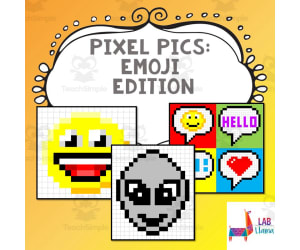
Pixel Pics Spreadsheet Activity: Emojis Edition
Science, Technology, Computer Science, Not Grade Specific, Activities
Whether students are in the classroom or in the computer lab , you may be on the hunt for some computer skills resources that you know students will love. Many of our students, young and old, enjoy putting their tech skills to use. It is always impactful when we can give them opportunities to show what they know and/or teach them new things! This is a Pixel Pics Spreadsheet Activity. It is the Emoji Edition. This activity would work for any age of students who have learned about different computer applications, including Google Spreadsheets. Students will be given access to 1 spreadsheet. On this spreadsheet, there are 6 tabs. Students can complete all 6 tabs, you can assign which tabs you want them to complete, or you can let the students choose which ones to complete. The tabs include: -Happy -Angry -Alien -Poo -Heart -Speech Bubbles On each tab, students will follow the color code to complete the picture. A completed example spreadsheet is included. Here are more resources to enjoy in my store: https://teachsimple.com/product/excel-stories-pirate-edition-computer-science-project https://teachsimple.com/product/excel-stories-detective-edition-computer-science-project https://teachsimple.com/product/finger-placement-practice-teaching-typing-lesson https://teachsimple.com/product/spot-the-differences-activity Check out many more resources at my storefront here: https://teachsimple.com/contributor/lab-llama-computer-skills-resources I can be contacted for questions and concerns at labllamasam@gmail.com .
Author Lab LLama - Computer Skills Resources
Tags Lab Llama, Computer Activity, Color By Code, Color By Number, Emojis, Pixel Pics, Spreadsheets, Computer Skills, Spreadsheet Emoji

This is a comprehensive knowledge assessment about lunar knowledge.
Science, Research, Elementary, High School, Homeschool Resources, Middle School, Adult Education, Teacher Tools, Worksheets & Printables, Activities
This is a timely assessment on lunar knowledge. We are back to traveling to our natural satellite. It has been a long time. We are promoting more knowledge insofar as the dark side of the moon is concerned. There is much to learn about the Moon! This assessment covers important facts. Use this assessment as a supplemental activity in a unit on the solar system. Use it as a take home test for additional knowledge on our solar system. Moreover, students might be interested in learning about our natural satellite as we are considering building a colony on the Moon. There are many adjustments to be made for humans living on the moon, and an overall assessment of the moon's properties are crucial to human survival. The gravity quotient is also as key to overcoming man's walking ability on the Moon! The Moon's gravity is only about 1/6th of Earth.
Author THE LANTERN OF KNOWLEDGE
Rating
Tags Facts , Properties

Guided Reading Level B: Simple Machines at Home
ELA, Resources for Teachers, Reading Comprehension, Reading, Science, Language Development, Pre-Reading, Vocabulary, Physics, Kindergarten, Preschool, Grade 1, Worksheets & Printables, Worksheets, Teacher Tools, Centers, Activities, Literacy Readers, Quizzes, Quizzes and Tests, Assessments
This Guided Reading Book - Simple Machines at Home (Level B) includes: Guided Reading Color Label (front cover x1) This is a quick way to match the book’s demands to what students can generally handle.. The overall goal is to use the level/color to pick books for several smaller groups. To qualify for a certain level, a student is expected to read a book from that level with about 90–94% accuracy. If a student is consistently accurate and understands, move up a level. If the student is struggling at that level, drop down and add more support. Each student will improve at completely different rates, but it is generally one of the best ways to check progress across the class. DOWNLOAD THE CATALOG TO VIEW ALL GUIDED READING BOOKS AVAILABLE (SORTED LEVELS A-Z) Pre-Reading Question (x1) Teacher asks the prompt aloud, can be while showing the cover or first page. Students share what they already know, or make educated guesses from the cover. Prompt them to use the target vocabulary. Write some of their responses on the board to look back at during the reading. Vocabulary Words (x5) Introduce the five words, best doing it one at a time. Start by saying it, while students repeat and then see if anyone knows what it means before reading further. Read through the meaning and try to briefly connect each word to a picture or gesture so it’s meaningful. Ask students to flip through the book pages and point to where they see each of the vocabulary words. While reading the book pause upon coming across one of the vocab words or read the sentence twice to make sure students understand the word has appeared. Optional: Ask students to raise hands whenever they see/hear one of the new words. Guided Reading Pages (x10) Check the book snapshot (below) for: primary topic - do you need to prep extra reading or intro materials on this? what is taught best - decide on 1-2 bullets to focus on, use the prompt or words provided here for best results. learning goals - what you are checking for students to be able to do after the session, elicit answers using prompts or words provided. key vocabulary (see section above). questions overview - so you know what is coming up and if you need to prep extra materials to assist understanding. Run the lesson You may have already looked at a few of the pages together, but you can show them some of the pictures again first to set meaning. Depending on how much time you have and how familiar your students are with guided reading class, you may want to read the book aloud first with the group first. Students whisper or partner read, while you listen in. If time, do it as a group, one student reading a page each. Use the guided page’s prompts to coach: “Check the picture / does it make sense?” “Point under the words / try the first sound” “Reread the sentence smoothly”. Try to focus more on one student per session (rotating every time), so you can work out if they are ready to move up or need to move down a level. Comprehension Questions (back cover x3) This is your way to check that students didn’t just say the words, but actually understood the text. First, let students answer by pointing to the page/picture and saying a short sentence. After any answer, follow with: “Show me where you found that in the text.” In bigger groups, have partners answer first (10–20 seconds), then call on 2–3 students to share. Differentiation tips: Emerging speakers/struggling readers: oral + pointing On-level: oral in a full sentence Higher: one written sentence or draw + label Book Snapshot Title: Simple Machines at Home Genre: Nonfiction Subject: Science Primary Topic: Simple machines at home and what they do Estimated Guided Reading Level (A–Z): B What This Book Teaches Best Recognizing that “machines are at home” and used in everyday life. Learning what specific simple machines can do (cut, stop, slice, help, hold, turn, roll, lift). Building early reading fluency with repeated sentence patterns (“The ___ can ___.”). Using text-and-picture support to connect tool names to actions (lever, wedge, ramp, screw, wheel, pulley). Learning Goals Students will identify the topic of the book as simple machines at home. Students will name at least three simple machines mentioned in the text. Students will describe what a lever, wedge, ramp, screw, wheel, or pulley can do using the book’s sentences. Students will answer who/what questions by pointing to or rereading a matching page. Students will use the sentence frame “The ___ can ___.” to retell information from the book. Key Vocabulary From the Text lever — a tool that helps you cut. wedge — a tool that can stop or slice. ramp — a slanted surface that can help. screw — a piece that can hold things together. pulley — a tool that can lift. Discussion Prompts Pre-reading question: What machines do you think you might find at home? Comprehension questions: What can the lever do? What are two things the wedge can do? What does the last page say about simple machines? Printing Tips 1. Best Printing Method (Recommended) “Booklet” Printing (Best if Available) If your printer or PDF viewer supports Booklet Printing , use this. Settings to use: Print mode: Booklet Paper size: Letter or A4 (either works) Orientation: Landscape Print on both sides: Yes Flip on: Short edge Scaling: Fit to printable area Booklet subset: First test: Front sides only Then: Back sides only This will automatically: Pair pages correctly Put the cover on the outside Align everything for folding After printing, fold in half and staple along the spine . 2. If “Booklet” Printing Is NOT Available You can still print this correctly with manual duplex printing . Step-by-step: Open the PDF. Choose Print . Set: Orientation: Landscape Pages per sheet: 1 Print on both sides: Yes Flip on: Short edge Print all pages . Because each PDF page already contains two facing book pages, the result will still fold cleanly into a book. Thousands of Cored Education products are included with your TeachSimple membership. Download links and encyclopedia index available here.
Author Cored Education
Rating
Tags Vocabulary, Reading Comprehension, Reading Passages, Leveled Reading, Nonfiction, Reading, Guided Reading, Physical Science, Simple Machines, Physics
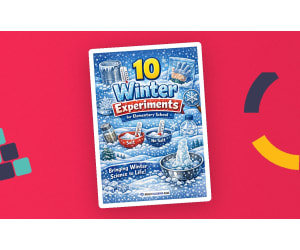
10 Winter Science Experiments for Elementary Students
Winter, Seasons, Holiday & Seasonal, Basic Science, Science, Kindergarten, Grade 1, 2, 3, 4, 5, Activities, Experiments
❄️ 10 Winter Science Experiments for Elementary Students Bring winter wonder to your classroom with these hands-on winter science experiments designed for curious young scientists! Perfect for grades K–5 , this engaging science experiment pack turns frosty days into exciting STEM exploration while reinforcing observation, prediction, and problem-solving skills. ✅ What’s Included 10 classroom-tested winter science experiments Complete materials lists and step-by-step instructions Scientific explanations for each activity Discussion and extension questions Safety tips and differentiation strategies for all learners 🧊 How It Works in the Classroom Use this pack for: Weekly winter STEM lessons Science centers or rotations Sub plans and enrichment days A “Winter Science Festival” classroom event At-home STEM projects with family connections Each experiment is classroom-ready with minimal prep and easy-to-find materials. Students will explore topics like freezing point depression, frost formation, blubber insulation, and crystal growth — all while learning to think like scientists. 🧠 Standards & Learning Goals Aligned with Next Generation Science Standards (NGSS) and designed to: Reinforce the scientific method Build observation and measurement skills Connect real-world winter phenomena to chemistry and physics concepts Support inquiry-based learning across grade levels 💛 Why Teachers Love It 🌟 Engages multiple learning styles (hands-on, visual, analytical) ⏰ Saves prep time with easy setup and clear directions 🧠 Encourages curiosity and critical thinking 🔬 Perfect for winter months when indoor science is most needed Transform chilly days into a season of discovery with this Winter Science Experiment Pack — your students will love exploring how the coldest months are filled with science magic!
Author Bright Classroom Ideas Marketplace
Rating
Tags Science, Winter, Experiment, Elementary, Physics

Science Word List Posters - Set 1 (PDF)
ELA, Language Development, Vocabulary, Spelling, ESL, Resources for Teachers, Science, Physics, Earth and Environmental Sciences, Life Sciences, Grade 2, 3, 4, 5, Worksheets & Printables, Worksheets, Teacher Tools, Centers, Activities, Posters, Classroom Decor
Word List Poster Series This word list poster series is designed for students in grades 2–5. Each printable focuses on a clear, kid-friendly theme and features 8 target vocabulary words with short, student-friendly meanings or fun facts. The clean layout works as both an anchor chart and a write-in sheet, giving students a quick, visual reference they can revisit during centers and independent work. These posters are student-friendly, classroom-ready, and perfect for warmups, vocabulary walls, sub plans, or take-home reference. Display a single poster to support the day’s lesson, or group several to build a themed wall across your unit. Note: Each poster is a companion piece to its matching themed product in the series—pair it with the corresponding maze, wordsearch, or activity pack for a consistent set of 8 focus words. Science Set 1 Word List 1. Forces and Motion Gravity, Friction, Push, Pull, Speed, Force, Ramp, Energy 2. Matter and Materials Solid, Liquid, Gas, Melt, Freeze, Boil, Evaporate, Condense 3. The Solar System Planet, Orbit, Moon, Sun, Star, Asteroid, Comet, Telescope 4. The Human Body Brain, Heart, Lungs, Bones, Muscle, Veins, Digest, Nerves 5. Ecosystems and Habitats Ecosystem, Habitat, Food Chain, Predator, Prey, Adapt, Forest, Ocean 6. Weather and Climate Temperature, Clouds, Precipitation, Hurricane, Tornado, Forecast, Climate, Drought PDF Version Other versions will appear here when available. Follow the store for the lastest on new products. How to Use These Word List Posters Perfect for: Morning work or early-finisher bins Vocabulary centers or anchor walls Holiday/seasonal review lessons Independent stations, sub plans, or take-home reference More Science Themed Products Science Crosswords (Set 1) PDF Science Crosswords (Set 2) PDF Science Crosswords (Set 3) PDF Science Word Searches (Set 1) PDF Science Word Searches (Set 2) PDF Science Word Searches (Set 3) PDF Science Mazes (Set 1) PDF Science Mazes (Set 2) PDF Science Mazes (Set 3) PDF FULL CATALOG OF DOWNLOAD LINKS HERE Themed Word List Posters Links Addition PDF Animals PDF Around the Home PDF Birthday PDF Candy PDF Christmas PDF Cinco de Mayo PDF Clothes PDF Colors PDF Days and Months PDF Division PDF Earth Day PDF Easter PDF Easy Word List Posters PDF Fall PDF Father's Day PDF Food PDF Geography (Set 1) PDF Geography (Set 2) PDF Geography (Set 3) PDF Graduation PDF Health PDF History (Set 1) PDF History (Set 2) PDF History (Set 3) PDF Human Body PDF Kindness PDF Life Skills PDF Mother's Day PDF Multiplication PDF Science (Set 1) PDF Science (Set 2) PDF Science (Set 3) PDF Shapes PDF Social Skills PDF Spring PDF Sports PDF St. Patrick's Day PDF Subtraction PDF Summer PDF Thanksgiving PDF Transport PDF Valentine's Day PDF Winter PDF Word List Posters in Depth Structure Each poster is built around a focused sub-theme and presents 8 target words with short, student-friendly meanings or fun facts. The clean A4 portrait layout works as an anchor chart on your board or as a student reference at desks. These posters are designed as companion pieces to the matching themed products (mazes, wordsearches, activity packs), so the same vocabulary stays visible across your unit. Each poster set includes: A themed word list poster with 8 words + brief meanings/facts A clean, high-contrast layout for easy printing and display Space that can double as write-in/draw-to-show-meaning during centers Themes Included Seasons & Holidays (e.g., Halloween, Easter, Valentine’s Day) Everyday Topics (e.g., Animals, Weather, School) Math & Science Connections (e.g., Number Words, Simple Machines) Special Units (e.g., Health, Earth Day, Sports, Kindness) Each topic reflects real-life experiences and interests while strengthening vocabulary recognition and content understanding in a clear, visual way. Easy extensions (optional) Sketch it: students draw a quick icon for each word Sort it: group words by category (e.g., actions, objects) Star it: highlight “I already know” vs. “I’m learning” words Match it: point to examples in a reading, video, or picture set Say it: brief oral definition or example sentence during share-out Differentiation tips Pre-teach 2–3 anchor words; add the rest later in the week Offer picture cues or gestures for emerging readers/ELLs Let students choose 4 of 8 to focus on first, then build up Color-code by part of speech or concept family for quick scanning For similar downloads and other frees, do check out Cored Group on TeachSimple.
Author Cored Education
Rating
Tags Vocabulary, Spelling, Forces And Motion, Matter And Materials, The Solar System, The Human Body, Weather And Climate, Science, Posters, Science Word Lists
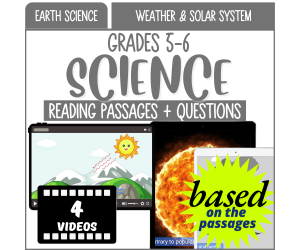
Reading Passages on Weather and Solar System (Videos)
ELA, Reading, Reading Comprehension, Science, Earth and Environmental Sciences, Earth Sciences, Common Core, ESL, Language Development, Pre-Reading, Grade 5, 6, 7, Teacher Tools, Activities
Accompanying Videos Based on Reading Passages on Weather and Solar System for Earth Science These accompanying videos contain scripts extracted from the Science Reading Passages series. With stock footage, subtitles, voiceovers, animation and diagrams, they will help students understand the topic more. Ideal for starting or ending a lesson, each video runs at less than 5 minutes and is at least 95% identical to the passage itself. What's inside? Part 3 Videos - Weather & Solar System Reading Passage 1: Earth Moon and Sun Reading Passage 2: Weather Measurement Causes and Changes Reading Passage 3: Classification of the Sun and Other Stars Reading Passage 4: Inner and Outer Solar System Science Reading Comprehension Outline: Introducing a comprehensive resource tailored for 5th and 6th graders, this product offers enriching reading passages supplemented with illustrative pictures and graphs to clarify key concepts. Aligned with the Common Core State Standards (CCSS), it offers a hassle-free approach to teaching, given that the bulk of the preparation is already done for you. The passages present a diverse set of questions – from multiple choice to data analysis and fill-in-the-blanks. This ensures a rich blend of high-interest content and fundamental curriculum-based science themes. With its versatility, you can seamlessly integrate these lessons into various classroom settings, whether it's whole class discussions, morning exercises, independent desk tasks, small group engagements, contingency plans for substitute teachers, regular homework assignments, or even themed activities for holidays. FULL CATALOG OF DOWNLOAD LINKS HERE Grade 5/6 Links: Physical Science Part 1 - Physical and Chemical Properties Google Docs/Slides/Forms PDF PPT Word Free Supplementary Pack Accompanying Videos Physical Science Part 2 - Motion and Energy Google Docs/Slides/Forms PDF PPT Word Free Supplementary Pack Accompanying Videos Physical Science Part 3 - Electricity and Magnets Google Docs/Slides/Forms PDF PPT Word Free Supplementary Pack Accompanying Videos Life Science Part 1 - Cells, Reproduction and Genetics Google Docs/Slides/Forms PDF PPT Word Free Supplementary Pack Accompanying Videos Life Science Part 2 - Human Body Systems Google Docs/Slides/Forms PDF PPT Word Free Supplementary Pack Accompanying Videos Life Science Part 3 - Plant Parts and Ecosystems Google Docs/Slides/Forms PDF PPT Word Free Supplementary Pack Accompanying Videos Earth Science Part 1 - Plate Tectonics and Rock Cycle Google Docs/Slides/Forms PDF PPT Word Free Supplementary Pack Accompanying Videos Earth Science Part 2 - Ocean Exploration and Natural Resources Google Docs/Slides/Forms PDF PPT Word Free Supplementary Pack Accompanying Videos Earth Science Part 3 - Weather and Solar System Google Docs/Slides/Forms PDF PPT Word Free Supplementary Pack Accompanying Videos For similar products and other frees, do check out Cored Group on TeachSimple .
Author Cored Education
Rating
Tags Science, Elementary, Reading, Comprehension, Vocabulary, Answers, Ccss, Common Core, Earth Science

Maryland Digital Escape Room (State Geography, History, Symbols, and More)
Social Studies, ELA, History, History: USA, Geography, Reading, Reading Comprehension, Science, Life Sciences, Animals, Grade 3, 4, 5, Escape Room, Activities
Maryland Digital Escape Room (State Geography, History, Symbols, and More) Highlighting the intriguing facts and knowledge about Maryland in a fun and interactive way, this product caters to students' needs to learn more about this U.S. state. The digital escape room serves as an effective teaching resource for educators across various subjects such as Social Studies, Language Arts, Science and more. Built with 52 slides that constitute 14 topics along with 15 puzzles, it serves as an impressive method of conveying information about Maryland's geography, history including its nickname, state capital bird flower flag animal seal other symbols important person climate seasons food attractions. This material is fitting for grade 3 to grade 5 which means that content scale from elementary level concepts up to intermediate level study designs. Teachers can use this engaging approach in their day-to-day instruction or while reviewing different sub-subjects like USA History Zoology Comprehension Reading Geography making it viable for teaching large groups small group activities or assigning innovative homework sessions. The product offers high interactivity with memory jigsaw Caesar wheel pigpen cipher word search image reveal color code making learning a highly engaging process. This no-prep digital escape room -which works best on desktops tablets- provides a seamless self-checking mechanism where students click 'Check' on answers they're confident with subsequently letting them access the next slide upon correct responses enhancing their decoding analytical skills enabling application-based learning. The entire process is online requiring only internet connectivity reducing dependency on physical resources perfect supplementing teaching models adapting modern instructional styles amplifying practical learning exposure among students Inspired by real-world challenges helps foster critical thinking teamwork collaboration providing enriching fulfilling educational experience. Additional teacher-friendly features include precise distinct instructions student versions answer keys hints that together make classroom management hassle-free friendly suitable even for homeschoolers assisting them at every step of educating journey. Including varied subjects instills diverse knowledge range among learners offering all-round educational exposure without straying off the main subject making it a smart choice for educators.
Author Heather Huhman
Tags Maryland Geography, Maryland History, Maryland Symbols, Digital Escape Room, Educational Resource
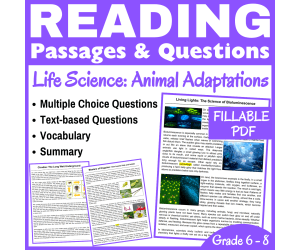
Bioluminescence and Insects : Science Reading passages (FILLABLE PDF)
Science, ELA, Reading, Reading Comprehension, Strategies, Resources for Teachers, Life Sciences, Animals, Insects, Nature & Plants, Grade 6, 7, 8, 9, Writing Prompts, Worksheets & Printables, Centers, Activities, Teacher Tools, Assessments, Quizzes and Tests, Quizzes, Tests
Bioluminescence and Insects: Reading Comprehension Passages and Questions (FILLABLE PDF) This very engaging and fillable collection of life science reading passages about Bioluminescence and Insects is designed to bridge the gap between science and literacy through strengthening reading comprehension and sparking scientific curiosity in middle school students. Each passage blends English Language Arts skills with accurate science content that supports NGSS classroom practice. Ideal for interdisciplinary learning in ELA and Science. Suitable for Grade 9 review, too! These worksheets are designed as fillable PDFs , which means students can type their answers directly into the document on any computer or tablet . Each page includes highlighted text fields that show them exactly where to type! What Is Included? There are (3) informational passages: Living Lights: The Science of Bioluminescence Cicadas: The Long Wait Underground Masters of Disguise: How Insects Hide and Imitate Student Tasks for Each Passage: 5 multiple-choice questions targeting main idea, key details, inference, vocabulary in context, and use of evidence 5 vocabulary matching items with clear, student-friendly definitions 5 text-based questions that require citing specific lines or facts 1 summary prompt that asks students to condense central ideas accurately Full answer key for every section Available Formats for this Resource Word Docs Google Docs FULL CATALOG OF DOWNLOADING LINKS HERE Other Science Reading Collections and Topics You May Find in the Store: 1. Astronomy & Space Science 2. Volcanoes, Rocks, & Mountains 3. Rock Cycle, Soil, & Sinkholes 4. Mars, Glaciers, & Antarctica 5. Water Cycle, Acid Rain, & Wastewater 6. Insects, Animals, & Ecosystems 7. Bioluminescence & Insects 8. Animal Skin, Cats, & T. Rex 9. Human Body and Senses 10. Health & Applied Bioscience 11. Waves, Light, & Imaging 12. Electricity & Energy 13. Motion & Materials 14. Chemistry and Materials Science 15. Electromagnetism 16. Acids and Bases 17. Gas Laws 18. Biotechnology 19. Periodic Trends 20. Protists and Fungi 21. Microevolution 22. Blood 23. Chemical Bonding 24. Magnets 25. Muscles 26. Nuclear Chemistry 27. Electromagnetic Devices 28. Epigenetics 29. The Law of Conservation of Mass 30. Atomic Models 31. Isotopes and Ions 32. Light 33. Human-Environment Interaction 34. Theory of Evolution 35. Photosynthesis 36. Origins of Life and Early Earth 37. Gene Expression and Regulation 38. Thermochemistry 39. Allergies 40. Coevolution 41. Birth to Adulthood 42. Cells 43. Entropy and Free Energy 44. The Human Brain 45. Mixtures and Solutions 46. Invertebrates 47. Zoo Animals 48. Biochemistry 49. Animal Behavior 50. Population Ecology ...and many more engaging science reading passages that cover intriguing and important topics designed to spark curiosity and support student learning. How to Use These PDFs Click on the highlighted area to start typing your answer. Move to the next question by clicking in the next highlighted box. When you are finished, close the document and select SAVE so your answers stay recorded. If you want to keep a blank copy for later, choose Save As and give your completed version a new name. Product Details Length: 14 pages total Grades: 6–8, also suitable for Grade 9 review Use cases: close reading, stations, homework, intervention, test prep, and sub plans Standards support: reinforces informational-text skills and supports NGSS-style sense making through observation, modeling, and clear use of claim, evidence, and reasoning Why Teachers Choose This Set Authentic science content paired with rigorous literacy practice Consistent task structure across all passages for easier planning and smoother student routines Clear, age-appropriate writing that builds confidence without oversimplifying Use this set to reinforce ELA skills in science, to add literacy to your lessons, or to support independent work. The passages strengthen main idea, evidence use, vocabulary in context, inference, cause and effect, and summary writing. With ready-to-use assessments and complete answer keys, you can provide focused practice that is simple to run and fast to review.
Author Middle & High School - CORED Education
Rating
Tags Middle School, Reading Comprehension, Reading Strategies, ELA, Centers, Reading Passage, Assessments, Vocabulary, Life Science, Insects
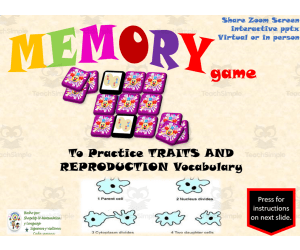
Free Science Interactive Memory Game / Traits and Reproduction Voc.
Science, Life Sciences, Human Body, Basic Science, Biology, Grade 8, Games, Activities
Traits and Reproduction Interactive Science Memory Game for 8th Grade Reinforce 8th grade science lessons on traits and reproduction with this interactive memory game . Students will learn, practice, and review key vocabulary words and definitions related to characteristics, importance, and the relationships between them. The game features visual aids and multiple learning activities to aid memorization, recognition, identification, and classification of the content. Students will first practice the vocabulary, then play the memory game on PowerPoint, matching pairs of cards to test their knowledge. This engaging resource can be used for whole group, small group, or individual practice in the classroom or at home. This teaching resource includes a 19-slide PowerPoint presentation with a built-in interactive memory game to help 8th graders master science concepts related to traits and reproduction.
Author ShapeUp-N-Matematicas y Lenguaje
Tags Traits And Reproduction, Traits, Reproduction, Dna, Feature, Fertilization, Ribosomes, Chromosomes, Small Or Whole Group, Interactive Activity

Human Body & Senses: Life Science Reading Comprehension (PDF)
Science, ELA, Reading, Reading Comprehension, Strategies, Resources for Teachers, Life Sciences, Human Body, Grade 6, 7, 8, 9, Writing Prompts, Worksheets & Printables, Centers, Activities, Teacher Tools, Assessments, Quizzes and Tests, Quizzes, Tests
Human Body and Senses: Life Science Reading Comprehension Passages (PDF) This very engaging collection of life science reading passages about Contact Lenses, Goosebumps, and Skin is designed to bridge the gap between science and literacy through strengthening reading comprehension and sparking scientific curiosity in middle school students. Each passage blends English Language Arts skills with accurate science content that supports NGSS classroom practice. Ideal for interdisciplinary learning in ELA and Science. Suitable for Grade 9 review, too! What Is Included? There are (3) informational passages: Clear Vision: The Story of Contact Lenses: Early lenses were hard, bulky, and uncomfortable, but the idea was simple: correct vision right on the eye. Modern soft lenses let oxygen in, stay in place, and give people clear sight without glasses. Goosebumps: A Chilly Reminder of Our Past: When you get cold or scared, tiny muscles pull on each hair and make bumps. It once helped our hairy ancestors look bigger and hold heat, so today it’s mostly a leftover reflex. Skin: Your Protective Shield: Skin keeps germs out, moisture in, and helps your body stay at a steady temperature. With nerves and blood vessels close to the surface, it also lets you feel and heal. Student Tasks for Each Passage: 5 multiple-choice questions targeting main idea, key details, inference, vocabulary in context, and use of evidence 5 vocabulary matching items with clear, student-friendly definitions 5 text-based questions that require citing specific lines or facts 1 summary prompt that asks students to condense central ideas accurately Full answer key for every section Available Formats for this Resource Word Docs Google Docs FULL CATALOG OF DOWNLOADING LINKS HERE Other Science Reading Collections and Topics You May Find in the Store: 1. Astronomy & Space Science 2. Volcanoes, Rocks, & Mountains 3. Rock Cycle, Soil, & Sinkholes 4. Mars, Glaciers, & Antarctica 5. Water Cycle, Acid Rain, & Wastewater 6. Insects, Animals, & Ecosystems 7. Bioluminescence & Insects 8. Animal Skin, Cats, & T. Rex 9. Human Body and Senses 10. Health & Applied Bioscience 11. Waves, Light, & Imaging 12. Electricity & Energy 13. Motion & Materials 14. Chemistry and Materials Science 15. Electromagnetism 16. Acids and Bases 17. Gas Laws 18. Biotechnology 19. Periodic Trends 20. Protists and Fungi 21. Microevolution 22. Blood 23. Chemical Bonding 24. Magnets 25. Muscles 26. Nuclear Chemistry 27. Electromagnetic Devices 28. Epigenetics 29. The Law of Conservation of Mass 30. Atomic Models 31. Isotopes and Ions 32. Light 33. Human-Environment Interaction 34. Theory of Evolution 35. Photosynthesis 36. Origins of Life and Early Earth 37. Gene Expression and Regulation 38. Thermochemistry 39. Allergies 40. Coevolution 41. Birth to Adulthood 42. Cells 43. Entropy and Free Energy 44. The Human Brain 45. Mixtures and Solutions 46. Invertebrates 47. Zoo Animals 48. Biochemistry 49. Animal Behavior 50. Population Ecology ...and many more engaging science reading passages that cover intriguing and important topics designed to spark curiosity and support student learning. Product Details Length: 14 pages total Grades: 6–8, also suitable for Grade 9 review Use cases: close reading, stations, homework, intervention, test prep, and sub plans Standards support: reinforces informational-text skills and supports NGSS-style sense making through observation, modeling, and clear use of claim, evidence, and reasoning Why Teachers Choose This Set Authentic science content paired with rigorous literacy practice Consistent task structure across all passages for easier planning and smoother student routines Clear, age-appropriate writing that builds confidence without oversimplifying Use this set to reinforce ELA skills in science, to add literacy to your lessons, or to support independent work. The passages strengthen main idea, evidence use, vocabulary in context, inference, cause and effect, and summary writing. With ready-to-use assessments and complete answer keys, you can provide focused practice that is simple to run and fast to review.
Author Middle & High School - CORED Education
Rating
Tags Middle School, Reading Comprehension, Reading Strategies, ELA, Centers, Reading Passage, Assessments, Vocabulary, Life Science, Human Body

Meteorology – Lab Station Activity
Science, Earth and Environmental Sciences, Environmental Science, Grade 8, 9, 10, Labs, Experiments, Activities
Engage middle and high school science students with this interactive Meteorology Lab Station Activity. Students will rotate through 9 stations to test their knowledge of weather concepts like convection cells, jet streams, global warming, and more. At each station, students will get hands-on with drawing models, conducting research, answering discussion questions, watching videos, and even creating their own quiz questions. Recording sheets are provided for students to document their learning. This self-guided activity requires almost no prep - just print, set up, and students will stay engaged as they move through the stations. Use this as a review, reinforcement, or assessment for your weather and climate curriculum. Suitable for physical science and environmental science classrooms. Fully customizable Word and PDF documents included.
Author Teach With Fergy
Tags Scientist, Weather, Storms, Meteorology, Lab Station, Mymeteorologylab, Meteorology Lab Report
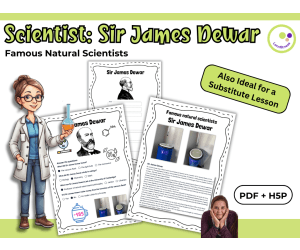
Sir James Dewar – A Look at the Scientist Behind the Vacuum Flask
Life Sciences, Science, STEM, Social Studies, Biographies, Inventors, Basic Science, Physics, Chemistry, Technology, Grade 6, 7, 8, 9, 10, 11, Worksheets, Worksheets & Printables, Quizzes, Quizzes and Tests, Teacher Tools, Projects, Activities
Sir James Dewar – A Look at the Scientist Behind the Vacuum Flask Comprehension Activities A short reading and task-based resource for grades 7–10 science classrooms (PDF + H5P) 🧪🌡️ A printable and digital resource for grades 7–10 science and cross-curricular teaching 🧪🧠 This resource introduces students to Sir James Dewar, a Scottish chemist and physicist best known for inventing the Dewar flask – a forerunner of the modern thermos. His work in low-temperature chemistry and physics helped pave the way for cryogenics and many everyday technologies we take for granted today. The material is designed to be flexible and easy to use. It centers on a short, student-friendly informational text and includes structured follow-up tasks that support comprehension and encourage independent thinking. Whether you're working in a chemistry unit or simply want to connect scientific tools to the people who developed them, this resource fits in with very little preparation needed. What’s included: Informational text about the life and work of James Dewar Student worksheet for creating a personal scientist profile Quiz questions to check understanding (with solutions) Two extension tasks for optional pair or individual work: – Students write their own questions – Partner exchange and answer Formats: – PDF (ready to print or display) – Editable DOCX (text only) – H5P version for digital classrooms (text-based, no images) How it works in class: You can use this resource to complement lessons on scientific inventions, energy, temperature, or lab equipment. I’ve also used it when I needed a calm, structured reading activity that students could complete independently. The extension tasks are helpful when you want to build in peer exchange without needing new materials. The H5P format is useful in digital settings and supports self-paced learning. Everything is ready to go – just print, project, or upload. A simple and effective way to explore the link between science history and the tools we still use today. Have fun exploring the world of science with your students! Warmly, Lernfitness Did You Know? I teach with a certified therapy dog, and together we focus on creating a positive and inspiring learning environment.
Author Lernfitness
Rating
Tags Science, Famous Scientists Lesson, H5P, Interactive Science Exercises, STEM, Scientists, Chemistry, Lab Equipment, Sir James Dewar, Dewar Flask

Mini Beast Research Activity
Science, Earth and Environmental Sciences, Environmental Science, Grade 3, 4, 5, 6, 7, 8, 9, 10, 11, Activities
Activity Introduction An amazing activity designed for the students to learn more about STEM. Mini Beast Research Do you like STEM subjects? what is your favorite one? Have you ever tried to plant a seed? If yes, tell us more about it. Or have you ever tried to invent something? If yes, tell us more about it. And how do you think it will help us? Have you ever seen a microorganism under a microscope? What was it? And how it looked like? Mathematics is a marvelous subject. Let' sharpen our brains and solve some equations. Do you like timetable tricks? What is your favorite one? Do you know how to code? Have you ever created an app or a game before? If yes, how was it like? Mini Beast Research Activity The activity is perfect for encouraging the researching skills for the students, while learning more about this fantastic topic. Mini Beast Research This friendly designed worksheet is suitable for students at school, homeschooling, and as a group activity. Instructions Can you go to hunt some mini beasts in nature? Put a tick next to their habitat. Next, draw or glue a picture of them. Format Available in a PDF format.
Author Educational Voice
Tags Mini Beast Research Activity, Mini Beast Research, Mini Beast, Mini Beast Facts, Mini Beast Facts For Kids, Environment, Environment Facts, Environment Facts For Kids, Environment Activity

A New Me (with students) Photoshop Activity
Science, Technology, Grade 7, 8, 9, 10, Activities
Students will work with digital tools in the A New Me Photoshop Activity . Students will use the faces of five other students to build a new face for themselves. Step by step directions are included.
Author OK Products
Tags A New Me, Science Activity, Computer Project, Technology Lesson, Photoshop, Photopea, Mobile Applications, Digital Tools, Graphic Designs
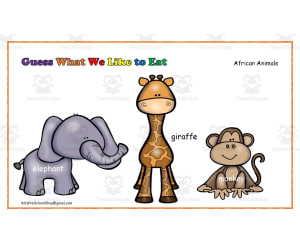
Guess What We like to Eat! African Animal learning Activity
Science, Life Sciences, Animals, Kindergarten, Preschool, Grade 1, 2, Activities
Guess What We like to Eat! African Animal learning Activity Spark your students' creativity and love for animals with our captivating African Animal eating habits resource. This comprehensive collection features 5 unique pages, each showcasing a different animal waiting to be matched to their favorite foods. Match the variety of foods to these exciting animals: elephant giraffe monkey leopard zebra wild dog rhino lion ostrich black mamba antelope hippo Let's explore the various ways students can benefit from and utilize this resource: Fine Motor Skills:Improve students' fine motor skills and hand-eye coordination as they carefully examine each animal and what they like to eat. Build writing skills by tracing the names of the animals. Relaxation and Mindfulness:Engage students in a calming and therapeutic activity that promotes relaxation and mindfulness, allowing them to focus on the present moment. Animal Education:Introduce students to a diverse range of animals and their unique characteristics, promoting curiosity and expanding their knowledge of the animal kingdom. Vocabulary Development:Enhance students' vocabulary by discussing the animals depicted on each page, introducing new terms and fostering language skills. Group Activities:Foster collaboration and social interaction by organizing group sessions where students can share ideas, techniques, and completed work. Ignite a sense of wonder and appreciation for animals through our Animal diet pages. Whether for relaxation, artistic expression, or educational purposes, these pages provide a delightful and engaging activity for students to explore the beauty of the animal kingdom. Start researching and exploring with your students today! Included in this Guess What We like to Eat! is 1 PDF file includes 7 pages.
Author KD's Kids School Shop
Tags Animal Kingdom, Animal Foods

TinkerCAD step-by-step instructions for Rocket
Special Resources, Science, Technology, Engineering, Computer Science, Grade 5, 6, 7, 8, 9, 10, 11, 12, Activities, Projects
TinkerCAD step-by-step instructions for Rocket. Students only need to know the bare basics to complete this. I tested this with a fifth-grade class and most could complete it with no help. Designed to print with no supports for easy printing. Include TinkerCAD tool guide! Has a content page. Great beginners’ tool for learning to make 3D models and learn TinkerCAD. TinkerCAD is a free online program that makes 3D model that work on 3D printers, laser etching machines, water jets, plasma cutters and many more!! Tinkercad is an easy-to-use, browser-based computer-aided design (CAD) software developed by Autodesk. It is primarily used for creating and designing 3D models, particularly in the field of 3D printing. Tinkercad is popular among beginners and hobbyists due to its intuitive interface and simplified tools. Here are some key features and uses of Tinkercad: 1) 3D Modeling: Tinkercad allows users to create 3D models by combining basic shapes and manipulating them using tools such as scaling, rotating, and moving. It provides a wide range of primitive shapes like cubes, spheres, cylinders, and more, which can be customized to create complex designs. 2) Design Customization: Users can apply various modifications to their designs, including resizing, rounding edges, adding text, creating holes, and aligning objects. These tools help in refining the models and making them suitable for specific purposes or fitting them with other components. 3)Import and Export: Tinkercad supports the import of existing 3D models in STL and OBJ formats, allowing users to modify and incorporate them into their designs. It also offers export options to save the designs as STL files, which are widely used in 3D printing. 4) Collaboration and Sharing: Tinkercad provides features for collaboration, allowing multiple users to work on the same project simultaneously. It enables real-time sharing and editing, making it convenient for team projects or educational purposes. 5) Electronics Integration: One notable aspect of Tinkercad is its integration with electronics. It offers a range of electronic components, including resistors, LEDs, motors, and microcontrollers, which can be used to create interactive models and prototypes. Users can simulate circuit connections and test their designs before implementation. 6) Educational Tool: Tinkercad is widely used in educational settings, particularly for teaching students about 3D design, modeling, and prototyping. Its simple interface and beginner-friendly tools make it accessible to users of all ages and skill levels. Overall, Tinkercad is a versatile and user-friendly CAD software that allows individuals to create and customize 3D models. Whether you're a hobbyist, student, or professional, Tinkercad provides a valuable platform for designing, prototyping, and exploring the world of 3D printing and modeling. Total pages: 101 pages Commands to be learned: Group Ungroup Align Mirror Duplicate Holes Solids Rotate Move Drop Subjects: Geometry Engineering Career and technical education Types: Projects Handouts Printables
Author MontyWorks
Tags TinkerCAD, 3D Printing, 3D Printer, Projects

Dog Mandala Coloring Page Worksheet activity
Common Core, Life Studies, Animals, Life Sciences, Science, Not Grade Specific, Activities, Worksheets & Printables, Coloring Pages, Worksheets
Use the Mandala Coloring Page Worksheet Activity to engage your students by combining creativity, calmness, and education into an enjoyable, easy-to-use learning resource. Colouring mandalas encourages learners to engage their focus and imagination as they explore their chosen topic while using the mandala-style design they have created. Colouring mandalas to build coordination between the eyes and hands, improve fine motor skills and enhance attention to detail as well as foster creativity and the ability to express oneself artistically. The calmness and structure of this type of design allow learners to slow down, focus and enjoy a more meaningful learning experience. You can incorporate the Mandala Colouring Page Worksheet Activity into many different subject areas such as science, social studies, art, and social and emotional. As an ideal way to assist early finishers or facilitate quiet learning, the Mandala Colouring Activity provides an excellent opportunity to provide students balance between relaxation and learning. What are the Aims of the Mandala Colouring Activity? The Mandala Colouring Page Worksheet Activity aims to: Enhance understanding of a specific subject. Strengthen fine motor skills and pencil grasp ✏️ Help develop focus, patience, and concentration 🧠 Encourage artistic confidence and develop creativity 🎨 Allow students to experience a mindful, stress-reducing educational experience. Completing a mandala is a tactile and fun way to create a fun and engaging method of learning for a wider audience. Steps for Using the Mandala Colouring Page Worksheet Activity The following procedures should be followed to utilize the Mandala Colouring Page Worksheet Activity. The Mandala Colouring Page Worksheet Activity can be accomplished in five simple steps. 1. Print the Mandala Colouring Page. 2. Discuss or introduce key concept(s) associated with the theme. 3. Have students colour in an orderly fashion and pay close attention to symmetry. 4. Discuss relevant vocabulary or concepts related to the theme. 5. Extension of learning: labelling, writing prompts, or creative designs are optional and encouraged. ✅ General Audience All ages and learning levels. Suitable for: Individual or paired work Learning centres Activities for early finishers Mindfulness/calm down activities Homework or take-home assignments Lesson plans for substitutes Use in the Classroom The Mandala Colouring Page Worksheet Activity can be used in many different settings and serves as a versatile tool for both classroom and home. Variations and Extensions to the Mandala Colouring Page Worksheet Activity in the Classroom Creative/Visual Art Extensions 🎨 Design a new mandala focused on the topic. Add images or patterns that represent significant concept(s) Mindful/Intentional Colouring Time ⏳ Establish a time for quiet, deliberate colouring. Writing/Reflection ✏️ Write a short statement, fact, or reflection pertaining to the studied theme. Creative Thinking 🧩 Create, design, or think of new ideas inspired by the theme. Skills Developed Through the Mandala Colouring Page Worksheet Activity: Fine Motor Skills Hand-Eye Coordination Focus & Concentration Creativity & Self-Expression Cross-disciplinary Use of the Mandala Colouring Page Worksheet. File Type / Info to Use When Printing File ✔️ Able to Print as PDF Document ✔️ Pages are Black & White – Save Ink While Printing ✔️ Print Out For Your Classroom Easily ✔️ No Preparation Needed For Teachers To Get Started Teacher Strategies 🌟: Encourage students to take their time, pay attention to the details, and have fun while creating. Coloring Mandalas can be used as an avenue to assist students in their learning by providing a calming, community-oriented environment and motivating the students to remain focused on their work and encourage creative thought within the students as they complete their designs.
Author Classsim
Rating
Tags Mandala, Coloring, Page , Worksheet , Activity, Mandala Coloring Page, Mandala Coloring Page Worksheet , Mandala Coloring Page Worksheet Activity
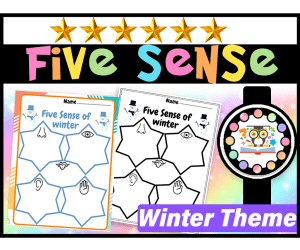
WInter Five Senses Worksheets Activities
Science, Grade 1, Worksheets & Printables, Teacher Tools, Classroom Decor, Activities
This interactive and attractive set WInter Five Senses Worksheets Activities Pages learners develop their original WInter Five Senses Worksheets Activities this set contains 2 pages in this set, each in each a different WInter Five Senses Worksheets Activities of dedicated WInter Five Senses Worksheets Activities Pagesto ensure a fun and structured approach to using a fun and type of work that useful; Each card is fun this edited set of WInter Five Senses Worksheets Activities is built in an elegant style that attracts attention this interactive and attractive set of WInter Five Senses Worksheets Activities designed to help young learners develop their original WInter Five Senses Worksheets Activities skills through WInter Five Senses Worksheets Activities sexercises This set contains 2 pages. these printable Worksheets offer useful courses, this provides a useful course-rich practice, it is designed to help using resource easily to learn about activities WInter Five Senses Worksheets Activities a fun and interactive manner. A collaborative learning activity added students. PDF format
Author LAMO
Rating
Tags Health, Science, Activities, Worksheets, Printables