



3,982 products added recently
Page 53 - Science Activities
Ignite your students' interest in science with activities that make learning interactive and exciting. This collection offers experiments, demonstrations, and inquiry-based projects covering various scientific fields. By integrating these science activities into your lessons, you can encourage critical thinking, foster curiosity, and deepen understanding of scientific concepts.

 Show filters

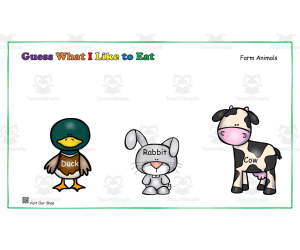
Guess What We like to Eat! Farm Animal Learning Activity
Science, Life Sciences, Animals, Kindergarten, Preschool, Grade 1, Activities
Guess What We like to Eat! Farm Animal learning Activity Spark your students' creativity and love for animals with our captivating Farm Animal eating habits resource. This comprehensive collection features 5 unique pages, each showcasing a different animal waiting to be matched to their favorite foods. Match the variety of foods to these exciting animals: · Duck · Rabbit · Cow · Pig · Mouse · Dog · Bird · Cat · Horse · Frog · Goat · Hen Let's explore the various ways students can benefit from and utilize this resource: Fine Motor Skills:Improve students' fine motor skills and hand-eye coordination as they carefully examine each animal and what they like to eat. Build writing skills by tracing the names of the animals. Relaxation and Mindfulness:Engage students in a calming and therapeutic activity that promotes relaxation and mindfulness, allowing them to focus on the present moment. Animal Education:Introduce students to a diverse range of animals and their unique characteristics, promoting curiosity and expanding their knowledge of the animal kingdom. Vocabulary Development:Enhance students' vocabulary by discussing the animals depicted on each page, introducing new terms and fostering language skills. Group Activities:Foster collaboration and social interaction by organizing group sessions where students can share ideas, techniques, and completed work. Ignite a sense of wonder and appreciation for animals through our Animal diet pages. Whether for relaxation, artistic expression, or educational purposes, these pages provide a delightful and engaging activity for students to explore the beauty of the animal kingdom. Start coloring and exploring with your students today! Included in this Guess What We like to Eat! is 1 PDF file includes 7 page
Author KD's Kids School Shop
Tags Animals, Farm Animals, Tracing Words, Writing Skills, Preschool, Kindergarten, Homeschool, Daycare

Weather Chart and Science Activity: Record your daily weather!
Science, Earth and Environmental Sciences, Elementary, Early Learning, Classroom Decor, Posters, Activities
Turn your daily weather into a rainbow! Check out the weather type, match it to the color key, and fill in the weather chart. Kids love coloring in the chart and seeing how the colors change throughout the seasons. Also included are weather type cards with corresponding colors. This helps kids connect the weather type to the color on the chart! I used this with my 3rd graders and my 2 year old son at separate times. My 3rd graders were able to fill in the chart on their own each day, then tuck it away into a science folder. They used the data after a few weeks to chart the weather types and make a project from it. My 2 year old son really loved the weather cards. He liked looking outside each day and matching the sky to the card. I helped him fill in the correct box on the chart. This is a flexible free activity pack that kids of all ages will love!
Author ARTventurousanimals
Rating
Tags Weather, Weather Chart, Science Chart, Weather Types, Daily Weather, Weather Activity, Circle Time
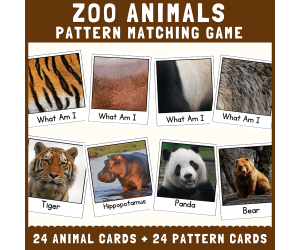
Zoo animal skin fur pattern matching cut match science activities
Animals, Life Sciences, Science, Pre-K, Elementary, Games, Activities, Centers
Make learning about animal coverings fun and interactive with this Zoo Animal Skin & Fur Pattern Matching Activity! Students will identify and match different zoo animal skin, fur, and body covering patterns while building observation, classification, and life science skills. I like using this resource during animal science units, zoo animal studies, animal adaptations lessons, life science centers, preschool science activities, and homeschool learning. It’s a hands-on cut-and-match activity that gives students an engaging way to observe animal patterns and coverings. What You Will Get This printable animal pattern matching resource helps students recognize and match zoo animals with their unique skin, fur, and body covering patterns. What’s Included in this Resource? • Zoo animal picture cards • Animal skin and fur pattern cards • Cut-and-match activities • Animal covering recognition practice • Pattern matching activities • Student-friendly printable pages • Easy-to-use science center format This resource is perfect for: • Zoo animal science units • Animal coverings lessons • Life science activities • Animal adaptations studies • Science centers • Preschool and elementary science • Hands-on matching activities • Homeschool learning Why you will love this? • Easy to print and use • Builds observation and matching skills • Introduces different animal body coverings • Encourages visual discrimination and classification • Makes animal science hands-on and interactive • Great for science centers and independent learning This Zoo Animal Skin & Fur Pattern Matching Activity is a fun way for students to observe animal coverings, identify unique patterns, and strengthen early science and classification skills through hands-on cut-and-match activities.
Author Perfect_Printables
Rating
Tags Animal Science, Life Science, Animal Adaptations, Science Activities, Zoo Animals, Animal Pattern Matching, Skin Fur, Zoo Animal Game, Animal Patterns, Animal Skin Activities
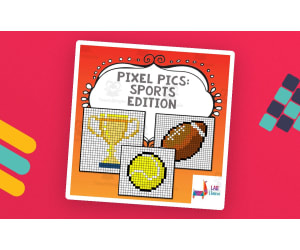
Pixel Pics Spreadsheet Activity: Sports Edition
Science, Technology, Computer Science, Not Grade Specific, Activities
Whether students are in the classroom or in the computer lab , you may be on the hunt for some computer skills resources that you know students will love. Many of our students, young and old, enjoy putting their tech skills to use. It is always impactful when we can give them opportunities to show what they know and/or teach them new things! This is a Pixel Pics Spreadsheet Activity. It is the Sports Edition. This activity would work for any age of students who have learned about different computer applications, including Microsoft Excel. Students will be given access to 1 spreadsheet. On this spreadsheet, there are 5 tabs. Students can complete all 5 tabs, you can assign which tabs you want them to complete, or you can let the students choose which ones to complete. The tabs include: -Football -Tennis Ball -Soccer Ball -Basketball -Trophy On each tab, students will follow the color code to complete the picture. A completed example spreadsheet is included. Here are more resources to enjoy in my store: https://teachsimple.com/product/excel-stories-pirate-edition-computer-science-project https://teachsimple.com/product/excel-stories-detective-edition-computer-science-project https://teachsimple.com/product/finger-placement-practice-teaching-typing-lesson https://teachsimple.com/product/spot-the-differences-activity Check out many more resources at my storefront here: https://teachsimple.com/contributor/lab-llama-computer-skills-resources I can be contacted for questions and concerns at labllamasam@gmail.com .
Author Lab LLama - Computer Skills Resources
Tags Pixel Pics, Spreadsheet Activity, Sports, Vocabulary, Microsoft Excel, Google Spreadsheets, Color By Code, Coloring Page

Solar Eclipse Activities for Elementary School & Beyond
Science, Earth and Environmental Sciences, Grade 4, 5, 6, Activities, Teacher Tools, Worksheets & Printables
Studying the solar system is a wonderfully engaging topic for all students of all ages. One phenomenon to look closer at is the Solar Eclipse. They can be viewed from various places on Earth with the proper precautions. Use this resource to teach students about: solar eclipse safety solar eclipse history solar eclipse logistics and so much more! This resource can be adapted and used for students of all ages. There are a lot of hands on learning included with minimal material required. If you do not have the required material (yard stick, Styrofoam balls and flashlight) it is totally fine! You can improvise OR completely omit. Through these activities, students will be able to visualize the eclipse and understand the positioning of the sun, moon and Earth when a solar eclipse occurs. Students can read through the Folklore that describes what Ancient civilizations thought was going on when a solar eclipse occurred so they can really dive into the history of solar eclipses. Pictures and videos are also included to help students visualize what is happening millions of miles away in our sky. Full teacher directions and answer keys are included. Have fun learning about solar eclipses!
Author Big Apple Teaching
Tags Solar Eclipse, Pinhole Projector Craft, Solar Eclipse Vocabulary, Reading Comprehension, Station Rotation, Creative Writing, History, Solar System, Sun, Moon
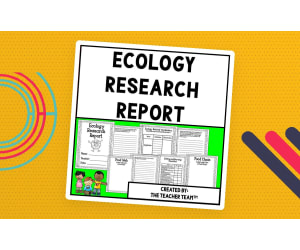
Ecology Project | Ecology Research Report
Science, Earth and Environmental Sciences, Environmental Science, Research, Grade 4, 5, 6, Projects, Activities
Discover the captivating world of ecology with our all-encompassing Ecology Research Report resource! This engaging, 35-page digital toolkit is expertly crafted to simplify report writing while targeting higher-level thinking skills in line with Common Core Essential Questions. Consisting of a diverse range of vocabulary exercises, worksheets, organizers, and assessment tools, the versatile package allows you – the educator – to handpick questions tailored to your students' unique needs and abilities. Embark on a journey delving into various subjects such as animal habitats and ecosystems to food chains and biomes. Our comprehensive compilation also features one-of-a-kind activities that involve comparing desert biomes with tropical rainforests or examining real-life ecosystems. To ensure a fulfilling learning experience for both students and educators alike, we have included numerous features like title page templates; extra blank pages for extended answers or artistic expression; guided research templates specific for information gathering and note-taking (bullet/lined forms); bibliography guidance/templates; all paired with an editing checklist & performance task rubrics aligned with Common Core ELA Standards. Enhance their understanding of ecological concepts whilst nurturing adaptive thinking skills today! The resource comes as a single PDF file.
Author The Teacher Team
Tags Ecology Prject, Ecology Research Report, Animal Habitat, Ecosystem Writing, Food Chain Printable

What Is The Weather Like Today? Video Storybook
ELA, Science, Earth and Environmental Sciences, Environmental Science, Kindergarten, Preschool, Read Alouds, Activities
There are so many different types of weather: sunny, cloudy, rainy, snowy and more! Which one is your favorite and what activities do you like to do? From sledding when it’s snowing to having a picnic on a cloudy day, young learners will enjoy the repetitive text and adorable illustrations. The perfect book for the aspiring meteorologist. Learn simple Spanish words and phrases with the corresponding version ¿Cómo Está El Tiempo Hoy?
Author Twin Sisters Digital Media
Tags Weather, Learn, Listen, Cloudy, Forecast
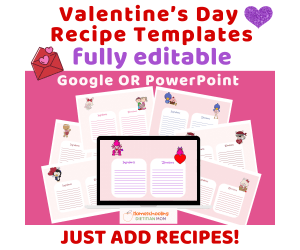
Recipe Book and Cookbook - Life Skills Template - Valentines Day
Life Skills, Special Resources, Writing, ELA, Language Development, Strategies, Reading, Technology, Science, Resources for Teachers, Middle School, High School, Homeschool Resources, Elementary, Templates, Teacher Tools, Centers, Activities, Crafts, Projects, Task Cards, Worksheets & Printables
Editable Recipe Templates - Create a Recipe Book or a Cookbook - 10 Unique Love-Themed Template Designs for Valentines Day (or any other time of year as is appropriate). Each recipe template: Can be printed with the chosen recipes handwritten onto the cards Can be edited using Google Slides or PowerPoint - Font styles can be changed and more. Links to recipe ideas are included as well. This is a project that can be worked on individually or as a team. Students will practice using Google Slides or PowerPoint software which will increase their knowledge of creating products in these creative software programs. Students will practice typing and/or handwriting. Students can give the finished products to a special friend or family member. Students can try out the recipes in the school kitchen as is possible. A lovely home economics and family consumer sciences project. Students will be developing research skills when they utilize the included links to find recipes and choose ones that they think sound yummy. Finding, choosing, and trying out new recipes are all life skills that will be helpful into adulthood, especially if students are given the opportunity to try out any of the recipes. Students will have fun doing this crafty, unique activity, and they will be learning at the same time. Recipes contain ingredients in specific amounts (math), and have to be followed like a lab experiment to complete and end up with a successful finished product. Two zipped files are included: one non-editable pdf file and one editable PowerPoint file that can be used with Google slides which is a free program.
Author Homeschooling Dietitian Mom
Tags Life Skills Template, Templates, Teacher Helps, Valentine, Health Templates, Home Economics, Family And Consumer Science, Food And Nutrition, Writing Prompts, Research Projects

Biomes Science Reading Article - Grades 5-7
Science, Earth and Environmental Sciences, Earth Sciences, Grade 5, 6, 7, Activities
This reading is geared towards students in grades 5-7 and will help them understand biomes in general as well as specific biomes. The specific biomes included in the reading are; Aquatic, Grassland, Forest, Desert, and Tundra. This reading is perfect as an in-class assignment, homework, or as a sub plan if you're away. It can be incorporated into your regular plans or used as a last-minute emergency activity . The reading will take your students between 4-60 minutes and includes a variety of questions as well as an answer key for your reference. Readings are important because they give your students a chance to learn about the topic in a more applicable way and a different manner. It allows them to develop their scientific literacy skills which is a skill that is not often taught in today's classrooms. This reading contains content that is age-appropriate and is about 3 pages in length including the questions. The reading has about 7 questions along with the answer key. In my classroom, I typically assign my readings as completion marks or I will mark 1-3 specific questions for each student. This allows me to reduce my grading time while still providing a useful teaching tool for my students.
Author Teach With Fergy
Tags Biomes, Aquatic, Grassland, Forest Biomes, Desert Biomes, Tundra Biomes

Whales Reading Comprehension Passage - Cored Ed Encyclopedia
ELA, Language Development, Reading Comprehension, Reading, Pre-Reading, Science, Animals, Life Sciences, Vocabulary, Writing, Grade 2, 3, 4, 5, Worksheets & Printables, Worksheets, Teacher Tools, Centers, Activities, Writing Prompts, Assessments, Quizzes and Tests, Quizzes, Lesson Plans
This whales reading comprehension with lesson plan includes: Visualization (on the front cover) Start your lesson by taking a minute to think and share something about the topic. Read the script aloud (slowly), perhaps prepare some music or sound effects. Student close their eyes and let their imaginations wander. Students open their eyes, read the question aloud and give them a few minutes to complete. Ask a few students to share or keep answers until the end to compare with what they learn in the passage. Quick pause—thousands of Cored Education products are included with your TeachSimple membership. Download links and encyclopedia index available here. Pre-Reading Trivia Students will write down one thing they already know about the subject and then read five more facts and discuss. These facts are fun, and the students will enjoy learning about the subject before reading more. Give 1 minute for students to write what they already know (no pressure—best guess is fine). Read the five facts together. After each fact, do ask a student for their opinion, was it surprising? Set a purpose by asking students to highlight/underline one fact they want to learn more about during the reading. Reading Passage The text is a high-interest reading passage with set paragraphs, roughly three to four paragraphs long. It contains a variety of themes about the topic, anywhere from history to technology. The passage is between 250 and 350 words in length. First, ask students to look at the headings and see what they’ll learn about today. What do they know about the topic/heading? First read options: Teacher read-aloud (best for support). Partner reading (paragraph by paragraph). While reading, students underline important details, and vocabulary words they think may come up in the questions section. Mixed Questions The first question page contains four multiple-choice questions, each with a choice of four answers, and three written response questions that require a sentence or two from the student. Students complete the mcqs first independently, then review quickly as a class. For the 3 written responses, try to get students giving the answer with some form of evidence: “I think ___ because the text says ___.” If students get stuck, send them back to check the passage. Vocabulary Questions Practice seven key words from the text in this section across two activities. First section is scrambled words where students will unscramble three words given a clue for each. The second section is a word to meaning matching activity. Before starting, have some students read out words they underlined in the passage. Ask students to say the word and read aloud the sentence(s) around each word. Ask students to do scrambled words and the matching exercise in pairs then go through answers as a class. For the scrambled spelling task, get four pairs to come up to the board and write the words for extra practice with the other student reading out the clue. For the matching task, prompt students to give full sentences: “I matched ___ with ___ because ___.” Creative Writing In this question, the student will be required to write a five to eight sentence paragraph on a question related to the topic. Before starting, ask students write down 3 key ideas they are going to include in their piece. Ask students for ideas to share around the class to help those struggling. Pro writing expectations: 5–8 sentences At least 2 facts or details from the passage At least 2 vocabulary words from the previous page Students read their paragraphs while classmates listen for facts and vocabulary words. Extension Activities This page is optional for fast finishers or to take home. There are several activities, each one requiring a different skill. Do some, do none, do all, completely optional - but you will feel reassured knowing every possibility is planned for. Includes summary writting question. Answer Key There are answers for the multiple-choice questions, written response questions have sample answers, vocabulary answers and if there is a summary question then a sample summary will be provided as well. Lesson Plan Included Customized lesson plan for this lesson is included. Lesson Snapshot Title: Whales Genre: Nonfiction (informational text) Subject: Life Science / Informational Reading Primary Topic: Whales as mammals, feeding types, fossils, human impacts Estimated Guided Reading Level (A–Z): Q What This Lesson Teaches Best Whales are mammals that breathe air with lungs through blowholes , so they must surface as part of everyday life. Whales can have two different feeding tools : baleen plates that strain food like krill, or sharp teeth used to grab fish or squid. Fossils provide evidence that early whale relatives were land mammals and changed over millions of years to live in the ocean. Human activity affects whales today (fishing gear tangles, ships strike, and loud noise can fill the water where whales communicate), and scientists use tracking tools to help protect them. Learning Goals Students will explain why whales rise to the surface using details about breathing and blowholes. Students will compare how baleen whales and toothed whales get food, using evidence from the text. Students will describe what fossils show about where whales came from long ago. Students will identify one modern problem that can make whale communication harder, based on the passage. Students will describe at least one way scientists track whales to protect them, using details from the text. Key Vocabulary From the Text blowholes — nostrils on top of a whale’s head. baleen — mouth plates that strain tiny food from water. krill — tiny sea creatures baleen whales hold onto. streamlined — shaped to move smoothly through water. fossils — old remains in rock that give clues. FULL CATALOG OF DOWNLOAD LINKS AND ENCYCLOPEDIA INDEX HERE
Author Cored Education
Rating
Tags Vocabulary, Reading Comprehension, Reading Passages, Lesson Plans, Ela Lesson Plans, Reading Comprehension Lesson Plans, Pre-reading, Science Lesson Plans, Life Science, Animals

Life Science Reading Comprehension Passage: Muscular System (PDF)
Science, ELA, Reading, Reading Comprehension, Strategies, Resources for Teachers, Life Sciences, Biology, Human Body, Grade 6, 7, 8, 9, 10, Writing Prompts, Worksheets & Printables, Centers, Activities, Teacher Tools, Assessments, Quizzes and Tests, Quizzes, Tests
Life Science Reading Comprehension Passage and Questions: Muscular System (PDF) This very engaging science reading passage is about the muscular system and how different types of muscles help the body move and function . It explains how skeletal muscles move bones, how smooth muscles work automatically inside organs and blood vessels, and how cardiac muscle pumps blood through the body. Students also learn how muscles work in pairs, how the nervous system sends signals that control contraction, and why exercise, protein, and rest are important for muscle strength and recovery. This passage is designed to bridge the gap between science and literacy by strengthening reading comprehension while sparking scientific curiosity in middle school students. It blends English Language Arts skills with accurate science content, helping students build background knowledge, understand key concepts, use evidence from the text, and explain scientific ideas clearly. This resource supports science classroom practice while also reinforcing important literacy skills such as main idea, vocabulary, comprehension, and summarizing. Ideal for interdisciplinary learning in ELA and Science. Suitable for Grade 9 review, too! Student Tasks for The Passage: 10 multiple-choice questions targeting main idea, key details, science concepts, comparison, and real-world applications 10 True/False statements to check understanding and address common misconceptions 5 text-based short-answer questions that require students to explain important ideas from the passage 5 vocabulary matching items with clear, student-friendly definitions 1 summary prompt that asks students to condense the central ideas accurately Full answer key for every section Available Formats for this Resource Fillable PDF Word Docs Google Docs FULL CATALOG OF DOWNLOADING LINKS HERE Product Details Length: 7 pages total Grades: 6–8, also suitable for Grade 9 review Use cases: close reading, stations, homework, intervention, test prep, and sub plans Standards support: Reinforces informational-text skills and supports NGSS-style sense-making by helping students read scientific explanations, connect evidence to key concepts, interpret real-world examples, and explain cause-and-effect relationships in science. Why Teachers Choose This Set Authentic science content paired with rigorous literacy practice Consistent task structure across all passages for easier planning and smoother student routines Clear, age-appropriate writing that builds confidence without oversimplifying Other Science Reading Collections and Topics You May Find in the Store: 1. Astronomy & Space Science 2. Volcanoes, Rocks, & Mountains 3. Rock Cycle, Soil, & Sinkholes 4. Mars, Glaciers, & Antarctica 5. Water Cycle, Acid Rain, & Wastewater 6. Insects, Animals, & Ecosystems 7. Bioluminescence & Insects 8. Animal Skin, Cats, & T. Rex 9. Human Body and Senses 10. Health & Applied Bioscience 11. Waves, Light, & Imaging 12. Electricity & Energy 13. Motion & Materials 14. Chemistry and Materials Science 15. Electromagnetism 16. Acids and Bases 17. Gas Laws 18. Biotechnology 19. Periodic Trends 20. Protists and Fungi 21. Microevolution 22. Blood 23. Chemical Bonding 24. Magnets 25. Muscles 26. Nuclear Chemistry 27. Electromagnetic Devices 28. Epigenetics 29. The Law of Conservation of Mass 30. Atomic Models 31. Isotopes and Ions 32. Light 33. Human-Environment Interaction 34. Theory of Evolution 35. Photosynthesis 36. Origins of Life and Early Earth 37. Gene Expression and Regulation 38. Thermochemistry 39. Allergies 40. Coevolution 41. Birth to Adulthood 42. Cells 43. Entropy and Free Energy 44. The Human Brain 45. Mixtures and Solutions 46. Invertebrates 47. Zoo Animals 48. Biochemistry 49. Animal Behavior 50. Population Ecology ...and many more engaging science reading passages that cover intriguing and important topics designed to spark curiosity and support student learning. Use this passage to reinforce ELA skills in science, to add literacy to your lessons, and to support independent work. The passages strengthen main idea, evidence use, vocabulary in context, inference, cause and effect, and summary writing. With ready-to-use assessments and complete answer keys, you can provide focused practice that is simple to run and fast to review.
Author Middle & High School - CORED Education
Rating
Tags Middle School, Reading Comprehension, Reading Strategies, ELA, Centers, Reading Passage, Assessments, Vocabulary, Muscular System, Life Science

Aquatic Biomes Activity – Google Classroom Lesson
Science, Life Sciences, Biology, Grade 7, Activities
Aquatic Biomes Learning Activity introduces middle school students to the major aquatic biomes on Earth through an engaging Google Classroom lesson. Students will enjoy an interactive slideshow to explore freshwater and marine biomes. A comparison chart facilitates deeper learning as learners document details about each unique habitat. Implementation ideas include using it to launch a new unit as an introductory whole-class activity or for small groups to complete independently. The well-organized PDF provides access to everything needed to implement this activity seamlessly in a digital classroom, including answer keys for easy self or peer review. This versatile aquatic biomes resource aligns to 7th grade science standards for teaching environmental systems and biomes.
Author Sarah Miller Tech
Rating
Tags Aquatic Biomes, Graphic Organizers, Biology, Google Classroom, Aquatic Biomes Worksheets, Aquatic Biome Worksheets

ABC OF ANIMALS | FREE MINIBOOK
Language Development, ELA, Writing, Literature, Reading, Creative Arts, Science, Animals, Life Sciences, Adult Education, Early Learning, Elementary, High School, Homeschool Resources, Middle School, Not Grade Specific, Pre-K, Activities, Classroom Decor, Worksheets & Printables
ABC OF ANIMALS | FREE MINIBOOK DESCRIPTION OF THIS PRODUCT: 1) What is the title of this resource? This resource is titled "Educational Resource for Better Learning" developed by EDITORIAL ARENAS EDUCATIVAS. 2) How many pages does the file contain in total? This educational document contains enough pages to make this resource ideal for promoting fun and successful learning. 3) Does this material allow for custom editing? This educational document is available in PDF format, so you cannot edit it. You simply need to download and then print it. ABOUT THE AUTHOR: Thank you for choosing EDITORIAL ARENAS EDUCATIVAS! Our mission is to deliver a variety of learning resources that make education enjoyable and effective for children. Don't forget to visit our store to explore products for reading, writing, math, and Spanish language skills. PLEASE VISIT MY STORE, BECAUSE I HAVE A LOT OF FREE RESOURCES FOR YOU, FOR EXAMPLE: ARRIBA-ABAJO: https://teachsimple.com/product/arriba-abajo-up-down-16-spanish-flashcards DELGADO-GRUESO: https://teachsimple.com/product/delgado-grueso-fat-thin-16-free-spanish-flashcards SPANISH VEGETABLES: https://teachsimple.com/product/spanish-vegetables-flashcards-12-free-flashcards SECONDARY AND COMPLEMENTARY INFORMATION OF THIS PRODUCT: 1) What specific skills are developed using this resource? Students will be able to develop their attention, concentration, creativity, and imagination skills. It will also allow students to develop their cognitive skills such as comprehension, analysis, and others. 2) Who is the ideal audience for this document? This document and/or teaching resource is primarily intended for young students, meaning those between the ages of 5 and 12, in other words, students in early childhood and/or primary education. However, it can also be used by the general public if required. 3) What recommendations are there for making the most of this resource? To make the most of this resource, I recommend first analyzing it, then looking at the specific topic your student needs to learn and assess whether my resource addresses it. I also ask you to consider how you will print it.
Author EDITORIAL LAURA EDUCA
Rating
Tags ALPHABET, TRACING, TRACING LETTERS, FREE, FREE RESOURCES, ABC, ABC MINIBOOK, MINIBOOK

Human Body Word Searches (PDF)
ELA, Language Development, Resources for Teachers, Vocabulary, Spelling, ESL, Human Body, Life Sciences, Science, Grade 2, 3, 4, 5, Worksheets & Printables, Worksheets, Teacher Tools, Centers, Activities, Word Searches
Wordsearch Series This wordsearch series is designed for students in grades 2–5. Each set of wordsearches is built around a clear vocabulary theme, helping students develop word recognition, improve spelling, and boost topic-related understanding through engaging visual puzzles. Every wordsearch also includes a fun hidden shape for students to guess—adding an interactive twist to traditional vocabulary practice. These wordsearches are student-friendly, classroom-ready, and perfect for integrating into literacy warmups, seasonal units, fast-finisher tasks, or home learning extensions. Each puzzle reinforces themed vocabulary in a playful, structured format that keeps learners motivated. Human Body Word Search Word List 1. Head & Face Head, Hair, Eyes, Nose, Mouth, Ears, Teeth, Tongue 2. Arms & Hands Arm, Hand, Fingers, Thumb, Wrist, Elbow, Palm, Nails 3. Legs & Feet Leg, Knee, Foot, Toes, Heel, Ankle, Shin, Thigh 4. Inside the Body Brain, Heart, Lungs, Stomach, Bones, Muscles, Blood, Nerves 5. Senses & Feelings Sight, Hearing, Smell, Taste, Touch, Laugh, Cry, Yawn 6. Moving & Actions Walk, Run, Jump, Clap, Hug, Stretch, Bend, Wiggle PDF Version Other versions will appear here when available. Follow the store for the lastest on new products. How to Use These Wordsearches These wordsearches are ideal for: Morning work or early finisher bins Vocabulary centers or anchor activities Holiday or seasonal review lessons Independent literacy stations or take-home enrichment Each puzzle includes a themed word list and a shaped grid for students to complete. Word directions may vary (horizontal, vertical, diagonal), and answer keys are included for easy checking. Optional vocabulary challenges or writing tasks can be added to extend the learning experience. Whether you're reviewing key vocabulary, exploring a seasonal topic, or offering fun literacy practice, these wordsearches provide a flexible and engaging tool to support vocabulary growth in grades 2–5. More Human Body Themed Products CROSSWORDS FULL CATALOG OF DOWNLOAD LINKS HERE Themed Word Search Links Addition PDF Animals PDF Around the Home PDF Birthday PDF Candy PDF Christmas PDF Cinco de Mayo PDF Clothes PDF Colors PDF Days and Months PDF Division PDF Earth Day PDF Easter PDF Easy Word Searches PDF Fall PDF Father's Day PDF Food PDF Geography (Set 1) PDF Geography (Set 2) PDF Geography (Set 3) PDF Graduation PDF Health PDF History (Set 1) PDF History (Set 2) PDF History (Set 3) PDF Human Body PDF Kindness PDF Life Skills PDF Mother's Day PDF Multiplication PDF Science Word Searches (Set 1) PDF Science Word Searches (Set 2) PDF Science Word Searches (Set 3) PDF Shapes PDF Social Skills PDF Spring PDF Sports PDF St. Patrick's Day PDF Subtraction PDF Summer PDF Thanksgiving PDF Transport PDF Valentine's Day PDF Winter PDF Wordsearches in Depth Structure Each wordsearch is crafted around a focused sub-theme and includes a visual puzzle shaped like a related object (e.g., balloon, gift, snowman). Students complete each puzzle using the provided themed word list, strengthening both content knowledge and spelling skills in a highly engaging format. Each completed set includes: A shaped wordsearch puzzle with 10 vocabulary words A student instruction guide with search directions (horizontal, vertical, diagonal) An answer key for teacher support or student self-checking A Did You Know? fact connected to the theme for enrichment or discussion Themes Included The wordsearches cover a wide range of fun, age-appropriate themes, including: Seasons & Holidays (e.g., Halloween, Easter, Valentine’s Day) Math Concepts (e.g., Addition, Number Words) Everyday Topics (e.g., Animals, Weather, School) Special Units (e.g., Health, Earth Day, Sports, Kindness) Each topic is selected to reflect students’ real-life experiences and interests while reinforcing literacy skills and content understanding in a playful, visual way. For similar downloads and other frees, do check out Cored Group on TeachSimple.
Author Cored Education
Rating
Tags Vocabulary, Spelling, Human Body, Body, Head & Face, Arms & Hands, Legs & Feet, Human Body Word Searches, Body Word Searches, Word Searches

Natural Disasters – Lab Station Activity
Science, Earth and Environmental Sciences, Environmental Science, Grade 7, 8, 9, 10, 11, 12, Labs, Experiments, Activities
Natural Disasters Lab Station Activity Bring the science of natural disasters to life in your middle or high school classroom with this engaging lab station activity . Students will rotate through 9 stations testing their knowledge about topics like cloud formation, earthquakes, tsunamis, and climate change. Activities range from hands-on drawing and building to answering questions based on expert videos. With minimal prep required by the teacher, this self-guided experience equips students with the recording sheet they need to document their learning. This versatile resource works for both review and initial knowledge building. The content covers core ideas in environmental science and earth science curricula. As students move through thestations, their creativity and critical thinking skills are put to the test in a meaningful, memorable way. This activity brings interactive learning to a subject that lends itself perfectly to active engagement by students.
Author Teach With Fergy
Tags Weather, Climate, Tectonics, Natural Disasters, Lab Stations
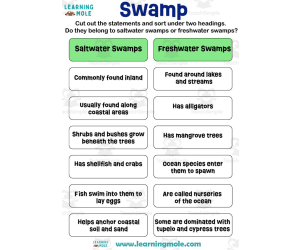
Swamp Activity
Science, Earth and Environmental Sciences, Earth Sciences, Environmental Science, Grade 3, 4, 5, 6, 7, 8, 9, Activities
Activity Introduction An amazing activity designed for the students to learn more about STEM. Swamp Do you like STEM subjects? what is your favorite one? Have you ever tried to plant a seed? If yes, tell us more about it. Or have you ever tried to invent something? If yes, tell us more about it. And how do you think it will help us? Have you ever seen a microorganism under a microscope? What was it? And how it looked like? Mathematics is a marvelous subject. Let' sharpen our brains and solve some equations. Do you like timetable tricks? What is your favorite one? Do you know how to code? Have you ever created an app or a game before? If yes, how was it like? Swamp Activity The activity is perfect for encouraging the researching skills for the students, while learning more about this fantastic topic. Swamp This friendly designed worksheet is suitable for students at school, homeschooling, and as a group activity. Instructions Cut out the statements and sort under two headings. Do they belong to saltwater swamps or freshwater swamps? Format Available in a PDF format.
Author Educational Voice
Tags Swamp Activity, Swamp, Swamps, Swamps Facts, Swamps Facts For Kids, Swamps Activity, STEM, STEM Facts, STEM Facts For Kids, Environment
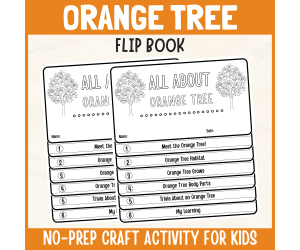
Orange Tree Flipbook Craft Science Study Writing Prompt Activities
Life Sciences, Science, Biology, Nature & Plants, Grade 1, 2, 3, 4, Crafts, Activities, Parts of and Anatomy of, Worksheets & Printables, Writing Prompts
Make learning about orange trees fun and interactive with this printable DIY flipbook craft! Students will explore the fascinating world of orange trees by learning about their habitat, plant parts, life cycle, growth stages, adaptations, and importance while strengthening reading comprehension and writing skills through engaging science activities. I like using this resource during plant science units, fruit tree studies, botany lessons, gardening activities, classroom centers, independent work, and homeschool learning. It's a low-prep activity that combines science, reading, writing, and creativity into one meaningful project. What You Will Get This resource includes a printable Orange Tree DIY flipbook that helps students organize and record what they learn about this evergreen fruit tree through reading, writing, and hands-on learning. What's Included in this Flipbook? • Orange Tree DIY flipbook craft templates • Reading and writing activities • Plant facts and science research pages • Habitat, life cycle, and growth stages sections • Plant parts and adaptations pages • Writing prompts and reflection activities • Easy-to-follow assembly instructions This resource is perfect for: • Plant science lessons • Fruit tree studies • Botany units • Gardening activities • Classroom science centers • Homeschool learning • Independent work and early finishers Why you will love this? • Easy to print and assemble • Encourages reading, writing, and scientific thinking • Builds nonfiction reading comprehension skills • Supports research and observation skills • Makes science learning hands-on and engaging • Creates a meaningful keepsake students can share This Orange Tree DIY Flipbook Craft is a fun and interactive way for students to discover the life cycle, structure, adaptations, and importance of orange trees while developing reading, writing, and science skills through creative, hands-on learning.
Author Perfect_Printables
Rating
Tags Plant Science, Botany, Science Activities, Writing Activities, Craft Activities, Plant Flipbook, Tree Research, Tree Activities, Orange Tree, Fruit Tree Stud

Baobab Life Cycle Craft Foldable Science Cut and Paste Craft Activity
Biology, Life Sciences, Science, Nature & Plants, Elementary, Crafts, Activities
Take your students on an extraordinary journey through time with this Baobab Life Cycle Craft Foldable , exploring the incredible 2,000+ year lifespan of Earth's most iconic "upside-down tree" (Adansonia digitata). This interactive resource transforms complex botany into tangible learning about this African giant. This activity is perfect for science lessons, plant life cycle units, or studies on gardening and ecosystems. It encourages sequencing, critical thinking, and creativity, making it ideal for elementary and middle school students. The foldable can be used individually, in small groups, or as a whole-class project, and it also serves as a great display piece or take-home item to share learning with families. Great for homeschooling, classroom education, or extra practice. Number of pages: 6 pages Format PDF file size: 11*8.5 Inches If you and your students or your children enjoy using this educational and engaging resource. please rate it and follow my store to be the first to know about my new teaching resources and freebies. Enjoy!
Author Wonderland School
Tags Science Cut And Paste Activity, Baobab Life Cycle Craft Foldable, Plant Life Cycle Craft Foldable, Plant Life Cycle, Plant Life Cycle Craft, Cut And Paste, Craft, Spring Craft, Life Cycle Of A Plant, Summer Craft

TinkerCAD step-by-step instructions for Snowflake Ornament
Special Resources, Science, Technology, Engineering, Grade 5, 6, 7, 8, 9, 10, 11, 12, Activities, Projects
TinkerCAD step-by-step instructions for Snowflake Ornament Students only need to know the bare basics to complete this. I tested this with a fifth-grade class and most could complete it with no help. Designed to print with no supports for easy printing. Include TinkerCAD tool guide! Has a content page. Great beginners’ tool for learning to make 3D models and learn TinkerCAD. TinkerCAD is a free online program that makes 3D model that work on 3D printers, laser etching machines, water jets, plasma cutters and many more!! Tinkercad is an easy-to-use, browser-based computer-aided design (CAD) software developed by Autodesk. It is primarily used for creating and designing 3D models, particularly in the field of 3D printing. Tinkercad is popular among beginners and hobbyists due to its intuitive interface and simplified tools. Here are some key features and uses of Tinkercad: 1) 3D Modeling: Tinkercad allows users to create 3D models by combining basic shapes and manipulating them using tools such as scaling, rotating, and moving. It provides a wide range of primitive shapes like cubes, spheres, cylinders, and more, which can be customized to create complex designs. 2) Design Customization: Users can apply various modifications to their designs, including resizing, rounding edges, adding text, creating holes, and aligning objects. These tools help in refining the models and making them suitable for specific purposes or fitting them with other components. 3)Import and Export: Tinkercad supports the import of existing 3D models in STL and OBJ formats, allowing users to modify and incorporate them into their designs. It also offers export options to save the designs as STL files, which are widely used in 3D printing. 4) Collaboration and Sharing: Tinkercad provides features for collaboration, allowing multiple users to work on the same project simultaneously. It enables real-time sharing and editing, making it convenient for team projects or educational purposes. 5) Electronics Integration: One notable aspect of Tinkercad is its integration with electronics. It offers a range of electronic components, including resistors, LEDs, motors, and microcontrollers, which can be used to create interactive models and prototypes. Users can simulate circuit connections and test their designs before implementation. 6) Educational Tool: Tinkercad is widely used in educational settings, particularly for teaching students about 3D design, modeling, and prototyping. Its simple interface and beginner-friendly tools make it accessible to users of all ages and skill levels. Overall, Tinkercad is a versatile and user-friendly CAD software that allows individuals to create and customize 3D models. Whether you're a hobbyist, student, or professional, Tinkercad provides a valuable platform for designing, prototyping, and exploring the world of 3D printing and modeling. Total pages: 30 pages Commands to be learned: Group Ungroup Align Mirror Duplicate Holes Solids Rotate Move Drop Subjects: Geometry Engineering Career and technical education Types: Projects Handouts Printables
Author MontyWorks
Tags TinkerCAD, 3D Printing, 3D Printer, Projects
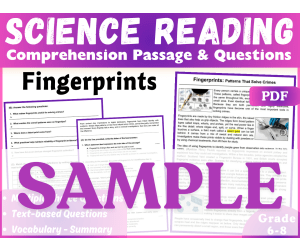
Science Reading Comprehension Passage: Fingerprints. SAMPLE
Science, ELA, Reading, Reading Comprehension, Strategies, Resources for Teachers, Grade 6, 7, 8, 9, Writing Prompts, Worksheets & Printables, Centers, Activities, Teacher Tools, Assessments, Quizzes and Tests, Quizzes, Tests
This is a free passage sample from the complete resource. The full version includes everything needed for a complete reading comprehension activity: the passage, multiple-choice questions, short-answer questions, vocabulary matching, a summary-writing task, and a detailed answer key. Download the complete passage resource by clicking on the following links: PDF Fillable PDF Word Docs Google Docs Science Reading Comprehension Passage and Questions: Fingerprints (PDF) This very engaging science reading passage is about fingerprints and how they are used to solve crimes . It explains that fingerprints are unique, permanent patterns formed by friction ridges on the skin. It describes how investigators find and develop latent prints left behind by sweat and natural skin oils, compare ridge details, and use modern tools such as AFIS and live-scan devices to search and record fingerprints. The passage also explains why fingerprint evidence can be strong when it is collected, documented, and compared carefully. This passage is designed to bridge the gap between science and literacy through strengthening reading comprehension and sparking scientific curiosity in middle school students. The passage blends English Language Arts skills with accurate science content that supports NGSS classroom practice. Ideal for interdisciplinary learning in ELA and Science. Suitable for Grade 9 review, too! Student Tasks for The Passage: 5 multiple-choice questions targeting main idea, key details, inference, vocabulary in context, and use of evidence 5 vocabulary matching items with clear, student-friendly definitions 5 text-based questions that require citing specific lines or facts 1 summary prompt that asks students to condense central ideas accurately Full answer key for every section FULL CATALOG OF DOWNLOADING LINKS HERE Product Details Length: 4 pages total Grades: 6–8, also suitable for Grade 9 review Use cases: close reading, stations, homework, intervention, test prep, and sub plans Standards support: reinforces informational-text skills and supports NGSS-style sense making through observation, modeling, and clear use of claim, evidence, and reasoning Why Teachers Choose This Set Authentic science content paired with rigorous literacy practice Consistent task structure across all passages for easier planning and smoother student routines Clear, age-appropriate writing that builds confidence without oversimplifying Other Science Reading Collections you May find in the store: 1. Astronomy & Space Science 2. Volcanoes, Rocks, & Mountains 3. Rock Cycle, Soil, & Sinkholes 4. Mars, Glaciers, & Antarctica 5. Water Cycle, Acid Rain, & Wastewater 6. Insects, Animals, & Ecosystems 7. Bioluminescence & Insects 8. Animal Skin, Cats, & T. Rex 9. Human Body and Senses 10. Health & Applied Bioscience 11. Waves, Light, & Imaging 12. Electricity & Energy 13. Motion & Materials 14. Chemistry and Materials Science Use this set to reinforce ELA skills in science, to add literacy to your lessons, and to support independent work. The passages strengthen main idea, evidence use, vocabulary in context, inference, cause and effect, and summary writing. With ready-to-use assessments and complete answer keys, you can provide focused practice that is simple to run and fast to review.
Author Middle & High School - CORED Education
Rating
Tags Middle School, Reading Comprehension, Reading Strategies, ELA, Centers, Reading Passage, Assessments, Vocabulary, Technology

Reading Passages on Electricity and Magnets (Google Drive)
ELA, Reading, Reading Comprehension, Science, Physics, Common Core, ESL, Language Development, Vocabulary, Grade 5, 6, 7, Centers, Activities, Assessments, Teacher Tools, Presentations, Tests, Quizzes and Tests, Worksheets & Printables, Worksheets
Reading Passages on Electricity and Magnets for Physical Science Electricity and Magnets: Reading Passages Physical Science - Enhance your assessment process with this ready-to-use science reading passage pack. Featuring enjoyable topics and themes, it's tailored to ensure students not only practice but also deepen their scientific understanding in preparation for tests. With questions meticulously aligned to the Common Core State Standards (CCSS), the pack dives into intriguing subjects such as circuits, electricity, and energy sources. It's a must-have resource for educators aiming to make learning both fun and fruitful. What's inside? Part 3 - Electricity and Magnets Reading Passage 1: Static Electricity Reading Passage 2: Circuits Reading Passage 3: Electromagnets Reading Passage 4: Electric Energy Reading Passage 5: Energy Sources & Conversion Product Info: 29 PAGES (Docs Version: US English with Answers) 5 FORMS (Self-Grading) 205 Slides Teaching Duration: 2 Weeks Science Reading Comprehension Outline: Introducing a comprehensive resource tailored for 5th and 6th graders, this product offers enriching reading passages supplemented with illustrative pictures and graphs to clarify key concepts. Aligned with the Common Core State Standards (CCSS), it offers a hassle-free approach to teaching, given that the bulk of the preparation is already done for you. The passages present a diverse set of questions – from multiple choice to data analysis and fill-in-the-blanks. This ensures a rich blend of high-interest content and fundamental curriculum -based science themes. With its versatility, you can seamlessly integrate these lessons into various classroom settings, whether it's whole class discussions, morning exercises, independent desk tasks, small group engagements, contingency plans for substitute teachers, regular homework assignments, or even themed activities for holidays. FULL CATALOG OF DOWNLOAD LINKS HERE Grade 5/6 Links: Physical Science Part 1 - Physical and Chemical Properties Google Docs/Slides/Forms PDF PPT Word Free Supplementary Pack Accompanying Videos Physical Science Part 2 - Motion and Energy Google Docs/Slides/Forms PDF PPT Word Free Supplementary Pack Accompanying Videos Physical Science Part 3 - Electricity and Magnets Google Docs/Slides/Forms PDF PPT Word Free Supplementary Pack Accompanying Videos Life Science Part 1 - Cells, Reproduction and Genetics Google Docs/Slides/Forms PDF PPT Word Free Supplementary Pack Accompanying Videos Life Science Part 2 - Human Body Systems Google Docs/Slides/Forms PDF PPT Word Free Supplementary Pack Accompanying Videos Life Science Part 3 - Plant Parts and Ecosystems Google Docs/Slides/Forms PDF PPT Word Free Supplementary Pack Accompanying Videos Earth Science Part 1 - Plate Tectonics and Rock Cycle Google Docs/Slides/Forms PDF PPT Word Free Supplementary Pack Accompanying Videos Earth Science Part 2 - Ocean Exploration and Natural Resources Google Docs/Slides/Forms PDF PPT Word Free Supplementary Pack Accompanying Videos Earth Science Part 3 - Weather and Solar System Google Docs/Slides/Forms PDF PPT Word Free Supplementary Pack Accompanying Videos For similar products and other frees, do check out Cored Group on TeachSimple .
Author Cored Education
Tags Science, Elementary, Reading, Comprehension, Vocabulary, Answers, Physics, Physical Science, Ccss, Centers
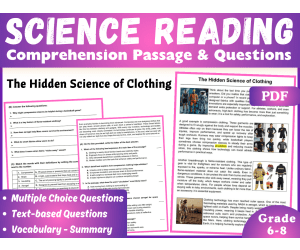
Science Reading Comprehension Passage: The Science of Clothing (PDF)
Science, ELA, Reading, Reading Comprehension, Strategies, Resources for Teachers, Technology, Engineering, Grade 6, 7, 8, 9, Writing Prompts, Worksheets & Printables, Centers, Activities, Teacher Tools, Assessments, Quizzes and Tests, Quizzes, Tests
Science Reading Comprehension Passage and Questions: The Hidden Science of Clothing (PDF) This very engaging science reading passage is about how modern clothing uses science and technology to improve safety, performance, comfort, and exploration . It explains different examples of high-tech clothing and materials, including compression clothing for athletes, flame-resistant clothing for firefighters and workers, aerogel for astronaut suits and space rovers, and smart fabrics that can play music, answer calls, or track a heartbeat. The visuals on page 1 support these examples by showing athletic clothing, protective work gear, and space-related clothing. This passage is designed to bridge the gap between science and literacy through strengthening reading comprehension and sparking scientific curiosity in middle school students. The passage blends English Language Arts skills with accurate science content that supports NGSS classroom practice. Ideal for interdisciplinary learning in ELA and Science. Suitable for Grade 9 review, too! Student Tasks for The Passage: 5 multiple-choice questions targeting main idea, key details, inference, vocabulary in context, and use of evidence 5 vocabulary matching items with clear, student-friendly definitions 5 text-based questions that require citing specific lines or facts 1 summary prompt that asks students to condense central ideas accurately Full answer key for every section Available Formats for this Resource Fillable PDF Word Docs Google Docs FULL CATALOG OF DOWNLOADING LINKS HERE Product Details Length: 4 pages total Grades: 6–8, also suitable for Grade 9 review Use cases: close reading, stations, homework, intervention, test prep, and sub plans Standards support: reinforces informational-text skills and supports NGSS-style sense making through observation, modeling, and clear use of claim, evidence, and reasoning Why Teachers Choose This Set Authentic science content paired with rigorous literacy practice Consistent task structure across all passages for easier planning and smoother student routines Clear, age-appropriate writing that builds confidence without oversimplifying Other Science Reading Collections you May find in the store: 1. Astronomy & Space Science 2. Volcanoes, Rocks, & Mountains 3. Rock Cycle, Soil, & Sinkholes 4. Mars, Glaciers, & Antarctica 5. Water Cycle, Acid Rain, & Wastewater 6. Insects, Animals, & Ecosystems 7. Bioluminescence & Insects 8. Animal Skin, Cats, & T. Rex 9. Human Body and Senses 10. Health & Applied Bioscience 11. Waves, Light, & Imaging 12. Electricity & Energy 13. Motion & Materials 14. Chemistry and Materials Science Use this set to reinforce ELA skills in science, to add literacy to your lessons, and to support independent work. The passages strengthen main idea, evidence use, vocabulary in context, inference, cause and effect, and summary writing. With ready-to-use assessments and complete answer keys, you can provide focused practice that is simple to run and fast to review.
Author Middle & High School - CORED Education
Rating
Tags Middle School, Reading Comprehension, Reading Strategies, ELA, Centers, Reading Passage, Assessments, Vocabulary, Technology

Synthetic Limbs Activity
Science, Life Sciences, Human Body, Technology, Grade 4, 5, 6, 7, 8, 9, 10, 11, 12, Activities
Activity Introduction An amazing activity designed for the students to learn more about STEM subjects. Synthetic Limbs Do you like STEM subjects? what is your favorite one? Have you ever tried to plant a seed? If yes, tell us more about it. Or have you ever tried to invent something? If yes, tell us more about it. And how do you think it will help us? Have you ever seen a microorganism under a microscope? What was it? And how it looked like? Mathematics is a marvelous subject. Let' sharpen our brains and solve some equations. Do you like timetable tricks? What is your favorite one? Do you know how to code? Have you ever created an app or a game before? If yes, how was it like? Synthetic Limbs Activity The activity is perfect for encouraging the researching skills for the students, while learning more about this topic. Synthetic Limbs This friendly designed worksheet is suitable for students at school, homeschooling, and as a group activity. Synthetic Limbs What are the different materials synthetic limbs can be made of? Write about them and why they are good. Format Available in a PDF format.
Author Educational Voice
Tags Synthetic Limbs Activity, Synthetic Limbs, Synthetic Limbs Facts, Synthetic Limbs Facts For Kids, Human Body, Human Body Facts, Human Body Facts For Kids, Technology, Technology Facts

Classification of Living Things – Lab Station Activity
Science, Life Sciences, Biology, Grade 7, 8, 9, 10, Labs, Experiments, Activities
This fully editable Lab Station Activity on the Classification of Living Things is meant to get your students out of their seats and engaged in the content. Each station not only offers a unique opportunity to test your students' knowledge (offer an opinion, answer questions based on a video or reading, draw, etc.), but also provides a fantastic learning opportunity where your kids are learning through assessment. Each station comes with a description card while some also contain more detailed instructions, a reading, questions to answer, etc. Students are equipped with a recording sheet (passport) to write their answers. There is almost no prep for you. Simply print the cards, lay them out around the room and you're all set. An answer key is also provided where applicable. --------------------------------------------------------------------------------------------- This lab activity covers: - The Classification of Living Things - The 7 Kingdoms - Taxonomy ---------------------------------------------- Bonus Activities: To ensure your students don’t have any downtime between stations, your lab also includes a 10-word word scramble and word search, both with an answer key. You can use them as part of their mark, as a bonus so it’s not mandatory, etc. However you choose to use it, it will ensure that your students are always busy and never idle. Note: For stronger classes, I give the word scramble and for weaker ones, the word search. ----------------------------------------------- How do the Lab Stations work? Each station is specially designed to be a unique complement to the material while at the same time, provide a valuable learning experience. Below is an overview of how each station works. In your activity , each will be tailored to the specific content. Station 1: Get Hands-On – using their creative skills, students are required to draw or build. Station 2: Research – using a classroom computer or their own device, students must research a specific question/issue surrounding the topic. Station 3: Explain yourself – students write down an opinion to a question in paragraph form. Station 4: Rest Station - students can use this time to catch up on work they didn't have time to complete at a previous station or prepare themselves for an upcoming one. Station 5 - Applicability reading – students read a short passage from an article, website, etc. which directly connects the classroom content to a real life application. Station 6: Test your knowledge – students answer 5 multiple choice questions then provide a written explanation for how/why they came to their conclusions. Station 7: Learn from the expert – using a classroom computer or their own device, students must watch a short video clip and answer the associated questions. They may stop, rewind and restart as often as they like during the time frame. Station 8 - Rest Station. Station 9: Become the question master – Students must create 2 multiple-choice questions, 2 true/false questions and 1 short answer question. Students must also supply the answers. ------------------------------- You might also be interested in my other lab station activities Ecology and the Environment: • Ecosystems • The Classification of Living Things • Biodiversity and Invasive Species • The Carbon and Water Cycle • Climate Change • Photosynthesis • Cellular Respiration and Photosynthesis • Ecological Succession • Plant Sexual and Asexual Reproduction • Earth's Seasons • Interactions Within Ecosystems Biology: • Cell and the Cell Theory • The Human Digestive System • The Circulatory System • The Human Respiratory System • Mitosis and the Cell Cycle • Cellular Respiration and Photosynthesis • Photosynthesis • Cancer: Cell Division Gone Wrong - Volume I • Cancer: Cell Division Gone Wrong - Volume II • Cell Membrane and Transport • Hearing and the Human Ear • The Human Eye • Genetic Material: DNA and RNA • The Nervous System • Energy Flow In Ecosystems Physics: • Newton's Three Laws of Motion • Kinetic and Gravitational Potential Energy • Current Electricity and Circuit Diagrams • Static Electricity • Light Optics and the Production of Light • Sound, Sound Energy and Speed • One and Two-Dimensional Motion • Uniform Acceleration • How Planes Fly • Refraction • Friction • Energy and Its Forms • Density and Buoyancy Space Science: • The Life and Death of Stars • The Moon and its Phases • Life In Space • Our Solar System • Solar and Lunar Eclipse • Earth's Seasons • Asteroids, Comets and Meteors Chemistry: • Atomic Model, Notation and Atoms • Chemical Reactions and Balancing Equations • Molecular and Ionic Compounds • Physical and Chemical Properties & Changes • Acids, Bases, and Neutralization Reactions • The Periodic Table • Single and Double Displacement Reactions • Balancing Chemical Equations • Synthesis, Decomposition and Combustion Reactions • Atomic Theory, Atomic Structure and Isotopes • Types of Bonds and Intermolecular Forces • The Mole/Avogadro's Number • Density and Buoyancy These station cards are meant to be used as a lab activity but can also be utilized in a review task before a test or a quiz. Used either way, your students will love it! I know mine do and I'm telling you from first-hand experience as I've used this activity in my own class. Thank you for your interest in my products. If you have any questions, please send me an email - devon@teachwithfergy.com
Author Teach With Fergy
Tags Taxonomy, Living Things, Classification, Lab Station, Activities, Classification Activity Middle School, Classification Activities High School, Classification Activities Middle School, Classification Activity, Living Things Zip