



3,980 products added recently
Page 51 - Science Activities
Ignite your students' interest in science with activities that make learning interactive and exciting. This collection offers experiments, demonstrations, and inquiry-based projects covering various scientific fields. By integrating these science activities into your lessons, you can encourage critical thinking, foster curiosity, and deepen understanding of scientific concepts.

 Show filters

Science Reading Comprehension Passage: Baseball Science (Word)
Science, ELA, Reading, Reading Comprehension, Strategies, Resources for Teachers, Physics, Grade 6, 7, 8, 9, Writing Prompts, Worksheets & Printables, Centers, Activities, Teacher Tools, Assessments, Quizzes and Tests, Quizzes, Tests
Science Reading Comprehension Passage and Questions: Baseball Science (Word) This very engaging science reading passage is about the physics of baseball , especially how forces and energy affect the way a baseball moves after it is hit or pitched. It explains how kinetic energy transfers from the bat to the ball, how launch angle affects distance, how air resistance/drag slows the ball, and how spin creates the Magnus effect, which can make pitches curve or make batted balls carry farther. It also explains how weather and location, such as high altitude, warm air, and humidity, can affect how far a ball travels. This passage is designed to bridge the gap between science and literacy through strengthening reading comprehension and sparking scientific curiosity in middle school students. The passage blends English Language Arts skills with accurate science content that supports NGSS classroom practice. Ideal for interdisciplinary learning in ELA and Science. Suitable for Grade 9 review, too! Student Tasks for The Passage: 5 multiple-choice questions targeting main idea, key details, inference, vocabulary in context, and use of evidence 5 vocabulary matching items with clear, student-friendly definitions 5 text-based questions that require citing specific lines or facts 1 summary prompt that asks students to condense central ideas accurately Full answer key for every section Available Formats for this Resource PDF Fillable PDF Google Docs FULL CATALOG OF DOWNLOADING LINKS HERE Product Details Length: 4 pages total Grades: 6–8, also suitable for Grade 9 review Use cases: close reading, stations, homework, intervention, test prep, and sub plans Standards support: reinforces informational-text skills and supports NGSS-style sense making through observation, modeling, and clear use of claim, evidence, and reasoning Why Teachers Choose This Set Authentic science content paired with rigorous literacy practice Consistent task structure across all passages for easier planning and smoother student routines Clear, age-appropriate writing that builds confidence without oversimplifying Other Science Reading Collections you May find in the store: 1. Astronomy & Space Science 2. Volcanoes, Rocks, & Mountains 3. Rock Cycle, Soil, & Sinkholes 4. Mars, Glaciers, & Antarctica 5. Water Cycle, Acid Rain, & Wastewater 6. Insects, Animals, & Ecosystems 7. Bioluminescence & Insects 8. Animal Skin, Cats, & T. Rex 9. Human Body and Senses 10. Health & Applied Bioscience 11. Waves, Light, & Imaging 12. Electricity & Energy 13. Motion & Materials 14. Chemistry and Materials Science Use this set to reinforce ELA skills in science, to add literacy to your lessons, and to support independent work. The passages strengthen main idea, evidence use, vocabulary in context, inference, cause and effect, and summary writing. With ready-to-use assessments and complete answer keys, you can provide focused practice that is simple to run and fast to review.
Author Middle & High School - CORED Education
Rating
Tags Middle School, Reading Comprehension, Reading Strategies, ELA, Centers, Reading Passage, Assessments, Vocabulary, Making Candy, Physics

Life Science Reading Passage: The Dinosaur Tyrannosaurus rex (Docs)
Science, ELA, Reading, Reading Comprehension, Strategies, Resources for Teachers, Life Sciences, Animals, Biology, Grade 6, 7, 8, 9, Writing Prompts, Worksheets & Printables, Centers, Activities, Teacher Tools, Assessments, Quizzes and Tests, Quizzes, Tests
Life Science Reading Comprehension Passage and Questions: The Dinosaur Tyrannosaurus rex (Docs) This very engaging science reading passage about Tyrannosaurus rex and how scientists use fossils to understand how it lived. It explains what fossils are, where and when T. rex lived, and what fossil evidence reveals about its size, teeth, skull, movement, speed, diet, hunting, and scavenging. It also shows how modern tools, such as CT scans, imaging, computer simulations, and coprolites , help paleontologists build a clearer picture of T. rex as a powerful predator from the late Cretaceous period. This passage is designed to bridge the gap between science and literacy through strengthening reading comprehension and sparking scientific curiosity in middle school students. The passage blends English Language Arts skills with accurate science content that supports NGSS classroom practice. Ideal for interdisciplinary learning in ELA and Science. Suitable for Grade 9 review, too! Student Tasks for The Passage: 5 multiple-choice questions targeting main idea, key details, inference, vocabulary in context, and use of evidence 5 vocabulary matching items with clear, student-friendly definitions 5 text-based questions that require citing specific lines or facts 1 summary prompt that asks students to condense central ideas accurately Full answer key for every section Available Formats for this Resource PDF Fillable PDF Word Docs FULL CATALOG OF DOWNLOADING LINKS HERE Product Details Length: 5 pages total Grades: 6–8, also suitable for Grade 9 review Use cases: close reading, stations, homework, intervention, test prep, and sub plans Standards support: reinforces informational-text skills and supports NGSS-style sense making through observation, modeling, and clear use of claim, evidence, and reasoning Why Teachers Choose This Set Authentic science content paired with rigorous literacy practice Consistent task structure across all passages for easier planning and smoother student routines Clear, age-appropriate writing that builds confidence without oversimplifying Other Science Reading Collections you May find in the store: 1. Astronomy & Space Science 2. Volcanoes, Rocks, & Mountains 3. Rock Cycle, Soil, & Sinkholes 4. Mars, Glaciers, & Antarctica 5. Water Cycle, Acid Rain, & Wastewater 6. Insects, Animals, & Ecosystems 7. Bioluminescence & Insects 8. Animal Skin, Cats, & T. Rex 9. Human Body and Senses 10. Health & Applied Bioscience 11. Waves, Light, & Imaging 12. Electricity & Energy 13. Motion & Materials 14. Chemistry and Materials Science Use this set to reinforce ELA skills in science, to add literacy to your lessons, and to support independent work. The passages strengthen main idea, evidence use, vocabulary in context, inference, cause and effect, and summary writing. With ready-to-use assessments and complete answer keys, you can provide focused practice that is simple to run and fast to review.
Author Middle & High School - CORED Education
Rating
Tags Middle School, Reading Comprehension, Reading Strategies, ELA, Centers, Reading Passage, Assessments, Vocabulary, Life Science, The Dinosaur Tyrannosaurus Rex

ABC COLORING MINIBOOK | Animal Themed
ELA, Writing, Creative Arts, Animals, Life Sciences, Science, Elementary, Early Learning, Homeschool Resources, Not Grade Specific, Pre-K, Activities, Worksheets & Printables
ABC COLORING MINIBOOK | Animal Themed INTRODUCTION: EDITORIAL ARENAS EDUCATIVAS is dedicated to providing high-quality educational content to help children learn efficiently and with joy. Check out our full store to find materials focused on reading, writing, math, and Spanish. We're excited to be part of your learning experience! MAIN DESCRIPTION OF THIS EDUCATIONAL PRODUCT: 1) How can this material support children's learning or development? This material will help our students learn in an educational way. It will support your students by guiding them in a much more playful way to achieve easy and rapid learning. 2) What specific skills are developed using this resource? Students will be able to develop their attention, concentration, creativity, and imagination skills. It will also allow students to develop their cognitive skills such as comprehension, analysis, and others. 3) Who is the ideal audience for this document? This document and/or teaching resource is primarily intended for young students, meaning those between the ages of 5 and 12, in other words, students in early childhood and/or primary education. However, it can also be used by the general public if required. 4) What recommendations are there for making the most of this resource? To make the most of this resource, I recommend first analyzing it, then looking at the specific topic your student needs to learn and assess whether my resource addresses it. I also ask you to consider how you will print it. 5) Is this material up to date with the latest educational changes? Yes, this material primarily addresses all learning theories about children, which tell us that children should learn in an educational and fun way. SECONDARY AND COMPLEMENTARY INFORMATION: 1) What main topic does the resource cover? This document has been developed to address a basic topic that children in kindergarten through elementary school should master. This document will also be helpful to the general public who want to learn. 2) What version does this document correspond to? This educational resource is designed in PDF format, which will make your download experience much simpler and easier to use. 3) Is the material designed in color or black and white? This document has been designed in color (if required) or is sometimes created in black and white to make your learning experience easier.
Author EDITORIAL LAURA EDUCA
Rating
Tags Free, Free Resources, Alphabet, Abecedary, Abc, Tracing, .tracing Letters, Handwriting
Physical Science Reading Passages Waves, Light, Imaging (FILLABLE PDF)
Science, ELA, Reading, Reading Comprehension, Strategies, Resources for Teachers, Physics, Grade 6, 7, 8, 9, Writing Prompts, Worksheets & Printables, Centers, Activities, Teacher Tools, Assessments, Quizzes and Tests, Quizzes, Tests
Waves, Light, Imaging: Physical Science Reading Comprehension Passages and Questions (FILLABLE PDF) This very engaging and fillable collection of physical science reading passages about Waves, Light, and Imaging is designed to bridge the gap between science and literacy through strengthening reading comprehension and sparking scientific curiosity in middle school students. Each passage blends English Language Arts skills with accurate science content that supports NGSS classroom practice. Ideal for interdisciplinary learning in ELA and Science. Suitable for Grade 9 review, too! These worksheets are designed as fillable PDFs , which means students can type their answers directly into the document on any computer or tablet . Each page includes highlighted text fields that show them exactly where to type! What Is Included? There are (3) informational passages: How Sound Travels Seeing Color: Reflection, Absorption, Refraction Cameras: From Dark Rooms to Smartphones Student Tasks for Each Passage: 5 multiple-choice questions targeting main idea, key details, inference, vocabulary in context, and use of evidence 5 vocabulary matching items with clear, student-friendly definitions 5 text-based questions that require citing specific lines or facts 1 summary prompt that asks students to condense central ideas accurately Full answer key for every section Available Formats for this Resource Word Docs Google Docs FULL CATALOG OF DOWNLOADING LINKS HERE Other Science Reading Collections and Topics You May Find in the Store: 1. Astronomy & Space Science 2. Volcanoes, Rocks, & Mountains 3. Rock Cycle, Soil, & Sinkholes 4. Mars, Glaciers, & Antarctica 5. Water Cycle, Acid Rain, & Wastewater 6. Insects, Animals, & Ecosystems 7. Bioluminescence & Insects 8. Animal Skin, Cats, & T. Rex 9. Human Body and Senses 10. Health & Applied Bioscience 11. Waves, Light, & Imaging 12. Electricity & Energy 13. Motion & Materials 14. Chemistry and Materials Science 15. Electromagnetism 16. Acids and Bases 17. Gas Laws 18. Biotechnology 19. Periodic Trends 20. Protists and Fungi 21. Microevolution 22. Blood 23. Chemical Bonding 24. Magnets 25. Muscles 26. Nuclear Chemistry 27. Electromagnetic Devices 28. Epigenetics 29. The Law of Conservation of Mass 30. Atomic Models 31. Isotopes and Ions 32. Light 33. Human-Environment Interaction 34. Theory of Evolution 35. Photosynthesis 36. Origins of Life and Early Earth 37. Gene Expression and Regulation 38. Thermochemistry 39. Allergies 40. Coevolution 41. Birth to Adulthood 42. Cells 43. Entropy and Free Energy 44. The Human Brain 45. Mixtures and Solutions 46. Invertebrates 47. Zoo Animals 48. Biochemistry 49. Animal Behavior 50. Population Ecology ...and many more engaging science reading passages that cover intriguing and important topics designed to spark curiosity and support student learning. How to Use These PDFs Click on the highlighted area to start typing your answer. Move to the next question by clicking in the next highlighted box. When you are finished, close the document and select SAVE so your answers stay recorded. If you want to keep a blank copy for later, choose Save As and give your completed version a new name. Product Details Length: 14 pages total Grades: 6–8, also suitable for Grade 9 review Use cases: close reading, stations, homework, intervention, test prep, and sub plans Standards support: reinforces informational-text skills and supports NGSS-style sense making through observation, modeling, and clear use of claim, evidence, and reasoning Why Teachers Choose This Set Authentic science content paired with rigorous literacy practice Consistent task structure across all passages for easier planning and smoother student routines Clear, age-appropriate writing that builds confidence without oversimplifying Use this set to reinforce ELA skills in science, to add literacy to your lessons, or to support independent work. The passages strengthen main idea, evidence use, vocabulary in context, inference, cause and effect, and summary writing. With ready-to-use assessments and complete answer keys, you can provide focused practice that is simple to run and fast to review.
Author Middle & High School - CORED Education
Rating
Tags Middle School, Reading Comprehension, Reading Strategies, ELA, Centers, Reading Passage, Assessments, Vocabulary, Physical Science, Physics

Guided Reading Level H - The Story of the Wheel
ELA, Resources for Teachers, Reading Comprehension, Reading, Language Development, Vocabulary, Engineering, Technology, Science, Physics, Kindergarten, Grade 1, 2, Worksheets & Printables, Worksheets, Teacher Tools, Centers, Activities, Literacy Readers, Quizzes, Quizzes and Tests, Assessments
This Guided Reading Book - The Story of the Wheel (Level H) includes: Guided Reading Color Label (front cover x1) This is a quick way to match the book’s demands to what students can generally handle.. The overall goal is to use the level/color to pick books for several smaller groups. To qualify for a certain level, a student is expected to read a book from that level with about 90–94% accuracy. If a student is consistently accurate and understands, move up a level. If the student is struggling at that level, drop down and add more support. Each student will improve at completely different rates, but it is generally one of the best ways to check progress across the class. DOWNLOAD THE CATALOG TO VIEW ALL GUIDED READING BOOKS AVAILABLE (SORTED LEVELS A-Z) Pre-Reading Question (x1) Teacher asks the prompt aloud, can be while showing the cover or first page. Students share what they already know, or make educated guesses from the cover. Prompt them to use the target vocabulary. Write some of their responses on the board to look back at during the reading. Vocabulary Words (x5) Introduce the five words, best doing it one at a time. Start by saying it, while students repeat and then see if anyone knows what it means before reading further. Read through the meaning and try to briefly connect each word to a picture or gesture so it’s meaningful. Ask students to flip through the book pages and point to where they see each of the vocabulary words. While reading the book pause upon coming across one of the vocab words or read the sentence twice to make sure students understand the word has appeared. Optional: Ask students to raise hands whenever they see/hear one of the new words. Guided Reading Pages (x10) Check the book snapshot (below) for: primary topic - do you need to prep extra reading or intro materials on this? what is taught best - decide on 1-2 bullets to focus on, use the prompt or words provided here for best results. learning goals - what you are checking for students to be able to do after the session, elicit answers using prompts or words provided. key vocabulary (see section above). questions overview - so you know what is coming up and if you need to prep extra materials to assist understanding. Run the lesson You may have already looked at a few of the pages together, but you can show them some of the pictures again first to set meaning. Depending on how much time you have and how familiar your students are with guided reading class, you may want to read the book aloud first with the group first. Students whisper or partner read, while you listen in. If time, do it as a group, one student reading a page each. Use the guided page’s prompts to coach: “Check the picture / does it make sense?” “Point under the words / try the first sound” “Reread the sentence smoothly”. Try to focus more on one student per session (rotating every time), so you can work out if they are ready to move up or need to move down a level. Comprehension Questions (back cover x3) This is your way to check that students didn’t just say the words, but actually understood the text. First, let students answer by pointing to the page/picture and saying a short sentence. After any answer, follow with: “Show me where you found that in the text.” In bigger groups, have partners answer first (10–20 seconds), then call on 2–3 students to share. Differentiation tips: Emerging speakers/struggling readers: oral + pointing On-level: oral in a full sentence Higher: one written sentence or draw + label Book Snapshot Title: The Story of the Wheel Genre: Nonfiction (informational) Subject: Science (Engineering / Simple Machines) Primary Topic: How wheels changed over time and how they work Estimated Guided Reading Level (A–Z): H What This Book Teaches Best What wheels are and what they help people do: move heavy things with less effort. How wheels changed over time (from heavy stone/wood wheels to spoked wheels to modern rubber tires). Why different wheels are designed differently for different jobs (tractor treads for mud; thin bicycle wheels for speed; small wheels for gliding). That not all wheels are for travel—gears are wheels with teeth that help machines move. Learning Goals Students will explain what wheels are used for using a detail from the text. Students will describe how the first wheels were made long ago, according to the book. Students will explain why spoked wheels helped carts move faster using the book’s comparison. Students will describe how treads help tractor wheels move through thick, wet mud. Students will identify one way gears are different from travel wheels and tell what gears do in machines. Key Vocabulary From the Text spokes — thin parts connecting the center to the outside. oxen — strong animals that pull heavy loads. rubber — stretchy material used to make tires. treads — deep grooves that help a tire grip ground. gears — wheels with teeth that help machines move. Discussion Prompts Pre-reading question: How do you think wheels help people move things more easily? Comprehension questions: What does the book say wheels are used for? What were the very first wheels made from long ago? What are gears, and what do they help machines do? Printing Tips 1. Best Printing Method (Recommended) “Booklet” Printing (Best if Available) If your printer or PDF viewer supports Booklet Printing , use this. Settings to use: Print mode: Booklet Paper size: Letter or A4 (either works) Orientation: Landscape Print on both sides: Yes Flip on: Short edge Scaling: Fit to printable area Booklet subset: First test: Front sides only Then: Back sides only This will automatically: Pair pages correctly Put the cover on the outside Align everything for folding After printing, fold in half and staple along the spine . 2. If “Booklet” Printing Is NOT Available You can still print this correctly with manual duplex printing . Step-by-step: Open the PDF. Choose Print . Set: Orientation: Landscape Pages per sheet: 1 Print on both sides: Yes Flip on: Short edge Print all pages . Because each PDF page already contains two facing book pages, the result will still fold cleanly into a book. Thousands of Cored Education products are included with your TeachSimple membership. Download links and encyclopedia index available here.
Author Cored Education
Rating
Tags Vocabulary, Reading Comprehension, Reading Passages, Leveled Reading, Nonfiction, Reading, Guided Reading, Physics, Engineering, Technology

Reading Comprehension on Motion and Energy Presentable PDF
ELA, Reading, Reading Comprehension, Common Core, ESL, Language Development, Vocabulary, Physics, Science, Grade 5, 6, 7, Worksheets & Printables, Worksheets, Assessments, Teacher Tools, Tests, Quizzes and Tests, Centers, Activities
Reading Comprehension on Motion and Energy for Physical Science What's inside this Motion and Energy product? Reading Passage 1: Kinetic & Potential Energy Reading Passage 2: Force & Motion Reading Passage 3: Simple Machines Reading Passage 4: Simple Machines 2 Reading Passage 5: Thermal Energy Reading Passage 6: Sound & Light Energy PRESENTABLE PDF VERSION Run it like a slide show straight from a PDF, with no PowerPoint or extra software needed, just open, project, and teach. Other versions are available in the links list below or in the full catalog. Snapshot Title: Title not stated Genre: Nonfiction Subject: Science / Physical Science Primary Topic: Energy, force, motion, and simple machines. Estimated Guided Reading Level (A–Z): V What This Teaches Best Explains the difference between kinetic energy and potential energy and shows how energy can change form. Builds understanding of force, friction, work, momentum, and gravitational force through everyday examples. Shows how simple machines such as inclined planes, levers, wheel-and-axles, and pulleys make work easier. Introduces thermal energy transfer through conduction, convection, and radiation. Compares sound and light by explaining vibrations, wave behavior, reflection, and refraction. Learning Goals Students will explain how kinetic energy and potential energy differ. Students will use the work formula to describe how force and distance affect work. Students will describe Newton’s laws of motion using examples from the text. Students will identify how simple machines reduce effort or change the direction of force. Students will compare conduction, convection, and radiation. Students will explain how sound and light interact with matter. FULL CATALOG OF DOWNLOAD LINKS HERE Grade 5/6 Links: Physical Science Part 1 - Physical and Chemical Properties Google Docs/Slides/Forms PDF PPT Word Free Supplementary Pack Accompanying Videos Physical Science Part 2 - Motion and Energy Google Docs/Slides/Forms PDF PPT Word Free Supplementary Pack Accompanying Videos Physical Science Part 3 - Electricity and Magnets Google Docs/Slides/Forms PDF PPT Word Free Supplementary Pack Accompanying Videos Life Science Part 1 - Cells, Reproduction and Genetics Google Docs/Slides/Forms PDF PPT Word Free Supplementary Pack Accompanying Videos Life Science Part 2 - Human Body Systems Google Docs/Slides/Forms PDF PPT Word Free Supplementary Pack Accompanying Videos Life Science Part 3 - Plant Parts and Ecosystems Google Docs/Slides/Forms PDF PPT Word Free Supplementary Pack Accompanying Videos Earth Science Part 1 - Plate Tectonics and Rock Cycle Google Docs/Slides/Forms PDF PPT Word Free Supplementary Pack Accompanying Videos Earth Science Part 2 - Ocean Exploration and Natural Resources Google Docs/Slides/Forms PDF PPT Word Free Supplementary Pack Accompanying Videos Earth Science Part 3 - Weather and Solar System Google Docs/Slides/Forms PDF PPT Word Free Supplementary Pack Accompanying Videos For similar products and other frees, do check out Cored Group on TeachSimple .
Author Cored Education
Rating
Tags Science, Elementary, Reading, Comprehension, Vocabulary, Physics, Physical Science, Worksheets, Printables, Reading Passages
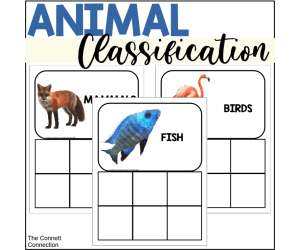
Animal Classification Sort
Science, Life Sciences, Biology, Grade 1, 2, 3, Activities, Centers, Assessments, Teacher Tools
Allow students to sort animals by their classifications. Students can sort by animal classes: mammals, birds, fish, amphibians, reptiles, and insects as well as sorting by vertebrate and invertebrate. What is Included: There are eight sorting card headers for mammals, birds, fish, amphibians, reptiles, insects, vertebrates, and invertebrates. There are eight sorting mats for mammals, birds, fish, amphibians, reptiles, insects, vertebrates, and invertebrates. There are six picture cards for each of the eight sets of sorting activities. Each sorting mat includes a real life example of an animal that belongs in that animal group. All of the picture cards also include real photographs of each animal. What Questions are Asked: To use these, students will lay out either the header cards or the sorting mats. They will then sort the animal images beneath or on top of the correct sorting mat. When to Use: Science Center - The sorting mats can be placed in a science center for students to learn about living things and their classifications. Morning Work - These animal sorts can allow teachers to create quick and easy morning activities for students while they wait on their classmates to arrive to class. Independent Practice - These animal sorts are great for students to independently work on living things. Emergency Sub Plans - The low prep nature and easy to set up activity , makes these worksheets a great activity to leave with subs to assign to students. Small Group Activity - These animal sorts can be used in small groups so teachers can target the students who need extra practice with living things. Writing Review Activity - These animal sorts work well as a review to reinforce student's learning of living things. These sorting activities are easy to create. The mats just need to be printed out. The picture cards need to be printed and cut apart. Once made, the sort can be used over and over. Move from pictures to a word bank with this animal classification worksheet .
Author The Connett Connection
Rating
Tags Science Sort, Hands On Assessment, Animal Classification, Classification Of Animals

Savanna Biome Activity
ELA, Reading, Reading Comprehension, Science, Earth and Environmental Sciences, Earth Sciences, Grade 1, 2, 3, 4, 5, Activities
Savanna Biome Activity engages students to research, write, and illustrate the unique wildlife found in African savanna ecosystems. Students brainstorm examples of savanna animals while the teacher records responses. Then, learners independently select one animal to research adaptations that aid survival in the hot, grassland climate. If desired, pair students researching the same fauna to discuss findings. An extension activity provides a template for depicting the chosen creature within its savanna habitat, focusing visual components on the highlighted species. Implementation options include whole class introductory oral review, collaborative small groups for targeted research, independent written tasks, and individual creative art projects over one or multiple sessions. This cross-curricular resource creatively reinforces comprehension, research abilities, informative writing skills, and basic knowledge of environmental sciences. Appropriate for grades 1-5.
Author Life with 5 Boys
Tags Savanna, Grasslands, Biome Activities, Habitats, Reading Comprehension, Savanna Biome Project

Ecobottle Lab - Human Impact on Ecosystems Inquiry Lab Experiment
Science, Life Sciences, Biology, Grade 8, 9, 10, Experiments, Activities
This ecosystems lab allows your students to create and carry out a hands-on, engaging experiment on how humans affect our environment. It utilizes the steps in the scientific method to scaffold learning and allow your students to come to a conclusion based on findings that are tangible. The lab includes: - a full task overview with pictures - a complete description of lab report components - instructions that allow you to scaffold your student’s learning - instructions which allow your kids learn to design an experiment on their own or with some help from you - a complete rubric marking scheme - Google and Office versions - one click and the Google versions will copy themselves to your Drive This activity goes well with my ecosystems unit where you will find the following lessons: Lesson 1 - The Spheres of the Earth Lesson 2 - Ecosystems Lesson 3 - Energy Flow In Ecosystems Lesson 4 - Cycling of Matter In Ecosystems Lesson 5 - Population Influences within Ecosystems Lesson 6 - Ecological Succession Lesson 7 - Biomass and Fossil Fuels Lesson 8 - The Importance of Biodiversity Lesson 9 - Invasive Species -------------------------------------------------------------------------------------------- Also please stop by my blog Teach With Fergy for news, resources, and my various ramblings.
Author Teach With Fergy
Tags Science Labs, Sustainable, Ecosystems, Eco-bottle Lab
Jelly Beans Reading Comprehension Passage - Cored Ed Encyclopedia
ELA, Language Development, Resources for Teachers, Reading Comprehension, Reading, Pre-Reading, Writing, Science, Strategies, Physics, Grade 2, 3, 4, 5, Worksheets & Printables, Worksheets, Teacher Tools, Centers, Activities, Writing Prompts, Assessments, Tests, Quizzes and Tests, Quizzes
This jelly beans reading comprehension contains the following: Visualize on the Cover Start your lesson by taking a few moments to visualize the topic and share thoughts or feelings about it. Pre-Reading Trivia Students will write down one thing they already know about the subject and then read five more facts and discuss. These facts are fun, and the students will enjoy learning about the subject before reading more. Reading Passage The text is a high-interest reading passage with set paragraphs, roughly three to four paragraphs long. It contains a variety of themes about the topic, anywhere from history to technology. The passage is between 250 and 350 words in length. Mixed Questions The first question page contains four multiple-choice questions, each with a choice of four answers, and three written response questions that require a sentence or two from the student. Vocabulary Questions Practice seven key words from the text in this section across two activities. First section is scrambled words where students will unscramble three words given a clue for each. The second section is a word to meaning matching activity. Creative Writing In this question, the student will be required to write a five to eight sentence paragraph on a question related to the topic. Extension Activities This page is optional for fast finishers or to take home. There are several activities, each one requiring a different skill. Do some, do none, do all, completely optional - but you will feel reassured knowing every possibility is planned for. Answer Key There are answers for the multiple-choice questions, written response questions have sample answers, vocabulary answers and if there is a summary question then a sample summary will be provided as well. FULL CATALOG OF DOWNLOAD LINKS AND ENCYCLOPEDIA INDEX HERE Lesson Snapshot Title: Jelly Beans Genre: Nonfiction (Informational Text) Subject: Reading (Informational Text) Primary Topic: How jelly beans look, are made, and enjoyed Estimated Guided Reading Level (A–Z): P What This Lesson Teaches Best Explains what jelly beans are like (a chewy center with a thin candy shell and bright colors). Describes a step-by-step process for how the hard shell is built by adding warm sugar syrup in layers. Shares history clues about jelly beans (possible early story, late 1800s testing, and a 1930s Easter connection in the United States). Teaches how senses affect flavor (smell helps the tongue recognize what’s being eaten, and color can be misleading). Uses headings to organize information in an informational passage (making, history, flavors). Learning Goals Identify the main idea of the passage and support it with details. Describe what jelly beans look like and what is inside them. Explain how warm sugar syrup is added in layers to build a smooth shell. Describe at least one clue from the text about jelly beans’ history in the United States. Explain how smell can change how someone guesses a jelly bean flavor. Use the headings to locate information about making, history, and flavors. Key Vocabulary From the Text syrup — sweet, sticky liquid used to build layers. glaze — a coating that can make candy shiny. pectin — a thickener used to help candy set. thickeners — ingredients that help a mixture become thicker. invented — made for the first time; created. Cored Ed Encyclopedia Overview The Cored Ed Encyclopedia is a weekly series of lessons that you can pick up and use right away. These short readings fit into whatever time you have available. Each one includes a warm-up, a reading, and a set of questions, but it’s flexible — you can do just the reading, the full lesson, or skip the writing section if you need to. Each lesson focuses on a single topic so students don’t get lost. The writing is clear but never childish, making it perfect for grades two through five. Topics range from animals and science to history, inventions, and everyday things. No matter the level of the student, everyone should take away at least one new idea or fact from each lesson. The materials are easy to print, easy to explain, and require no setup. They work well for whole-class teaching, partner work, or independent study.
Author Cored Education
Rating
Tags Vocabulary, Spelling, Reading Comprehension, Reading Passages, Reading, Creative Writing, Reading Strategies, Writing Prompts, Jelly Beans, Physics
Reading Passage: Food Chains and Food Webs (Google Slides)
Science, Life Sciences, Biology, Common Core, ESL, Language Development, ELA, Spelling, Reading Comprehension, Reading, Grade 2, 3, 4, Presentations, Teacher Tools, Tests, Quizzes and Tests, Assessments, Activities
Free Reading Passage on Food Chains and Food Webs for Life Science What's inside this free product? Science Reading Comprehension Passage26 : Food Chains and Food Webs Independent Google Slides Version: This is the independent Google Slides version containingone lesson with full answer keys. Product Info: 27 SLIDES (US English with Answers) Google Slides Version Teaching Duration: Approximately 90 Minutes Science Reading Comprehension Outline: Targeted for students in 3rd and 4th grades, these reading passages are enhanced with illustrations and graphs to elucidate critical points. Each lesson aligns with the Common Core State Standards, allowing you to integrate science reading practice effortlessly, knowing that minimal preparation is needed on your part. Each passage comes with a variety of questions in different formats, including multiple-choice formats, data analysis, and fill-in-the-blanks. The topics covered strike a balance between engaging content and core curriculum-based science subjects. Versatile in application, these lessons are suitable for a variety of settings such as whole-class instruction, morning activities, independent desk work, small group discussions, contingency plans for substitute teachers, homework assignments, or even special holiday-themed tasks. FULL CATALOG OF DOWNLOAD LINKS HERE Grade 3/4 Links: Physical Science Part 1 - Properties of Objects and Materials Google Docs/Slides/Forms PDF PPT Word Free Supplementary Pack Accompanying Videos Physical Science Part 2 - Position and Motion of Objects Google Docs/Slides/Forms PDF PPT Word Free Supplementary Pack Accompanying Videos Physical Science Part 3 - Light, Heat, Electricity, Magnetism Google Docs/Slides/Forms PDF PPT Word Free Supplementary Pack Accompanying Videos Life Science Part 1 - Characteristics of Organisms Google Docs/Slides/Forms PDF PPT Word Free Supplementary Pack Accompanying Videos Life Science Part 2 - Life Cycles of Organisms Google Docs/Slides/Forms PDF PPT Word Free Supplementary Pack Accompanying Videos Life Science Part 3 - Organisms and Environments Google Docs/Slides/Forms PDF PPT Word Free Supplementary Pack Accompanying Videos Earth Science Part 1 - Properties of Earth Materials Google Docs/Slides/Forms PDF PPT Word Free Supplementary Pack Accompanying Videos Earth Science Part 2 - Changes in the Earth and Sky Google Docs/Slides/Forms PDF PPT Word Free Supplementary Pack Accompanying Videos Earth Science Part 3 - Objects in the Sky Google Docs/Slides/Forms PDF PPT Word Free Supplementary Pack Accompanying Videos For similar products and other frees, do check out Cored Group on TeachSimple .
Author Cored Education
Tags Science, Elementary, Reading, Comprehension, Vocabulary, Answers, Physics, Physical Science, Ccss, Common Core

Microscopes - Reading Comprehension Article - Grade 8 and Up
Science, Basic Science, Grade 7, 8, 9, 10, Activities
Microscopes. This resource is suitable for students in grades 8 and up. Here's the first few paragraphs for your review. Microscopes History: The microscope has a long and storied history dating back centuries. Early microscope technology arose in the late 16th century with the invention of spectacles for vision correction. These simple magnifying glasses laid the groundwork for more complex microscopy instruments. In 1590, two Dutch spectacle makers named Hans Lippershey and Zacharias Janssen, created the first compound microscopes, which use two or more lenses to produce an enlarged image of tiny objects. This allowed a closer examination of materials like insects, fabrics, and animal and plant tissues. However, early microscopes distorted and blurred images. Over the next 150 years, microscope design slowly improved through the work of scientists like Robert Hooke and Antonie van Leeuwenhoek. In 1665, Hooke first coined the term “cell” after observing the cell structures in cork using a primitive compound microscope. Leeuwenhoek perfected the single lens microscope in the 1670s, enabling the discovery of microorganisms. By the 1830s, innovations in lens grinding and fabrication drove rapid advancement in microscope development. Engineers like Joseph Jackson Lister created achromatic lenses that reduced optical aberrations and enabled higher magnification with clearer images. Staining techniques also emerged, using dyes to enhance contrast in microscopic samples.
Author Teach With Fergy
Tags Microscopes, Readings, Science Reading, Microscope Parts

Power – Lab Station Activity
Science, Physics, Grade 8, 9, 10, 11, Labs, Experiments, Activities
The Power-Lab Station Activity : An all-inclusive teaching resource designed specifically for passionate middle and high school educators. The ultimate goal is to facilitate a profound understanding of power physics through an engaging, interactive learning ecosystem presented via multiple activity stations, each comprising unique student engagement modes. Key Teaching Focus: Primarily focuses: On key physics concepts such as: Power Horsepower Energy efficiency Work and energy. Bonus Activities: The riveting word scrambles and searches related to the topic prevent idle-time between sessions. Diverse Stations: The Power-Lab Station Activity incorporates nine different stations. A station encourages students to "release their creativity". A station that uses technology for research purposes - enhancing their analytical skills. Incorporates writing tasks :This encourages learners' critical thinking abilities whilst getting them involved in reflective writing processes. Solely dedicated rest stations: Gives diligent learners time off or those with some extra work can catch up on unfinished tasks. Note: Last but not least another station motivates pupils creating multi-format questions stimulating strategic thought processes behind question framing consequential in collaborative educational environments. Advantageous features: One of the benefits is short readings that check comprehension by connecting the instruction with real-life applications and also testing knowledge through multiple-choice questions that require written explanations from learners. In line with today’s digital age, one of the stations compels students to watch a related video clip and dissect its aspects through inquiry-based learning techniques Ease of use: Teachers of grades 8-11 will find this package easy to use – simply print out or upload digitally! The resource is also editable and comes along with an answer key for easy assessments. The Power-Lab Station Activity : Conclusively, it meshes knowledge and creativity perfectly, making it an indispensable educational tool.
Author Teach With Fergy
Tags Power Physics, Interactive Learning, Student Engagement, Real-life Applications, Critical Thinking
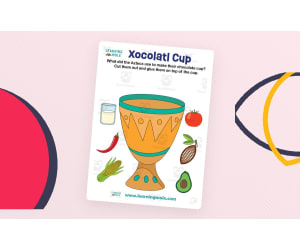
Aztec Chocolate Activity
Science, Earth and Environmental Sciences, Life Sciences, Nature & Plants, Grade 2, 3, 4, 5, 6, 7, 8, 9, Activities
Activity Introduction An amazing activity designed for the students to learn more about STEM subjects. Aztec Chocolate Do you like STEM subjects? what is your favorite one? Have you ever tried to plant a seed? If yes, tell us more about it. Or have you ever tried to invent something? If yes, tell us more about it. And how do you think it will help us? Have you ever seen a microorganism under a microscope? What was it? And how it looked like? Mathematics is a marvelous subject. Let' sharpen our brains and solve some equations. Do you like timetable tricks? What is your favorite one? Do you know how to code? Have you ever created an app or a game before? If yes, how was it like? Aztec Chocolate Activity The activity is perfect for encouraging the researching skills for the students, while learning more about this fantastic plant. Aztec Chocolate This friendly designed worksheet is suitable for students at school, homeschooling, and as a group activity. Instructions What did the Aztecs use to make their chocolate cup? Cut them out and glue them on top of the cup. Format Available in a PDF format.
Author Educational Voice
Tags Aztec Chocolate Activity, Aztec Chocolate, Chocolate, Chocolate Facts, Chocolate Facts For Kids, Chocolate Activity, STEM, Cocoa

Free Science Phase Changes Vocabulary Interactive Hangman Game
Science, Basic Science, Chemistry, Earth and Environmental Sciences, Environmental Science, Grade 7, Games, Activities
Phase Changes Vocabulary Words to Review and Reinforce Definitions of the 7TH Grade Science Curriculum . Students will learn and practice terms through definitions and characteristics. The engaging activity promotes collaboration and class discussion as students review terms definitions, and more with multiple visuals and learning formats like multiple choice questions, memory games, hang-man, and others. This versatile resource can be used for whole-group instruction, small-group practice, or independent work, just practice the words and then review them by choosing the correct one, it will self-correct you until you choose the correct answer Practice your Vocabulary with this Free Interactive Game Introduce young learners to a variety of visuals with this entertaining digital game. Students will see the names and images of different words and definitions; exercising visual memory and concentration. This self-checking activity can be played independently or as a whole class game projected on a smartboard. The vibrant slideshow stimulates engagement while building construction classification skills. students will build their knowledge of important terms and definitions while having fun playing games. This activity stimulates intelligence, builds concentration, reinforces letter recognition, improves spelling and pronunciation, and engagingly expands vocabulary. It's a perfect supplement for your lesson. Check our shop, material, and products for more interactive construction vocabulary reviews covering other topics like human microbiome, metabolism, and more grade levels in science and Spanish language arts. Download this versatile 21-slide PowerPoint today!
Author ShapeUp-N-Matematicas y Lenguaje
Tags SCIENCE, Scientific Argument, Phase Changes, Matter States, Solid, Liquid, Gas, Molecule Attraction, Temperature, Freedom Movement

Transport Mazes (PDF)
ELA, Language Development, Resources for Teachers, Vocabulary, Spelling, ESL, Technology, Science, Grade 2, 3, 4, 5, Worksheets & Printables, Worksheets, Teacher Tools, Centers, Activities, Mazes
Maze Series Designed for grades 2–5, this series pairs scene-based mazes with light drawing tasks. Students first navigate the maze, then sketch a few target words from a simple word list. Pages rotate through varied styles and gradually increase in difficulty. An optional “color it in” step adds a creative finish, and select themes include quick, kid-friendly calculations. Student-friendly and classroom-ready, these pages are perfect for literacy warmups, seasonal units, fast-finisher bins, centers, sub plans, or home learning. The playful, structured format builds problem-solving, attention to detail, and fine-motor control while reinforcing themed content in a motivating way. Note: Not all word-list terms appear on the maze pages. For complete vocabulary coverage, use the companion word list linked in the resource. Transport Word List 1. Land Vehicles Car, Bus, Truck, Train, Motorcycle, Bicycle, Scooter, Taxi 2. Water Transportation Boat, Ship, Submarine, Kayak, Sailboat, Ferry, Yacht, Raft 3. Air Transportation Airplane, Helicopter, Hot air balloon, Rocket, Glider, Parachute, Drone, Blimp 4. Public Transportation Subway, Tram, Monorail, Rickshaw, Trolley, Cable car, Shuttle, Bullet train 5. Describing Transport Fast, Slow, Safe, Heavy, Light, Noisy, Smooth, Bumpy 6. People & Jobs in Transportation Driver, Pilot, Captain, Conductor, Traffic officer, Engineer, Mechanic, Flight attendant PDF Version Other versions will appear here when available. Follow the store for the lastest on new products. How to Use These Mazes Perfect for: Morning work or early-finisher bins Literacy or STEM centers Holiday/seasonal review lessons Independent stations, sub plans, or take-home enrichment More Transport Themed Products CROSSWORDS WORD SEARCHES FULL CATALOG OF DOWNLOAD LINKS HERE Themed Mazes Links Addition PDF Animals PDF Around the Home PDF Birthday PDF Candy PDF Christmas PDF Cinco de Mayo PDF Clothes PDF Colors PDF Days and Months PDF Division PDF Earth Day PDF Easter PDF Easy Mazes PDF Fall PDF Father's Day PDF Food PDF Geography (Set 1) PDF Geography (Set 2) PDF Geography (Set 3) PDF Graduation PDF Health PDF History (Set 1) PDF History (Set 2) PDF History (Set 3) PDF Human Body PDF Kindness PDF Life Skills PDF Mother's Day PDF Multiplication PDF Science (Set 1) PDF Science (Set 2) PDF Science (Set 3) PDF Shapes PDF Social Skills PDF Spring PDF Sports PDF St. Patrick's Day PDF Subtraction PDF Summer PDF Thanksgiving PDF Transport PDF Valentine's Day PDF Winter PDF Mazes in Depth Structure Each maze is crafted around a focused sub-theme. Students navigate the maze, encountering branches and cul-de-sacs that build attention and planning. Most pages include a tiny follow-up box—students draw or label 2–3 target words from a small word box, add a quick count, or color in the scene—so the activity reinforces both content and skills in a highly engaging format. Each completed set includes: A themed maze page. A simple student instruction strip. An answer key showing the solved path for teacher support or self-checking Themes Included These mazes cover a wide range of fun, age-appropriate themes, including: Seasons & Holidays (e.g., Halloween, Easter, Valentine’s Day) Math-Lite Connections (e.g., quick counts, number words) Everyday Topics (e.g., Animals, Weather, School) Special Units (e.g., Health, Earth Day, Sports, Kindness) Each topic reflects students’ real-life experiences and interests while strengthening problem-solving, visual scanning, and fine-motor control in a playful, highly visual way. Easy extensions (optional): Time it: solve once in pencil, then try to beat the time in pen Retell the route using sequence words (first, next, then, finally) Count intersections or turns and graph the results Write a 1–2 sentence mini-story about the scene using the target words Design a tiny maze in the corner for a partner to solve Differentiation tips: Offer a finger-trace pass before pencils for emerging learners Highlight the borders of the correct region on first attempts Use thicker-line versions or simpler pages to build confidence Pair roles: “navigator” gives directions; “driver” traces the path For similar downloads and other frees, do check out Cored Group on TeachSimple.
Author Cored Education
Rating
Tags Vocabulary, Spelling, Transport, Water Transportation, Air Transportation, Public Transportation, Maze, Mazes, Ela Mazes, Transport Mazes

World Vegan Day Word Search 2nd 3rd 4th 5th Grade worksheet activity
Spelling, Language Development, ELA, Vocabulary, Health, P.E. & Health, Earth Sciences, Earth and Environmental Sciences, Science, Grade 2, 3, 4, 5, Games, Activities, Word Searches, Worksheets, Worksheets & Printables
Make learning fun with a no-prep, printable vocabulary word search that builds vocabulary, reinforces literacy, and sparks curiosity! Students can explore the new vocabulary words while practicing spelling, scanning for letters, and identifying keywords. A word search can be a perfect and easy-to-use activity to liven up a lesson by combining learning with fun! It is an excellent way to reinforce concepts within a lesson and engage students' hands-on learning. Purpose: This activity allows students to learn new vocabulary words and contextualized vocabulary related to a topic ✏️, improve spelling, reading, and attention to detail 📚, increase awareness of concepts and knowledge about the world at large 🌍, and encourage curiosity and engagement about the topic 🐾. Word searches are a hands-on way to make learning memorable and fun for students - it engages them at all vocabulary levels! How to Do It: 1️⃣ Hand out the word search worksheet. 2️⃣ Introduce any important vocabulary or concepts that fit with the topic. 3️⃣ The students search for the words and circle or highlight each one. 4️⃣ Discuss the importance of the topic or the words that the student found. 5️⃣ Review the answers using the answer key that is included for each product ✅ Perfect For: Grades 2-5 🌟, independent practice, partner work, students who finish early, science or social studies centers, or for substitute plans 🤝 Way of Implementation: Great for independent practice early finishers, partner work, or substitute plans 🤝. Answer Keys: (these will be pencils under your three files: Given for simple checking and self-assessing. Fun Variations: Timed Challenge ⏳ - record how many words students can find in a set time. Partner Puzzle 🤝 - work together to find all of the words. Vocabulary Extension ✏️ - write sentences or a few short paragraphs using the words. Create-Your-Own Word Search 🧩 - have students make their own word search puzzles using the vocabulary. Standards Alignment: Supports CCSS/ELA vocabulary development, and can also connect to NGSS or other relevant standards, depending on the topic. File & Print Info: PDF includes both a color and black and white version, and is ink-friendly to make printing easy. Teacher Tip! Have students learn by being hands-on, engaged, and active while helping them build awareness, vocabulary, and literacy skills around any topic! 🌟
Author Classsim
Rating
Tags World , Vegan , Day, Word Search , 2nd 3rd 4th 5th Grade , Worksheet , Activity, World Vegan Day Word Search , World Vegan Day Word Search 2nd 3rd 4th 5th Grade, World Vegan Day Word Search 2nd 3rd 4th 5th Grade Worksheet Activity

Wolves Know-It-Alls! Audio Book
Science, Life Sciences, Animals, Grade 2, 3, 4, Read Alouds, Activities
As part of the unique, science Know-It-Alls! Series that features interesting science facts, this audiobook puts the spotlight on Wolves! Did you know a wolf can pick up the scent of an animal from a mile (1.6km) away? Awesome narration and sound effects plus many interesting facts, makes this audiobook fun and exciting for young science enthusiasts age 4 and up! Titles in the Know-It-Alls! Series include: Butterflies, Crocodiles, Dinosaurs, Farm Animals, Safari Babies, Snakes, Sharks, Spiders, Whales, Wolves, Puppies, Wild Cats, Bugs, Birds of Prey, Fish, Frogs, Apes, Seals, Bats, Bears, Predators, Mummies, Volcanoes, Lizards, Kittens and Horses.
Author Twin Sisters Digital Media
Tags Science, Learning, Wolves, Animals, Ebook
Cell Organelles - Device-Based Scavenger Hunt Activity - Let the Hunt begin!
Science, Life Sciences, Biology, Grade 7, 8, 9, 10, Activities
Cell Organelles - Device-Based Scavenger Hunt Activity Invite your students to delve into the fascinating world of cellular biology. This cutting-edge teaching tool is uniquely adapted for grade 7-10 science students with a keen focus on Biology. The multi-file download caters to a variety of implementation methods, whether as group activities or individual assignments that promote self-learning exploration. The device-based component allows for flexible use with smartphones, Chromebooks, laptops or tablets – fostering tech-savvy minds while learning. This teaching resource links each QR code scanned with integral pieces of knowledge related to cell organelles like the Golgi Body, Endoplasmic Reticulum, Nucleus, Cell Membrane & more plus brief touches upon cellular diseases. An Innovative Learning Journey: Scanning QR Codes: Each successful scan discloses hidden information vital in learning about cell organelles gradually. Evaluation Ease: Seamless evaluation tools available through my website allowing direct submissions of student task completion that eliminates traditional paperwork hassles. Tailor-Made Experience: The design encapsulates limitless adaptability potential according your unique classroom needs ensuring every student enjoys this exciting adventure inside cells - may it be via educational videos or simulations or weaving an open-ended story! . Dare to transcend traditional boundaries and immerse your students in an unforgettable journey within cells enhancing both their scientific knowledge and technology usage literacy simultaneously!
Author Teach With Fergy
Tags Cell Organelles, Scavenger Hunt, Biology, Interactive Learning, Technology

Potential Energy Experiment Activity
Science, Physics, Grade 4, 5, 6, 7, 8, 9, 10, Activities, Experiments
Activity Introduction An amazing activity designed for the students to learn more about STEM subjects. Potential Energy Experiment Do you like STEM subjects? what is your favorite one? Have you ever tried to plant a seed? If yes, tell us more about it. Or have you ever tried to invent something? If yes, tell us more about it. And how do you think it will help us? Have you ever seen a microorganism under a microscope? What was it? And how it looked like? Mathematics is a marvelous subject. Let' sharpen our brains and solve some equations. Do you like timetable tricks? What is your favorite one? Do you know how to code? Have you ever created an app or a game before? If yes, how was it like? Potential Energy Experiment Activity The activity is perfect for encouraging the researching skills for the students, while learning more about this topic. Potential Energy Experiment This friendly designed worksheet is suitable for students at school, homeschooling, and as a group activity. Instructions Do the following experiment to test the speed of various objects rolling down an inclined plane. Format Available in a PDF format.
Author Educational Voice
Tags Potential Energy Experiment Activity, Potential Energy Experiment, Potential Energy, Potential Energy Facts, Potential Energy Facts For Kids, STEM, Physics, Physics Facts, Physics Facts For Kids
Reading Passage 12: Electricity, Electrical Circuits, Energy Slides
Science, Physics, Common Core, ESL, Language Development, ELA, Spelling, Reading Comprehension, Reading, Resources for Teachers, Grade 2, 3, 4, Presentations, Teacher Tools, Tests, Quizzes and Tests, Assessments, Activities
Free Reading Passage on Electricity, Electrical Circuits, and Energy for Physical Science What's inside this free product? Science Reading Comprehension Passage12 : Electricity, Electrical Circuits, and Energy Independent Google Slides Version: This is the independent Google Slides version containingone lesson with full answer keys. Product Info: 28 SLIDES (US English with Answers) Google Slides Version Teaching Duration: 90 Minutes Science Reading Comprehension Outline: Targeted for students in 3rd and 4th grades, these reading passages are enhanced with illustrations and graphs to elucidate critical points. Each lesson aligns with the Common Core State Standards, allowing you to integrate science reading practice effortlessly, knowing that minimal preparation is needed on your part. Each passage comes with a variety of questions in different formats, including multiple-choice formats, data analysis, and fill-in-the-blanks. The topics covered strike a balance between engaging content and core curriculum-based science subjects. Versatile in application, these lessons are suitable for a variety of settings such as whole-class instruction, morning activities, independent desk work, small group discussions, contingency plans for substitute teachers, homework assignments, or even special holiday-themed tasks. FULL CATALOG OF DOWNLOAD LINKS HERE Grade 3/4 Links: Physical Science Part 1 - Properties of Objects and Materials Google Docs/Slides/Forms PDF PPT Word Free Supplementary Pack Accompanying Videos Physical Science Part 2 - Position and Motion of Objects Google Docs/Slides/Forms PDF PPT Word Free Supplementary Pack Accompanying Videos Physical Science Part 3 - Light, Heat, Electricity, Magnetism Google Docs/Slides/Forms PDF PPT Word Free Supplementary Pack Accompanying Videos Life Science Part 1 - Characteristics of Organisms Google Docs/Slides/Forms PDF PPT Word Free Supplementary Pack Accompanying Videos Life Science Part 2 - Life Cycles of Organisms Google Docs/Slides/Forms PDF PPT Word Free Supplementary Pack Accompanying Videos Life Science Part 3 - Organisms and Environments Google Docs/Slides/Forms PDF PPT Word Free Supplementary Pack Accompanying Videos Earth Science Part 1 - Properties of Earth Materials Google Docs/Slides/Forms PDF PPT Word Free Supplementary Pack Accompanying Videos Earth Science Part 2 - Changes in the Earth and Sky Google Docs/Slides/Forms PDF PPT Word Free Supplementary Pack Accompanying Videos Earth Science Part 3 - Objects in the Sky Google Docs/Slides/Forms PDF PPT Word Free Supplementary Pack Accompanying Videos For similar products and other frees, do check out Cored Group on TeachSimple .
Author Cored Education
Tags Science, Elementary, Reading, Comprehension, Vocabulary, Answers, Physics, Physical Science, Ccss, Common Core
Physics of Sports Writing Activity Pack for 6th-8th Grade Science ELA
ELA, Writing, Physics, Science, Grade 6, 7, 8, Centers, Activities, Writing Prompts, Worksheets & Printables
This 11-page resource gives students everything they need to practice creative writing, sequencing, sentence building, adjectives, and character creation—all wrapped in an engaging Gingerbread Man theme. Each worksheet is clean, kid-friendly, and easy to pair with any Gingerbread Man read-aloud, making it perfect for December literacy activities. The pack includes a variety of writing prompts and graphic organizers such as: • A New Ending for the Gingerbread Man writing prompt • If the Gingerbread Man Visited Your School prompt • An adjectives chart to Describe the Gingerbread Man • A Beginning–Middle–End sequence chart • Draw & Write pages for creating a new gingerbread character • A character creation worksheet • Fill-in-the-sentences practice • A cut-and-paste sequencing activity with picture icons • A Gingerbread-themed word bank • A student writing checklist to support editing skills Students will build essential skills in creative writing, sequencing, sentence structure, descriptive language, character traits, drawing to support writing, and self-editing. Perfect for literacy centers, writing workshop, small-group lessons, fast finishers, substitute plans, winter lessons, and Gingerbread Man read-aloud units. All pages are black-and-white, print-friendly, and easy for teachers to use. File type: PDF Number of pages: 11
Author Sadigitalart
Rating
Tags Physics , Independent Practice, Physical Education, Sports, Homework Assignment
Science Crossword - Set 2: 1 Page Sample (PDF)
ELA, Language Development, Vocabulary, Spelling, ESL, Resources for Teachers, Science, Physics, Earth and Environmental Sciences, Life Sciences, Grade 2, 3, 4, 5, Worksheets & Printables, Worksheets, Teacher Tools, Crosswords Puzzles, Centers, Activities
THIS IS A ONE PAGE SAMPLE OF A SIX CROSSWORD DOWNLOAD FULL SIX CROSSWORD DOWNLOAD INFORMATION: Crossword Series (Themed) This crossword series is designed for students in grades 2–5. Each set of crosswords is built around a clear vocabulary theme, allowing students to strengthen their word recognition, build subject-based knowledge, and reinforce early literacy and thinking skills. Each topic includes six crossword sets , and each set features the following consistent structure: 1. 8 vocabulary clues 2. Crossword puzzle 3. Answer key 4. 1 Did You Know fact related to the set These crosswords are designed to be student-friendly, classroom-ready, and easily integrated into thematic units, seasonal learning, morning work, or independent literacy stations. Science Crosswords Set 2 Word List 1. Energy and Electricity Energy, Electricity, Battery, Circuit, Switch, Solar, Light, Heat 2. Rocks and Minerals Rock, Mineral, Fossil, Sand, Crystal, Diamond, Lava, Soil 3. Life Cycles Egg, Larva, Pupa, Adult, Seed, Sprout, Grow, Change 4. The Water Cycle Water, Evaporate, Condense, Cloud, Rain, Puddle, River, Ocean 5. Scientific Inquiry and Tools Observe, Hypothesis, Experiment, Measure, Balance, Ruler, Data, Graph 6. Natural Disasters Earthquake, Tsunami, Hurricane, Tornado, Flood, Drought, Lightning, Volcano PDF Version Other versions will appear here when available. Follow the store for the lastest on new products. How to Use This Crossword These crosswords are ideal for whole-class work, small groups, literacy centers, or take-home activities. Use one set per day, or spread them across a week or month depending on your curriculum needs. Each clue has been crafted to align with the reading level of grades 2–5, with support for both decoding and meaning. The Did You Know? facts offer additional extension opportunities for writing, drawing, or display work. Whether you're reinforcing vocabulary, exploring a seasonal topic, or adding variety to your literacy block, these crosswords provide a fun, flexible, and focused way to boost early literacy in an engaging format. More Science Themed Products Science Crosswords (Set 1) PDF Science Crosswords (Set 3) PDF FULL CATALOG OF DOWNLOAD LINKS HERE Themed Crossword Links Addition PDF Animals PDF Around the Home PDF Birthday PDF Candy PDF Christmas PDF Cinco de Mayo PDF Clothes PDF Colors PDF Days and Months PDF Division PDF Earth Day PDF Easter PDF Easy Crosswords PDF Fall PDF Father's Day PDF Food PDF Geography (Set 1) PDF Geography (Set 2) PDF Geography (Set 3) PDF Graduation PDF Health PDF History (Set 1) PDF History (Set 2) PDF History (Set 3) PDF Human Body PDF Kindness PDF Life Skills PDF Mother's Day PDF Multiplication PDF Science Crosswords (Set 1) PDF Science Crosswords (Set 2) PDF Science Crosswords (Set 3) PDF Shapes PDF Social Skills PDF Spring PDF Sports PDF St. Patrick's Day PDF Subtraction PDF Summer PDF Thanksgiving PDF Transport PDF Valentine's Day PDF Winter PDF Crosswords in Depth Structure Each crossword clue is written in simplified language to suit early readers, and follows a strict number-and-clue format (e.g., 1.A shape with four sides ). Students complete each puzzle using the themed vocabulary provided, helping to build both content knowledge and spelling confidence. Each completed set includes: A questions section with clearly formatted clues An answers section to support teacher checking or independent correction A Did You Know? fact tied to the topic (one per set) to add curiosity and cross-curricular value Themes Included The crosswords cover a wide variety of engaging, age-appropriate themes such as: Seasons & Holidays (e.g., Winter, Easter, Valentine’s Day) Math Concepts (e.g., Addition, Subtraction, Multiplication, Division) Everyday Topics (e.g., School, Colors, Animals, Weather) Special Units (e.g., Health, Earth Day, Sports, Graduation, Kindness) Each theme is carefully selected to reflect the experiences and interests of young learners, while reinforcing vocabulary and comprehension. For similar downloads and other frees, do check out Cored Group on TeachSimple.
Author Cored Education
Rating
Tags Vocabulary, Spelling, Crosswords, Science, Science Crosswords, Energy And Electricity, Rocks And Minerals, Life Cycles, The Water Cycle, Natural Disasters
Earth Science Reading Comprehension Passage: Types of Mountains (PDF)
Science, ELA, Reading, Reading Comprehension, Strategies, Resources for Teachers, Earth and Environmental Sciences, Earth Sciences, Grade 6, 7, 8, 9, Writing Prompts, Worksheets & Printables, Centers, Activities, Teacher Tools, Assessments, Quizzes and Tests, Quizzes, Tests
Science Reading Comprehension Passages and Questions: Types of Mountains (PDF) This very engaging earth science reading passage about Types of Mountains is designed to bridge the gap between science and literacy through strengthening reading comprehension and sparking scientific curiosity in middle school students. The passage blends English Language Arts skills with accurate science content that supports NGSS classroom practice. Ideal for interdisciplinary learning in ELA and Science. Suitable for Grade 9 review, too! Student Tasks for The Passage: 5 multiple-choice questions targeting main idea, key details, inference, vocabulary in context, and use of evidence 5 vocabulary matching items with clear, student-friendly definitions 5 text-based questions that require citing specific lines or facts 1 summary prompt that asks students to condense central ideas accurately Full answer key for every section Available Formats for this Resource Fillable PDF Word Docs Google Docs FULL CATALOG OF DOWNLOADING LINKS HERE Product Details Length: 4 pages total Grades: 6–8, also suitable for Grade 9 review Use cases: close reading, stations, homework, intervention, test prep, and sub plans Standards support: reinforces informational-text skills and supports NGSS-style sense making through observation, modeling, and clear use of claim, evidence, and reasoning Why Teachers Choose This Set Authentic science content paired with rigorous literacy practice Consistent task structure across all passages for easier planning and smoother student routines Clear, age-appropriate writing that builds confidence without oversimplifying Other Science Reading Collections you May find in the store: 1. Astronomy & Space Science 2. Volcanoes, Rocks, & Mountains 3. Rock Cycle, Soil, & Sinkholes 4. Mars, Glaciers, & Antarctica 5. Water Cycle, Acid Rain, & Wastewater 6. Insects, Animals, & Ecosystems 7. Bioluminescence & Insects 8. Animal Skin, Cats, & T. Rex 9. Human Body and Senses 10. Health & Applied Bioscience 11. Waves, Light, & Imaging 12. Electricity & Energy 13. Motion & Materials 14. Chemistry and Materials Science Use this set to reinforce ELA skills in science, to add literacy to your lessons, and to support independent work. The passages strengthen main idea, evidence use, vocabulary in context, inference, cause and effect, and summary writing. With ready-to-use assessments and complete answer keys, you can provide focused practice that is simple to run and fast to review.
Author Middle & High School - CORED Education
Rating
Tags Middle School, Reading Comprehension, Reading Strategies, ELA, Centers, Reading Passage, Assessments, Vocabulary, Environmental Science, Earth Science