



3,980 products added recently
Page 50 - Science Activities
Ignite your students' interest in science with activities that make learning interactive and exciting. This collection offers experiments, demonstrations, and inquiry-based projects covering various scientific fields. By integrating these science activities into your lessons, you can encourage critical thinking, foster curiosity, and deepen understanding of scientific concepts.

 Show filters

Genetics ~ Create a Baby Lab
Science, Life Sciences, Human Body, Grade 8, 9, 10, 11, 12, Activities
Have your students “Create a Baby” based on specific dominant or recessive traits! The Create A Baby lab can be used during any unit on genetics, all that is needed are some pennies and colored pencils. Students will “create” or draw a baby based on traits acquired through chance. This lab is very flexible as it will work for any level student from English Learner - EL - to more advanced students. This product includes a complete lab, brief guidelines, an answer key and discussion questions.
Author The Teacher Team
Tags Anatomy, Biology, Genetics, Lab, ELL

African Animals - I Have Who Has Cards
Science, Life Sciences, Animals, Grade 3, 4, 5, 6, Activities
These are African Animals - I Have Who Has Cards. This set of cards comes with 2 levels for differentiation. Animal characteristics and traits are the focus for these cards, making it a great review or introduction for students when studying animals. Cards are printed 4 per page. You will print, cut and laminate for durability.
Author More Than Just Reading
Tags Game Cards, African Animals, I Have Who Has, Whole Group Games, Literacy

Earth Science Reading Comprehension Passage: Soil Types (Fillable PDF)
Science, ELA, Reading, Reading Comprehension, Strategies, Resources for Teachers, Earth and Environmental Sciences, Earth Sciences, Geology, Grade 6, 7, 8, 9, Writing Prompts, Worksheets & Printables, Centers, Activities, Teacher Tools, Assessments, Quizzes and Tests, Quizzes, Tests
Science Reading Comprehension Passages and Questions: Soil Types (Fillable PDF) This very engaging earth science reading passage about Soil Types is designed to bridge the gap between science and literacy through strengthening reading comprehension and sparking scientific curiosity in middle school students. The passage blends English Language Arts skills with accurate science content that supports NGSS classroom practice. Ideal for interdisciplinary learning in ELA and Science. Suitable for Grade 9 review, too! These worksheets are designed as fillable PDFs , which means students can type their answers directly into the document on any computer or tablet . Each page includes highlighted text fields that show them exactly where to type! Student Tasks for The Passage: 5 multiple-choice questions targeting main idea, key details, inference, vocabulary in context, and use of evidence 5 vocabulary matching items with clear, student-friendly definitions 5 text-based questions that require citing specific lines or facts 1 summary prompt that asks students to condense central ideas accurately Full answer key for every section Available Formats for this Resource PDF Word Docs Google Docs FULL CATALOG OF DOWNLOADING LINKS HERE Product Details Length: 5 pages total Grades: 6–8, also suitable for Grade 9 review Use cases: close reading, stations, homework, intervention, test prep, and sub plans Standards support: reinforces informational-text skills and supports NGSS-style sense making through observation, modeling, and clear use of claim, evidence, and reasoning Why Teachers Choose This Set Authentic science content paired with rigorous literacy practice Consistent task structure across all passages for easier planning and smoother student routines Clear, age-appropriate writing that builds confidence without oversimplifying Other Science Reading Collections you May find in the store: 1. Astronomy & Space Science 2. Volcanoes, Rocks, & Mountains 3. Rock Cycle, Soil, & Sinkholes 4. Mars, Glaciers, & Antarctica 5. Water Cycle, Acid Rain, & Wastewater 6. Insects, Animals, & Ecosystems 7. Bioluminescence & Insects 8. Animal Skin, Cats, & T. Rex 9. Human Body and Senses 10. Health & Applied Bioscience 11. Waves, Light, & Imaging 12. Electricity & Energy 13. Motion & Materials 14. Chemistry and Materials Science Use this set to reinforce ELA skills in science, to add literacy to your lessons, and to support independent work. The passages strengthen main idea, evidence use, vocabulary in context, inference, cause and effect, and summary writing. With ready-to-use assessments and complete answer keys, you can provide focused practice that is simple to run and fast to review.
Author Middle & High School - CORED Education
Rating
Tags Middle School, Reading Comprehension, Reading Strategies, ELA, Centers, Reading Passage, Assessments, Vocabulary, Environmental Science, Earth Science

Reading Comprehension - Spiders - Creepy Crawlies or Masterpieces?
Animals, Life Sciences, Science, Insects, Research, Reading, ELA, Reading Comprehension, Middle School, High School, Elementary, Homeschool Resources, Writing Prompts, Worksheets & Printables, Projects, Activities
Spiders, scientifically known as "arachnids," are fascinating to many people, especially kids. And there are so many different kinds. I learned a lot while creating this reading comprehension activities pack. Kids will read the article (link provided to the article inside product) and answer the questions. Many of the questions are fill in the blank, some are multiple choice, some true/false. There are also multiple essay question, writing prompts. And a bonus section for motivated students to look at what the Bible says about living things. Students will be given the opportunity to choose which side they are on regarding evolution vs creation, without judgment. They will be required to research and support the side they choose in their essays. Answer keys are included for the objective questions. The product is simple: 31 questions, including multiple choice, true/false, plus two short writing prompt type questions, one of which is partly subjective, but requires a thoughtful answer. Extra credit questions are included. 33 vocabulary words - can be used to increase student comprehension, increase scientific vocabulary, and can be used for alphabetizing and/or spelling tests. 8 Bible verse references - Bible as literature is an allowed subject in the public schools. Also, just looking up verses and drawing your own conclusions should align with standards. This activity is optional, of course. One bonus activity for students to write their thoughts on the 8 Bible verses. Two essay questions, one considered a "challenge." Can be used for extra motivated students or students who are trying to improve their grade. Of course, any writing a student does will build your writing fluency, especially when writing is done in a variety of fields, including, science, history, literature, etc. Answer keys for objective questions. My products are never grade specific, because students are at different levels even when they are at he same grade level in school. Probably 4th through high school would be the most appropriate. Product is downloadable, printable pdf.
Author Homeschooling Dietitian Mom
Tags Reading Comprehension Assessment, Reading Comprehension, Biology Projects, Guided Reading Activity, Science Projects, Inferencing Activities, Reading Strategies, Short Writing Prompts, Basic Science Lesson Plans
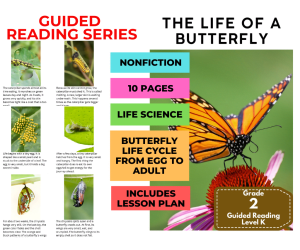
Guided Reading Level K - The Life of a Butterfly (with Lesson Plan)
ELA, Resources for Teachers, Reading Comprehension, Reading, Pre-Reading, Language Development, Insects, Life Sciences, Science, Vocabulary, Grade 1, 2, 3, Worksheets & Printables, Worksheets, Teacher Tools, Centers, Activities, Literacy Readers, Quizzes, Quizzes and Tests, Assessments
This Guided Reading Book - The Life of a Butterfly (Level K) with lesson plan includes: Guided Reading Color Label (front cover x1) This is a quick way to match the book’s demands to what students can generally handle.. The overall goal is to use the level/color to pick books for several smaller groups. To qualify for a certain level, a student is expected to read a book from that level with about 90–94% accuracy. If a student is consistently accurate and understands, move up a level. If the student is struggling at that level, drop down and add more support. Each student will improve at completely different rates, but it is generally one of the best ways to check progress across the class. DOWNLOAD THE CATALOG TO VIEW ALL GUIDED READING BOOKS AVAILABLE (SORTED LEVELS A-Z) Pre-Reading Question (x1) Teacher asks the prompt aloud, can be while showing the cover or first page. Students share what they already know, or make educated guesses from the cover. Prompt them to use the target vocabulary. Write some of their responses on the board to look back at during the reading. Vocabulary Words (x5) Introduce the five words, best doing it one at a time. Start by saying it, while students repeat and then see if anyone knows what it means before reading further. Read through the meaning and try to briefly connect each word to a picture or gesture so it’s meaningful. Ask students to flip through the book pages and point to where they see each of the vocabulary words. While reading the book pause upon coming across one of the vocab words or read the sentence twice to make sure students understand the word has appeared. Optional: Ask students to raise hands whenever they see/hear one of the new words. Guided Reading Pages (x10) Check the book snapshot (below) for: primary topic - do you need to prep extra reading or intro materials on this? what is taught best - decide on 1-2 bullets to focus on, use the prompt or words provided here for best results. learning goals - what you are checking for students to be able to do after the session, elicit answers using prompts or words provided. key vocabulary (see section above). questions overview - so you know what is coming up and if you need to prep extra materials to assist understanding. Run the lesson You may have already looked at a few of the pages together, but you can show them some of the pictures again first to set meaning. Depending on how much time you have and how familiar your students are with guided reading class, you may want to read the book aloud first with the group first. Students whisper or partner read, while you listen in. If time, do it as a group, one student reading a page each. Use the guided page’s prompts to coach: “Check the picture / does it make sense?” “Point under the words / try the first sound” “Reread the sentence smoothly”. Try to focus more on one student per session (rotating every time), so you can work out if they are ready to move up or need to move down a level. Comprehension Questions (back cover x3) This is your way to check that students didn’t just say the words, but actually understood the text. First, let students answer by pointing to the page/picture and saying a short sentence. After any answer, follow with: “Show me where you found that in the text.” In bigger groups, have partners answer first (10–20 seconds), then call on 2–3 students to share. Differentiation tips: Emerging speakers/struggling readers: oral + pointing On-level: oral in a full sentence Higher: one written sentence or draw + label Book Snapshot Title: The Life of a Butterfly Genre: Nonfiction (informational) Subject: Life Science Primary Topic: Butterfly life cycle from egg to adult Estimated Guided Reading Level (A–Z): K What This Book Teaches Best Explains the butterfly’s life cycle in order, beginning with a tiny egg and ending with an adult butterfly ready to fly. Describes how a caterpillar eats, grows quickly, and molts because its skin cannot grow. Introduces the chrysalis as the hard shell a caterpillar is inside while it changes. Describes what happens when the butterfly comes out, including how its wings change as they dry and become strong. Connects the butterfly’s feeding to plants by explaining it drinks nectar and helps flowers grow. Learning Goals Students can describe where the butterfly’s life begins, using details from the text. Students can explain why a caterpillar must shed its skin, according to the book. Students can describe what a chrysalis is and what happens inside it, using text details. Students can retell key events from the egg stage through the butterfly flying, in the correct order. Students can describe what the butterfly does to make its wings expand, dry, and become strong. Students can explain what the book says the butterfly drinks and how it helps flowers grow. Key Vocabulary From the Text underside — the bottom part of something. hatches — comes out of an egg. molting — shedding old skin so a new one can show. chrysalis — the hard shell a caterpillar is inside while it changes. nectar — sweet liquid in flowers that some insects drink. Discussion Prompts Pre-reading question: What changes do you think happen as a caterpillar becomes a butterfly? Comprehension questions: Where does the book say the butterfly’s life begins? Why does the caterpillar have to shed its skin, according to the text? What does the butterfly do while it waits for its wings to become strong? Printing Tips 1. Best Printing Method (Recommended) “Booklet” Printing (Best if Available) If your printer or PDF viewer supports Booklet Printing , use this. Settings to use: Print mode: Booklet Paper size: Letter or A4 (either works) Orientation: Landscape Print on both sides: Yes Flip on: Short edge Scaling: Fit to printable area Booklet subset: First test: Front sides only Then: Back sides only This will automatically: Pair pages correctly Put the cover on the outside Align everything for folding After printing, fold in half and staple along the spine . 2. If “Booklet” Printing Is NOT Available You can still print this correctly with manual duplex printing . Step-by-step: Open the PDF. Choose Print . Set: Orientation: Landscape Pages per sheet: 1 Print on both sides: Yes Flip on: Short edge Print all pages . Because each PDF page already contains two facing book pages, the result will still fold cleanly into a book. Thousands of Cored Education products are included with your TeachSimple membership. Download links and encyclopedia index available here.
Author Cored Education
Rating
Tags Reading Comprehension, Reading Passages, Reading, Guided Reading, Guided Reading Lesson Plan, Guided Reading Activity, Pre-reading, Vocabulary, Science Lesson Plans, Insects
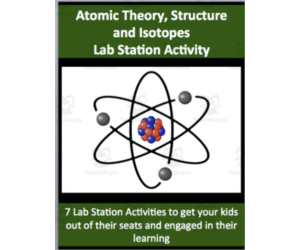
Atomic Theory, Structure and Isotopes – Lab Station Activity
Science, Chemistry, Grade 7, 8, 9, 10, Labs, Experiments, Activities
Atomic Theory, Structure and Isotopes Lab Stations Engage students in learning atomic theory, atomic structure, and isotopes with this interactive lab station activity. Students move through nine stations, including drawing atoms, watching expert videos, completing knowledge checks, reading real-life applications, and formulating their own questions.recording answers on a passport worksheet. This resource requires almost no teacher prep - just print the self-explanatory station cards with detailed student directions. The activity works well for whole group or independent work, covers core topics, and aligns to grades 7-10 science standards. Assessment at multiple stations allows students to exhibit understanding in various ways while staying focused and challenged. Extend student learning by pairing the lab stations with the included word scramble and word search.
Author Teach With Fergy
Tags Atoms, Atomic, Theory, Structure, Isotopes
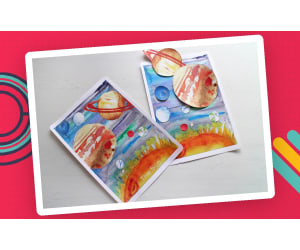
Solar System Poster and Ordering Activity
Science, Earth and Environmental Sciences, Space, Grade 2, 3, 4, Activities
Solar System Poster and Ordering Activity Introducing an engaging, visually impressive, and hands-on approach to teaching astronomy in the classroom or homeschool setting. Specifically designed for grades 2 through 4, this teaching resource fits perfectly into any science curriculum that includes a study of space or the solar system. About The Resource The key component of this resource is a downloadable PDF file that features a beautifully hand-illustrated watercolor poster of the solar system. This engaging poster provides an excellent point of reference for students as they explore their cosmic studies. Creative Application Besides displaying the wonders of our solar system, it's accompanied by a blank version. This unique feature encourages students to apply their learning by constructing their own versions and granting them deeper understanding about each planet's location within our solar realm - making it a lasting learning experience. Ease of Access The files are available for download in PNG format sized to fit A4 paper, ready-to-print right from your home or school printer- ensuring immediate access upon completing your order process with TeachSimple.com. Versatility:This resource offers great versatility enabling educators to use it during whole-group instruction; small group activities providing individualized support; or even assign as homework so students may revise learnings at home. Aim: Our Solar System Poster and Ordering Activity aims to add creativity within your teaching while enriching students' understanding about Astronomy – making itself an essential accompaniment when addressing Sub-subjects within Science syllabus.
Author Fiddleticks Education
Tags Solar System, Astronomy, Poster, Ordering Activity, Hands-on Learning

Zoo Safari animals flashlight cards hidden picture activity
Animals, Life Sciences, Science, Environmental Science, Earth and Environmental Sciences, Kindergarten, Preschool, Toddler, Grade 1, 2, Flashcards, Worksheets & Printables, Centers, Activities, Games
Make learning about zoo and safari animals fun and interactive with these Zoo Safari Animals Flashlight Cards! Students will use a flashlight to reveal hidden animal pictures while practicing animal recognition and building science vocabulary through an exciting hands-on activity. I like using these flashlight cards during zoo animal units, safari animal studies, wildlife lessons, animal science activities, preschool and kindergarten science centers, and homeschool learning. It’s an engaging, low-prep activity that adds a fun element of discovery to animal learning. What You Will Get This printable Zoo Safari Animals Flashlight Cards resource gives students an exciting way to discover hidden zoo and safari animals and review animal vocabulary. What’s Included in this Resource? • Printable zoo and safari animal flashlight cards • Hidden picture reveal activity • Zoo and safari animal vocabulary • Hands-on flashlight discovery activity • Student-friendly science center format • Easy-to-use printable cards • Great for independent or small-group learning This resource is perfect for: • Zoo animal science units • Safari animal studies • Wildlife and animal lessons • Animal science activities • Preschool and kindergarten science centers • Life science learning • Small-group activities • Homeschool learning Why you will love this? • Easy to prepare and use • Creates an exciting hands-on learning experience • Builds observation and visual recognition skills • Reinforces zoo and safari animal vocabulary • Encourages curiosity and independent discovery • Great for science centers and animal-themed units These Zoo Safari Animals Flashlight Cards are a fun way for young learners to discover hidden animals, practice animal recognition, and build observation skills through an interactive animal science activity. Keywords: zoo animals,safari animals,animal science,science centers,flashlight cards,hidden picture activity,zoo animal activity,safari animal activity,animal vocabulary,discovery learning
Author Perfect_Printables
Rating
Tags Animal Science, Science Center Activities, Hidden Picture Activities, Flashlight Cards, Animal Vocabulary, Zoo Animals, Zoo Animals Activity, Wildlife Activities, Safari Animals, Zoo Animal Flashlight Cards
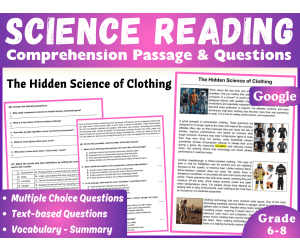
Science Reading Comprehension Passage: The Science of Clothing (Docs)
Science, ELA, Reading, Reading Comprehension, Strategies, Resources for Teachers, Technology, Engineering, Grade 6, 7, 8, 9, Writing Prompts, Worksheets & Printables, Centers, Activities, Teacher Tools, Assessments, Quizzes and Tests, Quizzes, Tests
Science Reading Comprehension Passage and Questions: The Hidden Science of Clothing (Docs) This very engaging science reading passage is about how modern clothing uses science and technology to improve safety, performance, comfort, and exploration . It explains different examples of high-tech clothing and materials, including compression clothing for athletes, flame-resistant clothing for firefighters and workers, aerogel for astronaut suits and space rovers, and smart fabrics that can play music, answer calls, or track a heartbeat. The visuals on page 1 support these examples by showing athletic clothing, protective work gear, and space-related clothing. This passage is designed to bridge the gap between science and literacy through strengthening reading comprehension and sparking scientific curiosity in middle school students. The passage blends English Language Arts skills with accurate science content that supports NGSS classroom practice. Ideal for interdisciplinary learning in ELA and Science. Suitable for Grade 9 review, too! Student Tasks for The Passage: 5 multiple-choice questions targeting main idea, key details, inference, vocabulary in context, and use of evidence 5 vocabulary matching items with clear, student-friendly definitions 5 text-based questions that require citing specific lines or facts 1 summary prompt that asks students to condense central ideas accurately Full answer key for every section Available Formats for this Resource PDF Fillable PDF Word Docs FULL CATALOG OF DOWNLOADING LINKS HERE Product Details Length: 4 pages total Grades: 6–8, also suitable for Grade 9 review Use cases: close reading, stations, homework, intervention, test prep, and sub plans Standards support: reinforces informational-text skills and supports NGSS-style sense making through observation, modeling, and clear use of claim, evidence, and reasoning Why Teachers Choose This Set Authentic science content paired with rigorous literacy practice Consistent task structure across all passages for easier planning and smoother student routines Clear, age-appropriate writing that builds confidence without oversimplifying Other Science Reading Collections you May find in the store: 1. Astronomy & Space Science 2. Volcanoes, Rocks, & Mountains 3. Rock Cycle, Soil, & Sinkholes 4. Mars, Glaciers, & Antarctica 5. Water Cycle, Acid Rain, & Wastewater 6. Insects, Animals, & Ecosystems 7. Bioluminescence & Insects 8. Animal Skin, Cats, & T. Rex 9. Human Body and Senses 10. Health & Applied Bioscience 11. Waves, Light, & Imaging 12. Electricity & Energy 13. Motion & Materials 14. Chemistry and Materials Science Use this set to reinforce ELA skills in science, to add literacy to your lessons, and to support independent work. The passages strengthen main idea, evidence use, vocabulary in context, inference, cause and effect, and summary writing. With ready-to-use assessments and complete answer keys, you can provide focused practice that is simple to run and fast to review.
Author Middle & High School - CORED Education
Rating
Tags Middle School, Reading Comprehension, Reading Strategies, ELA, Centers, Reading Passage, Assessments, Vocabulary, Technology
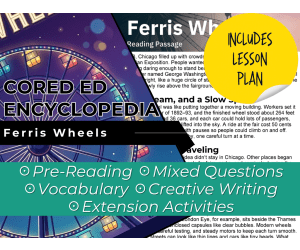
Ferris Wheels Reading Comprehension Passage - Cored Ed Encyclopedia
ELA, Reading Comprehension, Reading, Science, Technology, Language Development, Social Studies, History, Pre-Reading, Writing, Grade 2, 3, 4, 5, Worksheets & Printables, Worksheets, Teacher Tools, Centers, Activities, Writing Prompts, Assessments, Quizzes and Tests, Quizzes, Lesson Plans
This Ferris wheels reading comprehension with lesson plan includes: Visualization (on the front cover) Start your lesson by taking a minute to think and share something about the topic. Read the script aloud (slowly), perhaps prepare some music or sound effects. Student close their eyes and let their imaginations wander. Students open their eyes, read the question aloud and give them a few minutes to complete. Ask a few students to share or keep answers until the end to compare with what they learn in the passage. Quick pause—thousands of Cored Education products are included with your TeachSimple membership. Download links and encyclopedia index available here. Pre-Reading Trivia Students will write down one thing they already know about the subject and then read five more facts and discuss. These facts are fun, and the students will enjoy learning about the subject before reading more. Give 1 minute for students to write what they already know (no pressure—best guess is fine). Read the five facts together. After each fact, do ask a student for their opinion, was it surprising? Set a purpose by asking students to highlight/underline one fact they want to learn more about during the reading. Reading Passage The text is a high-interest reading passage with set paragraphs, roughly three to four paragraphs long. It contains a variety of themes about the topic, anywhere from history to technology. The passage is between 250 and 350 words in length. First, ask students to look at the headings and see what they’ll learn about today. What do they know about the topic/heading? First read options: Teacher read-aloud (best for support). Partner reading (paragraph by paragraph). While reading, students underline important details, and vocabulary words they think may come up in the questions section. Mixed Questions The first question page contains four multiple-choice questions, each with a choice of four answers, and three written response questions that require a sentence or two from the student. Students complete the mcqs first independently, then review quickly as a class. For the 3 written responses, try to get students giving the answer with some form of evidence: “I think ___ because the text says ___.” If students get stuck, send them back to check the passage. Vocabulary Questions Practice seven key words from the text in this section across two activities. First section is scrambled words where students will unscramble three words given a clue for each. The second section is a word to meaning matching activity. Before starting, have some students read out words they underlined in the passage. Ask students to say the word and read aloud the sentence(s) around each word. Ask students to do scrambled words and the matching exercise in pairs then go through answers as a class. For the scrambled spelling task, get four pairs to come up to the board and write the words for extra practice with the other student reading out the clue. For the matching task, prompt students to give full sentences: “I matched ___ with ___ because ___.” Creative Writing In this question, the student will be required to write a five to eight sentence paragraph on a question related to the topic. Before starting, ask students write down 3 key ideas they are going to include in their piece. Ask students for ideas to share around the class to help those struggling. Pro writing expectations: 5–8 sentences At least 2 facts or details from the passage At least 2 vocabulary words from the previous page Students read their paragraphs while classmates listen for facts and vocabulary words. Extension Activities This page is optional for fast finishers or to take home. There are several activities, each one requiring a different skill. Do some, do none, do all, completely optional - but you will feel reassured knowing every possibility is planned for. Includes summary writting question and additional facts. Answer Key There are answers for the multiple-choice questions, written response questions have sample answers, vocabulary answers and if there is a summary question then a sample summary will be provided as well. Lesson Plan Included Customized lesson plan for this lesson is included. Lesson Snapshot Title: Ferris Wheels Genre: Nonfiction (Informational Text) Subject: Social Studies (History) / Science & Technology / Reading (Informational Text) Primary Topic: Origins, design, and purpose of Ferris wheels Estimated Guided Reading Level (A–Z): P What This Lesson Teaches Best Explains the origin story of the first Ferris wheel at the 1893 Chicago world’s fair and why people wanted a daring new attraction. Uses clear facts and measurements (about 264 feet/80 meters , 36 cars , ride cost and time) to build informational reading skills. Shows how Ferris wheels spread to new places and why they’re also called “observation wheels” (because looking is part of the fun). Compares past and present Ferris wheels, including modern wheels built for slow sightseeing like the London Eye with enclosed capsules. Highlights how modern wheels rely on strong steel, careful testing, and steady motors for smooth turns. Learning Goals Students will describe why the 1893 world’s fair crowd wanted something “brand-new” to see. Students will identify key details about the first Ferris wheel (height, number of cars, ride time, and cost). Students will explain why Ferris wheels are also called “observation wheels” using evidence from the text. Students will describe how Ferris wheels spread to other places after Chicago, including the example in Vienna. Students will compare how some Ferris wheels are designed for thrills versus slow sightseeing today. Key Vocabulary From the Text Exposition — a huge fair where inventions and exhibits are shown. engineer — a person who designs and builds things. fairgrounds — the area where a fair is held. capsules — closed pods that carry riders on a wheel. skyline — the outline of a city’s buildings against the sky. FULL CATALOG OF DOWNLOAD LINKS AND ENCYCLOPEDIA INDEX HERE
Author Cored Education
Rating
Tags Vocabulary, Reading Comprehension, Reading Passages, Lesson Plans, Ela Lesson Plans, Reading Comprehension Lesson Plans, Pre-reading, Science Lesson Plans, Social Studies Lesson Plans, History

Body Systems - Bell Ringers, Class Warm-Ups, and Exit Tickets
Science, Life Sciences, Human Body, Grade 9, 10, 11, 12, Activities
This Body System unit comes with 20 days’ worth of materials that relate directly to The Digestive System, Circulatory System, and Respiratory System. This activity bundle is geared towards a grade 8-11 Biology class. They can be used at the start of a class in the form of a bell ringer/class warm-up or at the end of class as an exit ticket. Would you like to see me walk through my Bell Ringer activity ? I created a video that overviews how they work and how you can use them effectively in your classroom in only 5 minutes per day. Click here to have a look. This resource covers the following topics • Digestive System Structure and Function • Circulatory System Structure and Function • Blood vessels, blood, heart • Respiratory System These are meant to be used each day, however, the question periods are directly associated with topic lessons, so they are done on days that follow the completion of a lesson. For example, after you finish your lesson, you’d give your students the questions associated with the ecosystems lesson. Additional days will utilize the Quotes and Videos sections. There are two key reasons why this daily activity works: 1) It encourages your students to review their notes on a nightly basis so they’re ready for class. 2) It creates a routine in your classroom that encourages your student to arrive and get settled for class quickly and quietly. Once we’re done, the students are ready for class and have already gotten their brains working and thinking science. The Activities 1) Questions: Question types - Fill in the blanks - Short answer - Opinion - Drawing - Mix of above ● Everything will be included in your PowerPoint ● All questions relate directly to the previous lesson and work to test your students’ understanding ● If students are absent, they know they need to get caught up while away ● This process encourages students to keep up with the material and review their notes nightly 2) Quotes The quotes come from individuals and relate directly to the overarching topic. On these days, I have students read the quote and write down what they feel it means and/or the underlying message. 3) Videos The videos are an excellent way to settle your class down quickly and easily. Each video is selected specifically because it’s interesting and relevant to students. Each video can be accessed directly from the slide. Simply click the video image while in slideshow mode and the video will automatically open in your browser. Process ● Each week, I hand out the week’s [Topic Name] - Student Worksheet ○ You can make this activity completely digital by making the sheet available online and have them submit it there as well ● As soon as the bell rings to start class, I hand the sheets out to my students. Once the sheets are out, I start the 4-minute timer. If students are late, they miss out on their time. �� Once the timer finishes, the students flip over their papers and pass them to the front. Structure Each day’s activities, unless otherwise stated, are to be done individually and without notes. However, depending on the ability level of your students, you may want to have them work in pairs and/or use their notes. Marking We all have enough marking already and the last thing we want to do is add to our pile. However, I’ve found that this process is so streamlined and efficient that I’m easily able to mark these while my students are working in class or copying down notes. Typically, I mark only the Questions section. However, if I’m busy or don’t have time in class, I won’t and that’s OK. The point of this isn’t to make your job harder but to help your students stay on track and keep focused. Additionally, I’ll mark one of the other sections (Quote or Video) at least every other week. Each day’s mark is out of 5 but since there aren’t always 5 questions (usually it’s somewhere between 1-3), I base my mark on their understanding of what I’ve asked them to complete. This can come across as subjective, but I’ve found it gives me an excellent indication of their knowledge and keeping it consistent makes things better for everyone. Keep in mind that the outline above describes how I use them in my class. Feel free to change it up however you like (including the questions as the entire thing is completely editable). Other teachers I’ve spoken to only utilize the questions following a lesson or only mark the questions following a lesson and for the other days, show the relevant videos but don’t require their students to submit anything. A few people only mark one submission per week while others mark everything. It’s completely up to you. Whether you use Questions, Quotes, or Videos in any given lesson, your goal is to create a routine, promote understanding, and get your students thinking about science as soon as they enter your class. ***************************** For free resources, useful teaching tips, and tools, please visit my blog - TeachScienceWithFergy.com If you have any questions please feel free to send me an email - devon@teachwithfergy.com
Author Teach With Fergy
Tags Anatomy Lesson, Body Systems, Bell Ringers, Science Exit Tickets, Body Systems Powerpoint, Body Bell
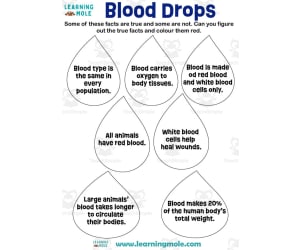
Blood Drops Activity
Science, Life Sciences, Human Body, Grade 3, 4, 5, 6, 7, 8, 9, Activities
Activity Overview The human body is full of fascinating wonders to learn. This activity is created to help the students recognize the anatomy and the job of the human body. Blood Drops Every part and organ in our human body is vital so let's see how important they are. Have you ever imagined how we look like if we didn't have a skeleton? Did you know that because we have our amazing muscles we can stand! Do you know how many teeth do we have? Have you ever wondered about the food journey inside our body? Can you name all the glands in our body? Why do we have skin? Our nervous system is really good at sending signals. Can you tell us more about it? Are you really good at Mathematics, painting, or any other thing? You should really thank your brain about it! The famous five senses are really doing a great work? Can you explain how every sense works? Blood Drops Activity The activity is perfect for encouraging the researching skills for the students, while learning more about our fantastic human body. Blood Drops This friendly designed worksheet is suitable for students at school, homeschooling, and as a group activity. Instruction Some of these facts are true and some are not. Can you figure out the true facts and colour them red. Format Available in a PDF format.
Author Educational Voice
Tags Blood Drops Activity, Blood Drops, Blood Drops Facts, Blood Drops Facts For Kids, Human Body, Human Body Facts, Human Body Facts For Kids , Science, Science Facts

Astronomy & Space Science: Reading Comprehension Passages (Word)
Science, Space, Earth and Environmental Sciences, ELA, Reading, Reading Comprehension, Strategies, Resources for Teachers, Grade 6, 7, 8, 9, Writing Prompts, Worksheets & Printables, Centers, Activities, Teacher Tools, Assessments, Quizzes and Tests, Quizzes, Tests
Astronomy & Space Science: Reading Comprehension Passages & Questions (Word) - Editable and Fillable This engaging collection of science reading passages about Astronomy and Space Science is designed to bridge the gap between science and literacy through strengthening reading comprehension and sparking scientific curiosity in middle school students. Each passage blends English Language Arts skills with accurate science content that supports NGSS classroom practice. Ideal for interdisciplinary learning in ELA and Science. Suitable for Grade 9 review, too! What Is Included? There are (3) informational passages: The Solar System: A Neighborhood in Motion Understand orbits, the Sun’s role, the differences between inner and outer planets, and where asteroids and comets fit in the system. The Story of Space Science Trace the path from early skywatching to telescopes, satellites, exploration missions, and the ISS, with practical links to GPS, communications, and weather forecasting. Stars of Many Sizes: Dwarfs, Giants, and Neutrons Explore stellar types and life cycles, including our Sun, red giants, supernovas, neutron stars, and pulsars. Student Tasks for Each Passage 5 multiple-choice questions targeting main idea, key details, inference, vocabulary in context, and use of evidence 5 vocabulary matching items with clear, student-friendly definitions 5 text-based questions that require citing specific lines or facts 1 summary prompt that asks students to condense central ideas accurately Full answer key for every section Available Formats for this Resource: PDF Google Docs FULL CATALOG OF DOWNLOADING LINKS HERE Other Science Reading Collections you May find in the store: 1. Astronomy & Space Science 2. Volcanoes, Rocks, & Mountains 3. Rock Cycle, Soil, & Sinkholes 4. Mars, Glaciers, & Antarctica 5. Water Cycle, Acid Rain, & Wastewater 6. Insects, Animals, & Ecosystems 7. Bioluminescence & Insects 8. Animal Skin, Cats, & T. Rex 9. Human Body and Senses 10. Health & Applied Bioscience 11. Waves, Light, & Imaging 12. Electricity & Energy 13. Motion & Materials 14. Chemistry and Materials Science Product Details Length: 14 pages total Grades: 6–8, also suitable for Grade 9 review Use cases: close reading, stations, homework, intervention, test prep, and sub plans Standards support: reinforces informational-text skills and supports NGSS-style sense making through observation, modeling, and clear use of claim, evidence, and reasoning Why Teachers Choose This Set Authentic science content paired with rigorous literacy practice Consistent task structure across all passages for easier planning and smoother student routines Clear, age-appropriate writing that builds confidence without oversimplifying Use this set to reinforce ELA skills in science, to add literacy to your lessons, or to support independent work. The passages strengthen main idea, evidence use, vocabulary in context, inference, cause and effect, and summary writing. With ready-to-use assessments and complete answer keys, you can provide focused practice that is simple to run and fast to review.
Author Middle & High School - CORED Education
Rating
Tags Middle School, Reading Comprehension, Reading Strategies, Reading Passages, ELA, Centers, Reading Passage, Assessments, Vocabulary, Earth Science

Wireless Charging Activity
Science, Technology, Physics, Grade 4, 5, 6, 7, 8, 9, 10, Activities
Activity Introduction An amazing activity designed for the students to learn more about STEM subjects. Wireless Charging Do you like STEM subjects? what is your favorite one? Have you ever tried to plant a seed? If yes, tell us more about it. Or have you ever tried to invent something? If yes, tell us more about it. And how do you think it will help us? Have you ever seen a microorganism under a microscope? What was it? And how it looked like? Mathematics is a marvelous subject. Let' sharpen our brains and solve some equations. Do you like timetable tricks? What is your favorite one? Do you know how to code? Have you ever created an app or a game before? If yes, how was it like? Wireless Charging Activity The activity is perfect for encouraging the researching skills for the students, while learning more about this topic. Wireless Charging This friendly designed worksheet is suitable for students at school, homeschooling, and as a group activity. Instructions How would we benefit from wireless charging in the following? Power tools Medical needs Internet of things Smart homes Format Available in a PDF format.
Author Educational Voice
Tags Wireless Charging Activity, Wireless Charging, Wireless Charging Facts, Wireless Charging Facts For Kids, STEM, STEM Facts, STEM Facts For Kids

Human Body Maze: 1 Page Sample (PDF)
ELA, Language Development, Resources for Teachers, Vocabulary, Spelling, ESL, Human Body, Life Sciences, Science, Grade 2, 3, 4, 5, Worksheets & Printables, Worksheets, Teacher Tools, Centers, Activities, Mazes
THIS IS A ONE PAGE SAMPLE OF A SIX PAGE MAZE DOWNLOAD FULL SIX MAZE DOWNLOAD INFORMATION: Maze Series This maze series is designed for students in grades 2–5. Each set features a clear, kid-friendly theme with scene-based mazes that students first navigate, then complete by drawing a few target words from a simple word list. Pages come in varied styles and graduated difficulty, with an optional “color it in” step—and some themes invite quick calculations to match the task. These mazes are student-friendly, classroom-ready, and perfect for literacy warmups, seasonal units, fast-finisher bins, centers, sub plans, or home learning extensions. The playful, structured format builds problem-solving, attention to detail, and fine-motor control while reinforcing themed content in a motivating way. Note: Unlike many themed products, not all word-list words appear on the maze pages. To support full vocabulary coverage, we’ve released a companion word list you can find in the links section. Human Body Word List 1. Head & Face Head, Hair, Eyes, Nose, Mouth, Ears, Teeth, Tongue 2. Arms & Hands Arm, Hand, Fingers, Thumb, Wrist, Elbow, Palm, Nails 3. Legs & Feet Leg, Knee, Foot, Toes, Heel, Ankle, Shin, Thigh 4. Inside the Body Brain, Heart, Lungs, Stomach, Bones, Muscles, Blood, Nerves 5. Senses & Feelings Sight, Hearing, Smell, Taste, Touch, Laugh, Cry, Yawn 6. Moving & Actions Walk, Run, Jump, Clap, Hug, Stretch, Bend, Wiggle PDF Version Other versions will appear here when available. Follow the store for the lastest on new products. How to Use These Mazes Perfect for: Morning work or early-finisher bins Literacy or STEM centers Holiday/seasonal review lessons Independent stations, sub plans, or take-home enrichment More Human Body Themed Products CROSSWORDS WORD SEARCHES FULL CATALOG OF DOWNLOAD LINKS HERE Themed Mazes Links Addition PDF Animals PDF Around the Home PDF Birthday PDF Candy PDF Christmas PDF Cinco de Mayo PDF Clothes PDF Colors PDF Days and Months PDF Division PDF Earth Day PDF Easter PDF Easy Mazes PDF Fall PDF Father's Day PDF Food PDF Geography (Set 1) PDF Geography (Set 2) PDF Geography (Set 3) PDF Graduation PDF Health PDF History (Set 1) PDF History (Set 2) PDF History (Set 3) PDF Human Body PDF Kindness PDF Life Skills PDF Mother's Day PDF Multiplication PDF Science (Set 1) PDF Science (Set 2) PDF Science (Set 3) PDF Shapes PDF Social Skills PDF Spring PDF Sports PDF St. Patrick's Day PDF Subtraction PDF Summer PDF Thanksgiving PDF Transport PDF Valentine's Day PDF Winter PDF Mazes in Depth Structure Each maze is crafted around a focused sub-theme. Students navigate the maze, encountering branches and cul-de-sacs that build attention and planning. Most pages include a tiny follow-up box—students draw or label 2–3 target words from a small word box, add a quick count, or color in the scene—so the activity reinforces both content and skills in a highly engaging format. Each completed set includes: A themed maze page. A simple student instruction strip. An answer key showing the solved path for teacher support or self-checking Themes Included These mazes cover a wide range of fun, age-appropriate themes, including: Seasons & Holidays (e.g., Halloween, Easter, Valentine’s Day) Math-Lite Connections (e.g., quick counts, number words) Everyday Topics (e.g., Animals, Weather, School) Special Units (e.g., Health, Earth Day, Sports, Kindness) Each topic reflects students’ real-life experiences and interests while strengthening problem-solving, visual scanning, and fine-motor control in a playful, highly visual way. Easy extensions (optional): Time it: solve once in pencil, then try to beat the time in pen Retell the route using sequence words (first, next, then, finally) Count intersections or turns and graph the results Write a 1–2 sentence mini-story about the scene using the target words Design a tiny maze in the corner for a partner to solve Differentiation tips: Offer a finger-trace pass before pencils for emerging learners Highlight the borders of the correct region on first attempts Use thicker-line versions or simpler pages to build confidence Pair roles: “navigator” gives directions; “driver” traces the path For similar downloads and other frees, do check out Cored Group on TeachSimple.
Author Cored Education
Rating
Tags Vocabulary, Spelling, Human Body, Body, Head & Face, Arms & Hands, Legs & Feet, Mazes, Human Body Maze, Body Mazes

Science Reading Comprehension Passage. Stars of Many Sizes. SAMPLE
Science, ELA, Reading, Reading Comprehension, Strategies, Resources for Teachers, Space, Earth and Environmental Sciences, Grade 6, 7, 8, 9, Writing Prompts, Worksheets & Printables, Centers, Activities, Teacher Tools, Assessments, Quizzes and Tests, Quizzes, Tests
This is a free passage sample from the complete resource. The full version includes everything needed for a complete reading comprehension activity: the passage, multiple-choice questions, short-answer questions, vocabulary matching, a summary-writing task, and a detailed answer key. Download the complete passage resource by clicking on the following links: PDF Fillable PDF Word Docs Google Docs Science Reading Comprehension Passages and Questions: Stars of Many Sizes (PDF) This very engaging science reading passage about Stars of Many Sizes is designed to bridge the gap between science and literacy through strengthening reading comprehension and sparking scientific curiosity in middle school students. The passage blends English Language Arts skills with accurate science content that supports NGSS classroom practice. Ideal for interdisciplinary learning in ELA and Science. Suitable for Grade 9 review, too! Student Tasks for The Passage: 5 multiple-choice questions targeting main idea, key details, inference, vocabulary in context, and use of evidence 5 vocabulary matching items with clear, student-friendly definitions 5 text-based questions that require citing specific lines or facts 1 summary prompt that asks students to condense central ideas accurately Full answer key for every section FULL CATALOG OF DOWNLOADING LINKS HERE Product Details Length: 4 pages total Grades: 6–8, also suitable for Grade 9 review Use cases: close reading, stations, homework, intervention, test prep, and sub plans Standards support: reinforces informational-text skills and supports NGSS-style sense making through observation, modeling, and clear use of claim, evidence, and reasoning Why Teachers Choose This Set Authentic science content paired with rigorous literacy practice Consistent task structure across all passages for easier planning and smoother student routines Clear, age-appropriate writing that builds confidence without oversimplifying Other Science Reading Collections you May find in the store: 1. Astronomy & Space Science 2. Volcanoes, Rocks, & Mountains 3. Rock Cycle, Soil, & Sinkholes 4. Mars, Glaciers, & Antarctica 5. Water Cycle, Acid Rain, & Wastewater 6. Insects, Animals, & Ecosystems 7. Bioluminescence & Insects 8. Animal Skin, Cats, & T. Rex 9. Human Body and Senses 10. Health & Applied Bioscience 11. Waves, Light, & Imaging 12. Electricity & Energy 13. Motion & Materials 14. Chemistry and Materials Science Use this set to reinforce ELA skills in science, to add literacy to your lessons, and to support independent work. The passages strengthen main idea, evidence use, vocabulary in context, inference, cause and effect, and summary writing. With ready-to-use assessments and complete answer keys, you can provide focused practice that is simple to run and fast to review.
Author Middle & High School - CORED Education
Rating
Tags Middle School, Reading Comprehension, Reading Strategies, ELA, Centers, Reading Passage, Assessments, Vocabulary, Environmental Science, Space
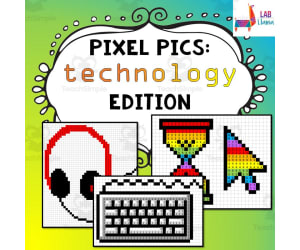
Pixel Pics Spreadsheet Activity: Technology Edition
Science, Technology, Computer Science, Not Grade Specific, Activities
Whether students are in the classroom or in the computer lab , you may be on the hunt for some computer skills resources that you know students will love. Many of our students, young and old, enjoy putting their tech skills to use. It is always impactful when we can give them opportunities to show what they know and/or teach them new things! This is a Pixel Pics Spreadsheet Activity. It is the Technology Edition. This activity would work for any age of students who have learned about different computer applications, including Microsoft Excel. Students will be given access to 1 spreadsheet. On this spreadsheet, there are 5 tabs. Students can complete all 5 tabs, you can assign which tabs you want them to complete, or you can let the students choose which ones to complete. The tabs include: -Keyboard -Rainbow Cursors -Tablet -Desktop Computer -Headphones On each tab, students will follow the color code to complete the picture. A completed example spreadsheet is included. Here are more resources to enjoy in my store: https://teachsimple.com/product/excel-stories-pirate-edition-computer-science-project https://teachsimple.com/product/excel-stories-detective-edition-computer-science-project https://teachsimple.com/product/finger-placement-practice-teaching-typing-lesson https://teachsimple.com/product/spot-the-differences-activity Check out many more resources at my storefront here: https://teachsimple.com/contributor/lab-llama-computer-skills-resources I can be contacted for questions and concerns at labllamasam@gmail.com .
Author Lab LLama - Computer Skills Resources
Rating 5
Tags Pixel Pics, Spreadsheet Activity, Technology, Computer Skills, Computer Activity, Color By Code, Color By Number, Lab Llama

Life Science Reading Comprehension Passage: Blood (Docs)
Science, ELA, Reading, Reading Comprehension, Strategies, Resources for Teachers, Life Sciences, Biology, Grade 6, 7, 8, 9, 10, Writing Prompts, Worksheets & Printables, Centers, Activities, Teacher Tools, Assessments, Quizzes and Tests, Quizzes, Tests
Life Science Reading Comprehension Passage and Questions: Blood (Docs) This very engaging science reading passage is about blood and the many essential jobs it performs throughout the human body . It explains how red blood cells and hemoglobin carry oxygen, how plasma transports nutrients, hormones, and wastes, how white blood cells help fight infection, and how platelets help stop bleeding. Students also learn how blood supports homeostasis, why blood types and safe transfusions matter, and how donated blood can help patients during surgery, after accidents, and during medical treatment. This passage is designed to bridge the gap between science and literacy by strengthening reading comprehension while sparking scientific curiosity in middle school students. It blends English Language Arts skills with accurate science content, helping students build background knowledge, understand key concepts, use evidence from the text, and explain scientific ideas clearly. This resource supports science classroom practice while also reinforcing important literacy skills such as main idea, vocabulary, comprehension, and summarizing. Ideal for interdisciplinary learning in ELA and Science. Suitable for Grade 9 review, too! Student Tasks for The Passage: 10 multiple-choice questions targeting main idea, key details, science concepts, comparison, and real-world applications 10 True/False statements to check understanding and address common misconceptions 5 text-based short-answer questions that require students to explain important ideas from the passage 5 vocabulary matching items with clear, student-friendly definitions 1 summary prompt that asks students to condense the central ideas accurately Full answer key for every section Available Formats for this Resource PDF Fillable PDF Word Docs FULL CATALOG OF DOWNLOADING LINKS HERE Product Details Length: 7 pages total Grades: 6–8, also suitable for Grade 9 review Use cases: close reading, stations, homework, intervention, test prep, and sub plans Standards support: Reinforces informational-text skills and supports NGSS-style sense-making by helping students read scientific explanations, connect evidence to key concepts, interpret real-world examples, and explain cause-and-effect relationships in science. Why Teachers Choose This Set Authentic science content paired with rigorous literacy practice Consistent task structure across all passages for easier planning and smoother student routines Clear, age-appropriate writing that builds confidence without oversimplifying Other Science Reading Collections and Topics You May Find in the Store: 1. Astronomy & Space Science 2. Volcanoes, Rocks, & Mountains 3. Rock Cycle, Soil, & Sinkholes 4. Mars, Glaciers, & Antarctica 5. Water Cycle, Acid Rain, & Wastewater 6. Insects, Animals, & Ecosystems 7. Bioluminescence & Insects 8. Animal Skin, Cats, & T. Rex 9. Human Body and Senses 10. Health & Applied Bioscience 11. Waves, Light, & Imaging 12. Electricity & Energy 13. Motion & Materials 14. Chemistry and Materials Science 15. Electromagnetism 16. Acids and Bases 17. Gas Laws 18. Biotechnology 19. Periodic Trends 20. Protists and Fungi 21. Microevolution 22. Blood 23. Chemical Bonding 24. Magnets 25. Muscles 26. Nuclear Chemistry 27. Electromagnetic Devices 28. Epigenetics 29. The Law of Conservation of Mass 30. Atomic Models 31. Isotopes and Ions 32. Light 33. Human-Environment Interaction 34. Theory of Evolution 35. Photosynthesis 36. Origins of Life and Early Earth 37. Gene Expression and Regulation 38. Thermochemistry 39. Allergies 40. Coevolution 41. Birth to Adulthood 42. Cells 43. Entropy and Free Energy 44. The Human Brain 45. Mixtures and Solutions 46. Invertebrates 47. Zoo Animals 48. Biochemistry 49. Animal Behavior 50. Population Ecology ...and many more engaging science reading passages that cover intriguing and important topics designed to spark curiosity and support student learning. Use this passage to reinforce ELA skills in science, to add literacy to your lessons, and to support independent work. The passages strengthen main idea, evidence use, vocabulary in context, inference, cause and effect, and summary writing. With ready-to-use assessments and complete answer keys, you can provide focused practice that is simple to run and fast to review.
Author Middle & High School - CORED Education
Rating
Tags Middle School, Reading Comprehension, Reading Strategies, ELA, Centers, Reading Passage, Assessments, Vocabulary, Biology, Life Science
Atomic Models: Physical Science Reading Comprehension Passage (Word)
Science, ELA, Reading, Reading Comprehension, Strategies, Resources for Teachers, Common Core, Language Development, Physics, Grade 6, 7, 8, 9, 10, Writing Prompts, Worksheets & Printables, Centers, Activities, Teacher Tools, Assessments, Quizzes and Tests, Quizzes, Tests, Literacy Readers
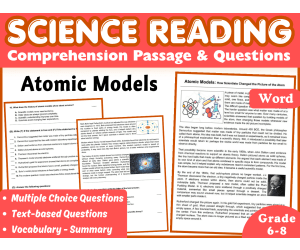
Physical Science Reading Comprehension Passage and Questions for Middle School: Atomic Models (Word Document) This resource explores how scientists’ understanding of the atom changed over time as new evidence became available . Students follow the development of atomic models from Democritus’s early idea of indivisible particles to Dalton’s solid-sphere model, Thomson’s discovery of the electron, Rutherford’s nuclear model, Bohr’s energy levels, and the modern electron-cloud model . It emphasizes how scientific models are revised when new experiments and discoveries provide better evidence . It also introduces important ideas such as electrons, the nucleus, empty space within atoms, energy levels, electron clouds, and probability . This passage is designed to bridge the gap between science and literacy by strengthening reading comprehension while sparking scientific curiosity in middle school students. It blends English Language Arts skills with accurate science content, helping students build background knowledge, understand key concepts, use evidence from the text, and explain scientific ideas clearly. This resource supports science classroom practice while also reinforcing important literacy skills such as main idea, vocabulary, comprehension, and summarizing. Ideal for interdisciplinary learning in ELA and Science. Suitable for Grade 9 review, too! Student Tasks for The Passage: 10 multiple-choice questions targeting main idea, key details, science concepts, comparison, and real-world applications 10 True/False statements to check understanding and address common misconceptions 5 text-based short-answer questions that require students to explain important ideas from the passage 5 vocabulary matching items with clear, student-friendly definitions 1 summary prompt that asks students to condense the central ideas accurately Full answer key for every section Available Formats for this Resource PDF Fillable PDF Google Docs Product Details Length: 7 pages total Grades: 6–8, also suitable for Grade 9 review Use cases: close reading, stations, homework, intervention, test prep, and sub plans Standards support: Reinforces informational-text skills and supports NGSS-style sense-making by helping students read scientific explanations, connect evidence to key concepts, interpret real-world examples, and explain cause-and-effect relationships in science. FULL CATALOG OF DOWNLOADING LINKS HERE Other Science Reading Collections and Topics You May Find in the Store: 1. Astronomy & Space Science 2. Volcanoes, Rocks, & Mountains 3. Rock Cycle, Soil, & Sinkholes 4. Mars, Glaciers, & Antarctica 5. Water Cycle, Acid Rain, & Wastewater 6. Insects, Animals, & Ecosystems 7. Bioluminescence & Insects 8. Animal Skin, Cats, & T. Rex 9. Human Body and Senses 10. Health & Applied Bioscience 11. Waves, Light, & Imaging 12. Electricity & Energy 13. Motion & Materials 14. Chemistry and Materials Science 15. Electromagnetism 16. Acids and Bases 17. Gas Laws 18. Biotechnology 19. Periodic Trends 20. Protists and Fungi 21. Microevolution 22. Blood 23. Chemical Bonding 24. Magnets 25. Muscles 26. Nuclear Chemistry 27. Electromagnetic Devices 28. Epigenetics 29. The Law of Conservation of Mass 30. Atomic Models 31. Isotopes and Ions 32. Light 33. Human-Environment Interaction 34. Theory of Evolution 35. Photosynthesis 36. Origins of Life and Early Earth 37. Gene Expression and Regulation 38. Thermochemistry 39. Allergies 40. Coevolution 41. Birth to Adulthood 42. Cells 43. Entropy and Free Energy 44. The Human Brain 45. Mixtures and Solutions 46. Invertebrates 47. Zoo Animals 48. Biochemistry 49. Animal Behavior 50. Population Ecology ...and many more engaging science reading passages that cover intriguing and important topics designed to spark curiosity and support student learning. Use this passage to reinforce ELA skills in science, to add literacy to your lessons, and to support independent work. The passages strengthen main idea, evidence use, vocabulary in context, inference, cause and effect, and summary writing. With ready-to-use assessments and complete answer keys, you can provide focused practice that is simple to run and fast to review.
Author Middle & High School - CORED Education
Rating
Tags Middle School, Reading Comprehension, Reading Strategies, ELA, Centers, Reading Passage, Assessments, Vocabulary, Physical Science, Physics
Light - Lenses, the Eye, the Pinhole camera and the Camera - Wildcard and Snap Card Games for Middle School
Science, Physics, Grade 5, 6, 7, 8, 9, Games, Activities
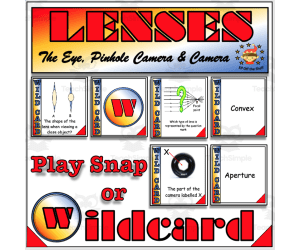
Light - Lenses, the Eye, the Pinhole camera and the Camera - Wildcard and Snap Card Games for Middle School: A Must-Have Educational Resource Designed for students in grades 5-9, this engaging teaching resource offers a unique approach to hands-on learning about optics. This comprehensive card deck covers topics that range from Lenses to Eye Anatomy, from Pinhole Cameras to Camera Technology. The pack includes: 66 Educative Playing Cards with scientific facts and diagrams related predominantly to physics. A systematic covering of facts around convex lenses used in various optical devices; how concave lenses work; visual perception through image formation by the eye lens; light regulation by iris-pupil dynamics etc.; this set is a versatile teaching aid. An exploration into interrelated topics such as how glasses correct sight abnormalities using various types of lenses based on individual need and ray diagrams ' working mechanism as it pertains specifically to distant & close object view recognition. The game set has been designed with a 'Wildcard' game apart from basic 'Snap' cards providing an interactive learning experience. The inclusion of an Animated PowerPoint that guides participants through game rules ensures smooth gameplay. Additionale Features: In-depth comparison between a camera’s functioning mechanism versus human vision enables learners to understand real-world applications. Suitable for cooperative education modules such as group activities as well is useful for individual self-study too! Homeschooling parents will find this multi-subject resource highly beneficial. In conclusion:, "Light - Lenses, the Eye, the Pinhole camera and the Camera" effectively makes abstract scientific theories tangible via gamified education while promoting holistic science learning.
Author Elf off the Shelf Resources
Tags Optics, Lenses, Eye Anatomy, Pinhole Camera, Camera Technology

Electricity & Energy: Physical Science Reading Comprehension (Google)
Science, ELA, Reading, Reading Comprehension, Strategies, Resources for Teachers, Physics, Grade 6, 7, 8, 9, Writing Prompts, Worksheets & Printables, Centers, Activities, Teacher Tools, Assessments, Quizzes and Tests, Quizzes, Tests
Electricity and Energy: Physical Science Reading Comprehension Passages and Questions (Google) This very engaging collection of physical science reading passages about electricity and energy is designed to bridge the gap between science and literacy through strengthening reading comprehension and sparking scientific curiosity in middle school students. Each passage blends English Language Arts skills with accurate science content that supports NGSS classroom practice. Ideal for interdisciplinary learning in ELA and Science. Suitable for Grade 9 review, too! What Is Included? There are (3) informational passages: The Lightning Rod: Turning Fear into Safety: Franklin’s work showed lightning is electricity, not magic, and a lightning rod gives that charge a safe metal path into the ground instead of through a building. Eel Power: A Holiday Surprise: Electric eels fire quick bursts of electricity, and in special displays, metal plates and wires capture those pulses to make nearby lights briefly flicker. Electricity: From Source to Socket: Power plants use motion from fuels, falling water, wind, or sunlight to spin generators, then send that electrical energy through wires so a flip of a switch brings devices to life. Student Tasks for Each Passage: 5 multiple-choice questions targeting main idea, key details, inference, vocabulary in context, and use of evidence 5 vocabulary matching items with clear, student-friendly definitions 5 text-based questions that require citing specific lines or facts 1 summary prompt that asks students to condense central ideas accurately Full answer key for every section Available Formats for this Resource PDF Word Docs FULL CATALOG OF DOWNLOADING LINKS HERE Other Science Reading Collections you May find in the store: 1. Astronomy & Space Science 2. Volcanoes, Rocks, & Mountains 3. Rock Cycle, Soil, & Sinkholes 4. Mars, Glaciers, & Antarctica 5. Water Cycle, Acid Rain, & Wastewater 6. Insects, Animals, & Ecosystems 7. Bioluminescence & Insects 8. Animal Skin, Cats, & T. Rex 9. Human Body and Senses 10. Health & Applied Bioscience 11. Waves, Light, & Imaging 12. Electricity & Energy 13. Motion & Materials 14. Chemistry and Materials Science Product Details Length: 14 pages total Grades: 6–8, also suitable for Grade 9 review Use cases: close reading, stations, homework, intervention, test prep, and sub plans Standards support: reinforces informational-text skills and supports NGSS-style sense making through observation, modeling, and clear use of claim, evidence, and reasoning Why Teachers Choose This Set Authentic science content paired with rigorous literacy practice Consistent task structure across all passages for easier planning and smoother student routines Clear, age-appropriate writing that builds confidence without oversimplifying Use this set to reinforce ELA skills in science, to add literacy to your lessons, or to support independent work. The passages strengthen main idea, evidence use, vocabulary in context, inference, cause and effect, and summary writing. With ready-to-use assessments and complete answer keys, you can provide focused practice that is simple to run and fast to review.
Author Middle & High School - CORED Education
Rating
Tags Middle School, Reading Comprehension, Reading Strategies, ELA, Centers, Reading Passage, Assessments, Vocabulary, Physical Science, Physics

Science Reading Comprehension Passage: Seeing Color. SAMPLE
Science, ELA, Reading, Reading Comprehension, Strategies, Resources for Teachers, Physics, Grade 6, 7, 8, 9, Writing Prompts, Worksheets & Printables, Centers, Activities, Teacher Tools, Assessments, Quizzes and Tests, Quizzes, Tests
This is a free passage sample from the complete resource. The full version includes everything needed for a complete reading comprehension activity: the passage, multiple-choice questions, short-answer questions, vocabulary matching, a summary-writing task, and a detailed answer key. Download the complete passage resource by clicking on the following links: PDF Fillable PDF Word Docs Google Docs Science Reading Comprehension Passage and Questions: Seeing Color (PDF) This very engaging science reading passage is about how people see color . It explains that color depends on the interaction among light, objects, and the human visual system . It covers how white light contains many wavelengths, how objects reflect some wavelengths and absorb others, how a prism uses refraction to separate white light into the visible spectrum, and how cone cells in the eye and the brain help create the experience of color. The visuals on page 1 also support this by showing a classroom changing with light, an apple reflecting/absorbing light, and a prism separating white light into colors. This passage is designed to bridge the gap between science and literacy through strengthening reading comprehension and sparking scientific curiosity in middle school students. The passage blends English Language Arts skills with accurate science content that supports NGSS classroom practice. Ideal for interdisciplinary learning in ELA and Science. Suitable for Grade 9 review, too! Student Tasks for The Passage: 5 multiple-choice questions targeting main idea, key details, inference, vocabulary in context, and use of evidence 5 vocabulary matching items with clear, student-friendly definitions 5 text-based questions that require citing specific lines or facts 1 summary prompt that asks students to condense central ideas accurately Full answer key for every section FULL CATALOG OF DOWNLOADING LINKS HERE Product Details Length: 4 pages total Grades: 6–8, also suitable for Grade 9 review Use cases: close reading, stations, homework, intervention, test prep, and sub plans Standards support: reinforces informational-text skills and supports NGSS-style sense making through observation, modeling, and clear use of claim, evidence, and reasoning Why Teachers Choose This Set Authentic science content paired with rigorous literacy practice Consistent task structure across all passages for easier planning and smoother student routines Clear, age-appropriate writing that builds confidence without oversimplifying Other Science Reading Collections you May find in the store: 1. Astronomy & Space Science 2. Volcanoes, Rocks, & Mountains 3. Rock Cycle, Soil, & Sinkholes 4. Mars, Glaciers, & Antarctica 5. Water Cycle, Acid Rain, & Wastewater 6. Insects, Animals, & Ecosystems 7. Bioluminescence & Insects 8. Animal Skin, Cats, & T. Rex 9. Human Body and Senses 10. Health & Applied Bioscience 11. Waves, Light, & Imaging 12. Electricity & Energy 13. Motion & Materials 14. Chemistry and Materials Science Use this set to reinforce ELA skills in science, to add literacy to your lessons, and to support independent work. The passages strengthen main idea, evidence use, vocabulary in context, inference, cause and effect, and summary writing. With ready-to-use assessments and complete answer keys, you can provide focused practice that is simple to run and fast to review.
Author Middle & High School - CORED Education
Rating
Tags Middle School, Reading Comprehension, Reading Strategies, ELA, Centers, Reading Passage, Assessments, Vocabulary, Physics, Light Waves And Optics
Your Foot Pattern Activity
Science, Life Sciences, Biology, Human Body, Preschool, Kindergarten, Grade 1, 2, 3, 4, 5, 6, 7, 8, Activities
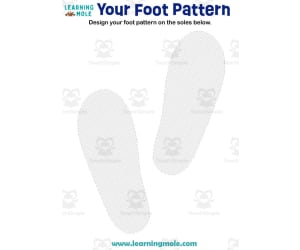
Activity Overview The human body is full of fascinating wonders to learn. This activity is created to help the students recognize the anatomy and the job of the human body. Your Foot Pattern Every part and organ in our human body is vital so let's see how important they are. Have you ever imagined how we look like if we didn't have a skeleton? Did you know that because we have our amazing muscles we can stand! Do you know how many teeth do we have? Have you ever wondered about the food journey inside our body? Can you name all the glands in our body? Why do we have skin? Our nervous system is really good at sending signals. Can you tell us more about it? Are you really good at Mathematics, painting, or any other thing? You should really thank your brain about it! The famous five senses are really doing a great work? Can you explain how every sense works? Your Foot Pattern Activity The activity is perfect for encouraging the researching skills for the students, while learning more about our fantastic human body. Your Foot Pattern This friendly designed worksheet is suitable for students at school, homeschooling, and as a group activity. Instruction Design your foot pattern on the soles below. Format Available in a PDF format.
Author Educational Voice
Tags Your Foot Pattern Activity, Your Foot Pattern, Foot Pattern, Foot, Foot Facts, Foot Facts For Kids, Feet, Feet Facts For Kids, Feet Facts, Human Body

Science Natural Selection Case Study: A Cuban Attraction
Science, Life Sciences, Biology, Grade 6, 7, Activities
This is a Science Natural Selection Case Study. Students will read the case study called "A Cuban Attraction" and then complete the activities . The case study will allow them to re-cap, use data to fill a graph, and answer conclusion questions. Answer key included.
Author Sarah Miller Tech
Tags Science Activity, Life Sciences, Natural Selection, Case Study, Graphing, Cuban Science