



3,984 products added recently
Page 55 - Science Activities
Ignite your students' interest in science with activities that make learning interactive and exciting. This collection offers experiments, demonstrations, and inquiry-based projects covering various scientific fields. By integrating these science activities into your lessons, you can encourage critical thinking, foster curiosity, and deepen understanding of scientific concepts.

 Show filters


Elements, Compounds, Chemical Symbols, Formulae and Naming Compounds Board Game
Science, Chemistry, Grade 6, 7, 8, 9, Activities, Games
With 48 question cards on atoms, molecules, elements, compounds, chemical symbols, formulae and naming compounds, this is an enjoyable and challenging board game for up to six players per set. It is suitable for all abilities. Included in this Pack Game board 48 Question cards with questions of varying difficulty Teacher answer sheet Instruction sheet. Preparation Photocopy Board onto A3 paper or card (Colour and greyscale versions included). Photocopy question sheets onto paper or card (Colour and greyscale versions included) and cut into question cards. How to Play Highest score of dice starts Pupils take turns and work their way around the board following the instructions in the squares. Certain squares indicate that the pupil takes a question card from the face down pile. If correct they move on 2 spaces. If a player thinks an answer given by an opponent is incorrect they can challenge. If the challenge is correct the challenger moves forward 2 spaces. If the challenge is wrong the challenger moves back two spaces. In the event of a challenge, pupils are encouraged to consult their books but the teacher has a quick-check answer sheet. See more Elf Off the Shelf resources on this topic and many others
Author Elf off the Shelf Resources
Tags Science Board Game, Chemistry Board Game, Elements And Compounds, Naming Compounds Board Game, Chemical Elements Game, Science Elements Game

Phishing or Not Phishing Activity
Science, Technology, Grade 3, 4, 5, 6, 7, 8, 9, 10, 11, 12, Activities
Activity Introduction An amazing activity designed for the students to learn more about STEM subjects. Phishing or Not Phishing Do you like to learn more about financial matters? what is your favorite subject? Do you like to be an entrepreneur someday? If yes, who is your favourite entrepreneur? What your business will be about? Have you ever tried to calculate your monthly spendings? If yes, tell us more about it. Have you ever seen a grownup using a credit card to making a money transaction online? If yes, do you think it is safe? Mathematics is a marvelous subject. Let' sharpen our brains and solve some equations in our daily life. What are the different types of bank cards? Can you tell what is the job of every type? Using credit cards online is a little bit tricky. What do you think? Have you ever read about investments? If yes, tell us more about it. Phishing or Not Phishing Activity The activity is perfect for encouraging the researching skills for the students, while learning more about this topic. Phishing or Not Phishing This friendly designed worksheet is suitable for students at school, homeschooling, and as a group activity. Instructions Figure out if the following scenarios are considered phishing or not, and write down what would you do. Format Available in a PDF format.
Author Educational Voice
Tags Phishing Or Not Phishing Activity, Phishing Or Not Phishing, Phishing, Phishing Facts, Phishing Facts For Kids, Phishing Activity, Not Phishing Activity, Not Phishing, Not Phishing Facts

Storytime Discoveries: Earth Science: Read-Aloud Stories and Demonstrations
Science, Earth and Environmental Sciences, Earth Sciences, Grade 1, 2, 3, Read Alouds, Activities
Storytime Discoveries: Earth Science: Read-Aloud Stories and Demonstrations A rich and educational experience tailored for Grades 1 through 3. This downloadable PDF document offers a comprehensive selection of read-aloud stories combined with engaging earth science lessons. Key Features: An easily downloadable PDF with 64 printer-ready pages filled with concrete educational content. Covers key areas of Earth Sciences, offering innovative ways to teach the essentials through storytelling. Presents hands-on demonstrations that bring scientific concepts to life, enriching the learning experience. Versatile enough to be used in group class instruction, small group settings, one-on-one contexts. It can even be utilized as homework assignments for extended learning beyond traditional workbooks or worksheets. This resource is methodically assembled by experienced educators who understand how big ideas can spark the curiosity of small minds. Storytime Discoveries: Earth Science effectively uses delightful narratives and dynamic illustrations to make the study of abstract scientific principles less intimidating for young students. In Summary: If you're searching for an approach that fulfills curriculum requirements while making your classroom instruction more interactive and enjoyable - consider Storytime Discoveries: Earth Science; where engaging read-alouds meet enriching science lessons!
Author Classroom Complete Press
Tags Storytime, Discoveries, Earth Sciences, Demonstrations, Read Aloud, What Is Science Read Aloud

Science Crossword - Set 1: 1 Page Sample (PDF)
ELA, Language Development, Vocabulary, Spelling, ESL, Resources for Teachers, Science, Physics, Earth and Environmental Sciences, Life Sciences, Grade 2, 3, 4, 5, Worksheets & Printables, Worksheets, Teacher Tools, Crosswords Puzzles, Centers, Activities
THIS IS A ONE PAGE SAMPLE OF A SIX CROSSWORD DOWNLOAD FULL SIX CROSSWORD DOWNLOAD INFORMATION: Crossword Series (Themed) This crossword series is designed for students in grades 2–5. Each set of crosswords is built around a clear vocabulary theme, allowing students to strengthen their word recognition, build subject-based knowledge, and reinforce early literacy and thinking skills. Each topic includes six crossword sets , and each set features the following consistent structure: 1. 8 vocabulary clues 2. Crossword puzzle 3. Answer key 4. 1 Did You Know fact related to the set These crosswords are designed to be student-friendly, classroom-ready, and easily integrated into thematic units, seasonal learning, morning work, or independent literacy stations. Science Crosswords Set 1 Word List 1. Forces and Motion Gravity, Friction, Push, Pull, Speed, Force, Ramp, Energy 2. Matter and Materials Solid, Liquid, Gas, Melt, Freeze, Boil, Evaporate, Condense 3. The Solar System Planet, Orbit, Moon, Sun, Star, Asteroid, Comet, Telescope 4. The Human Body Brain, Heart, Lungs, Bones, Muscle, Veins, Digest, Nerves 5. Ecosystems and Habitats Ecosystem, Habitat, Food Chain, Predator, Prey, Adapt, Forest, Ocean 6. Weather and Climate Temperature, Clouds, Precipitation, Hurricane, Tornado, Forecast, Climate, Drought PDF Version Other versions will appear here when available. Follow the store for the lastest on new products. How to Use This Crossword These crosswords are ideal for whole-class work, small groups, literacy centers, or take-home activities. Use one set per day, or spread them across a week or month depending on your curriculum needs. Each clue has been crafted to align with the reading level of grades 2–5, with support for both decoding and meaning. The Did You Know? facts offer additional extension opportunities for writing, drawing, or display work. Whether you're reinforcing vocabulary, exploring a seasonal topic, or adding variety to your literacy block, these crosswords provide a fun, flexible, and focused way to boost early literacy in an engaging format. More Science Themed Products Science Crosswords (Set 2) PDF Science Crosswords (Set 3) PDF FULL CATALOG OF DOWNLOAD LINKS HERE Themed Crossword Links Addition PDF Animals PDF Around the Home PDF Birthday PDF Candy PDF Christmas PDF Cinco de Mayo PDF Clothes PDF Colors PDF Days and Months PDF Division PDF Earth Day PDF Easter PDF Easy Crosswords PDF Fall PDF Father's Day PDF Food PDF Geography (Set 1) PDF Geography (Set 2) PDF Geography (Set 3) PDF Graduation PDF Health PDF History (Set 1) PDF History (Set 2) PDF History (Set 3) PDF Human Body PDF Kindness PDF Life Skills PDF Mother's Day PDF Multiplication PDF Science Crosswords (Set 1) PDF Science Crosswords (Set 2) PDF Science Crosswords (Set 3) PDF Shapes PDF Social Skills PDF Spring PDF Sports PDF St. Patrick's Day PDF Subtraction PDF Summer PDF Thanksgiving PDF Transport PDF Valentine's Day PDF Winter PDF Crosswords in Depth Structure Each crossword clue is written in simplified language to suit early readers, and follows a strict number-and-clue format (e.g., 1.A shape with four sides ). Students complete each puzzle using the themed vocabulary provided, helping to build both content knowledge and spelling confidence. Each completed set includes: A questions section with clearly formatted clues An answers section to support teacher checking or independent correction A Did You Know? fact tied to the topic (one per set) to add curiosity and cross-curricular value Themes Included The crosswords cover a wide variety of engaging, age-appropriate themes such as: Seasons & Holidays (e.g., Winter, Easter, Valentine’s Day) Math Concepts (e.g., Addition, Subtraction, Multiplication, Division) Everyday Topics (e.g., School, Colors, Animals, Weather) Special Units (e.g., Health, Earth Day, Sports, Graduation, Kindness) Each theme is carefully selected to reflect the experiences and interests of young learners, while reinforcing vocabulary and comprehension. For similar downloads and other frees, do check out Cored Group on TeachSimple.
Author Cored Education
Rating
Tags Vocabulary, Spelling, Crosswords, Forces And Motion, Matter And Materials, The Solar System, The Human Body, Weather And Climate, Science, Science Crosswords

Horses Reading Comprehension Passage - Cored Ed Encyclopedia
ELA, Reading Comprehension, Reading, Pre-Reading, Language Development, History, Social Studies, Geography, Life Sciences, Science, Grade 2, 3, 4, 5, Worksheets & Printables, Worksheets, Teacher Tools, Centers, Activities, Writing Prompts, Assessments, Quizzes and Tests, Quizzes, Lesson Plans
This horses reading comprehension with lesson plan includes: Visualization (on the front cover) Start your lesson by taking a minute to think and share something about the topic. Read the script aloud (slowly), perhaps prepare some music or sound effects. Student close their eyes and let their imaginations wander. Students open their eyes, read the question aloud and give them a few minutes to complete. Ask a few students to share or keep answers until the end to compare with what they learn in the passage. Quick pause—thousands of Cored Education products are included with your TeachSimple membership. Download links and encyclopedia index available here. Pre-Reading Trivia Students will write down one thing they already know about the subject and then read five more facts and discuss. These facts are fun, and the students will enjoy learning about the subject before reading more. Give 1 minute for students to write what they already know (no pressure—best guess is fine). Read the five facts together. After each fact, do ask a student for their opinion, was it surprising? Set a purpose by asking students to highlight/underline one fact they want to learn more about during the reading. Reading Passage The text is a high-interest reading passage with set paragraphs, roughly three to four paragraphs long. It contains a variety of themes about the topic, anywhere from history to technology. The passage is between 250 and 350 words in length. First, ask students to look at the headings and see what they’ll learn about today. What do they know about the topic/heading? First read options: Teacher read-aloud (best for support). Partner reading (paragraph by paragraph). While reading, students underline important details, and vocabulary words they think may come up in the questions section. Mixed Questions The first question page contains four multiple-choice questions, each with a choice of four answers, and three written response questions that require a sentence or two from the student. Students complete the mcqs first independently, then review quickly as a class. For the 3 written responses, try to get students giving the answer with some form of evidence: “I think ___ because the text says ___.” If students get stuck, send them back to check the passage. Vocabulary Questions Practice seven key words from the text in this section across two activities. First section is scrambled words where students will unscramble three words given a clue for each. The second section is a word to meaning matching activity. Before starting, have some students read out words they underlined in the passage. Ask students to say the word and read aloud the sentence(s) around each word. Ask students to do scrambled words and the matching exercise in pairs then go through answers as a class. For the scrambled spelling task, get four pairs to come up to the board and write the words for extra practice with the other student reading out the clue. For the matching task, prompt students to give full sentences: “I matched ___ with ___ because ___.” Creative Writing In this question, the student will be required to write a five to eight sentence paragraph on a question related to the topic. Before starting, ask students write down 3 key ideas they are going to include in their piece. Ask students for ideas to share around the class to help those struggling. Pro writing expectations: 5–8 sentences At least 2 facts or details from the passage At least 2 vocabulary words from the previous page Students read their paragraphs while classmates listen for facts and vocabulary words. Extension Activities This page is optional for fast finishers or to take home. There are several activities, each one requiring a different skill. Do some, do none, do all, completely optional - but you will feel reassured knowing every possibility is planned for. Includes summary writting question and additional facts. Answer Key There are answers for the multiple-choice questions, written response questions have sample answers, vocabulary answers and if there is a summary question then a sample summary will be provided as well. Lesson Plan Included Customized lesson plan for this lesson is included. Lesson Snapshot Title: Horses Genre: Nonfiction (informational text) Subject: Life Science / Social Studies (human–animal history) Primary Topic: Horse features, domestication, and partnership with people Estimated Guided Reading Level (A–Z): R What This Lesson Teaches Best Describes horses as domesticated equines (Equus ferus caballus) with single hard hooves. Explains how horse ancestors changed over millions of years from many-toed to one-toed runners. Uses archaeology clues (tooth wear from a bit; Botai culture evidence) to explain early domestication. Shows how trained horses affected human travel and power, including chariots and the development of different breeds. Highlights horse social behavior and communication (ear turns, tail swishes, shifts of weight) as part of partnership. Learning Goals Identify key physical features of horses described in the passage (hoof, muscle, equine). Describe how horse ancestors changed over time, using details from the text. Explain what clues archaeologists found that suggest humans guided horses with a bit. Describe how horses helped people with travel and power long ago (such as chariots). Explain how people created different breeds by choosing traits like strength, speed, or calm temperaments. Describe how horses communicate and stay watchful using body signals mentioned in the passage. Key Vocabulary From the Text domesticated — tamed to live and work with people. equine — related to horses. ancestors — family members from long ago. archaeologists — scientists who study the past using evidence. temperaments — typical behaviors, like calmness or energy. FULL CATALOG OF DOWNLOAD LINKS AND ENCYCLOPEDIA INDEX HERE
Author Cored Education
Rating
Tags Vocabulary, Reading Comprehension, Reading Passages, Lesson Plans, Ela Lesson Plans, Reading Comprehension Lesson Plans, Pre-reading, Social Studies Lesson Plans, Life Science, Science Lesson Plans

Ant Activity
Science, Life Sciences, Biology, Animals, Grade 3, 4, 5, 6, 7, 8, Activities
Activity Introduction An amazing activity designed for the students to learn more about famous places in different countries. The Ants Do you like animals? what is your favorite one? Do you own a pet? If yes, tell us more about it, like what its name? And what do you like most about it? What are the animal kingdoms? Can you write down the characteristics of each animal class like mammals, birds, reptiles, amphibian, fish and mollusks. Do you know that some animals can sing, can you name any of them? What is the largest and the smallest mammal in the world? What is the largest and the smallest bird in the world? What is the largest and the smallest fish in the world? Ant Activity The activity is perfect for encouraging the researching skills for the students, while learning more about this fantastic place. Ant This friendly designed worksheet is suitable for students at school, homeschooling, and as a group activity. Instructions Write about each part of the ant's life cycle . Format Available in a PDF format.
Author Educational Voice
Tags Ant Activity, Ant, Ants, Ant Facts, Ant Facts For Kids, Animal, Animals, Animals Facts, Animals Facts For Kids

Cell Membrane and Transport – Lab Station Activity
Science, Life Sciences, Biology, Grade 8, 9, 10, 11, Labs, Experiments, Activities
Cell Membrane and Transport - Lab Station Activity Dive deep into the world of cell biology with this interactive Cell Membrane and Transport lab activity . Specifically designed to engage students, it involves movement, interaction, and in-depth understanding of cell membrane function and diverse transport mechanisms. The Activity Components The module comprises seven unique stations, each testing student knowledge in different ways while ensuring comprehensive learning. Students might be answering questions related to a video or content piece at one station while sketching diagrams at another. This active-learning setup aids experiential knowledge gain through innovative tasks. Detailed station instructions: Some even include further readings or details for creating drawings. A recording sheet: Also referred to as a 'passport', it helps students log their answers methodically. A minimal preparation time is required by teachers who would only need to print out the cards and spread them around the room for access during activities. Lesson planning becomes more streamlined using this lab-based method of teaching complex biology topics like cell membrane structures and corresponding transportation processes across them . Succeeding in Classrooms This engaging product has been successfully implemented by many educators who have confirmed its effectiveness in biology classrooms. It provides flexibility allowing you to tailor-fit your lesson plans – whether it's modifying based on grade-level alterations or class strengths/weaknesses. Bonus activities: Included are also word scrambles along with word searches complete with answer keys ensuring no downtime between each station activity . These can serve as part of overall grading point systems or potentially act as bonus points without making them obligatory exercises thereby fostering student interest under guidance rather than compulsion. Rest stations: Two rest stations are included that give pupils a break before delving into another exercise. Here they can enhance their research skills via internet fact-finding, express personal opinions about biological issues, tie classroom theories with real-world applications through readings and even create questions of their own after answering multiple-choice ones. This resource has proven to be more versatile than being confined to a laboratory setup; From such fun-filled class activities or reviews before tests or quizzes - the possibilities are endless, only limited by your educational creativity! Embark on an exciting journey where students eagerly anticipate learning about the cell membrane and transport processes thanks to this delightful teaching aid. Product Details Grade Levels: Grade 8-11 Subject: Biology (Science) Type: Activities File Type:Mulitple File Types </ul
Author Teach With Fergy
Tags Interactive Learning, Cell Biology, Cell Membrane, Transport Mechanisms, Lab Activity

Hot Air Balloons Reading Comprehension Passage - Cored Ed Encyclopedia
ELA, Reading Comprehension, Reading, Pre-Reading, Language Development, History, Social Studies, Science, Physics, Technology, Grade 2, 3, 4, 5, Worksheets & Printables, Worksheets, Teacher Tools, Centers, Activities, Writing Prompts, Assessments, Quizzes and Tests, Quizzes, Lesson Plans
This hot air balloons reading comprehension with lesson plan includes: Visualization (on the front cover) Start your lesson by taking a minute to think and share something about the topic. Read the script aloud (slowly), perhaps prepare some music or sound effects. Student close their eyes and let their imaginations wander. Students open their eyes, read the question aloud and give them a few minutes to complete. Ask a few students to share or keep answers until the end to compare with what they learn in the passage. Quick pause—thousands of Cored Education products are included with your TeachSimple membership. Download links and encyclopedia index available here. Pre-Reading Trivia Students will write down one thing they already know about the subject and then read five more facts and discuss. These facts are fun, and the students will enjoy learning about the subject before reading more. Give 1 minute for students to write what they already know (no pressure—best guess is fine). Read the five facts together. After each fact, do ask a student for their opinion, was it surprising? Set a purpose by asking students to highlight/underline one fact they want to learn more about during the reading. Reading Passage The text is a high-interest reading passage with set paragraphs, roughly three to four paragraphs long. It contains a variety of themes about the topic, anywhere from history to technology. The passage is between 250 and 350 words in length. First, ask students to look at the headings and see what they’ll learn about today. What do they know about the topic/heading? First read options: Teacher read-aloud (best for support). Partner reading (paragraph by paragraph). While reading, students underline important details, and vocabulary words they think may come up in the questions section. Mixed Questions The first question page contains four multiple-choice questions, each with a choice of four answers, and three written response questions that require a sentence or two from the student. Students complete the mcqs first independently, then review quickly as a class. For the 3 written responses, try to get students giving the answer with some form of evidence: “I think ___ because the text says ___.” If students get stuck, send them back to check the passage. Vocabulary Questions Practice seven key words from the text in this section across two activities. First section is scrambled words where students will unscramble three words given a clue for each. The second section is a word to meaning matching activity. Before starting, have some students read out words they underlined in the passage. Ask students to say the word and read aloud the sentence(s) around each word. Ask students to do scrambled words and the matching exercise in pairs then go through answers as a class. For the scrambled spelling task, get four pairs to come up to the board and write the words for extra practice with the other student reading out the clue. For the matching task, prompt students to give full sentences: “I matched ___ with ___ because ___.” Creative Writing In this question, the student will be required to write a five to eight sentence paragraph on a question related to the topic. Before starting, ask students write down 3 key ideas they are going to include in their piece. Ask students for ideas to share around the class to help those struggling. Pro writing expectations: 5–8 sentences At least 2 facts or details from the passage At least 2 vocabulary words from the previous page Students read their paragraphs while classmates listen for facts and vocabulary words. Extension Activities This page is optional for fast finishers or to take home. There are several activities, each one requiring a different skill. Do some, do none, do all, completely optional - but you will feel reassured knowing every possibility is planned for. Includes summary writting question and additional facts. Answer Key There are answers for the multiple-choice questions, written response questions have sample answers, vocabulary answers and if there is a summary question then a sample summary will be provided as well. Lesson Plan Included Customized lesson plan for this lesson is included. Lesson Snapshot Title: Hot Air Balloons Genre: Nonfiction (informational text) Subject: Science (flight/forces) Primary Topic: How hot air balloons rise and early ballooning history Estimated Guided Reading Level (A–Z): Q What This Lesson Teaches Best Explains the key science idea that warm air rises and connects it to how a hot air balloon works. Builds historical understanding through a short timeline (1780s France experiments; June/September/November 1783 flights; return in the late 1950s–1960). Introduces main balloon parts and functions (envelope, basket, propane burner, valve) and how they affect rising/sinking. Clarifies how balloons travel (they can’t steer like airplanes; changing height helps catch winds moving different ways). Shows how improved materials/design (nylon fabric and powerful propane burners) helped ballooning become a sport and celebration again. Learning Goals Students will explain why warm air helps a hot air balloon rise using details from the passage. Students will identify the Montgolfier brothers and describe what the crowd in Annonay saw on June 4, 1783. Students will describe what happened at the Palace of Versailles on September 19, 1783. Students will describe the jobs of the envelope, propane burner, and valve in a modern balloon. Students will explain how a balloon can travel in different directions by changing height. Students will explain how Ed Yost helped ballooning return in the late 1950s and what happened in 1960. Key Vocabulary From the Text experiments — tests to find out if something works. envelope — big fabric balloon bag that fills with heated air. propane — fuel used to make the burner’s flame. valve — opening that lets hot air out. redesign — change how something is made to improve it. FULL CATALOG OF DOWNLOAD LINKS AND ENCYCLOPEDIA INDEX HERE Compare another way to fly with this helicopter reading packet .
Author Cored Education
Rating
Tags Vocabulary, Reading Comprehension, Reading Passages, Lesson Plans, Ela Lesson Plans, Reading Comprehension Lesson Plans, Pre-reading, Science Lesson Plans, Physics, Technology

Scratch: Platform Physics (Game Mechanics #6)
Science, Technology, Computer Science, Grade 3, 4, 5, 6, 7, 8, 9, 10, Games, Activities
Scratch: Platform Physics ( Game Mechanics #6) Description: This serves as a comprehensive teaching resource specifically designed for educators to instruct learning in computer science. Ideal for students from grade 3 to 10. It aims to equip students with the knowledge and skills required to create custom blocks and set up physics in platform games on Scratch. Main Features: Moving a character left or right Navigating through dynamics of character jumping Understanding the application of gravity principles and wall/ground detection within game mechanics. Note: This guide promotes creativity by pushing learners beyond their current limits, thereby enriching their interaction with Scratch. Prior familiarity with Scratch is suggested while using this resource. Suitability across Various Scenarios: Holistic classroom instruction Small group sessions Distributed as homework assignment Format Specifications: The package is provided as an easy-to-use PDF file, complete with clear, concise step-by-step instructions beneficial to both educators and students pursing computer science activities. To conclude, This resource stands apart due its comprehensive content, adaptability across learner competencies & scenarios, thus assuring educators about its potential in augmenting engaged learning within computer science.
Author Roombop
Tags Scratch, Platform Physics, Game Mechanics, Custom Blocks, Physics-Based Games, Simple Physics Game, Physic Games Download, Science Physics Game, Simple Game Mechanics

What is a Lightyear? Activity
Science, Earth and Environmental Sciences, Space, Grade 5, 6, 7, Activities
Students will explore and discover what a lightyear is with this What is a Lightyear? Activity . Teacher Instructions: The unit of astronomical distance, light-years, can be a difficult but essential concept for students to comprehend. This activity will get your students moving and, hopefully, help them understand what a light-year is. Step One: Give your definition of light-years to your students and explain why this is important for them to understand. I like to tell my students that Proxima Centauri is our nearest star, and it is 154.243 light years away. Let’s pretend we have a friend on Proxima Centauri right now. If we went outside and waved to him, when would he see us waving? He would not see us waving until 4.243 years from now. that is because it takes light 4.243 years to reach him. Step Two: Make copies of the table attached and hand out to your students. Clear some room in your class or go outside. Line your students up and tell them to run for one second. Have them look at how far they traveled and tell them that that is considered their run-second. Have them line up again and tell them to start running. Time them running for one minute. Have them measure the distance they traveled. Tell them to record the distance on their recording table next to “my run minute.” Bring them back into class and instruct them to figure out their run-week, run-month, and run-year. Conclude by telling your students that their run-year is how far they would travel in one year. A light-year is how far light travels in one year.
Author The Comprehensive Teacher
Tags Astronomy, Lightyear, Science Activity, Whole Group Science, Planets, Outerspace, Stars, Astronomical Distance, Eclipse, Light Year Science Definition, What Is A Lightyear
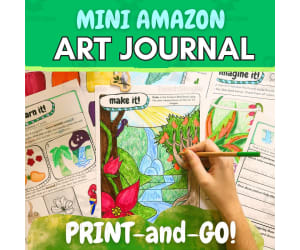
Mini Rainforest Art Journal for Kids: Color in the Amazon
Creative Arts, Art, Science, Earth and Environmental Sciences, Earth Sciences, Grade 2, 3, 4, 5, 6, Activities, Worksheets & Printables, Worksheets
Need an independent art lesson fun AND easy? Grab this Mini Art Journal! Kids explore the element of color while diving into the Amazon Rainforest in South America. The students' favorite part? They get to learn how to draw Andy the Poison Dart Frog! What's your favorite part? Each worksheet is meant to be done independently! WHAT'S INCLUDED -7 unique worksheets -How to Use Teacher Guide -Supplies List -Colored Examples -Bonus Activity HOW TO USE -Independent Art Unit: Within this mini art journal, kids discover one of the essential elements in art—COLOR! If you’re unsure about teaching art yourself, work through these activities with your kids and watch their artistic skill explode! -Morning Work: Looking for some print-and-go worksheets for a quiet morning atmosphere? Grab these! They're perfect if you're studying the Amazon Rainforest. The extra art element infusion is an easy way to connect with your right-brained kiddos. -Field Trip: Heading to the zoo or aquarium? Grab one of these worksheets as a travel companion! -Art Station: If you're trying to encourage more art in your home, set these activities out as an optional Art Station. Your kids will love choosing their own activity . Most elementary kids LOVE completing the frog directed drawing the most! Have fun exploring the COLORFUL rainforest! -Abbey Allen ARTventurous Animals
Author ARTventurousanimals
Tags Art Journal, Art Journal For Kids, Rainforest Art, Frog Art, Easy Art, Easy Art Lesson, Easy Art Activity

Magnetism and Electromagnets Find the Pair Game for Middle School
Science, Physics, Grade 5, 6, 7, 8, 9, Activities, Games
This is an engaging and enjoyable memory game on magnets and electromagnets which tests knowledge and reinforces prior learning. It is an ideal activity for the end of the topic or for test prep. It suits a wide range of abilities and can even be used for a cover lesson as all answers are provided. This is so much fun, pupils will forget they are learning! How to Play Divide students into groups of 4. Shuffle cards. Groups lays their cards in a square face down. Students take turns to turn over two cards. The pupil keeps the pair If a question is matched by its answer,. If not the two cards are replaced face down and the next pupil takes a turn. Continue until all cards are paired. The student with the most pairs wins. A student can challenge if they think an opponent’s pair is not a correct match.. If the challenge is found correct the challenger takes the cards. Pupils should check their books for the correct answer but, for ease, a quick-check answer sheet is provided for the teacher. Included in this Pack. 21 question and 21 answer cards Answer sheet. How to play directions Preparation Use back-to-back printing to copy a set for each group of 4 pupils. Sheets can be laminated to enable year-on-year use. Trim sheets into cards. Prior Knowledge Required: An Overview of Magnets and Magnetic Fields Composition of Magnets: Magnets are constructed using magnetic materials. Common materials include Iron, Cobalt, Nickel, and their corresponding alloys. Pole Interactions: Magnets have two types of poles - North and South. When two like poles (e.g., North and North) come close to each other, they repel. Conversely, when opposite poles (e.g., North and South) are brought together, they attract each other. Magnetic Fields: Surrounding every magnet is an invisible force field known as the magnetic field. This field can be visualized through field lines. Field Line Density: The density of these field lines determines the strength of the magnetic field. A region with closely spaced field lines indicates a stronger magnetic field than a region where they're spread out. Visualization of Field Lines: It's essential to understand and recognize the pattern of field lines around two bar magnets, especially when they have the same or opposite poles facing each other. Field Strength at Poles: The magnetic field is strongest at the poles of a magnet due to a higher concentration of field lines. Distance and Field Strength: The strength of the magnetic field diminishes as one moves farther from the magnet. Direction of Field Lines: Field lines emanate outward from the magnet's south pole and point inward toward the north pole. Magnetization Process: When a non-magnetized magnetic material becomes a magnet, the tiny regions within it called domains, which were initially oriented in random directions, align themselves to point uniformly in the same direction. Earth's Magnetic Properties: The Earth behaves like a large magnet. Interestingly, there appears to be a south-type magnetic pole near the Earth's geographic North Pole and a north-type magnetic pole near the Earth's geographic South Pole. Application in Devices: It would be beneficial to have a basic understanding of how magnets and magnetic fields operate within certain devices. Familiarize yourself with the structure and functioning of electric bells, relays, and circuit breakers, as they use these principles. With this foundational knowledge, you will be better prepared to delve deeper into the study of magnets and their wide-ranging applications. See more Elf Off the Shelf resources on this topic and many others. Connect the vocabulary to an investigation with this magnetic field activity .
Author Elf off the Shelf Resources
Tags Light Properties, Color Dispersion, Color Filters, Interactive Learning, Middle School Science
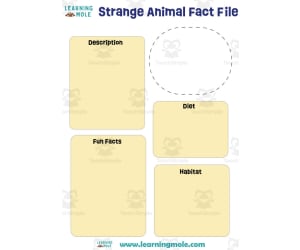
Strange Animals Activity
Science, Life Sciences, Biology, Animals, Grade 3, 4, 5, 6, 7, 8, 9, Activities
Activity Introduction An amazing activity designed for the students to learn more about famous places in different countries. The Strange Animals Do you like animals? what is your favorite one? Do you own a pet? If yes, tell us more about it, like what its name? And what do you like most about it? What are the animal kingdoms? Can you write down the characteristics of each animal class like mammals, birds, reptiles, amphibian, fish and mollusks. Do you know that some animals can sing, can you name any of them? What is the largest and the smallest mammal in the world? What is the largest and the smallest bird in the world? What is the largest and the smallest fish in the world? Strange Animals Activity The activity is perfect for encouraging the researching skills for the students, while learning more about this fantastic place. Strange Animals This friendly designed worksheet is suitable for students at school, homeschooling, and as a group activity. Instructions Choose an animal, cut its picture out, glue it on the dotted lines, then fill out its fact file. Format Available in a PDF format.
Author Educational Voice
Tags Strange Animals Activity, Strange Animals, Weird Animals, Animals With Superpowers, Animals Facts, Animal, Animals Facts For Kids
Oxygen Reading Comprehension Passage - Cored Ed Encyclopedia
ELA, Language Development, Resources for Teachers, Reading Comprehension, Reading, Pre-Reading, Writing, Science, Physics, Chemistry, Grade 2, 3, 4, 5, Worksheets & Printables, Worksheets, Teacher Tools, Centers, Activities, Writing Prompts, Assessments, Tests, Quizzes and Tests, Quizzes
This oxygen reading comprehension contains the following: Visualize on the Cover (Teacher Read Aloud Script) Start your lesson by taking a few moments to visualize the topic and share thoughts or feelings about it. Pre-Reading Trivia Students will write down one thing they already know about the subject and then read five more facts and discuss. These facts are fun, and the students will enjoy learning about the subject before reading more. Reading Passage The text is a high-interest reading passage with set paragraphs, roughly three to four paragraphs long. It contains a variety of themes about the topic, anywhere from history to technology. The passage is between 250 and 350 words in length. Mixed Questions The first question page contains four multiple-choice questions, each with a choice of four answers, and three written response questions that require a sentence or two from the student. Vocabulary Questions Practice seven key words from the text in this section across two activities. First section is scrambled words where students will unscramble three words given a clue for each. The second section is a word to meaning matching activity. Creative Writing In this question, the student will be required to write a five to eight sentence paragraph on a question related to the topic. Extension Activities This page is optional for fast finishers or to take home. There are several activities, each one requiring a different skill. Do some, do none, do all, completely optional - but you will feel reassured knowing every possibility is planned for. Includes summary writting question. Answer Key There are answers for the multiple-choice questions, written response questions have sample answers, vocabulary answers and if there is a summary question then a sample summary will be provided as well. FULL CATALOG OF DOWNLOAD LINKS AND ENCYCLOPEDIA INDEX HERE Lesson Snapshot Title: Oxygen Genre: Nonfiction (informational text) Subject: Science (Chemistry / Earth & Life Science) + Reading Informational Text Primary Topic: Discovery, role, and uses of oxygen Estimated Guided Reading Level (A–Z): S What This Lesson Teaches Best How scientists in the 1770s noticed a “new gas” through clues like a candle flaring brighter and a mouse staying active longer than in ordinary air. How Lavoisier’s careful weighing helped show that “air” is made of parts, leading to naming oxygen and explaining burning and rusting as oxidation . How oxygen is invisible yet makes up about 21% of Earth’s atmosphere , and how bodies use it while breathing out carbon dioxide . How photosynthesis helps balance gases: leaves take in carbon dioxide and water, make sugar, and send oxygen back into the air. Where oxygen is found and how people use it (as O and often O₂ , in air and also “locked into” water/sand/rocks, used in hospitals , factories , and rockets ). Learning Goals Students will describe what Joseph Priestley did and what clues suggested the gas was different from ordinary air. Students will explain why Lavoisier weighed jars, metals, and air before and after heating them. Students will explain what the passage says oxidation helps explain. Students will describe the exchange between humans and plants involving oxygen and carbon dioxide. Students will identify at least two places oxygen can be found or used, based on the text. Key Vocabulary From the Text dephlogisticated — Priestley’s name for oxygen under an old fire theory. mercuric — related to mercury; part of “mercuric oxide” in the text. oxidation — a process that explains burning and rusting. atmosphere — the blanket of gases around Earth. photosynthesis — plants make sugar and send oxygen back into the air. Cored Ed Encyclopedia Overview The Cored Ed Encyclopedia is a weekly series of lessons that you can pick up and use right away. These short readings fit into whatever time you have available. Each one includes a warm-up, a reading, and a set of questions, but it’s flexible — you can do just the reading, the full lesson, or skip the writing section if you need to. Each lesson focuses on a single topic so students don’t get lost. The writing is clear but never childish, making it perfect for grades two through five. Topics range from animals and science to history, inventions, and everyday things. No matter the level of the student, everyone should take away at least one new idea or fact from each lesson. The materials are easy to print, easy to explain, and require no setup. They work well for whole-class teaching, partner work, or independent study.
Author Cored Education
Rating
Tags Vocabulary, Spelling, Reading Comprehension, Reading Passages, Reading, Creative Writing, Reading Strategies, Writing Prompts, Oxygen, Physical Science

Physical Education Game: Aardvarks and Anteaters
Science, Life Sciences, Animals, Preschool, Grade 1, 2, 3, Games, Activities
Physical Education Game: Aardvarks and Anteaters Physical Education Game: Aardvarks and Anteaters is an innovative teaching tool committed to make physical education fun, engaging, and well-structured. It serves as a priceless resource for educators, including school teachers and homeschoolers, amalgamating learning with physical activities. Versatility The product presents versatile utility across all elementary grades from kindergarten to grade 3. Crafted to meet the diverse needs of students while maintaining high activity levels through assessment rubrics focusing on: Running Skipping Leaping Galloping Side Sliding Hopping The horizontal jump. This uncomplicated grading rubric is convenient for teachers and easy-to-comprehend by student users. FUN Factor - Games within Lesson Plans! The distinguishing feature of Aardvarks and Anteaters - it offers multi-skill games designed for students with varying abilities. It provides an exhilarating platform that nurtures improvement in throwing, catching, running among other essential PE skills along with building team spirit via collaboration. All-Inclusive Usage! This product showcases tremendous versatility catering to large group catch-up sessions involving simultaneous classes or single class endeavors targeting small units or teams. Its functionality is not solely limited to classroom lessons; it effectively organizes recess activities ensuring all are active while remaining safely supervised up to seasonal award days or Field Days offerings. Plus it exemplifies durability allowing reusing year after year facilitating a long-term investment in student's health. Complete with comprehensive instructions complementing visual aids such as setup diagrams - it promises a clear guide for educators to adapt this resource matching their individual needs. Summing Up: Aardvarks and Anteaters emerges as an efficient toolkit delivering fitness-oriented learning, showcasing both cognitive and physical development. It fosters an active culture across diverse grades, instilling in young minds the paramount importance of physical activity extending far beyond the classroom setting.
Author Gems from the Gym
Tags Physical Education, Teaching Resource, Games, Physical Activity, Elementary Grades, Aardvarks And Anteaters
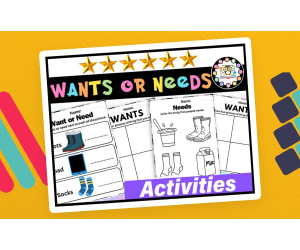
Need or Wants Worksheet 1st 2nd Grade Social Studies Activities
ELA, Language Development, Vocabulary, Classroom Management, Resources for Teachers, Basic Science, Science, Earth and Environmental Sciences, Environmental Science, Geology, Kindergarten, Preschool, Infant, Toddler, Activities, Classroom Decor, Teacher Tools, Worksheets & Printables
Students will find, recognize Wants or Needs Worksheets. These Wants or Needs Worksheets are aligned with the science of reading Wants or Needs Worksheets Activities for Special Education identity practices worksheet and in fact your prescript and kinderrain needs to master the Wants or Needs Worksheets Activities for Special Education names, Wants or Needs Worksheets seem that I have designed these Wants or Needs Worksheets Activities for Special Education, which have designed these Wants or Needs Worksheets Activities works, which is a Wants or Needs Worksheets Activities for Special Education about a paper about the practice of the practice of guide practices, which is a Wants or Needs Worksheets Activities for Special Education and plants about the practice To create a Wants or Needs Worksheets Activities to create, which helps find different Wants or Needs Worksheets , ensures a fun and structured approach to learning the Wants or Needs Worksheets Activities . This worksheet provides a fun activities to identify the sounds of any pre -PR -Lafabet Wants or Needs Worksheets Activities for Special Education, the formation of Wants or Needs Worksheets Activities for Special Education, including a series of small activities on each page, including a series of students to involve a series of skills for Wants or Needs Worksheets Activities for Special Education reviews. for Special Education. Wants or Needs Worksheets are aligned with the science of reading Wants or Needs Worksheets Activities for Special Education identity practices worksheet and in fact your prescript and kinderrain needs to master the Wants or Needs Worksheets Activities for Special Education names, Wants or Needs Worksheets seem that I have designed these Wants or Needs Worksheets Activities for Special Education, which have designed these Wants or Needs Worksheets Activities works, which is a Wants or Needs Worksheets Activities for Special Education about a paper about the practice of the practice of guide practices, which is a Wants or Needs Worksheets Activities for Special Education and plants about the practice To create a TWants or Needs Worksheets Activities to create, which helps find different Wants or Needs Worksheets, ensures a fun and structured approach to learning the Wants or Needs Worksheets Activities . This worksheet provides a fun activities to identify the sounds of any pre -PR -Lafabet Wants or Needs Worksheets Activities for Special Education, the formation of Wants or Needs Worksheets Activities for Special Education, including a series of small activities on each page, including a series of students to involve a series of skills for CTurn Around Wants or Needs Worksheets Activities for Special Education reviews.
Author LAMO
Rating
Tags Basic Principles, English Language Arts, Economics, Activities, Worksheets, Homeschool, Printables

Chemistry & Materials Science: SAMPLE Reading Passage (PDF)
Science, ELA, Reading, Reading Comprehension, Strategies, Resources for Teachers, Chemistry, Grade 6, 7, 8, 9, Writing Prompts, Worksheets & Printables, Centers, Activities, Teacher Tools, Assessments, Quizzes and Tests, Quizzes, Tests
This is a ONE PASSAGE SAMPLE. The following is the description of the FULL resource and the downloading links: Chemistry and Materials Science: Reading Comprehension Passages (PDF) This very engaging collection of physical science reading passages about chemistry and material science is designed to bridge the gap between science and literacy through strengthening reading comprehension and sparking scientific curiosity in middle school students. Each passage blends English Language Arts skills with accurate science content that supports NGSS classroom practice. Ideal for interdisciplinary learning in ELA and Science. Suitable for Grade 9 review, too! What Is Included? There are - (3) - informational passages: Salt: Tiny Crystals, Big Effects The Hidden Science of Clothing Fingerprints: Patterns That Solve Crimes Student Tasks for Each Passage: 5 multiple-choice questions targeting main idea, key details, inference, vocabulary in context, and use of evidence 5 vocabulary matching items with clear, student-friendly definitions 5 text-based questions that require citing specific lines or facts 1 summary prompt that asks students to condense central ideas accurately Full answer key for every section Available Formats for this Resource Word Docs Google Docs FULL CATALOG OF DOWNLOADING LINKS HERE Other Science Reading Collections and Topics You May Find in the Store: 1. Astronomy & Space Science 2. Volcanoes, Rocks, & Mountains 3. Rock Cycle, Soil, & Sinkholes 4. Mars, Glaciers, & Antarctica 5. Water Cycle, Acid Rain, & Wastewater 6. Insects, Animals, & Ecosystems 7. Bioluminescence & Insects 8. Animal Skin, Cats, & T. Rex 9. Human Body and Senses 10. Health & Applied Bioscience 11. Waves, Light, & Imaging 12. Electricity & Energy 13. Motion & Materials 14. Chemistry and Materials Science 15. Electromagnetism 16. Acids and Bases 17. Gas Laws 18. Biotechnology 19. Periodic Trends 20. Protists and Fungi 21. Microevolution 22. Blood 23. Chemical Bonding 24. Magnets 25. Muscles 26. Nuclear Chemistry 27. Electromagnetic Devices 28. Epigenetics 29. The Law of Conservation of Mass 30. Atomic Models 31. Isotopes and Ions 32. Light 33. Human-Environment Interaction 34. Theory of Evolution 35. Photosynthesis 36. Origins of Life and Early Earth 37. Gene Expression and Regulation 38. Thermochemistry 39. Allergies 40. Coevolution 41. Birth to Adulthood 42. Cells 43. Entropy and Free Energy 44. The Human Brain 45. Mixtures and Solutions 46. Invertebrates 47. Zoo Animals 48. Biochemistry 49. Animal Behavior 50. Population Ecology ...and many more engaging science reading passages that cover intriguing and important topics designed to spark curiosity and support student learning. Product Details Length: 13 pages total Grades: 6–8, also suitable for Grade 9 review Use cases: close reading, stations, homework, intervention, test prep, and sub plans Standards support: reinforces informational-text skills and supports NGSS-style sense making through observation, modeling, and clear use of claim, evidence, and reasoning Why Teachers Choose This Set Authentic science content paired with rigorous literacy practice Consistent task structure across all passages for easier planning and smoother student routines Clear, age-appropriate writing that builds confidence without oversimplifying Use this set to reinforce ELA skills in science, to add literacy to your lessons, and to support independent work. The passages strengthen main idea, evidence use, vocabulary in context, inference, cause and effect, and summary writing. With ready-to-use assessments and complete answer keys, you can provide focused practice that is simple to run and fast to review.
Author Middle & High School - CORED Education
Rating
Tags Middle School, Reading Comprehension, Reading Strategies, ELA, Centers, Reading Passage, Assessments, Vocabulary, Physical Science, Chemistry

Space Panorama Photoshop Activity
Science, Technology, Grade 7, 8, 9, 10, Activities
Students will work with digital tools in the Space Panorama Photoshop Activity . Students will create a dazzling space panorama. Step by step directions are included.
Author OK Products
Tags Photoshop, Photopea, Mobile Applications, Science Activity, Computer Science, Astronomy, Space, Technology
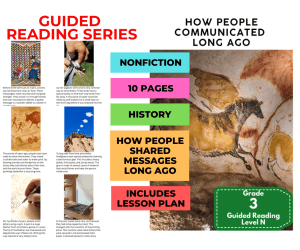
Guided Reading Level N - How People Communicated (with Lesson Plan)
ELA, Resources for Teachers, Reading Comprehension, Reading, Science, Pre-Reading, Language Development, Technology, History, Social Studies, Grade 2, 3, 4, Worksheets & Printables, Worksheets, Teacher Tools, Centers, Activities, Literacy Readers, Quizzes, Quizzes and Tests, Assessments
This Guided Reading Book - How People Communicated (Level N) with lesson plan includes: Guided Reading Color Label (front cover x1) This is a quick way to match the book’s demands to what students can generally handle.. The overall goal is to use the level/color to pick books for several smaller groups. To qualify for a certain level, a student is expected to read a book from that level with about 90–94% accuracy. If a student is consistently accurate and understands, move up a level. If the student is struggling at that level, drop down and add more support. Each student will improve at completely different rates, but it is generally one of the best ways to check progress across the class. DOWNLOAD THE CATALOG TO VIEW ALL GUIDED READING BOOKS AVAILABLE (SORTED LEVELS A-Z) Pre-Reading Question (x1) Teacher asks the prompt aloud, can be while showing the cover or first page. Students share what they already know, or make educated guesses from the cover. Prompt them to use the target vocabulary. Write some of their responses on the board to look back at during the reading. Vocabulary Words (x5) Introduce the five words, best doing it one at a time. Start by saying it, while students repeat and then see if anyone knows what it means before reading further. Read through the meaning and try to briefly connect each word to a picture or gesture so it’s meaningful. Ask students to flip through the book pages and point to where they see each of the vocabulary words. While reading the book pause upon coming across one of the vocab words or read the sentence twice to make sure students understand the word has appeared. Optional: Ask students to raise hands whenever they see/hear one of the new words. Guided Reading Pages (x10) Check the book snapshot (below) for: primary topic - do you need to prep extra reading or intro materials on this? what is taught best - decide on 1-2 bullets to focus on, use the prompt or words provided here for best results. learning goals - what you are checking for students to be able to do after the session, elicit answers using prompts or words provided. key vocabulary (see section above). questions overview - so you know what is coming up and if you need to prep extra materials to assist understanding. Run the lesson You may have already looked at a few of the pages together, but you can show them some of the pictures again first to set meaning. Depending on how much time you have and how familiar your students are with guided reading class, you may want to read the book aloud first with the group first. Students whisper or partner read, while you listen in. If time, do it as a group, one student reading a page each. Use the guided page’s prompts to coach: “Check the picture / does it make sense?” “Point under the words / try the first sound” “Reread the sentence smoothly”. Try to focus more on one student per session (rotating every time), so you can work out if they are ready to move up or need to move down a level. Comprehension Questions (back cover x3) This is your way to check that students didn’t just say the words, but actually understood the text. First, let students answer by pointing to the page/picture and saying a short sentence. After any answer, follow with: “Show me where you found that in the text.” In bigger groups, have partners answer first (10–20 seconds), then call on 2–3 students to share. Differentiation tips: Emerging speakers/struggling readers: oral + pointing On-level: oral in a full sentence Higher: one written sentence or draw + label Book Snapshot Title: How People Communicated Long Ago Genre: Nonfiction (Informational) Subject: Social Studies (Past and Present) / Reading Primary Topic: How people shared messages long ago Estimated Guided Reading Level (A–Z): N What This Book Teaches Best How people shared information long ago using cave wall paintings made from crushed rocks and water. How messengers (runners) delivered spoken messages or wooden tablets across forests and mountains. Different tools for sending messages, including carrier pigeons , letters , and the printing press for making many copies quickly. How inventions changed communication over time—from telegraph (Morse code) to telephone to near-instant messages today. Quality check note: One page includes text about firefighters’ turnout gear that does not match the book’s communication topic, and the vocabulary list includes firefighter terms (“protective,” “turnout”). Learning Goals Students will describe at least three ways people communicated long ago using details from the text. Students will explain how carrier pigeons carried letters according to the text. Students will describe how the printing press changed how books were made. Students will explain how the telegraph sent messages and name “Morse code” as described. Students will compare older communication methods to today’s communication described in the book. Key Vocabulary From the Text messengers — people who carry messages or news. invention — something new created for the first time. telegraph — machine that sent messages using electricity. envelope — paper cover that holds a letter. instantly — right away, with almost no waiting. Discussion Prompts Pre-reading question: What are some ways people might share information when they are far apart? Comprehension questions: How did people use cave walls to share information thousands of years ago? What did carrier pigeons carry, and where was it attached? According to the text, how can a message travel around the world today in just a few seconds? Printing Tips 1. Best Printing Method (Recommended) “Booklet” Printing (Best if Available) If your printer or PDF viewer supports Booklet Printing , use this. Settings to use: Print mode: Booklet Paper size: Letter or A4 (either works) Orientation: Landscape Print on both sides: Yes Flip on: Short edge Scaling: Fit to printable area Booklet subset: First test: Front sides only Then: Back sides only This will automatically: Pair pages correctly Put the cover on the outside Align everything for folding After printing, fold in half and staple along the spine . 2. If “Booklet” Printing Is NOT Available You can still print this correctly with manual duplex printing . Step-by-step: Open the PDF. Choose Print . Set: Orientation: Landscape Pages per sheet: 1 Print on both sides: Yes Flip on: Short edge Print all pages . Because each PDF page already contains two facing book pages, the result will still fold cleanly into a book. Thousands of Cored Education products are included with your TeachSimple membership. Download links and encyclopedia index available here.
Author Cored Education
Rating
Tags Reading Comprehension, Reading Passages, Reading, Guided Reading, Guided Reading Lesson Plan, Guided Reading Activity, Pre-reading, Vocabulary, History Lesson Plans, Technology
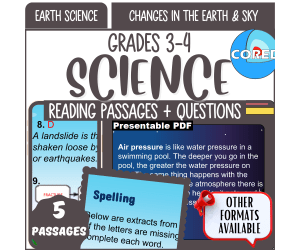
Science Reading Changes in the Earth and Sky (Presentable PDF)
Science, Earth and Environmental Sciences, Earth Sciences, Common Core, ESL, Language Development, ELA, Reading Comprehension, Reading, Space, Grade 2, 3, 4, Tests, Quizzes and Tests, Teacher Tools, Assessments, Worksheets, Worksheets & Printables, Diagrams, Centers, Activities
Science Reading Passages on Changes in the Earth and Sky Snapshot Genre: Nonfiction Subject: Science (Earth Science / Space Science) Primary Topic: Earth changes, weather, and motion in space Estimated Guided Reading Level (A–Z): R What This Teaches Best It helps students compare slow Earth changes such as weathering and erosion with fast changes such as volcanoes, landslides, and earthquakes. It explains cause and effect in Earth systems, including how magma forms volcanoes and how faults can lead to earthquakes. It teaches key weather concepts such as air pressure, wind, humidity, air masses, and fronts. It introduces scientific tools and measurements by showing how thermometers, barometers, hygrometers, and seismographs are used. It builds understanding of motion in space through rotation, orbit, period, distance, and the scale of the solar system. Learning Goals Students will compare slow changes and fast changes to Earth’s surface. Students will explain how volcanoes, earthquakes, and landslides can change Earth quickly. Students will describe how differences in air temperature and air pressure affect weather. Students will identify the tools used to measure temperature, air pressure, humidity, and movement in Earth’s crust. Students will explain the difference between Earth’s rotation and Earth’s orbit. Students will use text information to describe the size and motion of the solar system. Part 2 - Changes in the Earth and Sky Reading Passage 1: Slow Changes to the Earth's Surface Reading Passage 2: Fast Changes to the Earth's Surface Reading Passage 3: The Atmosphere and Weather Reading Passage 4: Measuring Temperature, Air Pressure, and Humidity Reading Passage 5: The Motion of Objects in the Universe PRESENTABLE PDF VERSION Run it like a slide show straight from a PDF, with no PowerPoint or extra software needed, just open, project, and teach. Other versions are available in the links list below or in the full catalog. FULL CATALOG OF DOWNLOAD LINKS HERE Grade 3/4 Links: Physical Science Part 1 - Properties of Objects and Materials Google Docs/Slides/Forms PDF PPT Word Free Supplementary Pack Accompanying Videos Physical Science Part 2 - Position and Motion of Objects Google Docs/Slides/Forms PDF PPT Word Free Supplementary Pack Accompanying Videos Physical Science Part 3 - Light, Heat, Electricity, Magnetism Google Docs/Slides/Forms PDF PPT Word Free Supplementary Pack Accompanying Videos Life Science Part 1 - Characteristics of Organisms Google Docs/Slides/Forms PDF PPT Word Free Supplementary Pack Accompanying Videos Life Science Part 2 - Life Cycles of Organisms Google Docs/Slides/Forms PDF PPT Word Free Supplementary Pack Accompanying Videos Life Science Part 3 - Organisms and Environments Google Docs/Slides/Forms PDF PPT Word Free Supplementary Pack Accompanying Videos Earth Science Part 1 - Properties of Earth Materials Google Docs/Slides/Forms PDF PPT Word Free Supplementary Pack Accompanying Videos Earth Science Part 2 - Changes in the Earth and Sky Google Docs/Slides/Forms PDF PPT Word Free Supplementary Pack Accompanying Videos Earth Science Part 3 - Objects in the Sky Google Docs/Slides/Forms PDF PPT Word Free Supplementary Pack Accompanying Videos For similar products and other frees, do check out Cored Group on TeachSimple .
Author Cored Education
Rating
Tags Science, Elementary, Reading, Comprehension, Reading Centers, Science Assessments, Reading Comprehension Assessments, Vocabulary Assessments, Earth Science

3D Image Photoshop Activity
Science, Technology, Grade 7, 8, 9, 10, Activities
Students will work with digital tools in the 3D Image Photoshop Activity . Students will create 3D images and 3D glasses. Step by step directions are included.
Author OK Products
Tags Technology Activity, Computer Class, 3D Images, Digital Tools, Science Activity, Art Project, Graphics, Graphic Design, Design Concepts
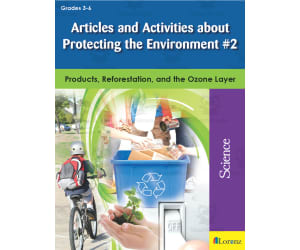
Articles and Activities about Protecting the Environment #2: Products, Reforestation, and the Ozone Layer
Science, Earth and Environmental Sciences, Environmental Science, Grade 3, 4, 5, 6, Activities
Articles and Activities about Protecting the Environment #2: Products, Reforestation, and the Ozone Layer This is a teaching resource designed to transform classrooms into environmentally conscious learning spaces. Perfectly suited for Grade 3 through Grade 6 students, specifically those studying Science with a focus on Environmental Science. This resource houses three informative articles exploring essential topics in environmental science: The first article educates young learners about environmentally friendly products and their importance in our daily lives. The second article delves into reforestation - exploring its role in preserving Earth’s ecosystems and mitigating climate change. The last article offers insights into what constitutes the ozone layer and its crucial role in protecting our planet. Each article is paired with engaging activities tailored for various instruction methods such as whole group lessons or small group discussions. These provide an opportunity for thought-provoking classroom discussions wihle encouraging eco-friendly practices. This set serves perfectly as a homework assignment tool that reinforces learned concepts while developing critical thinking skills of students at home. The blend of reading components joined with hands-on exercises offers an interactive learning experience whether it's Class or Home-school education. Download Format You’ll receive one PDF containing ten pages of text-rich content ready-to-use anytime—no additional preparation necessary—ensuring an easy transition when incorporating these compelling pieces into your curriculum . Purpose Teachers often seek ways to incorporate real-world applications to enhance student engagement; these resources serve just that purpose - nurturing tomorrow's leaders with integral knowledge about sustainable practices significant for our environment's future health. Prepare your learners today by imparting them this vital understanding of how everyday actions impact the environment. This set can heighten students' awareness of ecological issues and inspire sustainable living among them.
Author Classroom Complete Press
Tags Reading Passage, Science Reading, Protecting The Environment, Ozone Layer, Articles
Scientist Matthias Schleiden Fact Sheet, Quiz + Exercises PDF + H5P
Life Sciences, Science, Biology, STEM, History, Social Studies, Biographies, Inventors, Basic Science, Nature & Plants, Grade 6, 7, 8, 9, Worksheets, Worksheets & Printables, Quizzes, Quizzes and Tests, Teacher Tools, Projects, Activities
Discover Matthias Schleiden – The Scientist Who Laid the Foundation of Cell Theory 🔬 Make Cell Theory Come Alive in Your Classroom! Your students may already know that all living things are made of cells—but do they know who first proposed this revolutionary idea? Introduce them to Matthias Schleiden, the co-founder of cell theory, who, alongside Theodor Schwann, transformed our understanding of biology. His discoveries laid the foundation for modern cell biology, and this ready-to-use teaching resource helps you explore his contributions in an engaging and interactive way—all in just 45 minutes! 🧪 Why This Resource is a Must-Have for Biology Teachers ✅ No-Prep, Ready-to-Use Lesson – Save valuable planning time! ✅ Engaging & Interactive – Includes fact sheets, quizzes, and creative exercises to enhance understanding. ✅ Perfect for Grades 7–10 – Designed to be flexible and adaptable for different student levels. ✅ Blended Learning Ready – Available in printable PDF and interactive H5P exercises for digital use. ✅ Encourages Critical Thinking – Students not only learn who Schleiden was, but also why his work matters today. 📚 What’s Included? 📄 Informational Text on Matthias Schleiden – A clear and engaging reading passage explaining his role in cell theory. 📝 Fact Sheet Activity – Helps students organize key facts and summarize Schleiden’s contributions. ❓ Quiz with Solutions – A fun way to reinforce learning through self-assessment and review. 🎭 Creative & Interactive Tasks – Students create their own questions, exchange them, and engage in peer discussions. 🎨 Customizable Templates – Choose between color and black-and-white versions for easy printing or digital use. 🖥 H5P Digital Exercises – Perfect for blended learning and interactive lessons. 📌 How to Use This Resource in Your Classroom 1️⃣ Students read the informational text about Matthias Schleiden. 2️⃣ They complete a fact sheet summarizing his scientific discoveries. 3️⃣ Quiz questions reinforce their knowledge of Schleiden’s contributions. 4️⃣ Students create their own questions and challenge their classmates in pairs. 💡 Great for Biology Lessons, Substitute Teaching, and Digital Classrooms! 🌟 Why Biology Teachers Love It ✔ Brings Science History to Life – Connects students to real scientific discoveries. ✔ Simplifies a Key Concept – Helps students grasp the origins of cell theory in an easy-to-understand way. ✔ Flexible for Different Teaching Styles – Use for direct instruction, independent learning, or group activities. ✔ Encourages Active Participation – Turns a scientific breakthrough into an interactive experience. 🔬 Help Your Students Understand the Origins of Modern Biology! Give your students a deeper appreciation for how scientific discoveries shape our understanding of life with this engaging fact sheet, quiz, and interactive activities. 🚀 Download now and bring the legacy of Matthias Schleiden into your biology lessons today! 📍 Best wishes, Heike from Lernfitness Did You Know? I teach with a certified therapy dog, and together we create a positive and inspiring learning environment. 🐶✨
Author Lernfitness
Tags Science, Biology, Famous Scientists Lesson, H5P, Interactive Science Exercises, STEM, History, Scientists, Matthias Schleiden, Cytology

Internet Websites Activity
Science, Technology, Grade 2, 3, 4, 5, 6, 7, Activities
Activity Introduction An amazing activity designed for the students to learn more about famous places in different countries. The Internet Websites Do you like STEM subjects? what is your favorite one? Have you ever tried to plant a seed? If yes, tell us more about it. Or have you ever tried to invent something? If yes, tell us more about it. And how do you think it will help us? Have you ever seen a microorganism under a microscope? What was it? And how it looked like? Mathematics is a marvelous subject. Let' sharpen our brains and solve some equations. Do you like timetable tricks? What is your favorite one? Do you know how to code? Have you ever created an app or a game before? If yes, how was it like? Internet Websites Activity The activity is perfect for encouraging the researching skills for the students, while learning more about this fantastic place. Internet Websites This friendly designed worksheet is suitable for students at school, homeschooling, and as a group activity. Instructions Cut everything out, then cut along the dotted lines. Write about 3 useful websites. Pass the 3 websites gently through the screen, and watch them change as you move! Format Available in a PDF format.
Author Educational Voice
Tags Internet Websites Activity, Internet , Internet Activity, Internet Facts, Internet Facts For Kids, Website, Websites, Websites Facts, Websites Facts For Kids