Magnetism and Electromagnets Find the Pair Game for Middle School
Memory/matching card game reviewing magnetism and electromagnet vocabulary and concepts, for end-of-topic review or test prep.
Classroom resources
Browse by lesson focus
Choose the topic or kind of practice you need.
Memory/matching card game reviewing magnetism and electromagnet vocabulary and concepts, for end-of-topic review or test prep.
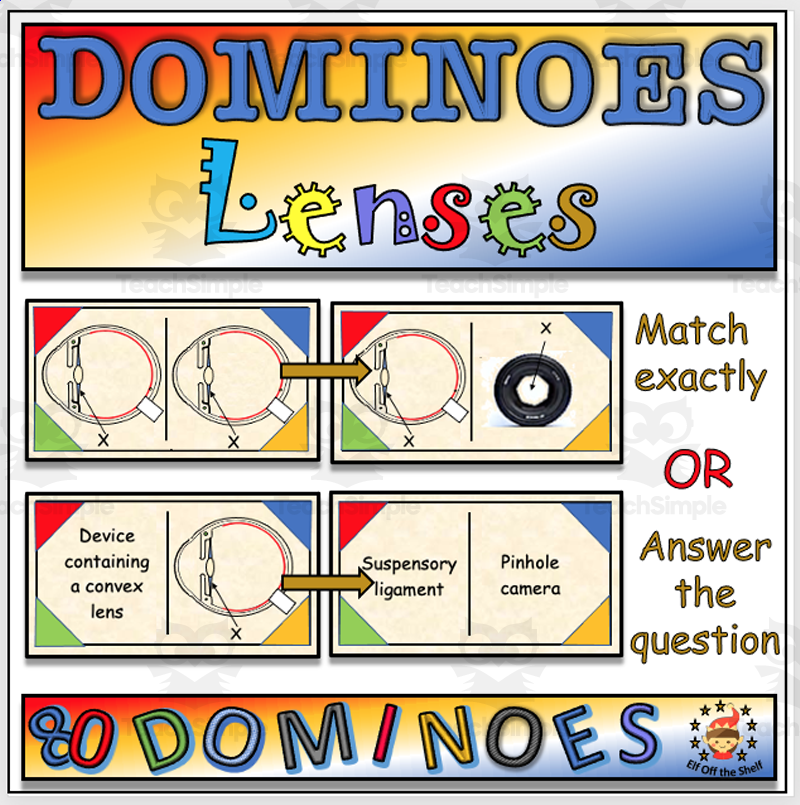
A dominoes-format review game for middle/high-school students on lenses, the eye, the pinhole camera, and the camera, using domino tiles printed with questions and statements instead of numbers.
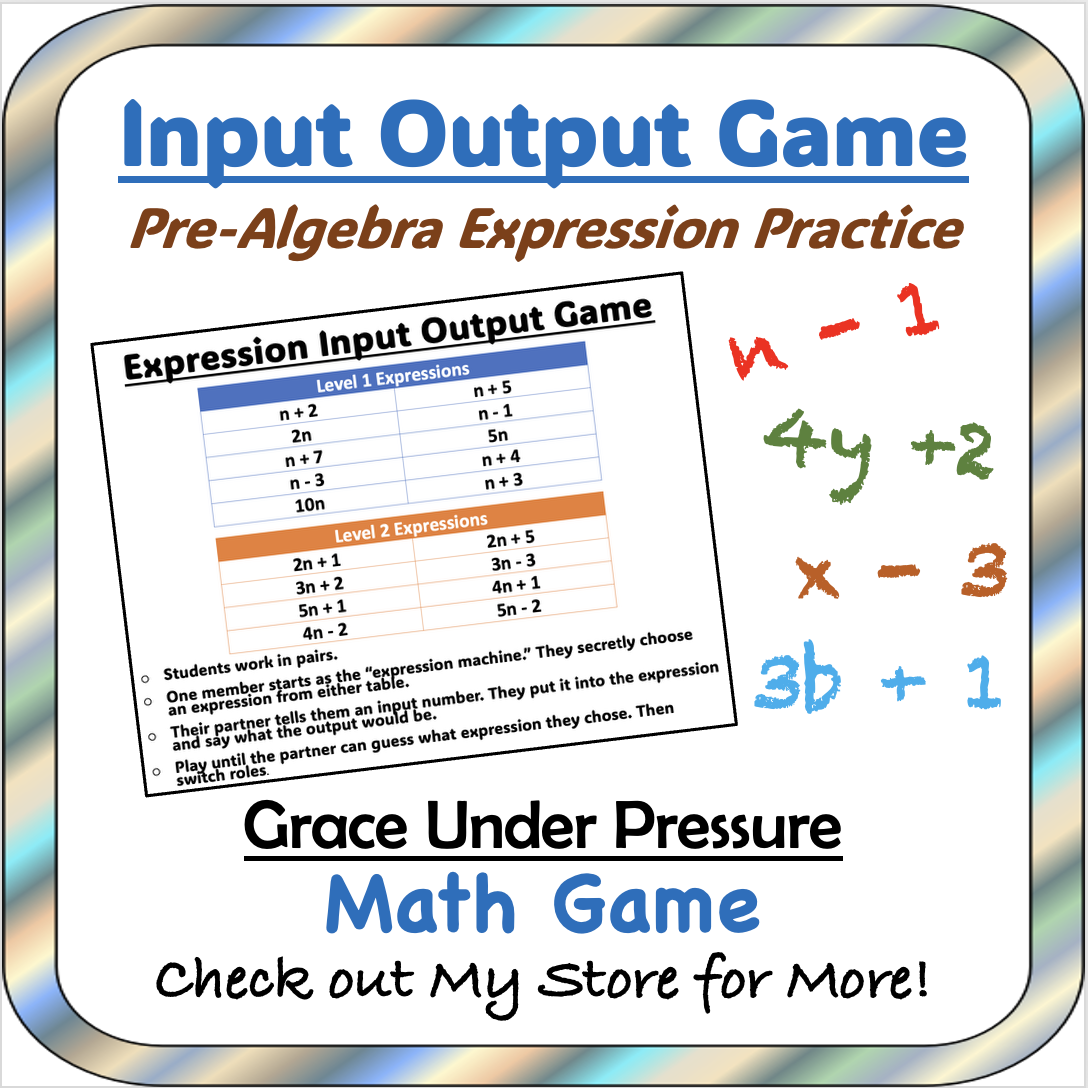
No-prep partner game for practicing evaluation of algebraic expressions in an 'input/output machine' format, supporting units on expressions, variables, and patterns.
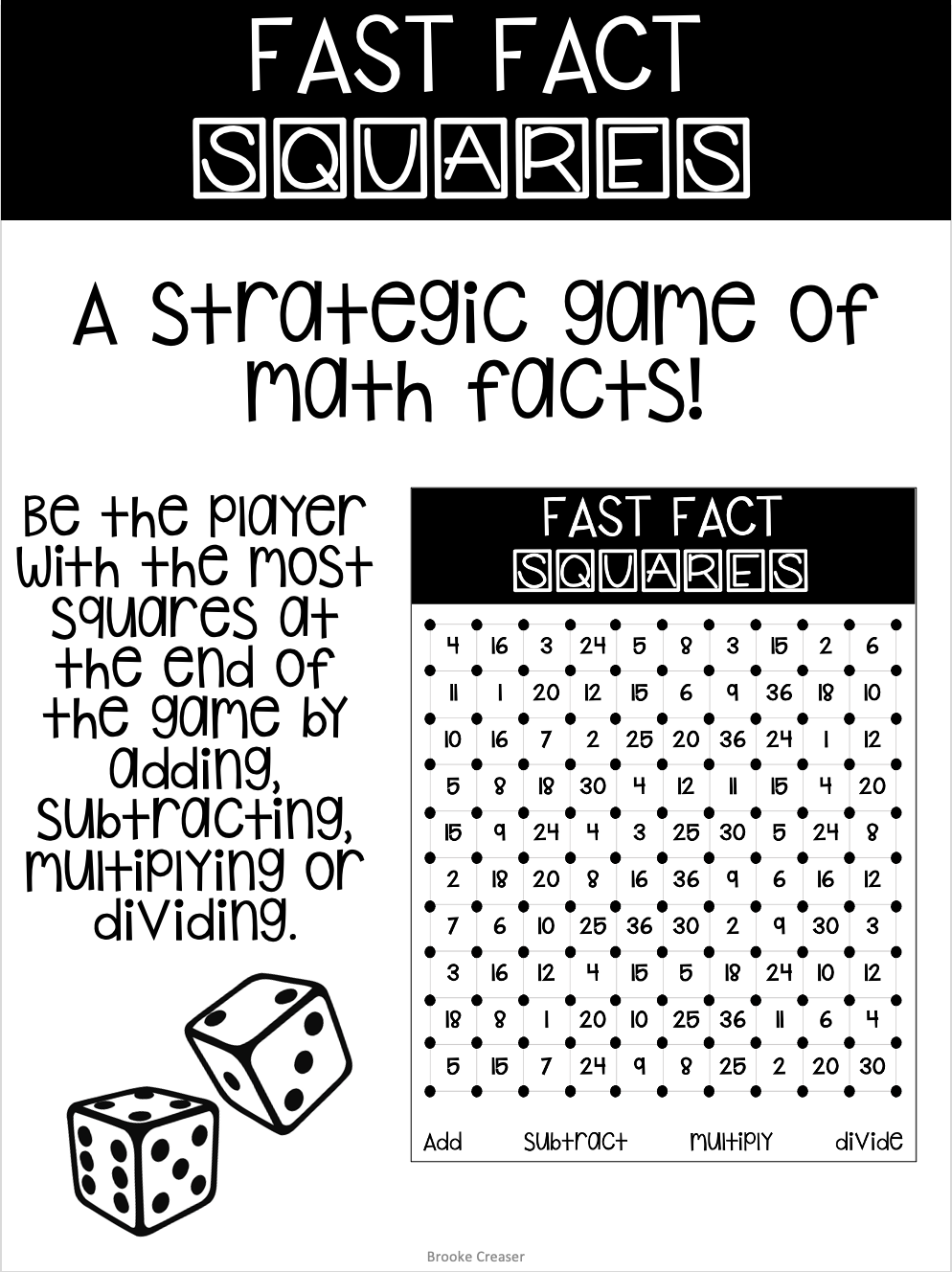
Provide a strategic dots-and-boxes style game for practicing addition, subtraction, multiplication, and division math-fact fluency
Teach the history of the Statue of Liberty and connect it to broader themes of immigration and American identity through readings, activities, and research projects.
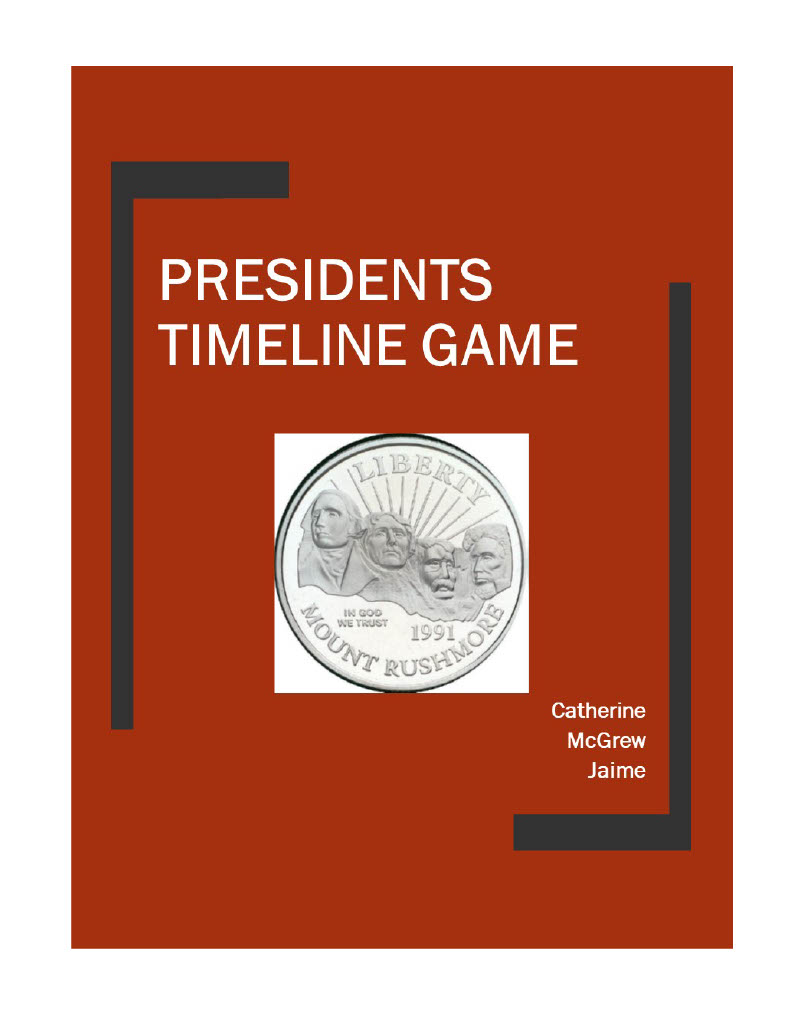
A card-based classroom game teaching the chronological sequence of U.S. presidents and key historical events tied to their terms, played by placing event cards in correct chronological order
A comprehensive state-by-state U.S. geography resource covering all 50 states plus Washington D.C., combining fun-fact pages with self-contained games and puzzles to teach state geography, history, and trivia.
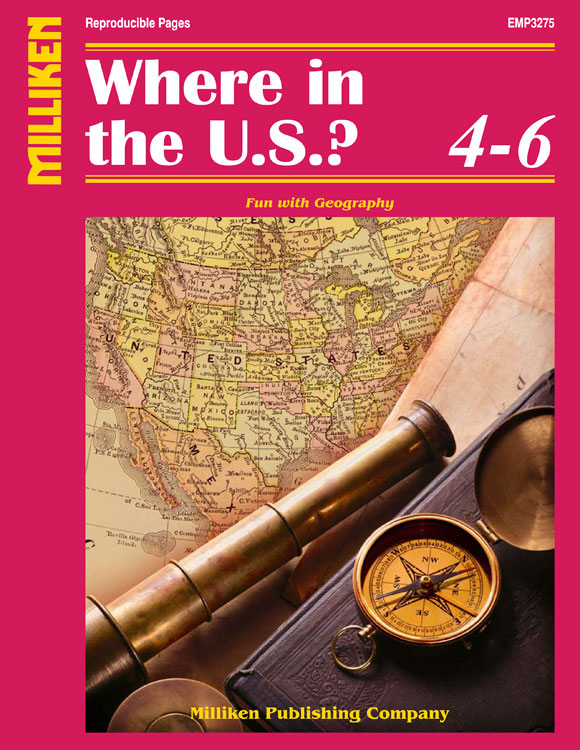
A U.S. geography practice workbook of games and puzzles giving students additional practice locating U.S. states, cities, and geographical features.
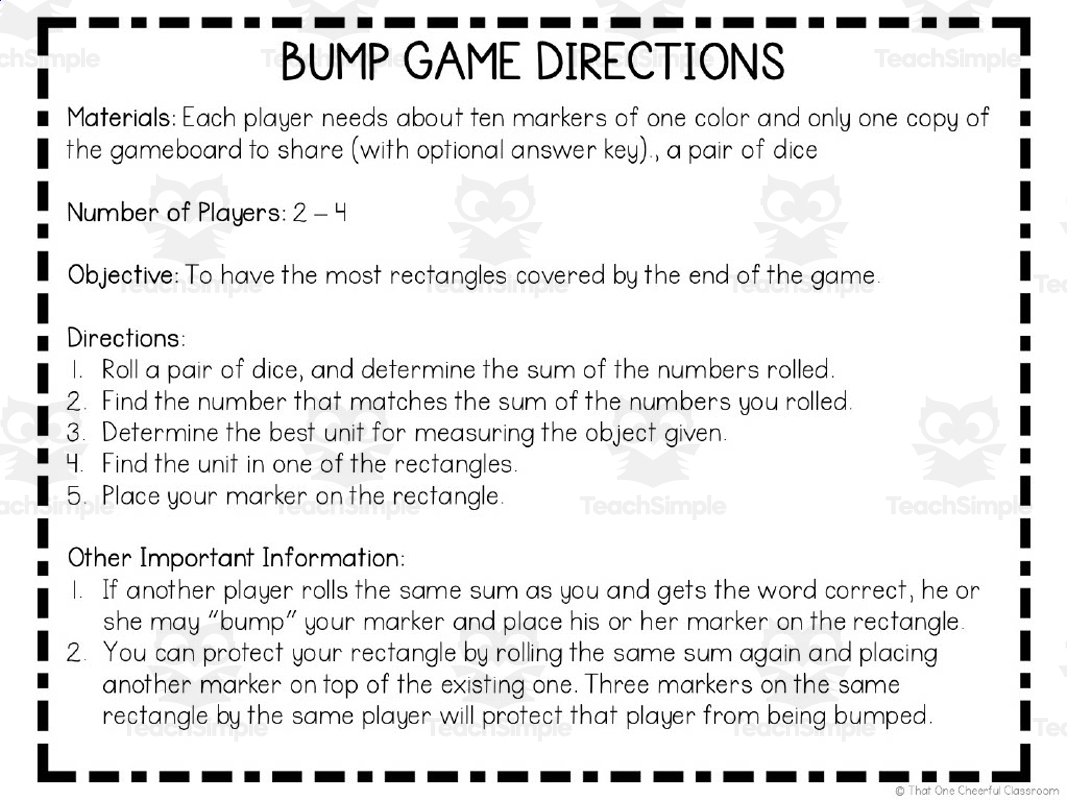
A dice-based board game pair (Liquid Volume Bump Game and Mass Bump Game) that has students choose the best unit of measurement for a given real-world object/quantity.
A non-fiction literacy unit that uses a short passage about Mardi Gras to teach before/during/after reading strategies, main idea and details, and vocabulary.
A Jeopardy-style review game covering classification of living things (vertebrates vs invertebrates, body systems, structures, and plants).
A digital (Google Slides) review game for a US history unit, letting teachers quiz students on content via game formats like Family Feud, Build-A-Bear, and Attack!.
An escape-room style review lesson for the KS3 current electricity module, letting students revise current, voltage, resistance, conductors/insulators, and series/parallel circuits before finishing the topic or before exams.
A digital (Google Slides) review game for a US-in-WWII history unit, letting teachers quiz students on content via game formats like Family Feud, Build-A-Bear, and Attack!.
A teacher instructions PDF for a Google Slides review game covering citizens' rights and due process, offering multiple whiteboard-based game formats (Build-A-Bear, Attack!, Family Feud) to review question content stored in the linked slide deck.
Facilitator's guide for a whole-class review game on the Great Depression and the New Deal, with the actual question set delivered via an external Google Slides deck.
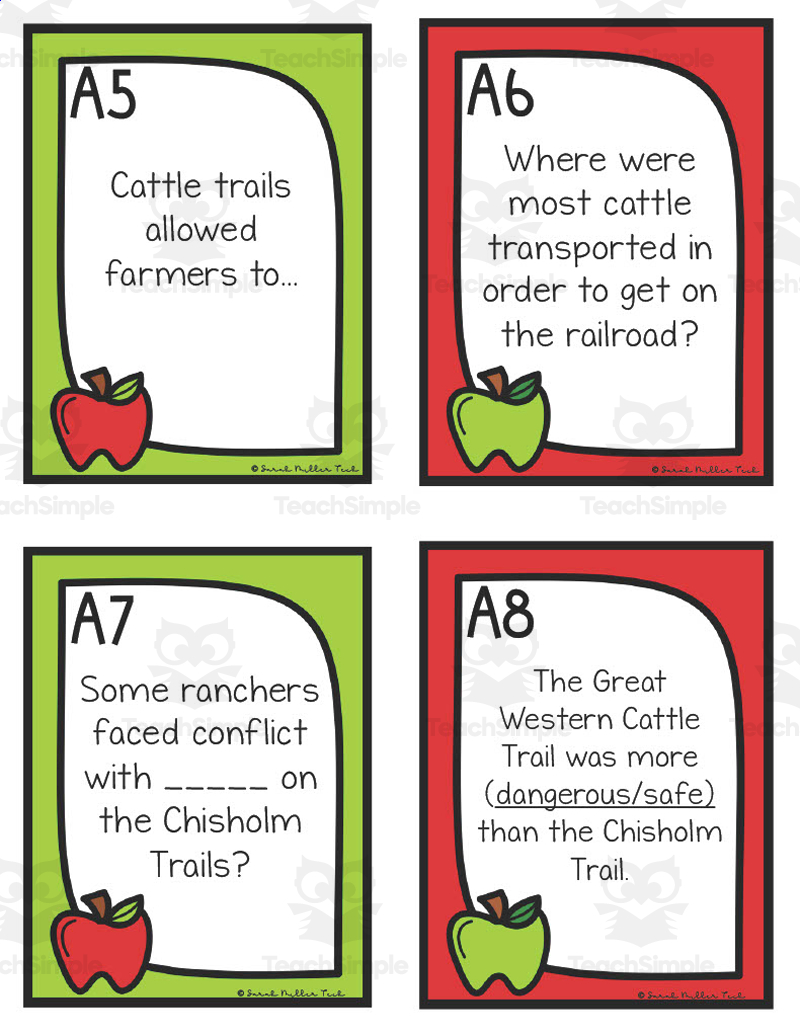
Board game reviewing "Turn of the Century" American history topics (cattle trails, westward expansion, inventors, McKinley/Roosevelt era, Spanish-American War) via trivia question cards, a game board, and answer keys.
Review or introduce a space science unit through a board game where players answer space-related questions to advance toward Saturn.
A one-page PDF that hands off to an external Quizlet study set (link + password) of question-and-answer flashcards keyed to page numbers of the novel "EllRay Jakes the Recess King" by Sally Warner; the downloadable file itself contains no quiz questions.
Review and reinforce a middle-school unit on states of matter, change of state, mixtures, and separating mixtures through an escape-room-style puzzle activity.
Teaches metric units of mass and volume (grams, kilograms, liters) through vocabulary matching, a board game, and a word-problem worksheet.
Provide a dice-based strategy game for practicing perimeter of regular and irregular polygons, encouraging students to notice number-theory strategy (divisibility by number of sides).
A summer-themed roll-and-draw dice game and group activity in which students build an ice cream drawing by rolling for each part (cone, scoop, face, hair/topping design, toppings), then a 'change it up' extension has the class vote on/dictate extra elements, flavors, and line styles to add before coloring.
A printable board game in which players collect building-brick pieces while moving around a game board, then use the pieces they've collected to build something creative and present it, applying S.T.E.M. skills.