



3,943 products added recently
Page 9 - Phonics Games
Support early readers with phonics games that make learning sounds and letters enjoyable. This collection includes matching games, sound blends, and interactive activities. By incorporating these phonics games into your lessons, you can enhance reading skills and foster confidence in young learners.

 Show filters

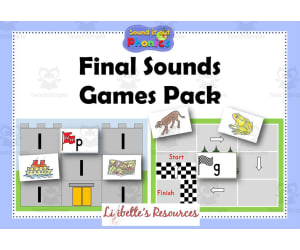
Final or Ending Sounds Phonic Game Phonemic Awareness Activity
Special Resources, ELA, Special Education Needs (SEN), Speech Therapy, Language Development, Phonics, Spelling, Kindergarten, Grade 1, 2, Activities, Games
Final or Ending Sounds Phonic Game Phonemic Awareness Activity A fun pack of two games to help children develop the important phonic skill of hearing the final (or ending) sound of a word. It covers the final sounds: t, d, k, g, p, b, m, s, n. Choose from: Build A Castle or Win the Race. The games are the same whichever you choose and use the same picture cards, but the choice of the game board means that children will not get bored playing the game again and again, plus the fact that you can increase the fun level to keep the children playing! (see below). Objectives This game pack has been designed to give children practice hearing the final sound of a word, something many children struggle with, especially those with a speech delay. It is hoped that, as the child has fun playing the game that the child's phonemic awareness can be developed. The game can also be used within speech therapy to help children distinguish between sounds which are produced in a like manner: k/g; p/b; t/d. Many children have difficulty with sounds that are produced using the same part of the mouth/voice/tongue. If this is true of your pupil, then I suggest that you start by playing the game with two sounds which are not at all similar. Once the child can confidently hear the final sound of a word, then the game can be played with sounds which are similar to help the child’s speech development and the ability to carefully discriminate between like sounds. Grade/ages These games are suitable for children of any age who need to learn to hear the final sound of a word. Games make learning easy, and children learn without knowing they are! Pre-K to teens with special needs will all love these games . The fact that the games allow for an increased challenge level is an added factor, making them games that children and young people will want to play again and again—all good practice for securing the skill of hearing that final sound! How many players? It is suggested that at first, each child plays alone with an adult until they hear the final sound. Then, up to 4 children can be invited to play together. Simply print out the number of game boards you need. Increase the fun level! Begin by playing the game simply. Once the child gains confidence and you wish to play again with sounds that are produced in a similar way or to give further practice, then add in some fun. Flag or wheel cards can be scattered amongst the pictures, and the teacher can choose what these mean - either extra turns or 'miss a go'. I made this game for a ten-year-old reluctant pupil. It worked, and now he can hear the final sound! Win Win!! What is included? 1 PDF File 2 versions of a game 63 picture cards Full instructions Picture Key
Author Lilibette's Resources
Rating
Tags Final Sounds, Fianl Sounds Game, Phonic Final Sound, Hearing The Final Sound Of Words, Phonics Final Sound Activities, Final Sound D, Final Sound T, Ending Sounds, Phonemic Awareness Activity

Long Vowel Worksheets: U_E
Special Resources, ELA, Language Development, Phonics, Reading, Spelling, Kindergarten, Preschool, Grade 1, 2, Activities, Games, Worksheets & Printables, Worksheets
Long vowel worksheets This is a pack of 23 phonic worksheets for the Long Vowel U-E (as in true and tune) specially designed for those with special needs, including those with dyslexia or who may be suspected of being dyslexic but will work equally well with young learners in Kindergarten/EYFS/Y1. A pack of 23 worksheets with a variety of exercises to help build phonemic awareness and reading fluency. These sheets are LETRS and UK GOV requirements aligned. These worksheets also align with the most popular phonic programmes, including RWI and Letters and Sounds. What is included? 30 worksheets for the sound EA taking pupils from hearing the sounds in words to reading and spelling them at word and sentence level. all following my special method devised as I privately tutor children of all ages with profound special needs. Your phonics lessons are covered! Tracking, fluency triangles, spelling, reading, games, comprehension exercises....and more! Who are these worksheets for? I have written them for pupils who struggle with processing information - especially sounds. This includes children who are DYSLEXIC or have ANY other kind of processing disorder. Such children may have failed with other methods of teaching phonics. Such pupils need activities that: ·are highly structured - one tiny step at a time building on the one before using only a limited number of words to start with and only using words that the child has already learnt to sound out, with no nasty surprises. ·Have only a little on each pageas these pupils tire easily. What makes these worksheets special? I have a powerful three-step process which I use with my special needs pupils, which is worked out over the course of the 23 worksheets: 1. See it!where we focus on becoming aware of the new sound in words. This involves first hearing the new sound in words and then seeing it in words (tracking). 2. Sound-it-out!Having learnt to see the new sound in words, we learn to sound out these words to read and write them. We begin by usingsound-it-out boxesfor reading and spelling which help the child to segment the word prior to blending the sounds together. Once the child can read and write individual words, we work on fluency by building familiarity with the common words in the new sound family. Once the child can sound the words out to read and spell confidently, we move on to recognising them/using them in longer reading and dictation passages, as soon as the child is able. I provide 2 reading passages with comprehension exercises and one dictation passage, with a page in the workbook dedicated to it, with room for a picture, which again cements understanding. 3. Write it! Incorporated into the above two steps, we constantly write the new sound. This adds a multi-sensory dimension to our work - we see with our eyes, we sound it with our mouth parts and voice, and then we move by writing. All three steps work together to help the child feel in control of his/her learning and to become a successful, confident learner. We finish each sound with a dictation which culminates our work before we move on to the next sound. I try to give the dictation a week after we finish the work on the EA sound to act as revision. The dictation: Read this passage to your pupil, who should write it. Have the child read his/her work and check for errors. Make sure the writing is completely accurate before saying the child has finished, including full stops and capital letters correctly used. Flashcards are included of some common EA words. What is included? 1 PDF with flashcards and 23 worksheets
Author Lilibette's Resources
Rating
Tags Magic E, Phonic Worksheets, Special Needs, Phonic Games, Print N Play Phonic Game, Split Digraph U-e, U-e , Long Vowels, Long Vowel Worksheets

CK Phonic Game Onset and Rhyme Colour and B/W
ELA, Language Development, Phonics, Pre-Reading, Spelling, Grade 1, Activities, Centers, Games
Introduction The CK Phonic Game Onset and Rhyme is a resource intended to aid early learners read CK words. Choose from colour for class use, or eco black and white for mass printing to send home! Who is the CK Phonic Game Onset and Rhyme game for? This game is perfect for educators handling preschools, kindergartens, and elementary grades up to grade 2 classes as well as for homeschooling and private tutors. Purpose of the Game The objective of this game is to match a CK word's onset with its rhyme. Words such as kick, crack and stick can be found in this game. Children will be spelling and reading the CK words. once the game is over, children can be engaged in finding the rhyming words. How to play: The CK Phonic Game Onset and Rhyme game can: either be played by two players or it can be used as a center activity , and one child can complete matching the words alone As your child plays, remind him/her often of the CK rule for one-syllable words: we only use CK when we hear ack, eck, ick, ock and uck! Flexible Use for Educators & Learners alike! This teaching resource can be woven into classroom group activities or even serve as a reinforcing learning tool at home post-school hours. Incorporating this phonic game caters not just to school-based settings but also covers homeschooling setups - covering diverse educational dynamics neatly packed into one user-friendly PDF! What is included? 18 onsets 18 rhymes Yes/no cards for use if playing as a game for two players Ease of preparation: The game is easy to make: simply print the pages and cut along the lines. For classroom use it is suggested that the cards be laminated to make them more durable. Category & Format Information Type: Language Arts - Phonics Subcategory Format: PDF file, Interactive Activity Aim: To provide an engaging platform that allows self-correction naturally aiding in building confidence while learning phonics
Author Lilibette's Resources
Tags CK Game, Phonics, Homeschool, Phonics Game, Consonant Digraphs, Special Needs, ELA, Game, Centers

Grade 2 Dolch Sight Word Bingo
ELA, Language Development, Phonics, Spelling, Grade 2, Activities, Games
Grade 2 Dolch Sight Word Bingo: An Engaging Teaching Resource The Grade 2 Dolch Sight Word Bingo is a dynamic teaching tool designed to boost sight word recognition and vocabulary building for second-grade students. This interactive language arts supplement provides an educational yet entertaining alternative to traditional classroom learning. How the Game Works? This bingo game features 45 selected words from the second-grade level Dolch word list. Each round challenges learners to identify these sight words, which are primarily frequently used English words that often do not follow ordinary phonics rules. That's why these are best recognized by sight rather than by sounding them out, hence termed as 'sight' words. Navigating through this wide-ranging word list helps students familiarize themselves with key parts of speech like pronouns, adjectives, adverbs, prepositions, conjunctions, and verbs. In-Class Usage Guidance To start with the activity in your classroom or at home, print out a set number of game cards and laminate them for repeated use. You would also need to separately print and laminate teacher call-out cards. The gameplay is simple - draw a card from your stack, call out the presented word; your pupils have to locate that exact sight word on their own cards. Their goal here is getting five-in-a-row (Bingo!). You can conduct this activity in both whole-group or small group sessions--and it even makes an interesting homework assignment! Inclusive Learning Aid Resources: Our Grade 2 Dolch Sight Word Bingo kit also carries: A handy article answering ‘What Are Dolch Sight Words?’ Grade-specific sight-word lists Student record sheets for keeping track of progress. The kit—spanning across 44 pages —primarily revolves around helping grade 2 students with the language arts curriculum , focusing on phonics and spelling. With diverse resources like over two dozen unique bingo cards and nearly four dozen teacher call-out cards, transforming your learners into sight-word experts becomes a smoother journey!
Author Simply Schoolgirl
Tags Dolch Sight Words, Vocabulary Building, Language Arts, Phonics Practice, Bingo Game

Long Vowel Phonic Games
ELA, Language Development, Phonics, Preschool, Grade 1, 2, Games, Activities
Two fun phonic games to learn ee or ea? and ai or a-e? These phonic games motivate all learners, especially those who may be reluctant after, sometimes, many years of failure. Full instructions and teaching notes to help you make the most of the games . For use with all phonic prgrammes, including Letters and Sounds, Read, Write, Inc, and Jolly Phonics. For more help, see www.readingmadesimple.weebly.com a 100% free systematic, synthetic phonic programme for all abilities, devised by two teachers with combined years worth of experience teaching phonics to all ages and abilities, including children with very special needs.
Author Lilibette's Resources
Tags Long Vowel Phonic Games, Ee/ea/ai/a-e Phonic Games, Ee/ea Phonic Games, Ai/a-e Phonic Games

Superhero Short Vowel Cover Up
ELA, Language Development, Phonics, Grade 1, 2, Activities, Games
This resource is a Superhero Short Vowel Cover Up. There are 4 game boards/work mats and 90 short vowel picture cards. Students take turns taking cards and covering up the corresponding short vowel on their mat. The first one to cover all of the stars/vowels on their board/ mat is the winner. This makes a great literacy center!
Author Easy Peasy Primary Resources
Tags Phonics Activity, Short Vowels, Superhero, Literacy Centers, Task Cards, Superhero Abc Activities

CK Phonic Game Onset and Rhyme
ELA, Language Development, Phonics, Pre-Reading, Spelling, Special Education Needs (SEN), Special Resources, Grade 1, Activities, Centers, Games
Introduction The CK Phonic Game Onset and Rhyme is a resource intended to aid early learners read CK words. Black and white for eco printing. Who is the CK Phonic Game Onset and Rhyme game for? This game is perfect for educators handling preschools, kindergartens, and elementary grades up to grade 2 classes as well as for homeschooling and private tutors. Purpose of the Game The objective of this game is to match a CK word's onset with its rhyme. Words such as kick, crack and stick can be found in this game. Children will be spelling and reading the CK words. once the game is over, children can be engaged in finding the rhyming words. How to play: The CK Phonic Game Onset and Rhyme game can: either be played by two players or it can be used as a center activity , and one child can complete matching the words alone As your child plays, remind him/her often of the CK rule for one-syllable words: we only use CK when we hear ack, eck, ick, ock and uck! Flexible Use for Educators & Learners alike! This teaching resource can be woven into classroom group activities or even serve as a reinforcing learning tool at home post-school hours. Incorporating this phonic game caters not just to school-based settings but also covers homeschooling setups - covering diverse educational dynamics neatly packed into one user-friendly PDF! What is included? 18 onsets 18 rhymes Yes/no cards for use if playing as a game for two players Ease of preparation: The game is easy to make: simply print the pages and cut along the lines. For classroom use it is suggested that the cards be laminated to make them more durable. Category & Format Information Type: Language Arts - Phonics Subcategory Format: PDF file, Interactive Activity Aim: To provide an engaging platform that allows self-correction naturally aiding in building confidence while learning phonics
Author Lilibette's Resources
Tags CK Game, Phonics, Homeschool, Phonics Game, Consonant Digraphs, Special Needs, ELA, Game, Centers

Letter N Games
ELA, Language Development, Phonics, Kindergarten, Preschool, Activities, Games
This letter N beginning sound game is an interactive way for students to work on words that begin with the letter N. This alphabet game provides students with a fun way to practice on the initial sound of the letter N. The game focuses on the most common sound of the initial /n/ sound. What is Included: * One color gameboard * One black and white gameboard What do you need to play: * One of the gameboards * A die * Something to mark the inner spaces with * A player piece to move around the edge of the board This game can be a single player or a two player game. To play, students will need one gameboard, one die, 20 objects to mark the inner part of the game board, and a game piece for each student playing. First, a student will roll the die and move his game piece around the outside of the board. The student will then cover the corresponding picture in the middle of the game board. The winner or end of game can be determined by one of the following rules below, depending on if the student is playing alone or with a partner. This can be a single player game using the following rules: * Player tries to connect 4 to win * Player tries to cover all the spaces in a set time limit This can be a two player game by using the following rules: * Who can cover the most spaces in a specific time limit * Who can cover half (10 spaces) of the board first When to Use: * Literacy Center * Small Group Activity * Individual Activity * Early Finisher Game * File Folder Game * Partner Activity Skills Assessed: * Beginning Sound of the Letter N * Counting * Following Directions
Author The Connett Connection
Tags Alphabet Activities, Alphabet Games, Beginning Sounds, Initial Sounds, Letter Of The Week, Phonics Game, Alphabet Center, Letter N, Letter N Games, Letter N Activities
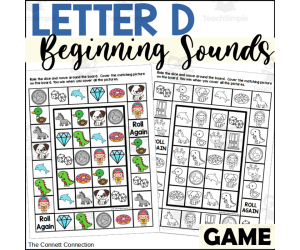
Letter D Games for Beginning Sounds
ELA, Language Development, Phonics, Kindergarten, Preschool, Games, Activities
This letter D beginning sound game is an interactive way for students to work on words that begin with the letter D. This alphabet game provides students with a fun way to practice on the initial sound of the letter D. The game focuses on the most common sound of the initial /d/ sound. What is Included: * One color gameboard * One black and white gameboard What do you need to play: * One of the gameboards * A die * Something to mark the inner spaces with * A player piece to move around the edge of the board This game can be a single player or a two player game. To play, students will need one gameboard, one die, 20 objects to mark the inner part of the game board, and a game piece for each student playing. First, a student will roll the die and move his game piece around the outside of the board. The student will then cover the corresponding picture in the middle of the game board. The winner or end of game can be determined by one of the following rules below, depending on if the student is playing alone or with a partner. This can be a single player game using the following rules: * Player tries to connect 4 to win * Player tries to cover all the spaces in a set time limit This can be a two player game by using the following rules: * Who can cover the most spaces in a specific time limit * Who can cover half (10 spaces) of the board first When to Use: * Literacy Center * Small Group Activity * Individual Activity * Early Finisher Game * File Folder Game * Partner Activity Skills Assessed: * Beginning Sound of the Letter D * Counting * Following Directions
Author The Connett Connection
Tags Letter D, Letter D Games, Letter D Activities, Taking Turns, Phonics Game, Alphabet Game, Beginning Sounds, Initial /d/ Sound, Initial Sounds, Letter Of The Week
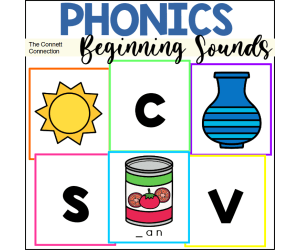
Beginning Sounds Matching Game
ELA, Language Development, Phonics, Kindergarten, Preschool, Activities, Games
Students can practice recognizing the beginning sounds in words with this matching game. The bold, colorful, and easy to recognize images will assist students in completing this activity independently or with a partner. The colorful nature of this game will keep students engage as they match each picture to its beginning sound. What is Included There 136 different picture cards in two different formats, one with just the picture and one with the picture and the word with the beginning sound missing for students to fill in. capital and lowercase letter cards for students to match with each picture. How to Use: This set of cards can be used as a traditional matching game, where students work together or independently to match each picture to the beginning sound. This set can be used as a concentration game where students lay all the cards face down and they work to match the picture with its beginning sound or to match two cards with the same beginning sound. The picture cards with words can be laminated and students can use dry erase markers to write the beginning sound of each word on the blank line. Students can match the capital and lowercase letters. Where to Use: Literacy Centers - These beginning sound cards can be placed inside a literacy center for students to work alone or with a partner to complete. Morning Bins - These cards can be used as a morning activity for students to complete while waiting on classmates to arrive to class. Small Group Activity - Students who need extra help identifying sounds in words can be put in a small group to get further practice with this skill. Skills Assessed: With these cards teachers can assess a student's ability to identify beginning sounds in words, matching the beginning sound with its appropriate letter, and matching two pictures that begin with the same beginning sound.
Author The Connett Connection
Tags Beginning Sounds, Matching Game, Phonics Game

Play Snakes And Ladders: Fun Ways To Practise 3 Letter Words (3 years +)
ELA, Language Development, Phonics, Preschool, Kindergarten, Activities, Games
Play Snakes And Ladders: Fun Ways To Practise 3 Letter Words (3 years +) An engaging teaching resource designed to assist early learners in reading by utilising the classic game , Snakes and Ladders. This tool creates a playful yet educational environment for children aged three years or older. Initial Learning Phase A non-reader starts with the 26 phonic sounds contained in pre-reading material. These serve as essential decoding tools for approximately 80% of English words, thus providing a significant head start. By immersing the learner in vital vowel and consonant sounds such as 'b', 'd' or 'a' as in c...a...t, they are guided towards blending them into three or four-letter words. User-Friendly Instructions This resource is highly user-friendly thanks to step-by-step instructions . With these comprehensive guides, children can be encouraged to not just recognize phonic components but also assemble them into complete sentences via fun word games like bingo. Ideal for use in diverse settings - classroom group activities or personal home tutoring sessions Packs created specifically for versatile learning environments Educators may also find these packs helpful homework assignments that extend learning beyond traditional classroom settings Creative Components and Confidence Building Children are encouraged to personalize drawings included within packs; fostering creativity alongside literacy growth that keeps engagement high from beginning till end! The provider also emphasizes repetition until every word is mastered – boosting confidence brick-by-brick as their vocabulary expands while having fun! "Whether your intention is kick-starting the reading ability of your preschooler or boosting linguistic skills amongst kindergarteners, Play Snakes And Ladders: Fun Ways To Practise 3 Letter Words gears up students onto a fast-track route towards mastering primary English vocabularies while ensuring learning remains an enriching experience."
Author Guinea Pig Education
Tags Phonics, Literacy, Early Learning, Reading Practice, Word Games

Phonics Phase 3 Sorting Boom Card - Boat Shipment Theme
ELA, Language Development, Pre-Reading, ESL, Phonics, Preschool, Grade 1, Activities, Games
Phonics Phase 3 Ships Cart Sorting Boom Cards Activity Embarking on a phonics journey has never been this engaging! Introducing the Phonics Phase 3 Ships Cart Sorting Boom Cards Activity —a digital tool tailored to help children bolster their phase 3 phonics understanding. It's not just about reading; it's about refining sound recognition, enhancing listening skills, and gaining a robust grasp of vital phonetic sounds. This collection houses 50 interactive boom cards, each brimming with activities centered on phase 3 phonics. Here are the phonetic sounds covered: Basic sounds: j, v, w, x, y, z Combo sounds: zz, qu, ch, sh, th, ng Vowel teams: ai, ee, igh, oa, oo, oo R-Controlled and others: ar, or, ur, ow, oi, ear, air, ure, er Key Features: Sound Recognition: Perfect for children to connect sounds to letters. Reading Skills: Helps young readers decode words seamlessly. Listening Skills: Enhances auditory recognition of different phonetic sounds. Online Learning: The beauty of drag and drop in boom cards makes digital learning a breeze. And to add a sprinkle of fun, the backdrop of these cards showcases lively illustrations courtesy of freepik.com . Special shout-out to the creator, macrovector, for their vibrant contributions. Note: For those unfamiliar with the boom card platform, it's important to know that an active internet connection is essential. The cards are compatible with modern browsers like Chrome, Safari, Firefox, and Edge. They also have app versions for Android, iPads, iPhones, and Kindle Fires. An adult-supervised Boom Learning account is required for assignment and usage. With options like "Fast Pins", real-time feedback is at your fingertips, making learning self-paced and instantly rewarding. So, whether it's reinforcing what's learned in class or assigning homework, this Boom Card set is your go-to digital companion for making phonics phase 3 both productive and delightful.
Author Koodles Clubhouse
Tags Boom Card, Activity, Game, Phonics, Phase 3, Online, Learning, Reading, ESL, ELA

A-E Phonic Game Print 'n Play!
Special Resources, ELA, Language Development, Pre-Reading, Phonics, Reading, Spelling, Kindergarten, Grade 1, 2, Activities, Games
Here is a fun, print 'n play phonic game for the split digraph a-e! Help your pupils to grasp the tricky split digraph concept as they play! Who is the a-e game suitable for? All learners of phonics, including young children, SEN/special needs, ESL etc... Aims and Objectives Some children, when starting to learn about the long /a-e/ sound will start to make every /a/ into a long /a-e/ sound. While this is common among all children, some children need more help to overcome this difficulty. Therefore, this game has two aims: 1.To help children to be able to hear the long vowel sound a-e in words 2.To help children understand that some words have a short /a/ and some have a long /a-e/; the child must listen to hear which word has which - not guess. How to play: This is a game for two players. The teacher should watch if two children are playing together. Each player takes a game board which will indicate whether the player should listen for words with a short /a/ sound or a long /a-e/ sound. The selected picture cards are scattered on the table face down. Players take it in turns to choose a picture card. The player says the word and listens to the vowel sound. Is it short /a/, or long /a-e/? If it belongs on the player’s board, it is placed on one of the oblongs. If not, it is returned to the table, face down. The winner is the player who completes his/her board first. Teaching tips: Support children to sound words out/blend them as needed. Help children to hear the vowel sound by emphasizing it and stretching it out. Help the child to do this as well. Have fun - as this eases children over those tricky spots! What is included? 1 PDF with 2 game boards and 20 pictures all in colour and ink saving black and white. See more fun phonic games in the Lilibette's Resources store! Find: AR Game A-E Game Games for initial/final sounds and much MORE!
Author Lilibette's Resources
Tags A-e, Print N Play Phonic Games, Split Digraph, Split Digraph A-e, Phonics, Phonics Games, Special Needs, ESL, Phonics For ESL, Phonics For Special Needs

TH Phonics Worksheets - Consonant Digraphs
Special Resources, ELA, Language Development, Phonics, Reading, Spelling, Kindergarten, Preschool, Grade 1, 2, Activities, Games, Worksheets & Printables, Worksheets
This is a pack of 27 phonics worksheets for the sound TH (as in this and cloth) with a variety of exercises to help build phonemic awareness and reading fluency.. Great for Kindergarten/EYFS/Y1 and older pupils with special needs, including those with dyslexia or suspected dyslexia. SOR aligned. These worksheets also align with the most popular phonics programmes, including RWI and Letters and Sounds. What is included? 26 worksheets for the sound TH, taking pupils from hearing the sounds in words to reading and spelling them at the word and sentence level. All following my special method devised as I privately tutor children of all ages with profound special needs. Your phonics lessons are covered! Tracking, fluency triangles, spelling, reading, games, comprehension exercises....and more! 1 colour-by-code picture for added fun! Who are these worksheets for? Written for very young learners of any age who are just starting in reading Written to make sure that all children succeed. I learned early in my teaching career that if you teach the whole class as if they are dyslexic, those who are not make excellent progress, while those with any slight tendency are caught early, ensuring they avoid the horrors that come in later years from failure. Each worksheet covers a TINY necessary STEP. The worksheets are: ·are highly structured - one tiny step at a time, building on the one before, using only a limited number of words to start with and only using words that the child has already learnt to sound out, with no nasty surprises. ·Have only a little on each pageas young/special needs older pupils tire easily. What makes these worksheets special? I have a powerful three-step process which I use with my pupils, which is worked out over the course of the 23 worksheets: 1. See it!where we focus on becoming aware of the new sound in words. This involves first hearing the new sound in words and then seeing it in words (tracking). 2. Sound-it-out!Having learnt to see the new sound in words, we learn to sound out these words to read and write them. 3. Write it! Incorporated into the above two steps, we constantly write the new sound. This adds a multi-sensory dimension to our work - we see with our eyes, we say each word with our voice and mouth parts, hear it and then we move by writing. All three steps work together to help the child feel in control of his/her learning and to become a successful, confident learner. Flashcards are included of some common TH words. What is included? 1 PDF with flashcards and 26 worksheets
Author Lilibette's Resources
Rating
Tags Phonic Worksheets, Special Needs, Dyslexia, Learn To Read TH Words, Spelling TH Words, TH Words, Learning TH, Consonant Digraphs

Letter M Games
ELA, Language Development, Phonics, Kindergarten, Preschool, Activities, Games
Letter M Games is an interactive phonics resource for teaching students to recognize words beginning with the letter M. This game strengthens ability to hear and manipulate the /m/ sound at the start of words. The printable activity includes a full color and black and white game board, die, and game pieces for 1-2 players. To play, students roll the die, move their marker, and cover a corresponding picture on the game board. Teachers can adjust rules for individual, partner or whole group play. Use Letter M Games during small groups, literacy rotations, or as an independent early finisher activity to reinforce the letter M sound. Skills practiced include beginning letter sounds, counting spaces, following game directions, and listening for initial phonemes. The hands-on game format allows students to learn while having fun.
Author The Connett Connection
Tags Alphabet Activities, Alphabet Games, Beginning Sounds, Initial Sounds, Letter Of The Week, Phonics Game, Alphabet Center, Letter M, Letter M Activities, Initial /m/

sh Phonic Board Game
ELA, Language Development, Phonics, Kindergarten, Preschool, Grade 1, 2, Activities, Games
sh Phonic Board Game : An Engaging Teaching Resource Specifically tailored to enhance the comprehension of distinctly embedded phonic sounds, such as ck, oo, ee, and sh in children's vocabulary. This interactive board game introduces a dynamic way of teaching phonics suitable for both individual learning journeys and group settings. Suitability for Learning Stages This tool is optimal for early learning stages - from preschool up until the 2nd grade - presenting itself as a seamless addition to any language arts curriculum. Focusing primarily on phonics instruction, this game serves as a lucrative device towards reinforcing a child's literacy foundation by simultaneously strengthening their decoding and word recognition abilities. Versatility Across Platforms An outstanding characteristic is its adaptability across various phonic programs after core sounds have been taught. Its flexibility makes it equally effective in traditional classroom environments or under parental guidance within home-schooled settings. Inclusive Learning Aid This resource has been designed keeping inclusivity at heart, proving beneficial even for those with specific learning requirements. A causal effect of progression through the game is that students noticeably augment their reading confidence leading to improved academic self-esteem overall. The design keeps simplicity intact aiding teachers even when dealing with larger groups or multiple skill levels within smaller class sizes. Digital Format Advantages Praises ease-of-use Promoting an alternative approach during lessons or extending into homework assignments ensuring continuous reinforcement of learned concepts beyond class hours too. Adopts digital format (PDF) thereby offering instant convenience and avoiding concerns over physical deterioration of resources. The sh Phonic Board Game proves to be more than just another teaching tool but a precious addition to any educator's toolbox, amalgamating effectiveness with enjoyment within literacy learning.
Author Lilibette's Resources
Tags Phonics, Reading Skills, Teaching Resource, Interactive Learning, Inclusivity

a-e Phonic Game: 'E' or no 'E'? Print 'n Play!
Special Resources, ELA, Special Education Needs (SEN), Language Development, Pre-Reading, Phonics, Reading, Spelling, Kindergarten, Preschool, Grade 1, Activities, Games
Here is a simple, fun, print n' play phonic game to help children learn the split digraph a-e. Your pupils will learn in no time with this easy-to-play game! This is a game for 2 players. The pack included both colour and black and white versions. Laminate the colour version for durability and sen the black and white version home for extra practice. Who can use the a-e phonic Game? Teachers, Parents home-educators Private Tutors Anyone who needs it! Aim of the game: ·To demonstrate how the short vowel sound /a/ changes when ‘e’ is added to make /ae/. ·To give the child plenty of practice recognising the difference between /a/ words and /ae/ words. How to play: Place the picture/word cards in a pile and put the ‘e’ cards neatly on the table. Players take turns to take a spot card from the feely bag. A green spot means that the player should take the topmost picture/word card from the pile and place it in front of him/her. S/he must then decide (by reading the word, sounding out if necessary) whether or not this word requires an ‘e’ or not to change the /a/ to /ae/. If needed the ‘e’ should be added and the card set aside by the player. If not, the word should be placed likewise. Should a red spot be picked, the player must miss a turn. The winner is the player with the most completed cards when al the cards have been used up. Should a player add an ‘e’ when it is not needed, or fail to add one when it is needed should/would/could lose the card, should the teacher deem it helpful to the child. In some cases, the teacher may allow the child help and let the child keep the card once corrected. This is at the teacher's discretion bearing in mind the needs of each child. Teaching tips: This game provides the opportunity for the pupil and teacher to see just where there are problems - listen out for the ‘messages’ in a pupil’s hesitation, his/her misreading of a word so that it does not describe the picture, or thoughtlessness in studying the word and picture carefully to decide about the need, or not, of the ‘e’. These are all indicators of understanding. discipline is required too as the pupil realises that letters in words and spelling are important. For many pupils, this is a new discovery. ‘Look what you have done to ‘hat’! You have changed it into ‘hate’ by putting ‘e’ on the end! This states the problem and for many pupils is the key to sorting out whether an ‘e’ is needed or not. Included: 1 PDF file with 1 game in both colour and black and white.
Author Lilibette's Resources
Tags A-e Game, Split Digraph A-e, Split Dihraph, Silent E, Magic E, Lazy E, Split Digraph, Phonics, Sepcial Needs, Special Neeeds

Acorn Number Cards for Games and Centers
Holiday & Seasonal, ELA, Seasons, Fall, Language Development, Phonics, Kindergarten, Preschool, Games, Activities
Fall into Learning Number Cards engage preschoolers and kindergarteners in identifying numbers 0-20 and their corresponding number words. Students match, order, “fish” for, and play hide-and-seek with acorn-themed cards. These hands-on number recognition activities allow whole groups, small groups, partners, or individuals to practice counting, sequencing, concentration, and more. Durable printed cards come with game ideas that strengthen numeracy skills like rote counting, number identification, cardinality, and one-to-one correspondence. This fall-themed resource requires little prep and integrates easily into small group rotations, centers, morning work, and assessments .
Author The Connett Connection
Tags Numbers, Acorn-themed, Hands-on Learning, Number Identification, Seasonal Fun

Tic Tac Toe: A Fun and Effective Way to Master CVC Words
ELA, Language Development, Phonics, Preschool, Grade 1, Teacher Tools, Assessments, Worksheets & Printables, Worksheets, Activities, Games
Tic Tac Toe: A Fun and Effective Way to Master CVC Words: Help your students learn and practice CVC words in a fun and engaging way. Tic Tac Toe activity packet, contains 5 pages, one for each vowel sound. Objective: Have fun playing Tic Tac Toe while improving your reading and spelling skills. File Type: PDF How to Use the activity and variations: By playing Tic Tac Toe with CVC words, students practice reading, spelling, and sounding out real and nonsense words with short vowel sounds. Tic Tac Toe consists of one vowel sound per page/ game. Choose a page based on the vowel sound you want to practice. The first player chooses a word from the grid and reads it aloud. If the word is read correctly on the first try, the player marks it with their marker (X or O). If the word is read incorrectly or not at all, the player loses their turn. You can also use the word list to make flashcards for the students to practice before playing. This product is suitable for Native English speakers in kindergarten and first grade, or English Language Learners of all ages practicing their beginning decoding skills. Tic Tac Toe CVC is designed for beginning readers learning to decode and master their short vowel sounds. You can use Tic Tac Toe for: Whole-class instruction, small-group work, independent practice, homework, Assessment for decoding fluency at the CVC word level.
Author JkGlobal Connections- Structured Literacy for Reading Success
Tags Phonics, Esl, Fluency, Cvc Words, Decoding, Nonsense Words, Assessment, Short Vowels

Letter R Games
ELA, Language Development, Phonics, Kindergarten, Preschool, Activities, Games
This letter R beginning sound game is an interactive way for students to work on words that begin with the letter R. This alphabet game provides students with a fun and engaging way to practice on the initial sound of the letter R. This game focuses on the most common sound of the initial /r/ sound. What is Included: One gameboard in color One gameboard in black and white What do you need to play: One of the gameboards A die Something to mark the inner spaces with A player piece to move around the edge of the board This game can be a single player game or a two player game. To play, each student will need one gameboard, one die, 20 objects to mark the inner part of the game board, and a game piece for each student playing. First, a student will roll the die and move his game piece around the outside of the gameboard. The student will then cover the corresponding picture in the middle of the gameboard. The winner or end of game can be determined by one of the following rules below, depending on if the student is playing alone or with a partner. This can be a single player game using the following rules: The player tries to get 4 pictures covered in a row to win The player tries to cover all the spaces in a set time limit This can be a two player game by using the following rules: Who can cover the most spaces in a specific time limit Who can cover half (10 spaces) of the board first When to Use: Literacy Center Small Group Activity Morning Tubs or Baskets Individual Activity Early Finisher Game File Folder Game Partner Activity Skills Assessed: Beginning Sound of the Letter R Counting Following Directions
Author The Connett Connection
Tags Alphabet Activities, Alphabet Games, Beginning Sounds, Initial Sounds, Letter Of The Week, Phonics Game, Alphabet Center, Letter R, Letter R Activities, Letter R Games

Letter C Beginning Sound Game
ELA, Language Development, Phonics, Kindergarten, Preschool, Games, Activities
Letter C Beginning Sound Game This fun and interactive letter C phonics game teaches students to recognize words that start with the /c/ sound in an engaging way. Students will gain literacy skills as they play this alphabet game focused on building the initial letter sound /c/. The game includes two game boards—one in color and one in black and white. To play, students will need a gameboard, a die, small objects to cover spaces, and player pieces. Students will roll the die, move their player piece, and cover the corresponding picture on the gameboard. The game can be played competitively or cooperatively, alone or with a partner, using different rules and ways to win. Teachers can use this versatile phonics game in small groups, literacy centers , as an early finisher activity, or for individual practice. As students play, they will reinforce the beginning letter C sound while also developing counting, fine motor skills, following directions, and turn-taking abilities. The game provides scaffolding to students learning letter sounds and is appropriate for preschool through kindergarten. Letter C Beginning Sound Game transforms an essential phonics skill into a fun and motivating game kids will love!
Author The Connett Connection
Tags Letter C, Letter C Activities, Letter C Game, Alphabet Game, Beginning Sound Game, Initial /c/ Sound, Initial Sounds, Phonics Game, Literacy Center, Phonics Center

Syllable Division Phonics Game
ELA, Language Development, Phonics, Grade 1, 2, 3, Activities, Games
This resource is a Syllable Division Phonics Game. Students will learn six different ways for syllables to be divided. You'll be able to print these rules for student reference. This game can be played with or without the game board. Directions are included for the different ways to play.
Author Literacy Life
Tags Phonics, Syllables, Literacy Center, Task Cards, Game Board

Acorn Letter Cards for Games and Centers
Holiday & Seasonal, ELA, Seasons, Fall, Language Development, Phonics, Kindergarten, Preschool, Games, Activities
Fall into Learning with Acorn Letter Cards These acorn-themed letter cards help preschool and kindergarten students learn capital and lowercase letters in a fun, engaging way. The set includes uppercase and lowercase letter cards decorated with acorns and leaves. Use these versatile cards for various games and activities like fishing, hide-and-seek, concentration, matching, and more. Arrange them in alphabetical order, hide them around the classroom for students to find, or embed them in salt trays for students to trace. They're perfect for whole-group, small-group, or independent practice. With multiple activity ideas included, these letter cards allow teachers to assess letter recognition, matching skills, and alphabetical order in their students. The cards are low-prep and easy to print, cut out, laminate (optional), and store for later use. Engage students in fall learning with these cute acorn letter cards!
Author The Connett Connection
Tags Letter Recognition, Alphabet Matching, Hands-on Learning, Sensory Activities, Phonics

St. Patrick's Day Compound Words Rainbow Game
ELA, Language Development, Phonics, Preschool, Kindergarten, Grade 1, 2, 3, Games, Activities
Product Description A great game to help children learn compound words. Match the two parts of the compound words on clouds to the compound word on the rainbow. This hands-on play-based game is great for literacy centers . This game can also be used as a gross motor skills activity for outdoor learning. Directions for use: To prepare the rainbow and clouds, print out the pages you want to use. Cut and laminate for durability. You can also add Velcro dots at the end of each rainbow and behind the cloud for better use. Uses for product Flashcards Wall Tiles Compound word recognition Reading
Author Koodles Clubhouse
Tags St. Patrick's Day, Compound Words, Activity, Printable, Phonics, Compound Words Game, Compound Words Preschool, Compound Words With Day, Compound Word Game, Compound Words Games For 2nd Grade, Compound Words Games