3,964 products added recently
Page 3 - Reading Games
Make reading an engaging experience with games that encourage students to explore texts. This collection includes scavenger hunts, book bingo, and interactive storytelling. By incorporating these reading games into your classroom, you can foster a love for reading and improve literacy skills.
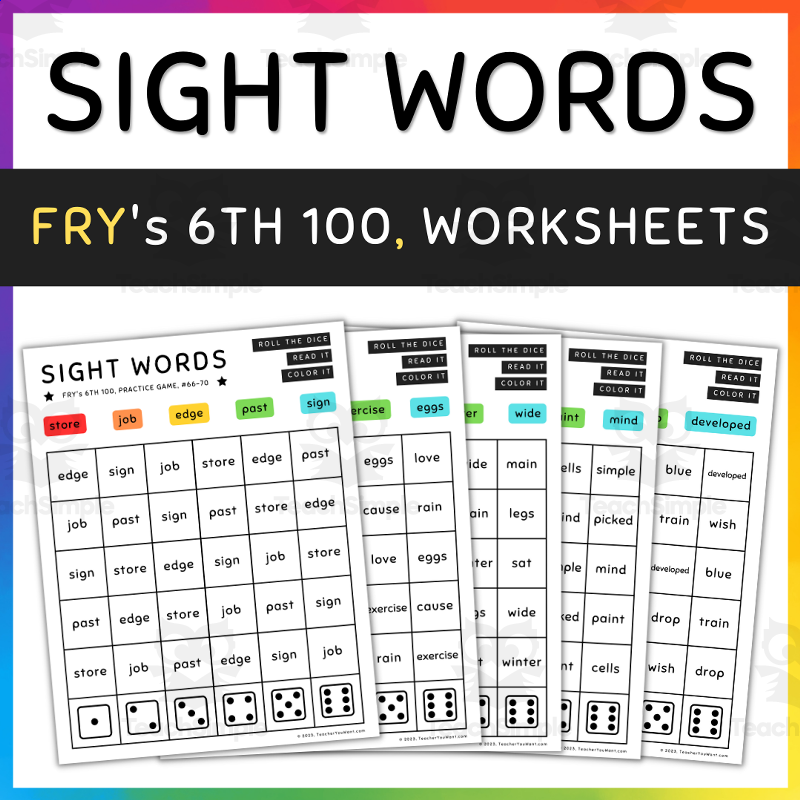
Tic Tac Toe Practice Game: Fry Sight Words 7th 100
ELA, Reading, Language Development, Spelling, Vocabulary, Preschool, Grade 1, 2, 3, Activities, Games
Tic Tac Toe Practice Game: Fry Sight Words 7th 100 This 11-page sight word resource can liven up sight word recognition practice for students. Children play tic-tac-toe in pairs, taking turns to read a Fry seventh hundred sight word aloud before marking an X or O in a square. Winning the game requires correctly reading aloud and spelling 3 sight words in a row. With over 100 target words total, this activity packs in plenty of engaging sight word repetition practice. Use during small group time or center rotations to help reinforce recognition and spelling of essential high frequency words. The game format promotes peer collaboration and healthy competition while learning. Students will beg to practice these vital reading skills thanks to this teacher-created twist on a classic kid favorite.
Author TeacherYouWant
Tags Sight Words Practice, Fry Sight Words, Fry Words, Fry's Seventh 100, Game, Sight Words Worksheets, Morning Work, Fun Learning
CVC Words Phonic Matching Game: O and U
ELA, Common Core, Reading, Phonics, Language Development, Pre-Reading, Special Education Needs (SEN), Special Resources, Kindergarten, Preschool, Grade 1, Games, Activities, Centers
Here is a simple game to help children learn to read CVC words with the medial sounds O and U. This game will help your child to learn to blend three-letter words with the short vowels ‘o’ and 'u'. That means, to put sounds together to make a word. The child has to be able to feel and hear the word that is being sounded out. This game is supplied in both colour and black and white - you choose how you print! We suggest laminating the pieces for durability. Who is the CVC Words Phonic Matching Game: O and U? Those who are just beginning to sound out/blend CVC words with the O and U short vowel sounds. These may be: Young learners Special needs learners ESL/EFL learners of any age. Who can use the CVC Words Phonic Matching Game: O and U? Parents Homeschoolers/home educators Teachers in class, or for use in centers Those involved in intervention work Private tutors How can the CVC Words Phonic Matching Game: O and U be used? It can be played as a game for 2 players It can be used as a matching activity for individual pupils - great for centers! It can be used for assessment purposes The game pages can even be used as worksheets - you choose! To make the CVC Words Phonic Matching Game: O and U Simply print out the two baseboards. Print out the word cards and cut them up. Teach your pupil to take care of the cards and not bend them more than can be helped. To play the CVC Words Phonic Matching Game: O and U Take a baseboard each. Scatter the word cards face down. Take it in turns to take a word card. Read it. If it matches a picture on your baseboard, place it in the correct space. If not, return it to the pool of cards. Play continues until someone completes their board, or until all the cards are used up. Teaching tips: Demonstrate how to sound out a word when it is your turn and invite your pupil’s help when it is your turn, so s/he gets even more practice. Your pupil will need a lot of blending practice so be patient. If your pupil has difficulty sounding out these words then spend more time practicing blending before playing the game again. What is included? 1 PDF with: 2 baseboards in both colour and black and white Matching words Full instructions
Author Lilibette's Resources
Tags CVC Words, Phonics, Home School, Special Needs, Phonic Game, ELA, CVC Words U, CVC Words O, Short Vowel Words, CVC
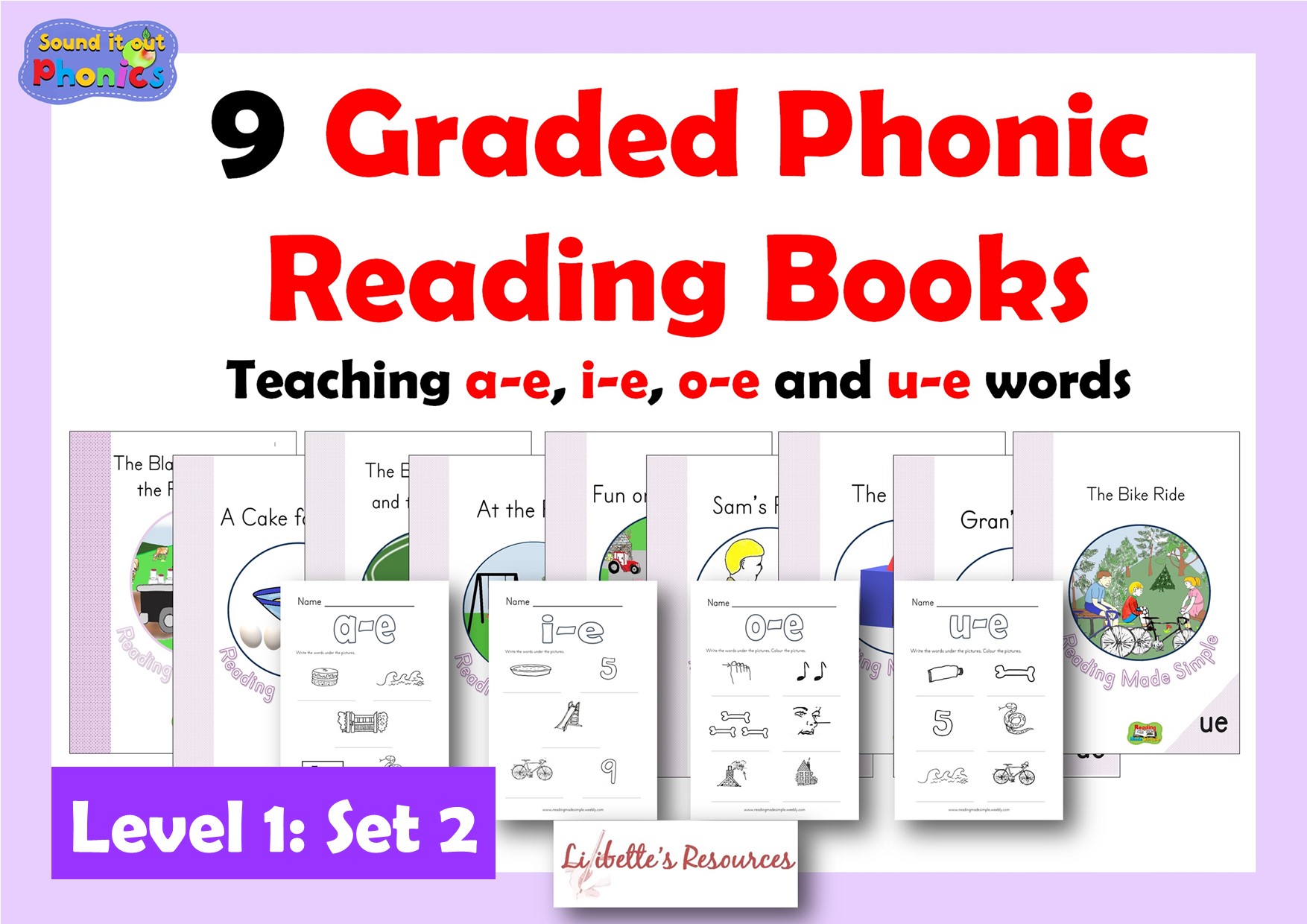
Final e/Silent e/split digraphs Phonic Game: Build a Tower!
ELA, Special Resources, Language Development, Phonics, Reading, Special Education Needs (SEN), Not Grade Specific, Activities, Games
Here is an ultra fun game to help pupils learn to 'Spot the 'e''' and change from vowel sound to vowel name! This game covers i/i-e a/a-e o/o-e When introducing the Final e/silent ‘e’/split digraphs/CVCV words, many children have difficulty quickly changing vowel names to vowel sounds and vice versa. This game can help to take the stress out of learning. How to play The game involves each player having a baseboard upon which to build his/her tower. Players aim to be the first to build their tower and win! Word cards containing both silent 'e' and CVC words are scattered on the table - with an 'oops' card hidden amongst them! Players take turns to choose a card. If it is read correctly, the player places it on his/her baseboard and begins to build a tower. Teachers and parents may give the child as much help as needed to read each word and turn it into a teaching opportunity. With more confident children, you can change the rules so that the card is returned face down to the table if it is not read correctly. If a player chooses the 'Oops' card, then the whole tower is wiped off the player's board and the cards are returned to the table, face down and play continues until someone manages to build their tower. Your pupils will have so much fun they will forget that they are learning! Games take the pain out of learning! Ease of preparation: The game is easy to make: simply print the baseboards and desired word cards, then cut up the word cards. Full instructions included Who can use the 'Spot the 'e' game? It can be used by: Parents Teachers Tutors. What is included in the Spot the 'e' Game? 2 baseboards 3 sets of word cards for each of i/i-e; a/a-e; and o/o-e. Instructions 1 PDF 8 pages
Author Lilibette's Resources
Tags Silent E, Split Digraphs, Phonic Game, Games, Phonics, Special Needs, Language Arts, CVCV Words, Final E
ar/or Phonic Game Colour and B/W
Special Resources, ELA, Special Education Needs (SEN), Language Development, Pre-Reading, Phonics, Reading, Kindergarten, Preschool, Activities, Games, Centers
This game will help your children to learn to hear the sounds ‘ar’ and ‘or’ in words and to read words containing these sounds. Who is it for: Children who are learning the digraphs ar and or. Those children working in Phase 3 of Letters and Sounds Those children working in Speed Set 2 of RWI. Who can use the ar/or game? Teachers, parents, private tutors - anyone who needs it! How to make the game Print out pages 4 to 9, on card. Cut out the picture cards (pages 6 - 8). Cut up the ar/or cards (page 9). Write ‘ar’ on the back of one baseboard (pages 4/5) and ‘or’ on the back of the other. Write ‘ar’ or ‘or’ as appropriate on the backs of the picture cards. Find a bag or small box to put the small letter ar/or cards in. How to play the game This is a game for 2 players. It is best if an adult plays with each child individually first and then when each child in a pair is confident, they can play in together. The game can be played with the picture and word cards alone, without the ar/or cards - as a simple matching game. This is how it has been designed to be played: Take a baseboard each. This will decide who is collecting ‘ar’ pictures and ‘or’ pictures. Choose 6 ar and 6 or cards (you can choose different pictures each time you play). Scatter the picture cards picture side up. Take it in turns to take an ‘ar’/’or’ letter card from the bag/box. If the player with the ‘ar’ baseboards picks an ‘ar’ card, s/he may choose a picture with the ar sound in. Likewise with ‘or’. Players may only turn the picture card over to check that they are correct. If not, the picture card is replaced. The winner is the first to fill his/her card. Do: Demonstrate how to sound out a word when it is your go and invite your pupil’s help, so they get even more practice. Look at the cards that are left. What sound do they have in them? Play again and see if you choose different pictures. What's Included 1 PDF file 2 baseboards Full instructions
Author Lilibette's Resources
Tags Ar, Or, Phonic Digraphs, Ar/or Game, Ar/or Phonic Game, RWI Speed Set 2 Phonic Game, R Controlled Blends, Phonics, Games, Home School
Winter Where's the Penguin Sight Word Game for Fry 101-200
ELA, Holiday & Seasonal, Reading, Seasons, Winter, Preschool, Grade 1, Activities, Games
Winter Where's the Penguin Sight Word Game Targets Fry's 101-200 List This winter-themed sight word game helps students practice recognizing Fry's 101-200 high frequency words. Students search behind snowball word cards to find one of three hidden penguins. Ideal for whole group, small group, learning centers , or one-on-one instruction. Includes printable sight word cards, three penguin cards, and a repetitive poem. Cards available in two sizes to fit various pocket charts. Teachers can differentiate by selecting specific sight words students need extra practice with. As students correctly identify sight words with a hidden penguin, those cards are removed and play continues. When no penguins remain, they are hidden again to start a new round. This engaging game scaffolds beginning readers and struggling students as they build sight word automaticity. The repetitiveness also builds confidence with oral language skills.
Author The Connett Connection
Tags Winter Sight Words, Fry Sight Words, Fry 1-100, Sight Word Game, Where's The Penguin?, Winter Hide And Seek, Winter Seek And Find, Pocket Chart Games, Whole Group Game
I have...Who Has...? Weather & Seasons Edition
ELA, Reading, Not Grade Specific, Activities, Games
I have...Who Has...? Weather & Seasons Edition is an engaging whole-class reading game where students build reading fluency. This activity can be used with grades K-5 during reading centers or small groups. To begin, shuffle the card deck and distribute to students. The first student reads their card prompt aloud, such as "I have 'rain'. Who has 'thunderstorm?'" The student with the "thunderstorm" card responds, "I have 'thunderstorm'. Who has 'snow?'" The game continues until all cards have been read aloud. This reading fluency game keeps students engaged as they listen for their card. It's a simple and interactive way to build reading skills. Use this game to help students gain confidence reading aloud and expand their weather and season vocabulary.
Author Better Teaching Resources
Tags Weather, Seasons, Matching, Game, Vocabulary
Powered Phonics Rule Detectives Gamified Micro-Quests for K-2
Reading, ELA, Literature, Children’s Literature, Mental Health, P.E. & Health, Mindfulness, Health, Research, STEM, Homeschool Curriculum, Grade 1, 2, 3, 4, 5, Activities, Games, Projects, Experiments, Assessments, Teacher Tools, Lesson Plans, Literacy Readers, Presentations, Rubrics
Unleash the Potential of Literacy with this Full, AI-Supported Phonics Learning Program for Grade K-2 Students! "AIPowered Phonics Rule Detectives: Gamified Micro-Quests for K-2 Word Building - Phonics Rules Buildable Grade K-2nd Edition" features 45 pages of interactive digital lesson material that can turn conventional phonics lesson delivery into an incredibly fun and fascinating detective hunt mystery series for kids. A full range of interactive elements, digital AI advisory tools for adaptive content delivery, worksheets for kids, teacher support material, images, and solution keys have been included in this resource tools package for teachers and home schooling parents for effective decoding, reading, and spelling skill development for kids in Grade K-2. Based on a strong systematic and explicit phonics and synthetic background, the "buildable" sequence in the curriculum includes the following skills for each grade level: Kindergarten—basic CVC words and letter sounds, Grade 1—digraphs, blends, CVCE (or "magic e"), and long vowels, Grade 2—vowel teams, r-controlled vowels, diphthongs, syllables, soft C/G, and silent letters. Use the power of Artificial Intelligence to generate unlimited differentiated scenarios, sentences, and activities for remediation, on-grade, or enrichment purposes, and add gamification components such as role-playing, stories, points, badges, and feedback. Why Parents/Schools Love It: Engage Gamification Increases Motivation: Converts phonics lessons into enjoyable 'detective missions' involving stories, badges, & micro-quests, keeping children eager & preventing burnout, underpinning theories such as Self-Determination Theory & Behaviorism. AI-Enabled Personalization: Saves Time “Teachers use prompt cards to create endless differentiated learning material instantly, serving all children, from struggling to advanced learners, without consuming teaching hours.” Established Effectiveness with Data-Driven Insights: Comes with personalized student data indicating an 60-85% proficiency rate for essential rules, as well as assessment and tracking for literacy gains. Complete Ready-to-Use Resources: The all-inclusive resources are available as a single PDF that includes theory lessons, activity sheets, and answer keys and ethics guidelines related to AI that are suitable according to literacy best practices. It Helps Develop Lifelong Reading Confidence: This scaffolding approach leads children to gain a strong conceptual foundation regarding phonics rules, which results in their fluent reading skills, ability to master spelling concepts, as well as developing their lifelong love Target Classes/Students : On the basis of a comprehensive analysis of the PDF document, which includes the flow of the document, developmental phases, categories of rules, worksheets, as well as examples, the following groups of students can be targeted by it: Kindergarten (Emergent Readers): Emphasis on basic components including letter/sound association, vowel concepts, CVC words, and initial/final sounds. This is to promote cognitive balance in the content. Grade 1: Focuses on mastery of CVC words, introduction to digraphs (sh, ch, th, wh), blends (bl, fr, st), CVCE, magic 'e', Long Vowel teams - ai, ee, oa. Grade 2 (Developing Readers) Focuses on complex long vowel combinations, complex pairs of vowels in a word or syllable (ou, oy, ie), r-controlled combinations of letters and vowels (ar, er, ir, or, ur), diphthongs, inflectional suffixes, syllables, and silent letters Its K-2 continuum is "buildable," in that the rules ramp up cumulatively, and it is therefore ideal for mixed-age, intervention, or enrichment settings in the early grades of schooling. Copyright/Terms of Use : «This Book was copyrighted by Syed Hammad Rizvi.» You cannot modify it or give it or any part of it away or resell it. That means you cannot put it on the Internet where it might be downloaded by anyone who wants it. However, if you need to share this resource with colleagues, just purchase more licenses from Teachsimple. Thanks for following the terms of use! This product has been very proudly presented to you by Syed Hammad Rizvi
Author Creative Book Store
Rating
Tags AIPoweredPhonics, PhonicsRuleDetectives, GamifiedMicroQuests, K2WordBuilding, PhonicsRulesK2, BuildablePhonicsCurriculum, KindergartenPhonics, Grade1Phonics, Grade2Phonics, EarlyLiteracyDevelopment
I have...Who Has...? Feelings Edition
ELA, Reading, Not Grade Specific, Activities, Games
I have...Who Has...? Feelings Edition is an engaging whole class card game that builds reading comprehension. The teacher shuffles a set of cards, each with a feeling or emotion printed on it, and distributes them to students. One student starts by reading their card aloud and asking "Who has...?" The student who has that matching feeling reads their card and continues the pattern. Students must listen carefully to progress through the deck of cards. This interactive game is ideal for assessing a student's ability to recognize different emotions, take turns speaking, and follow multi-step oral directions. Use it to energize large reading groups or facilitate small group social-emotional learning. With multiple ways to implement this simple yet entertaining game, both teachers and students will be delighted.
Author Better Teaching Resources
Tags Feelings, Emotions, Matching, Game
I have...Who Has...? Colours Edition
ELA, Reading, Not Grade Specific, Activities, Games
I have...Who Has...? Colours Edition is an engaging whole class game to practice reading and listening skills. This resource includes a set of colour-themed cards that are shuffled and distributed to students. A student starts by asking "Who has...?" for the term on their card. The student with the matching card calls out "I have..." and reads their card aloud, then asks "Who has...?" for another term. Students continue going through the deck of cards, listening carefully until the final card is read out loud. This fun, collaborative game helps develop phonics skills, vocabulary, attention and memory with the entire class. Educators can implement I have...Who Has...? Colours Edition as a whole class activity or small reading groups in elementary classrooms or homeschool settings.
Author Better Teaching Resources
Tags Colours, Colors, Vocabulary, Matching, Games
English Numbers 0-10, Colors, and Patterns Vocabulary Game
Life Studies, ELA, Language Development, Pre-Reading, ESL, Reading, Vocabulary, Kindergarten, Preschool, Grade 1, 2, 3, 4, 5, 6, 7, 8, 9, 10, 11, 12, Teacher Tools, Presentations, Activities, Games
Vocabulary practice made fun! This English #vocabulary #game practices 24 high-frequency #number #color and #pattern words. Editable pages make it easy to add in extra words your learners are working on. Learners will practice reading the sentence and question, "I have____. Who has?" Then classmates will search their cards to see if they have the number, color, or pattern in question! Repeated exposure is necessary for vocabulary retention. In addition, a QR code has been provided in the instructions. Simply point your phone or computer camera at the code to open a link to the Google Slides presentation. Pull up the corresponding photo for each vocabulary word to expose learners to 2+ photos of the object in question. It's common knowledge that while tangible objects are best, realistic photos are next-best when teaching vocabulary. No more clip art or cartoons here! Use the realia presentation to introduce the vocabulary words as well as to support learners during the game. Play multiple rounds, and shuffle well to give extended practice! With a minimum of 2 players, this game is perfect for pairs, small group, or whole-class practice with up to 24 players! Words included in this pack are: one, two, three, four, five, six, seven, eight, nine, ten, red, orange, yellow, green, blue, purple, pink, brown, black, white, dots, stripes, and zig zags. This PDF download includes game instructions, the easy to use QR code link to the realia presentation, three pages to print, as well as a blank page for you to add in additional vocabulary words and drawings! Be sure to check out additional "I Have, Who Has" vocabulary games in English, French, and Spanish: School and Classroom, Calendar: Days, Months, & Seasons, Food & Drink, Numbers 1-10, Colors, and Patterns, Weather & Landforms! Got questions or a request? Let me know! Get in touch on socials at @melissaisteaching.
Author Melissa Is Teaching
Tags Vocabulary, Colors, Numbers, Patterns, English Vocabulary, ELL Vocabulary, Esl Vocabulary
AI Phonic Worksheets for Early Years/Intervention/Special Needs
Special Resources, ELA, Language Development, Phonics, Reading, Spelling, Kindergarten, Preschool, Grade 1, 2, Activities, Games, Worksheets & Printables, Worksheets
This is a pack of 18 phonic worksheets for the Long Vowel AI (as in rain) specially designed for those with special needs, including those with dyslexia or who may be suspected of being dyslexic but will work equally well with young learners in Kindergarten/EYFS/Y1. A pack of 18 AI worksheets with a variety of exercises to help build phonemic awareness and reading fluency. These sheets are LETRS and UK GOV requirements aligned. These worksheets also align with the most popular phonic programmes, including RWI and Letters and Sounds. What is included? 30 worksheets for the sound AI taking pupils from hearing the sounds in words to reading and spelling them at word and sentence level. all following my special method devised as I privately tutor children of all ages with profound special needs. Your phonics lessons are covered! Tracking, fluency triangles, spelling, reading, games, comprehension exercises....and more! 2 PDF games to send home for extra practice included! Who are these worksheets for? I have written them for pupils who struggle with processing information - especially sounds. This includes children who are DYSLEXIC or have ANY other kind of processing disorder. Such children may have failed with other methods of teaching phonics. Such pupils need activities that: ·are highly structured - one tiny step at a time building on the one before using only a limited number of words to start with and only using words that the child has already learnt to sound out, with no nasty surprises. ·Have only a little on each pageas these pupils tire easily. What makes these worksheets special? I have a powerful three-step process which I use with my special needs pupils, which is worked out over the course of the 18 worksheets: 1. See it!where we focus on becoming aware of the new sound in words. This involves first hearing the new sound in words and then seeing it in words (tracking). 2. Sound-it-out!Having learnt to see the new sound in words, we learn to sound out these words to read and write them. We begin by usingsound-it-out boxesfor reading and spelling which help the child to segment the word prior to blending the sounds together. Once the child can read and write individual words, we work on fluency by building familiarity with the common words in the new sound family. Once the child can sound the words out to read and spell confidently, we move on to recognising them/using them in longer reading and dictation passages, as soon as the child is able. I provide 2 reading passages with comprehension exercises and one dictation passage, with a page in the workbook dedicated to it, with room for a picture, which again cements understanding. 3. Write it! Incorporated into the above two steps, we constantly write the new sound. This adds a multi-sensory dimension to our work - we see with our eyes, we sound it with our mouth parts and voice, and then we move by writing. All three steps work together to help the child feel in control of his/her learning and to become a successful, confident learner. We finish each sound with a dictation which culminates our work before we move on to the next sound. I try to give the dictation a week after we finish the work on the EA sound to act as revision. The dictation: Read this passage to your pupil, who should write it. Have the child read his/her work and check for errors. Make sure the writing is completely accurate before saying the child has finished, including full stops and capital letters correctly used. Flashcards are included of some common AI words. What is included? 1 PDF with flashcards, 2 easy-prep AI games and 30 worksheets
Author Lilibette's Resources
Tags Phonic Worksheets, Special Needs, Phonic Games, Print N Play Phonic Game, Dyslexia, Vowel Teams, Spelling Ai Words, Ai Worksheets, Learn To Read Ai Words, Long A
Short e Vowel Families Making Words Game
ELA, Language Development, Pre-Reading, Phonics, Reading, Literature, Poetry, Preschool, Grade 1, 2, 3, Activities, Games
Short e Vowel Families Making Words Game This interactive PowerPoint game makes learning to read fun by helping young learners master short e vowel families and form CVC words. As an engaging small group or whole class activity, students will enjoy matching beginning and ending consonants to the short e vowel sound. Six short e vowel families are covered including -en, -ed, -eck, -et, -ell, and -est. Using vowel families assists emerging readers in recognizing word patterns. Forming CVC words builds critical phonological awareness skills. With guided practice isolating sounds and building rhyming words, this game creatively reinforces foundational literacy concepts students need to become fluent readers. The activity can be differentiated for diverse learners.
Author Primary 206 Mix
Tags Powerpoint, Short E, Vowel Families, Rhyming Words, Game, Making Words
Silent E/Split Digraph Game
Special Resources, ELA, Language Development, Pre-Reading, Phonics, Reading, Spelling, Kindergarten, Preschool, Grade 1, 2, Activities, Games
Here is a fun, print 'n play phonic game for the split digraph a-e! Help your pupils to grasp the tricky split digraph concept as they play! Who is the a-e game suitable for? All learners of phonics, including young children, SEN/special needs, ESL etc... Aims and Objectives Some children, when starting to learn about the long /a-e/ sound, will start to make every /a/ into a long /a-e/ sound. While this is common among all children, some children need more help to overcome this difficulty. Therefore, this game has two aims: 1.To help children to be able to hear the long vowel sound a-e in words 2.To help children understand that some words have a short /a/ and some have a long /a-e/; the child must listen to hear which word has which - not guess. How to play: This is a game for two or three players, one of whom should be an adult. The game can be played with either pictures or sounds. Each player takes a game board (either pictures or sounds) which will indicate whether the player should listen for words with a short /a/ sound or a long /a-e/ sound. The adult reads a word on the word card, and the pupils must listen for 'e' or no 'e'? If the pupil has the sound/ picture on his/her board, she/he covers up a space. the winner fills hi/her board first. Teaching tips: Help children to hear the vowel sound by emphasising it and stretching it out. Help the child to do this as well. Have fun - as this eases children over those tricky spots! What is included? 1 PDF with 2 game sound boards, 2 picture boards, squares to cover up and a word (readers) card. See more fun phonics games in the Lilibette's Resources store! Find: AR Game A-E Game Games for initial/final sounds and much MORE!
Author Lilibette's Resources
Rating
Tags A-e, Print N Play Phonic Games, Split Digraph, Split Digraph A-e, Phonics, Phonics Games, Special Needs, ESL, Phonics For ESL, Phonics For Special Needs
Romeo and Juliet Jeopardy
ELA, Reading, Grade 9, 10, 11, 12, Activities, Games
Romeo and Juliet Jeopardy: A Fresh Approach to Shakespeare's Classic "Romeo and Juliet Jeopardy" offers a fresh approach to revising Shakespeare's classic tragedy. This unique teaching resource transforms the review process into an interactive game, fostering student engagement while solidifying comprehension of the play's key plot points, characters, and themes. Familiar Format with Comprehensive Quiz Questions This digital resource utilizes the familiar format of Jeopardy, featuring a total of 31 slides with 30 clues for students to answer. These comprehensive quiz questions span each act of Romeo and Juliet, allowing teachers to assess students' understanding or stimulate thought-provoking discussions about the storyline's complexities. Versatile and Interactive Teaching Tool Hosted on Microsoft PowerPoint, this is an interactive tool offering flexibility in its implementation based on educators needs. The uses can range from: Whole class instruction for group discussion or competition Focused revision sessions with smaller groups promoting collaboration & leadership skills among peers. A fun addition to homeschooling curriculum An engaging homework task that encourages independent learning Pacing & Participation :The tool can be adapted across grade levels from Grade 9 through Grade 12. NB: This part of Language Arts curriculum focusing (but not limited to) Reading Sub-Subjects beautifully integrates play-based learning while maintaining academic rigor seen in traditional forms of assessment. "By turning the review process into an engaging game where learners compete against each other answering clues intricately tied into each aspect crafted by Shakespeare himself , education takes form beyond mere knowledge gathering paving way to immersive learning experience capped by fun." Experience ‘learning made easy’ with Romeo & Juliet Jeopardy – where Shakespeare meets gameplay!
Author Educate and Create
Tags Shakespeare, Tragedy, Jeopardy, Interactive Learning, Comprehension
canada Map Geography Word Search 2rd 3th 4th 5th Grade worksheet
Writing, ELA, Reading, Geography, Social Studies, Grade 2, 3, 4, 5, Games, Activities, Word Searches, Worksheets, Worksheets & Printables
Students can explore the new vocabulary words while practicing spelling, scanning for letters, and identifying keywords. A word search can be a perfect and easy-to-use activity to liven up a lesson by combining learning with fun! It is an excellent way to reinforce concepts within a lesson and engage students' hands-on learning. Purpose: This activity allows students to learn new vocabulary words and contextualized vocabulary related to a topic ✏️, improve spelling, reading, and attention to detail 📚, increase awareness of concepts and knowledge about the world at large 🌍, and encourage curiosity and engagement about the topic 🐾. Word searches are a hands-on way to make learning memorable and fun for students - it engages them at all vocabulary levels! How to Do It: 1️⃣ Hand out the word search worksheet. 2️⃣ Introduce any important vocabulary or concepts that fit with the topic. 3️⃣ The students search for the words and circle or highlight each one. 4️⃣ Discuss the importance of the topic or the words that the student found. 5️⃣ Review the answers using the answer key that is included for each product ✅ Perfect For: Grades 2-5 🌟, independent practice, partner work, students who finish early, science or social studies centers, or for substitute plans 🤝 Way of Implementation: Great for independent practice early finishers, partner work, or substitute plans 🤝. Answer Keys: (these will be pencils under your three files: Given for simple checking and self-assessing. Fun Variations: Timed Challenge ⏳ - record how many words students can find in a set time. Partner Puzzle 🤝 - work together to find all of the words. Vocabulary Extension ✏️ - write sentences or a few short paragraphs using the words. Create-Your-Own Word Search 🧩 - have students make their own word search puzzles using the vocabulary. Standards Alignment: Supports CCSS/ELA vocabulary development, and can also connect to NGSS or other relevant standards, depending on the topic. File & Print Info: PDF includes both a color and black and white version, and is ink-friendly to make printing easy. Teacher Tip! Have students learn by being hands-on, engaged, and active while helping them build awareness, vocabulary, and literacy skills around any topic! 🌟
Author Classsim
Rating
Tags Canada, Map, Geography, Word Search , 2rd 3th 4th 5th Grade, Worksheet , Activity, Canada Map , Canada Map Geography Word Search 2rd 3th 4th 5th Grade , Canada Map Geography Word Search 2rd 3th 4th 5th Grade Worksheet Activity
This is & These are Boom Cards Activity
ELA, Language Development, Pre-Reading, ESL, Grammar, Reading, Vocabulary, Grade 1, 2, 3, Activities, Games
This is & These are Boom Cards Activity : A Premier Language Arts Educational Resource Presenting interactive learning immersion, the This is & These are Boom Cards Activity is an edifying toolkit for students from Grades 1-3 engaged in studying Language Arts. The activity embraces adaptability being usable during whole group instruction or small group sessions and even serving as a fruitful after-class assignment or homework. The prime focus of this multi-functional resource lies in fostering skills pertaining to vocabulary recognition, reading competency and novice level grammar. Using attractive online interfaces, the activity introduces students to distinguishing between singular and plural nouns employing This is and These are constructs via the related context of stationery items. Covering 46 pages overall of dynamic linguistic activities further segregated into three segments, 'This is & These are - Stationery Vocab' having 15 pages where new relating vocabulary gets introduced, 'Rearrange the Sentence' encompassing ten pages helps learners formulate meaningful sentences using their newly acquired vocabulary, In 'Read and Match', another set of ten pages unfolds where young minds read sentences highlighting stationery vocabularies before corresponding them accurately assuring thorough object-context association comprehension. The interactivity quotient holds strong with every page housing clicking-and-dragging activities on boom cards to develop digital literacy skills alongside linguistic adeptness. Lessons become visual delights thanks to colorful clipart images adorning every task! The package also includes a PDF download complete with instructions about setting up free accounts needed for playing Boom Cards games across devices like Androids, iPads, iPhones, Kindle Fires making this resource available across geographical boundaries under its flexible license provisions. In conclusion, education and fun harmoniously blend within these intriguing activities, promoting linguistic capabilities subtly yet consistently. A remarkable companion aiding language development for young learners!
Author Koodles Clubhouse
Tags Boom Cards, Vocabulary Acquisition, Reading Skills, Grammar Concepts, Language Arts
I have...Who Has...? Fairy Tales Edition
ELA, Reading, Not Grade Specific, Activities, Games
Fairy Tales I Have...Who Has? is an engaging whole class card game that promotes active listening, comprehension, and cooperation. Students will love this unique fairy tale review activity. To begin, the teacher shuffles the illustrated fairy tale character cards and distributes them randomly. The student with the first card reads their clue out loud while asking "Who has...?" The student who has that matching card replies "I have...." and reads their clue to continue the chain. The sequence continues until the final card is read. This self-checking fairy tale game can be played repeatedly in small or large reading groups. It's ideal for assessing a recent fairy tale unit or book in a lively way. Students of all abilities will be on the edge of their seats eagerly awaiting their turn during this beloved classic game with a fairy tale twist.
Author Better Teaching Resources
Tags Fairy Tales, Stories, Matching, Games
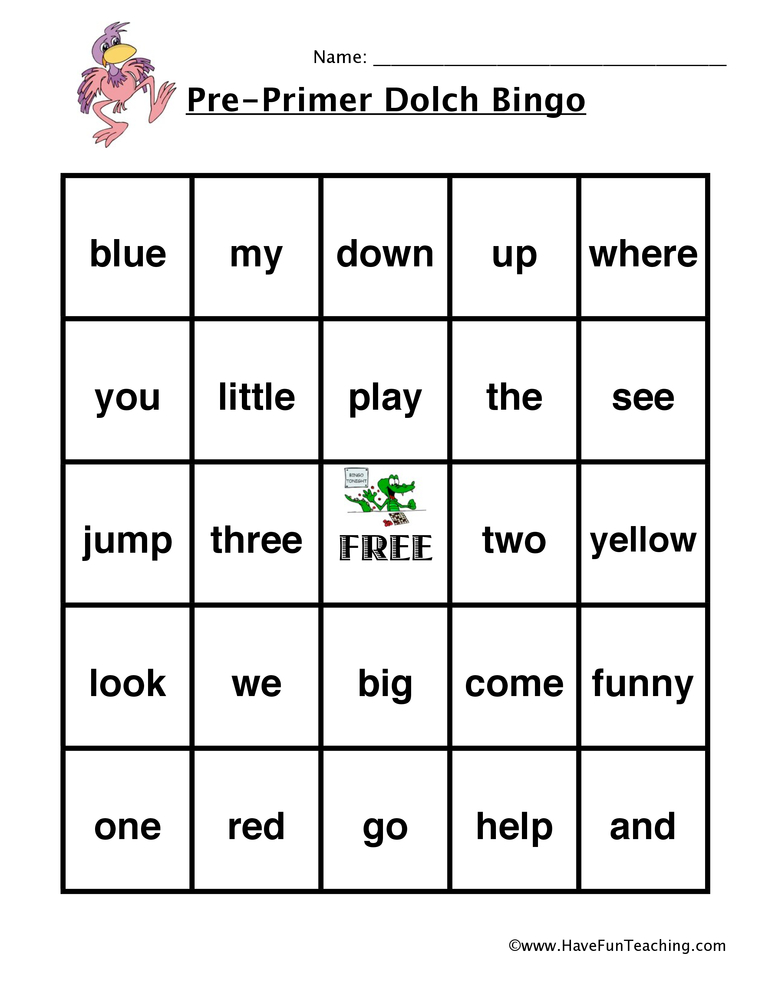
1st 100 Fry Sight Words: Bingo Cards
ELA, Reading, Language Development, Vocabulary, Spelling, Preschool, Grade 1, 2, Activities, Games
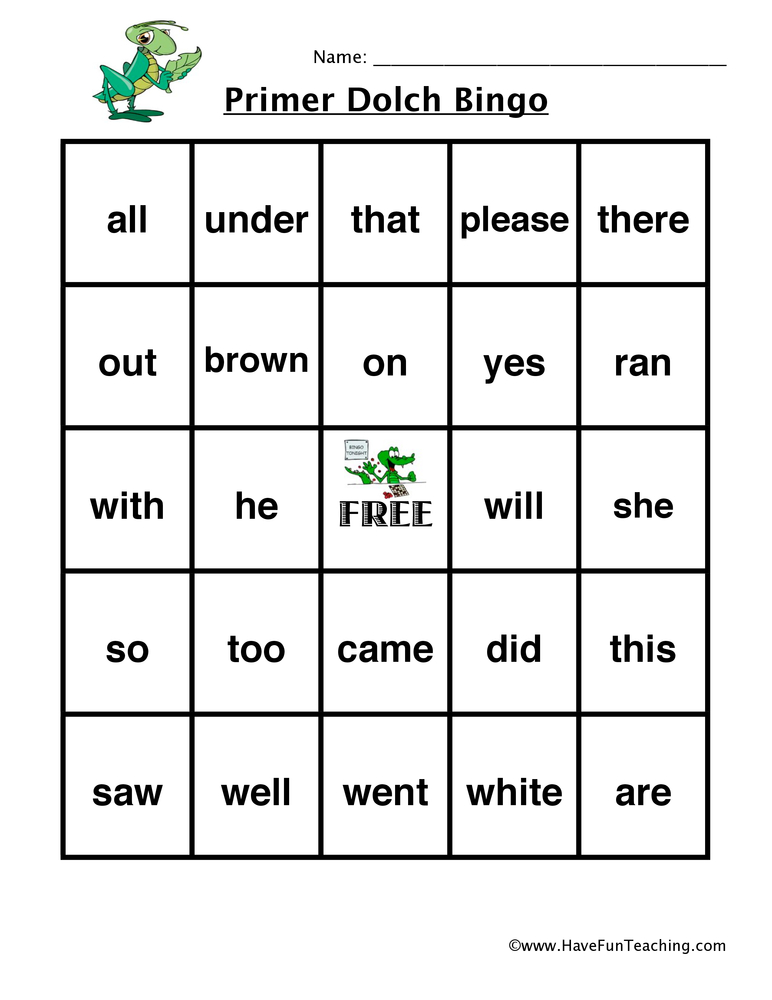
1st 100 Fry Sight Words: Bingo Cards The 1st 100 Fry Sight Words: Bingo Cards are a powerful and engaging teaching tool designed to help students from Kindergarten to Grade 2 expand their vocabulary and enhance reading skills. Overview of the Game: Each learner is given a bingo card that carries random sight words from the first hundred Fry Sight Words list. An educator or an appointed student vocalizes individual sight words. The learners mark off these words on their cards, aiming for five aligned markings across, vertically or diagonally to win. This interactive engagement offers continual exposure, repetition, and practice with high-frequency sight words; all indispensable features for any verbal building block mastery. Ideal for Various Classroom Activities: In addition to being excitingly straightforward in its layout, the adaptability of these bingo cards makes them ideal candidates for different learning center tasks and group games focused on Language Arts' Reading, Vocabulary, and Spelling sub-subjects. The PDF file consists of thirty US Letter Size pages ingeniously filled with immense learning potential. Listed Essential Words: 'the' 'were' 'what' Note:The list consists of frequent yet essential words seen by young readers in various forms such as poems and articles. With this resource's support towards comprehensive knowledge growth both within academic confines & through readings external don't miss out on infusing authentic excitement into your program by using our intellectual stimulating – ‘1st 100 Fry Sight Words: Bingo Cards’.
Author TeacherYouWant
Tags Sight Words, Bingo Cards, Vocabulary Development, Reading Fluency, Language Arts
9th 100 Fry Sight Words: Bingo Cards
ELA, Reading, Language Development, Spelling, Vocabulary, Grade 3, 4, 5, Activities, Games
9th 100 Fry Sight Words: Bingo Cards An engaging and practical skill development tool specifically designed for Grade 3,4,5 students. These Bingo cards offer a unique approach to sight word learning with a particular focus on Language Arts aspects like Reading,Spelling, and Vocabulary. Bingo Game Structure: The simplistic structure of the game involves each player having a bingo card with sight words randomly placed within grid format. The signaling of these words by either teacher or an selected student forms the basic function while players mark off these pronounced words on their respective cards. A resultant line of five matched words whether vertically, horizontally or diagonally calls for victory! Educational Advantages: An interactive method for enhancing reading fluency amongst students. Involves repeated exposure to high-frequency sightwords leading reinforcement in understanding fundamental literacy facets. Makes learning more attractive process for kids. Versatility & Ease: This versatile design structure allows these bingo cards to be effortlessly adapted as per class requirements. Whether group activities or potent literary center tasks – this tool seamlessly adjusts! Your purchase comes with one downloadable PDF containing thirty pages that can easily be printed on US Letter Size paper. Sightword Range: 'addition', 'observe', 'safe', etc., this teaching aid aims at revamping conventional classroom methodologies into self-driven challenges! In light of the transition towards more interactive ways of learning in classrooms or homeschooling setups - This adaptable and exciting formative resource is just what you need!
Author TeacherYouWant
Tags Sight Words, Bingo Game, Literacy, Reading Fluency, Vocabulary
Winter Where's the Penguin First Grade Sight Word Game
ELA, Holiday & Seasonal, Reading, Seasons, Winter, Grade 1, Activities, Games
Winter Where's the Penguin is a first grade sight word game that helps students learn to recognize common sight words. Students search for penguin cards hidden behind winter-themed sight word cards. As students locate the sight words that hide each penguin, they build their reading skills. This educational game includes winter sight word cards, three hidden penguin cards, and a short poem. The materials are designed for use with pocket charts or tabletops. Teachers can differentiate instruction by choosing specific sight words each student needs to practice. Where's the Penguin is versatile for small groups, whole-class games, student-led literacy centers , and one-on-one support. As students search for the sight words hiding each playful penguin, they gain repeated exposure that helps commit these vital building blocks of reading to memory. This engaging game transforms sight word recognition into a delightfully wintry adventure.
Author The Connett Connection
Tags Winter Sight Words, Sight Word Game, Where's The Penguin?, Winter Hide And Seek, Winter Seek And Find, Pocket Chart Games, Whole Group Game, Primer Sight Words, Kindergarten Sight Words
Color by Sight Word Game, High Frequency FRY Words, 7th 100 - SET 8
ELA, Literature, Reading, Language Development, Spelling, Grade 2, 3, 4, Activities, Games
7th 100 Fry Sight Words, COLOR BY SIGHT WORDS WORKSHEETS, COLORING PAGES Looking for a fun and engaging way to reinforce Sight Words in your students? What can be a better way than fun Color By Sight Words Activity? This resource includes engaging Coloring sheets for 7th 100 Fry Sight Words. The words are in order of frequency. This NO PREP Easy to Use Worksheet Packet includes 20 pages in total with 100 sight words. Each page contains five different sight words written in different vibrant colors. There are different shapes like square, triangle, circles and stars on the sheet with sight words written inside of them. Students have to Color every shape with the color of Sight Word written in it. These worksheets are not only perfect for enhanced recognition of Sight Words but are also perfect for developing Fine motor skills while learning their sight words. Teachers can use these worksheets in different ways. Teachers can create fun ways to use these worksheets more efficiently like, ask the kid to pick their favorite shape on the worksheet and the ask them to read the sight word aloud, along with spelling it out. This will not only help in enhanced recognition but also will help to build vocabulary and spelling mastery. Then after that ask the student to look for that sight word on the top of the sheet and tell the name of the color that sight word is written in. Then ask the student to color that shape with the color of the sight word. This will motivate students to recognize and remember their High Frequency Words in more effective way and also have fun while coloring the worksheet. These worksheets are perfect for morning work, individual work, group work, working with partners, home work or class work. These Worksheets can also be used for Assessment . When children have already learnt their sight words, use these sheets to assess their knowledge with these engaging activity. These are also perfect to include in Sight Words Book, and teaching collection. These are perfect for End of the year and also Back To School Season. These are also perfect for Home Schoolers. These are very easy to use. Just Download, Print, Enjoy and save your time with these high quality Sight Word resource. Download your copy today to give your kids some fun activity with learning. You Will Receive: 1 PDF 20 Pages US Letter Size ( 8.5 x 11 )
Author TeacherYouWant
Tags Sight Words Practice, Sight Words Activities, Games, Color By Code, Color By Sight Words, Coloring Game, Rainbow, Fry Sight Words
A-E Phonic Game Print 'n Play!
Special Resources, ELA, Language Development, Pre-Reading, Phonics, Reading, Spelling, Kindergarten, Grade 1, 2, Activities, Games
Here is a fun, print 'n play phonic game for the split digraph a-e! Help your pupils to grasp the tricky split digraph concept as they play! Who is the a-e game suitable for? All learners of phonics, including young children, SEN/special needs, ESL etc... Aims and Objectives Some children, when starting to learn about the long /a-e/ sound will start to make every /a/ into a long /a-e/ sound. While this is common among all children, some children need more help to overcome this difficulty. Therefore, this game has two aims: 1.To help children to be able to hear the long vowel sound a-e in words 2.To help children understand that some words have a short /a/ and some have a long /a-e/; the child must listen to hear which word has which - not guess. How to play: This is a game for two players. The teacher should watch if two children are playing together. Each player takes a game board which will indicate whether the player should listen for words with a short /a/ sound or a long /a-e/ sound. The selected picture cards are scattered on the table face down. Players take it in turns to choose a picture card. The player says the word and listens to the vowel sound. Is it short /a/, or long /a-e/? If it belongs on the player’s board, it is placed on one of the oblongs. If not, it is returned to the table, face down. The winner is the player who completes his/her board first. Teaching tips: Support children to sound words out/blend them as needed. Help children to hear the vowel sound by emphasizing it and stretching it out. Help the child to do this as well. Have fun - as this eases children over those tricky spots! What is included? 1 PDF with 2 game boards and 20 pictures all in colour and ink saving black and white. See more fun phonic games in the Lilibette's Resources store! Find: AR Game A-E Game Games for initial/final sounds and much MORE!
Author Lilibette's Resources
Tags A-e, Print N Play Phonic Games, Split Digraph, Split Digraph A-e, Phonics, Phonics Games, Special Needs, ESL, Phonics For ESL, Phonics For Special Needs
Consonant Blends Phonic Games
ELA, Language Development, Phonics, Reading, Spelling, Kindergarten, Preschool, Games, Activities
Here are five phonic games to help in the teaching of consonant blends. Many children struggle with consonant blends, but these games can help take the stress out of learning! All children like a game- not least for the one to one time with an adult! How to use The games are easy to make and easy to play, needing no other equipment than in some cases a feely bag/little box in which to put cards. Simply print out the pages needed for each game and play - print and play. To make the games last longer, I suggest laminating the boards and the picture/letter cards as appropriate. What is included? Game 1: Match each blend to the picture that begins with it. Game 2: Cut up the word cards and take it in turns to find the consonant blend missing letter cards - either of an initial or final blend. Game 3: Find the missing letter of an initial blend Game 4: Find the initial blend for each word card Game 5: Read and match the CVCC word with a short vowel sound to the picture Who are these games for? Children of all abilities will love these games . They have been tried and tested on many children. They were devised by a teacher with many years of experience in teaching children of all abilities to read and spell with phonics. They are best played one-to-one with an adult so that the adult can model sounding out and reading words with a consonant blend. Once a child is more confident, two children can be asked to play together while an adult supervises. As the children play these games , the sie teacher will observe the reading and spelling strategies being used by the child to ensure that the child is noy learning to guess. Phonic games help to take the stress out of learning so they are great for pupils with special needs (including those with dyslexia) who need that bit of extra practice.
Author Lilibette's Resources
Tags CCVC Words Phonic Games, Consonant Blends Games, Consonant Blends Phonic Games, Consonant Blend Game, Consonant Blends Game, Letter Blends Game
I have...Who Has...? Clothes Edition
ELA, Reading, Not Grade Specific, Activities, Games
I have...Who has...? Clothes Edition is an engaging whole class game to practice reading comprehension. This activity can be used with grades K-5 during small group reading instruction or as a fun Friday activity. To begin, print the clothes-themed cards and cut them apart. Shuffle the cards and distribute them to students. One student starts by reading their card aloud in the format "I have a hat. Who has gloves?" The student with the matching card responds "I have gloves. Who has a sweater?" and so on. The game continues until all cards have been read aloud. I have...Who has...? Clothes Edition promotes active listening, reading fluency, and making connections. Use this game to liven up vocabulary and reading lessons.
Author Better Teaching Resources
Tags Clothes, Clothing, Matching, Game, Clothes Matching Game