


9,430 products added recently
Page 914 - Newest Teaching Resources

 Show filters


Positivity Journal
Special Resources, Social Emotional Learning (SEL), Social Skills, Special Education Needs (SEN), Not Grade Specific, Activities
Life’s daily ups and downs profoundly shape children’s still-developing inner worlds. Nurturing positive psychology habits early builds emotional resilience to overcome future challenges. This encouraging fill-in-the-blank journal steers students towards optimistic thinking and gratitude practice with simple yet powerful daily writing prompts. Designed as motivational minutes for the classroom or at home before bed, journaling sessions cultivate consistent reflections on good moments from the day however small. Sections include: Today I have been feeling (with a variety of emotions faces to hoose from) Today I felt proud when Today would have been better if A funny thought i had today was Today i enjoyed Tapping feel-good moments amidst routine life quietly trains young minds to filter troubles and fixate on the hopeful. Uplifting comments and doodles from teachers or parents beside entries boost positivity. Over time, focusing on blessings over burdens becomes habit, strengthening inner resolve. Simple positivity journaling pays exponential dividends long-term equipping children to shoulder life’s inevitable challenges. Planting seeds of optimism bears fruit boosting wellbeing and self-confidence sustaining even difficult seasons ahead. A kids' positivity journal aims to instill a positive outlook on life, boost self-esteem, and provide a safe and enjoyable space for children to express themselves. Through consistent use, these journals can contribute to the development of healthy habits related to gratitude, optimism, and emotional well-being. Included in this resource are 19 PDF printable pages The wonderful and eye catching clipart images are courtesy of Kari Bolt Clip Art
Author SEN Resource Source
Tags Positivity, Gratitude, Self-reflection, Happiness, Mindfulness, Daily Reflection, Self-care, Reflection, Well-being, Positivity Journal

Rewards Choice Board – Customizable Incentives
Special Resources, Life Skills, Special Education Needs (SEN), Social Emotional Learning (SEL), Not Grade Specific, Activities
Earning periodic motivational perks is pivotal for students needing frequent reinforcement, but those rewards look different for all children. This customizable choice board resource enables kids (especially those with special needs) to select individualized incentives suiting their preferences after completing work or displaying good behavior. The foundation consists of a blank choice board grid displaying 8 picture box spaces per page. The accompanying word/image deck provides 18 illustrated reward cards to fill designated boxes catering to different interests. Options include: read with buddy, computer time, pick prize from treasure box, lunch outside, play favorite game, music time, extra recess, art project, stuffed animal friend or snack choice among others. Teachers and students collaboratively select which reward choices to feature, adding or subtracting over time to prevent boredom. To use teachers can laminate and put velcro on the back of the cards so they can be easily moveable and reusable. This motivates children who struggle communicating desires or connecting work to distant rewards. Allowing children autonomy choosing from pre-approved rewards that actually excite them boosts incentive like no single sticker chart could! It also builds awareness of leisure activities providing genuine internal rewards. Portable across goals and fully customizable, these choice cards increase student drive to progress academically and behaviorally! This resource includes 2 PDF printable pages The wonderful and eye catching clipart images are courtesy of Kari Bolt Clip Art
Author SEN Resource Source
Rating
Tags Choice Board, Communication, Autism, SEN, Rewards, Behavior, Behavior Management

Resources Choice Board
Special Resources, Life Skills, Special Education Needs (SEN), Social Skills, Not Grade Specific, Activities
Following through on academic tasks requires material motivation for students who struggle initiating work independently. This customizable choice board resource empowers children (especially those with special needs) to select tailored items that aid individual learning needs and boost engagement with classroom activities. The foundation consists of a blank choice board grid displaying 8 picture box spaces per page. The accompanying word/image deck contains 12 illustrated resource cards to slip into designated boxes, including: pencil grips, counters, mini whiteboard, slantboard, weighted lap pad, headphones, wiggle seat, sensory fidgets, lined paper, alphabet strip, number line or multiplication chart. Teachers and students collaboratively select which personalized supports suit that child’s unique needs to feature, rotating items over time. To use teachers can laminate and put velcro on the back of the cards so they can be easily moveable and reusable. This scaffolds executive functioning skills for children who struggle voicing resource needs independently. Having tailored focusing tools and accommodations pre-identified prevents off-task behaviors from escalating into avoidant meltdowns. It builds students’ self-awareness around items actually helpful for their learning style. Portable for various academic contexts and fully customizable, these choice cards nurture scholastic participation with student autonomy! This resource includes 2 PDF printable pages The wonderful and eye catching clipart images are courtesy of Kari Bolt Clip Art
Author SEN Resource Source
Tags Choice Board, Communication, Autism, SEN

Free Time Choice Board – Self-Directed Activities
Special Resources, Social Emotional Learning (SEL), Special Education Needs (SEN), Life Skills, Not Grade Specific, Activities
Unstructured free time can often overwhelm students who struggle flexibly shifting activities or communicating needs. This customizable choice board resource empowers children (especially those with special needs) to independently yet judiciously self-direct preferred stimulating or calming leisure activities. The foundation consists of a blank choice board grid displaying 8 picture box spaces per page. The accompanying word/image deck contains 12 illustrated free time option cards to slip into designated boxes. Fun yet constructive categories include: play dough, outside play, read a book, board games, home corner, draw or color, lego, train set, marble run, paint, toy animals or dressing up. Teachers and students collaboratively select which personalized options suit that child’s sensory needs and interests to feature, rotating items over time. To use teachers can laminate and put velcro on the back of the cards so they can be easily moveable and reusable. This scaffolds executive functioning skills for children who struggle voicing decisions or pivoting tasks. Having appropriate, appealing activities identified prevents aimless wandering or overstimulation during open-ended periods. It builds students’ self-awareness around constructive leisure pursuits that actually recharge them as individuals. Customizable, portable and visual, these choice cards nurture time/emotion regulation skills with student autonomy! This resource includes 2 PDF printable pages The wonderful and eye catching clipart images are courtesy of Kari Bolt Clip Art
Author SEN Resource Source
Rating
Tags Choice Board, Choices, Regulation, SEN, Autism, Free Time

Break Time Choice Board
Special Resources, Special Education Needs (SEN), Life Skills, Not Grade Specific, Activities
Break time is meant for recharging, but many children struggle choosing constructively how to spend that precious free time without exceeding sensory or social limits. This customizable choice board resource enables students (especially those with special needs) to independently yet judiciously select preferred stimulating vs calming break activities. The foundation consists of a blank choice board grid displaying 8 picture box spaces per page. The accompanying word/image deck contains 12 illustrated break time option cards to slip into designated boxes, including: running, climbing, walking, skipping, drawing, riding a bike, sitting on a bench, playing basketball, throwing and catching a ball, hula hooping and talking with friends. Teachers and students collaboratively select which personalized options suit that child’s needs and interests to feature, rotating activities over time. Using the board, teachers can laminate and attach velcro the pieces so they can be easily moveable and reusable. This empowers students who struggle communicating desires to exercise autonomy over break time in a structured way. Having go-to options visualized prevents aimless wandering or overstimulation. Portable and customizable, these choice cards optimize both freedom and function! Resource includes 2 PDF printable sheets The Wonderful and eye catching clipart images are courtesy of Kari Bolt Clip Art
Author SEN Resource Source
Tags SEN, Choice, Choice Board, Self-Care, Decision-making, Self-Reflection

Calming Down Choice Board
Special Resources, Special Education Needs (SEN), Life Skills, Social Emotional Learning (SEL), Not Grade Specific, Activities
Managing frustrating emotions independently is pivotal for student wellbeing, but challenging for children who struggle articulating needs. This customizable choice board resource empowers students (especially those with special needs) to select tailored calming strategies fitting their individual preferences and ability levels. The foundation consists of a blank choice board grid displaying 8 picture box spaces per page. The accompanying word/image deck contains 12 illustrated calming technique cards to fill designated boxes, including: exercise, squeeze stress ball, count back from 10, take deep breaths, draw or color, listen to music, go to calm area, have a hug, write down your feelings, talk it through with an adult, play wioth sensory toys or have a drink of water. Teachers and students collaboratively select which personalized options suit that child’s needs and sensory-input levels to feature, rotating items over time. To use teachers can laminate and put velcro on the back of the cards so they can be easily moveable and reusable. This scaffolds self-regulation skills for students who struggle communicating verbally while upset. Having tailored calming choices pre-identified prevents overstimulation or power struggles requiring disciplinary response. It also builds students’ awareness of techniques that actually soothe them individually long-term. Portable for various settings and customizable, these printable choice cards nurture emotional competence with student autonomy! This resource includes 2 PDF printable pages The wonderful and eye catching clipart images are courtesy of Kari Bolt Clip Art
Author SEN Resource Source
Tags Choice Board, SEN, Choices, Self Awareness, Anger, Calming Strategies, Calming Down, Behvaior Management, Austism

Noise-O-Meter
, Not Grade Specific, Classroom Decor, Worksheets & Printables, Flashcards
Cultivating an optimal sound climate for varied learning activities is essential, but young students struggle gauging appropriate voice levels. This clever noise management display gives clear visual cues syncing noise expectations to enriching whole-class discussions and independent work times. The colorful classroom meter features four distinct sound levels students can understand, each with playful illustrations: No Talking at all – green color and features a picture of child zipping their lips Sssssshhhhhh Whisper – blue color and features child with finger on lips Normal inside Voices – purple color and features a smiling child Loud Voices – red color and features a picture of a shouting child A movable arrow slots along the visual scale using a split pin, easily shifted by teachers to indicate the ideal volume for current tasks. Children can self-monitor matching their own sounds, fostering responsibility. Explicit connections teach that active group sharing merits louder levels while reading comprehension or test-taking necessitate quiet focus. Creatively reinforcing appropriate situational volume through simple visual and verbal cues builds essential impulse control, self-regulation skills and respect for whole classroom needs. Expectations become clearer, transitions smoother and attention optimized. This invites more harmonious days where voices can lift learning rather than hinder it!
Author SEN Resource Source
Tags Display, Noise Meter, Behavior Management, Classroom Management
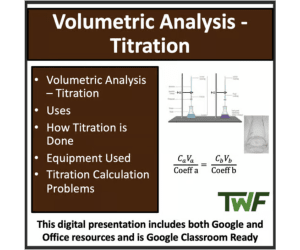
Volumetric Analysis - Titration - Senior Chemistry lesson
Science, Chemistry, Grade 10, 11, 12, Teacher Tools, Lesson Plans
Volumetric Analysis - Titration - Senior Chemistry Lesson Your lesson covers titration. In order, the lesson teaches about; Volumetric Analysis – Titration, its uses, how titrations are done, the equipment used, how to complete titration calculation problems. Your lesson includes the teacher and student version of the presentation, THREE embedded videos, an auto-graded exit ticket, and a student lesson handout so the students can record the notes on a more condensed medium. This lesson is designed to be your go-to resource, whether you're in a traditional classroom or a virtual one. With both a teacher version and a student version, it seamlessly fits into your lesson plans, making learning engaging and adaptable. Assessment made easy We've included an auto-graded Exit Ticket and a quiz with an answer key because I know you don't have an excess of time. I know you don't, because I don't and I know I'll do whatever I can to reduce my grading time. Whether you use PowerPoint or Google Slides, prefer Word or Google Docs, this lesson has you covered. This lesson comes in both Office and Google formats for your convenience. The student version of the presentation has strategically placed blanks for them to fill in as you're teaching. It keeps them active and engaged, encourages discussion, and leaves more time for those "aha" moments.
Author Teach With Fergy
Tags Chemistry Lesson, Volumetric Analysis, Titration, Titration Calculations
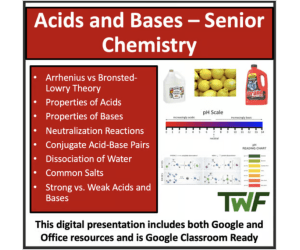
Acids and Bases - Senior Chemistry lesson
Science, Chemistry, Grade 10, 11, 12, Teacher Tools, Lesson Plans
Acids and Bases - Senior Chemistry Lesson Your lesson covers acids and bases at a senior chemistry level. In order, the lesson teaches about; Arrhenius vs Bronsted-Lowry Theory, properties of Acids, properties of Bases, Neutralization Reactions, Conjugate Acid-Base Pairs, Dissociation of Water, Common Salts, and Strong vs. Weak Acids and Bases. Your lesson includes the teacher and student version of the presentation, THREE embedded videos, an auto-graded exit ticket, and a student lesson handout so the students can record the notes on a more condensed medium. This lesson is designed to be your go-to resource, whether you're in a traditional classroom or a virtual one. With both a teacher version and a student version, it seamlessly fits into your lesson plans, making learning engaging and adaptable. Assessment made easy We've included an auto-graded Exit Ticket and a quiz with an answer key because I know you don't have an excess of time. I know you don't, because I don't and I know I'll do whatever I can to reduce my grading time. Whether you use PowerPoint or Google Slides, prefer Word or Google Docs, this lesson has you covered. This lesson comes in both Office and Google formats for your convenience. The student version of the presentation has strategically placed blanks for them to fill in as you're teaching. It keeps them active and engaged, encourages discussion, and leaves more time for those "aha" moments.
Author Teach With Fergy
Tags Chemistry Lesson, Acids, Bases, Arrhenius Vs Bronsted-Lowry, Neutralization, Acid-base Pairs, Salts, Strong Vs Weak Acids, Strong And Weak Bases

Solutions and Solubility - Senior Chemistry lesson
Science, Chemistry, Grade 10, 11, 12, Teacher Tools, Lesson Plans
Solutions and Solubility - Senior Chemistry Lesson Your lesson covers solutions and solubility at a senior chemistry level. In order, the lesson teaches about; Solutions, Solvents and Solutes, Dilute vs. Concentrated, Saturated & Unsaturated, Supersaturated, Solubility, Polar Water, Ionization, Electrolytes, Hydration, and Temperature and Solubility. Your lesson includes the teacher and student version of the presentation, TWO embedded videos, an auto-graded exit ticket, and a student lesson handout so the students can record the notes on a more condensed medium. This lesson is designed to be your go-to resource, whether you're in a traditional classroom or a virtual one. With both a teacher version and a student version, it seamlessly fits into your lesson plans, making learning engaging and adaptable. Assessment made easy We've included an auto-graded Exit Ticket and a quiz with an answer key because I know you don't have an excess of time. I know you don't, because I don't and I know I'll do whatever I can to reduce my grading time. Whether you use PowerPoint or Google Slides, prefer Word or Google Docs, this lesson has you covered. This lesson comes in both Office and Google formats for your convenience. The student version of the presentation has strategically placed blanks for them to fill in as you're teaching. It keeps them active and engaged, encourages discussion, and leaves more time for those "aha" moments.
Author Teach With Fergy
Tags Chemistry Lesson, Solutions, Solvents, Solutes, Saturated, Unsaturated, Solubility, Ionization, Electrolytes
Down to Earth Season 1 Worksheet - 8 Episodes
Science, Earth and Environmental Sciences, Earth Sciences, Grade 7, 8, 9, 10, 11, 12, Activities
Down to Earth with Zac Efron - Season 1 Keep your students engaged with these worksheets. I've created 8 worksheets, 1 for each episode of season 1. Each worksheet contains 10 short answer questions and all answers are included. Down to Earth with Zac Efron takes viewers around the world with the famous actor as he explores different cultures and ways of life. The first season follows Zac and wellness expert Darin Olien as they travel to places like France, Iceland, Costa Rica, and Sardinia. Each location provides insights into sustainability practices, nature conservation, green energy, and environmentally-friendly living. While traveling, Zac and Darin try local foods, meet eco-innovators, and have unique experiences that shape their perspectives. Themes of the series include appreciating our planet, adopting healthier lifestyles, and finding meaning through new adventures. Get students thinking about eco-friendly living, green energy, healthy eating, and all the environmental issues Zac explores. They'll connect it back to their own lives and communities. Use the worksheets for: Individual/group work during each episode Pre and post episode discussions Extra credit or assessments These videos can be utilized in any climate change or ecology unit as a daily viewing exercise or as a one-off if needed.
Author Teach With Fergy
Tags Down To Earth, Environmentalism, Movie Worksheets, Science Movie Worksheets

High Frequency Word Play Dough Mats
ELA, Language Development, Phonics, Reading, Preschool, Grade 1, Activities
Mastering sight recognition of high-frequency vocabulary words is vital for early reading fluency. These playful printable mats make word repetition practice hands-on fun while building key fine motor skills too! The set includes write & wipe mats for the top 12 most commonly used words in beginning reading texts. Words included in the set are: said the and was he she put went have when my that Each word has traced letter outline spaces where students mold playdough letters. Forming whole words repeatedly cements proper spelling while molded creations inspire imagination play. There are also opportunities to fill words in with patterns like polka dpots made from their play dough. Then underneath they can use a whiteboard marker to write the word. Besides literacy skills, using playdough builds up finger muscles and dexterity key for later pencil grip and writing prowess. Different resisting textures like popcorn kernels or beads could also fill mat spaces, developing sensory integration. With leveled word options, self-checking ability and endless creativity potential, these playdough mats double early childhood learning through imaginative play. Multisensory engagement leaves lasting literacy impressions! Students will beg to practice these foundational vocabulary essentials! Included in this resource are 24 PDF prinatable pages
Author SEN Resource Source
Tags Phonics, Reading, Early Reading, High Frequency Words, Sight Words, Play Dough, Fine Motor
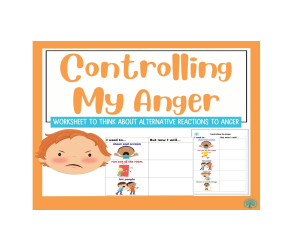
Controlling My Anger Worksheet
Special Resources, Social Emotional Learning (SEL), Social Skills, Special Education Needs (SEN), Not Grade Specific, Worksheets, Worksheets & Printables
Anger sparks are inevitable for children, but reacting constructively takes mindfulness and skill-building. This reflective worksheet helps students evaluate previous poor responses to anger and cement more positive alternatives going forward through pictures and writing. The page features illustrations of common yet unhealthy anger reactions like hitting, screaming, throwing toys, hurting others, running away and having a tantrum. These visual cues remind children of counterproductive habits they may relate to personally. Beside each problematic scenario, space is provided for students to jot healthier choices they pledge to enact next time they feel similarly frustrated. Options like take deep breaths, squeeze a stress ball, count to 10, or politely ask for help are prompted as examples. Articulating go-to regulation tactics makes them concrete tools to access independently. Finally, children illustrate their own vision of ideal anger management, for example walking away calmly or taking space to breathe. These sketches become motivational reminders that discipline over reactions is within their control if using wise coping methods. Guiding students to evaluate past anger responses and cement constructive alternatives is pivotal learning for childhood development and classroom harmony. This straight-forward worksheet establishes that interpersonal growth through relatable visualization and reflective writing. Wonderful eye catching visuals are courtesy of Kari Bolt Clipart
Author SEN Resource Source
Tags Behavior, Calming Strategies, Behavior Support, Classroom Management

Phases of Anger Worksheet
Special Resources, Social Emotional Learning (SEL), Social Skills, Special Education Needs (SEN), Not Grade Specific, Worksheets & Printables, Worksheets
Recognizing anger as it builds internally is an essential skill for children’s healthy development. This interactive worksheet creatively guides students to evaluate their own escalating anger levels and identify tailored calming strategies to use at each phase. Children first examine feeling words describing anger that progresses in intensity: annoyed, grouchy, angry and furious. They cut out each keyword and rank them on a visualized scale according to personal intensity experience. Seeing annoyance is lower than anger cements comprehension. Next, students write personalized coping tactics to utilize when feeling the anger type words they posted on the scale. Strategies like take deep breaths, squeeze a stress ball, count backwards. Concrete tools provide stability within shifting anger states. Chldren can reference their own anger flow chart and matched calming methods any time those feelings reemerge. Practicing these regulation skills when content preempts complete meltdowns. Evaluating the phases of anger uniquely felt by each student and preparing tailored responses is pivotal learning. This engaging worksheet establishes that interpersonal awareness intelligently through self-reflection and interactive assemble. It equips budding emotions with control over anger, not vice versa! The versatile nature of this worksheet means it can be adapted to various ages from child to teen. Included in this resource is 1 PDF printable worksheet.
Author SEN Resource Source
Tags Anger, Behavior, Calming Strategies, Behavior Support, Feelings, Emotions

Sticker Charts
Special Resources, Social Emotional Learning (SEL), Social Skills, Special Education Needs (SEN), Not Grade Specific, Charts, Teacher Tools
Tracking progress and rewarding good behavior provides vital motivation for young students. These seven blank sticker charts feature popular animal themes that make monitoring goals extra fun for children. Simply select the designs tailored to kids' interests! Included are: Unicorn chart with mountain background Dinosaur chart with jungle background Dog chart with park background Penguin chart on icy blue background Owl chart with woodland background Lion chart with tropical background Dolphin chart with deep sea background Each vibrant chart has 20 blank sections for placing colorful stickers or stamps. Teachers and parents, alongside children, can decide on tailored objectives like “use nice words all day”, “finish morning routine calmly” or “complete math worksheet”. Children earn designated stickers as motivational milestones. Alternatively the chart can be used more freely as a space for rewards for general good behavior and hard work. Seeing admired animals alongside progress sparks pride and perseverance. The cute charts help reinforce positive habits, self-regulation skills, assignment completion and more. Displaying completed charts builds self-esteem too. Simple yet impactful, these illustrated sticker charts make meeting goals extra fun! Included in the resource are 7 PDF printable sticker charts The wonderful and eye catching clipart used is courtesy of Kari Bolt Clip Art
Author SEN Resource Source
Tags Behavior Support, Behavior, Sticker Chart, Rewards, Behavior Management, Classroom Management

Anger Choices Worksheet
Special Resources, Social Emotional Learning (SEL), Social Skills, Special Education Needs (SEN), Not Grade Specific, Worksheets, Worksheets & Printables
Managing anger appropriately is a vital skill for children to develop. This interactive cut and stick activity creatively builds positive behavior choices using engaging picture sorting. The worksheet features 10 illustrated scenarios showing different reactions when feeling angry, like hitting a peer, screaming, talking to a trusted adult, hurting others, deep breathing, throwing objects, listening to music etc. Students must thoughtfully analyze each picture, discussing if the behaviors shown are right or wrong ways to deal with anger. Children then cut out each scenario and physically sort them under the columns ”I should" or "I should not" according to their own reasoning. The active sorting process cements understanding on a deeper level than just circling pictures. It expands children’s toolbox of appropriate emotional regulation tactics. Finally, students glue their sorted cards permanently under the correct column, creating a handy visual reference guide demonstrating constructive vs destructive anger reactions. The divided spectrum reminds them that small daily choices shape their own and classmates’ feelings. Interactive, hands-on and creatively reinforcing, this cut and stick anger management worksheet builds essential social-emotional intelligence. It steers kids positively through intense emotions sure to arise! In essence, the "Anger Choices" worksheet is not just a task; it is a tool for developing essential life skills. By providing a visual and interactive platform for exploring responses to anger, this resource empowers children to make informed choices and fosters a deeper understanding of emotional regulation in a constructive and supportive learning environment. Clipart images courtesy of Kari Bolt Clipart
Author SEN Resource Source
Tags Anger, Choices, Behavior, Behavior Support, Behavior Management, Emotions, Feelings, SEL
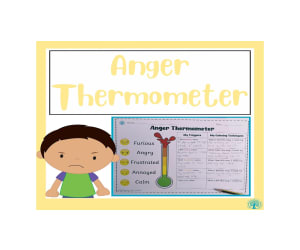
Anger Thermometer Worksheet
Special Resources, Social Emotional Learning (SEL), Social Skills, Special Education Needs (SEN), Not Grade Specific, Worksheets, Worksheets & Printables
Identifying escalating levels of anger within themselves is an important skill for children’s healthy social-emotional development. This creative “anger thermometer” worksheet provides a visual scale for students to evaluate their internal frustration, paired with critical reflection questions to facilitate de-escalation at each phase. The worksheet features a color-coded thermometer bar ranging from “I’m calm” in green up to “I’m furious!” in hot red. Five stages of anger are delineated including calm, annoyed, frustrated, angry, and furious. At each level, students first give examples of small provocations that would trigger those feelings personally. Writing specific anger sparks builds self-awareness of their own “boiling points”. Next, children self-strategize the best ways they can healthily soothe themselves at each anger level before boiling over. Recommendations like take deep breaths, squeeze a stress ball, walk away or tell the teacher are included. Articulating go-to regulation tactics cements them as concrete tools kids can independently access. Guiding children to accurately gauge anger cues in themselves and intervene with appropriate calming methods before losing control is essential for their development and classroom harmony. This anger thermometer worksheet establishes that routine skillfully through relatable visualization and reflective writing. It helps keep students’ inner temperature in check! Included in this resource is 1 PDF printable worksheet
Author SEN Resource Source
Tags Anger, Emotions, Feelings, Behavior, Behavior Support, Calming Strategies

My Biggest Worry Worksheet
Special Resources, Social Emotional Learning (SEL), Social Skills, Special Education Needs (SEN), Not Grade Specific, Worksheets, Worksheets & Printables
Anxiety can easily overwhelm children if fears and “what-ifs” grow too big in their heads. This creative visualization worksheet provides a launchpad for students to address their biggest worry in a manageable, step-by-step way. By externally analyzing concerns, rather than letting them snowball internally, kids reclaim control and perspective. The worksheet guides stressed children to first identify one standout worry plaguing their thoughts. They illustrate what this concern “looks like” in their mind – maybe a monster under the bed or dark swirling cloud. Describing it visually externalizes the worry from emotion into a concept now on paper. Students then examine two paths this worry could take at its worst and most likely outcomes. They draw their catastrophic envisioning of events if the worst were to happen. Contrastingly, they explain the realistic resolution based on past experiences and probability. This exercise illuminates how worries often play out better than the disastrous scenarios we imagine. Finally, children list constructive actions they can take to address roots of the worry, preventing both best and worst case outcomes. Coping strategies like talking to trusted adults, contingency planning or controlling reactions empowers kids. Allowing children to visually dump out, inspect and problem solve their biggest worry is immensely relieving, putting things into healthier perspective. This worksheet builds essential emotional management tools that alleviate anxiety now and better equip students to assess concerns rationally moving forward. Clipart images courtesy of Kari Bolt Clipart
Author SEN Resource Source
Tags Worry, Anxiety, CBT, SEN, SEL, Emotions, Feelings, Self-aware, Calming Strategies

Describing My Feelings Worksheet Set
Special Resources, Social Emotional Learning (SEL), Social Skills, Special Education Needs (SEN), Not Grade Specific, Worksheets, Worksheets & Printables
Identifying and verbalizing emotions is essential yet challenging for young children’s healthy development. This set of 20 illustrated printable worksheets helps students advance self-awareness by examining common feelings in depth one by one. With 2 different versions of the worksheet featuring both boys and girls, children investigate their own experiences feeling various emotions. The wide-ranging worksheet set covers feelings like happiness, sadness, worry, anger, frustration, annoyance, fear, embarrassment, excitement and disappointment. Each page displays a child’s blank face ready to be drawn by students showing that feeling visually. They then respond to prompts describing a time they felt that way, associated thoughts they remember, and any physical reactions in their body. Analyzing the internal and external aspects of varied emotions builds children’s “feelings vocabulary” exponentially. Writing personal examples cements comprehension further, allowing kids to relate back to their own illustrations later as reminders. Sorting pages by intensity levels (high/medium/low energy emotions) teaches activation regulation skills too. With 10 diverse feelings covered, these interactive worksheets expansively grow children’s emotional intelligence. Kids become experts decoding their own ever-changing inner world while building empathy for what classmates experience too. This resource includes 20 worksheets showing 10 different emotions - 10 worksheets with boy faces on and 10 with girl faces.
Author SEN Resource Source
Tags Emotions, Feelings, SEL, Self-awareness
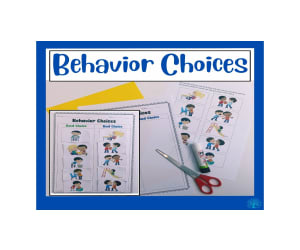
Behavior Choices Worksheet
Special Resources, Social Emotional Learning (SEL), Social Skills, Special Education Needs (SEN), Not Grade Specific, Worksheets, Worksheets & Printables
Helping young children understand good behavior versus bad behavior is crucial for social-emotional development. This hands-on cut and stick activity creatively builds those critical analysis and reflection skills using engaging picture sorting. The worksheet features 10 different illustrated scenarios a child might encounter, like swinging on a chair, sharing a book, arguing over toys and putting resources back where they go. Students must examine each scene thoughtfully, discussing why the behaviors shown are right or wrong choices. Children then cut out each scenario and physically sort them under the columns “Good Choices” or “Bad Choices” according to their own reasoning. The active sorting process cements understanding on a deeper level than just circling pictures. They gain experience breaking down and evaluating situational appropriate conduct. Finally, children glue their sorted cards permanently under the correct column, creating a reference resource for reasoning through conduct analysis independently in the future. The divided visual reminds them that small daily decisions shape not just their own feelings, but peers’ too. Interactive, hands-on and displaying impact powerfully, this cut and stick behavior worksheet advances the crucial ability to differentiate right from wrong. Guiding children positively at a young age prevents much headache for teachers later!
Author SEN Resource Source
Tags Behavior, Behavior Support, SEN, Consequences, Reflection, Self-awareness

My Bucket of Worries Worksheet
Special Resources, Social Emotional Learning (SEL), Social Skills, Special Education Needs (SEN), Not Grade Specific, Worksheets, Worksheets & Printables
Anxiety and worry can weigh heavily on children’s minds, but actually identifying specific concerns is the critical first step toward relief. This printable “My Bucket of Worries” worksheet gives students a dedicated space to mindfully process fears in their life, big and small. The act of dumping worries out to examine them objectively alleviates overwhelming feelings while building healthy coping strategies. This creatively designed write-and-respond worksheet guides stressed children to get worries out of their head by listing them concretely. First they illustrate examples of things causing anxiety, like fights with friends, math tests, remembering homework, messy rooms, etc. This shifts worrying from an emotion to externalized concepts now on paper. Children then write the things that make them feel better and the calming strategies that work for them. The visual on the sheet is that of a bucket being filled with all their worries and then a tap that represents calming strategies shows the worries empty out of the bucket. Guiding students to pinpoint, process and problem-solve worries before overwhelming emotions set in is essential. This simple yet clever bucket worksheet achieves that, lightening children’s load. Wonderful clipart images courtesy of Kari Bolt ClipArt This resources includes a PDF printable worksheet
Author SEN Resource Source
Tags CBT, SEL, SEN, Anxiety, Worries, Calming Strategies

Feelings Thermometer Worksheet
Special Resources, Social Emotional Learning (SEL), Social Skills, Special Education Needs (SEN), Not Grade Specific, Worksheets, Worksheets & Printables
Identifying emotions in oneself and others is essential for children’s social-emotional growth, but putting words and context to complicated feelings can often be confusing. This printable feelings thermometer worksheet helps students develop greater emotional intelligence through introspection, evaluation and writing. The creatively designed thermometer worksheet assists children in “taking their emotional temperature”. Children can think about and visually show how they are feeling using the emotions of excited, happy, sad, worried and angry. A section is provided for writing a sentence about a recent time they felt that way and what they were think when they felt that way. Guiding students through labeling, contextualizing and working through varied emotions builds vital vocabulary, self-awareness and coping skills. It equips them to manage life’s inevitable ups and downs constructively. Teachers can facilitate rich class discussions analyzing student patterns and insights privately recorded. Simple yet profoundly impactful, The “Feelings Thermometer” worksheet lays the foundations for examining and expressing emotions intelligently. It steers children positively through inner worlds that shape social worlds as well, with tools transferring to emotionally intelligent choices. As children engage with the "Feelings Thermometer," educators, parents, and caregivers can initiate meaningful conversations about emotional well-being. This resource serves as a bridge to open discussions surrounding the importance of acknowledging and managing emotions constructively. It promotes a safe and supportive environment where children can express themselves and develop resilience.
Author SEN Resource Source
Tags Feelings, Emotions, Emotions Thermometer, SEL, SEN, Calming Strategies

Good and Bad Behavior Choices – Reflection Worksheet
Special Resources, Social Emotional Learning (SEL), Social Skills, Special Education Needs (SEN), Not Grade Specific, Worksheets & Printables, Worksheets
Introducing our "Good and Bad Behavior Choices" worksheet – a valuable educational resource designed to engage children in thoughtful reflection on their actions. This worksheet serves as a tool for instilling a sense of awareness and responsibility by prompting children to assess and distinguish between positive and negative behavior choices. In a format that resonates with young learners, the worksheet features a series of pictures depicting various scenarios. Children are encouraged to critically examine each scenario and make decisions about the appropriateness of the depicted behavior. The incorporation of visual elements not only captures attention but also facilitates a deeper understanding of the consequences associated with different choices. The simplicity of the "Good and Bad Behavior Choices" worksheet makes it accessible for a range of ages within the primary years. By utilizing the relatable symbols of a thumbs-up or thumbs-down, the worksheet allows children to express their judgment in a non-verbal and universally understood manner, encouraging even the youngest learners to participate actively. Beyond the immediate identification of good and bad behavior, this resource serves as a catalyst for meaningful conversations. Teachers, parents, and caregivers can use the worksheet as a springboard for discussions about values, empathy, and the impact of choices on oneself and others. In essence, the "Good and Bad Behavior Choices" worksheet is more than an exercise; it is a pathway to developing foundational social and emotional skills. By engaging children in critical thinking about behavior, this resource contributes to the cultivation of a positive and respectful learning environment, fostering the growth of responsible and considerate individuals. Clipart images courtesy of Kari Bolt Clip Art
Author SEN Resource Source
Rating
Tags Behavior, Behavior Support, Choices, Consequences, Reflection, Responsibility, Self-awareness, Respect, Communication, SEN

That Bothers Me Worksheet
Special Resources, Social Emotional Learning (SEL), Special Education Needs (SEN), Social Skills, Not Grade Specific, Worksheets & Printables, Worksheets
To enhance the effectiveness of this That Bothers Me Worksheet, I've been pairing it with some coping strategies that I believe will resonate with our students: Pause and Breathe: When emotions run high, advising students to halt and take a few deep breaths can make a world of difference. It acts as a buffer, preventing immediate reactions and aiding in clearer thinking. Challenge Your Thoughts: Let's empower our kids to scrutinize those initial feelings of annoyance. Prompting questions like, "Is this a genuine reflection of the situation?" can lead to more objective and calmer assessments. Practice Empathy: Truly an essential life skill. Steering them towards seeing things from another's viewpoint can often diffuse personal grievances and provide greater understanding. Reframe the Situation: Highlighting the art of positive thinking can guide them to find beneficial outcomes in challenging situations. Rather than getting caught up in the problem, they can focus on potential growth or lessons learned. Practice Gratitude: Have you tried gratitude journals in class? Or perhaps a simple discussion on the day's positive moments? It's an excellent method to shift their attention to the brighter side of things. Letting Go: One of the hardest but most vital lessons is understanding that not everything is within our control. Teaching adaptability and acceptance can be truly transformative. Engage in Self-care: Emphasizing the importance of self-care can't be overlooked. Encourage activities that allow them to unwind and rejuvenate, be it reading, doodling, or just some quiet moments. Seek Support: We should constantly remind them that it's perfectly okay to share their feelings. Be it friends, family, or school counselors, seeking external perspectives can often shed light on troubling situations. Lastly, I must mention the wonderful clipart from Kari Bolt Clip Art that I've used – truly a game-changer for engaging visuals! Clipart images courtesy of Kari Bolt Clip Art
Author SEN Resource Source
Tags Getting Annoyed, Anger, Emotions, CBT, Behavior Management