



3,888 products added recently
Page 20 - Elementary Assessments
Provide your elementary students with assessments that monitor their development across all subject areas. This collection includes grade-appropriate tools that help you track progress and tailor instruction. Ensure your students build a strong academic foundation by regularly evaluating their understanding.

 Show filters

Task Initiation & Micro-Step Breakdown
Life Studies, Career, Leadership, Physical Education, P.E. & Health, Mental Health, Mindfulness, Resources for Teachers, Science, Classroom Management, Grade 6, 7, 8, 9, 10, 11, 12, Teacher Tools, Worksheets & Printables, Workbooks, Worksheets, Word Searches, Assessments, Lesson Plans, Quizzes and Tests, Quizzes, Tests
Are your students or kids stuck with a blank page due to a large assignment? Do they know how to do the assignment but can’t figure out the best way to jump into it? This is not because of laziness—this is an example of a breakdown in Task Initiation, which is one of the key executive functions of the brain. Support your students to move from being passive and procrastinating to becoming active creators of their success with our comprehensive neuroscience-based curriculum. This 42-page instructional manual and workbook supports creating a step-by-step strategy to overcome your student's brain's resistance to getting started with completing tasks. By applying the principles of cognitive offloading and granular sequencing, this manual and workbook will provide you with the ultimate guide to how to accomplish your goals. This resource is designed for teachers, parents, school counselors, and executive function coaches to support helping to create lifelong habits, build confidence in school, and decrease the anxiety and stress associated with homework. Contents of this 42-page document. The Neuroscience Guide (Part 1) (The “Why”) The neuroscience of procrastination. Easy-to-understand explanations for the science of procrastination (brain science) include energy, limbic friction, activation energy, time blindness, etc. Real-life examples of the science from students and short quizzes to test knowledge and understanding. The Student Workbook (Part 2) (The “How”) 10 in-depth printed worksheets provide a complete scaffolded framework for developing executive function. Actionable Steps: Deconstruct larger projects into small tasks, identify and eliminate friction, create a five-minute launchpad, master micro steps, create an executive execution ladder, eliminate distractions, and create empathy for your future self. Capstone Project: A master blueprint for a major project using taught strategies. Part Three: Visual & Teacher/Parent Resources (The “Tools”) Three Strong Visual Supports: Printables and classroom appropriate anchor charts will give students' cognitive relief through visual representation of how to use their brain there are three charts to choose from (The Anatomy of Task Paralysis, The Micro-Step Bridge, The Task Activation Loop). Complete Answer Key: An answer key for all ten student worksheets so that teachers can provide students with a comprehensive answer key. Teacher Implementation Guide: A detailed scripted guide on how to introduce these concepts and protocols such as the “Body Double” technique. Differentiation for Neurodivergent Learners: A separate section for specific, powerful strategies for students with ADHD, ASD, and Dyslexia. Not only is this a study skills printable, but it is a powerful cognitive resource that helps students understand themselves so that they may use the resources available to them to work more efficiently with their brain, rather than against it. Keywords: Executive Functioning, Study Skills, Procrastination, Task Initiation, ADHD Support, Neurodiversity, SEL, Middle School, High School, Printable Workbook, Digital Download, Homework Help, Time Management, Metacognition, Growth Mindset, Resources for Teachers, Resources for School Counselors, Parent Guide. What Makes It Busy and Maternal/School Parent-Friendly : Based on Neuroscience (not-created based off "Shame"): It regards procrastination as a normal neurological event, not an individual's defect nor character flaw. This removes guilt associated with procrastination by providing students with a "hacker" mindset to achieve the best outcome for their situation based on the wiring of their brains. Has Actionable, Step-By-Step Tools: Instead of vague and subjective statements like “just break it down,” this curriculum focuses on rigorous, rigorous sequencing (providing valuable resource worksheets/checklists) and concrete ways that a student can apply the information immediately. Targets Neurodivergent Learners: The section on differentiation for ADHD, ASD and Dyslexia students is a must-have addition to any inclusive classroom and will meet needs of all parents with children needing specific support; therefore, it is an extremely "valuable" and "highly-valuable" resource. Develops Lifelong Skills (beyond a one-time project): In addition to a single project, skills presented include metacognition, self-regulation, and planning—all important life-skills needed to continue and succeed throughout high school, college and after. The primary target audience is middle school students (6th-8th grade). The multiple case studies included (6th, 8th grade), the reorganization of the prefrontal cortex and task characteristics align directly with this group. The second target audience is upper elementary (4th-5th Grade) and high school (9th-12th Grade). As stated in the "Visuals & Teacher Keys" section: "(Grade 4-8)". The concepts provided are foundational and lend themselves readily to alteration, both upwards and downwards. High school students with executive functioning issues, especially those diagnosed with ADHD, would see tremendous benefit from this resource. Copyright Notice: This book was copyrighted by Syed Hammad Rizvi. This resource is available for personal use in a single-classroom setting only and cannot be changed (modifications), No part of this book can be shared, sold, or posted on the Internet to be found or downloaded by the public. Please note that if you wish to share this resource with others (teachers), you must buy additional licenses (a fee) from Teachsimple. Thank you for your cooperation in following these terms of usage. This product has been brought to you with pride by Syed Hammad Rizvi.
Author Creative Book Store
Rating
Tags Procrastination, Motivation, StudySkills, TimeManagement, Organization, Neuroscience, ADHD, GrowthMindset, ExecutiveFunctioning, TaskInitiation

Number & Operations: Counting & Ordering Objects - Pre-Assessment & Teach the Skill - PC Software
Math, Numbers, Common Core, Kindergarten, Preschool, Grade 1, 2, Assessments, Teacher Tools
The Number & Operations Training Software: Preschool, Kindergarten, Grade 1 and Grade 2 Teaching Aid An advanced PC Software created to support educators in delivering curriculum -based content focused on math, specifically understanding numbers. This potent tool is ideal for teachers aiming to supply comprehensive lesson plans tackling the skill of counting and ordering objects . Fits Various Learning Structures: Suitable for several teaching approaches such as: Large group instruction sessions, Tiny break-out groups, One-on-one tutoring. In addition to facilitating teaching, it also provides routine homework assignments perfect for an at-home reinforcement of classroom teachings. User-Friendly Installation: A ZIP file format— ready for download onto any PC device. An easy installation process makes this software user-friendly. Bilingual Resource: This software offers a Spanish voice-over option alongside default English making it an efficient bilingual resource aimed at unique learners' communities. Alligns with Education Standards: A practical program that aligns closely with: "Common Core State Standards", "STEM initiatives", "NCTM (National Council of Teachers Mathematics)" standards . This ensures quality content delivery aligning well with recognized education regulations. In conclusion, The "Number & Operations: Counting & Ordering Objects - Pre-Assessment & Teach the Skill" software can be viewed as a valuable educator's tool efficiently catering towards math objectives while ensuring easy integration into different teaching methods.
Author Classroom Complete Press
Tags Numbers, Operations, Counting, Ordering Objects, Pre-assessment
Reading Passage 19: Plant Structure, Function, and Survival (Slides)
Science, Life Sciences, Biology, Common Core, ESL, Language Development, ELA, Vocabulary, Reading Comprehension, Reading, Grade 2, 3, 4, Presentations, Teacher Tools, Tests, Quizzes and Tests, Assessments
Free Reading Passage on Plant Structure, Function, and Survival for Life Science What's inside this free product? Science Reading Comprehension Passage19 : Plant Structure, Function, and Survival Independent Google Slides Version: This is the independent Google Slides version containingone lesson with full answer keys. Product Info: 23 SLIDES (US English with Answers) Google Slides Version Teaching Duration: 90 Minutes Science Reading Comprehension Outline: Targeted for students in 3rd and 4th grades, these reading passages are enhanced with illustrations and graphs to elucidate critical points. Each lesson aligns with the Common Core State Standards, allowing you to integrate science reading practice effortlessly, knowing that minimal preparation is needed on your part. Each passage comes with a variety of questions in different formats, including multiple-choice formats, data analysis, and fill-in-the-blanks. The topics covered strike a balance between engaging content and core curriculum-based science subjects. Versatile in application, these lessons are suitable for a variety of settings such as whole-class instruction, morning activities, independent desk work, small group discussions, contingency plans for substitute teachers, homework assignments, or even special holiday-themed tasks. FULL CATALOG OF DOWNLOAD LINKS HERE Grade 3/4 Links: Physical Science Part 1 - Properties of Objects and Materials Google Docs/Slides/Forms PDF PPT Word Free Supplementary Pack Accompanying Videos Physical Science Part 2 - Position and Motion of Objects Google Docs/Slides/Forms PDF PPT Word Free Supplementary Pack Accompanying Videos Physical Science Part 3 - Light, Heat, Electricity, Magnetism Google Docs/Slides/Forms PDF PPT Word Free Supplementary Pack Accompanying Videos Life Science Part 1 - Characteristics of Organisms Google Docs/Slides/Forms PDF PPT Word Free Supplementary Pack Accompanying Videos Life Science Part 2 - Life Cycles of Organisms Google Docs/Slides/Forms PDF PPT Word Free Supplementary Pack Accompanying Videos Life Science Part 3 - Organisms and Environments Google Docs/Slides/Forms PDF PPT Word Free Supplementary Pack Accompanying Videos Earth Science Part 1 - Properties of Earth Materials Google Docs/Slides/Forms PDF PPT Word Free Supplementary Pack Accompanying Videos Earth Science Part 2 - Changes in the Earth and Sky Google Docs/Slides/Forms PDF PPT Word Free Supplementary Pack Accompanying Videos Earth Science Part 3 - Objects in the Sky Google Docs/Slides/Forms PDF PPT Word Free Supplementary Pack Accompanying Videos For similar products and other frees, do check out Cored Group on TeachSimple .
Author Cored Education
Tags Science, Elementary, Reading, Comprehension, Vocabulary, Answers, Physics, Physical Science, Ccss, Common Core

DNA: Guided Reading Level N with Lesson Plan
ELA, Resources for Teachers, Reading Comprehension, Reading, Science, Life Sciences, Language Development, Technology, Pre-Reading, Vocabulary, Grade 2, 3, 4, Worksheets & Printables, Worksheets, Teacher Tools, Centers, Activities, Literacy Readers, Quizzes, Quizzes and Tests, Assessments, Lesson Plans
This DNA (level n) guided reading book with lesson plan includes: Guided Reading Color Label (front cover x1) This is a quick way to match the book’s demands to what students can generally handle.. The overall goal is to use the level/color to pick books for several smaller groups. To qualify for a certain level, a student is expected to read a book from that level with about 90–94% accuracy. If a student is consistently accurate and understands, move up a level. If the student is struggling at that level, drop down and add more support. Each student will improve at completely different rates, but it is generally one of the best ways to check progress across the class. DOWNLOAD THE CATALOG TO VIEW ALL GUIDED READING BOOKS AVAILABLE (SORTED LEVELS A-Z) Pre-Reading Question (x1) Teacher asks the prompt aloud, can be while showing the cover or first page. Students share what they already know, or make educated guesses from the cover. Prompt them to use the target vocabulary. Write some of their responses on the board to look back at during the reading. Vocabulary Words (x5) Introduce the five words, best doing it one at a time. Start by saying it, while students repeat and then see if anyone knows what it means before reading further. Read through the meaning and try to briefly connect each word to a picture or gesture so it’s meaningful. Ask students to flip through the book pages and point to where they see each of the vocabulary words. While reading the book pause upon coming across one of the vocab words or read the sentence twice to make sure students understand the word has appeared. Optional: Ask students to raise hands whenever they see/hear one of the new words. Guided Reading Pages (x10) Check the book snapshot (below) for: primary topic - do you need to prep extra reading or intro materials on this? what is taught best - decide on 1-2 bullets to focus on, use the prompt or words provided here for best results. learning goals - what you are checking for students to be able to do after the session, elicit answers using prompts or words provided. key vocabulary (see section above). questions overview - so you know what is coming up and if you need to prep extra materials to assist understanding. Run the lesson You may have already looked at a few of the pages together, but you can show them some of the pictures again first to set meaning. Depending on how much time you have and how familiar your students are with guided reading class, you may want to read the book aloud first with the group first. Students whisper or partner read, while you listen in. If time, do it as a group, one student reading a page each. Use the guided page’s prompts to coach: “Check the picture / does it make sense?” “Point under the words / try the first sound” “Reread the sentence smoothly”. Try to focus more on one student per session (rotating every time), so you can work out if they are ready to move up or need to move down a level. Comprehension Questions (back cover x3) This is your way to check that students didn’t just say the words, but actually understood the text. First, let students answer by pointing to the page/picture and saying a short sentence. After any answer, follow with: “Show me where you found that in the text.” In bigger groups, have partners answer first (10–20 seconds), then call on 2–3 students to share. Differentiation tips: Emerging speakers/struggling readers: oral + pointing On-level: oral in a full sentence Higher: one written sentence or draw + label Book Snapshot Title: DNA Genre: Nonfiction (informational science text) Subject: Life Science Primary Topic: DNA as genetic instructions in living things Estimated Guided Reading Level (A–Z): N What This Book Teaches Best Explains DNA as a “secret code” that gives living things instructions to grow and function. Teaches where DNA is kept : DNA is in cells, and a nucleus holds DNA safely inside almost every cell. Describes DNA’s shape as a long, twisted ladder called a double helix , and connects the shape to holding genetic information. Introduces the idea of a genetic code made of four special chemicals whose order works like letters forming sentences the body can “read.” Builds understanding of similarities and differences in living things , including shared DNA across animals and small DNA differences that make individuals unique. Learning Goals Students can explain what the book says DNA does for living things (instructions to grow and function). Students can describe where DNA is found in the body (in cells, held in the nucleus). Students can describe the shape of DNA using details from the text (a long, twisted ladder/double helix). Students can explain how the book describes the genetic code (four chemicals acting like letters in an alphabet). Students can describe ways DNA relates to traits and differences (physical traits, unique codes, identical twins). Students can explain why DNA makes a copy before a cell divides (so new cells have the same instructions). Key Vocabulary From the Text molecule — a tiny thing that carries important information. microscope — a tool to see things too small to see. nucleus — a cell’s control center that holds DNA safely. helix — a twisted shape like a ladder. genetic — related to the body’s DNA code and information. Discussion Prompts Pre-reading question: What do you think a “secret code” inside living things might help them do? Comprehension questions: Where does the book say DNA is kept inside almost every cell? Comprehension questions: What does the book compare the shape of DNA to, and what do scientists call that shape? Comprehension questions: Why does the book say DNA makes an exact copy of itself before a cell divides? Printing Tips 1. Best Printing Method (Recommended) “Booklet” Printing (Best if Available) If your printer or PDF viewer supports Booklet Printing , use this. Settings to use: Print mode: Booklet Paper size: Letter or A4 (either works) Orientation: Landscape Print on both sides: Yes Flip on: Short edge Scaling: Fit to printable area Booklet subset: First test: Front sides only Then: Back sides only This will automatically: Pair pages correctly Put the cover on the outside Align everything for folding After printing, fold in half and staple along the spine . 2. If “Booklet” Printing Is NOT Available You can still print this correctly with manual duplex printing . Step-by-step: Open the PDF. Choose Print . Set: Orientation: Landscape Pages per sheet: 1 Print on both sides: Yes Flip on: Short edge Print all pages . Because each PDF page already contains two facing book pages, the result will still fold cleanly into a book. Thousands of Cored Education products are included with your TeachSimple membership. Download links and encyclopedia index available here.
Author Cored Education
Rating
Tags Reading Comprehension, Reading Passages, Reading, Guided Reading, Guided Reading Lesson Plan, Guided Reading Activity, Pre-reading, Science Lesson Plans, Life Science, Technology
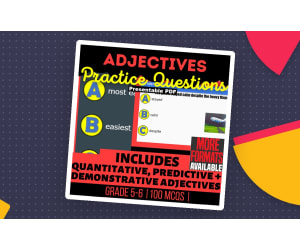
Adjectives Practice Questions - Grammar Grade 5-6 (Presentable PDF)
ELA, Language Development, ESL, Grammar, Common Core, Resources for Teachers, Grade 5, 6, 7, Worksheets & Printables, Worksheets, Quizzes and Tests, Teacher Tools, Tests, Assessments
Adjectives Grammar Practice MCQS Snapshot Title: Parts of Speech: Adjectives Practice Worksheets Grade 5-6 Genre: Instructional Nonfiction / Grammar Workbook Subject: Reading Primary Topic: Identifying and comparing adjectives in sentences What This Teaches Best Teaching adjective types named in the review sheet, including descriptive, demonstrative, quantitative, predicative, and interrogative adjectives. Helping students find adjectives inside complete sentences rather than isolated word lists. Building skill with comparative and superlative forms such as brighter and brightest. Reinforcing grammar knowledge through repeated multiple-choice sentence practice. Supporting self-checking with a separate answers section listed in the contents. Learning Goals Students will identify adjectives that describe nouns or pronouns. Students will distinguish among descriptive, demonstrative, quantitative, predicative, and interrogative adjectives. Students will choose accurate comparative and superlative adjective forms. Students will explain how an adjective adds detail to a sentence. Students will locate adjectives in sentence-level grammar practice. Key Vocabulary descriptive — tells what something is like. demonstrative — points out which one. quantitative — tells how many or how much. predicative — comes after a linking verb. interrogative — asks a question about a noun. Adjectives Overview: Includes: Demonstrative Adjectives Quantitative Adjectives Predicative Adjectives Interrogative Adjectives Degrees of Comparison PRESENTABLE PDF VERSION Run it like a slide show straight from a PDF, with no PowerPoint or extra software needed, just open, project, and teach. Other versions are available in the links list below or in the full catalog. FULL CATALOG OF DOWNLOAD LINKS HERE ELA Review Questions Overview Each set of review questions includes three answer choices. Each test also features a few pictures to keep the pages visually appealing, along with a review sheet that covers most of the skills and concepts included in the resource. Introduction or Example Sheet Every topic comes with an introduction or example sheet that you can go over with your students before they begin. Full Answer Keys Complete answer keys and sample responses are included, so you have everything you need ready to go. In the Supplementary Pack Interactive Ice Breakers Fun warm-up activities help introduce key ELA skills, including quick capitalization fixes and punctuation challenges. Guided Practice Teacher-led activities give students structured support as they review grammar and punctuation rules and practice applying them in sentences. Group and Partner Tasks Students work together to edit sentences, correct capitalization, and improve punctuation through discussion and teamwork. Independent Worksheets Focused worksheets give students the chance to practice on their own and build confidence with the skills they’ve learned. Exit Tasks Quick end-of-lesson activities help students reflect on their learning and apply their skills in writing and editing. For More Like This For similar resources and free downloads, visit Cored Group on TeachSimple . Broaden the grammar review with capitalization and punctuation questions alongside adjective practice.
Author Cored Education
Rating
Tags Elementary, Answers, Ccss, Common Core, Grammar, Tests, Test Prep, Assessment, Grade 5, Grade 6
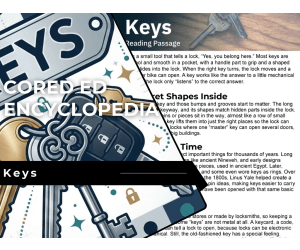
Keys Reading Comprehension Passage - Cored Ed Encyclopedia
ELA, Language Development, Resources for Teachers, Reading Comprehension, Reading, Pre-Reading, Writing, Strategies, Science, Technology, Grade 2, 3, 4, 5, Worksheets & Printables, Worksheets, Teacher Tools, Centers, Activities, Writing Prompts, Assessments, Tests, Quizzes and Tests, Quizzes
This keys reading comprehension contains the following: Visualize on the Cover (Teacher Read Aloud Script) Start your lesson by taking a few moments to visualize the topic and share thoughts or feelings about it. Pre-Reading Trivia Students will write down one thing they already know about the subject and then read five more facts and discuss. These facts are fun, and the students will enjoy learning about the subject before reading more. Reading Passage The text is a high-interest reading passage with set paragraphs, roughly three to four paragraphs long. It contains a variety of themes about the topic, anywhere from history to technology. The passage is between 250 and 350 words in length. Mixed Questions The first question page contains four multiple-choice questions, each with a choice of four answers, and three written response questions that require a sentence or two from the student. Vocabulary Questions Practice seven key words from the text in this section across two activities. First section is scrambled words where students will unscramble three words given a clue for each. The second section is a word to meaning matching activity. Creative Writing In this question, the student will be required to write a five to eight sentence paragraph on a question related to the topic. Extension Activities This page is optional for fast finishers or to take home. There are several activities, each one requiring a different skill. Do some, do none, do all, completely optional - but you will feel reassured knowing every possibility is planned for. Includes summary writting question. Answer Key There are answers for the multiple-choice questions, written response questions have sample answers, vocabulary answers and if there is a summary question then a sample summary will be provided as well. FULL CATALOG OF DOWNLOAD LINKS AND ENCYCLOPEDIA INDEX HERE Lesson Snapshot Title: Keys Genre: Nonfiction (informational text) Subject: Science & Technology / Reading (Informational Text) Primary Topic: How keys work, key history, and modern “keys” Estimated Guided Reading Level (A–Z): O What This Lesson Teaches Best Explains what a key does: it tells a lock “yes” so something can open (door, box, or bike). Describes how the shapes on a key (bumps, grooves) match hidden parts inside a lock, including pins or pieces that must be lifted. Introduces the idea of a “master” key that can open several doors in big buildings. Summarizes how locks and keys changed over time (ancient wooden locks, Romans using metal keys, and later improvements). Shows that some modern “keys” aren’t metal (keycard, code, fingerprint) and connects keys to ideas like trust and belonging. Learning Goals Students will explain what a key does and what it can help open, using details from the text. Students will describe how a key’s shapes help it work inside a lock (bumps, grooves, pins/pieces). Students will identify what a “master” key is and why it can be helpful. Students will recount key changes “through time” mentioned in the passage (ancient, Roman, later improvements). Students will name at least one non-metal kind of “key” used today, based on the text. Students will explain how giving someone a key can show trust, using the passage’s wording/ideas. Key Vocabulary From the Text keyway — the opening a key slides into. grooves — long cut-in lines on a key. pins — tiny parts inside some locks that must lift. locksmiths — people who make or copy keys. electronic — using technology, not only mechanical parts. Cored Ed Encyclopedia Overview The Cored Ed Encyclopedia is a weekly series of lessons that you can pick up and use right away. These short readings fit into whatever time you have available. Each one includes a warm-up, a reading, and a set of questions, but it’s flexible — you can do just the reading, the full lesson, or skip the writing section if you need to. Each lesson focuses on a single topic so students don’t get lost. The writing is clear but never childish, making it perfect for grades two through five. Topics range from animals and science to history, inventions, and everyday things. No matter the level of the student, everyone should take away at least one new idea or fact from each lesson. The materials are easy to print, easy to explain, and require no setup. They work well for whole-class teaching, partner work, or independent study.
Author Cored Education
Rating
Tags Vocabulary, Spelling, Reading Comprehension, Reading Passages, Reading, Creative Writing, Reading Strategies, Writing Prompts, Keys, Technology
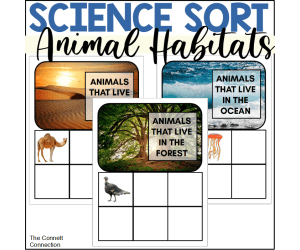
Animal Habitats Sort
Science, Life Sciences, Biology, Grade 1, 2, 3, Activities, Centers, Assessments, Teacher Tools
Allow students to sort animals by which habitat they live in. What is Included: There are sorting card headers for each habitat. There are sorting mats for each habitat. There are three to six picture cards for each of the sets of sorting activities. The animal habitats included in this set include: Antarctic, Arctic, Beach, Desert, Forest, Grassland, Ocean, Pond, Rain Forest, and Swamp Each sorting mat includes a real life example of an animal that belongs in that particular habitat. All of the picture cards also include real photographs of each habitat. What Questions are Asked: To use these, students will lay out either the header cards or the sorting mats. They will then sort the animal images beneath or on top of the correct sorting mat. When to Use: Science Center - The sorting mats can be placed in a science center for students to learn about living things and where they live. Morning Work - These animal sorts can allow teachers to create quick and easy morning activities for students while they wait on their classmates to arrive to class. Independent Practice - These animal sorts are great for students to independently work on living things. Emergency Sub Plans - The low prep nature and easy to set up activity , makes these worksheets a great activity to leave with subs to assign to students. Small Group Activity - These animal sorts can be used in small groups so teachers can target the students who need extra practice with living things. Writing Review Activity - These animal sorts work well as a review to reinforce student's learning of living things. These sorting activities are easy to create. The mats just need to be printed out. The picture cards need to be printed and cut apart. Once made, the sort can be used over and over.
Author The Connett Connection
Rating
Tags Science Sort, Hands On Assessment, Animal Habitats, Habitats
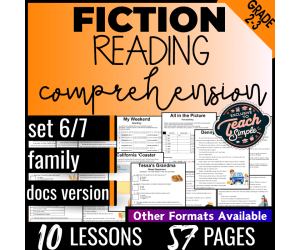
Reading Comprehension Passages Fiction Set 6 - Family (Google Docs)
ELA, Reading, Common Core, Reading Comprehension, Children’s Literature, Literature, Vocabulary, Language Development, Spelling, Writing, Grade 2, 3, Worksheets & Printables, Worksheets, Assessments, Teacher Tools, Tests, Quizzes and Tests, Centers, Activities, Writing Prompts
Reading Comprehension Passages Fiction Set 6 Overview Fascinating reading comprehension passages, each with an array of activities included. Stories are written for the modern classroom and topics are designed to promote enthusiasm from each student. Each lesson contains a mixed questions section to check understanding, a vocabulary or spelling activity to help remember key language introduced, and a writing exercise. Full answer keys are provided. For a more detailed overview, check the section under the links at the bottom of this description. Passages Include 1.Molly's Home Carnival: It looks like Molly will miss the carnival. Until... 2.Big Bro's Big Idea: Noah's big brother does his best to cheer him up. 3.Denny's Car Wash: Denny wants a new game, but does he get the money for it? 4.Tessa's Grandma: Emma misses her grandma, but Tessa has a great idea. 5.Tom's Canadian Mom: The most important person from Canada is...Tom's mom! 6.Big Brother Woes: Big Brother gets to do whatever he wants. It's just not fair! 7.Tell Us a Story, Grandpa: Grandpa's tales are true family treasures. 8.My Weekend: Read about the author's fun weekend in this interesting story. 9.All in the Picture: Learn how the author has changed in the last 22 years. 10.California 'Coaster: Find out how this author spends his summer vacation. Additional File: Big Bro's Big Idea: Cork Boat Instructions Google Docs Version This is the Google Docs editable and fillable version. This download is available in GOOGLE Docs, GOOGLE Forms, GOOGLE Slides. PDF, PPT, WORD. FULL CATALOG OF DOWNLOAD LINKS HERE Grade 2/3 Links Fiction Set 1 - Nature Google Docs Google Forms Google Slides PDF PPT Word Guided Reading Materials Fiction Set 2 - Animals Google Docs Google Forms Google Slides PDF PPT Word Guided Reading Materials Fiction Set 3 - Food Google Docs Google Forms Google Slides PDF PPT Word Guided Reading Materials Fiction Set 4 - School Google Docs Google Forms Google Slides PDF PPT Word Guided Reading Materials Fiction Set 5 - Friends Google Docs Google Forms Google Slides PDF PPT Word Guided Reading Materials Fiction Set 6 - Family Google Docs Google Forms Google Slides PDF PPT Word Guided Reading Materials Fiction Set 7 - Sports Google Docs Google Forms Google Slides PDF PPT Word Guided Reading Materials Nonfiction Set 1 - Technology Google Docs Google Forms Google Slides PDF PPT Word Guided Reading Materials Nonfiction Set 2 - Nutrition Google Docs Google Forms Google Slides PDF PPT Word Guided Reading Materials Nonfiction Set 3 - Animals Google Docs Google Forms Google Slides PDF PPT Word Guided Reading Materials Reading Passages Overview Each passage is especially written for Grade 2-3 students, including key vocabulary required for this age group. Topics are varied and are accompanied by colorful graphics. Topics are meant to educate, yet entertain the modern student. These passages are perfect for the modern classroom. Whereas textbooks can become outdated in no time, any changes to technology or the world will result in updates to this product. Mixed Questions The mixed questions section of each lesson includes a variation of fivecomprehension, vocabulary and math questions. In addition, key reading strategies are frequently covered including cause & effect, summarizing, compare & contrast and making conclusions. Three of the questions will be MCQs and two will require a written response of some kind. Full answers and example responses appear at the end of the lesson. Spelling & Vocab Each reading passage contains a variety of words and phrases designed for Grade 2-3 students. Spelling and vocab activities provide the opportunity to build fluency with these words. As it can become quite mundane doing the same activities over and over, each lesson in a set will contain a different spelling and vocab activity . Writing Prompts Writing prompts are designed to continue the theme or lessons learned in the story. Students are persuaded to write in a variety of ways and each prompt includes several cues to help. As with the spelling/vocab section, writing prompts will vary. This includes research pieces, reading responses, poetry and creative writing prompts. Full Answer Keys Full answer keys and sample responses are provided so no matter how busy you are, you know you're covered! Mixed question answers provide evidence from the text, math questions contain the relevant workings. Answers are designed for use by the teacher, but also suitable as a handout to the student. Additional File One lesson will have an additional file. This is something fun to extend the lesson with. For similar downloads and other frees, do check out Cored Group on TeachSimple.
Author Cored Education
Rating
Tags Elementary, Reading, Comprehension, Vocabulary, Answers, Common Core, Spelling, Writing, Digital Centers, Vocabulary Assessments

Florida (FAST) Practice Tests Bundle for Grade 4
ELA, Math, Grade 4, Assessments, Teacher Tools, Tests, Quizzes and Tests, Worksheets & Printables
Prepare your students for success with this Florida FAST Practice Tests Bundle for Grade 4 . This comprehensive, standards-aligned resource mirrors the format and rigor of the FAST assessment while helping students build confidence across all tested subjects. This bundle includes full-length practice tests for Grade 4 ELA, Math, and Writing, with standards-aligned questions designed to reflect real FAST expectations. Each assessment is classroom-ready and includes answer keys for quick and easy grading. The resource is flexible and easy to implement. Use it for focused test prep, independent practice, small group intervention, or full test simulations. It’s also ideal for homework, centers, sub plans, or assessment days. Students engage with realistic FAST-style questions that build familiarity with test structure and expectations. This bundle fosters reading comprehension, vocabulary, and text analysis; math problem-solving and multi-step reasoning; and writing skills including organization and evidence-based responses. It is in line with Florida B.E.S.T. requirements. Students will build test-taking confidence and endurance while strengthening critical academic abilities. Because it covers all of the major Grade 4 FAST-tested topics, saves prep time, and offers useful data to inform instruction, teachers adore this bundle. Simply print and utilize. This Grade 4 FAST package helps your kids feel prepared for success on test day by making test preparation easy, efficient, and confidence-boosting.
Author Bright Classroom Ideas Marketplace
Rating
Tags Florida, State Test, Fast, Ela, Writing, Math

Farms and Food: Guided Reading Level N with Lesson Plan
ELA, Resources for Teachers, Reading Comprehension, Reading, Science, Language Development, Geography, Social Studies, Life Sciences, Technology, Grade 2, 3, 4, Worksheets & Printables, Worksheets, Teacher Tools, Centers, Activities, Literacy Readers, Quizzes, Quizzes and Tests, Assessments, Lesson Plans
This Farms and Food (level n) guided reading book with lesson plan includes: Guided Reading Color Label (front cover x1) This is a quick way to match the book’s demands to what students can generally handle.. The overall goal is to use the level/color to pick books for several smaller groups. To qualify for a certain level, a student is expected to read a book from that level with about 90–94% accuracy. If a student is consistently accurate and understands, move up a level. If the student is struggling at that level, drop down and add more support. Each student will improve at completely different rates, but it is generally one of the best ways to check progress across the class. DOWNLOAD THE CATALOG TO VIEW ALL GUIDED READING BOOKS AVAILABLE (SORTED LEVELS A-Z) Pre-Reading Question (x1) Teacher asks the prompt aloud, can be while showing the cover or first page. Students share what they already know, or make educated guesses from the cover. Prompt them to use the target vocabulary. Write some of their responses on the board to look back at during the reading. Vocabulary Words (x5) Introduce the five words, best doing it one at a time. Start by saying it, while students repeat and then see if anyone knows what it means before reading further. Read through the meaning and try to briefly connect each word to a picture or gesture so it’s meaningful. Ask students to flip through the book pages and point to where they see each of the vocabulary words. While reading the book pause upon coming across one of the vocab words or read the sentence twice to make sure students understand the word has appeared. Optional: Ask students to raise hands whenever they see/hear one of the new words. Guided Reading Pages (x10) Check the book snapshot (below) for: primary topic - do you need to prep extra reading or intro materials on this? what is taught best - decide on 1-2 bullets to focus on, use the prompt or words provided here for best results. learning goals - what you are checking for students to be able to do after the session, elicit answers using prompts or words provided. key vocabulary (see section above). questions overview - so you know what is coming up and if you need to prep extra materials to assist understanding. Run the lesson You may have already looked at a few of the pages together, but you can show them some of the pictures again first to set meaning. Depending on how much time you have and how familiar your students are with guided reading class, you may want to read the book aloud first with the group first. Students whisper or partner read, while you listen in. If time, do it as a group, one student reading a page each. Use the guided page’s prompts to coach: “Check the picture / does it make sense?” “Point under the words / try the first sound” “Reread the sentence smoothly”. Try to focus more on one student per session (rotating every time), so you can work out if they are ready to move up or need to move down a level. Comprehension Questions (back cover x3) This is your way to check that students didn’t just say the words, but actually understood the text. First, let students answer by pointing to the page/picture and saying a short sentence. After any answer, follow with: “Show me where you found that in the text.” In bigger groups, have partners answer first (10–20 seconds), then call on 2–3 students to share. Differentiation tips: Emerging speakers/struggling readers: oral + pointing On-level: oral in a full sentence Higher: one written sentence or draw + label Book Snapshot Title: Farms and Food Genre: Nonfiction (informational) Subject: Life Science / Agriculture Primary Topic: How food is grown and gets to consumers Estimated Guided Reading Level (A–Z): N What This Book Teaches Best Explains how healthy soil supports plant growth and why the earth is tested before planting begins. Describes how farms use sunlight, water, and irrigation systems to give crops the moisture they need. Shows how machinery (like tractors and plows) helps farmers prepare land and work large areas efficiently. Introduces major farm products (grains, root vegetables, fruit from orchards, milk, eggs, chicken) and how they are produced or collected. Traces the farm-to-table pathway through harvest (including a combine harvester for grains) and transport , including keeping food at the correct temperature to stay fresh and safe. Learning Goals Students can describe how the book says soil helps plants grow and why soil is tested before planting. Students can explain how irrigation helps crops get the correct amount of moisture. Students can identify ways farm machinery is used during the growing season, including pulling a plow to prepare ground for seeds. Students can describe at least three kinds of foods the book names and how each comes from farms. Students can explain what a combine harvester does during harvest, based on the text. Students can describe why the text says food is kept at the correct temperature during travel. Key Vocabulary From the Text consumed — eaten by people. irrigation — bringing water to crops using systems. machinery — large machines used to do farm work. orchards — places where fruit trees are grown. distribution — delivering goods to different places. Discussion Prompts Pre-reading question: What steps do you think food goes through before it reaches your dinner table? Comprehension questions: Why does the book say the earth is tested before planting begins? Comprehension questions: What does the text say a combine harvester does during harvest? Comprehension questions: According to the text, why is food kept at the correct temperature during travel? Printing Tips 1. Best Printing Method (Recommended) “Booklet” Printing (Best if Available) If your printer or PDF viewer supports Booklet Printing , use this. Settings to use: Print mode: Booklet Paper size: Letter or A4 (either works) Orientation: Landscape Print on both sides: Yes Flip on: Short edge Scaling: Fit to printable area Booklet subset: First test: Front sides only Then: Back sides only This will automatically: Pair pages correctly Put the cover on the outside Align everything for folding After printing, fold in half and staple along the spine . 2. If “Booklet” Printing Is NOT Available You can still print this correctly with manual duplex printing . Step-by-step: Open the PDF. Choose Print . Set: Orientation: Landscape Pages per sheet: 1 Print on both sides: Yes Flip on: Short edge Print all pages . Because each PDF page already contains two facing book pages, the result will still fold cleanly into a book. Thousands of Cored Education products are included with your TeachSimple membership. Download links and encyclopedia index available here.
Author Cored Education
Rating
Tags Reading Comprehension, Reading Passages, Reading, Guided Reading, Guided Reading Lesson Plan, Guided Reading Activity, Pre-reading, Science Lesson Plans, Geography, Life Science

Science Reading Physical & Chemical Properties Presentable PDF
Science, Physics, Common Core, Reading Comprehension, Reading, ELA, Resources for Teachers, ESL, Language Development, Vocabulary, Grade 5, 6, 7, Worksheets & Printables, Worksheets, Centers, Activities, Tests, Quizzes and Tests, Teacher Tools, Quizzes, Assessments
Reading Comprehension Passages on Physical and Chemical Properties for Physical Science Physical & Chemical Properties Reading Passage1: Measuring Matter: Mass, Volume, and Density Reading Passage2: Physical and Chemical Properties of Matter Reading Passage 3: Physical and Chemical Changes in Matter Reading Passage4: Atoms, Elements, and Compounds Reading Passage5: Chemicals: Helpful and Harmful PRESENTABLE PDF VERSION Run it like a slide show straight from a PDF, with no PowerPoint or extra software needed, just open, project, and teach. Other versions are available in the links list below or in the full catalog. Snapshot Genre: Nonfiction Subject: Physical Science Primary Topic: properties, changes, and structure of matter Estimated Guided Reading Level (A–Z): W What This Teaches Best Shows how to measure matter using mass, volume, and density, including formulas, cubic centimeters, milliliters, and a graduated cylinder. Teaches students to distinguish physical properties from chemical properties using examples such as buoyancy, conductivity, solubility, and flammability. Explains physical and chemical changes in matter, including melting, boiling, evaporation, condensation, mixtures, solutions, suspensions, and combustion. Builds foundational chemistry knowledge about atoms, elements, compounds, subatomic particles, and how the periodic table is organized. Connects chemistry to everyday safety by explaining acids, bases, neutral substances, pH testing, and safe handling of chemicals. Learning Goals Students will describe matter as anything that has weight and takes up space. Students will measure or calculate mass, volume, and density using the units and formulas given in the text. Students will identify and compare physical properties and chemical properties of matter using examples from the text. Students will explain the difference between physical changes and chemical changes using evidence from the lesson examples. Students will identify the parts of an atom and explain how elements and compounds are related. Students will classify substances as acidic, basic, or neutral and describe why some chemicals must be handled carefully. FULL CATALOG OF DOWNLOAD LINKS HERE Grade 5/6 Links: Physical Science Part 1 - Physical and Chemical Properties Google Docs/Slides/Forms PDF PPT Word Free Supplementary Pack Accompanying Videos Physical Science Part 2 - Motion and Energy Google Docs/Slides/Forms PDF PPT Word Free Supplementary Pack Accompanying Videos Physical Science Part 3 - Electricity and Magnets Google Docs/Slides/Forms PDF PPT Word Free Supplementary Pack Accompanying Videos Life Science Part 1 - Cells, Reproduction and Genetics Google Docs/Slides/Forms PDF PPT Word Free Supplementary Pack Accompanying Videos Life Science Part 2 - Human Body Systems Google Docs/Slides/Forms PDF PPT Word Free Supplementary Pack Accompanying Videos Life Science Part 3 - Plant Parts and Ecosystems Google Docs/Slides/Forms PDF PPT Word Free Supplementary Pack Accompanying Videos Earth Science Part 1 - Plate Tectonics and Rock Cycle Google Docs/Slides/Forms PDF PPT Word Free Supplementary Pack Accompanying Videos Earth Science Part 2 - Ocean Exploration and Natural Resources Google Docs/Slides/Forms PDF PPT Word Free Supplementary Pack Accompanying Videos Earth Science Part 3 - Weather and Solar System Google Docs/Slides/Forms PDF PPT Word Free Supplementary Pack Accompanying Videos For similar products and other frees, do check out Cored Group on TeachSimple .
Author Cored Education
Rating
Tags Science, Elementary, Reading, Comprehension, Vocabulary, Physics, Physical Science, Printables, Worksheets, Reading Passages

Verbs Sample Lesson - Grammar Grade 5-6 (Forms)
ELA, Language Development, ESL, Grammar, Common Core, Resources for Teachers, Grade 5, 6, 7, Quizzes and Tests, Teacher Tools, Tests, Assessments, Centers, Activities
Verbs Sample Lesson ELA MCQS Overview: In this series of lessons, students will embark on an engaging journey to master the language arts skills that make communication effective and expressive. These lessons are designed to help students recognize, understand, and apply key grammar, vocabulary, and writing conventions in both their writing and speech. Each lesson builds upon the previous one, providing a structured blend of direct instruction, interactive group activities, and independent practice. With engaging tasks and thought-provoking questions, students will explore sentence structure, word choice, punctuation, and grammar rules to strengthen their understanding of English language conventions. Accompanied by free supplementary materials covering all topics, this series ensures a well-rounded and enjoyable learning experience. Through practice and exploration, students will develop the skills needed to analyze language, construct clear sentences, and express themselves with confidence. Verbs Overview: Action Verbs Helping Verbs Linking Verbs Additional Verbs Practice Forms Version This is the Forms editable and self grading version. This download is available in GOOGLE Docs, GOOGLE Forms, GOOGLE Slides. PDF, PPT, WORD, check the links below for more details. FULL CATALOG OF DOWNLOAD LINKS HERE Grade 5/6 Links: Capitalization & Punctuation Google Docs Google Forms Google Slides PDF PPT Word Free Supplementary Materials Pack Adjectives Google Docs Google Forms Google Slides PDF PPT Word Free Supplementary Materials Pack Nouns Google Docs Google Forms Google Slides PDF PPT Word Free Supplementary Materials Pack Pronouns Google Docs Google Forms Google Slides PDF PPT Word Free Supplementary Materials Pack Verbs Google Docs Google Forms Google Slides PDF PPT Word Free Supplementary Materials Pack Prefixes & Suffixes Google Docs Google Forms Google Slides PDF PPT Word Free Supplementary Materials Pack Sentence Structure Google Docs Google Forms Google Slides PDF PPT Word Free Supplementary Materials Pack Subject Verb Agreement Google Docs Google Forms Google Slides PDF PPT Word Free Supplementary Materials Pack Tenses Google Docs Google Forms Google Slides PDF PPT Word Free Supplementary Materials Pack Context Clues Google Docs Google Forms Google Slides PDF PPT Word Free Supplementary Materials Pack Defining Words Google Docs Google Forms Google Slides PDF PPT Word Free Supplementary Materials Pack Fill in the Blanks Google Docs Google Forms Google Slides PDF PPT Word Free Supplementary Materials Pack Homophones Google Docs Google Forms Google Slides PDF PPT Word Free Supplementary Materials Pack Synonyms Google Docs Google Forms Google Slides PDF PPT Word Free Supplementary Materials Pack ELA Review Questions Overview Questions have three answer choices. There are a handful of pictures on each test for aesthetic purposes, as well as a review sheet covering most of the topics covered in the product. Introduction or Example Sheet Each topic will include an introduction or example sheet to go through first with your students. Full Answer Keys Full answer keys and sample responses are provided so no matter how busy you are, you know you're covered! In the Supplementary Pack Interactive Ice Breakers: Engaging warm-up activities that introduce students to key ELA concepts, such as quick capitalization corrections and punctuation challenges. Guided Practice: Structured teacher-led exercises that reinforce grammar and punctuation rules, helping students identify and apply them correctly in sentences. Group and Partner Tasks: Collaborative activities where students work together to edit sentences, correct capitalization, and improve punctuation through peer discussion and teamwork. Independent Worksheets: Carefully designed worksheets that provide focused practice, allowing students to apply learned concepts and refine their skills independently. Exit Tasks: Quick assessments at the end of each lesson, prompting students to reflect on what they’ve learned and apply their knowledge in writing and editing tasks. For More Like This For similar downloads and other frees, do check out Cored Group on TeachSimple.
Author Cored Education
Tags Elementary, Answers, Ccss, Common Core, Grammar, Tests, Assessment, Grade 5, Grade 6, Digital Centers

Science Reading Passage 40: Ocean Exploration (Google Slides)
Science, Earth and Environmental Sciences, Earth Sciences, Common Core, Language Development, ELA, ESL, Reading Comprehension, Reading, Resources for Teachers, Grade 5, 6, 7, Presentations, Teacher Tools, Activities, Tests, Quizzes and Tests, Assessments
Free Reading Passage on Ocean Exploration for Earth Science What's inside this free product? Science Reading Comprehension Passage: Ocean Exploration Independent Google Slides Version: This is the independent Google Slides version containingone lesson. Product Info: 44 SLIDES (US English with Answers) Google Slides Version Teaching Duration: 90 Minutes Science Reading Comprehension Outline: Introducing a comprehensive resource tailored for 5th and 6th graders, this product offers enriching reading passages supplemented with illustrative pictures and graphs to clarify key concepts. Aligned with the Common Core State Standards (CCSS), it offers a hassle-free approach to teaching, given that the bulk of the preparation is already done for you. The passages present a diverse set of questions – from multiple choice to data analysis and fill-in-the-blanks. This ensures a rich blend of high-interest content and fundamental curriculum-based science themes. With its versatility, you can seamlessly integrate these lessons into various classroom settings, whether it's whole class discussions, morning exercises, independent desk tasks, small group engagements, contingency plans for substitute teachers, regular homework assignments, or even themed activities for holidays. FULL CATALOG OF DOWNLOAD LINKS HERE Grade 5/6 Links: Physical Science Part 1 - Physical and Chemical Properties Google Docs/Slides/Forms PDF PPT Word Free Supplementary Pack Accompanying Videos Physical Science Part 2 - Motion and Energy Google Docs/Slides/Forms PDF PPT Word Free Supplementary Pack Accompanying Videos Physical Science Part 3 - Electricity and Magnets Google Docs/Slides/Forms PDF PPT Word Free Supplementary Pack Accompanying Videos Life Science Part 1 - Cells, Reproduction and Genetics Google Docs/Slides/Forms PDF PPT Word Free Supplementary Pack Accompanying Videos Life Science Part 2 - Human Body Systems Google Docs/Slides/Forms PDF PPT Word Free Supplementary Pack Accompanying Videos Life Science Part 3 - Plant Parts and Ecosystems Google Docs/Slides/Forms PDF PPT Word Free Supplementary Pack Accompanying Videos Earth Science Part 1 - Plate Tectonics and Rock Cycle Google Docs/Slides/Forms PDF PPT Word Free Supplementary Pack Accompanying Videos Earth Science Part 2 - Ocean Exploration and Natural Resources Google Docs/Slides/Forms PDF PPT Word Free Supplementary Pack Accompanying Videos Earth Science Part 3 - Weather and Solar System Google Docs/Slides/Forms PDF PPT Word Free Supplementary Pack Accompanying Videos For similar products and other frees, do check out Cored Group on TeachSimple .
Author Cored Education
Tags Science, Elementary, Reading, Comprehension, Vocabulary, Answers, Physics, Physical Science, Ccss, Common Core

Number & Operations: Fractions - Pre-Assessment & Teach the Skill - MAC Software
Math, Fractions, Common Core, Kindergarten, Preschool, Grade 1, 2, Assessments, Teacher Tools
MAC Software for Number & Operations: Fractions - Pre- Assessment & Teach the Skill This unique software acts as an essential teaching tool and a critical pre- assessment resource. The goal is to help educators teach effective understanding of Numbers and Operations, focusing primarily on Fractions. Key Features: Pre- assessment Activities: These allow teachers to evaluate students' current understanding of number operations and fractions, helping design tailor-made lesson plans. Professionally Designed Lesson Plans: Primarily meant for preschoolers through grade 2 pupils, these lesson plans break down complex concepts into easily understandable chunks. Packed with Math Tools:Theoretical knowledge goes hand in hand with practical application via problem-solving experiences. Dual Language Support System:This feature offers voice over and text options in both English and Spanish. NCTM-aligned content increases the quality coverage within American education standards. Homeschooling parents can also use this comprehensive teaching aid to ensure structured learning at home. Welcome STEM Proficiency & Engagement! This MAC software comes Common Core State Standards compliant, delivering proficiency in STEM fields- particularly Math under the topic Fractions. Watch as this software transforms student engagement by fortifying foundational math skills from an early age during whole group sessions or small group discussions - even while doing homework. In Conclusion- All you need is a zip file! This cutting-edge MAC software rounds off as a perfect guide book for your students' journey into the world of Mathematics- specifically focused on Number Operations centering around Fractions. The lessons are designed to be adaptable as well as impactful, making it ideal for classroom or homeschool usage.
Author Classroom Complete Press
Tags Math Lesson Plan, Digital Math, Math Skills, Operations, Pre-assessment
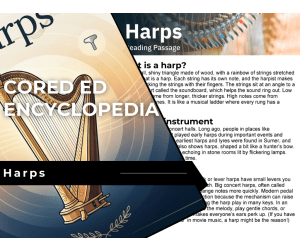
Harps Reading Comprehension Passage - Cored Ed Encyclopedia
ELA, Language Development, Resources for Teachers, Reading Comprehension, Reading, Pre-Reading, Writing, Strategies, Music, Creative Arts, Grade 2, 3, 4, 5, Worksheets & Printables, Worksheets, Teacher Tools, Centers, Activities, Writing Prompts, Assessments, Tests, Quizzes and Tests, Quizzes
This harps reading comprehension contains the following: Pre-Reading Trivia Students will write down one thing they already know about the subject and then read five more facts and discuss. These facts are fun, and the students will enjoy learning about the subject before reading more. Reading Passage The text is a high-interest reading passage with set paragraphs, roughly three to four paragraphs long. It contains a variety of themes about the topic, anywhere from history to technology. The passage is between 250 and 350 words in length. Mixed Questions The first question page contains four multiple-choice questions, each with a choice of four answers, and three written response questions that require a sentence or two from the student. Creative Writing In this question, the student will be required to write a five to eight sentence paragraph on a question related to the topic. Extension Activities This page is optional for fast finishers. If there are five to ten minutes left at the end of the lesson, the student can choose one of three activities, each one requiring a different skill. Answer Key There are answers for the multiple-choice questions and three written response questions have sample answers. FULL CATALOG OF DOWNLOAD LINKS AND ENCYCLOPEDIA INDEX HERE Lesson Snapshot Title: Harps Genre: Nonfiction (informational text) Subject: Music (Informational Reading) Primary Topic: How harps work, types, and early history Estimated Guided Reading Level (A–Z): O What This Lesson Teaches Best Explains what a harp looks like and how it makes sound when strings are plucked. Connects string length and thickness to low and high notes (how pitch changes). Describes the soundboard’s role in helping the sound “ring out.” Introduces harps as an ancient instrument and names early places they were played (Mesopotamia, Egypt, Sumer). Compares types of harps today (lever harps vs. pedal harps) and what levers/pedals do to change pitch. Learning Goals Describe how a harp makes sound using details from the passage. Explain how longer/thicker strings and shorter/thinner strings relate to low and high notes. Identify what the soundboard does for the harp’s sound. Compare lever harps and pedal harps by explaining how each changes pitch. Summarize evidence that harps are very old by naming where early harps were played or found. Key Vocabulary From the Text soundboard — flat wooden part that helps sound ring out. plucking — pulling and releasing strings with fingers to make sound. pitch — how high or low a note sounds. glissando — a swooshing sound moving across many notes. mechanism — parts that work together to change something. Cored Ed Encyclopedia Overview The Cored Ed Encyclopedia is a weekly series of lessons that you can pick up and use right away. These short readings fit into whatever time you have available. Each one includes a warm-up, a reading, and a set of questions, but it’s flexible — you can do just the reading, the full lesson, or skip the writing section if you need to. Each lesson focuses on a single topic so students don’t get lost. The writing is clear but never childish, making it perfect for grades two through five. Topics range from animals and science to history, inventions, and everyday things. No matter the level of the student, everyone should take away at least one new idea or fact from each lesson. The materials are easy to print, easy to explain, and require no setup. They work well for whole-class teaching, partner work, or independent study.
Author Cored Education
Rating
Tags Vocabulary, Spelling, Reading Comprehension, Reading Passages, Reading, Creative Writing, Reading Strategies, Writing Prompts, Harps, Music

Sentence Structure Practice Questions - Grammar Grade 5-6 (PPT)
ELA, Language Development, ESL, Grammar, Common Core, Resources for Teachers, Grade 5, 6, 7, Quizzes and Tests, Teacher Tools, Tests, Assessments, Activities
Sentence Structure Grammar Practice MCQS ELA MCQS Overview: In this series of lessons, students will embark on an engaging journey to master the language arts skills that make communication effective and expressive. These lessons are designed to help students recognize, understand, and apply key grammar, vocabulary, and writing conventions in both their writing and speech. Each lesson builds upon the previous one, providing a structured blend of direct instruction, interactive group activities, and independent practice. With engaging tasks and thought-provoking questions, students will explore sentence structure, word choice, punctuation, and grammar rules to strengthen their understanding of English language conventions. Accompanied by free supplementary materials covering all topics, this series ensures a well-rounded and enjoyable learning experience. Through practice and exploration, students will develop the skills needed to analyze language, construct clear sentences, and express themselves with confidence. Sentence Structure Overview: Sentences Clauses Phrases Predicates Additional Practice PPT Version This is the PPT editable and interactive version. There is a fillable answer sheet at the end. This download is available in GOOGLE Docs, GOOGLE Forms, GOOGLE Slides. PDF, PPT, WORD, check the links below for more details. FULL CATALOG OF DOWNLOAD LINKS HERE Grade 5/6 Links: Capitalization & Punctuation Google Docs Google Forms Google Slides PDF PPT Word Free Supplementary Materials Pack Adjectives Google Docs Google Forms Google Slides PDF PPT Word Free Supplementary Materials Pack Nouns Google Docs Google Forms Google Slides PDF PPT Word Free Supplementary Materials Pack Pronouns Google Docs Google Forms Google Slides PDF PPT Word Free Supplementary Materials Pack Verbs Google Docs Google Forms Google Slides PDF PPT Word Free Supplementary Materials Pack Prefixes & Suffixes Google Docs Google Forms Google Slides PDF PPT Word Free Supplementary Materials Pack Sentence Structure Google Docs Google Forms Google Slides PDF PPT Word Free Supplementary Materials Pack Subject Verb Agreement Google Docs Google Forms Google Slides PDF PPT Word Free Supplementary Materials Pack Tenses Google Docs Google Forms Google Slides PDF PPT Word Free Supplementary Materials Pack Context Clues Google Docs Google Forms Google Slides PDF PPT Word Free Supplementary Materials Pack Defining Words Google Docs Google Forms Google Slides PDF PPT Word Free Supplementary Materials Pack Fill in the Blanks Google Docs Google Forms Google Slides PDF PPT Word Free Supplementary Materials Pack Homophones Google Docs Google Forms Google Slides PDF PPT Word Free Supplementary Materials Pack Synonyms Google Docs Google Forms Google Slides PDF PPT Word Free Supplementary Materials Pack ELA Review Questions Overview Questions have three answer choices. There are a handful of pictures on each test for aesthetic purposes, as well as a review sheet covering most of the topics covered in the product. Introduction or Example Sheet Each topic will include an introduction or example sheet to go through first with your students. Full Answer Keys Full answer keys and sample responses are provided so no matter how busy you are, you know you're covered! In the Supplementary Pack Interactive Ice Breakers: Engaging warm-up activities that introduce students to key ELA concepts, such as quick capitalization corrections and punctuation challenges. Guided Practice: Structured teacher-led exercises that reinforce grammar and punctuation rules, helping students identify and apply them correctly in sentences. Group and Partner Tasks: Collaborative activities where students work together to edit sentences, correct capitalization, and improve punctuation through peer discussion and teamwork. Independent Worksheets: Carefully designed worksheets that provide focused practice, allowing students to apply learned concepts and refine their skills independently. Exit Tasks: Quick assessments at the end of each lesson, prompting students to reflect on what they’ve learned and apply their knowledge in writing and editing tasks. For More Like This For similar downloads and other frees, do check out Cored Group on TeachSimple.
Author Cored Education
Tags Elementary, Answers, Ccss, Common Core, Grammar, Tests, Test Prep, Assessment, Grade 5, Grade 6

Number & Operations: Fractions - Addition & Subtraction - Pre-Assessment & Teach the Skill - MAC Software
Math, Fractions, Common Core, Grade 3, 4, 5, Assessments, Teacher Tools
Number & Operations: Fractions - Addition & Subtraction for Grades 3-5 (MAC Software) This essential tool serves as a resource for instructors providing Maths instruction at the intermediate level. It offers a clear explanation of fractions and their addition and subtraction, vital aspects to teach grade 3-5 students about Number and Operations. User-friendly and Platform-specific: The MAC software is bundled in an easy-to-use zip file that teachers can implement on any MAC operating system. The content aligns with the curriculum making it ideal for public school educators looking to supplement their teaching syllabus. Homeschooling Applications: Parents homeschooling their children will also find value in this tool which combines simplicity with ease of use, presenting fractions through practical examples that children can understand. Versatile Teaching Aid: This software accommodates both whole group instruction as well as small group sessions tailored specifically for learners who require more attention dealing with fraction fundamentals. Teachers can assign it as homework, allowing students additional opportunities to absorb these concepts independently outside the classroom environment. Inclusive Learning: Bearing inclusivity in mind, the package integrates English voice over along with text while also providing an alternative Spanish voice over option accommodating English Language Learner's needs. This promotes linguistic inclusiveness ensuring no student feels left out during math lessons irrespective of language background. Maintaining Standards: Common Core State Standards (CCSS) STEM initiatives National Council Of Teachers Of Mathematics guidelines The resource comes equipped with maths tools that augment its practicality within mathematics learning environments created around constructive student engagement. In conclusion, regardless your method of teaching or learner audience, with this Number & Operations: Fractions - Addition & Subtraction resource, you are assured of a thorough, accessible and inclusive approach towards bridging the gap between students and their understanding of fractions. This cutting -edge MAC software makes optimizing pupil learning experiences smoother.
Author Classroom Complete Press
Tags Pre-assessment, Fractions Assessment, Adding Fractions, Subtracting Fractions, Math Skills

Let's Get Quizzical Book 1
, Grade 4, 5, 6, Teacher Tools, Assessments
This is a 36-page download filled with thematic quizzes and research activities on a wide range of topics. From street signs to inventions, students will get to test their knowledge and learn even more with these quizzes . Answer key included.
Author Ready-Ed Publications
Tags Research Activities, Thematic Quizzes, History Quiz, Inventions, Famous People Quiz
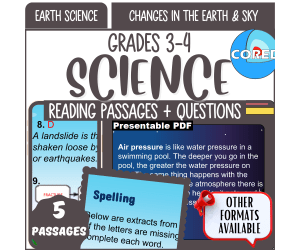
Science Reading Changes in the Earth and Sky (Presentable PDF)
Science, Earth and Environmental Sciences, Earth Sciences, Common Core, ESL, Language Development, ELA, Reading Comprehension, Reading, Space, Grade 2, 3, 4, Tests, Quizzes and Tests, Teacher Tools, Assessments, Worksheets, Worksheets & Printables, Diagrams, Centers, Activities
Science Reading Passages on Changes in the Earth and Sky Snapshot Genre: Nonfiction Subject: Science (Earth Science / Space Science) Primary Topic: Earth changes, weather, and motion in space Estimated Guided Reading Level (A–Z): R What This Teaches Best It helps students compare slow Earth changes such as weathering and erosion with fast changes such as volcanoes, landslides, and earthquakes. It explains cause and effect in Earth systems, including how magma forms volcanoes and how faults can lead to earthquakes. It teaches key weather concepts such as air pressure, wind, humidity, air masses, and fronts. It introduces scientific tools and measurements by showing how thermometers, barometers, hygrometers, and seismographs are used. It builds understanding of motion in space through rotation, orbit, period, distance, and the scale of the solar system. Learning Goals Students will compare slow changes and fast changes to Earth’s surface. Students will explain how volcanoes, earthquakes, and landslides can change Earth quickly. Students will describe how differences in air temperature and air pressure affect weather. Students will identify the tools used to measure temperature, air pressure, humidity, and movement in Earth’s crust. Students will explain the difference between Earth’s rotation and Earth’s orbit. Students will use text information to describe the size and motion of the solar system. Part 2 - Changes in the Earth and Sky Reading Passage 1: Slow Changes to the Earth's Surface Reading Passage 2: Fast Changes to the Earth's Surface Reading Passage 3: The Atmosphere and Weather Reading Passage 4: Measuring Temperature, Air Pressure, and Humidity Reading Passage 5: The Motion of Objects in the Universe PRESENTABLE PDF VERSION Run it like a slide show straight from a PDF, with no PowerPoint or extra software needed, just open, project, and teach. Other versions are available in the links list below or in the full catalog. FULL CATALOG OF DOWNLOAD LINKS HERE Grade 3/4 Links: Physical Science Part 1 - Properties of Objects and Materials Google Docs/Slides/Forms PDF PPT Word Free Supplementary Pack Accompanying Videos Physical Science Part 2 - Position and Motion of Objects Google Docs/Slides/Forms PDF PPT Word Free Supplementary Pack Accompanying Videos Physical Science Part 3 - Light, Heat, Electricity, Magnetism Google Docs/Slides/Forms PDF PPT Word Free Supplementary Pack Accompanying Videos Life Science Part 1 - Characteristics of Organisms Google Docs/Slides/Forms PDF PPT Word Free Supplementary Pack Accompanying Videos Life Science Part 2 - Life Cycles of Organisms Google Docs/Slides/Forms PDF PPT Word Free Supplementary Pack Accompanying Videos Life Science Part 3 - Organisms and Environments Google Docs/Slides/Forms PDF PPT Word Free Supplementary Pack Accompanying Videos Earth Science Part 1 - Properties of Earth Materials Google Docs/Slides/Forms PDF PPT Word Free Supplementary Pack Accompanying Videos Earth Science Part 2 - Changes in the Earth and Sky Google Docs/Slides/Forms PDF PPT Word Free Supplementary Pack Accompanying Videos Earth Science Part 3 - Objects in the Sky Google Docs/Slides/Forms PDF PPT Word Free Supplementary Pack Accompanying Videos For similar products and other frees, do check out Cored Group on TeachSimple .
Author Cored Education
Rating
Tags Science, Elementary, Reading, Comprehension, Reading Centers, Science Assessments, Reading Comprehension Assessments, Vocabulary Assessments, Earth Science

Sentence Structure Sample Lesson - Grammar Grade 5-6 (Word)
ELA, Language Development, ESL, Grammar, Common Core, Resources for Teachers, Grade 5, 6, 7, Worksheets & Printables, Worksheets, Quizzes and Tests, Teacher Tools, Tests, Assessments
Sentence Structure Sample Lesson ELA MCQS Overview: In this series of lessons, students will embark on an engaging journey to master the language arts skills that make communication effective and expressive. These lessons are designed to help students recognize, understand, and apply key grammar, vocabulary, and writing conventions in both their writing and speech. Each lesson builds upon the previous one, providing a structured blend of direct instruction, interactive group activities, and independent practice. With engaging tasks and thought-provoking questions, students will explore sentence structure, word choice, punctuation, and grammar rules to strengthen their understanding of English language conventions. Accompanied by free supplementary materials covering all topics, this series ensures a well-rounded and enjoyable learning experience. Through practice and exploration, students will develop the skills needed to analyze language, construct clear sentences, and express themselves with confidence. Sentence Structure Overview: Sentences Clauses Phrases Predicates Additional Practice Word Version This is the Word editable and version. This download is available in GOOGLE Docs, GOOGLE Forms, GOOGLE Slides. PDF, PPT, WORD, check the links below for more details. FULL CATALOG OF DOWNLOAD LINKS HERE Grade 5/6 Links: Capitalization & Punctuation Google Docs Google Forms Google Slides PDF PPT Word Free Supplementary Materials Pack Adjectives Google Docs Google Forms Google Slides PDF PPT Word Free Supplementary Materials Pack Nouns Google Docs Google Forms Google Slides PDF PPT Word Free Supplementary Materials Pack Pronouns Google Docs Google Forms Google Slides PDF PPT Word Free Supplementary Materials Pack Verbs Google Docs Google Forms Google Slides PDF PPT Word Free Supplementary Materials Pack Prefixes & Suffixes Google Docs Google Forms Google Slides PDF PPT Word Free Supplementary Materials Pack Sentence Structure Google Docs Google Forms Google Slides PDF PPT Word Free Supplementary Materials Pack Subject Verb Agreement Google Docs Google Forms Google Slides PDF PPT Word Free Supplementary Materials Pack Tenses Google Docs Google Forms Google Slides PDF PPT Word Free Supplementary Materials Pack Context Clues Google Docs Google Forms Google Slides PDF PPT Word Free Supplementary Materials Pack Defining Words Google Docs Google Forms Google Slides PDF PPT Word Free Supplementary Materials Pack Fill in the Blanks Google Docs Google Forms Google Slides PDF PPT Word Free Supplementary Materials Pack Homophones Google Docs Google Forms Google Slides PDF PPT Word Free Supplementary Materials Pack Synonyms Google Docs Google Forms Google Slides PDF PPT Word Free Supplementary Materials Pack ELA Review Questions Overview Questions have three answer choices. There are a handful of pictures on each test for aesthetic purposes, as well as a review sheet covering most of the topics covered in the product. Introduction or Example Sheet Each topic will include an introduction or example sheet to go through first with your students. Full Answer Keys Full answer keys and sample responses are provided so no matter how busy you are, you know you're covered! In the Supplementary Pack Interactive Ice Breakers: Engaging warm-up activities that introduce students to key ELA concepts, such as quick capitalization corrections and punctuation challenges. Guided Practice: Structured teacher-led exercises that reinforce grammar and punctuation rules, helping students identify and apply them correctly in sentences. Group and Partner Tasks: Collaborative activities where students work together to edit sentences, correct capitalization, and improve punctuation through peer discussion and teamwork. Independent Worksheets: Carefully designed worksheets that provide focused practice, allowing students to apply learned concepts and refine their skills independently. Exit Tasks: Quick assessments at the end of each lesson, prompting students to reflect on what they’ve learned and apply their knowledge in writing and editing tasks. For More Like This For similar downloads and other frees, do check out Cored Group on TeachSimple.
Author Cored Education
Tags Elementary, Answers, Ccss, Common Core, Grammar, Tests, Test Prep, Assessment, Grade 5, Grade 6
Context Clues Sample - Vocabulary Grade 3-4 (Slides)
ELA, Language Development, ESL, Common Core, Resources for Teachers, Vocabulary, Grade 3, 4, Quizzes and Tests, Teacher Tools, Tests, Assessments, Presentations, Activities
Context Clues Sample Lesson ELA MCQS Overview: In this series of lessons, students will embark on an engaging journey to explore the grammar skills that make our language vibrant and expressive. These lessons are crafted to help students identify, comprehend, and effectively apply language arts skills in both writing and speech. Accompanied by free supplementary materials available for all topics, each lesson builds on the previous one, offering a balanced mix of direct instruction, interactive group activities, and independent practice. Through fun and creative tasks, students will learn to recognize grammar within sentences, understand their function, and use them to enrich their own writing and speech. Context Clues Overview: Includes: Definitions or Restatements Synonyms Antonyms or Opposites Examples or Explanations Slides Version This is the Slides editable and interactive version. There is a fillable answer sheet at the end. This download is available in GOOGLE Docs, GOOGLE Forms, GOOGLE Slides. PDF, PPT, WORD, check the links below for more details. FULL CATALOG OF DOWNLOAD LINKS HERE Grade 3/4 Links: Adjectives Google Docs Google Forms Google Slides PDF PPT Word Free Supplementary Materials Pack Adverbs Google Docs Google Forms Google Slides PDF PPT Word Free Supplementary Materials Pack Conjunctions Google Docs Google Forms Google Slides PDF PPT Word Free Supplementary Materials Pack Nouns Google Docs Google Forms Google Slides PDF PPT Word Free Supplementary Materials Pack Pronouns Google Docs Google Forms Google Slides PDF PPT Word Free Supplementary Materials Pack Verbs Google Docs Google Forms Google Slides PDF PPT Word Free Supplementary Materials Pack Sentence Structure Google Docs Google Forms Google Slides PDF PPT Word Free Supplementary Materials Pack Present Tense Google Docs Google Forms Google Slides PDF PPT Word Free Supplementary Materials Pack Past Tense Google Docs Google Forms Google Slides PDF PPT Word Free Supplementary Materials Pack Future Tense Google Docs Google Forms Google Slides PDF PPT Word Free Supplementary Materials Pack Context Clues Google Docs Google Forms Google Slides PDF PPT Word Free Supplementary Materials Pack Defining Words Google Docs Google Forms Google Slides PDF PPT Word Free Supplementary Materials Pack Fill the Blanks Google Docs Google Forms Google Slides PDF PPT Word Free Supplementary Materials Pack Homophones Google Docs Google Forms Google Slides PDF PPT Word Free Supplementary Materials Pack Synonyms Google Docs Google Forms Google Slides PDF PPT Word Free Supplementary Materials Pack ELA Review Questions Overview Questions have three answer choices. There are a handful of pictures on each test for aesthetic purposes, as well as a review sheet covering most of the topics covered in the product. Introduction or Example Sheet Each topic will include an introduction or example sheet to go through first with your students. Full Answer Keys Full answer keys and sample responses are provided so no matter how busy you are, you know you're covered! In the Supplementary Pack Interactive Ice Breakers: Fun, hands-on activities that get students thinking about adjectives right from the start. Guided Practice: Teacher-led exercises that reinforce the day’s lesson, ensuring students can confidently identify and use adjectives. Group and Partner Tasks: Collaborative activities that allow students to work together to solve problems, categorize adjectives, and create descriptive sentences. Independent Worksheets: Structured worksheets that provide individual practice and help solidify understanding of key concepts. Exit Tasks: Quick, reflective activities at the end of each lesson that assess understanding and encourage students to apply what they’ve learned. For similar downloads and other frees, do check out Cored Group on TeachSimple.
Author Cored Education
Tags Elementary, Answers, Ccss, Common Core, Tests, Test Prep, Assessment, Grade 3, Grade 4, Vocabulary

Pronouns Practice Questions - Grammar Grade 5-6 (Presentable PDF)
ELA, Language Development, ESL, Grammar, Common Core, Resources for Teachers, Grade 5, 6, 7, Worksheets & Printables, Worksheets, Quizzes and Tests, Teacher Tools, Tests, Assessments
Pronouns Grammar Practice MCQS Snapshot Title: Parts of Speech: Pronouns Practice Worksheets Grade 5-6 Genre: Instructional Nonfiction / Grammar Workbook Subject: Reading Primary Topic: Identifying pronoun types and correct usage What This Teaches Best Teaching a wide range of pronoun categories, including demonstrative, indefinite, intensive, interrogative, nominative, reflexive, and relative pronouns. Helping students identify pronouns and antecedents in sentence context. Reinforcing correct use of subject, object, and possessive pronouns. Practicing person, agreement, and replacement of nouns with matching pronouns. Supporting independent review with four worksheets and an answers section. Learning Goals Students will identify pronouns in sentences and classify their type. Students will distinguish subject, object, and possessive pronouns in context. Students will match pronouns to clear antecedents. Students will use reflexive and intensive pronouns correctly. Students will recognize pronoun person and choose pronouns that agree with their antecedents. Key Vocabulary demonstrative — points to a specific thing. indefinite — does not name a specific person or thing. intensive — adds emphasis to the subject. reflexive — refers back to the subject. relative — joins extra information to a noun. Common Core Alignment CCSS.ELA-LITERACY.L.3.1f — Ensure pronoun-antecedent agreement. CCSS.ELA-LITERACY.L.6.1c — Recognize and correct inappropriate shifts in pronoun number and person. CCSS.ELA-LITERACY.L.6.1d — Recognize and correct vague pronouns with unclear or ambiguous antecedents. Pronouns Overview: Includes: Indefinite Pronouns Intensive Pronouns Interrogative Pronouns Reflexive Pronouns Relative Pronouns PRESENTABLE PDF VERSION Run it like a slide show straight from a PDF, with no PowerPoint or extra software needed, just open, project, and teach. Other versions are available in the links list below or in the full catalog. FULL CATALOG OF DOWNLOAD LINKS HERE ELA Review Questions Overview Each set of review questions includes three answer choices. Each test also features a few pictures to keep the pages visually appealing, along with a review sheet that covers most of the skills and concepts included in the resource. Introduction or Example Sheet Every topic comes with an introduction or example sheet that you can go over with your students before they begin. Full Answer Keys Complete answer keys and sample responses are included, so you have everything you need ready to go. In the Supplementary Pack Interactive Ice Breakers Fun warm-up activities help introduce key ELA skills, including quick capitalization fixes and punctuation challenges. Guided Practice Teacher-led activities give students structured support as they review grammar and punctuation rules and practice applying them in sentences. Group and Partner Tasks Students work together to edit sentences, correct capitalization, and improve punctuation through discussion and teamwork. Independent Worksheets Focused worksheets give students the chance to practice on their own and build confidence with the skills they’ve learned. Exit Tasks Quick end-of-lesson activities help students reflect on their learning and apply their skills in writing and editing. For More Like This For similar resources and free downloads, visit Cored Group on TeachSimple . Use this pronoun presentation before another round of questions. Practice grouping the words with this pronoun types worksheet .
Author Cored Education
Rating
Tags Elementary, Answers, Ccss, Common Core, Grammar, Tests, Test Prep, Assessment, Grade 5, Grade 6

Ohio (OST) Math Practice Test for Grade 4
Math, Grade 4, Assessments, Teacher Tools, Tests, Quizzes and Tests, Worksheets & Printables
Ohio (OST) Math Practice Test for Grade 4 Help your students build confidence and tackle multi-step problem solving with this Grade 4 Ohio OST Math Practice Test ! This comprehensive, standards-aligned resource mirrors the real Ohio State Test and gives students targeted practice across all key math domains. What’s Included ✅ Full-length Grade 4 Math practice test (54 questions) with authentic OST-style formatting ✅ Covers all 5 math domains : Operations & Algebraic Thinking (multiplicative comparison, factors, multiples) Number & Operations in Base Ten (multi-digit operations, place value, rounding) Fractions (equivalence, addition, multiplication, decimals) Measurement & Data (area, perimeter, conversions, angles) Geometry (lines, angles, symmetry, classification) ✅ Variety of question types : Multiple choice Multi-select (“choose two”) Numeric entry Constructed response (show your work) ✅ Complete Answer Key with: Detailed explanations Standards alignment + DOK levels Quick-grade answer chart Constructed-response rubrics + exemplar responses ✅ Comprehensive Teacher’s Guide with: Test-taking strategies (S.T.A.R. strategy + word problem tips) Differentiation for ELL, IEP, and advanced learners Flexible pacing options and lesson ideas Class data tracker for progress monitoring How It Works in the Classroom This Grade 4 Ohio OST Math practice test is designed for flexible, effective instruction: Use as a full-length mock test (split into 2 sessions) to simulate real testing conditions Break into weekly math domains for structured test prep Assign as a benchmark or diagnostic assessment to identify skill gaps Use in small groups for targeted reteaching and intervention Reinforce strategies like multi-step problem solving, estimation, and reasoning Standards & Learning Goals Aligned to Ohio Learning Standards (Grade 4 Math) . Students will practice: Operations & Algebraic Thinking (4.OA) – multiplicative comparison, factors, multiples, patterns Number & Operations in Base Ten (4.NBT) – place value, multi-digit operations, division with remainders Fractions (4.NF) – equivalence, addition, multiplication by whole numbers, decimals Measurement & Data (4.MD) – area, perimeter, unit conversion, angles Geometry (4.G) – lines, angles, symmetry, classification of shapes Mathematical reasoning through multi-step and constructed-response problems Why Teachers Love It ⭐ Mirrors the rigor and structure of the real Ohio OST assessment ⭐ Covers all Grade 4 math domains in one cohesive resource ⭐ Builds higher-order thinking with multi-step problems and constructed responses ⭐ Saves time with a no-prep, print-and-go bundle (test + answer key + teacher guide) ⭐ Makes grading easy with clear explanations, rubrics, and DOK levels ⭐ Supports differentiation with built-in strategies for all learners ⭐ Helps drive instruction with data tracking and reteaching tools Perfect for test prep, benchmarks, intervention, and end-of-year review ! Download this Grade 4 Ohio OST Math Practice Test today and give your students the structured, standards-based practice they need to build confidence and succeed on test day!
Author Bright Classroom Ideas Marketplace
Rating
Tags Ohio, Math, State Test, Ost
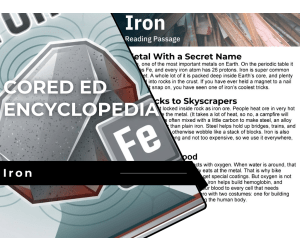
Iron Reading Comprehension Passage - Cored Ed Encyclopedia
ELA, Language Development, Resources for Teachers, Reading Comprehension, Reading, Pre-Reading, Writing, Science, Physics, Chemistry, Grade 2, 3, 4, 5, Worksheets & Printables, Worksheets, Teacher Tools, Centers, Activities, Writing Prompts, Assessments, Tests, Quizzes and Tests, Quizzes
This iron reading comprehension contains the following: Pre-Reading Trivia Students will write down one thing they already know about the subject and then read five more facts and discuss. These facts are fun, and the students will enjoy learning about the subject before reading more. Reading Passage The text is a high-interest reading passage with set paragraphs, roughly three to four paragraphs long. It contains a variety of themes about the topic, anywhere from history to technology. The passage is between 250 and 350 words in length. Mixed Questions The first question page contains four multiple-choice questions, each with a choice of four answers, and three written response questions that require a sentence or two from the student. Vocabulary Questions Practice seven key words from the text in this section across two activities. First section is scrambled words where students will unscramble three words given a clue for each. The second section is a word to meaning matching activity. Creative Writing In this question, the student will be required to write a five to eight sentence paragraph on a question related to the topic. Extension Activities This page is optional for fast finishers or to take home. There are several activities, each one requiring a different skill. Do some, do none, do all, completely optional - but you will feel reassured knowing every possibility is planned for. Answer Key There are answers for the multiple-choice questions, written response questions have sample answers, vocabulary answers and if there is a summary question then a sample summary will be provided as well. FULL CATALOG OF DOWNLOAD LINKS AND ENCYCLOPEDIA INDEX HERE Lesson Snapshot Title: Iron Genre: Nonfiction (informational text with section headings) Subject: Reading (Informational Text) / Physical Science Primary Topic: Iron’s properties, uses, rust, and role in blood Estimated Guided Reading Level (A–Z): P What This Lesson Teaches Best Identifying key facts about an element (iron’s symbol Fe and that an iron atom has 26 protons ). Explaining how people get iron from iron ore by heating it in very hot furnaces to separate the metal. Connecting materials to real-world structures by explaining how iron mixed with carbon makes steel , an alloy used in bridges, trains, and tall buildings. Describing cause and effect with rust: iron reacts with oxygen , and when water is around, rust can form and slowly eat the metal. Building science/health knowledge by explaining iron’s role in making hemoglobin , which carries oxygen through blood to cells. Learning Goals Students can identify iron’s chemical symbol and one atom fact stated in the text. Students can describe where iron is found on Earth (core and crust) using details from the passage. Students can explain how iron is separated from iron ore according to the passage. Students can explain that mixing iron with carbon makes steel and define steel as an alloy from the text. Students can describe what causes rust and why coatings/paint are used outdoors, based on the passage. Students can explain how iron helps the body by supporting hemoglobin’s oxygen-carrying job. Key Vocabulary From the Text periodic — relating to the periodic table of elements. protons — tiny parts inside atoms. ore — rock that contains metal. alloy — metal mixed with another material. hemoglobin — blood protein that carries oxygen. Cored Ed Encyclopedia Overview The Cored Ed Encyclopedia is a weekly series of lessons that you can pick up and use right away. These short readings fit into whatever time you have available. Each one includes a warm-up, a reading, and a set of questions, but it’s flexible — you can do just the reading, the full lesson, or skip the writing section if you need to. Each lesson focuses on a single topic so students don’t get lost. The writing is clear but never childish, making it perfect for grades two through five. Topics range from animals and science to history, inventions, and everyday things. No matter the level of the student, everyone should take away at least one new idea or fact from each lesson. The materials are easy to print, easy to explain, and require no setup. They work well for whole-class teaching, partner work, or independent study.
Author Cored Education
Rating
Tags Vocabulary, Spelling, Reading Comprehension, Reading Passages, Reading, Creative Writing, Reading Strategies, Writing Prompts, Physics, Iron