



3,886 products added recently
Page 4 - Elementary Assessments
Provide your elementary students with assessments that monitor their development across all subject areas. This collection includes grade-appropriate tools that help you track progress and tailor instruction. Ensure your students build a strong academic foundation by regularly evaluating their understanding.

 Show filters

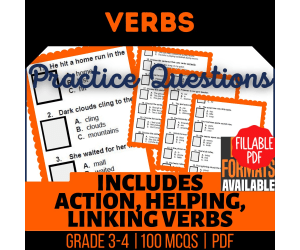
Verbs Practice Questions - Grade 3-4 Grammar (Fillable PDF)
ELA, Language Development, ESL, Grammar, Common Core, Resources for Teachers, Grade 3, 4, Worksheets & Printables, Worksheets, Quizzes and Tests, Teacher Tools, Tests, Assessments, Quizzes
Verbs Grammar Practice MCQS Snapshot Title: Parts of Speech: Verbs Genre: Nonfiction / Educational Workbook Subject: Language Arts Primary Topic: Identifying action, helping, and linking verbs This workbook contains a review sheet, five practice worksheets, and answer keys focused on verb types and correct verb usage for Grades 3–4. What This Teaches Best Defines action verbs, helping verbs, and linking verbs with examples. Helps students identify verbs within complete sentences. Gives focused practice distinguishing action, helping, and linking verbs. Reinforces correct verb forms through editing and sentence-choice tasks. Includes simple past forms of irregular verbs for added verb-form practice. These teaching strengths are shown in the review sheet and in Worksheets 1–5. Learning Goals Students will explain the difference between action, helping, and linking verbs. Students will identify the verb in a sentence. Students will classify verbs as action, helping, or linking. Students will choose verb forms that make sentences correct and complete. Students will correct mistakes in sentences that misuse verbs. Students will use simple past forms of common irregular verbs accurately. These goals reflect the review-sheet definitions and the worksheet task sequence. Key Vocabulary From the Text action — something a person or thing can do helping — a verb that helps the main verb auxiliary — another word for helping linking — connects the subject to more information mood — the feeling or purpose a verb helps show All five words appear in the review sheet text. Common Core Alignment L.3.1d — Form and use regular and irregular verbs. L.3.1e — Form and use regular and irregular simple verb tenses. L.4.1b — Form and use the progressive verb tenses. Verbs Overview: Includes: Action Verbs Helping Verbs Linking Verbs Correcting Mistakes FILLABLE PDF VERSION Worksheet-style pages, but with type-in answer boxes so students can complete and save their work digitally. Other versions are available in the links list below or in the full catalog. FULL CATALOG OF DOWNLOAD LINKS HERE For similar downloads and other frees, do check out Cored Group on TeachSimple.
Author Cored Education
Rating
Tags Elementary, Answers, Ccss, Common Core, Grammar, Tests, Test Prep, Assessment, Grade 3, Grade 4
Reading Passages on Human Body Systems (PPT)
ELA, Reading, Science, Life Sciences, Human Body, Biology, Common Core, ESL, Language Development, Vocabulary, Grade 5, 6, 7, Teacher Tools, Presentations, Diagrams, Assessments, Tests, Quizzes and Tests
Reading Passages on Human Body Systems for Life Science (Biology) Human Body Systems: Reading Passages Life Science - Stimulate renewed enthusiasm and curiosity in the realm of science with these vibrant science reading comprehension lessons. Bursting with vivid colors and engaging topics, these resources are designed to captivate and motivate your students, urging them to delve deeper into their scientific explorations. And the best part? As an educator, you can be at ease and confident in the effectiveness of these lessons, knowing that a significant portion of the groundwork and preparation has been meticulously taken care of for you, making the teaching process smoother and more enjoyable. What's inside? Part 2 - Human Body Systems Reading Passage 1: Skeletal & Muscular Systems Reading Passage 2: Circulatory & Respiratory Systems Reading Passage 3: Nervous System Reading Passage 4: Digestive System Reading Passage 5: Reproductive System Product Info: 196 Slides (US English with Answers) Teaching Duration: 2 Weeks Science Reading Comprehension Outline: Introducing a comprehensive resource tailored for 5th and 6th graders, this product offers enriching reading passages supplemented with illustrative pictures and graphs to clarify key concepts. Aligned with the Common Core State Standards (CCSS), it offers a hassle-free approach to teaching, given that the bulk of the preparation is already done for you. The passages present a diverse set of questions – from multiple choice to data analysis and fill-in-the-blanks. This ensures a rich blend of high-interest content and fundamental curriculum-based science themes. With its versatility, you can seamlessly integrate these lessons into various classroom settings, whether it's whole class discussions, morning exercises, independent desk tasks, small group engagements, contingency plans for substitute teachers, regular homework assignments, or even themed activities for holidays. FULL CATALOG OF DOWNLOAD LINKS HERE Grade 5/6 Links: Physical Science Part 1 - Physical and Chemical Properties Google Docs/Slides/Forms PDF PPT Word Free Supplementary Pack Accompanying Videos Physical Science Part 2 - Motion and Energy Google Docs/Slides/Forms PDF PPT Word Free Supplementary Pack Accompanying Videos Physical Science Part 3 - Electricity and Magnets Google Docs/Slides/Forms PDF PPT Word Free Supplementary Pack Accompanying Videos Life Science Part 1 - Cells, Reproduction and Genetics Google Docs/Slides/Forms PDF PPT Word Free Supplementary Pack Accompanying Videos Life Science Part 2 - Human Body Systems Google Docs/Slides/Forms PDF PPT Word Free Supplementary Pack Accompanying Videos Life Science Part 3 - Plant Parts and Ecosystems Google Docs/Slides/Forms PDF PPT Word Free Supplementary Pack Accompanying Videos Earth Science Part 1 - Plate Tectonics and Rock Cycle Google Docs/Slides/Forms PDF PPT Word Free Supplementary Pack Accompanying Videos Earth Science Part 2 - Ocean Exploration and Natural Resources Google Docs/Slides/Forms PDF PPT Word Free Supplementary Pack Accompanying Videos Earth Science Part 3 - Weather and Solar System Google Docs/Slides/Forms PDF PPT Word Free Supplementary Pack Accompanying Videos For similar products and other frees, do check out Cored Group on TeachSimple .
Author Cored Education
Rating
Tags Science, Elementary, Reading, Comprehension, Vocabulary, Answers, Biology , Life Science, Reading Comprehension Presentations, Biology Presentations
Reading Passage 3: Physical and Chemical Changes in Matter (Slides)
ELA, Reading, Science, Physics, Common Core, Reading Comprehension, ESL, Language Development, Resources for Teachers, Grade 5, 6, 7, Presentations, Teacher Tools, Tests, Quizzes and Tests, Activities, Assessments
Free Reading Passage on Physical and Chemical Changes in Matter for Physical Science What's inside this free product? Science Reading Comprehension Passage: Physical and Chemical Changes in Matter Independent Google Slides Version: This is the independent Google Slides version containingone lesson. Product Info: 38 SLIDES (US English with Answers) Google Slides Version Teaching Duration: 90 Minutes Science Reading Comprehension Outline: Introducing a comprehensive resource tailored for 5th and 6th graders, this product offers enriching reading passages supplemented with illustrative pictures and graphs to clarify key concepts. Aligned with the Common Core State Standards (CCSS), it offers a hassle-free approach to teaching, given that the bulk of the preparation is already done for you. The passages present a diverse set of questions – from multiple choice to data analysis and fill-in-the-blanks. This ensures a rich blend of high-interest content and fundamental curriculum-based science themes. With its versatility, you can seamlessly integrate these lessons into various classroom settings, whether it's whole class discussions, morning exercises, independent desk tasks, small group engagements, contingency plans for substitute teachers, regular homework assignments, or even themed activities for holidays. FULL CATALOG OF DOWNLOAD LINKS HERE Grade 5/6 Links: Physical Science Part 1 - Physical and Chemical Properties Google Docs/Slides/Forms PDF PPT Word Free Supplementary Pack Accompanying Videos Physical Science Part 2 - Motion and Energy Google Docs/Slides/Forms PDF PPT Word Free Supplementary Pack Accompanying Videos Physical Science Part 3 - Electricity and Magnets Google Docs/Slides/Forms PDF PPT Word Free Supplementary Pack Accompanying Videos Life Science Part 1 - Cells, Reproduction and Genetics Google Docs/Slides/Forms PDF PPT Word Free Supplementary Pack Accompanying Videos Life Science Part 2 - Human Body Systems Google Docs/Slides/Forms PDF PPT Word Free Supplementary Pack Accompanying Videos Life Science Part 3 - Plant Parts and Ecosystems Google Docs/Slides/Forms PDF PPT Word Free Supplementary Pack Accompanying Videos Earth Science Part 1 - Plate Tectonics and Rock Cycle Google Docs/Slides/Forms PDF PPT Word Free Supplementary Pack Accompanying Videos Earth Science Part 2 - Ocean Exploration and Natural Resources Google Docs/Slides/Forms PDF PPT Word Free Supplementary Pack Accompanying Videos Earth Science Part 3 - Weather and Solar System Google Docs/Slides/Forms PDF PPT Word Free Supplementary Pack Accompanying Videos For similar products and other frees, do check out Cored Group on TeachSimple .
Author Cored Education
Tags Science, Elementary, Reading, Comprehension, Vocabulary, Answers, Physics, Physical Science, Ccss, Common Core

Defining Words Practice Questions - Vocabulary Grade 3-4 (Docs)
ELA, Language Development, ESL, Common Core, Resources for Teachers, Vocabulary, Grade 3, 4, Worksheets & Printables, Worksheets, Quizzes and Tests, Teacher Tools, Tests, Assessments, Centers, Activities
Defining Words Vocabulary Practice MCQS ELA MCQS Overview: In this series of lessons, students will embark on an engaging journey to explore the grammar skills that make our language vibrant and expressive. These lessons are crafted to help students identify, comprehend, and effectively apply language arts skills in both writing and speech. Accompanied by free supplementary materials available for all topics, each lesson builds on the previous one, offering a balanced mix of direct instruction, interactive group activities, and independent practice. Through fun and creative tasks, students will learn to recognize grammar within sentences, understand their function, and use them to enrich their own writing and speech. Defining Words Overview: Includes: Match Words to Definition Match Definition to Words Accurately Define Meanings Defining Word Practice Docs Version This is the Docs editable and fillable version. This download is available in GOOGLE Docs, GOOGLE Forms, GOOGLE Slides. PDF, PPT, WORD, check the links below for more details. FULL CATALOG OF DOWNLOAD LINKS HERE Grade 3/4 Links: Adjectives Google Docs Google Forms Google Slides PDF PPT Word Free Supplementary Materials Pack Adverbs Google Docs Google Forms Google Slides PDF PPT Word Free Supplementary Materials Pack Conjunctions Google Docs Google Forms Google Slides PDF PPT Word Free Supplementary Materials Pack Nouns Google Docs Google Forms Google Slides PDF PPT Word Free Supplementary Materials Pack Pronouns Google Docs Google Forms Google Slides PDF PPT Word Free Supplementary Materials Pack Verbs Google Docs Google Forms Google Slides PDF PPT Word Free Supplementary Materials Pack Sentence Structure Google Docs Google Forms Google Slides PDF PPT Word Free Supplementary Materials Pack Present Tense Google Docs Google Forms Google Slides PDF PPT Word Free Supplementary Materials Pack Past Tense Google Docs Google Forms Google Slides PDF PPT Word Free Supplementary Materials Pack Future Tense Google Docs Google Forms Google Slides PDF PPT Word Free Supplementary Materials Pack Context Clues Google Docs Google Forms Google Slides PDF PPT Word Free Supplementary Materials Pack Defining Words Google Docs Google Forms Google Slides PDF PPT Word Free Supplementary Materials Pack Fill the Blanks Google Docs Google Forms Google Slides PDF PPT Word Free Supplementary Materials Pack Homophones Google Docs Google Forms Google Slides PDF PPT Word Free Supplementary Materials Pack Synonyms Google Docs Google Forms Google Slides PDF PPT Word Free Supplementary Materials Pack ELA Review Questions Overview Questions have three answer choices. There are a handful of pictures on each test for aesthetic purposes, as well as a review sheet covering most of the topics covered in the product. Introduction or Example Sheet Each topic will include an introduction or example sheet to go through first with your students. Full Answer Keys Full answer keys and sample responses are provided so no matter how busy you are, you know you're covered! In the Supplementary Pack Interactive Ice Breakers: Fun, hands-on activities that get students thinking about adjectives right from the start. Guided Practice: Teacher-led exercises that reinforce the day’s lesson, ensuring students can confidently identify and use adjectives. Group and Partner Tasks: Collaborative activities that allow students to work together to solve problems, categorize adjectives, and create descriptive sentences. Independent Worksheets: Structured worksheets that provide individual practice and help solidify understanding of key concepts. Exit Tasks: Quick, reflective activities at the end of each lesson that assess understanding and encourage students to apply what they’ve learned. For similar downloads and other frees, do check out Cored Group on TeachSimple.
Author Cored Education
Tags Elementary, Answers, Ccss, Common Core, Tests, Test Prep, Grade 3, Grade 4, Vocabulary, Digital Centers
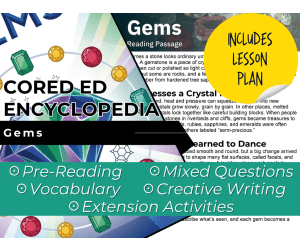
Gems Reading Comprehension Passage - Cored Ed Encyclopedia
ELA, Reading Comprehension, Reading, Science, Technology, Earth and Environmental Sciences, Pre-Reading, Language Development, Physics, Life Sciences, Grade 2, 3, 4, 5, Worksheets & Printables, Worksheets, Teacher Tools, Centers, Activities, Writing Prompts, Assessments, Quizzes and Tests, Quizzes, Lesson Plans
This gems reading comprehension with lesson plan includes: Visualization (on the front cover) Start your lesson by taking a minute to think and share something about the topic. Read the script aloud (slowly), perhaps prepare some music or sound effects. Student close their eyes and let their imaginations wander. Students open their eyes, read the question aloud and give them a few minutes to complete. Ask a few students to share or keep answers until the end to compare with what they learn in the passage. Quick pause—thousands of Cored Education products are included with your TeachSimple membership. Download links and encyclopedia index available here. Pre-Reading Trivia Students will write down one thing they already know about the subject and then read five more facts and discuss. These facts are fun, and the students will enjoy learning about the subject before reading more. Give 1 minute for students to write what they already know (no pressure—best guess is fine). Read the five facts together. After each fact, do ask a student for their opinion, was it surprising? Set a purpose by asking students to highlight/underline one fact they want to learn more about during the reading. Reading Passage The text is a high-interest reading passage with set paragraphs, roughly three to four paragraphs long. It contains a variety of themes about the topic, anywhere from history to technology. The passage is between 250 and 350 words in length. First, ask students to look at the headings and see what they’ll learn about today. What do they know about the topic/heading? First read options: Teacher read-aloud (best for support). Partner reading (paragraph by paragraph). While reading, students underline important details, and vocabulary words they think may come up in the questions section. Mixed Questions The first question page contains four multiple-choice questions, each with a choice of four answers, and three written response questions that require a sentence or two from the student. Students complete the mcqs first independently, then review quickly as a class. For the 3 written responses, try to get students giving the answer with some form of evidence: “I think ___ because the text says ___.” If students get stuck, send them back to check the passage. Vocabulary Questions Practice seven key words from the text in this section across two activities. First section is scrambled words where students will unscramble three words given a clue for each. The second section is a word to meaning matching activity. Before starting, have some students read out words they underlined in the passage. Ask students to say the word and read aloud the sentence(s) around each word. Ask students to do scrambled words and the matching exercise in pairs then go through answers as a class. For the scrambled spelling task, get four pairs to come up to the board and write the words for extra practice with the other student reading out the clue. For the matching task, prompt students to give full sentences: “I matched ___ with ___ because ___.” Creative Writing In this question, the student will be required to write a five to eight sentence paragraph on a question related to the topic. Before starting, ask students write down 3 key ideas they are going to include in their piece. Ask students for ideas to share around the class to help those struggling. Pro writing expectations: 5–8 sentences At least 2 facts or details from the passage At least 2 vocabulary words from the previous page Students read their paragraphs while classmates listen for facts and vocabulary words. Extension Activities This page is optional for fast finishers or to take home. There are several activities, each one requiring a different skill. Do some, do none, do all, completely optional - but you will feel reassured knowing every possibility is planned for. Includes summary writting question and additional facts. Answer Key There are answers for the multiple-choice questions, written response questions have sample answers, vocabulary answers and if there is a summary question then a sample summary will be provided as well. Lesson Plan Included Customized lesson plan for this lesson is included. Lesson Snapshot Title: Gems Genre: Nonfiction (informational text) Subject: Science Primary Topic: How gems form, are cut, and examined Estimated Guided Reading Level (A–Z): Q What This Lesson Teaches Best Defines what a gemstone is and explains how cutting/polishing helps light travel through it. Explains multiple ways gems can form (heat/pressure underground; melted rock cooling into crystals). Describes how gem cutting changed over time, introducing facets and why angles increase sparkle. Introduces how experts check gems (strong light, magnifier, and looking for tiny clues inside). Uses key describing words— color, cut, clarity, carat —to show how gems are evaluated. Learning Goals Students will explain what a gemstone is using details from the text. Students will describe two ways crystals/gems can form, based on the passage. Students will identify what facets are and explain how they help a gem sparkle. Students will explain what a lapidary does and why angles matter in cutting. Students will describe how gem experts examine gems and what they look for inside. Students will use the words color, cut, clarity, and carat to describe a gem. Key Vocabulary From the Text gemstone — a beautiful crystal or material, cut or polished to shine. minerals — natural materials that can form crystals underground. facets — flat surfaces cut on a gem to guide light. lapidary — a person who plans how a gem is cut. magnifier — a small tool that makes tiny details look bigger. FULL CATALOG OF DOWNLOAD LINKS AND ENCYCLOPEDIA INDEX HERE
Author Cored Education
Rating
Tags Vocabulary, Reading Comprehension, Reading Passages, Lesson Plans, Ela Lesson Plans, Reading Comprehension Lesson Plans, Pre-reading, Science Lesson Plans, Earth Science, Physics
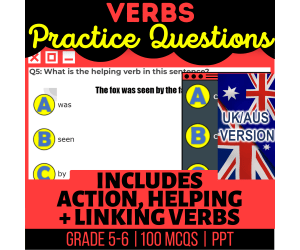
UK/Aus English Verbs Practice Questions - Year 6-7 (PPT)
ELA, Language Development, ESL, Grammar, Common Core, Resources for Teachers, Grade 5, 6, 7, Quizzes and Tests, Teacher Tools, Tests, Assessments, Activities, Presentations, Quizzes
THIS IS THE UK/AUS ENGLISH SPELLING VERSION. CHECK THE CATALOG FOR THE ORIGINAL AMERICAN ENGLISH VERSION. Verbs Grammar Practice MCQS ELA MCQS Overview: In this series of lessons, students will embark on an engaging journey to explore the grammar skills that make our language vibrant and expressive. These lessons are crafted to help students identify, comprehend, and effectively apply language arts skills in both writing and speech. This UK/Aus English version is especially useful for schools, teachers, and families working with British-based spelling and language conventions. It is a helpful option for classrooms using UK curriculum expectations, international programmes influenced by British English, or any setting where learners need to practise the correct capitalisation and punctuation forms for that version of English. Verbs Overview: Action Verbs Helping Verbs Linking Verbs Additional Verbs Practice PPT Version This is the PPT editable and interactive version. There is a fillable answer sheet at the end. This download is available in GOOGLE Docs, GOOGLE Forms, GOOGLE Slides. PDF, PPT, WORD, check the links below for more details. FULL CATALOG OF DOWNLOAD LINKS HERE ELA Review Questions Overview Each review test includes three answer choices for every question, which helps keep things simple and manageable for students. The layout is clear and easy to follow, so students can focus on the questions instead of figuring out what to do. A few pictures are included on each test to make the pages feel a little more inviting and less overwhelming. A review sheet is also included, giving students a chance to go back over many of the main skills covered in the resource. Introduction or Example Sheet Each topic comes with an introduction or example sheet to look at before students begin. This gives students a clear starting point and helps them feel more prepared. It also lets them see what to expect before moving into the main work. For many students, it is a helpful way to quickly refresh the key ideas before they start practicing on their own. Full Answer Keys Full answer keys are included to make marking and checking work faster and easier. Sample responses are also provided where needed, especially for open-ended tasks. This can be a real time-saver on busy days and makes the resource more practical to use. Everything is there to help make planning, teaching, and checking student work feel a little more straightforward. For More Like This For similar downloads and other frees, do check out Cored Group on TeachSimple. Revisit how verbs show time with this verb tenses presentation .
Author Cored Education
Rating
Tags Elementary, Answers, Ccss, Common Core, Grammar, Tests, Test Prep, Assessment, Grade 5, Grade 6
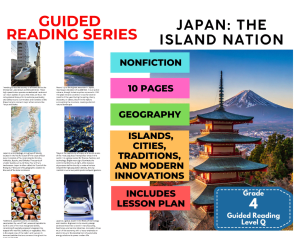
Japan The Island Nation: Guided Reading Level Q with Lesson Plan
ELA, Resources for Teachers, Reading Comprehension, Reading, Science, Geography, Social Studies, History, Earth and Environmental Sciences, Technology, Grade 3, 4, 5, Worksheets & Printables, Worksheets, Teacher Tools, Centers, Activities, Literacy Readers, Quizzes, Quizzes and Tests, Assessments, Lesson Plans
This Japan: The Island Nation (level q) guided reading book with lesson plan includes: Guided Reading Color Label (front cover x1) This is a quick way to match the book’s demands to what students can generally handle.. The overall goal is to use the level/color to pick books for several smaller groups. To qualify for a certain level, a student is expected to read a book from that level with about 90–94% accuracy. If a student is consistently accurate and understands, move up a level. If the student is struggling at that level, drop down and add more support. Each student will improve at completely different rates, but it is generally one of the best ways to check progress across the class. DOWNLOAD THE CATALOG TO VIEW ALL GUIDED READING BOOKS AVAILABLE (SORTED LEVELS A-Z) Pre-Reading Question (x1) Teacher asks the prompt aloud, can be while showing the cover or first page. Students share what they already know, or make educated guesses from the cover. Prompt them to use the target vocabulary. Write some of their responses on the board to look back at during the reading. Vocabulary Words (x5) Introduce the five words, best doing it one at a time. Start by saying it, while students repeat and then see if anyone knows what it means before reading further. Read through the meaning and try to briefly connect each word to a picture or gesture so it’s meaningful. Ask students to flip through the book pages and point to where they see each of the vocabulary words. While reading the book pause upon coming across one of the vocab words or read the sentence twice to make sure students understand the word has appeared. Optional: Ask students to raise hands whenever they see/hear one of the new words. Guided Reading Pages (x10) Check the book snapshot (below) for: primary topic - do you need to prep extra reading or intro materials on this? what is taught best - decide on 1-2 bullets to focus on, use the prompt or words provided here for best results. learning goals - what you are checking for students to be able to do after the session, elicit answers using prompts or words provided. key vocabulary (see section above). questions overview - so you know what is coming up and if you need to prep extra materials to assist understanding. Run the lesson You may have already looked at a few of the pages together, but you can show them some of the pictures again first to set meaning. Depending on how much time you have and how familiar your students are with guided reading class, you may want to read the book aloud first with the group first. Students whisper or partner read, while you listen in. If time, do it as a group, one student reading a page each. Use the guided page’s prompts to coach: “Check the picture / does it make sense?” “Point under the words / try the first sound” “Reread the sentence smoothly”. Try to focus more on one student per session (rotating every time), so you can work out if they are ready to move up or need to move down a level. Comprehension Questions (back cover x3) This is your way to check that students didn’t just say the words, but actually understood the text. First, let students answer by pointing to the page/picture and saying a short sentence. After any answer, follow with: “Show me where you found that in the text.” In bigger groups, have partners answer first (10–20 seconds), then call on 2–3 students to share. Differentiation tips: Emerging speakers/struggling readers: oral + pointing On-level: oral in a full sentence Higher: one written sentence or draw + label Book Snapshot Title: Japan: The Island Nation Genre: Nonfiction Subject: Social Studies (Geography/Culture) Primary Topic: Japan’s islands, cities, traditions, and modern innovations Estimated Guided Reading Level (A–Z): Q What This Book Teaches Best Explains Japan’s geography as an archipelago , naming the four main islands and describing its location off East Asia. Highlights Tokyo as a major metropolitan area , describing its role and features of city life. Describes transportation and technology through the Shinkansen (bullet train), including its speed, safety, and punctuality. Connects landforms and natural features to Japan’s identity by describing Mount Fuji, snow cover, and spring sakura blossoms. Builds understanding of culture and history through Shinto and Buddhism, matsuri festivals, and the Edo period (shoguns, samurai, and castles like Himeji). Learning Goals Students will explain what an archipelago is and name Japan’s four main islands. Students will describe Tokyo’s importance and identify details the text gives about the city. Students will explain how the Shinkansen helps people travel and identify key features the text highlights (such as speed or punctuality). Students will describe Mount Fuji using details from the text, including its height and volcanic history. Students will identify key ideas about Japanese traditions from the text (religions, shrines/torii, cuisine, or festivals). Students will explain how Japan’s climate varies and describe the text’s example of the “snow monkey” in winter. Key Vocabulary From the Text archipelago — a group of islands. metropolitan — related to a very large city area. punctuality — being on time. terraced — built in step-like levels on a hillside. geothermal — heat that comes from inside the Earth. Discussion Prompts Pre-reading question: What places, traditions, or inventions do you expect to learn about in Japan? Comprehension questions: What four main islands does the text name as part of Japan? Comprehension questions: What does the text say the Shinkansen is known for? Comprehension questions: How does the text say the “snow monkey” adapts to cold winters? Printing Tips 1. Best Printing Method (Recommended) “Booklet” Printing (Best if Available) If your printer or PDF viewer supports Booklet Printing , use this. Settings to use: Print mode: Booklet Paper size: Letter or A4 (either works) Orientation: Landscape Print on both sides: Yes Flip on: Short edge Scaling: Fit to printable area Booklet subset: First test: Front sides only Then: Back sides only This will automatically: Pair pages correctly Put the cover on the outside Align everything for folding After printing, fold in half and staple along the spine . 2. If “Booklet” Printing Is NOT Available You can still print this correctly with manual duplex printing . Step-by-step: Open the PDF. Choose Print . Set: Orientation: Landscape Pages per sheet: 1 Print on both sides: Yes Flip on: Short edge Print all pages . Because each PDF page already contains two facing book pages, the result will still fold cleanly into a book. Thousands of Cored Education products are included with your TeachSimple membership. Download links and encyclopedia index available here.
Author Cored Education
Rating
Tags Reading Comprehension, Reading Passages, Reading, Guided Reading, Guided Reading Lesson Plan, Guided Reading Activity, Pre-reading, Social Studies, Geography, History
Defining Words Sample - Vocabulary Grade 3-4 (PPT)
ELA, Language Development, ESL, Common Core, Resources for Teachers, Vocabulary, Grade 3, 4, Quizzes and Tests, Teacher Tools, Tests, Assessments, Presentations, Activities
Defining Words Sample Lesson ELA MCQS Overview: In this series of lessons, students will embark on an engaging journey to explore the grammar skills that make our language vibrant and expressive. These lessons are crafted to help students identify, comprehend, and effectively apply language arts skills in both writing and speech. Accompanied by free supplementary materials available for all topics, each lesson builds on the previous one, offering a balanced mix of direct instruction, interactive group activities, and independent practice. Through fun and creative tasks, students will learn to recognize grammar within sentences, understand their function, and use them to enrich their own writing and speech. Defining Words Overview: Includes: Match Words to Definition Match Definition to Words Accurately Define Meanings Defining Word Practice PPT Version This is the PPT editable and interactive version. There is a fillable answer sheet at the end. This download is available in GOOGLE Docs, GOOGLE Forms, GOOGLE Slides. PDF, PPT, WORD, check the links below for more details. FULL CATALOG OF DOWNLOAD LINKS HERE Grade 3/4 Links: Adjectives Google Docs Google Forms Google Slides PDF PPT Word Free Supplementary Materials Pack Adverbs Google Docs Google Forms Google Slides PDF PPT Word Free Supplementary Materials Pack Conjunctions Google Docs Google Forms Google Slides PDF PPT Word Free Supplementary Materials Pack Nouns Google Docs Google Forms Google Slides PDF PPT Word Free Supplementary Materials Pack Pronouns Google Docs Google Forms Google Slides PDF PPT Word Free Supplementary Materials Pack Verbs Google Docs Google Forms Google Slides PDF PPT Word Free Supplementary Materials Pack Sentence Structure Google Docs Google Forms Google Slides PDF PPT Word Free Supplementary Materials Pack Present Tense Google Docs Google Forms Google Slides PDF PPT Word Free Supplementary Materials Pack Past Tense Google Docs Google Forms Google Slides PDF PPT Word Free Supplementary Materials Pack Future Tense Google Docs Google Forms Google Slides PDF PPT Word Free Supplementary Materials Pack Context Clues Google Docs Google Forms Google Slides PDF PPT Word Free Supplementary Materials Pack Defining Words Google Docs Google Forms Google Slides PDF PPT Word Free Supplementary Materials Pack Fill the Blanks Google Docs Google Forms Google Slides PDF PPT Word Free Supplementary Materials Pack Homophones Google Docs Google Forms Google Slides PDF PPT Word Free Supplementary Materials Pack Synonyms Google Docs Google Forms Google Slides PDF PPT Word Free Supplementary Materials Pack ELA Review Questions Overview Questions have three answer choices. There are a handful of pictures on each test for aesthetic purposes, as well as a review sheet covering most of the topics covered in the product. Introduction or Example Sheet Each topic will include an introduction or example sheet to go through first with your students. Full Answer Keys Full answer keys and sample responses are provided so no matter how busy you are, you know you're covered! In the Supplementary Pack Interactive Ice Breakers: Fun, hands-on activities that get students thinking about adjectives right from the start. Guided Practice: Teacher-led exercises that reinforce the day’s lesson, ensuring students can confidently identify and use adjectives. Group and Partner Tasks: Collaborative activities that allow students to work together to solve problems, categorize adjectives, and create descriptive sentences. Independent Worksheets: Structured worksheets that provide individual practice and help solidify understanding of key concepts. Exit Tasks: Quick, reflective activities at the end of each lesson that assess understanding and encourage students to apply what they’ve learned. For similar downloads and other frees, do check out Cored Group on TeachSimple.
Author Cored Education
Tags Elementary, Answers, Ccss, Common Core, Tests, Test Prep, Assessment, Grade 3, Grade 4, Vocabulary
Reading Passage 44: Classification of the Sun and Other Stars PPT
Science, Earth and Environmental Sciences, Earth Sciences, Common Core, ESL, Language Development, ELA, Reading Comprehension, Reading, Space, Grade 5, 6, 7, Teacher Tools, Presentations, Activities, Tests, Quizzes and Tests, Assessments
Free Reading Passage on Classification of the Sun and Other Stars for Earth Science What's inside this free product? Science Reading Comprehension Passage: Classification of the Sun and Other Stars Independent PPT Version: This is the independent PPT version containingone lesson. Product Info: 37 Slides (US English with Answers) PPT Version Teaching Duration: 90 Minutes Science Reading Comprehension Outline: Introducing a comprehensive resource tailored for 5th and 6th graders, this product offers enriching reading passages supplemented with illustrative pictures and graphs to clarify key concepts. Aligned with the Common Core State Standards (CCSS), it offers a hassle-free approach to teaching, given that the bulk of the preparation is already done for you. The passages present a diverse set of questions – from multiple choice to data analysis and fill-in-the-blanks. This ensures a rich blend of high-interest content and fundamental curriculum-based science themes. With its versatility, you can seamlessly integrate these lessons into various classroom settings, whether it's whole class discussions, morning exercises, independent desk tasks, small group engagements, contingency plans for substitute teachers, regular homework assignments, or even themed activities for holidays. FULL CATALOG OF DOWNLOAD LINKS HERE Grade 5/6 Links: Physical Science Part 1 - Physical and Chemical Properties Google Docs/Slides/Forms PDF PPT Word Free Supplementary Pack Accompanying Videos Physical Science Part 2 - Motion and Energy Google Docs/Slides/Forms PDF PPT Word Free Supplementary Pack Accompanying Videos Physical Science Part 3 - Electricity and Magnets Google Docs/Slides/Forms PDF PPT Word Free Supplementary Pack Accompanying Videos Life Science Part 1 - Cells, Reproduction and Genetics Google Docs/Slides/Forms PDF PPT Word Free Supplementary Pack Accompanying Videos Life Science Part 2 - Human Body Systems Google Docs/Slides/Forms PDF PPT Word Free Supplementary Pack Accompanying Videos Life Science Part 3 - Plant Parts and Ecosystems Google Docs/Slides/Forms PDF PPT Word Free Supplementary Pack Accompanying Videos Earth Science Part 1 - Plate Tectonics and Rock Cycle Google Docs/Slides/Forms PDF PPT Word Free Supplementary Pack Accompanying Videos Earth Science Part 2 - Ocean Exploration and Natural Resources Google Docs/Slides/Forms PDF PPT Word Free Supplementary Pack Accompanying Videos Earth Science Part 3 - Weather and Solar System Google Docs/Slides/Forms PDF PPT Word Free Supplementary Pack Accompanying Videos For similar products and other frees, do check out Cored Group on TeachSimple .
Author Cored Education
Tags Science, Elementary, Reading, Comprehension, Vocabulary, Answers, Physics, Physical Science, Ccss, Common Core

Capitalization and Punctuation Supplementary Materials Grade 5-6 (PDF)
ELA, Language Development, ESL, Grammar, Common Core, Resources for Teachers, Grade 5, 6, 7, Worksheets & Printables, Worksheets, Quizzes and Tests, Teacher Tools, Tests, Assessments, Lesson Plans
Capitalization and Punctuation Supplementary Materials Note: This download DOES NOT include the tests themselves. You can still make use of these materials without them but they are recommended. Download in a format of your choice in the "Links" section below. In the Supplementary Pack Interactive Ice Breakers: Engaging warm-up activities that introduce students to key ELA concepts, such as quick capitalization corrections and punctuation challenges. Guided Practice: Structured teacher-led exercises that reinforce grammar and punctuation rules, helping students identify and apply them correctly in sentences. Group and Partner Tasks: Collaborative activities where students work together to edit sentences, correct capitalization, and improve punctuation through peer discussion and teamwork. Independent Worksheets: Carefully designed worksheets that provide focused practice, allowing students to apply learned concepts and refine their skills independently. Exit Tasks: Quick assessments at the end of each lesson, prompting students to reflect on what they’ve learned and apply their knowledge in writing and editing tasks. Links Using Commas Using Quotations Using Possessive Nouns Using Dates Open/Close an Email Google Docs Google Forms Google Slides PDF PPT Word FULL CATALOG OF DOWNLOAD LINKS HERE Grade 5/6 Links: Capitalization & Punctuation Google Docs Google Forms Google Slides PDF PPT Word Free Supplementary Materials Pack Adjectives Google Docs Google Forms Google Slides PDF PPT Word Free Supplementary Materials Pack Nouns Google Docs Google Forms Google Slides PDF PPT Word Free Supplementary Materials Pack Pronouns Google Docs Google Forms Google Slides PDF PPT Word Free Supplementary Materials Pack Verbs Google Docs Google Forms Google Slides PDF PPT Word Free Supplementary Materials Pack Prefixes & Suffixes Google Docs Google Forms Google Slides PDF PPT Word Free Supplementary Materials Pack Sentence Structure Google Docs Google Forms Google Slides PDF PPT Word Free Supplementary Materials Pack Subject Verb Agreement Google Docs Google Forms Google Slides PDF PPT Word Free Supplementary Materials Pack Tenses Google Docs Google Forms Google Slides PDF PPT Word Free Supplementary Materials Pack Context Clues Google Docs Google Forms Google Slides PDF PPT Word Free Supplementary Materials Pack Defining Words Google Docs Google Forms Google Slides PDF PPT Word Free Supplementary Materials Pack Fill in the Blanks Google Docs Google Forms Google Slides PDF PPT Word Free Supplementary Materials Pack Homophones Google Docs Google Forms Google Slides PDF PPT Word Free Supplementary Materials Pack Synonyms Google Docs Google Forms Google Slides PDF PPT Word Free Supplementary Materials Pack ELA Review Questions Overview Questions have three answer choices. There are a handful of pictures on each test for aesthetic purposes, as well as a review sheet covering most of the topics covered in the product. Introduction or Example Sheet Each topic will include an introduction or example sheet to go through first with your students. Full Answer Keys Full answer keys and sample responses are provided so no matter how busy you are, you know you're covered! For More Like This For similar downloads and other frees, do check out Cored Group on TeachSimple.
Author Cored Education
Tags Elementary, Answers, Ccss, Common Core, Grammar, Tests, Test Prep, Assessment, Grade 5, Grade 6
Future-Ready Creators: AI Ethics & Career Exploration Gamified Project
Life Skills, Special Resources, Social Emotional Learning (SEL), Social Skills, Special Education Needs (SEN), STEM, Research, Classroom Management, Resources for Teachers, Community Building, Grade 3, 4, 5, 9, 10, 11, 12, Worksheets & Printables, Workbooks, Worksheets, Teacher Tools, Assessments, Lesson Plans, Presentations, Rubrics
Future-Ready Creators: AI Ethics & Career Exploration Gamified Project Unit (Edition) Unleash the future of education by digging into this all-inclusive, gamified AI ethics curriculum for high schoolers, Grades 9-12. Join the AI revolution with theory, real-life case studies, and interactive worksheets that explore algorithmic bias, data privacy, surveillance, transparency, and how AI will shift careers. This 24-page digital PDF unit mingles rigorous academics with activities like a student workbook, ethical audits, SVG visuals of mind maps and flowcharts, and teacher resources filled with answer keys. Suitable for classes dealing with STEM, computer science, ethics, and career guidance, this ready-to-use project nurtures critical thinking, ethical decision-making, and career exploration in an AI-filled world. AI Ethics Lesson Plans, High School AI Curriculum, Gamified AI Projects, AI Bias Activities, Future Careers in AI, Digital Workbook on Ethics, Teacher Resources for AI Education. For homeschooling, classroom use, or in after-school programs, give teens the power to create their vision as responsible AI innovators today! Why Parents/Schools Love It: Prepares Students for the Future with AI: It teaches necessary skills for ethical AI practices, detection of bias in AI, and exploring a job market with a high degree of automation with technology-related jobs. Engaging Gamified Format: Converts difficult-to-understand information into challenges, simulations, and projects, which serve as motivation and learning aids and add fun to learning. Teaching Tools: Teaches educators with comprehensive ready-to-use teaching tools, including illustrations, work sheets, and answered keys, making it easy to integrate into any high school curriculum. Cultivates Ethical Thinking and Responsibility: Helps students deal with pressing issues such as the loss of privacy rights and the need for algorithmic justice, encouraging ethical thinkers capable of living with the consequences of artificial intelligence. Versatile and Inclusive: "The book is very versatile and inclusive, being suitable for learning environments such as classrooms, home-schooling, or online learning with equity, diversity, and increasing AI jobs as the appeal." Target Student Classes : From an exhaustive analysis of the PDF, wherein it is clearly mentioned that it is "designed specifically for high school students (Grades 9-12)" and is targeted at advanced concepts involving AI, you need to target high school students belonging to Grades 9-12. This is in line with the level of material, which is of an advanced level of understanding, assuming that these individuals possess critical and digital literacy skills characteristic of individuals on the threshold of higher education or professional life, in particular: Main target audience: Classes involving Computer Science, STEM, Technology, Ethics/Philosophy, Career Guidance, or Social Secondary Audience: Home-school programs, after-school activities, or classes on digital citizenship, innovation, or future studies. Refrain from targeting younger groups, such as the middle school level or younger, because the contents involve intricate subject matters such as deep learning, data sovereignty, or predictive policing. Copyright/Terms of Use : This Book was copyrighted under the name of Syed Hammad Rizvi. This document or repository is for personal use only. You cannot modify, distribute, or give away a single piece of this document. In other words, you cannot place it on the World Wide Web so that people can download it for free. If you would like to share these resources with your colleagues, you can purchase additional licenses from Teachsimple. Thank you for respecting these use terms. This product is happily brought to you by Syed Hammad Rizvi
Author Creative Book Store
Rating
Tags AIEthics, AICurriculum, ArtificialIntelligence, HighSchoolAI, GamifiedLearning, FutureCareers, EthicalAI, MachineLearning, AIBias, DataPrivacy
Lighthouses Reading Comprehension Passage - Cored Ed Encyclopedia
ELA, Language Development, Resources for Teachers, Reading Comprehension, Reading, Pre-Reading, Writing, Strategies, Science, Physics, Grade 2, 3, 4, 5, Worksheets & Printables, Worksheets, Teacher Tools, Centers, Activities, Writing Prompts, Assessments, Tests, Quizzes and Tests, Quizzes
This lighthouses reading comprehension contains the following: Visualize on the Cover (Teacher Read Aloud Script) Start your lesson by taking a few moments to visualize the topic and share thoughts or feelings about it. Pre-Reading Trivia Students will write down one thing they already know about the subject and then read five more facts and discuss. These facts are fun, and the students will enjoy learning about the subject before reading more. Reading Passage The text is a high-interest reading passage with set paragraphs, roughly three to four paragraphs long. It contains a variety of themes about the topic, anywhere from history to technology. The passage is between 250 and 350 words in length. Mixed Questions The first question page contains four multiple-choice questions, each with a choice of four answers, and three written response questions that require a sentence or two from the student. Vocabulary Questions Practice seven key words from the text in this section across two activities. First section is scrambled words where students will unscramble three words given a clue for each. The second section is a word to meaning matching activity. Creative Writing In this question, the student will be required to write a five to eight sentence paragraph on a question related to the topic. Extension Activities This page is optional for fast finishers or to take home. There are several activities, each one requiring a different skill. Do some, do none, do all, completely optional - but you will feel reassured knowing every possibility is planned for. Includes summary writting question. Answer Key There are answers for the multiple-choice questions, written response questions have sample answers, vocabulary answers and if there is a summary question then a sample summary will be provided as well. FULL CATALOG OF DOWNLOAD LINKS AND ENCYCLOPEDIA INDEX HERE Lesson Snapshot Title: Lighthouses Genre: Nonfiction (informational text) Subject: Science & Technology / Social Studies (navigation and safety) Primary Topic: Lighthouse signals, fog warnings, and why lighthouses matter Estimated Guided Reading Level (A–Z): P What This Lesson Teaches Best What lighthouses do for ships: help pilots find safe water, avoid reefs and shoals, and line up with a harbor entrance. How lighthouse lights communicate: a strong beam can sweep as the lamp and lens rotate, and timed flashes form patterns that identify a lighthouse. Why special tools are needed in fog: thick fog can hide light, so lighthouses use other signals like foghorns and sometimes radio or radar signals. How lighthouses connect to history and change: the Lighthouse of Alexandria (built around 280 BCE) became ruins after earthquakes, and many modern lights are now automatic and may use LEDs. Learning Goals Students will explain the main job of a lighthouse using details from the passage. Students will describe how a lighthouse lens helps shape and send light into a strong beam. Students will explain how blinking patterns help sailors know which lighthouse they are seeing. Students will identify at least two signals lighthouses can use when fog makes the light hard to see. Students will summarize one way lighthouses have changed from the past to today (keepers, automation, LEDs, navigation). Key Vocabulary From the Text sandbar — a shallow pile of sand near/under water. shoals — shallow water areas that can be dangerous. beam — a strong line of light shining outward. rotate — to turn around in a circle. daymark — bold paint patterns that help in daylight. Cored Ed Encyclopedia Overview The Cored Ed Encyclopedia is a weekly series of lessons that you can pick up and use right away. These short readings fit into whatever time you have available. Each one includes a warm-up, a reading, and a set of questions, but it’s flexible — you can do just the reading, the full lesson, or skip the writing section if you need to. Each lesson focuses on a single topic so students don’t get lost. The writing is clear but never childish, making it perfect for grades two through five. Topics range from animals and science to history, inventions, and everyday things. No matter the level of the student, everyone should take away at least one new idea or fact from each lesson. The materials are easy to print, easy to explain, and require no setup. They work well for whole-class teaching, partner work, or independent study.
Author Cored Education
Rating
Tags Vocabulary, Spelling, Reading Comprehension, Reading Passages, Reading, Creative Writing, Reading Strategies, Writing Prompts, Lighthouses, Physics
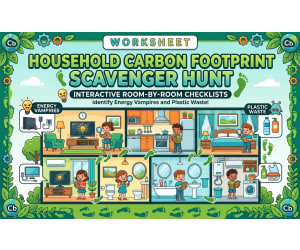
Household Carbon Footprint Scavenger Hunt
Science, Earth and Environmental Sciences, Environmental Science, Earth Sciences, Geology, Theories, Basic Science, Technology, Engineering, Space, Grade 3, 4, 5, 6, 7, 8, 9, Worksheets & Printables, Workbooks, Worksheets, Word Searches, Teacher Tools, Assessments, Lesson Plans, Quizzes and Tests, Quizzes, Tests
Transform your students into real-life Eco-Detectives! Are you looking for a hands-on, engaging, and impactful environmental science activity that goes beyond a standard worksheet? This Household Carbon Footprint Scavenger Hunt turns learning about climate change into a fun, actionable mission that empowers students to make a real difference, right in their own homes. This comprehensive, no-prep resource tackles two of the biggest "invisible" contributors to a household's carbon footprint: Energy Vampires (devices draining standby power) and Single-Use Plastics . By turning abstract concepts into a tangible hunt, students will develop critical thinking, data collection, and problem-solving skills aligned with Next Generation Science Standards (NGSS) . Perfect for Earth Day , a unit on environmental science, project-based learning (PBL), or a meaningful distance learning assignment, this scavenger hunt gets kids moving, observing, and collaborating with their families to create a more sustainable home. What's Included in this 38-Page PDF Resource: Part 1: Educator's Scientific Guide: A detailed 10-page introduction for the teacher or parent, explaining the science behind phantom power and the lifecycle of plastics in clear, easy-to-understand terms. Part 2: The Student Workbook (19 pages): Vocabulary Mission Briefing: Ensures students understand key terms before they begin. 8 Unique Room-by-Room Checklists: Students audit the Kitchen, Living Room, Bedroom, Bathroom, Laundry Room, and Home Office, hunting for culprits. 2 Action Plan Worksheets: Guides students to synthesize their data and create realistic, actionable plans for reducing energy and plastic waste. Part 3: Teacher Resources & Visuals (9 pages): 3 High-Quality Visual Aids: Concept maps and charts, perfect for classroom projection or as print-outs. Step-by-Step Teacher Implementation Guide: Includes pre-hunt prep, safety protocols, and tips for facilitating a powerful post-hunt reflection. Comprehensive Answer Key: A complete key with evaluation rubrics to make grading simple and objective. Give your students the gift of eco-agency, not eco-anxiety. Download today and empower the next generation of environmental stewards! Keywords: Earth Day, Carbon Footprint, Environmental Science, Scavenger Hunt, Project-Based Learning, At-Home Activity, Distance Learning, 3rd Grade, 4th Grade, 5th Grade, NGSS, Climate Change, Energy Conservation, Plastic Waste, Recycling, STEM, Go Green. Why Parents/Schools Love It: Turns Abstract Concepts into a Fun Game: It transforms the overwhelming idea of "climate change" into a tangible "scavenger hunt" for "energy vampires," making learning active, memorable, and incredibly engaging for kids. Empowers Students with Actionable Solutions: Instead of causing eco-anxiety, this resource gives children a sense of agency. By unplugging a charger or choosing a reusable bottle, they see an immediate, positive impact they can make. Comprehensive & No-Prep: This is a complete, ready-to-go resource. With a detailed teacher guide, student workbooks, visual aids, and an answer key, it saves educators and parents valuable preparation time. Strengthens the Home-School Connection: It's the perfect project to send home. The activity encourages students to collaborate with their families, bringing environmental education from the classroom to the living room. Builds Real-World Science Skills: Students aren't just memorizing facts; they are acting like real scientists—observing, collecting data (on their checklists), analyzing findings, and proposing solutions (in their action plans), directly aligning with NGSS practices. Target Student Audience : Based on a complete analysis of the language, concepts, and tasks in the workbook: Primary Target: 3rd Grade (8-9 years old). The PDF explicitly mentions this grade level, and the content is perfectly aligned with their cognitive abilities (the concrete operational stage). The tasks involve reading, counting, identification, and simple written responses. Secondary Target: 4th Grade and 5th Grade. This activity is still highly relevant and engaging for these students. They can complete it with more independence and provide more detailed, analytical responses in the action plan sections. Possible Niche Target: Advanced 2nd Graders (with significant parent/teacher guidance) or Middle School Special Education students who benefit from hands-on, concrete learning activities. Copyright/Terms of Use: This Book was copyrighted by Syed Hammad Rizvi. This resource is for personal and single classroom use only. You may not alter, redistribute, or sell any part of this resource. In other words, you may not put it on the Internet where it could be publicly found and downloaded. If you want to share this resource with colleagues, please purchase additional licenses from Teachsimple. Thank you for respecting these terms of use. This product is happily brought to you by Syed Hammad Rizvi
Author Creative Book Store
Rating
Tags EarthDay, TeacherResources, EnvironmentalScience, STEM, Homeschool, ScavengerHunt, DigitalDownload, Printable, CarbonFootprint, EarthDayActivities
Year 1 End-of-Term English Review Pack | Australian Curriculum
ELA, Grade 1, Lesson Plans, Teacher Tools, Assessments, Worksheets & Printables
Year 1 End-of-Term English Review Workbook Pack | Australian Curriculum Looking for a low-prep way to review Year 1 English skills at the end of term? This Year 1 English Review Workbook helps students practise phonics, sight words, reading comprehension, grammar, punctuation, fluency, and sentence writing in one easy-to-use pack! Perfect for end-of-term revision, homework, literacy rotations, intervention, or holiday review. Designed for Australian classrooms, this Year 1 English Review aligns with the Australian Curriculum v9.0 and includes differentiated activities, a teacher guide, answer key, and engaging literacy tasks students can complete independently or with support. ✅ What’s Included 50-page Year 1 English Workbook 14-page Answer Key for quick marking 20-page Teacher’s Guide with pacing, differentiation, and curriculum alignment Phonics review activities Consonant blends & digraph practice Decoding 1- and 2-syllable words Year 1 sight word review Reading comprehension passages Reading fluency practice Grammar and punctuation activities Sentence writing prompts Big Write task with rubric Parent letter template Extension activities and differentiation table ✨ How It Works in the Classroom This Year 1 English Review resource is flexible and easy to implement: Use as an end-of-term literacy review Assign one section per day across 2 weeks Perfect for literacy centers and independent work Great for homework packets or holiday revision Ideal for intervention groups and early finishers Use whole-group, small-group, or sub plans The workbook was designed for short, manageable activities that build confidence and review key Year 1 literacy skills. 🎯 Standards & Learning Goals This resource aligns with Australian Curriculum v9.0 English outcomes, including: Phonics and decoding skills Reading fluency and comprehension High-frequency sight words Sentence writing and punctuation Grammar basics including nouns, verbs, adjectives, and adverbs Comparing narrative and informative texts Syllable awareness and word building Curriculum codes included in the Teacher’s Guide: AC9E1LA06 AC9E1LA07 AC9E1LA10 AC9E1LY04 AC9E1LY05 AC9E1LY06 AC9E1LY11 AC9E1LY14 💛 Why Teachers Love It Low-prep and easy to print Covers multiple Year 1 English skills in one pack Clear layout for independent learners Includes answer keys and teacher support Supports differentiation and intervention Encourages reading confidence and fluency growth Australian spelling and curriculum aligned Great for assessment portfolios and revision Teachers love using this Year 1 English Review workbook because it keeps students engaged while simplifying end-of-term planning! 📌 Perfect For Year 1 English review End-of-term assessment prep Literacy rotations Homework and take-home packs Reading intervention Australian Curriculum literacy review Relief teacher plans Fast finisher literacy activities ⭐ Related Skills Covered Phonics Digraphs and blends Sight words Reading fluency Reading comprehension Grammar Punctuation Sentence writing Vocabulary development
Author Bright Classroom Ideas Marketplace
Rating
Tags End-of-term, Winter, Ela, English, Review, Australia

Reading Comprehension Passages Fiction Set 6 - Family (Fillable PDF)
ELA, Reading, Reading Comprehension, Common Core, Children’s Literature, Literature, Vocabulary, Language Development, Spelling, Writing, Grade 2, 3, Worksheets & Printables, Worksheets, Assessments, Teacher Tools, Tests, Quizzes and Tests, Writing Prompts, Centers, Activities
Reading Comprehension Passages Fiction Set 6 Snapshot Genre: Fiction (short story + comprehension practice) Subject: Reading (Literature) Primary Topic: Family support and problem-solving at home Estimated Guided Reading Level (A–Z): M What This Teaches Best How a character responds when plans change (Molly can’t attend a party because she has a fever). How family members show support through actions (her parents and brother set up games in her room). Sequencing key events across a short narrative with dialogue and action. Understanding setting details and objects that matter to the plot (thermometer, balloons, soda cans, sock ball). Learning Goals Students will identify the problem and explain why it happens in the story. Students will describe how Molly’s family helps her and cite details from the text. Students will retell the story in order, including beginning, middle, and end events. Students will answer questions about key details (who, what, where, why) using the text. Students will use context clues to explain the meaning of unfamiliar words from the story. Passages Include 1.Molly's Home Carnival: It looks like Molly will miss the carnival. Until... 2.Big Bro's Big Idea: Noah's big brother does his best to cheer him up. 3.Denny's Car Wash: Denny wants a new game, but does he get the money for it? 4.Tessa's Grandma: Emma misses her grandma, but Tessa has a great idea. 5.Tom's Canadian Mom: The most important person from Canada is...Tom's mom! 6.Big Brother Woes: Big Brother gets to do whatever he wants. It's just not fair! 7.Tell Us a Story, Grandpa: Grandpa's tales are true family treasures. 8.My Weekend: Read about the author's fun weekend in this interesting story. 9.All in the Picture: Learn how the author has changed in the last 22 years. 10.California 'Coaster: Find out how this author spends his summer vacation. Additional File: Big Bro's Big Idea: Cork Boat Instructions FILLABLE PDF VERSION Worksheet-style pages, but with type-in answer boxes so students can complete and save their work digitally. Other versions are available in the links list below or in the full catalog. FULL CATALOG OF DOWNLOAD LINKS HERE For similar downloads and other frees, do check out Cored Group on TeachSimple.
Author Cored Education
Rating
Tags Elementary, Reading, Comprehension, Vocabulary, Answers, Spelling, Writing, Passages, Reading Centers, Reading Comprehension Assessment

Hot Air Balloons Reading Comprehension Passage - Cored Ed Encyclopedia
ELA, Reading Comprehension, Reading, Pre-Reading, Language Development, History, Social Studies, Science, Physics, Technology, Grade 2, 3, 4, 5, Worksheets & Printables, Worksheets, Teacher Tools, Centers, Activities, Writing Prompts, Assessments, Quizzes and Tests, Quizzes, Lesson Plans
This hot air balloons reading comprehension with lesson plan includes: Visualization (on the front cover) Start your lesson by taking a minute to think and share something about the topic. Read the script aloud (slowly), perhaps prepare some music or sound effects. Student close their eyes and let their imaginations wander. Students open their eyes, read the question aloud and give them a few minutes to complete. Ask a few students to share or keep answers until the end to compare with what they learn in the passage. Quick pause—thousands of Cored Education products are included with your TeachSimple membership. Download links and encyclopedia index available here. Pre-Reading Trivia Students will write down one thing they already know about the subject and then read five more facts and discuss. These facts are fun, and the students will enjoy learning about the subject before reading more. Give 1 minute for students to write what they already know (no pressure—best guess is fine). Read the five facts together. After each fact, do ask a student for their opinion, was it surprising? Set a purpose by asking students to highlight/underline one fact they want to learn more about during the reading. Reading Passage The text is a high-interest reading passage with set paragraphs, roughly three to four paragraphs long. It contains a variety of themes about the topic, anywhere from history to technology. The passage is between 250 and 350 words in length. First, ask students to look at the headings and see what they’ll learn about today. What do they know about the topic/heading? First read options: Teacher read-aloud (best for support). Partner reading (paragraph by paragraph). While reading, students underline important details, and vocabulary words they think may come up in the questions section. Mixed Questions The first question page contains four multiple-choice questions, each with a choice of four answers, and three written response questions that require a sentence or two from the student. Students complete the mcqs first independently, then review quickly as a class. For the 3 written responses, try to get students giving the answer with some form of evidence: “I think ___ because the text says ___.” If students get stuck, send them back to check the passage. Vocabulary Questions Practice seven key words from the text in this section across two activities. First section is scrambled words where students will unscramble three words given a clue for each. The second section is a word to meaning matching activity. Before starting, have some students read out words they underlined in the passage. Ask students to say the word and read aloud the sentence(s) around each word. Ask students to do scrambled words and the matching exercise in pairs then go through answers as a class. For the scrambled spelling task, get four pairs to come up to the board and write the words for extra practice with the other student reading out the clue. For the matching task, prompt students to give full sentences: “I matched ___ with ___ because ___.” Creative Writing In this question, the student will be required to write a five to eight sentence paragraph on a question related to the topic. Before starting, ask students write down 3 key ideas they are going to include in their piece. Ask students for ideas to share around the class to help those struggling. Pro writing expectations: 5–8 sentences At least 2 facts or details from the passage At least 2 vocabulary words from the previous page Students read their paragraphs while classmates listen for facts and vocabulary words. Extension Activities This page is optional for fast finishers or to take home. There are several activities, each one requiring a different skill. Do some, do none, do all, completely optional - but you will feel reassured knowing every possibility is planned for. Includes summary writting question and additional facts. Answer Key There are answers for the multiple-choice questions, written response questions have sample answers, vocabulary answers and if there is a summary question then a sample summary will be provided as well. Lesson Plan Included Customized lesson plan for this lesson is included. Lesson Snapshot Title: Hot Air Balloons Genre: Nonfiction (informational text) Subject: Science (flight/forces) Primary Topic: How hot air balloons rise and early ballooning history Estimated Guided Reading Level (A–Z): Q What This Lesson Teaches Best Explains the key science idea that warm air rises and connects it to how a hot air balloon works. Builds historical understanding through a short timeline (1780s France experiments; June/September/November 1783 flights; return in the late 1950s–1960). Introduces main balloon parts and functions (envelope, basket, propane burner, valve) and how they affect rising/sinking. Clarifies how balloons travel (they can’t steer like airplanes; changing height helps catch winds moving different ways). Shows how improved materials/design (nylon fabric and powerful propane burners) helped ballooning become a sport and celebration again. Learning Goals Students will explain why warm air helps a hot air balloon rise using details from the passage. Students will identify the Montgolfier brothers and describe what the crowd in Annonay saw on June 4, 1783. Students will describe what happened at the Palace of Versailles on September 19, 1783. Students will describe the jobs of the envelope, propane burner, and valve in a modern balloon. Students will explain how a balloon can travel in different directions by changing height. Students will explain how Ed Yost helped ballooning return in the late 1950s and what happened in 1960. Key Vocabulary From the Text experiments — tests to find out if something works. envelope — big fabric balloon bag that fills with heated air. propane — fuel used to make the burner’s flame. valve — opening that lets hot air out. redesign — change how something is made to improve it. FULL CATALOG OF DOWNLOAD LINKS AND ENCYCLOPEDIA INDEX HERE Compare another way to fly with this helicopter reading packet .
Author Cored Education
Rating
Tags Vocabulary, Reading Comprehension, Reading Passages, Lesson Plans, Ela Lesson Plans, Reading Comprehension Lesson Plans, Pre-reading, Science Lesson Plans, Physics, Technology

Candy Reading Comprehension Passages and Questions Google Slides
ELA, Language Development, Resources for Teachers, Vocabulary, Spelling, Reading Comprehension, Reading, Common Core, Grade 2, 3, 4, 5, Teacher Tools, Centers, Activities, Assessments, Tests, Quizzes and Tests, Presentations, Quizzes
Themed Reading Comprehension Passages Series - Candy This reading comprehension series is built for grades 2 to 5 and keeps things simple, clear, and easy to use. Every title follows a fun, kid-friendly theme and comes with two passage levels, one written for grades 2 to 3 and a more challenging version for grades 4 to 5. Students then work through a mix of follow-up pages that check understanding in different ways: multiple-choice questions, short written responses, scrambled words, a quick summary, and a theme-based word problem. Answer keys are included, so prep stays minimal. Each resource also comes in nine classroom-friendly formats, so you can choose what fits your setup: print or digital, editable or ready to go, and even self-grading options. Because the layout stays consistent, it is easy to plug into whole-class lessons, small groups, literacy centers, morning work, fast finisher tubs, sub plans, or home learning. It is a straightforward way to build comprehension, practice reading skills in context, and strengthen written responses without adding extra steps for you. Candy Lesson List Note: This product has titles different to those in the rest of the themed series. 1. Candy Types 2. Candy Flavors 3. Candy Shapes and Colors 4. Candy Ingredients 5. Candy Fun Facts GOOGLE SLIDES VERSION The same editable layout as PPT, but in the cloud for easy sharing, student access, and instant updates. Other versions are available in the links list below or in the full catalog. How to Use These Lessons Perfect for: Morning work or early-finisher bins Guided reading blocks or comprehension warmups Literacy centers or small-group rotations Holiday/seasonal review lessons Independent stations, sub plans, or take-home enrichment More Candy Themed Products CROSSWORDS WORDSEARCHES MAZES FULL CATALOG OF DOWNLOAD LINKS HERE Themed Reading Links Addition Animals Around the Home Birthday FORMATS: -FORMAL ASSESSMENT VERSION -PRESENTABLE PDF -PPT -SLIDES - PDF -FILLABLE PDF -WORD -FORMS -DOCS SUPPLEMENTARY MATERIALS (COMING SOON): -VISUAL READING PASSAGE VIDEO -GUIDED LEARNING VIDEO -LESSON PLANS Candy FORMATS: -FORMAL ASSESSMENT VERSION -PRESENTABLE PDF -PPT -SLIDES -PDF -FILLABLE PDF -WORD -FORMS -DOCS SUPPLEMENTARY MATERIALS (COMING SOON): -VISUAL READING PASSAGE VIDEO -GUIDED LEARNING VIDEO -LESSON PLANS Christmas Cinco de Mayo Clothes Colors Days and Months Division Earth Day Easter Easy Mazes Fall Father's Day Food Geography (Set 1) Geography (Set 2) Geography (Set 3) Graduation Health History (Set 1) History (Set 2) History (Set 3) Human Body Kindness Life Skills Mother's Day Multiplication Science (Set 1) Science (Set 2) Science (Set 3) Shapes Social Skills Spring Sports St. Patrick's Day Subtraction Summer Thanksgiving Transport Valentine's Day Winter Free One Lesson Themes Chinese New Year Lunar New Year Halloween Pink Shirt Day Independence Day Juneteenth President's Day Groundhog Day Readings in Depth Structure Each resource is built around a focused sub-theme within the broader topic. Students read two leveled passages (Grades 2–3 and Grades 4–5), then move through a short, consistent sequence of activities that checks understanding and keeps momentum: multiple-choice, brief written responses, a scrambled-words review, a compact summary task, and a light theme-linked word problem. The flow is predictable for students, but varied enough to feel fresh across topics. Each completed resource includes: Two differentiated reading passages (lower and upper level) A multiple-choice comprehension page Short written-response questions A scrambled-words or quick vocabulary check A brief summary activity A simple, theme-connected word problem Answer keys for fast marking and easy self-checking Nine classroom-friendly formats, including print, editable, digital, and self-grading options Themes Included These readings span a wide range of age-appropriate, high-interest topics, such as: Seasons and celebrations Real-world science and nature Community, character, and life skills Everyday high-frequency themes students already enjoy Each title connects to familiar experiences while strengthening comprehension, vocabulary in context, and clear written expression. Easy extensions (optional): Read twice: first for gist, second to highlight key details Write two “right there” questions and swap with a partner Create a 3-bullet fact list or mini mind map Turn the summary into a 3-sentence retell using sequence words Add one extra math question connected to the topic Compare the two levels: what details appear in both? Differentiation tips: Pre-teach 2–3 key words with quick examples Offer sentence starters for written responses Use partner reading: one reads aloud, one tracks evidence Allow highlighting or underlining before answering questions Provide a shorter chunking option for students who need breaks Encourage confident readers to justify answers with a quoted detail For similar downloads and other frees, do check out Cored Group on TeachSimple.
Author Cored Education
Rating
Tags Vocabulary, Spelling, Candy, Candy Activities, Writing Prompts, Word Problems, Reading Comprehension, Candy Reading, Candy Passages, Reading Passages

Reading Passages on Plate Tectonics and Rock Cycle (Fillable PDF)
ELA, Reading, Reading Comprehension, Science, Earth and Environmental Sciences, Earth Sciences, Common Core, ESL, Language Development, Geology, Grade 5, 6, 7, Diagrams, Teacher Tools, Tests, Quizzes and Tests, Assessments, Worksheets & Printables, Centers, Activities
Reading Passages on Plate Tectonics and Rock Cycle for Earth Science Part 1 - Plate Tectonics & Rock Cycle Reading Passage1: Plate Tectonics Reading Passage2: Rock Cycle Erosion and Deposition Reading Passage3: Properties of Rocks and Minerals Reading Passage4: Geological Time Snapshot Genre: Nonfiction. Subject: Science / Earth Science. Primary Topic: Plate movement, rocks, minerals, and geologic time. Estimated Guided Reading Level (A–Z): V. What This Book Teaches Best It explains how divergent, convergent, and transform boundaries shape Earth’s surface and connect to mountains, volcanoes, and earthquakes. It shows how rocks change through weathering, erosion, deposition, melting, cooling, heat, and pressure in the rock cycle. It teaches how scientists identify rocks and minerals by properties such as hardness, streak, transparency, luster, cleavage, fracture, and specific gravity. It introduces geological time by connecting rock layers, fossils, eons, eras, and periods. Learning Goals Students will describe how different plate boundaries cause changes in Earth’s crust. Students will explain how one rock type can change into another in the rock cycle. Students will identify several properties used to classify rocks and minerals. Students will explain how fossils and rock layers help scientists organize geological time. Students will use domain vocabulary to talk about Earth’s structure and changes over time. FULL CATALOG OF DOWNLOAD LINKS HERE Grade 5/6 Links: Physical Science Part 1 - Physical and Chemical Properties Google Docs/Slides/Forms PDF PPT Word Free Supplementary Pack Accompanying Videos Physical Science Part 2 - Motion and Energy Google Docs/Slides/Forms PDF PPT Word Free Supplementary Pack Accompanying Videos Physical Science Part 3 - Electricity and Magnets Google Docs/Slides/Forms PDF PPT Word Free Supplementary Pack Accompanying Videos Life Science Part 1 - Cells, Reproduction and Genetics Google Docs/Slides/Forms PDF PPT Word Free Supplementary Pack Accompanying Videos Life Science Part 2 - Human Body Systems Google Docs/Slides/Forms PDF PPT Word Free Supplementary Pack Accompanying Videos Life Science Part 3 - Plant Parts and Ecosystems Google Docs/Slides/Forms PDF PPT Word Free Supplementary Pack Accompanying Videos Earth Science Part 1 - Plate Tectonics and Rock Cycle Google Docs/Slides/Forms PDF PPT Word Free Supplementary Pack Accompanying Videos Earth Science Part 2 - Ocean Exploration and Natural Resources Google Docs/Slides/Forms PDF PPT Word Free Supplementary Pack Accompanying Videos Earth Science Part 3 - Weather and Solar System Google Docs/Slides/Forms PDF PPT Word Free Supplementary Pack Accompanying Videos For similar products and other frees, do check out Cored Group on TeachSimple .
Author Cored Education
Rating
Tags Science, Elementary, Reading, Comprehension, Vocabulary, Answers, Printables, Reading Centers, Earth Science

Inclusive Classroom: Special ED Integration Manual
Career, Life Studies, Coaching, Leadership, Classroom Management, Resources for Teachers, Community Building, Special Resources, Social Emotional Learning (SEL), Special Education Needs (SEN), Grade 1, 2, 3, 4, 5, 10, 11, 12, Teacher Tools, Anchor Charts, Assessments, Charts, Diagrams, Graphic Organizers, Lesson Plans, Literacy Readers, Outlines, Presentations
The Special Education Teacher Professional Manual: Special Education Classroom Integration Guide has been the best K-12 Special Education resource available to General and Special Education teachers for nearly 20 years. Get the most from your inclusive classroom strategies with 49 modules to walk you through Inclusive Classrooms, Individualized Education Plans (IEPs), Section 504 Plans, Universal Design for Learning (UDL), Differentiated Instruction, Positive Behavioral Interventions & Supports (PBIS), Sensory-Friendly Classroom, Assistive Technology, Co-Teaching Models, and Inclusive Assessment and Grading. Additionally, the manual includes Parent Partnerships, Peer Mentoring, and excellent ready-to-use tools including Charts, Rubrics, Diagrams, Checklists, and Examples of how to implement every module. Transform your classroom into a Neuro-Affirming, Equitable, and Compliant with IDEA classrooms that produce positive outcomes for students with Autism, Attention Deficit Hyperactivity Disorder (ADHD), Learning Disabilities, and many more! This guide is the perfect tool for Inclusion, Co-Teaching, and Special Education Classroom Integration! Download instantly as a PDF to begin your implementation today! Keywords: inclusive classroom manual, special education teacher guide, IEP 504 UDL PBIS, differentiated instruction K-12, sensory classroom, assistive technology tools, co-teaching models. What Parents and Schools Think About It: Provides true and genuine equal opportunities for all students to excel in school and make friends with other people and is supported by proven research; increases academic success for every student while increasing appreciation for all types of learners. Provides a way for teachers to quickly access support and utilize plug-and-play tools, like strategies, rubrics, charts, and legal compliance so they can reduce their stress level and comply with IEP/504 requirements. Provides evidence-based strategies that increase academic success for both typical and neurodiverse students, including universal design for learning (UDL), positive behavioral intervention and supports (PBIS), and co-teaching. Provides tools for parents to establish and enhance home-school partnerships, including communication resources and advocacy tools, that lead to better outcomes for their children. Transform poor-performing classrooms into calm, enjoyable, sensory-safe environments where both parents and administrators have reported visible improvements in student behavior and classroom engagement. The following are classes/grade levels of students the manual is intended for: The manual is designed for K-12 teachers working with students ages 3–21 (as defined by IDEA/IEPs). It is appropriate for: Elementary (Grades K-5): The main focus is on supportive features of the environment, peer mentoring, and basic IEPs. Middle (Grades 6-8): The main focus is on co-teaching, PBIS for behavior management, and inclusion of students both socially and students with disabilities. High (Grades 9-12): The main focus is on assistive technology, developing inclusive grading systems, assisting students with transition, and facilitating advocacy for students with disabilities from the parents of students. Additionally, this manual should be appropriate in general education classrooms, as well as in self-contained special education classrooms, resource rooms, and co-taught settings across all academic subjects (but not limited to just academic subjects). Copyrights/Terms of Use: This book is copyrighted by Syed Hammad Rizvi. This resource can only be used by an individual for personal use and the use of just one classroom. It cannot be changed, re-distributed or sold in any part. In other words, it cannot be put on the internet to be accessed by the public and used or downloaded. If you would like to share this resource with others, please purchase another license from Teachsimple for your coworkers. Thank you for respecting the terms of use of this resource. This product is proudly produced by Syed Hammad Rizvi.
Author Creative Book Store
Rating
Tags InclusiveEducation, SpecialEducationTeacher, IEPGoals, Section504, UniversalDesignForLearning, BehaviorManagement, SensoryClassroom, SensoryFriendly, NeurodivergentClassroom, AutismInTheClassroom

Podcast Interview Question Outlines
Technology, Science, Computer Science, Engineering, Special Resources, Life Skills, Social Emotional Learning (SEL), Special Education Needs (SEN), Reading, ELA, Grade 6, 7, 8, 9, 10, 11, 12, Worksheets & Printables, Workbooks, Worksheets, Word Searches, Teacher Tools, Assessments, Lesson Plans, Quizzes and Tests, Quizzes, Tests
Transform your students from passive listeners into masterful storytellers with this complete, no-prep Podcasting Interview Skills Unit! Are you looking for an engaging, real-world project that goes beyond the traditional essay or book report? This comprehensive resource is designed to teach middle school students the sophisticated art of conducting powerful podcast interviews. Students will move beyond simple Q&A and learn to become architects of inquiry, crafting open-ended questions, listening actively, and unearthing compelling narratives. This is more than just a set of worksheets; it's a full-fledged pedagogical journey into the heart of communication, critical thinking, and media literacy. Perfect for your ELA, Journalism, Public Speaking, or Media Studies class, this unit equips students with the 21st-century skills they need to succeed. What's Included in this 48-Page Resource? This unit is meticulously structured into three phases to ensure student success and make implementation a breeze for you: Part 1: The Methodology & Theory (10 Pages) Deep dive into the "Architecture of Inquiry." Clear explanations of open-ended vs. closed questions, active listening, and structuring a narrative arc. Engaging case studies and examples that illustrate core concepts like "Narrative Anchors" and "Thematic Buckets." Strategies for troubleshooting common interview problems like reluctant guests or tangents. Part 2: The Student Workbook (19 Pages) 10 scaffolded, high-interest worksheets that move students from theory to practice. Exercises on identifying and transforming weak questions, drafting powerful follow-ups, spotting "the drop," using the "5 Whys" technique, structuring a narrative, navigating emotion, and more. A final "Master Blueprint" worksheet that guides students in creating a full interview outline from start to finish. Part 3: Visuals & Teacher Resources (19 Pages) Classroom-Ready Visual Aids: Three clear, printable anchor charts/visual frameworks explaining the core concepts (Anatomy of a Question, Active Listening Funnel, Interview Flow). Comprehensive Answer Key: Detailed, exemplar answers and pedagogical notes for all 10 student worksheets to make grading easy and effective. A Complete Teacher Implementation Guide: A 5-day+ lesson plan that walks you through direct instruction, modeling, guided practice, role-playing activities, and a final audio documentary project. Assessment Rubric: A clear, 4-point rubric for grading the final student interview project, focusing on question quality, narrative structure, follow-up agility, and audio professionalism. This isn't just a project; it's an experience. Watch your students' confidence soar as they learn to listen with empathy, think on their feet, and curate truth through the power of the human voice. Why Parents/Schools Love It: Develops Core Critical Thinking Skills: This curriculum explicitly teaches students how to move beyond surface-level facts and analyze information, synthesize ideas, and construct logical inquiries—skills essential for academic and life success. Builds 21st-Century Communication Skills: In an age of digital distraction, this program cultivates the "soft skills" that are most in demand: active listening, empathetic conversation, public speaking, and clear articulation of thought. Promotes Media & Digital Literacy: Instead of just consuming media, students become thoughtful creators. They learn the process behind the podcasts they listen to, gaining a deeper understanding of narrative construction and journalistic ethics. Provides Authentic, Real-World Application: Students are highly motivated by this project because it feels relevant and real. They are not just learning for a test; they are creating a tangible product (an audio documentary) that they can be proud of. Comprehensive and Teacher-Friendly: This is a complete, "plug-and-play" unit. The detailed teacher's guide, answer keys, and rubric save educators dozens of hours of prep time, making it easy for schools to implement a high-quality, engaging curriculum. Target Student Classes : Based on the explicit text in the PDF ("sixth-grade scholar," "Target Audience: Grade 6 Educators"), the primary target is 6th Grade . However, the material is sophisticated and rigorous enough to be highly effective for a broader range. I would recommend it for: Middle School ELA (Grades 6-8): As an alternative to traditional research papers or oral presentations. It hits standards for speaking, listening, writing, and critical analysis. Middle School Journalism or Media Studies Electives (Grades 7-9): This is a perfect foundational unit for any introductory journalism course. High School (Grades 9-10): Excellent for remedial or introductory communications, public speaking, or journalism classes. Gifted and Talented Programs (Grades 5-6): Ideal for younger, advanced learners who are ready for a challenging, project-based learning experience. Copyright/Terms of Use: This Book was copyrighted by Syed Hammad Rizvi. This resource is for personal and single classroom use only. You may not alter, redistribute, or sell any part of this resource. In other words, you may not put it on the Internet where it could be publicly found and downloaded. If you want to share this resource with colleagues, please purchase additional licenses from Teachsimple. Thank you for respecting these terms of use. This product is happily brought to you by Syed Hammad Rizvi
Author Creative Book Store
Rating
Tags Podcasting, CriticalThinking, ActiveListening, ProjectBasedLearning, PBL, DigitalStorytelling, MediaLiteracy, PublicSpeaking, CommunicationSkills, 21stCenturySkills
Jails Reading Comprehension Passage - Cored Ed Encyclopedia
ELA, Reading Comprehension, Reading, Pre-Reading, Language Development, Vocabulary, History, Social Studies, Law, Spelling, Grade 2, 3, 4, 5, Worksheets & Printables, Worksheets, Teacher Tools, Centers, Activities, Writing Prompts, Assessments, Quizzes and Tests, Quizzes, Lesson Plans
This Jails reading comprehension with lesson plan includes: Visualization (on the front cover) Start your lesson by taking a minute to think and share something about the topic. Read the script aloud (slowly), perhaps prepare some music or sound effects. Student close their eyes and let their imaginations wander. Students open their eyes, read the question aloud and give them a few minutes to complete. Ask a few students to share or keep answers until the end to compare with what they learn in the passage. Quick pause—thousands of Cored Education products are included with your TeachSimple membership. Download links and encyclopedia index available here. Pre-Reading Trivia Students will write down one thing they already know about the subject and then read five more facts and discuss. These facts are fun, and the students will enjoy learning about the subject before reading more. Give 1 minute for students to write what they already know (no pressure—best guess is fine). Read the five facts together. After each fact, do ask a student for their opinion, was it surprising? Set a purpose by asking students to highlight/underline one fact they want to learn more about during the reading. Reading Passage The text is a high-interest reading passage with set paragraphs, roughly three to four paragraphs long. It contains a variety of themes about the topic, anywhere from history to technology. The passage is between 250 and 350 words in length. First, ask students to look at the headings and see what they’ll learn about today. What do they know about the topic/heading? First read options: Teacher read-aloud (best for support). Partner reading (paragraph by paragraph). While reading, students underline important details, and vocabulary words they think may come up in the questions section. Mixed Questions The first question page contains four multiple-choice questions, each with a choice of four answers, and three written response questions that require a sentence or two from the student. Students complete the mcqs first independently, then review quickly as a class. For the 3 written responses, try to get students giving the answer with some form of evidence: “I think ___ because the text says ___.” If students get stuck, send them back to check the passage. Vocabulary Questions Practice seven key words from the text in this section across two activities. First section is scrambled words where students will unscramble three words given a clue for each. The second section is a word to meaning matching activity. Before starting, have some students read out words they underlined in the passage. Ask students to say the word and read aloud the sentence(s) around each word. Ask students to do scrambled words and the matching exercise in pairs then go through answers as a class. For the scrambled spelling task, get four pairs to come up to the board and write the words for extra practice with the other student reading out the clue. For the matching task, prompt students to give full sentences: “I matched ___ with ___ because ___.” Creative Writing In this question, the student will be required to write a five to eight sentence paragraph on a question related to the topic. Before starting, ask students write down 3 key ideas they are going to include in their piece. Ask students for ideas to share around the class to help those struggling. Pro writing expectations: 5–8 sentences At least 2 facts or details from the passage At least 2 vocabulary words from the previous page Students read their paragraphs while classmates listen for facts and vocabulary words. Extension Activities This page is optional for fast finishers or to take home. There are several activities, each one requiring a different skill. Do some, do none, do all, completely optional - but you will feel reassured knowing every possibility is planned for. Includes summary writting question and additional facts. Answer Key There are answers for the multiple-choice questions, written response questions have sample answers, vocabulary answers and if there is a summary question then a sample summary will be provided as well. Lesson Plan Included Customized lesson plan for this lesson is included. Lesson Snapshot Title: Jails Genre: Nonfiction (informational text) Subject: Social Studies (Civics) / Reading (Informational Text) Primary Topic: What jails are and how they differ from prisons Estimated Guided Reading Level (A–Z): S What This Lesson Teaches Best Explains what a jail is and why people may be there for a short time (waiting for a court date or serving short sentences). Uses history to show how jails were used long ago (England, 1166) and why the spelling “gaol” appeared. Clarifies the difference between “jail” and “prison” in formal American and Canadian English (pretrial custody/shorter sentences vs. longer sentences). Connects jails to community routines and civic values (rules, safety checks, fairness, harm prevention, justice). Builds understanding of how word choice and definitions matter when discussing systems and government roles (counties vs. state/federal). Learning Goals Describe what a jail is and give two reasons people may be held there. Explain how early jails in England were used and what “gaol” means in the passage. Explain what changed in the 1790s in the United States, according to the text. Compare a jail and a prison using details from the passage. Identify examples of routines and rules in jails and explain why they matter. Key Vocabulary From the Text booking — recording a new person in jail. cells — small rooms where people are held. trial — a court process to decide a case. convicted — found guilty of a crime. reform — help someone change for the better. FULL CATALOG OF DOWNLOAD LINKS AND ENCYCLOPEDIA INDEX HERE
Author Cored Education
Rating
Tags Vocabulary, Reading Comprehension, Reading Passages, Lesson Plans, Ela Lesson Plans, Reading Comprehension Lesson Plans, Pre-reading, Social Studies Lesson Plans, History, Jails

Reading Comprehension Nonfiction Set 3 - Mammals (PDF)
ELA, Reading, Reading Comprehension, Common Core, ESL, Language Development, Spelling, Vocabulary, Creative Writing, Writing, Grade 4, 5, Worksheets & Printables, Worksheets, Assessments, Teacher Tools, Tests, Quizzes and Tests, Centers, Activities
Reading Comprehension Passages Nonfiction Set 3 Overview No prep reading comprehension lessons, with enjoyable articles and topics. Each lesson has a blend of post-reading activities. Mixed questions to check overall understanding. Vocabulary activities, plus a writing section. Lessons also contain a bonus extension exercise at the end. Some you may like, some you may not, either way they are there if you wish to use them. Full answer keys are provided. Passages Include 1.Lions: Read about the second largest wild cat in this article. 2.Tiger Time: Tigers are such solitary creatures. Find out more in this lesson. 3.All About Horses: How is the author preparing to become a vet when she gets older? 4.All About Beavers: Here's all you need to know about 'nature's engineers'. 5.The Canadian Lynx: Canadian Lynxes look unique, and truly are amazing animals. 6.All About Cheetahs: The cheetah is the earth's fastest mammal. It can run as fast as 70 miles an hour! PDF Version This is the PDF uneditable version. This download is available in GOOGLE Docs, GOOGLE Forms, GOOGLE Slides. PDF, PPT, WORD. Browse the Complete Cored Catalog — 2,000+ Resources Included Reading Passages Each reading passage has been written specifically for students in Grades 4–5, using vocabulary and language that match their age and ability level. The collection covers a wide range of engaging topics, supported by colorful visuals that help bring the content to life. Every lesson is designed to build knowledge while keeping students interested and motivated to read. These resources are also designed with flexibility in mind. Unlike traditional textbooks that can quickly become outdated, lessons can be updated over time to reflect changes in technology, discoveries, and the world around us. Mixed Questions Every lesson includes a variety of questions that help students think more deeply about what they have read. The question section combines reading comprehension, vocabulary, and math skills, while also regularly reinforcing important reading strategies such as cause and effect, summarizing, compare and contrast, and drawing conclusions. Most lessons include a mix of multiple-choice and written-response questions, giving students opportunities to explain their thinking as well as select answers. Complete answer keys and sample responses are provided at the end of each lesson for quick and easy reference. Spelling & Vocabulary Each passage introduces students to useful words and phrases appropriate for Grades 4–5. To help build confidence and word knowledge, every lesson includes a spelling or vocabulary activity. Rather than repeating the same task throughout the collection, activities vary from lesson to lesson to keep practice fresh and engaging. Activities may include spelling challenges, sentence matching, decoding activities, mixed-up text exercises, and other vocabulary-building tasks connected directly to the reading. Writing Prompts Each lesson includes a writing activity that extends the ideas, themes, or topics explored in the passage. Students are encouraged to write in a variety of formats, with prompts providing helpful guidance and ideas to get them started. Writing tasks vary throughout the collection and may include creative writing, research activities, personal responses, poetry, opinion writing, and other engaging assignments. Full Answer Keys Complete answer keys and sample responses are included with every lesson, making planning and marking quicker and easier. Reading comprehension answers include evidence and support from the text, while math-based questions show the relevant working where appropriate. The answer keys are designed primarily for teachers but can also be shared with students when needed. Just for Fun Each lesson finishes with an optional extension activity called Just for Fun . These bonus activities provide an enjoyable way to extend learning beyond the main lesson and often encourage creativity, discussion, or independent thinking. They are completely optional, giving you the flexibility to use the activities that best suit your students and classroom needs. For similar downloads and other frees, do check out Cored Group on TeachSimple.
Author Cored Education
Rating
Tags Elementary, Reading, Comprehension, Vocabulary, Common Core, Spelling, Writing, Passages, Reading Centers, Reading Comprehension Assessments

Windmills Reading Comprehension Passage - Cored Ed Encyclopedia
ELA, Language Development, Reading Comprehension, Reading, Pre-Reading, Science, Technology, Physics, History, Social Studies, Grade 2, 3, 4, 5, Worksheets & Printables, Worksheets, Teacher Tools, Centers, Activities, Writing Prompts, Assessments, Quizzes and Tests, Quizzes, Lesson Plans
This windmills reading comprehension with lesson plan includes: Visualization (on the front cover) Start your lesson by taking a minute to think and share something about the topic. Read the script aloud (slowly), perhaps prepare some music or sound effects. Student close their eyes and let their imaginations wander. Students open their eyes, read the question aloud and give them a few minutes to complete. Ask a few students to share or keep answers until the end to compare with what they learn in the passage. Quick pause—thousands of Cored Education products are included with your TeachSimple membership. Download links and encyclopedia index available here. Pre-Reading Trivia Students will write down one thing they already know about the subject and then read five more facts and discuss. These facts are fun, and the students will enjoy learning about the subject before reading more. Give 1 minute for students to write what they already know (no pressure—best guess is fine). Read the five facts together. After each fact, do ask a student for their opinion, was it surprising? Set a purpose by asking students to highlight/underline one fact they want to learn more about during the reading. Reading Passage The text is a high-interest reading passage with set paragraphs, roughly three to four paragraphs long. It contains a variety of themes about the topic, anywhere from history to technology. The passage is between 250 and 350 words in length. First, ask students to look at the headings and see what they’ll learn about today. What do they know about the topic/heading? First read options: Teacher read-aloud (best for support). Partner reading (paragraph by paragraph). While reading, students underline important details, and vocabulary words they think may come up in the questions section. Mixed Questions The first question page contains four multiple-choice questions, each with a choice of four answers, and three written response questions that require a sentence or two from the student. Students complete the mcqs first independently, then review quickly as a class. For the 3 written responses, try to get students giving the answer with some form of evidence: “I think ___ because the text says ___.” If students get stuck, send them back to check the passage. Vocabulary Questions Practice seven key words from the text in this section across two activities. First section is scrambled words where students will unscramble three words given a clue for each. The second section is a word to meaning matching activity. Before starting, have some students read out words they underlined in the passage. Ask students to say the word and read aloud the sentence(s) around each word. Ask students to do scrambled words and the matching exercise in pairs then go through answers as a class. For the scrambled spelling task, get four pairs to come up to the board and write the words for extra practice with the other student reading out the clue. For the matching task, prompt students to give full sentences: “I matched ___ with ___ because ___.” Creative Writing In this question, the student will be required to write a five to eight sentence paragraph on a question related to the topic. Before starting, ask students write down 3 key ideas they are going to include in their piece. Ask students for ideas to share around the class to help those struggling. Pro writing expectations: 5–8 sentences At least 2 facts or details from the passage At least 2 vocabulary words from the previous page Students read their paragraphs while classmates listen for facts and vocabulary words. Extension Activities This page is optional for fast finishers or to take home. There are several activities, each one requiring a different skill. Do some, do none, do all, completely optional - but you will feel reassured knowing every possibility is planned for. Includes summary writting question. Answer Key There are answers for the multiple-choice questions, written response questions have sample answers, vocabulary answers and if there is a summary question then a sample summary will be provided as well. Lesson Plan Included Customized lesson plan for this lesson is included. Lesson Snapshot Title: Windmills Genre: Nonfiction (informational text) Subject: Science & Technology / Social Studies (history of technology) Primary Topic: How windmills evolved to do work Estimated Guided Reading Level (A–Z): Q What This Lesson Teaches Best Explains how people learned wind’s “steady push” could do work like grinding grain . Traces a clear history of windmills over time (western Asia → Europe → modern wind turbines). Shows how windmills were redesigned to solve problems in different places , such as pumping water out of low, wet land into canals. Introduces how modern wind turbines make electricity using lift , spinning blades, a shaft, and a generator . Learning Goals Students will describe how early windmills helped with grinding grain, using details from the passage. Students will identify where and when the text says the panemone was used. Students will explain how some European windmills were built to turn and face the wind. Students will describe how Dutch engineers used windmills to move water and help make dry land. Students will explain how a wind turbine makes electricity, based on the final section. Key Vocabulary From the Text panemone — an early windmill with cloth sails behind walls. shaft — a rod that turns to power a machine. millstones — heavy stones that grind wheat and rye into flour. canals — built waterways that carry water away from land. generator — a machine a spinning shaft turns to make electricity. FULL CATALOG OF DOWNLOAD LINKS AND ENCYCLOPEDIA INDEX HERE
Author Cored Education
Rating
Tags Vocabulary, Reading Comprehension, Reading Passages, Lesson Plans, Ela Lesson Plans, Reading Comprehension Lesson Plans, Pre-reading, Science Lesson Plans, History Lesson Plans, Technology

UK/Aus Spelling Context Clues Practice Questions - Year 4-5 (PPT)
ELA, Language Development, ESL, Common Core, Resources for Teachers, Vocabulary, Grade 3, 4, Quizzes and Tests, Teacher Tools, Tests, Assessments, Presentations, Activities
THIS IS THE UK/AUS ENGLISH SPELLING VERSION. CHECK THE CATALOG FOR THE ORIGINAL AMERICAN ENGLISH VERSION. Context Clues Vocabulary Practice MCQS ELA MCQS Overview: In this series of lessons, students will embark on an engaging journey to explore the grammar skills that make our language vibrant and expressive. These lessons are crafted to help students identify, comprehend, and effectively apply language arts skills in both writing and speech. This UK/Aus English version is especially useful for schools, teachers, and families working with British-based spelling and language conventions. It is a helpful option for classrooms using UK curriculum expectations, international programmes influenced by British English, or any setting where learners need to practise the correct capitalisation and punctuation forms for that version of English. Context Clues Overview: Includes: Definitions or Restatements Synonyms Antonyms or Opposites Examples or Explanations PPT Version This is the PPT editable and interactive version. There is a fillable answer sheet at the end. This download is available in GOOGLE Docs, GOOGLE Forms, GOOGLE Slides. PDF, PPT, WORD, check the links below for more details. FULL CATALOG OF DOWNLOAD LINKS HERE ELA Review Questions Overview Each review test includes three answer choices for every question, which helps keep things simple and manageable for students. The layout is clear and easy to follow, so students can focus on the questions instead of figuring out what to do. A few pictures are included on each test to make the pages feel a little more inviting and less overwhelming. A review sheet is also included, giving students a chance to go back over many of the main skills covered in the resource. Introduction or Example Sheet Each topic comes with an introduction or example sheet to look at before students begin. This gives students a clear starting point and helps them feel more prepared. It also lets them see what to expect before moving into the main work. For many students, it is a helpful way to quickly refresh the key ideas before they start practicing on their own. Full Answer Keys Full answer keys are included to make marking and checking work faster and easier. Sample responses are also provided where needed, especially for open-ended tasks. This can be a real time-saver on busy days and makes the resource more practical to use. Everything is there to help make planning, teaching, and checking student work feel a little more straightforward. For similar downloads and other frees, do check out Cored Group on TeachSimple.
Author Cored Education
Rating
Tags Elementary, Answers, Ccss, Common Core, Tests, Test Prep, Assessment, Grade 3, Grade 4, Vocabulary