
Reading & language
Context | Academic Workbook
Read nonfiction passages ('Messages in Bottles', 'The King Cobra'), write summaries and paraphrases, sort/label sentences as fact or opinion, and answer quiz questions.




Classroom resources
Browse by lesson focus
Choose the topic or kind of practice you need.
Showing 865–888 of 1442 resources

 Show filters
 Read nonfiction passages ('Messages in Bottles', 'The King Cobra'), write summaries and paraphrases, sort/label sentences as fact or opinion, and answer quiz questions.
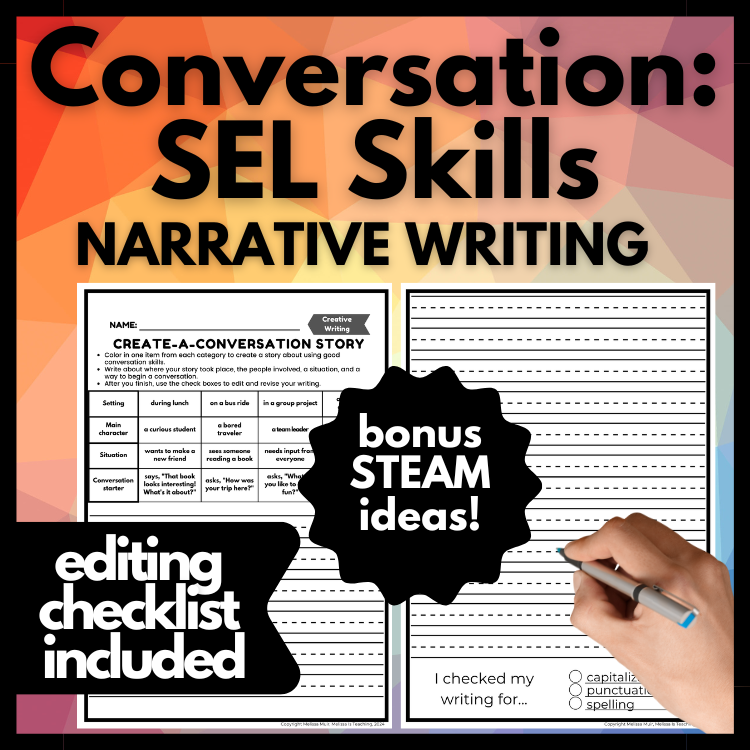
A narrative-writing worksheet that develops conversation skills and social-emotional learning by having students create and write a story about navigating a conversation using good conversation skills.
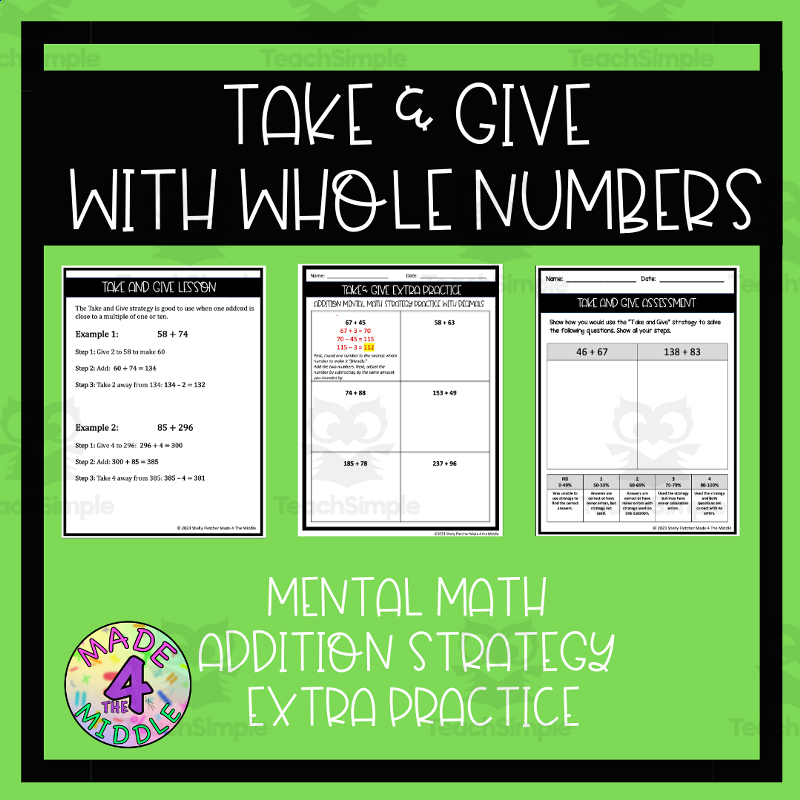
Mental math resource teaching the 'Take & Give' whole-number addition strategy as an alternative/supplement to traditional Number Talks.
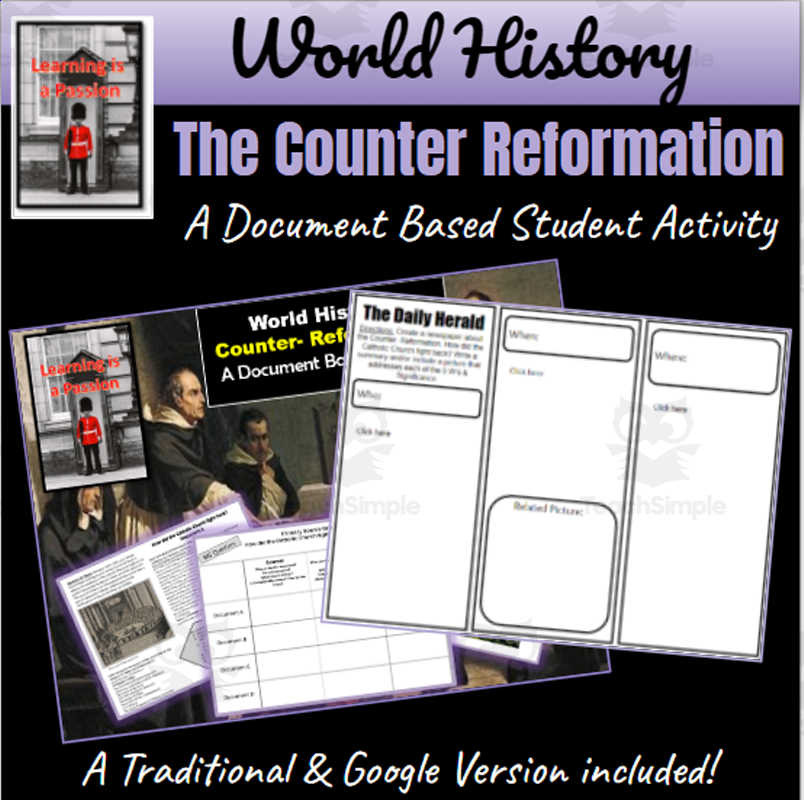
Read multiple primary/secondary source documents, answer comprehension-check questions for each document on an answer sheet, discuss findings with a partner, complete a primary-source graphic organizer, discuss as a class, and complete an exit-card/assessment activity for homework.

Break 1 Addend Apart Whole Number Addition Strategy Extra Practice Struggling to find enough time to build students' mental math skills? This teaching resource provides ample opportunities for practicing the "Break 1 Addend Apart" addition strategy.

Complete practice items (calculations, word problems, self-check tick boxes) across the workbook's numbered sections
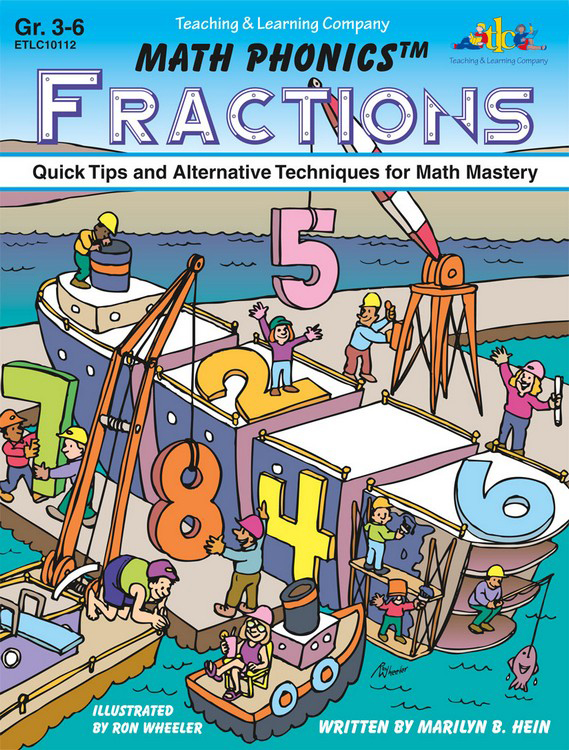
Complete worksheets and assessments for each fraction skill area, use equivalent fraction strips and fraction circles, and play games such as Fraction Bingo/Fraction Slapjack.
 Free download
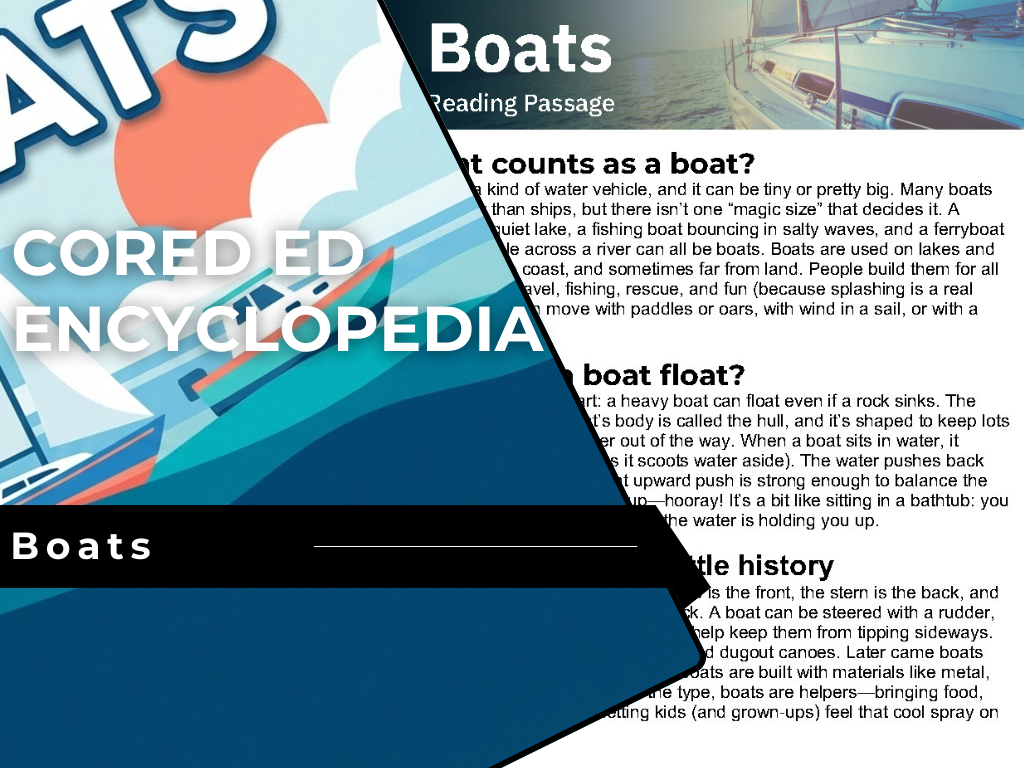
 Complete pre-reading trivia, read an informational passage about what counts as a boat and how boats float, then answer mixed multiple-choice and written-response comprehension questions.
Students self-check their listening strategies via a checklist, take notes while watching a video twice, learn new vocabulary (chuckle, spilt, embarrassed, awkward, situation, defence, contagious), discuss the video with a partner, and answer written comprehension questions about laughter (e.g. why we laugh when embarrassed, why…
Students identify digit place values, write numbers in word and standard form, order numbers, use estimation strategies (rounding, clustering, compatible numbers, front-end estimation) to solve problems, and practice adding and subtracting whole numbers, then complete a quiz at the end of each of the 4 units.
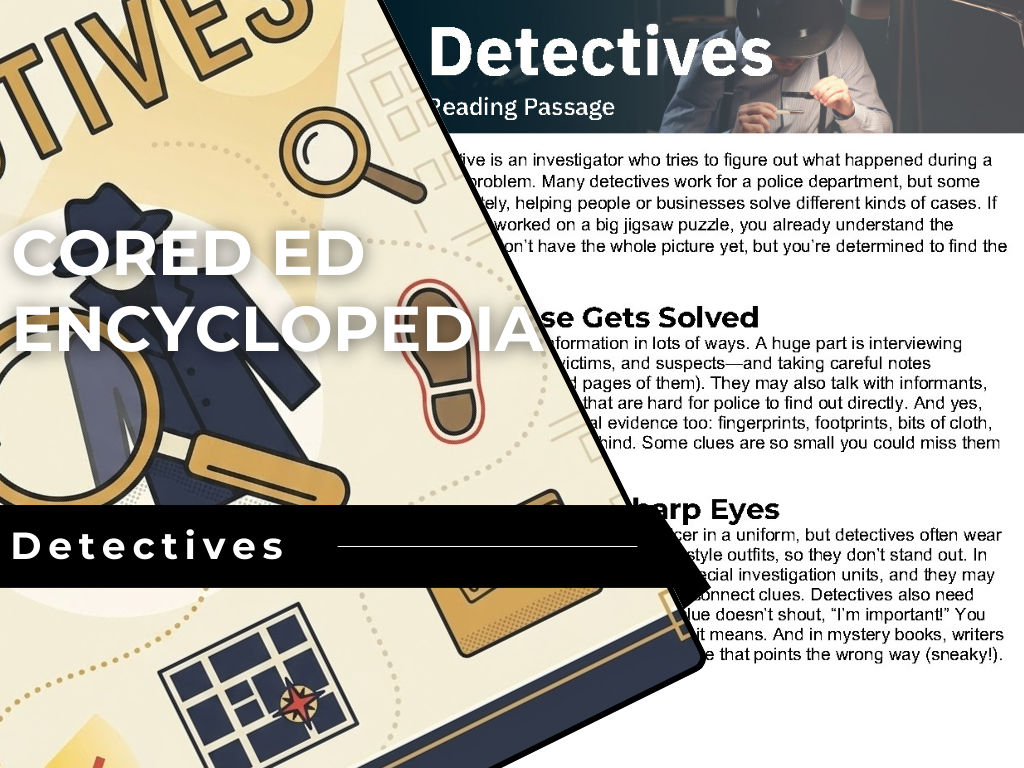
Write a fact they already know and discuss five given trivia facts; read a passage about what detectives do; answer 4 multiple-choice and 3 short-answer comprehension questions; write a 5-8 sentence creative mystery story; choose and complete one of three extension activities (make a mini mystery, fingerprint exploration, or witness…
Reproducible chapter excerpt ("Chapter Slice") from the workbook "How to Write a Paragraph" (CCP1100), covering the sub-topic "What is a Paragraph?" (page 7 of the full 64-page workbook, per that workbook's table of contents) for teaching the paragraph-writing process.

Students work through reading-comprehension handouts on each topic (Active Listening Skills, Understanding Social Situations, Self-Advocacy, Adaptability, Self-Awareness, Emotional Intelligence), progressing through Bloom's Taxonomy skill levels (Remembering/List Details, Understanding/Describe and Classify…
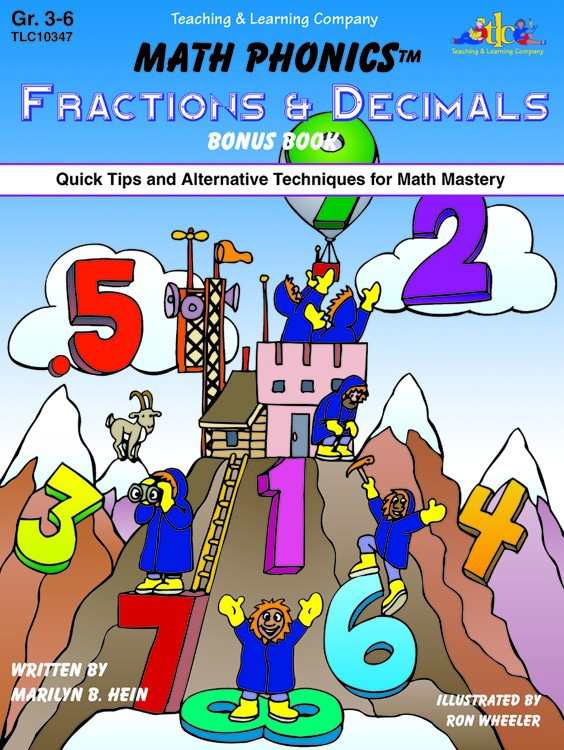
A 'bonus' teacher resource book combining alternative techniques for fractions and decimals: reviewing basic fraction/division skills, adding/subtracting fractions with regrouping, decimal operations, and converting between fractions, decimals, ratios, and percents.
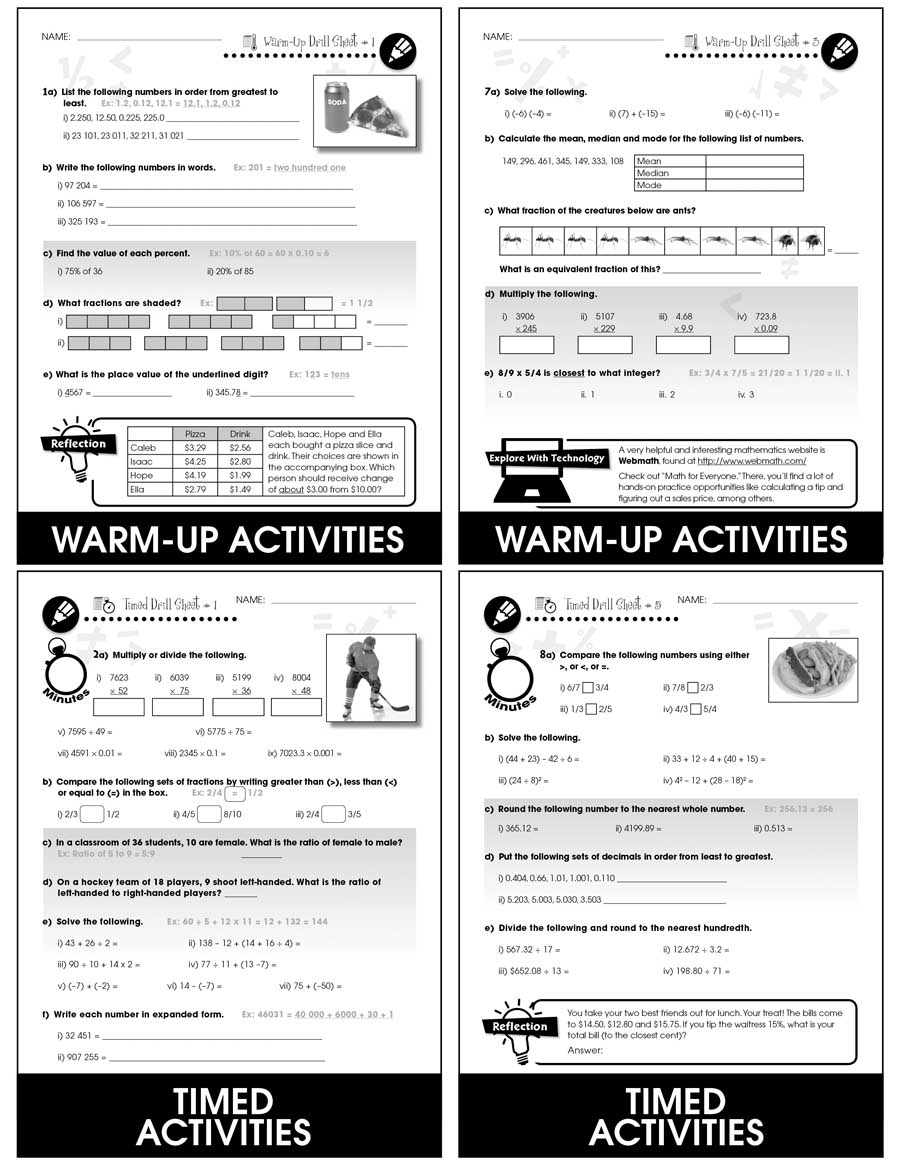
A full-book math skills-practice resource for Number & Operations (Grades 6-8) from Classroom Complete Press's "Principles & Standards of Math Series," built around the NCTM Principles & Standards for School Mathematics process goals (problem solving, reasoning & proof, communication, connections, representation)…
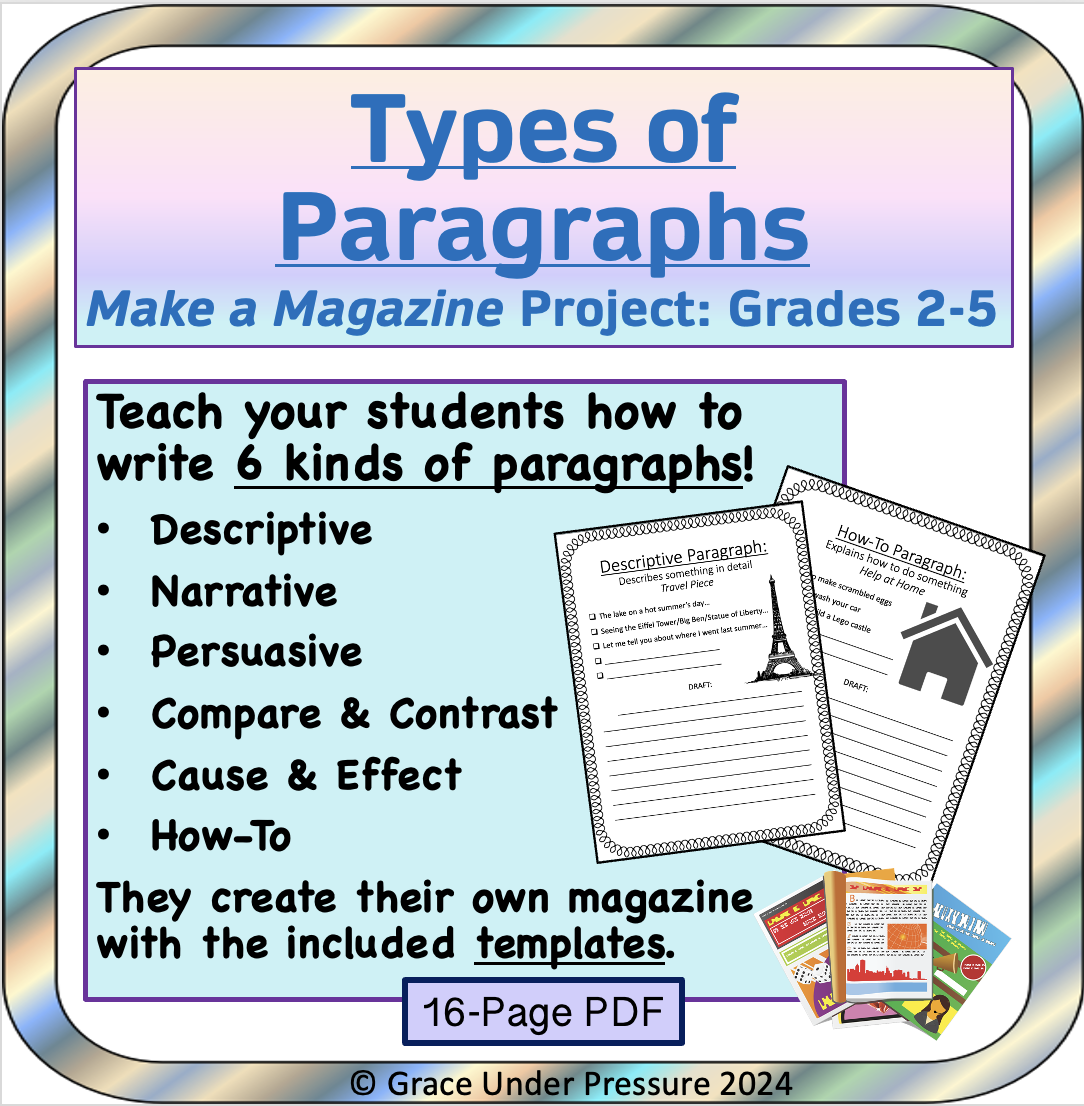
Use a 'hamburger paragraph' graphic organizer to learn paragraph structure, write six draft paragraphs (one per type) from provided prompts, self/peer-edit using a COPS checklist, and produce good-copy final pages plus a magazine cover; early finishers can create a crossword or design an advertisement.
Reproducible chapter excerpt ("Chapter Slice") from the workbook "How to Write a Paragraph" (CCP1100), covering the sub-topic "Proofreading Practice" (page 40 of the full 64-page workbook, per that workbook's table of contents) for teaching the paragraph-writing process.
Select and listen to a song from a provided list (or teacher-approved alternative) addressing money/capitalism themes, research and analyze its lyrics answering guided questions, then write a 1-2 page review naming the song/artist, its subject, its themes, 3 supporting quotes, and a personal assessment of the artist's perspective on…

A multi-activity pack for a 3rd-grade Ancient Rome unit, aligned to Virginia SOL, covering vocabulary, reading comprehension, a mosaic craft, and math word problems.
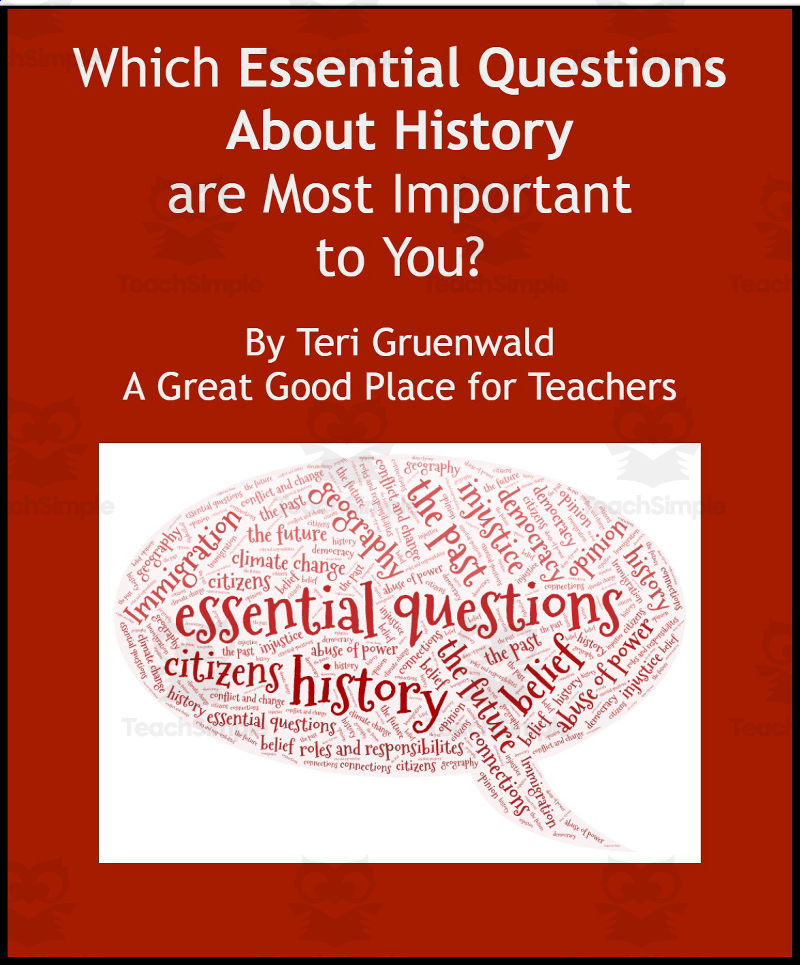
Rank/identify their own top essential questions on Day 1; on Day 2 circulate the room to find classmates who share one or more of their top three questions, as an icebreaker and pre-assessment activity.
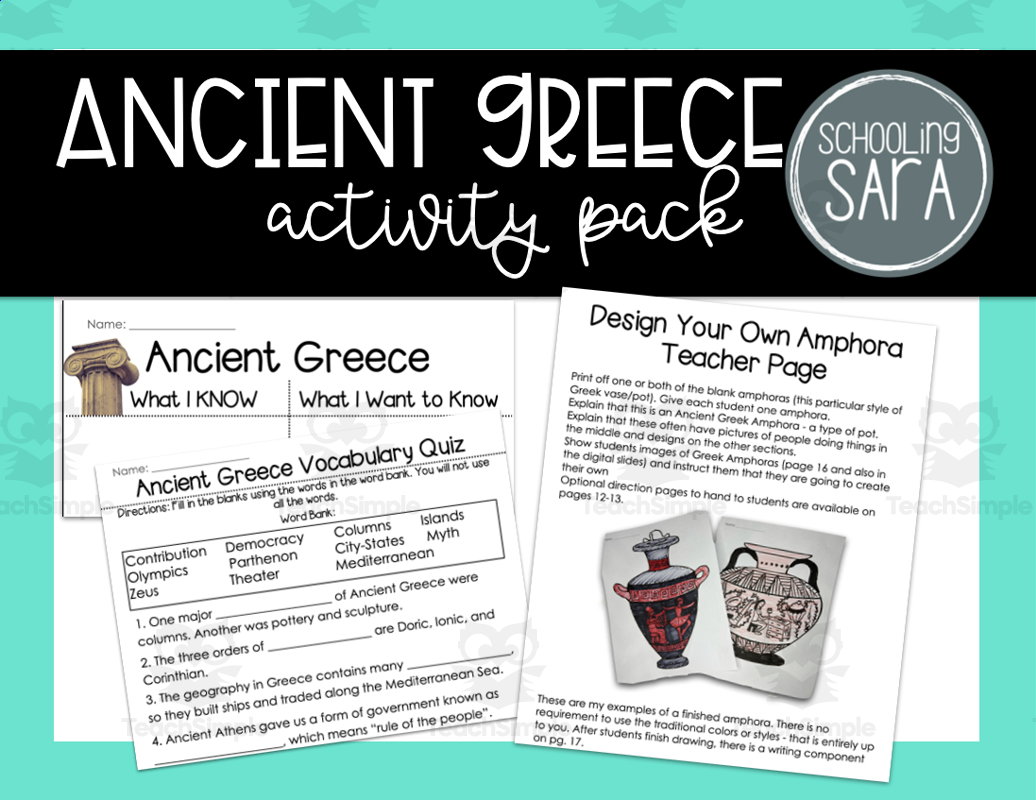
A multi-activity pack for a 3rd-grade Ancient Greece unit, aligned to Virginia SOL, covering vocabulary, reading comprehension, a craft, and math word problems.
Reproducible chapter excerpt ("Chapter Slice") from the workbook "How to Write a Paragraph" (CCP1100), covering the sub-topic "Prewriting Practice" (page 19 of the full 64-page workbook, per that workbook's table of contents) for teaching the paragraph-writing process.
Students read one or more of the five assigned novels (individually, in small groups, whole class, or as a listening test) and complete multiple-choice/true-false comprehension questions for each title, then check answers against the answer key.
Students read one or more of the five assigned novels (individually, in small groups, whole class, or as a listening test) and complete multiple-choice comprehension questions for each title, then check answers against the answer key.