



3,969 products added recently
Page 12 - Popular Graphic Organizers
Discover a selection of popular graphic organizers suitable for a variety of subjects and grade levels. These versatile tools assist students in structuring information, planning essays, and summarizing content. Utilize these organizers to support critical thinking and improve educational outcomes in your classroom.

 Show filters


Ode Poetry Writing – Posters + Graphic Organizers
ELA, Literature, Poetry, Grade 1, 2, 3, Graphic Organizers, Teacher Tools
This resource is a set of learning posters and graphic organizers for ode poetry writing. There are a variety of posters that teach about ode poetry. Students will explore features, how to write an ode poem and so much more. They will use the graphic organizers to brainstorm ideas and then write an ode poem. This pairs well with your poetry unit in English class. You may also love to print these off and use in a center activity. This resource can be accessed through: PowerPoint Google slides PDF
Author Good Human Project
Rating
Tags Language Arts Graphic Organizers, Language Posters, Poetry Writing, Ode Poetry, Unit, How To Write An Ofe, How To Write An Ode, Ode Template Pdf, Write An Ode, Writing An Ode, How To Write And Ode, What To Write An Ode About, How To Write A Ode, How Do You Write An Ode, How To Write Odes, How To Write An Ode For Students, How To Write A Ode Poetry, How To Write An Ode Poem, Ode Lesson Plans, Ode Poem Ideas
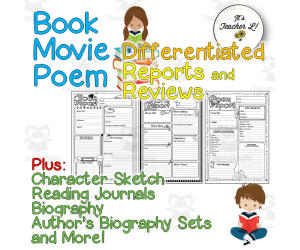
Book, Movie, Poem Differentiated Reports, Reviews AND MORE!
ELA, Strategies, Language Development, Vocabulary, Writing, Grade 4, 5, 6, Teacher Tools, Graphic Organizers, Activities, Worksheets & Printables, Worksheets
This Book, Movie, Poem Differentiated Reports and Reviews is a set of 23 pages graphic organizers no-prep worksheets that are designed for primary level learners, ESL/EFL students and homeschoolers. The worksheets are made to accompany reading and writing activities that will help learners better understand the contents of their class lessons. Aside from the worksheets that can help students record and report about the books, movies, and poems that they are learning, this resource also includes reading journals, character sketch, biography, author’s biography, and vocabulary log worksheets, as well as book reading and movie tracker worksheets. The graphic organizers are amazing tools to use, guide and gauge the students’ grasp of the lessons and help the learners take control of their own learning. Additionally, this set includes differentiated activities to cater to different level of learners. Contents: Movie Reports Movie Reviews Movie Tracker Book Reports Book Reviews Book Reading Tracker Poem Reports Poem Reviews Reading Journals Character Sketch Worksheets Biography Worksheets Author’s Biography Worksheets Vocabulary Log Worksheets Applications: 1. Supplemental tools for book reading, movie analysis, and poem study lessons. 2. Can be used as assessment tools, homework and projects. 3. Perfect inclusion to students’ portfolios. 4. Research practice activities. 5. Teacher-emergency tool.
Author It's Teacher L
Tags Book Review, Book Report, Movie Review, Movie Report, Poem Review, Poem Report, Biography, Authors Biography, Vocabulary Log

Reconstruction 1865-1877 - Two Graphic Organizers
Social Studies, History, History: USA, Grade 8, 9, 10, 11, Teacher Tools, Graphic Organizers
Reconstruction 1865-1877 - Two Graphic Organizers This teaching resource delves into the critical period in American history that followed the Civil War. A valuable tool for educators of Grades 8 through 11, it provides comprehensive content on a complex epoch concerning History or Social Studies related to USA. Main Focus: The resource focuses majorly on Reconstruction protocols post-Civil War and outlines political, social, and economic shifts during this tenure. The primary objective was re-establishing Southern states which had seceded from the Union and integrating African Americans into society. Legislation Elements: 13th to 15th Amendments: Abolished slavery while providing citizenship rights to African Americans. Freedmen's Bureau Policy: Safeguarded interests of those recently freed from enslavement. Dual Graphics Organizers Feature: Packed with valuable information integrating politics within Postwar Reconstruction in South alongside a map highlighting Southern military districts—understanding how Southern states were readmitted post-war handling of issues regarding African American integration and determining controlling parties over Reconstruction. Challenges Faced: Resistance from opposing white Southerners. A rise in clans promoting racial segregation due to societal strains. Fraudulent methods used by white democrats regaining control leading up to Jim Crow era commencing racial segregation till Civil Rights Movement took charge later in mid-20th century. In addition, teacher-prepared notes help streamline complex narratives for students while boosting their note-taking skills (Marzano et al., 2001). Flexibility in Teaching Approach: With multiple file types, including teacher versions and student fill-in-the-blank ones paired with illustrative clipart (credit: Prince Padania), this resource provides flexibility for educators – suitable for large group discussions, small clusters, or homework assignments.
Author EduPal Learning
Tags Reconstruction, Civil War Aftermath, African American Integration, Legislative Changes, Social Challenges

September 11th, 2001: Graphic Organizer
Social Studies, History, History: USA, Grade 6, 7, 8, 9, 10, Teacher Tools, Graphic Organizers
Teaching about the monumental moments in history isn't just part of our job—it's a calling. One of those watershed moments, without a doubt, is the 9/11 attacks of 2001. Orchestrated by al-Qaeda, this day didn't just change the skyline of New York; it changed the fabric of the United States and shifted its trajectory on the global front. While many of us can still feel the weight of the smoke-filled air as we watched the World Trade Center towers fall, or the heartbreak hearing the tales of heroism from Flight 93, we must recognize that for a good number of our students, this day is a story from before their time. Our challenge—and indeed, our responsibility—is to bridge that gap, making the stories of that day both tangible and understandable. One way to navigate this is with clear, structured notes. Think of it as connecting the dots: breaking down complex events and pairing them with firsthand accounts, like President George W. Bush's immediate reactions, helps paint a fuller picture for our students. In our shared goal to enlighten and inform, I've put together a resource that walks through 9/11. For us educators, there's a comprehensive version, and for our students, an interactive one designed to pique their curiosity and encourage active participation. Ready to use, these tools are designed to make our task a tad easier while ensuring our students gain a thorough understanding. By weaving this resource into our lessons, we're taking our students by the hand and guiding them through one of the most consequential days in recent history. It's so vital they grasp the magnitude and nuances of such events, and I truly think this tool will be a cornerstone in that effort. This product comes with a completed teacher version and a fill-in-the-blanks version. Ready to print and ready to use. Great format to help students learn.
Author EduPal Learning
Tags September 11, Terrorist Attack, Trade Center, Twin Towers, World Trade Center, George W. Bush, Graphic Organizer
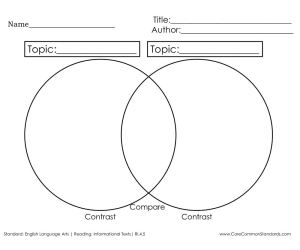
Compare and Contrast Topics Graphic Organizer Worksheet
ELA, Reading, Grade 3, 4, 5, Teacher Tools, Graphic Organizers, Worksheets & Printables, Worksheets
to brainstorm and organize their thoughts and ideas. This graphic organizer will help your students compare and contrast two topics. The Venn diagram will help them brainstorm and organize their thoughts and ideas. This is a great way to help your students learn how to compare and contrast two topics.
Author Have Fun Teaching
Tags Compare And Contrast, Compare And Contrast Sheet, Compare Contrast Worksheets
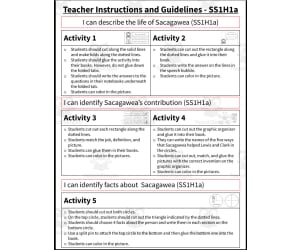
Sacagawea Interactive Notebook | SS1H1a, SS1H1b, SS1G1a, SS1CG1
Social Studies, Biographies, Preschool, Grade 1, 2, Teacher Tools, Graphic Organizers
Sacagawea Interactive Notebook covers biographical details and contributions of the Shoshone guide and interpreter who assisted the historic Lewis and Clark expedition. This printable 17-page packet allows students to journey alongside Sacagawea while learning social studies standards SS1H1a, SS1H1b, SS1G1a, and SS1CG1. Young learners will enjoy engaging cross-curricular activities like timelines, maps, flip books, diagrams , and graphic organizers. Teachers can utilize these materials during their early American history units for individual assignments or collaborative group projects. With complete teacher prep included, this interactive Sacagawea notebook easily integrates into lesson plans for kindergarten, first grade, and second grade classrooms seeking an inquiry-based approach connecting past to present.
Author Sarah Miller Tech
Tags Graphic Organizers, Sacagawea, Interactive Notebook, Comparing, Biographies

Goldilocks and the Three Bears – Sequencing Activity
ELA, Literature, Preschool, Grade 1, 2, 3, Graphic Organizers, Teacher Tools
This resource is a Goldilocks and the Three Bears Sequencing Activity . Included: -Digital Click and Drag -Sentence Cut and Paste -Picture Cut and Paste
Author Good Human Project
Rating
Tags Reading Activity, Graphic Organizers, Fairy Tales, Goldilocks, Sequencing, Goldilocks And The Three Bears Worksheets

Main Idea and Four Supporting Details Graphic Organizer Worksheet
ELA, Reading, Grade 3, 4, 5, Teacher Tools, Graphic Organizers, Worksheets & Printables, Worksheets
This graphic organizer will help your students to break down the main idea of what they have just learned and to find four supporting details. This is a great way to help your students to organize their thoughts and to improve their writing. With this Main Idea and Four Supporting Details Graphic Organizer Worksheet , your students will be able to better understand and remember the information they have just learned. This graphic organizer will help your students to break down the main idea and find four supporting details. This is a great way to help your students to organize their thoughts and to improve their writing.
Author Have Fun Teaching
Tags Main Idea, Graphic Organizer Main Idea Supporting Details

Compare and Contrast Similarities and Differences Graphic Organizer Worksheet
ELA, Reading, Grade 3, 4, 5, Teacher Tools, Graphic Organizers
Compare and Contrast Similarities and Differences – An Effective Graphic Organizer Worksheet for Students Presenting the "Compare and Contrast Similarities and Differences" graphic organizer worksheet, a practical resource created to support students in efficiently comparing and contrasting two distinct texts. By working through this organizer, students will pinpoint the similarities and differences between the texts, enriching their engagement with new material. The Compare and Contrast Graphic Organizer Worksheet This graphic organizer worksheet serves as an outstanding aid for students as they analyze two different texts. The worksheet guides students in the comparison and contrasting process, enabling them to identify similarities and differences between the texts. This structured approach empowers students to deepen their comprehension of the material while honing their critical thinking abilities. The Compare and Contrast Similarities and Differences Graphic Organizer worksheet is a valuable tool for students to examine and compare two separate texts. By recognizing the similarities and differences between the texts, students can more effectively engage with new material while also refining their critical thinking skills. This resource is an excellent supplement to any Reading curriculum , helping students in Grades 3, 4, and 5 advance their analytical skills and deepen their appreciation of various texts.
Author Have Fun Teaching
Tags Compare And Contrast, Reading Comprehension, Critical Thinking, Text Analysis, Graphic Organizer, Similarities And Differences, Compare And Contrast Graphic Organizer Pdf, Compare And Contrast Tool
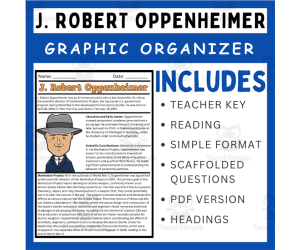
J. Robert Oppenheimer: Graphic Organizer
Social Studies, History, History: USA, History: World, Grade 6, 7, 8, Teacher Tools, Graphic Organizers
This J. Robert Oppenheimer: Graphic Organizer resource is focused on J. Robert Oppenheimer, a pivotal figure in 20th-century science and the development of the atomic bomb. Julius Robert Oppenheimer was not only an exceptional physicist but also a key player in shaping the course of history during World War II through his involvement with the Manhattan Project. Born in New York City in 1904, Oppenheimer's early years were marked by outstanding academic achievements. He pursued studies at esteemed institutions such as Harvard University and later secured his Ph.D. in theoretical physics from the University of Göttingen, Germany. His contributions spanned various facets of quantum mechanics and quantum field theory. However, his paramount influence emerged during the turbulent years of World War II. In 1942, Oppenheimer assumed the role of scientific director for the Manhattan Project, an initiative that bore heavy consequences with the bombings of Hiroshima and Nagasaki. His expertise and leadership were invaluable to the project's culmination. Post-war, Oppenheimer's journey continued in both academic circles and governmental sectors. He chaired the General Advisory Committee of the United States Atomic Energy Commission, advocating for judicious control over atomic energy. Regrettably, the McCarthy-era cast shadows over his accomplishments, leading to the revocation of his security clearance in 1954, a decision that was later revised, albeit not entirely overturned. Oppenheimer's passing in 1967 left behind a legacy characterized by brilliance, innovation, and moments of controversy. To aid in bringing this influential figure's narrative to our students, I've prepared a comprehensive overview of Oppenheimer's life, both preceding and following the Manhattan Project. This resource is complemented by 10 reading comprehension questions, alongside a detailed teacher key, ensuring a holistic teaching experience. It's formatted to be effortlessly integrated into our curriculum. Product Clipart: Prince Padania
Author EduPal Learning
Tags J. Robert Oppenheimer, Graphic Organizer, Manhattan Project, Oppenheimer, World War II, Atomic Bombs

Cold War Overview: Graphic Organizer
Social Studies, History, History: Europe, History: World, Grade 7, 8, 9, 10, 11, Teacher Tools, Graphic Organizers
The Cold War was a time of tension and rivalry between the United States and the Soviet Union that lasted from the end of World War II in 1945 until 1991. The two superpowers never fought a direct war against each other, but they were involved in many proxy wars, such as the Korean War and the Vietnam War. The Cold War started because the United States and the Soviet Union had different ideas about how countries should be run. The United States believed in democracy, where the people elect their leaders and have individual freedoms. The Soviet Union believed in communism, where the government controls everything and everyone is equal. The United States and the Soviet Union both wanted to spread their ideas and influence around the world, which led to a lot of tension between them. They also built up huge military forces, including nuclear weapons, to try to scare each other into backing down. The most dangerous time during the Cold War was in 1962, during the Cuban Missile Crisis. The Soviet Union had secretly put nuclear missiles in Cuba, which is very close to the United States. The United States demanded that the missiles be removed, and there was a tense standoff between the two superpowers. Eventually, the Soviet Union agreed to remove the missiles, and the crisis was over. The Cold War ended in 1991 when the Soviet Union collapsed. The United States emerged as the world's only superpower, and there was a lot of hope for peace and cooperation between countries. While there are still tensions between countries today, the world is much more peaceful than it was during the Cold War. Teacher-prepared notes show students what is important and how ideas relate, and offer a model for how students should take notes themselves (Marzano et al., 2001). These teacher-created notes will help your students grasp the major events of the Cold War era. These notes work well as a supplement to class readings! Thumbnail and product clipart credit: By PrincePadania and byDandy Doodles This product provides students with an easy-to-understand overview of the major issues, leaders, and events associated with the Cold War.
Author EduPal Learning
Tags Cold War, Stalin, Graphic Organizer, High Yield Strategy
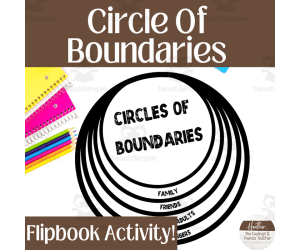
Circle of Boundaries – Activity Flipbook for Kids
Special Resources, Social Emotional Learning (SEL), Social Skills, Grade 1, 2, 3, 4, 5, 6, Teacher Tools, Graphic Organizers
Do you have students that struggle with inappropriate boundaries with others that could pose a safety issue? Then this activity is for you! This activity booklet is designed for elementary students that struggle to identify and execute personal boundaries. This printable booklet activity includes different pages labeled for different categories of people such as "strangers" and "friends". From there, students will label people on each page. Then, after naming people that fall in this category, you will work with the students to help them identify which actions are appropriate for each group of people! This activity will help to promote social norms and safety! Each page of the booklet has a group of people the student make come across in life: Themselves Friends Families Trusted Adults Strangers. When utilizing this activity, students will be able to identify what behaviors are appropriate with which people and learn to understand why specific behaviors may not be appropriate for specific people. Ideas For Use: ⭐ Individual Sessions ⭐ With students on the spectrum ⭐ With students who have poor boundaries ⭐ Push-In Lesson for tier 1 support ⭐ Social Skills Group ⭐ Additions to Interactive Notebooks ⭐ Lapbook Addition
Author The Feelings and Friends Teacher
Rating
Tags Bounadries Activities, Social Skills Activities, Safety Activities, Booklet Activities, Teaching Boundaries Activities For Adults, Middle Circle Behaviors, Boundaries Circle, Circle Boundaries, Boundaries Group Activity, Activities To Teach Boundaries, Games To Teach Boundaries, Teaching Boundaries Activities

Roman Republic vs. U.S. Government – Comparison Set
Social Studies, History, History: World, Grade 9, 10, 11, 12, Teacher Tools, Graphic Organizers
This is a Roman Republic vs. U.S. Government Graphic Organizer . Students will use the chart to compare the 3 branches of government, the legal code, and citizenships between Ancient Rome and today's United States government. A completed chart is included.
Author Cogjogger
Rating
Tags Graphic Organizers, Rome, Roman Republic, U.S. Government, Study Guide, Roman Branches Of Government, Roman Republic Worksheet, Comparing Ancient Rome And America Today Worksheet, 3 Branches Of Roman Government

Class Economy: Grade 4-7 Math, Financial Literacy and SS
Life Studies, Social Studies, Business, Finance, Home Economics, Math, Addition and Subtraction, Addition, Money, Subtraction, Economics, Grade 4, 5, 6, 7, Teacher Tools, Graphic Organizers
Do you want to teach your middle grades students in grades 4-7 about simple economics? Do you want help around the classroom with chores such as tidying up and putting away chairs? Then implement this class economy routine and teach your students about basic financial literacy, banking, and economics! Teacher Instructions: Set-Up: • This classroom economy is completely editable: leave it as it is or change it for your specific needs! • Review the jobs on page 3 and change them as necessary. Then print one copy of that page to sign up your students for one term (12 weeks), or you can type the names straight into the chart each week. • Review page 4. Add your class name at the top. Change the rewards to suit your class. Then print a double-sided page 4 & 5 for each of your students to keep in their binders. This is also enough for one term (12 weeks). Each week: • On the first Friday, give your students the handout and assign 2-3 students to each job. Explain what they must do to successfully complete their job next week. For example, the floor inspectors must check the floor before lunch and at the end of each day and clean up any paper or garbage. • Show your students the sample bank balance on page 6. Walk through how to complete the math and find the two missing balances ($20 and $30) together. • Discuss what fines and bonuses you might use. For example, students might earn $5 for being a great friend to someone who needs it, and they might incur a $5 fine for speaking out of turn repeatedly. • Each week, take 20 minutes on Friday to assign the jobs for next week. Students fill out their bank account balance and get it checked by the teacher. •Students can use their excess money to shop for rewards (and they may combine money together to get a large reward like a class movie). Inflation: • If you want to teach your students an extra lesson, incorporate some inflation into your economy. • After 8-10 weeks, let your students know that the desk rental price is increasing to $35. • Add $5 to each job salary. • Talk about how this will decrease their purchasing power, much like rising prices and stagnating salaries do in the real world. What's Included: 6 Pages in and EDITABLE Powerpoint - Step-by-step teacher instructions for this simple class routine: once started, it should take only 20 minutes every week! - Digital or printable weekly sign-up sheet with 8 class jobs - Student handout with instructions and 8 reward options - Student bank balance worksheet - Sample bank balance sheet: show your class and practice adding up deposits and withdrawals Grades to Use With: This classroom economy is specifically designed for students in the middle grades (4-7).
Author Grace Under Pressure
Tags Class Economy, Classroom Economy, Budget, Financial Literacy, Integers, Money, Class Rewards, Class Jobs, Bank Account, Class Routine

Jabuti the Tortoise Reader Response Activities
ELA, Reading, Reading Comprehension, Literature, Grade 2, 3, 4, Teacher Tools, Graphic Organizers, Worksheets & Printables, Novel Studies, Activities, Worksheets
This picture book companion is the perfect resource to accompany the book Jabuti the Tortoise: A Trickster Tale from the Amazon by Gerald McDermott. It includes 34 print-and-go reading activities to choose from, making this resource ideal for customizing learning to your student's specific needs and academic abilities. Students will investigate characters, identify story elements, determine the theme, practice plotting story events, compare & contrast, make predictions, inferences, & connections, answer questions that require them to think beyond the text, and much more! Students will love the engaging and fun activities, and you will appreciate the time saved hunting for high-level resources to teach reading concepts that students frequently struggle with. The activities provided are designed to enable students to apply higher-level thinking skills, encourage them to provide text evidence to support their thinking, and challenge them to express their own thoughts and/or perspectives. ⭐️This Resource Includes:⭐️ ◾ Elements of a Trickster Tale Anchor Chart or Notes Handout: Color and B&W ◾ Making Predictions: Before reading the book, students will make predictions about the text. ◾ Elements of a Trickster Tale: Students fill in the chart with the details of the story that characterize it as a trickster tale. ◾ Trickster Tale Tidbits: Students will answer the questions with details from the story that proves it's a trickster tale. ◾ Story Elements: Students fill in the boxes with words & pictures to represent the story elements. ◾ Sequencing: Students will retell & illustrate the important parts of the story. ◾ Recalling events in Chronological Order: Students describe and illustrate four major events in the story in chronological order. ◾ Summary: Students complete the Somebody, Wanted, Because, But, So graphic organizer and write a summary of the story. ◾ Story Event Sort: Students will describe a scene or event from the story that fits into each of the categories & explain how the event made them feel & how it relates to the category. ◾ Making Inferences: Students use clues & schema to make inferences while reading the story. ◾ Making Connections: Students make connections to an event from the story. ◾ Author's Message: Students describe four important events from the story in chronological order and answer the questions about the author's message. ◾ Character Inside & Out (Jabuti): Students include details from the story to describe what the character says, thinks, does, and feels. ◾ Character Inside & Out (Vulture): Students include details from the story to describe what the character says, thinks, does, and feels. ◾ Character Feelings (Jabuti): Students describe how the character's feelings change throughout the story & give examples of the events that cause them to feel the way they do. ◾ Character Feelings (Vulture): Students describe how the character's feelings change throughout the story & give examples of the events that cause them to feel the way they do. ◾ Character Development (Jabuti): Students select the character traits that best describe the character at different times throughout the story and provide examples from the book to support each character trait. ◾ Character Development (Vulture): Students select the character traits that best describe the character at different times throughout the story and provide examples from the book to support each character trait. ◾ Character Change (Jabuti): Students will explain how the character changed from the beginning to the end of the story and describe the events that caused the change to happen. ◾ Character Change (Vulture): Students will explain how the character changed from the beginning to the end of the story and describe the events that caused the change to happen. ◾ Sketch a Scene From the Story: Students draw a scene from the story & explain why it's important to the plot. ◾ Setting Influences the Plot: Students will draw a scene from the story that takes place in one of the settings and write about what happened there and why it was important to the plot. ◾ Setting the Scene: Students identify three different settings in the story and explain how they know that the setting changed. ◾ Theme: Students answer the questions to determine which theme best fits the story and provide text evidence to support their choice. ◾ Thinking About the Text: Students will answer the questions about the story & include examples from the text to support their answers. ◾ Compare & Contrast: Students answer the questions to compare & contrast Jabuti's tricks to Vulture's trick. ◾ Vocabulary Crossword Puzzle: Students use the clues and the word bank to fill in the crossword puzzle (ANSWER KEY INCLUDED). ◾ Antonyms All Around: Students find the antonyms, words with opposite meanings, in the text provided from the story and use a dictionary, or scan the QR code, to find more opposite words for the antonyms they found in the text. ◾ Wait... There's More!: Students will write about what happens next in the story. ◾ Book Review: Students color in the stars to rate how much they enjoyed the book and draw a new cover & their favorite character from the story. Then, they will explain why other kids should or should not read it. ◾ Write an Origin Story: Students will plan and write their own origin story. The following pages are included in this activity : ◾ My Trickster Tale Planning Sheet: Students use the planning sheet to organize their own origin story. They select an animal that they think is special and write a story about how the animal got its voice, coloring, nose, tail, speed, or other special features or abilities. ◾ My Trickster Tale Cover: Students design a book cover for their origin story. ◾ Lined Writing Paper: Three different layouts are included. 💡Need ideas for different ways you can implement these activities? ◾ Focus on different reading skills each day for targeted instruction, and have students complete a corresponding printable to check for understanding. ◾ During centers, students can independently read the story again and complete an activity that reviews a previously taught concept. ◾ Work with students on a reading concept they struggle with during guided reading or strategy groups. ◾ Students work with a partner or in literature circles to complete additional reading activities. The book is not included. ⭐️You may also like: ⭐ TEXT SET #1: "The Importance of Friendship" ◾ A Weekend With Wendell Read Aloud Book Companion Activities for IRA ◾ First Come the Zebra Read Aloud Book Companion Activities for IRA ◾ This is Our House Read Aloud Book Companion Activities for IRA ◾ Horace and Morris But Mostly Dolores Read Aloud Book Companion Activities for IRA ◾ The Old Woman Who Named Things Read Aloud Book Companion Activities for IRA TEXT SET #3: "Finding Your Way in a New Place" ◾ Grandfather Counts Read Aloud Book Companion Activities for IRA ◾ The Have a Good Day Cafe, Read Aloud Book Companion Activities for IRA ◾ Roses for Gita Read Aloud Book Companion Activities for IRA ◾ Mango, Abuela, and Me, Read Aloud Book Companion Activities for IRA ◾ Home at Last Read Aloud Book Companion Activities for IRA TEXT SET #7: "Exploring Narrative Nonfiction" ◾ Cactus Hotel Read Aloud Book Companion Activities for IRA ◾ A Log's Life Read Aloud Book Companion Activities for IRA ◾ Salmon Stream Read Aloud Book Companion Activities for IRA ◾ Think of an Eel Read Aloud Book Companion Activities for IRA ✨Be sure to check out my storefront here: https://teachsimple.com/contributor/creatively-gifted
Author Creatively Gifted
Tags IRA, Picture Book Activities, Read Aloud Lessons, Interactive Read Aloud Activities, Elementary Reading, Reading Comprehension, Fountas And Pinnell IRA, Second Grade, Trickster Tales, Jabuti The Tortoise

Acrostic Poetry Writing | Posters & Graphic Organizers
ELA, Literature, Poetry, Grade 1, 2, 3, Graphic Organizers, Teacher Tools
This resource is a set of blank templates for acrostic poetry writing. There are a variety of templates and some of them come with space for students to illustrate a picture. This pairs well with your poetry unit in English class. You may also love to print these off and use in a center activity. This resource can be accessed through: PowerPoint Google slides PDF
Author Good Human Project
Tags Poetry, Poems, Acrostic Poems, Writing Templates, Graphic Organizers
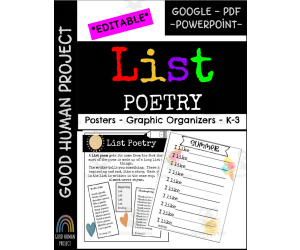
List Poetry Writing | Posters & Graphic Organizers
ELA, Literature, Poetry, Grade 1, 2, 3, Graphic Organizers, Teacher Tools
This resource is a set of learning posters and graphic organizers for list poetry writing. There is a poster about list poetry. They will write list poems using a variety of different templates. This pairs well with your poetry unit in English class. You may also love to print these off and use in a center activity. This resource can be accessed through: PowerPoint Google slides PDF
Author Good Human Project
Tags List Poetry, Poetry Unit, Writing Poems, Graphic Organizers, Poetry Poster
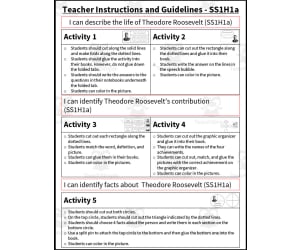
Theodore Roosevelt Interactive Notebook | SS1H1a, SS1H1b, SS1G1a, SS1CG1
Social Studies, Biographies, Preschool, Grade 1, 2, Teacher Tools, Graphic Organizers
This resource is a Theodore Roosevelt Interactive Notebook. There are 17 activities included. All you have to do is print and go. Students will enjoy these activities during social studies units.
Author Sarah Miller Tech
Tags Theodore Roosevelt, Interactive Notebook, Graphic Organizers, Social Studies, Cut And Paste

Summarizing Organizer Worksheet
ELA, Writing, Reading, Grade 2, 3, 4, 5, Teacher Tools, Graphic Organizers, Worksheets & Printables, Worksheets
Better description: The Summarizing Organizer Worksheet helps students break down larger ideas by underlining key words and phrases. This is a great tool for students who need help summarizing texts.
Author Have Fun Teaching
Tags Summarizing
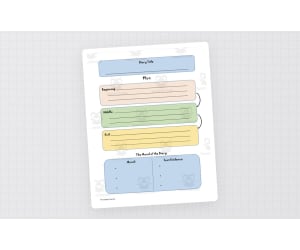
Moral of the Story Graphic Organizer
ELA, Reading, Grade 2, 3, 4, 5, Teacher Tools, Graphic Organizers
This resource is a Moral of the Story Graphic Organizer . Students can use this graphic organizer when they are reading a text. It allows students to write out the plot of the story. At the bottom, students will write what they think is the moral of the story and they can provide text evidence to support it. This can be printed in color or black and white.
Author The Language of Learning
Tags Story Elements, Plot, Moral Of The Story, Reading, Graphic Organizer

Story Elements Graphic Organizer
ELA, Reading, Grade 2, 3, 4, 5, 6, Teacher Tools, Graphic Organizers, Worksheets & Printables, Worksheets
This graphic organizer is a great way for students to organize their thoughts about a story. It helps them to identify the characters, setting, and events in the story. This is a valuable tool for any teacher looking to help their students understand and enjoy stories more.
Author Have Fun Teaching
Tags Story Elements, Graphic Organizers For Story Elements
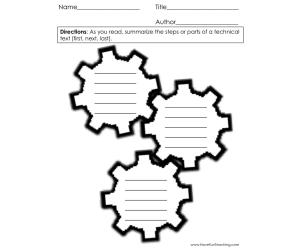
Sequencing Graphic Organizer Worksheet
ELA, Reading, Grade 1, 2, 3, Teacher Tools, Graphic Organizers, Worksheets & Printables, Worksheets
“How a Seed Grows”. This graphic organizer can be used with any fiction or nonfiction text This Sequencing Graphic Organizer Worksheet is a great way for your students to summarize the steps or parts of a text as they read. It's perfect for use with any fiction or nonfiction book, and it's a great way to help your students learn and grow as readers.
Author Have Fun Teaching
Tags Sequencing, Graphic Organizer For Sequencing
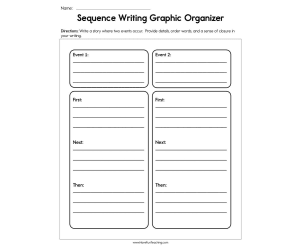
Sequence Writing Graphic Organizer Worksheet
ELA, Writing, Reading, Preschool, Grade 1, 2, 3, 4, Teacher Tools, Graphic Organizers, Worksheets & Printables, Worksheets
This graphic organizer worksheet is a great tool for students to use when writing a story. It provides a template for them to follow which includes two events that occur, and space to add details. It also helps them to order their words and create a sense of closure in their writing.
Author Have Fun Teaching
Tags Story Elements, Narratives
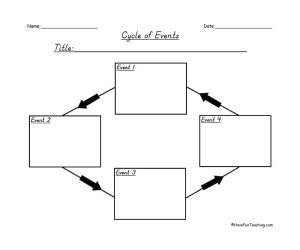
Sequencing Graphic Organizer
ELA, Science, Earth and Environmental Sciences, Earth Sciences, Reading, Grade 2, 3, 4, 5, 6, Teacher Tools, Graphic Organizers, Worksheets & Printables, Worksheets
This Sequencing Graphic Organizer is a great way for students to describe the four major events while reading. It's simple and easy to use, and it's a great way for teachers to keep track of their students' progress.
Author Have Fun Teaching
Tags Sequencing, Life Cycle, Sequence Graphic Organizer Template