



3,906 products added recently
Page 36 - 3rd Grade Lesson Plans
Support your third graders' expanding abilities with lesson plans that encourage exploration and deeper understanding. Covering a range of subjects, these resources offer hands-on activities and discussions. Use them to create a vibrant learning atmosphere that fosters enthusiasm.

 Show filters


Countries of South America | Continent of South America Unit Study | Geography Bundle
Social Studies, Geography, Grade 3, 4, 5, Lesson Plans, Teacher Tools
Countries of South America | Continent of South America Unit Study | Geography Bundle This comprehensive resource is designed to immerse students in an in-depth exploration of the countries within the continent. It includes a range of activities aimed at fostering better understanding and appreciation for cultural diversity. This unit study covers crucial subjects such as: Food Dress Code Language Spoken Prominent Features and more.... Country-Specific Overviews: The unit focuses on individual countries including Brazil, Peru, Argentina, Venezuela, and Chile, allowing students to closely examine each unique culture. The package includes: Five double-sided brochures featuring two measurement systems. Five flag coloring pages correlating with the featured countries. Inclusive Activities: The fact cube template and the brochure template encourage creativity while reinforcing newly acquired knowledge. Art projects from each highlighted country round off this geography bundle - providing a fun yet educational journey through South America. A Fun Aspect to Learning: To make lessons more engaging, we have included a student passport with accompanying passport stamps for each country learned about. This brings a playful aspect into learning geography similar to real-world travel where you collect stamps from different locations! Versatility: This teaching tool can be used flexibly—for whole-class instruction or small groups in various classroom settings or even at home for distance learners or homeschooling options. In summary: This tailored package contains all necessary materials for an exciting and informative geographic expedition. It promotes cross-cultural competency and makes social studies meaningful and fun!
Author Simply Schoolgirl
Tags South America, Continent Study, Geography, Cultural Diversity, Hands-on Learning
Basic Climate Change Causes & Everyday Action Worksheets
Science, Earth and Environmental Sciences, Earth Sciences, Environmental Science, Geology, Space, Life Sciences, Human Body, Nature & Plants, Biology, Homeschool Curriculum, Homeschool Templates, Grade 2, 3, 4, 5, Worksheets & Printables, Workbooks, Worksheets, Word Searches, Teacher Tools, Assessments, Lesson Plans, Quizzes and Tests, Quizzes, Tests
Introducing Climate Change Worksheets for Grades 2-4! This incredible resource is a completely packaged bundle that can just be printed out and used. It includes the following areas of focus to help you teach students about climate change: Greenhouse Effect Carbon Footprint Fossil Fuels Deforestation Ocean Acidification Albedo Feedback Loops How to take action and make a difference. In addition, there is lots of great information that is presented in age-appropriate science language and style, using easily relatable analogies and examples, plus hands-on activities. The Climate Change Worksheets for Grades 2-4 bundle contains 38 pages and can be used for: Elementary science lessons Homeschooling Social-Emotional Learning (SEL) integration Substitute teacher plans The Climate Change Worksheets for Grades 2-4 bundle is composed of three phases: Phase 1: Core theory chapters will be presented using Constructivist Climate Pedagogy (e.g., no fear-based stories, only empowerment and agency). Phase 2: Ten interactive student worksheets (filling in the blank, analyzing scenarios, brainstorming, using math to solve real-life problems, becoming carbon detectives/energy vampires, making compost, becoming 3Rs experts, transforming our transportation systems, culminating with Climate Action Pledge). Phase 3: A high-contrast visual aid (examples: the Greenhouse Effect Diagram, the Chain of Climate Change Flowchart, the Everyday Action Plan Matrix) and the Teacher Answer Key to assist you in easy grading and differentiation. The resources are designed to meet the NGSS and will help your students build a STEM vocabulary (examples: anthropogenic, albedo, positive feedback, etc.), while also developing their resilience as environmental stewards. The Climate Change Worksheets for Grades 2-4 bundle is low-prep/high-impact and is suitable for Elementary Science, Environmental Education, or Cross-Curricular teaching resources for Grades 2-4. When you purchase these resources, you will receive an instant digital download of the PDF for easy use and printing. What makes it a hit for Parents and Schools: Kid-friendly yet Scientifically Accurate: Uses correct terms and real mechanics, no ‘bad pollution’ oversimplifications, while also using a solution-focused & empowering language to prevent eco-anxiety among young learners Zero Prep, Ready to Implement: Complete Teaching Answer Key + Printable Worksheets + Gorgeous Images = Instant Lesson Plans save Teachers dozens of hours to prepare lessons Action Oriented and Positive: Each of the day to day Habits measure up to the knowledge gained, turning it into Action Confidence and Real-world Skills kids can use at Home Cross Curriculum for Success: Merges Science, Mathematics, Writing, Critical Thinking and Social Emotional Learning (SEL), perfect for meeting multiple standards within one engaging unit Proven Winner in Classrooms and at Home: High contrast illustrations will produce high quality prints, Worksheets will work for whole group, small group or independent usage and the pledge and activity pages foster meaningful conversation among families or school-wide. Intended Users/Grades: This resource was designed in a way that is very clear to understand and has been age-appropriate scaffolding for Grades 2 - 4 (ages 7 - 10) or early elementary students. It is appropriate for: General Education Classrooms (science OR integrated social studies/SEL block) Homeschool families who want a rigorous but accessible resource for climate literacy Special Education or Neuro-inclusion settings (clear visuals, concrete examples, not too many overwhelming elements or data) After School Programs, Environmental Clubs, or Scout Troops Substitute Teacher Plans or Emergency Substitute Teacher Folders The pedagogy introduced throughout the curriculum does not teach about abstract world doom, but rather supports the grounding of concepts through “backyard” observation and personal agency of children. Therefore, it is considered to be developmentally appropriate for concrete operational thinkers at this age group. Copyright & Terms of Use This book is copyrighted to Syed Hammad Rizvi. The contents of this book are only permitted for private, single classroom use. The contents of this book may not be modified, re-distributed or sold. Essentially, the contents of this book cannot be posted on a website where others could find them and download them. If you want to share these resources with your colleagues, you must purchase additional licenses from Teachsimple. Thank you for honoring our terms of use. This resource was created by Syed Hammad Rizvi.
Author Creative Book Store
Rating
Tags ClimateChangeWorksheets, GreenhouseEffect, CarbonFootprint, ElementaryScience, Grades2To4, ClimateActionForKids, EverydayClimateAction, ClimateChangeForKids, NoEcoAnxiety, ActionOrientedScience
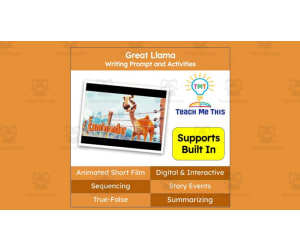
Great Llama Animated Writing Activity | Short Film
ELA, Writing, Grade 1, 2, 3, 4, Teacher Tools, Lesson Plans
The Great Llama Animated Writing Activity | Short Film This extraordinary instructional tool aims at students in Grade 1 through Grade 4 and is utilized by educators to foster a deep interest in writing and language arts lessons. This resource features an entertaining animated short film- 'Great Llama'. The product includes a PowerPoint that comprises of: 13 all-set-to-display slides, rendering abundant content for classroom teaching. Ingenious tasks ranging from arranging details or events in order-a vital skill promoting cognitive growth. Comprehension checks through True or False questions embedded within the presentation. Main Idea & Details exercises interlaced throughout the activity, assisting pupils in filtering important data from extra information. A summarizing segment of this tool accelerates learners' expertise in communicating concisely - a pivotal skill required across all scholastic disciplines. Furthermore, the featured short animated tale is meant to engross students' focus while prompting creative thinking as it instills rudimentary language arts notions. Versatility & Adaptability This instructional asset can alter its usage based on your pedagogical goals - making it fit for whole-class discussions, teamwork tasks or individual homework assignments. This almost proves beneficial both for public schoolteachers seeking enhanced classroom participation and homeschoolers longing for comprehensive lesson plans structure. Suitability For Academic Journey 'The Great Lama Animated Writing Activity | Short Film' adds an engaging depth to learning vital writing skills among fledgling learners embarking on their academic journey toward proficient writing.The integration of amusement along with education enhances proactive studying among scholars as they get involved with every element of the exercise. To make the most out of this resource, it is necessary to have Microsoft PowerPoint that supports the product's file type and thus offers ascendant experience while presenting during lessons. In conclusion, maintain active and gripping teaching with this unique blend of animation combined with educational guidance that prepares learners for successful futures!
Author Teach Me This
Tags Interactive Tasks, Sequence, Language Arts Lessons, Short Film, Animated Writing

Quest for 100 Powered Interactive Classroom Journey & Milestone
Math, Early Math, Addition and Subtraction, Algebra, Calculus, Decimals, Basic Operations, Counting, Fact Families, Numbers, Infant, Toddler, Grade 1, 2, 3, 4, 5, Teacher Tools, Anchor Charts, Assessments, Charts, Diagrams, Graphic Organizers, Lesson Plans, Worksheets & Printables, Workbooks, Worksheets
Celebrate the 100th Day of School with this one-stop-shop, AI-powered interactive classroom kit! This resource is designed for students in Kindergarten through 5th grade, helping you turn what is traditionally just a celebration into an interactive educational experience that develops number sense and is easily integrated with your lesson plans. This is what you get in this PDF Bundle: Annotating Available Apricot PHASE 1: Core Teacher Guide Grounded in education literature, this guide explores the educational significance of tracking milestones, design principles for young students, and lesson plans for using AI (Canva AI) to produce high-quality “100 Days of School” posters. PHASE 2: Ready-to-Print Student Workbook – 10 engaging worksheets that make the journey to 100 days interactive! Activities include: Counting and Number Sense Challenges Challenges in Personal Reflections and Self-Improvement Journals Creative Writing & Storytelling Tasks Math calculations or problems using 100 Thinking about the Future and Planning Celebrations PHASE 3: Visual Resources & Teacher Keys - Comes with SVG concept illustrations for implementation in the classrooms, differentiated activity packets (K-1, 2-3, 4-5), and an answer key to make implementation smooth. Why This Kit is a Game-Changer: Powered Customization: See how you can use generate themes, icons, or prompts to make a personalized poster each year. Standards-Aligned: Direct support for the CCSS Math Standards (K.CC.A.1, 1.NBT.A.1, 2 Saves Hours of Planning: From theory to print-ready activities, it all is provided for a rich, educational celebration. Differentiated for All Elementary Grades: Activities are leveled to reach both younger and older students in elementary school. It is perfect for teachers, homeschooling parents, or school-wide events that aim to make the 100th day more significant and interactive as a learning experience. FORMAT: Instant Digital Download (PDF) Pages: More than 30 pages of professional material Grades: K, 1, 2, 3, 4, 5 Disciplines: Math, Writing, Holidays/Seasons, Back to School, All Subjects Resource Type: Activities, Posters, Lesson, Printables 3. Why Parents/Schools Love It Saves Teacher Time: “It offers everything you need for a full 100th Day celebration without searching for ideas or preparing materials by hand.” Boosts Creativity: Equips teachers with the ability to create customized posters for their classrooms so that each year's event is special. Academically Rigorous & Fun: Strives to do more than crafts by integrating authentic math, writing, and SEL skills into their celebratory activities, meeting K-5 standards. Fosters Classroom Community: Class activities such as the interactive poster emphasize the creation of an excellent learning environment that encourages high self-esteem. Differentiated & Flexible: It is a flexible resource that can be used for students of multiple grade levels since it contains activities for K-5. PDF Analysis & Target Audience : Content Summary: This is a total educational kit that is professionally made for educational purposes, entitled "Quest for 100: Powered Interactive Classroom Journey & Milestone Display Kit – 100 Days of School Poster Edition." This is a three-in-one educational resource that can be utilized by teachers, homeschooling parents, or school administrators: Part 1: Teacher’s Guide & Theoretical Foundation Covers the pedagogy related to celebrating the 100th day of school, the principles of effective posters, and ways to make use of software such as for creating customized posters and activities. Part 2: Student Workbook: This package contains 10 ready-to-use student workbooks that include exercises on math, reflection, creative writing, vocabulary, and project-based learning related to the number 100. Part 3: Visuals & Teacher Resources- This part covers concepts of SVG Diagrams, Answer Keys, and Differentiated Activity Sets for K-5 with emphasis on integrating interactive posters and AI prompt tasks. Primary Target Audience (By Grade): K-5 Teachers-Kindergarten through 5th grade It is differentiated learning material that is specifically tied back to K-5 Common Core Math Standards and Social-Emotional Learning Skills. Activities are tiered by complexity, allowing it to be used for a broad range of elementary-aged children. Secondary Audience: Homeschooling parents seeking organized activities to commemorate milestones. School administrators or curriculum coordinators who are looking for resources to celebrate the 100th day of school Teacher students and educational resource creators. Copyright/Terms : Use This Book is copyrighted by Syed Hammad Rizvi. This material is for personal and classroom use only. You cannot modify it, distribute it, or sell it in any form or manner. This means that you cannot upload it onto the Internet for public download. This is plagiarism. You cannot plagiarize your own work. If you would like to share this resource with your colleagues, you are encouraged to purchase additional licenses through the Teachsimple website. Thank you for observing the terms of use. This product is gladly brought to you by Syed Hammad Rizvi
Author Creative Book Store
Rating
Tags Math, Writing, Holidays/Seasonal, Back To School, For All Subjects, 100 Days Of School Poster, Posters, 100's Day, Activities, Lesson
I WONDER - Why Do Bats Sleep Upsidedown | Animated Video Lesson
STEM, Life Sciences, Science, Biology, Animals, Grade 1, 2, 3, 4, 5, 6, 7, 8, Lesson Plans, Teacher Tools
Video Introduction Animal kingdoms are full of fascinating wonders to learn. This video is designed for the students to learn more about animals in different countries. I WONDER - Why Do Bats Sleep Upsidedown | Animated Video Lesson Do you like animals? what is your favorite one? Do you own a pet? If yes, tell us more about it, like what its name? And what do you like most about it? What are the animal kingdoms? Can you write down the characteristics of each animal class like mammals, birds, reptiles, amphibian, fish and mollusks. Do you know that some animals can sing, can you name any of them? What is the largest and the smallest mammal in the world? What is the largest and the smallest bird in the world? What is the largest and the smallest fish in the world? I WONDER - Why Do Bats Sleep Upsidedown | Animated Video Lesson The video is perfect for encouraging the researching skills for the students, while learning more about these fantastic animals. I WONDER - Why Do Bats Sleep Upsidedown | Animated Video Lesson This friendly designed video is suitable for students at school, homeschooling, and as a group activity. Format Available in MP4 format.
Author Educational Voice
Tags Why Do Bats Sleep Upsidedown, Why Do Bats Sleep Upsidedown Video, Bats Sleep Upsidedown, Bats Sleep Upsidedown Facts, Bats Sleep Upsidedown Facts For Kids, Bats Sleep Upsidedown Video, Bats Sleep Upsidedown Video For Kids

I WONDER - Where Is Château De Chambord | Animated Video Lesson
Geography, Social Studies, History: Europe, History, History: Ancient, Grade 3, 4, 5, 6, 7, 8, 9, Lesson Plans, Teacher Tools
Video Introduction An amazing video designed for the students to learn more about history. I WONDER - Where Is Château De Chambord | Animated Video Lesson Do you like history? Which topic do you really enjoy about history? Have you ever read an interesting fact about the Vikings? If yes, can you mention them? What do you like most about the Victorian era? Can you name all the Tudors? Have you ever wondered how people used to live in ancient Japan and ancient China? Do you know any interesting facts about ancient Egyptians and the Pharaohs? Have you ever visited South America? What do you know about Incas and Aztecs? Celtic culture was really one of a kind, can you name any of the places that Celts used to live in? Imagine yourself living during the ancient Roman empire, how your life will look like? Ancient Greece was an amazing place to live in. What do you know about ancient Greek life? I WONDER - Where Is Château De Chambord | Animated Video Lesson The video is perfect for encouraging the researching skills for the students, while learning more about history. I WONDER - Where Is Château De Chambord | Animated Video Lesson This friendly designed video is suitable for students at school, homeschooling, and as a group activity. Format Available in MP4 format.
Author Educational Voice
Tags Where Is Château De Chambord, Where Is Château De Chambord Video, Château De Chambord, Château De Chambord Facts, Château De Chambord Video, Château De Chambord Video For Kids, Château De Chambord Facts For Kids

Hibernation: Badgers, Bears, Bats & Snakes Gr. 2-3
Science, Life Sciences, Animals, Grade 2, 3, Teacher Tools, Lesson Plans
Hibernation: Badgers, Bears, Bats & Snakes Gr. 2-3 A comprehensive teaching resource ideally suited for second and third-grade teachers focusing on the science subject of Zoology. Built on a unique blend of science education and language arts study, this lesson plan seeks to ignite curiosity about winter sleep habits in diverse animals such as Bears, Ladybugs, Groundhogs, Garter Snakes, Turtles and Bats. Daily Structure: Each day commences with brainstorming activity followed by vocabulary enrichment exercises related to hibernation themes. This is further strengthened through spelling activities and an exercise booklet ensuring recapitulation of learned concepts. Interdisciplinary Approach: Incorporates writing assignments related to each day’s topics thus fostering improvement in both scientific learning and language skills. The lesson concludes with homework assignments intended towards reinforcing classroom learning at home. Reproducible Booklet: A key feature is a reproducible booklet carrying all essential information about the hibernating creatures under study complete with fact sheets including accompanying questions prompting critical thinking as well as related writing activities for creative expression. All these elements make Hibernation: Badgers, Bears, Bats & Snakes Gr. 2-3 not merely useful within classrooms but across small groups or even individual study plans thereby fulfilling the criteria that educators look for in a worthwhile teaching resource; it is engaging, informative and proficient at developing skill sets across disciplines.
Author Classroom Complete Press
Tags PDF, Hibernation Lesson Plan
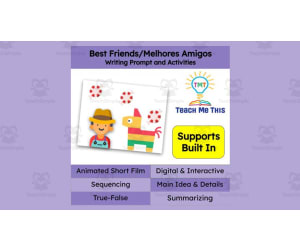
Best Friends Animated Writing Activity | Short Film
ELA, Writing, Grade 1, 2, 3, 4, Teacher Tools, Lesson Plans
This resource allows students to explore writing in a fun way. They will engage with an animated short film about best friends. Included: -Short animated story -Sequencing -True False -Main Idea & Details -Summarizing
Author Teach Me This
Tags Writing Prompts, Writing Activity, Animated Film, Short Film, Creative Writing
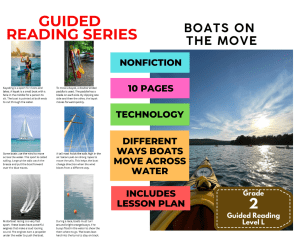
Guided Reading Level L - Boats on the Move (with Lesson Plan)
ELA, Resources for Teachers, Reading Comprehension, Reading, Science, Engineering, Technology, Physics, Sports, P.E. & Health, Grade 2, 3, 4, Worksheets & Printables, Worksheets, Teacher Tools, Centers, Activities, Literacy Readers, Quizzes, Quizzes and Tests, Assessments, Lesson Plans
This Guided Reading Book - Boats on the Move (Level L) with lesson plan includes: Guided Reading Color Label (front cover x1) This is a quick way to match the book’s demands to what students can generally handle.. The overall goal is to use the level/color to pick books for several smaller groups. To qualify for a certain level, a student is expected to read a book from that level with about 90–94% accuracy. If a student is consistently accurate and understands, move up a level. If the student is struggling at that level, drop down and add more support. Each student will improve at completely different rates, but it is generally one of the best ways to check progress across the class. DOWNLOAD THE CATALOG TO VIEW ALL GUIDED READING BOOKS AVAILABLE (SORTED LEVELS A-Z) Pre-Reading Question (x1) Teacher asks the prompt aloud, can be while showing the cover or first page. Students share what they already know, or make educated guesses from the cover. Prompt them to use the target vocabulary. Write some of their responses on the board to look back at during the reading. Vocabulary Words (x5) Introduce the five words, best doing it one at a time. Start by saying it, while students repeat and then see if anyone knows what it means before reading further. Read through the meaning and try to briefly connect each word to a picture or gesture so it’s meaningful. Ask students to flip through the book pages and point to where they see each of the vocabulary words. While reading the book pause upon coming across one of the vocab words or read the sentence twice to make sure students understand the word has appeared. Optional: Ask students to raise hands whenever they see/hear one of the new words. Guided Reading Pages (x10) Check the book snapshot (below) for: primary topic - do you need to prep extra reading or intro materials on this? what is taught best - decide on 1-2 bullets to focus on, use the prompt or words provided here for best results. learning goals - what you are checking for students to be able to do after the session, elicit answers using prompts or words provided. key vocabulary (see section above). questions overview - so you know what is coming up and if you need to prep extra materials to assist understanding. Run the lesson You may have already looked at a few of the pages together, but you can show them some of the pictures again first to set meaning. Depending on how much time you have and how familiar your students are with guided reading class, you may want to read the book aloud first with the group first. Students whisper or partner read, while you listen in. If time, do it as a group, one student reading a page each. Use the guided page’s prompts to coach: “Check the picture / does it make sense?” “Point under the words / try the first sound” “Reread the sentence smoothly”. Try to focus more on one student per session (rotating every time), so you can work out if they are ready to move up or need to move down a level. Comprehension Questions (back cover x3) This is your way to check that students didn’t just say the words, but actually understood the text. First, let students answer by pointing to the page/picture and saying a short sentence. After any answer, follow with: “Show me where you found that in the text.” In bigger groups, have partners answer first (10–20 seconds), then call on 2–3 students to share. Differentiation tips: Emerging speakers/struggling readers: oral + pointing On-level: oral in a full sentence Higher: one written sentence or draw + label Book Snapshot Title: Boats on the Move Genre: Nonfiction (informational) Subject: Science (Forces & Motion) / Reading (Informational Text) Primary Topic: Different ways boats move across water Estimated Guided Reading Level (A–Z): L What This Book Teaches Best Different ways boats move on water (wind, oars, paddles, engines). How specific boat parts help movement (sails, mast, ropes, propeller). How coordinated actions affect motion (oars dipping “at the same time” to go straight). How markers guide movement during a race (boats turn around bright orange buoys to stay on track). Comparing speed and movement styles (quiet glide vs fast roar; forward motion by alternating paddle sides). Learning Goals Students will identify several ways boats move across the water using details from the text. Students will explain how sails and wind help pull a boat forward. Students will describe how rowers use oars together to move a boat straight ahead. Students will describe how a double-ended paddle helps a kayak move forward quickly. Students will explain how an engine and propeller help push a motorboat through the water. Students will describe why boats turn around buoys during a race, based on the text. Key Vocabulary From the Text mast — a tall pole that holds sails up. rhythm — a steady pattern of movement. double-ended — having an end on both sides. propeller — a spinning part that helps push a boat. buoys — floating markers that show where to go. Discussion Prompts Pre-reading question: What are some different ways a boat could move across the water? Comprehension questions: How do large white sails help a boat move forward? What do rowers do “at the same time,” and what does that help the boat do? Why must boats turn around bright orange buoys during a race? Printing Tips 1. Best Printing Method (Recommended) “Booklet” Printing (Best if Available) If your printer or PDF viewer supports Booklet Printing , use this. Settings to use: Print mode: Booklet Paper size: Letter or A4 (either works) Orientation: Landscape Print on both sides: Yes Flip on: Short edge Scaling: Fit to printable area Booklet subset: First test: Front sides only Then: Back sides only This will automatically: Pair pages correctly Put the cover on the outside Align everything for folding After printing, fold in half and staple along the spine . 2. If “Booklet” Printing Is NOT Available You can still print this correctly with manual duplex printing . Step-by-step: Open the PDF. Choose Print . Set: Orientation: Landscape Pages per sheet: 1 Print on both sides: Yes Flip on: Short edge Print all pages . Because each PDF page already contains two facing book pages, the result will still fold cleanly into a book. Thousands of Cored Education products are included with your TeachSimple membership. Download links and encyclopedia index available here.
Author Cored Education
Rating
Tags Reading Comprehension, Reading Passages, Reading, Guided Reading, Guided Reading Lesson Plan, Guided Reading Activity, Pre-reading, Science Lesson Plans, Physics, Technology
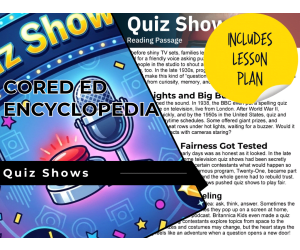
Quiz Shows Reading Comprehension Passage - Cored Ed Encyclopedia
ELA, Language Development, Reading Comprehension, Reading, Pre-Reading, Writing, Strategies, Vocabulary, History, Social Studies, Grade 2, 3, 4, 5, Worksheets & Printables, Worksheets, Teacher Tools, Centers, Activities, Writing Prompts, Assessments, Quizzes and Tests, Quizzes, Lesson Plans
This quiz shows reading comprehension includes: Visualization (on the front cover) Start your lesson by taking a minute to think and share something about the topic. Read the script aloud (slowly), perhaps prepare some music or sound effects. Student close their eyes and let their imaginations wander. Students open their eyes, read the question aloud and give them a few minutes to complete. Ask a few students to share or keep answers until the end to compare with what they learn in the passage. Quick pause—thousands of Cored Education products are included with your TeachSimple membership. Download links and encyclopedia index available here. Pre-Reading Trivia Students will write down one thing they already know about the subject and then read five more facts and discuss. These facts are fun, and the students will enjoy learning about the subject before reading more. Give 1 minute for students to write what they already know (no pressure—best guess is fine). Read the five facts together. After each fact, do ask a student for their opinion, was it surprising? Set a purpose by asking students to highlight/underline one fact they want to learn more about during the reading. Reading Passage The text is a high-interest reading passage with set paragraphs, roughly three to four paragraphs long. It contains a variety of themes about the topic, anywhere from history to technology. The passage is between 250 and 350 words in length. First, ask students to look at the headings and see what they’ll learn about today. What do they know about the topic/heading? First read options: Teacher read-aloud (best for support). Partner reading (paragraph by paragraph). While reading, students underline important details, and vocabulary words they think may come up in the questions section. Mixed Questions The first question page contains four multiple-choice questions, each with a choice of four answers, and three written response questions that require a sentence or two from the student. Students complete the mcqs first independently, then review quickly as a class. For the 3 written responses, try to get students giving the answer with some form of evidence: “I think ___ because the text says ___.” If students get stuck, send them back to check the passage. Vocabulary Questions Practice seven key words from the text in this section across two activities. First section is scrambled words where students will unscramble three words given a clue for each. The second section is a word to meaning matching activity. Before starting, have some students read out words they underlined in the passage. Ask students to say the word and read aloud the sentence(s) around each word. Ask students to do scrambled words and the matching exercise in pairs then go through answers as a class. For the scrambled spelling task, get four pairs to come up to the board and write the words for extra practice with the other student reading out the clue. For the matching task, prompt students to give full sentences: “I matched ___ with ___ because ___.” Creative Writing In this question, the student will be required to write a five to eight sentence paragraph on a question related to the topic. Before starting, ask students write down 3 key ideas they are going to include in their piece. Ask students for ideas to share around the class to help those struggling. Pro writing expectations: 5–8 sentences At least 2 facts or details from the passage At least 2 vocabulary words from the previous page Students read their paragraphs while classmates listen for facts and vocabulary words. Extension Activities This page is optional for fast finishers or to take home. There are several activities, each one requiring a different skill. Do some, do none, do all, completely optional - but you will feel reassured knowing every possibility is planned for. Includes summary writting question. Answer Key There are answers for the multiple-choice questions, written response questions have sample answers, vocabulary answers and if there is a summary question then a sample summary will be provided as well. Lesson Plan Included Customized lesson plan for this lesson is included. Lesson Snapshot Title: Quiz Shows Genre: Nonfiction (informational reading passage) Subject: Reading (Informational Text) / Social Studies (media history) Primary Topic: Quiz shows from radio to TV to podcasts Estimated Guided Reading Level (A–Z): R What This Lesson Teaches Best How quiz shows changed over time, from radio “question games” to television and modern podcasts. Key historical milestones and examples (late 1930s radio programs; 1938 BBC spelling quiz on TV; 1950s U.S. daytime quiz/game shows). Understanding fairness and trust in media (some shows were “rigged,” followed by investigations, hearings, and stronger rules). Text structure practice using section headings to track ideas (early radio → TV era → fairness tested → today). Strong built-in supports that match the passage (questions, vocabulary work, writing prompt, and extensions align to passage details). Learning Goals Students will describe how people participated in quiz shows before TVs were common, using details from the passage. Students will explain how television changed quiz shows, including what it was like for contestants under cameras and lights. Students will explain what “rigged” means in the passage and why quiz shows had to “rebuild trust.” Students will identify ways quiz shows appear today (board, screen at home, or podcast), based on the passage. Students will use the section headings to state the main idea of each section and support it with one detail. Key Vocabulary From the Text contestants — people who compete in a game rigged — secretly fixed so it is not fair producers — people who run and plan a show investigations — careful searches to find out what happened genre — a type or category of show FULL CATALOG OF DOWNLOAD LINKS AND ENCYCLOPEDIA INDEX HERE
Author Cored Education
Rating
Tags Vocabulary, Reading Comprehension, Reading Passages, Reading, Creative Writing, Reading Strategies, Writing Prompts, Lesson Plans, Quiz Shows, History

Unit Fractions Activity - Bingo Game - Fraction Circles - Boards 6-10
Math, Fractions, Grade 2, 3, 4, Lesson Plans, Teacher Tools
The Unit Fractions Activity - Bingo Game - Fraction Circicles - Boards 6-10: A captivating way to assist educators in teaching students about unit fractions, offering a fun-filled bingo game format. Specially designed for Grade 2, Grade 3, and Grade 4, targeting their curriculum needs where fractions form a crucial part of the syllabus. The Package: Five different-color bingo boards along with their black-and-white versions. Four classy sets of calling cards bearing fraction circles, squares, strips and symbols. Note: An easy-to-set-up process just involves printing out bingo boards and calling cards. Post-printing lamination suggested for durability purposes. Versatility & Adaptability: Suitable for both one-on-one tutoring sessions or teaching larger classroom groups. Excellent also for homeschooled scholars making maths exciting at home! Fostering Focus & Quick Thinking: Each participant gets their own Bingo board to compare with diverse Calling Cards calls fostering focus and promoting quick thinking among young learners – necessary skills required when dealing with complex mathematical topics such as unit fractions. Increase in Student Independence & Confidence levels: *Approachable playing instructions ensure smooth conduct even without direct teacher intervention. *Enables independent learning that directly strengthens learner's confidence levels boosting overall academic growth. The Unit Fractions Activity - Bingo Game - Fraction Circles - Boards 6-10 makes fraction teaching more effective and interactive elevating the learning process several notches higher!
Author Colleen's Cosmic Collection
Tags Unit Fractions, Bingo Game, Math Activity, Fraction Circles
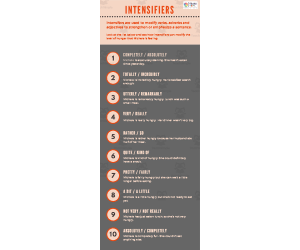
Intensifiers | Beginner Lesson Plan
ELA, Grammar, Grade 2, 3, 4, 5, 8, 9, 10, 11, 12, Teacher Tools, Lesson Plans
Intensifiers | Beginner Lesson Plan This 27-page English grammar lesson plan teaches intensifiers to help early ESL and EFL students strengthen their conversational and writing skills. Created for A1 beginner levels, it includes informative materials like flash cards, warm-up activities, grammar rules, closed and open exercises, chatterbox conversation prompts, and a final quiz. With real-life examples and practice opportunities, students gain knowledge and confidence applying intensifiers properly. They explore intensifier construction, main uses, exceptions, and more through whole group instruction or independent study. Assign the writing exercises individually or supplement conversations with the activity handouts. The lesson concludes by testing comprehension of intensifier usage. An answer key provides grading support. With multi-format engagement, this TEFL resource builds a solid intensifier foundation to empower accurate emphasis in everyday English.
Author TEAM TEFL
Tags Verbs, Adjectives, Intensifiers, Grammar Exercise, Language Arts

Mummies in the Morning (Magic Tree House #3 Lesson Plan, Videos, Activities)
ELA, Reading, Grade 1, 2, 3, Lesson Plans, Teacher Tools
Mummies in the Morning (Magic Tree House #3 Lesson Plan, Videos, Activities) Mummies in the Morning is an easy-to-use teaching resource enhancing students learning experience while providing efficiency to educators. This comprehensive novel study brings a 5-day lesson plan, coupled with videos and engaging activities. It's perfect for first to third graders within various educational settings. Educational Value Covers subjects such as Art, Comprehension, English language arts, Geography, etc., into one no-prep package. The lessons can be customized according to different reading and comprehension abilities of students; catering to personal interests and unique learning styles. Features Mummies in the Morning package includes: Videos relevant to lessons taught. Pre-reading exercises for anticipation and excitement. Durign-reading probing questions stimulating critical thinking abilities. SPost-reading reflections allowing deeper comprehension checks. New vocabulary terms introduced in each chapter summary providing dual options flexibility. craft .au/packaging/mwizz/wizzapg Beyond traditional workbook activities like quizzes; there’s a variety of creative platforms building expressive outlets, such as book review reports(6 options), writing craftivity increasing written skills requirements transforming ordinary narratives into elevated creativity producible pieces assignments melded with literary studies. The final part includes project idea suggestions ending literature study on a high note; interactive notebook items showcasing student’s understanding core teachings extending the scope of answering methods. Format and Use The resource is available in PDF format, giving educators complete control over printing and use. It's adaptable for whole group, small group independent study homework or fun extra credit work making it suitable for the modern teaching dynamics.
Author Heather Huhman
Tags Mummies, Magic Tree House, Lesson Plan, Activities, Comprehension

I WONDER - What Are Proteins | Animated Video Lesson
Human Body, Life Sciences, Science, Biology, STEM, Grade 2, 3, 4, 5, 6, 7, 8, Lesson Plans, Teacher Tools
Video Overview The human body is full of fascinating wonders to learn. This video is created to help the students recognize the anatomy and the job of the human body. I WONDER - What Are Proteins | Animated Video Lesson Every part and organ in our human body is vital so let's see how important they are. Have you ever imagined how we look like if we didn't have a skeleton? Did you know that because we have our amazing muscles we can stand! Do you know how many teeth do we have? Have you ever wondered about the food journey inside our body? Can you name all the glands in our body? Why do we have skin? Our nervous system is really good at sending signals. Can you tell us more about it? Are you really good at Mathematics, painting, or any other thing? You should really thank your brain about it! The famous five senses are really doing a great work? Can you explain how every sense works? I WONDER - What Are Proteins | Animated Video Lesson The video is perfect for encouraging the researching skills for the students, while learning more about our fantastic human body. I WONDER - What Are Proteins | Animated Video Lesson This friendly designed video is suitable for students at school, homeschooling, and as a group activity. Format Available in MP4 format.
Author Educational Voice
Tags What Are Proteins, What Are Proteins Video, Proteins, Proteins Facts, Protein, Proteins Facts For Kids, Proteins Video, Proteins Video For Kids, Protein Facts For Kids, Tips For Eating Healthy

The Field Trip Animated Writing Activity | Short Film
ELA, Writing, Grade 1, 2, 3, 4, Teacher Tools, Lesson Plans
The Field Trip Animated Writing Activity | Short Film The Field Trip Animated Writing Activity | Short Film is an engaging teaching resource designed to stimulate students' creativity and elevate their writing skills. With the help of an animated short film titled 'The Field Trip', it turns ordinary writing activities into exciting learning adventures. This resource is particularly beneficial for language arts educators dealing with Grades 1 through 4, promoting active classroom discussions and developing student's writing abilities. It can be used in either public or homeschool settings. Detailed Overview A dynamic PowerPoint lesson plan comprising of 13 carefully designed slides. Mix of activities revolving around the film study such as: Sequencing events Distinguishing between true or false statements related to the story Identifying main ideas along with supporting details Summarizing the narrative accurately Suitable for both in-class engagement and homework assignments, this resource offers students continuous interaction with the material beyond typical classroom boundaries. Note: This resource comes as a Microsoft PowerPoint file making it easy-to-edit based on class requirements - perfect for educators who wish to customize their lessons ahead of time. To conclude, The Field Trip Animated Writing Activity | Short Film combines visual entertainment with educational writing exercises. It leads your learners on a journey where every step offers invaluable knowledge about language construction all while keeping them engrossed thanks to its compelling animated narrative.
Author Teach Me This
Tags Animated, Writing, Activity, Short Film, Storytelling
I WONDER - What Is Saturn Made From | Animated Video Lesson
Space, Earth and Environmental Sciences, Science, Grade 3, 4, 5, 6, 7, 8, 9, Lesson Plans, Teacher Tools
Video Introduction An amazing video designed for the students to learn more about space facts. I WONDER - How Heavy Is Saturn | Animated Video Lesson Have you ever thought about travelling to space?! Join us with this amazing video about Saturn. Do you think we can visit Saturn some day? How amazing is space! Let's discover some amazing facts about planets, asteroids, our solar system and the milky way! Do you know that we have two kinds of planets in our solar system? Can you name the planets based upon their core type? I WONDER - How Heavy Is Saturn | Animated Video Lesson The video is perfect for encouraging the researching skills for the students, while learning more about the fantastic space. I WONDER - How Heavy Is Saturn | Animated Video Lesson This friendly designed video is suitable for students at school, homeschooling, and as a group activity. Format Available in MP4 format.
Author Educational Voice
Rating
Tags What Is Saturn Made From, Saturn, Saturn Facts, Saturn Facts For Kids, Saturn Video, Saturn Video For Kids, Saturn Core, Space, Space Facts, Space Video

Time & Money 5 Day Small Group Remediation Plan (VA SOL 3.6, 3.9)
Math, Time, Money, Grade 2, 3, 4, Teacher Tools, Lesson Plans, Activities
The Time & Money 5 Day Small Group Remediation Plan This is a comprehensive teaching resource aimed at tackling concepts such as time, money and wider mathematics. Originally crafted for the Virginia Standards of Learning (VA SOL 3.6, 3.9), it suits educators and homeschoolers teaching Grade 2 to Grade 4 students perfectly. Unique in its approach, it creates connections between theory and practical application of core skills. Activity Schedule: Five Days of Mathematics Mastery Days One to Three: Coverage centers around money-related topics: counting money; comparing values; and making change using mixed coins and bills up to $5.00. Day Four: The focus changes towards learning about telling time nearest to the minute with exercises on calculating elapsed time within a range of an hour involved. Day Five: A comprehensive review day covering all topics previously discussed through teacher-led instructions coupled with a twelve-question exit ticket strategy for effective revisit of previous days’ learning points. Digital Slide Show Interaction A digital slideshow enriches overall class interactivity, ensuring no student feels short-changed during remedial sessions - regardless whether classes are small groups or whole class sizes targeted. Solution Keys Included! Included in this standout product are answer keys not only pertinent to independent practice sheets but also crucial solution scenarios relating exit tickets – seamlessly aiding educational assessment tasks from beginning to end. Tailored Yet Flexible Instruction Tool While it adheres closely with VA SOLs- Math SOL 3.6 & Math SOL 3.9 specifics; it’s worth noting that any educator aiming for second-to-fourth graders grappling with counting currency types, change-making strategies or understanding time frames will find huge value in this resource-rich remediation plan.
Author SchoolingSara
Tags Time, Money, Remediation Plan, Small Group, Mathematics Skills
Algebra: Graphing - Coordinates & Number Lines - Practice the Skill 1 - FLASH-MAC
Math, Algebra, Common Core, Grade 3, 4, 5, Teacher Tools, Lesson Plans
Algebra: Graphing - Coordinates & Number Lines - Practice the Skill 1 - FLASH-MAC This resource for algebra educators is tailored to help students of grades 3 to 5 understand graphing coordinates and number lines. The structure involves a selection of timed drill activities that prompt learners to identify and graph the value of "x" on provided number lines. Key Aspects: A series of integrated math tools designed to aid understanding through visual explanations. Bilingual support with English and Spanish voice-over options alongside text translations. Meets modern educational standards, aligning with both Common Core State Standards (ensuring national coherence in math education) and STEM initiatives (promoting versatile knowledge application). Includes acknowledgment of National Council of Teachers in Mathematics’ guidelines (NCTM), ensuring consistency across American classrooms. The product is available as a user-friendly software aligned for Mac interfaces, thus making teaching more efficient while simplifying preparation needs. Inclusive Access: Suitable for any educational environment, be it group classrooms or homeschool settings—gain effortless access to algebra sizes up with Algebra: Graphing - Coordinates & Number Lines – Practice the Skill 1!
Author Classroom Complete Press
Tags Software (Mac)

I WONDER - Do Butterflies Migrate | Animated Video Lesson
STEM, Biology, Life Sciences, Science, Animals, Insects, Grade 1, 2, 3, 4, 5, 6, 7, 8, Lesson Plans, Teacher Tools
Video Introduction Animal kingdoms are full of fascinating wonders to learn. This video is designed for the students to learn more about animals in different countries. I WONDER - Do Butterflies Migrate | Animated Video Lesson Do you like animals? what is your favorite one? Do you own a pet? If yes, tell us more about it, like what its name? And what do you like most about it? What are the animal kingdoms? Can you write down the characteristics of each animal class like mammals, birds, reptiles, amphibian, fish and mollusks. Do you know that some animals can sing, can you name any of them? What is the largest and the smallest mammal in the world? What is the largest and the smallest bird in the world? What is the largest and the smallest fish in the world? I WONDER - Do Butterflies Migrate | Animated Video Lesson The video is perfect for encouraging the researching skills for the students, while learning more about these fantastic animals. I WONDER - Do Butterflies Migrate | Animated Video Lesson This friendly designed video is suitable for students at school, homeschooling, and as a group activity. Format Available in MP4 format.
Author Educational Voice
Tags Do Butterflies Migrate, Do Butterflies Migrate Video, Butterflies, Butterfly, Butterflies Facts, Butterflies Facts For Kids, Butterflies Video, Butterflies Video For Kids, Butterfly Facts, Butterfly Video

3rd Grade Morning Work | 180 Days Review | Math & ELA | 1st Quarter
ELA, Math, Grade 3, Centers, Activities, Lesson Plans, Teacher Tools, Worksheets & Printables
Grade 3 Morning Work | 1st Quarter Student Pages + Full-Year Teacher Resources Make your third grade mornings simple, consistent, and purposeful with 45 days of Grade 3 morning work for Quarter 1 . This resource includes ALL teacher resources for the complete 180-day program , while the student practice pages in this pack are specifically for 1st Quarter: Days 1–45 . What’s Included ⭐ FULL-YEAR TEACHER RESOURCES You receive the complete teacher toolkit for planning, organizing, differentiating, and assessing the entire 180-day Grade 3 morning work program : Teacher Guide Full 36-week Pacing Guide Skills Checklist for tracking student progress Fully Editable Morning Work Schedule Weekly planning and classroom organization support 36-week Year-at-a-Glance Planner Complete Answer Key for Days 1–180 Differentiation strategies for support, challenge, English learners, and small groups 📚 STUDENT PAGES INCLUDED: 1ST QUARTER The student portion of this product includes Days 1–45 , providing 45 days of ready-to-use Grade 3 morning work . Each day includes a two-page set with 22 consistent sections . Page A — Reading & Language Editing Prefixes Context clues Reading comprehension Vocabulary Targeted writing skills Writing prompts Reading challenges SEL check-ins Fun facts Page B — Math & Think Multiplication Division Fractions Elapsed time Area Perimeter Word problems Math challenges Jokes and riddles Brain teasers Growth mindset Would You Rather questions Important: The student practice pages included in this product are Days 1–45 only . The teacher resources and complete Answer Key cover all 180 days . How It Works in the Classroom Use this Grade 3 morning work as a daily bell ringer, morning routine, independent practice, homework, or spiral review. The routine is designed for approximately 15 minutes and follows a predictable two-page format. Students begin with Reading & Language before moving into Math & Think. A typical routine includes: Page A: Reading & Language Page B: Math & Think Final sections: Joke, brain teaser, growth mindset, and Would You Rather Quick review or class discussion before transitioning into the day You can also use the pages for: Morning work Bell ringers Homework Early finishers Sub plans Math intervention warm-ups Spiral review before testing Independent practice Print the pages two-sided, flipping on the long edge , for one sheet per student per day. You can print a week at a time or staple the first quarter into a student packet. Standards & Learning Goals This Grade 3 morning work resource provides daily spiral review aligned with important Common Core Grade 3 ELA and math standards . 📖 ELA Skills Students practice: Editing and language conventions Prefixes Context clues Reading comprehension Vocabulary Writing skills Reading response Reading challenges Sentence construction and writing development Quarter 1 builds a strong foundation with targeted editing, word study, vocabulary, comprehension, and writing practice. Writing skills include areas such as transitions, combining sentences, strong verbs, and sentence variety . 🔢 Math Skills Students practice: Multiplication facts Division Equal groups and arrays Fractions Elapsed time Area Perimeter Word problems Mathematical reasoning Quarter 1 focuses on multiplication facts with 2–5 , equal groups and arrays, elapsed time through five-minute intervals, and foundational fraction concepts including halves, thirds, and fourths . Why Teachers Love It ✨ You get ALL the teacher resources for the entire year. The Teacher Guide, 36-week pacing guide, Skills Checklist, editable schedule, differentiation tools, and complete 180-day Answer Key are included. ✨ Students get exactly what they need for Quarter 1. Days 1–45 provide a complete 45-day student set for the first quarter. ✨ Save valuable planning time. The daily routine is already organized across reading, language, writing, math, and engaging thinking activities. ✨ Build student independence. The same 22 sections appear every day, so students quickly learn the routine and need less teacher direction. ✨ True spiral review. Grade 3 skills return throughout the year while the difficulty increases. The content does not repeat across all 180 days. ✨ Support different learners. The Teacher Guide includes strategies for students needing support, students ready for a challenge, English learners, and small-group instruction. ✨ Track progress without creating extra paperwork. The Skills Checklist lets you record skills as Introduced, Practiced, or Mastered . ✨ Keep mornings engaging. Students get more than worksheets. Jokes, brain teasers, growth mindset prompts, SEL check-ins, and Would You Rather questions add variety to the routine. ✨ Use it beyond morning work. The resource also works beautifully for homework, early finishers, sub work, intervention warm-ups, or spiral review before state testing. ✨ Have the answers for the entire year. The Answer Key provides answers for reading questions, math problems, editing corrections, context clues, and other daily sections across Days 1–180 . Looking for Grade 3 morning work for Quarter 1 that saves planning time and keeps students practicing essential skills every day? This pack includes 45 days of student practice (Days 1–45) PLUS ALL teacher resources for the full 180-day program . Start your third graders with a predictable, engaging morning routine that builds independence while keeping important ELA and math skills fresh! Print it, prep it, and start your mornings with confidence! 💛
Author Bright Classroom Ideas Marketplace
Rating
Tags Math, Ela, Morning Work, Back To School
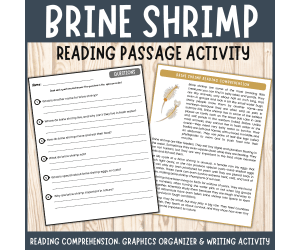
Brine Shrimp reading passage comprehension questions writing activity
Biology, Life Sciences, Science, Animals, Kindergarten, Preschool, Grade 1, 2, 3, Lesson Plans, Teacher Tools, Graphic Organizers, Writing Prompts, Worksheets & Printables
Introduce your students to the fascinating world of Brine Shrimp (Sea Monkeys) with this engaging reading comprehension and writing resource ! Perfect for science, literacy centers, or cross-curricular lessons, this resource blends nonfiction text with interactive comprehension activities and graphic organizers. Students will practice close reading, strengthen vocabulary, and build writing skills while learning about these unique aquatic creatures. What’s Included In This Reading Passage Pack? Reading Passage Writing Activities Vocabulary KWL Chart Word Search Coloring Page & Answer Key Why Teachers Love It • Strengthens science + reading integration • Encourages critical thinking and text-based responses • Supports informational writing and research skills • Easy print-and-go format for classroom or homework use • Aligned with NGSS life science and ELA nonfiction standards Great For • Science centers and literacy rotations • Animal adaptations or life cycle units • Homework or sub plans • Early finishers or enrichment • Homeschool science + reading lessons This Brine Shrimp Reading & Comprehension Pack makes science literacy fun, interactive, and easy to integrate into your classroom routine!
Author Perfect_Printables
Rating
Tags Brine Shrimp Reading Passage, Brine Shrimp Comprehension, Ocean Animals Reading Comprehension, Science Reading Activity, Writing Activity Worksheet, Sea Creature, Nonfiction Passage Elementary, Graphic Organizer Worksheet

I WONDER - How Did Soldiers Practice In The Rain | Animated Video
Earth Sciences, Earth and Environmental Sciences, Science, History, Social Studies, History: British, History: Europe, Grade 3, 4, 5, 6, 7, 8, 9, Lesson Plans, Teacher Tools
Video Introduction An amazing video designed for the students to learn more about famous phenomena in different countries. I WONDER - How Did Soldiers Practice In The Rain | Animated Video Lesson Weather phenomena can affect our lives, crops and even animals! Can you name any of the weather phenomena that happened in your country? Do you know when hailstorms happen? And what is the most country who has lots of hailstorms happening per year? Do you think the all countries have four seasons? If no, can you name any? Why do some animals sleep at winter? Can you name any of these animals? I WONDER - How Did Soldiers Practice In The Rain | Animated Video Lesson The video is perfect for encouraging the researching skills for the students, while learning more about this fantastic phenomenon. I WONDER - How Did Soldiers Practice In The Rain | Animated Video Lesson The video is perfect for encouraging the researching skills for the students, while learning more about this fantastic phenomenon. Format Available in a PDF format.
Author Educational Voice
Rating
Tags How Did Soldiers Practice In The Rain, Rain, Rain Facts, Rain Video, Rain Video For Kids, Rain Facts For Kids, Soldiers Practice, Soldiers Practice In Rainy Days, Weather, Rain In History

Reindeer Reading Comprehension Passage - Cored Ed Encyclopedia
ELA, Language Development, Reading Comprehension, Reading, Pre-Reading, Science, Writing, Strategies, Animals, Life Sciences, Grade 2, 3, 4, 5, Worksheets & Printables, Worksheets, Teacher Tools, Centers, Activities, Writing Prompts, Assessments, Quizzes and Tests, Quizzes, Lesson Plans
This reindeer reading comprehension includes: Visualization (on the front cover) Start your lesson by taking a minute to think and share something about the topic. Read the script aloud (slowly), perhaps prepare some music or sound effects. Student close their eyes and let their imaginations wander. Students open their eyes, read the question aloud and give them a few minutes to complete. Ask a few students to share or keep answers until the end to compare with what they learn in the passage. Quick pause—thousands of Cored Education products are included with your TeachSimple membership. Download links and encyclopedia index available here. COMPANION VIDEO NOW AVAILABLE (EMBEDDED AFTER PREVIEW PICTURES IN PRODUCT DESCRIPTION) Pre-Reading Trivia Students will write down one thing they already know about the subject and then read five more facts and discuss. These facts are fun, and the students will enjoy learning about the subject before reading more. Give 1 minute for students to write what they already know (no pressure—best guess is fine). Read the five facts together. After each fact, do ask a student for their opinion, was it surprising? Set a purpose by asking students to highlight/underline one fact they want to learn more about during the reading. Reading Passage The text is a high-interest reading passage with set paragraphs, roughly three to four paragraphs long. It contains a variety of themes about the topic, anywhere from history to technology. The passage is between 250 and 350 words in length. First, ask students to look at the headings and see what they’ll learn about today. What do they know about the topic/heading? First read options: Teacher read-aloud (best for support). Partner reading (paragraph by paragraph). While reading, students underline important details, and vocabulary words they think may come up in the questions section. Mixed Questions The first question page contains four multiple-choice questions, each with a choice of four answers, and three written response questions that require a sentence or two from the student. Students complete the mcqs first independently, then review quickly as a class. For the 3 written responses, try to get students giving the answer with some form of evidence: “I think ___ because the text says ___.” If students get stuck, send them back to check the passage. Vocabulary Questions Practice seven key words from the text in this section across two activities. First section is scrambled words where students will unscramble three words given a clue for each. The second section is a word to meaning matching activity. Before starting, have some students read out words they underlined in the passage. Ask students to say the word and read aloud the sentence(s) around each word. Ask students to do scrambled words and the matching exercise in pairs then go through answers as a class. For the scrambled spelling task, get four pairs to come up to the board and write the words for extra practice with the other student reading out the clue. For the matching task, prompt students to give full sentences: “I matched ___ with ___ because ___.” Creative Writing In this question, the student will be required to write a five to eight sentence paragraph on a question related to the topic. Before starting, ask students write down 3 key ideas they are going to include in their piece. Ask students for ideas to share around the class to help those struggling. Pro writing expectations: 5–8 sentences At least 2 facts or details from the passage At least 2 vocabulary words from the previous page Students read their paragraphs while classmates listen for facts and vocabulary words. Extension Activities This page is optional for fast finishers or to take home. There are several activities, each one requiring a different skill. Do some, do none, do all, completely optional - but you will feel reassured knowing every possibility is planned for. Includes summary writting question. Answer Key There are answers for the multiple-choice questions, written response questions have sample answers, vocabulary answers and if there is a summary question then a sample summary will be provided as well. Lesson Plan Included Customized lesson plan for this lesson is included. Lesson Snapshot Title: Reindeer Genre: Nonfiction (informational text) Subject: Life Science (Animals & Habitats) Primary Topic: Reindeer adaptations, migration, and human connections Estimated Guided Reading Level (A–Z): R What This Lesson Teaches Best How reindeer are adapted for cold places (thick coat; wide hooves for soft snow and soggy tundra). How reindeer find food when conditions are harsh (digging through snow to reach lichen). Migration and seasonal movement (some herds travel long journeys; more than 600 miles north in summer, then south again). How people and reindeer have influenced each other (communities watching hoofprints, herding partnerships, reindeer helping with travel and providing resources). A conservation-style question about changing winters (warming turning soft snow into hard ice that seals food away). Learning Goals Students will describe where reindeer live using details from the text (Arctic and subarctic lands). Students will explain two body features that help reindeer in winter conditions. Students will describe how reindeer get food when it is scarce, using the text’s example. Students will explain how long journeys relate to seasons and survival in the passage. Students will describe one way people have interacted with or depended on reindeer in the text. Key Vocabulary From the Text subarctic — very cold region just below the Arctic. tundra — open, cold land with few trees. hoofprints — marks left by hooves in the ground or snow. lichen — crusty plantlike growth on rocks and ground. Vulnerable — at risk of harm or shrinking in number. FULL CATALOG OF DOWNLOAD LINKS AND ENCYCLOPEDIA INDEX HERE
Author Cored Education
Rating
Tags Vocabulary, Reading Comprehension, Reading Passages, Reading, Creative Writing, Reading Strategies, Writing Prompts, Lesson Plans, Reindeer, Life Science

I WONDER - Who Invented Nail Polish | Animated Video Lesson
History: Asian, History, Social Studies, History: Ancient, Grade 2, 3, 4, 5, 6, 7, 8, Lesson Plans, Teacher Tools
Video Introduction An amazing video designed for the students to learn more about history. I WONDER - Who Invented Nail Polish | Animated Video Lesson Do you like history? Which topic do you really enjoy about history? Have you ever read an interesting fact about the Vikings? If yes, can you mention them? What do you like most about the Victorian era? Can you name all the Tudors? Have you ever wondered how people used to live in ancient Japan and ancient China? Do you know any interesting facts about ancient Egyptians and the Pharaohs? Have you ever visited South America? What do you know about Incas and Aztecs? Celtic culture was really one of a kind, can you name any of the places that Celts used to live in? Imagine yourself living during the ancient Roman empire, how your life will look like? Ancient Greece was an amazing place to live in. What do you know about ancient Greek life? I WONDER - Who Invented Nail Polish | Animated Video Lesson The video is perfect for encouraging the researching skills for the students, while learning more about history. I WONDER - Who Invented Nail Polish | Animated Video Lesson This friendly designed video is suitable for students at school, homeschooling, and as a group activity. Format Available in MP4 format.
Author Educational Voice
Tags Who Invented Nail Polish, Who Invented Nail Polish Video, Nail Polish, Nail Polish History, Nail Polish Facts, Nail Polish Video, Nail Polish Facts For Kids, Nail Polish Video For Kids, Nail Polish History Video