



3,885 products added recently
Page 2 - Elementary Lesson Plans
Support your elementary students with lesson plans that cover a broad range of subjects and skills. These resources are designed to promote cognitive, social, and emotional growth. Incorporate them into your teaching to provide a well-rounded education that meets the needs of all your students.

 Show filters


All About Nouns | Interactive Literacy Video Lesson
ELA, Grammar, Grade 1, 2, 3, Lesson Plans, Teacher Tools
This animated video is a literacy lesson all about nouns. Students will love this engaging and interactive video. This video serves as a great introduction or review video for your learners. This is a 3-minute video lesson.
Author Educational Voice
Tags Nouns, Grammar Lesson, Language Arts, Video, Literacy

Quick Snacks Reading Comprehension Passage - Cored Ed Encyclopedia
ELA, Language Development, Reading Comprehension, Reading, Pre-Reading, Writing, Strategies, Vocabulary, Health, P.E. & Health, Grade 2, 3, 4, 5, Worksheets & Printables, Worksheets, Teacher Tools, Centers, Activities, Writing Prompts, Assessments, Quizzes and Tests, Quizzes, Lesson Plans
This quick snacks reading comprehension includes: Visualization (on the front cover) Start your lesson by taking a minute to think and share something about the topic. Read the script aloud (slowly), perhaps prepare some music or sound effects. Student close their eyes and let their imaginations wander. Students open their eyes, read the question aloud and give them a few minutes to complete. Ask a few students to share or keep answers until the end to compare with what they learn in the passage. Quick pause—thousands of Cored Education products are included with your TeachSimple membership. Download links and encyclopedia index available here. Pre-Reading Trivia Students will write down one thing they already know about the subject and then read five more facts and discuss. These facts are fun, and the students will enjoy learning about the subject before reading more. Give 1 minute for students to write what they already know (no pressure—best guess is fine). Read the five facts together. After each fact, do ask a student for their opinion, was it surprising? Set a purpose by asking students to highlight/underline one fact they want to learn more about during the reading. Reading Passage The text is a high-interest reading passage with set paragraphs, roughly three to four paragraphs long. It contains a variety of themes about the topic, anywhere from history to technology. The passage is between 250 and 350 words in length. First, ask students to look at the headings and see what they’ll learn about today. What do they know about the topic/heading? First read options: Teacher read-aloud (best for support). Partner reading (paragraph by paragraph). While reading, students underline important details, and vocabulary words they think may come up in the questions section. Mixed Questions The first question page contains four multiple-choice questions, each with a choice of four answers, and three written response questions that require a sentence or two from the student. Students complete the mcqs first independently, then review quickly as a class. For the 3 written responses, try to get students giving the answer with some form of evidence: “I think ___ because the text says ___.” If students get stuck, send them back to check the passage. Vocabulary Questions Practice seven key words from the text in this section across two activities. First section is scrambled words where students will unscramble three words given a clue for each. The second section is a word to meaning matching activity. Before starting, have some students read out words they underlined in the passage. Ask students to say the word and read aloud the sentence(s) around each word. Ask students to do scrambled words and the matching exercise in pairs then go through answers as a class. For the scrambled spelling task, get four pairs to come up to the board and write the words for extra practice with the other student reading out the clue. For the matching task, prompt students to give full sentences: “I matched ___ with ___ because ___.” Creative Writing In this question, the student will be required to write a five to eight sentence paragraph on a question related to the topic. Before starting, ask students write down 3 key ideas they are going to include in their piece. Ask students for ideas to share around the class to help those struggling. Pro writing expectations: 5–8 sentences At least 2 facts or details from the passage At least 2 vocabulary words from the previous page Students read their paragraphs while classmates listen for facts and vocabulary words. Extension Activities This page is optional for fast finishers or to take home. There are several activities, each one requiring a different skill. Do some, do none, do all, completely optional - but you will feel reassured knowing every possibility is planned for. Includes summary writting question. Answer Key There are answers for the multiple-choice questions, written response questions have sample answers, vocabulary answers and if there is a summary question then a sample summary will be provided as well. Lesson Plan Included Customized lesson plan for this lesson is included. Lesson Snapshot Title: Quick Snacks Genre: Nonfiction (informational passage) Subject: Health Science (Nutrition) / Reading (Informational Text) Primary Topic: Snacks between meals and steady energy Estimated Guided Reading Level (A–Z): R What This Lesson Teaches Best The purpose of a quick snack: a small, simple food that steadies you between bigger meals (not a meal replacement). How “convenience” packaged snacks are designed (ready to eat, travel well, last longer on a shelf) and what they may include (sweeteners, preservatives, bold flavors). Basic food science for kids: foods carry nutrients, including carbohydrates, protein, and fats, and protein helps tissues grow and repair. How to think about “steadier energy” snack choices (examples in the passage include fruit with yogurt and whole grains with beans). Built-in skill practice with aligned support pages (pre-reading facts, questions, vocabulary, writing, and extension activities based on the passage). Learning Goals Students can explain how the passage defines a quick snack and how it differs from a meal. Students can describe how quick snacks changed from home foods to packaged convenience foods, using text details. Students can identify the three nutrient groups named and describe what protein does in the body. Students can explain what the passage means by “steadier energy” and name a snack example it gives. Students can use section headings to locate information and state the main idea of each section. Key Vocabulary From the Text preservatives — ingredients that help food last longer. nutrients — helpful parts of food your body uses. carbohydrates — a nutrient group that gives the body energy. protein — helps body tissues grow and repair. packaged — put in a package to be ready and easy. FULL CATALOG OF DOWNLOAD LINKS AND ENCYCLOPEDIA INDEX HERE
Author Cored Education
Rating
Tags Vocabulary, Reading Comprehension, Reading Passages, Reading, Creative Writing, Reading Strategies, Writing Prompts, Lesson Plans, Quick Snacks, Health
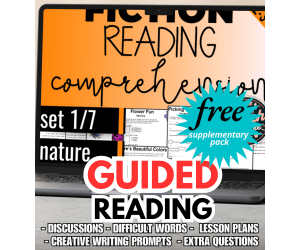
Guided Reading Activities with Lesson Plans: Fiction Set 1 - Nature
ELA, Reading, Reading Comprehension, Common Core, ESL, Language Development, Pre-Reading, Vocabulary, Resources for Teachers, Grade 2, 3, Worksheets & Printables, Worksheets, Lesson Plans, Teacher Tools
Guided Reading Activities with Lesson Plans Fiction Set 1 Note: This download DOES NOT include the passages themselves. If you have not already done so, download in a format of your choice in the "reading links" section below. Overview The perfect companion materials for Cored Education reading comprehension downloads. This collection of guided reading lessons includes a wide array of engaging themes that aim to foster comprehension, vocabulary development, and creative thinking. Each lesson is crafted to be interactive and immersive, making learning enjoyable while promoting essential literacy skills. The lessons are designed for students to actively engage with both the material and the world around them, creating connections to their personal experiences while developing key skills. Includes Guided Reading Materials For: 1.Bring on the Snow 2.Walk through the Woods 3.Nature Photographer 4.Nature's Beautiful Colors 5.Flower Fun 6.Picking Cherries Reading Links: This is the guided reading materials version and DOES NOT include the passages themselves. The passages related to this download are available here in GOOGLE Docs, GOOGLE Forms, GOOGLE Slides. PDF, PPT, WORD. Google Docs Google Forms Google Slides PDF PPT Word Details Pre-reading Discussions Each lesson begins with pre-reading questions that help activate prior knowledge and engage students in the theme of the lesson. This allows students to make personal connections with the content before diving into the reading material. Vocabulary Development Every lesson includes vocabulary exploration that introduces key terms students will encounter in the reading. These words are essential for understanding the passage, and activities encourage students to apply the new vocabulary in context. Comprehension Check After the reading, the lessons provide comprehension questions (typically multiple-choice) that assess students’ understanding of the story. These questions help students reflect on key events, characters, and concepts within the text, reinforcing their comprehension. Creative Writing Prompts To foster creativity, the lessons include writing activities that challenge students to apply what they've learned in imaginative ways. These prompts allow students to practice creative expression while reinforcing the lesson’s theme. Discussion Topics Each lesson ends with wrap-up discussion questions that encourage students to think critically and engage in group conversations. These discussions can enhance social learning and deepen understanding by connecting the lesson's content to broader real-world applications. Theme-Based Learning The themes (e.g., winter, nature walks, photography, flowers) are universally appealing and offer opportunities for cross-curricular connections with science, art, and environmental studies. This makes the lessons versatile for a wide range of teaching contexts. Student-Centered Approach The activities are designed to be interactive and student-driven, allowing them to explore the content through discussions, hands-on vocabulary practice, and personal reflections. This promotes active learning and keeps students engaged. FULL CATALOG OF DOWNLOAD LINKS HERE Grade 2/3 Links Fiction Set 1 - Nature Google Docs Google Forms Google Slides PDF PPT Word Guided Reading Materials Fiction Set 2 - Animals Google Docs Google Forms Google Slides PDF PPT Word Guided Reading Materials Fiction Set 3 - Food Google Docs Google Forms Google Slides PDF PPT Word Guided Reading Materials Fiction Set 4 - School Google Docs Google Forms Google Slides PDF PPT Word Guided Reading Materials Fiction Set 5 - Friends Google Docs Google Forms Google Slides PDF PPT Word Guided Reading Materials Fiction Set 6 - Family Google Docs Google Forms Google Slides PDF PPT Word Guided Reading Materials Fiction Set 7 - Sports Google Docs Google Forms Google Slides PDF PPT Word Guided Reading Materials Nonfiction Set 1 - Technology Google Docs Google Forms Google Slides PDF PPT Word Guided Reading Materials Nonfiction Set 2 - Nutrition Google Docs Google Forms Google Slides PDF PPT Word Guided Reading Materials Nonfiction Set 3 - Animals Google Docs Google Forms Google Slides PDF PPT Word Guided Reading Materials Reading Passages Overview Each passage is especially written for Grade 2-3 students, including key vocabulary required for this age group. Topics are varied and are accompanied by colorful graphics. Topics are meant to educate, yet entertain the modern student. These passages are perfect for the modern classroom. Whereas textbooks can become outdated in no time, any changes to technology or the world will result in updates to this product. Mixed Questions The mixed questions section of each lesson includes a variation of fivecomprehension, vocabulary and math questions. In addition, key reading strategies are frequently covered including cause & effect, summarizing, compare & contrast and making conclusions. Three of the questions will be MCQs and two will require a written response of some kind. Full answers and example responses appear at the end of the lesson. Spelling & Vocab Each reading passage contains a variety of words and phrases designed for Grade 2-3 students. Spelling and vocab activities provide the opportunity to build fluency with these words. As it can become quite mundane doing the same activities over and over, each lesson in a set will contain a different spelling and vocab activity . Writing Prompts Writing prompts are designed to continue the theme or lessons learned in the story. Students are persuaded to write in a variety of ways and each prompt includes several cues to help. As with the spelling/vocab section, writing prompts will vary. This includes research pieces, reading responses, poetry and creative writing prompts. Full Answer Keys Full answer keys and sample responses are provided so no matter how busy you are, you know you're covered! Mixed question answers provide evidence from the text, math questions contain the relevant workings. Answers are designed for use by the teacher, but also suitable as a handout to the student. Additional File One lesson will have an additional file. This is something fun to extend the lesson with. For similar downloads and other frees, do check out Cored Group on TeachSimple.
Author Cored Education
Tags Elementary, Reading, Comprehension, Vocabulary, Answers, Ccss, Common Core, Guided Reading, Guided Reading Activity, Guided Reading Lesson Plans

All About Earning Money | Animated Math Video Lesson
, Grade 2, 3, 4, 5, Lesson Plans, Teacher Tools
All About Earning Money | Animated Math Video Lesson Are you looking for an engaging way to teach your students about earning money? The All About Earning Money animated math video lesson is here to simplify the process. Carefully crafted for learners in grades 2 through 5, this resource turns a complex subject matter into an easy-to-understand concept. It's a perfect tool for teachers, both those of traditional public schools and homeschoolers alike. The 9-minute video offers ample time to break down the steps of earning money in an enjoyable way that resonates with young minds. Using clear visual and audible explanations, it brings abstract concepts to life—helping your students attain a better grasp of this crucial life skill. With its interactive design, the video keeps learners engaged from start to finish using more than just textbook content. This encourages active learning and promotes retention—an integral aspect of effective teaching. Possibilities are Endless The possibilities are endless when it comes to its application both in and out of classroom settings. The video can be used as part of your daily lessons during whole-group instruction or as support material during small group activities where you want focus on individual needs or differentiated instruction strategies. Homeschoolers can use it as a reliable standalone tool while parents could use it assist their children with homework tasks or supplementary learning at home. Note: versatility extends even into usage as this resource is delivered as one MP4 file that can be played on just about any digital device—computer, laptop or smart display—which makes adding it into different teaching platforms hassle-free! An Inspiring Tool! "The All About Earning Money animated math video lesson does not merely teach—it inspires! It helps inspire positive discussions around earning money which plays a crucial role in fostering financial literacy from an early age—but without burdening young minds with complicated jargon or methodologies." Say goodbye the struggle of second guessing if your method is effective enough because this unique resource got you covered! Turn learning about earning money into an exciting venture with this math video lesson, and help your students get a head start on becoming financially conscious individuals. It's an essential tool in today's modern classroom, bringing learning to life with animation and interaction at its best.
Author Educational Voice
Tags Earning Money, Math Video, Animated Lesson, Financial Literacy, Engaging Learning

Pronouns Supplementary Materials - Grammar Grades 1-2 (PDF)
ELA, Language Development, ESL, Grammar, Common Core, Resources for Teachers, Grade 1, 2, Teacher Tools, Lesson Plans, Assessments, Tests, Quizzes and Tests, Outlines, Quizzes, Worksheets & Printables
Pronouns Supplementary Materials Note: This download DOES NOT include the tests themselves. You can still make use of these materials without them but they are recommended. Download in a format of your choice in the "Links" section below. In the Supplementary Pack Interactive Ice Breakers: Fun, hands-on activities that get students thinking about adjectives right from the start. Guided Practice: Teacher-led exercises that reinforce the day’s lesson, ensuring students can confidently identify and use adjectives. Group and Partner Tasks: Collaborative activities that allow students to work together to solve problems, categorize adjectives, and create descriptive sentences. Independent Worksheets: Structured worksheets that provide individual practice and help solidify understanding of key concepts. Exit Tasks: Quick, reflective activities at the end of each lesson that assess understanding and encourage students to apply what they’ve learned. Pronouns Overview: Includes: Personal Pronouns Possessive Pronouns Indefinite Pronouns Additional Practice Google Docs Google Forms Google Slides PDF PPT Word FULL CATALOG OF DOWNLOAD LINKS HERE Grade 1/2 Links: Capitalization and Punctuation Google Docs Google Forms Google Slides PDF PPT Word Free Supplementary Materials Pack Adjectives Google Docs Google Forms Google Slides PDF PPT Word Free Supplementary Materials Pack Nouns Google Docs Google Forms Google Slides PDF PPT Word Free Supplementary Materials Pack Pronouns Google Docs Google Forms Google Slides PDF PPT Word Free Supplementary Materials Pack Verbs Google Docs Google Forms Google Slides PDF PPT Word Free Supplementary Materials Pack Prefixes & Suffixes Google Docs Google Forms Google Slides PDF PPT Word Free Supplementary Materials Pack Sentence Structure Google Docs Google Forms Google Slides PDF PPT Word Free Supplementary Materials Pack Subject-Verb Agreement Google Docs Google Forms Google Slides PDF PPT Word Free Supplementary Materials Pack ELA Review Questions Overview Questions have three answer choices. There are a handful of pictures on each test for aesthetic purposes, as well as a review sheet covering most of the topics covered in the product. Introduction or Example Sheet Each topic will include an introduction or example sheet to go through first with your students. Full Answer Keys Full answer keys and sample responses are provided so no matter how busy you are, you know you're covered! For similar downloads and other frees, do check out Cored Group on TeachSimple.
Author Cored Education
Tags Elementary, Reading, Comprehension, Vocabulary, Answers, Ccss, Common Core, Spelling, Writing, Passages
'Elemental' Lesson Plan & Worksheets | Grades 3 - 9
ELA, Social Emotional Learning (SEL), Special Resources, Grade 3, 4, 5, 6, 7, 8, 9, Lesson Plans, Teacher Tools, Worksheets & Printables
'Elemental' Lesson Plan & Worksheets | Grades 3 - 9 Make movie day meaningful with this engaging Elemental Movie Study ! Based on Pixar’s heartwarming film, this resource helps students explore important themes like identity, family, acceptance, immigration, and following your dreams while strengthening reading comprehension, critical thinking, science, math, and social-emotional learning skills. With 30 differentiated activities, students stay actively engaged while making meaningful connections to the story and their own lives. What's Included 30 ready-to-use student activities Printable student workbook Comprehensive teacher guide Complete answer key Reading comprehension questions Character analysis activities Theme and discussion prompts Vocabulary development exercises Science connections to states of matter Math graphing and data activities Geography and map-design tasks Creative writing activities SEL reflection prompts Cross-curricular extension ideas Assessment rubric Differentiated activities for Grades 3–9 Students will explore: Identity and belonging Family expectations and personal dreams Acceptance and diversity Immigration and new beginnings Character growth and relationships Scientific concepts related to matter Data interpretation and graphing Creative expression and reflection How It Works in the Classroom This Elemental movie guide can be used in a variety of educational settings: Whole-class movie studies ELA lessons SEL and character education units Science enrichment lessons Cross-curricular learning activities Independent work Sub plans Homeschool learning Small-group discussions Fast-finisher activities Students complete activities before viewing, after viewing, and during guided discussions. The resource includes comprehension checks, character studies, theme exploration, science investigations, graphing activities, creative projects, and reflection exercises. Standards & Learning Goals Students will: Recall and sequence key events from the film Analyze characters using evidence from the story Explore themes of family, identity, acceptance, and belonging Develop vocabulary and language skills Strengthen critical-thinking abilities Make personal and real-world connections Investigate states of matter and scientific concepts Interpret graphs and analyze data Practice creative and reflective writing Engage in meaningful classroom discussions Supports instruction in: English Language Arts Science Mathematics Social-Emotional Learning (SEL) Critical Thinking Character Education Speaking and Listening Skills Cross-Curricular Learning Why Teachers Love It ✅ No-prep printable resource ✅ Combines ELA, science, math, and SEL in one lesson ✅ Encourages rich classroom discussions ✅ Includes answer key and teacher guide ✅ Supports multiple grade levels ✅ Promotes empathy, acceptance, and self-awareness ✅ Helps students connect learning to real-life experiences ✅ Flexible for classroom, homeschool, and enrichment settings ✅ Includes creative, analytical, and reflective activities ✅ Makes movie-based learning both fun and educational Teachers love using this resource to spark conversations about family, identity, belonging, and following your dreams while reinforcing important academic skills across multiple subject areas. Add this Elemental Movie Study to your classroom today and transform a favorite Pixar film into a meaningful learning experience filled with literacy, science, social-emotional learning, and critical-thinking opportunities!
Author Bright Classroom Ideas Marketplace
Rating
Tags Elemental, Film, Movie, Guide, Lesson, Plan, Worksheet

AI-Curated Executive Functioning Skill Builders Gamified Micro-Modules
Coaching, Life Studies, Career, Leadership, Mental Health, P.E. & Health, Mindfulness, Community Building, Resources for Teachers, STEM, Infant, Grade 3, 4, 5, 6, 7, 8, Games, Activities, Projects, Assessments, Teacher Tools, Lesson Plans, Literacy Readers, Presentations, Workbooks, Worksheets & Printables
Unleash academic achievement and develop life-long skills with "AI-Curated Executive Functioning Skill Builders: Gamified Micro-Modules for Focus & Organization" – the most advanced online tool available for grades 4-8 students! This in-depth 46-page downloadable PDF helps struggling students conquer tough executive function topics such as working memory, inhibitory control, cognitive flexibility, planning, organization, task initiation, and self-monitoring. Through an in-depth examination of executive function theory and practical application of interactive worksheets in the form of real-world scenarios, theoretical diagrams, and teacher-friendly implementation instructions, it brings your classroom or homeschooling environment into a new decade of advanced tools and methodologies. Tailor student focus improvement, help reduce student procrastination, and promote self-regulated cognition with our customizable student worksheets and AI prompt guides that include non-judgmental feedback and metacognitive thinking. This is a must-have tool for teachers and homeschooling parents looking to utilize scientifically proven executive function activities targeting organization, self-regulation, and emotional control in their students. Download now and discover print-friendly activities and tools to achieve a growth mindset – great for special ed, SEL, and homeschooling classrooms! Keywords: executive function activities for kids, gamified educational content, educational tools, student tools, middle school focus exercises, organization skills activities, task initiation strategies, self-regulation Why Parents/Schools Love It: Personalized AI coaching offers adaptive support 24/7 through AI prompts and tailors strategies to meet the needs of each child, thereby reducing frustration while extending teacher/parent reach without replacing human interaction. Engaging Gamification: Transforms skill-building into enjoyable quests with points, badges, and narratives, motivation is highly encouraged, thereby making repetitive practice an experience worth having for growth in mindset. Comprehensive and Flexible Resources: Includes theory, worksheets, visuals, answer keys, and implementation guides for easy integration into classrooms, homeschooling, or individual use, supporting diverse learning environments. Proven to Touch Daily Life: Offers real-life solutions to real-life challenges, such as starting tasks and modulating emotions. These positive changes are seen in improved academic functioning, organization, and building self-confidence, as revealed through case studies and examples. Evidence-based and Inclusive: It is informed by neuroscience and educational psychology, with consideration of ethical AI; inclusive for all students, including those with developing EF skills or in special education. Target Students : The contents are specifically meant for grades 4-8 students as inferable from the thorough assessment of the PDF and the theoretical framework it has been based upon. These students belong to the age group of 9-14 years and are the target beneficiaries for the reason that this period and stage mark the most critical moment for the cognitive and mental skills of EF to be honed and then shift gear into abstract thought processes and become self-sufficient in studies and social contexts. Thus, the contents are prepared using language and examples normalized for the age group, and the examples and content are not too childish for them nor too advanced for the high school-going students. Copyright/Terms of Use : This Book is copyrighted by Syed Hammad Rizvi. This work is intended for personal, single-classroom use only. You cannot change, redistribute, or sell any part of this work. This means that you cannot make it available on the Internet where it can be readily accessed for downloading. If you would like to share this resource with other colleagues, you have the ability to purchase additional licensing through Teachsimple. Thank you for respecting the usage terms. This product has proudly come into existence because of Syed Hammad Rizvi
Author Creative Book Store
Rating
Tags ExecutiveFunctioningSkills, AICuratedLearning, GamifiedEducation, MicroModulesForKids, FocusAndOrganization, MiddleSchoolResources, Grades4to8, CognitiveFlexibilityTraining, WorkingMemoryExercises, InhibitoryControl
All About Problem Solving | Animated Math Video Lesson
, Grade 1, 2, 3, Lesson Plans, Teacher Tools
All About Problem Solving | Animated Math Video Lesson All About Problem Solving | Animated Math Video Lesson is an exceptional teaching resource designed to stimulate students' learning progression and simplify the instructional journey for educators. This effective tool perfectly suits Grade 1 to Grade 3 curriculum. Overview This concise, 9-minute video lesson in MP4 format presents dynamic animations and precise explanations concerning problem-solving concepts. Packed with captivating animations, it makes complex mathematical problems comprehendible via straightforward visual lessons. The problem-solving method steps are broken-down logically ensuring effortless understanding. Versatility and Flexibility Educators enjoy the flexible nature of this resource as it integrates effortlessly into different teaching approaches – ranging from whole group presentations, small-group discussions or even individual tutoring sessions. Whether used for introducing new material or a refresher course on previously studied concepts, its effectiveness remains unhindered. Suitable during homeschooling periods where digital resources are indispensable No complications in software compatibility because of its .MP4 format ensures downloading convenience across diverse platforms Beyond Just Mathematics Learning At Grades 1-3 Levels In addition to strengthening budding mathematicians' problem-solving skills; this tool enhances cognitive abilities such as analytical thinking, evaluation skills and logical reasoning abilities among them. Its clear presentation style engenders attentive listening while fostering independent thought processes. An Experience Like No Other! All About Problem Solving | Animated Math Video Lesson fosters an immersive learning environment where math transforms from intimidating to creatively navigable! Interesting characters intertwined with clear narratives based around core mathematical ideas make learning fun-filled and information absorption seamless. In conclusion, this resource, an effective journey to mathematical proficiency breeds a fascination towards numeracy among young learners. It equips them with confidence against future academic challenges involving numeracy, ensuring they excel in them.
Author Educational Voice
Tags Problem Solving, Math Video, Animated Lesson, Cognitive Skills, Numeracy, Animated Math, Math Animated
Impulse Control "Stop-and-Think" Scenarios
Special Resources, Life Skills, Social Emotional Learning (SEL), Social Skills, Special Education Needs (SEN), Speech Therapy, STEM, Resources for Teachers, Classroom Management, Community Building, Kindergarten, Homeschool Curriculum, Homeschool Templates, Grade 1, 2, 3, 4, Worksheets & Printables, Workbooks, Worksheets, Word Searches, Teacher Tools, Lesson Plans, Quizzes and Tests, Quizzes, Tests, Assessments
Are you having difficulty keeping your class from being disrupted by impulsive behaviors, such as yelling out of turn, grabbing objects off the desk, etc? Transform your classroom into an orderly, peaceful environment using this cutting edge, neuroscience-based curriculum for teaching impulse control skills! This is not a behavior chart. It is a complete, turn-key curriculum designed to provide K-3 students with a reason for their actions and give students the skill set necessary to “Stop and Think.” This curriculum is based upon cause and effect mapping. This curriculum also creates a visual, non-judgmental framework for developing and reinforcing lifelong self-control and executive functioning skills without relying upon punishment. The impulse control curriculum is a perfect teaching tool for general and special education teachers and school counselors because it directly addresses the neurodevelopmental needs of young children. Young students will finally develop a clear understanding of how to connect the impulse for an immediate action with the consequences of that action at a future time. Packages Include 46 Pages of Content That Covers: Phase 1: Educator’s Guide to the Impulsive Brain: A Simple, Easy-to-Follow Guide About the Neurobiology of the K-3 Brain So You Can Implement this Strategy in Your Classroom with Confidence. Phase 2: Student Workbook with 10 Scenarios: Homework Sheets That Help You With Everyday Classroom Challenges. Primarily Used For Teachers To Give Out, Also For Students To Complete On Their Own. Examples Include: Calling Out (The Interruption Ripple) Grabbing & Boundary Violations (The Space Invader) Hallway Safety (The Transition Tornado) Task Avoidance and Frustration (The Frustration Flash) Cutting in Line, Misusing Supplies, Indoor Voice and many other examples. Phase 3: Teacher Visuals and Resources: Conceptual Diagrams: Simple Visual Aids To Help Explain The ‘Stop and Think’ Cycle And The Domino Effect of Actions. Comprehensive Answer Key: Each Worksheet Has A Detailed Answer Key Including A Teacher Rationale And Guidance Prompts To Deepen Student Learning. Implementation Guide: A Step By Step Plan On How To Introduce, Practice, And Reinforce These Concepts In Your Classroom. Ideal for: Elementary School (K-3) Teachers Social Emotional Learning( (SEL) Programs Small group and .Individual Counseling/Interventions Students exhibiting attention challenges and difficulties with impulse control Classroom Behavior Management Support Support students in developing self-awareness and the ability to self-regulate through this easy-to-follow and complete program! Download now and create a more compassionate, calm, and productive classroom! Search Terms: Impulse control, self-regulation, social emotional learning (SEL), classroom behavior management, behavior Intervention, executive functioning, Cause and Effect, Stop and Think, K-3, Kindergarten, 1st grade, 2nd grade, 3rd grade, ADHD Support, Emotional regulation, print documents, behavior mapping, visuals to support learning. Reasons Why Parents and Schools Appreciate This System: The focus of this system is on skill building through the development of empathy & social awareness, rather than punishment. When discipline is replaced with proactive skill building, it empowers your child. This system is backed by neuroscientific research on how children develop. Many traditional methods do not function well because they do not work with how the brain develops, so this system is based on good science. Through the principle of the "ripple effect", children will develop a better understanding of how their behaviour affects not only themselves but also family & friends. This is not just a worksheet. This system includes the teacher's guide, activities for students, visual aids and an answer key, so you can spend more time teaching & less time preparing. The system will validate the feelings and impulses of a child ("Your body was telling you to grab") and provide the child with tangible tools to make a better choice, allowing him/her to become an active architect of his/her own success. Intended Audience: The target audience is educators and support personnel who work with children in grades K-3, as well as parents who want to support their child at home. The way that children in this age group typically learn and behave, make it difficult for them to develop effective self-regulation skills, therefore parents and professionals need additional support in teaching these skills. The explicit text indicates a K-3 focus (ages 5-9) and the type of behavioral problems addressed in this resource; behaviors classified as K-3 students in the general education classroom include: * K-3 General Education (all K-3 classes) * K-3 Special Education teachers who assist students with ADHD, ASD and/or other executive functioning deficits * School-based counselors, social workers and school psychologists providing small group and individual intervention * Behavior interventionists and BCBAs * Proactive parents wanting to implement strategies at home to help their child gain self-regulation skills Copyright and Terms of Use: The author, Syed Hammad Rizvi, has copyrighted this resource for your sole enjoyment in the classroom and at home. You may not copy, modify or distribute this resource in any way, including on the Internet, where it can be found and downloaded for free by anyone. If you would like to share this resource with your colleagues (and they would like their own copy), you can purchase additional licenses from Teachsimple! We greatly appreciate it when you follow the Terms of Use stated here. Sincerely, Syed Hammad Rizvi
Author Creative Book Store
Rating
Tags ImpulseControl, SelfRegulation, EmotionalRegulation, BehaviorManagement, ClassroomManagement, SocialEmotionalLearning, SEL, ExecutiveFunctioning, StopAndThink, CauseAndEffect
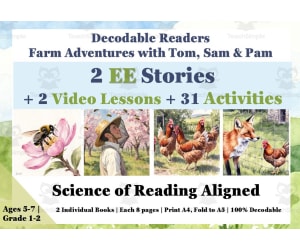
EE: 2 Decodable Reading Books + 2 Video Lessons + 31 Worksheets SOR
Special Resources, ELA, Special Education Needs (SEN), Language Development, Pre-Reading, Phonics, Spelling, Kindergarten, Preschool, Homeschool Curriculum, Grade 1, 2, Literacy Readers, Teacher Tools, Lesson Plans, Presentations
2 EE Decodable Readers, 2 Video Lessons & 31 Worksheets: Farm Adventures Complete Teaching Pack | Part of Advanced Phonics Reading Programme Master EE with 2 decodable readers, 2 optional video lessons, and 31 differentiated practice worksheets! This extensive teaching pack features farm stories that children will love, along with targeted phonics activities that reinforce learning. These books presume that a child can already decode words with a CK ending and OO (moon/look). What's Included 2 systematic/levelled decodable readers focusing on EE 2 carefully taught optional video lessons - no distracting music - these are serious lessons and can be used by home educators and teachers alike - to give extra support to struggling readers Word lists for pre-reading practice at the beginning of each book Differentiated worksheets for phonics reinforcement: Word sorting activities Sound isolation exercises Reading comprehension exercises Sentence writing practice Phonics pattern recognition tasks 100% decodable text with carefully controlled vocabulary Science of reading-aligned instruction Beloved characters: Tom, Sam, Pam, Gran, and the farm animals Beautiful watercolour illustrations Print-and-go format for easy classroom use Why Teachers Love This Complete Pack Real stories PLUS targeted practice! These aren't just decodable readers—you get everything you need to teach EE systematically. The differentiated worksheets provide multiple opportunities for students to apply their learning, while the engaging farm stories provide ample practice of decoding, word recognition and reading comprehension. They help you to target a child's precise needs to ensure progress. The optional video lessons give even nervous parents the help they need to teach! Designed With Carefully Controlled vocabulary: The EE sound is introduced systematically across the stories, with CK words revisited throughout. Worksheets reinforce the same vocabulary, providing an opportunity for mastery. Perfect For Explicit phonics instruction following the science of reading principles All students who are ready to learn EE and have already learned CK, OO Children who need a slower pace, or not Small group intervention or whole class instruction Literacy centres and independent practice Homework assignments that reinforce classroom learning Structured literacy programmes Ages 5-7 or Grade 1-2 Skills Addressed Decoding EE in isolation and context Reading fluency with controlled decodable text Phonics, pattern recognition and application Phonemic awareness through targeted activities Reading comprehension with engaging stories Writing practice using the taught phonics pattern Sight word introduction and practice How to Use This Complete Pack Introduce the sound EE comprehensively Use worksheets for guided practice and skill reinforcement Practice word lists before reading stories Have students read the decodable stories, pointing to each word Return to the worksheets for independent practice or assessment Reread the stories to build fluency This complete pack provides everything you need to teach OO effectively—no additional materials required!
Author Lilibette's Resources
Rating
Tags Learn To Read Programme, Fluency, Struggling Readers, Dyslexia, Special Needs, Phonics, Decodable Reading Books, Reading Fluency, Homeschool Curriculum, Ee Vowel Team

3rd Grade Morning Work | 180 Days Review | Math & ELA | 2nd Quarter
ELA, Math, Grade 3, Centers, Activities, Lesson Plans, Teacher Tools, Worksheets & Printables
Grade 3 Morning Work | 2nd Quarter Student Pages + Full-Year Teacher Resources Keep your third grade mornings consistent, purposeful, and easy to manage with 45 days of Grade 3 morning work for Quarter 2 . This resource includes ALL teacher resources for the complete 180-day program , while the student practice pages in this pack are specifically for 2nd Quarter: Days 46–90 . What’s Included ⭐ FULL-YEAR TEACHER RESOURCES You receive the complete teacher toolkit for planning, organizing, differentiating, and assessing the entire 180-day Grade 3 morning work program : Teacher Guide Full 36-week Pacing Guide Skills Checklist for tracking student progress Fully Editable Morning Work Schedule Weekly planning and classroom organization support 36-week Year-at-a-Glance planning Differentiation strategies Complete Answer Key for Days 1–180 Printing and classroom organization guidance 📚 STUDENT PAGES INCLUDED: 2ND QUARTER The student portion of this product includes Days 46–90 , providing 45 days of ready-to-use Grade 3 morning work . Each day includes a two-page set with 22 consistent sections . Page A — Reading & Language Editing Prefixes Context clues Reading comprehension Vocabulary Targeted writing skill Writing prompts Reading challenges SEL check-ins Fun facts Page B — Math & Think Multiplication Division Fractions Elapsed time Area Perimeter Word problems Math challenges Jokes Brain teasers Growth mindset Would You Rather questions Important: The student practice pages included in this product are Days 46–90 only . The teacher resources and complete Answer Key cover all 180 days . How It Works in the Classroom Use this Grade 3 morning work as a daily bell ringer, morning routine, independent practice, homework, or spiral review. The routine is designed for approximately 15 minutes : 0–2 minutes: Students arrive, unpack, and begin Page A. 2–9 minutes: Independent Reading & Language practice. 9–14 minutes: Independent Math & Think practice. 14–15 minutes: Quick sharing with the joke, brain teaser, or Would You Rather question. The same 22 sections appear every day, helping students quickly learn the routine and work independently. You can also use the pages for: Morning work Bell ringers Homework Early finishers Sub plans Math intervention warm-ups Spiral review Test preparation Independent practice Print the pages two-sided, flipping on the long edge , for one sheet per student per day. You can print a week at a time or staple Quarter 2 into a student packet. Standards & Learning Goals This Grade 3 morning work resource provides daily spiral review across important Common Core Grade 3 ELA and math standards . 📖 ELA Skills Students practice: Editing and language conventions Prefixes Context clues Reading comprehension Vocabulary Writing skills Reading response Writing development Reading fluency and independent reading Quarter 2 continues to develop increasingly sophisticated word-study, vocabulary, comprehension, and writing skills. For example, Day 46 includes editing, the prefix mid-, context clues, reading comprehension, vocabulary, precise word choice, and narrative writing . 🔢 Math Skills Students continue practicing: Multiplication facts Division and related facts Fractions Elapsed time Area Perimeter Multi-step word problems Mathematical reasoning Quarter 2 increases the challenge to multiplication facts through 10 × 10 and related division facts , while fractions expand to include sixths and eighths . Elapsed-time practice continues through five-minute intervals. Students also continue developing area and perimeter skills through increasingly challenging problems and applications. Why Teachers Love It ✨ You get ALL the teacher resources for the entire year. The Teacher Guide, 36-week pacing guide, Skills Checklist, editable schedule, differentiation tools, and complete 180-day Answer Key are included. ✨ Students get exactly what they need for Quarter 2. Days 46–90 provide a complete 45-day student set for the second quarter. ✨ Save valuable planning time. The daily routine is already organized across reading, language, writing, math, and engaging thinking activities. ✨ Build student independence. The familiar 22-section format helps students know exactly what to do each morning. ✨ True spiral review. Every Grade 3 standard returns throughout the year while the difficulty increases. No content repeats across the 180 days. ✨ A built-in difficulty ramp. Quarter 2 moves students toward multiplication facts through 10 × 10, related division facts, sixths and eighths, and increasingly challenging problem solving. ✨ Differentiate with ease. The Teacher Guide includes strategies for students needing support, students ready for a challenge, English learners, and small-group instruction. ✨ Track student growth without extra paperwork. Use the Skills Checklist to record skills as Introduced, Practiced, or Mastered . ✨ Use it beyond the morning routine. Page B can work as a math intervention warm-up, while the complete pages can support homework, early finishers, sub work, and spiral review. ✨ Have the answers for the entire year. The Answer Key includes answers for the reading questions, math problems, editing corrections, context clues, and other daily sections for Days 1–180 . Looking for Grade 3 morning work for Quarter 2 that saves planning time and keeps students practicing essential skills every day? This pack includes 45 days of student practice (Days 46–90) PLUS ALL teacher resources for the full 180-day program . Give your third graders a predictable, engaging morning routine that strengthens ELA and math skills while building independence throughout the school year! Print it, prep it, and make your mornings easier! 💛
Author Bright Classroom Ideas Marketplace
Rating
Tags Math, Ela, Morning Work, Back To School

Subject-Verb Agreement Supplementary Materials - Grades 1-2 (PDF)
ELA, Language Development, ESL, Grammar, Common Core, Grade 1, 2, Teacher Tools, Lesson Plans, Outlines, Quizzes, Quizzes and Tests, Tests, Assessments, Worksheets, Worksheets & Printables
Subject-Verb Agreement Supplementary Materials Note: This download DOES NOT include the tests themselves. You can still make use of these materials without them but they are recommended. Download in a format of your choice in the "Links" section below. In the Supplementary Pack Interactive Ice Breakers: Fun, hands-on activities that get students thinking about adjectives right from the start. Guided Practice: Teacher-led exercises that reinforce the day’s lesson, ensuring students can confidently identify and use adjectives. Group and Partner Tasks: Collaborative activities that allow students to work together to solve problems, categorize adjectives, and create descriptive sentences. Independent Worksheets: Structured worksheets that provide individual practice and help solidify understanding of key concepts. Exit Tasks: Quick, reflective activities at the end of each lesson that assess understanding and encourage students to apply what they’ve learned. Subject-Verb Agreement Overview: Includes: Intro to Subject-Verb Agreement Match Subject to Verb Match Verb to Subject Additional Practice Google Docs Google Forms Google Slides PDF PPT Word Free Supplementary Materials Pack FULL CATALOG OF DOWNLOAD LINKS HERE Grade 1/2 Links: Capitalization and Punctuation Google Docs Google Forms Google Slides PDF PPT Word Free Supplementary Materials Pack Adjectives Google Docs Google Forms Google Slides PDF PPT Word Free Supplementary Materials Pack Nouns Google Docs Google Forms Google Slides PDF PPT Word Free Supplementary Materials Pack Pronouns Google Docs Google Forms Google Slides PDF PPT Word Free Supplementary Materials Pack Verbs Google Docs Google Forms Google Slides PDF PPT Word Free Supplementary Materials Pack Prefixes & Suffixes Google Docs Google Forms Google Slides PDF PPT Word Free Supplementary Materials Pack Sentence Structure Google Docs Google Forms Google Slides PDF PPT Word Free Supplementary Materials Pack Subject-Verb Agreement Google Docs Google Forms Google Slides PDF PPT Word Free Supplementary Materials Pack ELA Review Questions Overview Questions have three answer choices. There are a handful of pictures on each test for aesthetic purposes, as well as a review sheet covering most of the topics covered in the product. Introduction or Example Sheet Each topic will include an introduction or example sheet to go through first with your students. Full Answer Keys Full answer keys and sample responses are provided so no matter how busy you are, you know you're covered! For similar downloads and other frees, do check out Cored Group on TeachSimple.
Author Cored Education
Tags Elementary, Reading, Comprehension, Vocabulary, Answers, Ccss, Common Core, Spelling, Writing, Passages

Iguanas Reading Comprehension Passage - Cored Ed Encyclopedia
ELA, Reading Comprehension, Reading, History, Social Studies, Science, Physics, Earth and Environmental Sciences, Life Sciences, Geography, Grade 2, 3, 4, 5, Worksheets & Printables, Worksheets, Teacher Tools, Centers, Activities, Writing Prompts, Assessments, Quizzes and Tests, Quizzes, Lesson Plans
This Iguanas reading comprehension with lesson plan includes: Visualization (on the front cover) Start your lesson by taking a minute to think and share something about the topic. Read the script aloud (slowly), perhaps prepare some music or sound effects. Student close their eyes and let their imaginations wander. Students open their eyes, read the question aloud and give them a few minutes to complete. Ask a few students to share or keep answers until the end to compare with what they learn in the passage. Quick pause—thousands of Cored Education products are included with your TeachSimple membership. Download links and encyclopedia index available here. Pre-Reading Trivia Students will write down one thing they already know about the subject and then read five more facts and discuss. These facts are fun, and the students will enjoy learning about the subject before reading more. Give 1 minute for students to write what they already know (no pressure—best guess is fine). Read the five facts together. After each fact, do ask a student for their opinion, was it surprising? Set a purpose by asking students to highlight/underline one fact they want to learn more about during the reading. Reading Passage The text is a high-interest reading passage with set paragraphs, roughly three to four paragraphs long. It contains a variety of themes about the topic, anywhere from history to technology. The passage is between 250 and 350 words in length. First, ask students to look at the headings and see what they’ll learn about today. What do they know about the topic/heading? First read options: Teacher read-aloud (best for support). Partner reading (paragraph by paragraph). While reading, students underline important details, and vocabulary words they think may come up in the questions section. Mixed Questions The first question page contains four multiple-choice questions, each with a choice of four answers, and three written response questions that require a sentence or two from the student. Students complete the mcqs first independently, then review quickly as a class. For the 3 written responses, try to get students giving the answer with some form of evidence: “I think ___ because the text says ___.” If students get stuck, send them back to check the passage. Vocabulary Questions Practice seven key words from the text in this section across two activities. First section is scrambled words where students will unscramble three words given a clue for each. The second section is a word to meaning matching activity. Before starting, have some students read out words they underlined in the passage. Ask students to say the word and read aloud the sentence(s) around each word. Ask students to do scrambled words and the matching exercise in pairs then go through answers as a class. For the scrambled spelling task, get four pairs to come up to the board and write the words for extra practice with the other student reading out the clue. For the matching task, prompt students to give full sentences: “I matched ___ with ___ because ___.” Creative Writing In this question, the student will be required to write a five to eight sentence paragraph on a question related to the topic. Before starting, ask students write down 3 key ideas they are going to include in their piece. Ask students for ideas to share around the class to help those struggling. Pro writing expectations: 5–8 sentences At least 2 facts or details from the passage At least 2 vocabulary words from the previous page Students read their paragraphs while classmates listen for facts and vocabulary words. Extension Activities This page is optional for fast finishers or to take home. There are several activities, each one requiring a different skill. Do some, do none, do all, completely optional - but you will feel reassured knowing every possibility is planned for. Includes summary writting question and additional facts. Answer Key There are answers for the multiple-choice questions, written response questions have sample answers, vocabulary answers and if there is a summary question then a sample summary will be provided as well. Lesson Plan Included Customized lesson plan for this lesson is included. Lesson Snapshot Title: Iguanas Genre: Nonfiction (informational text) Subject: Reading (Informational Text) / Life Science Primary Topic: Green vs. marine iguanas: tails, habitat, survival Estimated Guided Reading Level (A–Z): R What This Lesson Teaches Best Describes key iguana features and what they look like (dewlap, a line of spines). Explains where iguanas live and notes that most live in the Americas, with some relatives on islands. Shows how a green iguana’s long tail helps with survival (whip-like defense and strong tail strokes for swimming away). Compares two related iguanas by habitat and behavior (tree-climbing green iguana vs. sea-foraging marine iguana that eats algae and basks on dark rocks). Builds awareness of changing habitats and reasons protection matters (building on land, hunting/capturing, predators, El Niño, oil spills). Learning Goals Identify details that describe what an iguana looks like and where it lives. Explain how a green iguana uses its tail when danger comes near water. Describe how the marine iguana finds food and what it does after a cold swim. Compare the green iguana and marine iguana using evidence from the passage. Describe at least two reasons iguanas might need protection based on changes in their habitats. Key Vocabulary From the Text dewlap — loose throat skin that can hang in a fold. spines — pointed bumps that may rise along its back. forages — searches for food. predators — animals that hunt other animals. habitats — places animals need to live. FULL CATALOG OF DOWNLOAD LINKS AND ENCYCLOPEDIA INDEX HERE
Author Cored Education
Rating
Tags Vocabulary, Reading Comprehension, Reading Passages, Lesson Plans, Ela Lesson Plans, Reading Comprehension Lesson Plans, Pre-reading, History, Science Lesson Plans, Life Science

Guided Reading Activities with Lesson Plans: Fiction Set 7 - Sports
ELA, Reading, Reading Comprehension, Common Core, ESL, Language Development, Pre-Reading, Vocabulary, Resources for Teachers, Grade 2, 3, Worksheets & Printables, Worksheets, Teacher Tools, Lesson Plans, Activities
Guided Reading Activities with Lesson Plans Fiction Set 7 Note: This download DOES NOT include the passages themselves. If you have not already done so, download in a format of your choice in the "reading links" section below. Overview The perfect companion materials for Cored Education reading comprehension downloads. This collection of guided reading lessons includes a wide array of engaging themes that aim to foster comprehension, vocabulary development, and creative thinking. Each lesson is crafted to be interactive and immersive, making learning enjoyable while promoting essential literacy skills. The lessons are designed for students to actively engage with both the material and the world around them, creating connections to their personal experiences while developing key skills. Includes Guided Reading Materials For: 1.Catch It, Dan 2.Feeling Left Out 3.Ian's Friday Nights 4.Aimee's Dilemma 5.A Great Team 6.Ana's Swimming Party 7.Touchdown Pythons 8.Sam's Passion 9.Where's My Board 10.Lacey the Runner Reading Links: This is the guided reading materials version and DOES NOT include the passages themselves. The passages related to this download are available here in GOOGLE Docs, GOOGLE Forms, GOOGLE Slides. PDF, PPT, WORD. Google Docs Google Forms Google Slides PDF PPT Word Details Pre-reading Discussions Each lesson begins with pre-reading questions that help activate prior knowledge and engage students in the theme of the lesson. This allows students to make personal connections with the content before diving into the reading material. Vocabulary Development Every lesson includes vocabulary exploration that introduces key terms students will encounter in the reading. These words are essential for understanding the passage, and activities encourage students to apply the new vocabulary in context. Comprehension Check After the reading, the lessons provide comprehension questions (typically multiple-choice) that assess students’ understanding of the story. These questions help students reflect on key events, characters, and concepts within the text, reinforcing their comprehension. Creative Writing Prompts To foster creativity, the lessons include writing activities that challenge students to apply what they've learned in imaginative ways. These prompts allow students to practice creative expression while reinforcing the lesson’s theme. Discussion Topics Each lesson ends with wrap-up discussion questions that encourage students to think critically and engage in group conversations. These discussions can enhance social learning and deepen understanding by connecting the lesson's content to broader real-world applications. Theme-Based Learning The themes (e.g., winter, nature walks, photography, flowers) are universally appealing and offer opportunities for cross-curricular connections with science, art, and environmental studies. This makes the lessons versatile for a wide range of teaching contexts. Student-Centered Approach The activities are designed to be interactive and student-driven, allowing them to explore the content through discussions, hands-on vocabulary practice, and personal reflections. This promotes active learning and keeps students engaged. FULL CATALOG OF DOWNLOAD LINKS HERE Grade 2/3 Links Fiction Set 1 - Nature Google Docs Google Forms Google Slides PDF PPT Word Guided Reading Materials Fiction Set 2 - Animals Google Docs Google Forms Google Slides PDF PPT Word Guided Reading Materials Fiction Set 3 - Food Google Docs Google Forms Google Slides PDF PPT Word Guided Reading Materials Fiction Set 4 - School Google Docs Google Forms Google Slides PDF PPT Word Guided Reading Materials Fiction Set 5 - Friends Google Docs Google Forms Google Slides PDF PPT Word Guided Reading Materials Fiction Set 6 - Family Google Docs Google Forms Google Slides PDF PPT Word Guided Reading Materials Fiction Set 7 - Sports Google Docs Google Forms Google Slides PDF PPT Word Guided Reading Materials Nonfiction Set 1 - Technology Google Docs Google Forms Google Slides PDF PPT Word Guided Reading Materials Nonfiction Set 2 - Nutrition Google Docs Google Forms Google Slides PDF PPT Word Guided Reading Materials Nonfiction Set 3 - Animals Google Docs Google Forms Google Slides PDF PPT Word Guided Reading Materials Reading Passages Overview Each passage is especially written for Grade 2-3 students, including key vocabulary required for this age group. Topics are varied and are accompanied by colorful graphics. Topics are meant to educate, yet entertain the modern student. These passages are perfect for the modern classroom. Whereas textbooks can become outdated in no time, any changes to technology or the world will result in updates to this product. Mixed Questions The mixed questions section of each lesson includes a variation of fivecomprehension, vocabulary and math questions. In addition, key reading strategies are frequently covered including cause & effect, summarizing, compare & contrast and making conclusions. Three of the questions will be MCQs and two will require a written response of some kind. Full answers and example responses appear at the end of the lesson. Spelling & Vocab Each reading passage contains a variety of words and phrases designed for Grade 2-3 students. Spelling and vocab activities provide the opportunity to build fluency with these words. As it can become quite mundane doing the same activities over and over, each lesson in a set will contain a different spelling and vocab activity . Writing Prompts Writing prompts are designed to continue the theme or lessons learned in the story. Students are persuaded to write in a variety of ways and each prompt includes several cues to help. As with the spelling/vocab section, writing prompts will vary. This includes research pieces, reading responses, poetry and creative writing prompts. Full Answer Keys Full answer keys and sample responses are provided so no matter how busy you are, you know you're covered! Mixed question answers provide evidence from the text, math questions contain the relevant workings. Answers are designed for use by the teacher, but also suitable as a handout to the student. Additional File One lesson will have an additional file. This is something fun to extend the lesson with. For similar downloads and other frees, do check out Cored Group on TeachSimple.
Author Cored Education
Tags Elementary, Reading, Comprehension, Vocabulary, Answers, Ccss, Guided Reading, Guided Reading Activity, Guided Reading Lesson Plans, Guided Reading Lesson Plan
All About Letter C | Interactive Literacy Video Lesson
ELA, Language Development, Pre-Reading, Preschool, Kindergarten, Grade 1, Lesson Plans, Teacher Tools
This animated video is a literacy lesson all about the letter C. Students will love this engaging and interactive video. This video serves as a great introduction or review video for your learners. This is a 3-minute video lesson.
Author Educational Voice
Tags Learning The Alphabet, Alphabet Video, Writing Letters, Interactive Video, Language Arts
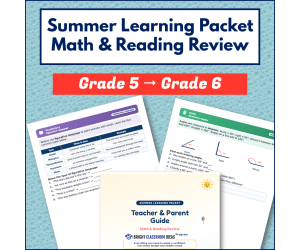
Summer Learning Packet Grade 5 to Grade 6 | Math & Reading Review
ELA, Math, Grade 5, Lesson Plans, Teacher Tools, Worksheets & Printables
Summer Learning Packet Grade 5 to Grade 6 | Math & Reading Review Help students prevent the summer slide and build confidence for middle school with this comprehensive Summer Learning Packet for 5th Grade to 6th Grade ! Designed as a complete summer bridge workbook , this resource reviews essential fifth-grade reading and math skills while introducing important sixth-grade concepts. With 100 pages of engaging practice, critical thinking activities, STEM challenges, and middle school readiness skills, students can stay academically sharp all summer long. What's Included ✔ 100-Page Summer Learning Workbook ✔ Reading Comprehension Activities Fiction and nonfiction passages Paired texts Theme and character analysis Main idea and supporting details Point of view Author's purpose Text structure Compare and contrast Cause and effect Inferences and text evidence Summarizing and drawing conclusions ✔ Vocabulary Development Context clues Greek and Latin roots Prefixes and suffixes Figurative language Academic vocabulary skills ✔ Grammar & Language Practice Parts of speech Pronouns Verb tenses Subject-verb agreement Capitalization Punctuation Sentence structure Editing and revising ✔ Writing Activities Narrative writing Creative writing Opinion writing Informational writing Research-based writing Multi-paragraph essays Text-based responses using the R.A.C.E. strategy ✔ Math Review Place value and number sense Comparing and rounding numbers Multi-digit multiplication Long division Fractions and mixed numbers Decimal operations Ratios and proportional thinking Geometry and coordinate planes Area, perimeter, and volume Measurement and conversions Data analysis and graphing Multi-step word problems ✔ Critical Thinking & Middle School Readiness Section Logic puzzles Problem-solving challenges STEM design activities Goal setting Organization skills Time management strategies Growth mindset activities ✔ Summer Bonus Activities ✔ Skills Checklist ✔ Progress Tracker ✔ Certificate of Completion ✔ Complete Answer Key Included ✔ Teacher & Parent Guide Included How It Works in the Classroom This 5th Grade Summer Review Packet is designed for flexible use in multiple learning environments: Summer take-home packets Summer school programs Homeschool instruction Tutoring sessions Intervention support Independent practice End-of-year review Back-to-school refreshers Students complete approximately 2–3 pages per day in about 25 minutes, making it easy to maintain academic growth while still enjoying summer break. The included six-week pacing guide helps families and teachers stay organized and on track throughout the program. Standards & Learning Goals Students will strengthen important fifth-grade skills while building readiness for sixth grade and middle school. Reading & Language Arts Reading comprehension Theme and character development Point of view and conflict Main idea and supporting details Text evidence and inference skills Vocabulary development Grammar and conventions Narrative, opinion, and informational writing Research and text-based responses Math Place value and number sense Multi-digit operations Fractions and mixed numbers Decimal computation Ratios and proportional reasoning Geometry concepts Coordinate graphing Area, perimeter, and volume Measurement conversions Data analysis and statistics Multi-step problem solving Middle School Readiness Critical thinking Problem-solving strategies Organization skills Time management Independent learning habits STEM design thinking Designed to review common end-of-fifth-grade standards while introducing foundational sixth-grade concepts such as ratios, proportional thinking, and increased academic independence. Why Teachers Love It ⭐ No-prep summer learning solution ⭐ Comprehensive review of reading, writing, and math ⭐ Includes a unique Middle School Readiness section ⭐ Builds independence and study habits ⭐ Perfect bridge from elementary school to middle school ⭐ Engaging STEM and critical thinking activities ⭐ Complete answer key included ⭐ Parent-friendly and easy to implement ⭐ Flexible six-week pacing guide included ⭐ Supports summer school, tutoring, intervention, and homeschool learning ⭐ Helps students enter sixth grade feeling prepared and confident If you're searching for a complete Summer Learning Packet for 5th Grade to 6th Grade , this resource provides the perfect combination of academic review, critical thinking, and middle school preparation. Give students the opportunity to strengthen essential skills, develop independence, and start sixth grade with confidence. Download today and make summer learning meaningful, engaging, and stress-free while preparing learners for a successful transition to middle school!
Author Bright Classroom Ideas Marketplace
Rating
Tags Summer, Reading, Ela, Math, Review, Worksheet

4th Grade Morning Work | 180 Days Review | Math & ELA | 1st Quarter
ELA, Math, Grade 4, Centers, Activities, Lesson Plans, Teacher Tools, Worksheets & Printables
Grade 4 Morning Work | 1st Quarter Student Pages + Full-Year Teacher Resources Make your fourth grade mornings easier, more consistent, and academically purposeful with 45 days of Grade 4 morning work for Quarter 1 . This resource includes ALL teacher resources for the complete 180-day program , while the student practice pages included in this pack are specifically for 1st Quarter: Days 1–45 . What’s Included ⭐ FULL-YEAR TEACHER RESOURCES You receive the complete teacher toolkit for planning, organizing, differentiating, and assessing the entire 180-day Grade 4 morning work program : Teacher Guide Full 36-week Pacing Guide Skills Checklist for tracking student progress Fully Editable Morning Work Schedule Weekly planning support 36-week Year-at-a-Glance Planner Differentiation strategies Complete Answer Key for Days 1–180 Printing and classroom organization guidance 📚 STUDENT PAGES INCLUDED: 1ST QUARTER The student portion of this product includes Days 1–45 , providing 45 days of ready-to-use Grade 4 morning work . Each day includes a two-page set with 24 consistent sections . Page A — Language Arts Grammar Vocabulary Reading Writing Vocabulary Word of the Day Writing Prompt Reading Challenge Morning SEL Check-In Joke of the Day Brain Teaser Growth Mindset Would You Rather Page B — Math & Think Number Sense Mental Math & Fact Fluency Multi-Digit Multiplication Long Division Fractions Decimals Measurement Geometry Data and Graphs Word Problems Math Challenges Daily Enrichment Fun Facts Important: The student practice pages included in this product are Days 1–45 only . The teacher resources and complete Answer Key cover all 180 days . How It Works in the Classroom Use this Grade 4 morning work as a daily bell ringer, morning routine, independent practice, homework, or spiral review. Each two-page daily set is designed to take approximately 10–15 minutes . Students move through Language Arts first, followed by Math & Think. The final sections provide quick enrichment and discussion opportunities. The routine can include: Page A: Language Arts practice Page B: Math & Think practice Enrichment of the Day: A rotating challenge Fun Fact: A quick conversation starter The editable schedule breaks the routine into manageable chunks, allowing you to circulate, confer with students, pull a small group, and quickly review answers. Use the pages for: Morning work Bell ringers Homework Early finishers Sub plans Small-group warm-ups Spiral review Intervention practice Test preparation Independent practice The pages are designed to print two-sided, one sheet per student per day , making Quarter 1 easy to prep and organize. Standards & Learning Goals This Grade 4 morning work resource provides daily spiral review aligned with important Common Core Grade 4 ELA and math standards . The teacher materials cover operations and algebraic thinking, number and operations in base ten, fractions, measurement and data, geometry, language, and reading. 📖 ELA Skills Students practice: Grammar and language conventions Vocabulary Context clues Prefixes and suffixes Reading comprehension Reading skills Writing Revising and editing Constructed responses Reading challenges Quarter 1 includes varied grammar and vocabulary practice alongside reading tasks and writing activities. Reading passages include both full passages with comprehension questions and shorter reading-skill activities. Writing activities include tasks such as correcting sentences, revising and editing, opinion writing, and constructed responses . 🔢 Math Skills Students practice: Place value through 1,000,000 Mental math Multi-digit multiplication Long division Fractions Decimals Measurement Geometry Line plots, bar graphs, and tables Word problems Mathematical reasoning The daily math pages combine computation with visual models, measurement figures, geometry figures, and real data displays. Quarter 1 examples include long division, improper fractions, decimal addition, metric conversions, angle measurement, area and perimeter, and multi-step word problems . Why Teachers Love It ✨ You get ALL the teacher resources for the entire year. The Teacher Guide, pacing guide, Skills Checklist, editable schedule, differentiation support, and complete 180-day Answer Key are included. ✨ Students get exactly what they need for Quarter 1. Days 1–45 provide a complete 45-day student set for the first quarter. ✨ Save valuable planning time. The daily routine is already organized across ELA, math, enrichment, and engaging thinking activities. ✨ Build student independence. The consistent 24-section format helps students quickly learn the routine and work with less teacher direction. ✨ True spiral review. Skills return throughout the 180-day program while the difficulty increases. No content repeats across the full 180 days. ✨ Keep the routine flexible. The Teacher Guide notes that the quarters are a skill sequence rather than a strict calendar . If students need the foundational skills, you can begin with Days 1–45 regardless of the month. ✨ Differentiate with ease. Use the teacher resources to adjust the workload, provide support, and select appropriate practice for different learners. ✨ Practice multiple skills every day. Students get daily exposure to reading, writing, vocabulary, grammar, computation, fractions, decimals, measurement, geometry, data, and problem solving. ✨ Keep students engaged. Jokes, brain teasers, growth mindset prompts, SEL check-ins, enrichment challenges, and Would You Rather questions add variety. ✨ Have answers for the entire year. The Answer Key provides an acceptable answer for every reading question, grammar and vocabulary item, sample writing responses, and computed math answers across the complete program. Looking for Grade 4 morning work for Quarter 1 that saves planning time and keeps students practicing essential skills every day? This pack includes 45 days of student practice (Days 1–45) PLUS ALL teacher resources for the full 180-day program . Give your fourth graders a predictable, engaging morning routine that strengthens ELA and math skills while building independence from the very first day! Print it, prep it, and make your fourth grade mornings easier! 💛
Author Bright Classroom Ideas Marketplace
Rating
Tags Math, Ela, Morning Work, Back To School
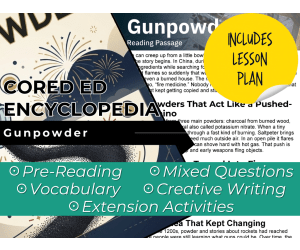
Gunpowder Reading Comprehension Passage - Cored Ed Encyclopedia
ELA, Reading Comprehension, Reading, Science, Technology, Pre-Reading, Language Development, History, Social Studies, Physics, Grade 2, 3, 4, 5, Worksheets & Printables, Worksheets, Teacher Tools, Centers, Activities, Writing Prompts, Assessments, Quizzes and Tests, Quizzes, Lesson Plans
This gunpowder reading comprehension with lesson plan includes: Visualization (on the front cover) Start your lesson by taking a minute to think and share something about the topic. Read the script aloud (slowly), perhaps prepare some music or sound effects. Student close their eyes and let their imaginations wander. Students open their eyes, read the question aloud and give them a few minutes to complete. Ask a few students to share or keep answers until the end to compare with what they learn in the passage. Quick pause—thousands of Cored Education products are included with your TeachSimple membership. Download links and encyclopedia index available here. Pre-Reading Trivia Students will write down one thing they already know about the subject and then read five more facts and discuss. These facts are fun, and the students will enjoy learning about the subject before reading more. Give 1 minute for students to write what they already know (no pressure—best guess is fine). Read the five facts together. After each fact, do ask a student for their opinion, was it surprising? Set a purpose by asking students to highlight/underline one fact they want to learn more about during the reading. Reading Passage The text is a high-interest reading passage with set paragraphs, roughly three to four paragraphs long. It contains a variety of themes about the topic, anywhere from history to technology. The passage is between 250 and 350 words in length. First, ask students to look at the headings and see what they’ll learn about today. What do they know about the topic/heading? First read options: Teacher read-aloud (best for support). Partner reading (paragraph by paragraph). While reading, students underline important details, and vocabulary words they think may come up in the questions section. Mixed Questions The first question page contains four multiple-choice questions, each with a choice of four answers, and three written response questions that require a sentence or two from the student. Students complete the mcqs first independently, then review quickly as a class. For the 3 written responses, try to get students giving the answer with some form of evidence: “I think ___ because the text says ___.” If students get stuck, send them back to check the passage. Vocabulary Questions Practice seven key words from the text in this section across two activities. First section is scrambled words where students will unscramble three words given a clue for each. The second section is a word to meaning matching activity. Before starting, have some students read out words they underlined in the passage. Ask students to say the word and read aloud the sentence(s) around each word. Ask students to do scrambled words and the matching exercise in pairs then go through answers as a class. For the scrambled spelling task, get four pairs to come up to the board and write the words for extra practice with the other student reading out the clue. For the matching task, prompt students to give full sentences: “I matched ___ with ___ because ___.” Creative Writing In this question, the student will be required to write a five to eight sentence paragraph on a question related to the topic. Before starting, ask students write down 3 key ideas they are going to include in their piece. Ask students for ideas to share around the class to help those struggling. Pro writing expectations: 5–8 sentences At least 2 facts or details from the passage At least 2 vocabulary words from the previous page Students read their paragraphs while classmates listen for facts and vocabulary words. Extension Activities This page is optional for fast finishers or to take home. There are several activities, each one requiring a different skill. Do some, do none, do all, completely optional - but you will feel reassured knowing every possibility is planned for. Includes summary writting question and additional facts. Answer Key There are answers for the multiple-choice questions, written response questions have sample answers, vocabulary answers and if there is a summary question then a sample summary will be provided as well. Lesson Plan Included Customized lesson plan for this lesson is included. Lesson Snapshot Title: Gunpowder Genre: Nonfiction (informational text) Subject: Science Primary Topic: How gunpowder was discovered and used over time Estimated Guided Reading Level (A–Z): Q What This Lesson Teaches Best Explains how gunpowder began in China during the Tang dynasty when alchemists mixed ingredients while searching for a life-lasting “elixir.” Identifies the three main powders in gunpowder—charcoal, sulfur, and saltpeter (also called potassium nitrate)—and describes what saltpeter adds to help burning. Describes how gunpowder behaves differently in an open pile versus a tight tube, leading to a strong push of hot gas. Traces how “fire medicine” was used first for celebrations and signals, then developed into fire arrows, bombs, fire lances, and hand cannons by the late 1200s. Shows how ideas travel as gunpowder and stories about rockets reached Europe, and how uses expanded to quarrying rock and digging tunnels, not only fighting. Learning Goals Students will describe how the text says gunpowder was discovered during the Tang dynasty in China. Students will identify the three main powders in gunpowder and explain what saltpeter adds to the burning process. Students will compare what happens when gunpowder burns in an open pile versus in a tight tube. Students will explain how “fire medicine” changed from signals and celebrations to fire arrows and later weapons over time. Students will describe two non-celebration uses of the powder mentioned in the text (quarrying rock and digging tunnels). Students will explain what the author means by “Ideas travel,” using the example of gunpowder reaching Europe. Key Vocabulary From the Text alchemists — people who mixed ingredients while searching for an “elixir.” elixir — a life-lasting drink they searched for. charcoal — powder from burned wood. sulfur — one of the three main powders. saltpeter — a mineral also called potassium nitrate. Discussion Prompts Pre-reading question: What do you think might happen if a powder burns very fast? Comprehension questions: How did the mixture get the name huoyao, or “fire medicine”? Comprehension questions: What role does saltpeter play when a tiny grain is lit? Comprehension questions: How did the uses of “fire medicine” change from celebrations to later tools or weapons? FULL CATALOG OF DOWNLOAD LINKS AND ENCYCLOPEDIA INDEX HERE
Author Cored Education
Rating
Tags Vocabulary, Reading Comprehension, Reading Passages, Lesson Plans, Ela Lesson Plans, Reading Comprehension Lesson Plans, Pre-reading, Science Lesson Plans, Social Studies Lesson Plans, History
Journey Through South Africa: Guided Reading Level S with Lesson Plan
ELA, Resources for Teachers, Reading Comprehension, Reading, Science, Geography, Social Studies, History, Life Sciences, Government, Grade 3, 4, 5, Worksheets & Printables, Worksheets, Teacher Tools, Centers, Activities, Literacy Readers, Quizzes, Quizzes and Tests, Assessments, Lesson Plans
This A Journey Through South Africa (level s) guided reading book with lesson plan includes: Guided Reading Color Label (front cover x1) This is a quick way to match the book’s demands to what students can generally handle.. The overall goal is to use the level/color to pick books for several smaller groups. To qualify for a certain level, a student is expected to read a book from that level with about 90–94% accuracy. If a student is consistently accurate and understands, move up a level. If the student is struggling at that level, drop down and add more support. Each student will improve at completely different rates, but it is generally one of the best ways to check progress across the class. DOWNLOAD THE CATALOG TO VIEW ALL GUIDED READING BOOKS AVAILABLE (SORTED LEVELS A-Z) Pre-Reading Question (x1) Teacher asks the prompt aloud, can be while showing the cover or first page. Students share what they already know, or make educated guesses from the cover. Prompt them to use the target vocabulary. Write some of their responses on the board to look back at during the reading. Vocabulary Words (x5) Introduce the five words, best doing it one at a time. Start by saying it, while students repeat and then see if anyone knows what it means before reading further. Read through the meaning and try to briefly connect each word to a picture or gesture so it’s meaningful. Ask students to flip through the book pages and point to where they see each of the vocabulary words. While reading the book pause upon coming across one of the vocab words or read the sentence twice to make sure students understand the word has appeared. Optional: Ask students to raise hands whenever they see/hear one of the new words. Guided Reading Pages (x10) Check the book snapshot (below) for: primary topic - do you need to prep extra reading or intro materials on this? what is taught best - decide on 1-2 bullets to focus on, use the prompt or words provided here for best results. learning goals - what you are checking for students to be able to do after the session, elicit answers using prompts or words provided. key vocabulary (see section above). questions overview - so you know what is coming up and if you need to prep extra materials to assist understanding. Run the lesson You may have already looked at a few of the pages together, but you can show them some of the pictures again first to set meaning. Depending on how much time you have and how familiar your students are with guided reading class, you may want to read the book aloud first with the group first. Students whisper or partner read, while you listen in. If time, do it as a group, one student reading a page each. Use the guided page’s prompts to coach: “Check the picture / does it make sense?” “Point under the words / try the first sound” “Reread the sentence smoothly”. Try to focus more on one student per session (rotating every time), so you can work out if they are ready to move up or need to move down a level. Comprehension Questions (back cover x3) This is your way to check that students didn’t just say the words, but actually understood the text. First, let students answer by pointing to the page/picture and saying a short sentence. After any answer, follow with: “Show me where you found that in the text.” In bigger groups, have partners answer first (10–20 seconds), then call on 2–3 students to share. Differentiation tips: Emerging speakers/struggling readers: oral + pointing On-level: oral in a full sentence Higher: one written sentence or draw + label Book Snapshot Title: A Journey Through South Africa Genre: Nonfiction Subject: Social Studies (Geography/Culture/History) Primary Topic: South Africa’s geography, wildlife, history, and cultural life Estimated Guided Reading Level (A–Z): S What This Book Teaches Best Country overview and civics detail: South Africa’s location at Africa’s southernmost tip and its unusual system of three capital cities (Pretoria, Cape Town, Bloemfontein). Landforms and unique plant life: Table Mountain as a major landmark and part of a national park with many plant species found nowhere else. Habitats, wildlife, and conservation: Coastal habitats (including African penguins) and inland grasslands/savannas connected to the “Big Five” and protection of animals and environments. Modern cities and historical change: Johannesburg’s growth after gold discovery and South Africa’s journey from apartheid toward equality and democracy through Nelson Mandela’s leadership. Culture and identity through arts and community life: Traditions, music, and dance (Zulu and Xhosa) plus artistic expression like Ndebele painting and beadwork with special meanings. Learning Goals Students will identify South Africa’s three capital cities and explain each city’s role as described in the text. Students will describe two natural features or habitats in South Africa (for example, Table Mountain or the coastline) using details from the text. Students will explain how the text describes South Africa’s coastline and name the oceans it includes. Students will describe the inland grasslands and savannas and identify animals included in the text’s “Big Five.” Students will explain what apartheid was and describe how the text says South Africa moved toward equality and democracy. Students will describe at least two examples of South African culture or identity from the text (music/dance, art/beadwork, sports, or national symbols). Key Vocabulary From the Text southernmost — farthest to the south. administrative — related to running a government or system. savannas — wide grassy areas with some trees. apartheid — unfair system that separated people by race. resilience — strength to recover and keep going. Discussion Prompts Pre-reading question: What do you think you will learn about South Africa’s people, places, and animals? Comprehension questions: What are the three capital cities of South Africa named in the text? Comprehension questions: Which two oceans does the text say border South Africa’s coastline? Comprehension questions: What is the name of the system that separated people by race in South Africa? Printing Tips 1. Best Printing Method (Recommended) “Booklet” Printing (Best if Available) If your printer or PDF viewer supports Booklet Printing , use this. Settings to use: Print mode: Booklet Paper size: Letter or A4 (either works) Orientation: Landscape Print on both sides: Yes Flip on: Short edge Scaling: Fit to printable area Booklet subset: First test: Front sides only Then: Back sides only This will automatically: Pair pages correctly Put the cover on the outside Align everything for folding After printing, fold in half and staple along the spine . 2. If “Booklet” Printing Is NOT Available You can still print this correctly with manual duplex printing . Step-by-step: Open the PDF. Choose Print . Set: Orientation: Landscape Pages per sheet: 1 Print on both sides: Yes Flip on: Short edge Print all pages . Because each PDF page already contains two facing book pages, the result will still fold cleanly into a book. Thousands of Cored Education products are included with your TeachSimple membership. Download links and encyclopedia index available here.
Author Cored Education
Rating
Tags Reading Comprehension, Reading Passages, Reading, Guided Reading, Guided Reading Lesson Plan, Guided Reading Activity, Pre-reading, Social Studies, Geography, History
Guided Reading Activities and Lesson Plans Fiction Set 1 - Animals
ELA, Reading, Reading Comprehension, Common Core, ESL, Language Development, Pre-Reading, Vocabulary, Resources for Teachers, Grade 4, 5, Worksheets & Printables, Worksheets, Teacher Tools, Lesson Plans
Guided Reading Activities with Lesson Plans Fiction Set 1 Note: This download DOES NOT include the passages themselves. If you have not already done so, download in a format of your choice in the "reading links" section below. Overview The perfect companion materials for Cored Education reading comprehension downloads. This collection provides structured lessons designed to enhance students' reading, comprehension, vocabulary, and creative thinking. Each lesson follows a consistent format that includes pre-reading activities to engage students, vocabulary-building exercises, comprehension checks, creative writing prompts, and discussion topics that promote critical thinking. The lessons are designed to foster active participation, encourage reflection, and develop key literacy skills through interactive and immersive learning experiences. The series is ideal for guided reading sessions, providing teachers with a comprehensive toolkit to engage students in both individual and group activities, enhancing their understanding of text and expanding their language skills. Includes Guided Reading Materials For: 1.Donny's Glasses 2.Hare & Bear 3.Maggie's Turtle 4.New Pup 5.Naughty Cat 6.Ella's Baseball Bat 7.Ola the Rabbit 8.Ethan and the Puppies 9.Endangered Animals 10.Chinese New Year Reading Links: This is the guided reading materials version and DOES NOT include the passages themselves. The passages related to this download are available here in GOOGLE Docs, GOOGLE Forms, GOOGLE Slides. PDF, PPT, WORD. Google Docs Google Forms Google Slides PDF PPT Word Key Features: Engaging Lesson Structure: Each lesson follows a clear and predictable format, which includes pre-reading discussions, vocabulary exercises, reading activities, and creative tasks to maintain student engagement. Vocabulary Development: Focus on introducing and applying new vocabulary in context, helping students internalize new words and use them effectively. Comprehension and Reflection: The lessons include comprehension questions and reflective prompts that encourage students to think critically about the text and its themes. Creative Writing and Discussion: Opportunities for students to express themselves through writing and group discussions, reinforcing their understanding while fostering creativity. Interactive and Student-Centered: The activities are designed to be interactive, allowing students to engage directly with the content and each other, promoting active learning. Browse the Complete Cored Catalog — 2,000+ Resources Included Reading Passages Each reading passage has been written specifically for students in Grades 4–5, using vocabulary and language that match their age and ability level. The collection covers a wide range of engaging topics, supported by colorful visuals that help bring the content to life. Every lesson is designed to build knowledge while keeping students interested and motivated to read. These resources are also designed with flexibility in mind. Unlike traditional textbooks that can quickly become outdated, lessons can be updated over time to reflect changes in technology, discoveries, and the world around us. Mixed Questions Every lesson includes a variety of questions that help students think more deeply about what they have read. The question section combines reading comprehension, vocabulary, and math skills, while also regularly reinforcing important reading strategies such as cause and effect, summarizing, compare and contrast, and drawing conclusions. Most lessons include a mix of multiple-choice and written-response questions, giving students opportunities to explain their thinking as well as select answers. Complete answer keys and sample responses are provided at the end of each lesson for quick and easy reference. Spelling & Vocabulary Each passage introduces students to useful words and phrases appropriate for Grades 4–5. To help build confidence and word knowledge, every lesson includes a spelling or vocabulary activity. Rather than repeating the same task throughout the collection, activities vary from lesson to lesson to keep practice fresh and engaging. Activities may include spelling challenges, sentence matching, decoding activities, mixed-up text exercises, and other vocabulary-building tasks connected directly to the reading. Writing Prompts Each lesson includes a writing activity that extends the ideas, themes, or topics explored in the passage. Students are encouraged to write in a variety of formats, with prompts providing helpful guidance and ideas to get them started. Writing tasks vary throughout the collection and may include creative writing, research activities, personal responses, poetry, opinion writing, and other engaging assignments. Full Answer Keys Complete answer keys and sample responses are included with every lesson, making planning and marking quicker and easier. Reading comprehension answers include evidence and support from the text, while math-based questions show the relevant working where appropriate. The answer keys are designed primarily for teachers but can also be shared with students when needed. Just for Fun Each lesson finishes with an optional extension activity called Just for Fun . These bonus activities provide an enjoyable way to extend learning beyond the main lesson and often encourage creativity, discussion, or independent thinking. They are completely optional, giving you the flexibility to use the activities that best suit your students and classroom needs. For similar downloads and other frees, do check out Cored Group on TeachSimple.
Author Cored Education
Rating
Tags Elementary, Reading, Comprehension, Vocabulary, Answers, Ccss, Guided Reading, Guided Reading Activity, Guided Reading Lesson Plans, Guided Reading Lesson Plan

Grade 3 Beginning of Year Social Studies Assessment Diagnostic
Social Studies, Grade 3, Assessments, Teacher Tools, Lesson Plans, Worksheets & Printables
Start the year with confidence using this 3rd Grade Beginning of Year Social Studies Assessment and complete targeted intervention system! This comprehensive Grade 3 Social Studies Diagnostic goes beyond a simple pretest by helping you assess student understanding, analyze skill gaps, create flexible small groups, assign targeted practice, and provide meaningful enrichment—all with one easy-to-use, no-prep resource. Designed as a complete Assess → Identify → Group → Practice → Reassess system, this resource helps teachers collect meaningful data and immediately turn assessment results into instructional action. With a 40-question diagnostic , skill analysis tools, 21 targeted practice pages , extension activities, and complete answer keys, you'll have everything you need to begin the school year with confidence. What's Included This 3rd Grade Beginning of Year Social Studies Assessment Bundle includes: ✅ Teacher Guide & Implementation Overview ✅ 40-question Beginning-of-Year Social Studies Diagnostic ✅ Printable Student Answer Sheet ✅ Skill Analysis & Grouping Tools ✅ Item-to-Skill Mapping Guide ✅ Class Skill Grid ✅ Individual Student Profiles ✅ Grouping Planner ✅ Reassessment Tracker ✅ 21 Targeted Follow-Up Practice Worksheets ✅ Extension Activities for students demonstrating mastery ✅ Choice Board for enrichment ✅ Complete Answer Key ✅ Scoring Guide ✅ Claim-Evidence-Reasoning (CER) Rubric ✅ Printable PDF format ✅ No-prep, print-and-go resource Students are assessed across five essential social studies strands : 🌎 Geography Cardinal directions Map keys & symbols Scale & distance Continents & oceans Physical features 📜 History Skills Past, present & future Timelines Chronological order Then & now Historical sources Cause & effect 🏛 Civics Rules & laws Community roles Rights & responsibilities Local government 💰 Economics Needs vs. wants Goods & services Producers & consumers Saving & spending 📊 Data Skills Reading tables Interpreting bar graphs Drawing conclusions Claim-Evidence-Reasoning (CER) writing The Teacher Guide explains that the complete bundle includes approximately 85 printable pages across seven coordinated resources , all using the same skill codes so every component works together seamlessly. How It Works in the Classroom This 3rd Grade Social Studies Beginning of Year Assessment makes back-to-school planning simple with an organized five-step instructional system. Step 1 — Assess Students complete the 40-question diagnostic using the separate Student Answer Sheet. Step 2 — Identify Skill Gaps Score assessments with the included Answer Key and record results using the Class Skill Grid. Step 3 — Group Students Use the Grouping Planner to build flexible intervention groups based on shared skill needs. Step 4 — Assign Targeted Practice Students receive only the follow-up worksheets that match their assessment results. Step 5 — Reassess Monitor student growth using the Reassessment Tracker and adjust instructional groups as needed. The Teacher Guide recommends administering the assessment during the first week of school in one 45-minute session or dividing it into shorter sections over several days. Questions may be read aloud so the assessment measures social studies knowledge rather than reading ability. Perfect for: Beginning of Year Assessment Social Studies Pretest Back to School Activities Diagnostic Assessment RTI MTSS Intervention Small Groups Progress Monitoring Data Meetings Review Before State Testing Flexible Grouping Standards & Learning Goals This 3rd Grade Social Studies Diagnostic Assessment reviews the foundational skills students should know at the beginning of third grade. Students demonstrate understanding of: Geography Cardinal directions Compass roses Reading maps Map keys Map symbols Scale Continents Oceans Physical features Landforms History Past, present & future Timeline sequencing Chronological thinking Historical sources Comparing life then and now Cause and effect Civics Rules Laws Rights Responsibilities Community helpers Local government Citizenship Economics Needs vs. wants Goods Services Producers Consumers Saving Spending Data Literacy Reading tables Interpreting graphs Comparing data Drawing conclusions Supporting claims with evidence Students complete a variety of engaging assessment formats including: Multiple-choice questions Maps Compass roses Timelines Tables Bar graphs Written responses CER writing The Teacher Guide identifies 21 beginning-of-year skills that are consistently coded throughout the assessment, analysis tools, follow-up practice, and answer key, making targeted instruction easy to implement. Why Teachers Love It ✨ More than a beginning-of-year test—it is a complete instructional system. ✨ Saves 10+ hours of planning by combining assessment, data analysis, intervention, enrichment, and reassessment into one coordinated resource. ✨ Every assessment question aligns directly to a specific social studies skill. ✨ Easily identify exactly what students know and where additional instruction is needed. ✨ Create flexible intervention groups using built-in planning tools. ✨ Includes 21 targeted follow-up practice worksheets that reteach each skill using a student-friendly "Remember" mini-lesson before students practice with fresh examples. ✨ Differentiate instruction with ease. Students who need additional support receive targeted skill practice while students demonstrating mastery move into engaging enrichment challenges and a choice board. ✨ Extension Activities promote higher-level thinking through projects such as: Designing maps Creating timelines Community helper reports Budget planning Data investigations Choice board challenges These activities extend learning through creativity, research, communication, and real-world application rather than repetitive worksheets. ✨ Skill Analysis Tools simplify data-driven instruction. Teachers receive: Item-to-Skill Map Class Skill Grid Student Profiles Grouping Planner Reassessment Tracker Each diagnostic question connects directly to a matching follow-up practice page, making it easy to assign only the skills each student needs. ✨ Includes complete scoring guidance. The Answer Key provides: Correct answers Skill codes Answer explanations Skill mastery bands CER scoring rubric Teachers can quickly identify whether students are Approaching , On Track , or Strong in each content area and immediately plan instruction. ✨ Encourages meaningful data conversations while keeping assessment easy to administer and simple to score. Start your school year with meaningful assessment data and a clear instructional plan using this 3rd Grade Beginning of Year Social Studies Assessment . Whether you're looking for a 3rd Grade Social Studies Diagnostic , Beginning of Year Pretest , Back to School Assessment , RTI Intervention Resource , Social Studies Skill Review , Progress Monitoring Tool , or Small Group Instruction Resource , this complete assessment system provides everything you need to assess, analyze, group, reteach, enrich, and monitor student growth throughout the year.
Author Bright Classroom Ideas Marketplace
Rating
Tags Social Studies, Assessment, Diagnostic, Back To School, Wotksheet

Jugglers Reading Comprehension Passage - Cored Ed Encyclopedia
ELA, Reading Comprehension, Reading, Language Development, History, Social Studies, Geography, Pre-Reading, Vocabulary, Spelling, Grade 2, 3, 4, 5, Worksheets & Printables, Worksheets, Teacher Tools, Centers, Activities, Writing Prompts, Assessments, Quizzes and Tests, Quizzes, Lesson Plans
This Jugglers reading comprehension with lesson plan includes: Visualization (on the front cover) Start your lesson by taking a minute to think and share something about the topic. Read the script aloud (slowly), perhaps prepare some music or sound effects. Student close their eyes and let their imaginations wander. Students open their eyes, read the question aloud and give them a few minutes to complete. Ask a few students to share or keep answers until the end to compare with what they learn in the passage. Quick pause—thousands of Cored Education products are included with your TeachSimple membership. Download links and encyclopedia index available here. Pre-Reading Trivia Students will write down one thing they already know about the subject and then read five more facts and discuss. These facts are fun, and the students will enjoy learning about the subject before reading more. Give 1 minute for students to write what they already know (no pressure—best guess is fine). Read the five facts together. After each fact, do ask a student for their opinion, was it surprising? Set a purpose by asking students to highlight/underline one fact they want to learn more about during the reading. Reading Passage The text is a high-interest reading passage with set paragraphs, roughly three to four paragraphs long. It contains a variety of themes about the topic, anywhere from history to technology. The passage is between 250 and 350 words in length. First, ask students to look at the headings and see what they’ll learn about today. What do they know about the topic/heading? First read options: Teacher read-aloud (best for support). Partner reading (paragraph by paragraph). While reading, students underline important details, and vocabulary words they think may come up in the questions section. Mixed Questions The first question page contains four multiple-choice questions, each with a choice of four answers, and three written response questions that require a sentence or two from the student. Students complete the mcqs first independently, then review quickly as a class. For the 3 written responses, try to get students giving the answer with some form of evidence: “I think ___ because the text says ___.” If students get stuck, send them back to check the passage. Vocabulary Questions Practice seven key words from the text in this section across two activities. First section is scrambled words where students will unscramble three words given a clue for each. The second section is a word to meaning matching activity. Before starting, have some students read out words they underlined in the passage. Ask students to say the word and read aloud the sentence(s) around each word. Ask students to do scrambled words and the matching exercise in pairs then go through answers as a class. For the scrambled spelling task, get four pairs to come up to the board and write the words for extra practice with the other student reading out the clue. For the matching task, prompt students to give full sentences: “I matched ___ with ___ because ___.” Creative Writing In this question, the student will be required to write a five to eight sentence paragraph on a question related to the topic. Before starting, ask students write down 3 key ideas they are going to include in their piece. Ask students for ideas to share around the class to help those struggling. Pro writing expectations: 5–8 sentences At least 2 facts or details from the passage At least 2 vocabulary words from the previous page Students read their paragraphs while classmates listen for facts and vocabulary words. Extension Activities This page is optional for fast finishers or to take home. There are several activities, each one requiring a different skill. Do some, do none, do all, completely optional - but you will feel reassured knowing every possibility is planned for. Includes summary writting question and additional facts. Answer Key There are answers for the multiple-choice questions, written response questions have sample answers, vocabulary answers and if there is a summary question then a sample summary will be provided as well. Lesson Plan Included Customized lesson plan for this lesson is included. Lesson Snapshot Title: Jugglers Genre: Nonfiction (informational text) Subject: Reading (Informational Text) / Social Studies / Arts Primary Topic: Juggling across history and repeating patterns Estimated Guided Reading Level (A–Z): S What This Lesson Teaches Best Traces juggling through time and places (ancient Egypt, China, Greece/Rome, Europe, and today). Uses a historical example (an Egyptian tomb painting) to explain evidence of early juggling and what it suggests about audiences. Highlights performance skills jugglers show—control, timing, courage—and how crowds can understand the act “without any words.” Explains change over time: juggling’s reputation in Europe after the Roman Empire weakened, and how modern circuses brought it into the spotlight. Emphasizes the repeating pattern at the heart of juggling (throw, wait, catch, repeat) and connects it to learning rhythm with patience. Learning Goals Describe what the Egyptian tomb painting shows and why the passage calls it an early picture of toss juggling. Explain how juggling was used to impress or amaze people in different cultures mentioned in the text. Describe how some people in Europe viewed jugglers later and explain what the skill did instead of disappearing. Identify the basic juggling pattern named in the passage and explain why it matters. Compare where a juggler might perform today (stage, circus ring, sidewalk) and explain what stays the same. Key Vocabulary From the Text tomb — a place where someone is buried. audiences — groups of people watching a performance. festivals — celebrations with events and crowds. rhythm — a steady beat or timing pattern. wrongdoing — doing something people believe is wrong. FULL CATALOG OF DOWNLOAD LINKS AND ENCYCLOPEDIA INDEX HERE
Author Cored Education
Rating
Tags Vocabulary, Reading Comprehension, Reading Passages, Lesson Plans, Ela Lesson Plans, Reading Comprehension Lesson Plans, Pre-reading, Social Studies Lesson Plans, History, Geography
3rd Grade Science Diagnostic Assessment & Review System
Science, Grade 3, Assessments, Teacher Tools, Worksheets & Printables, Lesson Plans
Start the year with a clear picture of what your students know using this 3rd grade beginning of year science assessment and targeted review system. With a 47-question science diagnostic , teacher scoring and analysis tools, instructional grouping support, 12 targeted follow-up practice pages , and complete explained answer keys, this resource helps you move from assessment results to focused instruction without piecing together separate materials. Designed as a complete Assess → Analyze → Group → Review → Reteach system, this Grade 3 science resource checks readiness across Life Science, Earth Science, Physical Science, and Scientific Practices using visual, mixed-format questions instead of a plain test-only format. What’s Included This 3rd grade science assessment and review system includes: ✅ 47-question beginning-of-year science diagnostic ✅ 107 total assessment points ✅ 4 major science strands ✅ Life Science assessment questions ✅ Earth Science assessment questions ✅ Physical Science assessment questions ✅ Scientific Practices assessment questions ✅ Multiple-choice questions ✅ Short-answer questions ✅ Labeling activities ✅ Matching questions ✅ Data tables ✅ Graph reading ✅ Diagram interpretation ✅ Scientific scenarios ✅ Vocabulary-in-context questions ✅ Claim-Evidence-Reasoning (CER) tasks ✅ Answer recording sheet ✅ Quick-reference answer key ✅ Skill-by-skill scoring chart ✅ Strand analysis tool ✅ Secure, Developing, and Needs Support performance bands ✅ Individual Student Performance Profile ✅ Whole-class data tracker ✅ Suggested instructional groups ✅ Group planning sheet ✅ 12 targeted follow-up science practice pages ✅ “Remember” reteaching box on every follow-up page ✅ “Apply It” challenge on every follow-up page ✅ Fresh practice that does not repeat assessment questions ✅ Complete answer keys ✅ Suggested short-answer responses ✅ Worked visual and diagram answers ✅ Sample CER responses ✅ Short “why” explanations for assessment items ✅ CER scoring rubric Part 1 includes 47 mixed-format questions worth 107 total points across Life Science, Earth Science, Physical Science, and Scientific Practices. The Teacher Guide suggests using two 30–40 minute sessions or one longer block, and items may be read aloud because the goal is to assess science understanding rather than reading ability. Part 2 turns student responses into actionable data with answer recording tools, a quick key, skill-by-skill scoring, strand analysis, performance bands, student profiles, a class tracker, and suggested instructional groups. Part 3 includes 12 ready-to-assign targeted review pages , each with fresh practice, a short Remember reteach box, and an Apply It challenge. Part 4 provides complete answers for all 47 questions, explanations, suggested open-response answers, worked diagrams, sample CER responses, and a CER scoring rubric. How It Works in the Classroom Use this 3rd grade beginning of year science assessment during the first weeks of school to identify what students remember from earlier science learning and where instruction should begin. The resource follows a practical five-step system: 🔎 Assess — Students complete the 47-item mixed-format science review 📊 Analyze — Score by skill and strand to identify patterns 👥 Group — Place students into instructional groups based on shared needs 📝 Review — Assign targeted follow-up practice pages 🎯 Reteach — Use complete answer keys, explanations, and sample CER responses to support next steps This workflow is built directly into the four-part resource, creating a connected system from initial diagnostic assessment through targeted follow-up. Use this resource for: ⭐ Beginning-of-year science assessment ⭐ 3rd grade science diagnostic ⭐ Back-to-school science review ⭐ Science pre-assessment ⭐ Science readiness check ⭐ Formative assessment ⭐ Small-group planning ⭐ Science intervention ⭐ Targeted reteaching ⭐ Data-driven instruction ⭐ Skill-based grouping ⭐ Science centers ⭐ Independent follow-up practice ⭐ CER practice ⭐ Graph and data interpretation review The Scoring at a Glance chart on page 2 of Part 2 breaks the assessment into four strand totals: Life Science /35, Earth Science /26, Physical Science /22, and Scientific Practices /24 , for 107 total points . It also defines three performance bands: Secure (80%–100%) , Developing (50%–79%) , and Needs Support (below 50%) . The Class Data Tracker on page 15 of Part 2 gives teachers a whole-class view of Life, Earth, Physical, and Scientific Practices percentages, while the Suggested Instructional Groups chart on page 16 helps sort students by their lowest strand and connect groups to matching Part 3 practice. Standards & Learning Goals This third grade science diagnostic assessment reviews foundational science concepts and practices across four major strands: 🌱 Life Science — living and nonliving things, plant structures, plant needs, plant responses, animal needs, habitats, life cycles, food chains, producers and consumers, and interpreting biological data 🌦️ Earth Science — weather tools, weather data, graph reading, patterns, seasons, Earth materials, natural and human-made materials, and weather-based scientific reasoning 🧲 Physical Science — states of matter, changes of state, pushes and pulls, forces and motion, friction, light, shadows, sound, and evidence-based reasoning 🔬 Scientific Practices — science tools, observation versus measurement, measuring length, interpreting data, graph reading, fair tests, recording data, designing investigations, and drawing conclusions from evidence Students work with science content through multiple formats, including tables, graphs, diagrams, scenarios, and CER tasks. The assessment includes plant labeling, butterfly life-cycle sequencing, food-chain interpretation, rainfall and temperature graphs, states-of-matter particle models, force and friction scenarios, shadow diagrams, ruler measurement, pictographs, fair-test design, and data-based conclusions. The skill-by-skill scoring chart in Part 2 helps pinpoint specific gaps rather than relying only on one total score. Teachers can identify needs such as plant structures, life cycles, food chains, weather data, seasons, matter, forces, friction, light and shadows, science tools, measuring, graph reading, fair tests, and data conclusions. Why Teachers Love It ✨ Move beyond a single test score. Results can be analyzed by science strand and individual skill, helping teachers see exactly where students are secure and where review is needed. ✨ Turn assessment data into an instructional plan. The scoring and analysis tools connect results to grouping and follow-up practice instead of leaving teachers with a stack of completed tests. ✨ Use mixed-format questions to see student thinking. Students respond through multiple choice, matching, labeling, data tables, graph reading, diagrams, short answers, scenarios, vocabulary in context, and CER tasks. ✨ Support data-driven small groups. The suggested instructional groups organize students around shared needs in Life Science, Earth Science, Physical Science, or Scientific Practices. ✨ Differentiate with clear performance bands. Use Secure, Developing, and Needs Support ranges to guide enrichment, targeted practice, or foundational small-group reteaching. ✨ Assign only the review students need. The 12 targeted follow-up pages cover: Living vs. Nonliving Plant Parts & Needs Life Cycles Habitats Food Chains Weather & Seasons Earth Materials Properties of Matter Forces & Motion Light & Sound Science Tools & Measuring Science Data & Graphs The Practice Page Menu on page 2 of Part 3 directly matches student difficulties to specific follow-up pages, making targeted assignment faster. ✨ Reteach before students practice. Every targeted page includes a short Remember box that reviews the essential concept before students begin. ✨ Challenge students who are already secure. Every follow-up page includes an Apply It task that extends thinking beyond basic recall. ✨ Build Claim-Evidence-Reasoning skills. The diagnostic includes CER tasks connected to plant needs, weather, friction, and plant-growth data, while Part 4 includes sample CER responses and a scoring rubric. ✨ Make grading more manageable. Part 4 includes correct answers, suggested short-answer responses, completed visual items, explanations of why answers are correct, and guidance for partial credit. ✨ Support visual science learning. The assessment uses colorful layouts, diagrams, data tables, bar graphs, line graphs, particle models, food chains, rulers, and other visual formats to assess understanding in varied ways. ✨ Use student profiles for individualized planning. The Student Performance Profile on page 14 of Part 2 provides strand snapshots, strengths, focus areas, assigned practice pages, and group placement. ✨ Keep the instructional loop connected. Assessment, analysis, grouping, targeted review, reteaching, and answer support are designed as one coordinated system rather than separate activities. Start the year knowing what your students understand and what they need next with this 3rd grade beginning of year science assessment . Download this complete science diagnostic and review system to assess readiness, analyze results by strand and skill, create targeted instructional groups, assign focused follow-up practice, and support reteaching with complete explained answer keys. Perfect for teachers searching for a 3rd grade science diagnostic assessment , beginning-of-year science review, back-to-school science assessment, third grade science pre-assessment, Life Science review, Earth Science review, Physical Science review, Scientific Practices assessment, CER practice, science intervention, small-group science planning, data-driven instruction, or targeted science reteaching resource.
Author Bright Classroom Ideas Marketplace
Rating
Tags Back To School, Science, Assessment, Worksheet

Lesson Plan on Twelfth Night
Literature, ELA, Reading, Drama, Creative Arts, Elementary, Middle School, High School, Activities, Lesson Plans, Teacher Tools, Worksheets & Printables
Twelfth Night incorporates many classic elements of comedic theater. At the core of its structure lies a network of complex romantic liaisons (Orsino loves Olivia, Olivia is smitten with Cesario and later Sebastian, Viola has feelings for Orsino, while Sir Andrew and Malvolio are attracted to Olivia); disguise (the plot centers around Viola disguising herself as a male servant to survive after being shipwrecked in Illyria); mistaken identities (Viola and Sebastian are twins so alike that nobody can tell them apart); trickery and mischief; a rich offering of song and dance; the satire of hypocrisy, excess, and arrogance; a fleeting period of chaos and confusion; concluding with a resolution where all misunderstandings are resolved and three marriages take place. This ebook features an extensive lesson plan focused on 'Twelfth Night' and includes multiple activities intended to last at least 90 minutes. A unique printable worksheet for learners is included, along with the answer guide.
Author Bright Classroom Ideas Marketplace
Tags Twelfth Night, Shakespeare, Play, Drama, Classic, Theatre, Theater, Literature, Activities, Lesson