



3,885 products added recently
Page 4 - Elementary Lesson Plans
Support your elementary students with lesson plans that cover a broad range of subjects and skills. These resources are designed to promote cognitive, social, and emotional growth. Incorporate them into your teaching to provide a well-rounded education that meets the needs of all your students.

 Show filters


All About Letter L | Interactive Literacy Video Lesson
ELA, Language Development, Pre-Reading, Preschool, Kindergarten, Grade 1, Lesson Plans, Teacher Tools
This animated video is a literacy lesson all about the letter L. Students will love this engaging and interactive video. This video serves as a great introduction or review video for your learners. This is a 3-minute video lesson.
Author Educational Voice
Tags Learning The Alphabet, Letter Writing, Reading Activity, Reading Video, Language Arts

Health | 3rd Grade Unit 3: Nutrition and Physical Activity
P.E. & Health, Life Studies, Physical Education, Health, Special Resources, Life Skills, Social Emotional Learning (SEL), Social Skills, Grade 3, Teacher Tools, Lesson Plans, Worksheets & Printables, Worksheets
This 3rd Grade Health Unit focuses on Nutrition and Physical Activity and is essential to help students with their health and wellness. There are seven units in all taught in 3rd grade that focus on health. These units include: Unit 1 that focuses on Personal Health and Wellness Unit 2 that focuses on Growth and Development Unit 3 teaches students about Nutrition and Physical Activity and how to eat right and stay active Unit 4 that helps students with Substance Use and Abuse and how to avoid bad substances Unit 5 that will teach students about Injury/ Violence Prevention Control and Safety Unit 6 that covers what happened during Covid and how to protect themselves while learning about Prevention/Control of Disease Unit 7 discusses our environment and how to help save our planet with Environmental Consumer Health In this unit, students will learn about the six basic nutrients that the body needs to be healthy. These nutrients include: water, protein, carbohydrates, fat, vitamins, and minerals. Students will learn the function of each of these nutrients and how they help our bodies as well. There is a matching activity to test their knowledge on each of these six basic nutrients. Students will also learn about how much of these nutrients we need to eat daily. Examples of what to eat and how much is provided in this unit that is similar to the food pyramid. Based on what they should eat, students will draw a healthy meal. There is also a lesson on physical activity and different physical activities they can do to stay healthy. This unit meets Common Core Standards. It is 11 pages of fun engaging activities! At the end of the unit, there is an assessment to check for understanding. There are seven units that cover all the health requirements for 3rd grade. Go to K-5 Treasures to check out the other 3rd Grade Health Units to help students complete the entire Health Standards for the year!
Author K-5 Treasures
Rating
Tags Health Unit, Personal Health, Healthy Goals, Unhealthy Choices, Health Activities, Physical Goals, Health Goals, Health And Wellness, 3rd Grade Health, Third Grade Health
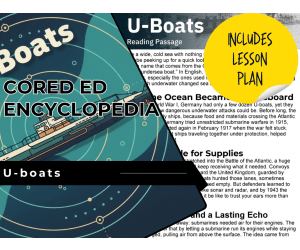
U-Boats Reading Comprehension Passage - Cored Ed Encyclopedia
ELA, Language Development, Reading Comprehension, Reading, Science, Technology, Engineering, History, Social Studies, Physics, Grade 2, 3, 4, 5, Worksheets & Printables, Worksheets, Teacher Tools, Centers, Activities, Writing Prompts, Assessments, Quizzes and Tests, Quizzes, Lesson Plans
This U-boats reading comprehension with lesson plan includes: Visualization (on the front cover) Start your lesson by taking a minute to think and share something about the topic. Read the script aloud (slowly), perhaps prepare some music or sound effects. Student close their eyes and let their imaginations wander. Students open their eyes, read the question aloud and give them a few minutes to complete. Ask a few students to share or keep answers until the end to compare with what they learn in the passage. Quick pause—thousands of Cored Education products are included with your TeachSimple membership. Download links and encyclopedia index available here. Pre-Reading Trivia Students will write down one thing they already know about the subject and then read five more facts and discuss. These facts are fun, and the students will enjoy learning about the subject before reading more. Give 1 minute for students to write what they already know (no pressure—best guess is fine). Read the five facts together. After each fact, do ask a student for their opinion, was it surprising? Set a purpose by asking students to highlight/underline one fact they want to learn more about during the reading. Reading Passage The text is a high-interest reading passage with set paragraphs, roughly three to four paragraphs long. It contains a variety of themes about the topic, anywhere from history to technology. The passage is between 250 and 350 words in length. First, ask students to look at the headings and see what they’ll learn about today. What do they know about the topic/heading? First read options: Teacher read-aloud (best for support). Partner reading (paragraph by paragraph). While reading, students underline important details, and vocabulary words they think may come up in the questions section. Mixed Questions The first question page contains four multiple-choice questions, each with a choice of four answers, and three written response questions that require a sentence or two from the student. Students complete the mcqs first independently, then review quickly as a class. For the 3 written responses, try to get students giving the answer with some form of evidence: “I think ___ because the text says ___.” If students get stuck, send them back to check the passage. Vocabulary Questions Practice seven key words from the text in this section across two activities. First section is scrambled words where students will unscramble three words given a clue for each. The second section is a word to meaning matching activity. Before starting, have some students read out words they underlined in the passage. Ask students to say the word and read aloud the sentence(s) around each word. Ask students to do scrambled words and the matching exercise in pairs then go through answers as a class. For the scrambled spelling task, get four pairs to come up to the board and write the words for extra practice with the other student reading out the clue. For the matching task, prompt students to give full sentences: “I matched ___ with ___ because ___.” Creative Writing In this question, the student will be required to write a five to eight sentence paragraph on a question related to the topic. Before starting, ask students write down 3 key ideas they are going to include in their piece. Ask students for ideas to share around the class to help those struggling. Pro writing expectations: 5–8 sentences At least 2 facts or details from the passage At least 2 vocabulary words from the previous page Students read their paragraphs while classmates listen for facts and vocabulary words. Extension Activities This page is optional for fast finishers or to take home. There are several activities, each one requiring a different skill. Do some, do none, do all, completely optional - but you will feel reassured knowing every possibility is planned for. Includes summary writting question. Answer Key There are answers for the multiple-choice questions, written response questions have sample answers, vocabulary answers and if there is a summary question then a sample summary will be provided as well. Lesson Plan Included Customized lesson plan for this lesson is included. Lesson Snapshot Title: U-Boats Genre: Nonfiction (informational text) Subject: Social Studies (World History) Primary Topic: U-boats, convoys, and the Battle of the Atlantic Estimated Guided Reading Level (A–Z): R What This Lesson Teaches Best Explains what “U-boat” means and where the name comes from (German U-Boot , short for Unterseeboot , meaning “undersea boat”). Shows how underwater attacks shifted World War I fighting toward supply ships , and why food and materials crossing the Atlantic mattered. Teaches how convoys (merchant ships traveling together under protection) helped weaken the U-boat threat. Highlights how defenders used tools like sonar and radar to listen and search better during the Battle of the Atlantic, and how the balance began to swing by 1943. Describes the snorkel as a solution for getting air to submarine engines while staying mostly submerged, including testing in 1943 and wider use in 1944. Learning Goals Students will explain what the term “U-boat” means and where the name comes from using details from the text. Students will describe why supply ships crossing the Atlantic became so important in both World War I and World War II. Students will identify how convoys worked and explain how they helped weaken the U-boat threat. Students will explain how sonar and radar helped defenders find and track U-boats better. Students will describe what problem the snorkel solved for submarines and how it worked. Key Vocabulary From the Text convoys — groups of ships traveling together with protection. unrestricted — not limited by rules or limits. sonar — a tool that uses sound to find underwater objects. radar — a tool that helps detect objects by radio waves. snorkel — a tube that brings air while mostly underwater. FULL CATALOG OF DOWNLOAD LINKS AND ENCYCLOPEDIA INDEX HERE
Author Cored Education
Rating
Tags Vocabulary, Reading Comprehension, Reading Passages, Lesson Plans, Ela Lesson Plans, Reading Comprehension Lesson Plans, Pre-reading, History, History Lesson Plans, Physics

Adjectives Supplementary Materials - Grade 3-4 Grammar (PDF)
ELA, Language Development, ESL, Grammar, Common Core, Resources for Teachers, Grade 3, 4, Worksheets & Printables, Worksheets, Quizzes and Tests, Teacher Tools, Tests, Assessments, Activities, Lesson Plans
Adjectives Supplementary Materials Note: This download DOES NOT include the tests themselves. You can still make use of these materials without them but they are recommended. Download in a format of your choice in the "Links" section below. Outline Ice Breaker (5-10 minutes) Engaging, interactive activity to introduce the lesson’s theme. Examples: Matching games, sentence races, charades, or storytelling challenges. Guided Practice (10-15 minutes) Teacher-led exercises to reinforce the concept. Examples: Sorting sentences by tense, sentence transformations, or fill-in-the-gap exercises. Group or Partner Task (15 minutes) Collaborative activity to practice the lesson’s focus in a fun and engaging way. Examples: Role-play, storytelling, sentence-building games, or small-group discussions. Independent Worksheet (15 minutes) Individual written activity to solidify understanding. Examples: Sentence corrections, verb conjugation drills, or tense identification exercises. Exit Task (5 minutes) Quick reflective activity to assess understanding before students leave. Examples: Writing a sentence using the target concept, identifying a tense, or explaining a rule. Links: Includes: Identifying Adjectives Gap Filling Comparatives Superlatives Additional Practice Google Docs Google Forms Google Slides PDF PPT Word FULL CATALOG OF DOWNLOAD LINKS HERE Grade 3/4 Links: Adjectives Google Docs Google Forms Google Slides PDF PPT Word Free Supplementary Materials Pack Adverbs Google Docs Google Forms Google Slides PDF PPT Word Free Supplementary Materials Pack Conjunctions Google Docs Google Forms Google Slides PDF PPT Word Free Supplementary Materials Pack Nouns Google Docs Google Forms Google Slides PDF PPT Word Free Supplementary Materials Pack Pronouns Google Docs Google Forms Google Slides PDF PPT Word Free Supplementary Materials Pack Verbs Google Docs Google Forms Google Slides PDF PPT Word Free Supplementary Materials Pack Sentence Structure Google Docs Google Forms Google Slides PDF PPT Word Free Supplementary Materials Pack Present Tense Google Docs Google Forms Google Slides PDF PPT Word Free Supplementary Materials Pack Past Tense Google Docs Google Forms Google Slides PDF PPT Word Free Supplementary Materials Pack Future Tense Google Docs Google Forms Google Slides PDF PPT Word Free Supplementary Materials Pack Context Clues Google Docs Google Forms Google Slides PDF PPT Word Free Supplementary Materials Pack Defining Words Google Docs Google Forms Google Slides PDF PPT Word Free Supplementary Materials Pack Fill the Blanks Google Docs Google Forms Google Slides PDF PPT Word Free Supplementary Materials Pack Homophones Google Docs Google Forms Google Slides PDF PPT Word Free Supplementary Materials Pack Synonyms Google Docs Google Forms Google Slides PDF PPT Word Free Supplementary Materials Pack ELA Review Questions Overview Questions have three answer choices. There are a handful of pictures on each test for aesthetic purposes, as well as a review sheet covering most of the topics covered in the product. Introduction or Example Sheet Each topic will include an introduction or example sheet to go through first with your students. Full Answer Keys Full answer keys and sample responses are provided so no matter how busy you are, you know you're covered! In the Supplementary Pack Interactive Ice Breakers: Fun, hands-on activities that get students thinking about adjectives right from the start. Guided Practice: Teacher-led exercises that reinforce the day’s lesson, ensuring students can confidently identify and use adjectives. Group and Partner Tasks: Collaborative activities that allow students to work together to solve problems, categorize adjectives, and create descriptive sentences. Independent Worksheets: Structured worksheets that provide individual practice and help solidify understanding of key concepts. Exit Tasks: Quick, reflective activities at the end of each lesson that assess understanding and encourage students to apply what they’ve learned. For similar downloads and other frees, do check out Cored Group on TeachSimple.
Author Cored Education
Tags Elementary, Answers, Ccss, Common Core, Grammar, Tests, Test Prep, Grade 3, Grade 4, Lesson Plan
Carbon Footprint Calculator & Personal Sustainability Plans
Science, Basic Science, Earth and Environmental Sciences, Life Sciences, Earth Sciences, Environmental Science, Geology, Space, Nature & Plants, Biology, Homeschool Curriculum, Homeschool Templates, Grade 4, 5, 6, 7, 8, Worksheets & Printables, Workbooks, Worksheets, Word Searches, Teacher Tools, Assessments, Lesson Plans, Quizzes and Tests, Quizzes, Tests
This fully planned out unit, straying away from Climate Anxiety and allowing students to build agency related to climate action, can be printed right out of this document and used in the classroom immediately. Designed for use in Grades 5–7 (ages 10–14), students will progress through this unit comprehensively by learning about the Carbon Cycle, measuring their actual CO₂e emissions, and creating their own personal plan for sustainability. The unit provides scientific text, real-world case studies (i.e. The Life of a White Cotton T-shirt), 10 individual audit worksheets related to home energy, transportation, diet, consumption, and water use. There is a Carbon Calculator provided which translates students' daily habits into actual data as well as templates for SMART Goal Setting and Advocacy Letters to promote action from students after completing the project. The materials align with NGSS (Earth and Human Activity Standard) and are ideal for Earth Day, STEM, or to promote Environmental Literacy throughout the rest of the school year. Not only does this package come with an extensive Teacher's Guide complete with answer keys, grading rubrics, visual aids, and a flexible 5-day pacing guide; the materials have been scaffolded to help mitigate eco-anxiety with both kindness and evidence-based science. The highlights include: 4 engaging chapters on greenhouse gases, CO₂e, and Life Cycle Assessment 10 student audit worksheets and a Carbon Calculator to synthesize student audit results SMART Goals Workshop for setting student action plans and evaluating systemic actions Professional writing activity related to Advocacy Letters A comprehensive Teacher Key, including Answer Keys, Grading Rubrics, and 5-Day Unit Plan All materials have been classroom-tested and proved to be effective. Appreciated by Parents and Educators: Empowerment Versus Fear – Empowers children and youth to make positive changes by turning their fear of climate change into tangible steps they can take themselves. Real-World Math/Data Skills – Develops mathematics and data-based skills through the calculation of CO₂e from current activities, reinforcing applied math and unit conversion skills and improving critical thinking. Systems Thinking – Students develop a deeper understanding of system relationships and the ripple effects of human activity on the ecological system through Life Cycle Assessment (T-shirts) and permafrost feedback loops. Teacher-friendly, Minimal Prep/Materials Needed – All materials required for implementation are provided (e.g., rubrics, answer keys, visuals, and 5-day pacing guides), so even non-science specialists can implement without difficulty. Opens Up Conversation at Home/School/Community – The advocacy letter and family audit provide an avenue for discussion beyond the classroom, resulting in actual changes to household sustainability. Targeted Grade Levels: The statement in the introduction clearly states that targeted grade levels are ‘5th, 6th, and 7th Grade.’ Therefore, because the math being introduced in this program involves multiplication, metric/unit conversions, basic percentage reasoning and cognitive complexity, I believe students in grades 5 through 7 will best use this resource as follows: Primary Group: 5th – 7th Grade (10-13 year olds) Secondary/Extension Group: (4th Grade) Advanced; 8th – 9th Grade as a basic review of what they learned in grades 5 and/or 6. Copyright/Terms of Use : The copyright for this book is owned by Syed Hammad Rizvi. This resource is intended for personal use and to be used in a single classroom. This means that you may not repurpose, sell, or give away any part of this resource. In essence, you cannot upload this resource to any public place on the internet and make it available to the world. If you wish to distribute this resource to other teachers, please purchase additional licenses through Teachsimple. Thank you for respecting these terms of use. This product is brought to you proudly by Syed Hammad Rizvi.
Author Creative Book Store
Rating
Tags ClimateChangeEducation, EcoLiteracy, SustainableClassroom, GlobalWarming, ClimateAction, GoGreen, ZeroWasteClassroom, EnvironmentalEducation, GreenSTEM, EarthWarriors

Long U Words – Grade 1–2 Phonics Unit
ELA, Grammar, Language Development, Phonics, Reading, Pre-Reading, Grade 1, 2, Worksheets & Printables, Worksheets, Teacher Tools, Lesson Plans
This Unit focuses on the Long U Sounds! Learning how to read can be the most challenging activity for students and for a teacher. Understanding that the combination of letters can make the same vowel sound requires lots of repetitive practice of reading and writing these words with these sounds. There are other phonics units that I sell that focuses on the Long A sound with a combination of different letters, the Long E sound with a combination of different letters, the Long I sound with a combination of different letters, and the Long O sound with a combination of different letters. Reading can be made easier with these phonic helps that repeatedly encourage students to practice these Long U sounds. Activities include reading comprehension and identifying the Long U in their reading, writing their answers to questions regarding the paragraph, identifying additional Long U words in sentences using a word bank, matching words with pictures, spinning a paperclip activity where students will write the word with the Long U sound, and lastly a fun wordsearch with variations of Long U words. These activities are for each long vowel words that are focused on the Long U sounds so there are plenty of opportunities for students to practice their comprehension reading skills and phonic sounds. Students will practice the following Long U Word sounds: U_E, EW, OO, UE, UI and OU. Teachers can use this resource in whole group, individually with students, students can practice with each other in centers, or these worksheets can be assigned as homework. Worksheets are also differentiated for each Long U sounds for all young learners which makes it perfect for all 1st - 2nd graders. A total of 38 pages full of reading and phonic activities. Along with reading and writing there are matching, cutting, and pasting activities. Word searches and spin and make a word activity are also a part of this packet which make learning to read these phonic sounds entertaining for young learners. For a list of other phonics and grammar activities, click on the following links: CVC Word Families for Beginning Readers: Stamp it, Make it, Trace it, and Write it CVC Words | Short Vowel Phonics | Word Families for K- 2nd Grade Phonics for 1st and 2nd Grade: Help Students Learn Long A Words: AY, AI, A_E, EIGH, EY, and EA Phonics for 1st and 2nd Grade: Help Students Learn Long E Words: EE, EA, E_E, and Y Phonics for 1st and 2nd Grade: Help Students Learn Long I Words: I_E, IE, IGH, and Y Phonics for 1st and 2nd Grade: Help Students Learn Long O Words: O_E, OA, OW, OE, and OUGH Phonics for 1st and 2nd Grade: Help Students Learn Long U Words: U_E, EW, OO, UE, UI and OU Phonics / Digraphs for 1st and 2nd Grade: Beginning, Middle, and Ending Sounds Phonics / Digraphs for 1st -2nd: Ending Sounds: CK, NG, SH, TH, and NK Phonics / Digraphs for 1st and 2nd Grade: Beginning Sounds: SH, TH, WH and PH Phonics: R-Controlled Words for 1st and 2nd Grade and Early Readers
Author K-5 Treasures
Rating
Tags Phonics, Grammar, Long Vowels, Long U Sounds, Long U Words, Reading, Long Vowel Sounds, Long U Phonics, 1st Grade Resources, First Grade Reading
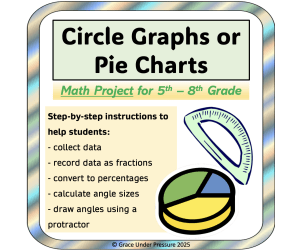
Math Project: How to Make Circle Graphs and Pie Charts
Math, Percentages, Geometry, Graphing, Statistics, Grade 5, 6, 7, 8, Worksheets & Printables, Worksheets, Lesson Plans, Teacher Tools, Projects, Activities
This fun math project includes clear step-by-step instructions to show your students how to make a circle graph. This is a great way to review several math skills while showing how useful they can be! Tasks include: - Writing a survey question: Your students learn to write a question that has exactly six possible answers. - Collecting data: Your students can ask the members of your class their question. They collect data using a tally chart. They need to ask exactly 25 people. - Recording results as a fraction: Once they have their data, they can turn each answer into a fraction with a denominator of 25. - Calculating an equivalent fraction: Then, they calculate an equivalent fraction with a denominator of 100. - Working with percent (written as a decimal): Finally, they turn that fraction into a percent in decimal form. They use this percent to multiply by 360 degrees in a circle (they can use a calculator for this part) to find out how many degrees each answer gets. - Drawing angles with a protractor: They carefully draw the six angles in their pie chart, one by one. - Labeling a graph: They label the graph to make it clear for others to read. Grades to Use WIth: This math project works well in the middle grades (4-8) when students know how to use protractors, calculate with fractions and decimals, and make graphs. It could also work well in a high school special education classroom. What's Included: A total of 5 pages. in PDF Format Title Page Survey Page Equivalent Fractions Page Decimals Page Circle Graph Template Standards: 7th Grade Geometry: Draw shapes with specific conditions. 4th Grade Fractions: Write equivalent fractions. Write fractions as equivalent decimals out of 100. 6th Grade Ratios and Proportional Relationships Work with percentages.
Author Grace Under Pressure
Rating
Tags Math Project, Pie Charts, Graphing, Data Collection, Percent, Angles, Protractor, Equivalent Fractions, Circle Graphs Math, Circle Graphs
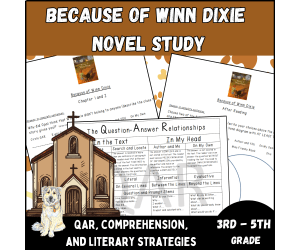
Because of Winn Dixie QAR Skills and Guided Reading Novel Study
ELA, Reading Comprehension, Reading, Grade 3, 4, 5, Lesson Plans, Teacher Tools, Worksheets & Printables, Novel Studies
Bring Because of Winn-Dixie to life in your classroom with this engaging and flexible novel study! Designed for upper elementary and middle school students, this resource helps young readers develop strong comprehension skills while introducing the Question-Answer Relationship (QAR) strategy in a meaningful way. The unit begins with mini-posters and reading journal inserts to teach students the four types of questions: Right There, Think and Search, Author and Me, and On My Own. By mastering this questioning strategy early on, students build the skills they need to dig deeper into the novel as they read. Instead of just answering surface-level questions, they’ll learn how to think critically, analyze text, and discuss ideas with confidence. As students move through the book, they’ll continue to practice and refine their questioning techniques, applying them to character development, themes, and major plot events. This approach encourages independent thinking and richer discussions, giving teachers the opportunity to guide students toward a deeper understanding of the text. How This Unit Works: 📖 QAR Mini-Lessons – Start with clear explanations and visual aids to introduce the questioning strategy. 📖 Active Reading & Skill Building – As students read, they apply QAR techniques to think critically about the story. 📖 Comprehension & Discussion Activities – Thoughtful prompts encourage meaningful conversations about characters, themes, and events. 📖 Final Project & Post-Reading Activities – Wrap up the novel with engaging project work that reinforces key takeaways. Why You’ll Love This Resource: ✔️ Makes questioning strategies easy to teach and apply. ✔️ Encourages higher-level thinking and deep discussions. ✔️ Works well for whole-class instruction, small groups, or independent study. ✔️ Includes ready-to-use mini-posters and journal inserts to support student learning. What’s Included? Mini-posters & reading journal inserts to introduce QAR Comprehension questions that challenge students to think deeply A final project for creative and reflective learning Flexible pacing to fit your teaching style This Because of Winn-Dixie novel study is a simple yet powerful way to help students build comprehension skills, improve questioning techniques, and connect with this heartfelt story. Whether used as a full-class novel study or a small group book unit, it’s a resource that makes reading more meaningful and engaging!
Author Kel's Klass
Tags Because Of Winn Dixie Novel Study, QAR Reading Strategy, Questioning Reading Strategy, Realistic Fiction, Small Group Reading, Whole Class Reading, Because Of Winn Dixie Worksheet, Because Of Winn Dixie Writing Prompts, Because Of Winn Dixie Lesson Plans, Reading Comprehension

Podcast Interview Question Outlines
Technology, Science, Computer Science, Engineering, Special Resources, Life Skills, Social Emotional Learning (SEL), Special Education Needs (SEN), Reading, ELA, Grade 6, 7, 8, 9, 10, 11, 12, Worksheets & Printables, Workbooks, Worksheets, Word Searches, Teacher Tools, Assessments, Lesson Plans, Quizzes and Tests, Quizzes, Tests
Transform your students from passive listeners into masterful storytellers with this complete, no-prep Podcasting Interview Skills Unit! Are you looking for an engaging, real-world project that goes beyond the traditional essay or book report? This comprehensive resource is designed to teach middle school students the sophisticated art of conducting powerful podcast interviews. Students will move beyond simple Q&A and learn to become architects of inquiry, crafting open-ended questions, listening actively, and unearthing compelling narratives. This is more than just a set of worksheets; it's a full-fledged pedagogical journey into the heart of communication, critical thinking, and media literacy. Perfect for your ELA, Journalism, Public Speaking, or Media Studies class, this unit equips students with the 21st-century skills they need to succeed. What's Included in this 48-Page Resource? This unit is meticulously structured into three phases to ensure student success and make implementation a breeze for you: Part 1: The Methodology & Theory (10 Pages) Deep dive into the "Architecture of Inquiry." Clear explanations of open-ended vs. closed questions, active listening, and structuring a narrative arc. Engaging case studies and examples that illustrate core concepts like "Narrative Anchors" and "Thematic Buckets." Strategies for troubleshooting common interview problems like reluctant guests or tangents. Part 2: The Student Workbook (19 Pages) 10 scaffolded, high-interest worksheets that move students from theory to practice. Exercises on identifying and transforming weak questions, drafting powerful follow-ups, spotting "the drop," using the "5 Whys" technique, structuring a narrative, navigating emotion, and more. A final "Master Blueprint" worksheet that guides students in creating a full interview outline from start to finish. Part 3: Visuals & Teacher Resources (19 Pages) Classroom-Ready Visual Aids: Three clear, printable anchor charts/visual frameworks explaining the core concepts (Anatomy of a Question, Active Listening Funnel, Interview Flow). Comprehensive Answer Key: Detailed, exemplar answers and pedagogical notes for all 10 student worksheets to make grading easy and effective. A Complete Teacher Implementation Guide: A 5-day+ lesson plan that walks you through direct instruction, modeling, guided practice, role-playing activities, and a final audio documentary project. Assessment Rubric: A clear, 4-point rubric for grading the final student interview project, focusing on question quality, narrative structure, follow-up agility, and audio professionalism. This isn't just a project; it's an experience. Watch your students' confidence soar as they learn to listen with empathy, think on their feet, and curate truth through the power of the human voice. Why Parents/Schools Love It: Develops Core Critical Thinking Skills: This curriculum explicitly teaches students how to move beyond surface-level facts and analyze information, synthesize ideas, and construct logical inquiries—skills essential for academic and life success. Builds 21st-Century Communication Skills: In an age of digital distraction, this program cultivates the "soft skills" that are most in demand: active listening, empathetic conversation, public speaking, and clear articulation of thought. Promotes Media & Digital Literacy: Instead of just consuming media, students become thoughtful creators. They learn the process behind the podcasts they listen to, gaining a deeper understanding of narrative construction and journalistic ethics. Provides Authentic, Real-World Application: Students are highly motivated by this project because it feels relevant and real. They are not just learning for a test; they are creating a tangible product (an audio documentary) that they can be proud of. Comprehensive and Teacher-Friendly: This is a complete, "plug-and-play" unit. The detailed teacher's guide, answer keys, and rubric save educators dozens of hours of prep time, making it easy for schools to implement a high-quality, engaging curriculum. Target Student Classes : Based on the explicit text in the PDF ("sixth-grade scholar," "Target Audience: Grade 6 Educators"), the primary target is 6th Grade . However, the material is sophisticated and rigorous enough to be highly effective for a broader range. I would recommend it for: Middle School ELA (Grades 6-8): As an alternative to traditional research papers or oral presentations. It hits standards for speaking, listening, writing, and critical analysis. Middle School Journalism or Media Studies Electives (Grades 7-9): This is a perfect foundational unit for any introductory journalism course. High School (Grades 9-10): Excellent for remedial or introductory communications, public speaking, or journalism classes. Gifted and Talented Programs (Grades 5-6): Ideal for younger, advanced learners who are ready for a challenging, project-based learning experience. Copyright/Terms of Use: This Book was copyrighted by Syed Hammad Rizvi. This resource is for personal and single classroom use only. You may not alter, redistribute, or sell any part of this resource. In other words, you may not put it on the Internet where it could be publicly found and downloaded. If you want to share this resource with colleagues, please purchase additional licenses from Teachsimple. Thank you for respecting these terms of use. This product is happily brought to you by Syed Hammad Rizvi
Author Creative Book Store
Rating
Tags Podcasting, CriticalThinking, ActiveListening, ProjectBasedLearning, PBL, DigitalStorytelling, MediaLiteracy, PublicSpeaking, CommunicationSkills, 21stCenturySkills

Verbs Sample - Grades 1-2 Grammar (Forms)
ELA, Language Development, ESL, Grammar, Common Core, Resources for Teachers, Grade 1, 2, Lesson Plans, Teacher Tools, Tests, Quizzes and Tests, Assessments, Centers, Activities
Verbs - 1 Sample Lesson ELA MCQS Overview: In this series of lessons, students will embark on an engaging exploration of the grammar skills that bring our language to life. These lessons are designed to help students identify, understand, and effectively use language arts skills in their writing and speech. Used with the free supplementary materials available for all topics, each lesson builds on the last, offering a mix of direct instruction, interactive group activities, and independent practice. Through fun and creative tasks, students will learn how to recognize grammar in sentences, understand their role in sentences and use them to enhance their own writing and speech. Verbs Overview: Includes: Identifying Verbs Intro to Verb Tenses Past Tense Irregulars Additional Practice Forms Version This is the Forms editable and self grading version. This download is available in GOOGLE Docs, GOOGLE Forms, GOOGLE Slides. PDF, PPT, WORD, check the links below for more details. FULL CATALOG OF DOWNLOAD LINKS HERE Grade 1/2 Links: Capitalization and Punctuation Google Docs Google Forms Google Slides PDF PPT Word Free Supplementary Materials Pack Adjectives Google Docs Google Forms Google Slides PDF PPT Word Free Supplementary Materials Pack Nouns Google Docs Google Forms Google Slides PDF PPT Word Free Supplementary Materials Pack Pronouns Google Docs Google Forms Google Slides PDF PPT Word Free Supplementary Materials Pack Verbs Google Docs Google Forms Google Slides PDF PPT Word Free Supplementary Materials Pack Prefixes & Suffixes Google Docs Google Forms Google Slides PDF PPT Word Free Supplementary Materials Pack Sentence Structure Google Docs Google Forms Google Slides PDF PPT Word Free Supplementary Materials Pack Subject-Verb Agreement Google Docs Google Forms Google Slides PDF PPT Word Free Supplementary Materials Pack ELA Review Questions Overview Questions have three answer choices. There are a handful of pictures on each test for aesthetic purposes, as well as a review sheet covering most of the topics covered in the product. Introduction or Example Sheet Each topic will include an introduction or example sheet to go through first with your students. Full Answer Keys Full answer keys and sample responses are provided so no matter how busy you are, you know you're covered! In the Supplementary Pack Interactive Ice Breakers: Fun, hands-on activities that get students thinking about adjectives right from the start. Guided Practice: Teacher-led exercises that reinforce the day’s lesson, ensuring students can confidently identify and use adjectives. Group and Partner Tasks: Collaborative activities that allow students to work together to solve problems, categorize adjectives, and create descriptive sentences. Independent Worksheets: Structured worksheets that provide individual practice and help solidify understanding of key concepts. Exit Tasks: Quick, reflective activities at the end of each lesson that assess understanding and encourage students to apply what they’ve learned. For similar downloads and other frees, do check out Cored Group on TeachSimple.
Author Cored Education
Tags Elementary, Reading, Comprehension, Vocabulary, Answers, Ccss, Common Core, Spelling, Writing, Digital Centers

All About Subtraction 0-20 | Animated Math Video Lesson
Math, Addition and Subtraction, Subtraction, Preschool, Grade 1, 2, Lesson Plans, Teacher Tools
All About Subtraction 0-20 | Animated Math Video Lesson A key aspect of primary math education is building proficiency in basic arithmetic, with subtraction being a critical skill to master. For educators looking for a versatile and engaging tool to complement their curriculum, the All About Subtraction 0-20 Animated Math Video Lesson provides an interactive source of instruction. Concept Focus and Instructions This animated video lesson focuses on subtracting numbers ranging from 0-20. It thoughtfully guides students step-by-step through the process of subtracting numbers – providing an inviting platform for learners to not only understand but also enjoy math. With its engaging approach and clear instructions, this resource ensures that students can grasp the concept comfortably and effectively. Usage Scenarios Schools: Teachers in public school classrooms can use it as part of their daily teaching routine or even as a consolidation activity after a subtraction lesson. Homeschooling: Homeschoolers may find it beneficial because it allows them to pause and review points where necessary - tailoring the learning journey to suit individual needs. Tutor Sessions: For small groups or one-on-one sessions, this video serves as an excellent guide through subtraction problems—it fosters interaction among learners while encouraging them to explore subtraction challenges together. Homework assignments: As homework assignments, educators can utilize this resource as reinforcement material—helping cement fundamentals learned during class time independently at home. From Kindergarten till Grade 2 educators can rely on this resource—thus providing continuity and consistent aid throughout these crucial developing years. Although focused specifically on Mathematics—and more precisely on Subtraction—this tool also helps foster listening skills due to its animated format which requires students' attention throughout the session. The All About Subtraction 0-20 | Animated Math Video Lesson comes as one MP4 file – easy to download and versatile enough to be incorporated into various platforms used by educators today: from personal computers or interactive boards inside classrooms to handheld devices for remote learning setups. Overall Bridging the gap between fun and learning, this math video lesson is designed to ignite learners' interest while enhancing their subtraction skills—making it a vital tool in any educator's resources.
Author Educational Voice
Tags Subtraction, Animated Math Lesson, Interactive Learning, Math Video, Primary Education
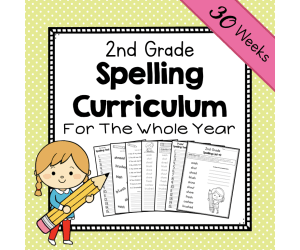
2nd Grade Spelling Unit |Spelling Curriculum | Spelling Lists
ELA, Language Development, Spelling, Grade 2, Lesson Plans, Teacher Tools
Set your 2nd graders on the path to spelling success with this meticulously designed year-long curriculum spanning 30 weeks of engaging content. Developed for elementary classrooms and homeschool settings, it takes a patterns and rules approach to systematically build skills. Each week presents 10 carefully chosen words plus space to plug in 5 personalized vocabulary picks tied to current themes or priority trouble spots. This blend of structured scope and tailored customization enables targeted, immersive learning. Strategically organized around spelling conventions like digraphs, blends, silent letters, and more, this 250+ page program nurtures understanding in tandem with memorization. Students actively study the reasoning behind spelling rules while shoring up foundational language arts abilities. Vivid accompanying materials allow educators to invest energy into instruction rather than planning. Each weekly installment includes a colorful poster modeling that week’s spelling list and corresponding linguistic pattern, test sentence call-out sheets, pretest/test templates, and diverse worksheets suited for varied learning preferences. From tracing activities to original sentence writing to correctly spelling terms in context, the spectrum of activities drives well-rounded engagement. Supplementary resources expand customizability and instructional options with an overall 2nd grade spelling word bank, multiple test templates, personalized practice sheets and beyond. This robust curriculum aims to make both teaching and learning this fundamental skill more dynamic via an explicit skills-building approach. Equip your 2nd graders for spelling prowess with a content-rich program designed to illuminate the logic behind spelling conventions. Spelling Rules and Patterns Included By Week: Week 1- Digraph "ch" Week 2- Digraph "th" Week 3- Digraph "sh" Week 4- Digraph "wh" Week 5- Commonly misspelled words Week 6- Digraph "ph" Week 7- Digraph "ck" Week 8- Letter blend "st" Week 9- Letter blend "cl" Week 10- Letter blend "sw" Week 11- Letter blend "nt" Week 12- Trigraph "tch" Week 13- Trigraph "dge" Week 14- Trigraph "nch" Week 15- Commonly misspelled words Week 16- Trigraph "str" Week 17- Trigraph "spr" Week 19- Closed compound words Week 20- Closed compound words Week 21- Open compound words Week 22- Words that start with "q" followed by a "u" Week 23- Vowel teams that make the long /a/ sound Week 24- Vowel teams that make the long /e/ sound Week 25- Commonly misspelled words Week 26- Vowel teams that make the long /o/ sound Week 27- Vowel teams that make the long /i/ sound Week 28- Contractions Week 29- Soft "g" sound Week 30- Soft "c" sound Need Other Levels of Spelling? Check these out: - Kindergarten Spelling Year-Long Curriculum - 1st Grade Spelling Year-Long Curriculum - 2nd Grade Spelling Year-Long Curriculum - 3rd Grade Spelling Year-Long Curriculum - 4th Grade Spelling Year-Long Curriculum - 5th Grade Spelling Year-Long Curriculum - 6th Grade Spelling Year-Long Curriculum - 7th Grade Spelling Year-Long Curriculum - 8th Grade Spelling Year-Long Curriculum Check out other resources from my store: Simply Schoolgirl! I can be contacted for questions and concerns at simplyschoolgirl1@gmail.com
Author Simply Schoolgirl
Tags Spelling Curriculum, Spelling Activities, Year-long Spelling, Spelling Quiz, Spelling Test, Spelling Worksheets, Printable Spelling, No Prep Spelling, Easy Spelling, Spelling Rules

Health 1st Grade Unit 1: Personal Health
P.E. & Health, Creative Arts, Art, Health, Physical Education, Social Skills, Special Resources, Life Skills, Social Emotional Learning (SEL), Grade 1, Lesson Plans, Teacher Tools, Worksheets & Printables, Worksheets
For 1st Grade Health there are seven standards that need to be taught. Unit 1 Personal Health Unit 2 Growth and Development Unit 3 Nutrition and Physical Activity Unit 4 Substance Use and Abuse Unit 5 Injury/ Violence Prevention Control and Safety Unit 6 Prevention/Control of Disease Unit 7 Environmental Consumer Health These units can be taught out of order. They are only numbered for your convenience. At the end of each unit, there is an assessment to test students’ understanding. Through using this Health 1st Grade Unit 1: Personal Health students will explore and learn to identify daily healthy habits. Included in this unit: * Understanding what active verses unactive movements and activities. * Being physically active and choosing which activity is healthy vs unhealthy. * Identifying healthy foods in a fun wordsearch. * How to understand your emotions and when to talk to someone to get help. At the end of the unit, there is an assessment to check for understanding. Included in this unit is an assessment with answer key. A total of 10 pages for Health 1st Grade Unit 1: Personal Health. There are seven units that cover all the health requirements for first grade. Here are the links to other health units: Health 1st Grade Unit 1: Personal Health Health 1st Grade Unit 2: Growth and Development Health 1st Grade Unit 3: Nutrition and Physical Activity Health 1st Grade Unit 4: Substance Use and Abuse Health 1st Grade Unit 5: Injury / Violence Prevention and Safety Health 1st Grade Unit 6: Prevention / Control of Disease Health 1st Grade Unit 7: Environmental / Consumer Health You can also teach your students about keeping yourself safe by studying about the Coronavirus, where and when it started and facts that plagued our world with this virus. 1st grade Coronavirus / Covid-19 Facts by Teach Simple This unit meets Common Core Standards.
Author K-5 Treasures
Tags Personal Health, Health Unit , Healthy Habits, Self-care, 1st Grade Health, First Grade Health, Healthy Foods, Healthy Eating, Physical Activity, Personal Development

CVC Word Families for Beginning Readers: Stamp it, Make it, Trace it, and Write it
ELA, Language Development, Pre-Reading, Phonics, Reading, Kindergarten, Grade 1, Teacher Tools, Centers, Activities, Lesson Plans, Worksheets, Worksheets & Printables
This CVC unit is engaging for students as they practice reading and learning the short vowel sounds while students cut and make the words, trace the words, write the words, and stamp out the words. Reading short vowel / rhyming words is an introduction to reading. Repetitive practice of reading these words is also another fundamental practice to help students read. In this unit, students will practice word families that have the same ending. Teach students that word families rhyme and only have a different beginning sound. For each word family, students will practice making, tracing, writing, or stamping six different words. Some of the words are proper nouns or names given to people or pets. There are also nonsensical words that are not real. The purpose of these words is to teach how to sound out words only within the same word family. File contains the following word family worksheets : ad, an, at, ed, en, et, in, ip, it, og, op, ot, ug, un, ut. It also includes all the letters needed to cut out for the "make it" worksheets . What's included for the word families: Short a at family (mat, fat, cat, sat, hat, and pat) an family (fan, ran, man, can, tan, and pan) ad family (mad, sad, bad, dad, had, and pad) Short e ed family (Ned, bed, Ted, red, ped, and ded) en family (ten, men, den, Ben, hen, and pen) et family (set, met, bet, let, get, and pet) Short i in family (bin, win, sin, fin, tin, and pin) ip family (hip, rip, tip, lip, zip, and sip) it family (bit, kit, fit, sit, hit, and pit) Short o og family (log, hog, dog, bog, fog, and jog) op family (hop, top, pop, cop, bop, and mop) ot family (lot, hot, rot, dot, pot, and got) Short u ug family (dug, rug, bug, hug, mug, and jug) un family (run, sun, nun, fun, pun, and bun) ut family (but, cut, nut, hut, rut, and gut) For a list of other phonics and grammar activities, click on the following links: CVC Word Families for Beginning Readers: Stamp it, Make it, Trace it, and Write it CVC Words | Short Vowel Phonics | Word Families for K- 2nd Grade Phonics for 1st and 2nd Grade: Help Students Learn Long A Words: AY, AI, A_E, EIGH, EY, and EA Phonics for 1st and 2nd Grade: Help Students Learn Long E Words: EE, EA, E_E, and Y Phonics for 1st and 2nd Grade: Help Students Learn Long I Words: I_E, IE, IGH, and Y Phonics for 1st and 2nd Grade: Help Students Learn Long O Words: O_E, OA, OW, OE, and OUGH Phonics for 1st and 2nd Grade: Help Students Learn Long U Words: U_E, EW, OO, UE, UI and OU Phonics / Digraphs for 1st and 2nd Grade: Beginning, Middle, and Ending Sounds Phonics / Digraphs for 1st -2nd: Ending Sounds: CK, NG, SH, TH, and NK Phonics / Digraphs for 1st and 2nd Grade: Beginning Sounds: SH, TH, WH and PH Phonics: R-Controlled Words for 1st and 2nd Grade and Early Readers
Author K-5 Treasures
Tags Word Families, Phonics, Beginning Reading, Rhyming Words, Short Vowel Words, Short Vowels, Reading Strategies, Word Family, Cvc Words, Cvc Activities
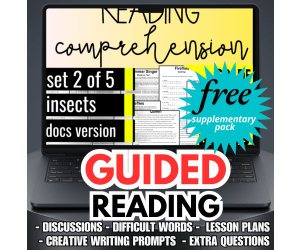
Guided Reading Activities and Lesson Plans Nonfiction Set 2 - Insects
ELA, Reading, Reading Comprehension, Common Core, ESL, Language Development, Pre-Reading, Vocabulary, Resources for Teachers, Grade 4, 5, Worksheets & Printables, Worksheets, Lesson Plans, Teacher Tools, Activities
Guided Reading Activities with Lesson Plans Nonfiction Set 2 Note: This download DOES NOT include the passages themselves. If you have not already done so, download in a format of your choice in the "reading links" section below. Overview The perfect companion materials for Cored Education reading comprehension downloads. This collection provides structured lessons designed to enhance students' reading, comprehension, vocabulary, and creative thinking. Each lesson follows a consistent format that includes pre-reading activities to engage students, vocabulary-building exercises, comprehension checks, creative writing prompts, and discussion topics that promote critical thinking. The lessons are designed to foster active participation, encourage reflection, and develop key literacy skills through interactive and immersive learning experiences. The series is ideal for guided reading sessions, providing teachers with a comprehensive toolkit to engage students in both individual and group activities, enhancing their understanding of text and expanding their language skills. Includes Guided Reading Materials For: 1.We Are Not Insects 2.What a Smell 3.Queen 4.Summer Singer 5.Fireflies 6.Bees Reading Links: This is the guided reading materials version and DOES NOT include the passages themselves. The passages related to this download are available here in GOOGLE Docs, GOOGLE Forms, GOOGLE Slides. PDF, PPT, WORD. Google Docs Google Forms Google Slides PDF PPT Word Key Features: Engaging Lesson Structure: Each lesson follows a clear and predictable format, which includes pre-reading discussions, vocabulary exercises, reading activities, and creative tasks to maintain student engagement. Vocabulary Development: Focus on introducing and applying new vocabulary in context, helping students internalize new words and use them effectively. Comprehension and Reflection: The lessons include comprehension questions and reflective prompts that encourage students to think critically about the text and its themes. Creative Writing and Discussion: Opportunities for students to express themselves through writing and group discussions, reinforcing their understanding while fostering creativity. Interactive and Student-Centered: The activities are designed to be interactive, allowing students to engage directly with the content and each other, promoting active learning. Browse the Complete Cored Catalog — 2,000+ Resources Included Reading Passages Each reading passage has been written specifically for students in Grades 4–5, using vocabulary and language that match their age and ability level. The collection covers a wide range of engaging topics, supported by colorful visuals that help bring the content to life. Every lesson is designed to build knowledge while keeping students interested and motivated to read. These resources are also designed with flexibility in mind. Unlike traditional textbooks that can quickly become outdated, lessons can be updated over time to reflect changes in technology, discoveries, and the world around us. Mixed Questions Every lesson includes a variety of questions that help students think more deeply about what they have read. The question section combines reading comprehension, vocabulary, and math skills, while also regularly reinforcing important reading strategies such as cause and effect, summarizing, compare and contrast, and drawing conclusions. Most lessons include a mix of multiple-choice and written-response questions, giving students opportunities to explain their thinking as well as select answers. Complete answer keys and sample responses are provided at the end of each lesson for quick and easy reference. Spelling & Vocabulary Each passage introduces students to useful words and phrases appropriate for Grades 4–5. To help build confidence and word knowledge, every lesson includes a spelling or vocabulary activity. Rather than repeating the same task throughout the collection, activities vary from lesson to lesson to keep practice fresh and engaging. Activities may include spelling challenges, sentence matching, decoding activities, mixed-up text exercises, and other vocabulary-building tasks connected directly to the reading. Writing Prompts Each lesson includes a writing activity that extends the ideas, themes, or topics explored in the passage. Students are encouraged to write in a variety of formats, with prompts providing helpful guidance and ideas to get them started. Writing tasks vary throughout the collection and may include creative writing, research activities, personal responses, poetry, opinion writing, and other engaging assignments. Full Answer Keys Complete answer keys and sample responses are included with every lesson, making planning and marking quicker and easier. Reading comprehension answers include evidence and support from the text, while math-based questions show the relevant working where appropriate. The answer keys are designed primarily for teachers but can also be shared with students when needed. Just for Fun Each lesson finishes with an optional extension activity called Just for Fun . These bonus activities provide an enjoyable way to extend learning beyond the main lesson and often encourage creativity, discussion, or independent thinking. They are completely optional, giving you the flexibility to use the activities that best suit your students and classroom needs. For similar downloads and other frees, do check out Cored Group on TeachSimple.
Author Cored Education
Rating
Tags Elementary, Reading, Comprehension, Vocabulary, Answers, Ccss, Guided Reading, Guided Reading Activity, Guided Reading Lesson Plans, Guided Reading Lesson Plan

Letter of the Week Curriculum
ELA, Language Development, Phonics, Kindergarten, Preschool, Grade 1, Lesson Plans, Teacher Tools
This resource is a Letter of the Week Curriculum . This bundle is jam-packed with over 900 pages worth of worksheets, practice and cards to provide students with a foundation for reading. For each letter, you will get lesson plans, crafts, games, flash cards, writing practice and so much more.
Author Glimmercat Education
Tags Letter Of The Week, Phonics Bundle, Literacy, Flash Cards, Writing Practice
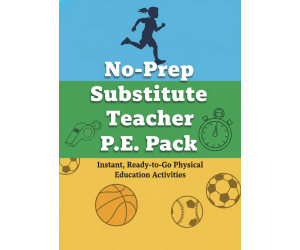
No-Prep Substitute Teacher P.E. Pack – Professional Edition
P.E. & Health, Health, Mental Health, Mindfulness, Physical Education, Sports, Yoga, Life Studies, Coaching, Career, Grade 1, 2, 3, 4, 5, 10, 11, 12, Activities, Games, Projects, Teacher Tools, Charts, Assessments, Diagrams, Lesson Plans, Presentations, Graphic Organizers
Unlock the Ultimate No-Prep Substitute Teacher P.E. Pack – Professional Edition – Your Complete 46-Page Lifesaver for Emergency PE Lessons! Created especially for substitute teachers and school administrators, this instant-download digital PDF is your complete solution for no-equipment, high-energy PE lessons in any gym, PE classroom, or outdoor space! From the Substitute Survival Guide and Universal Warm-Up Protocol to Classic Tag Varieties, Relay Races for Large Groups, Simon Says Fitness Edition, Indoor Desk-Side Challenges, Rock-Paper-Scissors Tournaments, Cooperative Team Games, Red Light Green Light Remixes, and a complete Discipline & Behavior Cheat Sheet – it’s all included! Ideal for elementary PE sub plans, rainy-day indoor activities, or last-minute coverage, this pack will keep 20 to 100+ students engaged, safe, and moving while developing teamwork, focus, and sportsmanship. No printing needed, no equipment required – just open, read, and play! Perfect for K-8 physical education teachers in search of professional resources that will make you the hero sub every school needs. Instant access – chaos to confident, active learning in an instant! Why Parents/Schools Love It: Zero Prep, Maximum Impact: Subs walk in and start instantly – no prep work needed. Safety First & Inclusive: Built-in safety bubbles, freeze signals, cool-down zones, and adaptations for all abilities ensure every child is safe, active, and included. High Engagement, Low Chaos: Proven games + attention getters + behavior cheat sheet transform high-energy kids into focused, cooperative learners – school administrators rave about the calm transitions back into class. Standards-Aligned & Professional: Motor skills, teamwork, mindfulness – all while leaving detailed notes for the regular teacher. Versatile for Any Day: Indoors/outdoors, rain or shine – parents appreciate knowing their kids stay happy and healthy even when a substitute is needed! Target Student Classes : This content appears to be best suited for elementary- to early middle-school-aged students, specifically in the Grade K-8 range, with the best fit in the K-6 range. Primary focus: K-5 (Blob Tag, Hospital Tag, Simon Says Fitness, Remixes of Red Light/Green Light, Desk-Intervals, Imaginative Locomotor themes specifically mentioned as "primary" focus, K-3). Adaptable extensions: 4-8 (World Champ RPS, Strategic Relays, Human Knot, Competitive Cheering - these work well in the middle school setting). Not suited for high school students - no sports skills, no athletics, focus on fun, inclusive, low-cost, low-tech movement and classroom management techniques. Large group-friendly - 20 to 100+ students, gym or classroom setting. Copyright/Terms of Use: This Book was copyrighted by Syed Hammad Rizvi. This resource is for personal and single classroom use only. You cannot modify, redistribute, and sell this resource. In other words, do not place this resource on the Internet where it can be publicly found and downloaded. If you want to share this resource with your colleagues, please purchase the license from Teachsimple. Thanks for respecting the Terms of Use. This product is happily brought to you by Syed Hammad Rizvi
Author Creative Book Store
Rating
Tags SubstituteTeacher, NoPrepPE, PEGames, ElementaryPE, SubPlans, SubstitutePE, PhysicalEducation, NoPrepActivities, SubstituteTeacherPEPack, NoPrepSubstituteTeacher
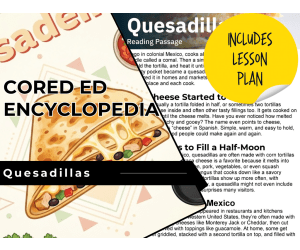
Quesadillas Reading Comprehension Passage - Cored Ed Encyclopedia
ELA, Language Development, Reading Comprehension, Reading, Pre-Reading, Social Studies, Writing, Strategies, Geography, Vocabulary, Grade 2, 3, 4, 5, Worksheets & Printables, Worksheets, Teacher Tools, Centers, Activities, Writing Prompts, Assessments, Quizzes and Tests, Quizzes, Lesson Plans
This quesadillas reading comprehension includes: Visualization (on the front cover) Start your lesson by taking a minute to think and share something about the topic. Read the script aloud (slowly), perhaps prepare some music or sound effects. Student close their eyes and let their imaginations wander. Students open their eyes, read the question aloud and give them a few minutes to complete. Ask a few students to share or keep answers until the end to compare with what they learn in the passage. Quick pause—thousands of Cored Education products are included with your TeachSimple membership. Download links and encyclopedia index available here. Pre-Reading Trivia Students will write down one thing they already know about the subject and then read five more facts and discuss. These facts are fun, and the students will enjoy learning about the subject before reading more. Give 1 minute for students to write what they already know (no pressure—best guess is fine). Read the five facts together. After each fact, do ask a student for their opinion, was it surprising? Set a purpose by asking students to highlight/underline one fact they want to learn more about during the reading. Reading Passage The text is a high-interest reading passage with set paragraphs, roughly three to four paragraphs long. It contains a variety of themes about the topic, anywhere from history to technology. The passage is between 250 and 350 words in length. First, ask students to look at the headings and see what they’ll learn about today. What do they know about the topic/heading? First read options: Teacher read-aloud (best for support). Partner reading (paragraph by paragraph). While reading, students underline important details, and vocabulary words they think may come up in the questions section. Mixed Questions The first question page contains four multiple-choice questions, each with a choice of four answers, and three written response questions that require a sentence or two from the student. Students complete the mcqs first independently, then review quickly as a class. For the 3 written responses, try to get students giving the answer with some form of evidence: “I think ___ because the text says ___.” If students get stuck, send them back to check the passage. Vocabulary Questions Practice seven key words from the text in this section across two activities. First section is scrambled words where students will unscramble three words given a clue for each. The second section is a word to meaning matching activity. Before starting, have some students read out words they underlined in the passage. Ask students to say the word and read aloud the sentence(s) around each word. Ask students to do scrambled words and the matching exercise in pairs then go through answers as a class. For the scrambled spelling task, get four pairs to come up to the board and write the words for extra practice with the other student reading out the clue. For the matching task, prompt students to give full sentences: “I matched ___ with ___ because ___.” Creative Writing In this question, the student will be required to write a five to eight sentence paragraph on a question related to the topic. Before starting, ask students write down 3 key ideas they are going to include in their piece. Ask students for ideas to share around the class to help those struggling. Pro writing expectations: 5–8 sentences At least 2 facts or details from the passage At least 2 vocabulary words from the previous page Students read their paragraphs while classmates listen for facts and vocabulary words. Extension Activities This page is optional for fast finishers or to take home. There are several activities, each one requiring a different skill. Do some, do none, do all, completely optional - but you will feel reassured knowing every possibility is planned for. Includes summary writting question. Answer Key There are answers for the multiple-choice questions, written response questions have sample answers, vocabulary answers and if there is a summary question then a sample summary will be provided as well. Lesson Plan Included Customized lesson plan for this lesson is included. Lesson Snapshot Title: Quesadillas Genre: Nonfiction (informational passage with support pages) Subject: Reading (Informational Text) / Social Studies (Culture & Food Traditions) Primary Topic: How quesadillas began and changed by place Estimated Guided Reading Level (A–Z): Q What This Lesson Teaches Best How foods and traditions change as people share them in different places (homes, markets, restaurants, and around the world). Comparing regional variations (corn vs. flour tortillas; different cheeses and fillings in different parts of Mexico and the U.S.). Building vocabulary and background knowledge about cooking tools and ingredients (comal, Oaxaca cheese, huitlacoche, guacamole). Identifying main ideas and key details across sections with headings (history/origin, filling choices, spreading beyond Mexico). Learning Goals Students can explain how the passage says a quesadilla is made (tortilla, filling, folded, heated). Students can describe how quesadillas changed in different places using details from the text. Students can compare quesadillas in different regions mentioned (central/southern Mexico, northern Mexico, Mexico City, Southwestern United States). Students can identify the main idea of each section heading and support it with one detail. Students can use key vocabulary from the passage when discussing the topic. Key Vocabulary From the Text colonial — from the time when a country was ruled by another comal — a flat griddle for heating and cooking tortillas Oaxaca — a place in Mexico named in the passage huitlacoche — a corn fungus used as a savory filling guacamole — a topping served with some quesadillas Discussion Prompts Pre-reading question: What foods have you seen change in different places or families? Comprehension questions: According to the passage, what is a quesadilla and how is it cooked? Comprehension questions: What are two different fillings or cheeses the passage says people use? Comprehension questions: How does the passage explain quesadillas changing as they spread beyond Mexico? FULL CATALOG OF DOWNLOAD LINKS AND ENCYCLOPEDIA INDEX HERE
Author Cored Education
Rating
Tags Vocabulary, Reading Comprehension, Reading Passages, Reading, Creative Writing, Reading Strategies, Writing Prompts, Lesson Plans, Quesadillas, Social Studies
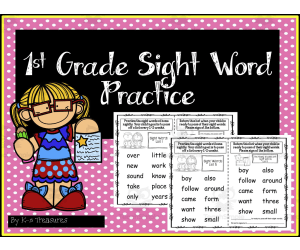
First Grade Sight Words - 100 Words to Practice and Learn
ELA, Language Development, Pre-Reading, Reading, Spelling, Vocabulary, Grade 1, 2, Worksheets & Printables, Worksheets, Lesson Plans, Teacher Tools
This list includes 10 take home sight word sheets for a total of 100 First Grade words. 100 FIRST GRADE FRY Sight Words! 10 PAGES INCLUDED! For children to learn how to read, sight words are important for kids to master. Practicing and reading sight words account for seventy five percent of words that children read. The Fry Sight words are words that are most often used and begins with the first one hundred words for Kindergarten.Using these words often to practice reading is essential to their skills and to improve in their reading comprehension. These words are often not easy to sound out like most CVC words, so recognizing them and memorizing these words is the most helpful to enhance a child's reading skills. You can find the first 100 words here which include some of the following words as an example: over knew take only little me work back give most very after things our man good think help where great say This list includes the second one hundred words for First Grade. There are different sight words for each grade level and the words build on each other. Students will recognize the previous words and continue to add more words to their memory as they practice them over and over. This list is mainly used for first and second grade students. It is intended to be used not only in the classroom, but to be used at home for practice with an adult. Then, it can be signed by a parent or guardian of the child and passed off at school. A total of 13 pages for students to practice and pass off once the students have mastered each word. Have parents sign the page once students are ready to pass them off with their teacher.
Author K-5 Treasures
Tags Sight Words, List Of Words, Reading, 1st Grade Reading, First Grade Sight Words, First Grade Reading, 1st Grade Sight Words, FRY Sight Words, 2nd Grade Sight Words, Second Grade Sight Words

Yoga Reading Comprehension Passage - Cored Ed Encyclopedia
ELA, Language Development, Reading Comprehension, Reading, History, Social Studies, Pre-Reading, P.E. & Health, Yoga, Geography, Grade 2, 3, 4, 5, Worksheets & Printables, Worksheets, Teacher Tools, Centers, Activities, Writing Prompts, Assessments, Quizzes and Tests, Quizzes, Lesson Plans
This yoga reading comprehension with lesson plan includes: Visualization (on the front cover) Start your lesson by taking a minute to think and share something about the topic. Read the script aloud (slowly), perhaps prepare some music or sound effects. Student close their eyes and let their imaginations wander. Students open their eyes, read the question aloud and give them a few minutes to complete. Ask a few students to share or keep answers until the end to compare with what they learn in the passage. Quick pause—thousands of Cored Education products are included with your TeachSimple membership. Download links and encyclopedia index available here. Pre-Reading Trivia Students will write down one thing they already know about the subject and then read five more facts and discuss. These facts are fun, and the students will enjoy learning about the subject before reading more. Give 1 minute for students to write what they already know (no pressure—best guess is fine). Read the five facts together. After each fact, do ask a student for their opinion, was it surprising? Set a purpose by asking students to highlight/underline one fact they want to learn more about during the reading. Reading Passage The text is a high-interest reading passage with set paragraphs, roughly three to four paragraphs long. It contains a variety of themes about the topic, anywhere from history to technology. The passage is between 250 and 350 words in length. First, ask students to look at the headings and see what they’ll learn about today. What do they know about the topic/heading? First read options: Teacher read-aloud (best for support). Partner reading (paragraph by paragraph). While reading, students underline important details, and vocabulary words they think may come up in the questions section. Mixed Questions The first question page contains four multiple-choice questions, each with a choice of four answers, and three written response questions that require a sentence or two from the student. Students complete the mcqs first independently, then review quickly as a class. For the 3 written responses, try to get students giving the answer with some form of evidence: “I think ___ because the text says ___.” If students get stuck, send them back to check the passage. Vocabulary Questions Practice seven key words from the text in this section across two activities. First section is scrambled words where students will unscramble three words given a clue for each. The second section is a word to meaning matching activity. Before starting, have some students read out words they underlined in the passage. Ask students to say the word and read aloud the sentence(s) around each word. Ask students to do scrambled words and the matching exercise in pairs then go through answers as a class. For the scrambled spelling task, get four pairs to come up to the board and write the words for extra practice with the other student reading out the clue. For the matching task, prompt students to give full sentences: “I matched ___ with ___ because ___.” Creative Writing In this question, the student will be required to write a five to eight sentence paragraph on a question related to the topic. Before starting, ask students write down 3 key ideas they are going to include in their piece. Ask students for ideas to share around the class to help those struggling. Pro writing expectations: 5–8 sentences At least 2 facts or details from the passage At least 2 vocabulary words from the previous page Students read their paragraphs while classmates listen for facts and vocabulary words. Extension Activities This page is optional for fast finishers or to take home. There are several activities, each one requiring a different skill. Do some, do none, do all, completely optional - but you will feel reassured knowing every possibility is planned for. Includes summary writting question. Answer Key There are answers for the multiple-choice questions, written response questions have sample answers, vocabulary answers and if there is a summary question then a sample summary will be provided as well. Lesson Plan Included Customized lesson plan for this lesson is included. Lesson Snapshot Title: Yoga Genre: Nonfiction (informational text) Subject: Social Studies & Health/SEL (culture and well-being) / Informational Reading Primary Topic: Yoga’s origins, key ideas, and modern practice Estimated Guided Reading Level (A–Z): Q Support pages present: pre-reading trivia, mixed questions, vocabulary activities, creative writing, extension activities, and an answer key. What This Lesson Teaches Best Explains yoga as an old practice that began in India and grew over time. Defines what the word “yoga” can mean in the passage (“yoke” or “union,” like two things working as one). Describes key tools in yoga: body positions, steady breathing, and quiet attention (and how breathing can steady the mind). Introduces “sutras” and explains that Patanjali gathered yoga ideas into short lines meant to be remembered, including a description of yoga as a path with eight “limbs.” Traces how yoga changed in the 1900s, noting that teachers such as Tirumalai Krishnamacharya helped create modern postural yoga with flowing sequences taught in classes. Learning Goals Students will describe what the passage says the word “yoga” can mean. Students will identify tools the passage says yoga uses (body positions, steady breathing, quiet attention). Students will explain why careful breathing matters in some yoga traditions, using details from the text. Students will describe what sutras are and why they were written, according to the passage. Students will summarize how yoga changed in the 1900s based on the passage’s timeline. Key Vocabulary From the Text Sanskrit — a very old language from India. traditions — ways people practice and pass ideas over time. sutras — short lines of teaching meant to be remembered. meditation — a quiet practice to help the mind rest. asana — a steady seat for meditation, not a gym pose. FULL CATALOG OF DOWNLOAD LINKS AND ENCYCLOPEDIA INDEX HERE
Author Cored Education
Rating
Tags Vocabulary, Reading Comprehension, Reading Passages, Lesson Plans, Ela Lesson Plans, Reading Comprehension Lesson Plans, Pre-reading, Social Studies Lesson Plans, Yoga, History

Prefixes and Suffixes Supplementary Materials Grade 5-6 (PDF)
ELA, Language Development, ESL, Grammar, Common Core, Resources for Teachers, Grade 5, 6, 7, Worksheets & Printables, Worksheets, Quizzes and Tests, Teacher Tools, Tests, Assessments, Lesson Plans
Prefixes and Suffixes Supplementary Materials Note: This download DOES NOT include the tests themselves. You can still make use of these materials without them but they are recommended. Download in a format of your choice in the "Links" section below. In the Supplementary Pack Interactive Ice Breakers: Engaging warm-up activities that introduce students to key ELA concepts, such as quick capitalization corrections and punctuation challenges. Guided Practice: Structured teacher-led exercises that reinforce grammar and punctuation rules, helping students identify and apply them correctly in sentences. Group and Partner Tasks: Collaborative activities where students work together to edit sentences, correct capitalization, and improve punctuation through peer discussion and teamwork. Independent Worksheets: Carefully designed worksheets that provide focused practice, allowing students to apply learned concepts and refine their skills independently. Exit Tasks: Quick assessments at the end of each lesson, prompting students to reflect on what they’ve learned and apply their knowledge in writing and editing tasks. Links Match Affix to Meaning Match Meaning to Affix Forming Affixes Fill the Gaps Additional Affix Practice Google Docs Google Forms Google Slides PDF PPT Word FULL CATALOG OF DOWNLOAD LINKS HERE Grade 5/6 Links: Capitalization & Punctuation Google Docs Google Forms Google Slides PDF PPT Word Free Supplementary Materials Pack Adjectives Google Docs Google Forms Google Slides PDF PPT Word Free Supplementary Materials Pack Nouns Google Docs Google Forms Google Slides PDF PPT Word Free Supplementary Materials Pack Pronouns Google Docs Google Forms Google Slides PDF PPT Word Free Supplementary Materials Pack Verbs Google Docs Google Forms Google Slides PDF PPT Word Free Supplementary Materials Pack Prefixes & Suffixes Google Docs Google Forms Google Slides PDF PPT Word Free Supplementary Materials Pack Sentence Structure Google Docs Google Forms Google Slides PDF PPT Word Free Supplementary Materials Pack Subject Verb Agreement Google Docs Google Forms Google Slides PDF PPT Word Free Supplementary Materials Pack Tenses Google Docs Google Forms Google Slides PDF PPT Word Free Supplementary Materials Pack Context Clues Google Docs Google Forms Google Slides PDF PPT Word Free Supplementary Materials Pack Defining Words Google Docs Google Forms Google Slides PDF PPT Word Free Supplementary Materials Pack Fill in the Blanks Google Docs Google Forms Google Slides PDF PPT Word Free Supplementary Materials Pack Homophones Google Docs Google Forms Google Slides PDF PPT Word Free Supplementary Materials Pack Synonyms Google Docs Google Forms Google Slides PDF PPT Word Free Supplementary Materials Pack ELA Review Questions Overview Questions have three answer choices. There are a handful of pictures on each test for aesthetic purposes, as well as a review sheet covering most of the topics covered in the product. Introduction or Example Sheet Each topic will include an introduction or example sheet to go through first with your students. Full Answer Keys Full answer keys and sample responses are provided so no matter how busy you are, you know you're covered! For More Like This For similar downloads and other frees, do check out Cored Group on TeachSimple.
Author Cored Education
Tags Elementary, Answers, Ccss, Common Core, Grammar, Tests, Test Prep, Assessment, Grade 5, Grade 6

Unplugged Algorithms & Coding Logic
Resources for Teachers, Classroom Management, Community Building, STEM, Technology, Science, Computer Science, Engineering, Special Resources, Special Education Needs (SEN), Homeschool Curriculum, Homeschool Templates, Grade 2, 3, 4, 5, 6, Worksheets & Printables, Workbooks, Worksheets, Word Searches, Teacher Tools, Lesson Plans, Quizzes and Tests, Quizzes, Tests, Assessments
Ditch the screens and ignite critical thinking! Are you looking for a way to teach foundational coding skills without increasing screen time? This comprehensive 41-page curriculum, Unplugged Algorithms & Coding Logic: Zero Screen Time Edition , is your all-in-one solution for bringing computational thinking to life in your elementary classroom or homeschool setting. Based on the powerful pedagogy of embodied cognition , this unit transforms abstract concepts into tangible, kinesthetic activities. Students won't just learn about coding; they will become the computer! By physically walking through mazes, performing "Code Dances," and debugging physical sequences, they will build a deep, intuitive understanding of the logic that powers all technology. What's Inside This 41-Page Power-Packed Unit? Phase 1: Core Content & Theory Guide: A robust guide for educators explaining the "why" behind the method. It covers the core pillars of computational thinking: Algorithms & Sequencing: The basic "recipe" for all code. Iteration (Loops): The power of repeating actions efficiently. Conditional Logic ("If/Then"): The fundamentals of decision-making in code. Systematic Debugging: Turning errors into powerful learning opportunities. Phase 2: The Student Workbook (10 Worksheets): A progressive series of 10 engaging worksheets that translate theory into practice. Students will solve puzzles, navigate paper mazes, and identify patterns in a fun, game-like format. Includes a final "Master Programmer" comprehensive challenge! Phase 3: Visuals & Teacher Resources: Everything you need to teach with confidence! Classroom Visuals: Clear, printable flowcharts and diagrams for looping and conditional logic. Comprehensive Answer Key: Detailed solutions and logical explanations for every problem. Teacher Implementation Guide: Expert advice on differentiating for grade levels (2nd-5th), managing kinesthetic activities, and unique methods for assessing student mastery without traditional tests. This isn't just a set of worksheets; it's a transformative approach to teaching 21st-century skills. Perfect for the Hour of Code, STEM centers, a full computer science unit, or for any educator wanting to build resilient, logical, and creative problem-solvers. Keywords for SEO: Unplugged coding, coding without a computer, computational thinking, STEM, STEAM, hour of code, elementary coding, 2nd grade, 3rd grade, 4th grade, 5th grade, algorithms, loops, if/then logic, debugging, kinesthetic learning, embodied cognition, screen-free activities, homeschool curriculum, computer science fundamentals, problem-solving, logic puzzles. Why Parents/Schools Love It: Promotes Screen-Free Learning: Addresses the widespread concern over excessive screen time by teaching vital tech skills in a completely offline, hands-on way. Kinesthetic & Engaging for All Learners: By using physical movement ("Human Robot" protocol) and tactile puzzles, it captures the attention of all students, especially active learners who struggle with passive instruction. Builds Real Foundational Skills: This is not just fluff. It teaches the core logic (sequencing, loops, conditionals, debugging) that forms the backbone of all programming languages, setting students up for future success. Fosters a "Growth Mindset" toward Errors: The entire unit, especially the debugging module, frames mistakes as puzzles to be solved, not failures. The motto "The Bug is a Teacher, Not a Failure" (page 33) is a powerful tool for building resilience. Comprehensive & Teacher-Friendly: It's a "print and go" resource. With a teacher's guide, student worksheets, visual aids, and a full answer key, it saves educators valuable prep time. Target Student Grade Levels : Based on the content, language, and the explicit "Modulating Rigor" guide on page 40, target: Primary Target: 2nd Grade through 5th Grade The resource is brilliantly designed for differentiation across this range: For 2nd - 3rd Graders: The activities on sequential logic, basic loops ("Code Dances"), and relative direction are perfectly suited. The focus is on concrete, physical actions. For 4th - 5th Graders: The curriculum challenges them with more complex concepts like nested loops (Worksheet 9), compound conditional logic ("Else If"), and writing more precise, efficient algorithms. Copyright/Terms of Use: This Book was copyrighted by Syed Hammad Rizvi. This resource is for personal and single classroom use only. You may not alter, redistribute, or sell any part of this resource. In other words, you may not put it on the Internet where it could be publicly found and downloaded. If you want to share this resource with colleagues, please purchase additional licenses from Teachsimple. Thank you for respecting these terms of use. This product is happily brought to you by Syed Hammad Rizvi
Author Creative Book Store
Rating
Tags UnpluggedCoding, ComputationalThinking, STEM, STEAM, CodingForKids, HourOfCode, ComputerScience, KidsWhoCode, LearnToCode, STEMEducation

AI Ethics for Young Learners - Artificial Intelligence Book
Strategies, Reading, ELA, Reading Comprehension, Research, Technology, Science, Computer Science, Engineering, STEM, Grade 3, 4, 5, 9, 10, 11, 12, Activities, Projects, Teacher Tools, Assessments, Lesson Plans, Literacy Readers, Outlines, Rubrics, Writing Prompts, Worksheets & Printables
Unravel the fascinating realm of artificial intelligence through "AI Ethics for Young Learners - Artificial Intelligence," an all-inclusive textbook crafted to inculcate AI concepts and ethical values in young minds in an interesting and young-friendly manner. Offering in-depth information starting from AI in daily life examples such as assistants and video games to more complex topics such as biased computer algorithms, issues of data privacy, fundamental concepts of cybersecurity, and AI use, this SEO-friendly kids’ book is most suited to class 4 to class 12 settings, providing young minds with empowerment to learn AI basics, identify ethical issues, and become responsible digital participants. With 90 chapters spread throughout AI learning patterns in young minds, ethical issues in decision-making algorithms, robot AI while maintaining system security, program accountability in AI, and AI in the coming age of medicine, creativity, and environmental protection, this AI book by subject experts is ideal to disrupt young minds with AI-related critical thinking skills through practical AI examples and ethical tales of AI adventures in society. Tags: AI ethics education in kids, AI textbook in classroom education, AI education in teen brains, ethical AI learning book, classroom learning books in grade 4 to grade12 levels. Why Parents/Schools Love It: Engaging and Age-Appropriate Content: Reduces complex AI and ethics topics to simple and relatable stories and examples that hold the attention of young learners without causing an overload. Encourages Critical Thinking and Responsibility: Students learn to second-guess AI decisions, to perceive bias, and to claim responsibility for their actions as advocates for the appropriate use of technology in daily life. Comprehensive Curriculum Support: With 90 chapters, it leads the students from the basics of AI through advanced ethical dilemmas; perfect for STEM lessons, homeschooling, or classroom discussions. Values and Safety: Stressing the importance of privacy, fairness, and human judgment in AI-all important to giving parents peace of mind that aligns with family values. Inspires Innovation: This lets the kids come up with their own ethical AI ideas and concepts, which can trigger their innovative thinking to make them future-ready in the tech arena. Targeted Classes for Students : It can be seen from the thorough evaluation of the contents and suitability of the material in the book that it is ideally suited for students from grades 4 through 12 as mentioned in the title page. The contents begin with explanatory pieces that are simple and accessible in terms of the examples they use such as “What is Artificial Intelligence?" and examples such as smart assistants in basic forms for earlier grades (4-6), then move into advanced examples such as bias in algorithms, the issue of privacy laws and cybersecurity threats and ethical problem-solving for advanced students from grades 7-12. The text is written in simple sentences and analogies (as in the explanation given in “How A.I. Learns Like Playing a Game"), and sophisticated technical terms are avoided in this manner and can be suited for the entire spectrum mentioned. Copyright/Terms of Use : This Book was copyrighted by Syed Hammad Rizvi. Please do not give out or sell copies of this resource or any part of it. Furthermore, do not post this resource on the Internet in such a way that people can download this resource. By the way, you can modify this resource, but only for your personal or school-class usage. Please note that if you would like to share this resource with your peers, licensing options for additional copies are available via Teachsimple. Thank you for your compliance with this usage agreement. This product is delightedly presented to you by Syed Hammad Rizvi
Author Creative Book Store
Rating
Tags AIEthicsForKids, ArtificialIntelligenceBook, AIEducationForTeens, EthicalAIForYoungLearners, STEMBooksForStudents, AIBasicsForGrades4to12, DataPrivacyForKids, BiasInAIExplained, ResponsibleTechForYouth, AIAndEthicsCurriculum

Zoo Animal Research Writing Project on MONKEYS for K-2nd Grade
Life Studies, ELA, Writing, Creative Writing, Reading, Science, Life Sciences, Animals, Research, Kindergarten, Grade 1, 2, Activities, Teacher Tools, Lesson Plans, Worksheets & Printables, Worksheets, Coloring Pages, Writing Prompts
Animal Research Writing Project on Monkeys for K-2nd Grade. Engage young learners in reading, writing, and science with this 19-page informational writing project on monkeys. Students will examine real-life photos, read age-appropriate facts, color images, draw habitat scenes, and organize information using writing organizers. Differentiated writing pages allow kids to write at their level. When finished, students and the entire classroom can bind everything together into a customized book. This monkey-themed unit promotes creativity, reading comprehension, and nonfiction writing skills. Implement as whole class, small group, centers, or individual work. Suitable for homeschools or grades Kindergarten, first grade classrooms., and for second graders. Click the links below to view similar units on other zoo animals and to do research on zoo animals. Teachers appreciate the ready-to-use animal units covering reading, note-taking, drafting, illustrating, and publishing. Engage your class in meaningful informational writing with this standards-based project on monkeys. Plus, there are many more zoo animals to research as well in my store: K-5 Treasures! For additional Zoo Animal reports, click on the following links below: Animal Research Writing Project on TIGERS for K-2nd Grade Animal Research Writing Project on MONKEYS for K-2nd Grade Animal Research Writing Project on PANDAS for K-2nd Grade Animal Research Writing Project on HIPPOS for K-2nd Grade Animal Research Writing Project on ELEPHANTS for K-2nd Grade Animal Research Writing Project on GIRAFFES for K-2nd Grade Here are even more informational resources on report writing for OCEAN ANIMALS. Click on the links below: Animal Research Writing Project on WHALES for K-2nd Grade Animal Research Writing Project on the OCTOPUS for K-2nd Grade Animal Research Writing Project on SEA TURTLES for K-2nd Grade Animal Research Writing Project on ORCAS for K-2nd Grade Animal Research Writing Project on the SHELLFISH for K-2nd Grade Animal Research Writing Project on DOLPHINS for K-2nd Grade Animal Research Writing Project on SEALS for K-2nd Grade
Author K-5 Treasures
Tags Animal Research, Informational Writing, Writing Report, Zoo Animals, Report On Animals, Report On Zoo Animals, 1st Grade Writing, 2nd Grade Writing, Monkeys, Report On Monkeys