Ions Introduction Lesson
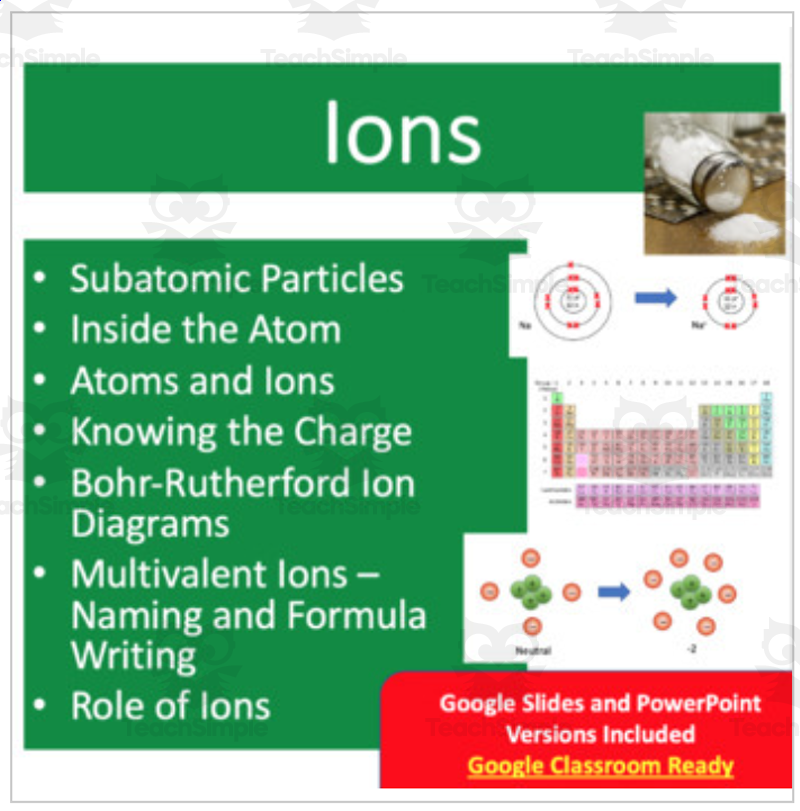
Ions Introduction Lesson: An Interactive Chemistry Resource The Ions Introduction Lesson is an expansive teaching resource designed to facilitate the understanding of Ions for learners in Grade 8, 9, and 10.
Classroom resources
Browse by lesson focus
Choose the topic or kind of practice you need.
Ions Introduction Lesson: An Interactive Chemistry Resource The Ions Introduction Lesson is an expansive teaching resource designed to facilitate the understanding of Ions for learners in Grade 8, 9, and 10.
A chemistry lesson introducing ions: reviewing subatomic particles (protons, electrons, neutrons), explaining net charge using a color-cancellation analogy, teaching how atoms become cations or anions, drawing Bohr-Rutherford ion diagrams, naming simple and multivalent ions, and writing multivalent ion formulas.
🎬 It’s a Wonderful Life – High School Film Lesson Plan (2 Hours) Bring classic American cinema to life in your classroom with this engaging It’s a Wonderful Life lesson plan!
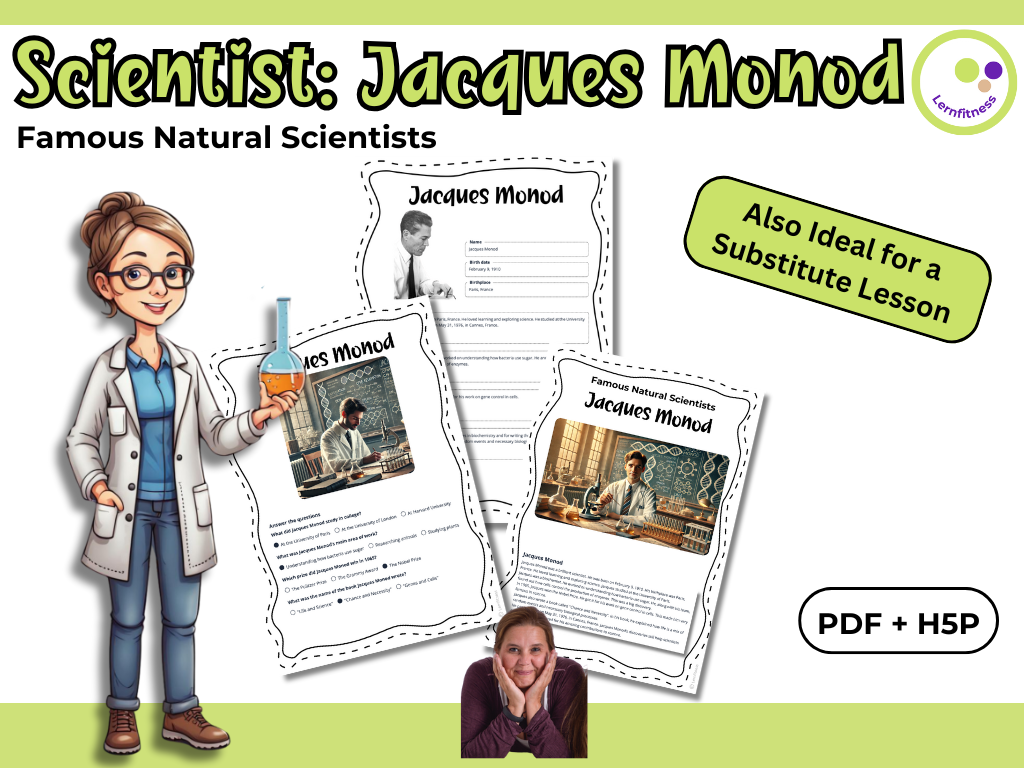
Scientist Jacques Monod - Fact Sheet, Quiz & Interactive Version (PDF & H5P) Jacques Monod – Gene Regulation and the Logic of Life Fact Sheet, Quiz & Interactive Exercises (PDF + H5P) 🧬⚙️ This 45-minute resource introduces students in…
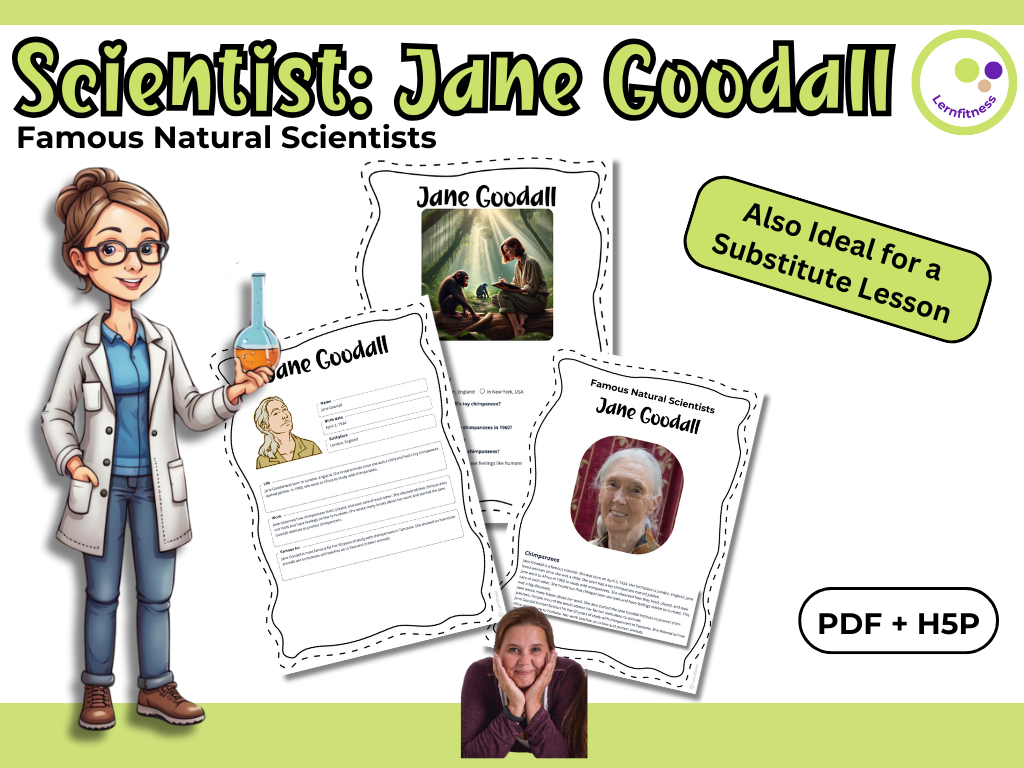
Scientist Jane Goodall - Fact Sheet, Quiz & Interactive Version (PDF & H5P) Jane Goodall – Chimpanzees, Field Research, and Conservation Fact Sheet, Quiz & Interactive Exercises (PDF + H5P) 🐒🌿 This 45-minute resource introduces students in…
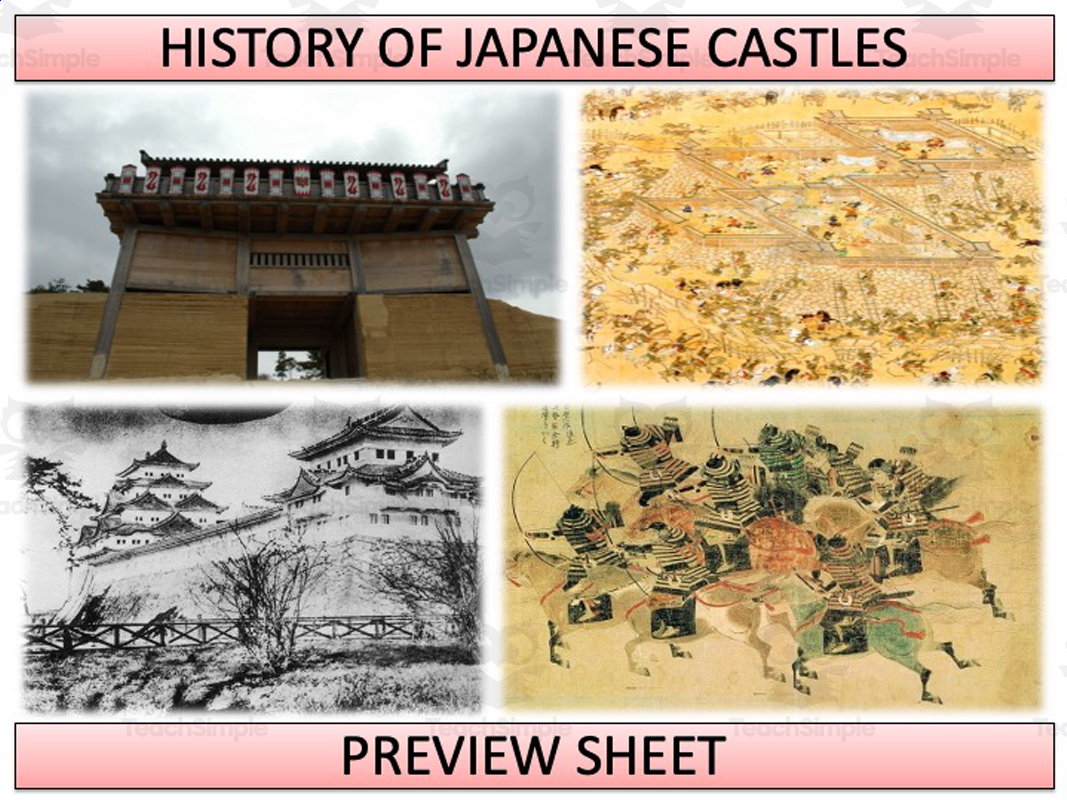
Japanese Castles Study Unit Resource Introducing the comprehensive and informative 'Japanese Castles' study resource, designed uniquely to enhance social studies curriculum modules.
The Julius Caesar Manual: A Facing-Pages Translation into Contemporary English This teaching resource integrates perfectly into middle and high school classrooms.
A scaffolded research organizer and 5-paragraph essay assignment guiding students through researching and writing about the life and philosophical legacy of Karl Marx.
The Katmai National Park Geography Unit is an educational resource designed for middle school educators who teach geography or social studies.
Teaches Kepler's three laws of planetary motion and the historical progression from geocentric to heliocentric models, for high school earth/space science.
Kinetic and Potential Energy - Lesson Bundle Kinetic and Potential Energy - Lesson Bundle is an extensive teaching resource designed to impart to students the vital concepts of kinetic and gravitational potential energy.
A high-school biology lesson package covering aerobic cellular respiration from the Krebs (citric acid) cycle through the electron transport chain (ETC), including a review of glycolysis/pyruvate oxidation, the role of O2, the proton gradient and chemiosmosis, ATP synthase, and uncoupling of the ETC.
Lesson 11 of a Tempest unit: a guided essay-writing/revision lesson exploring the theme of power across the play, scene by scene, to prepare students for an analytical essay.
Lesson 12 of a Tempest unit: a second guided essay-writing/revision lesson, this time exploring the theme of slavery across the play through the characters of Prospero, Caliban, and Ariel.
Guide KS4 secondary English literature students through an analytical reading of Act 2 Scene 2 of Shakespeare's The Tempest, focusing on the comic introduction of Trinculo and Stephano, Caliban's mistaken worship of Stephano as a god, and the beginnings of the murder plot against Prospero.
Guide KS4 secondary English literature students through an analytical reading of Act 3 Scene 1 of Shakespeare's The Tempest, focusing on the romance between Ferdinand and Miranda, the concept of love at first sight, and Prospero's secret manipulation of their courtship.
Guide KS4 secondary English literature students through an analytical reading of Act 3 Scene 3 of Shakespeare's The Tempest, teaching the literary concept of symbolism through several real-world examples before applying it to Prospero's illusory banquet and Ariel's harpy transformation confronting Alonso, Antonio and Sebastian.
Guide KS4 secondary English literature students through an analytical reading of Act 4 Scene 1 of Shakespeare's The Tempest, discussing the concept of slavery via a labeled diagram mapping which characters are enslaved to what (Ariel and Caliban to Prospero; Ferdinand to love; Prospero to isolation; Miranda to innocence, etc.), then applying it to…
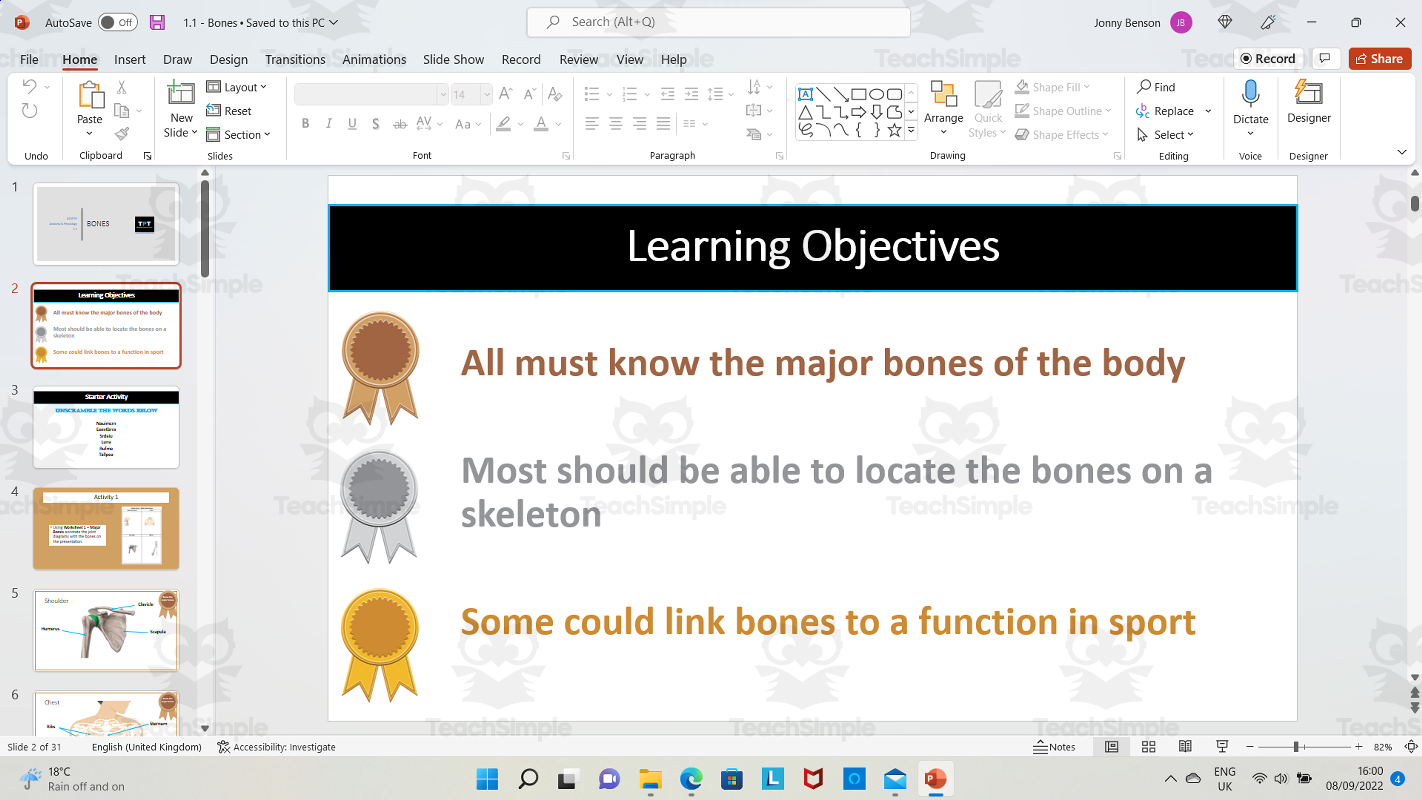
GCSE PE Anatomy & Physiology lesson teaching students to identify major bones of the body, locate them on a skeleton, and link bones to their function in sport.
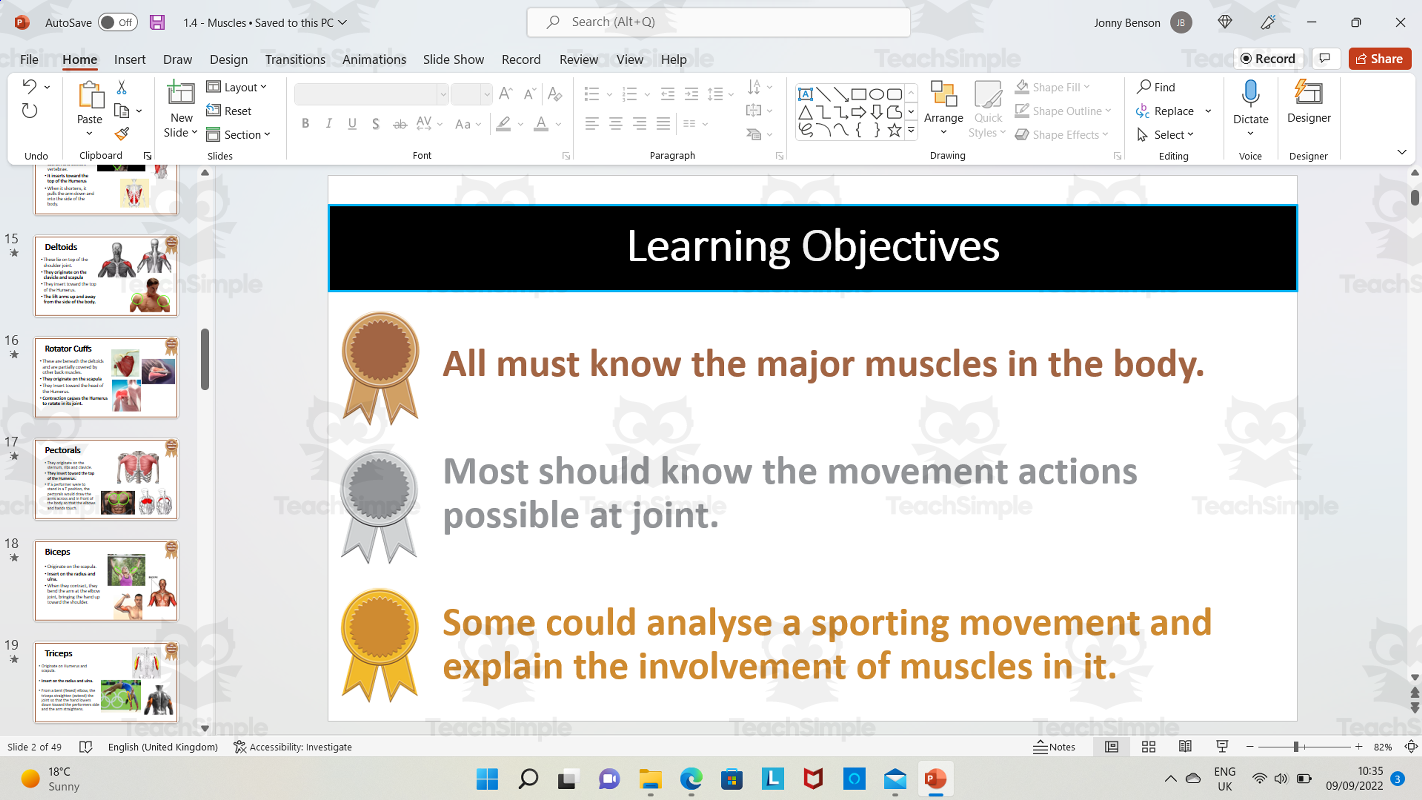
GCSE PE Anatomy & Physiology lesson teaching students the major muscles of the body, the movements possible at each joint, and analysis of muscle use in sporting actions.
A full 90-minute middle/high school lesson plan teaching the history and importance of Labor Day in the US and Canada, and the struggles and achievements of labor movements.
A social studies/economics reading comprehension lesson teaching high schoolers about the history, function, and modern relevance of labor unions.
Teach high-school physics students about reflection, transmission/refraction, and absorption of light, material transparency categories, and how lasers work compared to incandescent light sources.
An introductory mini-lesson (video plus guided notes and a summary sheet) teaching the basics of exponent notation -- base, exponent, and the concept of repeated multiplication -- as a lead-in to a Laws of Exponents lesson series.