



3,949 products added recently
Page 5 - History Quiz
Life Skills Quizzes are essential for evaluating students' readiness to handle everyday challenges. These quizzes address topics such as personal finance, nutrition, time management, interpersonal communication, and problem-solving. Incorporating Life Skills Quizzes into your teaching empowers students to apply what they learn in real-world situations. They promote independence, responsibility, and the ability to make informed decisions, which are crucial for personal success beyond the classroom.

 Show filters

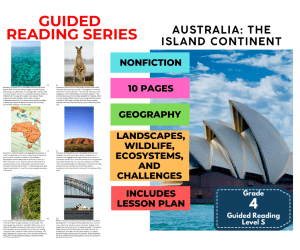
Australia - Island Continent: Guided Reading Level S with Lesson Plan
ELA, Resources for Teachers, Reading Comprehension, Reading, Science, Geography, Social Studies, History, Life Sciences, Earth and Environmental Sciences, Grade 3, 4, 5, Worksheets & Printables, Worksheets, Teacher Tools, Centers, Activities, Literacy Readers, Quizzes, Quizzes and Tests, Assessments, Lesson Plans
This Australia: The Island Continent (level s) guided reading book with lesson plan includes: Guided Reading Color Label (front cover x1) This is a quick way to match the book’s demands to what students can generally handle.. The overall goal is to use the level/color to pick books for several smaller groups. To qualify for a certain level, a student is expected to read a book from that level with about 90–94% accuracy. If a student is consistently accurate and understands, move up a level. If the student is struggling at that level, drop down and add more support. Each student will improve at completely different rates, but it is generally one of the best ways to check progress across the class. DOWNLOAD THE CATALOG TO VIEW ALL GUIDED READING BOOKS AVAILABLE (SORTED LEVELS A-Z) Pre-Reading Question (x1) Teacher asks the prompt aloud, can be while showing the cover or first page. Students share what they already know, or make educated guesses from the cover. Prompt them to use the target vocabulary. Write some of their responses on the board to look back at during the reading. Vocabulary Words (x5) Introduce the five words, best doing it one at a time. Start by saying it, while students repeat and then see if anyone knows what it means before reading further. Read through the meaning and try to briefly connect each word to a picture or gesture so it’s meaningful. Ask students to flip through the book pages and point to where they see each of the vocabulary words. While reading the book pause upon coming across one of the vocab words or read the sentence twice to make sure students understand the word has appeared. Optional: Ask students to raise hands whenever they see/hear one of the new words. Guided Reading Pages (x10) Check the book snapshot (below) for: primary topic - do you need to prep extra reading or intro materials on this? what is taught best - decide on 1-2 bullets to focus on, use the prompt or words provided here for best results. learning goals - what you are checking for students to be able to do after the session, elicit answers using prompts or words provided. key vocabulary (see section above). questions overview - so you know what is coming up and if you need to prep extra materials to assist understanding. Run the lesson You may have already looked at a few of the pages together, but you can show them some of the pictures again first to set meaning. Depending on how much time you have and how familiar your students are with guided reading class, you may want to read the book aloud first with the group first. Students whisper or partner read, while you listen in. If time, do it as a group, one student reading a page each. Use the guided page’s prompts to coach: “Check the picture / does it make sense?” “Point under the words / try the first sound” “Reread the sentence smoothly”. Try to focus more on one student per session (rotating every time), so you can work out if they are ready to move up or need to move down a level. Comprehension Questions (back cover x3) This is your way to check that students didn’t just say the words, but actually understood the text. First, let students answer by pointing to the page/picture and saying a short sentence. After any answer, follow with: “Show me where you found that in the text.” In bigger groups, have partners answer first (10–20 seconds), then call on 2–3 students to share. Differentiation tips: Emerging speakers/struggling readers: oral + pointing On-level: oral in a full sentence Higher: one written sentence or draw + label Book Snapshot Title: Australia: The Island Continent Genre: Nonfiction Subject: Social Studies (Geography/Culture) Primary Topic: Australia’s landscapes, wildlife, ecosystems, and challenges Estimated Guided Reading Level (A–Z): S What This Book Teaches Best Explains Australia’s unique identity as the only country that is also an entire continent, located in the Southern Hemisphere between the Indian and Pacific Oceans. Builds understanding of diverse landscapes, from the arid Outback (including Uluru) to the Great Barrier Reef and the Daintree Rainforest. Teaches how isolation supports unique wildlife, highlighting marsupials (kangaroos, koalas) and monotremes (platypus) with survival traits and behaviors. Connects place to people by describing Uluru’s importance to the Anangu and the long history of Aboriginal and Torres Strait Islander peoples, including “songlines” and rock art sites. Introduces modern Australia through coastal city life in Sydney and present-day environmental challenges like climate change, bushfires, drought, and conservation work. Learning Goals Students will explain why Australia is called the “island continent” using details from the text. Students will describe two Australian environments (such as the Outback, reef, or rainforest) with text evidence. Students will explain what the text says about Uluru, including what it is and why it is sacred to the Anangu people. Students will identify one animal from the text and describe a feature or behavior that helps it survive. Students will describe how the text presents Australia’s long human history through Aboriginal and Torres Strait Islander peoples, “songlines,” and rock art. Students will explain modern challenges Australia faces and summarize how scientists and conservationists respond. Key Vocabulary From the Text Hemisphere — half of the Earth. arid — very dry, with little rain. monolith — one huge rock that stands alone. marsupials — mammals that carry babies in a pouch. biodiversity — many different living things in one place. Discussion Prompts Pre-reading question: What places, animals, or environments do you expect to learn about in Australia? Comprehension questions: Where does the text say Australia is located, and what oceans are nearby? Comprehension questions: What does the text explain about the Great Barrier Reef and what lives there? Comprehension questions: What are two modern challenges Australia faces, according to the text? Printing Tips 1. Best Printing Method (Recommended) “Booklet” Printing (Best if Available) If your printer or PDF viewer supports Booklet Printing , use this. Settings to use: Print mode: Booklet Paper size: Letter or A4 (either works) Orientation: Landscape Print on both sides: Yes Flip on: Short edge Scaling: Fit to printable area Booklet subset: First test: Front sides only Then: Back sides only This will automatically: Pair pages correctly Put the cover on the outside Align everything for folding After printing, fold in half and staple along the spine . 2. If “Booklet” Printing Is NOT Available You can still print this correctly with manual duplex printing . Step-by-step: Open the PDF. Choose Print . Set: Orientation: Landscape Pages per sheet: 1 Print on both sides: Yes Flip on: Short edge Print all pages . Because each PDF page already contains two facing book pages, the result will still fold cleanly into a book. Thousands of Cored Education products are included with your TeachSimple membership. Download links and encyclopedia index available here.
Author Cored Education
Rating
Tags Reading Comprehension, Reading Passages, Reading, Guided Reading, Guided Reading Lesson Plan, Guided Reading Activity, Pre-reading, Social Studies, Geography, History

Journey Through South Korea: Guided Reading Level R with Lesson Plan
ELA, Resources for Teachers, Reading Comprehension, Reading, Science, Geography, Social Studies, History, Earth and Environmental Sciences, Technology, Grade 3, 4, 5, Worksheets & Printables, Worksheets, Teacher Tools, Centers, Activities, Literacy Readers, Quizzes, Quizzes and Tests, Assessments, Lesson Plans
This Journey Through South Korea (level r) guided reading book with lesson plan includes: Guided Reading Color Label (front cover x1) This is a quick way to match the book’s demands to what students can generally handle.. The overall goal is to use the level/color to pick books for several smaller groups. To qualify for a certain level, a student is expected to read a book from that level with about 90–94% accuracy. If a student is consistently accurate and understands, move up a level. If the student is struggling at that level, drop down and add more support. Each student will improve at completely different rates, but it is generally one of the best ways to check progress across the class. DOWNLOAD THE CATALOG TO VIEW ALL GUIDED READING BOOKS AVAILABLE (SORTED LEVELS A-Z) Pre-Reading Question (x1) Teacher asks the prompt aloud, can be while showing the cover or first page. Students share what they already know, or make educated guesses from the cover. Prompt them to use the target vocabulary. Write some of their responses on the board to look back at during the reading. Vocabulary Words (x5) Introduce the five words, best doing it one at a time. Start by saying it, while students repeat and then see if anyone knows what it means before reading further. Read through the meaning and try to briefly connect each word to a picture or gesture so it’s meaningful. Ask students to flip through the book pages and point to where they see each of the vocabulary words. While reading the book pause upon coming across one of the vocab words or read the sentence twice to make sure students understand the word has appeared. Optional: Ask students to raise hands whenever they see/hear one of the new words. Guided Reading Pages (x10) Check the book snapshot (below) for: primary topic - do you need to prep extra reading or intro materials on this? what is taught best - decide on 1-2 bullets to focus on, use the prompt or words provided here for best results. learning goals - what you are checking for students to be able to do after the session, elicit answers using prompts or words provided. key vocabulary (see section above). questions overview - so you know what is coming up and if you need to prep extra materials to assist understanding. Run the lesson You may have already looked at a few of the pages together, but you can show them some of the pictures again first to set meaning. Depending on how much time you have and how familiar your students are with guided reading class, you may want to read the book aloud first with the group first. Students whisper or partner read, while you listen in. If time, do it as a group, one student reading a page each. Use the guided page’s prompts to coach: “Check the picture / does it make sense?” “Point under the words / try the first sound” “Reread the sentence smoothly”. Try to focus more on one student per session (rotating every time), so you can work out if they are ready to move up or need to move down a level. Comprehension Questions (back cover x3) This is your way to check that students didn’t just say the words, but actually understood the text. First, let students answer by pointing to the page/picture and saying a short sentence. After any answer, follow with: “Show me where you found that in the text.” In bigger groups, have partners answer first (10–20 seconds), then call on 2–3 students to share. Differentiation tips: Emerging speakers/struggling readers: oral + pointing On-level: oral in a full sentence Higher: one written sentence or draw + label Book Snapshot Title: A Journey Through South Korea Genre: Nonfiction Subject: Social Studies (Geography/Culture) Primary Topic: South Korea’s geography, traditions, and modern innovation Estimated Guided Reading Level (A–Z): R What This Book Teaches Best How geography shapes a country , describing South Korea as a peninsula with seas on three sides and mountains across much of the land. City life and infrastructure , using Seoul to show population size, public transportation, and the mix of historic areas with modern skyscrapers. Cultural traditions and identity , including palaces and Joseon Dynasty heritage, traditional clothing (Hanbok), and national martial arts (Taekwondo). Food culture and processes , highlighting fermentation through kimchi and naming other dishes and ingredients. Modern technology and global influence , explaining South Korea’s role in electronics (including semiconductors) and daily-life innovation. Learning Goals Students will explain how South Korea’s location as a peninsula and its mountains are described in the text. Students will describe Seoul’s role in the nation and cite details about its transportation and city features. Students will identify examples of South Korea’s history and heritage from the text, including details about palaces and architecture. Students will describe how fermentation is connected to Korean food by using the text’s description of kimchi and storage. Students will explain how the text shows South Korea as a leader in technology and innovation. Students will describe one natural environment featured in the text (Jeju Island) using key details provided. Key Vocabulary From the Text peninsula — land with water on most sides, still connected. metropolis — a very large city with many people. fermentation — a process that changes food over time. semiconductors — tiny electronic parts that help devices work. aesthetic — the look and style that feels pleasing. Discussion Prompts Pre-reading question: How can a country honor its past while also building new technology for the future? Comprehension questions: What does the text say about South Korea being a peninsula and the seas around it? Comprehension questions: What details does the text give about Gyeongbokgung Palace and its architecture? Comprehension questions: How does the text describe the Haenyeo and what they do? Printing Tips 1. Best Printing Method (Recommended) “Booklet” Printing (Best if Available) If your printer or PDF viewer supports Booklet Printing , use this. Settings to use: Print mode: Booklet Paper size: Letter or A4 (either works) Orientation: Landscape Print on both sides: Yes Flip on: Short edge Scaling: Fit to printable area Booklet subset: First test: Front sides only Then: Back sides only This will automatically: Pair pages correctly Put the cover on the outside Align everything for folding After printing, fold in half and staple along the spine . 2. If “Booklet” Printing Is NOT Available You can still print this correctly with manual duplex printing . Step-by-step: Open the PDF. Choose Print . Set: Orientation: Landscape Pages per sheet: 1 Print on both sides: Yes Flip on: Short edge Print all pages . Because each PDF page already contains two facing book pages, the result will still fold cleanly into a book. Thousands of Cored Education products are included with your TeachSimple membership. Download links and encyclopedia index available here.
Author Cored Education
Rating
Tags Reading Comprehension, Reading Passages, Reading, Guided Reading, Guided Reading Lesson Plan, Guided Reading Activity, Pre-reading, Social Studies, Geography, History

Prehistoric Archaeology: Social Studies Reading Passage (PDF)
ELA, Reading, Reading Comprehension, Strategies, Resources for Teachers, Social Studies, History: Ancient, History, Grade 6, 7, 8, 9, Writing Prompts, Worksheets & Printables, Centers, Activities, Teacher Tools, Assessments, Quizzes and Tests, Quizzes, Tests
Prehistoric Archaeology: Social Studies Reading Comprehension Passage (PDF) This resource introduces a unique Social Studies reading comprehension passage with questions about Prehistoric Archaeology: How Archaeology Explains Prehistory. The passage is carefully designed to bridge the gap between social studies and literacy through strengthening reading comprehension and sparking knowledge curiosity in middle school students. Each passage blends English Language Arts skills with accurate social studies content . Ideal for interdisciplinary learning in ELA and Social Studies. Suitable for Grade 9 review, too! Student Tasks throughout the passage: 5 multiple-choice questions targeting the following skills: main idea, key details, inference, vocabulary in context, and use of evidence 5 vocabulary matching items with clear, student-friendly definitions 5 text-based questions that require citing specific lines or facts 1 summary prompt that asks students to condense central ideas accurately Full answer key for every section Available Formats for this Resource: Fillable PDF Word Docs Google Docs FULL CATALOG OF DOWNLOADING LINKS HERE Social Studies Reading Comprehension Collection Links: 1. Ancient Civilizations PDF Fillable PDF Word Docs Google Docs 2. Early Empires and Trade Networks PDF Fillable PDF Word Docs Google Docs 3. The Founding of the United States PDF Fillable PDF Word Docs Google Docs 4. Language, Culture, and Meaning PDF Fillable PDF Word Docs Google Docs 5. Psychology and Society PDF Fillable PDF Word Docs Google Docs 6. Global Festivals and Traditions PDF Fillable PDF Word Docs Google Docs 7. Extreme Environments and People PDF Fillable PDF Word Docs Google Docs 8. Food, Culture, and Preservation PDF Fillable PDF Word Docs Google Docs 9. Global Food Customs PDF Fillable PDF Word Docs Google Docs 10. Media, Communication, and Popular Culture PDF Fillable PDF Word Docs Google Docs 11. Human Impact on the Environment PDF Fillable PDF Word Docs Google Docs 12. Civic Action and Social Change PDF Fillable PDF Word Docs Google Docs 13. Fashion, Society, and Power PDF Fillable PDF Word Docs Google Docs 14. People, Places, and Unusual Histories PDF Fillable PDF Word Docs Google Docs Product Details: Length: 5 pages Grades: 6–8, also suitable for Grade 9 review Use cases: close reading, stations, homework, intervention, test prep, and sub plans Why Teachers Choose This Passage: Authentic social studies content paired with rigorous literacy practice Consistent task structure for easier planning and smoother student routines Clear, age-appropriate writing that builds confidence without oversimplifying Use this passage to reinforce ELA skills in social studies, to add literacy to your lessons, and to support independent work. The passage strengthens main idea, evidence use, vocabulary in context, inference, cause and effect, and summary writing. With ready-to-use assessments and complete answer keys, you can provide focused practice that is simple to run and fast to review.
Author Middle & High School - CORED Education
Rating
Tags Middle School, Reading Comprehension, Reading Strategies, ELA, Centers, Reading Passage, Assessments, Vocabulary, Social Studies, Ancient Civilization
Marbles Reading Comprehension Passage - Cored Ed Encyclopedia
ELA, Language Development, Resources for Teachers, Reading Comprehension, Reading, Pre-Reading, Writing, Strategies, History, Social Studies, Grade 2, 3, 4, 5, Worksheets & Printables, Worksheets, Teacher Tools, Centers, Activities, Writing Prompts, Assessments, Tests, Quizzes and Tests, Quizzes
This marbles reading comprehension contains the following: Visualize on the Cover (Teacher Read Aloud Script) Start your lesson by taking a few moments to visualize the topic and share thoughts or feelings about it. Pre-Reading Trivia Students will write down one thing they already know about the subject and then read five more facts and discuss. These facts are fun, and the students will enjoy learning about the subject before reading more. Reading Passage The text is a high-interest reading passage with set paragraphs, roughly three to four paragraphs long. It contains a variety of themes about the topic, anywhere from history to technology. The passage is between 250 and 350 words in length. Mixed Questions The first question page contains four multiple-choice questions, each with a choice of four answers, and three written response questions that require a sentence or two from the student. Vocabulary Questions Practice seven key words from the text in this section across two activities. First section is scrambled words where students will unscramble three words given a clue for each. The second section is a word to meaning matching activity. Creative Writing In this question, the student will be required to write a five to eight sentence paragraph on a question related to the topic. Extension Activities This page is optional for fast finishers or to take home. There are several activities, each one requiring a different skill. Do some, do none, do all, completely optional - but you will feel reassured knowing every possibility is planned for. Includes summary writting question. Answer Key There are answers for the multiple-choice questions, written response questions have sample answers, vocabulary answers and if there is a summary question then a sample summary will be provided as well. FULL CATALOG OF DOWNLOAD LINKS AND ENCYCLOPEDIA INDEX HERE Lesson Snapshot Title: Marbles Genre: Nonfiction Subject: Reading (Informational Text) Primary Topic: What marbles are, how they’re used, and history Estimated Guided Reading Level (A–Z): Q What This Lesson Teaches Best Defines what marbles are and what they can be made from (glass, clay, plastic, steel, agate). Explains a classic marble game using clear, step-by-step details (ring on the ground, shooter, “for fair,” “for keeps,” “knuckling”). Builds background knowledge by tracing marbles across time and places (2500 BCE, Rome, medieval times, Britain, India). Uses headings to organize information into sections (game rules, history, and modern designs/collecting). Uses vivid descriptive language to help readers picture marbles (colors that “float inside,” “tiny galaxies,” “ribbons of color”). Learning Goals Describe what a marble is and list materials marbles can be made from. Explain how the classic ring game works, including what a shooter does. Tell what “for fair” and “for keeps” mean in the game. Describe how marbles connect to history using details from the text (places and time periods). Use section headings to locate and share information about games, history, and marbles today. Describe how the author explains what marbles look like in sunlight and in clear glass. Key Vocabulary From the Text Agate — a pretty kind of stone used for some marbles. Shooter — a bigger marble used to knock other marbles. Archaeologists — people who find and study things from long ago. Medieval — from a long-ago time in history. Galaxies — huge groups of stars; here, a way to describe patterns. Cored Ed Encyclopedia Overview The Cored Ed Encyclopedia is a weekly series of lessons that you can pick up and use right away. These short readings fit into whatever time you have available. Each one includes a warm-up, a reading, and a set of questions, but it’s flexible — you can do just the reading, the full lesson, or skip the writing section if you need to. Each lesson focuses on a single topic so students don’t get lost. The writing is clear but never childish, making it perfect for grades two through five. Topics range from animals and science to history, inventions, and everyday things. No matter the level of the student, everyone should take away at least one new idea or fact from each lesson. The materials are easy to print, easy to explain, and require no setup. They work well for whole-class teaching, partner work, or independent study.
Author Cored Education
Rating
Tags Vocabulary, Spelling, Reading Comprehension, Reading Passages, Reading, Creative Writing, Reading Strategies, Writing Prompts, Marbles, History
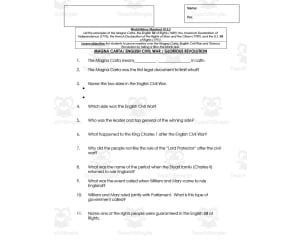
Quiz: Magna Carta, English Civil War and Glorious Revolution
Social Studies, History, History: Europe, History: World, Grade 9, 10, 11, 12, Quizzes, Quizzes and Tests, Teacher Tools
Quiz : Magna Carta, English Civil War & Glorious Revolution The Quiz on Magna Carta, English Civil War and Glorious Revolution is a comprehensive teaching resource, designed to provide interactive and engaging learning for students. This thoughtfully compiled quiz consists of 11 detailed questions that cover three significant historical events - the Magna Carta, the English Civil War, and the Glorious Revolution. The content is perfect for grade 9 through 12 students studying Social Studies with sub-topics in European History and World History. Answers included! Main Features: Innovatively designed to be versatile in application due to its adaptability to various learning environments. Students can work on it individually or as part of a group assignment. Educators have the flexibility to utilize this resource either within classroom discussions or assign it as homework material. A unique feature that makes this educational tool particularly beneficial for instructors is its provision of an answer key. This greatly aids educators by saving time during evaluation while ensuring accurate assessments of student understanding. The file containing this quiz comes in a Zip format enabling easy download and sharing among educators. Moreover, teachers can comfortably store this resource digitally without consuming much storage space which also contributes towards sustainability efforts. This inclusive Quiz covering Magna Carta, English Civil War & Glorious Revolution establishes itself as an effective instructional device across diverse educational settings including schools or homeschooling environments – catering optimally to educators' needs while enhancing student learning experiences in these critical areas of history studies. Whether you are probing into global revolutions or European happenings that changed societal ways; whether you seek individual assessments or joint group ventures – scan no further! This responsibly crafted multi-purpose teaching material will undoubtedly enrich both teaching methods and study realms alike while equipping young learners with a profound understanding about those notable historic milestones.
Author Jason Stein
Tags Magna Carta, English Civil War, Glorious Revolution, History Quiz, Teaching Resource
Reading Comprehension Passage: Jackie Robinson (Word Sample)
ELA, Reading, Reading Comprehension, Strategies, Resources for Teachers, Social Studies, Geography, History: USA, History, Grade 6, 7, 8, 9, Writing Prompts, Worksheets & Printables, Centers, Activities, Teacher Tools, Assessments, Quizzes and Tests, Quizzes, Tests
This is a ONE PASSAGE SAMPLE. The following is the description of the FULL resource and the downloading links: Social Studies Reading Comprehension Passages and Questions: People, Places, and History (Word) This resource introduces a collection of Social Studies reading comprehension passages with questions about People, Places, and History. The passages are carefully designed to bridge the gap between social studies and literacy through strengthening reading comprehension and sparking knowledge curiosity in middle school students. Each passage blends English Language Arts skills with accurate social studies content . Ideal for interdisciplinary learning in ELA and Social Studies. Suitable for Grade 9 review, too! What Is Included in this Collection? There are three informational passages (with full answer keys): Jackie Robinson: More Than a Rookie Haewoojae: Korea’s Toilet Culture Museum The Giant’s Causeway: Nature’s Puzzle of Stone For Each Passage, students will have multiple tasks to complete as follow: 5 multiple-choice questions targeting main idea, key details, inference, vocabulary in context, and use of evidence 5 vocabulary matching items with clear, student-friendly definitions 5 text-based questions that require citing specific lines or facts 1 summary prompt that asks students to condense central ideas accurately Available Formats for this Resource PDF Fillable PDF Google Docs FULL CATALOG OF DOWNLOADING LINKS HERE For more Social Studies Reading Passages, check the following Links: Ancient Civilizations PDF Fillable PDF Word Docs Google Docs Early Empires and Trade Networks PDF Fillable PDF Word Docs Google Docs The Founding of the United States PDF Fillable PDF Word Docs Google Docs Language, Culture, and Meaning PDF Fillable PDF Word Docs Google Docs Psychology and Society PDF Fillable PDF Word Docs Google Docs Global Festivals and Traditions PDF Fillable PDF Word Docs Google Docs Extreme Environments and People PDF Fillable PDF Word Docs Google Docs Food, Culture, and Preservation PDF Fillable PDF Word Docs Google Docs Global Food Customs PDF Fillable PDF Word Docs Google Docs Media, Communication, and Popular Culture PDF Fillable PDF Word Docs Google Docs Human Impact on the Environment PDF Fillable PDF Word Docs Google Docs Civic Action and Social Change PDF Fillable PDF Word Docs Google Docs Fashion, Society, and Power PDF Fillable PDF Word Docs Google Docs People, Places, and Unusual Histories PDF Fillable PDF Word Docs Google Docs Product Details Length: 14 pages total Grades: 6–8, also suitable for Grade 9 review Use cases: close reading, stations, homework, intervention, test prep, and sub plans Why Teachers Choose This Set Authentic social studies content paired with rigorous literacy practice Consistent task structure across all passages for easier planning and smoother student routines Clear, age-appropriate writing that builds confidence without oversimplifying Use this set to reinforce ELA skills in social studies, to add literacy to your lessons, and to support independent work. The passages strengthen main idea, evidence use, vocabulary in context, inference, cause and effect, and summary writing. With ready-to-use assessments and complete answer keys, you can provide focused practice that is simple to run and fast to review.
Author Middle & High School - CORED Education
Rating
Tags Middle School, Reading Comprehension, Reading Strategies, ELA, Centers, Reading Passage, Assessments, Vocabulary, Social Studies, People Place And History
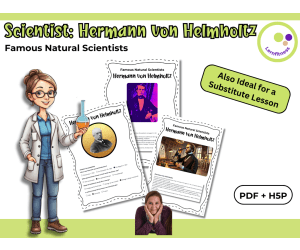
Hermann von Helmholtz – Fact Sheet, Quiz & Interactive PDF (incl. H5P)
Life Sciences, Science, STEM, History, Social Studies, Biographies, Inventors, Basic Science, Physics, Human Body, Grade 6, 7, 8, 9, Worksheets, Worksheets & Printables, Quizzes, Quizzes and Tests, Teacher Tools, Projects, Activities
Hermann von Helmholtz - Fact Sheet, Quiz & Interactive Version (PDF & H5P) Hermann von Helmholtz – Sensory Physiology Made Understandable Fact Sheet, Quiz & Interactive Exercises (PDF + H5P) This material introduces students in grades 7–10 to the life and research of Hermann von Helmholtz – one of the key figures behind our scientific understanding of vision, hearing, and nerve conduction. Even if students already know a bit about how our senses work, most are surprised to learn how long ago these topics were explored in depth – and by whom. Helmholtz’s work at the intersection of biology, physics, and medicine still shapes modern neuroscience today. To make this complex content more accessible, I put together a compact set of resources you can easily use in a 45-minute lesson. It includes a short text, a fact sheet, quiz questions (with answers), and a few creative tasks to get students thinking and interacting. You’ll find both color and black-and-white versions – great for printing or digital use. There’s also an H5P version for those who prefer an interactive format. What’s included: A short, student-friendly text on Hermann von Helmholtz and his key discoveries A fact sheet activity to help students organize the main ideas Quiz questions (with solutions) to check understanding An open-ended task where students come up with their own questions and exchange them with a partner Ready-to-print or use digitally (PDF + H5P) Answer key included for quick correction I’ve used this in biology class as part of a unit on the nervous system, but it also fits well in lessons on sensory organs, neuroscience, or even the history of science. The material works for independent work, partner activities, or as a simple introduction to one of the most influential scientists of the 19th century. No extra prep needed – just pick the version that suits your classroom best. 🚀 Download now and bring the legacy of Hermann von Helmholtz into your biology lessons today! 📍 Best wishes, Heike from Lernfitness Did You Know? I teach with a certified therapy dog, and together we create a positive and inspiring learning environment. 🐶✨
Author Lernfitness
Tags Science, Biology, Famous Scientists Lesson, H5P, Interactive Science Exercises, STEM, History, Scientists, Hermann Von Helmholtz, Physiology
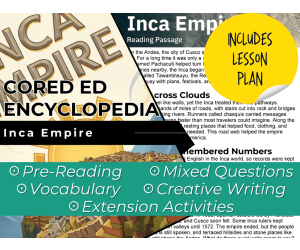
Inca Empire Reading Comprehension Passage - Cored Ed Encyclopedia
ELA, Reading Comprehension, Reading, History, Social Studies, Science, Geography, Technology, Pre-Reading, Language Development, Grade 2, 3, 4, 5, Worksheets & Printables, Worksheets, Teacher Tools, Centers, Activities, Writing Prompts, Assessments, Quizzes and Tests, Quizzes, Lesson Plans
This Inca Empire reading comprehension with lesson plan includes: Visualization (on the front cover) Start your lesson by taking a minute to think and share something about the topic. Read the script aloud (slowly), perhaps prepare some music or sound effects. Student close their eyes and let their imaginations wander. Students open their eyes, read the question aloud and give them a few minutes to complete. Ask a few students to share or keep answers until the end to compare with what they learn in the passage. Quick pause—thousands of Cored Education products are included with your TeachSimple membership. Download links and encyclopedia index available here. Pre-Reading Trivia Students will write down one thing they already know about the subject and then read five more facts and discuss. These facts are fun, and the students will enjoy learning about the subject before reading more. Give 1 minute for students to write what they already know (no pressure—best guess is fine). Read the five facts together. After each fact, do ask a student for their opinion, was it surprising? Set a purpose by asking students to highlight/underline one fact they want to learn more about during the reading. Reading Passage The text is a high-interest reading passage with set paragraphs, roughly three to four paragraphs long. It contains a variety of themes about the topic, anywhere from history to technology. The passage is between 250 and 350 words in length. First, ask students to look at the headings and see what they’ll learn about today. What do they know about the topic/heading? First read options: Teacher read-aloud (best for support). Partner reading (paragraph by paragraph). While reading, students underline important details, and vocabulary words they think may come up in the questions section. Mixed Questions The first question page contains four multiple-choice questions, each with a choice of four answers, and three written response questions that require a sentence or two from the student. Students complete the mcqs first independently, then review quickly as a class. For the 3 written responses, try to get students giving the answer with some form of evidence: “I think ___ because the text says ___.” If students get stuck, send them back to check the passage. Vocabulary Questions Practice seven key words from the text in this section across two activities. First section is scrambled words where students will unscramble three words given a clue for each. The second section is a word to meaning matching activity. Before starting, have some students read out words they underlined in the passage. Ask students to say the word and read aloud the sentence(s) around each word. Ask students to do scrambled words and the matching exercise in pairs then go through answers as a class. For the scrambled spelling task, get four pairs to come up to the board and write the words for extra practice with the other student reading out the clue. For the matching task, prompt students to give full sentences: “I matched ___ with ___ because ___.” Creative Writing In this question, the student will be required to write a five to eight sentence paragraph on a question related to the topic. Before starting, ask students write down 3 key ideas they are going to include in their piece. Ask students for ideas to share around the class to help those struggling. Pro writing expectations: 5–8 sentences At least 2 facts or details from the passage At least 2 vocabulary words from the previous page Students read their paragraphs while classmates listen for facts and vocabulary words. Extension Activities This page is optional for fast finishers or to take home. There are several activities, each one requiring a different skill. Do some, do none, do all, completely optional - but you will feel reassured knowing every possibility is planned for. Includes summary writting question and additional facts. Answer Key There are answers for the multiple-choice questions, written response questions have sample answers, vocabulary answers and if there is a summary question then a sample summary will be provided as well. Lesson Plan Included Customized lesson plan for this lesson is included. Lesson Snapshot Title: Inca Empire Genre: Nonfiction (informational passage) Subject: Social Studies (History) / Reading (Informational Text) Primary Topic: Cusco, roads, quipu records, terraces, legacy Estimated Guided Reading Level (A–Z): S What This Lesson Teaches Best How Cusco grew from a small kingdom into a larger Inca state in the 1400s under a leader named Pachacuti, and how the state was called Tawantinsuyu (the Realm of the Four Parts). How Inca engineers built a wide road system with stairs cut into rock and bridges, plus storehouses and resting places that helped the empire spread across western South America. How the Inca kept records without an English-like alphabet by using a quipu (cords with knots and colors for counts and notes). How terraces were used on hillsides to hold soil and water for crops like potatoes and corn, and how work was organized by the state as a kind of tax. How the empire ended after conflict and Spanish conquest, while people and culture continued (Quechua still spoken; terraces and stone places remain). Learning Goals Describe how Cusco changed in the 1400s and name the Inca state described in the passage. Explain how roads, bridges, and storehouses helped the Inca move messages, supplies, and armies. Explain what a quipu is and what it could record, based on the text. Describe what terraces are used for and how they helped farming on hillsides. Identify what happened in the 1500s that led to the end of the empire and one way Inca life continued afterward. Key Vocabulary From the Text Tawantinsuyu — the Inca state called the Realm of the Four Parts. chasquis — runners who carried messages from stop to stop. quipu — cords with knots and colors for records. terraces — flat steps that hold soil and water. storehouses — places along routes that kept needed supplies. FULL CATALOG OF DOWNLOAD LINKS AND ENCYCLOPEDIA INDEX HERE
Author Cored Education
Rating
Tags Vocabulary, Reading Comprehension, Reading Passages, Lesson Plans, Ela Lesson Plans, Reading Comprehension Lesson Plans, Pre-reading, History, Social Studies Lesson Plans, Geography
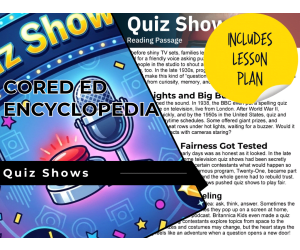
Quiz Shows Reading Comprehension Passage - Cored Ed Encyclopedia
ELA, Language Development, Reading Comprehension, Reading, Pre-Reading, Writing, Strategies, Vocabulary, History, Social Studies, Grade 2, 3, 4, 5, Worksheets & Printables, Worksheets, Teacher Tools, Centers, Activities, Writing Prompts, Assessments, Quizzes and Tests, Quizzes, Lesson Plans
This quiz shows reading comprehension includes: Visualization (on the front cover) Start your lesson by taking a minute to think and share something about the topic. Read the script aloud (slowly), perhaps prepare some music or sound effects. Student close their eyes and let their imaginations wander. Students open their eyes, read the question aloud and give them a few minutes to complete. Ask a few students to share or keep answers until the end to compare with what they learn in the passage. Quick pause—thousands of Cored Education products are included with your TeachSimple membership. Download links and encyclopedia index available here. Pre-Reading Trivia Students will write down one thing they already know about the subject and then read five more facts and discuss. These facts are fun, and the students will enjoy learning about the subject before reading more. Give 1 minute for students to write what they already know (no pressure—best guess is fine). Read the five facts together. After each fact, do ask a student for their opinion, was it surprising? Set a purpose by asking students to highlight/underline one fact they want to learn more about during the reading. Reading Passage The text is a high-interest reading passage with set paragraphs, roughly three to four paragraphs long. It contains a variety of themes about the topic, anywhere from history to technology. The passage is between 250 and 350 words in length. First, ask students to look at the headings and see what they’ll learn about today. What do they know about the topic/heading? First read options: Teacher read-aloud (best for support). Partner reading (paragraph by paragraph). While reading, students underline important details, and vocabulary words they think may come up in the questions section. Mixed Questions The first question page contains four multiple-choice questions, each with a choice of four answers, and three written response questions that require a sentence or two from the student. Students complete the mcqs first independently, then review quickly as a class. For the 3 written responses, try to get students giving the answer with some form of evidence: “I think ___ because the text says ___.” If students get stuck, send them back to check the passage. Vocabulary Questions Practice seven key words from the text in this section across two activities. First section is scrambled words where students will unscramble three words given a clue for each. The second section is a word to meaning matching activity. Before starting, have some students read out words they underlined in the passage. Ask students to say the word and read aloud the sentence(s) around each word. Ask students to do scrambled words and the matching exercise in pairs then go through answers as a class. For the scrambled spelling task, get four pairs to come up to the board and write the words for extra practice with the other student reading out the clue. For the matching task, prompt students to give full sentences: “I matched ___ with ___ because ___.” Creative Writing In this question, the student will be required to write a five to eight sentence paragraph on a question related to the topic. Before starting, ask students write down 3 key ideas they are going to include in their piece. Ask students for ideas to share around the class to help those struggling. Pro writing expectations: 5–8 sentences At least 2 facts or details from the passage At least 2 vocabulary words from the previous page Students read their paragraphs while classmates listen for facts and vocabulary words. Extension Activities This page is optional for fast finishers or to take home. There are several activities, each one requiring a different skill. Do some, do none, do all, completely optional - but you will feel reassured knowing every possibility is planned for. Includes summary writting question. Answer Key There are answers for the multiple-choice questions, written response questions have sample answers, vocabulary answers and if there is a summary question then a sample summary will be provided as well. Lesson Plan Included Customized lesson plan for this lesson is included. Lesson Snapshot Title: Quiz Shows Genre: Nonfiction (informational reading passage) Subject: Reading (Informational Text) / Social Studies (media history) Primary Topic: Quiz shows from radio to TV to podcasts Estimated Guided Reading Level (A–Z): R What This Lesson Teaches Best How quiz shows changed over time, from radio “question games” to television and modern podcasts. Key historical milestones and examples (late 1930s radio programs; 1938 BBC spelling quiz on TV; 1950s U.S. daytime quiz/game shows). Understanding fairness and trust in media (some shows were “rigged,” followed by investigations, hearings, and stronger rules). Text structure practice using section headings to track ideas (early radio → TV era → fairness tested → today). Strong built-in supports that match the passage (questions, vocabulary work, writing prompt, and extensions align to passage details). Learning Goals Students will describe how people participated in quiz shows before TVs were common, using details from the passage. Students will explain how television changed quiz shows, including what it was like for contestants under cameras and lights. Students will explain what “rigged” means in the passage and why quiz shows had to “rebuild trust.” Students will identify ways quiz shows appear today (board, screen at home, or podcast), based on the passage. Students will use the section headings to state the main idea of each section and support it with one detail. Key Vocabulary From the Text contestants — people who compete in a game rigged — secretly fixed so it is not fair producers — people who run and plan a show investigations — careful searches to find out what happened genre — a type or category of show FULL CATALOG OF DOWNLOAD LINKS AND ENCYCLOPEDIA INDEX HERE
Author Cored Education
Rating
Tags Vocabulary, Reading Comprehension, Reading Passages, Reading, Creative Writing, Reading Strategies, Writing Prompts, Lesson Plans, Quiz Shows, History
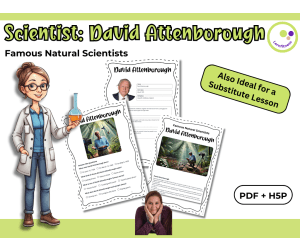
David Attenborough – Fact Sheet, Quiz & Interactive PDF incl. H5P
Life Sciences, Science, STEM, History, Social Studies, Biographies, Inventors, Basic Science, Animals, Nature & Plants, Grade 6, 7, 8, 9, 10, 11, 12, Worksheets, Worksheets & Printables, Quizzes, Quizzes and Tests, Teacher Tools, Projects, Activities
Scientist David Attenborough - Fact Sheet, Quiz & Interactive Version (PDF & H5P) David Attenborough – Nature, Storytelling, and the Voice of the Planet Fact Sheet, Quiz & Interactive Exercises (PDF + H5P) 🌍🎙️ This 45-minute resource introduces students in grades 7–10 to David Attenborough – a broadcaster and natural historian who has spent decades bringing the wonders of the natural world into classrooms and living rooms around the globe. Many students recognize his voice from documentaries, but fewer know about his lifelong work in nature education and conservation. Through detailed observations and powerful storytelling, Attenborough has helped generations understand ecosystems, biodiversity, and the urgent need to protect our planet. His approach combines science with emotion – making complex ideas more relatable. To help students engage with his legacy, I’ve put together a ready-to-use lesson. It includes an informational text, a fact sheet, quiz questions with answers, and a creative partner task. The materials are available in both color and black-and-white versions, plus an H5P version for interactive use. What’s included: A student-friendly text about David Attenborough’s life and work A fact sheet for organizing key points Quiz questions (with answer key) for comprehension and review A creative partner activity where students write and exchange their own questions Formats: Printable PDF and interactive H5P 💻 Answer key included ✅ I’ve used this resource in units on ecosystems, climate change, or environmental ethics. It also works well when exploring how media can support science education. The flexible format suits both individual learning and small group activities. 🚀 Download now and bring the legacy of David Attenborough into your biology lessons today! 📍 Best wishes to you , Heike from Lernfitness Did You Know? I teach with a certified therapy dog, and together we create a positive and inspiring learning environment. 🐶✨
Author Lernfitness
Tags Science, Biology, Famous Scientists Lesson, H5P, Interactive Science Exercises, STEM, History, Scientists, David Attenborough, Nature Documentary

Benjamin Franklin: Social Studies Reading Comprehension Passage (PDF)
ELA, Reading, Reading Comprehension, Strategies, Resources for Teachers, Social Studies, History, History: USA, Grade 6, 7, 8, 9, Writing Prompts, Worksheets & Printables, Centers, Activities, Teacher Tools, Assessments, Quizzes and Tests, Quizzes, Tests
Benjamin Franklin: Social Studies Reading Comprehension Passage (PDF) This resource introduces a unique Social Studies reading comprehension passage with questions about Benjamin Franklin and his Ideas. The passage is carefully designed to bridge the gap between social studies and literacy through strengthening reading comprehension and sparking knowledge curiosity in middle school students. Each passage blends English Language Arts skills with accurate social studies content . Ideal for interdisciplinary learning in ELA and Social Studies. Suitable for Grade 9 review, too! Student Tasks throughout the passage: 5 multiple-choice questions targeting the following skills: main idea, key details, inference, vocabulary in context, and use of evidence 5 vocabulary matching items with clear, student-friendly definitions 5 text-based questions that require citing specific lines or facts 1 summary prompt that asks students to condense central ideas accurately Full answer key for every section Available Formats for this Resource: Fillable PDF Word Docs Google Docs FULL CATALOG OF DOWNLOADING LINKS HERE Social Studies Reading Comprehension Collection Links: 1. Ancient Civilizations PDF Fillable PDF Word Docs Google Docs 2. Early Empires and Trade Networks PDF Fillable PDF Word Docs Google Docs 3. The Founding of the United States PDF Fillable PDF Word Docs Google Docs 4. Language, Culture, and Meaning PDF Fillable PDF Word Docs Google Docs 5. Psychology and Society PDF Fillable PDF Word Docs Google Docs 6. Global Festivals and Traditions PDF Fillable PDF Word Docs Google Docs 7. Extreme Environments and People PDF Fillable PDF Word Docs Google Docs 8. Food, Culture, and Preservation PDF Fillable PDF Word Docs Google Docs 9. Global Food Customs PDF Fillable PDF Word Docs Google Docs 10. Media, Communication, and Popular Culture PDF Fillable PDF Word Docs Google Docs 11. Human Impact on the Environment PDF Fillable PDF Word Docs Google Docs 12. Civic Action and Social Change PDF Fillable PDF Word Docs Google Docs 13. Fashion, Society, and Power PDF Fillable PDF Word Docs Google Docs 14. People, Places, and Unusual Histories PDF Fillable PDF Word Docs Google Docs Product Details: Length: 4 pages Grades: 6–8, also suitable for Grade 9 review Use cases: close reading, stations, homework, intervention, test prep, and sub plans Why Teachers Choose This Passage: Authentic social studies content paired with rigorous literacy practice Consistent task structure for easier planning and smoother student routines Clear, age-appropriate writing that builds confidence without oversimplifying Use this passage to reinforce ELA skills in social studies, to add literacy to your lessons, and to support independent work. The passage strengthens main idea, evidence use, vocabulary in context, inference, cause and effect, and summary writing. With ready-to-use assessments and complete answer keys, you can provide focused practice that is simple to run and fast to review.
Author Middle & High School - CORED Education
Rating
Tags Middle School, Reading Comprehension, Reading Strategies, ELA, Centers, Reading Passage, Assessments, Vocabulary, Social Studies, US HISTORY
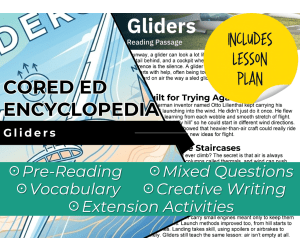
Gliders Reading Comprehension Passage - Cored Ed Encyclopedia
ELA, Reading Comprehension, Reading, Science, Technology, Pre-Reading, Language Development, Physics, History, Social Studies, Grade 2, 3, 4, 5, Worksheets & Printables, Worksheets, Teacher Tools, Centers, Activities, Writing Prompts, Assessments, Quizzes and Tests, Quizzes, Lesson Plans
This gliders reading comprehension with lesson plan includes: Visualization (on the front cover) Start your lesson by taking a minute to think and share something about the topic. Read the script aloud (slowly), perhaps prepare some music or sound effects. Student close their eyes and let their imaginations wander. Students open their eyes, read the question aloud and give them a few minutes to complete. Ask a few students to share or keep answers until the end to compare with what they learn in the passage. Quick pause—thousands of Cored Education products are included with your TeachSimple membership. Download links and encyclopedia index available here. Pre-Reading Trivia Students will write down one thing they already know about the subject and then read five more facts and discuss. These facts are fun, and the students will enjoy learning about the subject before reading more. Give 1 minute for students to write what they already know (no pressure—best guess is fine). Read the five facts together. After each fact, do ask a student for their opinion, was it surprising? Set a purpose by asking students to highlight/underline one fact they want to learn more about during the reading. Reading Passage The text is a high-interest reading passage with set paragraphs, roughly three to four paragraphs long. It contains a variety of themes about the topic, anywhere from history to technology. The passage is between 250 and 350 words in length. First, ask students to look at the headings and see what they’ll learn about today. What do they know about the topic/heading? First read options: Teacher read-aloud (best for support). Partner reading (paragraph by paragraph). While reading, students underline important details, and vocabulary words they think may come up in the questions section. Mixed Questions The first question page contains four multiple-choice questions, each with a choice of four answers, and three written response questions that require a sentence or two from the student. Students complete the mcqs first independently, then review quickly as a class. For the 3 written responses, try to get students giving the answer with some form of evidence: “I think ___ because the text says ___.” If students get stuck, send them back to check the passage. Vocabulary Questions Practice seven key words from the text in this section across two activities. First section is scrambled words where students will unscramble three words given a clue for each. The second section is a word to meaning matching activity. Before starting, have some students read out words they underlined in the passage. Ask students to say the word and read aloud the sentence(s) around each word. Ask students to do scrambled words and the matching exercise in pairs then go through answers as a class. For the scrambled spelling task, get four pairs to come up to the board and write the words for extra practice with the other student reading out the clue. For the matching task, prompt students to give full sentences: “I matched ___ with ___ because ___.” Creative Writing In this question, the student will be required to write a five to eight sentence paragraph on a question related to the topic. Before starting, ask students write down 3 key ideas they are going to include in their piece. Ask students for ideas to share around the class to help those struggling. Pro writing expectations: 5–8 sentences At least 2 facts or details from the passage At least 2 vocabulary words from the previous page Students read their paragraphs while classmates listen for facts and vocabulary words. Extension Activities This page is optional for fast finishers or to take home. There are several activities, each one requiring a different skill. Do some, do none, do all, completely optional - but you will feel reassured knowing every possibility is planned for. Includes summary writting question and additional facts. Answer Key There are answers for the multiple-choice questions, written response questions have sample answers, vocabulary answers and if there is a summary question then a sample summary will be provided as well. Lesson Plan Included Customized lesson plan for this lesson is included. Lesson Snapshot Title: Gliders Genre: Nonfiction (informational text) Subject: Science (flight/engineering) Primary Topic: How gliders fly using lift and launch methods Estimated Guided Reading Level (A–Z): Q What This Lesson Teaches Best Explains what makes a glider different from a small airplane (no motor; quiet flight; “trade height for distance”). Describes how gliders get into the sky (help at the start, including being towed; later mentions aerotows and winches). Teaches how moving air helps a glider climb—especially rising warm air (“thermals”) and wind pushed upward at a ridge or hill. Shows how design features support gliding (long, narrow wings; smooth body; low drag to lose little energy). Connects gliders to early flight experiments through Otto Lilienthal’s repeated testing and “fly hill.” Learning Goals Students will describe how a glider is similar to and different from a small airplane. Students will explain how a glider usually starts flying using details from the text. Students will identify two kinds of lift described in the passage and tell how each helps a glider climb. Students will explain why long, narrow wings and low drag help a glider glide efficiently. Students will describe how gliders and launch methods changed over time, using examples from the text. Students will explain how spoilers or airbrakes help with landing safely. Key Vocabulary From the Text cockpit — where the pilot sits and reads instruments. thermals — rising columns of warm air. drag — air resistance that slows motion. aerotows — launches where an airplane tows the glider. spoilers — panels that help a glider slow down and descend. FULL CATALOG OF DOWNLOAD LINKS AND ENCYCLOPEDIA INDEX HERE
Author Cored Education
Rating
Tags Vocabulary, Reading Comprehension, Reading Passages, Lesson Plans, Ela Lesson Plans, Reading Comprehension Lesson Plans, Pre-reading, Science Lesson Plans, Physics, History
Scientist: William Harvey Fact Sheet, Quiz, and Interactive Exercises
Life Sciences, Science, Biology, Physics, STEM, Human Body, History, Social Studies, Grade 7, 8, 9, Worksheets, Worksheets & Printables, Quizzes, Quizzes and Tests, Teacher Tools, Projects, Activities
Discover William Harvey – The Scientist Who Unveiled the Circulatory System William Harvey is best known as the physician who discovered the circulation of blood, revolutionizing our understanding of the human body and laying the groundwork for modern physiology. This comprehensive teaching resource introduces your students in grades 6–8 to Harvey’s groundbreaking contributions to biology and medicine. Designed for a 45-minute lesson, it combines engaging informational content with interactive and creative tasks to ensure a memorable and educational experience. What’s Included: Concise Informational Text: A clear and engaging overview of William Harvey’s role in science. Fact Sheet Activity: Encourages students to organize knowledge and work creatively. Quiz with Solutions: Promotes fun, interactive learning and self-assessment. Additional Exercises: Students can create their own questions and collaborate in pairs to deepen their understanding. Flexible Formats: Includes a color and black-and-white printable PDF, as well as interactive H5P tasks for digital learning. Why You’ll Love This Resource: Time-Saving: Perfect for teachers who need a ready-to-go, well-structured lesson. Versatile Use: Ideal for biology, history of science, or cross-curricular lessons in English and science classes. Promotes Independence: Solutions are included, allowing students to check their work and explore the topic at their own pace. Interactive and Engaging: Tasks are designed to keep students actively involved while learning about William Harvey’s legacy. Whether you use it for a regular lesson, substitute teaching, or as part of a digital learning activity, this resource will make William Harvey’s contributions come alive for your students. Bring William Harvey’s fascinating world of science and medicine into your classroom and inspire your students to see history and science in a whole new light! Have fun exploring the world of science with your students! Warmly, Lernfitness Did You Know? I teach with a certified therapy dog, and together we focus on creating a positive and inspiring learning environment.
Author Lernfitness
Tags Science, Biology, Famous Scientists Lesson, H5P, Interactive Science Exercises, STEM, William Harvey, Circulatory System, Medicine, Physician
Scientist Robert Koch Fact Sheet, Quiz + Exercises | PDF + H5P
Life Sciences, Science, STEM, History: World, History, Social Studies, Biographies, Inventors, Basic Science, Human Body, Grade 6, 7, 8, 9, Worksheets, Worksheets & Printables, Quizzes, Quizzes and Tests, Teacher Tools, Projects, Activities
Discover Robert Koch – The Scientist Who Unlocked the Secrets of Infectious Diseases Did you know that Robert Koch was one of the first scientists to prove that bacteria cause diseases? His groundbreaking research on tuberculosis, anthrax, and cholera revolutionized medicine and helped develop life-saving treatments. Thanks to Koch’s work, doctors and scientists began to understand how infectious diseases spread—and, more importantly, how to stop them. This teaching resource introduces your grades 7–10 students to Koch’s incredible discoveries in a way that is engaging and easy to grasp. Designed for a 45-minute lesson, it includes clear explanations, interactive exercises, and creative tasks that bring Koch’s contributions to life in the classroom. What’s Included: Concise Informational Text: A clear and engaging overview of Robert Koch’s role in science. Fact Sheet Activity: Encourages students to organize knowledge and work creatively. Quiz with Solutions: Promotes fun, interactive learning and self-assessment. Additional Exercises: Students can create their own questions and collaborate in pairs to deepen their understanding. Flexible Formats: Includes a color and black-and-white printable PDF, as well as interactive H5P tasks for digital learning. Why You’ll Love This Resource: Time-Saving: Perfect for teachers who need a ready-to-go, well-structured lesson. Versatile Use: Ideal for biology, history of science, or cross-curricular lessons in English and science classes. Promotes Independence: Solutions are included, allowing students to check their work and explore the topic at their own pace. Interactive and Engaging: Tasks are designed to keep students actively involved while learning about Robert Koch’s legacy. Whether you use it for a regular lesson, substitute teaching, or as part of a digital learning activity, this resource will make Robert Koch’s contributions come alive for your students. Bring Robert Koch’s fascinating world of science into your classroom and inspire your students to see history and science in a whole new light! Have fun exploring the world of science with your students! Warmly, Lernfitness Did You Know? I teach with a certified therapy dog, and together we focus on creating a positive and inspiring learning environment.
Author Lernfitness
Tags Science, Biology, Famous Scientists Lesson, H5P, Interactive Science Exercises, STEM, History, Scientists, Robert Koch, Tuberculosis
Scientist Charles Darwin Fact Sheet, Quiz + Exercises | PDF + H5P
Life Sciences, Science, Biology, STEM, History: World, History, Social Studies, Animals, Biographies, Grade 6, 7, 8, 9, Worksheets, Worksheets & Printables, Quizzes, Quizzes and Tests, Teacher Tools, Projects, Activities
Discover Charles Darwin – The Scientist Who Changed How We See Life Did you know that Charles Darwin’s ideas about evolution completely transformed the way we understand the natural world? His theory of natural selection explained how species change over time and adapt to their environments. Though controversial in his time, Darwin’s work laid the foundation for modern biology and continues to shape scientific thinking today. This teaching resource is designed to introduce your grades 7–10 students to Darwin’s revolutionary ideas in a way that’s engaging and easy to understand. Perfect for a 45-minute lesson, it combines clear explanations with interactive and creative activities to bring Darwin’s discoveries to life in the classroom. What’s Included: Concise Informational Text: A clear and engaging overview of Charles Darwin’s role in science. Fact Sheet Activity: Encourages students to organize knowledge and work creatively. Quiz with Solutions: Promotes fun, interactive learning and self-assessment. Additional Exercises: Students can create their own questions and collaborate in pairs to deepen their understanding. Flexible Formats: Includes a color and black-and-white printable PDF, as well as interactive H5P tasks for digital learning. Why You’ll Love This Resource: Time-Saving: Perfect for teachers who need a ready-to-go, well-structured lesson. Versatile Use: Ideal for biology, history of science, or cross-curricular lessons in English and science classes. Promotes Independence: Solutions are included, allowing students to check their work and explore the topic at their own pace. Interactive and Engaging: Tasks are designed to keep students actively involved while learning about Charles Darwin’s legacy. Whether you use it for a regular lesson, substitute teaching, or as part of a digital learning activity, this resource will make Charles Darwin’s contributions come alive for your students. Bring Charles Darwin’s fascinating world of science into your classroom and inspire your students to see history and science in a whole new light! Have fun exploring the world of science with your students! Warmly, Lernfitness Did You Know? I teach with a certified therapy dog, and together we focus on creating a positive and inspiring learning environment.
Author Lernfitness
Tags Science, Biology, Famous Scientists Lesson, H5P, Interactive Science Exercises, STEM, History, Scientists, Evolution, Darwin
Benjamin Franklin: Social Studies Reading Comprehension Passage (Docs)
ELA, Reading, Reading Comprehension, Strategies, Resources for Teachers, Social Studies, History, History: USA, Grade 6, 7, 8, 9, Writing Prompts, Worksheets & Printables, Centers, Activities, Teacher Tools, Assessments, Quizzes and Tests, Quizzes, Tests
Benjamin Franklin: Social Studies Reading Comprehension Passage (Docs) This resource introduces a unique Social Studies reading comprehension passage with questions about Benjamin Franklin and his Ideas. The passage is carefully designed to bridge the gap between social studies and literacy through strengthening reading comprehension and sparking knowledge curiosity in middle school students. Each passage blends English Language Arts skills with accurate social studies content . Ideal for interdisciplinary learning in ELA and Social Studies. Suitable for Grade 9 review, too! Student Tasks throughout the passage: 5 multiple-choice questions targeting the following skills: main idea, key details, inference, vocabulary in context, and use of evidence 5 vocabulary matching items with clear, student-friendly definitions 5 text-based questions that require citing specific lines or facts 1 summary prompt that asks students to condense central ideas accurately Full answer key for every section Available Formats for this Resource: PDF Fillable PDF Word Docs FULL CATALOG OF DOWNLOADING LINKS HERE Social Studies Reading Comprehension Collection Links: 1. Ancient Civilizations PDF Fillable PDF Word Docs Google Docs 2. Early Empires and Trade Networks PDF Fillable PDF Word Docs Google Docs 3. The Founding of the United States PDF Fillable PDF Word Docs Google Docs 4. Language, Culture, and Meaning PDF Fillable PDF Word Docs Google Docs 5. Psychology and Society PDF Fillable PDF Word Docs Google Docs 6. Global Festivals and Traditions PDF Fillable PDF Word Docs Google Docs 7. Extreme Environments and People PDF Fillable PDF Word Docs Google Docs 8. Food, Culture, and Preservation PDF Fillable PDF Word Docs Google Docs 9. Global Food Customs PDF Fillable PDF Word Docs Google Docs 10. Media, Communication, and Popular Culture PDF Fillable PDF Word Docs Google Docs 11. Human Impact on the Environment PDF Fillable PDF Word Docs Google Docs 12. Civic Action and Social Change PDF Fillable PDF Word Docs Google Docs 13. Fashion, Society, and Power PDF Fillable PDF Word Docs Google Docs 14. People, Places, and Unusual Histories PDF Fillable PDF Word Docs Google Docs Product Details: Length: 4 pages Grades: 6–8, also suitable for Grade 9 review Use cases: close reading, stations, homework, intervention, test prep, and sub plans Why Teachers Choose This Passage: Authentic social studies content paired with rigorous literacy practice Consistent task structure for easier planning and smoother student routines Clear, age-appropriate writing that builds confidence without oversimplifying Use this passage to reinforce ELA skills in social studies, to add literacy to your lessons, and to support independent work. The passage strengthens main idea, evidence use, vocabulary in context, inference, cause and effect, and summary writing. With ready-to-use assessments and complete answer keys, you can provide focused practice that is simple to run and fast to review.
Author Middle & High School - CORED Education
Rating
Tags Middle School, Reading Comprehension, Reading Strategies, ELA, Centers, Reading Passage, Assessments, Vocabulary, Social Studies, US HISTORY
Ice Skating Reading Comprehension Passage - Cored Ed Encyclopedia
ELA, Reading Comprehension, Reading, Language Development, History, Social Studies, Science, Physics, Sports, P.E. & Health, Grade 2, 3, 4, 5, Worksheets & Printables, Worksheets, Teacher Tools, Centers, Activities, Writing Prompts, Assessments, Quizzes and Tests, Quizzes, Lesson Plans
This Ice Skating reading comprehension with lesson plan includes: Visualization (on the front cover) Start your lesson by taking a minute to think and share something about the topic. Read the script aloud (slowly), perhaps prepare some music or sound effects. Student close their eyes and let their imaginations wander. Students open their eyes, read the question aloud and give them a few minutes to complete. Ask a few students to share or keep answers until the end to compare with what they learn in the passage. Quick pause—thousands of Cored Education products are included with your TeachSimple membership. Download links and encyclopedia index available here. Pre-Reading Trivia Students will write down one thing they already know about the subject and then read five more facts and discuss. These facts are fun, and the students will enjoy learning about the subject before reading more. Give 1 minute for students to write what they already know (no pressure—best guess is fine). Read the five facts together. After each fact, do ask a student for their opinion, was it surprising? Set a purpose by asking students to highlight/underline one fact they want to learn more about during the reading. Reading Passage The text is a high-interest reading passage with set paragraphs, roughly three to four paragraphs long. It contains a variety of themes about the topic, anywhere from history to technology. The passage is between 250 and 350 words in length. First, ask students to look at the headings and see what they’ll learn about today. What do they know about the topic/heading? First read options: Teacher read-aloud (best for support). Partner reading (paragraph by paragraph). While reading, students underline important details, and vocabulary words they think may come up in the questions section. Mixed Questions The first question page contains four multiple-choice questions, each with a choice of four answers, and three written response questions that require a sentence or two from the student. Students complete the mcqs first independently, then review quickly as a class. For the 3 written responses, try to get students giving the answer with some form of evidence: “I think ___ because the text says ___.” If students get stuck, send them back to check the passage. Vocabulary Questions Practice seven key words from the text in this section across two activities. First section is scrambled words where students will unscramble three words given a clue for each. The second section is a word to meaning matching activity. Before starting, have some students read out words they underlined in the passage. Ask students to say the word and read aloud the sentence(s) around each word. Ask students to do scrambled words and the matching exercise in pairs then go through answers as a class. For the scrambled spelling task, get four pairs to come up to the board and write the words for extra practice with the other student reading out the clue. For the matching task, prompt students to give full sentences: “I matched ___ with ___ because ___.” Creative Writing In this question, the student will be required to write a five to eight sentence paragraph on a question related to the topic. Before starting, ask students write down 3 key ideas they are going to include in their piece. Ask students for ideas to share around the class to help those struggling. Pro writing expectations: 5–8 sentences At least 2 facts or details from the passage At least 2 vocabulary words from the previous page Students read their paragraphs while classmates listen for facts and vocabulary words. Extension Activities This page is optional for fast finishers or to take home. There are several activities, each one requiring a different skill. Do some, do none, do all, completely optional - but you will feel reassured knowing every possibility is planned for. Includes summary writting question and additional facts. Answer Key There are answers for the multiple-choice questions, written response questions have sample answers, vocabulary answers and if there is a summary question then a sample summary will be provided as well. Lesson Plan Included Customized lesson plan for this lesson is included. Lesson Snapshot Title: Ice Skating Genre: Nonfiction (informational text) Subject: Reading (Informational Text) / Science Primary Topic: How ice skating began and why blades glide Estimated Guided Reading Level (A–Z): R What This Lesson Teaches Best Explains how ice skating was first used for winter travel long ago (frozen lakes and rivers as “the easiest way to travel”). Describes how skates changed over time (from animal bones to wood to metal blades) and why sharpened edges mattered for control. Shows how skating shifted from travel to organized sport, including races, rules, championships, and the Olympic stage. Introduces a simple science idea for why skates glide: a super-thin slippery surface layer where ice molecules are a little looser. Uses text features (section headings) to chunk information and support comprehension. Learning Goals Identify the main idea and key details about how ice skating began and changed over time. Describe the difference between early bone skates and later skates with sharpened metal edges. Explain how sharpened edges helped skaters push, steer, and move with control. Explain, using the text, why a skate blade can slide well on ice. Describe how skating became an organized sport with rules, championships, and worldwide attention. Key Vocabulary From the Text blades — thin metal parts of skates that touch the ice. edges — sharpened sides that help a skate grip ice. molecules — tiny pieces that make up ice. championships — contests to find winners in a sport. standards — agreed rules that keep things consistent. FULL CATALOG OF DOWNLOAD LINKS AND ENCYCLOPEDIA INDEX HERE
Author Cored Education
Rating
Tags Vocabulary, Reading Comprehension, Reading Passages, Lesson Plans, Ela Lesson Plans, Reading Comprehension Lesson Plans, Pre-reading, History, P.e. Lesson Plans, Sports

Benjamin Franklin: Social Studies Reading Comprehension Passage (Word)
ELA, Reading, Reading Comprehension, Strategies, Resources for Teachers, Social Studies, History, History: USA, Grade 6, 7, 8, 9, Writing Prompts, Worksheets & Printables, Centers, Activities, Teacher Tools, Assessments, Quizzes and Tests, Quizzes, Tests
Benjamin Franklin: Social Studies Reading Comprehension Passage (Word) This resource introduces a unique Social Studies reading comprehension passage with questions about Benjamin Franklin and his Ideas. The passage is carefully designed to bridge the gap between social studies and literacy through strengthening reading comprehension and sparking knowledge curiosity in middle school students. Each passage blends English Language Arts skills with accurate social studies content . Ideal for interdisciplinary learning in ELA and Social Studies. Suitable for Grade 9 review, too! Student Tasks throughout the passage: 5 multiple-choice questions targeting the following skills: main idea, key details, inference, vocabulary in context, and use of evidence 5 vocabulary matching items with clear, student-friendly definitions 5 text-based questions that require citing specific lines or facts 1 summary prompt that asks students to condense central ideas accurately Full answer key for every section Available Formats for this Resource: PDF Fillable PDF Google Docs FULL CATALOG OF DOWNLOADING LINKS HERE Social Studies Reading Comprehension Collection Links: 1. Ancient Civilizations PDF Fillable PDF Word Docs Google Docs 2. Early Empires and Trade Networks PDF Fillable PDF Word Docs Google Docs 3. The Founding of the United States PDF Fillable PDF Word Docs Google Docs 4. Language, Culture, and Meaning PDF Fillable PDF Word Docs Google Docs 5. Psychology and Society PDF Fillable PDF Word Docs Google Docs 6. Global Festivals and Traditions PDF Fillable PDF Word Docs Google Docs 7. Extreme Environments and People PDF Fillable PDF Word Docs Google Docs 8. Food, Culture, and Preservation PDF Fillable PDF Word Docs Google Docs 9. Global Food Customs PDF Fillable PDF Word Docs Google Docs 10. Media, Communication, and Popular Culture PDF Fillable PDF Word Docs Google Docs 11. Human Impact on the Environment PDF Fillable PDF Word Docs Google Docs 12. Civic Action and Social Change PDF Fillable PDF Word Docs Google Docs 13. Fashion, Society, and Power PDF Fillable PDF Word Docs Google Docs 14. People, Places, and Unusual Histories PDF Fillable PDF Word Docs Google Docs Product Details: Length: 4 pages Grades: 6–8, also suitable for Grade 9 review Use cases: close reading, stations, homework, intervention, test prep, and sub plans Why Teachers Choose This Passage: Authentic social studies content paired with rigorous literacy practice Consistent task structure for easier planning and smoother student routines Clear, age-appropriate writing that builds confidence without oversimplifying Use this passage to reinforce ELA skills in social studies, to add literacy to your lessons, and to support independent work. The passage strengthens main idea, evidence use, vocabulary in context, inference, cause and effect, and summary writing. With ready-to-use assessments and complete answer keys, you can provide focused practice that is simple to run and fast to review.
Author Middle & High School - CORED Education
Rating
Tags Middle School, Reading Comprehension, Reading Strategies, ELA, Centers, Reading Passage, Assessments, Vocabulary, Social Studies, US HISTORY
Scientist Alfred Russel Wallace Fact Sheet, Quiz + Exercises PDF + H5P
Life Sciences, Science, Biology, STEM, History: World, History, Social Studies, Biographies, Inventors, Basic Science, Grade 6, 7, 8, 9, Worksheets, Worksheets & Printables, Quizzes, Quizzes and Tests, Teacher Tools, Projects, Activities
Discover Alfred Russel Wallace – The Scientist Who Revolutionized Evolutionary Biology 🔬 Introduce Your Students to the Unsung Hero of Evolution! Most students have heard of Charles Darwin, but did you know that Alfred Russel Wallace independently developed the theory of natural selection at the same time? Despite his groundbreaking contributions to evolution, biogeography, and ecology, Wallace remains one of the most overlooked figures in science history. With this engaging Fact Sheet, Quiz, and Interactive Exercises, your students will explore Wallace’s discoveriesand understand his impact on modern biology – all in just one lesson (45 minutes)! 🧪 Why This Resource is a Must-Have for Biology Teachers ✅ Ready-to-Use & Time-Saving – A structured lesson plan that requires zero prep! ✅ Engaging & Interactive – Includes fact sheets, quizzes, and creative tasks to spark curiosity. ✅ Perfect for Middle & High School – Designed for grades 7–10 with differentiation options. ✅ Flexible Format – Available in printable PDF and digital H5P interactive exercises. ✅ Encourages Independent Learning – Students can work at their own pace with built-in self-assessment tools. 📚 What’s Included? 📝 Concise & Engaging Informational Text – A student-friendly introduction to Wallace’s life, discoveries, and impact. 📄 Fact Sheet Activity – Helps students organize knowledge in a structured, creative way. ❓ Quiz Questions with Solutions – A fun way to reinforce learning with built-in self-assessment. 🎭 Interactive & Creative Tasks – Encourages critical thinking with student-generated questions and peer activities. 🎨 Color & Black-and-White Templates – Choose what works best for your class. 🖥 H5P Digital Exercises – Interactive activities for blended or digital learning environments. 📌 How to Use This Resource in Your Classroom 1️⃣ Students read the informative text about Alfred Russel Wallace. 2️⃣ They create a fact sheet to organize their learning. 3️⃣ Quiz questions help consolidate their understanding. 4️⃣ Students develop their own questions, exchanging them with classmates for peer discussions. 💡 Great for Regular Lessons, Substitutes, and Digital Learning! 🌟 Why Biology Teachers Love It ✔ Makes Evolution Engaging – Helps students understand natural selection & biogeography in an exciting way. ✔ Brings an Overlooked Scientist to Life – A great way to expand beyond Darwin and explore other key figures in science. ✔ Flexible for Different Teaching Styles – Use it for direct instruction, independent work, or interactive digital lessons. ✔ Encourages Deeper Thinking – Sparks curiosity and discussion about the history of science. 🔬 Inspire Future Scientists with the Story of Alfred Russel Wallace! Give your students a new perspective on evolution and scientific discovery with this ready-to-use fact sheet, quiz, and interactive activities. 🚀 Download now and bring the fascinating legacy of Alfred Russel Wallace into your classroom today! 📍 Best wishes, Heike from Lernfitness Did You Know? I teach with a certified therapy dog, and together we create a positive and inspiring learning environment. 🐶✨
Author Lernfitness
Tags Science, Biology, Famous Scientists Lesson, H5P, Interactive Science Exercises, STEM, History, Scientists, Evolution, Alfred Russel Wallace

Xylophones Reading Comprehension Passage - Cored Ed Encyclopedia
ELA, Language Development, Reading Comprehension, Reading, Science, Physics, History, Social Studies, Music, Creative Arts, Grade 2, 3, 4, 5, Worksheets & Printables, Worksheets, Teacher Tools, Centers, Activities, Writing Prompts, Assessments, Quizzes and Tests, Quizzes, Lesson Plans
This xylophones reading comprehension with lesson plan includes: Visualization (on the front cover) Start your lesson by taking a minute to think and share something about the topic. Read the script aloud (slowly), perhaps prepare some music or sound effects. Student close their eyes and let their imaginations wander. Students open their eyes, read the question aloud and give them a few minutes to complete. Ask a few students to share or keep answers until the end to compare with what they learn in the passage. Quick pause—thousands of Cored Education products are included with your TeachSimple membership. Download links and encyclopedia index available here. Pre-Reading Trivia Students will write down one thing they already know about the subject and then read five more facts and discuss. These facts are fun, and the students will enjoy learning about the subject before reading more. Give 1 minute for students to write what they already know (no pressure—best guess is fine). Read the five facts together. After each fact, do ask a student for their opinion, was it surprising? Set a purpose by asking students to highlight/underline one fact they want to learn more about during the reading. Reading Passage The text is a high-interest reading passage with set paragraphs, roughly three to four paragraphs long. It contains a variety of themes about the topic, anywhere from history to technology. The passage is between 250 and 350 words in length. First, ask students to look at the headings and see what they’ll learn about today. What do they know about the topic/heading? First read options: Teacher read-aloud (best for support). Partner reading (paragraph by paragraph). While reading, students underline important details, and vocabulary words they think may come up in the questions section. Mixed Questions The first question page contains four multiple-choice questions, each with a choice of four answers, and three written response questions that require a sentence or two from the student. Students complete the mcqs first independently, then review quickly as a class. For the 3 written responses, try to get students giving the answer with some form of evidence: “I think ___ because the text says ___.” If students get stuck, send them back to check the passage. Vocabulary Questions Practice seven key words from the text in this section across two activities. First section is scrambled words where students will unscramble three words given a clue for each. The second section is a word to meaning matching activity. Before starting, have some students read out words they underlined in the passage. Ask students to say the word and read aloud the sentence(s) around each word. Ask students to do scrambled words and the matching exercise in pairs then go through answers as a class. For the scrambled spelling task, get four pairs to come up to the board and write the words for extra practice with the other student reading out the clue. For the matching task, prompt students to give full sentences: “I matched ___ with ___ because ___.” Creative Writing In this question, the student will be required to write a five to eight sentence paragraph on a question related to the topic. Before starting, ask students write down 3 key ideas they are going to include in their piece. Ask students for ideas to share around the class to help those struggling. Pro writing expectations: 5–8 sentences At least 2 facts or details from the passage At least 2 vocabulary words from the previous page Students read their paragraphs while classmates listen for facts and vocabulary words. Extension Activities This page is optional for fast finishers or to take home. There are several activities, each one requiring a different skill. Do some, do none, do all, completely optional - but you will feel reassured knowing every possibility is planned for. Includes summary writting question. Answer Key There are answers for the multiple-choice questions, written response questions have sample answers, vocabulary answers and if there is a summary question then a sample summary will be provided as well. Lesson Plan Included Customized lesson plan for this lesson is included. Lesson Snapshot Title: Xylophones Genre: Nonfiction (informational text) Subject: Music / Science of Sound (Informational Reading) Primary Topic: How xylophones make sound and their history Estimated Guided Reading Level (A–Z): Q Support pages present: Visualization prompt, pre-reading trivia, mixed questions, vocabulary activities, creative writing, extension activities, and an answer key. What This Lesson Teaches Best Explains how a xylophone’s “keys” are wooden bars that make notes when tapped with a mallet . Teaches the relationship between bar length and pitch (long bars = low sounds; short bars = high sounds). Shows a core sound concept: the wood vibrates to create the note, and resonators underneath help the sound carry. Builds historical understanding of xylophone-like instruments across Africa and Asia, including early designs using logs, pits, and gourds to boost sound. Connects music history and school use: the xylophone spread into Europe, appears in orchestras (including Camille Saint-Saëns and Danse Macabre), and is used in classrooms to learn melody and rhythm (including Orff-Schulwerk). Learning Goals Students will describe how tapping a bar with a mallet makes a xylophone note. Students will explain how bar length changes pitch using details from the text. Students will identify what resonators do and where they are located on some xylophones. Students will summarize how xylophone-like instruments were made long ago and how sound was boosted. Students will sequence key points in the xylophone’s timeline (early instruments, later written descriptions, and later orchestra use). Key Vocabulary From the Text resonators — tubes/shapes under bars that help sound carry. vibrates — shakes back and forth to make sound. documented — recorded in writing. orchestra — a large group of musicians playing together. octave — a set of notes from one pitch to next. FULL CATALOG OF DOWNLOAD LINKS AND ENCYCLOPEDIA INDEX HERE
Author Cored Education
Rating
Tags Vocabulary, Reading Comprehension, Reading Passages, Lesson Plans, Ela Lesson Plans, Reading Comprehension Lesson Plans, Pre-reading, History Lesson Plans, Physics, Music Lesson Plans
Discovering India: Guided Reading Level Q with Lesson Plan
ELA, Resources for Teachers, Reading Comprehension, Reading, Science, Geography, Social Studies, Technology, History, Life Sciences, Grade 3, 4, 5, Worksheets & Printables, Worksheets, Teacher Tools, Centers, Activities, Literacy Readers, Quizzes, Quizzes and Tests, Assessments, Lesson Plans
This Discovering India (level q) guided reading book with lesson plan includes: Guided Reading Color Label (front cover x1) This is a quick way to match the book’s demands to what students can generally handle.. The overall goal is to use the level/color to pick books for several smaller groups. To qualify for a certain level, a student is expected to read a book from that level with about 90–94% accuracy. If a student is consistently accurate and understands, move up a level. If the student is struggling at that level, drop down and add more support. Each student will improve at completely different rates, but it is generally one of the best ways to check progress across the class. DOWNLOAD THE CATALOG TO VIEW ALL GUIDED READING BOOKS AVAILABLE (SORTED LEVELS A-Z) Pre-Reading Question (x1) Teacher asks the prompt aloud, can be while showing the cover or first page. Students share what they already know, or make educated guesses from the cover. Prompt them to use the target vocabulary. Write some of their responses on the board to look back at during the reading. Vocabulary Words (x5) Introduce the five words, best doing it one at a time. Start by saying it, while students repeat and then see if anyone knows what it means before reading further. Read through the meaning and try to briefly connect each word to a picture or gesture so it’s meaningful. Ask students to flip through the book pages and point to where they see each of the vocabulary words. While reading the book pause upon coming across one of the vocab words or read the sentence twice to make sure students understand the word has appeared. Optional: Ask students to raise hands whenever they see/hear one of the new words. Guided Reading Pages (x10) Check the book snapshot (below) for: primary topic - do you need to prep extra reading or intro materials on this? what is taught best - decide on 1-2 bullets to focus on, use the prompt or words provided here for best results. learning goals - what you are checking for students to be able to do after the session, elicit answers using prompts or words provided. key vocabulary (see section above). questions overview - so you know what is coming up and if you need to prep extra materials to assist understanding. Run the lesson You may have already looked at a few of the pages together, but you can show them some of the pictures again first to set meaning. Depending on how much time you have and how familiar your students are with guided reading class, you may want to read the book aloud first with the group first. Students whisper or partner read, while you listen in. If time, do it as a group, one student reading a page each. Use the guided page’s prompts to coach: “Check the picture / does it make sense?” “Point under the words / try the first sound” “Reread the sentence smoothly”. Try to focus more on one student per session (rotating every time), so you can work out if they are ready to move up or need to move down a level. Comprehension Questions (back cover x3) This is your way to check that students didn’t just say the words, but actually understood the text. First, let students answer by pointing to the page/picture and saying a short sentence. After any answer, follow with: “Show me where you found that in the text.” In bigger groups, have partners answer first (10–20 seconds), then call on 2–3 students to share. Differentiation tips: Emerging speakers/struggling readers: oral + pointing On-level: oral in a full sentence Higher: one written sentence or draw + label Book Snapshot Title: Discovering India Genre: Nonfiction Subject: Social Studies (Geography/Culture) Primary Topic: India’s land, wildlife, traditions, and modern life Estimated Guided Reading Level (A–Z): Q What This Book Teaches Best Key geography facts about India’s location in Southern Asia, nearby borders, and surrounding waters. How landforms shape life in India, including the Himalayan Mountains and the Ganges River. Notable wildlife of India through examples like the Bengal tiger and the Indian elephant. Cultural traditions and everyday life, including spices used in meals and the celebration of Diwali. Modern India today, including transportation (auto-rickshaws) and major cities connected to technology and innovation. Learning Goals Students will describe where India is located and name details about its borders and southern waters. Students will explain how the Himalayan Mountains are described as protecting the inner plains. Students will explain why the Ganges River is important to people and farming in northern India. Students will describe key traits of the Bengal tiger and the Indian elephant using details from the text. Students will identify facts about the Taj Mahal, including where it is and features described in the book. Students will describe examples of Indian culture and modern life mentioned in the text (foods/spices, Diwali, transportation, cities). Key Vocabulary From the Text vast — very large in size. significant — very important. distinctive — easy to notice because it looks different. minarets — tall towers on a monument. diyas — small clay lamps used during Diwali. Discussion Prompts Pre-reading question: What are you hoping to learn about India as you read? Comprehension questions: What warm waters does the text say surround India to the south? Comprehension questions: According to the text, why is the Ganges River essential? Comprehension questions: What does the text say diyas symbolize during Diwali? Printing Tips 1. Best Printing Method (Recommended) “Booklet” Printing (Best if Available) If your printer or PDF viewer supports Booklet Printing , use this. Settings to use: Print mode: Booklet Paper size: Letter or A4 (either works) Orientation: Landscape Print on both sides: Yes Flip on: Short edge Scaling: Fit to printable area Booklet subset: First test: Front sides only Then: Back sides only This will automatically: Pair pages correctly Put the cover on the outside Align everything for folding After printing, fold in half and staple along the spine . 2. If “Booklet” Printing Is NOT Available You can still print this correctly with manual duplex printing . Step-by-step: Open the PDF. Choose Print . Set: Orientation: Landscape Pages per sheet: 1 Print on both sides: Yes Flip on: Short edge Print all pages . Because each PDF page already contains two facing book pages, the result will still fold cleanly into a book. Thousands of Cored Education products are included with your TeachSimple membership. Download links and encyclopedia index available here.
Author Cored Education
Rating
Tags Reading Comprehension, Reading Passages, Reading, Guided Reading, Guided Reading Lesson Plan, Guided Reading Activity, Pre-reading, Social Studies, Geography, History
Scientist James Watson – Fact Sheet, Quiz & Interactive PDF incl. H5P
Life Sciences, Science, STEM, History, Social Studies, Biographies, Inventors, Basic Science, Physics, Biology, Grade 6, 7, 8, 9, 10, 11, Worksheets, Worksheets & Printables, Quizzes, Quizzes and Tests, Teacher Tools, Projects, Activities
Scientist James Watson - Fact Sheet, Quiz & Interactive Version (PDF & H5P) James Watson – Discovering the DNA Double Helix Fact Sheet, Quiz & Interactive Exercises (PDF + H5P) This 45-minute resource introduces students in grades 7–10 to James Watson and his role in one of the most important scientific discoveries of the 20th century: the structure of DNA. Most students have heard of DNA, but they often don’t know much about how its double helix structure was uncovered – or who was involved in the process. Together with Francis Crick, and building on key work by Rosalind Franklin, Watson helped lay the groundwork for modern genetics. To make this big topic more manageable in class, I’ve put together a short, ready-to-use lesson. It includes an informational text, a fact sheet, quiz questions with answers, and a few creative tasks that get students thinking and engaging with the content. All materials are included in both color and black-and-white versions for flexible use – whether printed or on-screen. What’s included: A short, accessible text on James Watson and the discovery of DNA A fact sheet to help students organize and reflect on the key ideas Quiz questions (with solutions) to check understanding A creative task where students come up with their own questions and discuss them in pairs Formats: PDF for printing or digital use, plus an H5P version for interactive learning Answer key included I’ve used this in biology lessons as part of a genetics unit, but it also works well when exploring the history of science or how scientific discoveries are made. It’s especially helpful when time is short and you want something that’s both informative and easy to implement – no extra prep needed. 🚀 Download now and bring the legacy of James Watson into your biology lessons today! 📍 Best wishes, Heike from Lernfitness Did You Know? I teach with a certified therapy dog, and together we create a positive and inspiring learning environment. 🐶✨
Author Lernfitness
Tags Science, Biology, Famous Scientists Lesson, H5P, Interactive Science Exercises, STEM, History, Scientists, Physiology, James Watson
Mesopotamia Social Studies Reading Comprehension Passage. Fillable PDF
ELA, Reading, Reading Comprehension, Strategies, Resources for Teachers, Social Studies, History: Ancient, History, Geography, Grade 6, 7, 8, 9, Writing Prompts, Worksheets & Printables, Centers, Activities, Teacher Tools, Assessments, Quizzes and Tests, Quizzes, Tests
Mesopotamia: Social Studies Reading Comprehension Passage (Fillable PDF) This engaging resource contains a Social Studies reading comprehension passage about Mesopotamia: The First Urban World. The passage is carefully written and designed to bridge the gap between social studies and literacy through strengthening comprehension skills and sparking knowledge curiosity in middle school students. The passage blends English Language Arts skills with accurate social studies content. Ideal for interdisciplinary learning in ELA and Social Studies. Suitable for Grade 9 review, too! This resource is designed as a fillable PDF , which means students can type their answers directly into the document on any computer or tablet . Each page includes highlighted text fields that show them exactly where to type! Student Tasks throughout the passage: 5 multiple-choice questions targeting the following skills: main idea, key details, inference, vocabulary in context, and use of evidence 5 vocabulary matching items with clear, student-friendly definitions 5 text-based questions that require citing specific lines or facts 1 summary prompt that asks students to condense central ideas accurately Full answer key for every section Available Formats for this Resource: PDF Word Docs Google Docs FULL CATALOG OF DOWNLOADING LINKS HERE Social Studies Reading Comprehension Collection Links: 1. Ancient Civilizations PDF Fillable PDF Word Docs Google Docs 2. Early Empires and Trade Networks PDF Fillable PDF Word Docs Google Docs 3. The Founding of the United States PDF Fillable PDF Word Docs Google Docs 4. Language, Culture, and Meaning PDF Fillable PDF Word Docs Google Docs 5. Psychology and Society PDF Fillable PDF Word Docs Google Docs 6. Global Festivals and Traditions PDF Fillable PDF Word Docs Google Docs 7. Extreme Environments and People PDF Fillable PDF Word Docs Google Docs 8. Food, Culture, and Preservation PDF Fillable PDF Word Docs Google Docs 9. Global Food Customs PDF Fillable PDF Word Docs Google Docs 10. Media, Communication, and Popular Culture PDF Fillable PDF Word Docs Google Docs 11. Human Impact on the Environment PDF Fillable PDF Word Docs Google Docs 12. Civic Action and Social Change PDF Fillable PDF Word Docs Google Docs 13. Fashion, Society, and Power PDF Fillable PDF Word Docs Google Docs 14. People, Places, and Unusual Histories PDF Fillable PDF Word Docs Google Docs Product Details: Length: 5 pages Grades: 6–8, also suitable for Grade 9 review Use cases: close reading, stations, homework, intervention, test prep, and sub plans Why Teachers Choose This Passage: Authentic social studies content paired with rigorous literacy practice Consistent task structure for easier planning and smoother student routines Clear, age-appropriate writing that builds confidence without oversimplifying Use this passage to reinforce ELA skills in social studies, to add literacy to your lessons, and to support independent work. The passage strengthens main idea, evidence use, vocabulary in context, inference, cause and effect, and summary writing. With ready-to-use assessments and complete answer keys, you can provide focused practice that is simple to run and fast to review.
Author Middle & High School - CORED Education
Rating
Tags Middle School, Reading Comprehension, Reading Strategies, ELA, Centers, Reading Passage, Assessments, Vocabulary, Social Studies, Ancient Civilization

Theodor Schwann – Fact Sheet, Quiz & Interactive PDF (incl. H5P)
Life Sciences, Science, Biology, STEM, History, Social Studies, Biographies, Inventors, Basic Science, Nature & Plants, Grade 6, 7, 8, 9, Worksheets, Worksheets & Printables, Quizzes, Quizzes and Tests, Teacher Tools, Projects, Activities
Theodor Schwann – Fact Sheet, Quiz & Interactive Version (PDF & H5P) This lesson-ready material introduces students to Theodor Schwann 🧪 and his contribution to one of the most important concepts in biology: the cell theory 🔬. While many students in grades 7 to 10 already know that all living things are made of cells, they often don’t know where this insight comes from – or who helped uncover it. In this lesson, students explore the work of Theodor Schwann, who, together with Matthias Schleiden, laid the foundation for modern cell biology. The materials are designed to fit into a 45-minute session ⏱️ and work well in both print and digital formats. I’ve used them in regular biology lessons as well as for independent learning phases or when a quick but meaningful sub plan was needed. The resource includes a short, accessible reading passage about Schwann’s scientific discoveries. After reading, students fill in a fact sheet 📝 to summarize key information, and then answer quiz questions to check their understanding. What worked really well in my class was the final task: students created their own questions based on the material and exchanged them with a partner. It led to some thoughtful discussions and helped them reflect on what they had actually learned 💬. You’ll find two versions of the printable PDFs – one in color 🎨 and one in black and white. The included H5P version offers a digital alternative for interactive use, especially useful on learning platforms or digital boards (note: the H5P version contains no design elements, just the interactive tasks). Included: Informational text about Theodor Schwann Fact sheet task Quiz questions with answer key Creative student task (write your own questions) Printable PDFs (color & B/W) H5P interactive version The materials are self-explanatory and suitable for classroom use, homework, or digital learning 💻. 🚀 Download now and bring the legacy of Theodor Schwann into your biology lessons today! 📍 Best wishes, Heike from Lernfitness Did You Know? I teach with a certified therapy dog, and together we create a positive and inspiring learning environment. 🐶✨
Author Lernfitness
Tags Science, Biology, Famous Scientists Lesson, H5P, Interactive Science Exercises, STEM, History, Scientists, Cytology, Theodor Schwann