Area, perimeter & volume
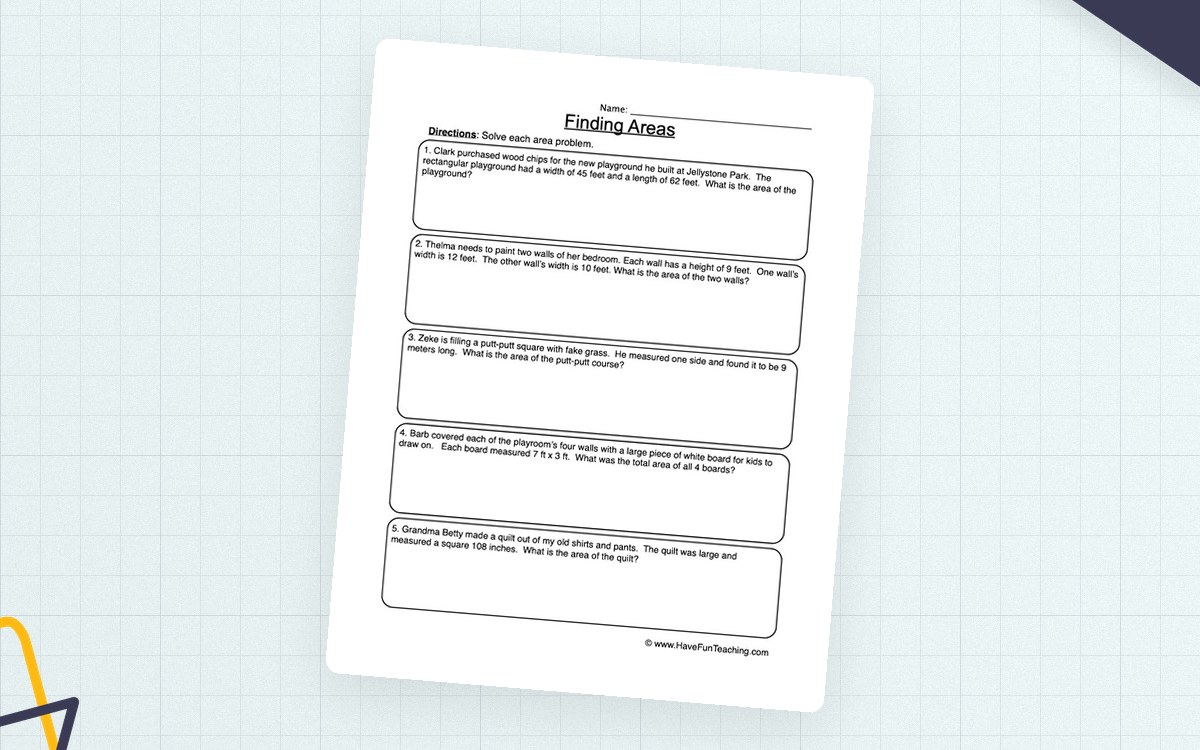
Finding Areas Word Problems Worksheet
A worksheet giving real-life word problems for students to practice calculating area of squares and rectangles.


Classroom resources
Browse by lesson focus
Choose the topic or kind of practice you need.
Showing 73–96 of 192 resources

 Show filters
A worksheet giving real-life word problems for students to practice calculating area of squares and rectangles.

Practice solving elapsed-time and time-calculation word problems involving hours and minutes.
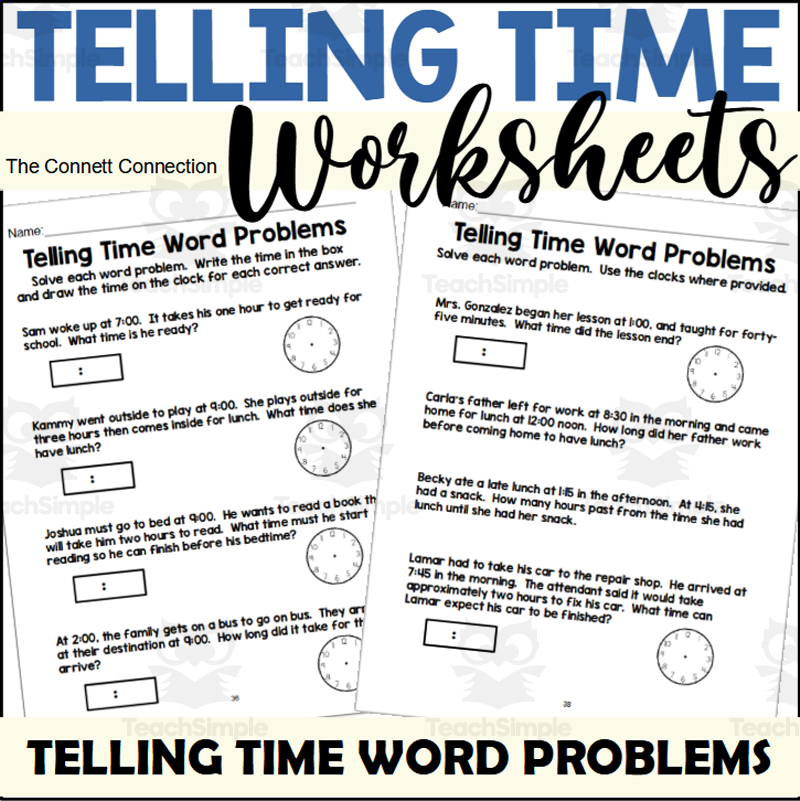
Analog time vocabulary opens the packet, defining o'clock, half past, quarter past, and quarter to with worked examples before moving into matching pages where students draw lines connecting spoken time phrases to analog clock faces and digital times. A dedicated page has students label seven daily activities, such as sunrise and lunchtime, with AM or PM based on the given time. The bulk of the resource is sixteen elapsed-time word problems spread across several pages, asking students to find a start time, end time, or duration from everyday scenarios like getting ready for school, running errands, and doctor's appointments, with a blank box provided to write each answer. Later problems increase in difficulty, moving from round numbers like nine o'clock plus three hours to less even calculations such as 8:28 versus a 9:00 arrival time or a 48-minute GPS estimate against a 10:15 appointment.

Apply elapsed-time and time-related arithmetic skills to short word problems involving daily/weekly schedules.

A set of 20 task cards for practicing telling time, reading analog/digital clocks, and solving elapsed-time word problems to the nearest 5 minutes, in a school-day context.

An activity for telling and writing time from analog and digital clocks to the nearest five minutes, using a.m./p.m., including a clock-labeling review, a dominoes matching game, and word-problem practice.

Guided discovery activities, notes, and practice teaching the formulas for area and circumference of a circle and the informal relationship between them, aligned to CCSS 7.G.B.4.
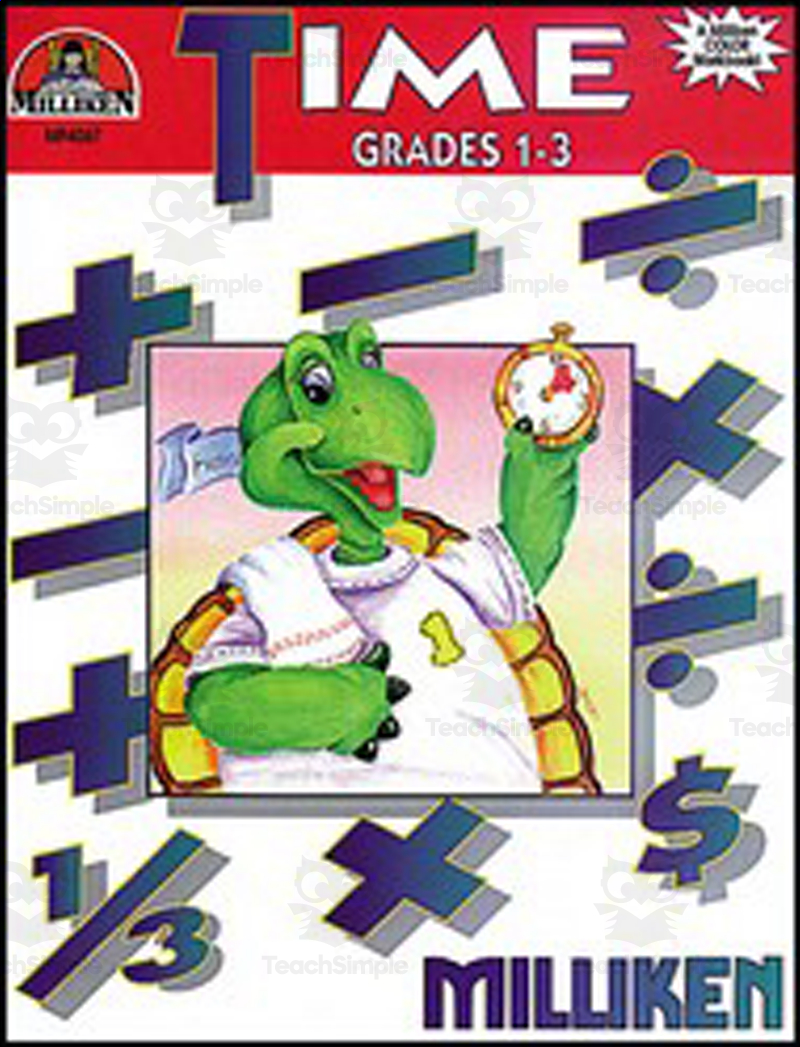
A Milliken workbook (grades 1-3) teaching time-telling concepts: clock-face parts, o'clock, half-past, quarter-to/after, five-minute intervals, elapsed time, calendar reading, and months of the year.
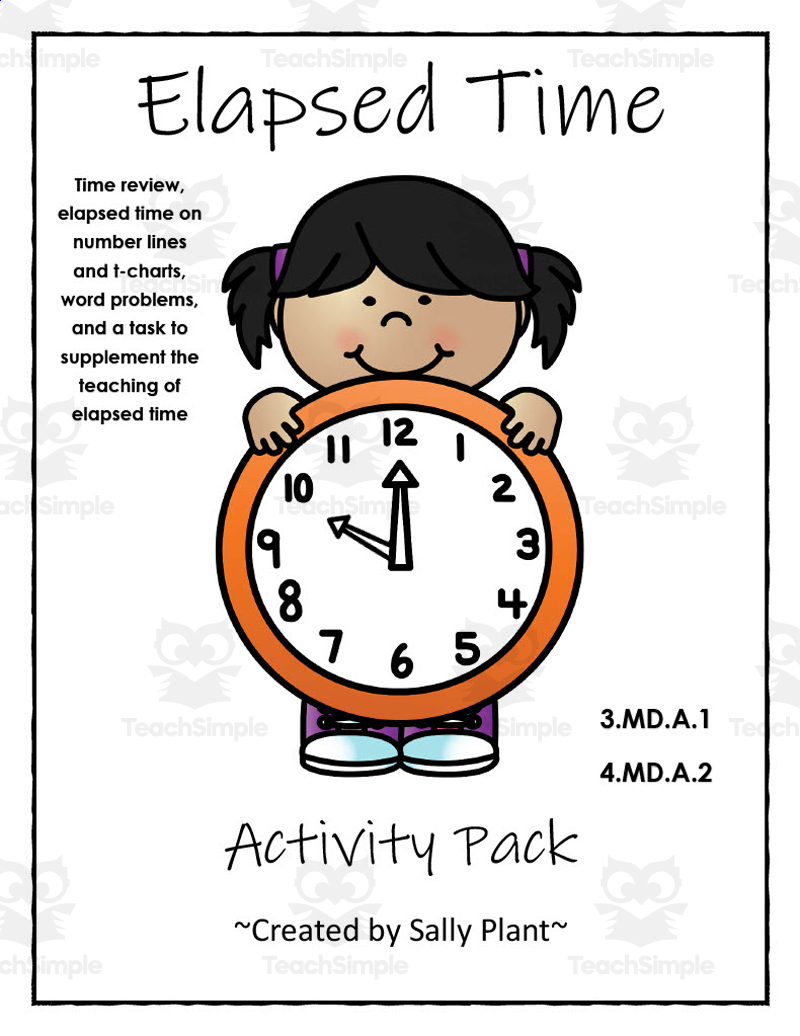
Review telling time to the minute and practice calculating elapsed time between two events, for 3rd/4th grade math (aligned to CCSS 3.MD.A.1 and 4.MD.A.2).

A 10-question multiple-choice quiz assessing 7th grade CCSS.MATH.CONTENT.7.G.B.4 (area and circumference of circles).
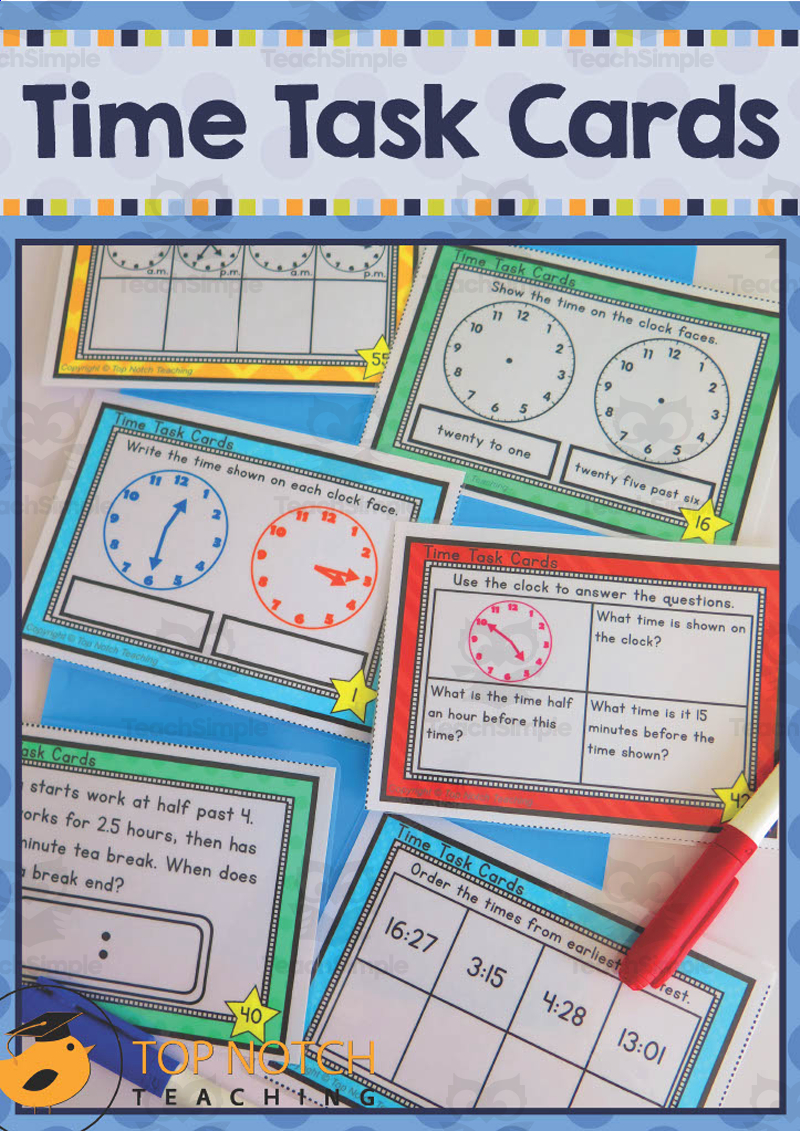
A set of 60 time task cards (plus a companion digital Google Slides version) for reviewing analog, digital, and 24-hour time and elapsed time, intended for math centers and independent practice.
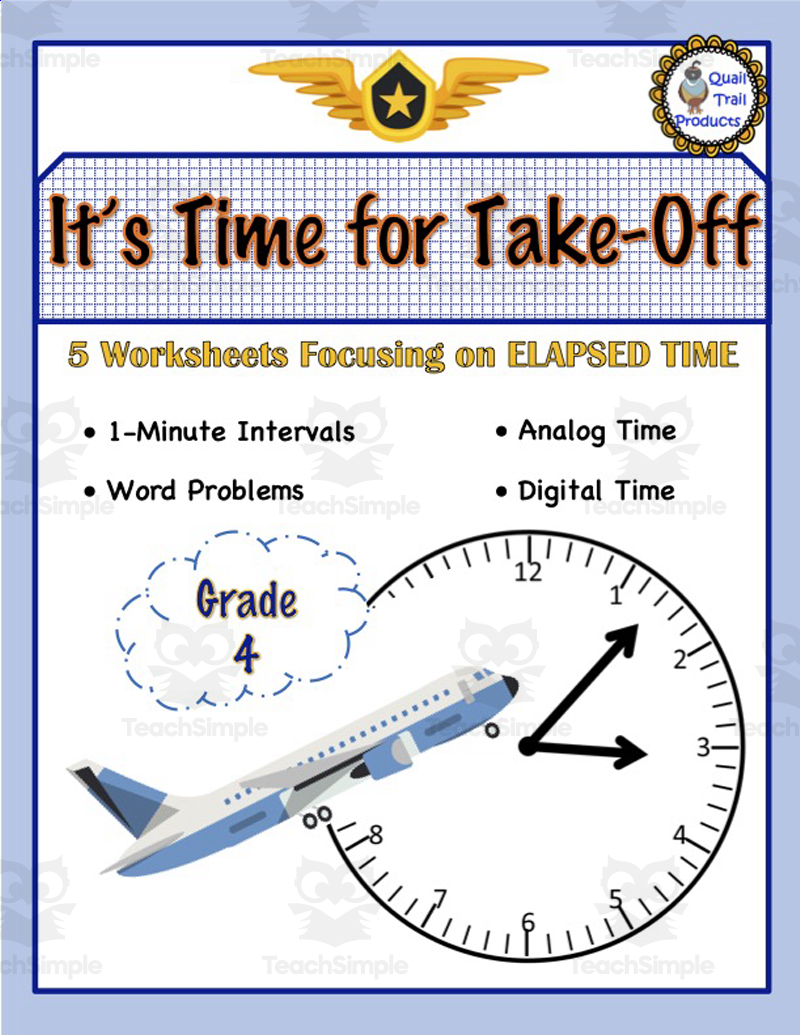
Practice telling time and calculating elapsed time in 1-minute intervals using an airplane departure/arrival theme.

A Twin Sisters workbook focused on reading clocks in 5-minute and 15-minute (quarter-hour) intervals and on elapsed time, for grades 2-4.
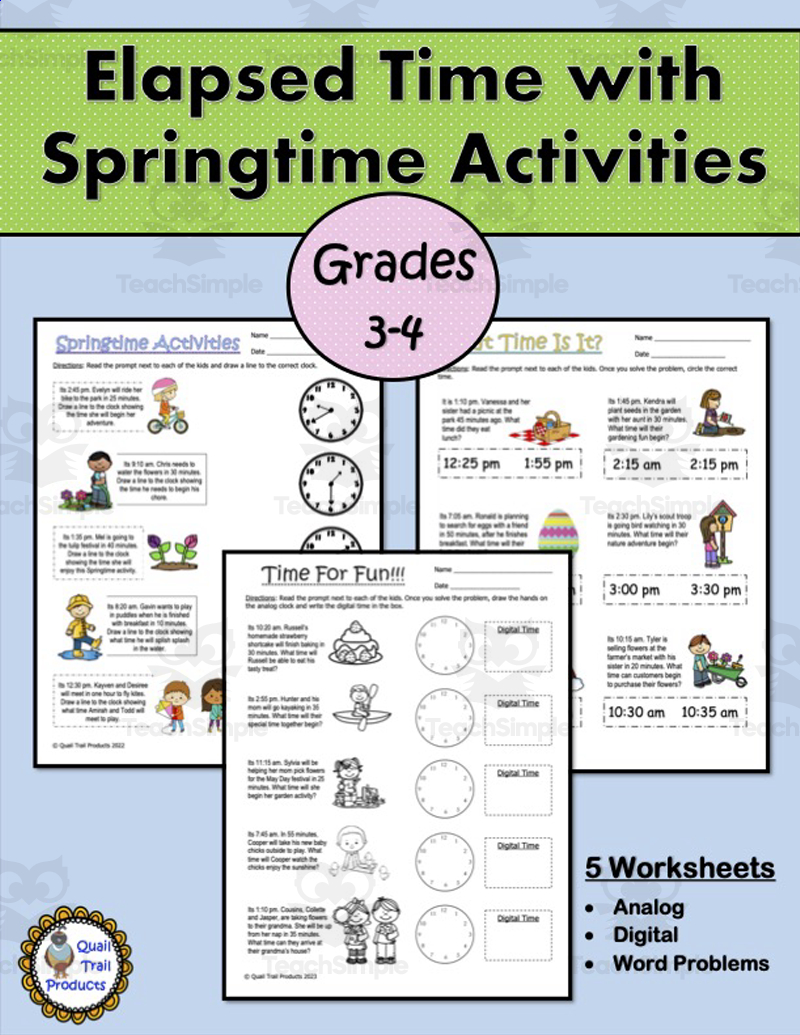
Spring-themed practice calculating elapsed time using analog and digital clocks.

Have students act as a contractor providing a cost estimate for a full classroom renovation, applying area, perimeter, and cost-calculation skills using real building-supply pricing.
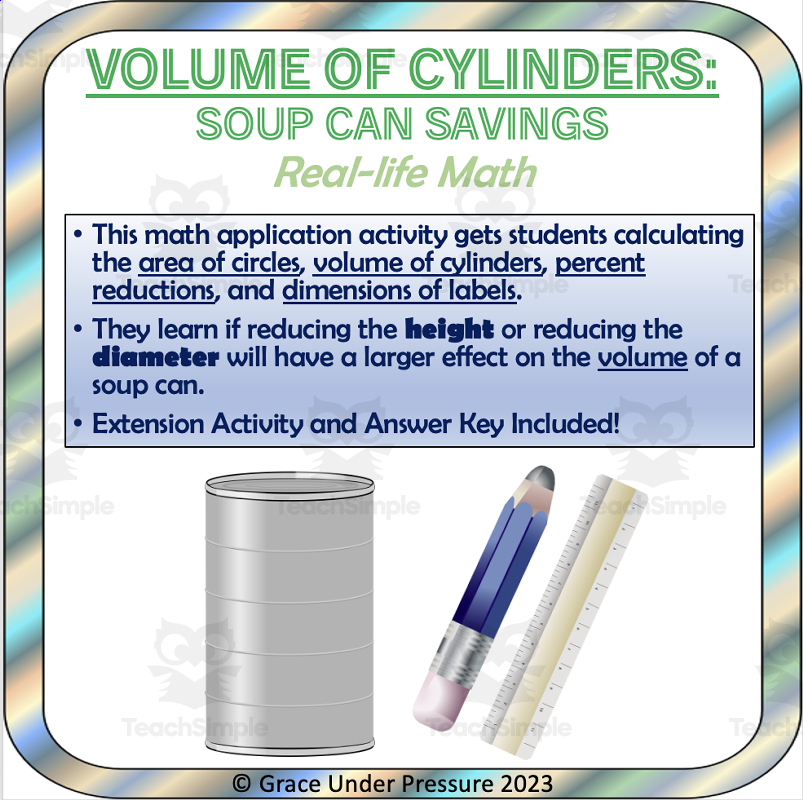
Here's a real world applied math example for your middle school geometry unit! It will have students calculating the area of circles, volume of cylinders, percentage reductions, and dimensions of labels (nets). Students are tasked to become a valued member of a soup company's management team. They have to determine the current volume of…

Have student groups apply ratio and fraction concepts by designing catering-menu recipes measured in cups, then analyzing ratios and scaling within and between their recipes.
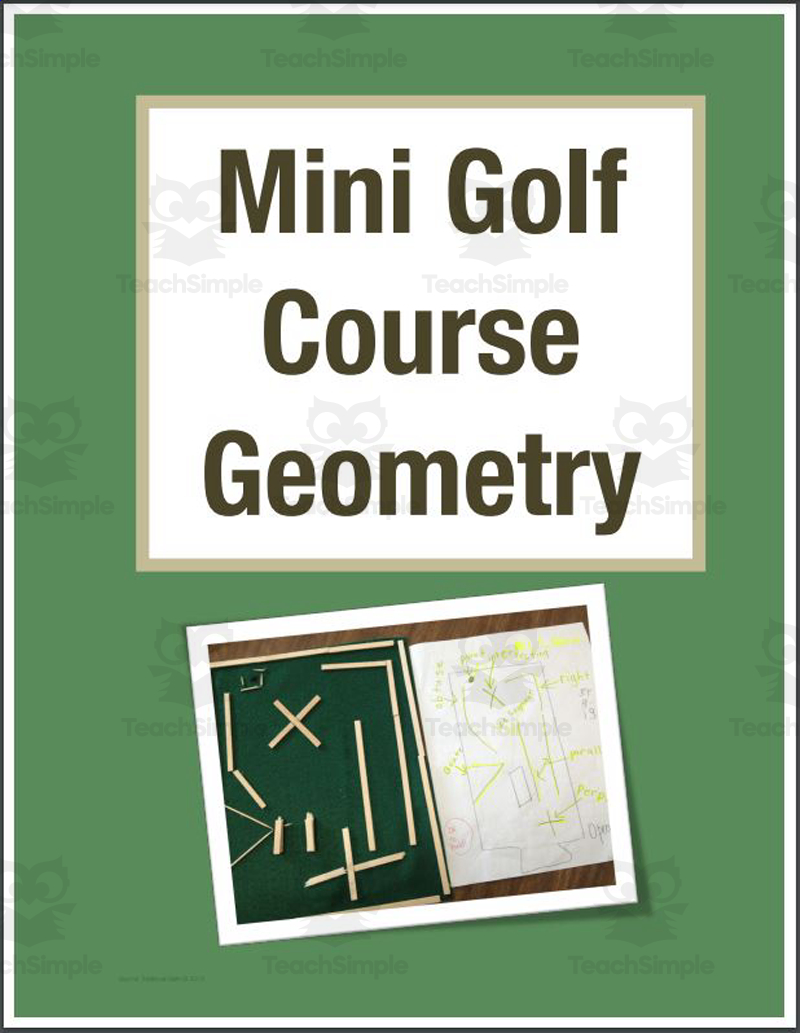
A multi-day, standards-aligned math project in which students learn geometry vocabulary (points, lines, angles, etc.) and apply it by designing and building a physical mini-golf course model.
Day 4 of the framing-workers unit: siding word problem re-run using yard-based measurements (3-yard lengths, 4-1/4" wide pieces, 1-1/4" overlap), building toward the Friday culminating art project and writing piece.
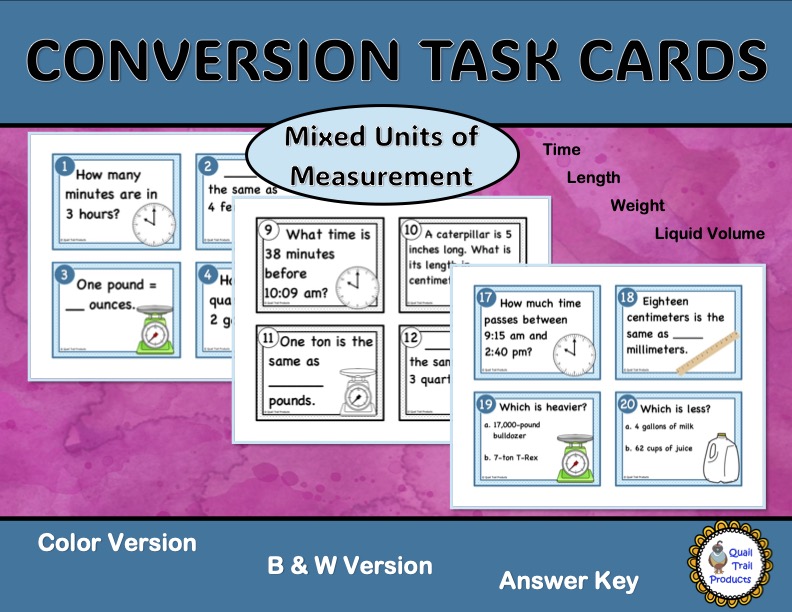
Give students mixed practice converting units across time, length, weight, and liquid volume using word-problem task cards.
Day 3 of the framing-workers unit: siding word problem re-run using yard-based measurements (3-yard lengths, 7-1/2" wide pieces, 1-1/2" overlap).

Give students mixed practice converting units across time, length, weight, and liquid volume using word-problem task cards, with an accompanying PowerPoint version for digital/projected use.
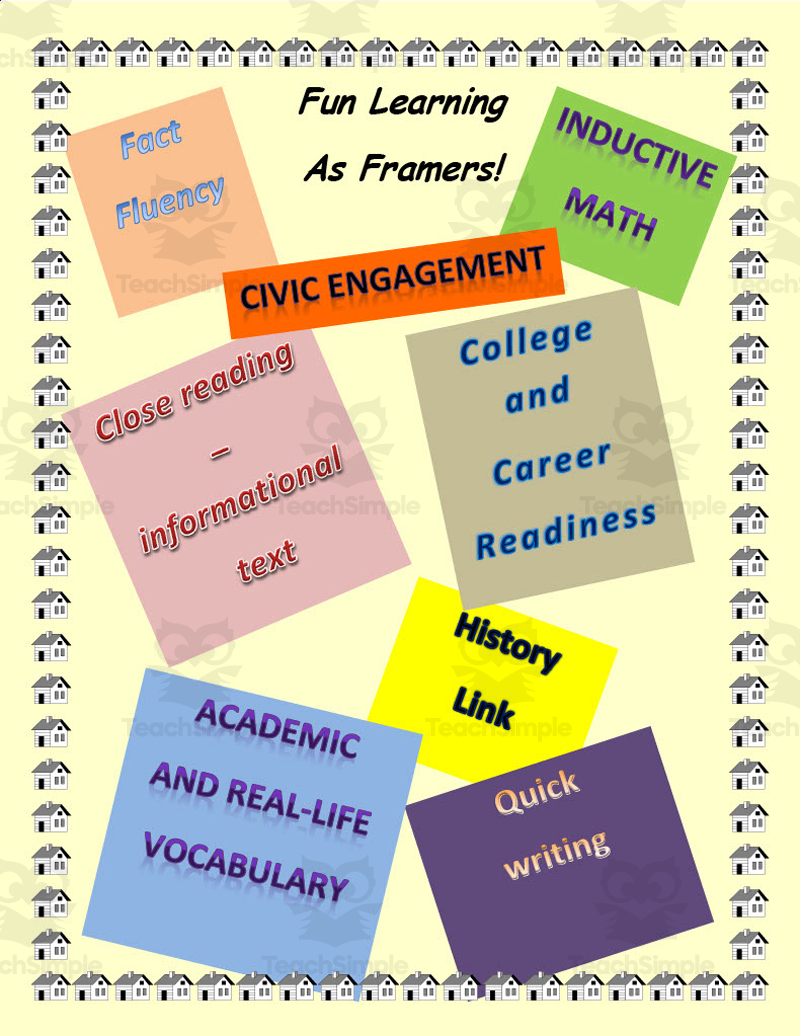
Combined, week-long version of the framing-workers unit: pairs a 'Self-Employed Framer' real-world measurement/word-problem scenario with Native American (Ottawa/Chippewa) building history, inductive multiplication/division fact fluency (progressing across the week, e.g. x6 to x7 per the intro), and a culminating art/writing project.

A bundle of five hands-on geometry activities covering area of triangles/parallelograms/trapezoids, perimeter, volume, coordinate-plane polygons, and real-world surface area/volume, aligned to Common Core 6th grade geometry standards.