resources by type
resources by grade
resources by subject
other resources

3,533 products added recently

Page 7 - 2nd Grade Worksheets

Provide your second graders with worksheets that promote growth in literacy, numeracy, and critical thinking. These resources align with curriculum standards and offer engaging activities. Incorporate them to strengthen understanding and encourage enthusiasm for learning.

Relevant
alt down
Any Time
alt down
filter by
alt down
All File Types
alt down
filter nav Show filters
Sort by: Relevant
CLEAR
resources by type
Activities
down arrow
Classroom Decor
down arrow
Teacher Tools
down arrow
Worksheets & Printables
up arrow
Drawing Templates & Outlines
Flashcards
Novel Studies
Parts of and Anatomy of
Task Cards
Word Problems
Writing Prompts
Worksheets
up arrow
Coloring Pages
Crosswords Puzzles
Dot To Dots
Mazes
Word Searches
Workbooks
resources by grade
Early Learning
down arrow
Pre-K
down arrow
Elementary
up arrow
Grade 1
Grade 2
Grade 3
Grade 4
Grade 5
Middle School
down arrow
High School
down arrow
Adult Education
Not Grade Specific
resources by subject
Creative Arts
down arrow
ELA
down arrow
Holiday & Seasonal
down arrow
Life Studies
down arrow
Math
down arrow
P.E. & Health
down arrow
Social Studies
down arrow
Special Resources
down arrow
Science
down arrow
Foreign Languages
down arrow
Resources for Teachers
down arrow
other resources
Common Core
Homeschool Resources
down arrow
Montessori
Research
STEM
UK/Aus English Prefixes and Suffixes Practice Year 2-3 (Word)

UK/Aus English Prefixes and Suffixes Practice Year 2-3 (Word)
ELA, Language Development, ESL, Grammar, Common Core, Resources for Teachers, Grade 1, 2, Worksheets & Printables, Worksheets, Assessments, Teacher Tools, Tests, Quizzes and Tests

THIS IS THE UK/AUS ENGLISH SPELLING VERSION. CHECK THE CATALOG FOR THE ORIGINAL AMERICAN ENGLISH VERSION. Prefixes and Suffixes Grammar Practice MCQS: 8 lessons, 120 MCQS, 35 pages ELA MCQS Overview: In this series of lessons, students will embark on an engaging journey to explore the grammar skills that make our language vibrant and expressive. These lessons are crafted to help students identify, comprehend, and effectively apply language arts skills in both writing and speech. This UK/Aus English version is especially useful for schools, teachers, and families working with British-based spelling and language conventions. It is a helpful option for classrooms using UK curriculum expectations, international programmes influenced by British English, or any setting where learners need to practise the correct capitalisation and punctuation forms for that version of English. Prefixes and Suffixes Overview: Includes: Intro to Prefixes Intro to Suffixes Forming Suffixes Determining Affix Word Meaning Word Version This is the Word editable and version. This download is available in GOOGLE Docs, GOOGLE Forms, GOOGLE Slides. PDF, PPT, WORD, check the links below for more details. FULL CATALOG OF DOWNLOAD LINKS HERE ELA Review Questions Overview Each review test includes three answer choices for every question, which helps keep things simple and manageable for students. The layout is clear and easy to follow, so students can focus on the questions instead of figuring out what to do. A few pictures are included on each test to make the pages feel a little more inviting and less overwhelming. A review sheet is also included, giving students a chance to go back over many of the main skills covered in the resource. Introduction or Example Sheet Each topic comes with an introduction or example sheet to look at before students begin. This gives students a clear starting point and helps them feel more prepared. It also lets them see what to expect before moving into the main work. For many students, it is a helpful way to quickly refresh the key ideas before they start practicing on their own. Full Answer Keys Full answer keys are included to make marking and checking work faster and easier. Sample responses are also provided where needed, especially for open-ended tasks. This can be a real time-saver on busy days and makes the resource more practical to use. Everything is there to help make planning, teaching, and checking student work feel a little more straightforward. For similar downloads and other frees, do check out Cored Group on TeachSimple.

Author Cored Education

Rating

Tags Elementary, Reading, Comprehension, Vocabulary, Answers, Ccss, Common Core, Spelling, Writing, Passages

Subject-Verb Agreement Practice Grades 1-2 Grammar Presentable PDF

Subject-Verb Agreement Practice Grades 1-2 Grammar Presentable PDF
ELA, Language Development, ESL, Grammar, Common Core, Resources for Teachers, Grade 1, 2, Worksheets & Printables, Worksheets, Assessments, Teacher Tools, Tests, Quizzes and Tests

Subject-Verb Agreement Grammar Practice MCQS: 8 lessons, 120 MCQS, 36 pages Snapshot Title: Subject-Verb Agreement Genre: Nonfiction / Educational Workbook Subject: Reading / Language Arts / Grammar Primary Topic: Matching subjects with correct verb forms What This Teaches Best It teaches that the subject and verb must agree in number. It gives direct practice with singular and plural verb choices such as is/are , was/were , and has/have . It reinforces the special reminder that I and you take plural verb forms in the present tense. It includes practice with past-tense verbs, including irregular forms such as hit , sat , ate , and drove . It helps students choose correct verb forms in simple sentences with people, animals, objects, and pronouns. Learning Goals Students will match singular subjects with singular verbs in basic sentences. Students will match plural subjects with plural verbs in basic sentences. Students will choose the correct helping verb or linking verb in a sentence. Students will use correct present-tense and past-tense verb forms in context. Students will explain why a subject and verb sound right together in a sentence. Subject-Verb Agreement Overview: Includes: Intro to Subject-Verb Agreement Match Subject to Verb Match Verb to Subject Additional Practice PRESENTABLE PDF VERSION Run it like a slide show straight from a PDF, with no PowerPoint or extra software needed, just open, project, and teach. Other versions are available in the links list below or in the full catalog. FULL CATALOG OF DOWNLOAD LINKS HERE ELA Review Questions Overview Each review includes questions with three answer choices, making them simple and student-friendly to use. Every test also features a few pictures for visual appeal, along with a review sheet that helps revisit most of the key topics covered in the product. Introduction or Example Sheet Each topic comes with an introduction or example sheet that you can go through with your students before beginning the main work. This helps set the stage and gives students a clear starting point. Full Answer Keys Full answer keys and sample responses are included, so even on your busiest days, everything is ready to go and easy to check. In the Supplementary Pack Interactive Ice Breakers: Fun, hands-on activities that spark interest and get students thinking about adjectives right away. Guided Practice: Teacher-led activities that help students build confidence as they learn to identify and use adjectives correctly. Group and Partner Tasks: Collaborative activities that encourage students to work together, sort adjectives, solve tasks, and build descriptive sentences. Independent Worksheets: Clear, structured worksheets that give students the chance to practice on their own and strengthen their understanding. Exit Tasks: Short end-of-lesson activities that help check understanding and give students a chance to apply what they have learned.

Author Cored Education

Rating

Tags Elementary, Reading, Comprehension, Vocabulary, Answers, Ccss, Common Core, Spelling, Writing, Passages

Capitalization and Punctuation Sample - Grades 1-2 Grammar (Docs)
Free Download

Capitalization and Punctuation Sample - Grades 1-2 Grammar (Docs)
ELA, Language Development, ESL, Grammar, Common Core, Resources for Teachers, Grade 1, 2, Worksheets & Printables, Worksheets, Assessments, Teacher Tools, Tests, Quizzes and Tests, Centers, Activities

Capitalization and Punctuation - 1 Lesson Sample ELA MCQS Overview: In this series of lessons, students will embark on an engaging exploration of the grammar skills that bring our language to life. These lessons are designed to help students identify, understand, and effectively use language arts skills in their writing and speech. Used with the free supplementary materials available for all topics, each lesson builds on the last, offering a mix of direct instruction, interactive group activities, and independent practice. Through fun and creative tasks, students will learn how to recognize grammar in sentences, understand their role in sentences and use them to enhance their own writing and speech. Capitalization and Punctuation Overview: Includes: Proper Nouns Opening/Closing Letters Uppercase/Lowercase Dates Punctuation Practice Docs Version This is the Docs editable and fillable version. This download is available in GOOGLE Docs, GOOGLE Forms, GOOGLE Slides. PDF, PPT, WORD, check the links below for more details. FULL CATALOG OF DOWNLOAD LINKS HERE Grade 1/2 Links: Capitalization and Punctuation Google Docs Google Forms Google Slides PDF PPT Word Free Supplementary Materials Pack Adjectives Google Docs Google Forms Google Slides PDF PPT Word Free Supplementary Materials Pack Nouns Google Docs Google Forms Google Slides PDF PPT Word Free Supplementary Materials Pack Pronouns Google Docs Google Forms Google Slides PDF PPT Word Free Supplementary Materials Pack Verbs Google Docs Google Forms Google Slides PDF PPT Word Free Supplementary Materials Pack Prefixes & Suffixes Google Docs Google Forms Google Slides PDF PPT Word Free Supplementary Materials Pack Sentence Structure Google Docs Google Forms Google Slides PDF PPT Word Free Supplementary Materials Pack Subject-Verb Agreement Google Docs Google Forms Google Slides PDF PPT Word Free Supplementary Materials Pack ELA Review Questions Overview Questions have three answer choices. There are a handful of pictures on each test for aesthetic purposes, as well as a review sheet covering most of the topics covered in the product. Introduction or Example Sheet Each topic will include an introduction or example sheet to go through first with your students. Full Answer Keys Full answer keys and sample responses are provided so no matter how busy you are, you know you're covered! In the Supplementary Pack Interactive Ice Breakers: Fun, hands-on activities that get students thinking about adjectives right from the start. Guided Practice: Teacher-led exercises that reinforce the day’s lesson, ensuring students can confidently identify and use adjectives. Group and Partner Tasks: Collaborative activities that allow students to work together to solve problems, categorize adjectives, and create descriptive sentences. Independent Worksheets: Structured worksheets that provide individual practice and help solidify understanding of key concepts. Exit Tasks: Quick, reflective activities at the end of each lesson that assess understanding and encourage students to apply what they’ve learned. For similar downloads and other frees, do check out Cored Group on TeachSimple.

Author Cored Education

Tags Elementary, Answers, Ccss, Common Core, Test, Mcq, Test Prep, Language Arts, Ela, Digital Centers

Adjectives Practice Questions - Grades 1-2 Grammar (Fillable PDF)

Adjectives Practice Questions - Grades 1-2 Grammar (Fillable PDF)
ELA, Language Development, ESL, Grammar, Common Core, Resources for Teachers, Grade 1, 2, Worksheets & Printables, Worksheets, Assessments, Teacher Tools, Tests, Quizzes and Tests

Adjectives Grammar Practice MCQS: 10 lessons, 150 MCQS, 43 pages Snapshot Title: Parts of Speech: Adjectives Practice Worksheets Grade 1-2 Genre: Instructional workbook / skills practice Subject: Reading / Grammar Primary Topic: Identifying and using descriptive adjectives in sentences What This Teaches Best It teaches that adjectives are words that describe nouns. It gives repeated practice identifying adjectives in short, simple sentences. It builds adjective meaning through comparison words such as hottest, smallest, heaviest, biggest, and warmest. It also practices choosing adjectives that fit sentence meaning and categories such as size, color, and how many. Learning Goals Students will identify adjectives in simple sentences. Students will choose an adjective that correctly completes a sentence. Students will explain how an adjective tells more about a noun. Students will sort adjective meaning by size, color, or quantity. Students will compare objects using descriptive words from context. Adjectives Overview: Includes: Identifying Adjectives Gap Filling Comparatives Superlatives Additional Practice FILLABLE PDF VERSION Worksheet-style pages, but with type-in answer boxes so students can complete and save their work digitally. Other versions are available in the links list below or in the full catalog. FULL CATALOG OF DOWNLOAD LINKS HERE Grade 1/2 Links: Capitalization and Punctuation Google Docs Google Forms Google Slides PDF PPT Word Free Supplementary Materials Pack Adjectives Google Docs Google Forms Google Slides PDF PPT Word Free Supplementary Materials Pack Nouns Google Docs Google Forms Google Slides PDF PPT Word Free Supplementary Materials Pack Pronouns Google Docs Google Forms Google Slides PDF PPT Word Free Supplementary Materials Pack Verbs Google Docs Google Forms Google Slides PDF PPT Word Free Supplementary Materials Pack Prefixes & Suffixes Google Docs Google Forms Google Slides PDF PPT Word Free Supplementary Materials Pack Sentence Structure Google Docs Google Forms Google Slides PDF PPT Word Free Supplementary Materials Pack Subject-Verb Agreement Google Docs Google Forms Google Slides PDF PPT Word Free Supplementary Materials Pack For similar downloads and other frees, do check out Cored Group on TeachSimple.

Author Cored Education

Rating

Tags Elementary, Reading, Comprehension, Vocabulary, Answers, Ccss, Common Core, Spelling, Writing, Passages

Quiz Shows Reading Comprehension Passage - Cored Ed Encyclopedia
Free Download

Quiz Shows Reading Comprehension Passage - Cored Ed Encyclopedia
ELA, Language Development, Reading Comprehension, Reading, Pre-Reading, Writing, Strategies, Vocabulary, History, Social Studies, Grade 2, 3, 4, 5, Worksheets & Printables, Worksheets, Teacher Tools, Centers, Activities, Writing Prompts, Assessments, Quizzes and Tests, Quizzes, Lesson Plans

This quiz shows reading comprehension includes: Visualization (on the front cover) Start your lesson by taking a minute to think and share something about the topic. Read the script aloud (slowly), perhaps prepare some music or sound effects. Student close their eyes and let their imaginations wander. Students open their eyes, read the question aloud and give them a few minutes to complete. Ask a few students to share or keep answers until the end to compare with what they learn in the passage. Quick pause—thousands of Cored Education products are included with your TeachSimple membership. Download links and encyclopedia index available here. Pre-Reading Trivia Students will write down one thing they already know about the subject and then read five more facts and discuss. These facts are fun, and the students will enjoy learning about the subject before reading more. Give 1 minute for students to write what they already know (no pressure—best guess is fine). Read the five facts together. After each fact, do ask a student for their opinion, was it surprising? Set a purpose by asking students to highlight/underline one fact they want to learn more about during the reading. Reading Passage The text is a high-interest reading passage with set paragraphs, roughly three to four paragraphs long. It contains a variety of themes about the topic, anywhere from history to technology. The passage is between 250 and 350 words in length. First, ask students to look at the headings and see what they’ll learn about today. What do they know about the topic/heading? First read options: Teacher read-aloud (best for support). Partner reading (paragraph by paragraph). While reading, students underline important details, and vocabulary words they think may come up in the questions section. Mixed Questions The first question page contains four multiple-choice questions, each with a choice of four answers, and three written response questions that require a sentence or two from the student. Students complete the mcqs first independently, then review quickly as a class. For the 3 written responses, try to get students giving the answer with some form of evidence: “I think ___ because the text says ___.” If students get stuck, send them back to check the passage. Vocabulary Questions Practice seven key words from the text in this section across two activities. First section is scrambled words where students will unscramble three words given a clue for each. The second section is a word to meaning matching activity. Before starting, have some students read out words they underlined in the passage. Ask students to say the word and read aloud the sentence(s) around each word. Ask students to do scrambled words and the matching exercise in pairs then go through answers as a class. For the scrambled spelling task, get four pairs to come up to the board and write the words for extra practice with the other student reading out the clue. For the matching task, prompt students to give full sentences: “I matched ___ with ___ because ___.” Creative Writing In this question, the student will be required to write a five to eight sentence paragraph on a question related to the topic. Before starting, ask students write down 3 key ideas they are going to include in their piece. Ask students for ideas to share around the class to help those struggling. Pro writing expectations: 5–8 sentences At least 2 facts or details from the passage At least 2 vocabulary words from the previous page Students read their paragraphs while classmates listen for facts and vocabulary words. Extension Activities This page is optional for fast finishers or to take home. There are several activities, each one requiring a different skill. Do some, do none, do all, completely optional - but you will feel reassured knowing every possibility is planned for. Includes summary writting question. Answer Key There are answers for the multiple-choice questions, written response questions have sample answers, vocabulary answers and if there is a summary question then a sample summary will be provided as well. Lesson Plan Included Customized lesson plan for this lesson is included. Lesson Snapshot Title: Quiz Shows Genre: Nonfiction (informational reading passage) Subject: Reading (Informational Text) / Social Studies (media history) Primary Topic: Quiz shows from radio to TV to podcasts Estimated Guided Reading Level (A–Z): R What This Lesson Teaches Best How quiz shows changed over time, from radio “question games” to television and modern podcasts. Key historical milestones and examples (late 1930s radio programs; 1938 BBC spelling quiz on TV; 1950s U.S. daytime quiz/game shows). Understanding fairness and trust in media (some shows were “rigged,” followed by investigations, hearings, and stronger rules). Text structure practice using section headings to track ideas (early radio → TV era → fairness tested → today). Strong built-in supports that match the passage (questions, vocabulary work, writing prompt, and extensions align to passage details). Learning Goals Students will describe how people participated in quiz shows before TVs were common, using details from the passage. Students will explain how television changed quiz shows, including what it was like for contestants under cameras and lights. Students will explain what “rigged” means in the passage and why quiz shows had to “rebuild trust.” Students will identify ways quiz shows appear today (board, screen at home, or podcast), based on the passage. Students will use the section headings to state the main idea of each section and support it with one detail. Key Vocabulary From the Text contestants — people who compete in a game rigged — secretly fixed so it is not fair producers — people who run and plan a show investigations — careful searches to find out what happened genre — a type or category of show FULL CATALOG OF DOWNLOAD LINKS AND ENCYCLOPEDIA INDEX HERE

Author Cored Education

Rating

Tags Vocabulary, Reading Comprehension, Reading Passages, Reading, Creative Writing, Reading Strategies, Writing Prompts, Lesson Plans, Quiz Shows, History

Coloring for your Preschooler Volume 1

Coloring for your Preschooler Volume 1
ELA, Language Development, Pre-Reading, Kindergarten, Preschool, Grade 1, 2, 3, Coloring Pages, Worksheets, Worksheets & Printables

Coloring for your Preschooler Volume 1 A meticulously crafted educational resource that seamlessly integrates proven teaching strategies with grade-level standards. Ideal for homeschoolers, public school teachers or any educator working with preschoolers to grade-three students. This digital workbook is created by experienced teachers to ensure its educational validity. Key Features: This teaching resource emphasizes language arts and pre-reading activities served in the form of fun coloring exercises. An array of immersive activities such as letter mazes and dot-to-dot exercises, introducing young learners to various foundational concepts. Included exercises focus on developing skills like following directions accurately, matching items correctly, trace drawing and more. Beyond simply being an engaging activity book, Coloring for Your Preschooler Volume 1 maximizes its efficiency as a reusable learning medium. Contained within are 21 printable pages of enriching content; educators can print these pages multiple times allowing children to repeatedly perform tasks until the skills are mastered fully. Versatility: The resource can be used as whole group instruction in classrooms or smaller education settings, Assigned as fun homework tasks, v Or utilised for one-on-one tutoring sessions at home – making it perfectly adaptable across numerous learning environments. In summary, whether used casually at home or integrated professionally into classroom instruction plans - Coloring For Your Preschooler Volume 1 stands out as an engaging educational tool promoting cognitive development while nurturing artistic interests among young learners.The PDF file type assures easy accessibility across various devices ensuring seamless integration into any lesson plan.

Author Twin Sisters Digital Media

Tags Coloring, Preschool, Language Arts, Pre-reading Activities, Educational Resource

Life Cycle of a Rose – Flowering Plant Unit Study

Life Cycle of a Rose – Flowering Plant Unit Study
Montessori, Nature & Plants, Life Sciences, Science, STEM, Kindergarten, Preschool, Grade 1, 2, 3, Flashcards, Worksheets & Printables, Parts of and Anatomy of, Coloring Pages, Worksheets

Introduce your students to the beauty and science of how roses grow with this fun and engaging Life Cycle of a Rose worksheet! Perfect for early learners, this resource makes it easy to explore the stages of a rose’s life from seed to full bloom. With clear visuals, simple explanations, and interactive activities, kids will love learning about one of nature’s most beautiful flowering plants. This activity pack helps young learners build an understanding of plant biology while developing sequencing and observation skills. It’s a great addition to any plant science unit or spring-themed classroom lesson. What’s Inside In This Worksheet? A labeled rose life cycle diagram Rose in a nutshell Cut-and-paste activity to sequence the stages Fun facts about roses and how they grow Rose Life Cycle Flashcard Bonus coloring page to spark creativity This Activity Pack is Perfect For: Flowering plant science units Spring classroom themes Homeschool nature studies Hands-on science centers Let your students dig into plant science with this simple, educational, and beautiful rose life cycle worksheet!

Author Perfect_Printables

Rating

Tags Rose Life Cycle, Rose Worksheet, Flowering Plant Unit, Plant Science Printables, Homeschool Botany, Rose Activities For Kids, STEM Plant Study, Hands-on Flower Science, Montessori Botany Unit, Rose Growth Stages,

Science Mazes - Set 1 (PDF)

Science Mazes - Set 1 (PDF)
ELA, Language Development, Vocabulary, Spelling, ESL, Resources for Teachers, Science, Physics, Earth and Environmental Sciences, Life Sciences, Grade 2, 3, 4, 5, Worksheets & Printables, Worksheets, Teacher Tools, Centers, Activities, Mazes

Maze Series Designed for grades 2–5, this series pairs scene-based mazes with light drawing tasks. Students first navigate the maze, then sketch a few target words from a simple word list. Pages rotate through varied styles and gradually increase in difficulty. An optional “color it in” step adds a creative finish, and select themes include quick, kid-friendly calculations. Student-friendly and classroom-ready, these pages are perfect for literacy warmups, seasonal units, fast-finisher bins, centers, sub plans, or home learning. The playful, structured format builds problem-solving, attention to detail, and fine-motor control while reinforcing themed content in a motivating way. Note: Not all word-list terms appear on the maze pages. For complete vocabulary coverage, use the companion word list linked in the resource. Science Set 1 Word List 1. Forces and Motion Gravity, Friction, Push, Pull, Speed, Force, Ramp, Energy 2. Matter and Materials Solid, Liquid, Gas, Melt, Freeze, Boil, Evaporate, Condense 3. The Solar System Planet, Orbit, Moon, Sun, Star, Asteroid, Comet, Telescope 4. The Human Body Brain, Heart, Lungs, Bones, Muscle, Veins, Digest, Nerves 5. Ecosystems and Habitats Ecosystem, Habitat, Food Chain, Predator, Prey, Adapt, Forest, Ocean 6. Weather and Climate Temperature, Clouds, Precipitation, Hurricane, Tornado, Forecast, Climate, Drought PDF Version Other versions will appear here when available. Follow the store for the lastest on new products. How to Use These Mazes Perfect for: Morning work or early-finisher bins Literacy or STEM centers Holiday/seasonal review lessons Independent stations, sub plans, or take-home enrichment More Science Themed Products Science Crosswords (Set 1) PDF Science Crosswords (Set 2) PDF Science Crosswords (Set 3) PDF Science Word Searches (Set 1) PDF Science Word Searches (Set 2) PDF Science Word Searches (Set 3) PDF Science Mazes (Set 2) PDF Science Mazes (Set 3) PDF FULL CATALOG OF DOWNLOAD LINKS HERE Themed Mazes Links Addition PDF Animals PDF Around the Home PDF Birthday PDF Candy PDF Christmas PDF Cinco de Mayo PDF Clothes PDF Colors PDF Days and Months PDF Division PDF Earth Day PDF Easter PDF Easy Mazes PDF Fall PDF Father's Day PDF Food PDF Geography (Set 1) PDF Geography (Set 2) PDF Geography (Set 3) PDF Graduation PDF Health PDF History (Set 1) PDF History (Set 2) PDF History (Set 3) PDF Human Body PDF Kindness PDF Life Skills PDF Mother's Day PDF Multiplication PDF Science (Set 1) PDF Science (Set 2) PDF Science (Set 3) PDF Shapes PDF Social Skills PDF Spring PDF Sports PDF St. Patrick's Day PDF Subtraction PDF Summer PDF Thanksgiving PDF Transport PDF Valentine's Day PDF Winter PDF Mazes in Depth Structure Each maze is crafted around a focused sub-theme. Students navigate the maze, encountering branches and cul-de-sacs that build attention and planning. Most pages include a tiny follow-up box—students draw or label 2–3 target words from a small word box, add a quick count, or color in the scene—so the activity reinforces both content and skills in a highly engaging format. Each completed set includes: A themed maze page. A simple student instruction strip. An answer key showing the solved path for teacher support or self-checking Themes Included These mazes cover a wide range of fun, age-appropriate themes, including: Seasons & Holidays (e.g., Halloween, Easter, Valentine’s Day) Math-Lite Connections (e.g., quick counts, number words) Everyday Topics (e.g., Animals, Weather, School) Special Units (e.g., Health, Earth Day, Sports, Kindness) Each topic reflects students’ real-life experiences and interests while strengthening problem-solving, visual scanning, and fine-motor control in a playful, highly visual way. Easy extensions (optional): Time it: solve once in pencil, then try to beat the time in pen Retell the route using sequence words (first, next, then, finally) Count intersections or turns and graph the results Write a 1–2 sentence mini-story about the scene using the target words Design a tiny maze in the corner for a partner to solve Differentiation tips: Offer a finger-trace pass before pencils for emerging learners Highlight the borders of the correct region on first attempts Use thicker-line versions or simpler pages to build confidence Pair roles: “navigator” gives directions; “driver” traces the path For similar downloads and other frees, do check out Cored Group on TeachSimple.

Author Cored Education

Rating

Tags Vocabulary, Spelling, Forces And Motion, Matter And Materials, The Solar System, The Human Body, Weather And Climate, Science, Mazes, Science Mazes

MAZES TO FIND THE NUMBERS FROM 1 TO 10
Free Download

MAZES TO FIND THE NUMBERS FROM 1 TO 10
Math, Numbers, Preschool, Grade 1, 2, 3, Mazes, Worksheets, Worksheets & Printables

1.-Introduction Learning numbers is an exciting adventure, especially for young children. For this reason I bring you this fantastic game for your children to learn the first numbers from 1 to 10 in a playful, wonderful, and above all fun way. I encourage you to take a look at it and use it in your classroom. 2.-Objective To help children learn the numbers from 1 to 10 in a playful way. To reinforce graphomotor skills in children. 3.Grades or ages This product can be applied in children from 3 to 7 years old. It can also be applied in Kindergarden. 4.Application format Print these cards and give them to your students and tell them that they must follow the path from 1 to 10 by painting, using colors, markers or markers and reach the goal. Children can work individually or in groups, at the teacher's discretion. 5.Answer keys If it contains an answer key at the end of the document. 6.Use of labels in the text numbers 1 to 10, numbers, number activities, first numbers, number activities, first numbers 7.Standards Described below. 8.File types This file is in PDF. It should be printed in A4 format. 9.Number of pages This document contains 10 pages.

Author EDITORIAL LAURA EDUCA

Tags Numbers, Numbers 1 To 10, Mazes, Math Games

Compare and order numbers to 20, 50, 100, 500 & 1000 1st and 2nd Grade

Compare and order numbers to 20, 50, 100, 500 & 1000 1st and 2nd Grade
Math, Numbers, Grade 1, 2, Worksheets & Printables, Worksheets

Each worksheet consists of 10 questions each of which contains four numbers to be compared and placed in ascending or descending order using the inequality signs. So that you can provide the right starting point for your class, individual students or groups of students, you have five ranges of numbers to choose from: 1 to 20 1 to 50 1 to 100 1 to 500 1 to 1000 What happens if a student needs further work on one of these worksheets before moving on to the next level ? Just click the button at the bottom of the page and will immediately create a new worksheet with totally different numbers. How many worksheets are there at each level ? Virtually unlimited. As mentioned above clicking on the interactive button randomizes all the numbers on any of the worksheets, so you are free to provide additional practice at any level for classwork, homework, fillers at the end of a lesson throughout the whole year. Are Answers provided ? Yes. Answers are automatically generated when you create a new worksheet and can be found on the second page. Digital Teaching Material These are designed to help you introduce the worksheets to the whole class on an Interactive Whiteboard, or on a PC or Mac for 1-1 tuition with unlimited examples to practice with. Note These resources are PDF documents and work with the official Adobe Acrobat Reader on Windows or Mac computers with the randomising buttons also working via a touchscreen (PC or Mac)or on an Interactive Whiteboard. Common Core Standards at 1st and 2nd Grade CCSS1.NBT.B.3 Compare two two-digit numbers based on meanings of the tens and ones digits, recording the results of comparisons with the symbols >, =, and <. CCSS2.NBT.A.4 Compare two three-digit numbers based on meanings of the hundreds, tens, and ones digits, using >, =, and < symbols to record the results of comparisons. Australian Curriculum ACMNA013 - order numbers to at least 100

Author Jeff's Notebooks

Tags Math, Comparing Whole Numbers, Ordering Whole Numbers, Place Value , Worksheets, Interactive Whiteboard, Jeff's Notebooks, To 1000, Numbers 50-100 In Spanish

Medieval Knight: Parts of a Suit of Armor Printable Activity

Medieval Knight: Parts of a Suit of Armor Printable Activity
Social Studies, History, History: Europe, Grade 2, 3, 4, 5, Worksheets, Worksheets & Printables

Beautiful hand-painted watercolor illustration of a young boy in front of an English Castle with two separate sheets of the different parts of armor: a metal suit of armor from the 1500s and a chainmail suit from the 1200s. Children can use this as an activity to learn about the era's clothing or a cut-and-stick activity.

Author Fiddleticks Education

Tags Medieval Knight, Armor, Poster, Watercolor, History, Suit Of Armor Parts, Knights Suit Of Armor, Parts Of Armor Labeled

Guided Reading Level N - Shenyang (with Lesson Plan)

Guided Reading Level N - Shenyang (with Lesson Plan)
ELA, Resources for Teachers, Reading Comprehension, Reading, Social Studies, Geography, History, Earth and Environmental Sciences, Science, Economics, Grade 2, 3, 4, Worksheets & Printables, Worksheets, Teacher Tools, Centers, Activities, Literacy Readers, Quizzes, Quizzes and Tests, Assessments, Lesson Plans

This Guided Reading Book - Shenyang (Level N) with lesson plan includes: Guided Reading Color Label (front cover x1) This is a quick way to match the book’s demands to what students can generally handle.. The overall goal is to use the level/color to pick books for several smaller groups. To qualify for a certain level, a student is expected to read a book from that level with about 90–94% accuracy. If a student is consistently accurate and understands, move up a level. If the student is struggling at that level, drop down and add more support. Each student will improve at completely different rates, but it is generally one of the best ways to check progress across the class. DOWNLOAD THE CATALOG TO VIEW ALL GUIDED READING BOOKS AVAILABLE (SORTED LEVELS A-Z) Pre-Reading Question (x1) Teacher asks the prompt aloud, can be while showing the cover or first page. Students share what they already know, or make educated guesses from the cover. Prompt them to use the target vocabulary. Write some of their responses on the board to look back at during the reading. Vocabulary Words (x5) Introduce the five words, best doing it one at a time. Start by saying it, while students repeat and then see if anyone knows what it means before reading further. Read through the meaning and try to briefly connect each word to a picture or gesture so it’s meaningful. Ask students to flip through the book pages and point to where they see each of the vocabulary words. While reading the book pause upon coming across one of the vocab words or read the sentence twice to make sure students understand the word has appeared. Optional: Ask students to raise hands whenever they see/hear one of the new words. Guided Reading Pages (x10) Check the book snapshot (below) for: primary topic - do you need to prep extra reading or intro materials on this? what is taught best - decide on 1-2 bullets to focus on, use the prompt or words provided here for best results. learning goals - what you are checking for students to be able to do after the session, elicit answers using prompts or words provided. key vocabulary (see section above). questions overview - so you know what is coming up and if you need to prep extra materials to assist understanding. Run the lesson You may have already looked at a few of the pages together, but you can show them some of the pictures again first to set meaning. Depending on how much time you have and how familiar your students are with guided reading class, you may want to read the book aloud first with the group first. Students whisper or partner read, while you listen in. If time, do it as a group, one student reading a page each. Use the guided page’s prompts to coach: “Check the picture / does it make sense?” “Point under the words / try the first sound” “Reread the sentence smoothly”. Try to focus more on one student per session (rotating every time), so you can work out if they are ready to move up or need to move down a level. Comprehension Questions (back cover x3) This is your way to check that students didn’t just say the words, but actually understood the text. First, let students answer by pointing to the page/picture and saying a short sentence. After any answer, follow with: “Show me where you found that in the text.” In bigger groups, have partners answer first (10–20 seconds), then call on 2–3 students to share. Differentiation tips: Emerging speakers/struggling readers: oral + pointing On-level: oral in a full sentence Higher: one written sentence or draw + label Book Snapshot Title: Global Cities: Shenyang Genre: Nonfiction (informational text) Subject: Social Studies (Geography/Culture) Primary Topic: Landmarks, history, and modern life in Shenyang Estimated Guided Reading Level (A–Z): N What This Book Teaches Best Identifies Shenyang’s location and role (largest city in Northeast China; capital of Liaoning province) and connects it to major waterways in the Liaohe River Basin. Highlights historical heritage through major sites like the Shenyang Imperial Palace (built in 1625; early residence for Qing emperors) and Beiling Park/Northern Mausoleum. Explains how Shenyang developed as an industrial powerhouse , including the Tiexi District’s factory history and preserved museum sites. Shows how a city can blend old and new (Middle Street’s long history alongside modern malls; modern landmarks like the TV Tower and lit-up riverfront). Describes how climate shapes culture , including long, snowy winters and yearly ice-sculpture displays in parks. Learning Goals Identify what the text says Shenyang is the capital of. Describe how rivers and basins are connected to Shenyang’s location and development in the text. Explain what the Shenyang Imperial Palace was used for in the past, based on the text. Describe one way Shenyang’s industry shaped the city in the 20th century. Describe how Shenyang’s winters influence activities and traditions mentioned in the book. Identify one modern landmark or development in Shenyang and tell what the text says about it. Key Vocabulary From the Text situated — located in a certain place. heritage — important history and traditions remembered and protected. mausoleum — a large building where someone is buried. powerhouse — a place important for producing something. metropolitan — connected to a big city and nearby areas. Printing Tips 1. Best Printing Method (Recommended) “Booklet” Printing (Best if Available) If your printer or PDF viewer supports Booklet Printing , use this. Settings to use: Print mode: Booklet Paper size: Letter or A4 (either works) Orientation: Landscape Print on both sides: Yes Flip on: Short edge Scaling: Fit to printable area Booklet subset: First test: Front sides only Then: Back sides only This will automatically: Pair pages correctly Put the cover on the outside Align everything for folding After printing, fold in half and staple along the spine . 2. If “Booklet” Printing Is NOT Available You can still print this correctly with manual duplex printing . Step-by-step: Open the PDF. Choose Print . Set: Orientation: Landscape Pages per sheet: 1 Print on both sides: Yes Flip on: Short edge Print all pages . Because each PDF page already contains two facing book pages, the result will still fold cleanly into a book. Thousands of Cored Education products are included with your TeachSimple membership. Download links and encyclopedia index available here.

Author Cored Education

Rating

Tags Reading Comprehension, Reading Passages, Reading, Guided Reading, Guided Reading Lesson Plan, Guided Reading Activity, Pre-reading, Social Studies Lesson Plans, Geography, History

Easy Mazes (PDF)

Easy Mazes (PDF)
ELA, Language Development, Resources for Teachers, Vocabulary, Spelling, Numbers, Early Math, Math, Shapes, ESL, Grade 2, 3, 4, 5, Worksheets & Printables, Worksheets, Teacher Tools, Centers, Activities, Mazes

Maze Series This maze series is designed for students in grades 2–5. Each set features a clear, kid-friendly theme with scene-based mazes that students first navigate, then complete by drawing a few target words from a simple word list. Pages come in varied styles and graduated difficulty, with an optional “color it in” step—and some themes invite quick calculations to match the task. These mazes are student-friendly, classroom-ready, and perfect for literacy warmups, seasonal units, fast-finisher bins, centers, sub plans, or home learning extensions. The playful, structured format builds problem-solving, attention to detail, and fine-motor control while reinforcing themed content in a motivating way. Note: Unlike many themed products, not all word-list words appear on the maze pages. To support full vocabulary coverage, we’ve released a companion word list you can find in the links section. Easy Word List 1. Colors Red, Blue, Yellow, Green, Pink, Black, White, Orange 2. Animals Dog, Cat, Cow, Fish, Bird, Frog, Ant, Duck 3. Weather Sun, Rain, Snow, Wind, Cloud, Storm, Cold, Hot 4. Numbers One, Two, Three, Four, Five, Six, Seven, Eight 5. Shapes Circle, Square, Triangle, Heart, Star, Oval, Diamond, Rectangle 6. School Book, Pen, Desk, Bag, Paper, Bell, Glue, Crayon PDF Version Other versions will appear here when available. Follow the store for the lastest on new products. How to Use These Mazes Perfect for: Morning work or early-finisher bins Literacy or STEM centers Holiday/seasonal review lessons Independent stations, sub plans, or take-home enrichment More Easy Themed Products CROSSWORDS WORD SEARCHES FULL CATALOG OF DOWNLOAD LINKS HERE Themed Mazes Links Addition PDF Animals PDF Around the Home PDF Birthday PDF Candy PDF Christmas PDF Cinco de Mayo PDF Clothes PDF Colors PDF Days and Months PDF Division PDF Earth Day PDF Easter PDF Easy Mazes PDF Fall PDF Father's Day PDF Food PDF Geography (Set 1) PDF Geography (Set 2) PDF Geography (Set 3) PDF Graduation PDF Health PDF History (Set 1) PDF History (Set 2) PDF History (Set 3) PDF Human Body PDF Kindness PDF Life Skills PDF Mother's Day PDF Multiplication PDF Science (Set 1) PDF Science (Set 2) PDF Science (Set 3) PDF Shapes PDF Social Skills PDF Spring PDF Sports PDF St. Patrick's Day PDF Subtraction PDF Summer PDF Thanksgiving PDF Transport PDF Valentine's Day PDF Winter PDF Mazes in Depth Structure Each maze is crafted around a focused sub-theme. Students navigate the maze, encountering branches and cul-de-sacs that build attention and planning. Most pages include a tiny follow-up box—students draw or label 2–3 target words from a small word box, add a quick count, or color in the scene—so the activity reinforces both content and skills in a highly engaging format. Each completed set includes: A themed maze page. A simple student instruction strip. An answer key showing the solved path for teacher support or self-checking Themes Included These mazes cover a wide range of fun, age-appropriate themes, including: Seasons & Holidays (e.g., Halloween, Easter, Valentine’s Day) Math-Lite Connections (e.g., quick counts, number words) Everyday Topics (e.g., Animals, Weather, School) Special Units (e.g., Health, Earth Day, Sports, Kindness) Each topic reflects students’ real-life experiences and interests while strengthening problem-solving, visual scanning, and fine-motor control in a playful, highly visual way. Easy extensions (optional): Time it: solve once in pencil, then try to beat the time in pen Retell the route using sequence words (first, next, then, finally) Count intersections or turns and graph the results Write a 1–2 sentence mini-story about the scene using the target words Design a tiny maze in the corner for a partner to solve Differentiation tips: Offer a finger-trace pass before pencils for emerging learners Highlight the borders of the correct region on first attempts Use thicker-line versions or simpler pages to build confidence Pair roles: “navigator” gives directions; “driver” traces the path For similar downloads and other frees, do check out Cored Group on TeachSimple.

Author Cored Education

Rating

Tags Vocabulary, Spelling, Colors, Animals, Numbers, Weather, Shapes, Easy Activities, Mazes, Easy Mazes

Kindness & Gratitude Daily Reflection Journals

Kindness & Gratitude Daily Reflection Journals
Special Resources, Life Skills, Social Emotional Learning (SEL), Social Skills, Special Education Needs (SEN), Speech Therapy, STEM, Resources for Teachers, Classroom Management, Community Building, Kindergarten, Grade 1, 2, 3, 4, 5, Worksheets & Printables, Workbooks, Worksheets, Word Searches, Teacher Tools, Lesson Plans, Presentations, Quizzes and Tests, Quizzes, Tests

With the Kindness and Gratitude Daily Reflection Journals (e.g K-5), you have the ability to turn your classroom or home into a center of kindness and emotional intelligence. This wonderful curriculum is a complete forty-three page pdf that contains research-based information from the fields of child development, affective neuroscience, and Somatic-Cognitive Integration Methodology as well as ten student worksheets that are ready for live implementation, and teacher implementation resources. This resource is designed specifically for classrooms with student populations from Kindergarten to 5th grade and is built on the facilitation of social skills through three developmental tiers: K-1: Sensory and Affective Identification (visual prompts/drawing) 2-3: Relational Reciprocation and Theory of Mind 4-5: Complex Systems (Ripple Effect) Thinking, and Intrinsic Altruism Through this curriculum, students will become "Kindness Detectives", engage in an Action-Reflection Cycle, create a map of gratitude through various ecosystems, develop their resilience using silver-lining prompts, and implement acts of altruism through a "Kindness Architect" blueprint. In addition, the curriculum includes theory around neuroplasticity, case studies of real-world use that show 42% drop in conflicts in the morning and 60% increase of student feeling "seen and valued", structural schematics (SVG format), differentiation strategies for reluctant learners, and a complete Teacher Implementation Guide. The Kindness Journals are perfect to use in morning meeting times, social/emotional learning blocks, restor​ative justice, homeschooling, or guidance/counseling sessions. This zero-preparation curriculum is available as a digital download, and you can easily print the material or assign the material digitally. The Kindness Journals can help increase emotional granularity, empathy, and an overall positive class culture within your classroom, while also providing a resource that supports SEL competencies as developed by CASEL. The reason teachers and parents are happy using this program: Results are measurable! Real-life classroom studies show that using the academic curriculum has decreased morning conflict by 42% and has helped 60% of the children who take part be recognized and appreciated. Both parents and teachers see these changes immediately! There is little preparation time needed to use the academic program. There are 10 ready-to-use worksheets and a teacher's guide with supportive materials for you to be able to use this program right now without spending any time preparing. The academic curriculum has been designed to have the ability to grow as the child grows, from drawing pictures in Kindergarten and First Grade to developing a sense of right and wrong in Fourth and Fifth grade. This ensures that each child in the room is able to be challenged and feel successful through the entire academic experience. The academic program uses what's called mirror neurons, neuroplasticity, and body language to ensure children will exhibit kindness as a daily behavior rather than as a rule. The academic program teaches children to look internally for their own feelings and authentic emotions as opposed to focusing on external rewards or expectations (performative kindness). The result of this process helps to create a child with a higher level of empathy and emotional resilience. Who this is for : This document has been created specifically for K-5 students (ages 5-11). It's not right for Pre-K (the material is too advanced) or Middle School./ For grades K-5, the three-level scaffolding aligns directly with elementary learner neuro-developmental stages., making this resource a match for the following categories of K-5 educators: -General education elementary classrooms (Grades K-5) -Families who homeschool their children -School Counselors / Social-Emotional Learning (SEL) Coordinators -Special education / inclusive classrooms (differentiated activities provided) . -After school program or character education clubs . Copyright / Terms of Use: This book is copyrighted by Syed Hammad Rizvi. This product can only be used for personal use and/or by individual classes. You may not modify, redistribute, or sell any portion of this product. You also cannot place it online where it can be found and downloaded by anyone else. To share this product with other teachers, please purchase additional copies from Teachsimple. Your cooperation in following these rules is greatly appreciated. This product is brought to you by Syed Hammad Rizvi in a state of happy non-ownership.

Author Creative Book Store

Rating

Tags KindnessJournal, GratitudeJournal, SELActivities, DailyReflectionJournal, KindnessAndGratitude, GratitudeForKids, ElementarySEL, K5SEL, SocialEmotionalLearning, ElementaryTeacher

Art for All Seasons

Art for All Seasons
Creative Arts, Art, Preschool, Kindergarten, Grade 1, 2, 3, Activities, Crafts, Worksheets & Printables, Worksheets

Art for All Seasons is an education resource targeted towards educators in a variety of settings. This resource focuses on assisting students from pre-kindergarten to the third grade in engaging with art and creativity throughout each season of the year. The Pack Includes: 80 printable, engaging, and educational activity sheets. Focusing on improving children's creativity, hand-eye coordination, and scissors skills. Art for All Seasons not only meets academic needs but also creates a dynamic learning environment where students can experience the changing seasons through various arts and crafts projects. Fleixibility & Ease-of-use: The worksheets are versatile and pint-sized artists can dive into their projects almost immediately with minimal guidance. Classrooms can potentially have vibrant displays related to each season based on student creations. Beyond The Traditional Learning Experience: Adding style-tagged text: "Educators will appreciate being equipped with such a broad range of art-related activities corresponding with changing seasons—just print out pages when needed!" In conclusion, "Art For All Seasons makes learning fun and relatable by blending timely themes like seasonal changes that resonate easily among young minds using one-of-a-kind, seasonally inspired, timeless art projects."</blockquote

Author Classroom Complete Press

Tags Seasonal Crafts, Art Activities, Coloring Pages, Holiday Bookmarks, Arts And Crafts

Farms Reading Comprehension Passage - Cored Ed Encyclopedia

Farms Reading Comprehension Passage - Cored Ed Encyclopedia
ELA, Language Development, Resources for Teachers, Reading Comprehension, Reading, Pre-Reading, Writing, Nature & Plants, Life Sciences, Science, Grade 2, 3, 4, 5, Worksheets & Printables, Worksheets, Teacher Tools, Centers, Activities, Writing Prompts, Assessments, Tests, Quizzes and Tests, Quizzes

This farms reading comprehension contains the following: Pre-Reading Trivia Students will write down one thing they already know about the subject and then read five more facts and discuss. These facts are fun, and the students will enjoy learning about the subject before reading more. Reading Passage The text is a high-interest reading passage with set paragraphs, roughly three to four paragraphs long. It contains a variety of themes about the topic, anywhere from history to technology. The passage is between 250 and 350 words in length. Mixed Questions The first question page contains four multiple-choice questions, each with a choice of four answers, and three written response questions that require a sentence or two from the student. Creative Writing In this question, the student will be required to write a five to eight sentence paragraph on a question related to the topic. Extension Activities This page is optional for fast finishers. If there are five to ten minutes left at the end of the lesson, the student can choose one of three activities, each one requiring a different skill. Answer Key There are answers for the multiple-choice questions and three written response questions have sample answers. FULL CATALOG OF DOWNLOAD LINKS AND ENCYCLOPEDIA INDEX HERE Cored Ed Encyclopedia Overview The Cored Ed Encyclopedia is a weekly series of lessons that you can pick up and use right away. These short readings fit into whatever time you have available. Each one includes a warm-up, a reading, and a set of questions, but it’s flexible — you can do just the reading, the full lesson, or skip the writing section if you need to. Each lesson focuses on a single topic so students don’t get lost. The writing is clear but never childish, making it perfect for grades two through five. Topics range from animals and science to history, inventions, and everyday things. No matter the level of the student, everyone should take away at least one new idea or fact from each lesson. The materials are easy to print, easy to explain, and require no setup. They work well for whole-class teaching, partner work, or independent study.

Author Cored Education

Rating

Tags Vocabulary, Spelling, Reading Comprehension, Reading Passages, Reading, Creative Writing, Reading Strategies, Writing Prompts, Farms, Life Science

Guided Reading Level K - The World of Goats (with Lesson Plan)
Free Download

Guided Reading Level K - The World of Goats (with Lesson Plan)
ELA, Resources for Teachers, Reading Comprehension, Reading, Science, Language Development, Life Sciences, Animals, Pre-Reading, Vocabulary, Grade 2, 3, 4, Worksheets & Printables, Worksheets, Teacher Tools, Centers, Activities, Literacy Readers, Quizzes, Quizzes and Tests, Assessments, Lesson Plans

This Guided Reading Book - The World of Goats (Level K) with lesson plan includes: Guided Reading Color Label (front cover x1) This is a quick way to match the book’s demands to what students can generally handle.. The overall goal is to use the level/color to pick books for several smaller groups. To qualify for a certain level, a student is expected to read a book from that level with about 90–94% accuracy. If a student is consistently accurate and understands, move up a level. If the student is struggling at that level, drop down and add more support. Each student will improve at completely different rates, but it is generally one of the best ways to check progress across the class. DOWNLOAD THE CATALOG TO VIEW ALL GUIDED READING BOOKS AVAILABLE (SORTED LEVELS A-Z) Pre-Reading Question (x1) Teacher asks the prompt aloud, can be while showing the cover or first page. Students share what they already know, or make educated guesses from the cover. Prompt them to use the target vocabulary. Write some of their responses on the board to look back at during the reading. Vocabulary Words (x5) Introduce the five words, best doing it one at a time. Start by saying it, while students repeat and then see if anyone knows what it means before reading further. Read through the meaning and try to briefly connect each word to a picture or gesture so it’s meaningful. Ask students to flip through the book pages and point to where they see each of the vocabulary words. While reading the book pause upon coming across one of the vocab words or read the sentence twice to make sure students understand the word has appeared. Optional: Ask students to raise hands whenever they see/hear one of the new words. Guided Reading Pages (x10) Check the book snapshot (below) for: primary topic - do you need to prep extra reading or intro materials on this? what is taught best - decide on 1-2 bullets to focus on, use the prompt or words provided here for best results. learning goals - what you are checking for students to be able to do after the session, elicit answers using prompts or words provided. key vocabulary (see section above). questions overview - so you know what is coming up and if you need to prep extra materials to assist understanding. Run the lesson You may have already looked at a few of the pages together, but you can show them some of the pictures again first to set meaning. Depending on how much time you have and how familiar your students are with guided reading class, you may want to read the book aloud first with the group first. Students whisper or partner read, while you listen in. If time, do it as a group, one student reading a page each. Use the guided page’s prompts to coach: “Check the picture / does it make sense?” “Point under the words / try the first sound” “Reread the sentence smoothly”. Try to focus more on one student per session (rotating every time), so you can work out if they are ready to move up or need to move down a level. Comprehension Questions (back cover x3) This is your way to check that students didn’t just say the words, but actually understood the text. First, let students answer by pointing to the page/picture and saying a short sentence. After any answer, follow with: “Show me where you found that in the text.” In bigger groups, have partners answer first (10–20 seconds), then call on 2–3 students to share. Differentiation tips: Emerging speakers/struggling readers: oral + pointing On-level: oral in a full sentence Higher: one written sentence or draw + label Book Snapshot Title: The World of Goats Genre: Nonfiction (informational text) Subject: Life Science + Reading (Informational Text) Primary Topic: Goat traits, behaviors, and how they help Estimated Guided Reading Level (A–Z): K What This Book Teaches Best Describes goats as “smart and curious” animals that live in many places around the world. Explains body parts that help goats move and stay safe (horns, hooves, and special eyes that help them “see all around”). Teaches what goats eat by defining them as “herbivores” and naming plants they munch on (grass, leafy bushes, bark). Highlights goat abilities and behaviors (climbing steep, rocky cliffs; kids running and jumping; goats playing and gently bumping heads). Connects goats to farm life by stating they provide milk and wool. Learning Goals Students will identify key goat traits and behaviors described in the text. Students will explain how horns and hooves help goats, using details from the text. Students will describe how a goat’s special eyes help it stay safe. Students will explain what herbivores eat and list plants goats munch on from the text. Students will describe how goats communicate and what a “bleat” can help a mother goat do. Students will describe how goats can be helpful to people on a farm, according to the text. Key Vocabulary From the Text curious — wanting to learn more by exploring. hooves — hard feet that help goats walk. rectangles — shapes with four sides and four corners. herbivores — animals that eat only plants. bleat — the sound a goat makes. Discussion Prompts Pre-reading question: What features might help goats live in different places? Comprehension questions: How do a goat’s special eyes help it stay safe? Comprehension questions: What kinds of plants does the book say goats like to munch on? Comprehension questions: Why do goats gently bump their heads when they play together? Printing Tips 1. Best Printing Method (Recommended) “Booklet” Printing (Best if Available) If your printer or PDF viewer supports Booklet Printing , use this. Settings to use: Print mode: Booklet Paper size: Letter or A4 (either works) Orientation: Landscape Print on both sides: Yes Flip on: Short edge Scaling: Fit to printable area Booklet subset: First test: Front sides only Then: Back sides only This will automatically: Pair pages correctly Put the cover on the outside Align everything for folding After printing, fold in half and staple along the spine . 2. If “Booklet” Printing Is NOT Available You can still print this correctly with manual duplex printing . Step-by-step: Open the PDF. Choose Print . Set: Orientation: Landscape Pages per sheet: 1 Print on both sides: Yes Flip on: Short edge Print all pages . Because each PDF page already contains two facing book pages, the result will still fold cleanly into a book. Thousands of Cored Education products are included with your TeachSimple membership. Download links and encyclopedia index available here.

Author Cored Education

Rating

Tags Reading Comprehension, Reading Passages, Reading, Guided Reading, Guided Reading Lesson Plan, Guided Reading Activity, Pre-reading, Science Lesson Plans, Life Science, Animals

Clothes Mazes (PDF)

Clothes Mazes (PDF)
ELA, Language Development, Resources for Teachers, Vocabulary, Spelling, ESL, Grade 2, 3, 4, 5, Worksheets & Printables, Worksheets, Teacher Tools, Centers, Activities, Mazes

Maze Series This maze series is designed for students in grades 2–5. Each set features a clear, kid-friendly theme with scene-based mazes that students first navigate, then complete by drawing a few target words from a simple word list. Pages come in varied styles and graduated difficulty, with an optional “color it in” step—and some themes invite quick calculations to match the task. These mazes are student-friendly, classroom-ready, and perfect for literacy warmups, seasonal units, fast-finisher bins, centers, sub plans, or home learning extensions. The playful, structured format builds problem-solving, attention to detail, and fine-motor control while reinforcing themed content in a motivating way. Note: Unlike many themed products, not all word-list words appear on the maze pages. To support full vocabulary coverage, we’ve released a companion word list you can find in the links section. Clothes Word List 1. Everyday Clothes Shirt, Pants, Socks, Shoes, Dress, Shorts, Jacket, Hat 2. Cold Weather Clothes Sweater, Coat, Mittens, Gloves, Scarf, Boots, Earmuffs, Hood 3. Warm Weather Clothes T-shirt, Sandals, Swimsuit, Sunglasses, Sunhat, Flip-flops, Tank top, Skirt 4. Special Occasion Clothes Suit, Tie, Blouse, Tuxedo, Gown, Bow tie, High heels, Vest 5. Sleepwear &amp; Comfortable Clothes Pajamas, Slippers, Robe, Sweatpants, Hoodie, Leggings, Nightgown, Onesie 6. Accessories &amp; Extras Belt, Backpack, Watch, Necklace, Bracelet, Ring, Zipper, Buttons PDF Version Other versions will appear here when available. Follow the store for the lastest on new products. How to Use These Mazes Perfect for: Morning work or early-finisher bins Literacy or STEM centers Holiday/seasonal review lessons Independent stations, sub plans, or take-home enrichment More Clothes Themed Products CROSSWORDS WORD SEARCHES FULL CATALOG OF DOWNLOAD LINKS HERE Themed Mazes Links Addition PDF Animals PDF Around the Home PDF Birthday PDF Candy PDF Christmas PDF Cinco de Mayo PDF Clothes PDF Colors PDF Days and Months PDF Division PDF Earth Day PDF Easter PDF Easy Mazes PDF Fall PDF Father's Day PDF Food PDF Geography (Set 1) PDF Geography (Set 2) PDF Geography (Set 3) PDF Graduation PDF Health PDF History (Set 1) PDF History (Set 2) PDF History (Set 3) PDF Human Body PDF Kindness PDF Life Skills PDF Mother's Day PDF Multiplication PDF Science (Set 1) PDF Science (Set 2) PDF Science (Set 3) PDF Shapes PDF Social Skills PDF Spring PDF Sports PDF St. Patrick's Day PDF Subtraction PDF Summer PDF Thanksgiving PDF Transport PDF Valentine's Day PDF Winter PDF Mazes in Depth Structure Each maze is crafted around a focused sub-theme. Students navigate the maze, encountering branches and cul-de-sacs that build attention and planning. Most pages include a tiny follow-up box—students draw or label 2–3 target words from a small word box, add a quick count, or color in the scene—so the activity reinforces both content and skills in a highly engaging format. Each completed set includes: A themed maze page. A simple student instruction strip. An answer key showing the solved path for teacher support or self-checking Themes Included These mazes cover a wide range of fun, age-appropriate themes, including: Seasons &amp; Holidays (e.g., Halloween, Easter, Valentine’s Day) Math-Lite Connections (e.g., quick counts, number words) Everyday Topics (e.g., Animals, Weather, School) Special Units (e.g., Health, Earth Day, Sports, Kindness) Each topic reflects students’ real-life experiences and interests while strengthening problem-solving, visual scanning, and fine-motor control in a playful, highly visual way. Easy extensions (optional): Time it: solve once in pencil, then try to beat the time in pen Retell the route using sequence words (first, next, then, finally) Count intersections or turns and graph the results Write a 1–2 sentence mini-story about the scene using the target words Design a tiny maze in the corner for a partner to solve Differentiation tips: Offer a finger-trace pass before pencils for emerging learners Highlight the borders of the correct region on first attempts Use thicker-line versions or simpler pages to build confidence Pair roles: “navigator” gives directions; “driver” traces the path For similar downloads and other frees, do check out Cored Group on TeachSimple.

Author Cored Education

Rating

Tags Vocabulary, Spelling, Everyday Clothes, Cold Weather Clothes, Warm Weather Clothes, Special Occasion Clothes, Clothes Activities, Mazes, Ela Mazes

Writing And Comprehension Practice: This Is Zoggy With A Tablet (4-8 years)

Writing And Comprehension Practice: This Is Zoggy With A Tablet (4-8 years)
ELA, Language Development, Phonics, Kindergarten, Preschool, Grade 1, 2, Worksheets & Printables, Worksheets

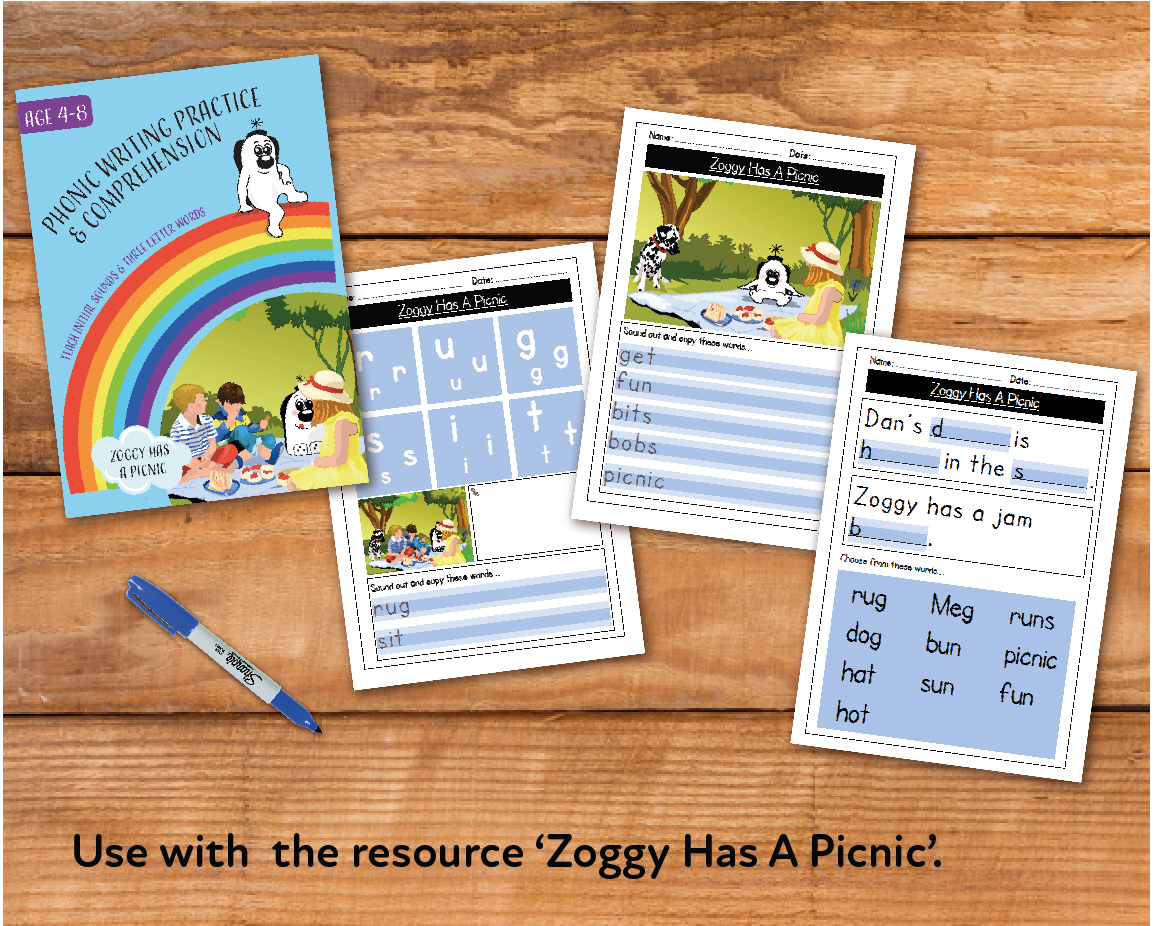
Writing and Comprehension Practice: This is Zoggy with a Tablet Workbook This resource provides a simple, effective remedy for educators aiming to reinforce crucial phonic reading and spelling skills in children aged 4-8. The workbook combines engrossing storytelling with the perfect mix of interactive content, tailored to perfectly suit immediate learning needs. Relevance: The learning material is a part of the Mission Spelling Zero Book: This is Zoggy with a Tablet within the blue level of education. It assists those who are already using these books for enhancing their child's linguistic abilities. However, it may not be beneficial for those without access to this Zoggy series. Worksheet Features: Comprised of 14 organized printable pages Including post-learning tasks tied back to phonics studied in The Mission Spelling series Covering reinforcement exercises for letter sounds coupled with tracing & writing letters and words Evaluation techniques ensure concepts are absorbed well beyond simple engagement period Add-Ons: The workbook incorporates comprehension activities based on relatable stories from within its storytelling structure - this method ensures students remember their lessons by engaging their creative sides as well. Versatility: Educators can seamlessly adapt these worksheets into various lesson plans -whether they're group tasks that promote teamwork or breakout sessions designed around each student's attention level; its usefulness extends across scales! Also available as homework assignments that require no preparation; extend overall lesson retention at each student's pace. Zoggy - Adding Fun Element In Education: Your children will enjoy learning alongside alien whizkid Zoggy via superhero tales themed around initial sound assimilation which further extend towards double consonant blends and vowel digraphs-teaching has never been so exciting! Suitable for Multiple Grades: This English Language Arts resource focuses on phonics for Preschool through Grade 2 children. This ingenious learning tool is designed to cater specifically to educators' needs, thereby maximizing potential among early learners-all compactly presented in an easily distributable PDF format.

Author Guinea Pig Education

Tags Interactive Learning, Phonics Practice, Reading Comprehension, Spelling Skills, Early Education

Cells Reading Comprehension Passage - Cored Ed Encyclopedia

Cells Reading Comprehension Passage - Cored Ed Encyclopedia
ELA, Language Development, Reading Comprehension, Reading, Pre-Reading, Life Sciences, Science, Technology, History, Social Studies, Grade 2, 3, 4, 5, Worksheets & Printables, Worksheets, Teacher Tools, Centers, Activities, Writing Prompts, Assessments, Quizzes and Tests, Quizzes, Lesson Plans

This cells reading comprehension with lesson plan includes: Visualization (on the front cover) Start your lesson by taking a minute to think and share something about the topic. Read the script aloud (slowly), perhaps prepare some music or sound effects. Student close their eyes and let their imaginations wander. Students open their eyes, read the question aloud and give them a few minutes to complete. Ask a few students to share or keep answers until the end to compare with what they learn in the passage. Quick pause—thousands of Cored Education products are included with your TeachSimple membership. Download links and encyclopedia index available here. Pre-Reading Trivia Students will write down one thing they already know about the subject and then read five more facts and discuss. These facts are fun, and the students will enjoy learning about the subject before reading more. Give 1 minute for students to write what they already know (no pressure—best guess is fine). Read the five facts together. After each fact, do ask a student for their opinion, was it surprising? Set a purpose by asking students to highlight/underline one fact they want to learn more about during the reading. Reading Passage The text is a high-interest reading passage with set paragraphs, roughly three to four paragraphs long. It contains a variety of themes about the topic, anywhere from history to technology. The passage is between 250 and 350 words in length. First, ask students to look at the headings and see what they’ll learn about today. What do they know about the topic/heading? First read options: Teacher read-aloud (best for support). Partner reading (paragraph by paragraph). While reading, students underline important details, and vocabulary words they think may come up in the questions section. Mixed Questions The first question page contains four multiple-choice questions, each with a choice of four answers, and three written response questions that require a sentence or two from the student. Students complete the mcqs first independently, then review quickly as a class. For the 3 written responses, try to get students giving the answer with some form of evidence: “I think ___ because the text says ___.” If students get stuck, send them back to check the passage. Vocabulary Questions Practice seven key words from the text in this section across two activities. First section is scrambled words where students will unscramble three words given a clue for each. The second section is a word to meaning matching activity. Before starting, have some students read out words they underlined in the passage. Ask students to say the word and read aloud the sentence(s) around each word. Ask students to do scrambled words and the matching exercise in pairs then go through answers as a class. For the scrambled spelling task, get four pairs to come up to the board and write the words for extra practice with the other student reading out the clue. For the matching task, prompt students to give full sentences: “I matched ___ with ___ because ___.” Creative Writing In this question, the student will be required to write a five to eight sentence paragraph on a question related to the topic. Before starting, ask students write down 3 key ideas they are going to include in their piece. Ask students for ideas to share around the class to help those struggling. Pro writing expectations: 5–8 sentences At least 2 facts or details from the passage At least 2 vocabulary words from the previous page Students read their paragraphs while classmates listen for facts and vocabulary words. Extension Activities This page is optional for fast finishers or to take home. There are several activities, each one requiring a different skill. Do some, do none, do all, completely optional - but you will feel reassured knowing every possibility is planned for. Includes summary writting question and additional facts. Answer Key There are answers for the multiple-choice questions, written response questions have sample answers, vocabulary answers and if there is a summary question then a sample summary will be provided as well. Lesson Plan Included Customized lesson plan for this lesson is included. Lesson Snapshot Title: Cells Genre: Nonfiction (informational science text with headings) Subject: Life Science / Reading (Informational Text) Primary Topic: Cell discovery, parts, and how cells work Estimated Guided Reading Level (A–Z): Q What This Lesson Teaches Best Explains how scientists first described “cells” by observing cork under a microscope (Robert Hooke, 1665). Shows how improved lenses led to new discoveries, including seeing living tiny organisms and developing the idea that living things are built from cells. Teaches core cell-part functions using a clear analogy (a cell as a “busy little city”), including membrane, nucleus/DNA, and organelles. Highlights differences and similarities across living things (one-celled organisms vs. animals with trillions of cells working in teams). Introduces the idea of cell division and specialization as a way living things grow and heal. Learning Goals Students will explain why Robert Hooke used the word “cells” for what he saw in cork. Students will describe how better microscopes changed what scientists could observe. Students will identify key cell parts named in the text and describe what each does. Students will compare one-celled organisms with animals made of many cells, using details from the passage. Students will describe what the passage says about how new cells form. Key Vocabulary From the Text membrane — thin “skin” that separates inside from outside. nucleus — cell center part that holds DNA. organelles — tiny cell parts with special jobs. mitochondria — parts that help release energy from food. chloroplasts — green parts that capture sunlight. FULL CATALOG OF DOWNLOAD LINKS AND ENCYCLOPEDIA INDEX HERE

Author Cored Education

Rating

Tags Vocabulary, Reading Comprehension, Reading Passages, Lesson Plans, Ela Lesson Plans, Reading Comprehension Lesson Plans, Pre-reading, Science Lesson Plans, Life Science, History

Animals Maze: 1 Page Sample (PDF)
Free Download

Animals Maze: 1 Page Sample (PDF)
ELA, Language Development, Resources for Teachers, Vocabulary, Spelling, ESL, Animals, Life Sciences, Science, Grade 2, 3, 4, 5, Worksheets & Printables, Worksheets, Teacher Tools, Centers, Activities, Mazes

THIS IS A ONE PAGE SAMPLE OF A SIX PAGE MAZE DOWNLOAD FULL SIX MAZE DOWNLOAD INFORMATION: Maze Series This maze series is designed for students in grades 2–5. Each set features a clear, kid-friendly theme with scene-based mazes that students first navigate, then complete by drawing a few target words from a simple word list. Pages come in varied styles and graduated difficulty, with an optional “color it in” step—and some themes invite quick calculations to match the task. These mazes are student-friendly, classroom-ready, and perfect for literacy warmups, seasonal units, fast-finisher bins, centers, sub plans, or home learning extensions. The playful, structured format builds problem-solving, attention to detail, and fine-motor control while reinforcing themed content in a motivating way. Note: Unlike many themed products, not all word-list words appear on the maze pages. To support full vocabulary coverage, we’ve released a companion word list you can find in the links section. Animals Word List 1. Farm Animals Cow, Pig, Horse, Chicken, Sheep, Goat, Duck, Rooster 2. Wild Animals Lion, Elephant, Tiger, Giraffe, Monkey, Zebra, Bear, Wolf 3. Ocean Animals Shark, Dolphin, Whale, Octopus, Jellyfish, Seahorse, Starfish, Crab 4. Insects &amp; Small Creatures Butterfly, Bee, Ant, Spider, Caterpillar, Ladybug, Grasshopper, Snail 5. Pets Dog, Cat, Hamster, Fish, Parrot, Turtle, Rabbit, Guinea pig 6. Fast &amp; Strong Animals Cheetah, Falcon, Kangaroo, Rhino, Eagle, Moose, Horse, Crocodile PDF Version Other versions will appear here when available. Follow the store for the lastest on new products. How to Use These Mazes Perfect for: Morning work or early-finisher bins Literacy or STEM centers Holiday/seasonal review lessons Independent stations, sub plans, or take-home enrichment More Animals Themed Products CROSSWORDS WORD SEARCHES FULL CATALOG OF DOWNLOAD LINKS HERE Themed Mazes Links Addition PDF Animals PDF Around the Home PDF Birthday PDF Candy PDF Christmas PDF Cinco de Mayo PDF Clothes PDF Colors PDF Days and Months PDF Division PDF Earth Day PDF Easter PDF Easy Mazes PDF Fall PDF Father's Day PDF Food PDF Geography (Set 1) PDF Geography (Set 2) PDF Geography (Set 3) PDF Graduation PDF Health PDF History (Set 1) PDF History (Set 2) PDF History (Set 3) PDF Human Body PDF Kindness PDF Life Skills PDF Mother's Day PDF Multiplication PDF Science (Set 1) PDF Science (Set 2) PDF Science (Set 3) PDF Shapes PDF Social Skills PDF Spring PDF Sports PDF St. Patrick's Day PDF Subtraction PDF Summer PDF Thanksgiving PDF Transport PDF Valentine's Day PDF Winter PDF Mazes in Depth Structure Each maze is crafted around a focused sub-theme. Students navigate the maze, encountering branches and cul-de-sacs that build attention and planning. Most pages include a tiny follow-up box—students draw or label 2–3 target words from a small word box, add a quick count, or color in the scene—so the activity reinforces both content and skills in a highly engaging format. Each completed set includes: A themed maze page. A simple student instruction strip. An answer key showing the solved path for teacher support or self-checking Themes Included These mazes cover a wide range of fun, age-appropriate themes, including: Seasons &amp; Holidays (e.g., Halloween, Easter, Valentine’s Day) Math-Lite Connections (e.g., quick counts, number words) Everyday Topics (e.g., Animals, Weather, School) Special Units (e.g., Health, Earth Day, Sports, Kindness) Each topic reflects students’ real-life experiences and interests while strengthening problem-solving, visual scanning, and fine-motor control in a playful, highly visual way. Easy extensions (optional): Time it: solve once in pencil, then try to beat the time in pen Retell the route using sequence words (first, next, then, finally) Count intersections or turns and graph the results Write a 1–2 sentence mini-story about the scene using the target words Design a tiny maze in the corner for a partner to solve Differentiation tips: Offer a finger-trace pass before pencils for emerging learners Highlight the borders of the correct region on first attempts Use thicker-line versions or simpler pages to build confidence Pair roles: “navigator” gives directions; “driver” traces the path For similar downloads and other frees, do check out Cored Group on TeachSimple.

Author Cored Education

Rating

Tags Vocabulary, Animals, Farm Animals, Wild Animals, Ocean Animals, Pets, Animals Activities, Animal Mazes, Maze, Mazes

Captitalization and Punctuation Practice Questions - Grades 1-2 (Word)

Captitalization and Punctuation Practice Questions - Grades 1-2 (Word)
ELA, Language Development, ESL, Grammar, Common Core, Resources for Teachers, Grade 1, 2, Worksheets & Printables, Worksheets, Quizzes and Tests, Teacher Tools, Quizzes, Tests, Assessments

Capitalization and Punctuation Grammar Practice MCQS: 10 lessons, 150 MCQS, 43 pages ELA MCQS Overview: In this series of lessons, students will embark on an engaging exploration of the grammar skills that bring our language to life. These lessons are designed to help students identify, understand, and effectively use language arts skills in their writing and speech. Used with the free supplementary materials available for all topics, each lesson builds on the last, offering a mix of direct instruction, interactive group activities, and independent practice. Through fun and creative tasks, students will learn how to recognize grammar in sentences, understand their role in sentences and use them to enhance their own writing and speech. Capitalization and Punctuation Overview: Includes: Proper Nouns Opening/Closing Letters Uppercase/Lowercase Dates Punctuation Practice Word Version This is the Word editable version. This download is available in GOOGLE Docs, GOOGLE Forms, GOOGLE Slides. PDF, PPT, WORD, check the links below for more details. FULL CATALOG OF DOWNLOAD LINKS HERE Grade 1/2 Links: Capitalization and Punctuation Google Docs Google Forms Google Slides PDF PPT Word Free Supplementary Materials Pack Adjectives Google Docs Google Forms Google Slides PDF PPT Word Free Supplementary Materials Pack Nouns Google Docs Google Forms Google Slides PDF PPT Word Free Supplementary Materials Pack Pronouns Google Docs Google Forms Google Slides PDF PPT Word Free Supplementary Materials Pack Verbs Google Docs Google Forms Google Slides PDF PPT Word Free Supplementary Materials Pack Prefixes &amp; Suffixes Google Docs Google Forms Google Slides PDF PPT Word Free Supplementary Materials Pack Sentence Structure Google Docs Google Forms Google Slides PDF PPT Word Free Supplementary Materials Pack Subject-Verb Agreement Google Docs Google Forms Google Slides PDF PPT Word Free Supplementary Materials Pack ELA Review Questions Overview Questions have three answer choices. There are a handful of pictures on each test for aesthetic purposes, as well as a review sheet covering most of the topics covered in the product. Introduction or Example Sheet Each topic will include an introduction or example sheet to go through first with your students. Full Answer Keys Full answer keys and sample responses are provided so no matter how busy you are, you know you're covered! In the Supplementary Pack Interactive Ice Breakers: Fun, hands-on activities that get students thinking about adjectives right from the start. Guided Practice: Teacher-led exercises that reinforce the day’s lesson, ensuring students can confidently identify and use adjectives. Group and Partner Tasks: Collaborative activities that allow students to work together to solve problems, categorize adjectives, and create descriptive sentences. Independent Worksheets: Structured worksheets that provide individual practice and help solidify understanding of key concepts. Exit Tasks: Quick, reflective activities at the end of each lesson that assess understanding and encourage students to apply what they’ve learned. For similar downloads and other frees, do check out Cored Group on TeachSimple.

Author Cored Education

Tags Elementary, Answers, Ccss, Common Core, Grammar, Language Arts, Test, Test Prep, Mcq, Ela

Guided Reading Level I - The Big Blue Ice (with Lesson Plan)

Guided Reading Level I - The Big Blue Ice (with Lesson Plan)
ELA, Resources for Teachers, Reading Comprehension, Reading, Science, Language Development, Earth and Environmental Sciences, Geography, Social Studies, Life Sciences, Grade 1, 2, 3, Worksheets & Printables, Worksheets, Teacher Tools, Centers, Activities, Literacy Readers, Quizzes, Quizzes and Tests, Assessments, Lesson Plans

This Guided Reading Book - The Big Blue Ice (Level I) with lesson plan includes: Guided Reading Color Label (front cover x1) This is a quick way to match the book’s demands to what students can generally handle.. The overall goal is to use the level/color to pick books for several smaller groups. To qualify for a certain level, a student is expected to read a book from that level with about 90–94% accuracy. If a student is consistently accurate and understands, move up a level. If the student is struggling at that level, drop down and add more support. Each student will improve at completely different rates, but it is generally one of the best ways to check progress across the class. DOWNLOAD THE CATALOG TO VIEW ALL GUIDED READING BOOKS AVAILABLE (SORTED LEVELS A-Z) Pre-Reading Question (x1) Teacher asks the prompt aloud, can be while showing the cover or first page. Students share what they already know, or make educated guesses from the cover. Prompt them to use the target vocabulary. Write some of their responses on the board to look back at during the reading. Vocabulary Words (x5) Introduce the five words, best doing it one at a time. Start by saying it, while students repeat and then see if anyone knows what it means before reading further. Read through the meaning and try to briefly connect each word to a picture or gesture so it’s meaningful. Ask students to flip through the book pages and point to where they see each of the vocabulary words. While reading the book pause upon coming across one of the vocab words or read the sentence twice to make sure students understand the word has appeared. Optional: Ask students to raise hands whenever they see/hear one of the new words. Guided Reading Pages (x10) Check the book snapshot (below) for: primary topic - do you need to prep extra reading or intro materials on this? what is taught best - decide on 1-2 bullets to focus on, use the prompt or words provided here for best results. learning goals - what you are checking for students to be able to do after the session, elicit answers using prompts or words provided. key vocabulary (see section above). questions overview - so you know what is coming up and if you need to prep extra materials to assist understanding. Run the lesson You may have already looked at a few of the pages together, but you can show them some of the pictures again first to set meaning. Depending on how much time you have and how familiar your students are with guided reading class, you may want to read the book aloud first with the group first. Students whisper or partner read, while you listen in. If time, do it as a group, one student reading a page each. Use the guided page’s prompts to coach: “Check the picture / does it make sense?” “Point under the words / try the first sound” “Reread the sentence smoothly”. Try to focus more on one student per session (rotating every time), so you can work out if they are ready to move up or need to move down a level. Comprehension Questions (back cover x3) This is your way to check that students didn’t just say the words, but actually understood the text. First, let students answer by pointing to the page/picture and saying a short sentence. After any answer, follow with: “Show me where you found that in the text.” In bigger groups, have partners answer first (10–20 seconds), then call on 2–3 students to share. Differentiation tips: Emerging speakers/struggling readers: oral + pointing On-level: oral in a full sentence Higher: one written sentence or draw + label Book Snapshot Title: The Big Blue Ice Genre: Nonfiction (informational) Subject: Earth Science + Reading (Informational Text) Primary Topic: Glaciers and what happens to ice Estimated Guided Reading Level (A–Z): I What This Book Teaches Best Defines what a glacier is and explains that it stays frozen all year long. Explains how snow can squeeze together and turn into hard ice in very cold places. Describes how glaciers move slowly like “rivers of ice” down mountain slopes. Teaches glacier features and changes, including crevasses, calving, and icebergs. Connects glaciers to living things and Earth systems (animals resting on ice, fresh water, keeping the world cool). Learning Goals Describe what a glacier is using details from the text. Explain how piled-up snow turns into hard ice in very cold places. Tell how glaciers move and where they move (down mountain slopes). Identify crevasses and describe what the text says they show. Explain what calving is and what happens when a glacier reaches the ocean. Describe two ways glaciers are important on Earth (cooling the world, holding fresh water). Key Vocabulary From the Text glacier — a huge mountain of ice. frozen — turned to ice from very cold weather. crevasses — long cracks on the glacier’s surface. calving — when big ice chunks break off into the ocean. icebergs — floating mountains of ice in cold water. Discussion Prompts Pre-reading question: What do you think a glacier is, and where might you find one? Comprehension questions: How does snow turn into hard ice, according to the book? Comprehension questions: Why do some glaciers look bright blue in the text? Comprehension questions: Where do seals rest to take a nap and stay safe from the water? Printing Tips 1. Best Printing Method (Recommended) “Booklet” Printing (Best if Available) If your printer or PDF viewer supports Booklet Printing , use this. Settings to use: Print mode: Booklet Paper size: Letter or A4 (either works) Orientation: Landscape Print on both sides: Yes Flip on: Short edge Scaling: Fit to printable area Booklet subset: First test: Front sides only Then: Back sides only This will automatically: Pair pages correctly Put the cover on the outside Align everything for folding After printing, fold in half and staple along the spine . 2. If “Booklet” Printing Is NOT Available You can still print this correctly with manual duplex printing . Step-by-step: Open the PDF. Choose Print . Set: Orientation: Landscape Pages per sheet: 1 Print on both sides: Yes Flip on: Short edge Print all pages . Because each PDF page already contains two facing book pages, the result will still fold cleanly into a book. Thousands of Cored Education products are included with your TeachSimple membership. Download links and encyclopedia index available here.

Author Cored Education

Rating

Tags Reading Comprehension, Reading Passages, Reading, Guided Reading, Guided Reading Lesson Plan, Guided Reading Activity, Pre-reading, Science Lesson Plans, Earth Science, Geography

Science Word List Posters - Set 2 (PDF)
Free Download

Science Word List Posters - Set 2 (PDF)
ELA, Language Development, Vocabulary, Spelling, ESL, Resources for Teachers, Science, Physics, Earth and Environmental Sciences, Life Sciences, Grade 2, 3, 4, 5, Worksheets & Printables, Worksheets, Teacher Tools, Centers, Activities, Mazes, Posters, Classroom Decor

Word List Poster Series This word list poster series is designed for students in grades 2–5. Each printable focuses on a clear, kid-friendly theme and features 8 target vocabulary words with short, student-friendly meanings or fun facts. The clean layout works as both an anchor chart and a write-in sheet, giving students a quick, visual reference they can revisit during centers and independent work. These posters are student-friendly, classroom-ready, and perfect for warmups, vocabulary walls, sub plans, or take-home reference. Display a single poster to support the day’s lesson, or group several to build a themed wall across your unit. Note: Each poster is a companion piece to its matching themed product in the series—pair it with the corresponding maze, wordsearch, or activity pack for a consistent set of 8 focus words. Science Set 2 Word List 1. Energy and Electricity Energy, Electricity, Battery, Circuit, Switch, Solar, Light, Heat 2. Rocks and Minerals Rock, Mineral, Fossil, Sand, Crystal, Diamond, Lava, Soil 3. Life Cycles Egg, Larva, Pupa, Adult, Seed, Sprout, Grow, Change 4. The Water Cycle Water, Evaporate, Condense, Cloud, Rain, Puddle, River, Ocean 5. Scientific Inquiry and Tools Observe, Hypothesis, Experiment, Measure, Balance, Ruler, Data, Graph 6. Natural Disasters Earthquake, Tsunami, Hurricane, Tornado, Flood, Drought, Lightning, Volcano PDF Version Other versions will appear here when available. Follow the store for the lastest on new products. How to Use These Word List Posters Perfect for: Morning work or early-finisher bins Vocabulary centers or anchor walls Holiday/seasonal review lessons Independent stations, sub plans, or take-home reference More Science Themed Products Science Crosswords (Set 1) PDF Science Crosswords (Set 2) PDF Science Crosswords (Set 3) PDF Science Word Searches (Set 1) PDF Science Word Searches (Set 2) PDF Science Word Searches (Set 3) PDF Science Mazes (Set 1) PDF Science Mazes (Set 2) PDF Science Mazes (Set 3) PDF FULL CATALOG OF DOWNLOAD LINKS HERE Themed Word List Posters Links Addition PDF Animals PDF Around the Home PDF Birthday PDF Candy PDF Christmas PDF Cinco de Mayo PDF Clothes PDF Colors PDF Days and Months PDF Division PDF Earth Day PDF Easter PDF Easy Word List Posters PDF Fall PDF Father's Day PDF Food PDF Geography (Set 1) PDF Geography (Set 2) PDF Geography (Set 3) PDF Graduation PDF Health PDF History (Set 1) PDF History (Set 2) PDF History (Set 3) PDF Human Body PDF Kindness PDF Life Skills PDF Mother's Day PDF Multiplication PDF Science (Set 1) PDF Science (Set 2) PDF Science (Set 3) PDF Shapes PDF Social Skills PDF Spring PDF Sports PDF St. Patrick's Day PDF Subtraction PDF Summer PDF Thanksgiving PDF Transport PDF Valentine's Day PDF Winter PDF Word List Posters in Depth Structure Each poster is built around a focused sub-theme and presents 8 target words with short, student-friendly meanings or fun facts. The clean A4 portrait layout works as an anchor chart on your board or as a student reference at desks. These posters are designed as companion pieces to the matching themed products (mazes, wordsearches, activity packs), so the same vocabulary stays visible across your unit. Each poster set includes: A themed word list poster with 8 words + brief meanings/facts A clean, high-contrast layout for easy printing and display Space that can double as write-in/draw-to-show-meaning during centers Themes Included Seasons &amp; Holidays (e.g., Halloween, Easter, Valentine’s Day) Everyday Topics (e.g., Animals, Weather, School) Math &amp; Science Connections (e.g., Number Words, Simple Machines) Special Units (e.g., Health, Earth Day, Sports, Kindness) Each topic reflects real-life experiences and interests while strengthening vocabulary recognition and content understanding in a clear, visual way. Easy extensions (optional) Sketch it: students draw a quick icon for each word Sort it: group words by category (e.g., actions, objects) Star it: highlight “I already know” vs. “I’m learning” words Match it: point to examples in a reading, video, or picture set Say it: brief oral definition or example sentence during share-out Differentiation tips Pre-teach 2–3 anchor words; add the rest later in the week Offer picture cues or gestures for emerging readers/ELLs Let students choose 4 of 8 to focus on first, then build up Color-code by part of speech or concept family for quick scanning For similar downloads and other frees, do check out Cored Group on TeachSimple.

Author Cored Education

Rating

Tags Vocabulary, Spelling, Science, Energy And Electricity, Rocks And Minerals, Life Cycles, The Water Cycle, Natural Disasters, Science Word Lists, Posters