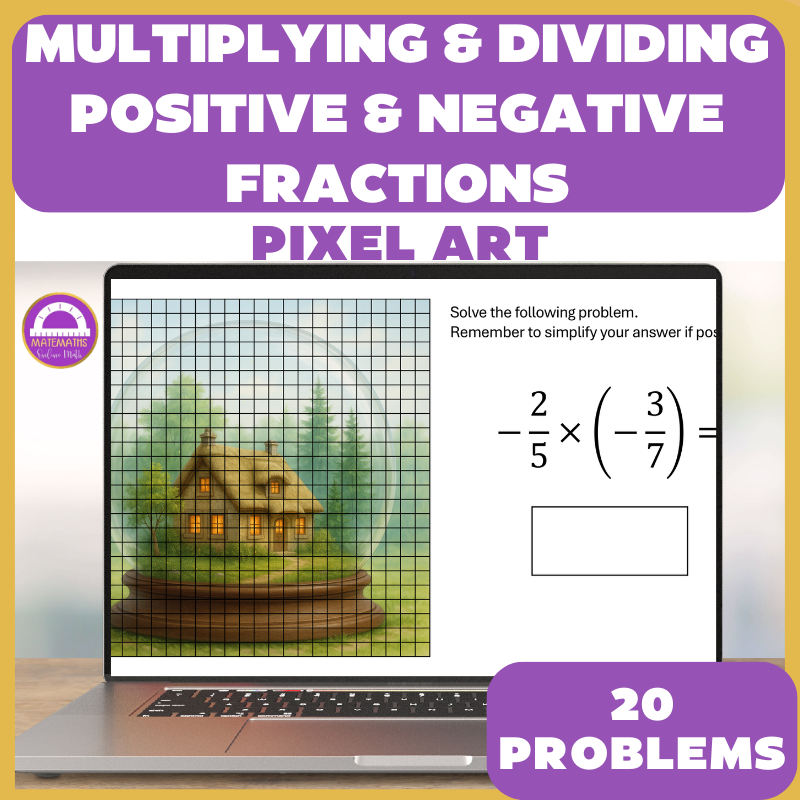
Math practice
Multiplying and Dividing Positive and Negative Fractions Pixel Art
Give students practice multiplying and dividing positive and negative fractions.
Answers included




Classroom resources
Browse by lesson focus
Choose the topic or kind of practice you need.
Showing 505–528 of 2447 resources

 Show filters
 Give students practice multiplying and dividing positive and negative fractions.
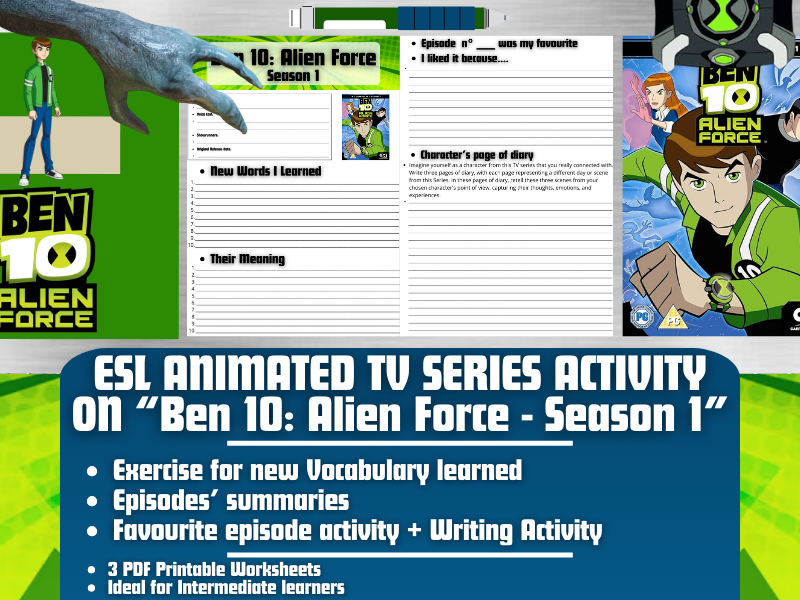
ESL worksheet built around the animated TV series "Ben 10: Alien Force" (season 1), in which students record factual details about the show and then write a multi-page diary/journal entry in English from the point of view of a character in the series.
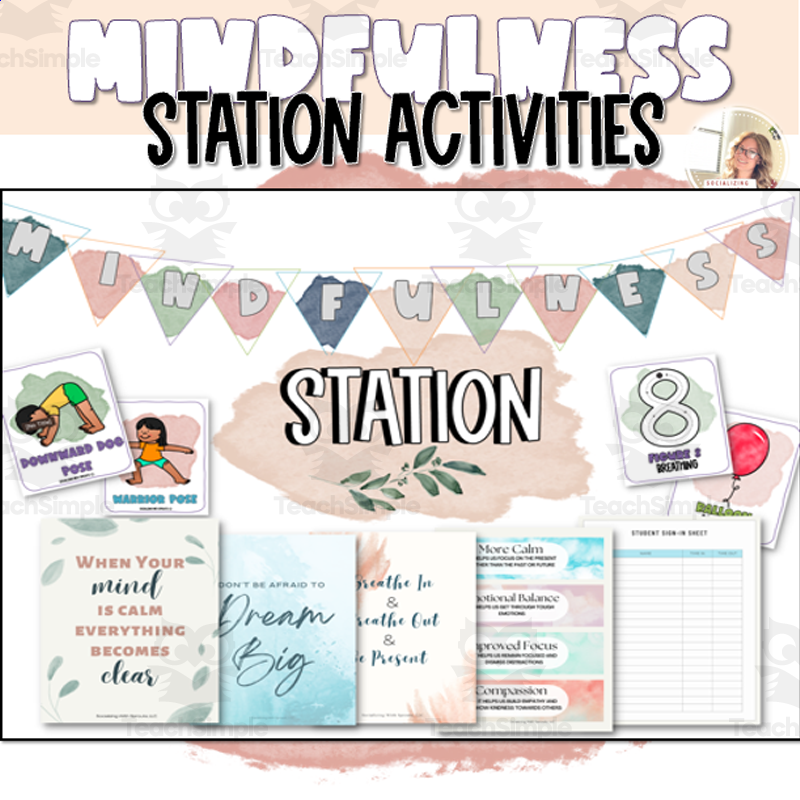
Work through station materials: draw pictures using the 5 senses on a 'STATION' worksheet; trace and breathe along with 4 breathing-exercise cards (Balloon breathing, Rainbow breathing, Star/Lucky Star breathing, Figure 8 breathing); complete a mindful coloring page and reflect on how each color makes them feel; and…
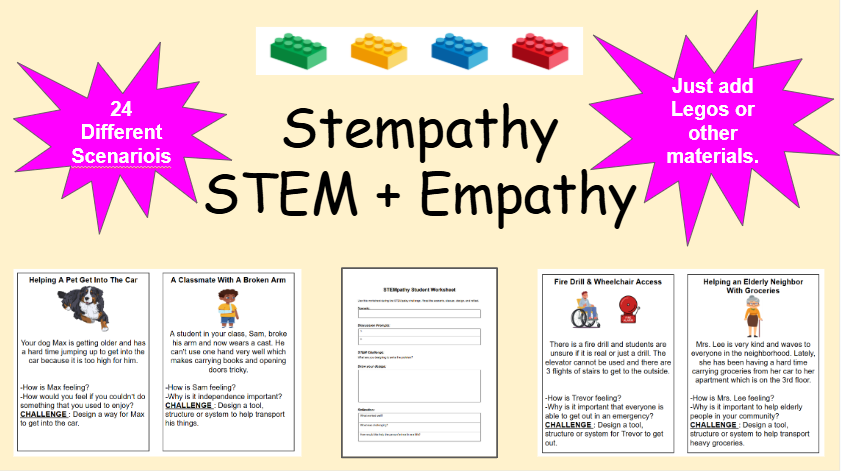
A set of relatable, empathy-focused problem scenarios (STEM + Empathy = 'Stempathy') where students design a physical solution (e.g. using LEGO/generic building bricks) to help a character facing a real-world accessibility, fairness, or social-emotional challenge, paired with a discussion/reflection worksheet.
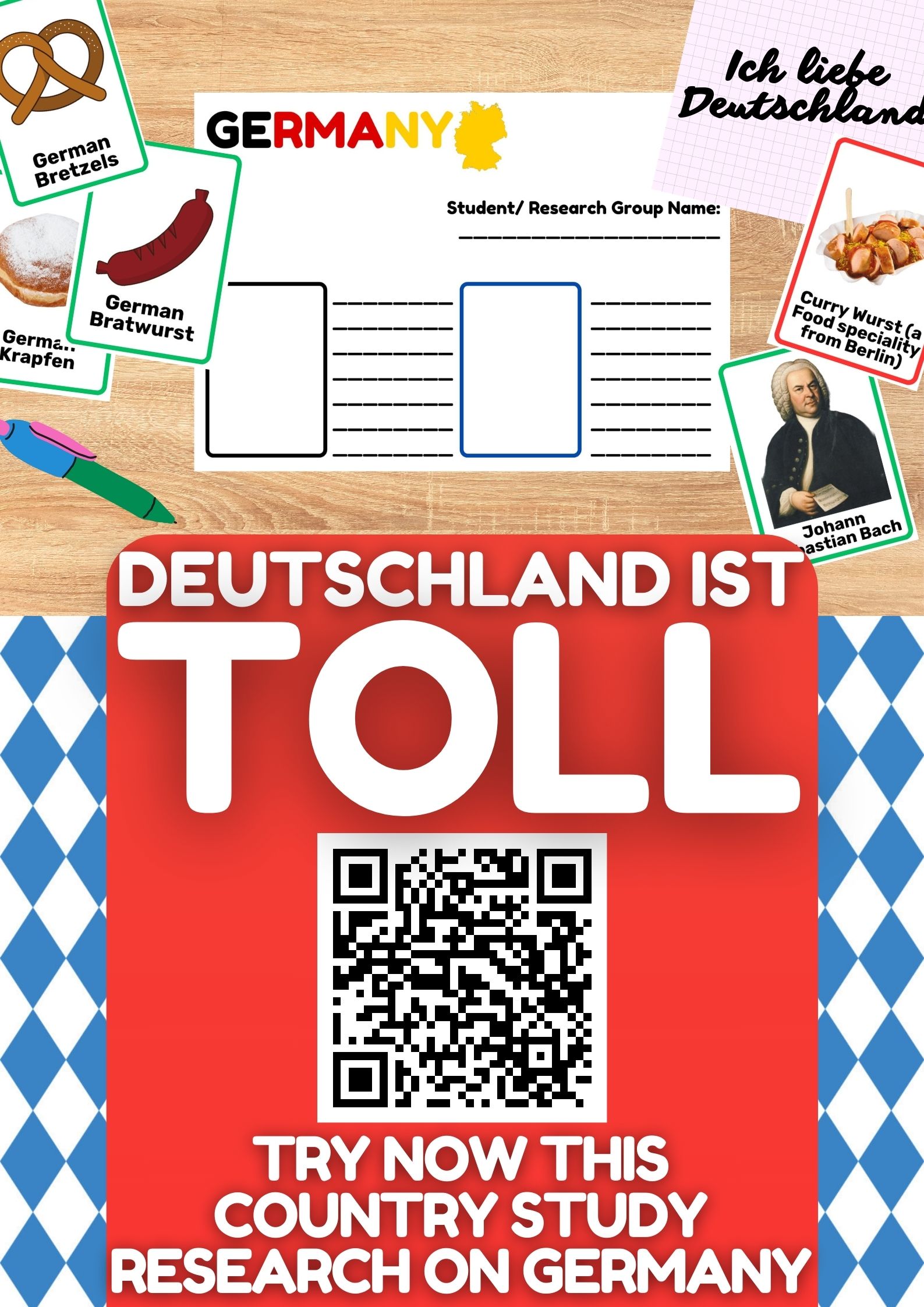
A research/discovery project introducing students to Germany through a set of topic cards covering its history, geography, economy, and culture.

A large first-week-of-school activity bundle covering all-about-me, ELA, and math worksheets for grades 1-5.
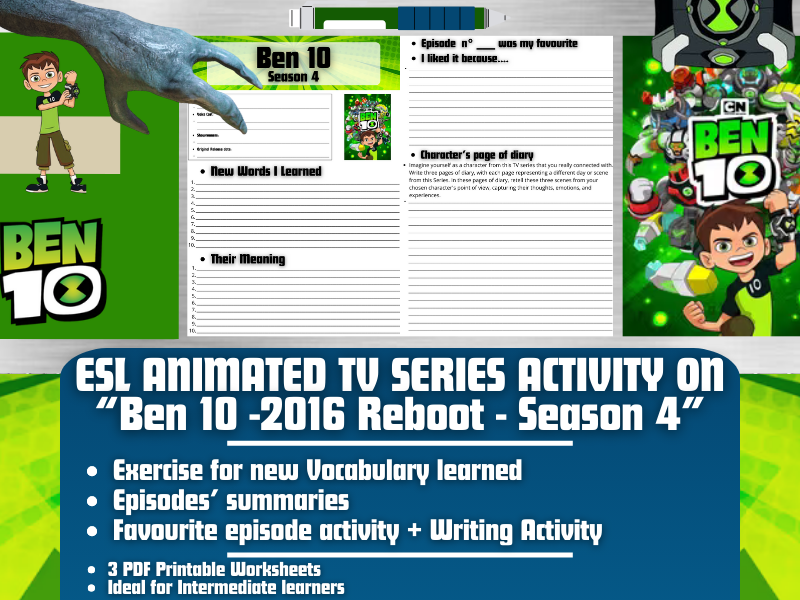
ESL worksheet built around the animated TV series "Ben 10" (season 4), in which students record factual details about the show and then write a multi-page diary/journal entry in English from the point of view of a character in the series.
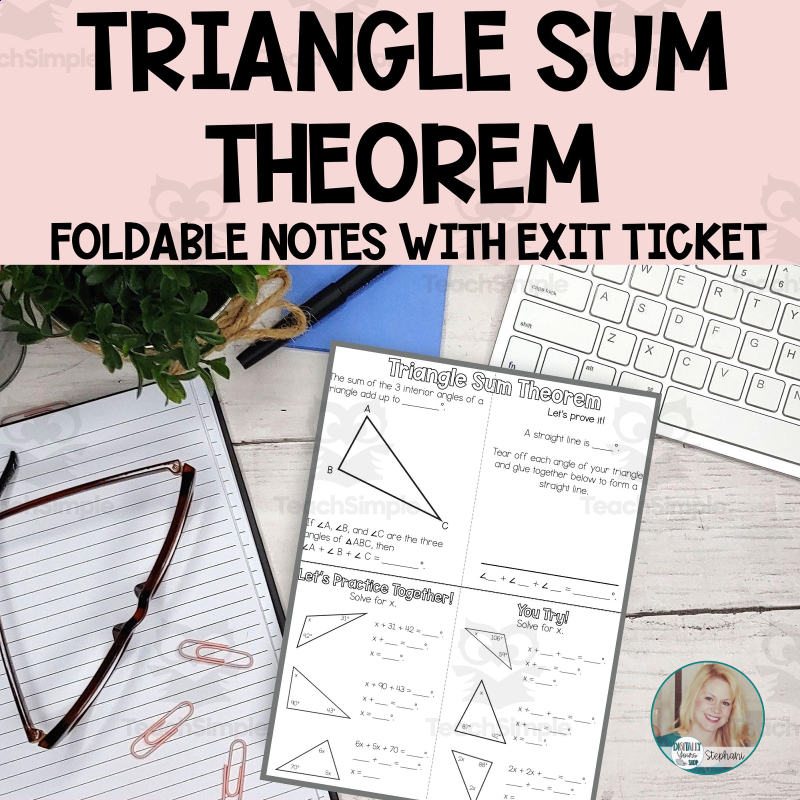
Tear off the three angles of a printed paper triangle and glue them together to form a straight line to prove the theorem; complete foldable notes with guided and independent solve-for-x practice problems (including combining like terms, e.g. 6x+5x+70=180); and solve 4 solve-for-x problems on an exit/entrance ticket.
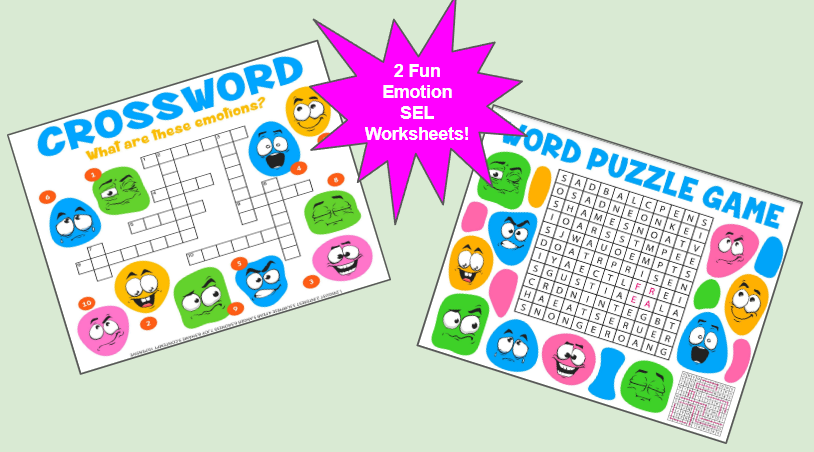
Revisit feelings vocabulary through two different puzzle tasks. Students locate emotion words in a word search, then use prompts to name feelings in a crossword. Begin with recognition in the letter grid before moving to recall from clues, and compare the words appearing across the two pages after students have worked through both formats.
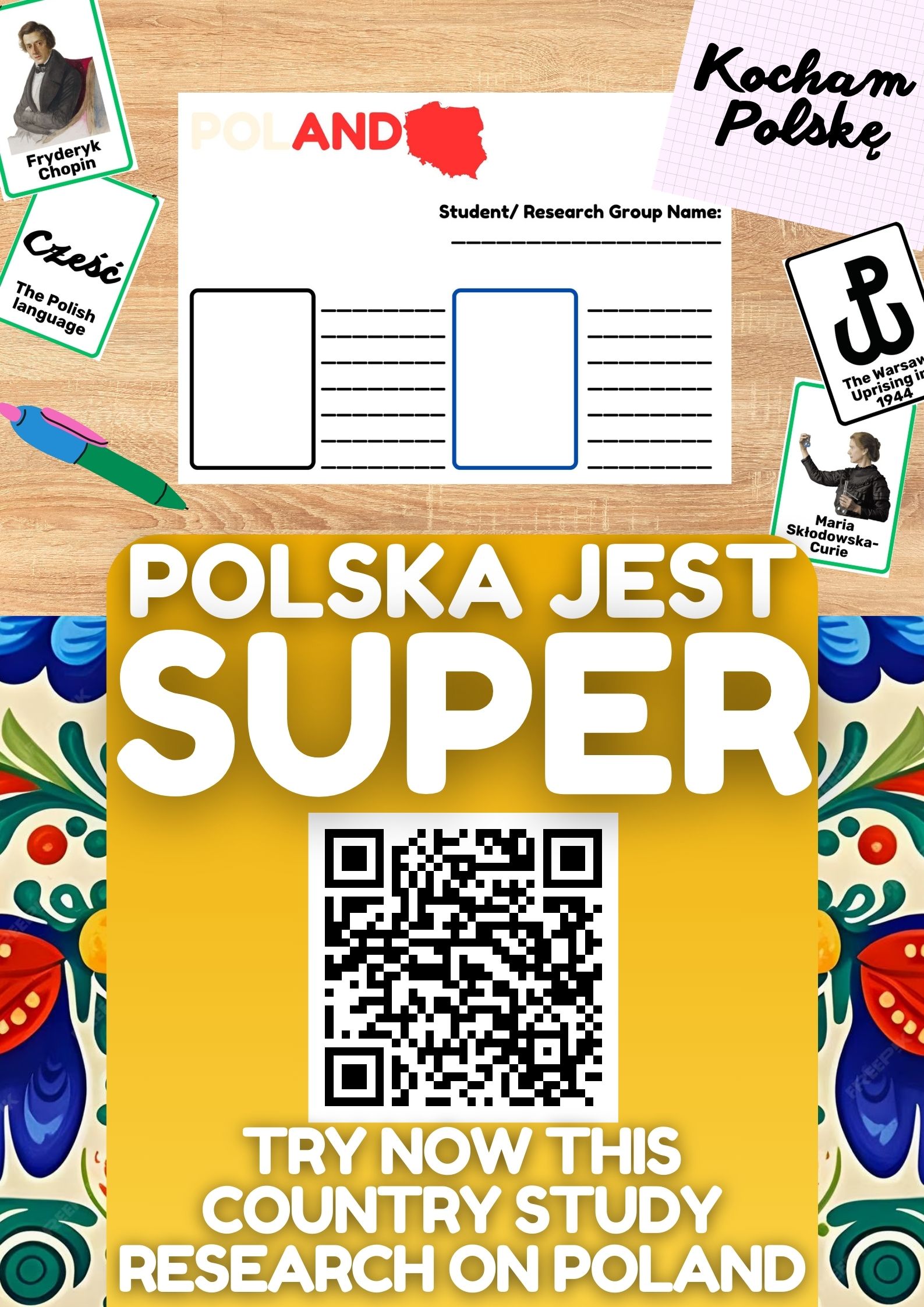
A research/discovery project introducing students to Poland through a set of topic cards covering its history, geography, economy, and culture.
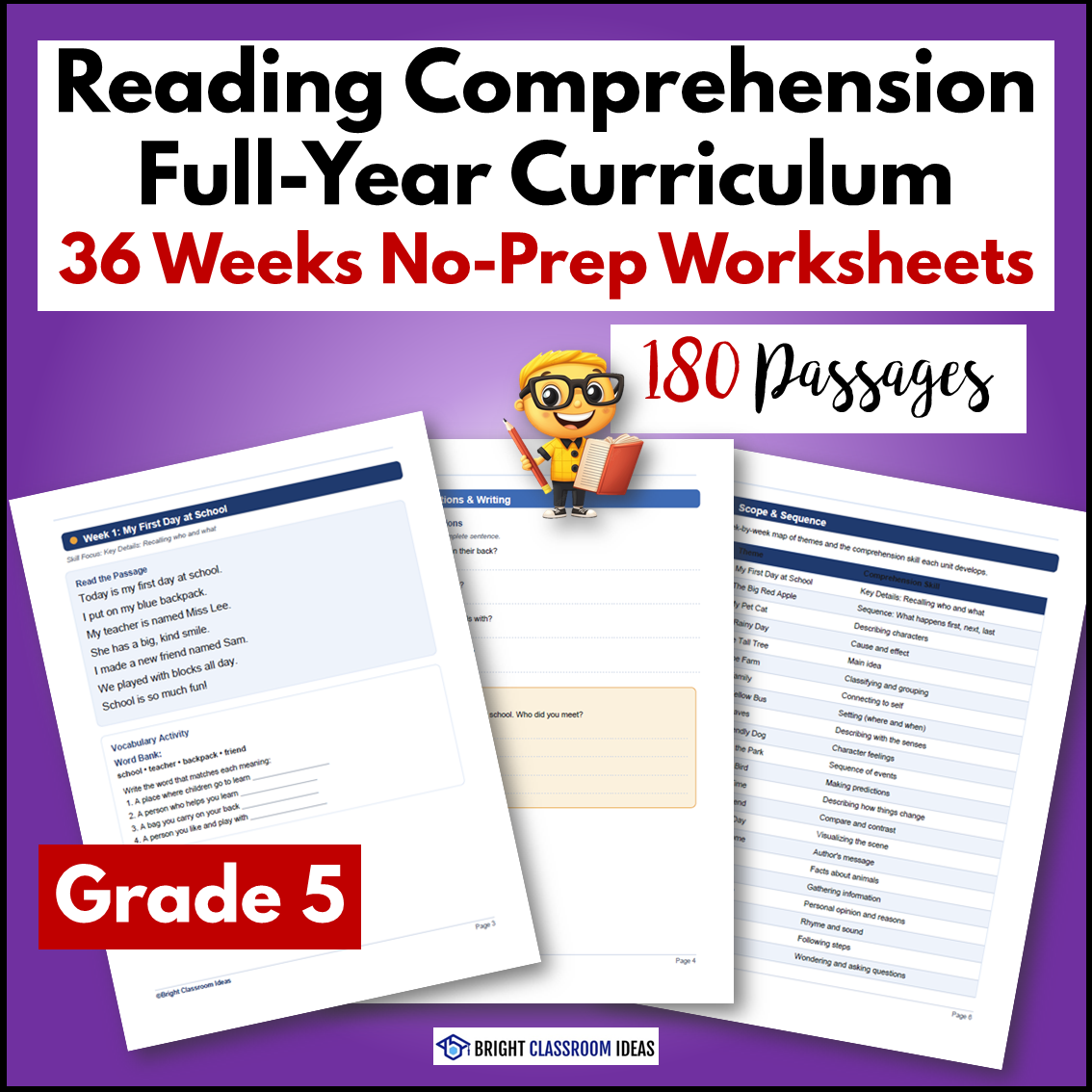
Each day, students read a short fiction or nonfiction passage, complete a vocabulary matching activity, answer 3 comprehension questions, and respond to a writing prompt requiring evidence from the text.
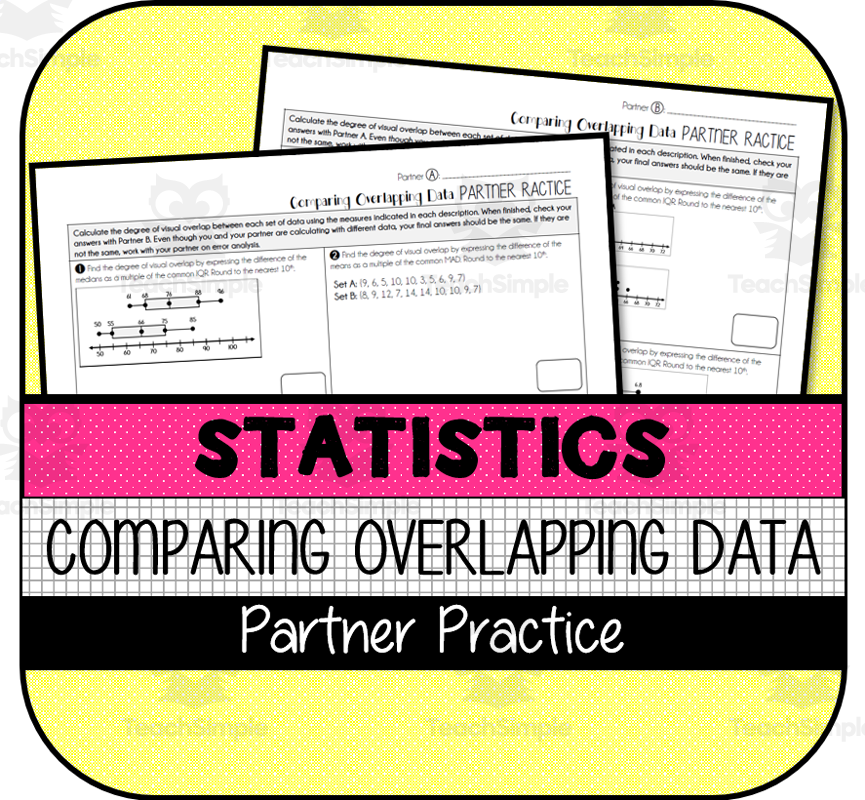
Partner practice activity where two students independently calculate the overlap between two data sets using different numeric data but arrive at the same numeric answers, reinforcing measures of center and variability (CCSS.MATH.CONTENT.7.SP.B.3).

A self-checking partner practice activity for finding the area of composite figures (including shaded regions), aligned to CCSS 7.G.B.6, excluding circular figures.
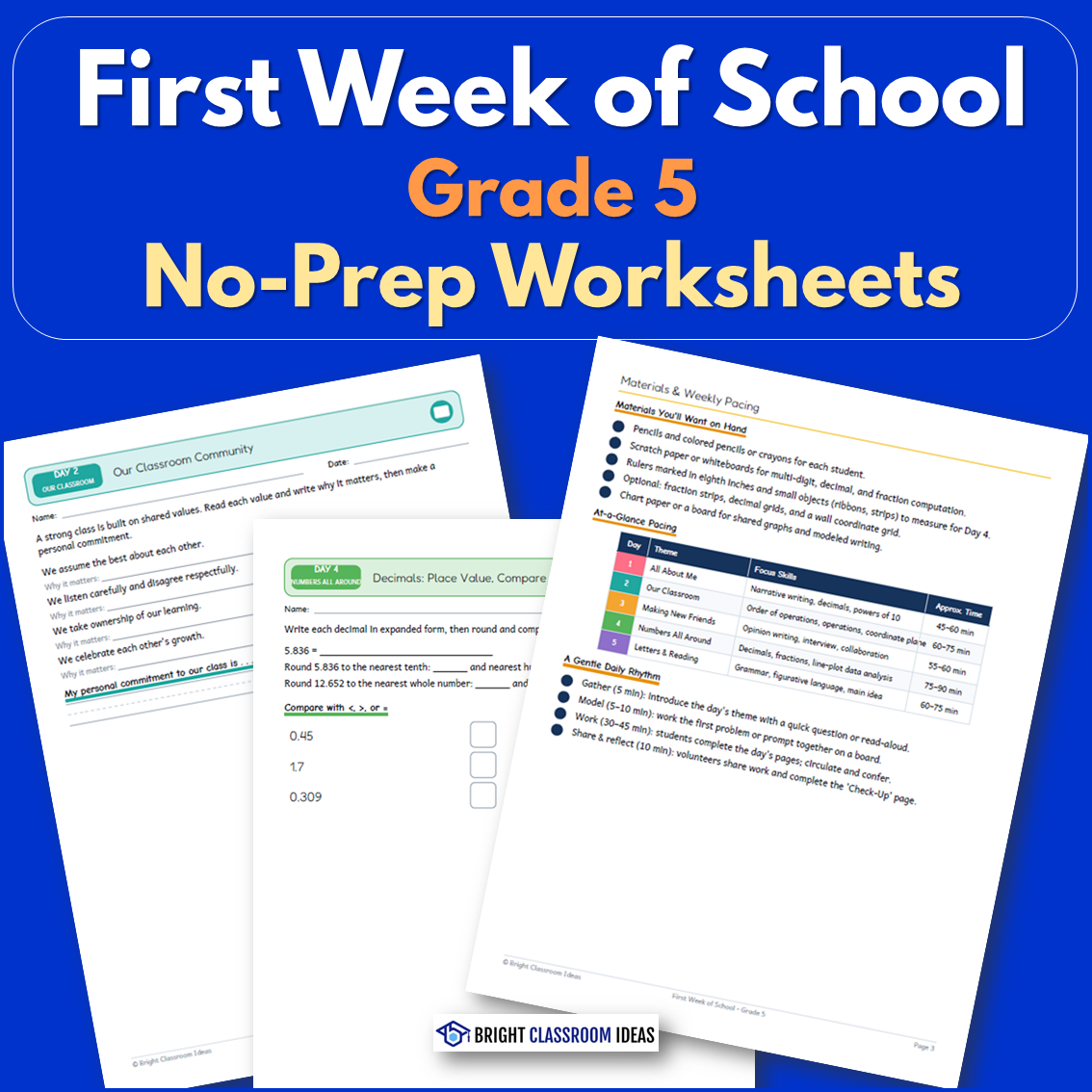
Students complete daily worksheets: introduce themselves and write a personal narrative, set goals, work grade-level math problems (expanded form, multi-digit operations, fractions/decimals, and unit-rate problems (e.g. pages per day)), read a graph or chart, and complete ELA exercises (grammar, vocabulary/roots, figurative language,…

A research/discovery project introducing students to China through a set of topic cards covering its history, geography, economy, and culture.
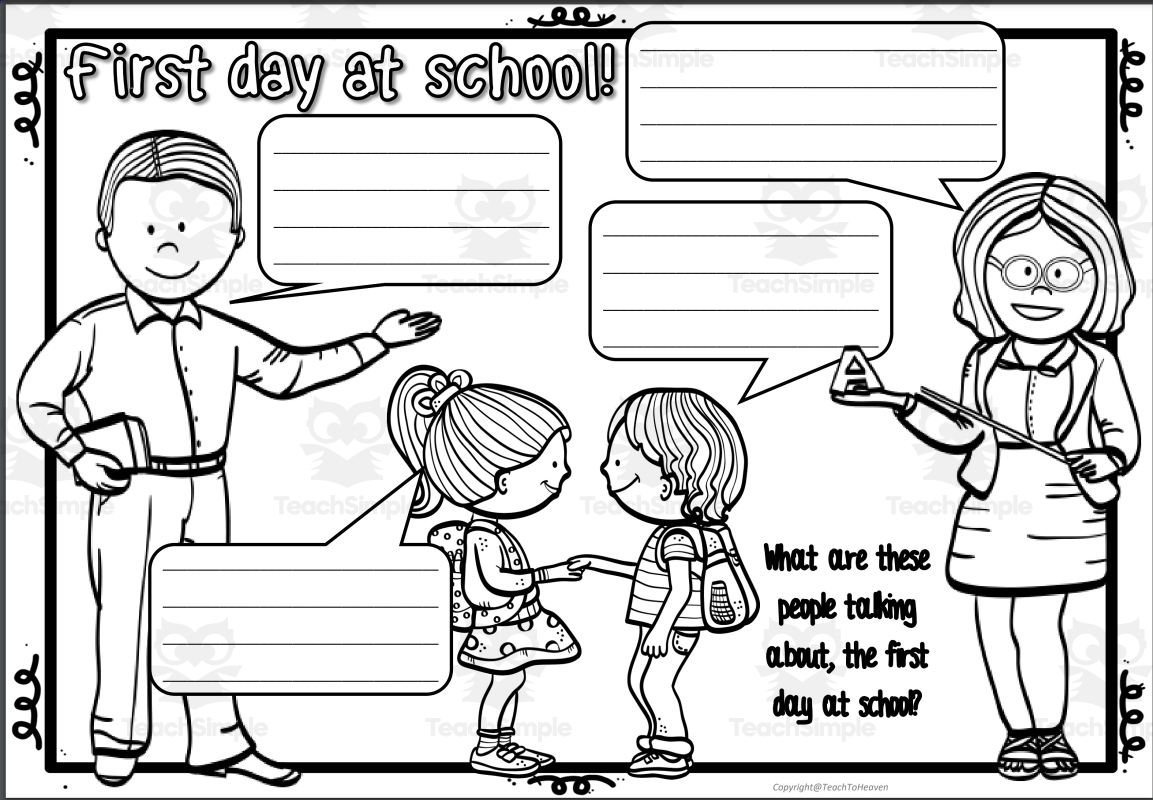
Write dialogue lines (in blank spaces provided) imagining what people pictured on the first day of school are saying to each other.
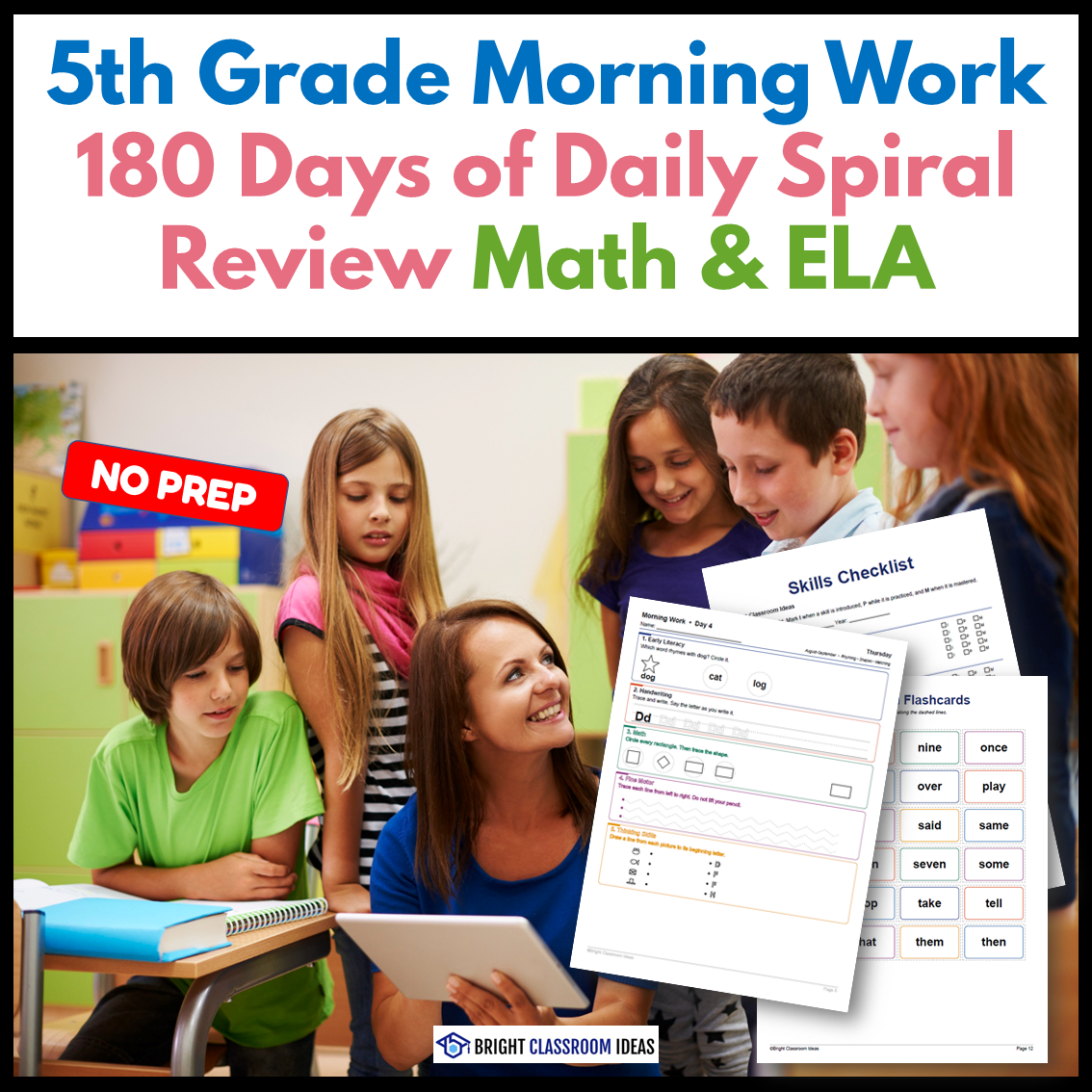
Provide a full school-year (180-day) daily spiral-review morning-work routine for Grade 5, covering ELA (grammar, vocabulary, roots, reading, writing) and Math (place value, operations, fractions, decimals, geometry, measurement, data) plus a rotating enrichment activity.
 Free download
 With adult guidance, observe/identify examples of the target social skill (e.g., facial expressions, voice tone, sportsmanship behaviors), record what message each example sends, and discuss what worked and what could be done differently, revisited weekly.
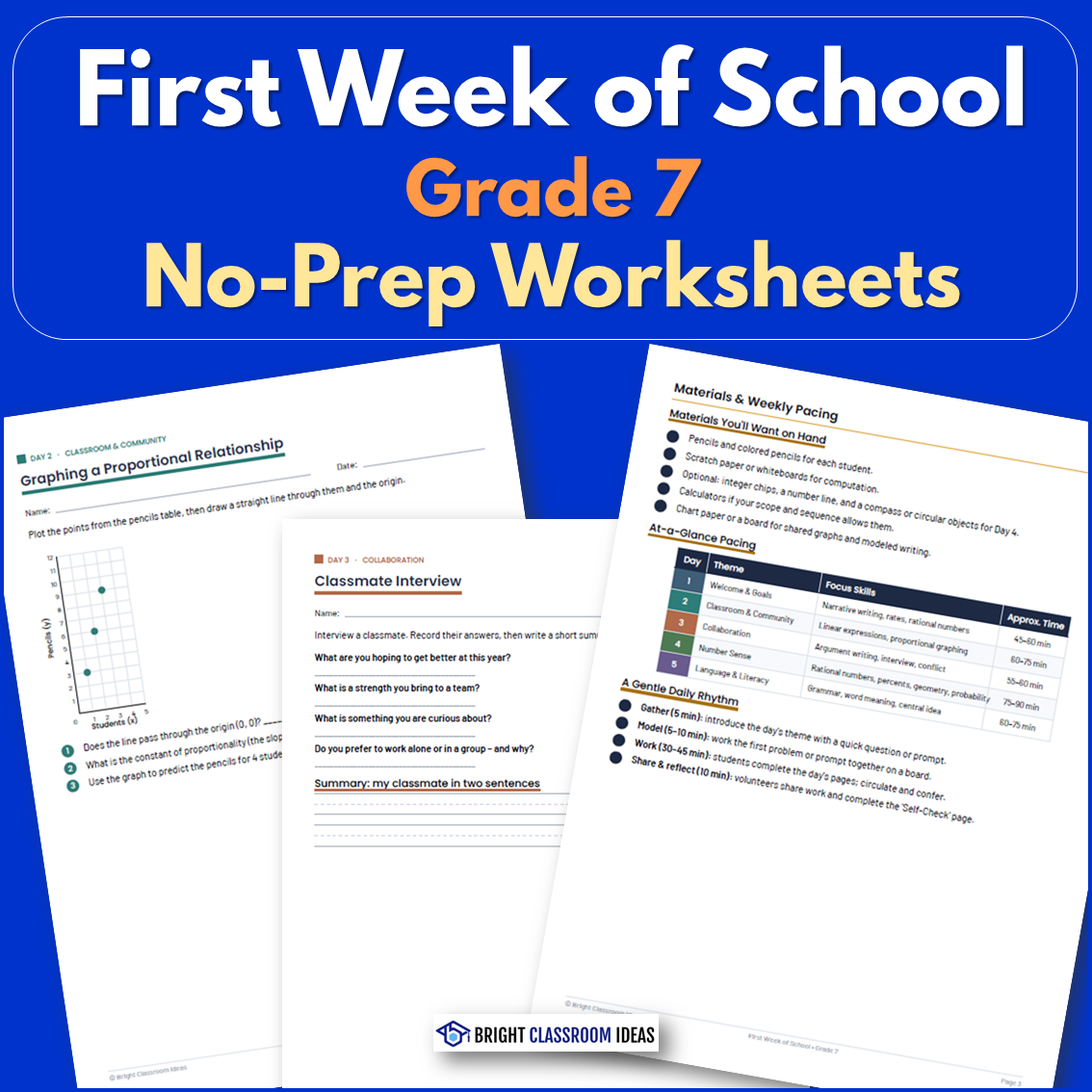
Students complete daily worksheets: introduce themselves and write a personal narrative, set goals, work grade-level math problems (unit rate/percent problems, simplifying and evaluating linear expressions, proportional relationships), read a graph or chart, and complete ELA exercises (grammar, vocabulary/roots, figurative language,…
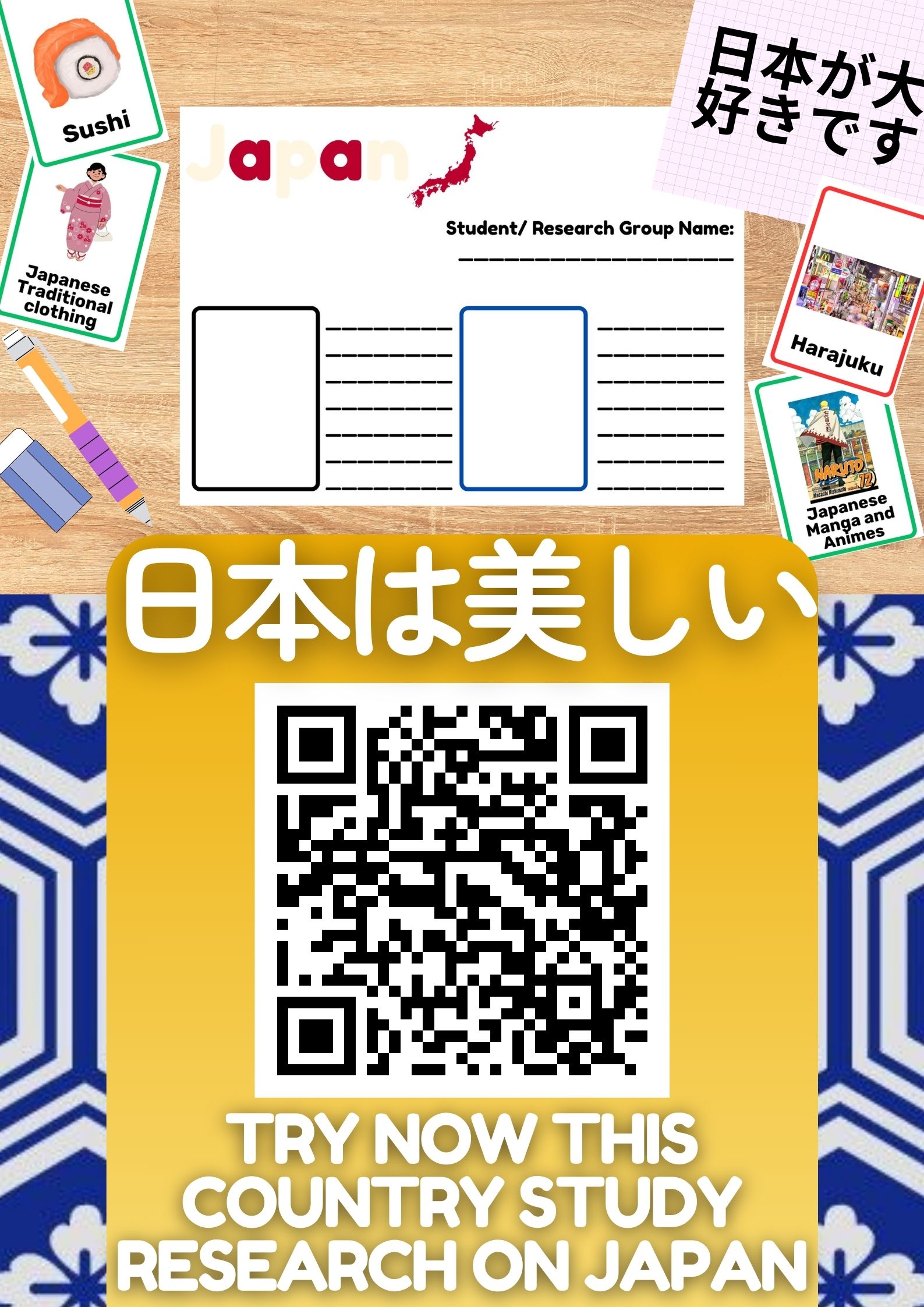
A research/discovery project introducing students to Japan through a set of topic cards covering its history, geography, economy, and culture.

Edit punctuation within a continuous personal letter rather than isolated sentences. Students add missing capitals, commas, and apostrophes, then compare their revisions with a corrected version. Reading the letter before editing helps them follow its meaning and consider where each punctuation mark belongs.
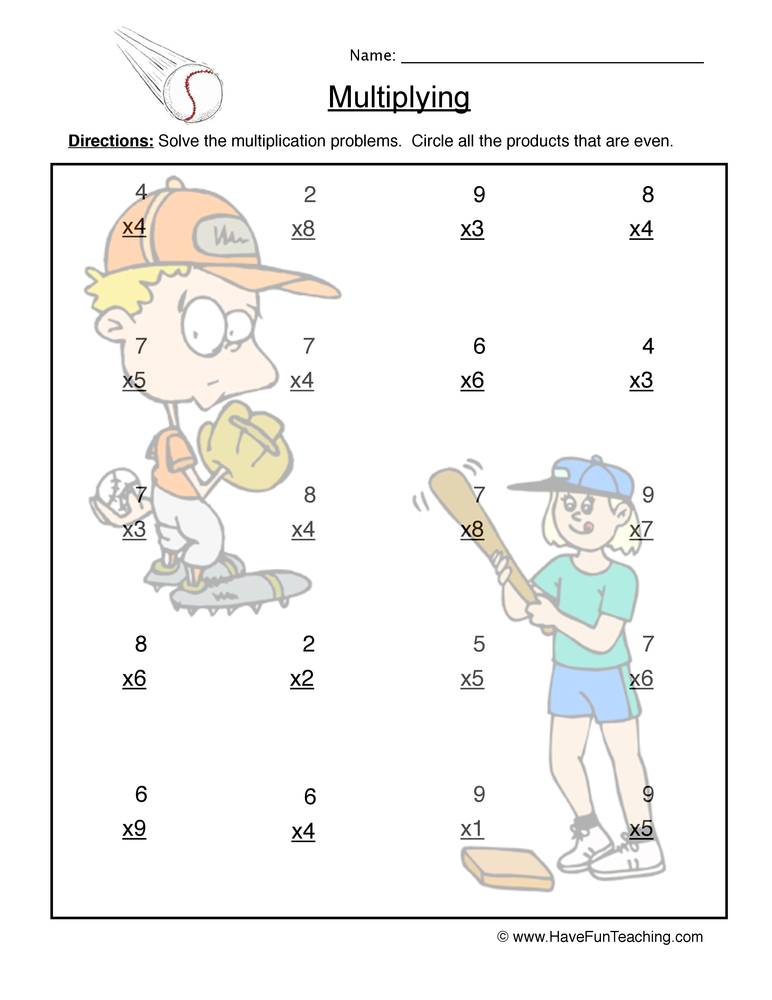

Choose sensible mass or volume measurements for familiar objects and containers. Each example offers paired choices, asking students to judge the likely amount rather than carry out a direct measurement. Discuss what makes one choice more reasonable and whether the situation concerns mass or volume.

Work through six long-division problems that produce whole-number quotients without remainders. Students record their calculations and compare the results with the completed answer page. Use one problem to discuss the sequence of division steps before students try the remaining questions independently.