Reading & language
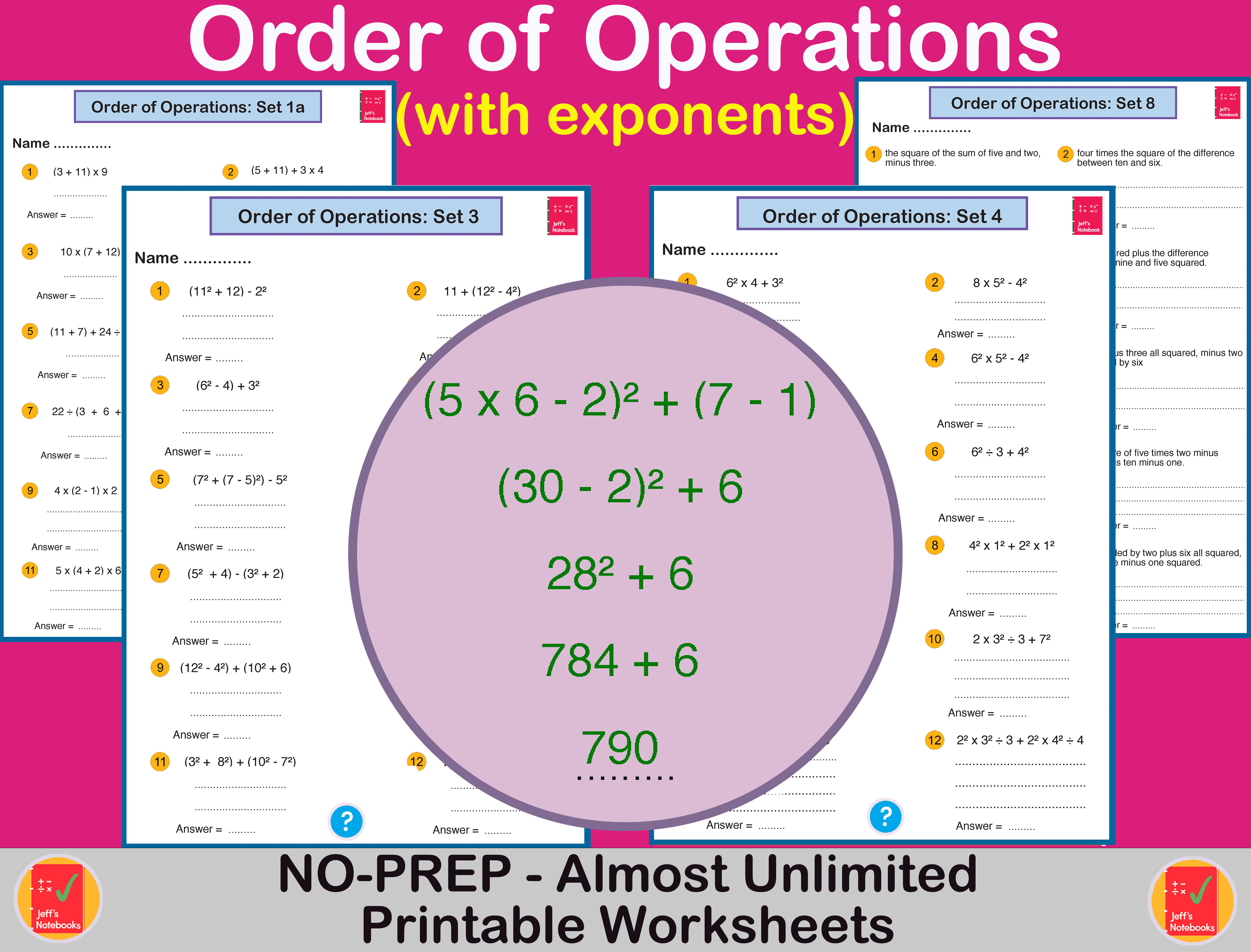
Order of Operations with Exponents
Provide a structured, progressively-leveled set of worksheets (with a teacher guide) for practicing order of operations including exponents, using PEMDAS/BODMAS/BEDMAS terminology.




Classroom resources
Browse by lesson focus
Choose the topic or kind of practice you need.
Showing 1945–1968 of 2447 resources

 Show filters
 Provide a structured, progressively-leveled set of worksheets (with a teacher guide) for practicing order of operations including exponents, using PEMDAS/BODMAS/BEDMAS terminology.
Read a short narrative passage, answer multiple-choice comprehension questions, match vocabulary to definitions, choose correct verb forms, identify literary devices, answer critical-thinking questions, correct grammatical errors, provide synonyms/antonyms, and write a creative letter in character.

Complete worksheets and activity pages on adding/subtracting/multiplying/dividing integers, solving equations, plotting ordered pairs and graphing, finding slope, and multiplying binomials (including the FOIL method) and factoring quadratics; play games such as Speed Integers, Algebra Dice Roll, and Grapho.
Write and simplify ratios, solve proportions and unit-rate problems, perform order-of-operations and fraction/decimal operations, find GCF, simplify and evaluate expressions, write and solve equations and inequalities, compute area/perimeter/volume/surface area, classify angles, calculate mean/median/mode and…
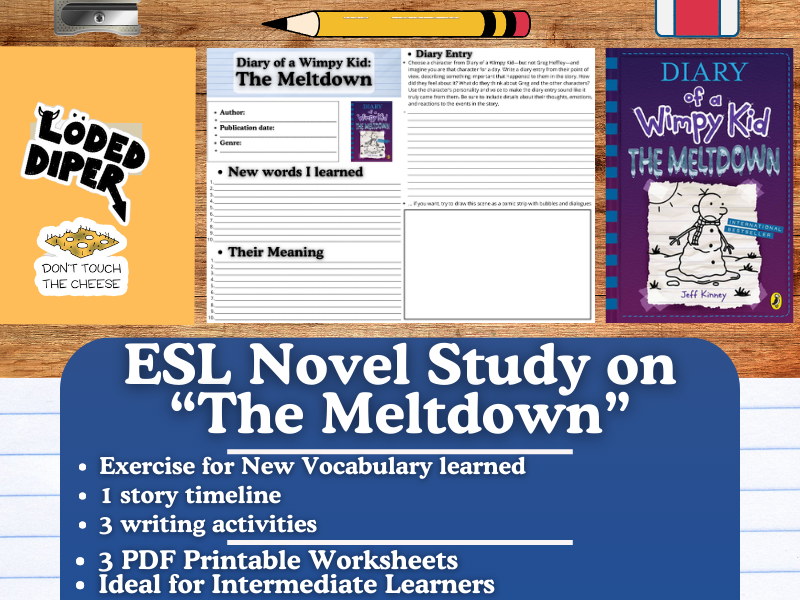
Fill in the novel's author, publication date and genre; complete two 10-item numbered vocabulary lists; write a letter of advice/questions addressed to Greg Heffley about his choices; then write a diary entry from the point of view of a different character in the story, with an optional comic-strip extension.
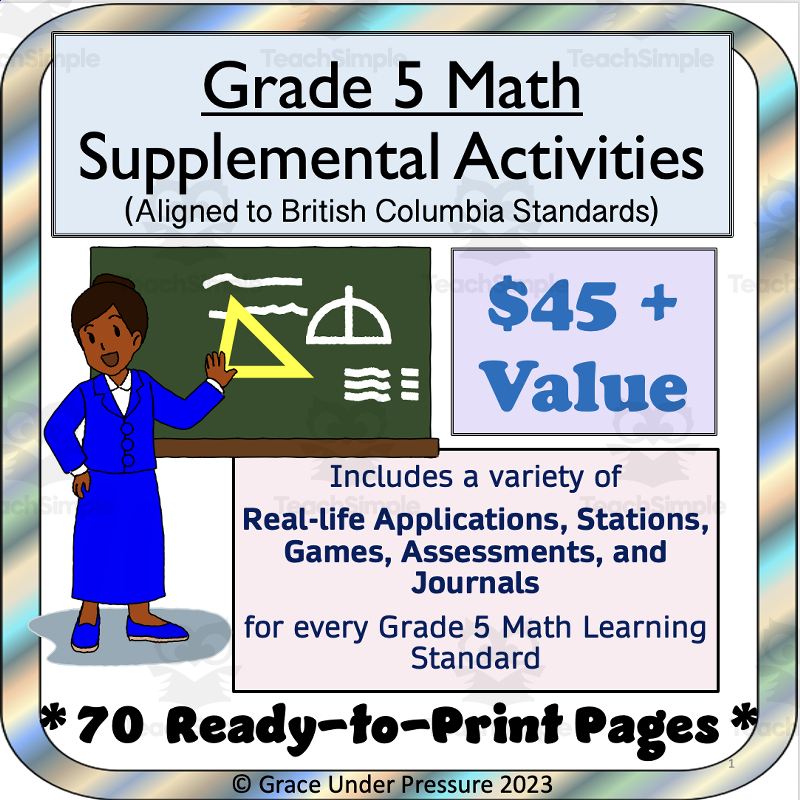
Complete real-life application worksheets, math stations/centers, games, journal prompts, projects, and quick assessments across number concepts, decimals, fractions, whole-number operations, patterns, algebra, and measurement.

Read information sheets/text sections and answer embedded questions, complete graphic organizers on each topic, do crossword/flashcard/sudoku activities, complete a review sheet, and take a unit test.
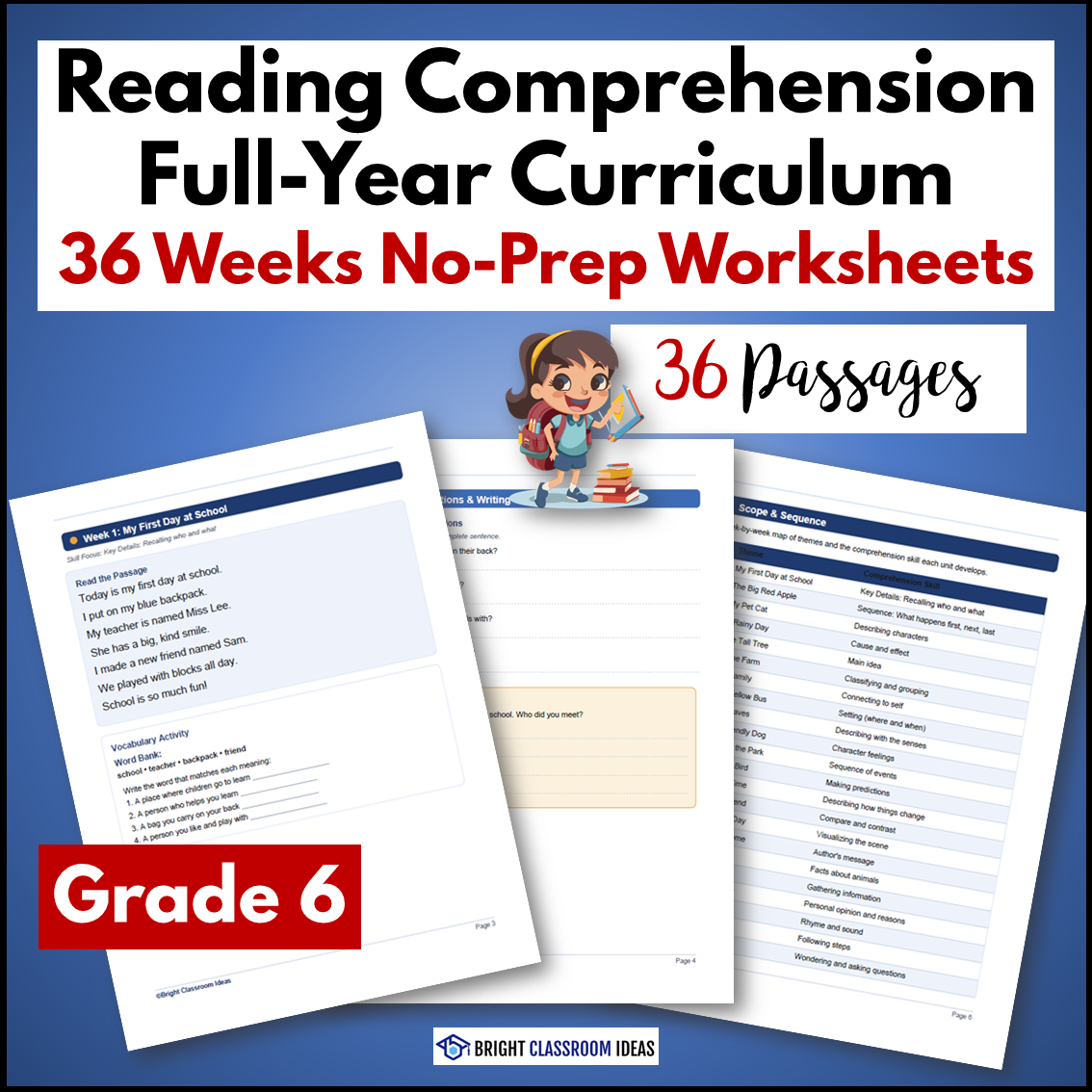
Students read a weekly passage, match vocabulary words to definitions from a word bank, answer comprehension questions (recall, inference, central idea/theme, craft/structure), and respond to an open-ended writing prompt.

Supplement a full year of Grade 6 math instruction (aligned to British Columbia standards) with real-life application worksheets, games, stations, assessments, and journal activities across 19 learning standards.
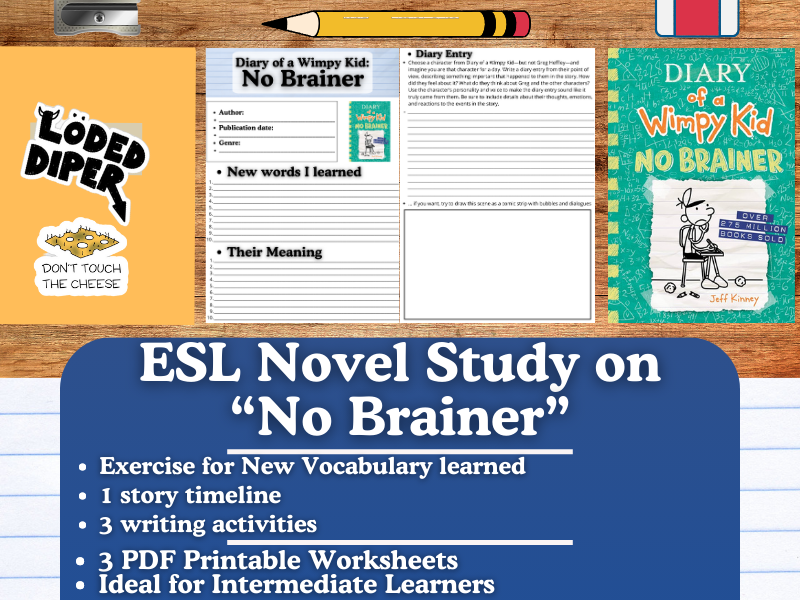
Fill in the novel's author, publication date and genre; complete two 10-item numbered vocabulary lists; write a letter of advice/questions addressed to Greg Heffley about his choices; then write a diary entry from the point of view of a different character in the story, with an optional comic-strip extension.
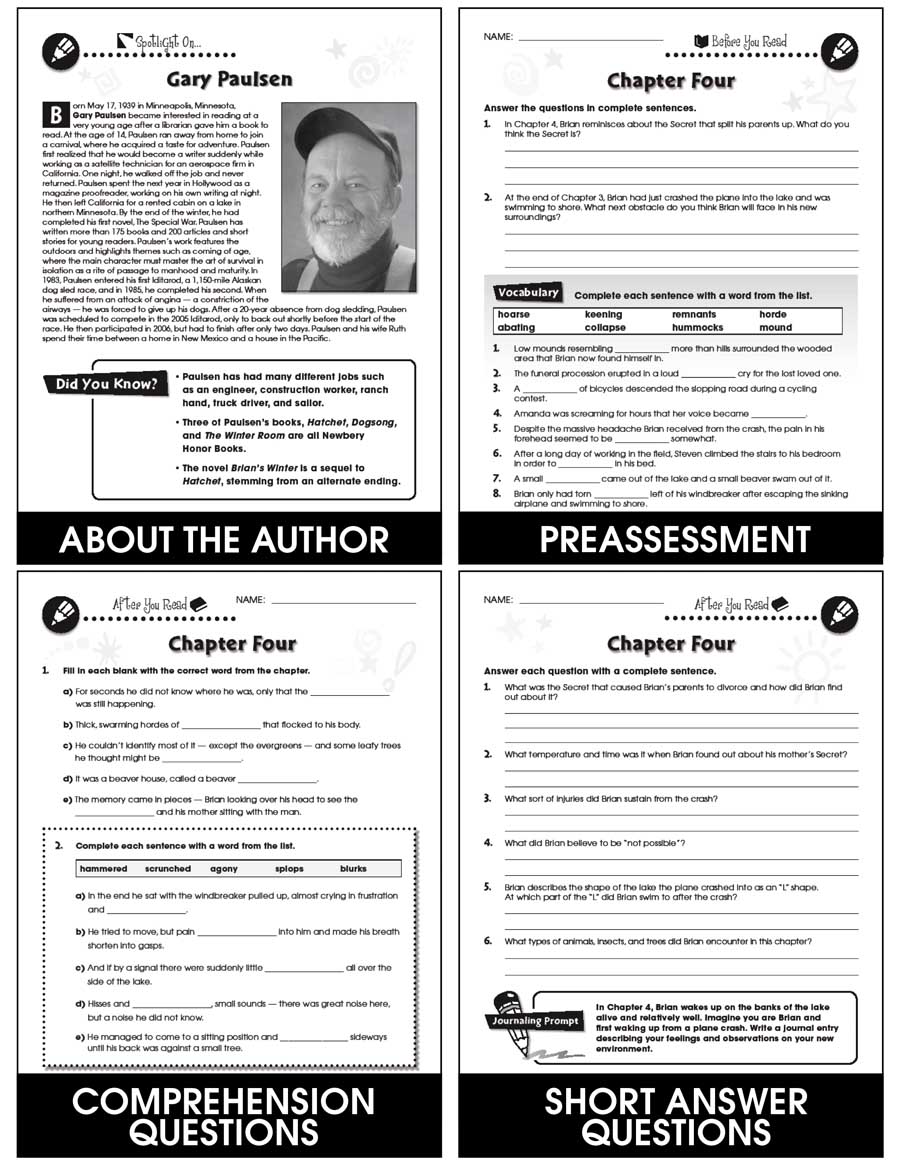
Complete chapter-by-chapter comprehension questions (organized by Bloom's Taxonomy levels: remembering, understanding, applying, analysing, evaluating, creating) across 10 chapter groupings, complete writing tasks, a word search, and a comprehension quiz; teachers use an assessment rubric and an "Easy Marking" answer key plus graphic…
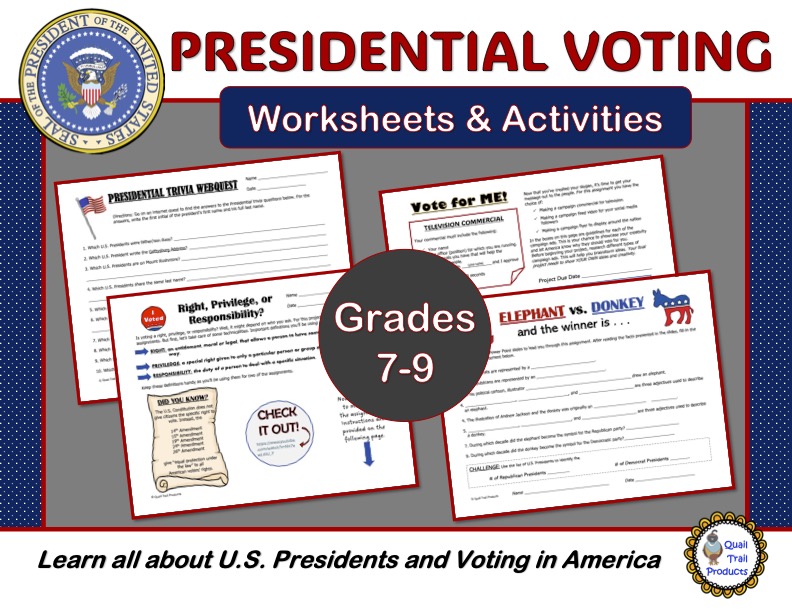
Teach students about U.S. presidents, political party symbolism, and the voting process through a mixed set of slides, task cards, and worksheets, including updated content through the Biden presidency.
Work through vocabulary introductions (proportion, equivalent proportion, cross products, percent, fractional percent, ratio), solve worked proportion problems (recipe scaling, map-distance-to-real-distance conversion, gas-fill-up proportions), and complete a Proportion Quiz.

An interactive notebook workbook to guide middle/high school students through the process of completing a National History Day (NHD) 2022 project on the theme "Debate and Diplomacy in History."
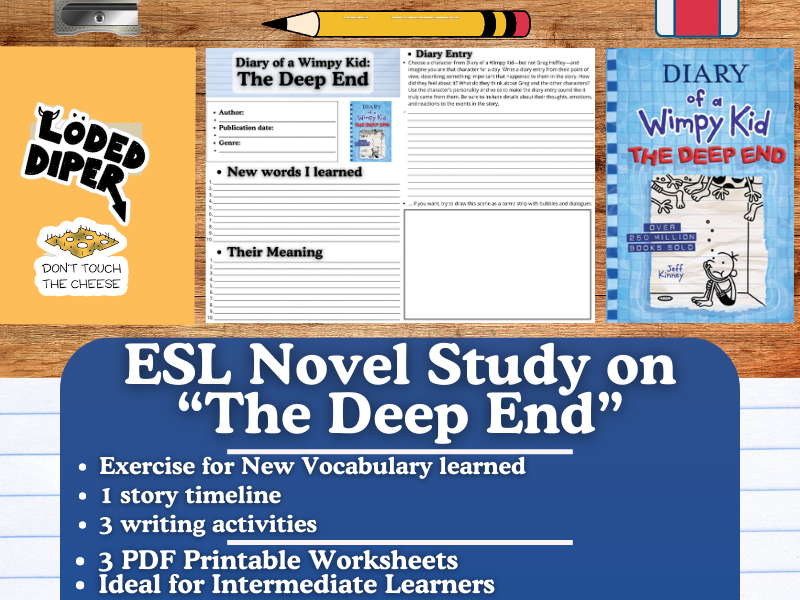
Fill in the novel's author, publication date and genre; complete two 10-item numbered vocabulary lists; write a letter of advice/questions addressed to Greg Heffley about his choices; then write a diary entry from the point of view of a different character in the story, with an optional comic-strip extension.

Teach the writing process (prewriting, drafting, revising, editing, publishing) and support informative, narrative, and opinion writing aligned to Common Core writing standards for grades 3-5.
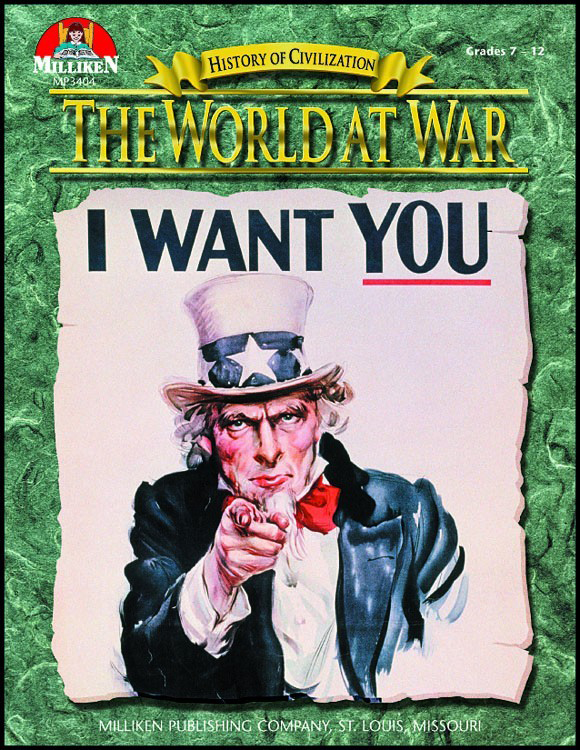
Students read informational text on each historical topic, complete map-labeling exercises (identifying WWI/WWII-era European states and cities), and answer review/test questions, checking work against the included answer key.
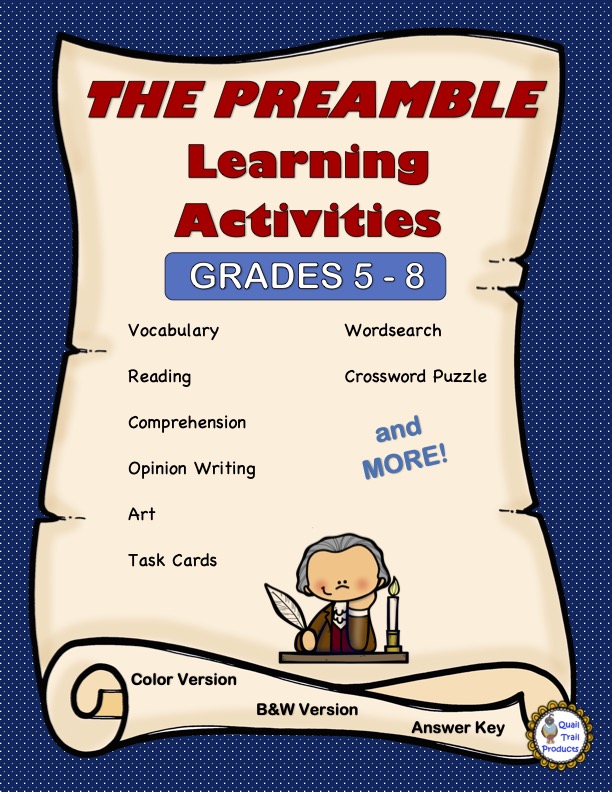
Learn vocabulary terms (defense, domestic, establish, insure, justice, liberty, ordain, posterity, secure, tranquility, union, welfare) via definition cards, answer who/what/when/where/why questions about the Preamble, read an informational passage and answer multiple-choice/short-answer comprehension questions…
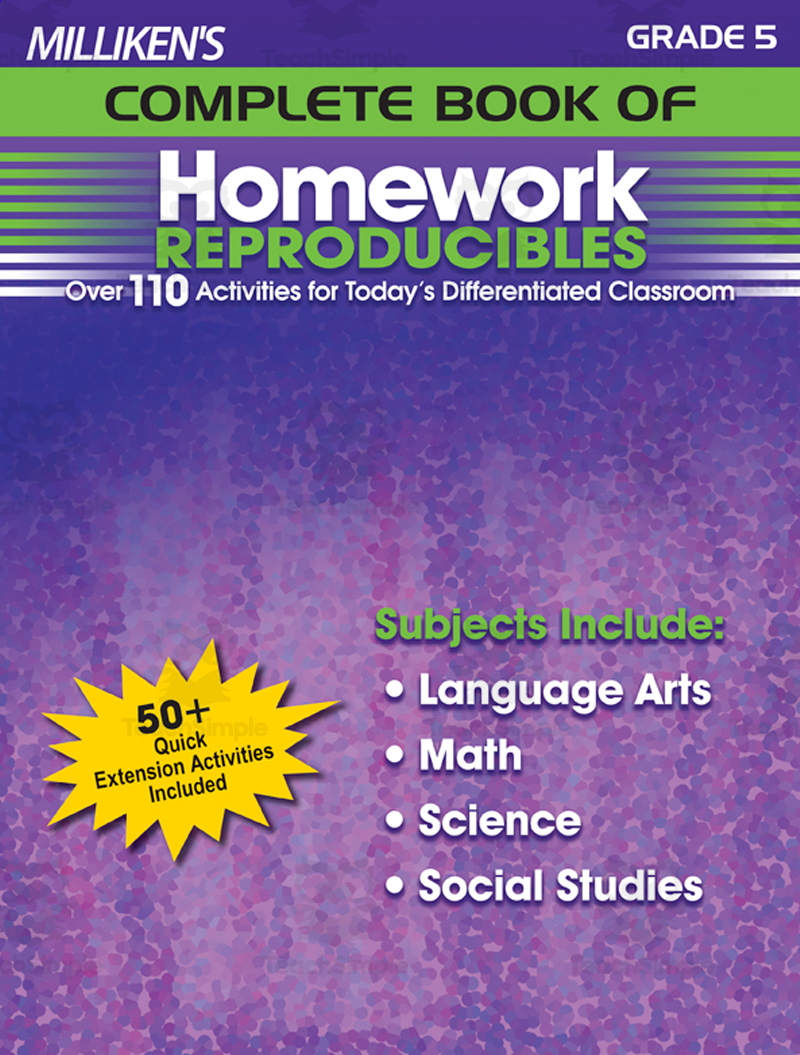
Complete pencil-to-paper practice exercises across four subject areas (fill in blanks, circle/underline, short written responses); specific tasks vary by section and grade level (e.g. a common and proper nouns worksheet).
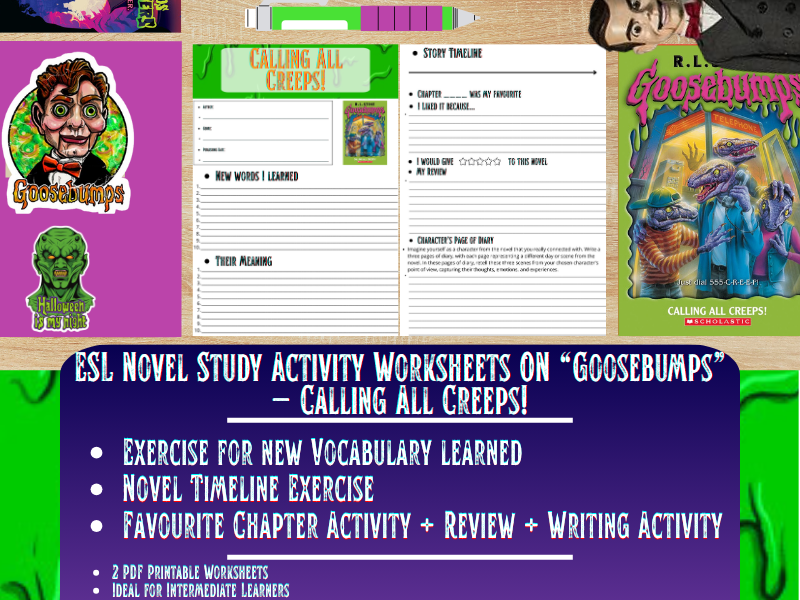
Post-reading ESL/EFL novel-study worksheet for "Calling All Creeps!" by R.L. Stine, combining a vocabulary exercise, reflection/comprehension prompts and creative-writing tasks.

Complete individual reproducible worksheet pages (fill in missing numbers, solve computation problems, color/count, answer word problems, read graphs, etc.), one skill-focused page per topic.

Students solve crossword-grid-style puzzles where Across and Down clues are arithmetic expressions whose numeric answers fill the grid cells; also complete word problems and cumulative reviews.
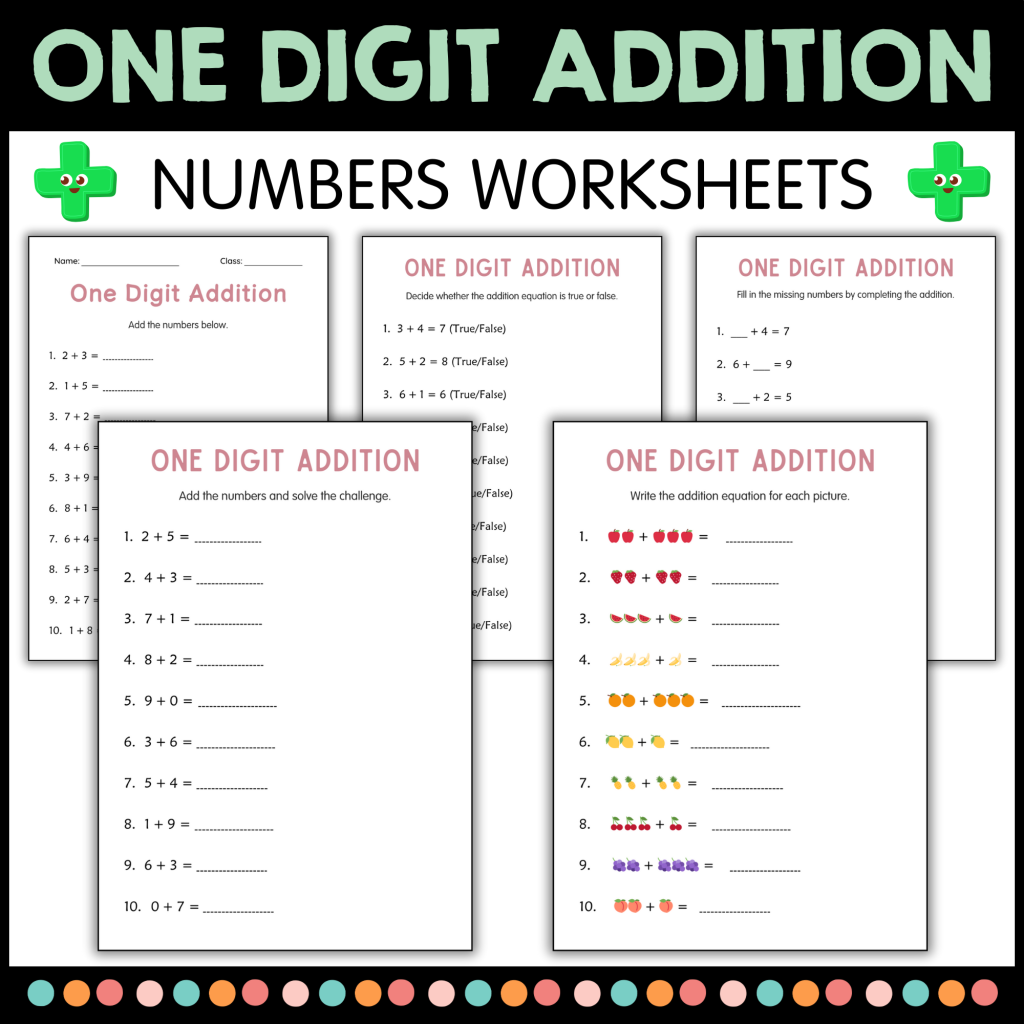
A set of nine varied one-digit addition practice worksheets (basic sums, missing-addend, true/false equations, picture-to-equation, and number-pattern formats) for building early addition fluency.
Complete pencil-to-paper practice exercises across four subject areas; Language Arts activities specifically reinforce word origins, word relationships, context/vocabulary comprehension, complex literature, writing to specific audiences, English conventions. Students may respond orally or in writing depending on class…