2,273 products added recently
Page 2 - High School Worksheets
Provide your high school students with worksheets that challenge them and deepen their understanding of complex subjects. These resources support preparation for college entrance exams and future careers. Incorporate them to enhance your curriculum and student outcomes.
Scientist Lazzaro Spallanzani Fact Sheet, Quiz + Interactive Exercises
Life Sciences, Science, Biology, STEM, History: World, History, Social Studies, Animals, Human Body, Grade 7, 8, 9, 10, Worksheets, Worksheets & Printables, Quizzes, Quizzes and Tests, Teacher Tools, Projects, Activities
Discover Lazzaro Spallanzani – A Scientist Who Changed How We See Life Did you know that Lazzaro Spallanzani made incredible discoveries about how living organisms work? From figuring out how digestion happens to showing that life doesn’t just appear out of nowhere (disproving spontaneous generation), Spallanzani was a true pioneer of biology. His experiments opened the door to modern microbiology and helped us understand processes that we often take for granted today. This teaching resource is designed to help your grades 7–10 students learn about Spallanzani’s life and his groundbreaking experiments in a fun and interactive way. It’s perfect for a 45-minute lesson, with everything you need to make the topic engaging and easy to understand. What’s Included: Concise Informational Text: A clear and engaging overview of Lazzaro Spallanzani’s role in science. Fact Sheet Activity: Encourages students to organize knowledge and work creatively. Quiz with Solutions: Promotes fun, interactive learning and self-assessment. Additional Exercises: Students can create their own questions and collaborate in pairs to deepen their understanding. Flexible Formats: Includes a color and black-and-white printable PDF, as well as interactive H5P tasks for digital learning. Why You’ll Love This Resource: Time-Saving: Perfect for teachers who need a ready-to-go, well-structured lesson. Versatile Use: Ideal for biology, history of science, or cross-curricular lessons in English and science classes. Promotes Independence: Solutions are included, allowing students to check their work and explore the topic at their own pace. Interactive and Engaging: Tasks are designed to keep students actively involved while learning about Lazzaro Spallanzani’s legacy. Whether you use it for a regular lesson, substitute teaching, or as part of a digital learning activity, this resource will make Lazzaro Spallanzani’s contributions come alive for your students. Bring Lazzaro Spallanzani’s fascinating world of science into your classroom and inspire your students to see history and science in a whole new light! Have fun exploring the world of science with your students! Warmly, Lernfitness Did You Know? I teach with a certified therapy dog, and together we focus on creating a positive and inspiring learning environment.
Author Lernfitness
Tags Science, Biology, Famous Scientists Lesson, H5P, Interactive Science Exercises, STEM, History, Scientists, Lazzaro Spallanzani, Digestion
Spot It! – Laboratory Equipment 3 Fun & Engaging Game for Science Lab
STEM, Science, Chemistry, Physics, Life Sciences, Special Education Needs (SEN), Special Resources, Research, Biology, Homeschool Templates, Grade 6, 7, 8, 9, 10, Activities, Games, Worksheets & Printables, Task Cards, Quizzes and Tests, Teacher Tools, Quizzes, Word Problems, Word Searches, Worksheets
Spot It! Laboratory Equipment 3 A Fun & Engaging Game for Science Classrooms 🔬 Make Learning Lab Equipment Fun and Interactive! Teaching students about laboratory equipment doesn’t have to be dull or overwhelming. With Spot It! – Laboratory Equipment, you can turn learning into a fun and engaging experience! This fast-paced matching game is perfect for chemistry, physics, and biology teachers who want to reinforce lab tool recognition in a way that students will love. 🎲 Why This Game Works for Science Teachers ✅ Boosts Visual Memory – Matching images of lab equipment helps students quickly recognize and remember key tools used in science labs. ✅ Encourages Active Participation – Gets students involved instead of passively memorizing lists. ✅ Improves Classroom Engagement – The fast-paced nature of the game keeps students motivated and focused. ✅ Perfect for Any Science Class – Whether you're teaching chemistry, physics, or biology, this game makes learning lab equipment easy and fun. ✅ Promotes Social Interaction – Encourages teamwork, communication, and collaborative learning. 🧪 What’s Included? 🃏 93 Total Cards – You’ll receive three different versions of the game, each with 31 cards: ✔ Round cards – Traditional Spot It! design. ✔ Square cards – Easy to cut and prepare. ✔ Hexagonal cards – Unique design for an extra challenge. 📖 Game Instructions: 1️⃣ Print the cards. 2️⃣ Laminate them for durability (optional). 3️⃣ Cut out the cards in your preferred shape: round, square, or hexagonal. 🎯 How to Play 🃏 Each player receives one card. 🔬 Turn over a card from the stack in the middle. 👀 Find a matching image between your card and the revealed card as quickly as possible. 🏆 If you find a match first, you win the revealed card. 🎉 The player with the most cards at the end wins! This game turns science learning into a competitive, fast-paced, and enjoyable classroom activity that will keep students engaged while reinforcing important lab vocabulary. 📌 Why Teachers Love It ✔ Saves Prep Time – Ready-to-print, simple setup, and no extra materials required. ✔ Great for Small Groups & Whole Class – Use it in science centers, team challenges, or as a warm-up activity. ✔ Adaptable for Different Learning Levels – Suitable for middle school, high school, and even introductory university-level science classes. 🔬 Make Science Learning More Engaging! If you’re looking for a fun, effective, and interactive way to help students learn and remember laboratory equipment, this Spot It! game is the perfect addition to your science classroom. 🚀 Download now and bring hands-on science learning into your classroom today! 📍 Best wishes, Heike from Lernfitness Did You Know? I teach with a certified therapy dog, and together we focus on creating a positive and inspiring learning environment. 🐶✨
Author Lernfitness
Tags Game, Spot It, Educational Card Games, Picture Match, Chemistry, Lab, Biology, Laboratory Equipment, Lab Tools, Physics
Editable Parent Letter – Inform Families About Your School Dog
Social Emotional Learning (SEL), Special Resources, Social Skills, Special Education Needs (SEN), Life Skills, Animals, Life Sciences, Science, Classroom Management, Resources for Teachers, High School, Middle School, Elementary, Early Learning, Homeschool Resources, Not Grade Specific, Adult Education, Classroom Decor, Bulletin Boards, Projects, Activities, Door Decor, Presentations, Teacher Tools, Templates, Worksheets, Worksheets & Printables
Editable Parent Letter Inform Families About Your School Dog in a Clear & Supportive Way 🐶📄 Bringing a therapy dog into your school is an exciting step, but it’s important that parents feel informed, comfortable, and confident about how the dog will be integrated into school life. Whether your dog is in training or already a certified school therapy dog, this editable parent letter gives you a professional yet approachable way to communicate with families. Save time with a ready-to-use structure, while still being able to personalize details to fit your specific school dog program. This letter template helps explain the purpose, benefits, and guidelines of having a school dog while addressing common parent questions and concerns. 🐾 What Makes This Parent Letter So Helpful? ✔ Saves You Time – A clear, structured letter that you can edit to match your school and dog’s situation. ✔ Three Customizable Versions – Whether your dog is in training or fully certified, choose the letter that fits best. ✔ Reassures Parents – Provides families with transparent information about safety, learning benefits, and school policies. ✔ Professional Yet Friendly – A warm, engaging tone that helps build trust with parents. ✔ Completely Editable – Customize in PowerPoint or Keynote, or print the ready-to-use PDF version. 📌 What’s Included? 📥 Three Different Parent Letter Versions: 📝 Therapy Dog in Training – A welcoming letter introducing the school dog’s role during training. 📑 Therapy Dog in Training (Formal Version) – A more structured, professional-style letter. 📜 Certified Therapy Dog – A letter that presents the fully trained dog and highlights its impact. 🎨 Design Options: ✔ Each version comes in five colors + a black-and-white option. 📌 Formats Included: 📄 PDF – Ready to print and use as-is. 🎞 PowerPoint & Keynote – Fully editable, allowing you to personalize names, school details, and policies. 💡 How to Use This Parent Letter 📍 Step 1: Choose the version that best fits your therapy dog program. 📍 Step 2: Edit the content (if needed) to include specific school information. 📍 Step 3: Print or email the letter to parents before introducing the dog. 📍 Step 4: Use it for school board approvals or staff meetings as a formal introduction. 💡 Bonus Tip: Laminate the letter and keep a copy in your classroom or school office for reference! 🌟 Why Teachers & Therapy Dog Handlers Love This Resource ✔ “This saved me so much time! I just edited the details, and it was ready to send.” ✔ “Parents felt reassured because everything was clearly explained.” ✔ “The different versions were perfect—I could choose the one that fit our situation best.” 🐶 Make Parent Communication Easy & Stress-Free! Having a therapy dog in school is a wonderful opportunity—but keeping parents informed is key. This editable parent letter gives you the perfect way to explain everything professionally, warmly, and clearly. 📥 Download now and confidently introduce your school dog to families! 🐾✨ 📍 Best wishes, Heike from Lernfitness Did You Know? I teach with a certified therapy dog, and together we create a positive and inspiring learning environment. 🐶✨
Author Lernfitness
Tags Therapy Dog, Animal-assisted Learning, Inclusive Education Tools, Therapy Dog Rules, Classroom Pet Guidelines, Therapy Dog In School, Social-emotional Learning, SEL, Dog, Parent Letter
Trigonometry
Math, Trigonometry, Grade 10, 11, 12, Worksheets & Printables, Worksheets
Trigonometry Workbook Gear up to explore the intriguing world of trigonometry with this comprehensive workbook designed for students in Grade 10, Grade 11, and Grade 12. This teaching resource focuses on stimulating activities that provide a solid introduction to trigonometry. It incorporates a variety of puzzles and self-check formats that challenge students to think creatively, thereby encouraging an interactive learning environment. This workbook is not just an assortment of worksheets but an easy-to-use guide offering a clear explanation of every featured trigonometric topic at the beginning of each page. These explanations serve as quick references for the students, providing extra review and immediate reinforcement. As such, it ensures understanding before allowing them to dive into hands-on exercises. Each page within this resource aims not only at improving your student's knowledge but building their skills in different areas including: Reasoning Critical thinking Problem-solving alongside their fundamental understanding of Trigonometry concepts such as sine, cosine tangent etc. The workbook also boasts a special assessment section included towards the close end. This unique feature allows educators an opportunity to gauge student progress accurately and is designed specifically with preparatory materials for standardized testing in mind making it versatile enough to use it within various settings - whether it be large groups in classrooms or smaller focus groups during study sessions or even one-on-one tutoring. Consisting Of 48 ready-to-print pages digitally available as a PDF file type; this workbook provides substantial instruction in digestible segments without becoming overwhelming- perfect for homework assignments or reinforcing classroom lessons. In short; The Trigonometry Workbook provides thoughtfully curated content aimed at strengthening core mathematical competency while simultaneously encouraging independent thinking among students.
Author Classroom Complete Press
Tags Math Workbook, Trigonometry Problems, Functions, Right Triangle, Solving Equations
Biomimetic Engineering &Regenerative Design:A K-12 Vertical Curriculum
Science, Basic Science, Life Sciences, Animals, Biology, Human Body, Nature & Plants, Physics, Technology, Engineering, Grade 2, 3, 4, 5, 9, 10, 11, 12, Worksheets & Printables, Worksheets, Workbooks, Word Searches, Dot To Dots, Teacher Tools, Assessments, Lesson Plans, Presentations, Quizzes and Tests
With this K-12 Biomimetic Engineering & Regenerative Design Curriculum Framework, show the student the future of STEM education through a complete, ready-to-use, vertically scaffolded transition from traditional ‘take/make/dispose’ mindsets to innovation inspired by nature! This digital PDF is composed of 35 pages full of professionally-designed and thoroughly researched and organized resources to develop your students’ biomimetic engineering and regenerative design skills: Phase 1: Core Theory includes a comprehensive introduction to the subject with four chapters of in-depth theory, and real-world case studies (The Shinkansen bullet train, Namib Desert beetle, Eastgate Centre’s termite mounds, Lloyd Crossing); Phase 2: Student Workbook contains 10 well-developed, engaging, standards-aligned worksheets for student to use to complete Morphological Mapping, Fluid Dynamics, Structural Integrity, Thermoregulation, Water Harvesting, Structural Color, Kinetic Plant Mechanism, Ecosystem Emulation, and Capstone Regenerative Design Project; Phase 3: Visuals & Teacher Resources provides all of the tools needed for the teacher to use the above materials (printable posters, K-12 Vertical Articulation Map, Biomimetic Design Spiral visual, and Paradigm Shift graph) This curriculum framework is a perfect fit for use in biomimicry, regenerative design, environmental engineering and next-generation STEM/STEAM classrooms. Vertical scaffolding is included (i.e., K-5: Observation & Empathy → 6-8: Mechanism & Translation → 9-12: Chemistry, Thermodynamics & Systems), thus allowing all students to develop their understanding of ecological literacy at an intuitive level from kindergarten through graduation! This framework provides fill-in-the-blank theory prompts, hands-on sketching and calculating, design challenge, and “Function First” taxonomy training on all projects using databases. The materials in this framework require no preparation on the part of the teacher as all links may be instantly downloaded from your computer, printed and used in Google Classroom! What Parents/Schools Appreciate: Preparation for Success in the Looking Future: The curriculum helps develop important skills for the 21st Century such as systems thinking, creating circular designed systems and creating regenerative innovations through hands-on projects and real-world examples that teach STEM concepts and Next Generation Science Standards (NGSS). It also develops the skills students will need to pursue green careers. Zero Preparation Time with Immediate Engagement : Teachers can drum up hours of quality instructional time, as the curriculum has ready-to-print theory chapters, 10 scaffolded worksheets, beautiful visual examples, case studies and lots of real-world examples of biomimicry hands-on projects. This makes for very engaged students in the classroom. Eco-Positive Effect: The curriculum helps provide a paradigm shift from the phrase "sustainable" to helping to regenerate the Earth's environment and teach both parents and administrators about ecological literacy and a higher sustainable carbon footprint. Aligned Across Multiple Grade Levels and All Have Inclusive Loosely Related Activities from Pre K to 12 All Have Common Curriculum- The curriculum support teachers in changing their instruction to a more differentiated style across multiple grade levels, providing differentiated instruction and methods to support students demonstrating gifted abilities! Quality and Professionally-Low Cost: Because of the high quality of the product (design, scientific accuracy, posters, and capstone project), it should cost much more than its price tag indicates. Target Students/Classes : The intended audience for this curriculum is K-12, and if you are looking for a curriculum for K-12, you will find that this is an appropriate curriculum to teach students/ classes; It includes and has built-in differentiation, making it easy to teach every student/ class at any level ( K-12). Elementary (K-5) – emphasis on observing and being empathetic towards others. Teachers can use this curriculum with elementary school Science, Nature Studies, and early STEM Clubs. Middle School (grades 6-8) – Using Mechanisms to Translate- Teachers can use this curriculum to teach their students about how mechanisms work and how they relate to life science, physical science, engineering electives, and project-based learning. High School- (grades 9-12): Chemistry, Thermodynamics & Systems- Teachers can use this curriculum with their high school biology, physics, environmental science, engineering, architecture, and AP/IB STEM classes. The curriculum will be great for educators who work in the public/ private K-12 systems, homeschoolers ( families), STEM coaches, after-school programs, and makerspace facilitators. It can be used throughout a district or school. Copyright and Terms of Use This book was written by Syed Hammad Rizvi and all rights are reserved to him. This book is for the purpose of personal use, or single class use only. You may NOT modify, reproduce, or distribute this book in any way. In other words, do not place this on the internet where it is available for anyone to download. If you wish to share this product with colleagues, please purchase additional licenses at Teachsimple. We appreciate your support in following this agreement. This product was happily created for you by Syed Hammad Rizvi.
Author Creative Book Store
Rating
Tags K12Curriculum, STEMEducation, STEAMEducation, ScienceTeachers, ElementarySTEM, MiddleSchoolSTEM, HighSchoolSTEM, HomeschoolCurriculum, ProjectBasedLearning, NGSS
AI Tools for Research – Fact-Checking & Bias Detection Worksheets
Science, Technology, Computer Science, Engineering, Special Resources, Social Emotional Learning (SEL), Social Skills, Life Skills, STEM, Research, Grade 6, 7, 8, 9, 10, 11, 12, Worksheets & Printables, Workbooks, Worksheets, Word Searches, Writing Prompts, Teacher Tools, Lesson Plans, Assessments, Diagrams, Presentations
This 41-page PDF is a fully prepared to print middle school Digital Literacy Curriculum called "Advanced Digital Tools for Research: Fact-Checking and Detecting Bias Worksheets" designed for students in grades 6-8 to be able to use the V.E.R.I.F.Y. Framework (Validate, Extract, Read Lateral, Interrogate Bias, Find Primary Evidence, Yield Conclusion) to critically evaluate content generated by AI, identify hallucinatory or fabricated information, detect algorithmic bias, and utilize lateral reading skills. This resource is ideal for the AI era and includes: - Four theoretical chapters with practical real-world examples (e.g., Titanic, Great Wall of China, Space Race, Paleo-Diet). - Ten hands-on student worksheets (e.g., Anatomy of a Digital Claim, Spotting Plausible Falsities, Lateral Reading Protocol, Unmasking Structural Bias, The Phantom Citation Mystery, Chronological Confusion, etc.). - Three full-color visual frameworks/diagrams (Fact-Checking Workflow, Algorithmic Bias Triad, Source Credibility Spectrum). - A complete answer key with rubrics and high proficiency examples. - A complete Teacher Implementation Guide including pacing (4-6 class periods), differentiation for ELLs/developing readers and gifted students, formative assessment examples, and examples of exit tickets. - A ready-to-teach PDF requiring no preparation that increases research skills, media literacy, and critical thinking through an alignment to both the CCSS, ISTE, and Digital Citizenship Standards, making it appropriate for use in English Language Arts, Social Studies, Science, and Technology classes. Why Schools/Parents Find It To Be Effective: Develops Real World Skills that Kids Need to Survive in an AI World. Kids will learn how to identify when they are being deceived by hallucinations, bias, and fake citations before they copy and paste into their papers or projects. No Preparation or Planning Time Required - Teachers get full theory, worksheets, visuals, answers and pacing guide when using this product. Parents appreciate the independent critical thinking experience provided to their children. Fun Way to Increase Student Engagement - Kids enjoy using the detective-style worksheets (Tree Octopus Hoax, Phantom Biologist, Brooklyn Bridge Hoax, etc.) to develop critical thinking skills through the use of skepticism as a game. Differentiated, Inclusive, and Fully Accessible - Students are able to access the materials because of the built in supports provided for ELL/Developing Readers, and extension challenges for Gifted Students. Ensures Academic Integrity Now and in the Future - Aligns well with the local school districts expanding policies regarding the appropriate use of AI, as well as standards for digital citizenship. Intended Audience of Book (As per complete PDF analysis): This resource is specifically created for students in Grades 6 to 8 (Middle School). There are examples throughout the resource, as can be seen in the seven (7) and eight (8) examples referenced. Answer keys and teacher guides both have "Grade 6 to 8 Student Workbook" clearly labeled on them. Best Fit: ELA, Social Studies/History, Research projects in Science, Digital Literacy/Media Literacy, or Technology courses Excellent for Homeschoolers, Gifted Programs, or Educators Teaching AI Ethics and Responsible Research. Copyright & Terms of Use This Book is copyrighted by Syed Hammad Rizvi. This resource is solely for personal and individual classroom use. You may not modify, redistribute or sell any part of this resource (including putting it online for others to back or download). In order to share this resource with your coworkers please buy more licenses from Teachsimple. Thank you for following these terms of use. -------------------------------------------------------------------* This product was created by Syed Hammad Rizvi to be enjoyed!
Author Creative Book Store
Rating
Tags AIFactChecking, BiasDetection, DigitalLiteracy, MiddleSchoolWorksheets, AIFactCheck, VERIFyFramework, CriticalThinking, MediaLiteracy, AIforTeachers, DigitalLiteracyWorksheets
The Dangers of Smoking Reading Comprehension Article
Science, Life Sciences, Human Body, Grade 9, 10, 11, 12, Worksheets & Printables, Worksheets
The Dangers of Smoking - A Grade 8 and Up Science Reading Article. This resource is suitable for high school students as well as strong middle-school students. Tackle literacy and science by having your students read and answer questions from a scientific article. Questions include knowledge (direct from the paper), thinking, connecting, application and open-ended varieties. This resource covers the following topics: - What is smoking? - Why is smoking bad for you? - What is secondhand smoke? - What are the health effects of secondhand smoke? - Lung cancer - What makes smoking so addictive? - E-Cigarettes and vaping? Google Classroom and Distance Learning Ready This resource is perfect for in-class or distance learning and integrates seamlessly with Google Classroom. Automatically creates a copy of the reading and puts it directly into your Google Drive with a single click. Purchase --> Open --> Click --> Assign to your students The reading also includes a Microsoft Word and PDF version. Having all three options allow you to assign the reading to your students without worrying about formatting issues as all the work has already been done for you. It also allows you, as well as your students, to access everything no matter where you are or what kind of equipment is being used. --------------------------------------------------- The Problem You Face - Not having the time to properly teach scientific literacy (disciplinary literacy) or improve your students reading comprehension and analysis skills. The Solution This fully editable, NO PREP reading comprehension article is composed of relevant, applicable and engaging reading activities which can be used to: • introduce your topic • improve your students reading comprehension and scientific literacy skills • improve your students' analysis skills • provide an extension activity to students who move at a faster pace • provide extra credit to students in need • measure your students literacy skills --------------------------------------------------- Please note that the preview file contains THREE complete readings. I’ve made them available so you can fully see how the resource is structured as well as the quality of its writing. This resource will take your students between 50-75 minutes to complete and includes some open-ended questions. An answer key is also included for your reference. ----------------------------------------------- You might also be interested in the following individual reading comprehension articles: Health: • The Common Cold • The Flu • Exercise and its Importance for Health • Stem Cell Therapy: The Future of Medicine? • Concussions • Poliomyelitis - Polio • Smallpox • The Measles • Genetics and Gene Therapy • Heart Diseases • Cancer • The Effects of Caffeine • Down syndrome • HIV/AIDS - Informing the Public and Dispelling the Misconceptions • The Effect of Stress on the Brain • The Effect of Sugar on the Body • Whooping Cough • Asthma and Asthma Attacks • The Immune System • Farming: Organic vs. Conventional • The Dangers of Smoking • Parkinson’s Disease • Protective Equipment - Keeping you safe • Fats • Tinnitus – Ringing in the Ears • Cystic Fibrosis • The Effects Of Binge Drinking On Teenagers • Multiple Sclerosis • Painkillers • Diabetes • Radioactivity • Scarring • Allergies • Carbohydrates, Lipids, and Health • The Placebo Effect • The Nervous System Earth and Space: • The Northern and Southern Lights • The Limitations of Space Travel • Why is the Sky Blue? An application of light waves • Stars - The Element Factories of the Universe • Solar and Lunar Eclipses • The Different Types of Clouds • How Weather Works • Natural Disasters • Thunderstorms • Fossils • Geologic Time • Watersheds • Hurricanes • Planets • Phases of Water Energy: • Fossil Fuels • Nuclear Energy: Fission and Fusion • Hydroelectric Energy Production • Solar Energy Production • Wind Energy Production • Renewable Energy Production • Hydraulic Fracturing - Fracking • Biofuels - Food or Fuel? • Electric House • Energy Use and Conservation Physics: • Magnets and Electromagnets • Roller Coasters - History, Design, and Function • How Do Boats Float? • Optical Phenomena • The Effects of Everyday Forces • Hydraulics • Hot-Air Balloons • Simple Machines • Automobile Safety • Pneumatics Chemistry: • The Chemistry of Explosions • Plastics: A Marvel Of Innovation • The Chemistry of Paint • Water Softeners and Hard Water • Cleaning up Acid Spills • The Accumulation of Plastic in the Ocean • Chemistry of Cooking • Chemistry of Cosmetics • Blood Analysis and Forensics • Radioactivity • Desalination for Drinking Water • Rust-Proofing Biology: • Fermentation and Food • DNA Paternity Tests • Laser Eye Surgery • Physical Adaptations • Muscle Growth • Genetically Modified Organisms • Mosquitoes And The Diseases They Spread • Twins • GERD and Acid Reflux - A Digestive System Disease • Bats – Misconceptions, Importance, and Facts • Superbugs - The Super Villains of Modern Medicine • Heart Attack and Stroke • Why Leaves Change Color In The Fall Ecology and the Environment: • Invasive Species • Ecosystems • Pesticides • The Importance of Bees • Coral Reef Ecosystems and their Future • Climate Change • Hydraulic Fracturing - Fracking • Farming: Organic vs. Conventional • Oil Spills and Their Consequences • Bioaccumulation and Biomagnification • RuBisCO - Earth's Most Important Protein • Symbiotic relationships between plants and insects • Smog - Its Causes and Dangers • Ocean Acidification • Pollution Control Devices • Tap vs Bottled Water • Predator Prey Relationships • Greenhouse Effect Natural Disasters: • Volcanoes: The Benefits and Devastation • Earthquakes Part 1 • Earthquakes Part 2 • Tsunamis • How the Dinosaurs Died --------------------------------------------- Each summary is rich with age appropriate content (grades 8 and up) and is 2.5-3 pages long (13-font). Following each is a list of 8-13 questions along with the answer key, which will help guide your students understanding. How this product will help your students: - Improve their scientific and disciplinary literacy skills - Improve their reading comprehension and scientific knowledge - Give them insights into important scientific concepts - Provide an extension activity for your faster moving/more gifted students How this product will help you: - Allow you to meet the NGSS, TEKS and Common Core Standards - Provide you with a concise introduction to your topic - Provide you with an engaging and easy to leave substitute plan which will keep your students engaged and on task - Prove you a means of measuring your students' literacy skills We don't spend enough time teaching scientific literacy to our students. This is either because we don't have the resources to do so effectively or we don't have the time. However, teaching our students to become scientifically literate is vital if we want them to succeed in life. We need them to know about the world they live in and about the issues they face. Even issues as simple as the common cold are misunderstood and can lead to the misuse of antibacterial drugs eventually rendering them ineffective. It can be used as a tool in your teaching arsenal on a regular basis, an extension activity for your faster learners, left for a substitute in an emergency or planned absence or as an extra bit of information for a topic. ***************************** For free resources, useful teaching tips, and tools, please visit my blog - TeachScienceWithFergy.com If you have any questions please feel free to send me an email - devon@teachwithfergy.com
Author Teach With Fergy
Tags Smoking, Arsenic, Cigarettes, Reading, Comprehension
Fossils Reading Comprehension Article
Science, Earth and Environmental Sciences, Earth Sciences, Grade 9, 10, 11, 12, Worksheets & Printables, Worksheets
Fossils Reading Comprehension Article A comprehensive and engaging teaching resource designed to enhance disciplinary literacy in science. This multi-dimensional tool is a must-have for educators across platforms. Formatted to improve student's reading comprehension around HIV/AIDS, this resource explores the following aspects: Stages of infection Transmission precautions Treatment methods Prevailing misconceptions and stigmas associated with HIV/AIDS It also exposes students to current data providing real-world context. Versatile Teaching Tool This resource can be used for both group work and individual tasks assigned as homework, making it suitable for online and classroom learning environments. It integrates seamlessly with Google Classroom for efficient distribution. The article is available in Microsoft Word & PDF formats ensuring accessibility from any device or platform. Promoting Critical Thinking & Engagement The Fossils Reading Comprehension Article fosters critical thinking among students by providing open-ended questions at the end of each section accompanied by an answer key. Subjects like genetic disorders or diseases-related conditions like cancer provide meaningful insight into science-related topics enriching scientific literacy amongst learners from grade 9-12 studying earth sciences. Fostering Functional Literacy And Empathy: With approximately 50-75 minutes engagement with this comprehension-centric literary asset—students will not only enhance their analytical skills but they will be empowered towards becoming informed citizens capable of tackling harmful stigmas linked with such sensitive health concerns. In Conclusion... Such resources are vital steps towards fostering not only functional literary competency but also delivering knowledge tied down with empathy - shaping a younger generation that is well-informed & sensitized toward global health concerns.
Author Teach With Fergy
Tags Fossils, Reading Comprehension, HIV/AIDS, Science Education, Dispelling Stigma
ESL Novel Study on "Diary of a Wimpy Kid: The Deep End" - Jeff Kinney
ELA, Language Development, ESL, Reading, Library, Writing, Creative Writing, Grade 6, 7, 8, 9, Worksheets & Printables, Novel Studies, Writing Prompts, Worksheets
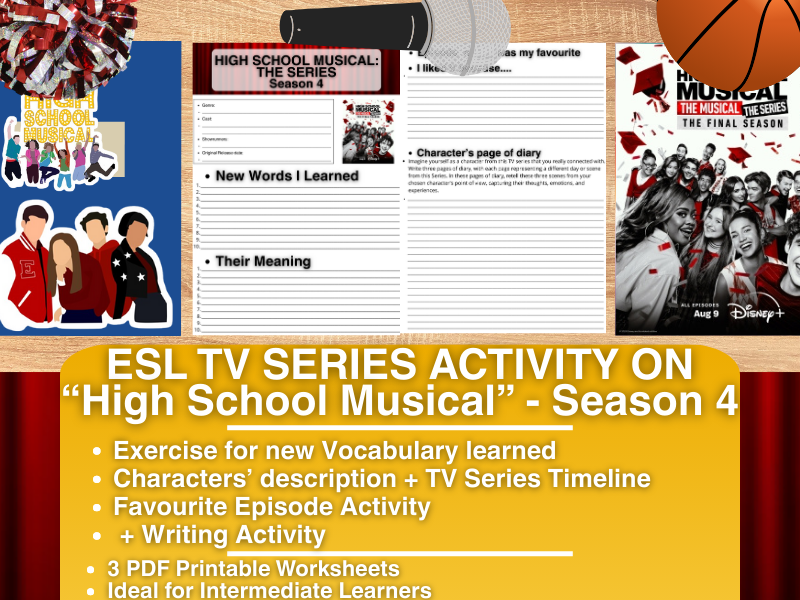
ESL Novel Study Worksheets on "Diary of a Wimpy Kid: The Deep End" - Jeff Kinney In this fantastic ESL teaching resource it is offered a comprehensive novel study worksheet activity (3 printable PDF pages; Worksheets) focused on "Diary of a Wimpy Kid: The Deep End" by American author Jeff Kinney. Ideal for post reading activities, this English Second or Foreign Language (ESL EFL) teaching resource can be more than great to enhance students' overall understanding of this coming of age novel by American author Jeff Kinney. The English Second or Foreign Language Novel Study activity (3 printable PDF pages; Worksheets) can be ideal for ESL EFL TESOL learners in middle and high school (from 6th grade to 9th grade, teen students). In this Novel Study on "Diary of a Wimpy Kid: The Deep End" (3 printable PDF pages; Worksheets), English Second or Foreign Language teachers (ESL EFL) can find the following ESL novel study activities: 1 part on general information (author's name, genre, and publishing date) 1 part related to New Vocabulary Learned (1 space where to write 10 new words they learned and 1 space where students can write their related meaning) 1 part related to the story timeline (story timeline where learners set in a chronological order the most important moments during the narration) First writing activity on students' review on the novel Second writing activity (imagining to write a letter to Greg Heffley, the main character, and to give him some advice) Third writing activity (pretending to be a character, other than Greg Heffley, and describing a scene of the book from his/her point of view + space where students can draw with comic bubbles the scene they described) This ESL EFL (English Second or Foreign Language) Novel Study Activity on "Diary of a Wimpy Kid: The Deep End" by American author Jeff Kinney (3 PDF Printable Slides; worksheets) can be suitable for ESL EFL learners from 6th grade to 9th grade to study this coming of age novel Learning with Alan is a Teaching Resource/Educational Material Store whose aim is to help Teachers, Educators and Tutors to achieve their teaching objectives while creating a fun and stimulating learning and teaching environment. Remember. Learning is Fun. Never Forget! If you want to browse more of my English Second or Foreign Language (ESL EFL) Teaching Resources, click here Learning with Alan!
Author Learning with Alan
Tags ESL, English Second Language, English, Novel Study, Worksheets, Printable, Activity, Writing Activity, Diary Of A Wimpy Kid, Teens
Digital Citizenship & Cybersecurity Threat Simulation Pack
Science, Technology, Computer Science, Engineering, Research, Resources for Teachers, Classroom Management, Community Building, Special Resources, Social Emotional Learning (SEL), Homeschool Curriculum, Homeschool Templates, Grade 9, 10, 11, 12, Worksheets & Printables, Writing Prompts, Worksheets, Word Searches, Teacher Tools, Assessments, Lesson Plans, Quizzes and Tests, Quizzes, Tests
Develop your students’ practical skills in digital security via this complete Digital Citizenship and Cybersecurity Curriculum. This second-to-none Cybersecurity Threat Simulation Pack allows teachers to provide their students with a hands-on learning experience that far exceeds simple “strong password” teachings. Students learn about the psychology of social engineering, spear phishing, cryptography (encryption, decryption, hashing, and the avalanche effect), vulnerability to packet sniffer and evil twin man-in-the-middle attacks, OSINT and metadata risks, the permanence of their digital footprint, ransomware mitigation, synthetic media (deepfakes), and managing credential stuffing attacks. Includes: 4 detailed theory chapters including real-world examples (Operation Phantom Credentials, Midnight Hash Collision, Café Doppelgänger Breach, Overexposed Athlete) 10 high engagement student worksheets including: Social Engineering Autopsy, OSINT Investigation, Cryptographic Frameworks, Ransomware Playbook, Ethics of Hacktivism, Synthetic Media Verification, etc. 7 Knowledge Verification and Assessment Nodes (3 underscored blanks) Complete teacher materials and instructional aids including concept maps (Cybersecurity Threat Taxonomy), etc. Ideal for use as 1-1 or in project-based learning models. Available immediately as PDF downloads. No prep needed! Great for high school digital citizenship; cybersecurity electives; computer science; information technology; and media literacy classes. Keywords: digital citizenship curriculum for high schools, cybersecurity student worksheets, cybersecurity simulation, social engineering lesson plan, OSINT activities, how to teach ransomware, password security curriculum, digital footprint lesson, deepfake verification lessons, ethical hacking for high schools, TpT cybersecurity bundle. Why Schools and Parents Appreciate It: Transforms passive “internet safety” policies into active, high-risk simulation scenarios, which students retain long after the event. No prep, print-ready worksheets and answer blanks supplied equal instant classroom student engagement and assessment. All modern threats are covered (phishing, ransomware, deepfakes, open-source intel [OSINT], and credential stuffing), so that students know how to properly identify real-world attacks. Developing ethical digital citizens and teaching college and career readiness (a few universities are requiring all students become aware of cybersecurity). Saves teachers resources by providing over 40 pages of teacher materials (including an entire curriculum with teacher visuals and answer keys). Intended Audience/Classroom Setting: This resource has been developed specifically for children aged 14-18 years old (i.e., students in grades 9 to 12). The case studies involve high school seniors who are applying for scholarships/financial aid, student-athletes involved in high school football, track coaches (in their respective teams), school district divisions (i.e., regional) and students heading to universities. Given the complexity of the lesson topics (asymmetrical encryption; SHA-256 avalanche effect; MITM/evil twin attacks; OSINT metadata exploitation; ransomware IR playbooks; deep fake epistemological security), it is not suitable for children in grades 6-8 due to their maturity level (14-18) but is ideal for the following: Grades 9-12 Digital Citizenship/Digital Literacy Cybersecurity / Information Security Electives Computer science / ICT classes Media literacy/journalism (synthetic media/OSINT sections) CTE (Career and Technical Education) Cybersecurity Pathways Copyright / Terms of Use: Syed Hammad Rizvi has placed copyright on this book. This resource can be used for private (personal / classroom) use only. You may not change, copy, or sell any portion of this resource. Additionally, you will not put this on the internet for free public access (so users have to pay to download). Please purchase additional licenses through Teachsimple to share this with coworkers. Thank you for complying with these terms of use. This product has been produced with much joy by Syed Hammad Rizvi.
Author Creative Book Store
Rating
Tags DigitalCitizenship, CybersecurityCurriculum, CyberSecurityHighSchool, DigitalCitizenshipCurriculum, CybersecurityForStudents, HighSchoolCybersecurity, DigitalLiteracyCurriculum, CyberThreatSimulation, SocialEngineeringLesson, SpearPhishingWorksheet
Svante Arrhenius – A Look at the Scientist Behind the Ion Theory
Life Sciences, Science, STEM, Social Studies, Biographies, Inventors, Basic Science, Physics, Chemistry, Technology, Grade 6, 7, 8, 9, 10, 11, Worksheets, Worksheets & Printables, Quizzes, Quizzes and Tests, Teacher Tools, Projects, Activities
Svante Arrhenius – A Look at the Scientist Behind the Ion Theory Comprehension Activities A classroom-ready reading and comprehension activity ⚗️📘 (PDF + H5P) ⚗️📘 A printable and digital resource for grades 7–10 science and cross-curricular teaching 🧪🧠 This resource introduces students to Svante Arrhenius, a Swedish chemist best known for his work on electrolytic dissociation and the behavior of ions in solution. His theories laid the groundwork for how we understand acids, bases, and conductivity – topics that still form a core part of chemistry education today. The material is structured to be simple and flexible. It includes a short informational text in student-friendly language, along with a worksheet and quiz questions. The tasks are designed so students can work independently or in pairs. It’s suitable for both regular lessons and substitute teaching – no special background knowledge is needed. What’s included: Reading text on Svante Arrhenius and his scientific contributions Profile worksheet to summarize the main ideas Quiz questions with an answer key Two optional extension tasks: – Students write their own questions based on the text – Exchange and answer questions in pairs Formats: – PDF (printable and digital) – DOCX (editable text only) – H5P (interactive version for LMS use, no images) How it works in the classroom: I’ve used this type of resource during units on acids and bases or to give context to chemical theories. It also works well when introducing the idea of scientific models and how theories develop over time. The included H5P version makes it easy to assign digitally. Students can complete the quiz independently and get feedback right away. The extra tasks are helpful for early finishers or when you want to add peer interaction to a quiet reading lesson. Print it, share it, or upload it – and the lesson’s ready. Have fun exploring the world of science with your students! Warmly, Lernfitness Did You Know? I teach with a certified therapy dog, and together we focus on creating a positive and inspiring learning environment.
Author Lernfitness
Rating
Tags Science, Famous Scientists Lesson, H5P, Interactive Science Exercises, STEM, Scientists, Chemistry, Acid-base Theory, Dissociation, Svante Arrhenius
Research Organizer & Essay Assignment: George Orwell
ELA, Literature, Writing, Grade 9, 10, 11, 12, Activities, Projects, Worksheets & Printables, Worksheets
Few authors have kept readers engaged and thinking about current events for a longer period of time than George Orwell. This resource provides your students with the opportunity to independently research and write about the life the author of 1984 and Animal Farm with this engaging research planner and essay assignment. This carefully scaffolded and easy-to-assign-AND-assess resource has been designed to guide student learning from George Orwell fact-collection to the careful development of a five-paragraph research essay. Teaching this resource could not be easier! Start by handing out the background research and note-taking worksheet (you could also ONLY hand this out if you want a shorter lesson!). Once students have found their facts and sources, provide them with the essay outline activity, which guides them step-by-step through the requirements of a short research essay. From there, drafting their essay, using the provided peer review checklist, and submitting their final draft will be no problem at all. And then you can assess their work with the provided Common Core rubric! Use this entire resource as a complete research lesson or just part of it as a short research activity or sub plan! This TeachSimple download includes: - A George Orwell essay writing assignment with directions, requirements, research essay writing tips, a peer review checklist, and Common Core-tied grading rubric - An editable rubric, provided as a link, that lets you make adjustments to the grade values and guidelines. This link is provided as as Google Sheet specifically built for integration into Google Classroom, although you can also modify it for use in other Learning Management Systems (LMSs) - A George Orwell biography and note-taking worksheet that will guide your students through information gathering. This straightforward two-page handout includes instructions for background research, a fun drawing section, and an area to cite quality sources and organize conducted research - A research essay outlining worksheet, so students build on their George Orwell notes in a clear and simple manner as they build their work towards a draft and final paper - All 6-pages of this lesson are provided in full-color and B&W versions Although this resource can be fitted for any secondary Language Arts classroom, it has been carefully designed to work best in grades 8 through 11. The included rubric is subtly but specifically tied to Common Core ELA Standards for Language (3) and Writing (2 and 7). This resource is provided as a print-ready, bookmarked, and adjustable PDF file. The rubric is also included as an editable Google Sheet. This resource contains 6 pages and 1 Google Sheet.
Author The Language of Educational Art, LLC
Tags Essay, Research, Rubric, Notetaking, Oulining
Research Organizer & Essay Assignment: Alexander Hamilton
Social Studies, ELA, History, History: USA, Writing, Research, Grade 7, 8, 9, 10, 11, 12, Activities, Projects, Worksheets & Printables, Worksheets
Alexander Hamilton Research Project Students dive deep into the life of Alexander Hamilton with this engaging research and essay assignment. The step-by-step materials guide learners from collecting facts to drafting a five-paragraph essay. The resource includes an assignment sheet outlining essay requirements, research and writing tips, peer review checklist, and rubric tied to Common Core standards. An editable rubric lets you customize grade values. A biography worksheet scaffolds background research, note-taking, drawing, and citing quality sources. The outline worksheet builds a framework for the final essay. Provided in color and black-and-white, this versatile resource works well for individual, small group, or whole class research projects in grades 7-12. The complete packet contains 6 printable pages plus an editable rubric to help students succeed in researching and essay writing on this influential Founding Father.
Author The Language of Educational Art, LLC
Tags Essay , Notetaking, Research, Outlining
Pollution Control Devices - Science Reading Article - Grade 8 and Up
Science, Earth and Environmental Sciences, Environmental Science, Grade 9, 10, 11, 12, Worksheets & Printables, Worksheets
Pollution Control Devices - Science Reading Article - Grade 8 and Up A comprehensive teaching resource for high school educators, also suitable for middle-school students strong in science. It combines literacy and science learning for a multifaceted educational experience. Content: A scholarly article on pollution control devices, supplemented with varied questions testing different cognitive levels – knowledge from the paper, thinking concepts, making connections, application ideas and open-ended queries. Instant readiness: Downloadable physical or digital document ready to be used immediately. Requires no meticulous formatting or adjustments before use. Multipurpose: Can introduce a topic with tangible information, improve reading comprehension and scientific literacy abilities, enhance analytical skills through thought-provoking questions or serve as an extension activity for advanced students. Emphasis themes include: Brief history of pollution control devices; Different specific devices serving diverse functions; Current applicability; controversies surrounding these devices; Their environmental impacts both adverse and positive; Their future modifications anticipation. This teaching material is Fully Editable! . You can shape it according to your class needs effortlessly! Inclusion Worthy Mentioning: Google Classroom Compatibility ` To cater the virtual learning enthusiasts due to unforeseen circumstances like school closures or distance learning– Google Classroom bonds without any extra efforts.` Yet another bonus would be that it comes along with "Answer keys". Guiding your students gently through their learning journey. Average Resource completion time: 50-75 minutes. Document formatted in friendly-font ensuring easy readability. The vision of this teaching solution is boosting scientific literacy among students without extra time-consuming preparations. It strategically merges literacy skills enhancement with topic comprehension promoting a conducive academic environment. Meet NGSS, TEKS and Common Core Standards using Pollution Control Devices - Reading Article - Grade 8 and Up.
Author Teach With Fergy
Tags Pollution Control, Science Reading, Comprehension Questions, Environmental Impacts, Google Classroom
Theodor Schwann – Fact Sheet, Quiz & Interactive PDF (incl. H5P)
Life Sciences, Science, Biology, STEM, History, Social Studies, Biographies, Inventors, Basic Science, Nature & Plants, Grade 6, 7, 8, 9, Worksheets, Worksheets & Printables, Quizzes, Quizzes and Tests, Teacher Tools, Projects, Activities
Theodor Schwann – Fact Sheet, Quiz & Interactive Version (PDF & H5P) This lesson-ready material introduces students to Theodor Schwann 🧪 and his contribution to one of the most important concepts in biology: the cell theory 🔬. While many students in grades 7 to 10 already know that all living things are made of cells, they often don’t know where this insight comes from – or who helped uncover it. In this lesson, students explore the work of Theodor Schwann, who, together with Matthias Schleiden, laid the foundation for modern cell biology. The materials are designed to fit into a 45-minute session ⏱️ and work well in both print and digital formats. I’ve used them in regular biology lessons as well as for independent learning phases or when a quick but meaningful sub plan was needed. The resource includes a short, accessible reading passage about Schwann’s scientific discoveries. After reading, students fill in a fact sheet 📝 to summarize key information, and then answer quiz questions to check their understanding. What worked really well in my class was the final task: students created their own questions based on the material and exchanged them with a partner. It led to some thoughtful discussions and helped them reflect on what they had actually learned 💬. You’ll find two versions of the printable PDFs – one in color 🎨 and one in black and white. The included H5P version offers a digital alternative for interactive use, especially useful on learning platforms or digital boards (note: the H5P version contains no design elements, just the interactive tasks). Included: Informational text about Theodor Schwann Fact sheet task Quiz questions with answer key Creative student task (write your own questions) Printable PDFs (color & B/W) H5P interactive version The materials are self-explanatory and suitable for classroom use, homework, or digital learning 💻. 🚀 Download now and bring the legacy of Theodor Schwann into your biology lessons today! 📍 Best wishes, Heike from Lernfitness Did You Know? I teach with a certified therapy dog, and together we create a positive and inspiring learning environment. 🐶✨
Author Lernfitness
Tags Science, Biology, Famous Scientists Lesson, H5P, Interactive Science Exercises, STEM, History, Scientists, Cytology, Theodor Schwann
Common Core Math Activities For Grade 9
Common Core, Math, Grade 9, Workbooks, Worksheets & Printables, Worksheets, Activities
In 9th grade, math typically centers on Algebra I, but may also cover other higher-level math topics like Geometry, Algebra II, Pre-Calculus, or Trigonometry. This year, students will expand their knowledge and use of quadratic and exponential functions along with other complex mathematical ideas. Ninth graders must grasp concepts thoroughly before progressing, or they will quickly become disoriented and bewildered. The ideal ninth grade math curriculum will offer students the opportunity to practice and expand on the skills learned in middle school. In essence, at the beginning of the year a 9th grade math student should be able to: Show exceptional proficiency in mathematical calculations. Examine and address multiple issues by applying the principles of the Pythagorean theorem. Employ logical thinking to address complex issues involving rational and irrational numbers. Rearrange algebraic equations and find the solution. This worksheet comprises 40 activities aimed at aiding your students in honing their Grade 9 math skills across the board.
Author Bright Classroom Ideas Marketplace
Tags Common Core, Math, Grade 9, Usa, Curriculum, Standard
Linus Pauling – Scientist Profile and Reading Tasks
Life Sciences, Science, STEM, Social Studies, Biographies, Inventors, Basic Science, Physics, Chemistry, Technology, Grade 6, 7, 8, 9, 10, 11, Worksheets, Worksheets & Printables, Quizzes, Quizzes and Tests, Teacher Tools, Projects, Activities
Linus Pauling – Scientist Profile and Reading Tasks Comprehension Activities A short reading and activity set (PDF + H5P) ⚗️📘 A printable and digital resource for grades 7–10 science and cross-curricular teaching 🧪🧠 This ready-to-use resource introduces students to Linus Carl Pauling – a groundbreaking chemist and one of only two people to receive two unshared Nobel Prizes. His work on chemical bonding, molecular structures, and vitamin research shaped modern chemistry and continues to influence science education today. He’s also remembered for his outspoken views on peace and social responsibility, which makes him an interesting figure across subject areas. The material is designed to help students understand both the scientific and personal contributions of Pauling. It includes a short reading text, a guided profile worksheet, and a short quiz. Two extension tasks allow students to engage more deeply with the text by creating their own questions and discussing them with a partner. What’s included: Informational text on Linus Pauling (student-friendly language) Printable worksheet for creating a profile Quiz questions with solutions Two optional tasks for independent or pair work Formats: – PDF for print and digital use – Editable DOCX (text only, without images) – Interactive H5P version (suitable for most learning platforms) How it can be used: I’ve used materials like this during units on chemical bonding, scientific biographies, or even in interdisciplinary lessons that connect science with ethics or activism. It’s also worked well for cover lessons, as the structure is simple and students can work independently. The H5P version allows students to complete the quiz digitally and get instant feedback, which is helpful in blended learning environments or for homework. The tasks are flexible: they can be used as a full lesson, a review activity, or a meaningful extension when you want to slow down and connect content to real people. Minimal prep. Easy to adapt. A great way to make science a little more human. Have fun exploring the world of science with your students! Warmly, Lernfitness Did You Know? I teach with a certified therapy dog, and together we focus on creating a positive and inspiring learning environment.
Author Lernfitness
Rating
Tags Science, Famous Scientists Lesson, H5P, Interactive Science Exercises, STEM, Scientists, Chemistry, Linus Pauling, Nobel Prize Winner, Chemical Bonding
Ecosystems - Science Reading Article - Grade 8 and Up
Science, Life Sciences, Biology, Grade 9, 10, 11, Worksheets & Printables, Worksheets
Ecosystems - Science Reading Article - Grade 8 and Up A valuable teaching resource designed for high school educators and homeschoolers alike, the Ecosystems - Science Reading Article introduces students to vital concepts in the field of ecology. Primarily intended for students in grade 8 and above, this convenient downloadable product can also benefit strong middle-school learners with a penchant for science. About The Article The Ecosystems article effectively advocates literacy within scientific education. It features meticulous information based on well-versed research, providing answers to fundamental ecosystem-related inquiries such as: What is an ecosystem? What are the parts of an ecosystem? How do different parts of the ecosystem interact with one another? Usability In Classroom & Digital Compatibility Tutors find it easy to use this tool within their curriculum due to its 'ready-to-go' nature. Designed with today's digital world in mind, integration with Google Classroom is smooth making distance learning effortless. Single-click feature enables automatic copy generation directly into your Google Drive eliminating hassle. Variety Of File Formats Provided No worries about format compatibility as all work already stands completed! Offering versions readily available in Microsoft Word and PDF formats assuring: ease-of-access both offline & online without device restrictions; usefulness irrespective of geographical locations or device types– truly embodying today’s dynamic teaching-learning environment. Literary Skills Development & Estimated Execution Time This tool has been specifically devised keeping scientific literacy (disciplinary literacy), improved reading comprehension analysis skills among readership central towards crafting this engaging literature piece. Estimated time required: around 50-75 minutes. Main Goal As Educators Remembering that as educators, our main goal remains fostering scientifically literate citizens who understand this world from a biological perspective - this valuable resource does just that – and, in an engaging manner too! Grades: Grade 9, Grade 10, Grade 11 Subjects: Science Subsubjects: Biology Types: Worksheets File Type: Multiple File Types.
Author Teach With Fergy
Tags Ecosystems, Science Reading, Ecology, Biology, Literacy
The Industrial Revolution (1760-1840)
History: Europe, History, Social Studies, History: British, History: USA, History: Canada, High School, Middle School, Worksheets, Worksheets & Printables, Lesson Plans, Teacher Tools, Presentations
The Industrial Revolution, often categorized into the First Industrial Revolution and Second Industrial Revolution, marked a transitional phase in the global economy towards more extensive, efficient, and consistent manufacturing methods, following the Second Agricultural Revolution. Initiating in Great Britain circa 1760, the Industrial Revolution extended to continental Europe and the United States by approximately 1840. This shift involved moving from manual production techniques to machinery; novel chemical manufacturing and iron production methods; a greater reliance on water and steam power; the creation of machine tools; and the emergence of the mechanized factory system. Production significantly surged, leading to an unparalleled increase in both population and the pace of population growth. The textile sector was the pioneer in adopting modern manufacturing techniques, making textiles the leading industry regarding employment, output value, and capital investment. This handy ebook will help you teach your students about the Industrial Revolution. It contains facts, plenty of activities, the students' printable worksheet, and the relevant answer key at the end.
Author Bright Classroom Ideas Marketplace
Rating
Tags Industrial, Revolution, History, Modern, Europe, Britain, Social, Work
The Accumulation of Plastic in the Ocean - Science Reading Article
Science, Chemistry, Grade 8, 9, 10, Worksheets & Printables, Worksheets
The Accumulation of Plastic in the Ocean Reading Comprehension This 8th-10th grade printable science reading helps students understand the growing problem of plastic pollution in our oceans. The informative 2-page passage and follow-up questions tackle where plastic waste comes from, where it goes, the resulting negative impacts, and potential solutions. Suitable for whole class, small groups, subs, extra credit, and distance learning via Google Classroom integration. Includes editable Word doc, PDF, and answer key. Improves science literacy, reading skills, analysis, and covers NGSS/state standards. From the trusted creator of 200+ nonfiction science readings at an appropriate grade 7-8 reading level without being sales-y. Just open, assign, teach - no prep formatting required.
Author Teach With Fergy
Tags Chemistry, Plastics, Ocean, Reading, Comprehension
Scientist Matthias Schleiden Fact Sheet, Quiz + Exercises PDF + H5P
Life Sciences, Science, Biology, STEM, History, Social Studies, Biographies, Inventors, Basic Science, Nature & Plants, Grade 6, 7, 8, 9, Worksheets, Worksheets & Printables, Quizzes, Quizzes and Tests, Teacher Tools, Projects, Activities
Discover Matthias Schleiden – The Scientist Who Laid the Foundation of Cell Theory 🔬 Make Cell Theory Come Alive in Your Classroom! Your students may already know that all living things are made of cells—but do they know who first proposed this revolutionary idea? Introduce them to Matthias Schleiden, the co-founder of cell theory, who, alongside Theodor Schwann, transformed our understanding of biology. His discoveries laid the foundation for modern cell biology, and this ready-to-use teaching resource helps you explore his contributions in an engaging and interactive way—all in just 45 minutes! 🧪 Why This Resource is a Must-Have for Biology Teachers ✅ No-Prep, Ready-to-Use Lesson – Save valuable planning time! ✅ Engaging & Interactive – Includes fact sheets, quizzes, and creative exercises to enhance understanding. ✅ Perfect for Grades 7–10 – Designed to be flexible and adaptable for different student levels. ✅ Blended Learning Ready – Available in printable PDF and interactive H5P exercises for digital use. ✅ Encourages Critical Thinking – Students not only learn who Schleiden was, but also why his work matters today. 📚 What’s Included? 📄 Informational Text on Matthias Schleiden – A clear and engaging reading passage explaining his role in cell theory. 📝 Fact Sheet Activity – Helps students organize key facts and summarize Schleiden’s contributions. ❓ Quiz with Solutions – A fun way to reinforce learning through self-assessment and review. 🎭 Creative & Interactive Tasks – Students create their own questions, exchange them, and engage in peer discussions. 🎨 Customizable Templates – Choose between color and black-and-white versions for easy printing or digital use. 🖥 H5P Digital Exercises – Perfect for blended learning and interactive lessons. 📌 How to Use This Resource in Your Classroom 1️⃣ Students read the informational text about Matthias Schleiden. 2️⃣ They complete a fact sheet summarizing his scientific discoveries. 3️⃣ Quiz questions reinforce their knowledge of Schleiden’s contributions. 4️⃣ Students create their own questions and challenge their classmates in pairs. 💡 Great for Biology Lessons, Substitute Teaching, and Digital Classrooms! 🌟 Why Biology Teachers Love It ✔ Brings Science History to Life – Connects students to real scientific discoveries. ✔ Simplifies a Key Concept – Helps students grasp the origins of cell theory in an easy-to-understand way. ✔ Flexible for Different Teaching Styles – Use for direct instruction, independent learning, or group activities. ✔ Encourages Active Participation – Turns a scientific breakthrough into an interactive experience. 🔬 Help Your Students Understand the Origins of Modern Biology! Give your students a deeper appreciation for how scientific discoveries shape our understanding of life with this engaging fact sheet, quiz, and interactive activities. 🚀 Download now and bring the legacy of Matthias Schleiden into your biology lessons today! 📍 Best wishes, Heike from Lernfitness Did You Know? I teach with a certified therapy dog, and together we create a positive and inspiring learning environment. 🐶✨
Author Lernfitness
Tags Science, Biology, Famous Scientists Lesson, H5P, Interactive Science Exercises, STEM, History, Scientists, Matthias Schleiden, Cytology
Geologic Time Reading Comprehension Article
Science, Earth and Environmental Sciences, Earth Sciences, Grade 8, 9, 10, 11, 12, Worksheets & Printables, Worksheets
The Geologic Time Reading Comprehension Article: An Educational Tool This educational resource is versatile, catering to high school students and proficient middle-schoolers. The package includes engaging reading activities that cover numerous topics such as: Early Discoveries and Geologic Principles The Significance of the Principles of Geology The Transition from Relative to Absolute Timelines The Detailed Breakdown of the Geologic Time Scale This comprehension article offers excellent functionalities for different teaching methods and scenarios - like in-class lessons or distance learning programs. With just a click, it automatically generates a duplicate of the material straight into your Google Drive – perfectly suitable for Google Classroom setup. In addition to this convenience, formats are also available in Microsoft Word and PDF version enabling easy access regardless of location or equipment type. Beyond its practicality, it ensures comprehensive content coverage. The reading exercises served by this tool are not restricted only to introductory purposes - they aid in enhancing literary capacities amongst students while promoting improved analysis abilities. Also catered are fast learners requiring extension activities as an added advantage or those needing extra points for credit. About Completion Time Adequacy: A completion period averaging between 50-75 minutes included within this package allows educators to accurately assess student’s comprehension skills within a reasonable frame. Answer key supplements support these exercises offering accurate reference guides when required. Versatility at Its Finest: Furthermore, class application potential reaches beyond Earth Sciences covering other subject matter including: Health Subjects (e.g., The Flu or Heart Disease) Earth & Space Topics (e.g., Cloud Formation or Planetary Studies) Chemistry Discussions (e.g., Plastic Innovations) Physics Topics (e.g., Forces at Work) Biology subjects (e.g., Gene Therapy) Environmental Issues such as Climate Change. This ensures that regardless of the subjects taught, this instrument caters to every need. The Geologic Time Reading Comprehension Article delivers a comprehensive approach favourable for students and teachers alike – hence becoming an invaluable tool in their educational endeavors.
Author Teach With Fergy
Tags Geologic Time, Reading Comprehension, Science Education, Distance Learning, Enrichment Activities
ESL Novel Study - Murder on the Orient Express - Agatha Christie
ELA, Language Development, ESL, Vocabulary, Writing, Creative Writing, Formal Writing, Grade 7, 8, 9, 10, 11, 12, Worksheets & Printables, Worksheets, Writing Prompts, Novel Studies
ESL Novel Study Worksheets - Murder on the Orient Express - Agatha Christie This ESL EFL TESOL (English Second or Foreign Language) teaching resource is a comprehensive novel study worksheet activity (2 printable PDF pages; Worksheets) focused on the novel "Murder on the Orient Express" (Novel by British author Agatha Christie). This Novel Study worksheets on "Murder on the Orient Express" (Novel by British author Agatha Christie) is tailored for middle and high school ESL students (7th–12th grade) and provide a variety of thought-provoking and language-building activities. Whether you're teaching English as a Second Language (ESL), English as a Foreign Language (EFL), or in a TESOL context, this resource is classroom-ready and easy to use. Within this ESL Novel Study on "Murder on the Orient Express" (2 printable PDF worksheets pages), English Second or Foreign Language (ESL EFL TESOL) teachers can find the following activities: General information activity (author, genre, publishing date) Vocabulary building section – new words from the novel 1 Story timeline Personal reflection on a favorite chapter Student novel review and rating Creative writing task : pretending being a character you personally liked and writing 3 diary pages for 3 scenes as if you were this character This English Second or Foreign Language (ESL EFL) Novel Study Activity Worksheets on the "Murder on the Orient Express" (Novel by British author Agatha Christie) can be ideal for learners from 7th grade to 12th grade to study this Novel (middle school and High School Students) ESL with Alan is a high-quality ESL teaching resources that inspire both teachers and students. Our goal is to make learning English fun, interactive, and meaningful. Discover more English Second or Foreign Language activities by visiting our store – because learning English should always be fun! If you want to browse more of my English Language and Literature Novel Study Activity Teaching Resources, click here ESL with Alan!
Author Learning with Alan
Rating
Tags ESL, English, English Second Language, Novel Study, Literature, Agatha Christie, Murder On The Orient Express, Activity, Worksheets, Detective
Types of Investments: Personal Financial Literacy- GICs, Stocks, Etc.
Life Studies, Home Economics, Finance, Math, Special Resources, Life Skills, Percentages, Grade 9, 10, 11, 12, Worksheets & Printables, Worksheets, Lesson Plans, Teacher Tools
This 3-page lesson that includes student worksheets will help teach your high school students about all the different kinds of investments that they can purchase to grow their savings and net worth. Get teenagers interested in investing early to help improve their financial literacy! It’s an easy-to-use lesson for a finance, career and personal planning, family and consumer sciences, life skills, or applied math class. How to Use: 1. Students will learn the basic vocabulary (including rate of return and principal) and concepts (including risk versus reward and time horizon) surrounding investments. 2. Six different kinds of investments are introduced (savings accounts, GICs, stocks, bonds, mutual funds, and Exchange Traded Funds). 3. For each, students will determine the basic pros and cons and research to find one or more current interest rates and/or rates of return. They can use the information on the worksheets and complete more research online. 4. Finally, students are asked to decide how they would invest a $1 million inheritance into 3 different kinds of investments. They will choose how much to put into each investment, and they will explain why they made their picks (based on when they might need to use the money and what they want to use it for). What's Included: 5 Page PDF: Ready to Print and Use! - Teacher Instructions - 2-Page Student Worksheet: six types of investments and investment vocabulary - 1-Page Student Worksheet: How would you invest $1 million? - Sample Answer Key If you enjoy this product, check out other investment and financial literacy lessons in my store: Types of Investment Accounts in Canada: Teaches about the Registered Investment Accounts Available in Canada Types of Investment Accounts in the US: Teaches about the Registered Investment Accounts Available in the USA Net Worth: Assets - Liabilities = Equity: Teaches Students How to Build Their Net Worth
Author Grace Under Pressure
Tags Personal Financial Literacy, Financial Literacy, High School Financial Literacy, Investing, Investments, Stocks, Bonds, Gics, Family Consumer Sciences, Life Skills