


9,432 products added recently
Page 915 - Newest Teaching Resources

 Show filters


Anger Triggers Worksheet
Special Resources, Social Emotional Learning (SEL), Special Education Needs (SEN), Social Skills, Not Grade Specific, Worksheets & Printables, Worksheets
This worksheet is for children to think about times that they have been angry and what it was that caused the anger. The idea of this is then to then encourage a conversation about how they could avoid this in the future. Identifying triggers that make you angry is beneficial for several reasons: Self-awareness: Recognizing your anger triggers increases self-awareness. It allows you to understand the specific situations, events, or behaviors that provoke your anger. This awareness helps you anticipate and prepare for potential triggers, allowing you to respond in a more controlled and constructive manner. Emotional regulation: When you can identify your anger triggers, you gain greater control over your emotional responses. Knowing what sets off your anger gives you an opportunity to develop strategies and coping mechanisms to manage your anger effectively. You can implement relaxation techniques, practice deep breathing, or engage in activities that help you calm down before anger escalates. Relationship improvement: Understanding your anger triggers can improve your relationships with others. It allows you to communicate your triggers and boundaries to the people around you, helping them understand what might provoke your anger. This shared knowledge promotes healthier communication, reduces misunderstandings, and can lead to more respectful and considerate interactions. Problem-solving: Identifying anger triggers helps you identify patterns and underlying issues that may contribute to your anger. It enables you to address and resolve those issues more effectively. By identifying triggers, you can also explore alternative solutions or behaviors that can prevent or mitigate anger-inducing situations. Personal growth: Recognizing anger triggers provides an opportunity for personal growth and self-reflection. It allows you to explore the root causes of your anger and examine any underlying beliefs, values, or past experiences that may contribute to your reactions. This self-reflection can lead to personal insights, growth, and the development of healthier coping strategies. Health and well-being: Unmanaged anger can have detrimental effects on physical and mental health. By identifying triggers, you can take proactive steps to minimize or avoid situations that lead to anger. This, in turn, can reduce stress, improve overall well-being, and contribute to better physical and emotional health. Clipart images courtesy of Kari Bolt Clip Art Included is 1 PDF printable worksheet
Author SEN Resource Source
Tags Anger, Triggers, Emotions, Behavior Management, SEN, Printable Identifying Triggers Worksheets, Identifying Triggers Activity, Printable Anger Triggers Worksheet, Mental Health Triggers Worksheet

Changing My Thoughts Worksheet
Special Resources, Social Emotional Learning (SEL), Special Education Needs (SEN), Not Grade Specific, Worksheets & Printables, Worksheets
This worksheet is designed to support a much wider discussion with children about the way in which their thoughts can effect their feelings. They can think about how negative thoughts have impacted their emotions and can then think about alternative thoughts they can have that might change their emotions for the positive. To support a child to change their thoughts to help change how they feel you can try to help them in: 1) Identifying negative thoughts: Pay attention to your thoughts and become aware of any negative or unhelpful patterns. Notice when negative thoughts arise and how they contribute to your emotions. 2) Challenging negative thoughts: Once you've identified negative thoughts, challenge their accuracy and validity. Ask yourself if there is evidence supporting or contradicting these thoughts. Consider alternative perspectives or explanations for the situation. 3) Replacing with positive or realistic thoughts: Generate positive or realistic thoughts to replace the negative ones. Focus on thoughts that are more helpful, balanced, and aligned with evidence. For example, if your negative thought is "I'm a failure," replace it with "I have had successes in the past, and I can learn from my mistakes." 4) Practicing affirmations and positive self-talk: Use affirmations or positive self-talk to reinforce positive thoughts and beliefs. Repeat affirmations or encouraging statements to yourself regularly. This can help reshape your thinking patterns over time. 5) Cognitive reframing: Reframe the way you interpret situations by changing your perspective. Instead of viewing a situation as a problem, try to see it as a challenge or an opportunity for growth. Look for silver linings or potential lessons in difficult circumstances. 6) Seeking support: Share your thoughts and concerns with a trusted friend, family member, or therapist. They can provide an outside perspective, offer support, and help challenge negative thoughts. 7) Practicing mindfulness: Engage in mindfulness techniques to observe your thoughts without judgment. Mindfulness can help you become more aware of your thoughts and emotions, allowing you to respond to them in a more intentional and constructive way. Clipart images courtesy of Kari Bolt Clip Art Included is 1 PDF printable worksheet with 2 versions; 1 for a boy and 1 for a girl
Author SEN Resource Source
Tags Positive Thinking, CBT, Emotions, Behavior Management

Positive Thinking Worksheet – Reflection Activity
Special Resources, Social Emotional Learning (SEL), Special Education Needs (SEN), Not Grade Specific, Worksheets & Printables, Worksheets
Worksheet in which children can reflect on a specific situation that happened to them: they can think about what they were thinking, how they reacted and how they felt. They can then think about a more positive thoughts they could have had and how that may have changed their reactions and emotions. Changing how you think about a situation can lead to more positive thinking and emotions through a process called cognitive restructuring. Here's how it works: 1) Identifying negative thoughts: The first step is to become aware of your negative or distorted thoughts about a situation. These thoughts are often automatic and may involve cognitive distortions such as catastrophizing, overgeneralization, or personalization. 2) Examining evidence: Once you've identified the negative thoughts, you can challenge them by examining the evidence supporting or contradicting them. Look for alternative explanations or more balanced perspectives. 3) Generating alternative thoughts: Generate alternative, more realistic, and positive thoughts related to the situation. These new thoughts should be based on evidence and provide a more balanced view of the situation. For example, if your negative thought is "I always fail at everything," a more balanced alternative thought could be "I have had successes in the past, and this setback does not define my abilities." 4) Evaluating the impact: Reflect on how adopting these new thoughts might change your emotions and overall outlook. Consider the potential positive outcomes or shifts in perspective that may result from the new way of thinking. 5) Practicing and reinforcing new thoughts: Actively replace negative thoughts with the more positive and realistic thoughts you've identified. This process requires practice and repetition to strengthen the new cognitive patterns. Over time, it becomes more automatic and natural. By engaging in cognitive restructuring, you can gradually shift your thinking patterns, leading to more positive thoughts and emotions. By challenging negative thoughts and replacing them with more accurate and constructive ones, you can reduce negative emotions such as anxiety, sadness, or anger, and cultivate more positive emotions like optimism, self-confidence, and resilience. This change in thinking can have a profound impact on your overall well-being and how you perceive and respond to various situations in your life. Clipart images courtesy of Kari Bolt Clip Art Included is 1 PDF printable worksheet
Author SEN Resource Source
Rating
Tags Positive Thinking, CBT, Behavior Management, SEN

Cognitive Triangle Poster – CBT for Kids
Special Resources, Social Emotional Learning (SEL), Special Education Needs (SEN), Not Grade Specific, Posters, Classroom Decor
In cognitive behavioral therapy (CBT), the cognitive triangle is a conceptual framework that illustrates the relationship between thoughts, emotions, and behaviors. It is often used to help individuals understand how their thoughts influence their feelings and actions. The cognitive triangle consists of three components: 1) Thoughts: This refers to the cognitive processes, beliefs, and interpretations that individuals have about themselves, others, and the world around them. Thoughts can be rational, helpful, and realistic, or they can be distorted, negative, and unhelpful. CBT emphasizes identifying and challenging negative or distorted thoughts to promote healthier thinking patterns. 2) Emotions: Emotions are the subjective experiences and feelings that individuals have in response to their thoughts and interpretations. Emotions can range from positive (such as happiness and joy) to negative (such as sadness, anxiety, or anger). The cognitive triangle highlights that thoughts can directly influence emotions, and changing one's thoughts can lead to changes in emotional experiences. 3) Behaviors: Behaviors represent the actions or reactions that individuals engage in based on their thoughts and emotions. Thoughts and emotions can significantly influence one's behavior and choices. For example, if someone has negative thoughts about their abilities, they may avoid certain activities or situations. CBT aims to help individuals identify unhelpful behaviors and develop healthier behavioral responses based on more accurate thinking patterns. The cognitive triangle suggests that there is an interconnectedness between thoughts, emotions, and behaviors. By understanding and addressing each component, individuals can work towards positive changes in their lives. CBT techniques, such as cognitive restructuring, focus on identifying and modifying negative or distorted thoughts to promote more balanced thinking, healthier emotions, and adaptive behaviors. Clipart images courtesy of Kari Bolt Clip Art Included is 1 PDF printable poster
Author SEN Resource Source
Rating
Tags CBT, SEN, Emotions, Behavior, Poster

Things That Make Me Feel – Emotions Worksheet
Special Resources, Social Emotional Learning (SEL), Special Education Needs (SEN), Not Grade Specific, Worksheets & Printables, Worksheets
In this worksheet children can brainstorm the things in their life that make them feel different emotions: angry, sad, happy, stressed, frustrated or anxious. Brainstorming things that make a child feel different emotions is useful for several reasons: * Identifying triggers: By listing out specific situations or events that cause stress or worry, children can gain a clearer understanding of what triggers these emotions. This awareness allows them to be more proactive in managing their stress and anxiety. * Problem-solving: Brainstorming can help children develop problem-solving skills. Once they have identified their stressors, they can brainstorm potential solutions or coping strategies. This empowers them to take an active role in finding ways to alleviate their stress and worry. * Seeking support: When children brainstorm their stressors, they may also identify people or resources that can offer support. They can learn to reach out to trusted individuals, such as parents, teachers, or friends, who can provide guidance and assistance in dealing with their concerns. * Building resilience: By actively engaging in brainstorming and problem-solving, children develop resilience. They learn that they have the ability to navigate and overcome challenges. This builds confidence and equips them with skills they can use throughout their lives. * Communication and self-expression: Brainstorming allows children to express their thoughts and emotions in a safe and structured way. It encourages open communication and can foster a supportive environment where they feel comfortable sharing their concerns with others. Overall, brainstorming stressors and worries helps children develop self-awareness, problem-solving abilities, resilience, and effective communication skills. It empowers them to take control of their emotions and find ways to manage and reduce their stress and worry. This worksheet can be linked with ideas of cognitive behavioral therapy. Cognitive behavioural therapy can be helpful for children in many ways. It can help children to understand and cope with their emotions in a more constructive way. It can also be used to teach children healthy coping strategies for managing their anger. Additionally, it can help children to develop better self-awareness and self-management skills. Clipart image courtesy of Kari Bolt Clip Art Included is 6 PDF printable worksheets
Author SEN Resource Source
Rating
Tags Stress, Worry, Emotions, CBT, Behavior Management, SEL

How My Body Reacts to Emotions Worksheet
Special Resources, Social Emotional Learning (SEL), Special Education Needs (SEN), Not Grade Specific, Worksheets & Printables, Worksheets
In this worksheet children can think about when they feel an emotion, how that emotion makes their body react physically and then how they want to act and what they want to do when they feel that way. It is important for a child to think about how their body reacts to different emotions because it helps them develop emotional intelligence and self-awareness. Understanding how emotions manifest physically can provide valuable insights into their own feelings and behavior. By recognizing physical cues such as changes in heart rate, breathing patterns, muscle tension, or stomachaches, children can start to identify and label their emotions accurately. This awareness enables them to better manage their emotions, make healthier choices, and communicate their needs effectively. It also fosters empathy and understanding towards others' emotional experiences. Ultimately, teaching children to connect their emotions with their physical sensations promotes overall emotional well-being and better interpersonal relationships. This worksheet can be linked with ideas of cognitive behavioral therapy. Cognitive behavioural therapy can be helpful for children in many ways. It can help children to understand and cope with their emotions in a more constructive way. It can also be used to teach children healthy coping strategies for managing their anger. Additionally, it can help children to develop better self-awareness and self-management skills. Included is 4 PDF printable worksheets for the emotions of happy, sad, angry and scared
Author SEN Resource Source
Tags Behavior , CBT, SEN , Emotions, Body
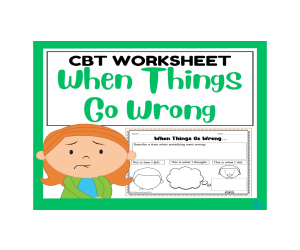
When Things Go Wrong Worksheet
Special Resources, Social Emotional Learning (SEL), Special Education Needs (SEN), Not Grade Specific, Worksheets & Printables, Worksheets
This a worksheet for children to reflect on a time in their life when things went wrong or did not go the way they had hoped. Children can think about how it made them feel, what it made them think and in turn how these feelings and thoughts came out in their actions. This can also lead to further discussion about whether their actions were appropriate and how they may do things differently in the future. Reflecting on times when things went wrong can be helpful for a child in several ways: * Learning from mistakes: By reflecting on past experiences, children can identify what went wrong and understand the reasons behind it. This reflection helps them learn from their mistakes and make better decisions in the future. * Building resilience: Reflecting on challenges and setbacks can teach children that it's normal to encounter difficulties in life. They can develop resilience by recognising that they have the strength to overcome obstacles and bounce back from failures. * Developing problem-solving skills: Reflecting on past failures allows children to analyse different aspects of a situation and brainstorm alternative solutions. This process helps them develop critical thinking and problem-solving skills, enabling them to approach future challenges more effectively. * Building self-awareness: Reflecting on their own experiences helps children gain a deeper understanding of themselves, their strengths, weaknesses, and emotions. This self-awareness can lead to improved self-confidence and self-esteem. * Fostering growth mindset: Reflecting on failures can promote a growth mindset, where children understand that intelligence and abilities can be developed through effort and learning. They learn to see setbacks as opportunities for growth and improvement rather than personal shortcomings. It is important to guide and support children during this reflection process, emphasising the lessons learned and encouraging a positive outlook. This worksheet can be linked with ideas of cognitive behavioral therapy. Cognitive behavioural therapy can be helpful for children in many ways. It can help children to understand and cope with their emotions in a more constructive way. It can also be used to teach children healthy coping strategies for managing their anger. Additionally, it can help children to develop better self-awareness and self-management skills. Included is a PDF printable worksheet with a version for both girls and boys
Author SEN Resource Source
Tags CBT, SEN, Anger, Emotions

Things I Can't Control Worksheet
Special Resources, Social Emotional Learning (SEL), Special Education Needs (SEN), Not Grade Specific, Worksheets & Printables, Activities
Worksheet in which children can think about the elements in their life that they have control over and those which they do not. Helping children distinguish between things they can control and things they cannot control can be helpful in several ways. It can help them develop a sense of agency and responsibility for their actions and choices, and reduce feelings of helplessness or anxiety about situations that are beyond their control. It can also help them prioritise their efforts and focus on what they can do to make positive changes in their lives, rather than getting bogged down by things they cannot change. Additionally, distinguishing between things they can control and things they cannot control can be a helpful way for children to deal with their anger. It can help children feel better about their anger and can also help them to figure out how to deal with it in a healthy way. This worksheet is linked with ideas from cognitive behavioral therapy. Cognitive behavioural therapy can be helpful for children in many ways. It can help children to understand and cope with their emotions in a more constructive way. It can also be used to teach children healthy coping strategies for managing their anger. Additionally, it can help children to develop better self-awareness and self-management skills. Included are 2 PDF printable pages
Author SEN Resource Source
Rating
Tags CBT, SEN, Counselling, Control, Anger, Self-awareness, Coping Skills, Stress Management, Mindfulness

Anger Meter
Special Resources, Social Emotional Learning (SEL), Social Skills, Special Education Needs (SEN), Not Grade Specific, Activities
Identifying and constructively expressing anger and other complicated feelings can be difficult for children. This anger meter resource is a simple yet effective tool allowing students to gauge and communicate their emotions. Using a 1-4 visual scale, kids rate where their anger level is at, facilitating self-awareness. The anger meter has an easy color-coded bar showing level 1 as green for "I'm calm" up to level 4 which is red for "I'm furious" There are simple icon images and clear descriptive words so even young children can use the tool independently. Leaving it available for students to grab whenever upset prevents escalations while building emotional intelligence skills. Teachers benefit from children having a consistent way to signal rising irritation before reaching meltdowns requiring disciplinary action. Children learn to articulate harder-to-verbalize inner experiences. Over time and through modeling, students can name specific anger triggers using the meter, then apply coping strategies depending on their rated level. Early intervention prevents conflicts. Simple, visual and easily accessible, this anger meter gives students and teachers a common ground for addressing frustration proactively. Children develop autonomy communicating feelings in a safe, understood way. Managing anger becomes more concrete and collaborative. This small meter measuring big emotions is an impactful support guiding children gently through social-emotional learning. Included are 2 PDF meters - one with emoji faces and one with clipart faces
Author SEN Resource Source
Tags Anger, Behavior, Behavior Support, Emotions, Feelings, SEL, SEN

Subject Display Banners
, Not Grade Specific, Banners, Classroom Decor
Set the foundation for an organized, stimulating primary classroom with these brightly colored print-ready display posters highlighting key curriculum subjects. Designed for primary learning spaces, these eye-catching banners clearly label and illuminate special corners or areas devoted to different topics and activities. The set includes banners for vital early education categories: Math Science English Art Computing Design and Technology Geography History Music PSHE RE In the dynamic realm of primary education, a well-designed classroom display serves as a powerful tool to engage young minds. Our banners go beyond mere decoration; they act as visual anchors for various subjects, creating focal points that capture students' attention and spark curiosity. Each banner is meticulously designed to represent a specific subject, incorporating vibrant colors and clear imagery. From mathematics to science, language arts to social studies, these banners offer a cohesive and visually appealing representation of the diverse topics covered in the primary curriculum. The versatility of our Primary Classroom Display Banners ensures their seamless integration into any primary classroom setting. Whether used to introduce new concepts, reinforce key ideas, or simply add a splash of color, these banners serve as valuable aids in creating an immersive and inspiring learning environment. Teachers can strategically place these banners around the classroom, forming thematic zones that foster a sense of coherence and organization. Beyond aesthetics, the banners act as educational prompts, providing students with visual cues that support their understanding of different subjects. In essence, our Primary Classroom Display Banners are more than decorative elements; they are purposeful educational tools that contribute to a visually stimulating and educationally enriching classroom environment. Elevate your primary classroom displays with this comprehensive collection and create a space where learning comes to life.
Author SEN Resource Source
Tags Display, Subject Banners

Tray and Resource Labels
Special Resources, Social Emotional Learning (SEL), Social Skills, Special Education Needs (SEN), Not Grade Specific, Classroom Decor
Keeping classroom materials organized can greatly benefit teachers and students. These printable labels promote order by clearly designating specific trays, stationary, toys, manipulatives, and other resources used for various subjects and activities throughout the day. Custom sorting helps establish routines. In the bustling setting of a classroom, clarity and organization are paramount. Our Tray and Resource Labels provide a simple yet effective system for categorizing and locating essential materials. From everyday stationary to specialized math resources, these labels ensure that everything has its designated place, streamlining the teaching and learning experience. There are dozens of colorful label options for categories like: Art and Stationary Supplies: crayons, markers, glue sticks, scissors Math Materials: counters, base 10 blocks , multilink cubes, number fans Toys and early years supplies: play dough, animals, puppets, sensory toys The aesthetic labels transform messy spaces into neatly arranged learning zones. Teachers can create customized organizational systems for their unique classroom needs and resources. Students also benefit from clear visual boundaries and expectations about where materials belong developmentally. With everything conveniently labeled, clean-up time takes less effort. Children feel pride putting supplies in matching trays independently, gaining responsibility. During instruction, locating necessary items happens seamlessly. Tidier environments minimize over-stimulation while promoting focus too. Simple yet visually striking, these printable labels establish structure for classrooms striving toward order and ease. Teachers regain time and energy for teaching while students thrive in clarity and consistency. Clipart images courtesy of Kari Bolt Clip Art and Arty Clips
Author SEN Resource Source
Tags Display, Labels, Tray Labels, Resources

Going on Vacation Social Story
Special Resources, Social Emotional Learning (SEL), Social Skills, Special Education Needs (SEN), Not Grade Specific, Activities
Vacations can be an exciting break in routine, but also filled with uncertainty for many children. For kids on the autism spectrum especially, new environments and activities can heighten confusion and anxiety without proper preparation. This social story resource aims to walk children through vacation travel and experiences in a detailed yet reassuring way. The story uses simple language and visual supports across different possible vacation scenarios. There are pages covering modes of transport like cars, trains and airplanes to reach your destination and popular accommodations like hotels, rental houses, cruises and camping. Common emotions a child may feel throughout are validated and labeled with suggestions for coping strategies are woven in. There are also 3 different versions of the story to cover who the child is travelling with; their family, mom or dad. Walking through the entire vacation process start to finish across potential experiences, this social story resource allows caregivers to tailor preparation to their child’s unique upcoming trip. By naming specific sites, sounds, activities and feelings to expect, uncertainty is diminished. Kids on the spectrum can practice flexibility while enjoying a new adventure, set up for success through this method that caters to their learning style. Included in this resource are 3 different versions of the 29 page PDF social story
Author SEN Resource Source
Tags Vacation, Holiday, Anxiety, Social Story
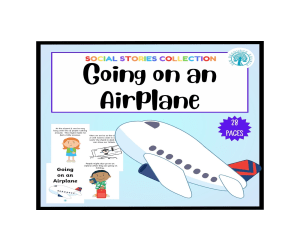
Going on an Airplane Social Story
Special Resources, Social Emotional Learning (SEL), Social Skills, Special Education Needs (SEN), Not Grade Specific, Activities
Airplane travel can be an exciting adventure, but also filled with uncertainty for many children. For kids on the autism spectrum especially, the unfamiliar surroundings and procedures can heighten confusion and anxiety without proper preparation. This social story resource aims to walk children through air travel from start to finish in a detailed yet reassuring way. The story covers every phase, using simple language and visual supports. It explains what to expect when getting tickets, packing bags, and arriving at the airport. Going through security, waiting at the gate, boarding, and taking off are all described in concrete terms. While seated on the plane, appropriate behaviors are outlined along with various occupying activities for the flight like reading books, listening to music, or watching movies. finally, the story describes the sensations of descending and landing as well as exiting the plane and airport. Common emotions a child may experience throughout are validated and labeled, like feeling eager, nervous, bored, or impatient at different points. Suggestions for coping strategies are woven in, like asking for hugs, taking deep breaths, requesting snacks, or stretching. The consistency of the narrative and matter-of-fact tone provide stability children can hold onto. By naming specific sites, sounds, procedures and feelings to expect, uncertainty is diminished. Walking through the entire airport/airplane experience start to finish, this social story is an ideal method for preparing autistic children for airplane travel. It allows them to fully understand and participate in this immersive real-world activity that requires certain social-emotional skills - exactly what social stories are designed for. These books should be used over and over to reinforce the point so I would suggest either putting the pages into a display book or laminating and binding them. Clipart images courtesy of Kari Bolt ClipArt
Author SEN Resource Source
Tags Holiday, Vacation, Airplane, Fear Of Flying, Social Story

Kindness Calendar
Special Resources, Social Emotional Learning (SEL), Social Skills, Not Grade Specific, Classroom Decor
Practicing kindness, both giving and receiving it, is an important skill for children to learn. This printable kindness calendar provides a meaningful activity for each day of the month to reinforce kindness in simple, engaging ways. The calendar suggests daily kindness missions like thanking an adult for what they do to help you, reading a book with a friend, paying someone a compliment or helping to pick up litter. The activities can be done at home, school, or out in public community spaces. Each day children can mark off the completed action, giving children a sense of accomplishment. Teachers could even add a small reward system for checking off rows throughout the month. The mix of challenges - both interpersonal acts of kindness towards others and intrapersonal acts cultivating self-compassion - develops empathy, gratitude, self-control, and perspective-taking. Young children learn that kindness experiences should be part of everyday life, not just special occasions. Older students grow reflection skills by discussing their participation afterwards. Adaptations like writing personalized actions or theming months around different areas makes the calendar flexible year-round. Simple in execution yet profound in impact, this calendar seeds kindness that will continue flowering in children's hearts. Resource includes 1 PDF printable page
Author SEN Resource Source
Tags Kindness, Mental Health
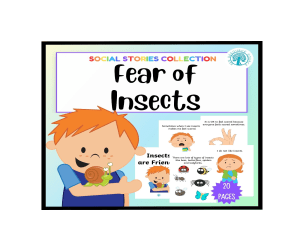
Fear of insects Social Story
Special Resources, Social Emotional Learning (SEL), Social Skills, Special Education Needs (SEN), Not Grade Specific, Activities
For children who experience intense fear or phobias related to insects, this social story resource provides supporting explanations and coping strategies. Specifically tailored for children on the autism spectrum who may struggle reading social cues, the story aims to logically address the reasons behind insect fears and equip children with skills to manage them. Using a reassuring tone, the social story explains how most insects pose no real danger to humans, as many are so tiny compared to a person’s size. While some insects like bees can sting, the story gives facts about how insect stings rarely cause serious harm. It also highlights all the useful things insects do, like pollinating plants. The second half of the story outlines constructive ways children can deal with insect fears when encountered. This includes techniques like staying calm, thinking logical thoughts about how small insects are, and reminding themselves that insects are useful to their earth. By addressing both the emotional and reality-based sides of insect fears, this social story uses clear language and visuals to teach autistic children coping methods. It validates their feelings while also gently challenging catastrophic thinking. The final outcome is a set of strategies children can employ themselves when afraid, giving them skills, reassurance, and power to manage phobias. These books should be used over and over to reinforce the point so I would suggest either putting the pages into a display book or laminating and binding them. Clipart images courtesy of Kari Bolt Clip Art
Author SEN Resource Source
Tags Insects, Fear, Anxiety, Social Story, Coping Strategies, Coping Skills, Overcoming Fears

My Parents are Getting Divorced Social Story
Special Resources, Social Emotional Learning (SEL), Social Skills, Special Education Needs (SEN), Not Grade Specific, Activities
Divorce can be an extremely confusing and emotional time for children. This social story resource aims to clearly explain what divorce means and what to expect in a reassuring way to help ease a child’s worries. The story uses direct, simple language and visual supports. The social story defines divorce in concrete terms as parents living in separate homes without being married anymore. It emphasizes that divorce is between the parents, not the child, and that both parents still love the child and will take care of them, even though they don’t live together. Common changes like moving between two homes and having different routines are covered. The story validates the difficult emotions the child might experience like sadness, anger, or confusion. It outlines how to verbalize feelings and who to talk to if needing support during this transition. The story has a reassuring tone throughout, communicating the consistency and care the child can rely on. Visual supports reinforce the narrative. The direct explanations and matter-of-fact delivery help take some of the uncertainty and abstractness out of divorce. Knowing what to expect reduces anxiety. This social story resource thereby facilitates comprehension and adaptation for children on the spectrum facing the complex life change of parental divorce. It teaches the social-emotional skills these children require to navigate this challenge. These books should be used over and over to reinforce the point so I would suggest either putting the pages into a display book or laminating and binding them. Clipart images courtesy of Kari Bolt Clip Art
Author SEN Resource Source
Tags Social Story, Divorce, Transition, Coping Strategies, Separation, Communication, Changes, Relationships, Emotional Well-being, Family Dynamics

Anxiety and Calming Strategies Bingo
Special Resources, Social Emotional Learning (SEL), Social Skills, Special Education Needs (SEN), Not Grade Specific, Activities
Anxiety can be difficult for children to manage and express. This “Anxiety Bingo” game provides a unique outlet for kids to identify calming strategies that work for them when feelings of worry start to swell. With simple yet versatile bingo boards, it allows children to actively try different relaxation techniques to ease anxiety. The bingo boards have a standard 3x3 layout with 9 different soothing strategies listed, like taking deep breaths, getting a drink of water, hugging a stuffed animal, positive self talk, or writing down your feelings. Children can use the given calming strategies or they can make their own custom bingo board and write down things that help them feel better. Once the child tries a technique, they mark it off on their bingo board. The goal is to get 3 strategies in a row - just like regular bingo! This incentivizes them to keep practicing helpful skills. Having multiple boards on hand allows for replayability as well. Not only does this activity foster relaxation in the moment of anxiety, but over time it builds children's understanding of different ways to self-soothe. They learn constructive ways to independently cope with anxiety while having fun playing an engaging game. It’s anxiety support wrapped in a child-friendly bingo package! This resource includes 3 different PDF bingo boards. One with calming strategies on it in color, one in black and white and one blank one.
Author SEN Resource Source
Tags Anxiety, Coping Strategies, Emotions, Bingo, Mental Health, Mindfulness, Calming Activities, Emotional Well-being, Coping Skills, Self-Reflection

Getting From Angry to Happy Worksheet
Special Resources, Social Emotional Learning (SEL), Social Skills, Special Education Needs (SEN), Not Grade Specific, Worksheets, Worksheets & Printables
The "Getting from Angry to Happy" worksheet is an invaluable educational resource designed to empower children with effective coping strategies for managing anger and finding their way back to happiness. This worksheet transcends the conventional by offering a thoughtful approach to emotional well-being. Tailored for young minds, this resource encourages children to navigate the complex landscape of emotions, specifically focusing on the transition from anger to happiness. The worksheet prompts children to reflect on personalized calming strategies, fostering a sense of self-awareness and emotional intelligence. Within the pages of this resource, children explore a variety of techniques to regain emotional balance when faced with anger. By considering activities and practices that resonate with them personally, they are equipped with a toolkit of strategies to implement when needed. This approach empowers children to take an active role in their emotional well-being, promoting a sense of agency and resilience. Educators, parents, and caregivers can utilize this resource to facilitate discussions on anger, happiness, and the importance of recognizing and managing emotions constructively. In essence, this educational resource is a guide for fostering emotional resilience and well-being in children. By promoting self-reflection and providing practical tools for emotional regulation. This resource includes 2 versions on=f the PDF worksheet - one for a girl and one for a boy.
Author SEN Resource Source
Tags Emotions, SEL, SEN, Positivity, Mindfulness, Emotional Intelligence, Self-awareness, Coping Skills, Anger, Behavior Support

I SURVIVED The Great Alaska Earthquake, 1964 Book Study Unit
ELA, Reading, Reading Comprehension, Language Development, Vocabulary, Grade 3, 4, 5, Novel Studies, Worksheets & Printables
THIS IS LAUREN TARSHIS'S BRAND NEW EDITION TO HER BESTSELLING SERIES! I ALSO HAVE A TOTAL OF SEVENTEEN I SURVIVED BOOK UNITS HERE IN TEACHSIMPLE. You will love the ease of use and the standards your students will practice and learn from this book study packet. This 128 Page Comprehension/Assessment/Book Study Unit Includes: · 15 Chapter 1-10 Comprehension Work Sheets! · 15 Chapter Mystery Match Vocabulary Words Using Context Clues & Mystery Fun Blanks! · 15 Student Score Part for Each Work Sheet! · 14 Five Pt. CCSS Multiple Choice Exit Quizzes (1 for each Chapter except chapter 14) to Challenge Their Testing Skills! Each quiz has a variety of vocabulary using context clues, figurative language, inferencing, main ideas, themes, comprehension, tone, homophones, synonyms, & More! · A 25 Point Summative or Final Multiple Choice Test! · 4 Vocabulary Twelve Point Fill-In-The-Blank Context Clue Tests (1 every Four Chapters) from the Mystery Match Vocabulary Words along with 46 Context Clue Practice Sentence Cards to help with the tests! Great for group activities, too! A WordArt Vocabulary Template, too, to Learn words in a fun, artistic way! · A 4-Page Summary/ Main Idea Activity Packet to help with Writing Summaries and Main Ideas! An Exemplar is included! · A 15-Point Fun and Engaging Historical Scavenger Fact Hunt at Very End of Book for Individual or Group work! · 2 Engaging and Fun Writing Reflection/Research Prompts! · A Student Reading Reference Page to Help with Reading/English Skills! · Key Standards: Themes; Main Ideas; Summaries; Inferencing; Engaged Discussions; Meanings of Unknown Words Using Context Clues; Vocabulary; Tone; Understanding and Identifying Figurative Language; Using Text Evidence; Comprehension; Cross Curricular Math, Science, Social Studies, Spelling; Homophones; Setting; Synonyms; Point-of-View; Compound Words; And More! · Answer Keys to ALL Assessments!
Author teachermahem
Tags Reading Unit, Book Study, Comprehension Book Study, I Survived

FINGER PAINTS - 10 Pictures of Wild Animals - ART FOR KIDS
Creative Arts, Art, Preschool, Kindergarten, Grade 1, 2, 3, 4, 5, Activities
1. Introduction As is known by many educators and educational agents, finger painting or also called 'painting using fingers' or 'finger painting', is a very beneficial artistic technique for children, because it not only provides fun, but also contributes to to its integral development. For these reasons and with the aim of developing multiple objectives that I will detail later, I have developed this fabulous artistic worksheet, where your students will be able to paint and apply this fabulous technique, I hope you like it. 2.Objective Some benefits of finger painting are: - Sensory stimulation: As is known, painting with fingers or using fingers involves multiple senses of infants, such as sight and touch. In this way, children will experience various temperatures, colors and temperatures, which will contribute to their cognitive development and sensory stimulation. -Development of fine motor skills: When your students or children dip their fingers in the paint and manipulate it on the paper, they will be improving their fine motor skills. In this way, this type of activity will develop dexterity and hand-eye coordination in them, skills that will be essential when later your children need to start activities such as writing, fastening the laces of their shoes, buttons on their shirts, and other activities. everyday. 3.Order, scheme and stages - Introduce your art class with relaxing music, so that your students open their minds and curiosity to the new activity they are about to do. -Then give them the worksheet and ask them to take out their colored temperas. If possible, ask them to bring an old piece of clothing because they are going to stain it while doing the activity. 4.Grades or ages This game is designed for children from 5 to 12 years old. That is, all primary school students can use it. 5. Form of application It is suggested to print this product individually. 6. Answer keys This game does not require answers. 7.Use text labels art, finger art, fingerprint painting, art for children, children's art. 8.Rules Specified above. 9.File types The archive is in PDF format. 10.Number of pages This document contains 10 pages.
Author EDITORIAL LAURA EDUCA
Tags Art, Art For Kids, Painter For Kids

ESL EFL TESOL Lesson Plan on "Diary of a Wimpy Kid" and Teenagers
ELA, Language Development, ESL, Grade 6, 7, 8, 9, 10, 11, 12, Teacher Tools, Lesson Plans
ESL EFL TESOL Lesson Plan on "Diary of a Wimpy Kid" and Teenagers This Fantastic ESL EFL TESOL "Diary of a Wimpy Kid" Lesson (PDF Digital Presentation, 11 Slides) is Great to stimulate English Learning within Newcomers or any English Second Language Student. Ideal participants for this Activity are Foreign Languages Students at Middle School and early High School. This Product can also be Great for ESL Centers Abroad and ESL Tutors or private teachers. The English proficency level required for this ESL EFL TESOL Lesson Plan with Picture Description + Listening Comprehension + Writing Activity is Intermediate. Advanced English Students can also take part to this Activity. This Lesson Stimulates indeed topics such as school and teens. This Great ESL EFL TESOL Lesson Plan (PDF Digital Presentation with 11 slides) includes: a short Introduction to the Greg Heffley a Picture Description with 3 scenes (1 illustration from the book and 2 from the movie) about Greg's Teenage problems 1 Listening activity (with answer keys in the bottom) with QR Code-Linked YouTube Video to listen once again at home or anywhere learners wish (repeated listening) 1 Writing Activity with 2 options (essay on 3 problems of teenage and a page of diary) This ESL, EFL, TESOL, TEFL PDF Digital Teaching Resource (11 Slides + Answer keys in the last slide) can be great for Intermediate-Advanced English as a second or foreign language learners. Its aim is to make students exercise and/or improve their Listening comprehesion and Writing English as a second language Skills. ESL with Alan is a Brand New ESL, EFL, TESOL Store whose aim is to help English as a Second or foreign Language Teachers, Educators and Tutors (be it online or offline) to achieve their teaching objectives while creating a fun and stimulating environment. Never Forget! Learning is fun, So should English! Always If you want to browse more of my PDF ESL, EFL, TESOL Teaching Resources, click here ESL with Alan!
Author Learning with Alan
Tags ESL, EFL, English As A Second Language, Lesson Plan, Activities, Writing, Listening Comprehension, Teens, Intermediate, English As A Foreign Language

ESL William Shakespeare Lesson - Listening + Writing Activities
ELA, Language Development, ESL, Grade 6, 7, 8, 9, 10, 11, 12, Lesson Plans, Teacher Tools
ESL William Shakespeare Lesson - Listening + Writing Activities This Fantastic ESL EFL TESOL William Shakespeare Lesson (PDF Digital Lesson 15 slides) is Great to stimulate English Learning within Newcomers or any English Second Language Student. Ideal participants for this Activity are Foreign Languages Students at Middle School and early High School. This Product can also be Great for ESL Centers Abroad and ESL Tutors or private teachers. This ESL EFL TESOL Activity can be more than great for intermediate English as a Second or Foreign Language Students. This StimulatingWilliam Shakespeare Literature ESL-EFL-TESOL Lesson Plan (15 slides) includes: a short Introduction to William Shakespeare and his most famous Plays a Picture Description ESL EFL TESOL Activity given of three scenes (the Globe Theatre, a scene of a Shakespearean play and a photo from a movie/play portraiting Shakespeare while writing) One Listening comprehension Activity (with answers keys in the bottom) with QR Code-Linked YouTube Video One Writing Activity with 2 options (essay on the feelings and emotions that people still feel as they read Shakespeare nowadays and a day in the Globe Theatre; time machine brings you to Elizabethan Era) This ESL, EFL, TESOL, TEFL PDF Digital Teaching Resource (14 slides + answer keys in the last slide) can be great for Intermediate Advanced English as a second or foreign language learners. Its aim is to make students exercise and/or improve their Listening comprehesion and Writing English as a second language Skills. ESL with Alan is a Brand New ESL, EFL, TESOL Store whose aim is to help English as a Second or foreign Language Teachers, Educators and Tutors (be it online or offline) to achieve their teaching objectives while creating a fun and stimulating environment. Never Forget! Learning is fun, So should English! Always If you want to browse more of my PDF ESL, EFL, TESOL Teaching Resources, click here ESL with Alan!
Author Learning with Alan
Tags ESL, English, English As A Second Language, William Shakespeare, Activities, Listening Comprehension, Writing, Literature, Lesson, English As A Foreign Language

Free Construction Interactive Hangman Game to Practice Vocabulary
Life Studies, Career, Grade 7, 8, 9, 10, 11, 12, Games, Activities
Learn and Practice Construction Vocabulary with Interactive Games; in this case, “The Hanged Man'” is a popular game that tests student's ingenuity, their knowledge of vocabulary and their use of letters. This simple game of guessing the name of a character, the name of a movie or whatever the word is. The hangman game has the mission of finding the correct word or phrase by indicating the letters that make it up. For each failed word, the game draws a person's body part. If the user does not guess the sentence or the word to be searched for before the game character has a head, arms and legs, he loses the game. The hangman game therefore becomes a different and fun way of learning and an activity that offers the following advantages: - Stimulates intelligence - Increases concentration and attention - Teaches students to handle and practice the letters of the alphabet - Teaches students to write - Helps in student's pronunciation - Increase student's vocabulary - Helps them learn new words First, Practice the words following the slides Then, Play the game as a PPT and use your mouse. Just press on the square letter your students suggest, if the letter is correct, they will bounce down to its place, if the letter does not come down, it was incorrect you should pressthe red Xcirclein order to add a body part. Keep playing until your students guess all the letter or you hang the Teacher.If the students guess a word and they miss, add body parts as incorrect. Press the arrow for the next word. Finally, and after the last word enter to end the game. Follow our Store ShapeUp-N-Matematicas y Lenguaje for other activities like: ST SPANISH MATH HANGMAN GAME FIGURAS GEOMETRICAS.PPTX ST SPANISH HANGMAN GAME PRACTICA TRADICIONES Y CELEBRACIONES ST SPANISH HANGMAN GAME ESTACIONES DEL ANO Y SU ROPA ST SPANISH HANGMAN GAME PRACTICA DIAS DE LA SEMANA ST SPANISH HANGMAN GAME OCUPACIONES ST SPANISH HANGMAN GAME MESES DEL ANO ST SPANISH HANGMAN GAME MEDIOS DE TRANSPORTE ST SPANISH HANGMAN GAME FRUTAS ST SPANISH HANGMAN GAME EN LA COCINA ST SPANISH MEMORY GAME PRACTICA DEPORTES ST SPANISH MEMORY GAME PRACTICA COMIDAS Y BEBIDAS ST SPANISH MEMORY GAME PRACTICA COLORES Y SABORES ST SPANISH MEMORY GAME PRACTICA EN LA COCINA ST SPANISH MEMORY GAME PRACTICA EL CLIMA ST SPANISH MEMORY GAME PRACTICA CORTESIA Y MODALES ST SPANISH MEMORY GAME PRACTICA ACERCA DE LA ESCUELA ST SPANISH GAME ATRIBUTOS ST SPANISH MATH GAME PLACE VALUE ST SPANISH CLASSROM LABELING CARTELES SALON DE CLASES ST SPANISH MATH CENTERS WORD PROBLEMS ST SPANISH KINDER ACTIVIDADES LENGUAJE ST SPANISH 1ST GRADE ACTIVIDADES LENGUAJE ST SPANISH 2ND GRADE ACTIVIDADES LENGUAJE ST SPANISH 3RD GRADE ACTIVIDADES LENGUAJE ST SPANISH 4TH GRADE ACTIVIDADES LENGUAJE ST SPANISH 5TH GRADE ACTIVIDADES LENGUAJE and many others… This file includes: Power Point Presentation Interactive Game to play virtually or as a whole classroom practice activity. Contains 17 slides.
Author ShapeUp-N-Matematicas y Lenguaje
Tags Construction Vocabulary, Interactive Activity, Small Or Whole Group, Games, Construction

Free Science - Geology on Mars Interactive Vocabulary Activity
Science, Earth and Environmental Sciences, Space, Grade 8, Teacher Tools, Lesson Plans
Free Science - Geology on Mars Interactive Vocabulary Activity Engage eighth grade students by learning, practicing, and reviewing geology vocabulary related to Mars. This interactive PowerPoint allows the whole class or small groups to read definitions, share ideas, and reinforce concepts. The 34 vibrant slides showcase Mars terrain images and landscape features. Educators can facilitate class discussions about Martian characteristics and importance. Students will gain familiarity with key terms before diving deeper into the relationships between them. The multiple choice review activity builds confidence as students use process of elimination to reveal correct answers. Visual aids and repetition cement knowledge while keeping young minds engaged. See more interdisciplinary products from ShapeUp-N-Matematicas y Lenguaje like math, language arts, science centros, and multi-grade Spanish immersion.
Author ShapeUp-N-Matematicas y Lenguaje
Tags GEOLOGY, GEOLOGY VOCABULARY, SCIENCE VOCABULARY, SMALL OR WHOLE GROUP , INTERACTIVE MULTIPLE CHOICE ACTIVITY, SCIENCE REVIEW, MARS, MARS VOCABULARY